이 테스트는 단순히 인상적인 이미지를 만드는 것이 아니라 실제로 판매에 기여해야 하는 패션 자산을 위해 AI clothing product photography와 에디토리얼 룩북 프롬프팅을 비교합니다. 동일한 의류, 신발, 가방을 통제된 프롬프트 세팅으로 실행해 보며, 깔끔한 제품 이미지가 어디까지 안정적으로 유지되는지, 에디토리얼 스타일링이 어디에서 가치를 더하는지, 그리고 이미지 모델이 어느 지점부터 솔기, 스트랩, 비율, 소재를 임의로 만들어내기 시작하는지 확인했습니다.
짧게 말하면, 제품 중심 프롬프트는 카탈로그용 명확성에서는 더 좋았지만, 실루엣과 스타일링 논리를 전달하는 데에는 약했습니다. 에디토리얼 룩북 프롬프트는 더 강한 캠페인 에너지와 더 나은 착장 맥락을 만들었지만, 동시에 의류 왜곡, 일관성 없는 하드웨어, 제품 드리프트의 위험도 가장 컸습니다. ecommerce, 룩북, 유료 캠페인 mockup을 위한 AI fashion photography 워크플로를 비교한다면, 차이는 “realism” 자체보다 모델이 어떤 디테일을 즉흥적으로 바꾸도록 허용되는지에 더 가깝습니다.
먼저 알아둘 점
- 아이템 자체가 여러 각도, 배경, 광고 포맷에서 안정적으로 유지되어야 한다면 AI clothing product photography 프롬프트를 사용하세요.
- 엄격한 SKU 정확도보다 착장 맥락, 레이어링, 브랜드 무드가 더 필요하다면 editorial fashion AI prompts를 사용하세요.
- 신발과 가방은 보통 테일러드 의류보다 스타일화된 프롬프팅을 더 잘 견딥니다. 재킷, 바지, 드레스에서는 핏 오류가 훨씬 쉽게 드러나기 때문입니다.
- 가장 좋은 결과는 먼저 shot type을 명명하고, 그다음 의류 구조를 지정한 뒤, 조명과 프레이밍을 제어한 프롬프트에서 나왔습니다.
- 어떤 결과물이든 게시하기 전에 밑단, 스티칭, 여밈, 로고 영역, 앞코 형태, 스트랩 구조, 제품과 신체의 상호작용을 점검하세요.
테스트 세팅
이 테스트에서는 세 가지 카테고리에 걸쳐 하나의 반복 워크플로를 사용했습니다.
- 구조적인 의류: 블레이저, 와이드 레그 팬츠, 트렌치, 니트 레이어
- 신발: 가죽 로퍼, 패션 스니커즈, 앵클부츠
- 가방: 탑핸들 백, 숄더백, 미니 크로스바디
두 가지 큰 프롬프트 방향을 비교했습니다.
1. 깔끔한 listing, grid, 제품 중심 광고를 위한 Commercial product shots 2. 캠페인 페이지, social assets, 패션 스토리텔링을 위한 Editorial lookbook shots
평가 기준은 실무적인 항목들이었습니다.
- 제품 형태 안정성
- 섬유 디테일 정확도
- 착장 가독성
- 배경 제어
- 손과 포즈 리스크
- 럭셔리 스타일링 신호와 상업적 스타일링 신호 사이의 일관성
관련 워크플로 테스트에서는 zview의 [Prompt Lab](/promptlab), [image creator](/create), [upscaler](/upscaler), 그리고 더 넓은 [article archive](/articles)가 가장 유용한 보조 도구였습니다.
AI fashion photography가 보기보다 어려운 이유
패션 프롬프트는 매우 특정한 방식으로 실패합니다. 모델은 단순히 “재킷”이나 “가방”을 생성하기만 하면 되는 것이 아닙니다. 다음 요소들을 유지해야 합니다.
- 실루엣
- 원단의 무게감
- 솔기 논리
- 레이어링 순서
- 여밈 위치
- 어깨부터 밑단까지의 비율
- 체중이 실렸을 때 신발이 휘어지는 방식
- 착용했을 때 가방 스트랩이 떨어지는 방식
그래서 AI fashion photography는 썸네일 크기에서는 그럴듯해 보이지만, 자세히 검사하면 무너지는 경우가 많습니다. 이 테스트에서 에디토리얼 프롬프트는 모델이 움직임, 포즈, 분위기를 극적으로 표현할 자유가 더 많았기 때문에 이러한 위험을 키웠습니다. 깔끔한 제품 프롬프트는 임의 생성을 줄였지만, 때로는 패션적 매력을 지나치게 평면적으로 만들었습니다.
첫 번째 시도: 의류를 위한 깔끔한 카탈로그 프롬프트
첫 번째 시도에서는 직관적인 studio product language를 사용했습니다. 결과물은 기본적인 ecommerce 무드에는 사용할 수 있었지만, 의류가 약간 일반적으로 보였습니다. 블레이저는 일부 테일러링 정밀도를 잃었고, 바지 주름은 일관성이 떨어졌으며, 니트 텍스처는 밝고 균일한 조명 아래에서 매끄럽게 뭉개졌습니다.
유용한 교훈은 shot type이 명확할 때 모델이 더 안정적으로 작동했다는 점입니다. “Catalog” 또는 “head-to-toe lookbook”은 “fashion photo”처럼 넓은 표현보다 더 안정적인 의류 논리를 만들어냈습니다.
상업적 프레임 안에서 모델이 착장 구조를 계속 보이게 유지할 수 있는지 확인하기 위해, 다음 프롬프트를 사용했습니다.
Topic: Tailored womenswear set for ecommerce catalog
Genre: Fashion Catalog Photography
Camera: Canon EOS R5
Lens: 50mm f/8
Lighting: softbox key light with even studio fill
Location: seamless light gray studio backdrop
Style: clean commercial look
Final Prompt: head-to-toe lookbook shot of a tailored womenswear outfit for ecommerce, relaxed oversized charcoal blazer over fine ribbed ivory knit top, high-waist wide-leg wool trousers, black leather loafers, structured medium shoulder bag, minimal silver jewelry, full outfit clearly visible, straight standing pose with subtle weight shift, clean gray seamless studio background, even softbox key light and controlled fill, crisp fabric texture, visible trouser drape, realistic blazer lapels, accurate seam placement, commercial catalog composition, Canon EOS R5 look, 50mm lens, sharp product clarity, neutral color grading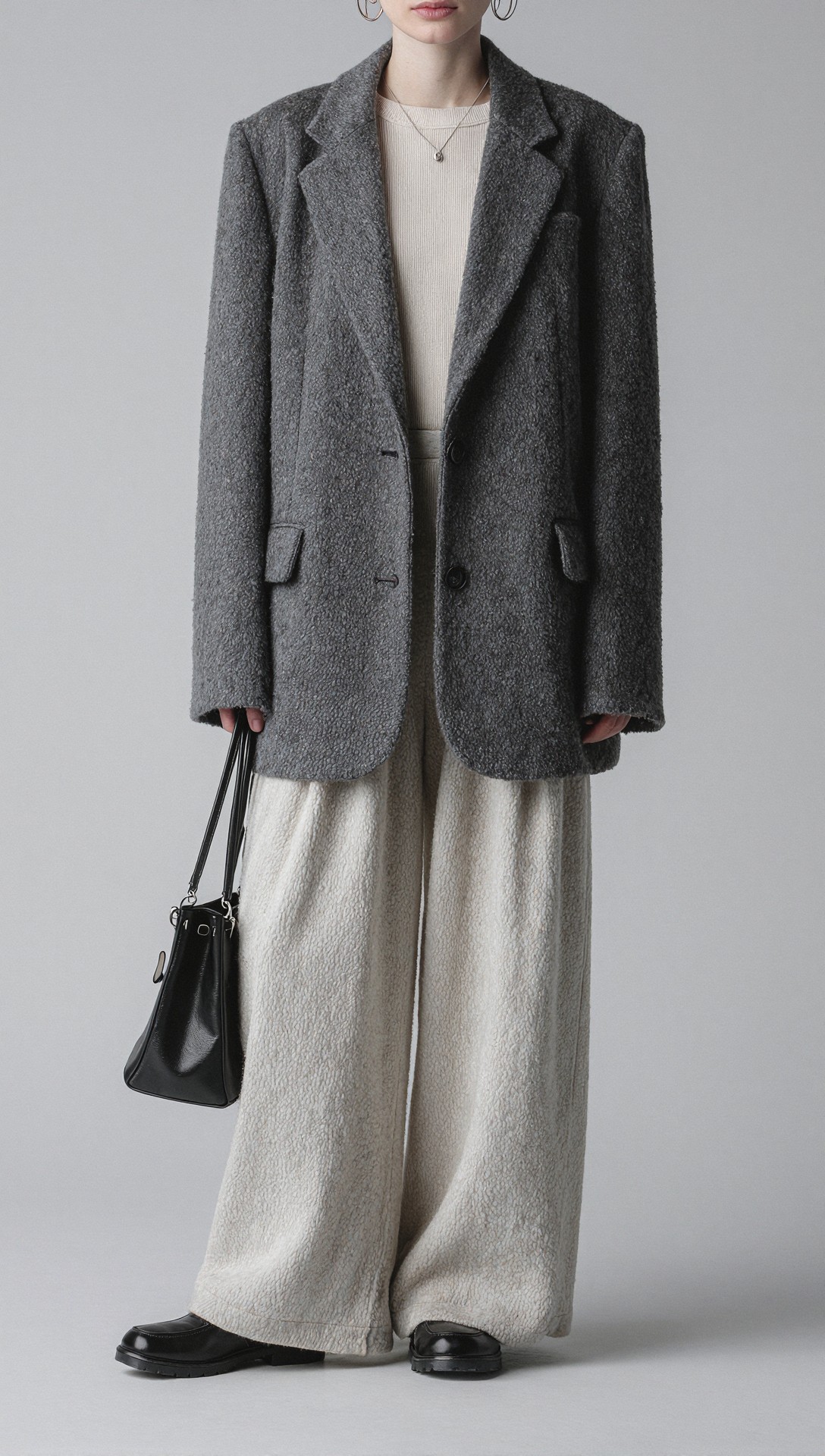
블레이저 라펠이 양쪽에서 맞는지, 바지 허리선이 수평을 유지하는지, 로퍼가 좌우에서 같은 형태를 유지하는지 확인하세요. 제 테스트에서는 이 영역들이 가장 먼저 드리프트되기 시작했습니다.
의류 출력물을 개선한 조정
출력물을 개선한 것은 프롬프트를 막연하게 더 길게 만드는 것이 아니었습니다. 핵심은 핏을 설명하는 언어와 레이어 순서를 추가하는 것이었습니다. 의상의 구조를 명확히 지칭하자, 모델이 착장을 평범한 수트처럼 단순화하는 일이 줄었습니다.
또한 35mm에서 50mm 사이의 프레이밍이 과도하게 압축된 포트레이트 스타일 프롬프트보다 착장 가독성이 더 좋다는 것도 확인했습니다. 룩북 사진에서는 전신 실루엣 자체가 제품이기 때문에 이 부분이 중요합니다.
이 두 번째 테스트는 의류를 읽기 쉽게 유지하면서 순수 카탈로그에서 통제된 에디토리얼 방향으로 이동한 사례입니다.
Topic: Modern quiet-luxury layered outfit with full silhouette visibility
Genre: Fashion Editorial
Camera: Sony A7R V
Lens: 40mm f/4
Lighting: large window light with soft negative fill
Location: minimalist Paris apartment with stone floor and cream walls
Style: luxury fashion editorial
Final Prompt: three-quarter outfit editorial showing a modern quiet-luxury layered look, long sand trench coat worn open over a fitted black knit top, pleated full-length ivory trousers, polished dark espresso leather loafers, structured top-handle bag, slim belt, delicate metal earrings, full silhouette readable from shoulder to hem, relaxed walking pose, neutral expression, cream and stone interior, natural window light with soft shadow shaping, fabric weight and drape emphasized, visible trench collar structure, clean editorial composition, Paris luxury magazine mood, Sony A7R V detail, 40mm documentary fashion framing, refined beige black ivory palette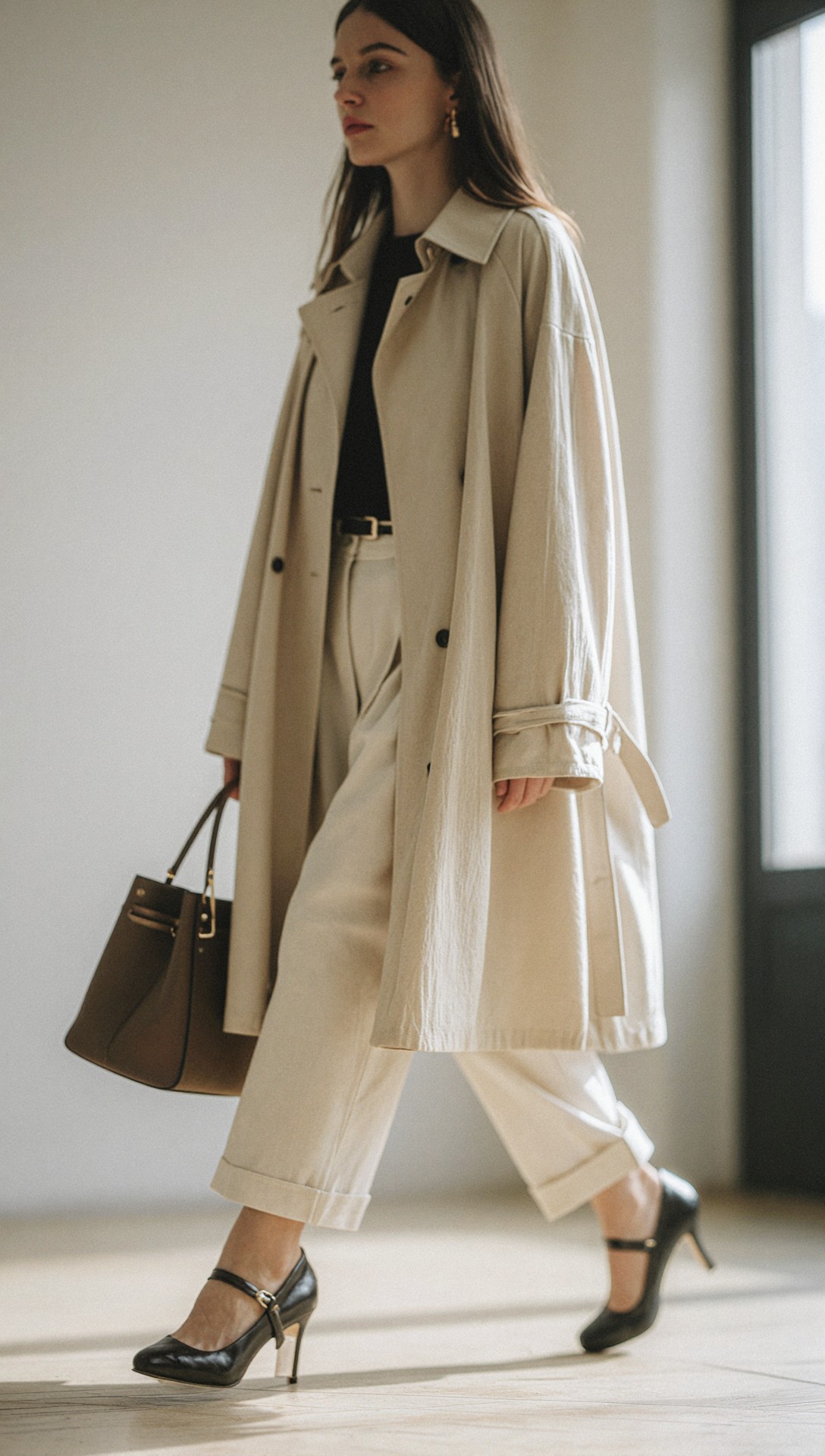
여기서는 밑단 길이, 코트가 열린 형태의 좌우 대칭, 그리고 가방 손잡이의 기하학적 형태가 그럴듯하게 유지되는지를 확인했습니다. 이 테스트에서는 트렌치코트와 바지의 관계가 카탈로그 전용 버전보다 훨씬 더 강하게 보였습니다.
제품 사진보다 에디토리얼 룩북 프롬프트가 더 나았던 지점
에디토리얼 프롬프트는 어떤 의류가 왜 옷장에 어울리는지를 전달하는 데 더 뛰어났습니다. 가장 강력한 결과물은 기술적으로 가장 깨끗한 이미지가 아니었습니다. 아우터, 신발, 가방이 하나의 일관된 실루엣 시스템을 이루는 이미지였습니다.
이 점은 상업적 검토 검색에서 중요합니다. 많은 팀이 “좋은” 이미지와 “나쁜” 이미지 중 하나를 고르는 것이 아니기 때문입니다. 이들은 다음 중에서 선택하고 있습니다.
- 깔끔한 제품 리스팅 애셋
- 프리미엄 룩북 애셋
- 소셜 캠페인 이미지
- 랜딩 페이지 히어로 비주얼
이번 테스트에서 얻은 실용적인 비교는 다음과 같습니다.
| 사용 사례 | 가장 적합한 프롬프트 방향 | 가장 강한 결과 | 주요 리스크 | |---|---|---|---| | Ecommerce PDP 또는 카테고리 페이지 | AI 의류 제품 사진 | 안정적인 배경과 제품 집중도 | 의류가 평범하거나 밋밋해 보임 | | 브랜드 룩북 | 에디토리얼 패션 AI | 더 나은 실루엣과 레이어링 스토리 | 핏 드리프트와 만들어진 디테일 | | 신발 캠페인 티저 | 제품 통제가 포함된 에디토리얼 | 더 강한 움직임과 질감 | 밑창 형태 불일치 | | 가방 리스팅 이미지 | 깔끔한 제품 에디토리얼 | 하드웨어와 형태를 깔끔하게 유지 가능 | 착용 컷에서 스트랩 왜곡 | | 소셜 광고 목업 | 하이브리드 프롬프트 | 가장 강한 시각적 에너지 | 포맷 간 재사용성이 낮음 |
신발: 에디토리얼이 해보다 도움이 더 될 수 있는 카테고리
신발은 의류보다 더 관대했습니다. 모델이 여전히 끈과 밑창 패턴을 가끔 만들어내기는 했지만, 잘 구성된 에디토리얼 프롬프트는 소재 분리를 더 잘 보여주었습니다. 가죽, 고무, 스웨이드, 스티칭, 광택이 모두 더 명확하게 읽혔습니다.
첫 번째 신발 프롬프트는 직접적인 제품 명확성을 테스트했습니다.
Topic: Luxury leather loafers for fashion ecommerce
Genre: Product Editorial
Camera: Nikon Z7 II
Lens: 85mm f/11
Lighting: controlled studio top light with soft side fill
Location: matte off-white plinth studio set
Style: premium commercial product photography
Final Prompt: accessories close-up focused on a pair of luxury dark brown leather loafers, subtle moc-toe construction, polished finish with natural creasing, low stacked heel, clean outsole edge, placed on a matte off-white plinth with minimal shadow, no extra props, high product clarity, carefully controlled studio top light with soft side fill, premium ecommerce product editorial style, Nikon Z7 II precision, 85mm lens detail, neutral background, crisp leather grain, accurate stitching, luxury retail campaign cleanliness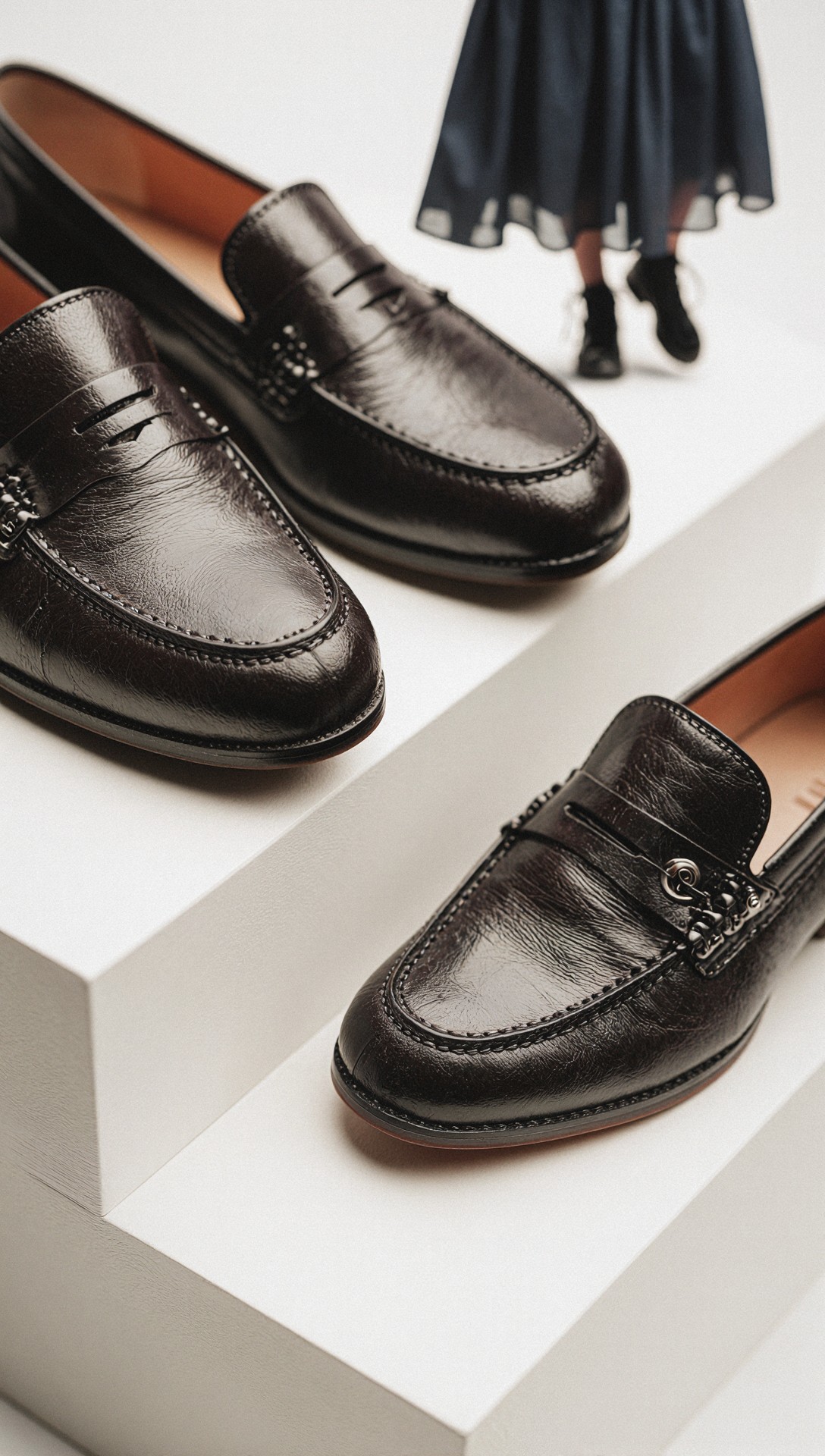
토 박스의 대칭, 아웃솔 가장자리, 그리고 스티칭 경로가 끊기지 않고 이어지는지를 확인하세요. 제 테스트에서 약점은 뱀프 근처의 작은 장식 솔기였습니다.
이후 스타일링된 에디토리얼 프레임이 같은 신발을 그럴듯하게 유지하면서 착장 가치를 더할 수 있는지 테스트했습니다.
Topic: Loafers integrated into a full trend-led city outfit
Genre: Street Style
Camera: Fujifilm GFX100S
Lens: 35mm f/5.6
Lighting: overcast diffusion
Location: Seoul Seongsu side street with muted storefronts
Style: trend-led street fashion editorial
Final Prompt: street-style full body fashion image centered on a quiet-luxury city outfit, cropped black wool jacket, soft gray crew knit, full-length pleated trousers grazing the top of dark burgundy leather loafers, slim shoulder bag, silver watch, the shoes clearly visible in stride, full outfit logic readable, documentary fashion framing on a Seoul Seongsu street, overcast diffused light, realistic pavement reflections, cool neutral palette, sharp textile detail, premium street editorial mood, Fujifilm GFX100S look, 35mm lens, balanced background that does not overpower the footwear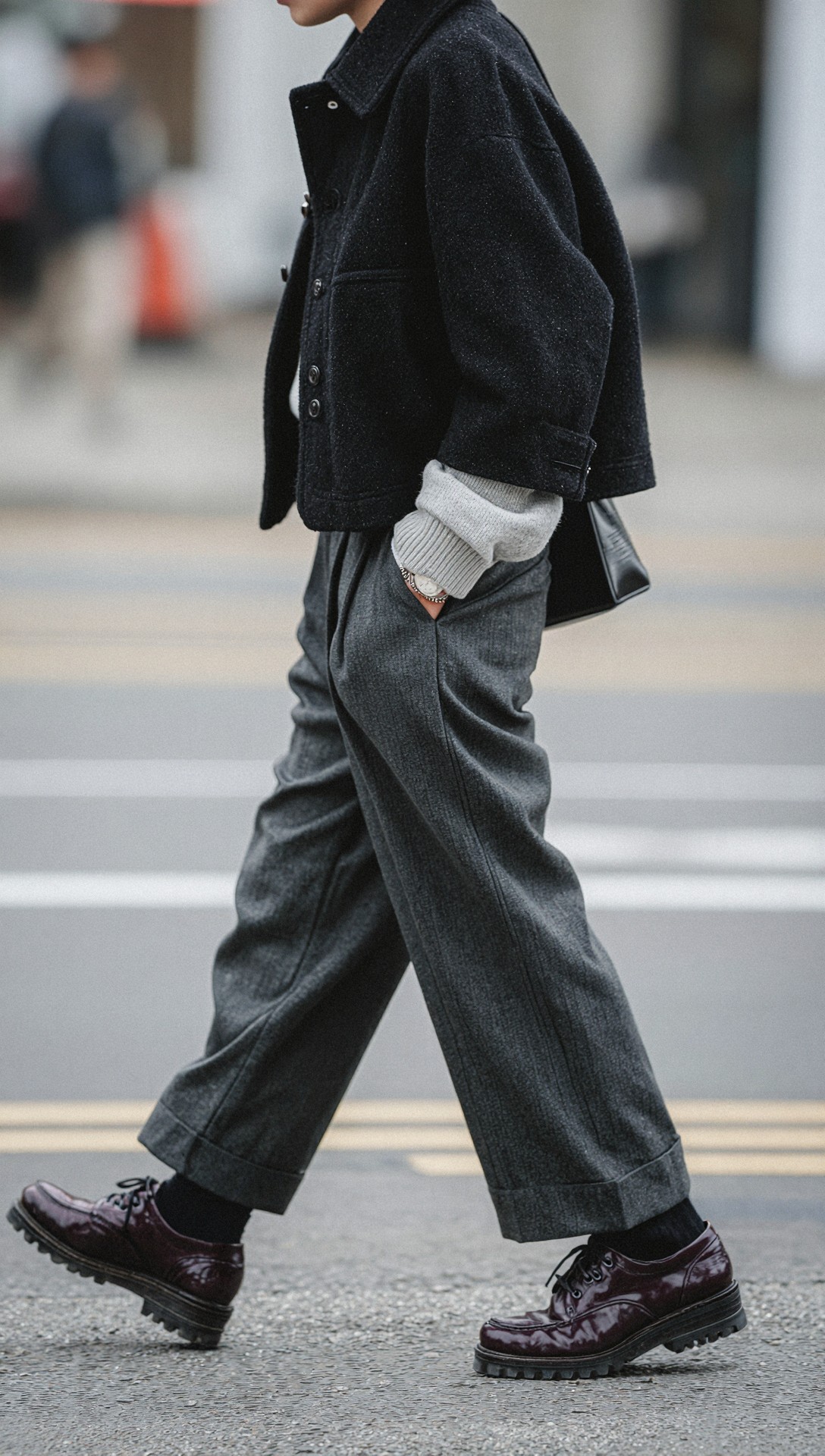
바지 밑단이 신발을 지나치게 가리지는 않는지, 그리고 양쪽 로퍼가 같은 색상과 구조를 유지하는지 확인하세요. 이 설정이 잘 작동한 이유는 움직임이 과하지 않았기 때문입니다. 더 강한 동작은 왜곡을 증가시켰습니다.
가방: 하이브리드 프롬프트에서 가장 좋고, 손이 개입하면 가장 나쁨
가방은 이번 테스트에서 상업적으로 가장 가능성이 높은 카테고리였습니다. 제품 단독 프롬프트는 형태 정의가 매우 깔끔했지만, 하이브리드 editorial 프롬프트는 스케일, 핸들 드롭, 그리고 가방이 의상과 함께 어떻게 놓이는지를 보여주는 데 더 뛰어났습니다.
문제는 손이 가방을 강하게 쥐기 시작하면 모델이 손가락, 하드웨어, 스트랩 부착 지점을 변형하기 시작한다는 점입니다. 그래서 가방용 AI product photography fashion은 포즈가 단순할 때 가장 안정적입니다.
첫 번째 가방 테스트는 제품 중심으로 유지했습니다.
Topic: Structured top-handle leather bag on minimal set
Genre: Luxury Product Photography
Camera: Phase One XF IQ4
Lens: 80mm f/10
Lighting: large diffused overhead source with soft bounce fill
Location: cream studio tabletop with stone block prop
Style: high-end luxury accessories campaign
Final Prompt: accessories close-up of a structured medium-size top-handle leather bag in warm taupe, brushed gold hardware, subtle edge paint, clean gusset shape, detachable shoulder strap neatly arranged, placed on a cream tabletop beside a minimal stone block, no clutter, premium luxury product photography, overhead diffused light with soft bounce fill, visible leather grain and hardware reflections, elegant neutral palette, Phase One precision, 80mm product lens feel, sharp shape definition, refined campaign composition suitable for premium retail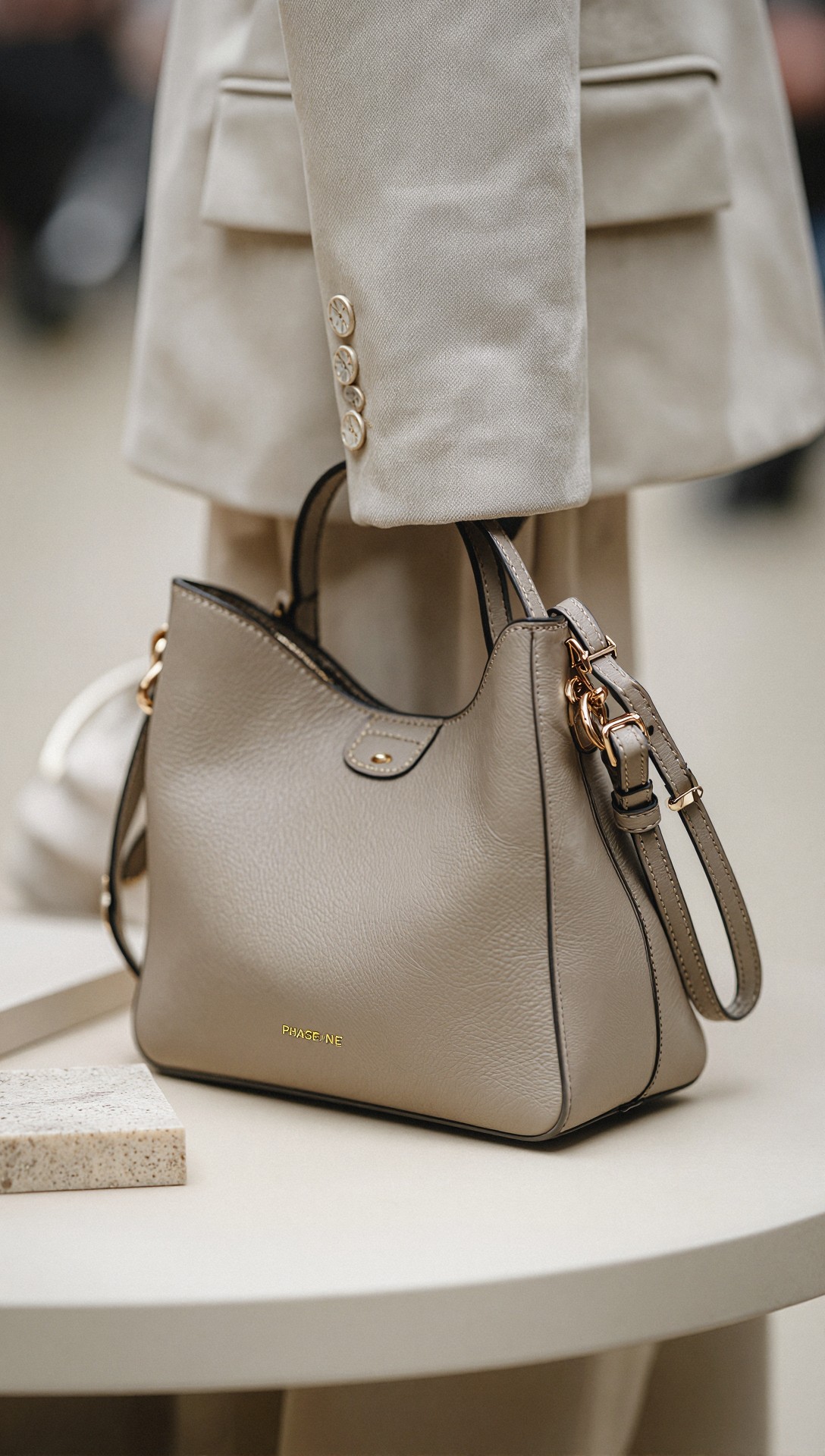
핸들 부착 지점, 지퍼 경로, 하드웨어 반사가 녹아내린 것처럼 보이지 않고 의도적으로 보이는지 확인하세요. 제 테스트에서는 분리된 가방 샷이 전체 결과물 중 가장 깔끔한 편에 속했습니다.
그다음에는 스케일과 스타일링 맥락을 테스트하기 위해 하이브리드 editorial 설정으로 이동했습니다.
Topic: Structured bag worn with layered fashion lookbook styling
Genre: Lookbook Photography
Camera: Leica SL2-S
Lens: 50mm f/4
Lighting: soft north-window daylight
Location: Scandinavian minimalist retail interior
Style: clean luxury lookbook
Final Prompt: head-to-toe lookbook shot inside a Scandinavian minimalist retail space, model wearing an oversized camel wool coat over a fine white turtleneck, dark straight-leg denim, black leather ankle boots, carrying a structured taupe top-handle bag at hip height, full outfit visible, bag size and proportion clearly readable, calm standing pose, clean racks and pale wood retail interior in the background, soft north-window daylight, understated luxury styling, Leica SL2-S rendering, 50mm balanced framing, clear coat texture, boot shape, and bag hardware without exaggerated glamor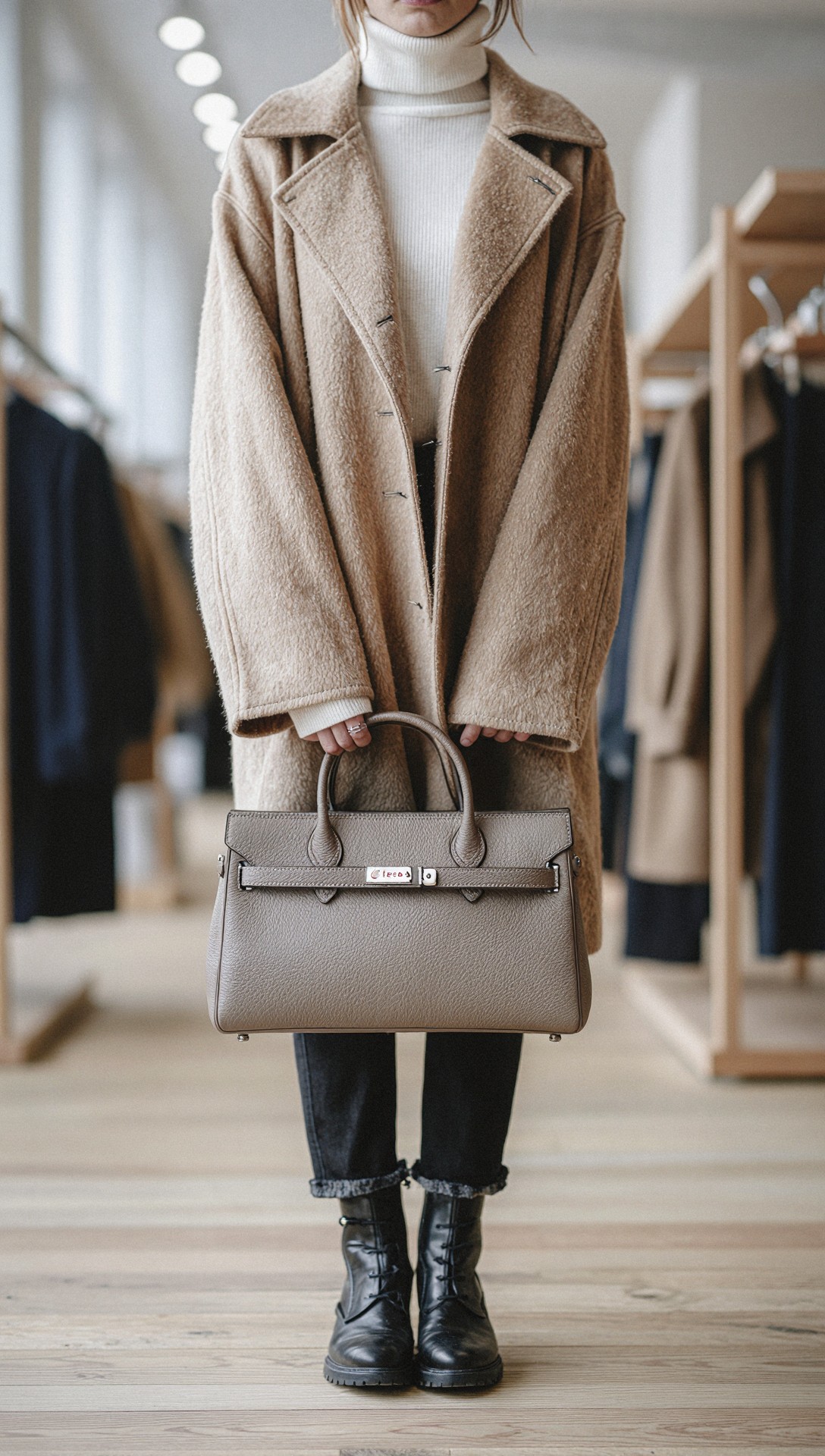
가방의 스케일이 신체와 맞는지, 스트랩이 사라지지는 않는지, 코트 소매가 핸들과 자연스럽게 상호작용하는지 확인하세요. 이 프롬프트는 분리된 제품 샷보다 더 강한 머천다이징 맥락을 제공했습니다.
실패한 시도: 의류와 가방을 위한 editorial 움직임
가장 약한 결과물은 너무 많은 움직임을 요구한 프롬프트에서 나왔습니다. 휘날리는 코트, 활동적인 보행, 돌아간 어깨, 몸을 가로지르는 가방 스트랩은 모델이 즉흥적으로 만들어낼 기회를 너무 많이 제공했습니다.
이 테스트는 editorial fashion AI가 어디까지는 제작 단축 수단이고, 어디서부터는 아트 디렉션 룰렛이 되는지를 보여주었다는 점에서 유용했습니다.
Topic: Fashion campaign movement shot with coat, bag, and boots
Genre: Luxury Campaign
Camera: RED V-RAPTOR cinematic capture
Lens: 24-70mm at 45mm T4
Lighting: sunset backlight with soft reflector fill
Location: Milan stone arcade at dusk
Style: luxury fashion campaign
Final Prompt: three-quarter outfit editorial with dynamic walking motion through a Milan stone arcade, long black fluid coat moving in motion over a cream silk blouse and narrow tailored trousers, glossy black ankle boots, structured burgundy shoulder bag tucked under one arm, dramatic sunset backlight, cinematic luxury campaign mood, confident stride, warm highlights against cool stone shadows, visible garment movement, rich fashion color contrast, RED V-RAPTOR cinematic realism, 45mm fashion framing, premium magazine composition with full styling logic still readable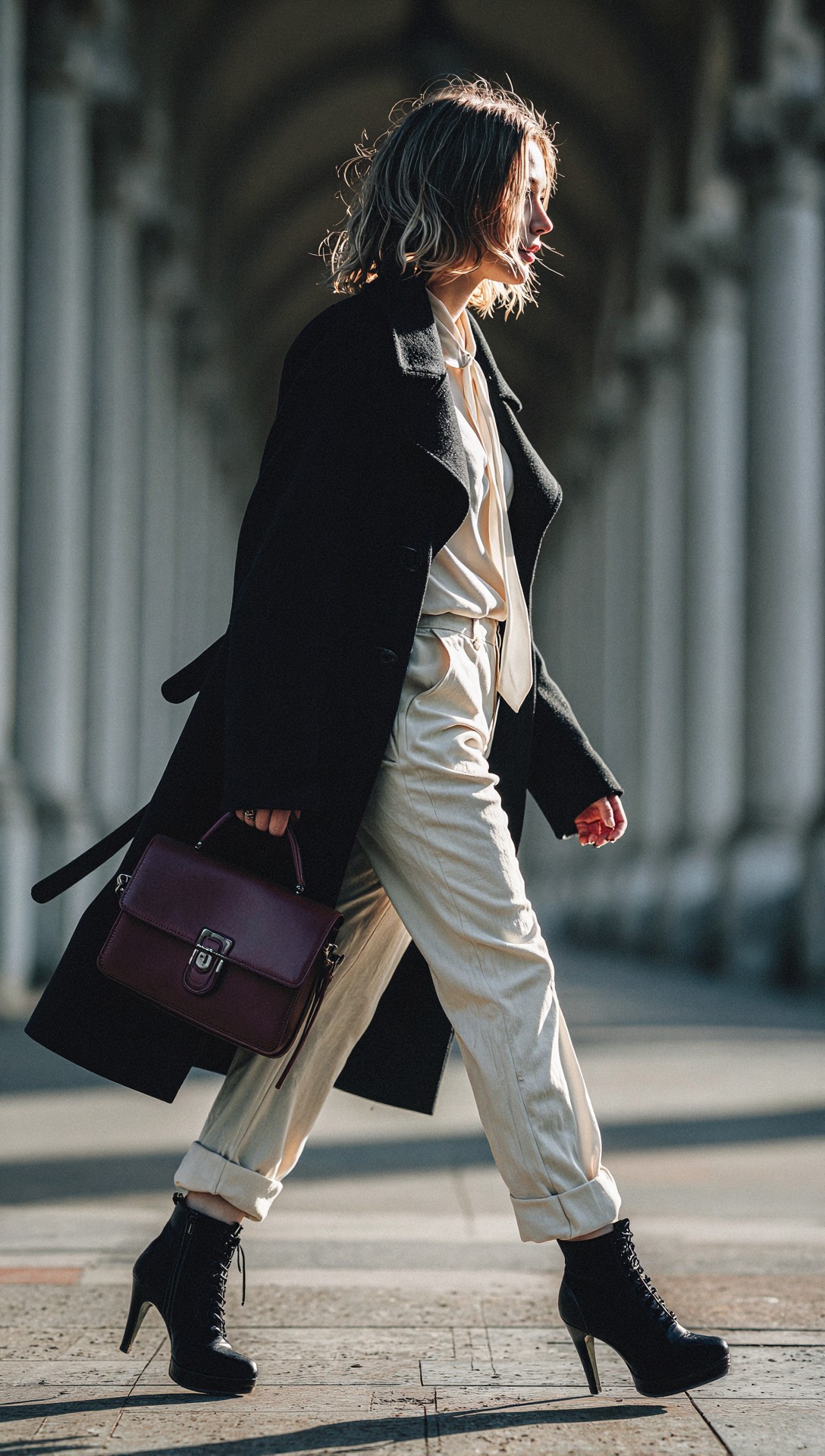
이미지는 첫눈에 인상적으로 보일 수 있지만, 코트 가장자리, 가방 스트랩의 연속성, 바지 길이, 그리고 움직임 속 부츠 형태를 살펴보세요. 이 테스트에서는 네 영역 모두 빠르게 불안정해졌습니다.
수정: 움직임을 줄이고 의복 구조 논리를 강화하기
그 실패를 회복하기 위해 저는 동작을 줄이고 구조적 언어를 늘렸습니다. 서 있기, 기대기, 또는 천천히 걷는 포즈가 극적인 움직임보다 더 안정적이었습니다. 가방 위치, 정확한 아우터웨어 상태, 보이는 신발 영역을 명시하는 것도 도움이 되었습니다.
이 수정 프롬프트는 campaign 무드는 유지하면서도 모델의 임의 생성을 제한했습니다.
Topic: Controlled luxury campaign frame with stable accessory styling
Genre: Fashion Campaign Editorial
Camera: Hasselblad X2D 100C
Lens: 55mm f/5.6
Lighting: late afternoon directional window light
Location: Milan hotel corridor with textured plaster walls
Style: elegant luxury fashion editorial
Final Prompt: three-quarter outfit editorial in a Milan hotel corridor, model paused mid-step rather than full motion, tailored black coat worn open but controlled, ivory silk blouse neatly tucked into straight charcoal trousers, pointed black ankle boots fully visible, burgundy shoulder bag resting naturally beneath the arm with strap clearly attached, composed posture, subtle serious expression, late afternoon directional light from side windows, soft shadow structure, luxury editorial palette of black ivory burgundy and warm stone, Hasselblad X2D clarity, 55mm lens, premium magazine realism with strong garment construction and accessory stability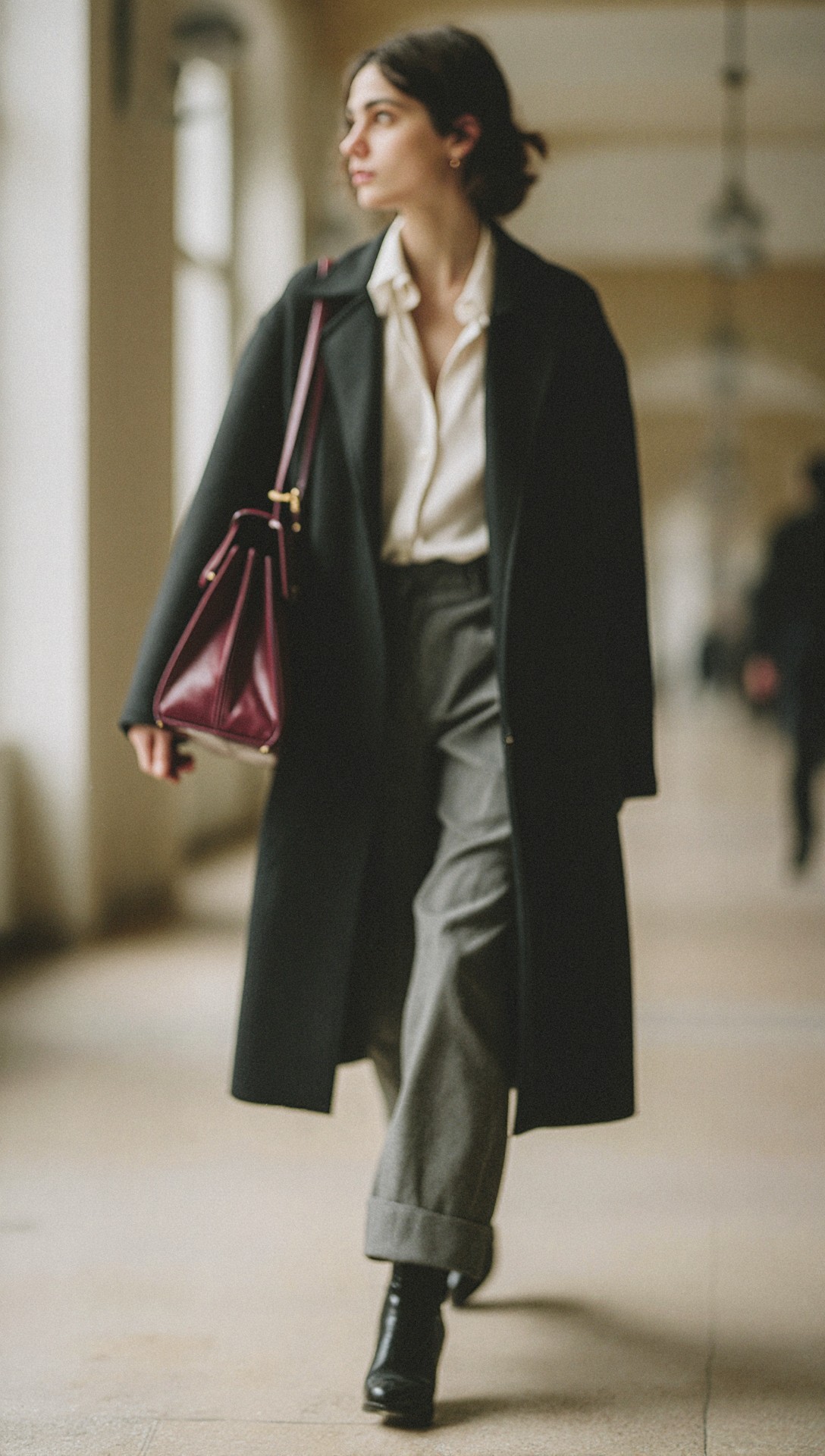
코트 여밈의 벌어짐, 스트랩 고정 지점, 부츠 위로 떨어지는 바지의 브레이크를 확인하세요. 이 버전에서 가장 강한 결과는 단순히 무너지는 요소가 더 적었다는 점이었습니다.
룩북과 캠페인 레이아웃: 유용하지만, 구성 제어가 있을 때만
editorial fashion AI 에셋을 찾는 많은 팀은 단일 히어로 프레임만 필요한 것이 아닙니다. 이들에게 필요한 것은 전신, 디테일 크롭, 액세서리 크롭, 머천다이징 뷰로 구성된 페이지 시스템입니다. 모델은 이를 구현할 수 있지만, 프롬프트가 막연한 콜라주가 아니라 레이아웃 논리를 요청할 때만 가능합니다.
룩북 사진 프롬프트가 여러 패널에 걸쳐 의상 일관성을 유지할 수 있는지 확인하기 위해 그리드 스타일 출력을 테스트했습니다.
Topic: Multi-panel fashion lookbook page for apparel and accessories
Genre: Catalog Editorial Layout
Camera: Canon EOS R3
Lens: 24-70mm at 50mm f/6.3
Lighting: bright diffused studio daylight simulation
Location: white studio with layout-ready negative space
Style: modern retail lookbook design
Final Prompt: catalog grid page featuring one coordinated fashion story across multiple panels, main head-to-toe look in an oversized navy blazer, striped fine knit, white wide-leg trousers, black loafers, and structured tan shoulder bag, supporting panels include a three-quarter crop, a shoe detail crop, and a bag detail crop, clean white studio environment, consistent lighting across every panel, retail-ready editorial layout with generous negative space, modern department-store lookbook styling, Canon EOS R3 commercial sharpness, 50mm balanced framing, consistent garment colors and accessory proportions across all panels
아이템 색상이 패널마다 일관되게 유지되는지 확인하세요. 여기서 흔한 실패는 와이드 뷰와 디테일 크롭 사이에서 가방이나 신발의 톤이 달라지는 것이었습니다.
의류 디테일과 원단 사실감: 매크로 프롬프트가 도움이 되는 지점
상업적 질문이 "AI가 프리미엄 원단과 제작 디테일을 보여줄 수 있는가?"라면 답은 그렇습니다. 단, 제어된 클로즈 디테일에서만 가능합니다. 니트 텍스처, 가죽 결, 퀼팅, 하드웨어에는 잘 작동하지만, 복잡한 테일러드 의류의 정확한 스티칭 구조에는 상대적으로 약합니다.
이 디테일 테스트는 더 넓은 패션 캠페인 프롬프트 세트를 위한 보조 이미지 중 가장 유용한 것 중 하나였습니다.
Topic: Tailoring and fabric detail for luxury outerwear
Genre: Garment Detail Macro
Camera: Sony A1
Lens: 90mm macro f/8
Lighting: soft side light with narrow negative fill
Location: neutral studio corner with textured plaster wall
Style: premium fashion detail editorial
Final Prompt: garment detail macro focused on the craftsmanship of a luxury camel wool coat, visible notch lapel edge, horn button closure, precise topstitching, dense brushed wool texture, layered over a fine rib knit in cream, a glimpse of dark leather glove and structured bag handle entering frame, elegant editorial macro composition, neutral plaster backdrop, soft side light shaping texture without harsh glare, Sony A1 sharpness, 90mm macro clarity, refined luxury fashion detail image suitable for campaign support assets
스티치 라인이 깔끔하게 유지되는지, 버튼홀이 구조적으로 자연스러운지 확인하세요. 이 테스트에서는 클로즈 디테일이 전신 샷보다 더 프리미엄하게 보이는 경우가 많았지만, 전신 샷을 대체할 수는 없었습니다.
AI clothing product photography를 게시하기 전에 확인해야 할 것
광고, PDP, 룩북 페이지에 출력을 사용하기 전에 다음 체크리스트를 실행하는 것이 좋습니다.
품질 관리 체크리스트
- 왼쪽과 오른쪽 신발이 같은 모델, 색상, 높이인가?
- 가방 손잡이가 양쪽에서 자연스럽게 연결되어 있는가?
- 코트 라펠, 칼라, 커프스, 밑단이 올바르게 대칭을 이루는가?
- 바지가 신발 위에서 자연스럽게 떨어지는가?
- 의류 원단이 의도한 카테고리와 맞는가: 울, 실크, 데님, 니트, 가죽?
- 하드웨어 디테일이 여러 뷰에서 일관되게 반복되는가?
- 배경이 어두운 의류를 삼키지 않고 제품 선명도를 돕고 있는가?
- 손이 제품을 만지고 있다면, 손가락과 그립이 구조적으로 올바르게 보이는가?
- 멀티 패널 레이아웃을 사용한다면, SKU가 크롭 전반에서 시각적으로 동일하게 유지되는가?
더 까다로운 파일의 경우, 가장 강한 이미지를 [upscaler](/upscaler)에 통과시키면 디테일이 실제로 해결된 것인지, 아니면 겉보기만 선명한 것인지 확인하는 데 도움이 됩니다. 아직 프롬프트를 반복 개선 중이라면, 더 많은 변형을 생성하기 전에 [Prompt Lab](/promptlab)에서 샷 언어를 다듬는 것이 더 좋습니다.
이 테스트에서 관찰된 강점
강점은 분명했습니다.
- 가방은 단독 또는 가볍게 스타일링된 프레임에서 잘 작동했습니다
- 신발은 포즈가 제어된 상태라면 에디토리얼 맥락에서 더 좋아졌습니다
- 의류는 프롬프트가 실루엣, 레이어링 순서, 핏을 명시했을 때 개선되었습니다
- 룩북 프롬프트는 전체 스타일링 콘셉트를 판매하는 데 있어 원시 카탈로그 프롬프트보다 더 나았습니다
- 하이브리드 프롬프트는 럭셔리 fashion editorial 사용 사례에서 가장 좋은 상업적 중간 지점을 제공했습니다
한계와 실패 위험
약점도 일관되게 나타났습니다.
- 극적인 움직임은 의류와 액세서리 드리프트를 유발했습니다
- 테일러드 의류는 부드러운 니트나 아우터웨어보다 여전히 더 어려웠습니다
- 콜라주나 멀티 앵글 프롬프트에서는 제품 정체성이 불안정해졌습니다
- 가방과 손의 상호작용은 구조적 오류를 빠르게 증가시켰습니다
- 일부 이미지는 작은 크기에서는 프리미엄하게 보였지만, 클로즈업 기본 머천다이징 검토에서 실패했습니다
실무 추천: 어떤 패션 작업에 어떤 워크플로가 가장 좋은가?
목표가 이커머스용 AI clothing product photography라면, 먼저 깔끔한 상업용 프롬프트로 시작하고 제품 형태가 안정된 뒤에만 에디토리얼 언어를 추가하세요.
목표가 무드보드, 소셜 광고, 랜딩 페이지 히어로를 위한 fashion campaign prompt라면, 에디토리얼 스타일링을 사용하되 움직임을 줄이고 의상 구조를 과할 정도로 명확히 지시하세요.
목표가 lookbook photography라면, 이 테스트에서 가장 좋은 설정은 하이브리드였습니다: 전신 프레이밍, 명확한 레이어링, 명명된 액세서리, 적당한 환경 디테일, 부드러운 방향성 조명.
다음 구분을 경험칙으로 사용하세요.
- 의류: 제품 우선, 그다음 절제된 에디토리얼 요소 추가
- 신발: 발 위치가 단순하다면 에디토리얼 친화적
- 가방: 손의 복잡성을 최소화한 하이브리드 프롬프트에서 가장 강함
추가 프롬프트 테스트 참고 자료로는 [gallery](/gallery)와 [tools](/tools) 섹션이 스타일 전반의 시각적 동작을 비교하는 데 유용합니다.
FAQ
AI clothing product photography에 가장 좋은 프롬프트 스타일은 무엇인가요?
이 테스트에서는 명명된 샷 유형, 제어된 조명, 명확한 의류 구조, 단순한 포즈를 포함한 제품 우선 프롬프트가 가장 안정적인 결과를 제공했습니다.
에디토리얼 패션 AI는 이커머스 이미지에 적합한가요?
때로는 적합하지만, 보통은 보조 에셋으로 사용하는 것이 좋습니다. 에디토리얼 프롬프트는 스타일링 가치를 더해주지만, 동시에 형태 변형, 잘못된 솔기, 일관되지 않은 액세서리가 생길 가능성도 높입니다.
AI 패션 사진에서 신발이나 가방이 의류보다 쉬운가요?
네. 전체적으로 가방이 가장 쉬운 카테고리였고, 그다음이 신발이었습니다. 테일러드 의류는 핏, 드레이프, 대칭이 쉽게 무너지기 때문에 가장 어려웠습니다.
AI 룩북 사진을 더 안정적으로 만들려면 어떻게 해야 하나요?
전신 또는 3/4 프레이밍, 적당한 움직임, 명확한 레이어 순서, 구체적인 액세서리, 중립적이거나 방향성이 있는 조명을 사용하세요. 지나치게 극적인 액션은 피하는 것이 좋습니다.
AI 제품 사진 패션 워크플로를 언제 피해야 하나요?
정확한 SKU 충실도가 법적 또는 상업적으로 중요한 경우에는 피하세요. 특히 테일러드 의류, 로고에 민감한 액세서리, 또는 모든 각도가 완벽히 일치해야 하는 다중 앵글 제품 세트의 경우가 그렇습니다.
결론
두 방향을 모두 테스트한 결과, 저는 카테고리 페이지, 제품 광고, 깔끔한 액세서리 에셋에는 AI 의류 제품 사진 프롬프트를 사용할 것입니다. 특히 가방과 신발에 적합합니다. 에디토리얼 룩북 프롬프트는 엄격한 SKU 정확도보다 실루엣과 분위기가 더 중요한 캠페인 목업, 시즌 스토리텔링, 스타일 중심 랜딩 페이지에 사용할 것입니다.
이 워크플로를 사용해야 하는 대상: 빠른 콘셉트 이미지나 프리미엄해 보이는 보조 에셋이 필요한 패션 마케터, 이커머스 팀, 아트 디렉터, 판매자.
이 워크플로를 피해야 하는 대상: 모든 각도에서 정확한 의류 재현이 필요한 팀, 또는 제품의 핵심이 구조적 정밀도인 브랜드.
이번 테스트에서 가장 중요했던 설정은 카메라 브랜드나 렌즈 이름이 아니었습니다. 그것은 촬영 규율이었습니다. 먼저 촬영 유형을 선택하고, 움직임을 줄인 다음, 의류 구조, 액세서리 배치, 조명을 지정하세요. 이 한 가지 변화가 가장 강력하고 재사용 가능한 결과를 만들어냈습니다.