You can write a detailed, well-structured prompt and still get an image with odd text, a prop you never asked for, or a composition that ignores half your instructions. Eight detailed Krea2 Turbo images let me show that, and they point to five specific mistakes: trusting brand names as style cues, assuming every clause gets obeyed, leaving text-carrying surfaces in the scene, leaving props unnamed, and judging at thumbnail size. The original version of this article listed 15 mistakes. I could back only these five with recorded prompts and images, so the rest are demoted to a short "commonly cited, not tested here" note near the end.
One limit up front: I have no recorded "before" prompts, so I cannot show a vague prompt producing a generic image next to a fixed one. Every prompt below was already specific (role, light, materials, lens). What the images show is where specific prompts still go wrong.
Mistake 1: Using a camera brand as a style cue
All eight prompts ended with a phrase like "Sony A7R V macro detail" or "Panasonic Lumix S5II look". Two images put something brand-like into the picture.
The watch prompt contained:
Sony A7R V macro detail, 90mm f/2.8 precision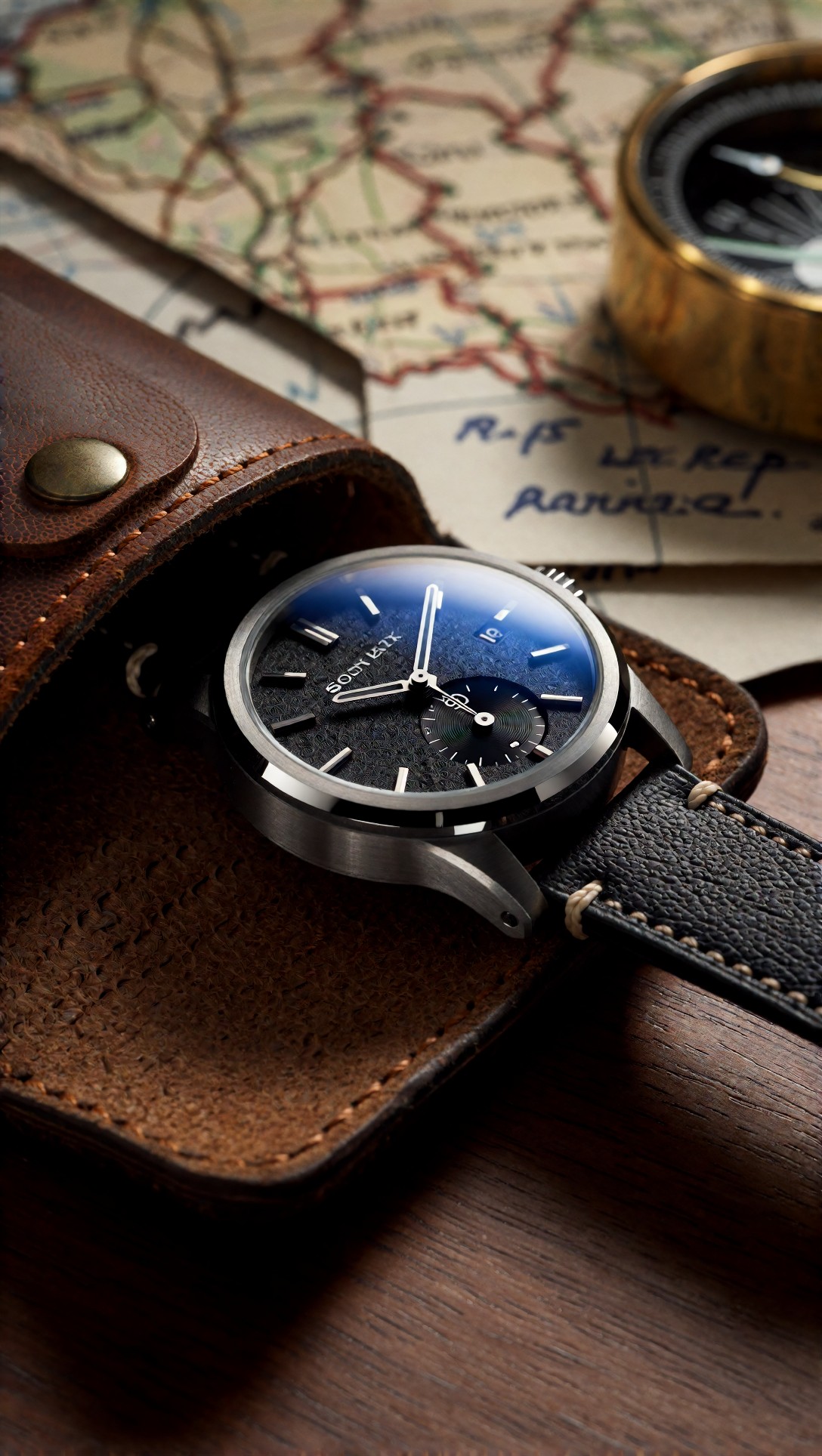
The dial carries printed lettering that the prompt never asked for, and in my reading it is a garbled echo of the camera name (something like "SOOY LA7X"). The handwriting on the map behind it is also unreadable. The parts the prompt did describe are sharp: brushed steel bezel, stitched leather strap, pebbled leather grain, a brass compass in the background, and reflections on the crystal.
The street-food prompt contained:
Panasonic Lumix S5II look, 28mm f/1.7 wide environmental perspective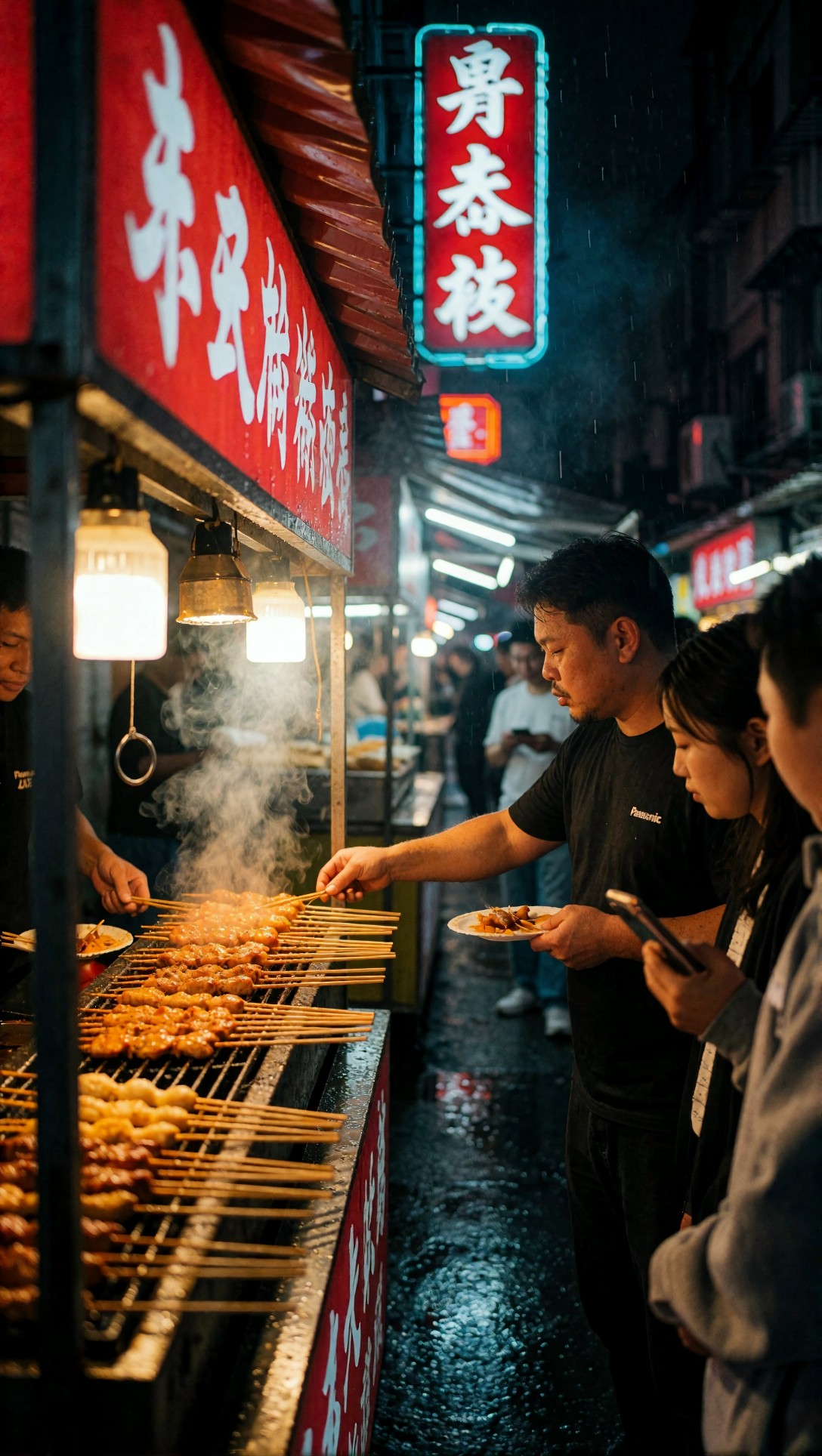
The vendor's black T-shirt has a small logo that reads "Panasonic" (the lettering is slightly distorted), and another shirt at the left edge carries smaller print. Whether the camera phrase caused this cannot be proven from one image each, but the wording match in both cases is hard to ignore. The other six prompts named Canon, Nikon, Leica, Fujifilm and ARRI, and I saw no obvious brand text in those images.
What to do: if the scene has shirts, labels, dials or signs, consider dropping the brand and describing the optical effect instead. That is a suggestion, not something I tested.
Mistake 2: Assuming every clause will be obeyed
A long prompt is a list of requests, and the model does not honor all of them equally. The same street-food prompt asked for:
vendor in sharp focus at the center-left of the frame, ... blurred queue of customers creating depthIn the image, the man serving is right of center, and the customers at the right edge are nearly as sharp as he is. Only the far background is soft. The placement and the blurred-queue instruction were not followed, even though the lighting, steam and skewers came out as described.
The kitchen prompt said:
wide interior composition, ... 24mm f/2.8 spatial depth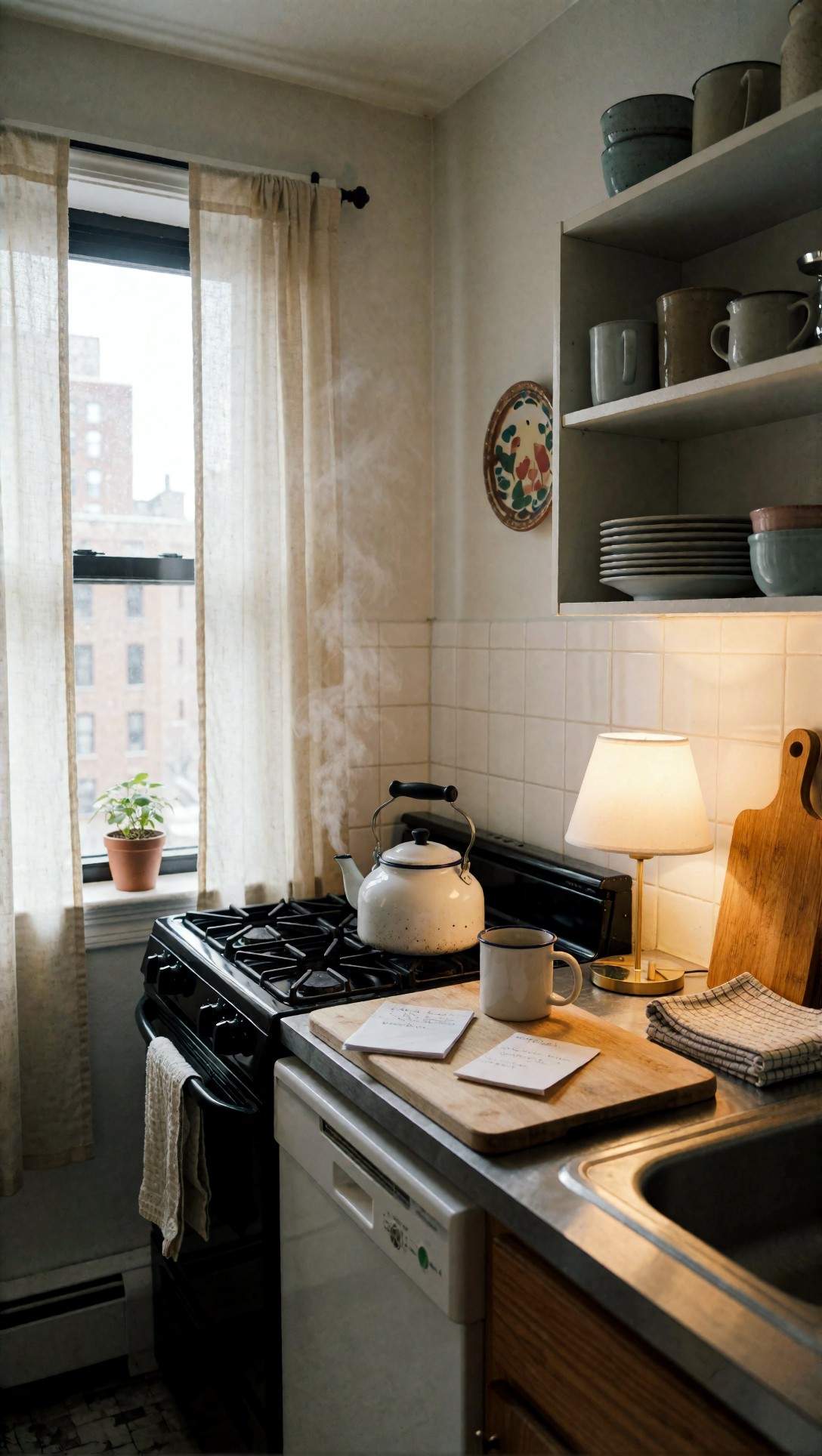
What came back is a tight, tall crop of one corner: stove, kettle, cutting board, lamp, and shelf. The smaller details that were requested are all there (steam from the kettle, a mug beside scattered notes, mismatched ceramics, a folded towel), so the prompt worked at the object level and missed at the framing level. The notes on the board also carry scribbles that are not readable.
The lesson is narrow: when a framing instruction matters, check for it explicitly in the result, and do not assume a long prompt carried it. If it is missing, shortening the prompt around that one instruction is a reasonable next experiment. I did not run it.
Mistake 3: Leaving text-carrying surfaces in the scene
The train-stop prompt asked for "faded station signage" and nothing else about text.
faded station signage, snow dusting the platform edges, muted green bench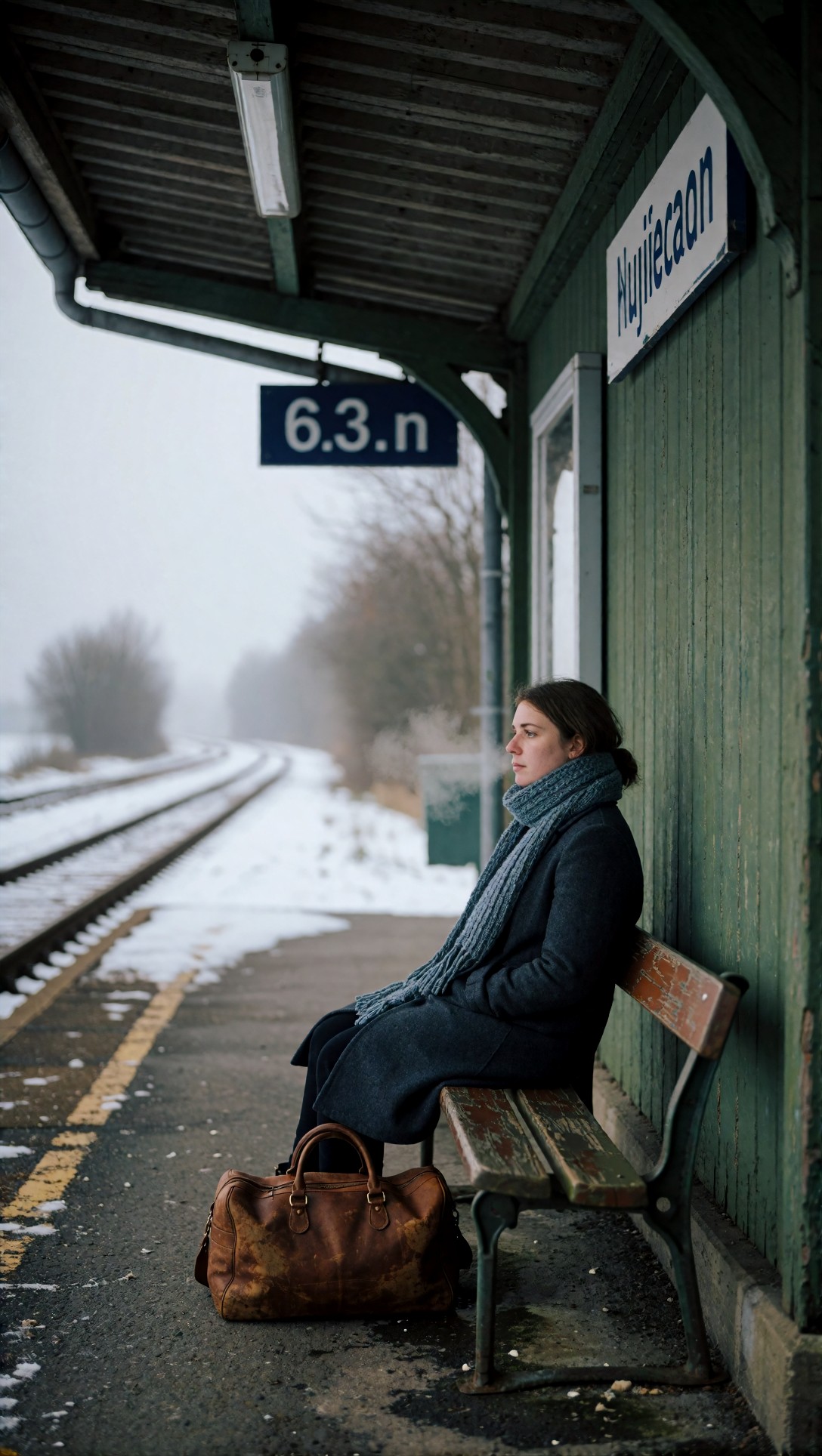
The mood is right: fog, snow along the rails, a scarf and wool coat with visible knit texture, and a scuffed leather bag. But the white board reads something like "Hujiecaon" and the hanging blue sign reads "6.3.n". Neither is a real word or time. Two other differences from the prompt: the bench seat is weathered red-brown with peeling paint (the green went to the wall behind it), and I could not see clearly visible breath. The traveler is also seated, which the prompt did not specify.
Known limitation, widely reported: image models render short, readable text unreliably. If a sign is not essential to the picture, leave it out of the prompt, or plan to replace it afterward.
Mistake 4: Leaving props unnamed
The ranger prompt asked for one hand gripping a lantern and nothing about a second object.
one hand gripping a lantern shielded from the wind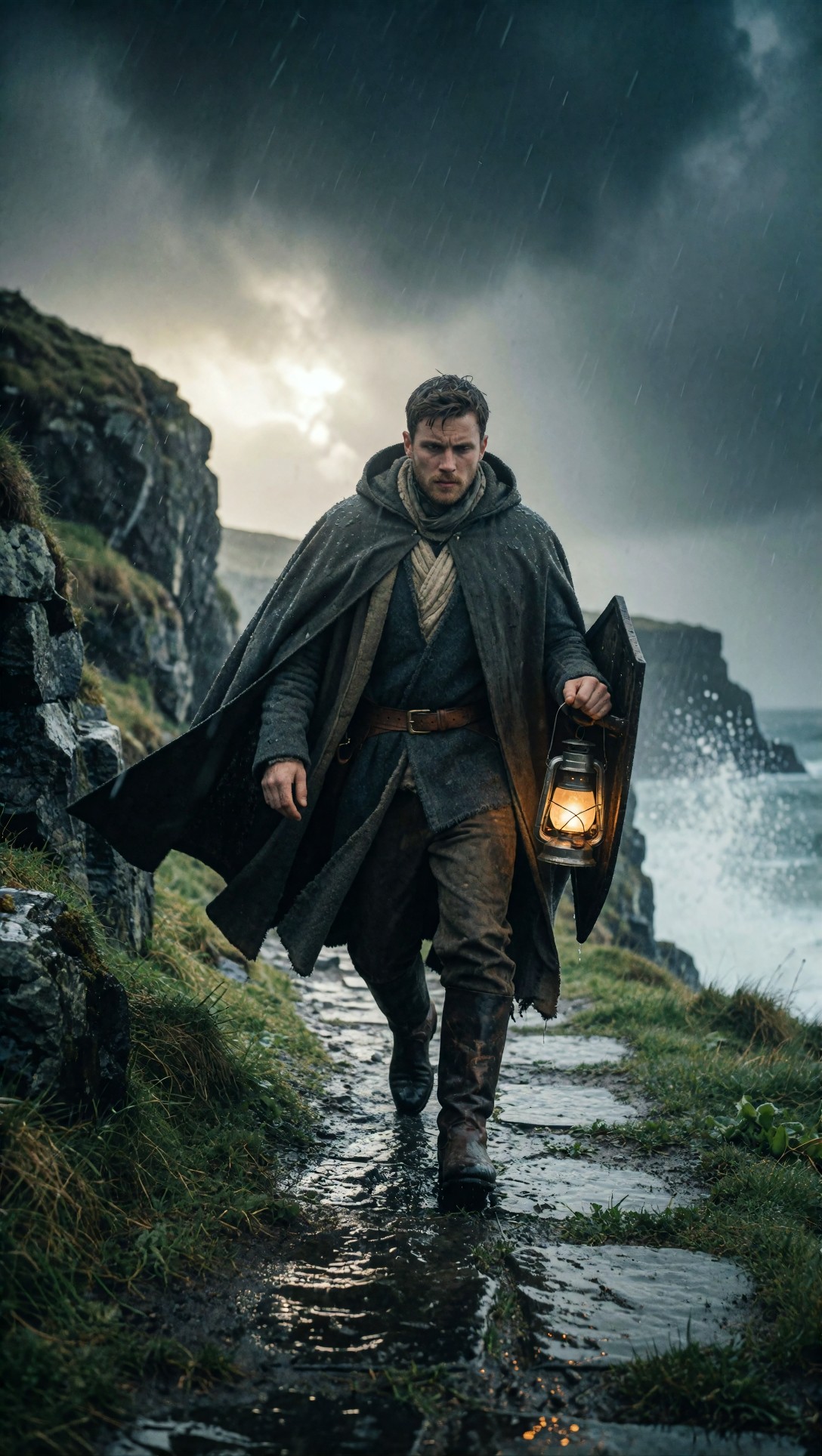
The costume reads as weathered and functional: water beads on the cloak, rough wool edges, a leather belt, muddy boots, wet flagstones and grass, light breaking through clouds behind him. The hand on the lantern handle is well formed. But directly behind the lantern there is a dark slab-like object, closer to a board or shield, that the prompt never mentioned. My guess is the model read "shielded from the wind" as a physical shield; I did not test that. The lesson: a phrase with an ambiguous noun can be drawn literally.
Mistake 5: Reviewing only at thumbnail size
Every image above looks finished at small size. The garbled dial text, the shirt logo, the sign lettering and the unwanted slab are all visible only on a full-size look. If you only scan a gallery of thumbnails, you will miss them.
What held up
The ceramic-artist image shows what the prompt's specifics can buy.
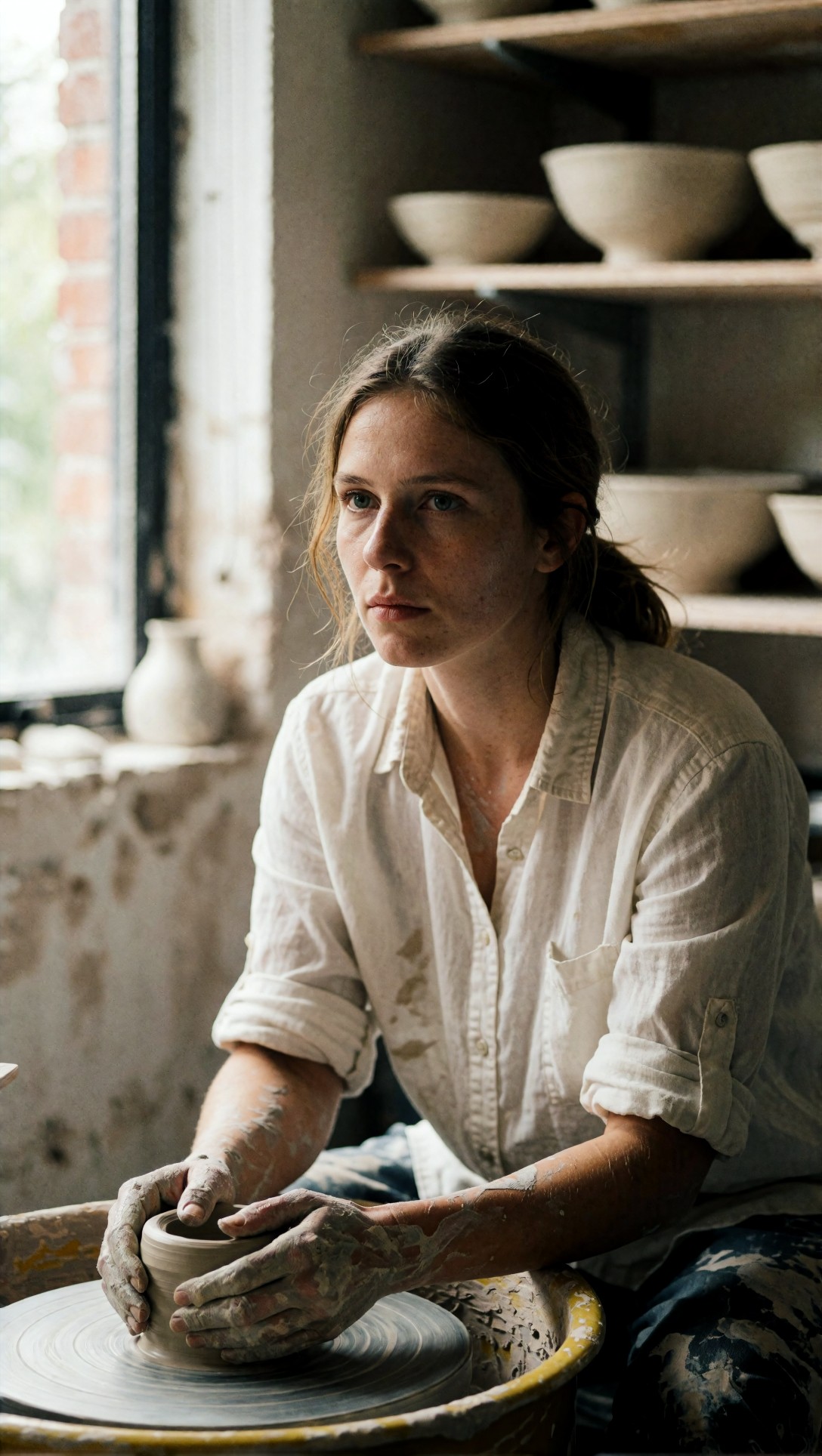
The prompt asked for clay on hands and forearms, an off-white work shirt with rolled cuffs, visible skin texture and north window light. The result has clay on both hands and forearms, soft creases in the linen at the rolled sleeves, freckles and uneven skin, and light from the left. Both hands on the clay are readable, with plausible finger count and grip. Across all eight images the hands were a non-issue in the ones I inspected, which does not mean the model never fails at hands; eight images is a small sample.
Mistakes that are commonly cited but not tested here
These come up often in prompting advice, and I have no images or recorded prompts that isolate them: adjectives like "beautiful" or "epic" in place of visual facts, stacking five or six style labels, omitting time of day, and forgetting to specify expression or gaze. They are plausible and consistent with general experience, but this article does not prove them. To test one properly, change only that one thing and keep the same seed if your tool allows it.
A cheaper way to iterate
Suggested prompt edits (unverified, not generated):
Remove the camera-brand phrase; add "no text, no logos on clothing or objects".Name the lantern as "a hand-held oil lantern; no shield or board".Try one edit per run, and compare at full size. The [Prompt Lab](/promptlab/en) can help you rewrite a prompt, and the [image generator](/create/en) lets you rerun it. If you want to inspect fine detail more closely, the [Upscaler](/upscaler/en) gives a larger view.
FAQ
Does a longer prompt fix generic results? Not by itself, and these eight images do not test that. All of them came from long prompts and still had the problems above.
Is it safe to keep lens and camera details? Focal length and aperture phrases showed no visible problem in these images. Brand names are the part to watch.
> What this article is based on. Model: Krea2 Turbo. Eight images generated on 2026-07-10 (files dated 2026-07-11); I opened all eight and show six. Generation records contain prompts and the model name only; no seed, steps, or guidance values were recorded, and there are no comparison runs. Statements about causes are hypotheses from single images.