AI Image Workflow for Beauty Campaign Testing: Generate Multiple Concepts Before the Photoshoot 한국어 요약
이 페이지는 ZView Space의 영어 원문을 한국어 검색 사용자도 이해할 수 있도록 정리한 SEO 요약입니다. 핵심은 단순한 얼굴 중심 이미지가 아니라 패션 에디토리얼, 룩북, 아웃핏, 프롬프트 테스트, 이미지 생성 워크플로우를 실제로 어떻게 구성할지입니다.
핵심 요약
- 원문 주제: AI Image Workflow for Beauty Campaign Testing: Generate Multiple Concepts Before the Photoshoot
- 목적: AI 이미지 생성에서 outfit, silhouette, fabric, pose, location, camera framing을 더 명확하게 설계합니다.
- 활용 범위: Z-Image Turbo, Krea2 Turbo, Qwen Image, Anima, SeedVR2 같은 이미지 생성 및 업스케일 워크플로우에 적용할 수 있습니다.
- SEO 관점: 제목, 설명, 이미지 alt, 프롬프트 예시가 실제 검색 의도와 맞아야 색인 가능성이 높아집니다.
한국어 사용자를 위한 체크포인트
1. 프롬프트가 얼굴 묘사에만 머물지 않고 전체 스타일과 의상 구성을 설명하는지 확인합니다. 2. 패션 이미지라면 상의, 하의, 아우터, 신발, 액세서리, 소재감, 촬영 장소를 분리해서 씁니다. 3. 생성 결과는 바로 게시하지 말고 디테일, 손, 의상 형태, 배경 일관성, 이미지 품질을 비교합니다. 4. 글 본문에는 실제 테스트 기준과 실패를 줄이는 방법이 들어가야 검색엔진에서 얇은 콘텐츠로 보일 가능성이 줄어듭니다.
원문 미리보기
Before a beauty campaign reaches the set, most of the expensive decisions have already been made: casting direction, color story, product focus, lighting approach, surface textures, and the emotional tone of the final images. An AI image workflow for beauty ca
---
Before a beauty campaign reaches the set, most of the expensive decisions have already been made: casting direction, color story, product focus, lighting approach, surface textures, and the emotional tone of the final images. An AI image workflow for beauty campaigns helps teams test those decisions early, using fast visual mockups before committing budget to production.
This tutorial shows how to use AI image generation to previsualize beauty ads, compare multiple visual routes, build stronger moodboards, and arrive at a shoot plan with fewer surprises. The goal is not to replace the photographer, retoucher, or art director. It is to create sharper creative alignment before the first frame is shot.
Why use AI before a beauty photoshoot?
Beauty campaigns are detail-sensitive. A small change in lip color, glass reflection, skin finish, or crop ratio can alter the entire feel of an ad. Traditional moodboards help, but they often mix references from different shoots, eras, and lighting conditions. AI-generated concept frames let you test ideas in a more unified way.
Useful pre-production tasks include:
- comparing hero image directions
- testing makeup color families against packaging
- previsualizing campaign crops for web, social, and retail
- exploring product-and-model compositions
- evaluating background palettes before set design
- creating cosmetic campaign mockups for approval decks
- checking whether the visual tone matches luxury, clinical, youthful, or editorial positioning
What an AI image workflow for beauty campaigns actually looks like
A practical workflow is usually built in five stages:
1. Define the campaign variables
Before prompting, list the parts of the image that matter most.
For beauty ads, that usually means:
- product category: lipstick, serum, cushion compact, fragrance, sunscreen
- hero promise: glow, hydration, pigment, clarity, softness, long wear
- audience tone: premium, playful, minimalist, dermocosmetic, trend-led
- image format: close-up beauty portrait, tabletop product shot, duo composition, lifestyle scene
- visual constraints: skin finish, packaging visibility, aspect ratio, logo-safe negative space
This prevents random image generation and keeps the process useful for decision-making.
2. Build 3 to 5 concept territories
Instead of generating one-off images, define a few creative directions. For example:
- Clean clinical glow
- Warm luxury radiance
- Color-pop Gen Z editorial
- Glass-skin minimalism
- Botanical hydration story
Each territory should feel different enough that a team can discuss preference clearly.
3. Generate concept frames, not final campaign art
At this stage, you are not chasing pixel-perfect perfection. You are testing:
n- emotional tone
- framing
- texture language
- product placement
- color harmony
- visual hierarchy
That means it is often smarter to generate multiple rough-but-specific directions than to overwork one image too early.
4. Review like an art director
Ask practical questions:
- Does the product read instantly?
- Is the skin finish believable for the brand?
- Does the background support or distract?
- Is the image more campaign, ecommerce, or editorial?
- What needs to be achieved in-camera versus in post?
5. Convert selected concepts into a shoot blueprint
Once the strongest directions are chosen, turn them into a production document:
- shot list
- makeup references
- lighting notes
- lens choices
- prop and surface references
- set palette
- retouching priorities
- crop variations for media placements
That is where beauty concept testing with AI becomes especially useful: it gives the crew a visual draft of the intended result.
Use case 1: Testing hero portrait directions for a skincare launch
A skincare campaign usually lives or dies on skin rendering. Before the photoshoot, generate a few hero portrait approaches with different levels of softness, shine, and luxury.
Try one route that feels clinical and fresh, and another that feels premium and sensual. This helps the brand team decide whether the launch should communicate science, aspiration, or a balance of both.
Topic: Dewy skincare hero portrait for serum launch
Genre: Beauty Campaign
Camera: Canon EOS R5
Lens: 100mm f/2.8 Macro
Lighting: Studio butterfly light with soft fill and subtle reflector bounce
Location: Minimal white beauty studio with translucent acrylic surfaces
Style: Clean commercial look
Final Prompt: Ultra-refined beauty campaign portrait for a skincare serum launch, model with luminous hydrated skin and minimal fresh makeup, hair sleek and tucked back, direct gaze with calm confident expression, shoulders bare to keep focus on complexion, soft butterfly studio light with gentle fill revealing smooth cheekbone highlights and natural skin texture, translucent acrylic surface and clean white studio environment, composition framed as a tight close-up with negative space for copy, cool white and pale pearl color palette, premium clinical atmosphere, Canon EOS R5 look, 100mm macro detail, realistic pores, glossy hydration highlights, elegant commercial beauty retouching, high-end skincare advertising quality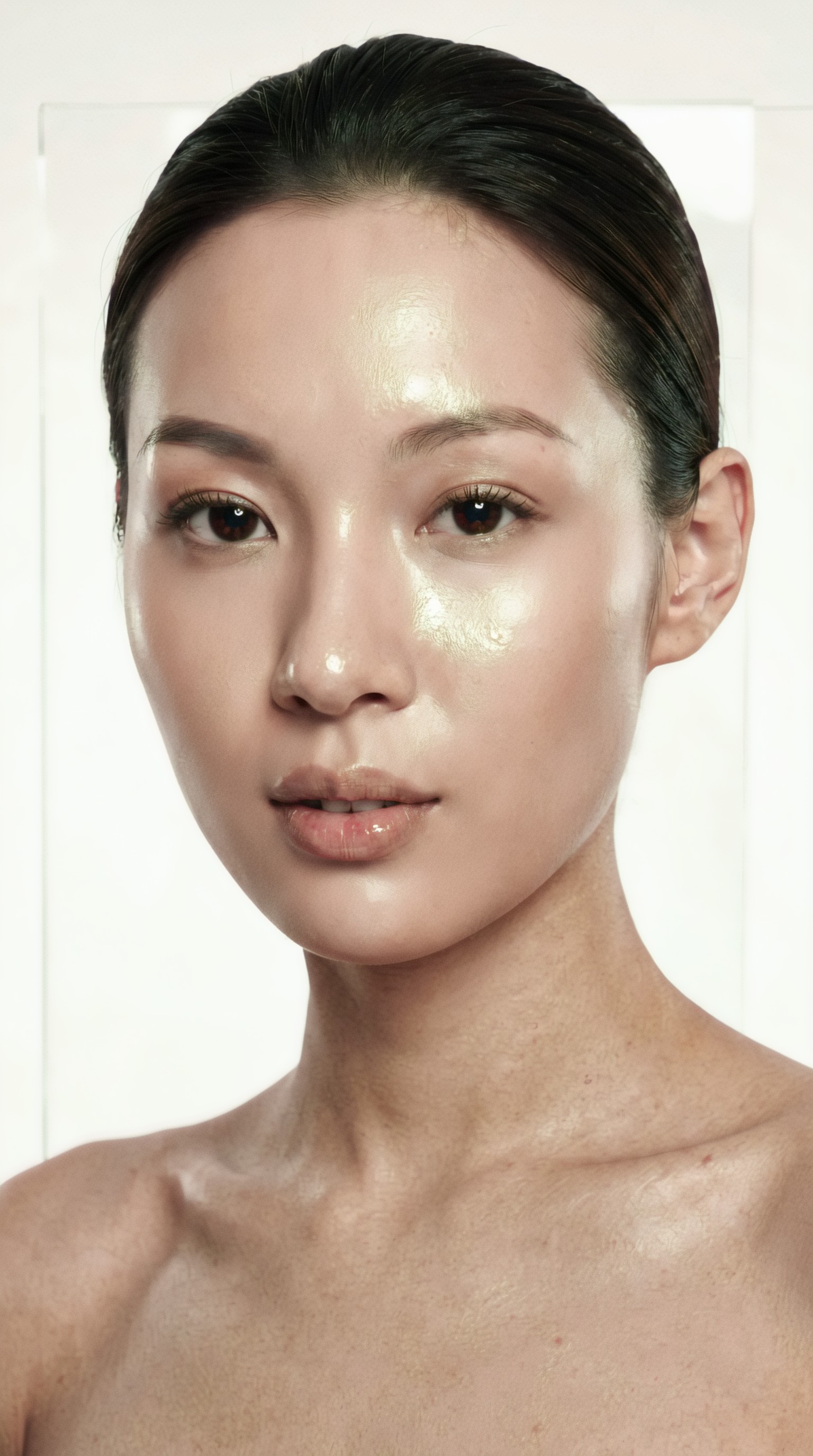
A second route can push the same product toward a warmer luxury tone.
Topic: Luxury radiance skincare portrait for premium serum campaign
Genre: Luxury Campaign
Camera: Nikon Z8
Lens: 85mm f/1.8
Lighting: Large softbox key light with warm gold reflector and subtle rim light
Location: Champagne-toned studio with brushed metal accents
Style: High-end beauty advertising
Final Prompt: Premium skincare campaign portrait featuring a model with radiant glowing skin, soft champagne makeup, brushed-up brows and glossy nude lips, elegant neck extension and slight three-quarter pose, serene elevated facial expression, warm softbox key light shaped with gold reflector glow and a delicate rim light along the jawline, champagne studio backdrop with brushed metallic highlights, luxurious neutral palette of ivory, beige, soft gold and blush, close beauty crop with polished magazine composition, Nikon Z8 clarity, 85mm f/1.8 depth separation, refined skin texture, subtle luminosity, upscale serum advertising aesthetic with cinematic polish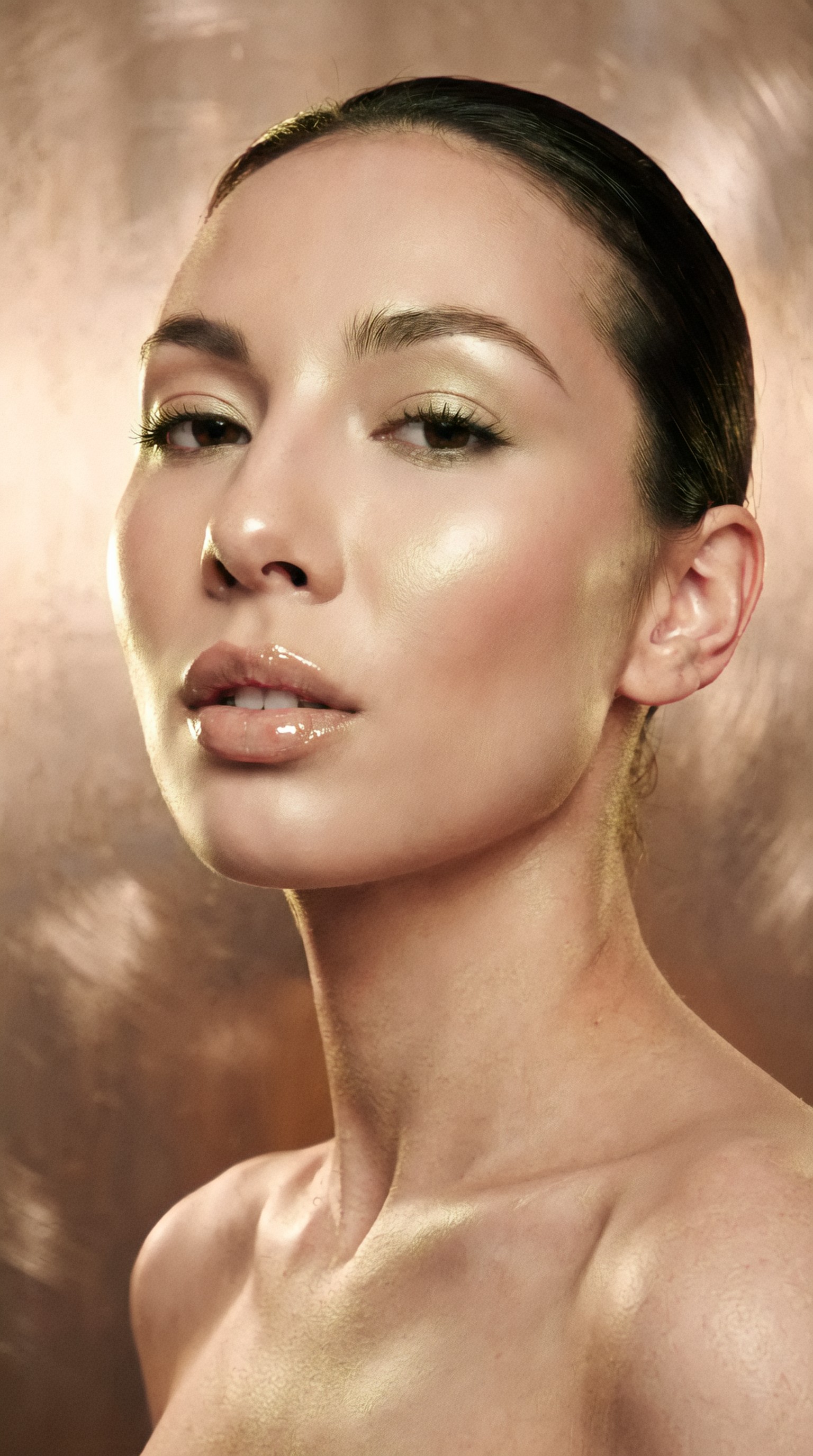
Use case 2: Previsualize lipstick campaign color stories
Lip campaigns often require early agreement on shade families. Instead of showing isolated swatches, use AI to mock up how coral, berry, brick red, or cool rose perform in a real beauty composition.
This is useful when teams are debating whether the launch should feel seasonal, timeless, bold, or soft.
Topic: Coral lipstick spring beauty ad concept
Genre: Fashion Editorial
Camera: Sony A7R V
Lens: 90mm f/2.8 Macro
Lighting: Softbox key light with peach gel bounce and clean catchlights
Location: Editorial studio set with pastel coral paper backdrop
Style: Korean magazine cover
Final Prompt: Beauty editorial close-up centered on a vivid coral lipstick campaign, model with smooth satin skin, softly sculpted cheeks, coral lip color as the hero element, hair pulled into a neat low bun, poised frontal pose with chin slightly raised, bright attentive eyes and fresh youthful expression, pastel coral seamless backdrop with subtle tonal variation, softbox key light creating crisp catchlights and flattering lip texture, palette of apricot, peach, rose beige and warm cream, glossy magazine framing with precise makeup detail, Sony A7R V realism, 90mm macro sharpness, premium lipstick advertising image with clean finish and modern Korean editorial styling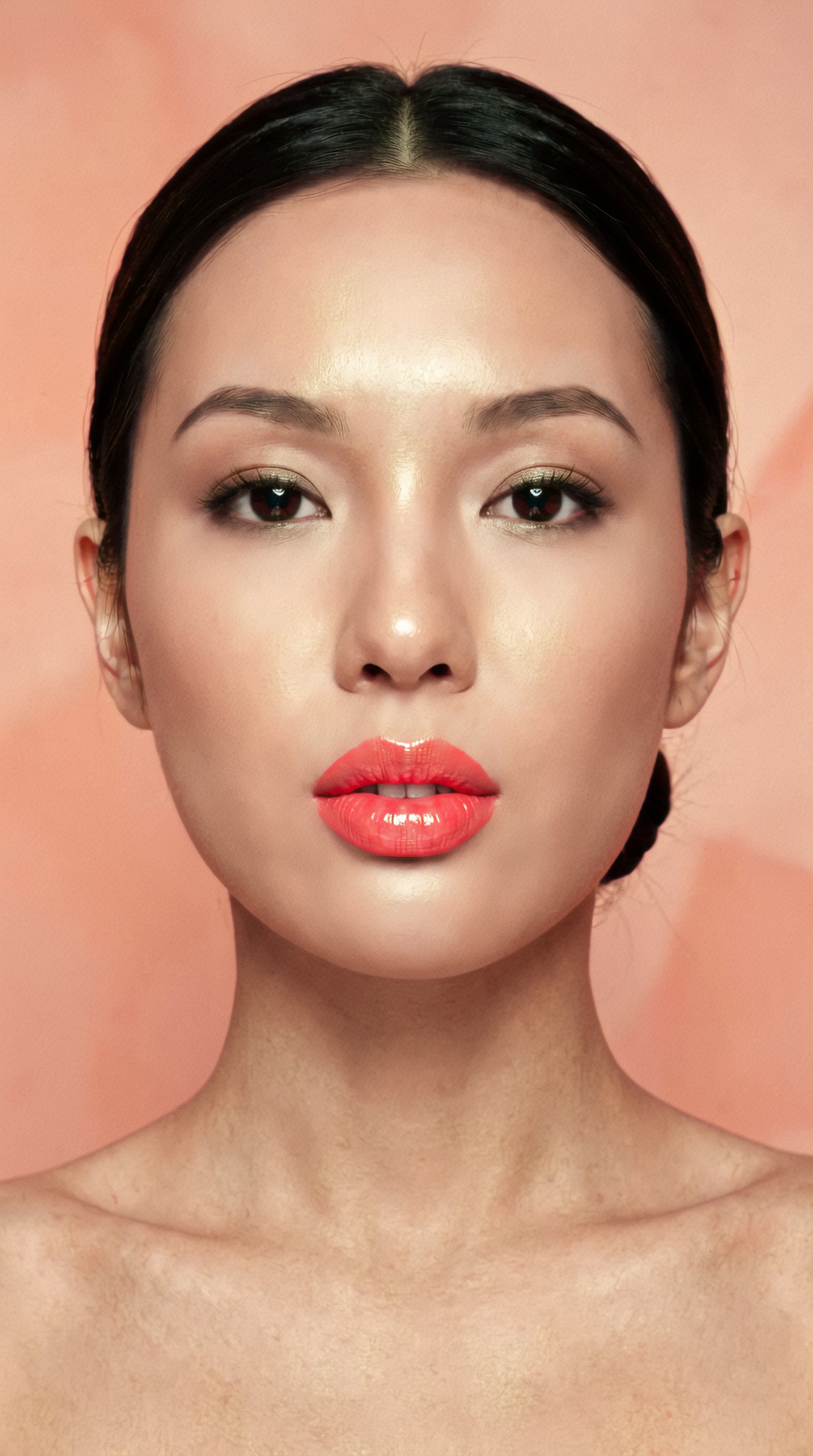
Topic: Deep berry lipstick evening campaign concept
Genre: Beauty Campaign
Camera: Fujifilm GFX100 II
Lens: 110mm f/2
Lighting: Moody soft key light with controlled shadow and burgundy rim light
Location: Dark plum studio with velvet texture backdrop
Style: Luxury fashion campaign
Final Prompt: Sophisticated beauty campaign portrait built around a deep berry lipstick shade, model wearing sleek black silk drape styling, luminous skin with softly matte finish, defined lashes and polished brows, rich berry lips sharply rendered, slightly turned pose with intense side glance, moody soft key light and subtle burgundy rim light for sculpted facial depth, backdrop in dark plum velvet with understated texture, color palette of wine, blackberry, black and antique rose, luxury editorial composition with dramatic negative space, Fujifilm GFX100 II medium-format detail, 110mm f/2 shallow depth of field, upscale evening beauty aesthetic with premium campaign presence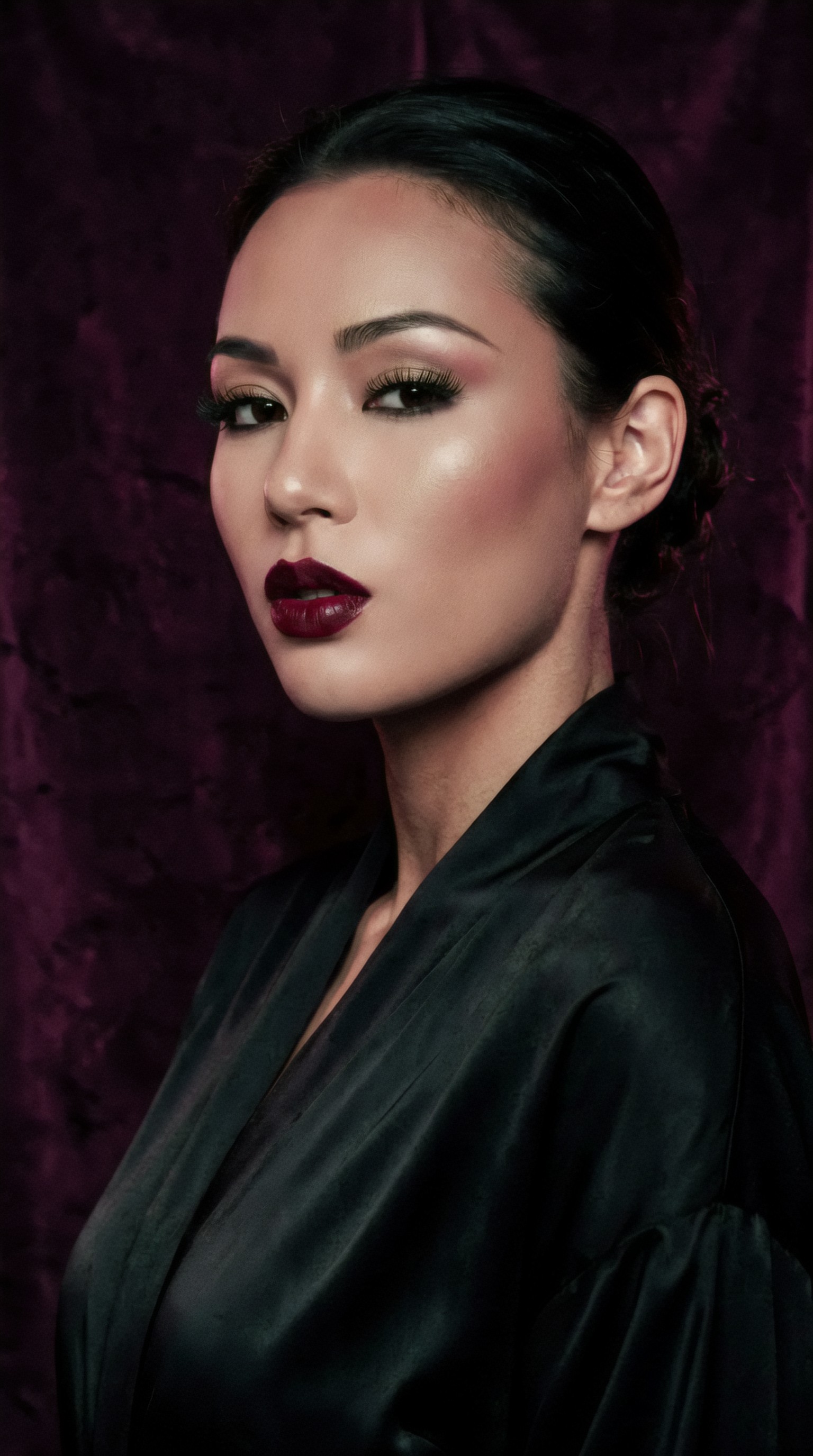
By comparing these generated directions side by side, teams can make stronger decisions about packaging overlays, wardrobe accents, and launch timing.
Use case 3: Create AI moodboards for beauty ads that feel internally consistent
Many moodboards fail because the references do not belong to the same visual world. AI can help you generate a set of connected frames with the same palette, lighting family, and emotional tone.
For example, if you are pitching a botanical hydration line, generate not just one beauty portrait, but a portrait, a product close-up, a half-body lifestyle frame, and a texture detail image. That creates a moodboard that feels like one campaign rather than a collage.
Topic: Botanical hydration beauty portrait with green freshness
Genre: Lifestyle Portrait
Camera: Leica SL2-S
Lens: 50mm f/1.4
Lighting: Overcast diffusion with soft reflector lift
Location: Glasshouse filled with dew-covered foliage and filtered natural light
Style: Elegant resort editorial
Final Prompt: Fresh beauty lifestyle portrait for a botanical hydration campaign, model with luminous bare-looking skin, soft cream-green styling, damp brushed-back hair, relaxed seated pose among lush greenhouse foliage, gentle smile and tranquil expression, overcast diffused daylight softened by greenhouse glass, subtle reflector lift to brighten the eyes, surrounding leaves with dew texture and airy depth, palette of sage, eucalyptus, ivory and pale mint, balanced composition with natural breathing room for campaign copy, Leica SL2-S naturalistic rendering, 50mm f/1.4 intimacy, realistic skin texture and fresh atmosphere, elevated botanical beauty advertising feel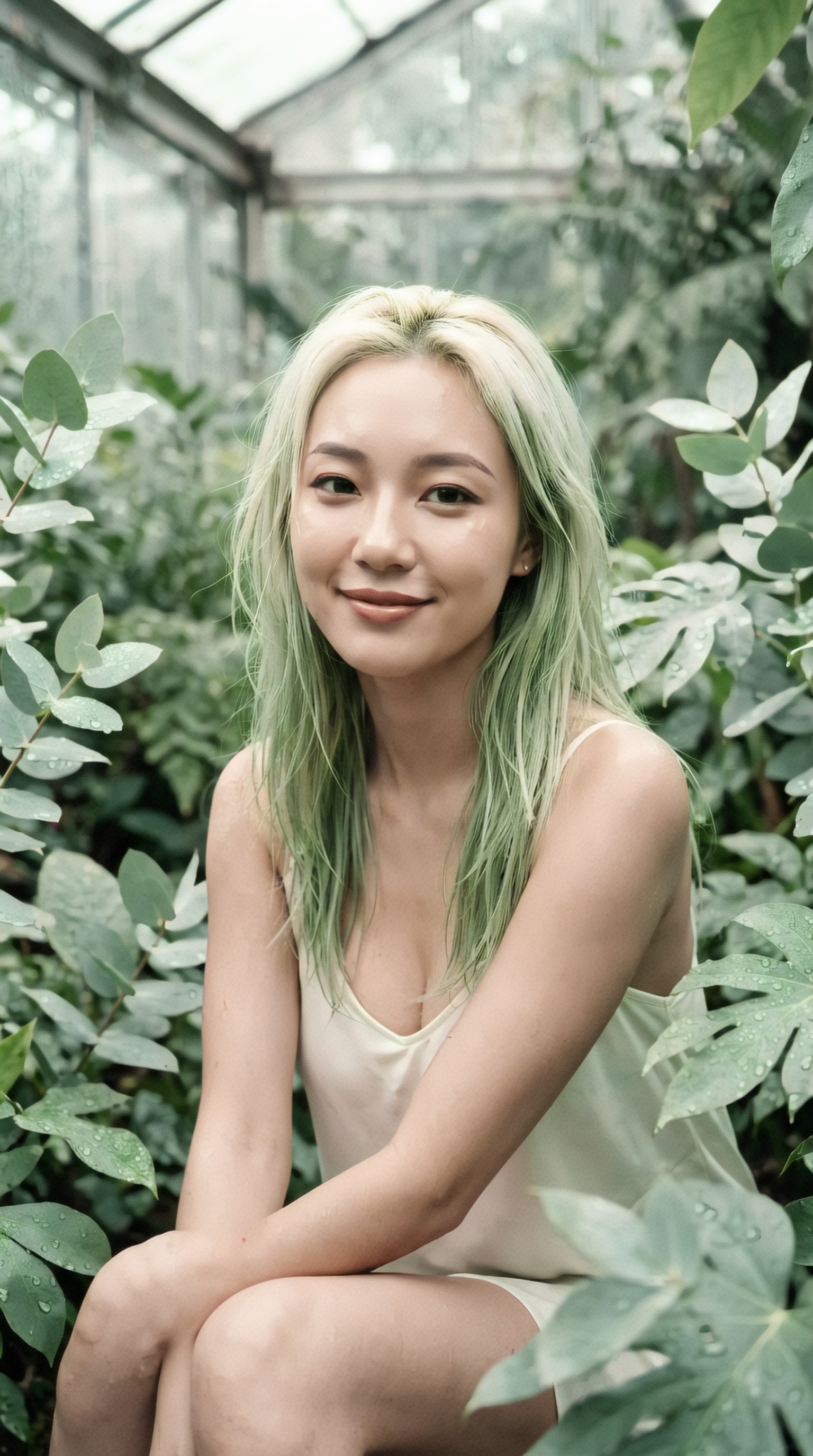
Topic: Botanical serum product still life with water texture
Genre: Product Editorial
Camera: Phase One XF IQ4
Lens: 120mm f/4 Macro
Lighting: Side softbox with backlit water reflections and controlled highlights
Location: Wet acrylic tabletop set with translucent green backdrop
Style: Clean commercial look
Final Prompt: High-end product editorial still life of a botanical serum bottle standing on a wet acrylic surface, delicate water droplets around the packaging, translucent green backdrop softly glowing from behind, side softbox defining glass edges and liquid transparency, mirrored reflections carefully controlled, palette of clear glass, soft green, silver and white, composition designed for premium skincare advertising with centered hero placement and space for logo, ultra-crisp macro detail, luxurious hydration atmosphere, Phase One medium-format precision, 120mm macro realism, premium cosmetic campaign mockup aesthetic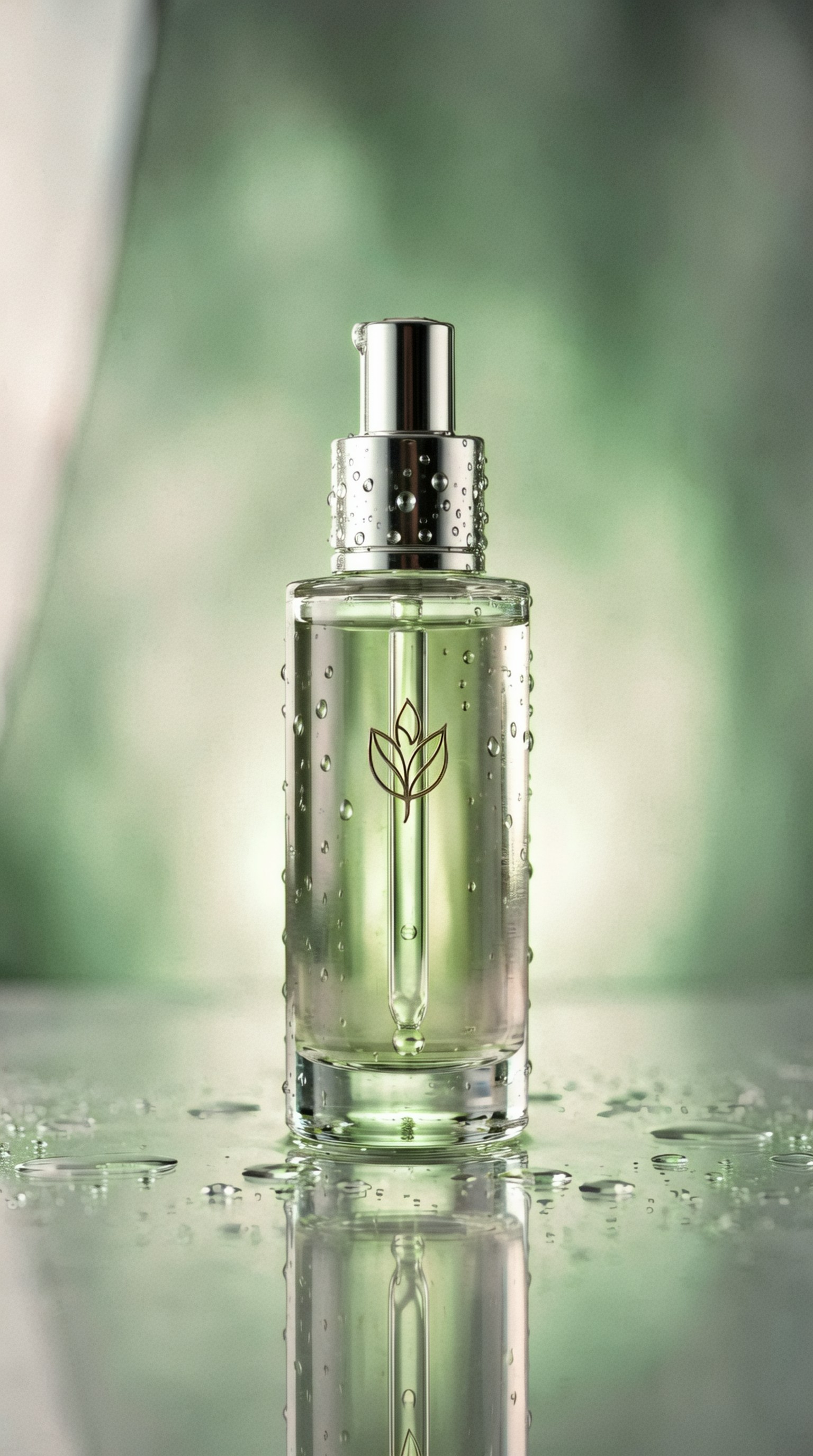
Together, these frames become a more useful approval tool for clients, designers, and stylists.
Use case 4: Test product-plus-model compositions before set build
One common challenge in cosmetic campaign mockups is balancing the product and the face. If the bottle is too large, the image feels artificial. If it is too small, the branding disappears.
Generate multiple composition studies before production to decide:
- product in foreground or held in hand
- frontal portrait or three-quarter profile
- floating packshot overlay feel or integrated physical prop feel
- portrait crop versus vertical ad layout
Topic: Model holding luxury foundation bottle in hero composition
Genre: Beauty Campaign
Camera: Hasselblad X2D 100C
Lens: 80mm f/1.9
Lighting: Large diffused key light with clean side kicker
Location: Neutral beige studio with matte stone plinth
Style: High-end beauty advertising
Final Prompt: Premium beauty campaign image of a model holding a luxury foundation bottle close to the face, flawless satin complexion matching the product promise, sculpted neutral makeup, hair in a polished low twist, elegant three-quarter pose with hand positioned to showcase the bottle label clearly, large diffused key light creating smooth skin gradients and a crisp side kicker outlining glass packaging, neutral beige studio with matte stone plinth element in the background, palette of sand, ivory, taupe and soft caramel, vertical luxury ad composition with strong product readability and copy space, Hasselblad X2D 100C tonality, 80mm f/1.9 refined depth, realistic premium campaign finish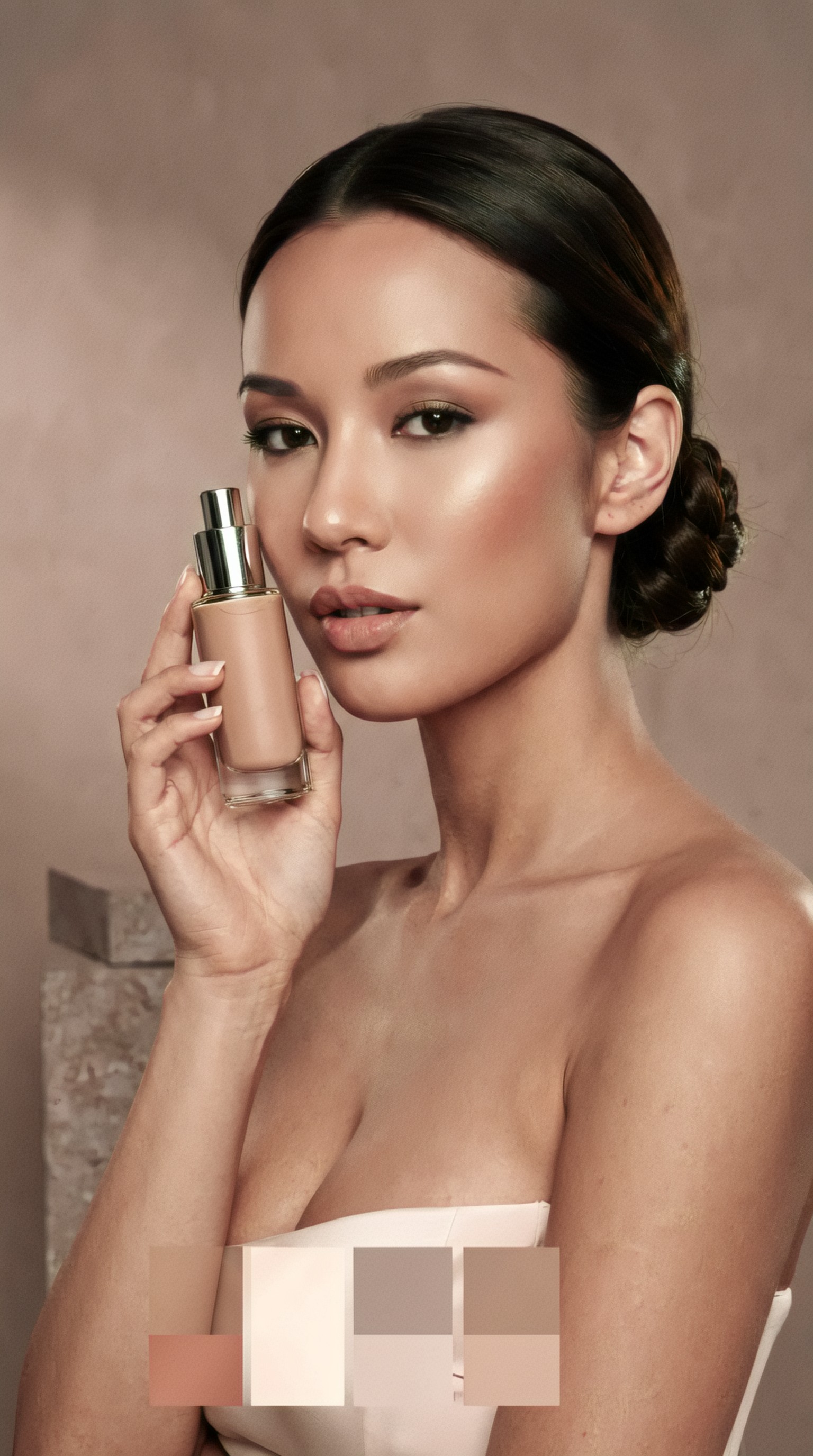
Topic: Sunscreen campaign with product foreground and joyful portrait
Genre: Lifestyle Portrait
Camera: Canon EOS R3
Lens: 35mm f/1.4
Lighting: Beach reflection with bright natural midday diffusion
Location: Coastal boardwalk with pale sand tones and ocean haze
Style: Clean commercial look
Final Prompt: Bright sunscreen campaign scene with product tube in the foreground and smiling model in soft focus behind, healthy glowing skin, lightweight white linen shirt over swimwear, wind-moved hair, relaxed hand gesture and natural cheerful expression, coastal boardwalk setting with pale sand, washed wood and gentle ocean haze, bright reflected daylight creating clean highlights without harsh contrast, fresh palette of white, sky blue, beige and seafoam, composition designed for commercial ad readability with dynamic depth layers, Canon EOS R3 action-ready realism, 35mm environmental perspective, authentic summer beauty advertising atmosphere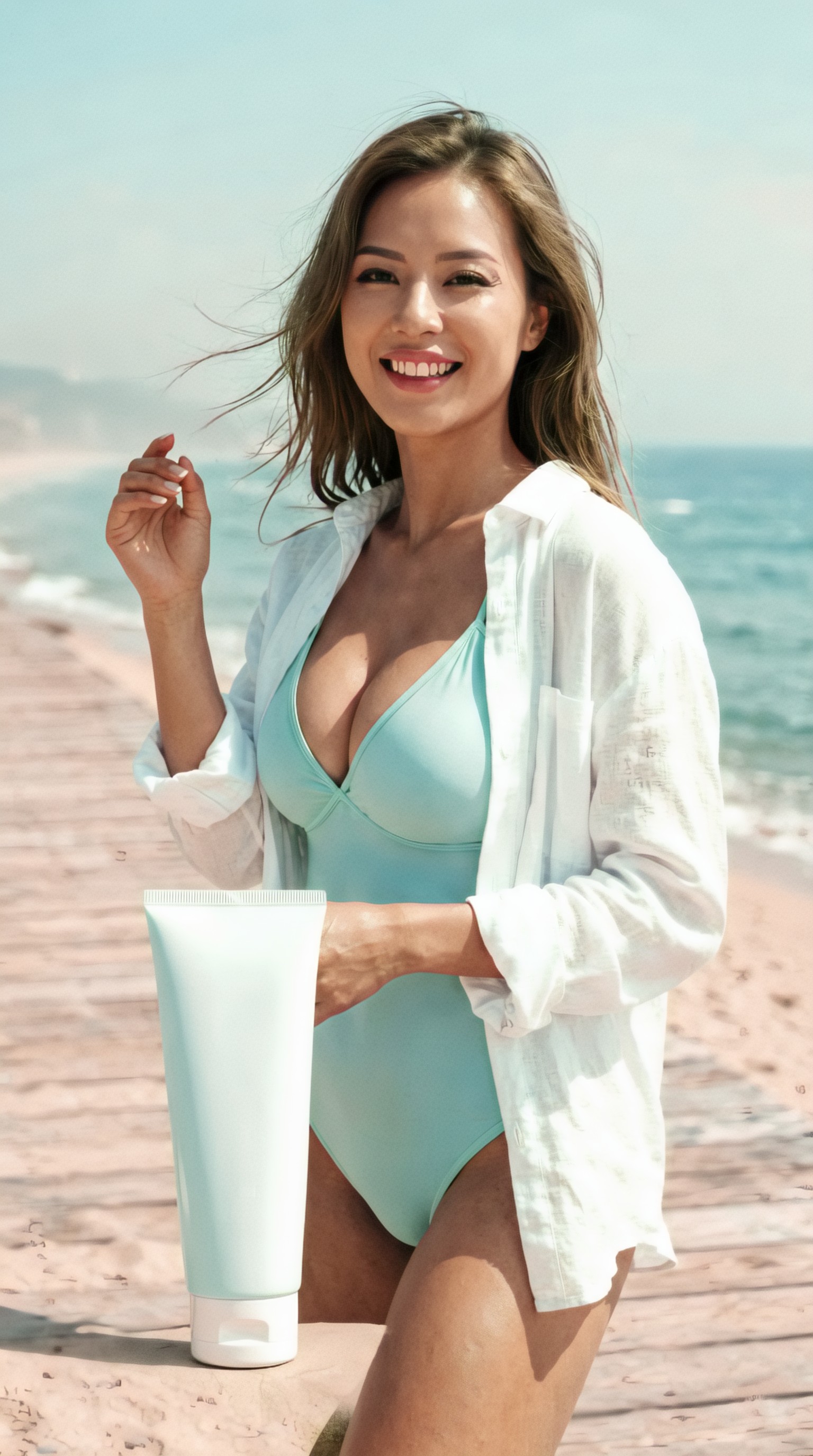
These mockups help determine whether the shoot needs oversized props, compositing plans, or alternate crops for design placements.
Use case 5: Explore surface, texture, and material language for packshots
Beauty ads often communicate through materials as much as faces: wet glass, polished chrome, creamy smears, translucent gel, velvet powder, frosted acrylic. AI-generated product studies can help define those textures in advance.
This is especially helpful for packaging-heavy launches where the product object must carry the visual story.
Topic: Glossy perfume bottle on reflective chrome beauty set
Genre: Product Editorial
Camera: Sony Alpha 1
Lens: 100mm f/2.8 Macro
Lighting: Narrow strip lights with mirrored reflection control and cool backlight
Location: Futuristic silver studio tabletop with chrome panels
Style: Cinematic realism
Final Prompt: Luxury perfume campaign still life featuring a sculptural glass bottle on a reflective chrome tabletop, precise mirrored reflections, cool backlight creating a halo through the fragrance liquid, narrow strip lights shaping elegant highlights along the bottle edges, futuristic silver panel environment with soft gradients and clean geometry, palette of silver, crystal, icy blue and soft smoke, premium composition with strong symmetry and refined negative space, Sony Alpha 1 detail, 100mm macro crispness, high-end fragrance advertising image with tactile glass, metal, and light interplay
Topic: Cream blush texture campaign with product and smear detail
Genre: Beauty Campaign
Camera: Nikon D850
Lens: 105mm f/2.8 Macro
Lighting: Soft top light with gentle side fill and shadow control
Location: Rosy studio tabletop with matte paper and cream textures
Style: Clean commercial look
Final Prompt: Modern cosmetic campaign mockup featuring an open cream blush compact surrounded by artful product smears, smooth creamy texture emphasized with macro clarity, matte rosy tabletop and tonal paper background, soft top light creating subtle relief and realistic texture depth, side fill preserving color accuracy, palette of dusty rose, nude pink, warm beige and soft ivory, balanced overhead composition with editorial spacing, Nikon D850 realism, 105mm macro sharp detail, premium beauty advertising still life focused on tactile product texture and elegant simplicityUse case 6: Previsualize multicultural casting and skin-tone-sensitive lighting
Beauty campaigns need lighting that respects a range of skin tones. AI can help test how the same concept performs across casting directions before the shoot, especially when you want consistency without flattening individuality.
Use it to compare:
- highlight intensity on different skin tones
- makeup color translation across faces
- backdrop contrast levels
- how gold, silver, peach, or neutral reflectors change the mood
Topic: Inclusive beauty campaign portrait with golden glow lighting
Genre: Beauty Campaign
Camera: Panasonic Lumix S1R II
Lens: 85mm f/1.8
Lighting: Warm softbox key light with gold reflector and subtle background separation light
Location: Terracotta studio with smooth gradient backdrop
Style: Luxury fashion campaign
Final Prompt: Inclusive beauty campaign portrait designed to celebrate rich skin tone radiance, model with luminous complexion, metallic bronze eye accents, glossy neutral lip, structured cream draped wardrobe, upright elegant pose and confident softened expression, warm softbox key light enhanced by gold reflector to produce dimensional highlights without overexposure, terracotta gradient backdrop adding warmth and contrast, palette of bronze, clay, caramel, gold and cream, polished close portrait composition with premium campaign styling, Panasonic Lumix S1R II crisp realism, 85mm f/1.8 flattering compression, refined skin texture and sophisticated high-end beauty ad finish
This kind of testing makes lighting discussions more specific and more respectful.
Use case 7: Build channel-specific mockups for campaign rollout
A beauty image that works for a hero homepage banner may fail in a vertical story placement. Before the photoshoot, generate variants that simulate delivery formats.
Test:
- 4:5 portrait for social ads
- 9:16 vertical story crop
- wide homepage banner with negative space
- retail signage crop with product enlarged
- email header with clean typography area
Topic: Vertical skincare ad with copy space for social story placement
Genre: Beauty Campaign
Camera: RED V-RAPTOR cinematic capture style
Lens: 50mm T1.5
Lighting: Soft frontal key with cool edge light
Location: Frosted glass studio set with minimal translucent panels
Style: High-end beauty advertising
Final Prompt: Vertical beauty ad concept for social story format featuring a skincare model framed from chest up, luminous hydrated skin, minimalist white wardrobe, sleek hair, serene direct expression, positioned lower in frame to preserve clean upper copy space, frosted glass studio panels adding depth and premium diffusion, soft frontal key light with cool edge light for modern polish, palette of icy white, silver, pale aqua and skin-neutral tones, cinematic advertising composition optimized for 9:16 crop, RED V-RAPTOR visual precision, 50mm T1.5 shallow separation, sleek premium skincare campaign look with elegant readability for mobile placements
A practical prompt method for beauty concept testing
When building prompts for beauty campaign previsualization, keep them layered rather than vague. A good prompt should define:
- the visual subject
- the campaign genre
- camera realism and lens behavior
- lighting character
- location or set logic
- brand-facing style direction
- emotional tone
- textures and palette
- composition and crop
If the first result is close but not useful, revise one variable at a time. For example:
- keep the model styling, change the lighting
- keep the composition, change the backdrop palette
- keep the product framing, change the lens from 35mm to 100mm macro
- keep the campaign mood, change the finish from glossy to softly matte
This makes the workflow repeatable.
How to review AI outputs with your creative team
Once you have a batch of visuals, do not ask, "Which one do we like?" Ask narrower questions:
Art direction
- Which concept best expresses the product promise?
- Which one feels too editorial for paid media?
- Which one gives the clearest brand signal?
Photography
- Which lighting setup is realistic to reproduce on set?
- Which crop will require compositing?
- Which texture can be achieved in-camera?
Makeup and styling
- Which lip finish reads best?
- Which skin finish aligns with the brand?
- Which wardrobe supports the product instead of competing with it?
Design and marketing
- Where is the copy space?
- Does the pack read at thumbnail size?
- Which concept can adapt across placements?
That is where previsualizing a beauty campaign with AI becomes valuable: it sharpens the conversation around execution.
Common mistakes in an AI image workflow for beauty campaigns
Treating AI outputs as final photography
Use them as concept tools, not final production truth. Real skin, real packaging, and real set materials behave differently.
Prompting only for mood
Mood matters, but beauty campaigns also depend on practical details like lens compression, label visibility, and surface reflections.
Ignoring brand architecture
A playful trend-driven image may be visually strong but wrong for a dermocosmetic or heritage luxury brand.
Testing only one concept
The point of concept testing is comparison. Generate alternatives with clear differences.
Forgetting downstream formats
A concept that works in a square crop may collapse in vertical or banner layouts.
Suggested workflow stack for a small beauty team
A lean process can look like this:
1. Write a short creative brief with campaign variables. 2. Define 3 visual territories. 3. Generate 4 to 8 images per territory. 4. Build side-by-side boards for review. 5. Mark what is working: skin finish, crop, color, product scale, lighting. 6. Turn selected AI frames into a shoot treatment. 7. Share with photographer, makeup artist, stylist, and retoucher. 8. Use the generated frames as alignment tools, not strict replicas.
This is the most practical version of an AI image workflow for beauty campaigns: fast concept exploration, structured review, and better production planning.
Final takeaway
Beauty advertising is full of expensive micro-decisions. AI helps when it is used upstream, before the photoshoot, to test concepts that would otherwise stay abstract until production day. It is especially effective for hero portrait exploration, shade story comparison, cosmetic campaign mockups, product-composition planning, and consistent AI moodboards for beauty ads.
If you approach it like an art direction tool instead of a novelty generator, you get a clearer visual brief, a more focused crew, and a shoot day built around choices that have already been tested.