American Streetwear Trending Today: A Hands-On Image Test of Oversized Denim, Jerseys, and Sneaker-Led Looks 한국어 요약
이 페이지는 ZView Space의 영어 원문을 한국어 검색 사용자도 이해할 수 있도록 정리한 SEO 요약입니다. 핵심은 단순한 얼굴 중심 이미지가 아니라 패션 에디토리얼, 룩북, 아웃핏, 프롬프트 테스트, 이미지 생성 워크플로우를 실제로 어떻게 구성할지입니다.
핵심 요약
- 원문 주제: American Streetwear Trending Today: A Hands-On Image Test of Oversized Denim, Jerseys, and Sneaker-Led Looks
- 목적: AI 이미지 생성에서 outfit, silhouette, fabric, pose, location, camera framing을 더 명확하게 설계합니다.
- 활용 범위: Z-Image Turbo, Krea2 Turbo, Qwen Image, Anima, SeedVR2 같은 이미지 생성 및 업스케일 워크플로우에 적용할 수 있습니다.
- SEO 관점: 제목, 설명, 이미지 alt, 프롬프트 예시가 실제 검색 의도와 맞아야 색인 가능성이 높아집니다.
한국어 사용자를 위한 체크포인트
1. 프롬프트가 얼굴 묘사에만 머물지 않고 전체 스타일과 의상 구성을 설명하는지 확인합니다. 2. 패션 이미지라면 상의, 하의, 아우터, 신발, 액세서리, 소재감, 촬영 장소를 분리해서 씁니다. 3. 생성 결과는 바로 게시하지 말고 디테일, 손, 의상 형태, 배경 일관성, 이미지 품질을 비교합니다. 4. 글 본문에는 실제 테스트 기준과 실패를 줄이는 방법이 들어가야 검색엔진에서 얇은 콘텐츠로 보일 가능성이 줄어듭니다.
원문 미리보기
This article looks at American streetwear trending today through an image generation test, not a theory piece. I set out to build usable fashion visuals around three trend signals that keep showing up in current US fashion trends: oversized denim, sports jerse
---
This article looks at American streetwear trending today through an image-generation test, not a theory piece. I set out to build usable fashion visuals around three trend signals that keep showing up in current US fashion trends: oversized denim, sports jerseys, and sneaker-led outfit logic. The goal was simple: generate images that actually communicate why these looks feel current, and find out where models break when the styling gets layered, baggy, and detail-heavy.
If you want trend-driven visuals for a mood board, lookbook draft, storefront concept, or social creative, this is the practical part: what worked, what failed, and how I changed the prompts to get cleaner outfit reads.
Quick answer
- American streetwear is trending today because the current look mixes comfort, sports references, and visible styling systems: oversized denim, layered jerseys, caps, bags, and statement sneakers.
- Image models struggle with this trend because loose silhouettes often collapse into messy proportions, while sneakers and jersey graphics tend to deform.
- The best results came from prompts that prioritized full-body outfit visibility, specific fabrics, and a real street or retail context.
- If the image only gives you a cool face and a vague outfit, it is not a strong streetwear result.
- For testing prompts fast, I would start with [Prompt Lab](/promptlab), compare variations in [Create](/create), and save the strongest references to a working board in [Gallery](/gallery).
Test setup
In this test, I focused on one use case: creating editorial-style visuals that explain why American streetwear feels current right now.
What I tested:
- Oversized denim streetwear outfits
- Jersey-based layering
- Sneaker outfit ideas built around the shoe first
- Street-style, lookbook, retail, accessory, and detail shots
- Prompt phrasing that keeps the outfit more important than the face
What I was looking for:
- Clear silhouette reads from head to toe
- Believable denim weight and drape
- Legible layering between tee, jersey, jacket, and accessories
- Sneakers that look designed, not melted together
- Backgrounds that support US fashion trends without distracting from the styling
The scenario: making one trend article feel visually current
The specific challenge was not “generate streetwear.” That is too broad and usually gives you a generic hoodie image. The real task was narrower: make a set of images that explain why oversized denim, jerseys, and sneaker-led outfits are driving attention inside American streetwear right now.
That matters because trend content needs evidence. If the outfit does not clearly show volume, proportion, footwear hierarchy, and accessory choices, the image cannot teach the viewer much.
I treated this like a fashion desk assignment. Each test image had to answer a styling question:
- Does oversized denim read intentional or just ill-fitting?
- Does the jersey look like a real layer or a costume prop?
- Do the sneakers lead the outfit, or disappear into the rest of the frame?
Why image models struggle with American streetwear
This trend is harder than it looks.
Loose silhouettes create a common failure mode: the model understands “baggy” but not structured volume. Jeans become inflated tubes. Jerseys merge with hoodies. Long hems clip into hands or pockets. Sneakers lose panel detail because the model puts more attention into faces and background mood than footwear geometry.
The other weak point is trend specificity. If you only prompt “American streetwear,” many models default to a mashup of hoodie, cargo pants, and random high-tops. That can be fine for broad mood imagery, but it misses what is actually trending today: wider denim cuts, sportswear layering, washed textures, visible socks, retro basketball references, and outfits built around one sneaker story.
First attempt: broad prompt, broad result
My first pass used a generic streetwear framing. It produced images that were attractive at thumbnail size, but weak as trend evidence. The faces were polished, the city background looked plausible, yet the clothes had no real outfit logic.
Typical problems from the first attempt:
- Denim looked smooth and synthetic instead of heavy and washed
- Jerseys had warped necklines and fake numbers
- Sneakers were cropped too low or fused into the pavement
- The images felt like “urban fashion” rather than current American streetwear
To show that failure mode, I would test a broad street-style setup first.
This prompt checks whether the model can infer the trend from a minimal brief, which most models do badly.
Topic: American streetwear trending today with oversized denim and sneakers
Genre: Street Style
Camera: Canon EOS R5
Lens: 35mm f/2
Lighting: Overcast diffusion
Location: New York sidewalk with traffic blur and storefront reflections
Style: Documentary fashion editorial
Final Prompt: street-style full body fashion image of current American streetwear trending today, oversized faded blue denim jacket over a loose white t-shirt, extra-wide leg jeans, visible white crew socks, chunky retro sneakers, baseball cap, crossbody bag, walking on a New York sidewalk, full outfit clearly visible, documentary 35mm framing, neutral confident expression, layered urban styling, cool gray city tones, realistic denim texture, editorial streetwear composition, outfit-first image, subtle motion in background, clean fashion magazine realism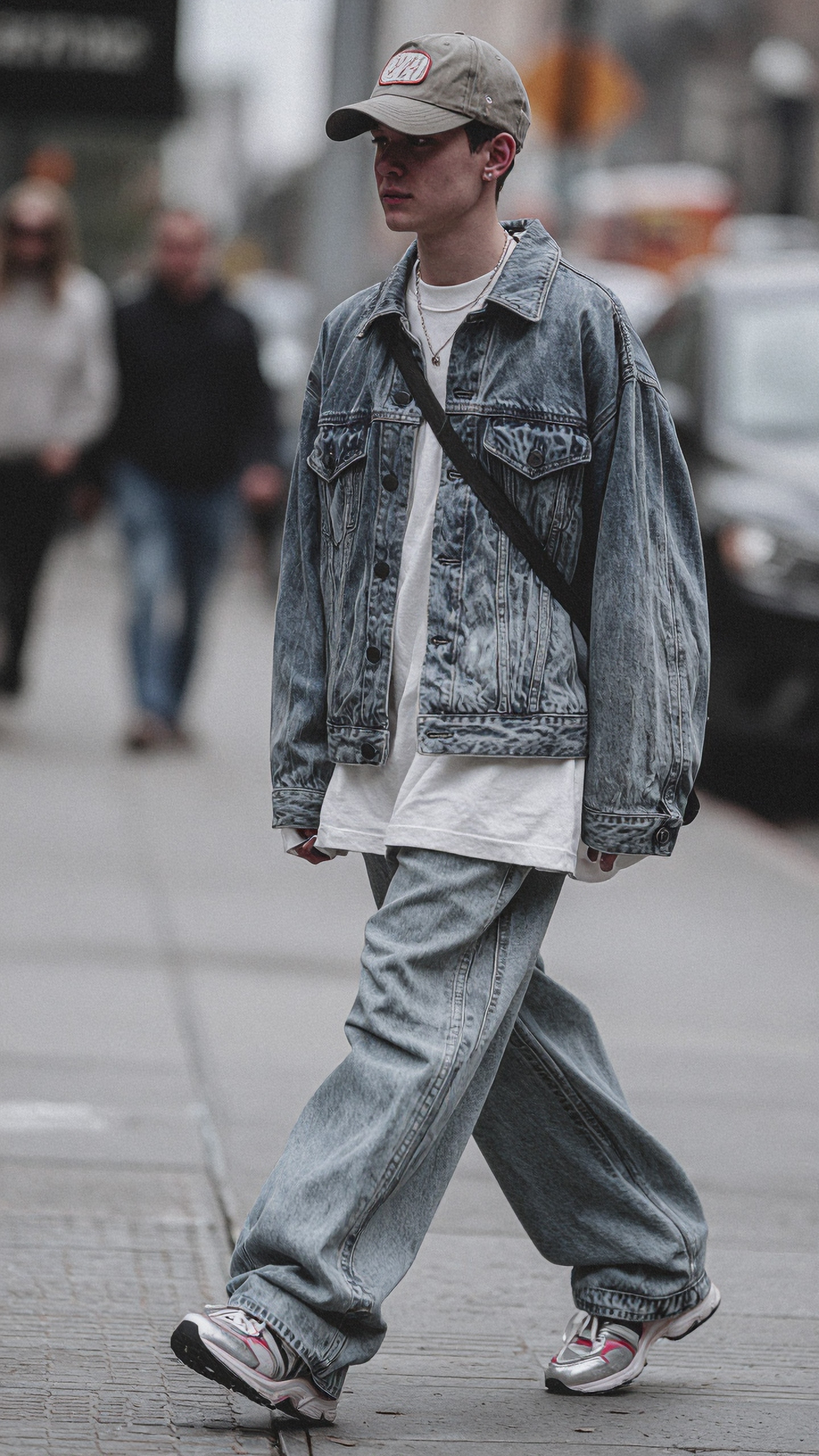
Inspect whether the jeans have a believable rise and leg shape, and whether the sneakers are fully formed. In my test pattern, this kind of broad prompt often produced a decent stance but weak footwear detail and vague layering.
The adjustment that improved the output
The strongest change was simple: stop asking for “streetwear mood” and start specifying the styling system.
Instead of broad labels, I broke the look into visible parts:
n- inner layer
- outer layer
- denim wash and cut
- sneaker type and color balance
- bag placement
- sock visibility
- framing that shows the full silhouette
I also changed scenes. Models did better when the location matched the outfit logic. New York sidewalk, basketball court edge, sneaker store window, and studio lookbook each solved a different problem.
What improved oversized denim streetwear outfits
Oversized denim is one of the clearest reasons American streetwear is trending today, but it is also one of the easiest things for models to get wrong. The fix was to define how the denim should hang.
I got better results by naming the wash, rise, break, and silhouette. “Baggy jeans” was weak. “Extra-wide leg light-wash denim with stacked hem over retro sneakers” was much better.
This next test checks whether the model can keep the denim heavy, roomy, and intentional in a head-to-toe lookbook frame.
Topic: Oversized denim streetwear outfit with trend-led silhouette
Genre: Head-to-toe lookbook
Camera: Sony A7R V
Lens: 50mm f/4
Lighting: Soft studio daylight through scrim
Location: Minimal concrete studio with seamless gray wall
Style: Clean commercial fashion lookbook
Final Prompt: head-to-toe lookbook image focused on oversized denim streetwear outfits, full body centered stance, light-wash oversized denim trucker jacket, plain ash gray tee tucked loosely at the front, extra-wide leg denim with long stacked hem, silver chain, dark navy cap, white crew socks, cream and blue retro basketball sneakers, clean concrete studio background, styling-first composition, visible garment proportions, realistic seam detail, washed denim texture, balanced neutral palette with blue accents, commercial fashion clarity, trend report aesthetic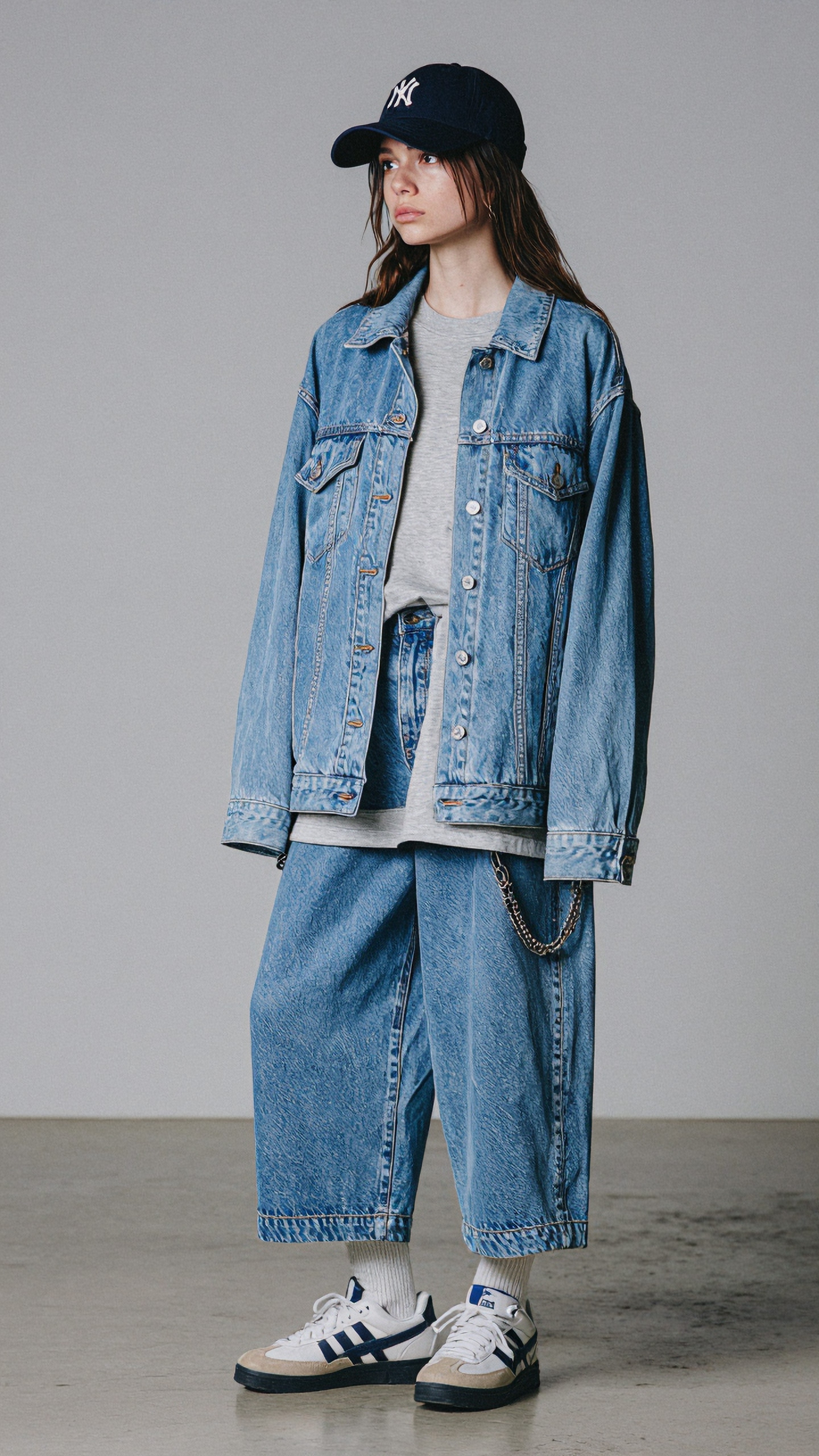
Check the hem break over the sneakers and the jacket-to-pant proportion. If the jacket suddenly crops too short or the jeans lose width below the knee, the model has not held the silhouette consistently.
A second denim test worked even better because it added scene context without losing outfit visibility.
Topic: Denim streetwear outfits on an urban block
Genre: Three-quarter outfit editorial
Camera: Nikon Z8
Lens: 40mm f/2
Lighting: Late afternoon open shade
Location: Brooklyn side street with brick wall, parked bikes, painted curb
Style: Contemporary US fashion editorial
Final Prompt: three-quarter outfit editorial showing denim streetwear outfits in a current American streetwear mood, oversized mid-wash denim overshirt layered over a mesh tank and white tee, ultra-baggy charcoal jeans, bold paneled sneakers in off-white and red, canvas tote, fitted cap, relaxed stance against a Brooklyn brick wall, full styling visible from head to shoes, textured denim, layered street casting energy, muted city palette with red sneaker accents, fashion magazine realism, emphasis on silhouette, fabric weight, and sneaker-led balance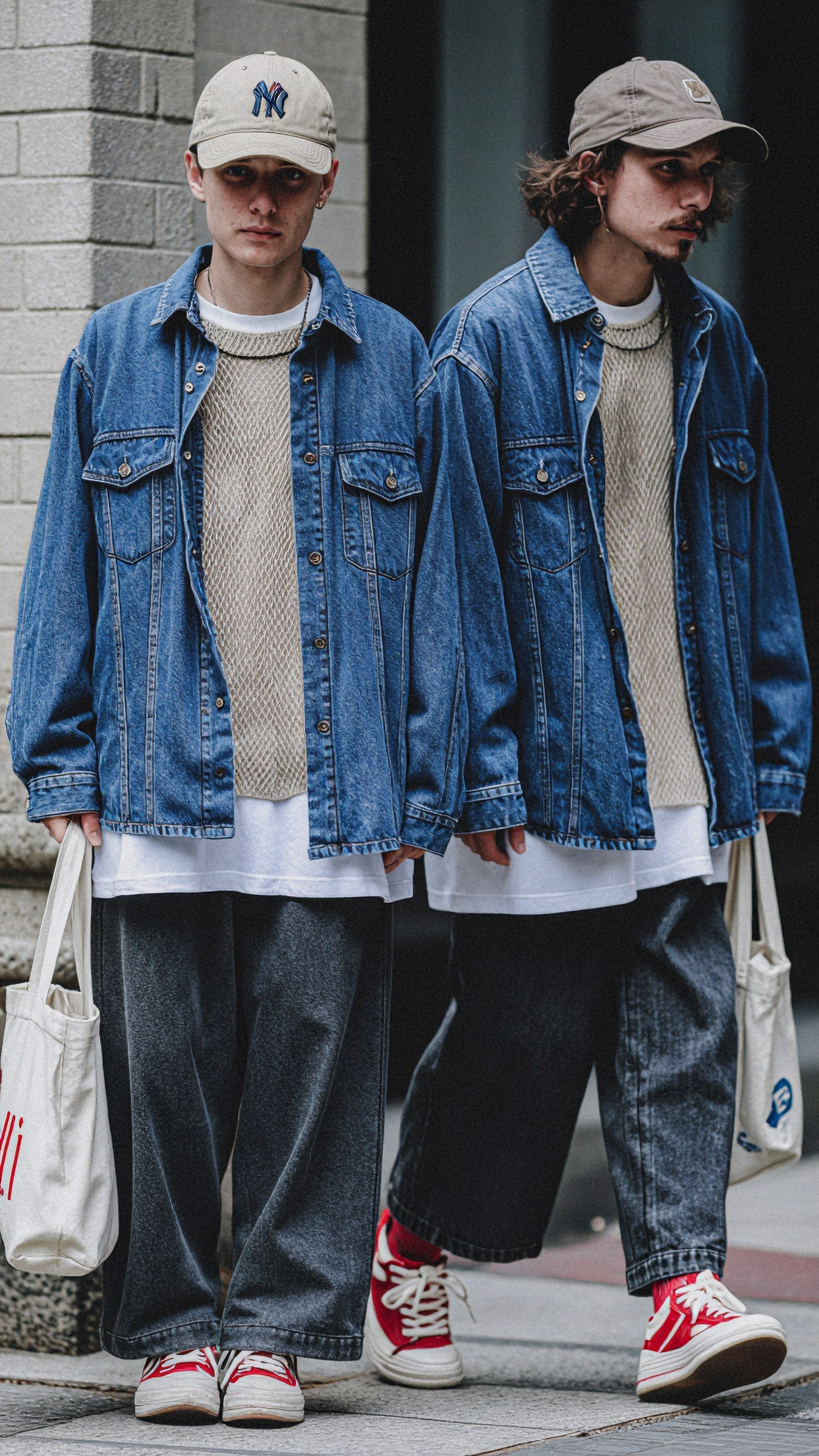
Inspect the overshirt edge, the tank layer, and the tote strap. These small overlap areas often reveal whether the model truly understands layered streetwear or is only faking it from a distance.
Jerseys: where the trend looks current but the model often cheats
Sports jerseys are a big part of streetwear trends 2026 conversations already, especially when paired with denim, long shorts, visible thermals, or oversized outerwear. But image models often treat jerseys like generic athletic costumes.
The weak point was graphic instability. Numbers, trims, and sleeve edges warped fast. I got better outputs by describing the jersey as a color-blocked layer rather than relying on specific team-style markings.
This test checks whether the jersey can read as fashion styling instead of sports cosplay.
Topic: Layered jersey streetwear with oversized proportions
Genre: Fashion editorial
Camera: Fujifilm GFX100S
Lens: 45mm f/2.8
Lighting: Soft cloudy daylight
Location: Basketball court entrance in Lower Manhattan
Style: Trend-led street fashion campaign
Final Prompt: street-style full body fashion editorial of American streetwear trending today, oversized navy and cream basketball jersey layered over a long white thermal and loose faded denim shorts below the knee, striped socks, statement low-top sneakers, durag under a cap, crossbody utility pouch, standing at the entrance of an outdoor Lower Manhattan basketball court, full silhouette visible, fashion-first styling, textured mesh fabric, current US streetwear attitude, restrained facial expression, balanced urban palette, sharp sneaker detail, documentary luxury campaign feel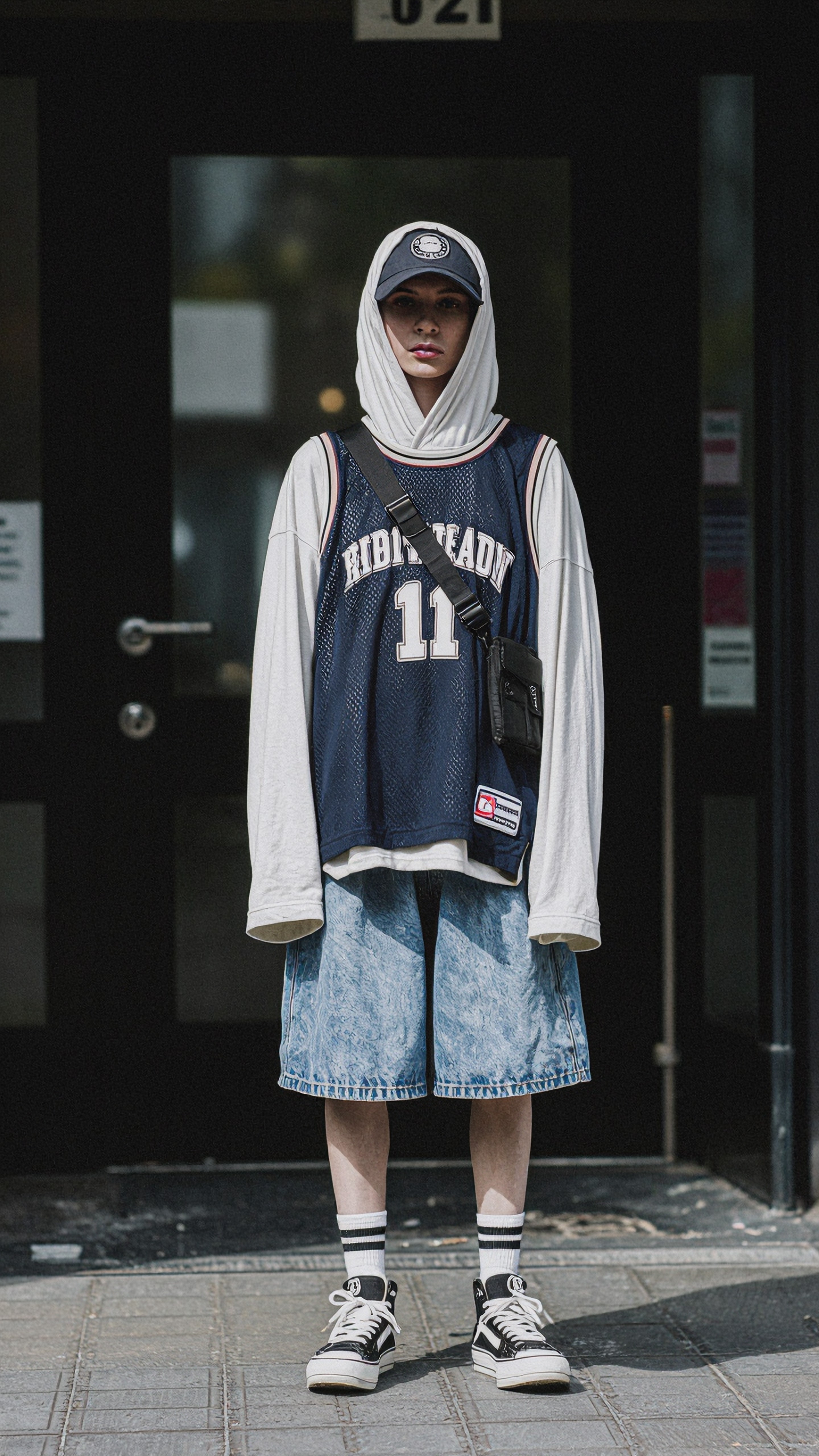
Look closely at the arm openings, the thermal sleeves, and the sock stripes. If those details stay coherent, the model is handling the layered outfit well. If they drift, the image may still look stylish overall but it will fail under closer review.
I also tested a more polished jersey look in a retail or campaign setting to see if the trend could move beyond the sidewalk.
Topic: Sneaker-led jersey styling for a retail campaign visual
Genre: Storefront display
Camera: Panasonic Lumix S1R
Lens: 24-70mm at 50mm f/5.6
Lighting: Mixed window light and softbox fill
Location: Modern sneaker boutique with chrome racks and jersey display wall
Style: Premium streetwear retail campaign
Final Prompt: storefront display image centered on sneaker outfit ideas and jersey-led American streetwear, mannequin-style full outfit presentation with oversized cream varsity-inspired jersey, washed black wide-leg jeans, bold white and green sneakers placed as the visual anchor, ribbed socks, silver accessories, cap on shelf, modern sneaker boutique interior with chrome fixtures and folded denim stacks, clean retail storytelling, product visibility first, crisp fabric texture, merchandising-focused composition, trend-forward US fashion display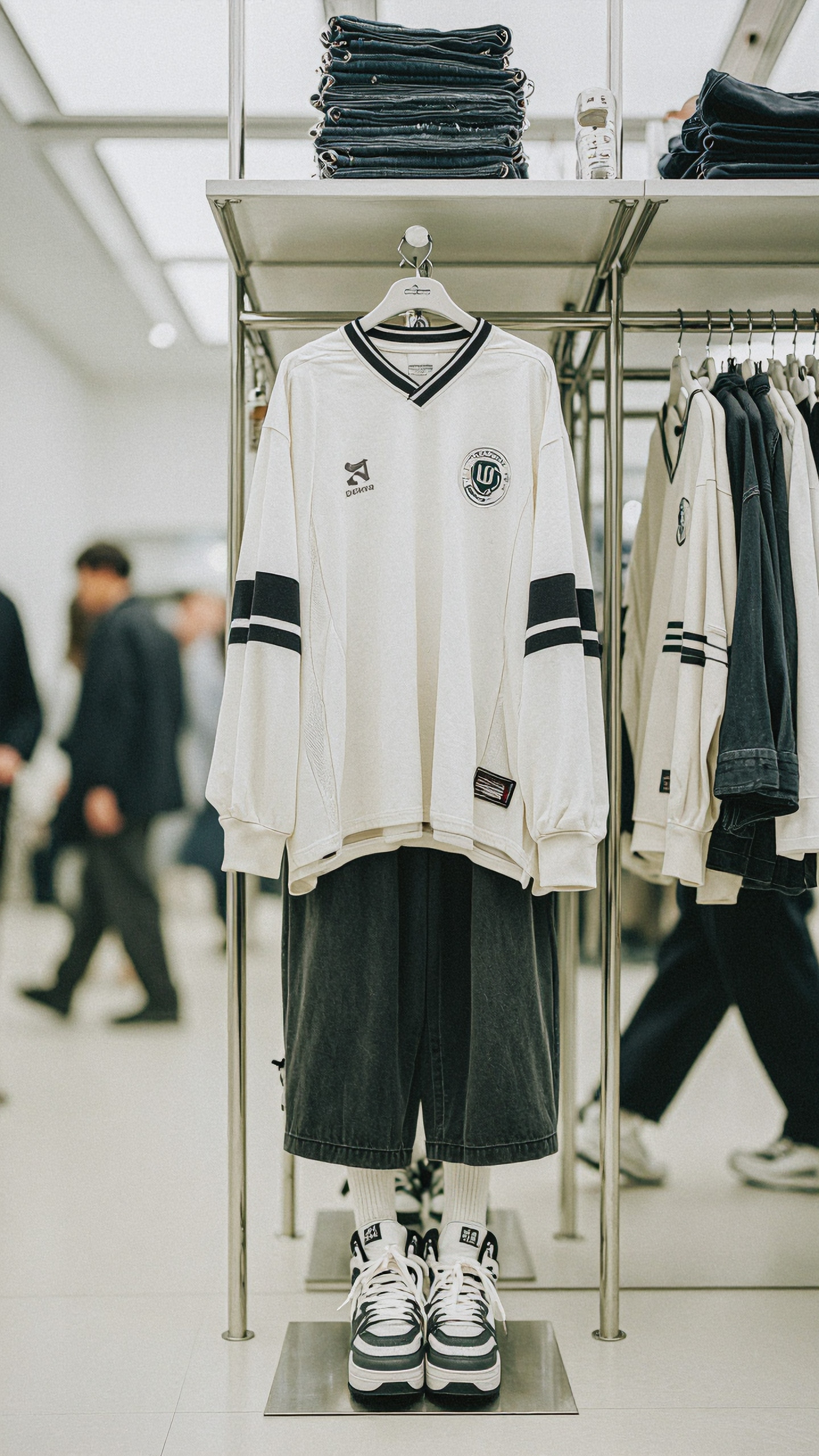
Inspect whether the sneakers remain the hero and whether the display reads like merchandised fashion rather than a random shop scene. This kind of prompt is useful when you need trend content for retail layouts or brand planning boards.
Sneaker outfit ideas worked best when the shoe led the color story
A lot of streetwear images claim to be sneaker-led, but the shoe is either too small in frame or not integrated into the outfit. In this test, the best images started from the sneakers and then built the denim, jersey, socks, and accessories around them.
That gave the model a visual hierarchy to follow.
This prompt checks shoe clarity, color balance, and whether the outfit supports the sneakers instead of competing with them.
Topic: Sneaker-led American streetwear with coordinated layers
Genre: Street style
Camera: Leica SL2-S
Lens: 35mm f/2.8
Lighting: Early evening city glow with soft ambient bounce
Location: SoHo crosswalk with muted storefront signage
Style: Fashion documentary with sneaker focus
Final Prompt: street-style full body image focused on sneaker outfit ideas within American streetwear trending today, oversized stone-wash denim jacket, dark jersey layer peeking beneath, loose black carpenter jeans, bright limited-color sneakers in white, silver, and cobalt blue as the clear focal point, matching blue cap accent, white socks, mini shoulder bag, standing at a SoHo crosswalk, full-body framing with clean view of shoes, understated expression, realistic leather and mesh sneaker panels, modern US fashion mood, city documentary realism, strong outfit hierarchy from shoe to layers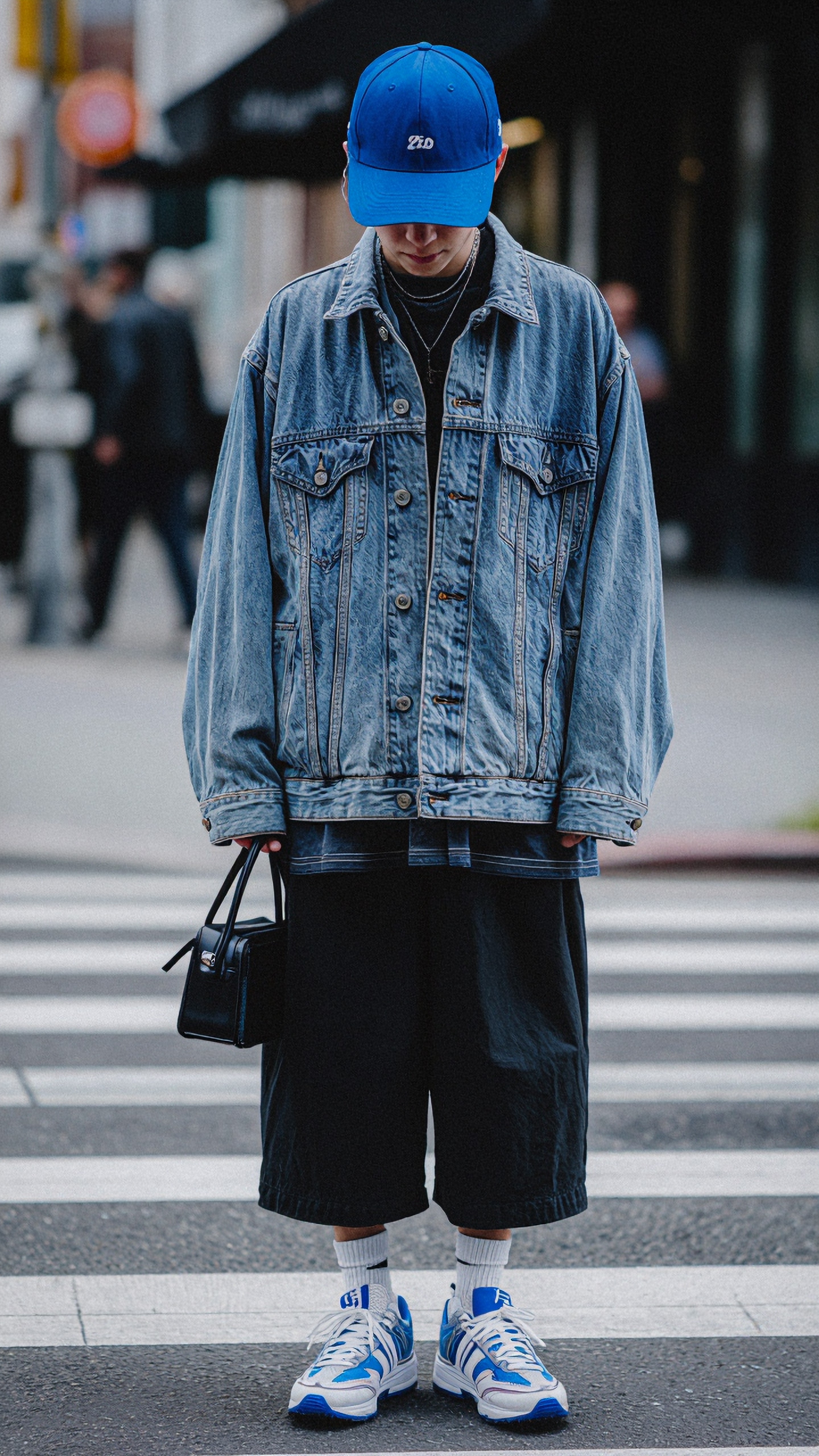
Check if the sneaker color repeats elsewhere in the outfit without taking over the frame. When this setup works, the shoe feels intentional and the rest of the look supports it.
For a product-first variation, I moved away from the person entirely and tested whether the sneaker story still explained the trend.
Topic: Sneaker outfit planning board with denim and jersey pieces
Genre: Mood-board collage
Camera: Editorial collage capture style
Lens: Mixed crop layout simulation
Lighting: Soft top light with paper texture shadows
Location: Designer tabletop mood board in studio
Style: Trend forecasting editorial board
Final Prompt: mood-board collage explaining why American streetwear is trending today, curated layout of oversized washed denim jacket, extra-wide jeans, cream basketball jersey, white ribbed socks, silver chain, baseball cap, paneled retro sneakers in blue and off-white, torn trend notes, swatches of faded denim and athletic mesh, clean editorial board composition, trend-led fashion planning aesthetic, tactile fabric surfaces, balanced spacing, current US style direction, outfit system visible without relying on a model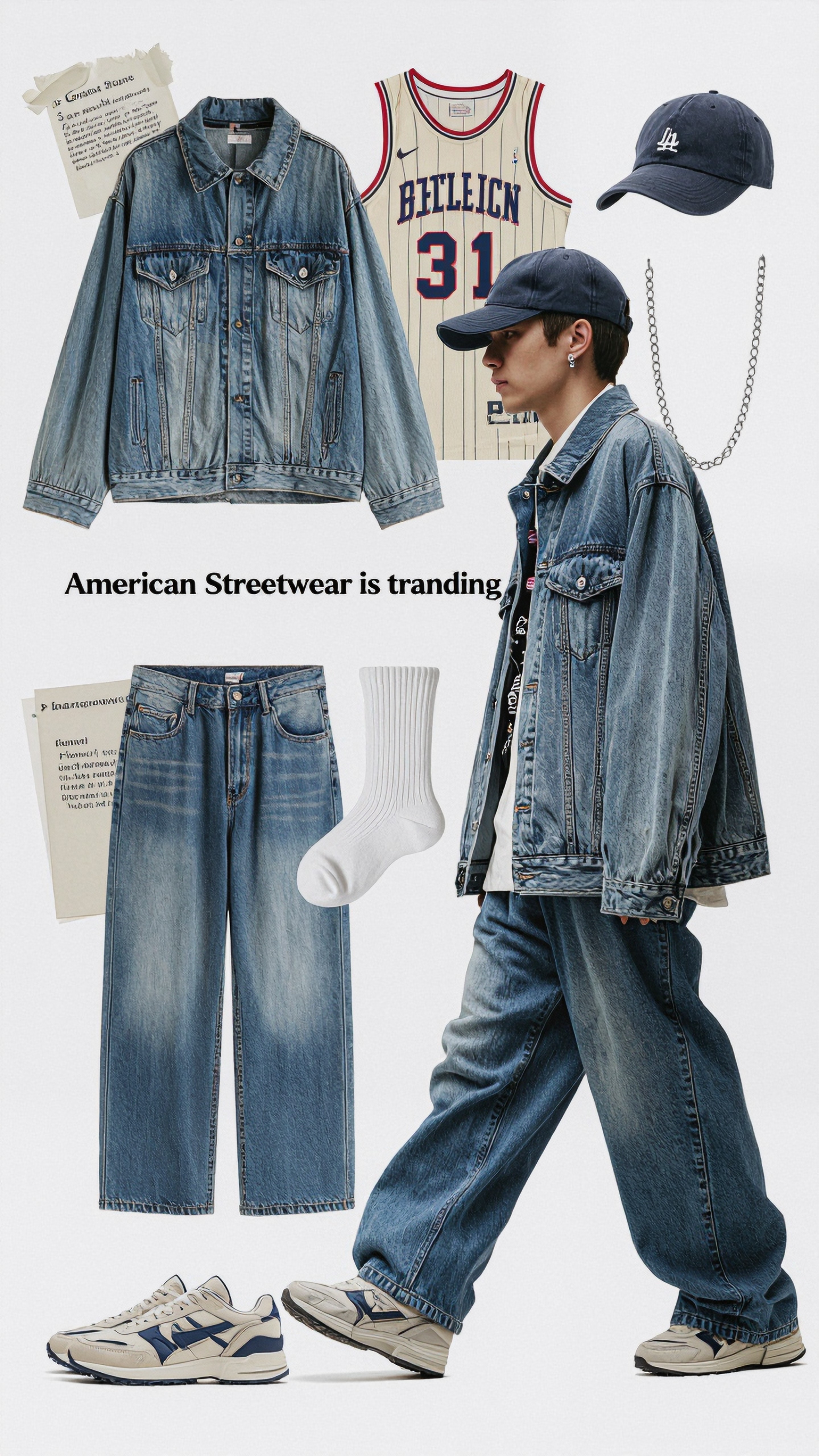
Inspect whether the denim, mesh, and sneaker materials are easy to distinguish. This type of image is useful for article thumbnails, planning decks, or quick trend explainers because it separates styling logic from pose quality.
Practical comparison: which shot type is best for which streetwear question?
| Shot type | Best for | Common failure risk | What I would use it for | |---|---|---|---| | Street-style full body | Showing complete outfit logic in context | Cropped sneakers, messy hands, weak denim drape | Editorial article lead images | | Head-to-toe lookbook | Checking silhouette and proportion | Flat mood, less trend energy | Clean denim streetwear outfits | | Three-quarter editorial | Layering and accessories | Lower body loses detail | Social assets and article inserts | | Storefront display | Retail context and merch direction | Looks sterile or too generic | US fashion trends retail concepts | | Mood-board collage | Explaining trend ingredients fast | Can look cluttered | Planning, thumbnails, prompt ideation | | Garment detail macro | Fabric texture and trim quality | Loses wider outfit meaning | QC for denim and jersey realism |
A detail test was necessary before I trusted the images
One lesson from this workflow: a good streetwear image can still fail if the fabric and accessory detail collapses under zoom. So I added close-range tests.
This denim macro prompt checks whether the wash, seam tension, and edge wear feel real enough to support the larger outfit images.
Topic: Oversized denim fabric and seam detail in current streetwear
Genre: Garment detail macro
Camera: Canon EOS R3
Lens: 85mm f/2
Lighting: Directional window light with negative fill
Location: Studio rack with faded denim garments
Style: Premium material study
Final Prompt: garment detail macro focused on oversized denim used in current American streetwear, close study of light-wash heavy denim jacket cuff, contrast stitching, natural creasing, worn seam edges, layered over matching wide-leg jeans on a studio rack, tactile cotton texture, realistic indigo fade variation, fashion materials documentation, sharp detail, quiet neutral background, premium editorial material study, evidence-driven focus on fabric weight and finish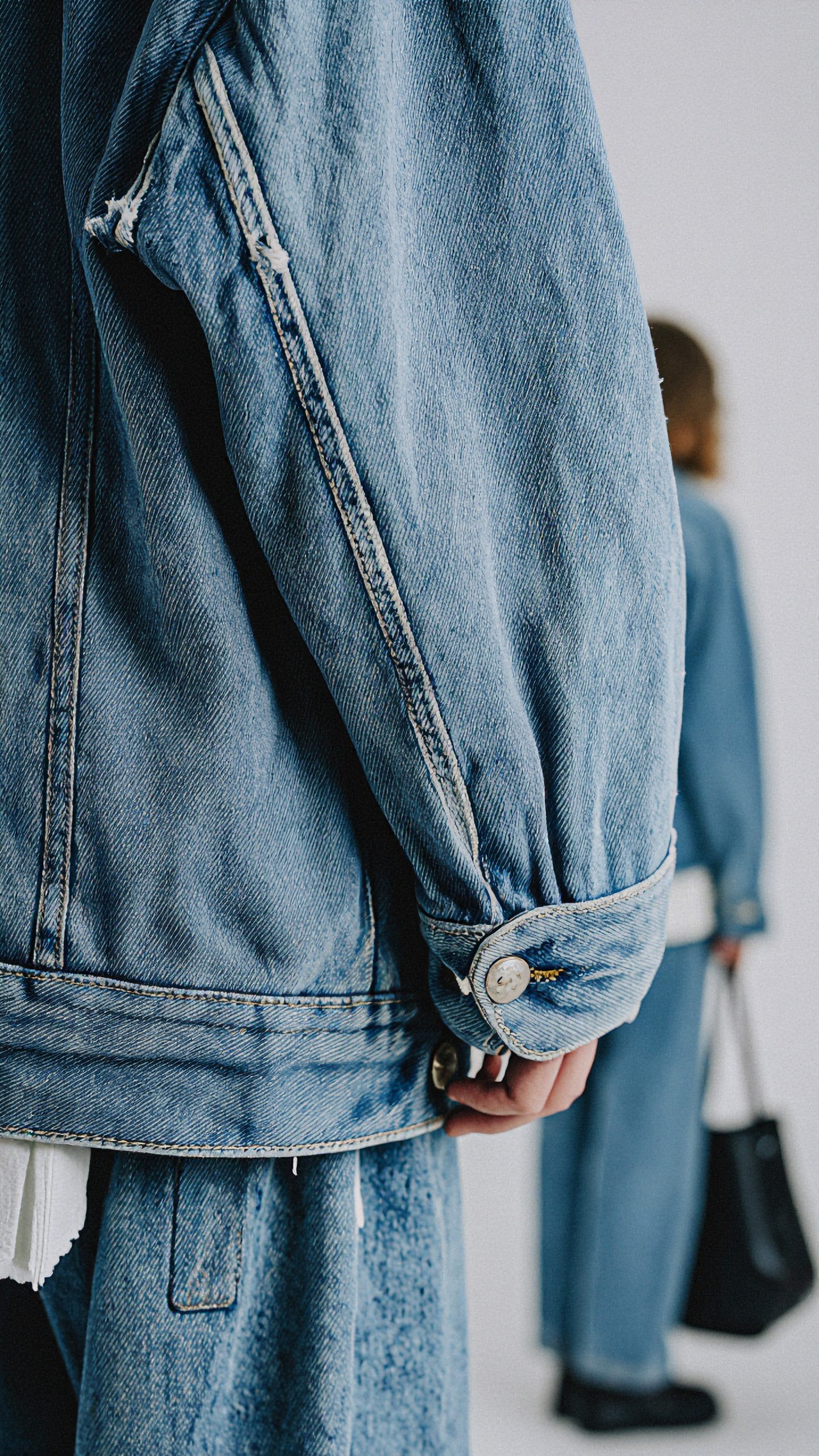
Inspect the stitch spacing, crease pattern, and fade transitions. If the model renders denim like smooth plastic, the full-body image will usually feel less convincing too.
I used a similar approach for sneakers and accessories because those details often reveal hidden errors.
Topic: Sneaker and accessory close-up for streetwear styling proof
Genre: Accessories close-up
Camera: Sony A1
Lens: 90mm f/2.8 macro
Lighting: Controlled softbox key with subtle rim light
Location: Studio floor with concrete texture
Style: Clean product editorial
Final Prompt: accessories close-up showing the sneaker-led core of American streetwear trending today, paneled retro low-top sneakers in off-white, gray, and deep blue beside white ribbed socks, silver chain, compact crossbody bag, and cuffed edge of oversized denim pooling nearby, studio floor with subtle concrete texture, crisp product editorial composition, realistic leather grain, suede nap, mesh panels, rubber sole detail, trend report styling evidence, balanced cool-neutral palette
Check whether the lace paths, sole edges, and material changes are coherent. Sneaker errors are easy to miss in wide shots and very obvious in close-ups.
What to inspect before publishing the result
Before using any generated image for a trend article, social tile, or product concept, I would run this checklist.
Streetwear image QC checklist
- Is the full outfit visible enough to understand the styling system?
- Does the denim have believable weight, wash variation, and seam logic?
- Are jersey trims, numbers, or color blocks clean instead of warped?
- Are the sneakers complete, with readable panels, laces, and outsole shape?
- Do socks, bags, caps, and jewelry support the look instead of appearing randomly?
- Does the background fit the outfit context: street, store, studio, or court?
- Is the pose helping the clothes read, or hiding key layers?
- Are there hand, pocket, or hem distortions at the overlap points?
If I were polishing these results for publication, I would also test upscale passes in [Upscaler](/upscaler) only after the composition is already strong. Upscaling will sharpen texture, but it rarely fixes broken silhouette logic.
Strengths I saw in this workflow
The strongest result from this setup was consistency of trend signal. Once the prompts clearly stated the outfit hierarchy, the images stopped drifting into vague “urban fashion” territory.
What worked best:
- Full-body framing with visible shoes
- Specific denim language: wash, width, stack, rise
- Jersey prompts framed as layered styling rather than team merch
- Location choices that supported the outfit story
- Accessory cues that made the looks feel current without overcrowding them
For beginners, this is also a manageable workflow. You do not need an extremely complicated prompt. You need a shot type, a styling plan, and a clear visual priority.
Limitations and failure risks
There were still repeated issues.
First, the more trend pieces I stacked into one prompt, the higher the chance of drift. Add too many chains, logos, bags, patches, and layered tops, and the image starts to lose discipline.
Second, models still struggle with realistic oversized fit. They can make things bigger, but not always better. Good bagginess has structure. Bad bagginess looks inflated.
Third, jersey graphics remain fragile. If you need exact numbers, exact team-like striping, or production-accurate logos, expect cleanup or manual selection across generations.
If you are building a fast test set, I would make several controlled variations in [Create](/create) and compare them against your article angle instead of chasing one giant prompt.
Transferable lesson for similar fashion topics
The useful lesson goes beyond American streetwear. For any trend-led fashion topic, prompt the outfit logic, not just the aesthetic label.
That means:
1. Choose the shot type first. 2. Name the key garments and how they relate. 3. Define the silhouette in plain language. 4. Anchor the scene in a real fashion context. 5. Add one hero detail, like sneakers or denim texture.
This same method applies to Seoul street looks, Scandinavian denim minimalism, sneaker campaigns, varsity styling, or future-facing streetwear trends 2026 coverage.
FAQ
Why is American streetwear trending today?
Because current American streetwear blends comfort, sportswear references, and strong styling contrast. Oversized denim, jerseys, visible socks, caps, bags, and statement sneakers create outfits that read clearly both on the street and in image-led media.
What pieces define American streetwear right now?
The most reliable pieces in this test were oversized denim jackets, extra-wide jeans, basketball or varsity-inspired jerseys, retro sneakers, ribbed socks, caps, silver jewelry, and compact bags.
How do I prompt denim streetwear outfits more accurately?
Be specific about the denim wash, leg width, rise, hem stack, and how the jacket or overshirt layers over the tee or jersey. “Baggy denim” is too vague on its own.
Why do AI models struggle with sneaker outfit ideas?
Sneakers have complex geometry and material transitions. In wide shots, models often simplify the shoe too much. A close-up accessory test helps confirm whether the footwear design is actually usable.
Are oversized outfit ideas better in studio or street scenes?
For checking proportion, studio lookbooks work best. For proving that the trend feels current, street scenes usually communicate more. The best workflow is to test both.
Conclusion
If your goal is to explain American streetwear trending today with images that feel current and useful, this workflow is worth using. It works best for editors, prompt builders, mood-board creators, and small brand teams who need trend visuals with readable outfit logic.
I would avoid this setup if you need exact branded sports graphics, exact sneaker SKU accuracy, or highly technical garment construction without review. The weak point is still detail stability under complex layering.
The prompt detail that mattered most in this test was simple: describe the silhouette and the outfit hierarchy before you describe the vibe. When that order was clear, the images started to look less generic and more like real evidence of where American streetwear is moving now.
For follow-up testing, I would keep iterating inside [/tools](/tools) and archive only the images that hold up both at thumbnail size and under zoom.