Anime Fashion Editorial Outfit Prompts: Tested Ways to Blend Harajuku Styling With Wearable Street Fashion 한국어 요약
이 페이지는 ZView Space의 영어 원문을 한국어 검색 사용자도 이해할 수 있도록 정리한 SEO 요약입니다. 핵심은 단순한 얼굴 중심 이미지가 아니라 패션 에디토리얼, 룩북, 아웃핏, 프롬프트 테스트, 이미지 생성 워크플로우를 실제로 어떻게 구성할지입니다.
핵심 요약
- 원문 주제: Anime Fashion Editorial Outfit Prompts: Tested Ways to Blend Harajuku Styling With Wearable Street Fashion
- 목적: AI 이미지 생성에서 outfit, silhouette, fabric, pose, location, camera framing을 더 명확하게 설계합니다.
- 활용 범위: Z-Image Turbo, Krea2 Turbo, Qwen Image, Anima, SeedVR2 같은 이미지 생성 및 업스케일 워크플로우에 적용할 수 있습니다.
- SEO 관점: 제목, 설명, 이미지 alt, 프롬프트 예시가 실제 검색 의도와 맞아야 색인 가능성이 높아집니다.
한국어 사용자를 위한 체크포인트
1. 프롬프트가 얼굴 묘사에만 머물지 않고 전체 스타일과 의상 구성을 설명하는지 확인합니다. 2. 패션 이미지라면 상의, 하의, 아우터, 신발, 액세서리, 소재감, 촬영 장소를 분리해서 씁니다. 3. 생성 결과는 바로 게시하지 말고 디테일, 손, 의상 형태, 배경 일관성, 이미지 품질을 비교합니다. 4. 글 본문에는 실제 테스트 기준과 실패를 줄이는 방법이 들어가야 검색엔진에서 얇은 콘텐츠로 보일 가능성이 줄어듭니다.
원문 미리보기
This guide tests a practical anime fashion editorial workflow for generating outfit led images that mix Harajuku styling with wearable street fashion. The goal is not random costume chaos. It is a repeatable way to get images where the silhouette reads clearly
---
This guide tests a practical anime fashion editorial workflow for generating outfit-led images that mix Harajuku styling with wearable street fashion. The goal is not random costume chaos. It is a repeatable way to get images where the silhouette reads clearly, the layers make sense, and the anime styling still feels usable for lookbooks, campaign boards, storefront concepts, or street-style editorials.
In this test, the strongest results came from treating each image like a fashion shot brief first and an anime image second. When I led with shot type, garment logic, and retail/editorial context, the outputs held together. When I led with vague style words like "Harajuku aesthetic" alone, the models often drifted into noisy accessories, broken layering, or cosplay-heavy looks that stopped feeling wearable.
Quick answer
- Start with a named fashion shot type, not a mood word alone.
- Limit each look to one loud Harajuku signal plus one grounded streetwear base.
- Specify full outfit logic: outerwear, top, bottom, shoes, bag, and accessories.
- Use Tokyo fashion context like Harajuku side street, select shop interior, or editorial studio set to keep the styling anchored.
- If the image looks costume-like, reduce novelty accessories before reducing color.
What was tested
I tested prompts for eight common fashion image needs:
- street-style full body
- three-quarter outfit editorial
- head-to-toe lookbook
- catalog grid page
- runway or backstage moment
- product flat lay
- storefront display
- accessories close-up
The main variables were silhouette control, fabric readability, accessory clutter, hand stability, and whether the outfit still looked wearable after adding anime stylization. For building and revising prompts, tools like [Prompt Lab](/promptlab) help with versioning, while [Create](/create) is useful for fast iteration. For cleanup after generation, [Upscaler](/upscaler) matters most on textile edges, shoe details, and bag hardware.
Before you generate: preparation checklist
Use this checklist before writing the first prompt.
| Checkpoint | What to decide first | Why it mattered in this test | |---|---|---| | Shot type | full body, lookbook, detail, display | Prevented the model from drifting into portrait framing | | Styling anchor | one Harajuku signal | Too many subculture cues made outfits unreadable | | Wearable base | denim, mini skirt, cargos, blazer, bomber | Helped the image feel like street fashion instead of costume | | Palette | 2 main colors + 1 accent | Reduced accessory noise and improved product clarity | | Fabric mix | denim, nylon, rib knit, mesh, faux leather | Texture calls improved editorial realism | | Footwear | platform sneaker, loafer, knee boot, tabi-style boot | Shoes often collapse if left vague | | Context | Harajuku lane, Tokyo retail, studio set, backstage | Anchors regional style better than generic "city" | | Body framing | head-to-toe, three-quarter, waist-up detail | Fixed frequent crop failures |
What to know first about Harajuku plus wearable styling
The weak point in many anime fashion editorial outputs is not color. It is hierarchy. If every piece is trying to be the hero, the image reads like a prop closet. The strongest result came from this formula:
1. one statement layer 2. one fitted or simple base layer 3. one controlled accessory cluster 4. grounded footwear
That gives you enough Harajuku energy without losing commercial readability.
Step-by-step workflow for anime fashion editorial prompts
Step 1: Start from a shot plan, not a vibe
This first test checks whether the model can hold a full outfit in frame while keeping the look sexy, youthful, and wearable rather than turning it into stage costume styling.
Topic: Harajuku-inspired wearable street-style outfit with anime editorial energy
Genre: Street Style
Camera: Fujifilm GFX100S
Lens: 45mm f/2.8
Lighting: Overcast diffusion
Location: Harajuku backstreet with shop signs, clean sidewalk, muted traffic in background
Style: Tokyo street fashion editorial
Final Prompt: street-style full body fashion shot, anime fashion editorial mixing Harajuku styling with wearable Japanese streetwear, confident model in a cropped moto jacket layered over a fitted mesh top, pleated micro mini skirt over bike shorts, slouch socks, platform sneakers, small patent shoulder bag, silver chain belt, hair clips used sparingly, full outfit visible head to toe, relaxed walking pose, body-conscious silhouette, tasteful sexy editorial mood, overcast Tokyo street light, fabric texture visible in nylon, mesh, and pleats, clean documentary framing, Harajuku shopfront context, magazine-ready composition, balanced color palette of charcoal, bubblegum pink, and chrome accents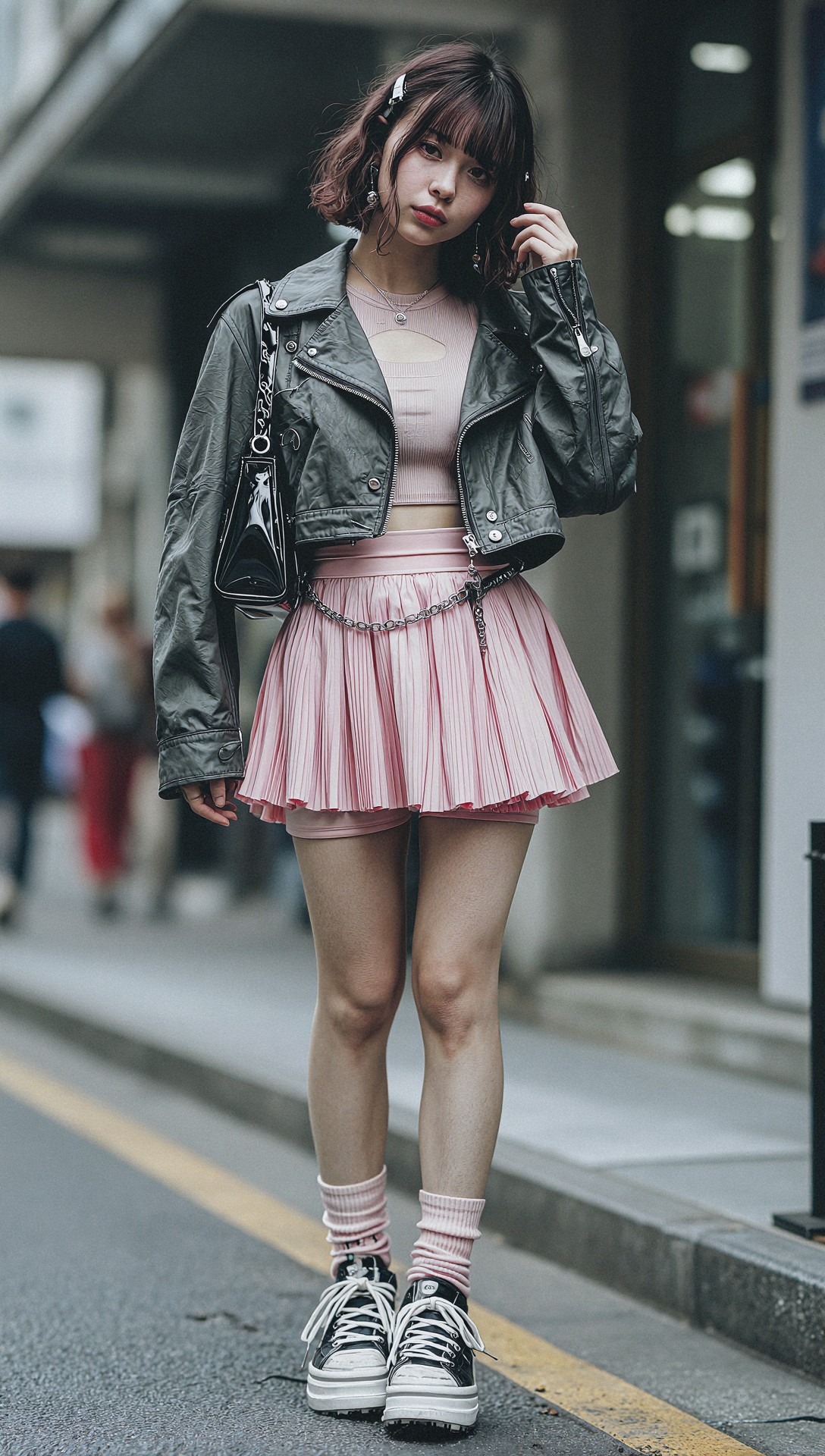
Inspect whether the full silhouette reads in one glance. If the shoes disappear, the crop tightens, or the accessories multiply into clutter, the shot plan was not strong enough.
Why this worked: naming street-style full body early improved framing discipline. The weak outputs usually happened when the prompt said only "anime girl in Harajuku outfit," which invited face-first composition and random layering.
Step 2: Choose one loud Harajuku signal
This test isolates one subculture cue: color-pop legwear and layered mini proportions. It is meant to check style lock without overloading the frame.
Topic: Wearable Harajuku mini-skirt layering for anime editorial
Genre: Fashion Editorial
Camera: Canon EOS R5
Lens: 50mm f/1.8
Lighting: Soft window light with white bounce
Location: Minimal editorial studio with pale gray seamless and acrylic cube
Style: Clean commercial fashion magazine
Final Prompt: three-quarter outfit editorial, anime fashion editorial focused on a wearable Harajuku-inspired look, fitted cropped cardigan in lavender, white baby tee, black pleated mini skirt layered over fitted shorts, one knee-high color-pop sock and one slouch sock, chunky loafers, compact crossbody bag, delicate choker, subtle rings, seated then half-rising pose on acrylic cube, full outfit logic clearly visible from shoulders to shoes, tasteful sexy styling through silhouette not exposure, smooth studio light, crisp garment edges, clean negative space, fabric detail in rib knit, cotton jersey, and polished leather, modern Japanese streetwear meets magazine styling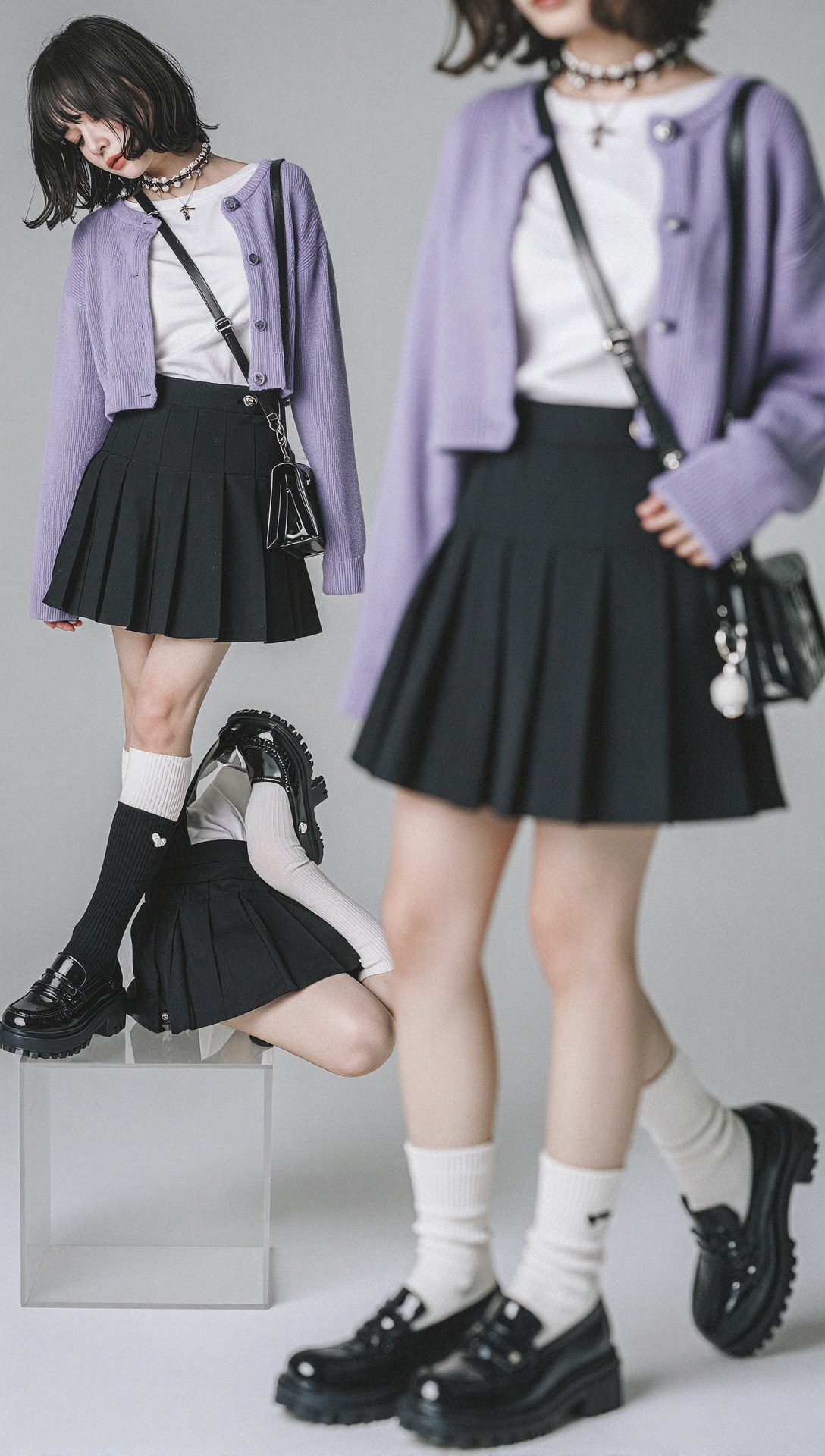
Inspect the layering line at the waist and hem. In strong outputs, the skirt-over-short structure stays readable. In weak ones, the shorts vanish or merge into the skirt.
What I learned: one Harajuku signal is enough. Once I added oversized hair ornaments, patterned sleeves, platform boots, stickers, and toy accessories all together, the images lost commercial usefulness.
Step 3: Lock the wearable base before adding anime polish
If you want the result to work for product pages or lookbook planning, build from a familiar streetwear base. This test checks whether the model can keep a sharper outfit architecture.
Topic: Japanese streetwear base with anime editorial finish
Genre: Lookbook Photography
Camera: Sony A7R V
Lens: 40mm f/2.5
Lighting: Large softbox key plus subtle rim light
Location: Concrete studio with soft shadow falloff
Style: Head-to-toe contemporary lookbook
Final Prompt: head-to-toe lookbook image, anime fashion editorial built from wearable Japanese streetwear, oversized charcoal bomber jacket over fitted off-shoulder knit top, high-waist straight-leg cargos with seam detailing, slim belt, pointed platform ankle boots, structured mini bag, narrow sunglasses pushed up on head, clean standing pose with one hip shifted, complete silhouette fully visible, sexy but controlled editorial attitude, anime-inspired line clarity in the styling and color blocking rather than exaggerated costume elements, studio fashion lighting, premium textile detail in nylon, knit, and washed cotton, neutral backdrop for catalog use, sharp commercial framing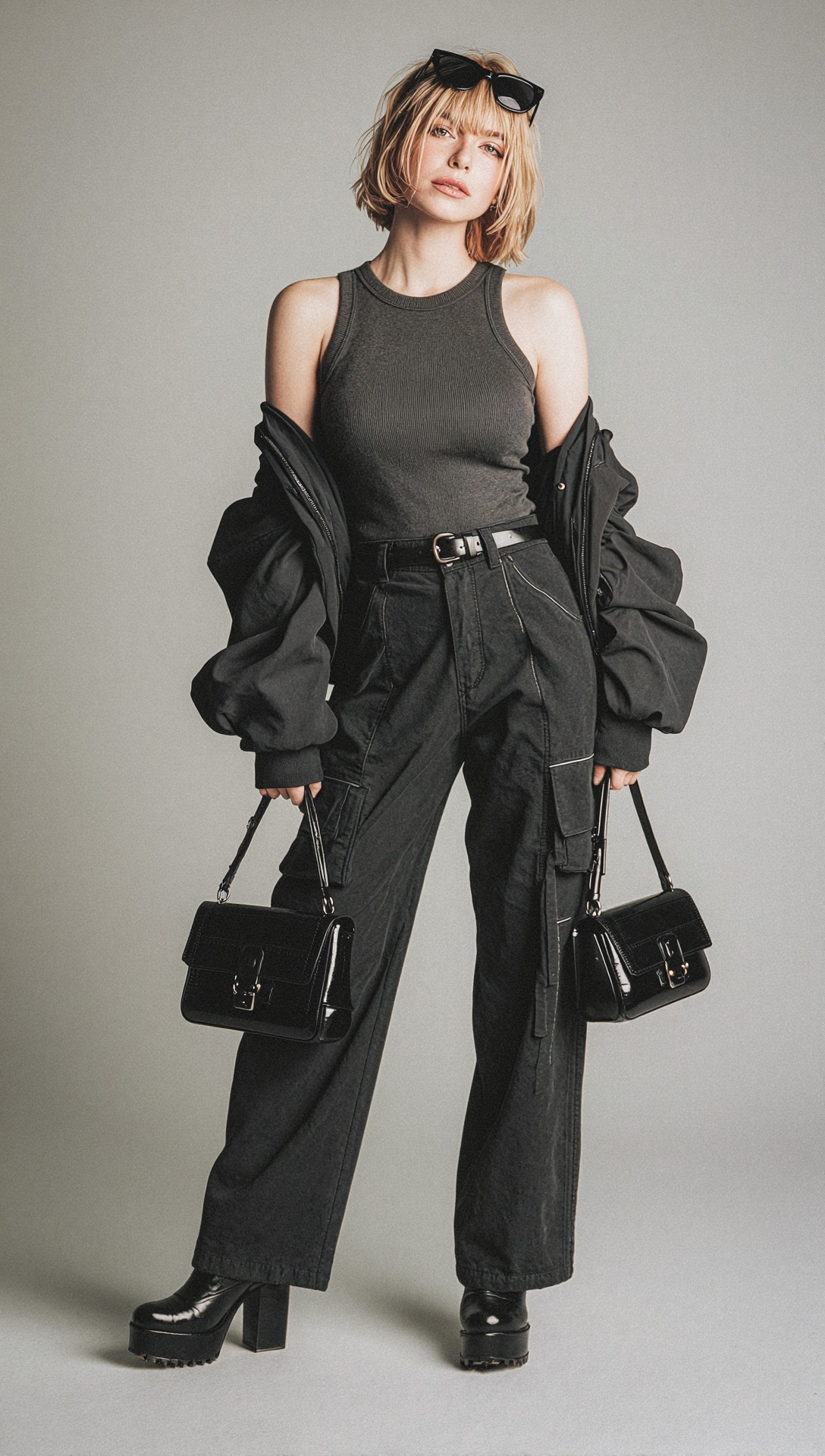
Inspect whether the bomber, top, and cargos each have separate volume. The most common failure here is fabric fusion, where the jacket and pants share the same texture and flatten the silhouette.
In this setup, the strongest result was less "cute" than the earlier prompt, but much more reusable for shopping-oriented creative.
Step 4: Use catalog structure when you need consistent outfit comparison
Commercial investigation readers often want prompts that can support range planning, not just one hero image. This test checks consistency across a fashion grid page.
Topic: Anime-inspired streetwear capsule shown as a catalog page
Genre: Product Editorial
Camera: Nikon Z8
Lens: 35mm f/4 on 24-70mm zoom look
Lighting: Even studio panel lighting
Location: White e-commerce studio set
Style: Catalog grid page
Final Prompt: catalog grid page showing four coordinated anime fashion editorial looks inspired by Harajuku and Tokyo street fashion, each look presented head-to-toe in separate clean panels, wearable outfit systems with cropped varsity jacket, fitted tank, pleated skirt, wide-leg denim, compact bags, platform sneakers, loafers, layered belts, restrained hair accessories, sexy editorial confidence through pose and silhouette, consistent white background, clear garment separation, fashion-buying presentation, polished layout feel, strong commercial clarity, distinct color stories of black-red, cream-silver, pastel-lilac, and navy-pink, crisp studio output with readable fabric texture and accessory hardware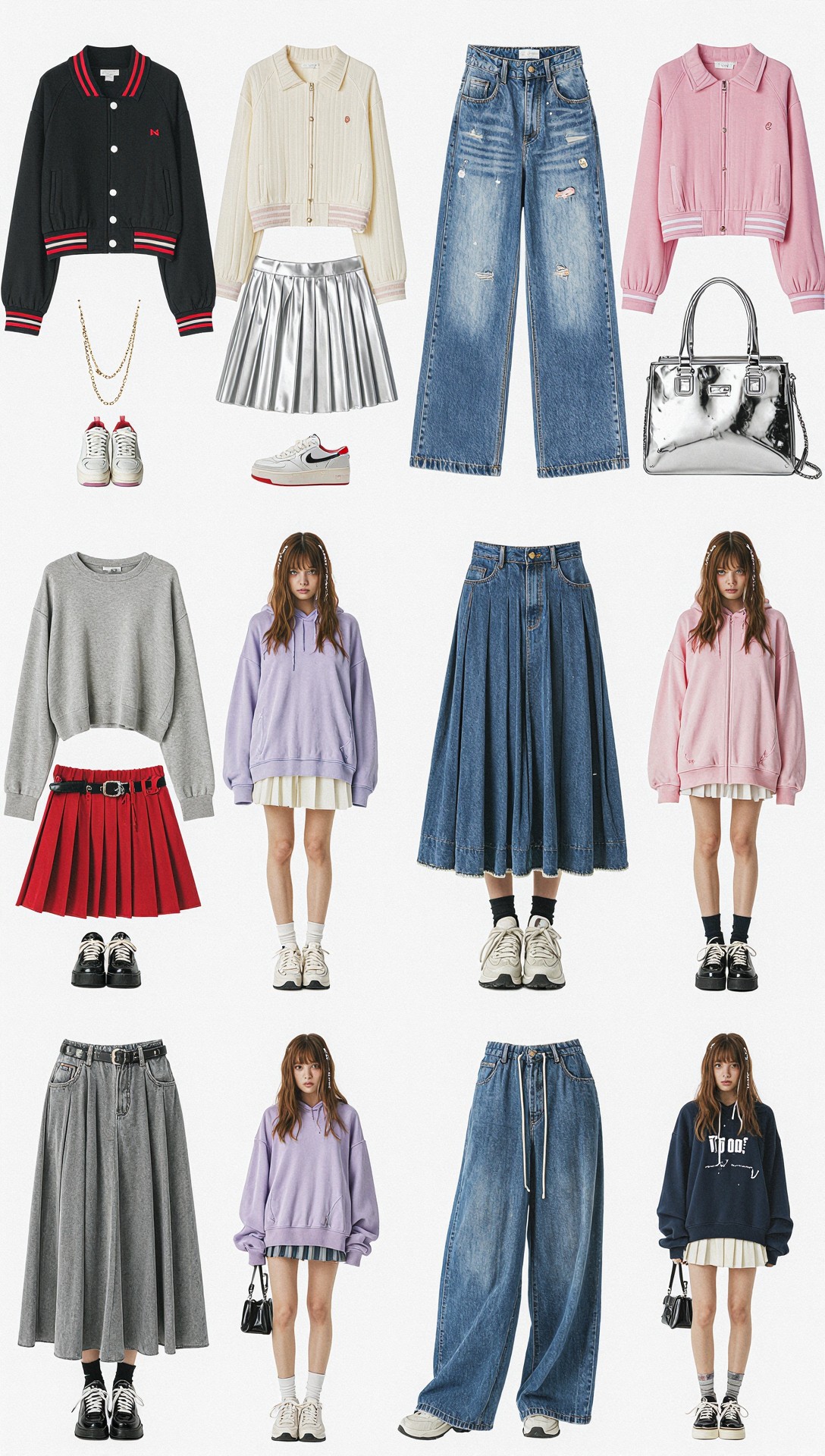
Inspect panel-to-panel consistency. Good outputs keep each look distinct but from the same capsule. Weak outputs randomize body proportions or mutate footwear between panels.
This is where [Gallery](/gallery) references help. If you already know the silhouette family you want, compare multiple outputs side by side before deciding which prompt branch to keep.
Step 5: Add scene context to make Tokyo street fashion feel real
The next test checks whether retail context makes the outfit more believable. It usually does, as long as the scene is specific.
Topic: Tokyo select-shop storefront with anime fashion styling
Genre: Fashion Campaign
Camera: Leica SL2-S
Lens: 35mm f/2
Lighting: Late afternoon natural light with storefront reflections
Location: Harajuku select shop entrance with racks, decals, and glass display
Style: Boutique campaign editorial
Final Prompt: storefront display fashion campaign image, anime fashion editorial with wearable Harajuku styling at a Tokyo select-shop entrance, model stepping out of the shop wearing fitted striped knit top, cropped faux leather jacket, low-rise wide denim, chain-detail belt, heeled platform boots, mini handbag, layered ear cuffs, visible shopping racks and styled mannequins behind glass, full outfit centered in frame, confident sexy street-fashion attitude, late afternoon reflections on glass, realistic retail merchandising context, rich fabric and hardware detail, balanced reds, blacks, and faded blue denim, premium boutique campaign composition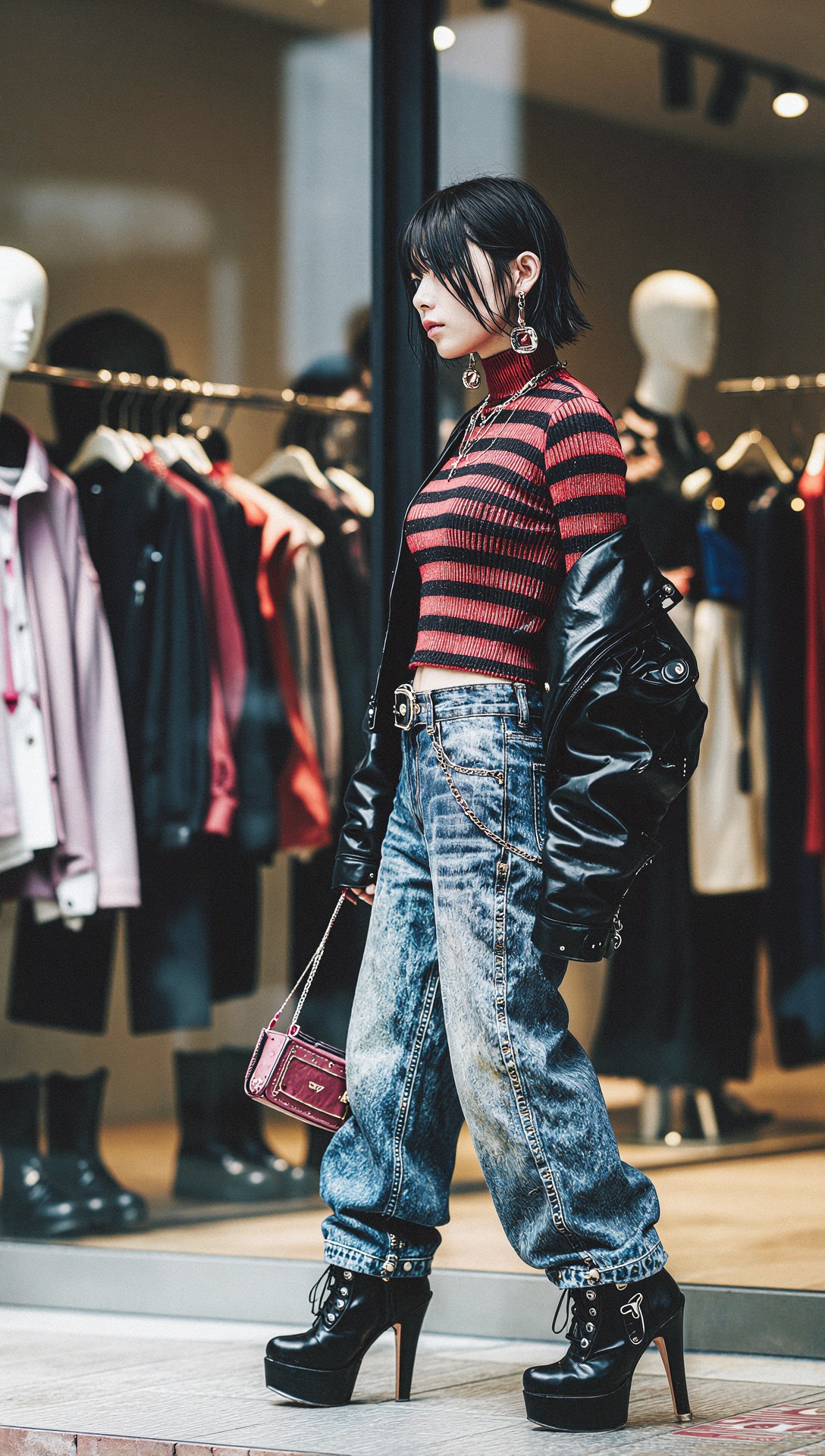
Inspect whether the glass reflections support the image or wash out the clothing. Also check whether the store interior looks like fashion retail rather than a generic café or lobby.
Specific retail context was one of the easiest ways to improve believability. Generic "Tokyo city" backgrounds often produced signs and crowds that distracted from the clothes.
Step 6: Use runway or backstage prompts for directional styling tests
This test is useful when you want a less commercial and more editorial version of the same outfit language. It checks whether the model can hold styling logic under busier conditions.
Topic: Anime editorial runway look with wearable streetwear construction
Genre: Runway Documentary
Camera: Canon EOS R3
Lens: 24-70mm f/2.8 at 50mm
Lighting: Mixed backstage practicals and runway spill light
Location: Tokyo fashion week backstage corridor
Style: Backstage fashion report
Final Prompt: runway backstage moment, anime fashion editorial showing a wearable Harajuku-meets-streetwear look before showtime, model in a corset-layered hoodie dress over straight trousers, detached sleeves, compact belt bag, pointed boots, glossy lip, minimal jewelry, stylist adjusting hem while full outfit remains visible, racks of garments and production tape in background, sexy editorial tension but fashion-first composition, documentary realism, mixed warm and cool backstage lighting, sharp focus on garment layering, visible construction details, authentic Tokyo runway atmosphere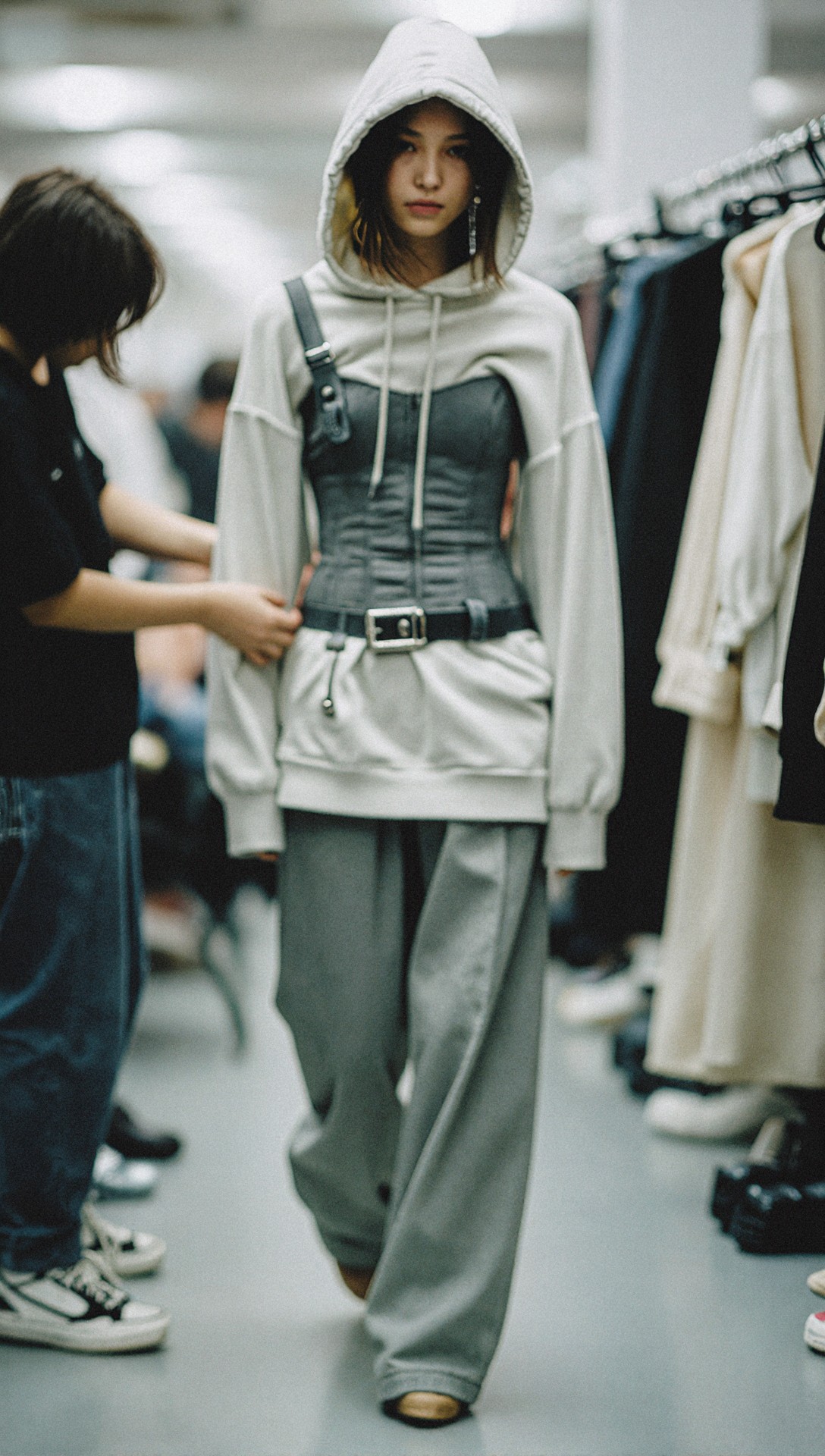
Inspect hands, extra limbs, and garment continuity. Backstage prompts are more likely to break because they include multiple people and more objects.
The strongest use case here is concept testing. I would not start with backstage if the goal is clean shopping imagery.
Step 7: Separate product planning from model shots
When the model keeps stealing attention from the clothing system, split out a flat-lay or item-first image. This test checks whether the visual DNA of the outfit survives without a person.
Topic: Harajuku-wearable outfit components arranged for editorial planning
Genre: Product Editorial
Camera: Phase One XF IQ4
Lens: 80mm f/2.8
Lighting: Overhead softbox with controlled shadow edges
Location: Matte studio tabletop in cool gray
Style: Luxury flat lay merchandising
Final Prompt: product flat lay of an anime fashion editorial outfit blending Harajuku styling with wearable street fashion, carefully arranged cropped faux leather jacket, fitted mesh top, pleated mini skirt, bike shorts, chain belt, slouch socks, platform sneakers, patent mini shoulder bag, silver rings, hair clips, clean editorial spacing, sexy fashion attitude conveyed through silhouette and styling not body, luxury merchandising precision, top-down composition, premium texture detail in leather, mesh, pleats, rubber sole, and patent finish, cool gray background, Tokyo street fashion capsule planning image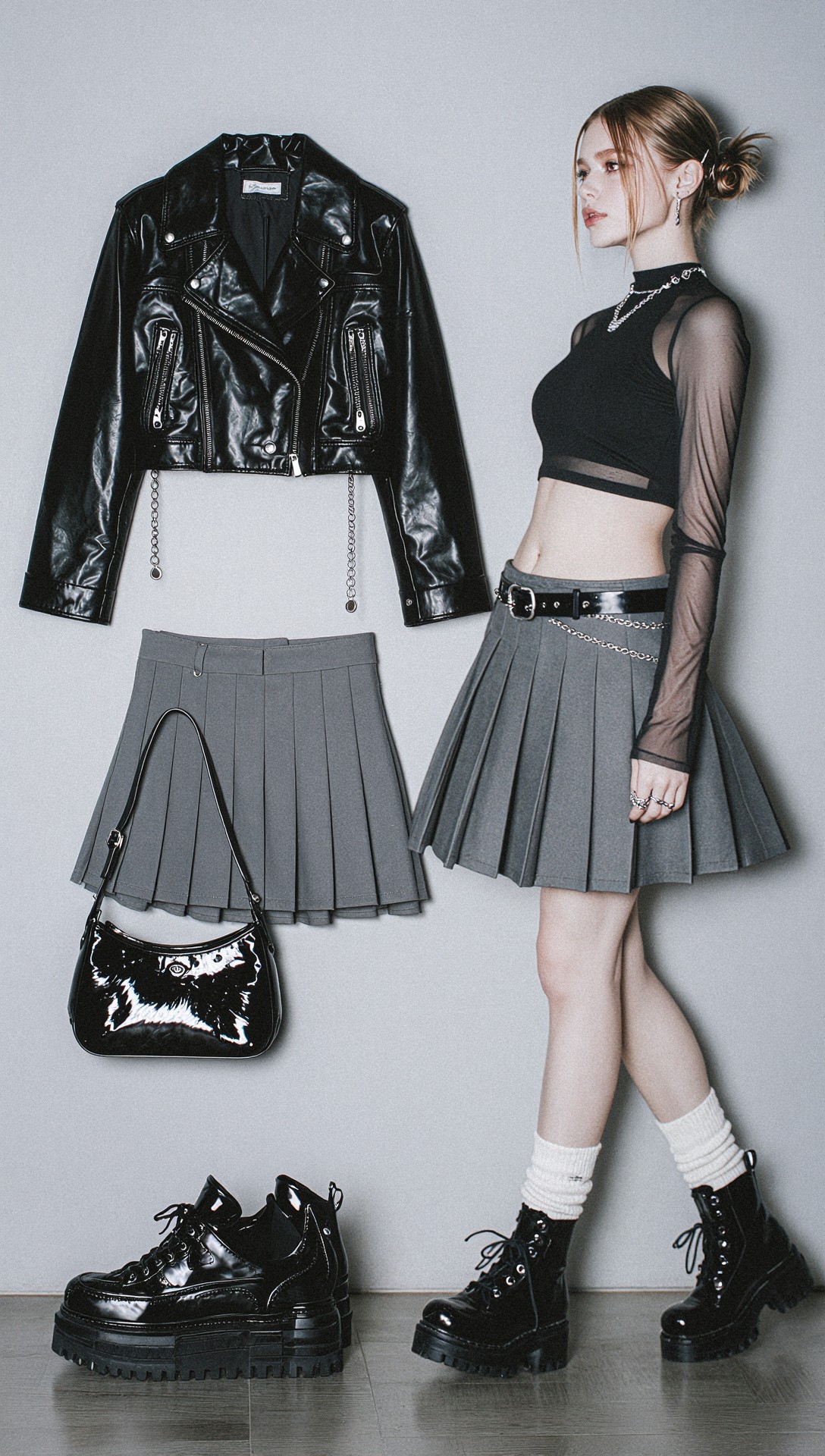
Inspect whether each piece is recognizable and correctly scaled. Flat lays often reveal whether your outfit logic is coherent before you waste time refining full-body generations.
This was one of the most useful checkpoints in the whole workflow. If the flat lay looks overstuffed, the model shot will usually look worse.
Step 8: Finish with accessory and textile detail checks
A lot of anime fashion editorial outputs look acceptable at thumbnail size but fail on hardware, stitching, or small accessories. This final test checks close-up control.
Topic: Streetwear accessories detail for anime fashion editorial
Genre: Accessories Campaign
Camera: Sony A1
Lens: 85mm f/1.8
Lighting: Beauty dish key with neon rim light
Location: Minimal reflective set with smoked acrylic surface
Style: High-end accessories advertising
Final Prompt: accessories close-up from an anime fashion editorial look, focus on mini patent shoulder bag, chain belt detail, rings, ear cuffs, zipper pulls, and cropped jacket hem, lower face and torso partially visible but styling remains the subject, sexy editorial mood through posture and fitted silhouette, polished Tokyo streetwear accessories campaign, sharp hardware reflections, black, silver, and candy-pink palette, smoked acrylic set, luxury detail emphasis, clean composition, realistic material rendering, anime-inspired graphic clarity without losing product realism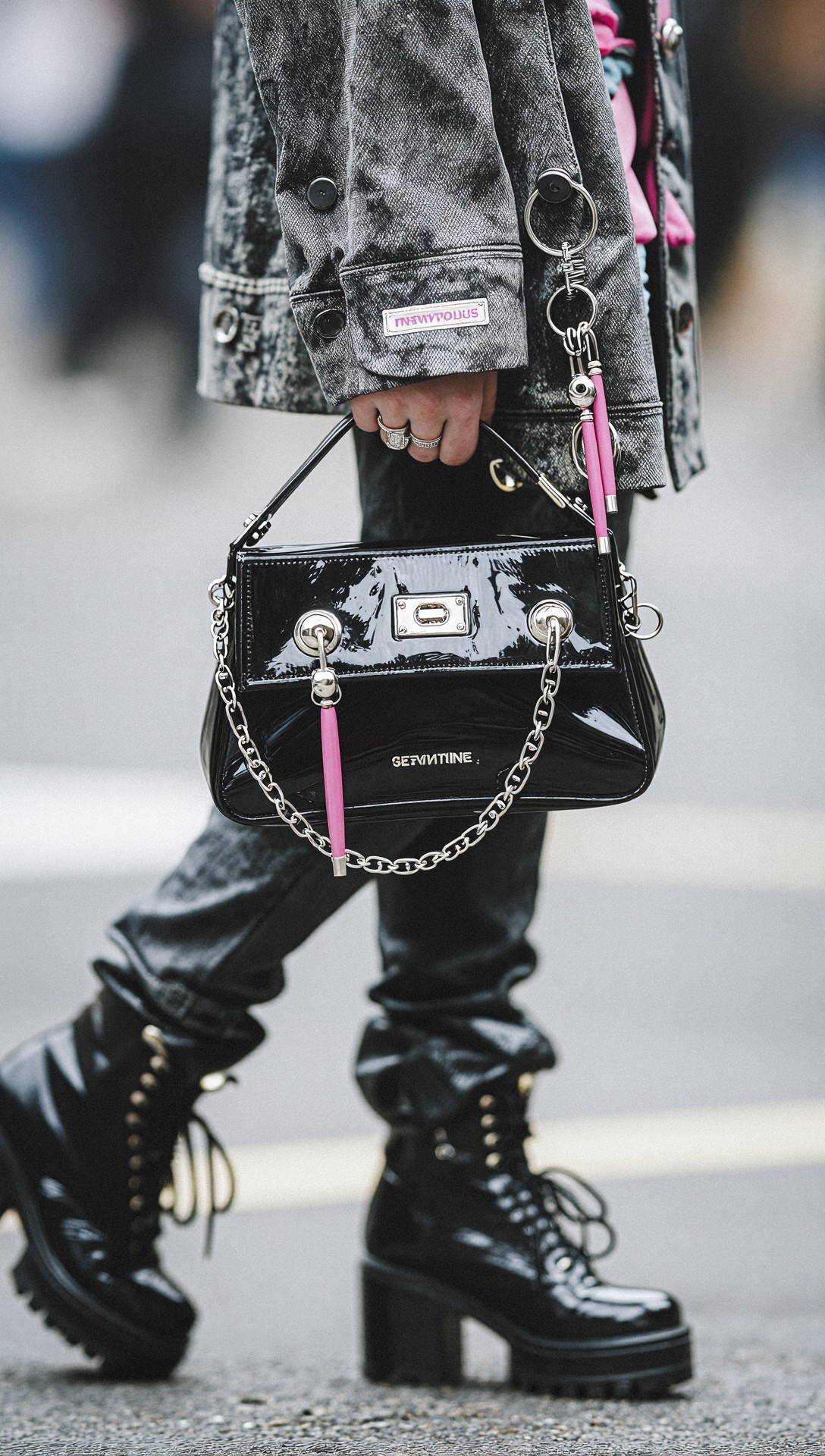
Inspect zipper teeth, chain links, ring count, and bag strap logic. These details are where otherwise strong images often break.
If hardware fails repeatedly, generate the outfit first and the accessory detail second rather than forcing one image to do both jobs.
Prompt examples: why these ingredients worked
Across these tests, the consistent ingredients were:
- a named shot type
- one fashion context
- one dominant silhouette idea
- explicit garment stack
- footwear specified early
- restrained accessory count
- a sexy mood expressed through fit and attitude, not exposed skin
The weak point was always ambiguity. If "anime" and "Harajuku" were the only anchors, the outputs drifted toward cosplay, poster art, or portrait crops. If the prompt described garments like an editor styling a page, the image model usually followed.
Quality-control checklist for output review
Use this after every batch.
Outfit readability
- Can you identify outerwear, top, bottom, shoes, and bag in under two seconds?
- Is the silhouette intentional, not accidental?
- Does one statement element lead the look?
Fashion accuracy
- Do hem lengths, waistlines, and layers make physical sense?
- Are shoes complete and symmetrical?
- Do accessories support the outfit instead of replacing it?
Anime stylization balance
- Does the image feel stylized without turning into costume art?
- Are proportions still wearable for street fashion?
- Is the expression secondary to the styling system?
Commercial usefulness
- Could this image sit in a lookbook, campaign mood board, storefront concept, or product page?
- Is there enough negative space or framing control for layout use?
- Does the background support the clothes?
Strengths observed in this workflow
Best at
- full-body outfit planning
- blending playful Harajuku cues with commercial streetwear shapes
- creating mood boards for capsule direction
- testing color stories and accessory limits
Strongest result
The strongest result in this test was the head-to-toe lookbook approach. It produced the cleanest silhouette control and the most consistent fabric separation. For users comparing workflows before committing to a campaign direction, I would start there.
Useful secondary result
The storefront display prompt was best for adding Tokyo street fashion context without losing product relevance. It felt more commercial than backstage and more grounded than open-street prompts.
Limitations and failure risks
Where outputs got weak
- hands near bags or belts often mutated
- platform shoes merged into the ground plane
- layered mini-over-short combinations sometimes fused
- crowded Harajuku backgrounds competed with the clothing
- close-up accessory prompts occasionally over-stylized hardware into fantasy metal
What caused most failures
1. too many subculture references in one line 2. no footwear specification 3. vague scene wording like "urban Japan" 4. asking for both beauty portrait and full outfit at once 5. trying to show too many accessories in a single image
If you hit these issues often, simplify the shot and rerun it through [Create](/create), then use [Upscaler](/upscaler) only after the core styling is correct. Upscaling does not fix broken layering logic.
Troubleshooting weak outputs
If the image looks too costume-like
- remove one novelty accessory cluster
- replace one loud pattern with texture
- switch from "Harajuku fashion" to a concrete item like pleated mini, mesh top, or cropped biker jacket
If the image crops too tight
- start the prompt with "street-style full body" or "head-to-toe lookbook"
- specify "full outfit visible head to toe"
- use 35mm to 50mm framing language
If fabrics blur together
- name each material directly
- avoid putting jacket and pants in the same finish unless you want a set
- add one lighting note that favors texture, like overcast diffusion or softbox key
If accessories become messy
- limit the list to bag, one jewelry family, one hair detail
- move accessory testing to a separate detail prompt
- ask for "restrained accessories" instead of adding more nouns
If the anime style disappears
- add anime influence through line clarity, color blocking, and graphic composition
- do not solve it by adding fantasy props
- keep the outfit wearable and let the stylization live in the rendering language
FAQ
How do I make anime fashion editorial prompts look wearable instead of cosplay?
Lead with fashion shot type and garment logic. Use one Harajuku signal layered onto a grounded streetwear base.
What is the best shot type for anime fashion editorial outfit prompts?
For clean outfit evaluation, head-to-toe lookbook is the safest start. For mood and realism, street-style full body is the next best option.
How do I prompt Harajuku fashion without getting cluttered results?
Limit accessories, keep the palette controlled, and specify one clear silhouette hero like a cropped jacket, pleated mini, or wide denim.
Should I use street backgrounds or studio backgrounds for Japanese streetwear prompts?
Use studio for outfit accuracy and comparison. Use Harajuku retail or backstreet context once the look is already stable.
What detail matters most for Tokyo street fashion prompts?
Footwear. If the shoes are vague, the entire outfit often loses commercial credibility.
Summary recommendation
This workflow is best for readers who want an anime fashion editorial prompt system that can generate usable outfit imagery, not just aesthetic mood pieces. It works well for lookbooks, campaign planning, capsule concepts, and streetwear styling tests. It is less suitable if you want extreme costume styling, heavy fantasy props, or beauty-first portrait art.
If I had to reduce the method to one rule, it would be this: write the prompt like a fashion editor assigning a shot, then add anime stylization as finish, not foundation. The setting detail that mattered most was a specific Tokyo fashion context. The prompt detail that mattered most was full outfit logic, especially shoes, bag, and layer order.
For more prompt iteration ideas, browse [articles](/articles) or test variants inside [Prompt Lab](/promptlab).