Best Lighting Prompts for Korean Fashion Model Photography 한국어 요약
이 페이지는 ZView Space의 영어 원문을 한국어 검색 사용자도 이해할 수 있도록 정리한 SEO 요약입니다. 핵심은 단순한 얼굴 중심 이미지가 아니라 패션 에디토리얼, 룩북, 아웃핏, 프롬프트 테스트, 이미지 생성 워크플로우를 실제로 어떻게 구성할지입니다.
핵심 요약
- 원문 주제: Best Lighting Prompts for Korean Fashion Model Photography
- 목적: AI 이미지 생성에서 outfit, silhouette, fabric, pose, location, camera framing을 더 명확하게 설계합니다.
- 활용 범위: Z-Image Turbo, Krea2 Turbo, Qwen Image, Anima, SeedVR2 같은 이미지 생성 및 업스케일 워크플로우에 적용할 수 있습니다.
- SEO 관점: 제목, 설명, 이미지 alt, 프롬프트 예시가 실제 검색 의도와 맞아야 색인 가능성이 높아집니다.
한국어 사용자를 위한 체크포인트
1. 프롬프트가 얼굴 묘사에만 머물지 않고 전체 스타일과 의상 구성을 설명하는지 확인합니다. 2. 패션 이미지라면 상의, 하의, 아우터, 신발, 액세서리, 소재감, 촬영 장소를 분리해서 씁니다. 3. 생성 결과는 바로 게시하지 말고 디테일, 손, 의상 형태, 배경 일관성, 이미지 품질을 비교합니다. 4. 글 본문에는 실제 테스트 기준과 실패를 줄이는 방법이 들어가야 검색엔진에서 얇은 콘텐츠로 보일 가능성이 줄어듭니다.
원문 미리보기
Lighting is one of the fastest ways to shift Korean fashion model imagery from flat catalog output to a more deliberate editorial look. In AI image generation, lighting prompts do more than describe brightness. They define mood, skin rendering, fabric texture,
---
Lighting is one of the fastest ways to shift Korean fashion model imagery from flat catalog output to a more deliberate editorial look. In AI image generation, lighting prompts do more than describe brightness. They define mood, skin rendering, fabric texture, perceived brand tier, and even whether an image reads as beauty campaign, Seoul street style, or luxury magazine cover.
This guide focuses on practical lighting setups that work well for Korean fashion model photography prompts. The goal is not to chase a single "best" lighting recipe, but to match lighting to wardrobe, location, camera language, and intended commercial use.
Why lighting matters more than style keywords
Many users over-rely on broad style phrases like Korean magazine, luxury editorial, or clean commercial. These can help, but lighting usually determines whether the model feels believable and whether the clothing reads correctly.
For Korean fashion portraits, lighting often needs to support several priorities at once:
- clean, flattering skin tones
- controlled highlights on hair and fabric
- a polished but not overly plastic beauty finish
- separation between subject and background
- mood that matches modern Seoul fashion imagery
A useful prompt strategy is to treat lighting as a production decision, not a decorative adjective.
1. Studio butterfly light for beauty-led fashion portraits
Butterfly lighting is a strong choice when the image needs symmetry, smooth skin, and a premium beauty-campaign feel. It works especially well for close portraits, minimal styling, and clean Korean magazine aesthetics.
This setup is useful for:
- cosmetics-linked fashion editorials
- e-commerce hero images with elevated polish
- cover-style portraits with direct gaze
- knitwear, jewelry, and makeup-focused shots
The risk is that it can become too sterile if the prompt lacks texture, wardrobe contrast, or background shape. Add subtle shadow control and material detail to avoid an overprocessed result.
Topic: Korean fashion model in structured ivory tailoring
Genre: Beauty Campaign
Camera: Canon EOS R5
Lens: RF 85mm f/1.2L
Lighting: Studio butterfly light with soft overhead key and subtle silver reflector fill
Location: Minimal editorial studio with warm gray seamless backdrop
Style: High-end beauty advertising
Final Prompt: Korean fashion model wearing structured ivory tailoring with a satin lapel and delicate pearl earrings, direct confident gaze, relaxed shoulders, refined hand placement near collarbone, studio butterfly light with a soft overhead key creating clean cheekbone definition and a subtle shadow under the nose, gentle silver reflector fill for luminous skin, minimal warm gray seamless background, polished beauty campaign composition, natural skin texture, glossy black hair with controlled shine, neutral beige and ivory palette, premium fabric detail, tight medium portrait framing, Canon EOS R5 realism, RF 85mm f/1.2L shallow depth of field, elegant Korean beauty editorial finish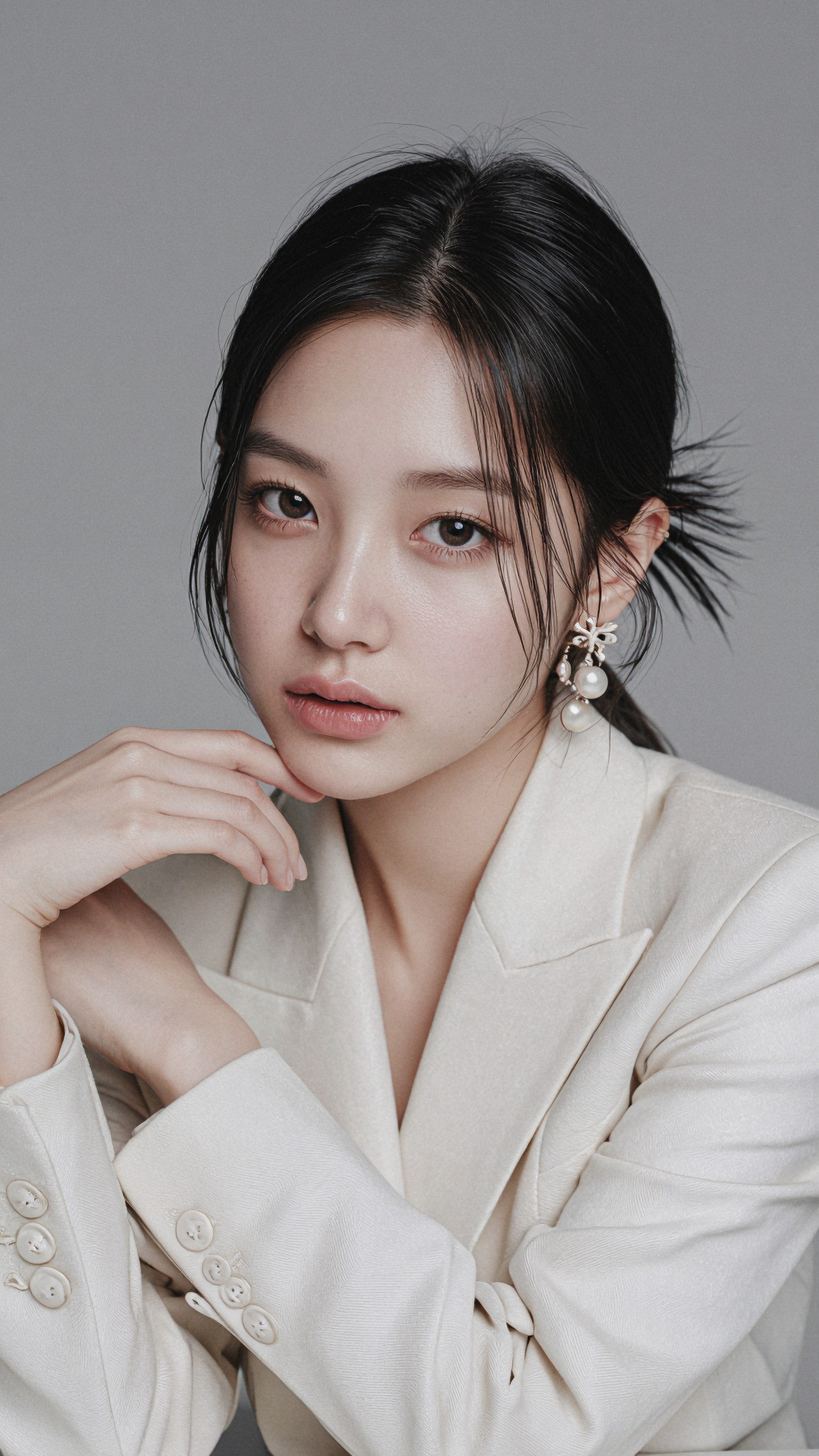
2. Large softbox key light for commercial clarity
When the goal is clean garment readability, a large softbox key light is more dependable than dramatic setups. It produces even skin rendering and clear textile detail, which is valuable for lookbooks, online retail, and branded social campaigns.
This approach suits:
- contemporary office fashion
- minimalist spring collections
- commercial portraits with low visual noise
- AI outputs where garment silhouette must stay accurate
The main advantage is consistency. The tradeoff is less atmosphere, so support it with composition, styling, and a defined set.
Topic: Korean model in minimalist spring workwear
Genre: Fashion Editorial
Camera: Nikon Z8
Lens: NIKKOR Z 50mm f/1.8 S
Lighting: Large softbox key light at 45 degrees with white fill card and soft shadow retention
Location: Clean daylight-style studio set with pale stone floor and matte cream wall
Style: Clean commercial look
Final Prompt: Korean fashion model wearing minimalist spring workwear, tailored beige trousers, crisp white blouse, light taupe blazer, sleek low bun, calm professional expression, standing three-quarter pose with one hand in pocket, large softbox key light at 45 degrees with soft wrap across the face and torso, white fill card maintaining gentle shadow detail, clean daylight studio atmosphere, pale stone floor and matte cream wall, balanced commercial composition showing full outfit, neutral cream and sand palette, realistic fabric folds, subtle luxury styling, Nikon Z8 precision, 50mm f/1.8 natural perspective, sharp garment definition, polished Korean commercial fashion image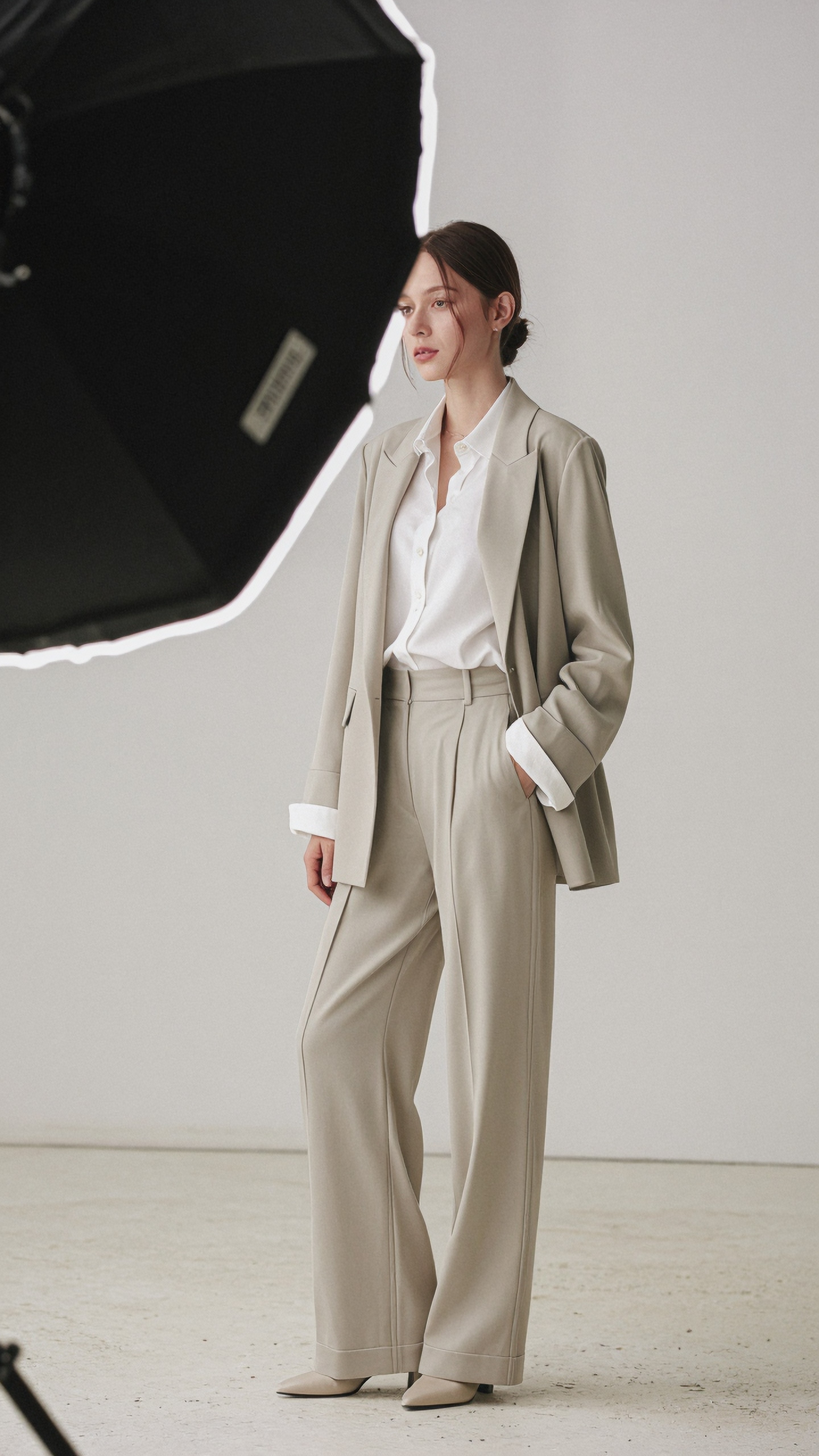
3. Window light for natural magazine realism
Soft window light is a reliable choice for understated Korean editorial portraits. It creates believable facial gradients and works especially well when the brief calls for intimacy rather than spectacle.
Use it for:
- apartment lifestyle editorials
- fall and winter fashion stories
- indie magazine aesthetics
- softer beauty and knitwear imagery
To keep window-light prompts strong, specify directionality, room mood, and time of day. Otherwise the model may blend into a vague indoor scene.
Topic: Korean fashion model in autumn knitwear portrait
Genre: Lifestyle Portrait
Camera: Fujifilm GFX100 II
Lens: GF 110mm f/2
Lighting: North-facing window light with soft overcast diffusion and negative fill on shadow side
Location: Quiet Seoul apartment interior with linen curtains and wood textures
Style: Korean magazine cover
Final Prompt: Korean fashion model wearing a textured oatmeal knit sweater and charcoal pleated skirt inside a quiet Seoul apartment, seated near linen curtains, introspective expression, soft hand resting on knee, north-facing window light with overcast diffusion creating smooth natural skin gradients, negative fill on the far side of the face for depth and sculpting, warm wood textures and muted interior styling, editorial cover composition with clean negative space, muted beige, gray, and walnut palette, natural hair movement, realistic knit texture, subtle filmic tonality, Fujifilm GFX100 II medium-format detail, GF 110mm f/2 portrait compression, intimate Korean magazine realism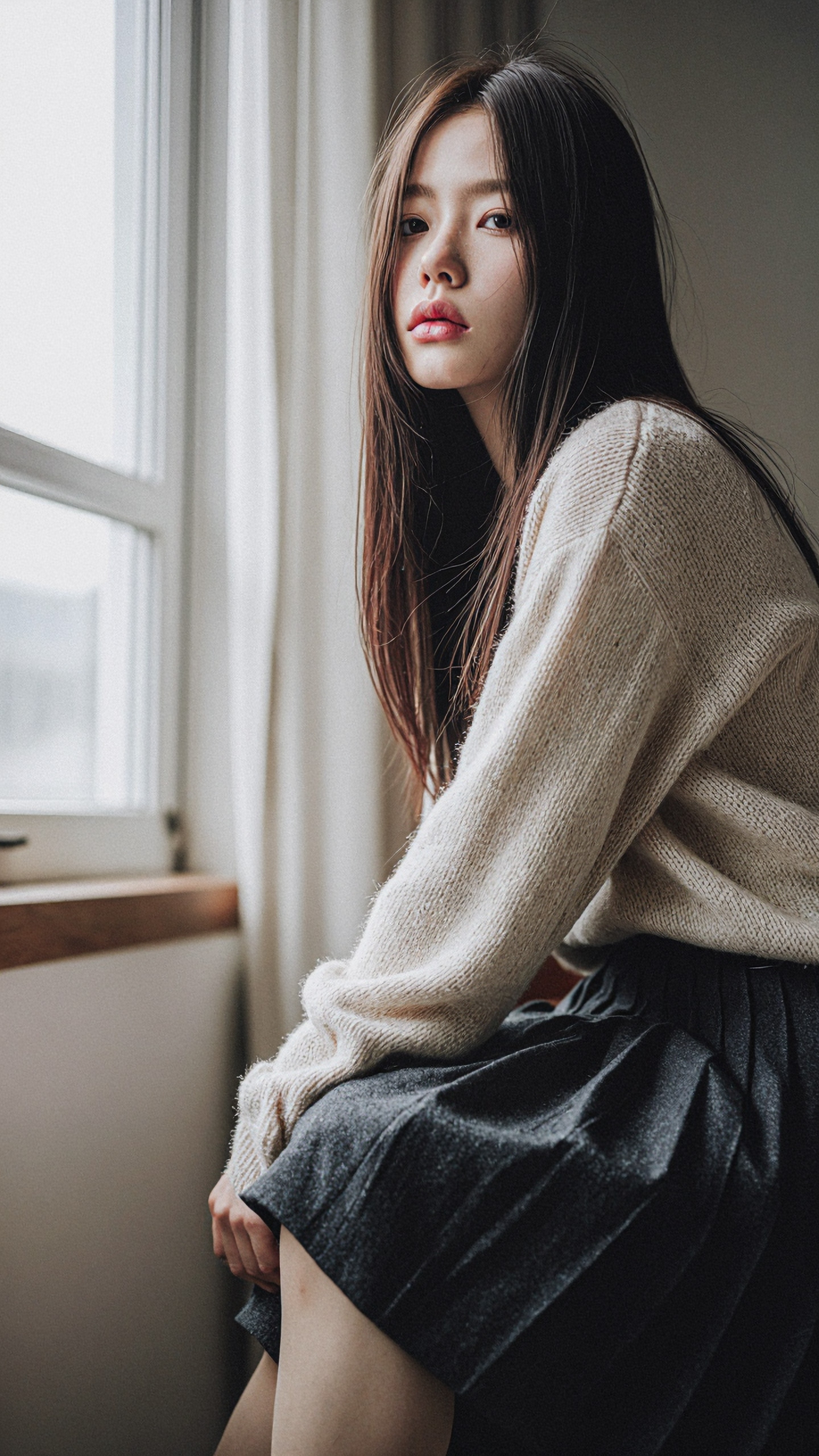
4. Neon rim light for Seoul night street fashion
For trend-driven street style, neon rim lighting can create strong separation and urban atmosphere. It performs best when combined with a practical ambient source rather than used alone.
This setup works for:
- youth streetwear campaigns
- nightlife-inspired editorials
- techwear, leather, and reflective materials
- scenes set in Hongdae, Euljiro, or Gangnam backstreets
The common failure mode is oversaturation. Keep one dominant color and one secondary accent instead of stacking too many neon hues.
Topic: Korean street fashion model in modern techwear
Genre: Street Style
Camera: Sony A7S III
Lens: FE 35mm f/1.4 GM
Lighting: Neon rim light with cool ambient storefront spill and soft frontal bounce
Location: Rain-slick Seoul alley at night with signage reflections and narrow side streets
Style: Cinematic realism
Final Prompt: Korean fashion model in modern black techwear, cropped utility jacket, wide cargo trousers, metallic accessories, damp loose hair, alert expression, dynamic walking pose through a rain-slick Seoul alley at night, magenta neon rim light tracing the jacket edges and hair, cool cyan storefront spill lighting the face, subtle frontal bounce preserving skin detail, reflective pavement, layered Korean signage, atmospheric mist, cinematic street composition at mid distance, black, magenta, and cyan palette, visible fabric texture and wet surface reflections, Sony A7S III low-light realism, 35mm f/1.4 immersive perspective, moody but believable Seoul street fashion editorial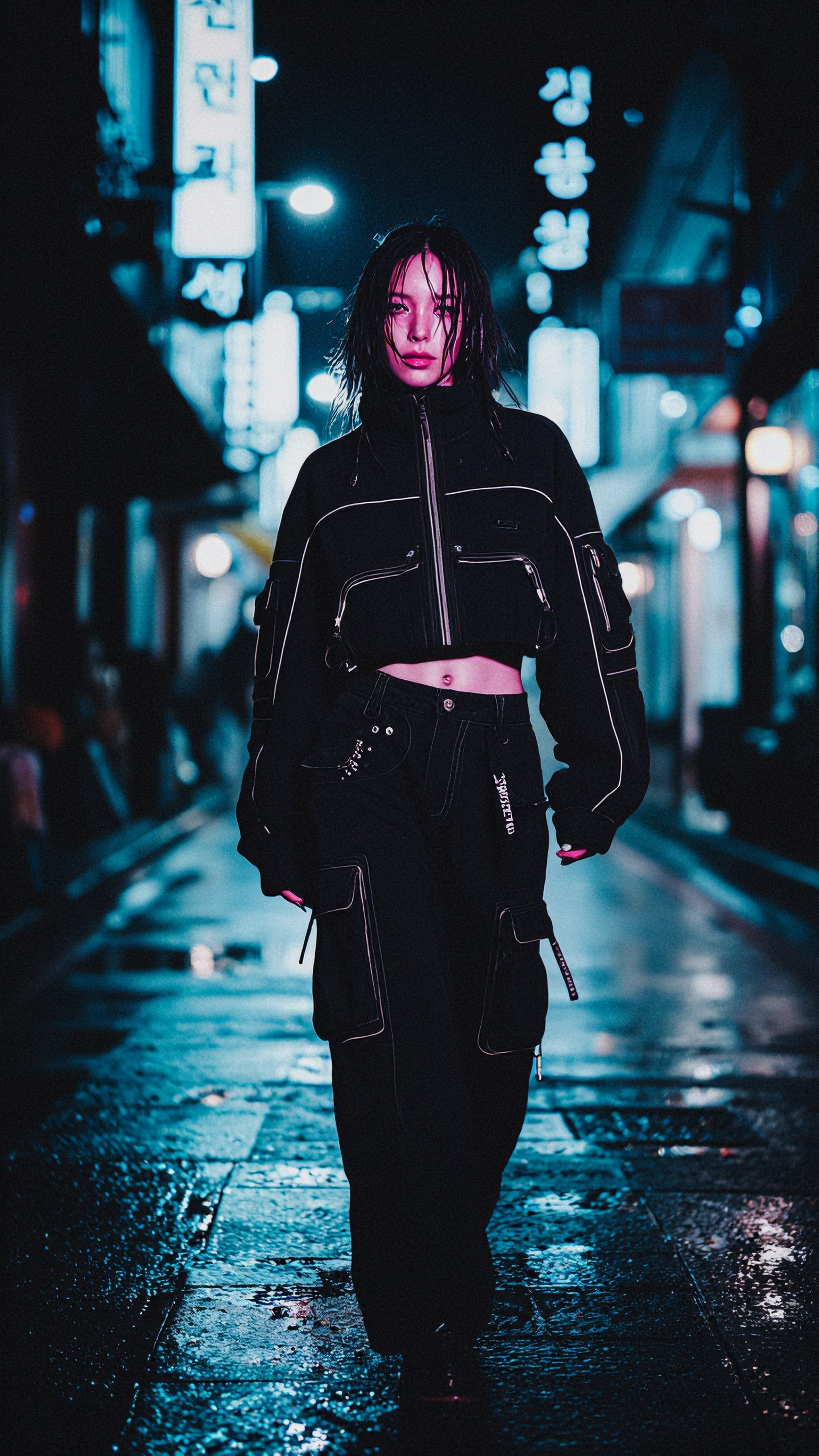
5. Golden hour backlight for soft luxury and resort fashion
Golden hour remains effective because it adds warmth, separation, and movement without requiring a heavy studio feel. In Korean fashion imagery, it is often used for light dresses, summer campaigns, and aspirational travel editorials.
Best use cases include:
- resort and vacation fashion
- hair movement and translucent fabric
- feminine spring and summer collections
- brand images that need warmth without excessive glamour
Be explicit about how the backlight is controlled. Adding bounce fill or a soft front exposure cue helps preserve facial clarity.
Topic: Korean fashion model in refined summer resort wear
Genre: Luxury Campaign
Camera: Sony A7R V
Lens: FE 85mm f/1.4 GM
Lighting: Golden hour backlight with soft front bounce from sand and controlled warm flare
Location: Jeju coastal resort terrace overlooking the sea
Style: Elegant resort editorial
Final Prompt: Korean fashion model wearing refined summer resort fashion, flowing cream dress with subtle pleats, gold sandals, delicate layered jewelry, poised relaxed stance near a stone terrace overlooking the Jeju sea, warm golden hour backlight illuminating hair edges and sheer fabric, soft front bounce from pale sand and terrace stone maintaining clear facial detail, controlled warm lens flare, ocean breeze creating natural fabric movement, pastel sky and coastal blue horizon, elegant luxury campaign framing, cream, gold, and sea-blue palette, premium textile texture, serene expression, Sony A7R V detail, 85mm f/1.4 shallow depth of field, polished Korean resort editorial look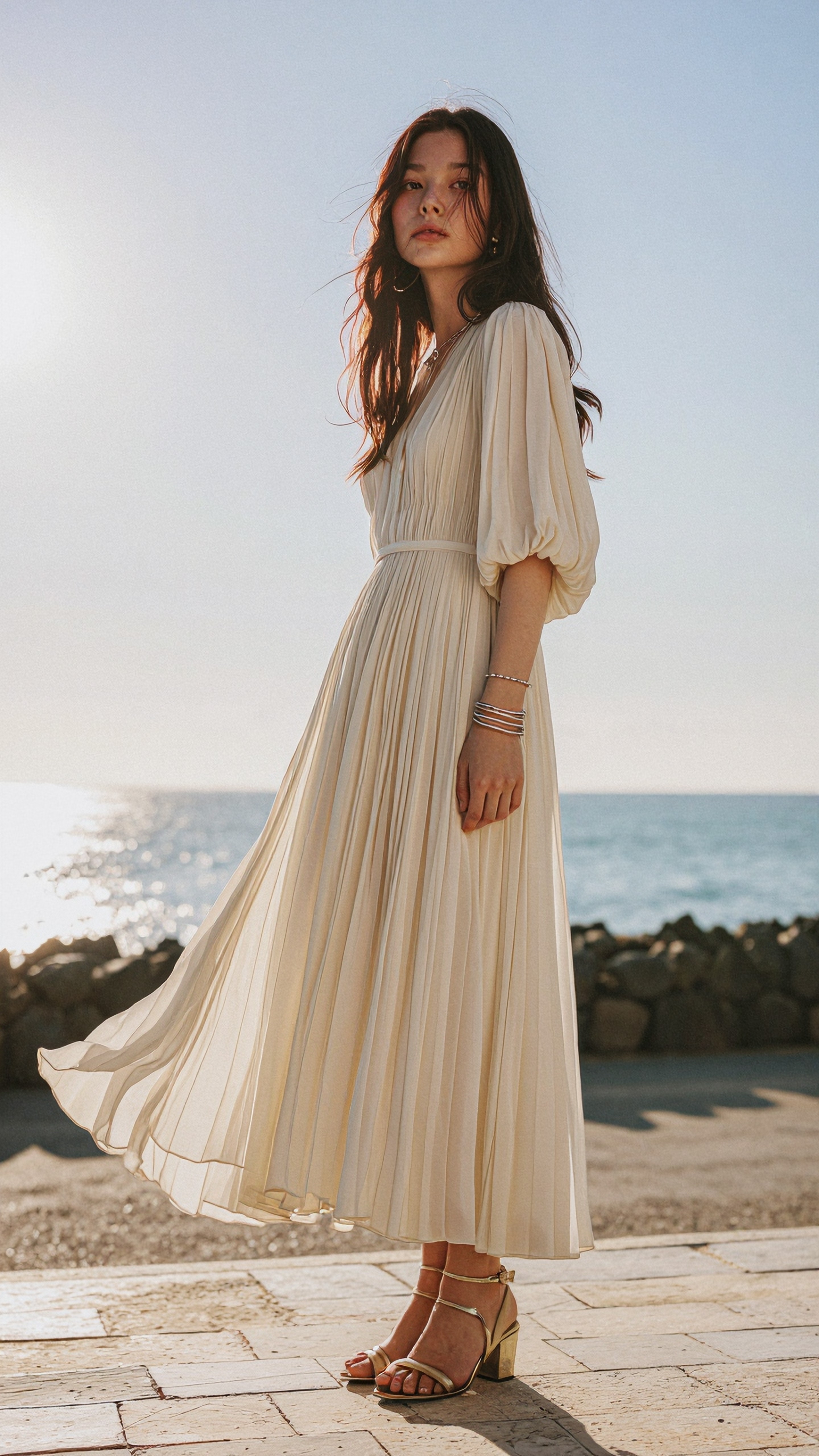
6. Overcast diffusion for denim, street casual, and balanced skin tones
Overcast light is often underrated in prompt writing. It reduces specular hotspots and gives denim, cotton, and layered casualwear a more honest surface response. It is especially useful when the wardrobe should feel wearable rather than idealized.
Good matches include:
- campus and café streetwear
- denim campaigns
- layered neutral outfits
- brand shoots that need consistency across multiple looks
This lighting also helps when models have dark hair and the prompt needs controlled detail without harsh contrast.
Topic: Korean model in casual denim streetwear
Genre: Street Style
Camera: Leica SL2-S
Lens: APO-Summicron-SL 75mm f/2 ASPH
Lighting: Overcast diffusion with gentle ambient lift and soft pavement bounce
Location: Seoul side street with concrete walls, small cafe frontage, and muted urban texture
Style: Contemporary fashion campaign
Final Prompt: Korean fashion model wearing elevated casual denim streetwear, dark indigo jeans, white ribbed tank, oversized slate blazer, clean sneakers, natural loose hair, subtle confident smile, standing beside a Seoul cafe on a muted concrete side street, overcast diffusion creating soft even skin tones and low-contrast garment detail, gentle ambient lift and light pavement bounce brightening the lower face, contemporary urban composition with understated signage and soft background blur, blue-gray and off-white palette, realistic denim texture, wearable styling, Leica SL2-S tonal realism, 75mm f/2 refined portrait compression, modern Korean street fashion campaign aesthetic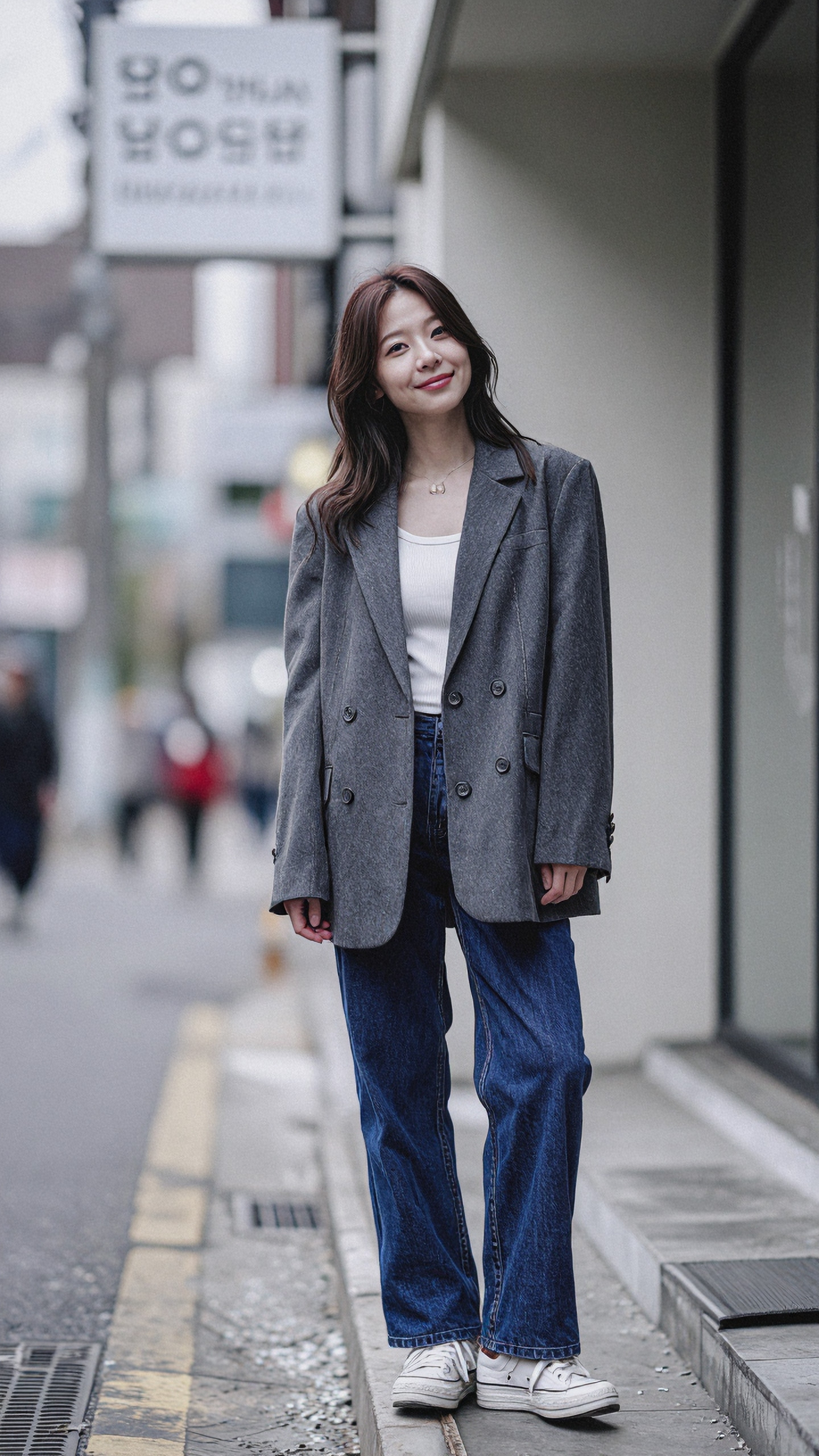
7. Hard sunlight with shadow geometry for high-fashion editorials
Not every Korean fashion image needs soft flattering light. Hard sunlight can produce sharper, more directional editorials when the wardrobe has strong structure and the concept can support contrast.
This is most effective for:
- architectural fashion stories
- monochrome tailoring
- angular poses and graphic compositions
- magazine spreads with luxury or avant-garde direction
The prompt should mention shadow shape, time of day, and surface reflections so the model does not appear randomly overexposed.
Topic: Korean fashion model in monochrome architectural tailoring
Genre: Fashion Editorial
Camera: Hasselblad X2D 100C
Lens: XCD 55mm f/2.5 V
Lighting: Hard midday sunlight with crisp shadow geometry and controlled reflected fill
Location: Modern Seoul rooftop with pale concrete walls and minimalist architecture
Style: Luxury fashion campaign
Final Prompt: Korean fashion model in monochrome architectural tailoring, sharp black cropped jacket, ivory column skirt, sculptural heels, sleek center-parted hair, serious editorial expression, elongated pose against pale concrete walls on a modern Seoul rooftop, hard midday sunlight casting crisp linear shadows across the set and clothing, controlled reflected fill from nearby pale surfaces preserving facial detail, graphic composition with strong negative space, black, ivory, and pale stone palette, premium tailoring texture, high-fashion magazine framing, Hasselblad X2D 100C medium-format clarity, 55mm f/2.5 precise rendering, bold Korean luxury editorial with disciplined contrast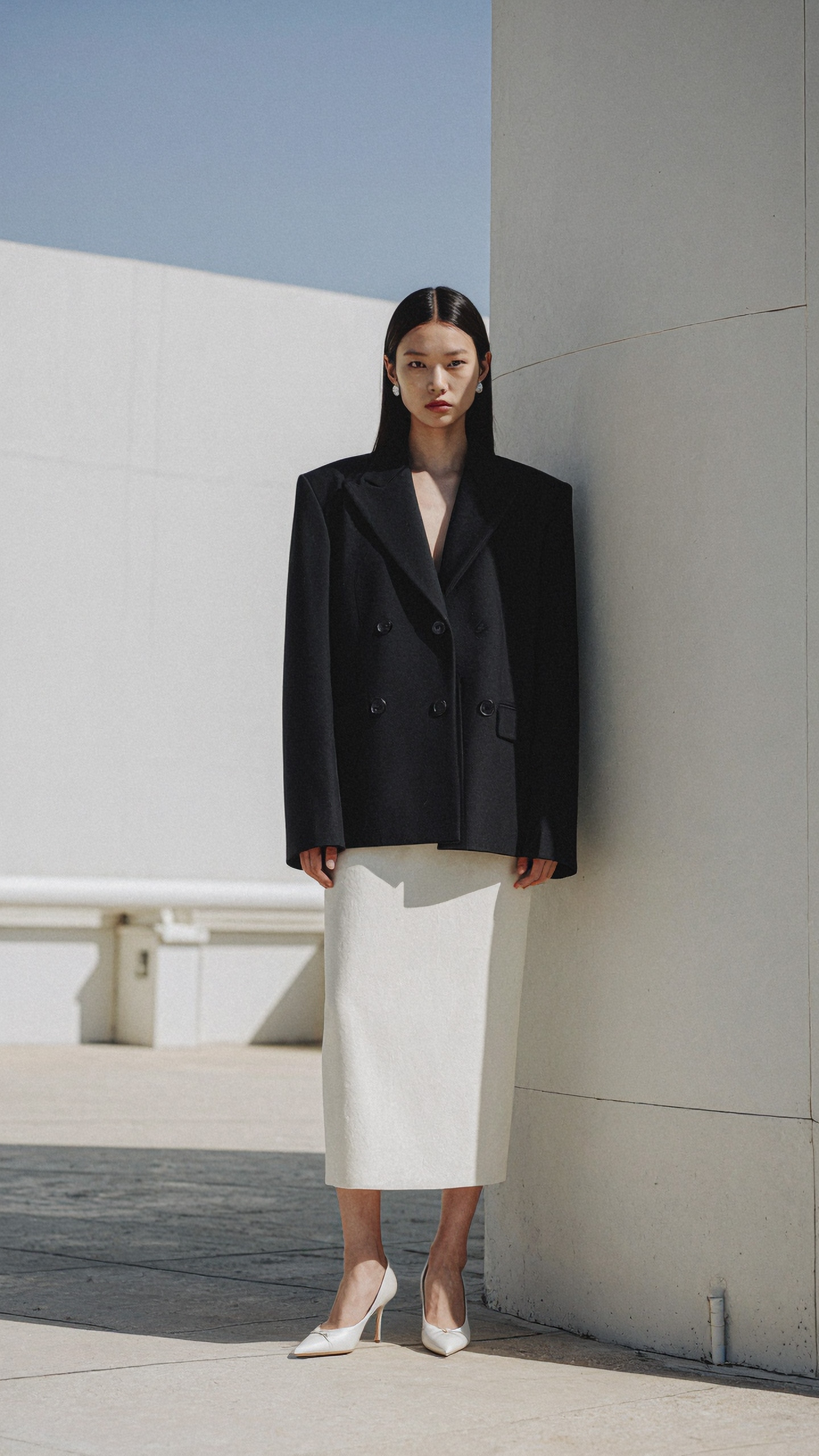
8. Mixed practical interior light for cinematic evening fashion
Mixed lighting can create a more narrative image, especially for indoor evening scenes. Table lamps, tungsten practicals, and cool window spill can produce a layered cinematic mood that still feels fashion-oriented.
Useful applications:
- evening loungewear or occasionwear
- boutique hotel campaigns
- narrative editorials with emotional tone
- luxury social content that needs more depth than a standard studio portrait
The challenge is color balance. A good prompt should define which source is dominant and how the secondary light shapes the scene.
Topic: Korean fashion model in evening satin dress
Genre: Fashion Editorial
Camera: RED V-RAPTOR cinematic capture
Lens: Cooke S4/i 65mm T2
Lighting: Warm tungsten practicals with cool window spill and subtle side key shaping
Location: Boutique hotel suite in Seoul with dark wood, marble accents, and city lights outside
Style: Cinematic realism
Final Prompt: Korean fashion model wearing a deep emerald satin evening dress in a boutique Seoul hotel suite, seated on the edge of a velvet sofa, composed introspective expression, one shoulder turned toward camera, warm tungsten practicals from table lamps creating a luxurious amber glow on skin and dress folds, cool window spill from the city skyline adding contrast along the far cheek and hairline, subtle side key shaping preserving facial definition, dark wood paneling, marble accents, soft reflections, elegant editorial composition, emerald, amber, and midnight blue palette, rich satin texture, cinematic atmosphere, RED V-RAPTOR polished motion-picture realism, Cooke 65mm T2 portrait feel, sophisticated Korean evening fashion imagery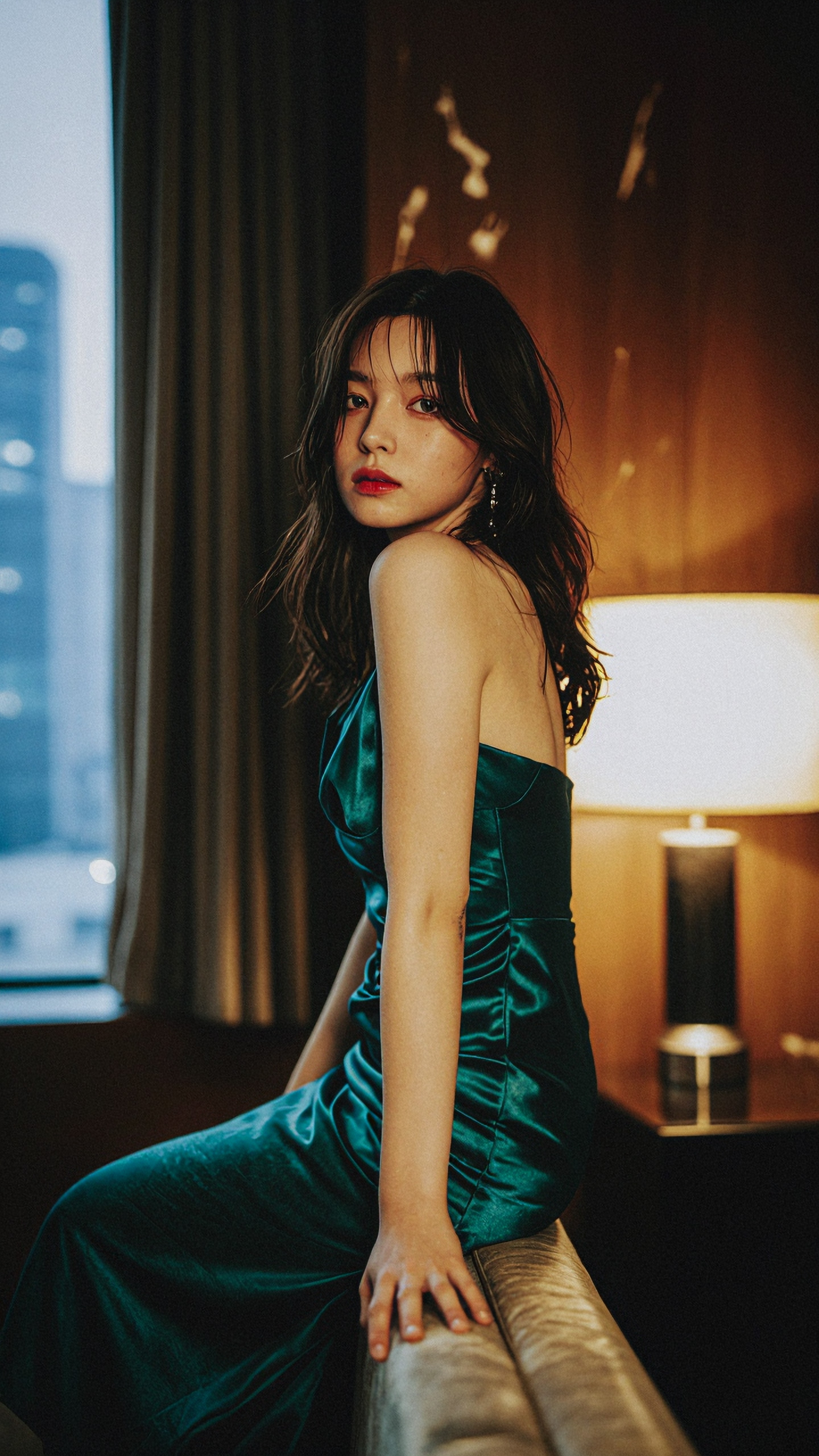
How to choose the right lighting prompt for the job
A practical way to choose lighting is to start from the intended output rather than from aesthetics alone.
For e-commerce and retail
Use large softbox light or clean daylight simulation. These preserve garment shape, reduce visual confusion, and keep skin tones stable.
For magazine covers and beauty stories
Use butterfly light or window light. These emphasize facial structure and maintain a polished close-up look.
For youth streetwear and trend campaigns
Use neon rim light, overcast street light, or hard sun depending on whether the brand language is urban, natural, or graphic.
For seasonal travel and lifestyle imagery
Use golden hour backlight or soft environmental daylight. These make movement, air, and location feel part of the styling.
For cinematic branded content
Use mixed practical light. It creates narrative without abandoning fashion clarity.
Prompt construction tips that improve lighting results
Lighting prompts work better when they are anchored to other visual variables. In practice, the most stable outputs usually include:
- a specific camera and lens perspective
- clear wardrobe materials such as satin, denim, wool, or leather
- a defined pose and facial expression
- an environment with believable reflective surfaces
- a limited color palette
- an explanation of fill, bounce, or shadow behavior
Instead of writing soft lighting in Seoul, write north-facing window light with overcast diffusion and negative fill in a quiet Seoul apartment. The second version gives the model more usable visual structure.
Common mistakes in lighting prompts
Several prompt issues reduce image quality or create inconsistent fashion output:
- stacking too many lighting types in one scene
- using only mood words without physical light sources
- ignoring how lighting interacts with fabric texture
- asking for neon, golden hour, and studio polish in the same frame
- omitting location cues that justify the lighting setup
- failing to specify whether shadows should be soft, crisp, deep, or filled
If an image feels generic, the problem is often not the subject but the lack of production logic in the light description.
Final takeaway
The best lighting prompts for Korean fashion model photography are the ones that fit the image objective. Butterfly light supports beauty precision. Softbox lighting delivers commercial clarity. Window light adds realism. Neon rim light builds Seoul nightlife energy. Golden hour gives warmth and movement. Overcast light stabilizes casual fashion. Hard sunlight introduces graphic tension. Mixed practical light creates cinematic depth.
For AI image generation, better fashion images come from combining lighting with camera language, styling, material detail, and scene logic. If the prompt reads like a real shoot plan, the result is usually more controlled, more believable, and more useful.
<!-- zview-hands-on-backfill -->
Practical Test Notes
What this article should verify
- Whether each lighting prompt produces a clearly different fashion outcome, not just minor exposure changes across similar poses or outfits.
- Whether the test setup preserves Korean fashion editorial cues while keeping skin, hair, and garment textures believable under butterfly, softbox, window, and neon-based lighting.
- Whether lighting instructions improve commercial readability for clothing and accessories instead of overpowering them with mood effects.
- Whether prompt wording keeps the scene consistent enough that lighting remains the main variable to inspect.
Result checks
When reviewing the existing or future generated images, the result checks should focus on what to inspect in each setup:
- Face stability: natural eye alignment, realistic nose shadows, clean jawline separation, and no waxy skin smoothing.
- Hand risk: fingers should remain anatomically plausible, especially in collarbone, pocket, seated, or walking poses.
- Lighting control: butterfly light should shape cheekbones cleanly, softbox light should keep shadows gentle but present, window light should show soft falloff, and neon scenes should retain facial detail instead of clipping into color spill.
- Texture quality: inspect knitwear, satin, tailoring seams, wet pavement, and hair strands for artificial smearing or plastic-looking surfaces.
- Background consistency: studio backdrops should stay simple and even; apartment and alley scenes should not introduce random props, warped signage, or mismatched reflections.
- Product clarity and style consistency: garments should stay readable in silhouette, with lighting supporting the intended beauty, commercial, lifestyle, or street editorial direction.
Failure risks
The main failure risks are over-stylized skin, unstable hands, and lighting prompts that accidentally change the whole scene instead of the illumination. Butterfly light can become too sterile or beauty-retouched if texture language is weak. Large softbox setups may flatten the face and reduce brand character. Window light can drift into dull low-contrast output if negative fill is not specified clearly. Neon night prompts carry the highest risk of color contamination, muddy fabric detail, and background clutter that competes with the model.
Practical recommendation
Use this setup if your goal is to compare lighting as a controlled prompt variable for Korean fashion portraits, lookbooks, or editorial concepts. Avoid it if you are changing wardrobe, pose, lens, and location all at once, because result checks become less reliable. The detail that matters most is keeping composition and styling stable enough that lighting differences remain visible and useful.