이 캡슐 워드로브 룩북 테스트는 실용적인 질문에 답하기 위해 구성했다. 이미지 모델이 일본식 미니멀리스트 패션을 막연한 베이지 무드보드가 아니라 반복 가능한 outfit system으로 안정적으로 보여줄 수 있을까? 이 테스트에서 가장 강한 결과는 스타일링을 셔츠, 팬츠, 니트, 플랫 슈즈가 여러 shot type 안에서 rotation되는 구조로 다룬 프롬프트에서 나왔다. 약한 결과는 실루엣, fabric weight, footwear shape, lookbook structure를 지정하지 않고 “minimal wardrobe”만 요청한 프롬프트에서 나왔다.
빠른 답변: 먼저 알아야 할 것
- 가장 좋은 출력은 느슨한 street portrait 프롬프트가 아니라 head-to-toe lookbook과 catalog grid 프롬프트에서 나왔다.
- 실제로 쓸 수 있는 capsule wardrobe lookbook을 원한다면 4 core garments를 정의하고 여러 장면에서 반복해 모델이 rotation을 이해하게 해야 한다.
- 일본식 미니멀리스트 패션은 정확한 fabric language가 포함될 때 더 잘 렌더링됐다: poplin, fine-gauge knit, wool twill, washed cotton, soft leather flats.
- “Sexy”는 노출된 피부보다 body-conscious tailoring과 confident posture로 표현할 때 가장 잘 작동했다. tucked shirt, ankle-length trouser, fitted knit가 가장 깔끔한 editorial 결과를 만들었다.
- 일관성을 위해 먼저 base look을 생성한 뒤 [Prompt Lab](/promptlab)에서 정제하고, 가장 강한 세트는 [Gallery](/gallery)에 저장한다.
테스트 설정: 무엇을 테스트했는가
작은 wardrobe system을 중심으로 하나의 스타일링 콘셉트를 여덟 가지 prompt variation으로 테스트했다.
- 2 shirts: white poplin, pale stone relaxed shirt
- 2 trousers: charcoal wide-leg wool, black tapered cropped trouser
- 2 knits: fine-gauge black fitted knit, oatmeal lightweight crewneck
- 1 shoe family: leather flats or square-toe loafers
- 1 bag direction: structured shoulder bag or slim tote
- Palette: black, ivory, charcoal, stone, soft navy
목표는 서로 관련 없는 패션 이미지 여덟 장을 만드는 것이 아니었다. 모델이 coherent한 capsule wardrobe outfit idea를 lookbook, street-style, product, editorial format 전반에서 유지할 수 있는지 확인하는 것이었다.
중점적으로 본 항목은 다음과 같다.
| Test area | What I checked | Best signal | Common failure | |---|---|---|---| | Outfit rotation | 의상이 의도적으로 재사용되는 느낌인지 | 같은 trouser shape가 여러 장면에 등장 | 무작위 outfit drift | | Japanese minimalist fashion cues | Clean line, subtle layering, muted palette | 절제된 실루엣과 fabric restraint | 일반적인 luxury beige styling | | Garment clarity | Shirt hem, knit fit, trouser rise, flat shape | 자연스러운 자세의 full-body framing | outfit logic을 가리는 cropped frames | | Sexy mood control | 미니멀리즘을 잃지 않는 자신감 있고 body-aware한 스타일링 | Fitted knit, open collar, long line silhouette | 과한 glamour 또는 nightclub cues | | Lookbook usefulness | 이미지가 실제 착장에 참고가 될 수 있는지 | Front/side rotation, grid page, flat lay | wardrobe information이 없는 aesthetic image |
반복 작업에서 가장 쉬운 workflow는 [Create](/create)에서 base outfit image를 생성하고, consistency를 비교한 뒤, 실패한 세부 요소를 분리해 다시 실행하는 방식이었다.
가장 강한 결과: head-to-toe capsule system
가장 좋은 결과는 각 garment를 명명하고, silhouette를 정의하며, 몸을 머리부터 신발까지 프레이밍한 head-to-toe lookbook prompt였다. 이렇게 하자 모델이 mood-only fashion scene이 아니라 완전한 outfit logic을 갖게 됐다.
효과가 있었던 점:
- “Head-to-toe”는 shoe visibility를 강제했고, 이는 capsule wardrobe lookbook에서 중요하다.
- “Japanese minimalist fashion”은 cropped taper, wide-leg drape, fine-gauge fitted knit 같은 구체적인 비율과 함께 사용할 때 더 잘 작동했다.
- sexy mood는 partywear language가 아니라 waist emphasis, collar openness, sleek flats를 통해 표현했을 때 일관되게 유지됐다.
이 첫 번째 프롬프트는 style lock과 full-body garment readability를 테스트하기 위한 것이었다.
Topic: Capsule wardrobe lookbook with Japanese minimalist fashion, shirt-trouser-knit-flat rotation
Genre: Fashion Editorial
Camera: Canon EOS R5
Lens: 50mm f/2
Lighting: Soft north-window daylight with gentle bounce fill
Location: clean Tokyo studio loft with pale plaster wall and wood floor
Style: luxury fashion campaign
Final Prompt: head-to-toe lookbook image of a Japanese minimalist capsule wardrobe outfit, confident woman shown full body, white crisp poplin shirt slightly open at the collar and tucked into high-waisted charcoal wide-leg wool trousers, black fine-gauge fitted knit layered lightly over shoulders, square-toe black leather flats, slim structured shoulder bag, refined sexy mood through clean tailoring and posture, organized minimal wardrobe styling, muted palette of ivory charcoal black and stone, visible garment drape and fabric texture, balanced editorial composition, fashion campaign realism, full outfit logic clearly visible from shirt to shoes, Tokyo minimalist studio setting, Canon EOS R5 look, 50mm f/2 natural perspective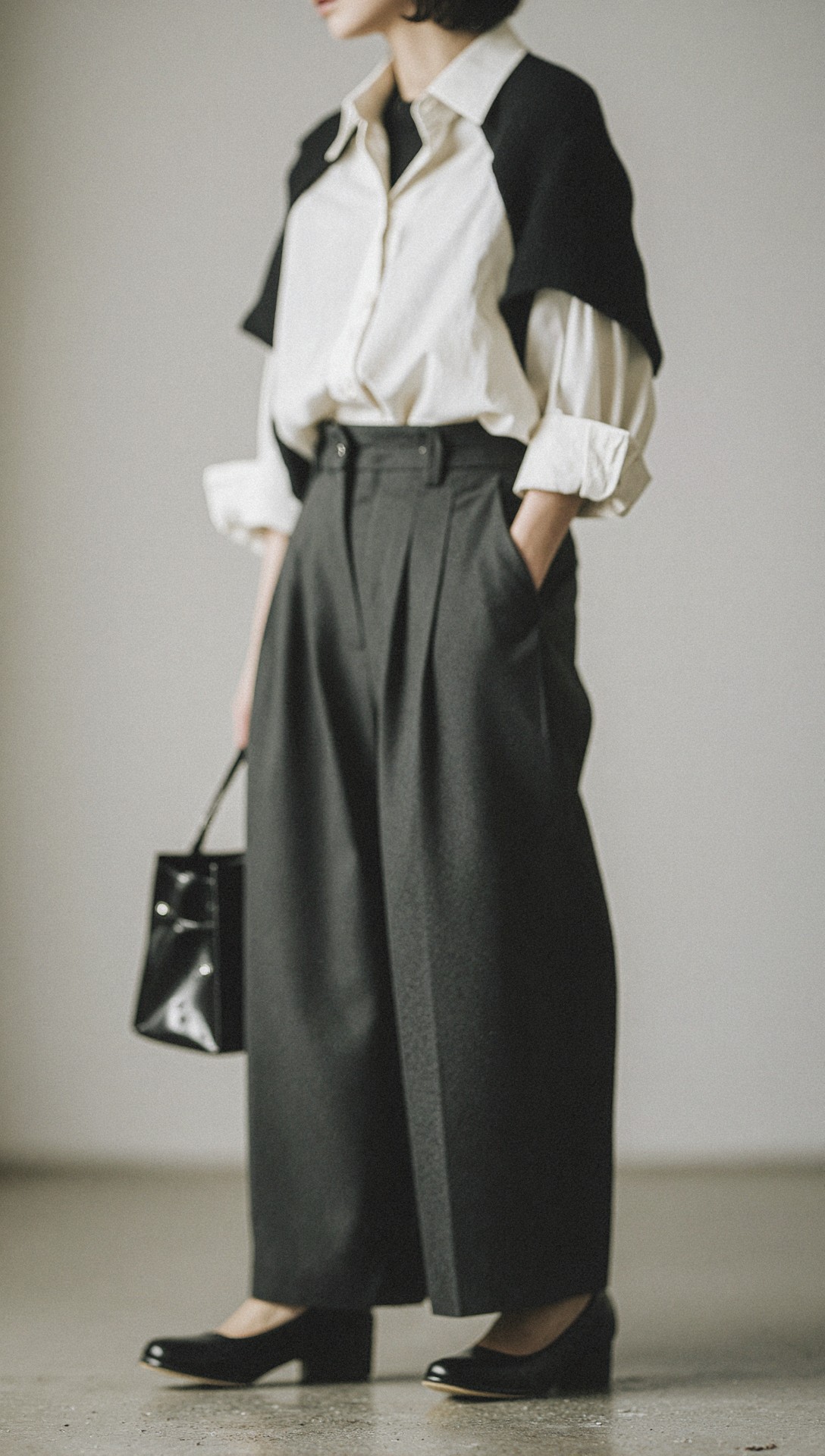
shirt tuck가 의도적으로 보이는지, trouser rise가 제대로 자리 잡았는지, flats가 계속 보이는지 확인한다. 가장 강한 생성 결과에서는 outfit이 장식적이기보다 실제 생활에서 조합 가능한 느낌을 줬다.
룩북 그리드가 단일 이미지 에디토리얼보다 나았던 이유
캡슐 워드로브 outfit idea는 모델이 반복 활용을 보여줄 때 더 이해하기 쉽습니다. 단일 hero shot은 세련돼 보일 수 있지만, 그 wardrobe가 실제로 잘 순환되는지는 여전히 숨길 수 있습니다. 가장 유용한 결과물은 같은 garment family를 사용한 여러 조합을 보여주는 catalog grid page에서 나왔습니다.
이 프롬프트는 페이지를 시각적 혼잡으로 만들지 않으면서 모델이 controlled rotation을 보여줄 수 있는지 테스트했습니다.
Topic: Capsule wardrobe lookbook grid showing shirts, trousers, knits, and flats in Japanese minimalist fashion
Genre: Product Editorial
Camera: Fujifilm GFX100S
Lens: 45mm f/2.8
Lighting: bright softbox studio light with subtle shadow underfoot
Location: clean e-commerce studio with off-white seamless backdrop
Style: clean commercial look
Final Prompt: catalog grid page featuring four head-to-toe outfit rotations from a capsule wardrobe lookbook, Japanese minimalist fashion direction, same wardrobe family repeated with variation: white poplin shirt with black tapered cropped trousers and leather flats, stone relaxed shirt with charcoal wide-leg trousers and flats, fitted black knit with ivory trousers and loafers, oatmeal lightweight crewneck over white shirt with black trousers and flats, sexy mood expressed through sharp silhouette and confident stance, organized minimal wardrobe, clear spacing between looks, editorial retail presentation, full-body visibility, precise fabric detail, restrained palette, high-end commercial fashion layout, Fujifilm GFX100S clarity, 45mm perspective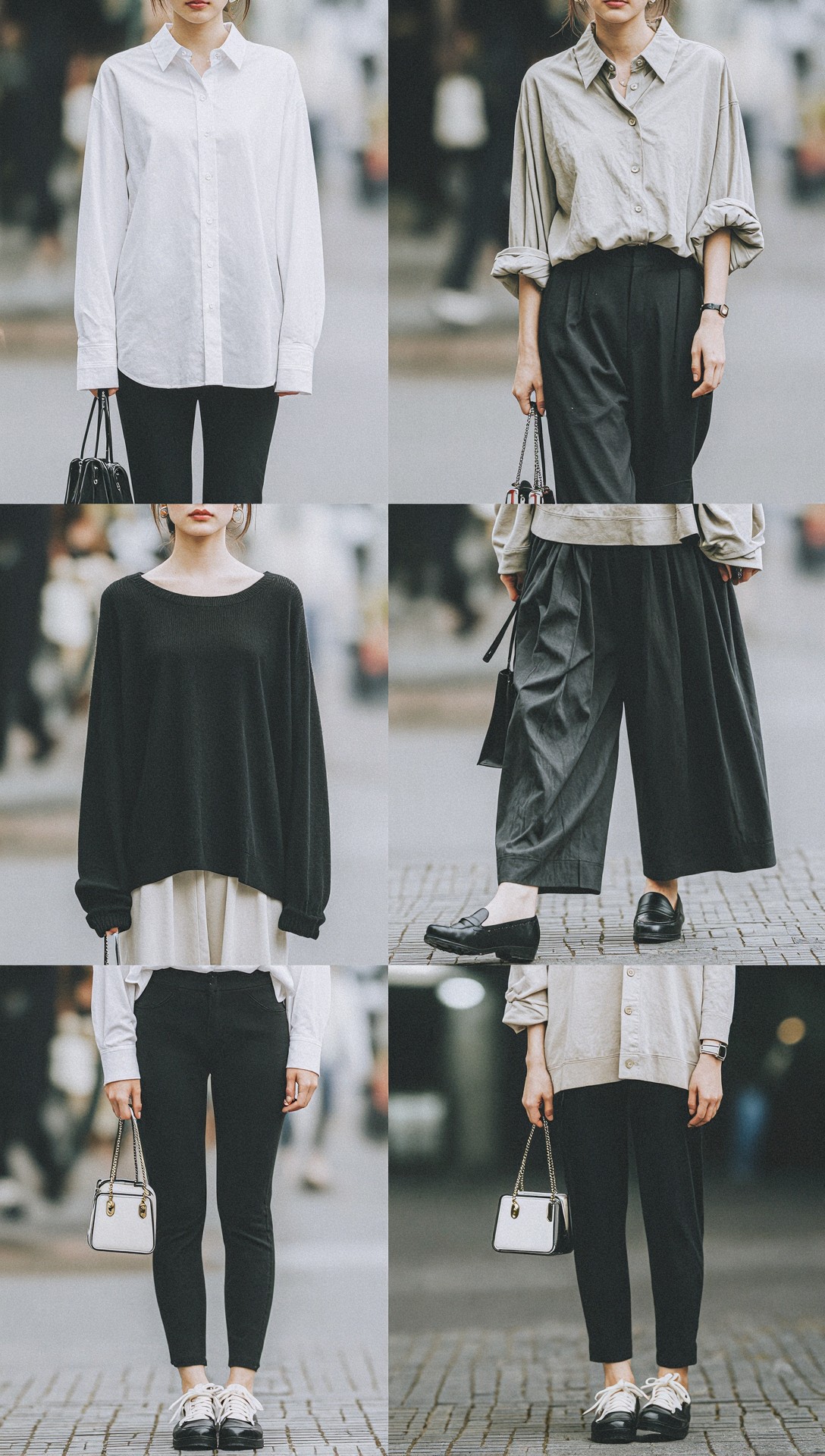
네 가지 룩 전체에서 의류가 실제로 서로 관련 있어 보이는지 확인하세요. 약한 생성 결과는 추가 코트, 뜬금없는 벨트, 하이힐을 만들어냈고, 강한 생성 결과는 wardrobe를 compact하고 believable하게 유지했습니다.
모델이 Japanese minimalist fashion에 대해 이해한 것
모델은 이 문구만으로는 항상 일관되게 이해하지 못했습니다. “Japanese minimalist fashion”만 사용했을 때 결과물은 종종 일반적인 quiet luxury로 흘렀습니다. 크림색 세트, 비싼 가방, 무표정한 포즈처럼요. 지역적 맥락과 silhouette discipline을 함께 추가하자 개선되었습니다.
유용했던 prompt ingredients는 다음과 같았습니다.
- cosplay cues 없는 Tokyo context
- ankle-length trousers
- relaxed but not oversized shirt body
- 대비를 위한 fitted knit
- pumps 대신 soft leather flats
- 하나의 dark anchor가 있는 restrained palette
이 street-style 테스트는 현실적인 맥락이 wardrobe를 editorial하면서도 wearable하게 유지할 수 있는지 확인했습니다.
Topic: Japanese minimalist fashion capsule wardrobe on Tokyo street
Genre: Street Style
Camera: Sony A7R V
Lens: 35mm f/2
Lighting: overcast diffusion
Location: Daikanyama side street in Tokyo with clean storefronts and muted signage
Style: cinematic realism
Final Prompt: street-style full body fashion image in Tokyo, capsule wardrobe lookbook outfit based on Japanese minimalist fashion, confident woman walking with composed posture, pale stone relaxed shirt with sleeves rolled once, black tapered ankle trousers, soft black leather flats, structured slim tote, subtle sensuality through fitted waistline and open neckline, no loud accessories, neutral palette with black stone and ivory, full silhouette visible, natural movement, editorial documentary framing, texture of cotton poplin and wool trouser fabric clearly readable, organized minimal wardrobe, Daikanyama street context, Sony A7R V realism, 35mm lens street fashion composition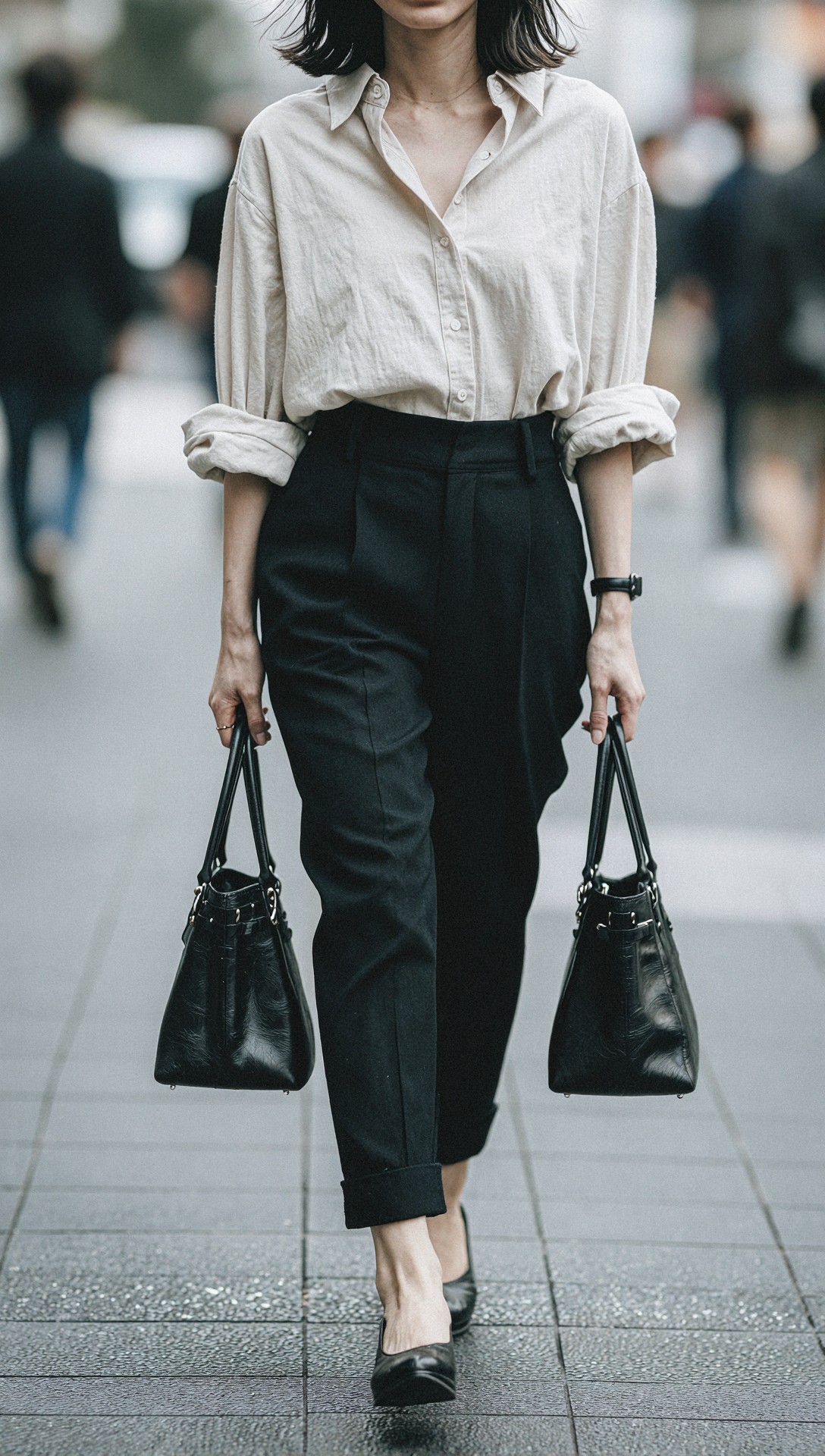
먼저 trouser length와 shoe shape를 보세요. 나쁜 결과물에서는 발목이 끌리는 밑단에 사라지거나 flats가 pumps로 바뀌었습니다. 강한 결과물에서는 styling이 urban하고 quiet하며 실제로 capsule-friendly하게 유지되었습니다.
Knits 프롬프팅: oversized softness보다 fitted layer가 더 안정적이었다
Knits는 가장 큰 변동 요인 중 하나였습니다. Oversized sweaters는 종종 허리를 삼켜버리고 “sexy but tasteful” 브리프를 지워버렸습니다. 최고의 knit 이미지는 fine-gauge fitted layers 또는 어깨에 가볍게 걸친 lightweight crewneck을 사용했습니다.
이 테스트는 three-quarter editorial crop에서 texture detail과 silhouette control을 측정하는 것이 목적이었습니다.
Topic: Fine-gauge knit styling in a capsule wardrobe lookbook
Genre: Fashion Editorial
Camera: Nikon Z8
Lens: 40mm f/2
Lighting: soft directional window light with low-contrast shadows
Location: minimalist apartment interior in Tokyo with ash wood chair and linen curtain
Style: modern magazine editorial
Final Prompt: three-quarter outfit editorial showing a Japanese minimalist fashion capsule wardrobe, fitted black fine-gauge knit tucked into high-waisted charcoal trousers, square-toe leather flats partially visible, slim leather belt, delicate structured shoulder bag, sensual but restrained styling through body-conscious knit fit and elongated line, seated then half-standing pose that still reveals garment structure, clean apartment backdrop, soft monochrome palette with subtle contrast, fabric texture and knit rib visible, organized minimal wardrobe mood, modern editorial realism, Nikon Z8 sharpness, 40mm natural fashion framing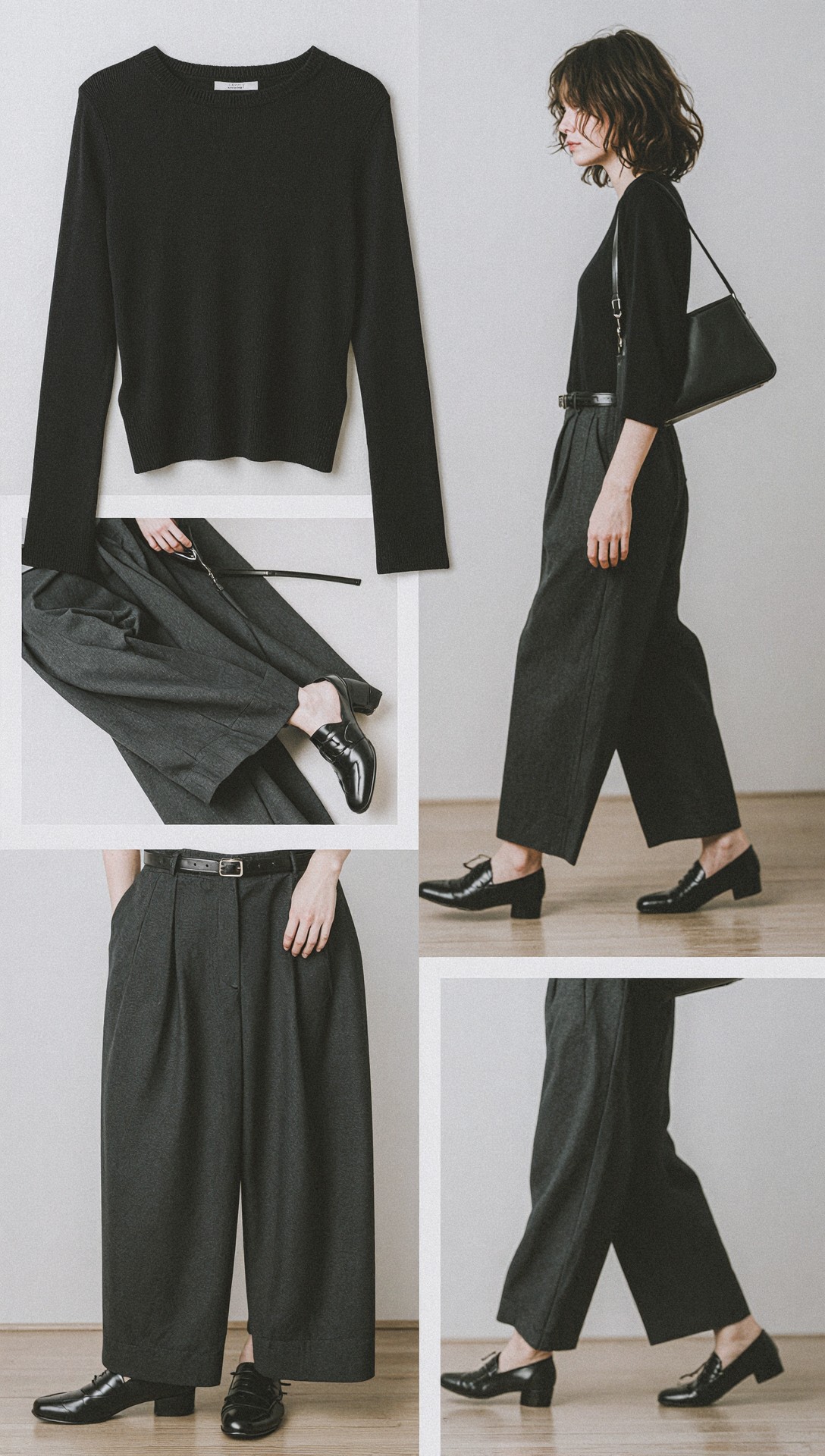
waist definition과 knit texture를 살펴보세요. 더 강한 생성 결과는 knit가 torso를 감싸면서도 outfit을 실용적으로 유지했습니다. 약한 결과물은 knit를 glossy하거나 bodycon처럼 만들어 Japanese minimalist fashion과 더 이상 맞지 않게 했습니다.
셔츠와 팬츠: 실제 outfit ideas에 가장 좋은 로테이션
튜토리얼 스타일의 capsule wardrobe lookbook에서 가장 유용했던 조합은 단순했다. 각 잡힌 셔츠 하나, 여유 있는 셔츠 하나, 와이드 팬츠 하나, 테이퍼드 팬츠 하나. 시각적 소음 없이 여러 조합을 만들기에는 이 정도 변화만으로 충분했다.
내가 유지할 조합:
- 화이트 포플린 셔츠 + 차콜 와이드 레그 팬츠 = 가장 강력한 전천후 룩
- 스톤 컬러 릴랙스드 셔츠 + 블랙 테이퍼드 팬츠 = 최고의 캐주얼 오피스 룩
- 몸에 맞는 블랙 니트 + 차콜 팬츠 = 최고의 이브닝 로테이션
- 화이트 셔츠 위 오트밀 크루넥 + 블랙 팬츠 = 최고의 레이어드 전환기 룩
이 flat lay 테스트는 몸에 스타일링하기 전에 wardrobe pieces 자체가 서로 일관되어 보이는지 확인하기 위한 것이었다.
Topic: Capsule wardrobe flat lay with shirts, trousers, knits, flats, and bag
Genre: Product Editorial
Camera: Hasselblad X2D 100C
Lens: 55mm f/2.5
Lighting: overhead diffused studio light
Location: matte stone tabletop studio setup
Style: luxury retail still life
Final Prompt: product flat lay for a capsule wardrobe lookbook inspired by Japanese minimalist fashion, neatly arranged white poplin shirt, pale stone relaxed shirt, charcoal wide-leg wool trousers, black tapered cropped trousers, black fine-gauge knit, oatmeal lightweight crewneck, square-toe leather flats, slim structured shoulder bag, subtle sensual fashion mood through sleek proportions and tactile materials, organized minimal wardrobe presentation, muted neutral palette, clean spacing, visible textile textures, premium retail still-life composition, editorial merchandising clarity, Hasselblad X2D detail, 55mm overhead product framing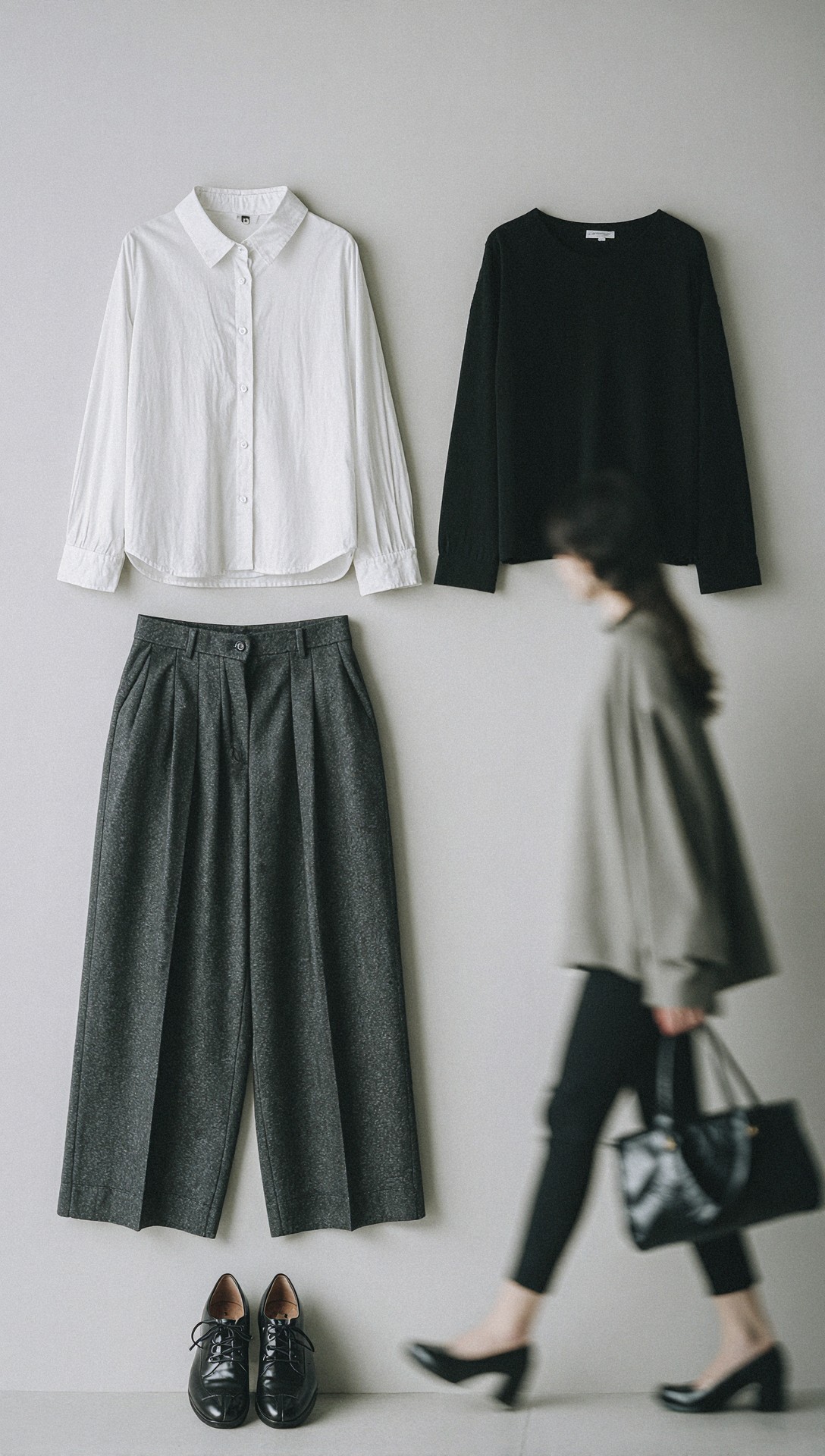
의상들이 한 사람의 옷장, 한 시즌의 옷처럼 보이는지 확인하라. 실패한 결과는 대개 랜덤한 주얼리, 데님, 또는 capsule logic을 깨는 밝은 accent color를 추가했다.
출력이 어려움을 보인 지점
모델에는 반복적으로 나타나는 네 가지 실패 지점이 있었다.
1. Flats가 종종 heels로 변형됨
감각적인 방향성이 조금이라도 들어간 fashion prompts에서 흔한 현상이다. “sexy”라는 단어는 일부 출력을 펌프스나 스트랩 슈즈 쪽으로 유도했다. 해결책은 square-toe leather flats 또는 soft loafer flats를 반복해서 명시하고, 프레임 안에 잘 보이게 유지하는 것이었다.
2. 팬츠의 비율이 무너짐
Wide-leg trousers가 때로는 너무 헐렁하거나, 너무 짧거나, 바닥과 합쳐져 보였다. high-waisted, ankle-grazing, 또는 clean break at the shoe를 추가하면 가독성이 좋아졌다.
3. 모델이 스타일링을 과하게 럭셔리하게 만듦
“Quiet luxury”는 관련 cue로 유용할 수 있지만, 너무 많이 쓰면 반짝이는 골드 하드웨어, oversized sunglasses, 호텔 로비 같은 staging이 들어왔다. 그러면 wardrobe가 미니멀하다기보다 비싸 보이게 된다.
4. Grid와 collage prompts가 가끔 일관성을 깨뜨림
한 이미지 안에 여러 outfits를 요청하면 모델이 패널마다 body type, shoe family, 또는 trouser cut을 바꾸는 경우가 있었다. 가장 좋은 해결책은 룩의 수를 단순화하고 반복되는 pieces를 직접 설명하는 것이었다.
다음 prompt는 drift가 가장 빠르게 나타나는 mood-board collage에서 실패 위험을 테스트했다.
Topic: Mood-board collage for capsule wardrobe outfit ideas in Japanese minimalist fashion
Genre: Fashion Concept Board
Camera: mixed editorial print collage aesthetic
Lens: 24-70mm fashion lookbook range
Lighting: mixed soft daylight and studio editorial light
Location: Tokyo fashion studio concept board
Style: elevated magazine planning board
Final Prompt: mood-board collage presenting capsule wardrobe outfit ideas for Japanese minimalist fashion, four coordinated panels showing shirt, knit, trouser, flat, bag, and texture references, sexy mood expressed through sleek silhouette and open-collar confidence rather than revealing clothing, palette of ivory black charcoal stone and soft navy, fabric swatches, full-body outfit references, close-up of trouser pleats, shoe shape, and shirt cuff, organized minimal wardrobe planning board, editorial design clarity, high-fashion but restrained, realistic magazine concept presentation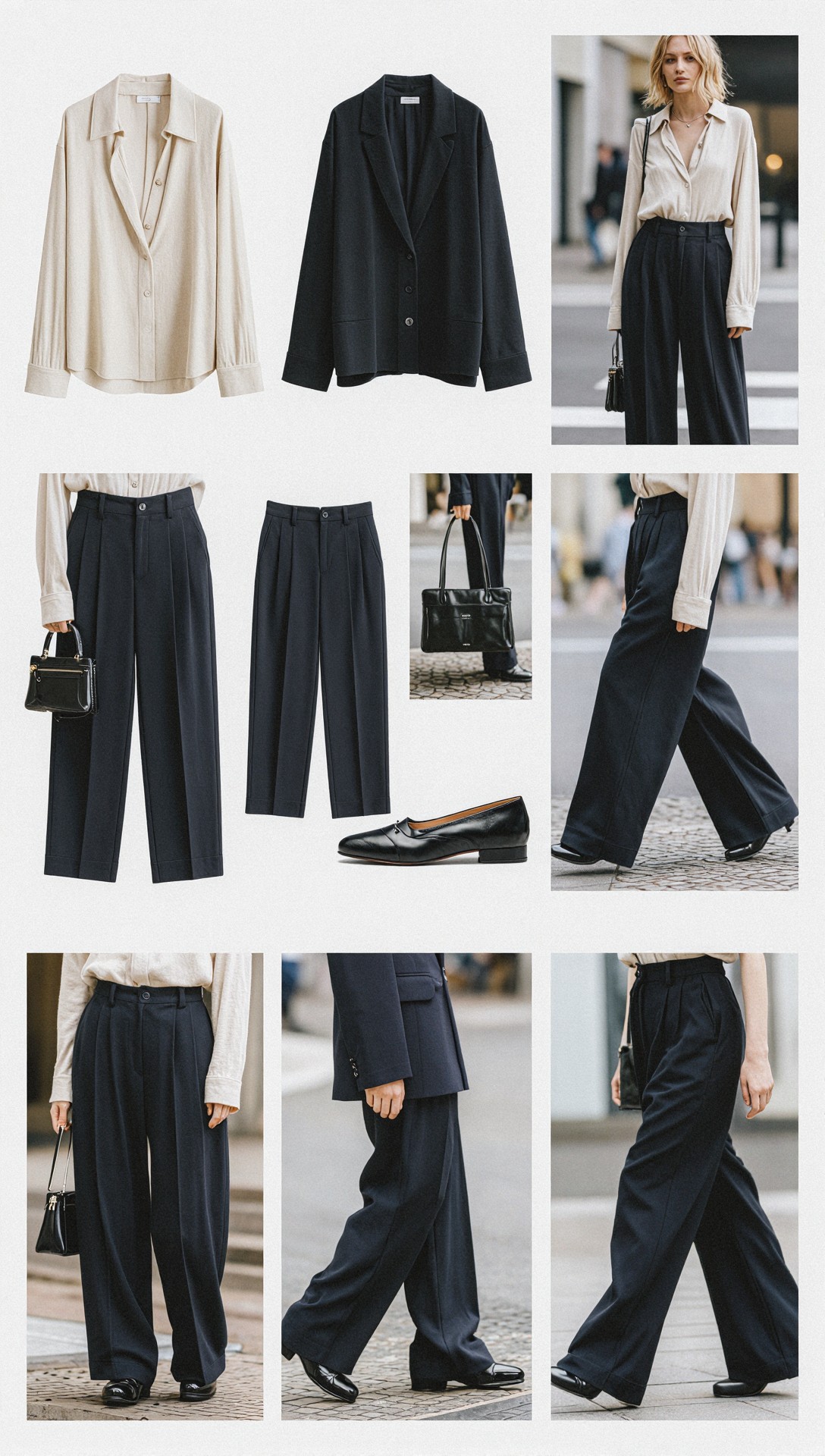
collage가 여전히 하나의 wardrobe system처럼 느껴지는지 살펴보라. 한 패널이 갑자기 satin eveningwear나 platform heels로 바뀐다면, prompt에 garment repetition을 더 촘촘하게 넣어야 한다.
출력을 개선한 추천 prompt 변경 사항
이 테스트에서 다음 변경 사항들은 꾸준히 품질을 끌어올렸다.
생성 전에 사용할 체크리스트
- 먼저 shot type을 지정하라: head-to-toe lookbook, catalog grid, flat lay, 또는 street-style full body.
- core garments를 명명하고 4~7개로 제한하라.
- shoe type을 명확히 정의하라.
- silhouette은 fitted, high-waisted, wide-leg, cropped, tucked처럼 실용적인 용어로 설명하라.
- 현실감을 위해 fabric language를 추가하라.
- palette는 3~5가지 색으로 절제하라.
- sexy mood에는 나이트클럽식 표현이 아니라 tailoring and posture를 사용하라.
도움이 되었던 prompt phrases
- “full outfit logic clearly visible”
- “organized minimal wardrobe styling”
- “same wardrobe family repeated with variation”
- “square-toe leather flats fully visible”
- “subtle sensuality through clean tailoring and confident posture”
드리프트를 유발한 프롬프트 문구
- “effortlessly chic woman”
- 의상 디테일 없이 쓴 “quiet luxury muse”
- “minimalist fashion girl”
- 실루엣 지시 없이 쓴 “elevated basics”
이 storefront 테스트는 capsule 콘셉트가 리테일 디스플레이 맥락에서도 여전히 설득력 있게 유지되는지 확인하는 데 유용했습니다.
Topic: Japanese minimalist capsule wardrobe displayed in a storefront lookbook scene
Genre: Luxury Campaign
Camera: Leica SL2-S
Lens: 24-70mm at 45mm f/3.2
Lighting: early evening window light with warm interior practicals
Location: minimalist Tokyo boutique storefront in Aoyama
Style: luxury fashion campaign
Final Prompt: storefront display scene for a capsule wardrobe lookbook, Japanese minimalist fashion boutique in Aoyama, mannequin-like styling or model posed in window wearing white poplin shirt, charcoal wide-leg trousers, black flats, structured bag, surrounding rails showing coordinated knit and shirt rotations, sexy mood translated into sharp silhouette and poised stance, clean merchandising, muted palette, premium fabrics visible through glass, urban retail context, balanced campaign composition, elegant but restrained, Leica SL2-S documentary luxury look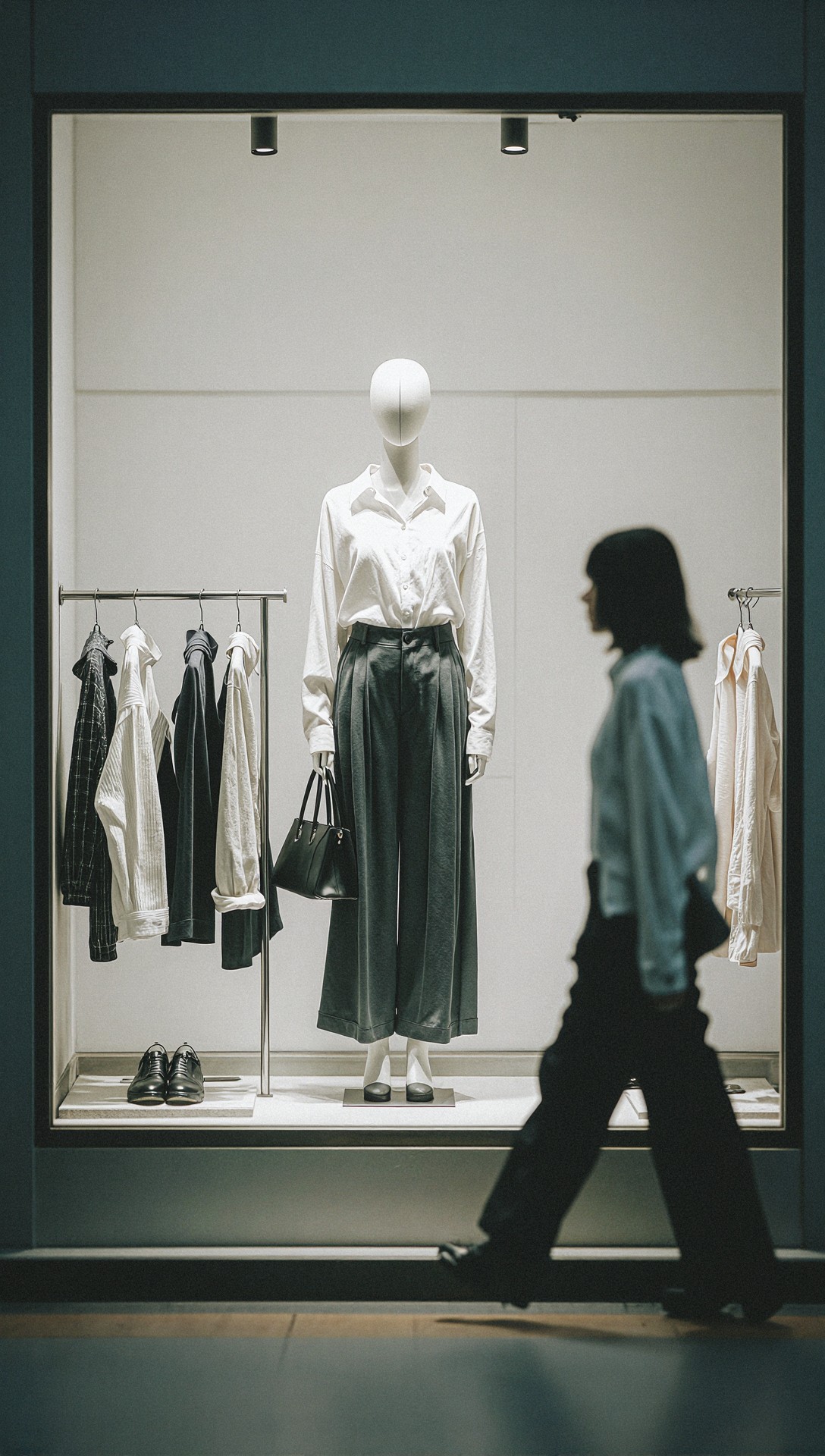
스타일링이 decor 중심이 아니라 wardrobe 중심으로 남아 있는지 점검하세요. 좋은 결과물은 의상을 초점으로 유지했고, 약한 결과물은 이미지를 architecture shot처럼 만들어버렸습니다.
반복 가능한 결과를 원할 때 가장 좋은 workflow
실용적인 workflow는 하나의 완벽한 prompt보다, 통제된 순서 설계에 더 가까웠습니다.
Step 1: 하나의 hero look 생성하기
셔츠 하나, 팬츠 하나, knit accent 하나, flats를 사용한 head-to-toe lookbook 이미지로 시작하세요.
Step 2: wardrobe family 고정하기
같은 garment language를 grid나 flat lay에 사용하세요. 이렇게 하면 drift가 빠르게 드러납니다.
Step 3: 한 번에 하나의 scene shift만 테스트하기
studio에서 street로, 또는 lookbook에서 storefront로 이동하세요. scene, outfit, mood를 한꺼번에 바꾸지 마세요.
Step 4: 비율 확인 후에만 upscale하기
soft images를 바로 [Upscaler](/upscaler)로 보내지 마세요. 먼저 hems, hands, shoes, bag straps가 제대로 보이는지 확인하세요.
Step 5: 일관된 set 저장하기
capsule wardrobe lookbook은 이미지들이 하나의 system처럼 읽힐 때만 유용합니다. fit과 palette가 안정적으로 반복되는 set은 보관하고, 따로 떼어놓으면 예쁘기만 한 이미지는 버리세요.
이 detail macro 테스트는 모델이 tactile close-up evidence로 wardrobe story를 뒷받침할 수 있는지 확인했습니다.
Topic: Garment detail macro of shirt cuff, knit texture, trouser pleat, and leather flat
Genre: Product Editorial
Camera: Sony A1
Lens: 85mm f/2
Lighting: controlled studio side light with soft reflector fill
Location: neutral editorial tabletop and garment rack setup
Style: high-end commercial fashion detail
Final Prompt: garment detail macro for a capsule wardrobe lookbook, Japanese minimalist fashion textures shown in elegant sequence: crisp white poplin shirt cuff, black fine-gauge knit rib, charcoal wool trouser pleat, square-toe black leather flat, sensual fashion mood through tactile material contrast and sleek finishing, no clutter, restrained palette, luxury editorial close-up composition, premium textile realism, sharp focus on stitching weave and leather surface, Sony A1 precision, 85mm fashion detail look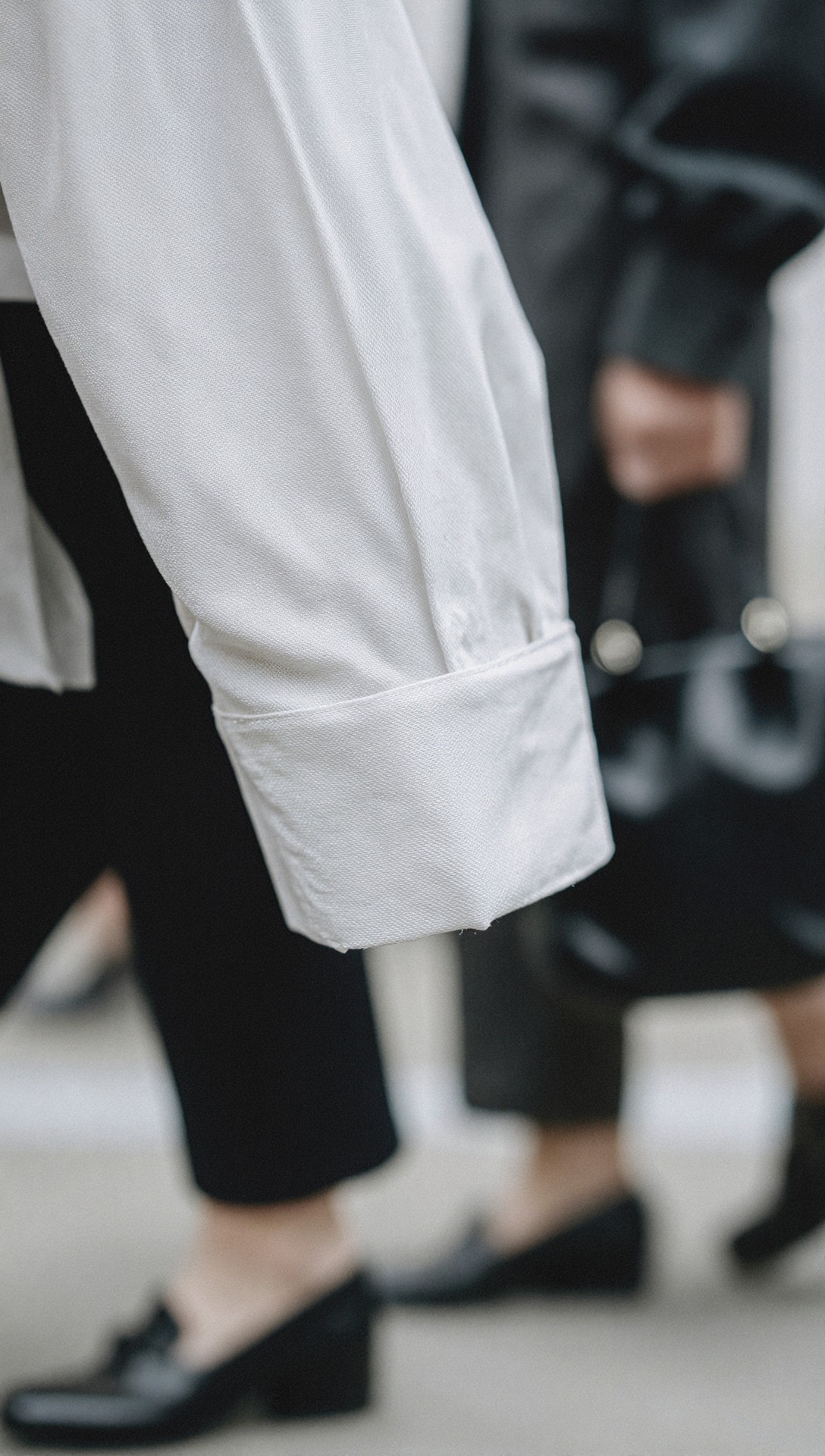
close-up texture가 full-body look과 맞는지 확인하세요. knit나 leather가 full-body shot에서는 고급스럽게 보이는데 macro에서는 합성 소재처럼 읽히면, set 전체가 일관되지 않게 느껴집니다.
이 setup이 가장 잘 맞는 경우
이 접근 방식은 다음에 가장 잘 맞습니다.
- blog, social, product planning용 capsule wardrobe lookbook을 만드는 creators
- 일관된 반복 구조를 가진 capsule wardrobe outfit ideas가 필요한 prompt writers
- 비용이 큰 location shoots 전에 minimal retail direction을 잡고 싶은 fashion sellers
- garment clarity를 잃지 않으면서 AI가 Japanese minimalist fashion을 어떻게 처리하는지 테스트하는 editors
wardrobe가 작고 의도적으로 구성되어 있을 때 특히 효과적입니다. 몇 가지 shirts, trousers, knits, flats를 넘어 확장하기 시작하면, 모델은 rotating 대신 inventing을 시작합니다.
이 마지막 runway-backstage-style prompt는 capsule이 더 dynamic한 fashion context에서도 유지될 수 있는지 테스트했습니다.
Topic: Capsule wardrobe lookbook in a backstage runway styling context
Genre: Fashion Editorial
Camera: Panasonic Lumix S1R
Lens: 24-70mm at 60mm f/2.8
Lighting: backstage diffused overhead light with subtle rim from mirror bulbs
Location: Tokyo fashion week backstage dressing area
Style: documentary luxury editorial
Final Prompt: runway backstage moment showing a capsule wardrobe lookbook through Japanese minimalist fashion styling, full-body model adjusting cuff before stepping out, white shirt tucked into black tapered cropped trousers, oatmeal lightweight knit draped across shoulders, square-toe leather flats, slim shoulder bag nearby, sexy mood through poised confidence and body-conscious line rather than exposed styling, visible racks of coordinated shirts and trousers in the background, editorial documentary realism, organized minimal wardrobe, restrained palette, crisp garment detail, Panasonic Lumix S1R fashion reportage look
더 복잡한 scene에서도 wardrobe가 여전히 실용적이고 repeatable하게 읽히는지 점검하세요. background styling이 outfit을 압도한다면, 다음 pass에서는 backstage detail을 단순화하세요.
Prompt examples: 각 prompt가 실제로 테스트한 것
이 여덟 개 prompt 전반에서 가장 유용했던 testing split은 다음과 같았습니다.
1. Head-to-toe lookbook: silhouette와 shoe visibility 2. Catalog grid: rotation consistency 3. Tokyo street style: regional context와 wearability 4. Three-quarter knit editorial: fit과 sensual restraint 5. Flat lay: styling 전 wardrobe coherence 6. Mood-board collage: concept range와 drift risk 7. Storefront display: retail readability 8. Detail macro / backstage: texture support와 scene robustness
자신만의 버전을 만들고 싶다면, [Tools](/tools)에서 단순한 garment list로 시작한 뒤 그다음에 prompt를 작성하세요. article-worthy images는 먼저 wardrobe planning에서, 그다음 image styling에서 나왔습니다.
FAQ
AI 이미지 생성에서 캡슐 워드로브 룩북이 잘 작동하게 만드는 요소는 무엇인가요?
명확한 워드로브 시스템입니다. 모델에는 반복되는 의류, 전신이 보이는 프레이밍, 구체적인 실루엣 단서가 필요합니다. 그렇지 않으면 서로 관련 없는 패션 이미지가 만들어지는 경향이 있습니다.
일본 미니멀리스트 패션을 프롬프트할 때 흔한 베이지 럭셔리 이미지가 나오지 않게 하려면 어떻게 해야 하나요?
구체적인 의류 표현을 사용하세요: poplin shirt, fine-gauge knit, wool trousers, square-toe flats, muted Tokyo street 또는 studio context처럼 말입니다. 지역적 표현만으로는 너무 범위가 넓습니다.
캡슐 워드로브 룩북 이미지에는 몇 가지 outfits가 들어가야 하나요?
한 장의 이미지라면 네 가지 looks가 적절한 상한선입니다. 그보다 많아지면 신발, 바지 컷, 신체 비율의 일관성이 떨어질 가능성이 커집니다.
캡슐 워드로브 outfit ideas에 가장 좋은 shot type은 무엇인가요?
이번 테스트에서는 head-to-toe lookbook과 catalog grid가 가장 좋은 성과를 보였습니다. 두 방식 모두 전체 outfit logic을 유지하고 의류 rotation을 쉽게 확인할 수 있게 해주기 때문입니다.
미니멀리즘을 해치지 않으면서 섹시한 분위기를 더하려면 어떻게 해야 하나요?
몸에 맞는 니트 핏, 깔끔한 셔츠 턱인, 열린 칼라, 당당한 자세, 세련된 플랫 슈즈를 사용하세요. partywear 표현, 과도한 피부 노출, glam accessories는 피하는 것이 좋습니다.
에디토리얼 결론
이번 테스트에서 가장 좋은 capsule wardrobe lookbook 결과는 절제된 스타일링 workflow에서 나왔습니다: 먼저 의류 시스템을 정의하고, 실루엣을 고정한 다음, 장면을 변화시키는 방식입니다. 가장 강력한 결과는 가장 화려한 이미지가 아니었습니다. 실제로 그 공식을 재사용할 수 있을 만큼 명확하게 white shirt, charcoal trousers, knit accent, flats를 보여준 이미지였습니다.
이 workflow를 사용하면 좋은 사람: fashion prompt writers, minimalist style creators, 깔끔한 lookbook 이미지를 기획하는 merchants, 그리고 shirts, trousers, knits, flats를 중심으로 capsule wardrobe outfit ideas를 만드는 모든 사람입니다.
피해야 할 사람: maximal trend styling, heavily accessorized editorial fantasy, 또는 outfit이 부차적인 요소가 되는 beauty-led close-ups를 원하는 사용자입니다.
가장 중요했던 prompt detail은 단순했습니다: 전체 outfit logic을 명시하고 신발이 보이게 유지하는 것. 이 점이 명확해지자 Japanese minimalist fashion은 모호한 미학처럼 보이는 것을 멈추고, 실제로 입을 수 있는 시스템처럼 읽히기 시작했습니다.