Capsule Wardrobe Outfit Ideas: Tested Minimal Lookbook Prompts That Avoid Repetitive AI Styling 한국어 요약
이 페이지는 ZView Space의 영어 원문을 한국어 검색 사용자도 이해할 수 있도록 정리한 SEO 요약입니다. 핵심은 단순한 얼굴 중심 이미지가 아니라 패션 에디토리얼, 룩북, 아웃핏, 프롬프트 테스트, 이미지 생성 워크플로우를 실제로 어떻게 구성할지입니다.
핵심 요약
- 원문 주제: Capsule Wardrobe Outfit Ideas: Tested Minimal Lookbook Prompts That Avoid Repetitive AI Styling
- 목적: AI 이미지 생성에서 outfit, silhouette, fabric, pose, location, camera framing을 더 명확하게 설계합니다.
- 활용 범위: Z-Image Turbo, Krea2 Turbo, Qwen Image, Anima, SeedVR2 같은 이미지 생성 및 업스케일 워크플로우에 적용할 수 있습니다.
- SEO 관점: 제목, 설명, 이미지 alt, 프롬프트 예시가 실제 검색 의도와 맞아야 색인 가능성이 높아집니다.
한국어 사용자를 위한 체크포인트
1. 프롬프트가 얼굴 묘사에만 머물지 않고 전체 스타일과 의상 구성을 설명하는지 확인합니다. 2. 패션 이미지라면 상의, 하의, 아우터, 신발, 액세서리, 소재감, 촬영 장소를 분리해서 씁니다. 3. 생성 결과는 바로 게시하지 말고 디테일, 손, 의상 형태, 배경 일관성, 이미지 품질을 비교합니다. 4. 글 본문에는 실제 테스트 기준과 실패를 줄이는 방법이 들어가야 검색엔진에서 얇은 콘텐츠로 보일 가능성이 줄어듭니다.
원문 미리보기
This tutorial shows how to generate capsule wardrobe outfit ideas that actually look like a useful lookbook instead of eight copies of the same beige blazer outfit. In this test, I used a structured shot plan, rotated garment formulas, and checked where image
---
This tutorial shows how to generate capsule wardrobe outfit ideas that actually look like a useful lookbook instead of eight copies of the same beige blazer outfit. In this test, I used a structured shot plan, rotated garment formulas, and checked where image models tend to collapse into repetitive minimal styling. The result is a workflow that produces cleaner variety across quiet luxury outfits, Korean minimalist fashion references, and Pinterest-style capsule wardrobe layouts.
Quick answer
- Start with a fixed capsule palette, but rotate silhouette logic, not just colors.
- Use different fashion shot types so the model has to reveal outfit structure from multiple angles.
- Keep each prompt anchored to one outfit formula: outer layer, top, bottom, shoe, bag, and one sensual but tasteful styling note.
- If outputs feel repetitive, the weak point is usually prompt abstraction: too much "minimal," not enough garment construction.
- The strongest results came from lookbook, street-style, and flat-lay prompts used together, not alone.
Test setup: what was tested
I tested a prompt workflow for a minimalist capsule wardrobe lookbook using the same visual theme across multiple shots:
- neutral palette: ivory, black, charcoal, stone, chocolate
- fashion mood: clean, structured, confident, tasteful sensuality
- categories: blazer, knit top, fitted tank, wide-leg trouser, midi skirt, straight jean, long coat, loafers, slingbacks, ankle boots, shoulder bag
- output goal: eight distinct images that still read as one capsule system
The key test was not whether the model could make attractive outfits. Most can. The real question was whether it could create useful capsule wardrobe outfit ideas without repeating the same silhouette, same pose, or same styling hierarchy.
For workflow support, this approach pairs well with [Prompt Lab](/promptlab) for prompt iteration, [Create](/create) for generation batches, and [Gallery](/gallery) when you want to compare which formulas actually diversify the set.
Before you generate: preparation checklist
Use this checklist before writing any prompt. It reduced repetitive outputs more than changing model settings did.
| Checkpoint | What to decide first | Why it matters in generation | |---|---|---| | Capsule palette | 4 to 6 colors max | Stops random accent colors from breaking the lookbook | | Core silhouettes | fitted top + wide leg, longline coat + column, cropped jacket + midi skirt | Gives visual variation without leaving minimalism | | Garment count | 10 to 12 pieces | Keeps outfit logic believable | | Accessories system | one bag family, two shoe families, restrained jewelry | Prevents the model from over-styling | | Shot list | full body, editorial, flat lay, detail, retail, grid | Forces the model to show the wardrobe from multiple useful views | | Sensuality control | slit, fitted knit, sharp waist, open neckline | Keeps the sexy mood fashion-led, not beauty-led |
What to know first about minimal wardrobe prompting
The phrase "capsule wardrobe" makes many image models default to:
- cream trench
- white shirt
- black trouser
- tote bag
- clean studio wall
That is not wrong, but it is too narrow for a real capsule wardrobe lookbook. In this test, the best fix was to define every look by outfit formula rather than aesthetic labels alone.
Step 1: Build the capsule as formulas, not vibes
My strongest set started with five formulas written as if I were planning a stylist rack:
1. long coat + fitted knit + straight trouser + pointed boot 2. oversized blazer + slim tank + midi skirt + slingback 3. cropped jacket + high-rise wide-leg pant + loafer 4. fine-knit dress + leather jacket + knee boot 5. white shirt layer + rib tank + dark denim + heel
This matters because models understand garments and layering better than abstract descriptors like "effortless minimal luxury." Those words help art direction, but they rarely create enough outfit separation on their own.
This first prompt checks whether the model can render a full-body street-style look with clear layering and not lose the trouser shape.
Topic: capsule wardrobe outfit ideas with long coat and fitted knit
Genre: Street Style
Camera: Canon EOS R5
Lens: 35mm f/2
Lighting: overcast diffusion
Location: Seoul Seongsu side street with clean concrete storefronts and muted signage
Style: Korean minimalist fashion editorial
Final Prompt: street-style full body fashion shot of a minimalist capsule wardrobe outfit, model walking confidently through Seongsu, long charcoal wool coat worn open over a fitted black rib knit top, high-waisted stone straight-leg trousers, pointed black ankle boots, structured chocolate shoulder bag, slim belt, delicate gold hoops, tasteful body-conscious silhouette with defined waist and long leg line, clean layered styling, full outfit visible head to toe, natural stride, neutral expression, soft overcast light, urban concrete textures, understated quiet luxury palette of charcoal stone black and chocolate, realistic fabric drape, editorial composition, garment fit and silhouette prioritized over face, crisp fashion magazine detail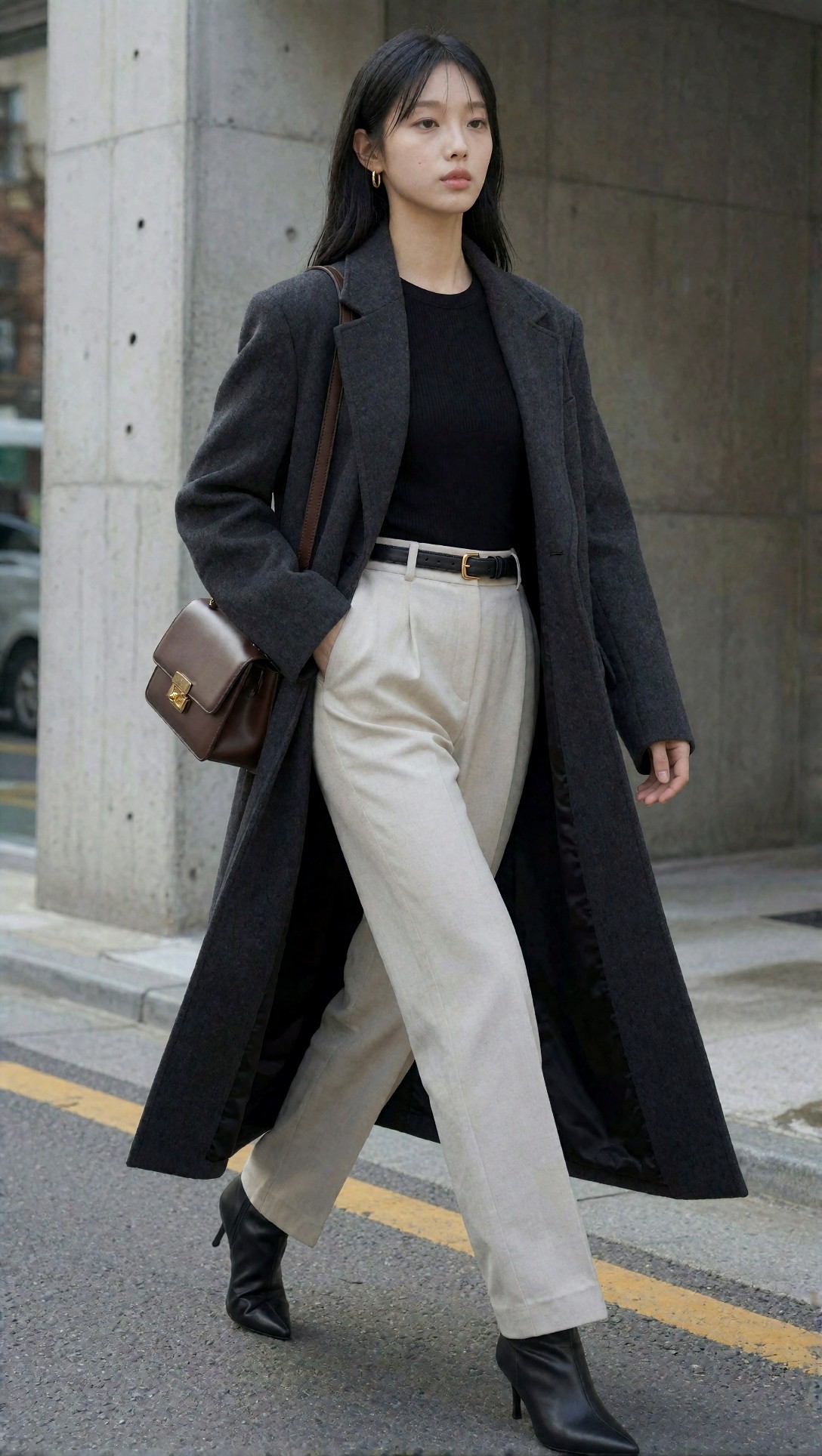
Inspect whether the coat stays open enough to show the outfit formula. If the coat swallows the look or the trousers merge into a vague column, the prompt needs stronger visibility language.
Step 2: Rotate silhouette tension to avoid repetitive AI styling
A minimal wardrobe still needs contrast. In this test, the easiest way to break repetition was to alternate between:
- long over lean
- boxy over fluid
- fitted over wide
- cropped over high-rise
When I failed to rotate that tension, the outputs all drifted toward the same blazer-and-trouser proportion.
This next test checks whether a softer, more sensual silhouette can stay structured rather than slipping into generic eveningwear.
Topic: capsule wardrobe lookbook with blazer and midi skirt
Genre: Fashion Editorial
Camera: Sony A7R V
Lens: 50mm f/1.8
Lighting: softbox key light with subtle bounce fill
Location: clean Paris editorial loft with pale plaster walls and oak floor
Style: quiet luxury fashion campaign
Final Prompt: three-quarter outfit editorial image for a capsule wardrobe lookbook, oversized black blazer draped over a fitted ivory square-neck tank, high-waisted fluid satin midi skirt in warm stone, sharp black slingback heels, compact leather shoulder bag, minimal gold cuff, confident poised stance with one leg slightly forward to show movement in the skirt, tasteful sensuality through neckline and silhouette, structured minimal styling, visible layering and fabric contrast, Paris loft editorial setting, soft sculpting studio daylight feel, palette of black ivory stone, premium textile detail, clean magazine framing, elegant but practical capsule wardrobe outfit idea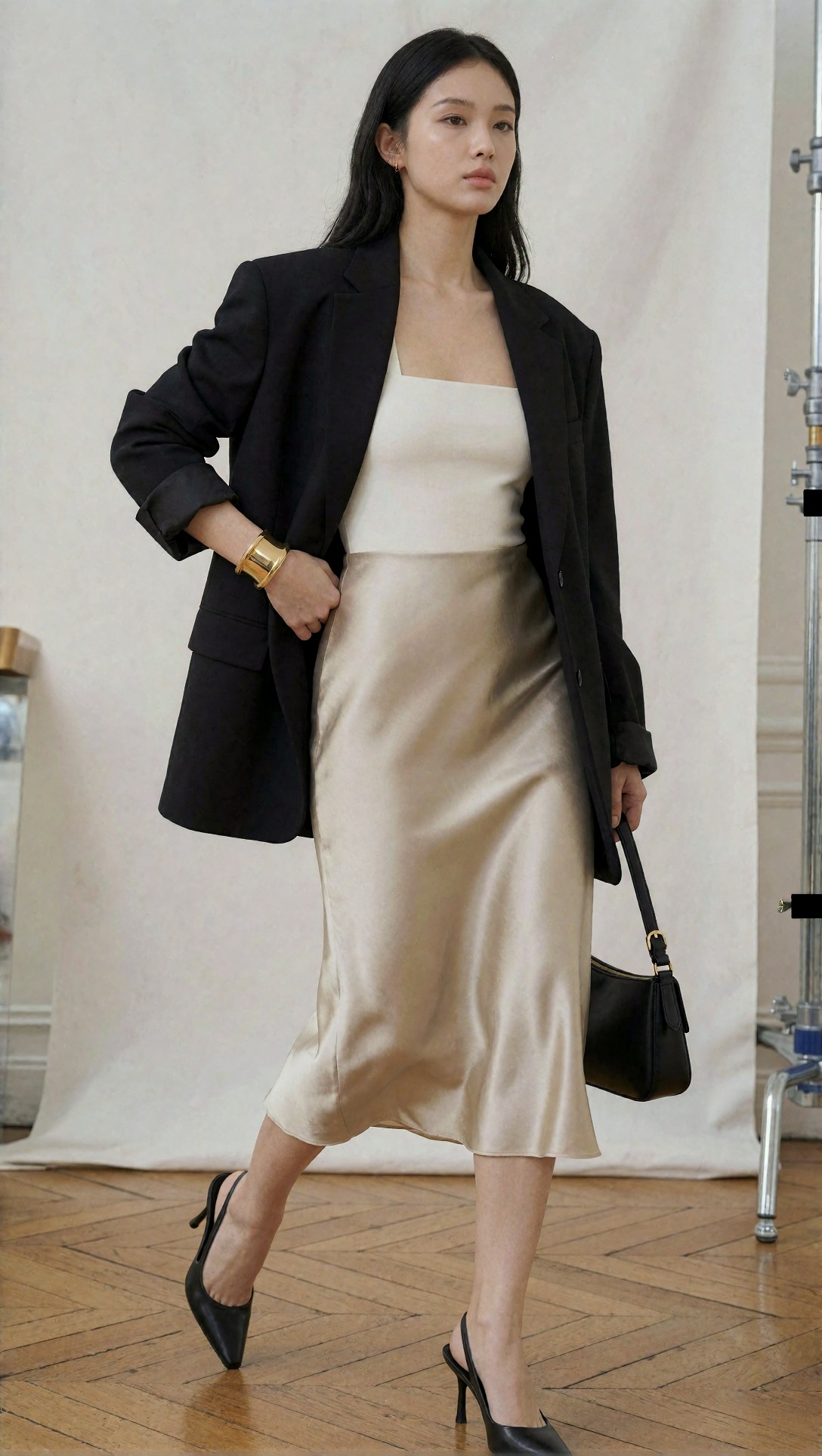
Check the relationship between blazer volume and skirt flow. The strongest result should feel intentional and wearable, not like formalwear inserted into a minimal prompt.
Step 3: Use shot planning to make the lookbook more useful
One reason AI capsule sets feel repetitive is that every image is asked to do the same job. A real lookbook needs different functions:
n- one for product organization
- one image for silhouette overview
- one for styling attitude
- one for textile proof
- one for retail or merchandising context
When this setup works, the image set starts to resemble a decision-making tool instead of mood spam.
This prompt checks head-to-toe consistency in a classic lookbook frame, which is where hands, shoe shape, and hem length often fail.
Topic: minimal wardrobe head-to-toe lookbook with cropped jacket and wide-leg trousers
Genre: Lookbook Photography
Camera: Nikon Z8
Lens: 40mm f/2
Lighting: large north-window daylight with white bounce
Location: Scandinavian minimalist studio with seamless warm gray backdrop
Style: clean commercial lookbook
Final Prompt: head-to-toe lookbook image showing a capsule wardrobe outfit idea in full, cropped taupe wool jacket over a fitted ivory knit shell, high-rise black wide-leg trousers with clean front crease, polished black loafers, slim top-handle bag, fine chain necklace, model standing straight with slight hip shift, full silhouette visible from shoulders to shoes, emphasis on proportion and garment fit, clean Scandinavian studio, neutral warm gray backdrop, clear fabric texture, practical minimal luxury styling, editorial but catalog-useful, strong separation between jacket length and trouser rise, simple refined palette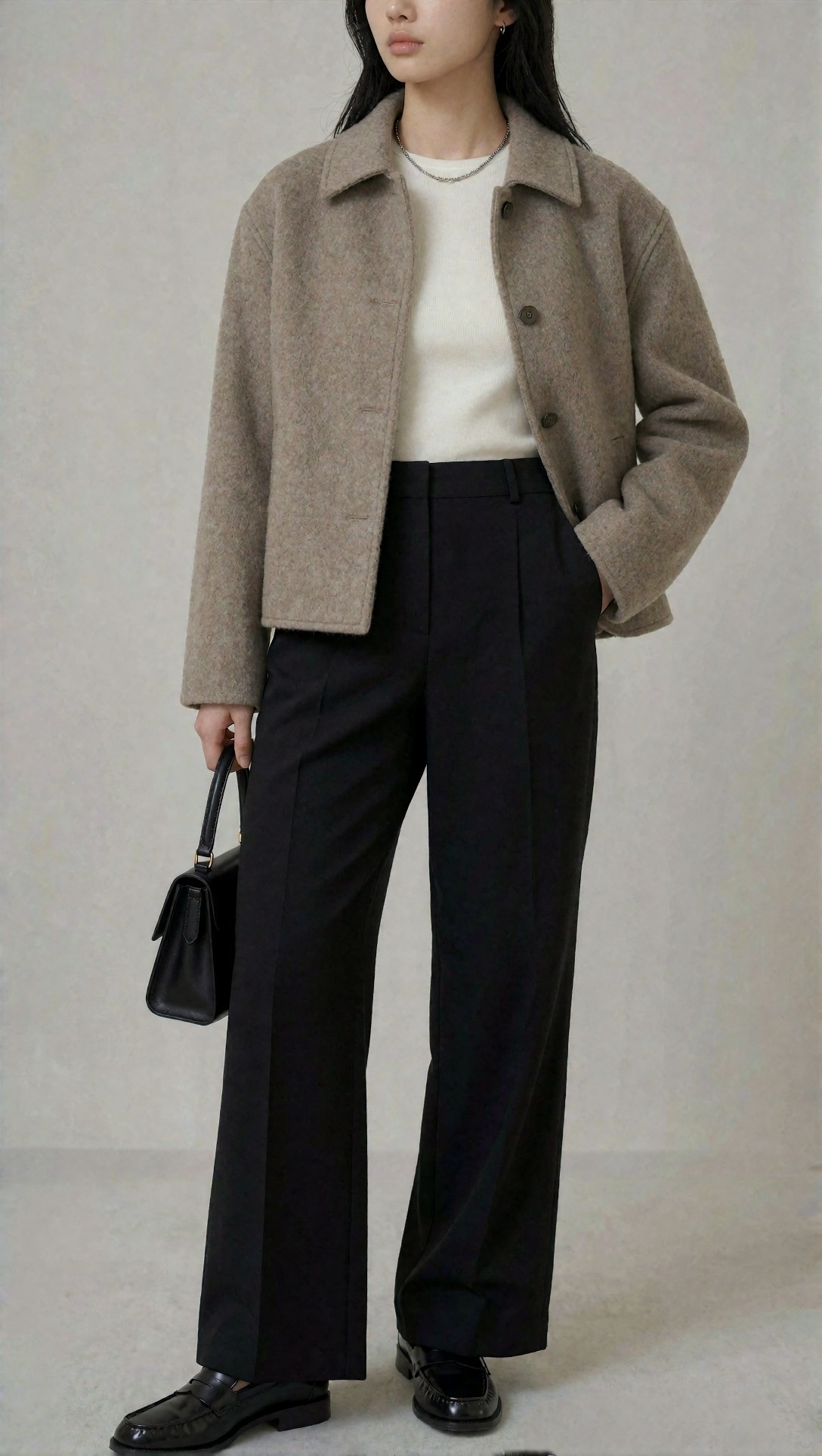
Inspect the hem break on the trousers and the clarity of the cropped jacket length. If the model muddies those proportions, your capsule formula will not read properly across the set.
Step 4: Add one merchandising view so the wardrobe feels real
A lot of users skip non-model shots, but in this test, a product-led image improved consistency across the whole series. It gave the model a clearer inventory of pieces and textures.
This flat-lay prompt tests item clarity, color discipline, and whether the capsule pieces feel interchangeable.
Topic: capsule wardrobe flat lay with interchangeable minimal essentials
Genre: Product Editorial
Camera: Fujifilm GFX100S
Lens: 63mm f/2.8
Lighting: soft overhead studio diffusion
Location: ivory tabletop styling set in a fashion studio
Style: luxury retail editorial flat lay
Final Prompt: product flat lay of a minimalist capsule wardrobe arranged as a coherent styling system, charcoal wool blazer, ivory rib tank, black fine-knit top, stone satin midi skirt, dark straight-leg denim, taupe cropped jacket, black wide-leg trousers, pointed ankle boots, slingback heels, loafers, structured shoulder bag, slim belt, delicate gold jewelry, pieces spaced cleanly with visible fabric texture and garment shape, quiet luxury retail presentation, neutral palette, editorial merchandising logic, refined sexy mood through fitted tops and sleek shoe choices, top-down composition, crisp textile detail, no clutter, premium catalog styling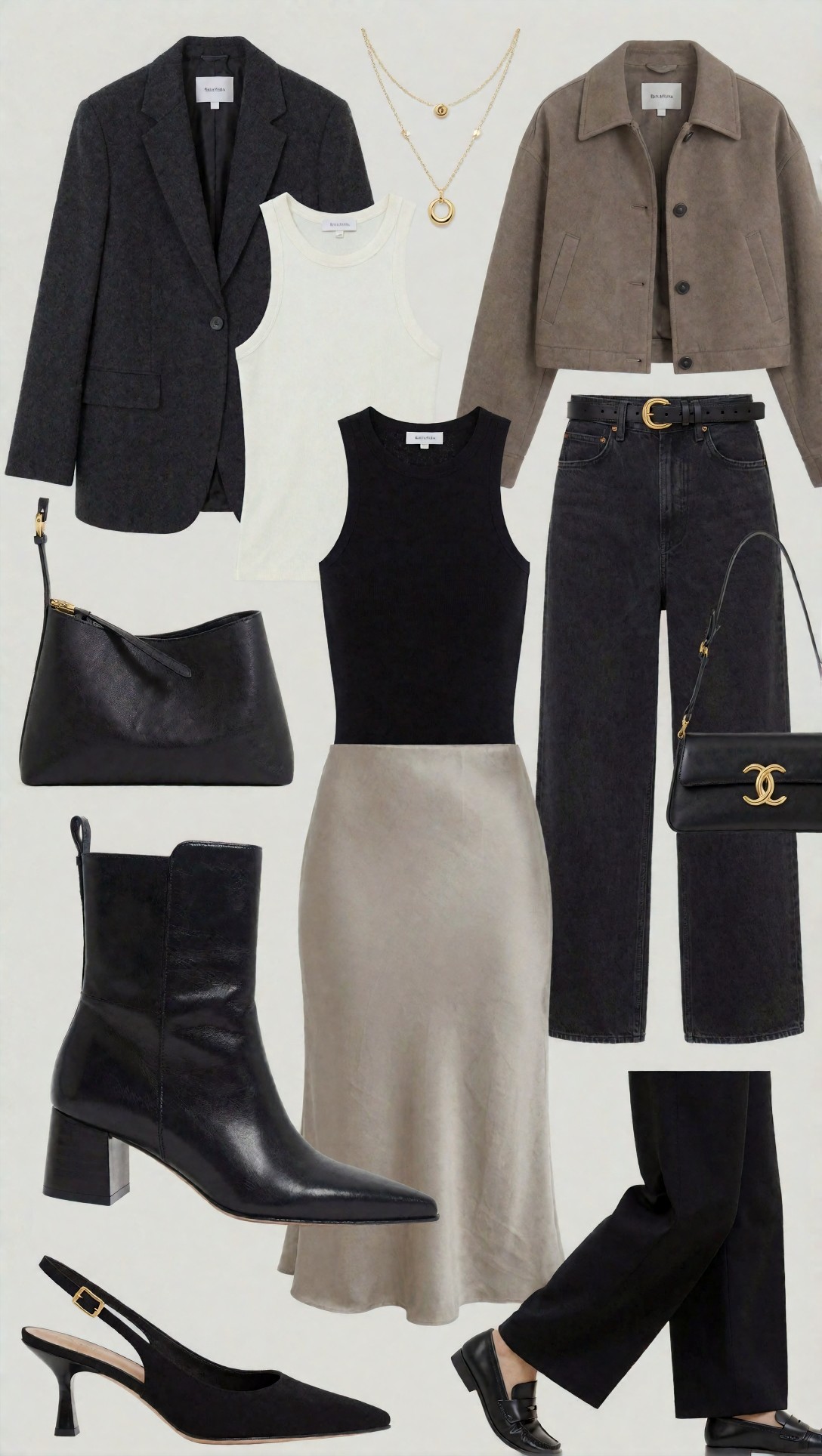
Inspect whether the pieces are distinct enough to support multiple outfits. If the top and outer layers all blur into similar rectangles, the model is not holding garment identity well enough.
For more image-to-image organization tests, I would pair this stage with [Tools](/tools) or compare arrangement variants inside [Articles](/articles) and saved generation runs.
Step 5: Introduce a regional cue without breaking the capsule
For Korean minimalist fashion, the useful cue was environment and silhouette discipline, not costume-like trend stacking. Seoul street references worked best when the outfit stayed neutral and the styling stayed architectural.
This prompt tests whether location-specific context can add freshness without pulling the wardrobe out of capsule territory.
Topic: Korean minimalist capsule wardrobe with fitted dress and leather jacket
Genre: Street Fashion Editorial
Camera: Leica SL2-S
Lens: 50mm f/2
Lighting: blue-hour ambient city light with soft storefront spill
Location: Hongdae evening street with modern shop windows and restrained neon reflections
Style: contemporary Korean magazine feature
Final Prompt: street-style full body editorial of a Korean minimalist fashion capsule wardrobe outfit, fitted dark chocolate knit midi dress under a cropped black leather jacket, sleek black knee boots, compact shoulder bag, small earrings, body-conscious but tasteful silhouette, model standing near a glass storefront in Hongdae, complete outfit visible head to toe, confident calm pose, clean urban styling, restrained palette of chocolate black and deep espresso, subtle evening reflections, premium knit texture and leather grain visible, fashion-first sensuality, modern Korean magazine composition, realistic city atmosphere without clutter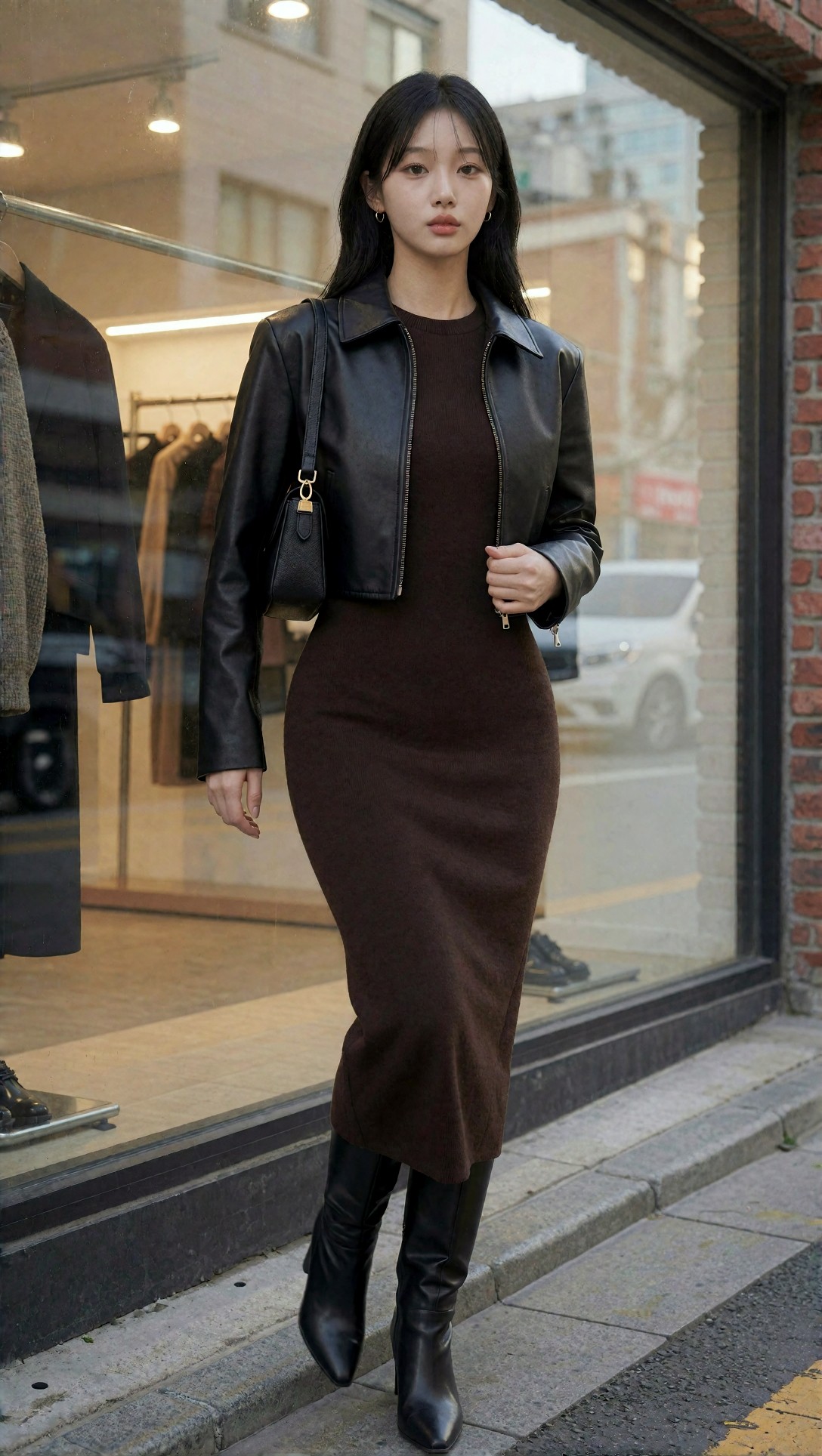
Look at whether the city context sharpens the styling or distracts from it. The strong output should still read as a wardrobe formula first, location second.
Step 6: Test a catalog grid so the model proves outfit variation
A single hero image can hide repetition. A grid exposes it immediately. This was one of the most useful tests in the batch because it showed whether the model could maintain palette unity while changing outfit logic.
This prompt checks style lock across several capsule looks in one frame.
Topic: capsule wardrobe outfit ideas shown as a multi-look catalog page
Genre: Catalog Layout
Camera: Hasselblad X2D 100C
Lens: 45mm f/4
Lighting: even studio soft light
Location: neutral studio set designed as an e-commerce editorial page
Style: premium fashion catalog grid
Final Prompt: catalog grid page showing four distinct capsule wardrobe outfit ideas in a cohesive minimalist system, look one long charcoal coat with black knit and stone trouser, look two oversized blazer with ivory tank and satin midi skirt, look three taupe cropped jacket with black wide-leg pant, look four white shirt layered over rib tank with dark denim and slingback heels, each figure shown head to toe in separate panel, consistent neutral palette, clean page rhythm, quiet luxury and Korean minimalist influence, tasteful sexy styling through fit and neckline rather than exposure, premium commercial fashion layout, visible shoes bags and accessories, crisp garment edges, balanced spacing, editorial catalog clarity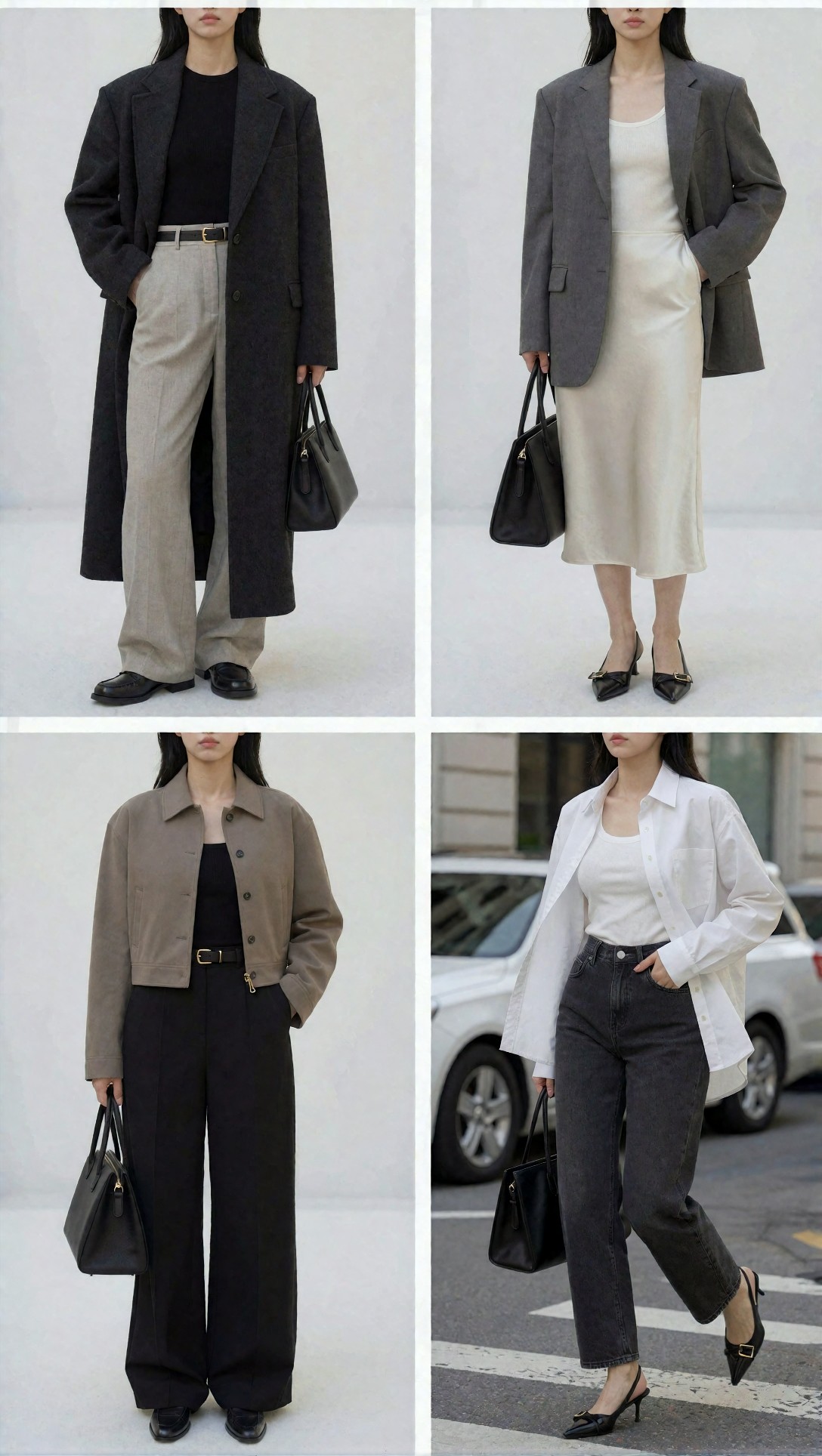
Inspect whether all four looks are genuinely different. If they collapse into the same jacket shape or bottom silhouette, your formulas need more distance from each other.
Step 7: Use a detail shot to force texture realism
Minimal wardrobes depend on material contrast. If wool, satin, leather, denim, and rib knit all look equally synthetic, the images lose credibility fast.
This prompt tests textile separation and accessory restraint.
Topic: garment detail macro for quiet luxury capsule textures
Genre: Luxury Fashion Detail
Camera: Canon EOS R3
Lens: 85mm f/1.8
Lighting: directional window light with negative fill
Location: minimalist studio corner with stone plinth and soft shadow
Style: high-end accessories and textile editorial
Final Prompt: garment detail macro from a capsule wardrobe lookbook, close framed view of a black leather belt cinching a charcoal wool blazer over an ivory rib knit top, edge of stone satin midi skirt visible, structured shoulder bag tucked at side, subtle gold cuff and ring, emphasis on texture contrast between wool rib knit satin and leather, tasteful sensual styling through waist definition and close garment fit, clean editorial composition, soft shadows, luxury material realism, premium fashion magazine detail shot, refined neutral palette, elegant minimalism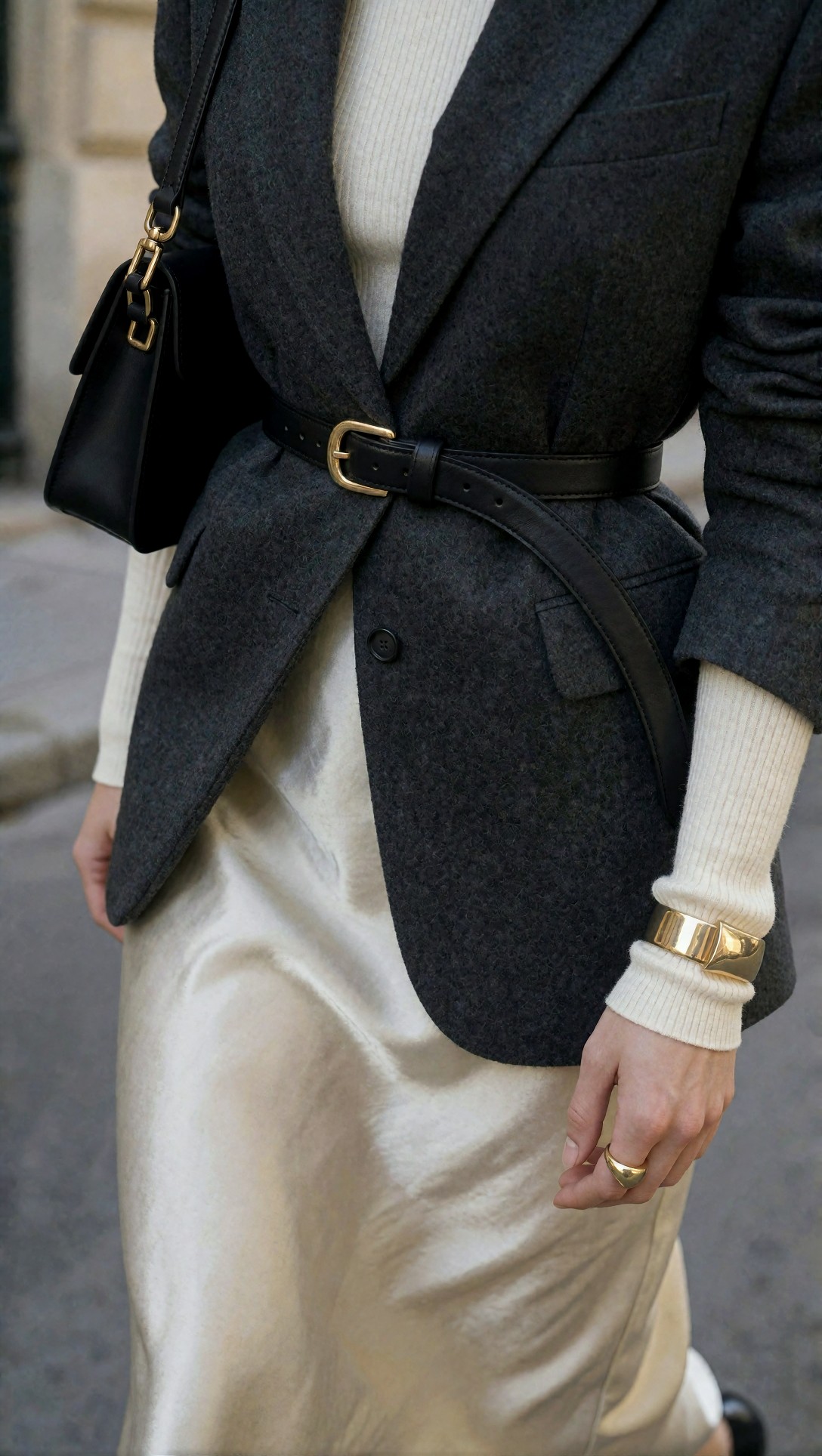
Check whether each material has its own surface behavior. The weak output usually makes satin look plastic or wool look airbrushed.
Step 8: Add one retail or storefront scene for merchandising realism
A storefront display prompt was unexpectedly useful. It pushed the model to think in outfit systems instead of isolated model shots, which helped maintain capsule discipline.
This prompt tests visual merchandising and whether the wardrobe reads as shoppable, not random.
Topic: capsule wardrobe storefront display with minimal outfit formulas
Genre: Retail Fashion Visual Merchandising
Camera: Panasonic Lumix S1R
Lens: 24-70mm at 45mm f/4
Lighting: soft morning storefront light with interior spot accents
Location: Scandinavian-inspired boutique window in Copenhagen
Style: refined luxury retail display
Final Prompt: storefront display presenting capsule wardrobe outfit ideas in a minimalist boutique window, mannequin one in charcoal long coat over black fitted knit and stone trousers, mannequin two in oversized blazer with ivory tank and satin midi skirt, mannequin three in taupe cropped jacket with black wide-leg pants, polished loafers slingbacks and structured bags arranged below, clean visual merchandising, neutral palette, quiet luxury mood, tasteful sensuality through sleek silhouettes and waist definition, boutique glass reflections, oak fixtures, premium retail styling, sharp outfit visibility, realistic store context, elegant uncluttered composition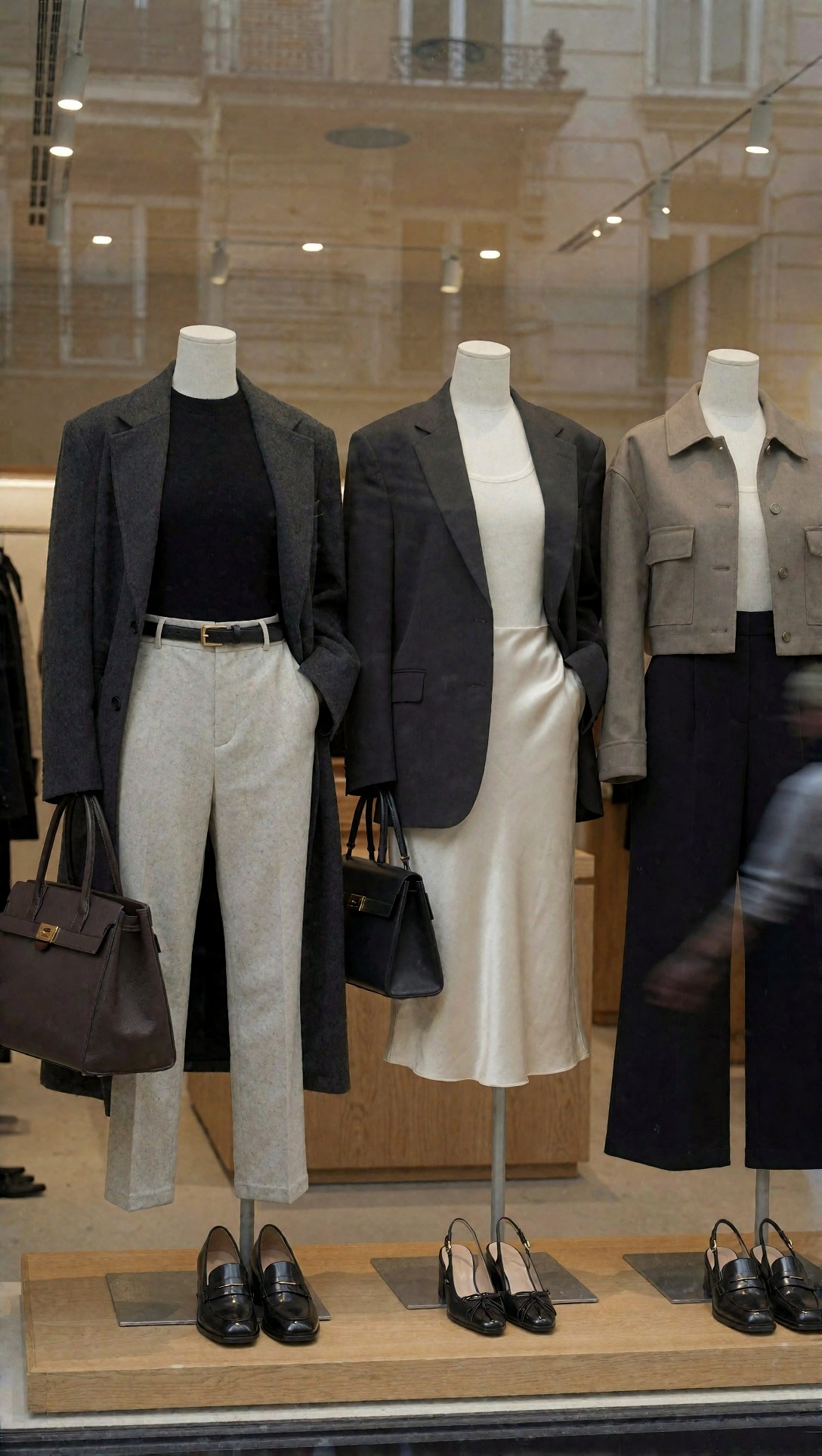
Inspect whether the display still feels cohesive when bodies are removed or simplified. If yes, the capsule logic is strong enough to survive across formats.
Quality-control checklist for capsule wardrobe lookbook outputs
After generating, I scored each image on these practical checks:
- Formula clarity: Can I name the outfit in one sentence?
- Silhouette separation: Does each look have a different proportion story?
- Palette discipline: Are there surprise colors breaking the capsule?
- Texture realism: Can I tell knit from wool from satin from leather?
- Accessory restraint: Is the bag and shoe logic consistent?
- Head-to-toe visibility: Can I actually evaluate the outfit?
- Wearability: Would a real capsule wardrobe user repeat this formula?
- Series cohesion: Do all images look like one lookbook, not eight unrelated editorials?
If a set passed six or more of these cleanly, it was usually publishable. The weak point was most often silhouette separation, not rendering quality.
Strengths observed in this workflow
What worked best
The strongest result came from treating the wardrobe like a controlled system:
- fixed palette
- rotating silhouette formulas
- mixed shot types
- explicit garment-level language
That combination reduced the common AI problem where minimal fashion becomes visually repetitive after the second or third generation.
Why the prompts held together
Each prompt used the same capsule identity but changed one of the following:
- viewing distance
- styling formula
- fashion context
- material emphasis
- merchandising role
That is more reliable than trying to force variety through random adjectives.
Limitations and failure risks
Where models still struggle
Even with strong prompts, I still saw recurring failures:
- blazer lengths changing unpredictably
- trousers losing structure at the hem
- bags mutating between tote, clutch, and shoulder bag
- satin skirts turning into eveningwear gowns
- details over-sexualizing the image when the prompt lacked garment hierarchy
What caused the weakest outputs
The failure pattern was consistent. Prompts got weaker when they leaned too hard on terms like:
n- elegant
- minimalist
- luxury
- clean
Those words help mood, but without garment engineering they produce generic sameness.
Troubleshooting weak outputs
If every look feels the same
Change the formula, not just the setting. Swap:
- wide-leg trouser for column skirt
- long coat for cropped jacket
- fitted knit for crisp shirt layer
- loafer for slingback or pointed boot
If the image is fashionable but not capsule-friendly
Reduce trend noise. Remove extras like statement jewelry, bright accents, oversized sunglasses, and dramatic backgrounds. Capsule prompts need compositional restraint.
If the styling turns too sensual
Keep the sexy mood in structure rather than exposure:
- fitted rib knit
- sharp waist definition
- slit midi
- heel choice
- open neckline with covered arms
That keeps the fashion direction tasteful and aligned with lookbook use.
If fabrics look fake
State the materials directly and place them in contrast:
- wool coat against satin skirt
- rib knit under smooth leather
- crisp cotton shirt over jersey tank
Material contrast gives the model something concrete to separate.
Practical recommendation: the most reliable workflow
If you only want a fast result, do not start with eight hero editorials. Start with this sequence:
1. flat lay to define inventory 2. head-to-toe lookbook for proportion 3. street-style shot for attitude 4. catalog grid to test variation 5. one detail macro for textile realism
That order gave the most consistent capsule wardrobe outfit ideas in this test. It also makes revision easier because you can identify whether the problem is inventory, silhouette, styling, or rendering.
If you want to refine prompts further, use [Prompt Lab](/promptlab) for versioning and [Create](/create) for side-by-side batch runs. If the look is right but textures fail, an [Upscaler](/upscaler) pass can help surface knit and leather detail, though it will not fix poor outfit logic.
FAQ
How do I make AI-generated capsule wardrobe outfit ideas look less repetitive?
Use outfit formulas with different proportions and shot types. Repetition usually comes from asking for the same minimalist look in slightly different words.
What colors work best for a capsule wardrobe lookbook?
A five-color neutral set worked best in this test: ivory, black, charcoal, stone, and chocolate. It gave enough depth without letting the palette drift.
Are Pinterest-style capsule wardrobe prompts enough on their own?
Not usually. Pinterest-style references help mood and layout, but they need garment-level direction to avoid generic beige fashion outputs.
How do I prompt quiet luxury outfits without making them boring?
Use texture and proportion contrast: wool with satin, fitted knit with wide-leg trouser, cropped jacket with high-rise pant. Quiet luxury needs structure, not just neutral colors.
What shot type is most useful for minimal wardrobe testing?
Head-to-toe lookbook and catalog grid shots were the most useful in this test because they exposed silhouette repetition immediately.
Summary recommendation
This workflow is best for users who want capsule wardrobe outfit ideas that function like a real styling system: repeatable, editorial, and visually coherent across multiple images. It is especially useful for lookbook builders, fashion prompt writers, and anyone testing minimal wardrobe concepts for Pinterest-inspired content or retail planning.
I would avoid this approach if the goal is highly trend-driven maximalism or one-off fantasy fashion images. The method depends on restraint, repeated garment logic, and clear silhouette planning.
The setting detail that mattered most was not the city, studio, or boutique. It was the outfit formula written in visible layers and proportions. In this test, that was the difference between repetitive AI minimalism and a capsule wardrobe lookbook that actually helped with styling decisions.