Clean Girl Summer Outfit Prompts Tested: Japanese Minimalist Fashion for Shirts, Trousers, Flats, and Bags 한국어 요약
이 페이지는 ZView Space의 영어 원문을 한국어 검색 사용자도 이해할 수 있도록 정리한 SEO 요약입니다. 핵심은 단순한 얼굴 중심 이미지가 아니라 패션 에디토리얼, 룩북, 아웃핏, 프롬프트 테스트, 이미지 생성 워크플로우를 실제로 어떻게 구성할지입니다.
핵심 요약
- 원문 주제: Clean Girl Summer Outfit Prompts Tested: Japanese Minimalist Fashion for Shirts, Trousers, Flats, and Bags
- 목적: AI 이미지 생성에서 outfit, silhouette, fabric, pose, location, camera framing을 더 명확하게 설계합니다.
- 활용 범위: Z-Image Turbo, Krea2 Turbo, Qwen Image, Anima, SeedVR2 같은 이미지 생성 및 업스케일 워크플로우에 적용할 수 있습니다.
- SEO 관점: 제목, 설명, 이미지 alt, 프롬프트 예시가 실제 검색 의도와 맞아야 색인 가능성이 높아집니다.
한국어 사용자를 위한 체크포인트
1. 프롬프트가 얼굴 묘사에만 머물지 않고 전체 스타일과 의상 구성을 설명하는지 확인합니다. 2. 패션 이미지라면 상의, 하의, 아우터, 신발, 액세서리, 소재감, 촬영 장소를 분리해서 씁니다. 3. 생성 결과는 바로 게시하지 말고 디테일, 손, 의상 형태, 배경 일관성, 이미지 품질을 비교합니다. 4. 글 본문에는 실제 테스트 기준과 실패를 줄이는 방법이 들어가야 검색엔진에서 얇은 콘텐츠로 보일 가능성이 줄어듭니다.
원문 미리보기
If you want a clean girl summer outfit in AI images, the best results in this test came from prompts that treated the look as a full styling system, not a mood word. The strongest images used Japanese minimalist fashion cues, specified shirt cut and trouser ri
---
If you want a clean girl summer outfit in AI images, the best results in this test came from prompts that treated the look as a full styling system, not a mood word. The strongest images used Japanese minimalist fashion cues, specified shirt cut and trouser rise, and gave the flats and bag equal priority. Prompts that only said "clean girl summer" often drifted into beige influencer basics with weak silhouette control.
The short version: for soft polished minimal images, I would choose a structured editorial workflow when I need coherent head-to-toe outfits, and a modular product-first workflow when I need flatter catalog-like consistency across shirts, trousers, flats, and bags. Both work, but they fail in different places.
Quick answer
- Use Japanese minimalist fashion as the style anchor if you want cleaner lines, better fabric discipline, and less random jewelry clutter.
- Specify shirt shape, trouser rise, shoe type, and bag scale in every prompt. If one is missing, the model usually invents it.
- For a more sensual but still tasteful result, push body-conscious tailoring through fit words like slim rib tank, high-waist straight trouser, soft drape shirt, low-profile ballet flat, compact shoulder bag.
- Street-style prompts gave the best silhouette read. Catalog and flat lay prompts gave the best item clarity.
- If the image starts looking too Pinterest-generic, add Tokyo context, material texture, and restrained palette limits.
What I tested
I tested two prompt workflows for the same styling goal: a clean girl summer outfit interpreted through Japanese minimalist fashion.
Workflow A: Editorial silhouette-first
This version starts with the full-body shot type, then locks the outfit logic, then adds environment and mood.
Workflow B: Modular wardrobe-first
This version starts with garment attributes and accessories as separate visual priorities, then places them into a lookbook, catalog, or retail context.
Comparison criteria
I judged outputs on:
- silhouette clarity
- shirt and trouser proportion accuracy
- flats visibility
- bag scale and placement
- fabric realism
- background distraction
- style lock across rerolls
- whether the image still felt like clean girl summer instead of generic quiet luxury
At-a-glance comparison
| Test area | Workflow A: Editorial silhouette-first | Workflow B: Modular wardrobe-first | |---|---|---| | Full outfit readability | Strong | Good | | Garment accuracy | Good | Strong | | Accessories consistency | Medium | Strong | | Fabric texture realism | Strong | Good | | Background control | Medium | Strong | | Natural movement | Strong | Medium | | Best use | social/editorial visuals | catalog, shopping, style planning | | Main failure risk | model improvises accessories | image can feel static or too retail |
Why Workflow A won for the strongest clean girl summer outfit images
The best images in this test came from editorial silhouette-first prompting. It produced the most convincing mix of polished minimal styling and summer ease. The difference was especially obvious in shirts and trousers. When the prompt started with a named fashion shot and complete body framing, the model was less likely to crop out the flats or replace the bag with something trendier.
This approach also handled the "soft polished minimal" brief better. I could ask for a crisp poplin shirt half-tucked into high-waist trousers and get visible drape, ankle break, and negative space around the body. That restraint is what made the outfits feel more Japanese minimalist than generic luxury-core.
Test 1: Street-style full body for silhouette lock
This test checks whether the model can hold the full outfit logic in one image: oversized shirt, tailored trousers, flats, and a compact bag without dropping a category.
Topic: Clean girl summer outfit with Japanese minimalist tailoring
Genre: Street Style
Camera: Canon EOS R5
Lens: 35mm f/2
Lighting: Overcast diffusion
Location: quiet Tokyo side street with pale concrete walls and subtle storefront reflections
Style: soft polished minimal fashion editorial
Final Prompt: street-style full body fashion shot of a clean girl summer outfit inspired by Japanese minimalist fashion, head-to-toe visible, crisp white oversized poplin shirt worn slightly open at the collar, slim ribbed cream tank underneath, high-waist charcoal straight-leg trousers with soft drape, black leather ballet flats, compact structured shoulder bag in deep espresso, delicate watch and tiny gold hoops only, confident relaxed stance, tasteful sexy mood through clean lines and body-conscious fit, full silhouette visible from head to shoes, 35mm documentary editorial framing, pale neutral palette with sharp black accents, subtle summer humidity in the air, premium cotton and wool texture, uncluttered Tokyo street background, refined magazine composition, realistic garment folds, no extra accessories, no cropped feet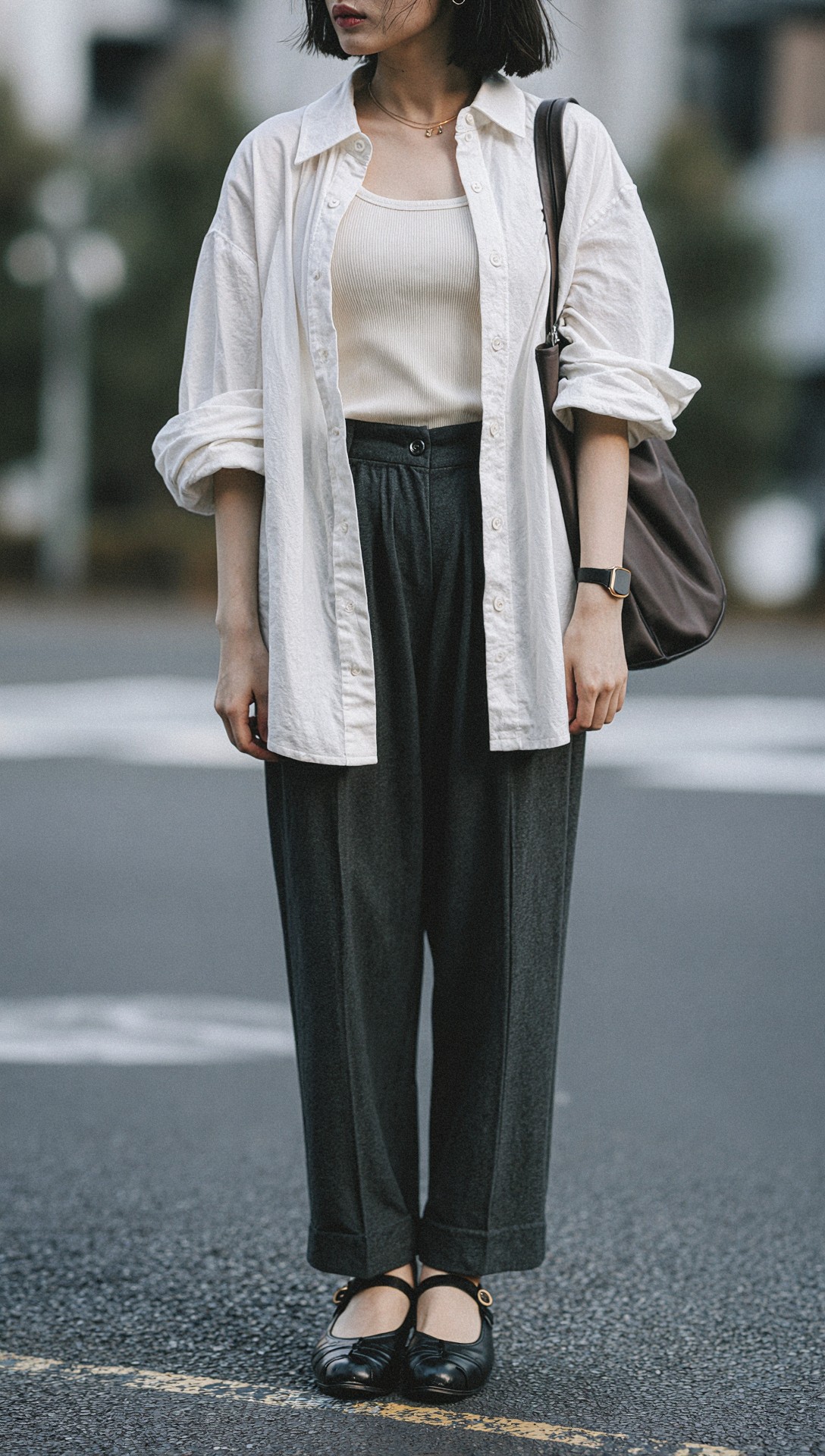
Inspect whether the flats are fully visible and whether the shirt stays crisp instead of turning into satin. In the stronger outputs, the shoulder bag stays compact and architectural rather than ballooning into a tote.
Test 2: Three-quarter outfit editorial for shirt structure
This prompt isolates the upper half while still keeping enough of the trouser line to judge proportion. I used it to see if the model understood clean layering instead of defaulting to a basic blouse.
Topic: Japanese minimalist clean girl summer shirting
Genre: Fashion Editorial
Camera: Nikon Z8
Lens: 50mm f/2
Lighting: soft window light with white bounce
Location: sunlit minimal apartment interior in Tokyo with limewashed walls and ash wood floor
Style: quiet luxury meets Japanese lookbook
Final Prompt: three-quarter outfit editorial image focused on a clean girl summer outfit, model shown from head to below the knees so shirt structure and trouser rise are visible, white cotton poplin shirt with precise collar and rolled sleeves, fitted nude-beige knit camisole underneath, high-waist stone taupe pleated trousers skimming the hip and falling straight, black square-toe flats partly visible, slim leather shoulder bag tucked close under the arm, soft polished minimal styling, tasteful sensuality through a defined waist and open neckline, calm expression, natural posture near a window, Japanese minimalist fashion direction, premium fabric texture, neutral palette, clean apartment setting, editorial realism, no busy props, no loud jewelry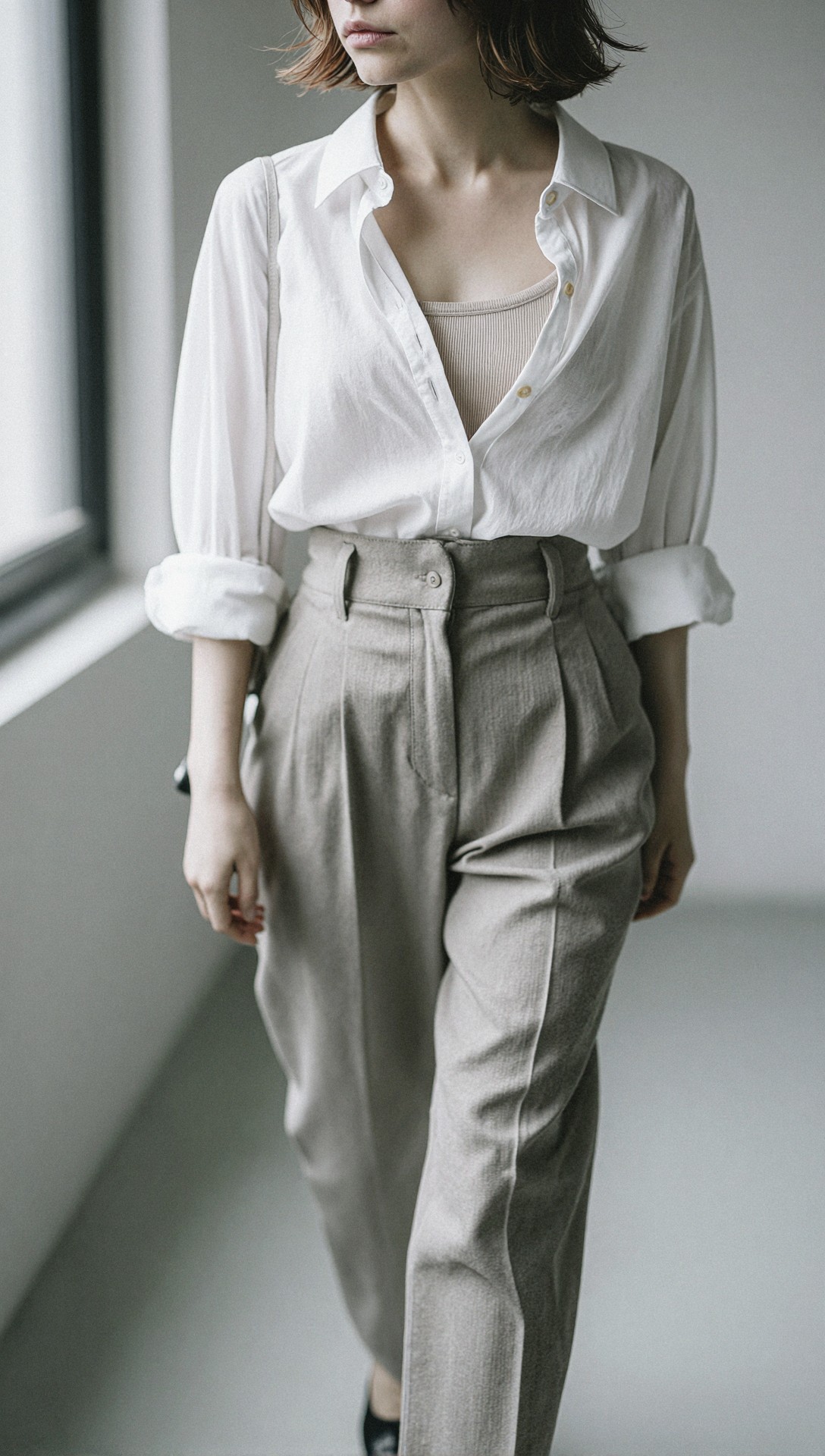
Check the collar, sleeve roll, and where the shirt breaks at the waist. The weaker generations either over-feminized the shirt into a blouse or widened the trouser leg until the silhouette lost tension.
Where Workflow B did better
The modular wardrobe-first workflow was not as cinematic, but it was more reliable when I wanted item-specific outputs. If your goal is to build Pinterest summer outfit ideas, compare capsule wardrobe combinations, or feed references into a shopping guide, this workflow is easier to control.
Its biggest strength was accessories. Bags stayed the right size more often, flats remained visible, and color matching was tighter. The tradeoff is that some outputs looked too neat, almost like e-commerce rather than editorial fashion.
Test 3: Head-to-toe lookbook for trousers and flats accuracy
This test checks whether the model can keep the lines simple and let the garments do the work without relying on dramatic posing.
Topic: Clean girl summer outfit lookbook with shirts trousers flats and bag
Genre: Lookbook Photography
Camera: Fujifilm GFX100S
Lens: 45mm f/2.8
Lighting: large softbox key with gentle floor bounce
Location: seamless warm gray studio backdrop
Style: clean commercial look with Japanese minimalist fashion cues
Final Prompt: head-to-toe lookbook fashion image on a seamless studio background, full body centered, clean girl summer outfit built from a pale oat sleeveless knit top, lightweight ivory shirt worn open and fluid, high-waist black straight trousers with precise front crease, cream leather ballet flats, small crescent shoulder bag in muted tan, capsule wardrobe outfit idea, body-conscious but restrained silhouette, polished minimal styling, subtle sexy confidence through fit and posture, hands relaxed, feet visible, balanced negative space, realistic tailoring, matte fabric textures, studio clarity, no dramatic props, no oversized jewelry, no extra layers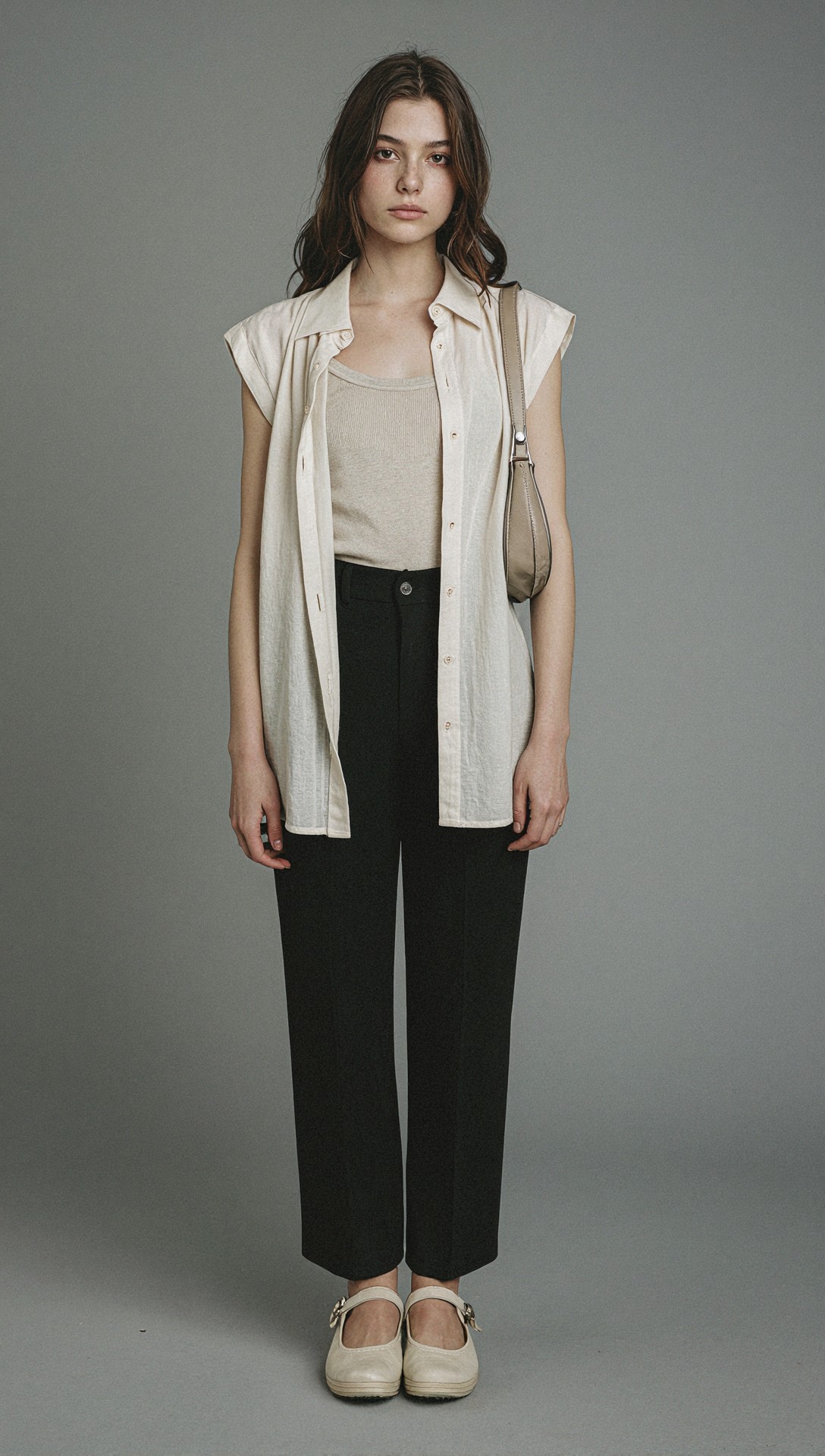
Inspect the hem length and front crease. This workflow usually gets the trousers right, but sometimes it flattens the shirt so much that the layering feels too sterile.
Test 4: Catalog grid page for capsule wardrobe consistency
I used a catalog-style prompt because it reveals whether the model understands a system of related pieces rather than one lucky hero image.
Topic: Minimal wardrobe capsule for clean girl summer outfit styling
Genre: Product Editorial
Camera: Sony A7R V
Lens: 40mm f/2.5
Lighting: top soft daylight simulation with controlled shadow edges
Location: minimalist editorial studio layout
Style: modern catalog grid page
Final Prompt: catalog grid page showing a Japanese minimalist fashion capsule for a clean girl summer outfit, neatly arranged styled looks and individual items, white poplin shirt, sand knit tank, charcoal straight trousers, black ballet flats, espresso shoulder bag, ivory shirt variation, stone trousers variation, clean labels and visual spacing, fashion editor layout, soft polished minimal palette, retail-meets-editorial presentation, tactile cotton and leather detail, tasteful sensual mood through slim silhouettes and open neckline styling, clear separation of items, premium merchandising aesthetic, highly organized composition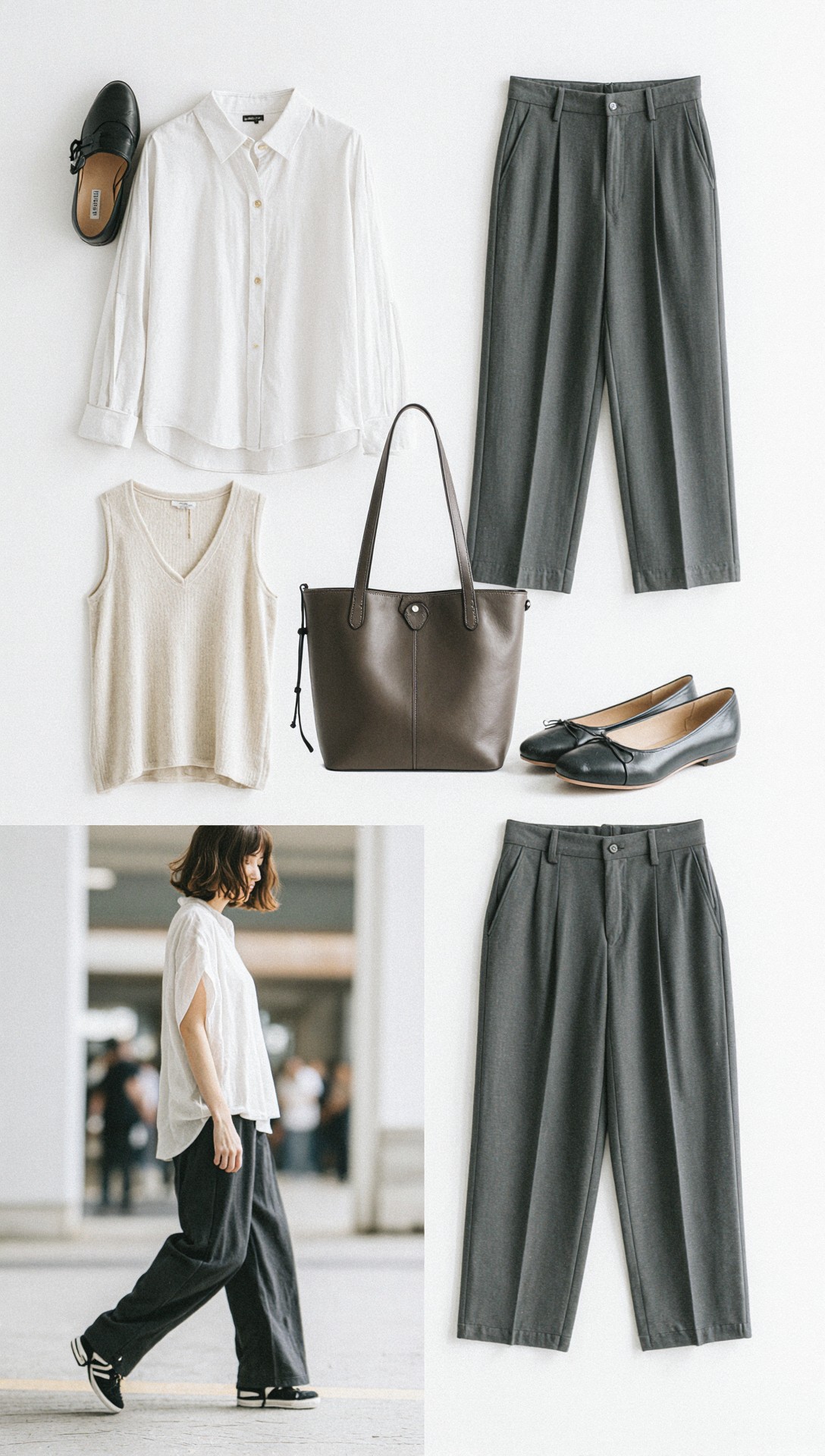
Look for consistency between the outfit tiles and the single items. The strongest outputs make the bag and flats feel like part of one wardrobe story instead of random add-ons.
The weak points I kept seeing
Both workflows had repeatable failure risks.
Workflow A failures
- The model sometimes swapped ballet flats for heels or loafers.
- Bags could become oversized if the pose got too dynamic.
- In outdoor scenes, white shirts occasionally turned glossy instead of crisp cotton.
Workflow B failures
- The result could look too catalog-clean and lose the relaxed summer feeling.
- Faces and posture became generic faster because the prompt weight shifted to products.
- Some images lost that slightly sexy editorial tension and became plain basics.
Side-by-side tradeoffs for Japanese minimalist fashion
The key difference is not realism versus stylization. Both can look realistic. The real split is movement versus control.
Workflow A is better when you want:
- a visible outfit story
- a natural shoulder line and trouser drape
- more editorial sensuality without overexposure
- imagery for [/gallery](/gallery) mood references or social posts
Workflow B is better when you want:
- cleaner comparison between pieces
- a repeatable minimal wardrobe system
- easier testing of flats, bags, and shirt variants
- outputs to refine later in [/promptlab](/promptlab)
Prompt tests that expose the difference
The next set of prompts made the tradeoffs very obvious.
Test 5: Accessories close-up for bag and flats harmony
This checks if the model can keep the accessory story minimal and expensive-looking without adding trend clutter.
Topic: Accessories pairing for a clean girl summer outfit
Genre: Luxury Campaign
Camera: Leica SL2-S
Lens: 85mm f/2
Lighting: soft directional window light with subtle shadow falloff
Location: cedar bench near a minimal Tokyo cafe entrance
Style: refined accessory editorial
Final Prompt: accessories close-up fashion image showing the lower half of a clean girl summer outfit in Japanese minimalist fashion, cropped from waist to floor, white shirt hem grazing high-waist black trousers, black leather ballet flats with low vamp, compact espresso shoulder bag resting against the hip, elegant hand placement, smooth leather texture, precise trouser drape, clean commercial luxury mood, tasteful sensuality through hip line and posture, muted concrete and cedar background, soft summer light, premium detail focus, understated styling, no logos, no extra ornaments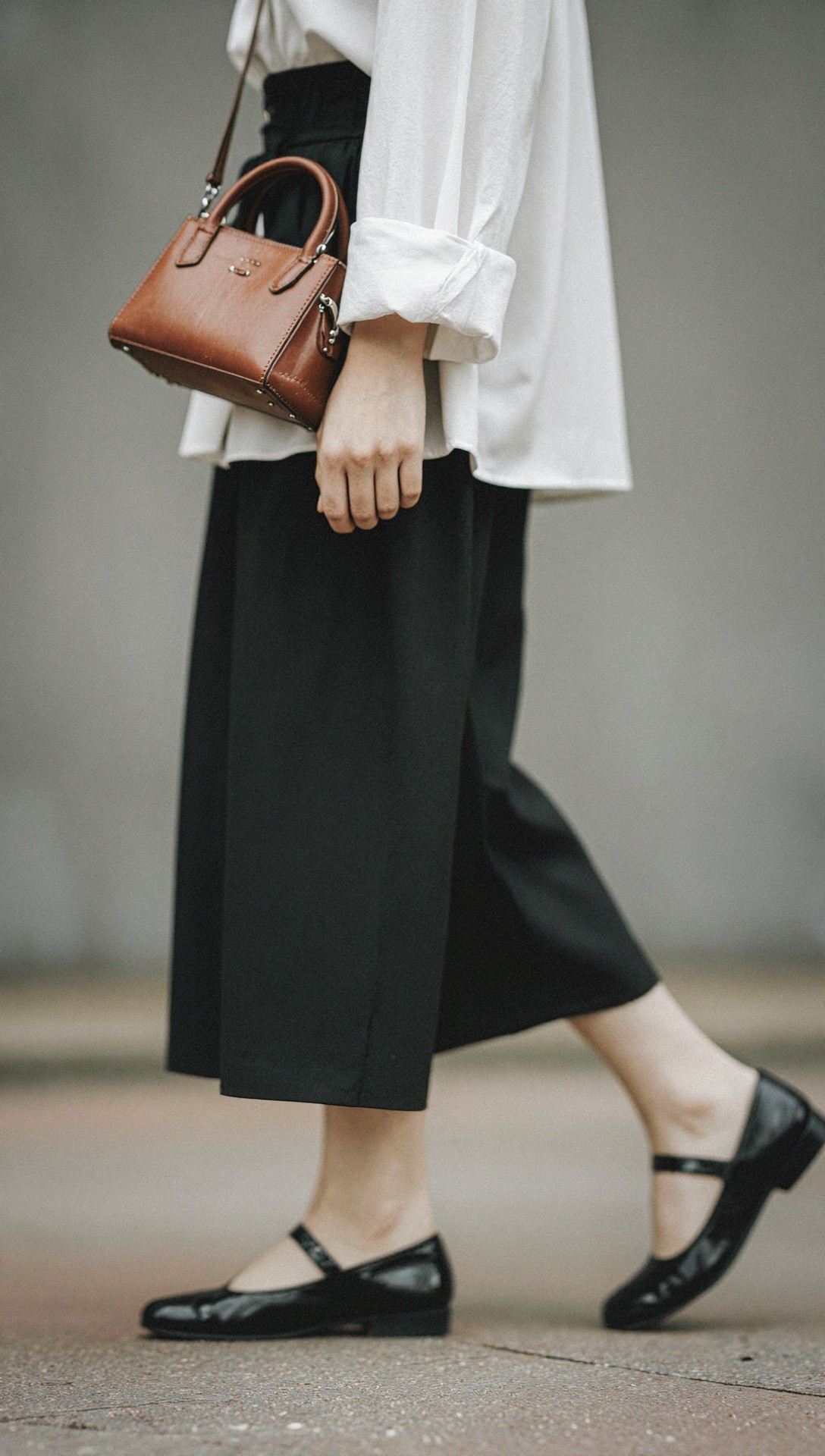
Inspect leather texture and the relationship between trouser break and flats. In weaker outputs, the bag strap geometry warps or the flats become oddly chunky.
Test 6: Product flat lay for item truthfulness
This test is useful when the outfit keeps drifting in full-body shots. Flat lays force the model to describe what the wardrobe actually is.
Topic: Product flat lay of clean girl summer outfit essentials
Genre: Product Editorial
Camera: Hasselblad X2D 100C
Lens: 55mm f/2.5
Lighting: overhead diffused daylight
Location: pale linen backdrop in a studio styling room
Style: premium capsule wardrobe merchandising
Final Prompt: product flat lay of a clean girl summer outfit with Japanese minimalist fashion direction, neatly arranged white crisp poplin shirt, fitted ribbed beige tank, high-waist charcoal straight trousers, black ballet flats, compact tan shoulder bag, slim watch, tiny gold hoops, folded and spaced with fashion stylist precision, visible fabric weave and leather grain, soft polished minimal palette, tasteful editorial sensuality through sleek proportions and refined essentials, top-down composition, clean luxury merchandising, no clutter, no beauty products, no extra trend items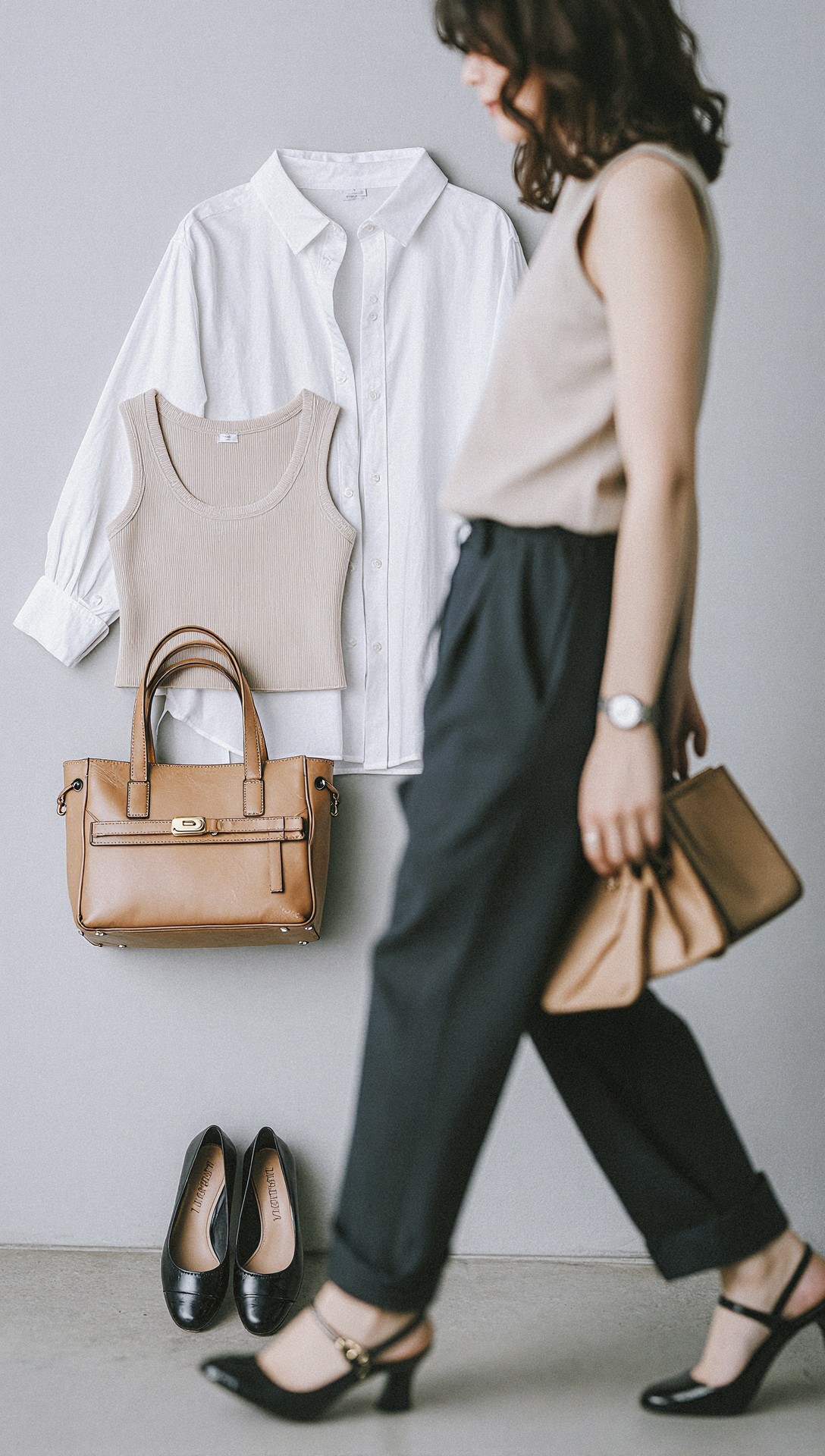
Check whether each item remains recognizable and proportionally believable. This is one of the best prompts for debugging a drifting outfit before moving back into model shots.
A useful alternative workflow: retail and display prompts
A third route worked better than expected for inspiration-building: retail display and storefront prompts. These did not replace editorial shots, but they were excellent for discovering color balance and capsule logic. If I needed a visual planning board before generating hero images in [/create](/create), I would use this first.
Test 7: Storefront display for color and capsule cohesion
This test checks whether the wardrobe reads as a coherent summer system when merchandised in context.
Topic: Store display for clean girl summer outfit capsule
Genre: Fashion Retail Editorial
Camera: Panasonic Lumix S1R
Lens: 24-70mm at 50mm f/4
Lighting: soft morning storefront light with interior practicals
Location: minimalist boutique window in Daikanyama Tokyo
Style: Japanese minimalist retail campaign
Final Prompt: storefront display featuring a clean girl summer outfit capsule inspired by Japanese minimalist fashion, boutique window with a styled mannequin and neatly displayed accessories, white poplin shirt layered over a slim sand tank, charcoal high-waist trousers, black ballet flats, espresso shoulder bag, pale wood fixtures, matte stone flooring, restrained signage, polished minimal summer palette, subtle sexy fashion mood through slim silhouette and open neckline styling, premium retail presentation, calm Tokyo boutique atmosphere, full outfit visibility, realistic merchandising detail, elegant reflections on glass, no crowded background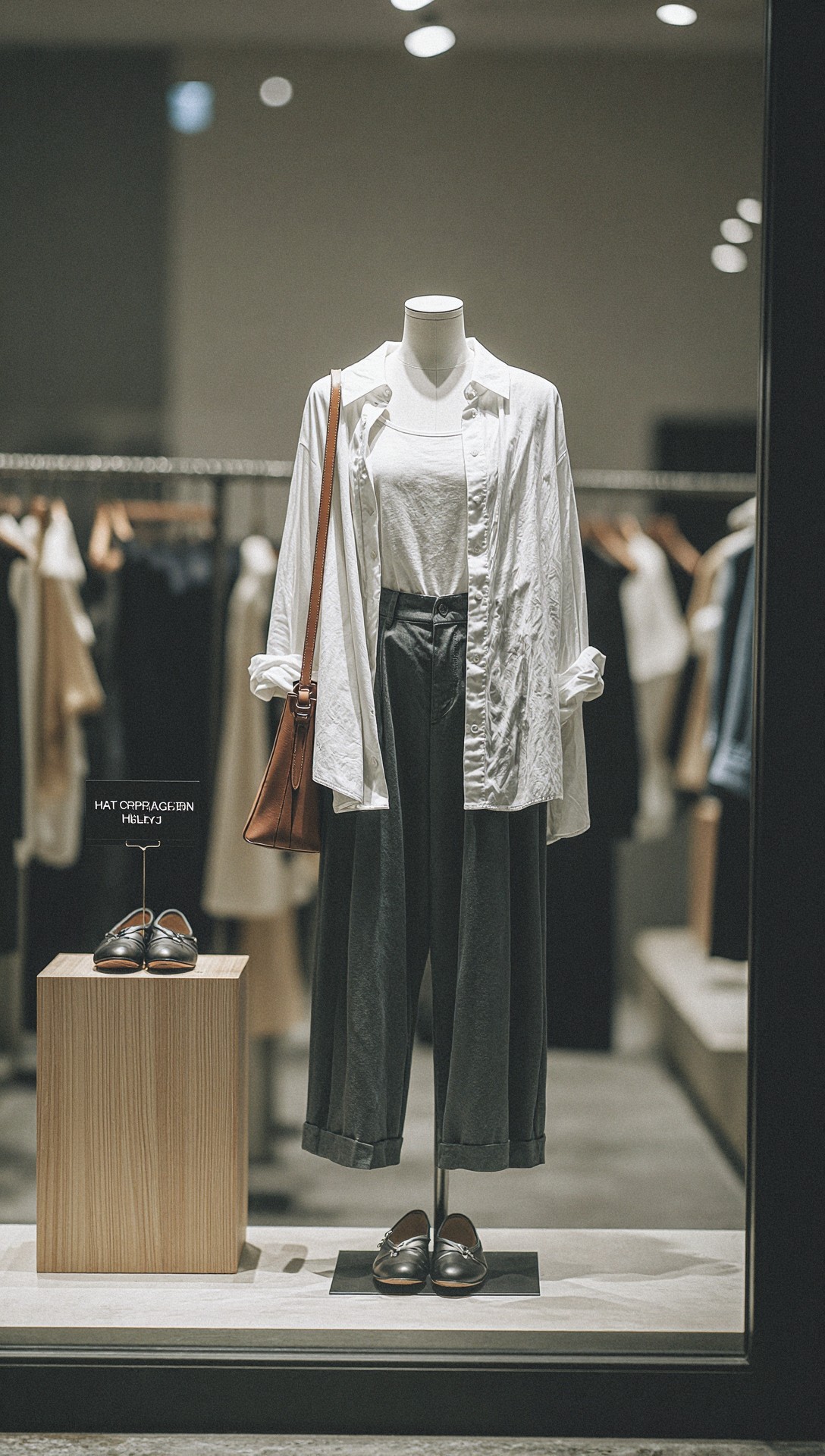
Inspect whether the outfit still reads clearly through the glass reflections. Good outputs keep the palette disciplined and make the bag feel intentionally selected, not decorative filler.
Test 8: Runway/backstage moment for movement and fabric response
This final test shows whether the styling can survive motion. It exposes weak prompts fast because trousers and shirts often deform under movement.
Topic: Runway backstage interpretation of a clean girl summer outfit
Genre: Fashion Documentary
Camera: Canon EOS R3
Lens: 24-70mm at 40mm f/2.8
Lighting: mixed backstage tungsten and soft overhead diffusion
Location: Tokyo fashion week backstage corridor
Style: documentary luxury fashion realism
Final Prompt: runway backstage moment capturing a clean girl summer outfit through Japanese minimalist fashion, model walking with confident purposeful stride, full outfit visible, crisp white shirt half-tucked over a fitted cream tank, high-waist black trousers with fluid straight leg, black ballet flats in motion, small structured shoulder bag close to the body, soft polished minimal styling, tasteful sexy editorial mood through movement and sharp fit, backstage racks and garment bags softly blurred, candid documentary framing, natural fabric sway, realistic lighting mix, premium tailoring detail, no exaggerated glam makeup, no chaotic streetwear elements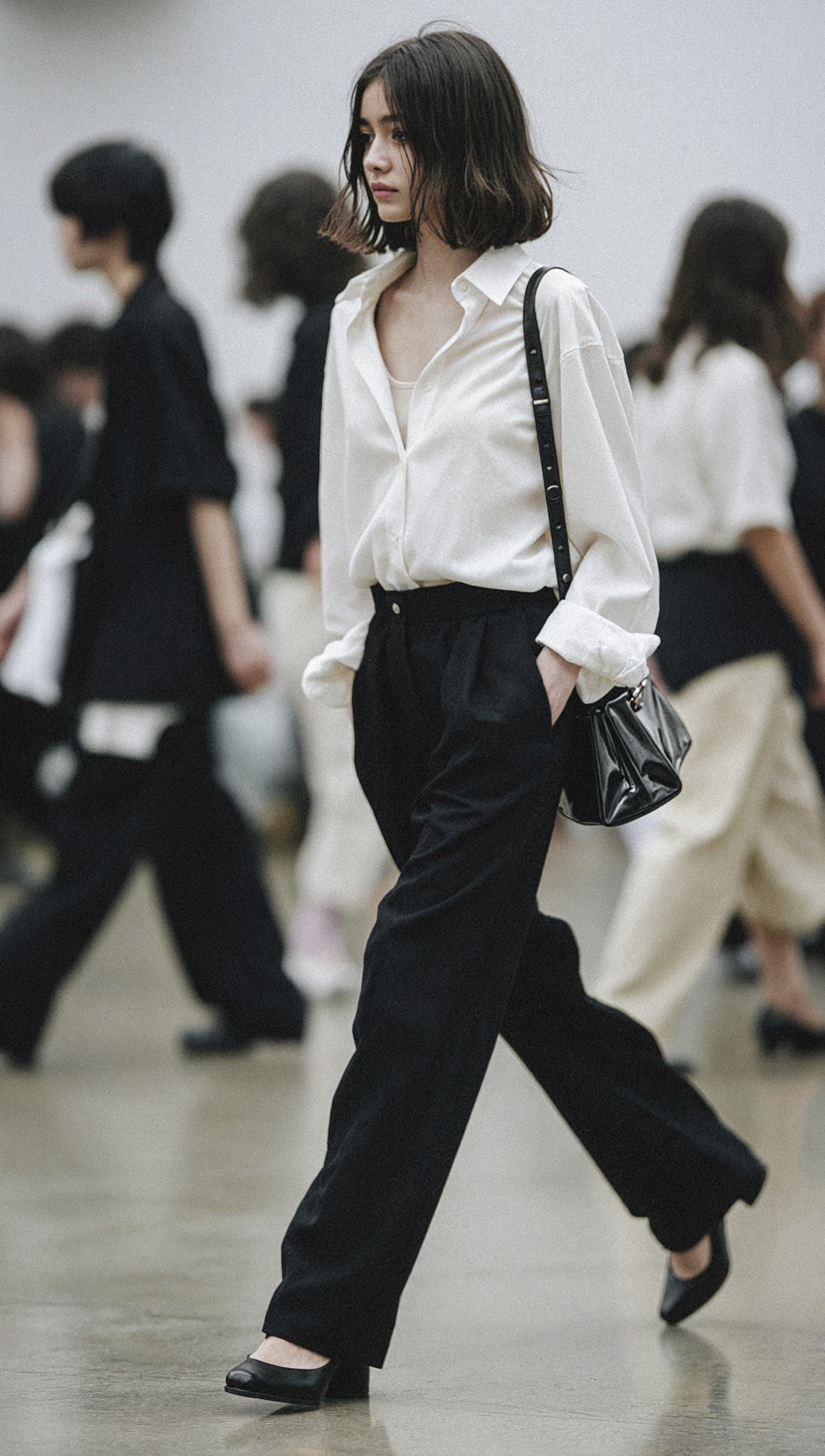
Watch the shirt hem, hand positions, and the shoe shape during movement. If the output holds together here, your prompt is probably strong enough for most editorial use cases.
Checklist: how to improve a weak clean girl summer outfit prompt
Use this when the first generations look vague or trend-churned.
- Name the shot type first.
- State full body visible if shoes matter.
- Define the shirt as poplin, cotton, or lightweight linen blend.
- Define trousers by rise + leg shape + hem behavior.
- Name the flats precisely: ballet flats, square-toe flats, low-profile flats.
- Keep the bag scale small: compact shoulder bag, crescent bag, structured mini shoulder bag.
- Limit jewelry to one or two pieces.
- Anchor the scene in Tokyo, a minimal studio, or a calm boutique if you want Japanese minimalist discipline.
- If the image feels too plain, add body-conscious fit words rather than more accessories.
Best choice by use case
Choose Workflow A if you want editorial outfit images
Use it for social visuals, hero images, lookbook storytelling, or when the complete silhouette matters most. This is the better method for a polished, slightly sensual clean girl summer outfit that still feels disciplined.
Best for:
- street style
- editorial campaigns
- fashion features on [/articles](/articles)
- mood-led generation with visible summer movement
Choose Workflow B if you want wardrobe planning and item comparison
Use it when you care more about shirt, trouser, flats, and bag accuracy than scene emotion. It is also easier to upscale later because edges are cleaner and backgrounds simpler with tools like [/upscaler](/upscaler).
Best for:
- capsule wardrobe outfit ideas
- product comparisons
- Pinterest summer outfit planning
- repeatable fashion prompt templates
Use the retail-display workflow if you are still building the concept
This is the best middle step when you know the wardrobe pieces but not yet the final image language.
FAQ
What makes a clean girl summer outfit prompt work better?
Clear garment structure. The winning prompts named the shirt fabric, trouser rise, flats type, and bag shape. Mood words alone were not enough.
How do I make AI fashion images look more Japanese minimalist?
Use restraint in color, specify architectural silhouettes, keep accessories minimal, and place the look in a Tokyo street, boutique, or calm interior. Avoid over-layering.
Are full-body prompts better than close crops for outfit styling?
Yes, if shoes and bag matter. Full-body framing reduced missing-item errors in this test.
Why do AI models keep replacing flats with heels?
If the prompt emphasizes elegance without naming the shoe precisely, the model often defaults to heels. "Black leather ballet flats" or "low-profile square-toe flats" worked better.
What should I do if the outfit looks too generic quiet luxury?
Add Japanese context, stronger silhouette language, and one tension point like a fitted tank under an oversized shirt or a sharper trouser crease.
Editorial conclusion
My verdict is simple: if your goal is a clean girl summer outfit with visible styling logic, use the editorial silhouette-first workflow. It gives the strongest balance of shirts, trousers, flats, and bags while preserving that soft polished minimal mood.
Use the modular workflow if you are building a capsule wardrobe, comparing item combinations, or need cleaner product logic. Avoid the editorial route if you need exact accessory consistency on the first pass. Avoid the modular route if you want movement, atmosphere, and fashion tension.
The prompt detail that mattered most in this test was explicit outfit structure in a named fashion shot type. Once the shot type, trouser shape, shirt fabric, flats, and bag scale were all locked, the images stopped drifting and started looking like intentional Japanese minimalist summer styling rather than generic beige inspiration.