Comparing Studio, Street, and Editorial Styles for Korean Fashion Model Images 한국어 요약
이 페이지는 ZView Space의 영어 원문을 한국어 검색 사용자도 이해할 수 있도록 정리한 SEO 요약입니다. 핵심은 단순한 얼굴 중심 이미지가 아니라 패션 에디토리얼, 룩북, 아웃핏, 프롬프트 테스트, 이미지 생성 워크플로우를 실제로 어떻게 구성할지입니다.
핵심 요약
- 원문 주제: Comparing Studio, Street, and Editorial Styles for Korean Fashion Model Images
- 목적: AI 이미지 생성에서 outfit, silhouette, fabric, pose, location, camera framing을 더 명확하게 설계합니다.
- 활용 범위: Z-Image Turbo, Krea2 Turbo, Qwen Image, Anima, SeedVR2 같은 이미지 생성 및 업스케일 워크플로우에 적용할 수 있습니다.
- SEO 관점: 제목, 설명, 이미지 alt, 프롬프트 예시가 실제 검색 의도와 맞아야 색인 가능성이 높아집니다.
한국어 사용자를 위한 체크포인트
1. 프롬프트가 얼굴 묘사에만 머물지 않고 전체 스타일과 의상 구성을 설명하는지 확인합니다. 2. 패션 이미지라면 상의, 하의, 아우터, 신발, 액세서리, 소재감, 촬영 장소를 분리해서 씁니다. 3. 생성 결과는 바로 게시하지 말고 디테일, 손, 의상 형태, 배경 일관성, 이미지 품질을 비교합니다. 4. 글 본문에는 실제 테스트 기준과 실패를 줄이는 방법이 들어가야 검색엔진에서 얇은 콘텐츠로 보일 가능성이 줄어듭니다.
원문 미리보기
A strong Korean fashion image starts with choosing the right visual language. Studio, street, and editorial styles can all feature the same model, wardrobe category, or beauty direction, but they communicate very different things. For AI image generation, that
---
A strong Korean fashion image starts with choosing the right visual language. Studio, street, and editorial styles can all feature the same model, wardrobe category, or beauty direction, but they communicate very different things. For AI image generation, that difference matters: prompt structure, camera choices, lighting, and location cues shape whether the result feels like a clean e-commerce portrait, a Seoul street-style feature, or a magazine-ready campaign spread.
This guide compares the three styles in practical terms and shows how to prompt each one clearly. If you generate lookbooks, concept tests, social ads, moodboards, or magazine-inspired portraits, these distinctions will help you get more consistent results.
Why these three styles produce different images
The main difference is not only the background. It is the relationship between the model, styling, camera language, and narrative.
- Studio images prioritize control, clarity, and polish.
- Street images prioritize realism, environment, and spontaneity.
- Editorial images prioritize concept, storytelling, and visual hierarchy.
For Korean fashion model imagery, this often shows up in subtle ways: cleaner tailoring, refined hair and makeup, balanced skin texture, controlled color palettes, and an emphasis on silhouette and fabric movement rather than exaggerated posing.
Studio style: controlled, clean, and commercially useful
Studio style is the most predictable choice when you need consistency. It works well for beauty campaigns, online retail, lookbooks, accessory features, and model tests. In AI generation, studio prompts usually benefit from precise lighting instructions and simple backgrounds so the clothing and face stay dominant.
A studio image should answer basic commercial needs fast:
- What does the garment look like?
- How does the fabric catch light?
- Is the face sharp and flattering?
- Does the image feel premium enough for a campaign or product page?
Best use cases for studio prompts
- Apparel catalog hero images
- Beauty close-ups for skincare or makeup concepts
- Jewelry and handbag campaign mockups
- Model card and casting-style portraits
- Brand pitch decks needing a polished fashion visual
Topic: Korean fashion model in minimal ivory tailoring
Genre: Fashion Editorial
Camera: Canon EOS R5
Lens: 85mm f/1.4
Lighting: Studio butterfly light with soft fill
Location: Minimal seamless studio in Seoul
Style: Clean commercial look
Final Prompt: Korean female fashion model wearing structured ivory tailoring with a fitted blazer and straight-leg trousers, subtle pearl earrings, sleek low bun, natural luminous makeup, poised front-facing stance with one hand lightly touching the lapel, photographed in a minimal Seoul studio on a warm light-gray seamless backdrop, studio butterfly key light with soft fill for clean cheekbone definition, Canon EOS R5 look, 85mm f/1.4 shallow depth of field, crisp fabric texture, accurate skin tone, premium magazine-grade composition, soft neutral palette, refined commercial polish, high-detail fashion image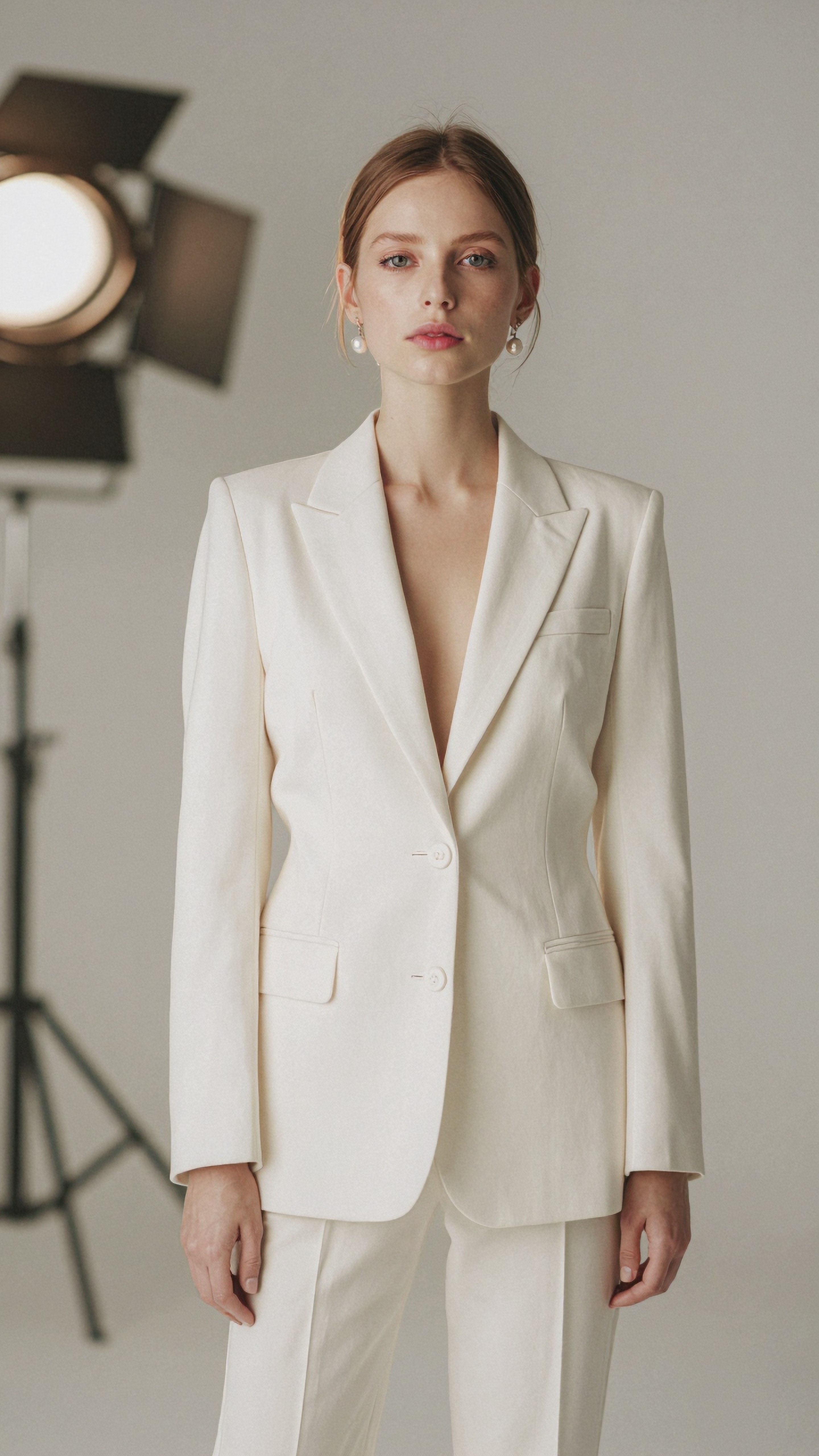
Topic: Korean beauty campaign portrait with modern bob haircut
Genre: Beauty Campaign
Camera: Nikon Z7 II
Lens: 105mm f/2.8 macro
Lighting: Large softbox key light with silver reflector fill
Location: High-end cosmetic studio set
Style: High-end beauty advertising
Final Prompt: Korean fashion model with a sharp modern bob haircut, flawless natural skin, muted rose lip color, wearing a strapless black satin top and delicate silver ear cuff, close-up beauty portrait in a luxury cosmetic studio set, large softbox key light with silver reflector fill creating smooth skin and bright catchlights, Nikon Z7 II look, 105mm f/2.8 macro clarity, calm direct gaze, elegant neck line, minimal background with charcoal-to-gray gradient, premium skincare-ad composition, realistic pore texture, polished but not plastic finish, refined monochrome palette with soft rose accents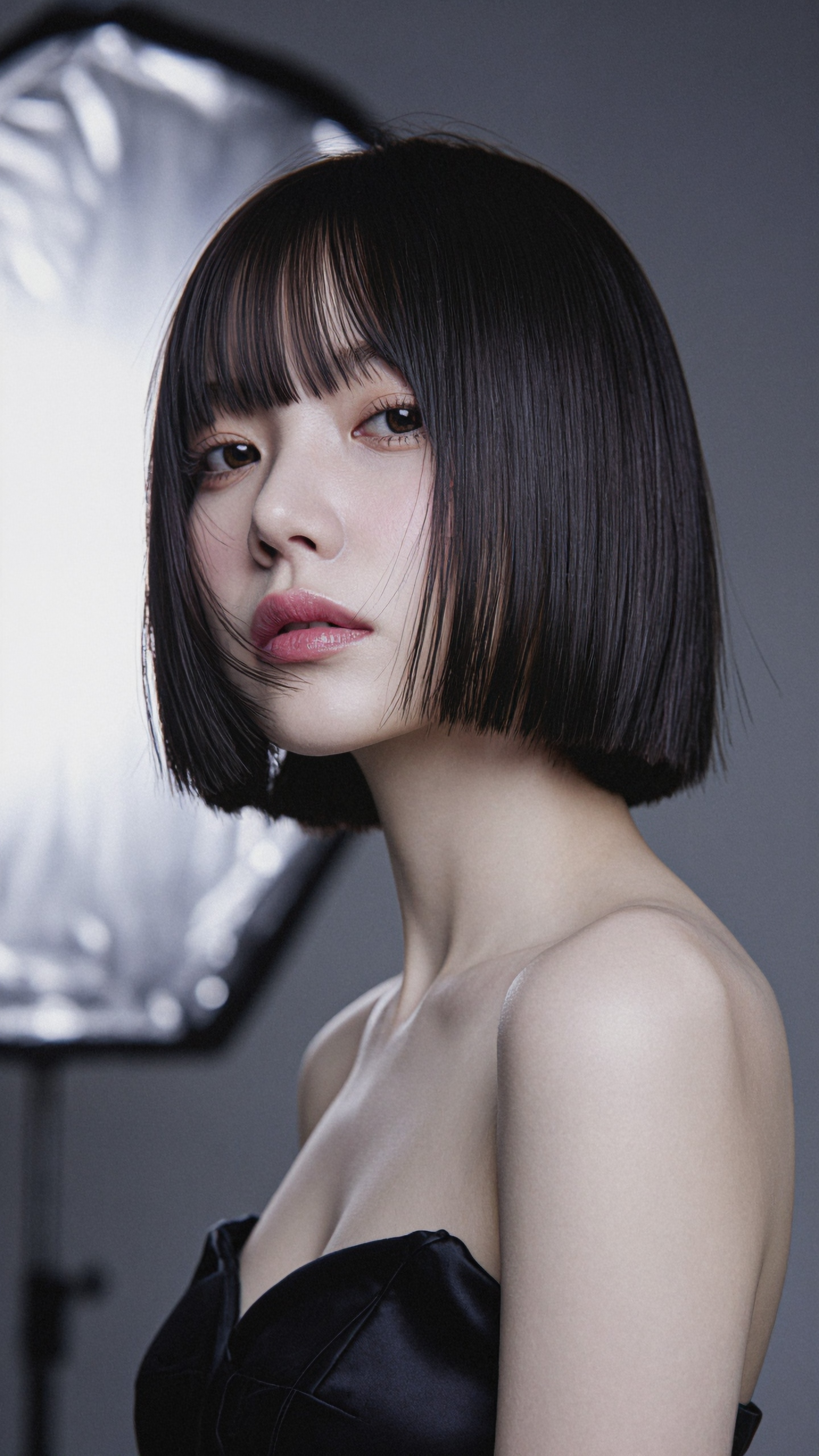
What makes studio prompts succeed
Keep the visual hierarchy simple. If the outfit is the priority, reduce background complexity. If the face is the priority, specify lens choice, beauty lighting, and expression. Studio images often fail when too many concepts are stacked together, such as dramatic set design plus complex props plus heavy motion styling.
For Korean fashion imagery, it also helps to prompt for restrained expressions: calm confidence, relaxed poise, or quiet elegance usually works better than broad theatrical gestures unless the concept specifically needs them.
Street style: natural context, trend sensitivity, and city energy
Street style images feel more immediate because the environment does part of the storytelling. In Korean fashion prompts, this can mean Seoul alleyways, café districts, subway entrances, crosswalks, rooftop corners, convenience-store glow, or modern business streets in Gangnam or Seongsu.
Street prompts are useful when you want clothing to feel lived-in rather than staged. They are especially effective for denim, outerwear, sneakers, layered basics, and trend-led youth fashion.
Best use cases for street prompts
- Social campaign concepts for seasonal fashion drops
- Moodboards for Seoul-inspired styling
- Streetwear brand concept art
- Influencer-style portraits for ad testing
- Lifestyle banners that need believable urban context
Topic: Korean street fashion model in oversized denim and loafers
Genre: Street Style
Camera: Fujifilm X-T5
Lens: 35mm f/1.4
Lighting: Overcast diffusion
Location: Seongsu side street with concrete walls and small cafés
Style: Cinematic realism
Final Prompt: Korean fashion model walking through a Seongsu side street wearing oversized dark-wash denim jacket, white ribbed tank, pleated charcoal mini skirt, black loafers with gray socks, and a slim leather shoulder bag, relaxed mid-step pose, casual confident expression, loose hair moving slightly in the breeze, overcast diffused daylight creating soft shadows and realistic city texture, Fujifilm X-T5 look, 35mm f/1.4 environmental framing, concrete walls, café signage, muted urban palette of denim blue, cement gray, and espresso brown, candid composition with editorial balance, detailed fabric folds, believable Seoul street atmosphere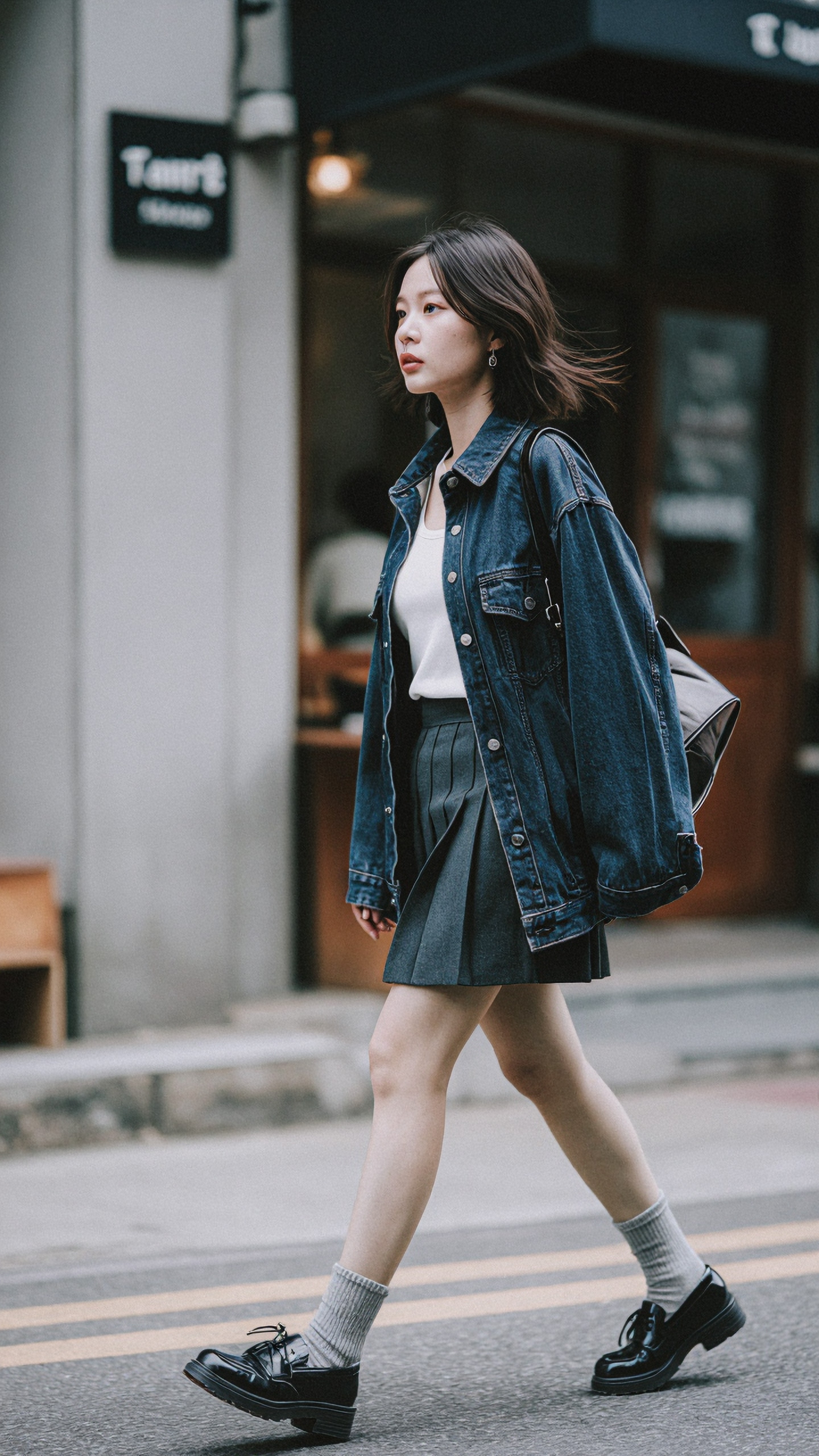
Topic: Korean model in sporty commuter fashion at a subway entrance
Genre: Lifestyle Portrait
Camera: Sony A7 IV
Lens: 50mm f/1.8
Lighting: Cool morning natural light with subtle reflected fill
Location: Modern Seoul subway entrance in Gangnam
Style: Clean commercial look
Final Prompt: Korean fashion model styled in sporty commuter fashion, cropped windbreaker in sage green, black tailored track pants, white sneakers, compact crossbody bag, standing near a modern Gangnam subway entrance, one hand adjusting earbuds, focused forward gaze, cool morning natural light with subtle reflected fill from glass architecture, Sony A7 IV look, 50mm f/1.8 balanced perspective, polished urban lifestyle composition, clean lines, subdued contemporary palette, realistic city movement in the background, crisp wardrobe definition, practical and aspirational everyday Seoul fashion mood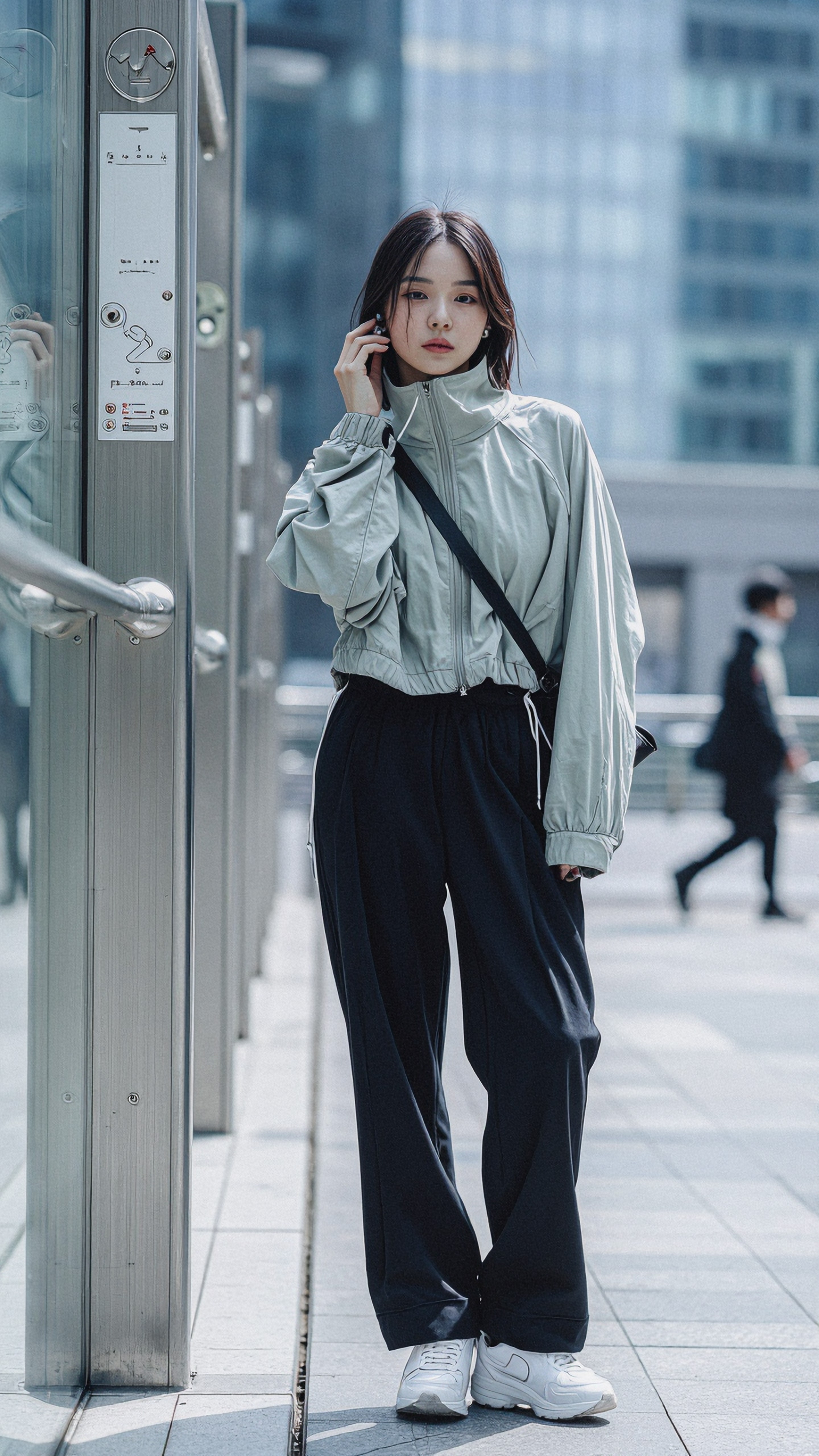
Topic: Korean night street portrait with leather jacket and neon accents
Genre: Street Style
Camera: Leica SL2-S
Lens: 75mm f/2
Lighting: Neon rim light with ambient storefront glow
Location: Euljiro night street with narrow alleys and signs
Style: Korean magazine cover
Final Prompt: Korean fashion model standing in an Euljiro night alley wearing a cropped black leather jacket over a slate silk camisole, tailored wide-leg trousers, pointed ankle boots, and bold silver rings, composed three-quarter pose with cool self-assured expression, neon rim light from nearby signage mixed with warm storefront glow, Leica SL2-S look, 75mm f/2 selective depth, glossy editorial framing, layered reflections on damp pavement, cobalt, crimson, and amber color accents, softly blurred Korean signboards behind the subject, modern Seoul night energy, premium magazine-cover realism with sharp facial detail and rich texture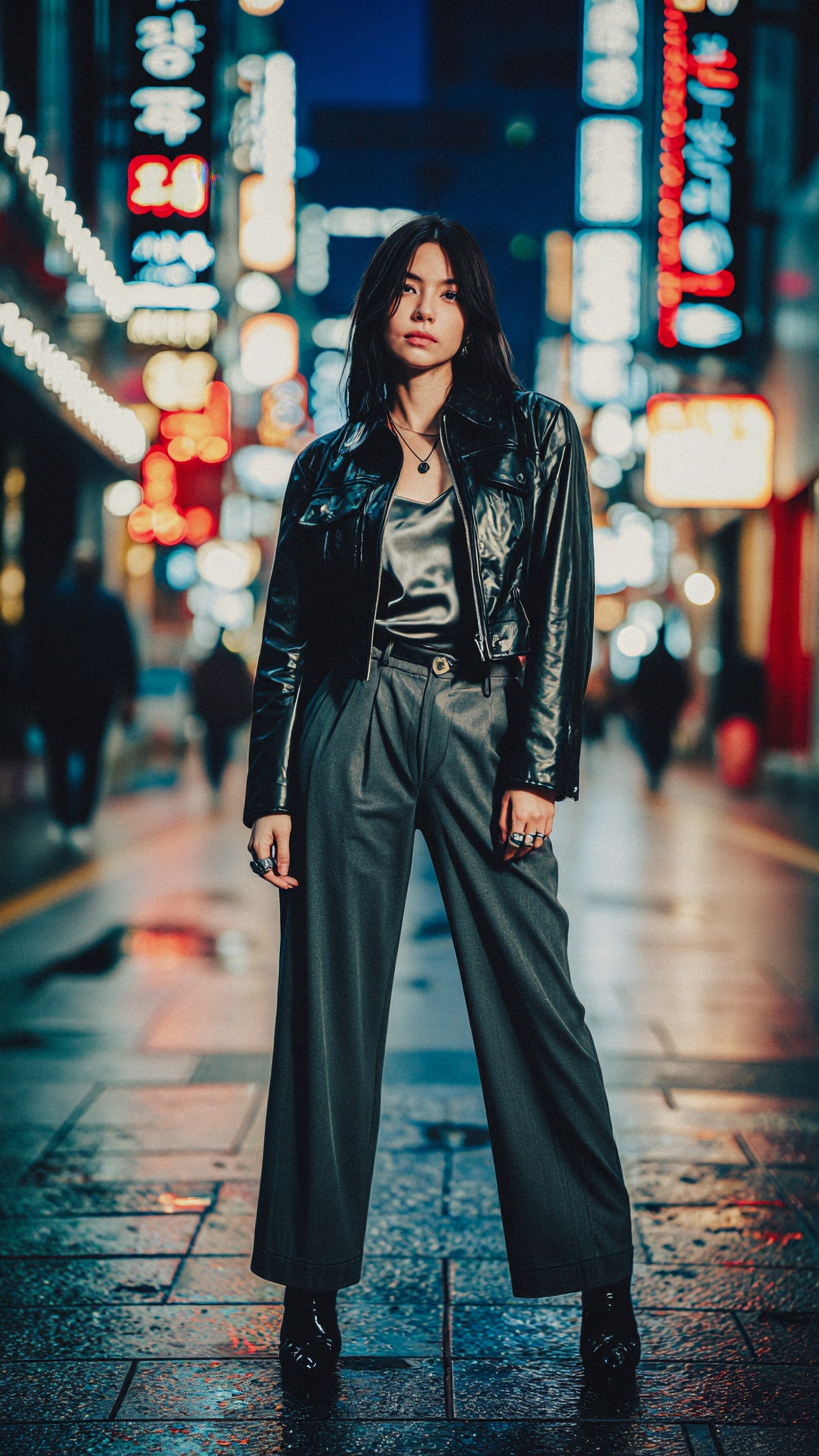
What makes street prompts succeed
Street style needs a balance between realism and direction. If the prompt is too vague, the image can slip into generic urban fashion. If it is too controlled, it stops feeling like street photography.
Useful details include:
- Specific Seoul neighborhoods or architectural mood
- Functional styling items like bags, sneakers, or lightweight outerwear
- Movement cues such as walking, turning, adjusting hair, or waiting at a crosswalk
- Weather and time-of-day conditions
- Background elements that support, not overwhelm, the model
Editorial style: concept-driven and more narrative
Editorial style has the widest range. It can borrow the clean control of studio photography or the realism of street imagery, but it adds a stronger point of view. Editorial fashion images are less about simply showing clothes and more about creating a memorable visual statement.
In practice, editorial prompts often include stronger composition, more deliberate pose design, moodier color grading, and a clearer story. For Korean fashion model images, editorial direction can lean toward minimalist luxury, modern romanticism, art-forward beauty, or seasonal lifestyle narratives.
Best use cases for editorial prompts
- Magazine-style spreads and covers
- Creative direction tests before a brand shoot
- Portfolio images for stylists and art directors
- Campaign moodboards with stronger story than retail visuals
- Hero banners where atmosphere matters as much as wardrobe
Topic: Korean fashion editorial in a quiet luxury hotel corridor
Genre: Fashion Editorial
Camera: Hasselblad X2D 100C
Lens: 55mm f/2.5
Lighting: Window side light with soft practical lamp glow
Location: Boutique hotel corridor in Seoul
Style: Luxury fashion campaign
Final Prompt: Korean fashion model in a quiet luxury hotel corridor wearing a long camel wool coat over a cream silk blouse and high-waisted black trousers, hair tucked behind one ear, understated gold jewelry, elegant elongated pose leaning lightly against paneled walls, calm introspective expression, soft window side light mixed with warm practical lamp glow, Hasselblad X2D 100C medium-format look, 55mm f/2.5 refined depth, cinematic corridor lines guiding the frame, restrained palette of camel, ivory, black, and walnut wood, high-end editorial composition, tactile fabric detail, quiet luxury mood, sophisticated Korean campaign aesthetics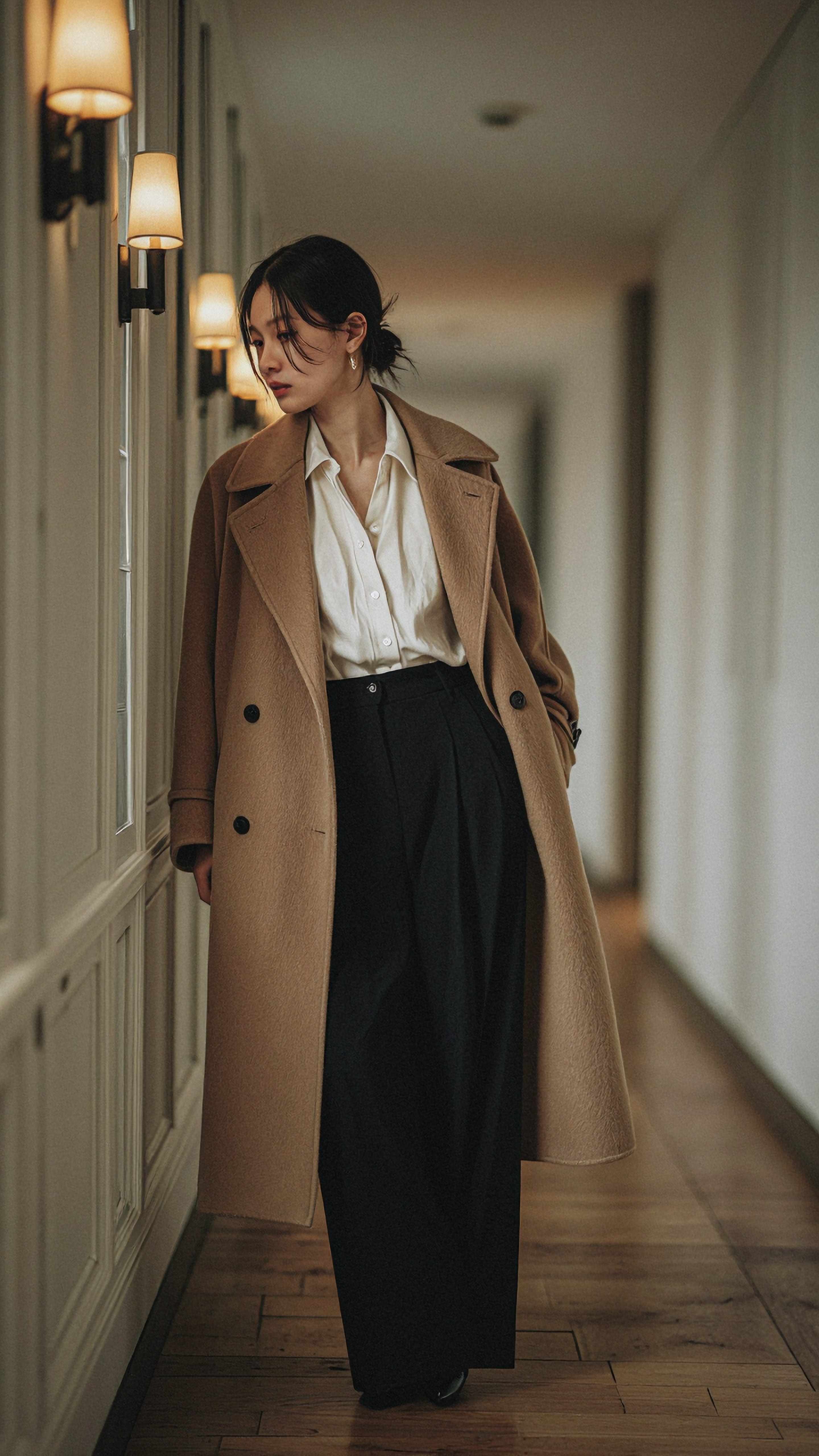
Topic: Korean spring editorial with floral dress on a rooftop garden
Genre: Fashion Editorial
Camera: Panasonic Lumix S1R
Lens: 70-200mm f/2.8 at 135mm
Lighting: Sunset backlight
Location: Rooftop garden overlooking Seoul skyline
Style: Elegant resort editorial
Final Prompt: Korean fashion model wearing a flowing pastel floral dress with soft chiffon layers and strappy heels on a rooftop garden overlooking the Seoul skyline, graceful turning pose with one hand gathering the fabric, gentle half-smile, sunset backlight illuminating translucent material and loose waves in the hair, Panasonic Lumix S1R look, 135mm compression for a refined editorial portrait, rose-gold sky, blurred skyline, terrace greenery, airy feminine color palette of blush, sage, and peach, premium magazine spread composition, motion in the dress, romantic yet polished Korean spring editorial atmosphere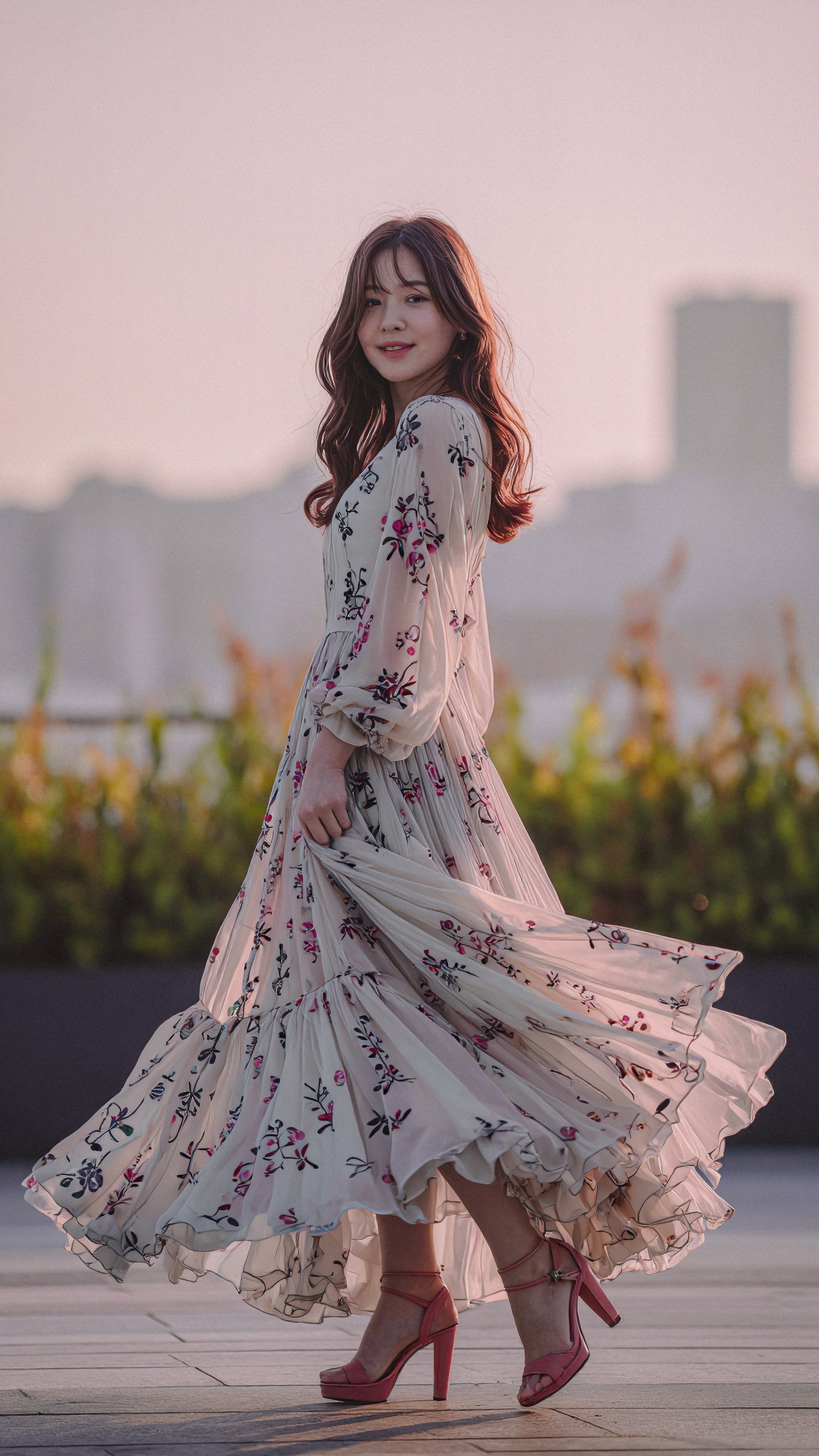
Topic: Korean monochrome editorial with sculptural black dress
Genre: Luxury Campaign
Camera: Phase One XF IQ4
Lens: 80mm f/2.8
Lighting: Hard directional spotlight with negative fill
Location: Minimal architectural set with textured concrete floor
Style: High-fashion art direction
Final Prompt: Korean fashion model in a sculptural black dress with asymmetrical volume, sharp collar line, long gloves, and glossy black heels, posed in a minimalist architectural set with textured concrete floor and tall shadowed walls, intense composed expression, hard directional spotlight carving strong highlights and shadow geometry, negative fill for dramatic contrast, Phase One XF IQ4 look, 80mm f/2.8 precision, monochrome editorial palette with subtle charcoal variation, graphic composition with strong negative space, luxury campaign styling, crisp edge detail, modern art-fashion mood, museum-like stillness and authority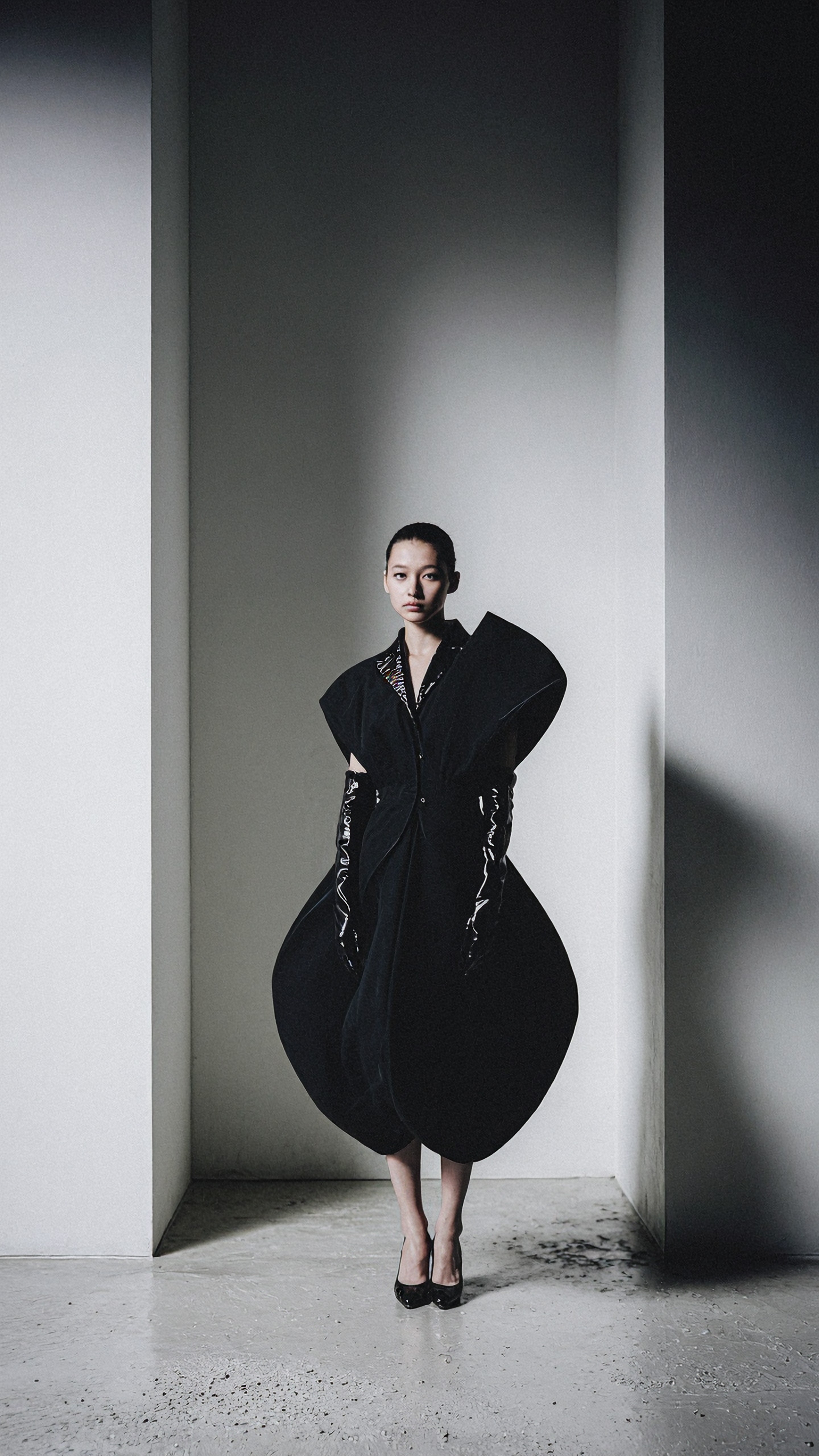
What makes editorial prompts succeed
Editorial prompts need a concept that can be described in one sentence. If you cannot summarize the visual idea clearly, the generated image often becomes indecisive.
A useful formula is:
1. Core wardrobe direction: tailoring, resort, evening, youth street-luxe, minimal black dress 2. Emotional tone: reserved, romantic, severe, nostalgic, playful 3. Visual setting: hotel corridor, rooftop garden, concrete set, gallery space 4. Image behavior: cover portrait, full-length spread, dynamic motion shot, seated beauty crop
Side-by-side differences to consider before prompting
1. Pose direction
- Studio: controlled posture, front-facing, seated beauty pose, precise hands
- Street: walking, turning, interacting with objects, more natural asymmetry
- Editorial: stylized shape, stronger gesture, often designed for layout impact
2. Lighting tolerance
- Studio: exact and repeatable
- Street: responsive to weather, time, and ambient color contamination
- Editorial: flexible, often more dramatic or interpretive
3. Wardrobe readability
- Studio gives the clearest garment read.
- Street gives the most relatable styling context.
- Editorial gives the strongest brand mood, but sometimes less practical garment clarity.
4. Background role
- Studio background supports the model quietly.
- Street background proves the lifestyle context.
- Editorial background can become part of the concept itself.
Building better prompts for Korean fashion model images
Regardless of style, the strongest prompts usually specify six things clearly:
- The exact wardrobe silhouette
- Hair and makeup direction
- The emotional expression
- Camera and lens behavior
- Light source and quality
- Environment with cultural and visual specificity
You do not need to overload every prompt, but you should avoid leaving all of those choices open.
Topic: Korean studio-to-editorial hybrid portrait in powder blue suiting
Genre: Fashion Editorial
Camera: Sony A1
Lens: 50mm f/1.2
Lighting: Softbox key light with gentle edge light
Location: Pale blue studio set with curved cyclorama wall
Style: Korean magazine cover
Final Prompt: Korean fashion model wearing powder blue oversized suiting with a cropped bandeau top, sleek straight hair, glossy nude makeup, standing in a pale blue cyclorama studio set with a subtle curved wall, shoulders angled slightly toward camera, composed confident expression, softbox key light with a gentle edge light separating the silhouette, Sony A1 look, 50mm f/1.2 modern fashion sharpness with shallow depth, monochromatic styling, clean but editorial Korean magazine-cover composition, smooth tonal transitions, premium tailoring detail, contemporary cool mood with restrained luxury
Topic: Korean café district street editorial with trench coat and knitwear
Genre: Lifestyle Portrait
Camera: Canon EOS R6 Mark II
Lens: 28mm f/2
Lighting: Late afternoon golden hour
Location: Garosu-gil café district with warm storefront glass reflections
Style: Cinematic travel
Final Prompt: Korean fashion model in a light beige trench coat layered over a soft cream knit top and dark straight jeans, carrying a paper coffee cup while walking through the Garosu-gil café district, relaxed natural smile, late afternoon golden hour reflecting from storefront glass onto the face, Canon EOS R6 Mark II look, 28mm f/2 wide environmental framing, warm tan and honey color palette, elegant urban lifestyle styling, autumn leaves near the curb, busy but tasteful Seoul background blur, candid editorial storytelling, realistic movement and premium street-fashion detailChoosing the right style for your workflow
If your goal is product clarity, start with studio.
If your goal is relatable fashion context, start with street.
If your goal is brand storytelling or visual identity, start with editorial.
In many AI workflows, the best approach is to generate all three. A single collection can be explored as:
- studio packshots for internal review,
- street-style concepts for social content,
- editorial hero images for launch visuals.
This is especially helpful for fashion teams, content designers, and solo creators who need multiple campaign directions before production.
Common mistakes to avoid
Mixing incompatible signals
If you ask for sterile studio lighting, chaotic city motion, and luxury campaign stillness in one image, the result may feel confused. Blend categories carefully.
Using generic wardrobe language
"Stylish clothes" is too weak. Use silhouettes, materials, and colors: cropped bouclé jacket, charcoal pleated skirt, satin camisole, wide-leg wool trousers.
Forgetting composition
Prompting wardrobe and location is not enough. Mention if you want a beauty crop, a three-quarter portrait, or a full-length cover frame.
Ignoring cultural specificity
If the target is Korean fashion imagery, details like Seoul districts, understated styling balance, grooming choices, and magazine sensibility help the output feel intentional rather than generic.
Final takeaway
Studio, street, and editorial are not interchangeable labels. They are different systems for directing attention. Studio sharpens product and beauty clarity. Street builds everyday credibility and urban mood. Editorial creates narrative and visual identity.
For Korean fashion model images, choosing the right style early makes prompt writing easier and results more consistent. Start by deciding what the image must communicate first, then build the camera, lighting, location, and styling around that goal. The prompts above are designed to be production-ready, but the deeper lesson is simple: style choice is creative strategy, not decoration.