Denim Outfit Ideas America Today: Testing Denim-on-Denim, Wide-Leg, and Clean Minimal Looks in AI Images 한국어 요약
이 페이지는 ZView Space의 영어 원문을 한국어 검색 사용자도 이해할 수 있도록 정리한 SEO 요약입니다. 핵심은 단순한 얼굴 중심 이미지가 아니라 패션 에디토리얼, 룩북, 아웃핏, 프롬프트 테스트, 이미지 생성 워크플로우를 실제로 어떻게 구성할지입니다.
핵심 요약
- 원문 주제: Denim Outfit Ideas America Today: Testing Denim-on-Denim, Wide-Leg, and Clean Minimal Looks in AI Images
- 목적: AI 이미지 생성에서 outfit, silhouette, fabric, pose, location, camera framing을 더 명확하게 설계합니다.
- 활용 범위: Z-Image Turbo, Krea2 Turbo, Qwen Image, Anima, SeedVR2 같은 이미지 생성 및 업스케일 워크플로우에 적용할 수 있습니다.
- SEO 관점: 제목, 설명, 이미지 alt, 프롬프트 예시가 실제 검색 의도와 맞아야 색인 가능성이 높아집니다.
한국어 사용자를 위한 체크포인트
1. 프롬프트가 얼굴 묘사에만 머물지 않고 전체 스타일과 의상 구성을 설명하는지 확인합니다. 2. 패션 이미지라면 상의, 하의, 아우터, 신발, 액세서리, 소재감, 촬영 장소를 분리해서 씁니다. 3. 생성 결과는 바로 게시하지 말고 디테일, 손, 의상 형태, 배경 일관성, 이미지 품질을 비교합니다. 4. 글 본문에는 실제 테스트 기준과 실패를 줄이는 방법이 들어가야 검색엔진에서 얇은 콘텐츠로 보일 가능성이 줄어듭니다.
원문 미리보기
This test is about denim outfit ideas America today readers are actually searching for right now: the easy double denim look, the wide leg jeans outfit that dominates street style feeds, and the cleaner minimal denim direction showing up in lookbooks and retai
---
This test is about denim outfit ideas America today readers are actually searching for right now: the easy double-denim look, the wide-leg jeans outfit that dominates street-style feeds, and the cleaner minimal denim direction showing up in lookbooks and retail imagery. Instead of writing a broad trend summary, I ran these styles as image-generation scenarios to see which visual ingredients hold up, which fail, and how prompt structure changes the result.
The useful takeaway is not just which denim trend looks current. It is which prompt logic makes the outfit readable as a trend-driven American fashion image rather than a generic "person in jeans" output.
What to know first
- Wide-leg denim was the most reliable trend signal in this test because silhouette reads fast, even in imperfect generations.
- Denim-on-denim produced the most failures because models often merge jacket and jeans into one flat blue mass.
- Clean minimal denim outfits looked the most commercial, but also the easiest for models to over-simplify into bland catalog shots.
- If you want trend clarity, anchor prompts with shot type + silhouette + shoe choice + bag + location.
- For stronger outfit planning, it helps to iterate in [Prompt Lab](/promptlab) and compare finals in the [Gallery](/gallery).
Test setup
In this test, I generated fashion-led images around three trend directions tied to US fashion trends and American streetwear denim:
1. Denim on denim outfit 2. Wide leg jeans outfit 3. Minimal denim outfits
I planned the prompts as if building an editorial package for inspiration search intent, not ecommerce-only product pages. That meant testing:
- full-body outfit readability
- denim texture separation
- hem length and fit accuracy
- shoes and accessories as trend markers
- New York and US retail/street context
- whether the outfit felt current rather than generic
The workflow here fits best if you are creating inspiration boards, trend visuals, or style explainers with [Create](/create). If you need post-fix texture cleanup, denim stitching and whiskering often benefit from an [Upscaler](/upscaler) pass.
The scenario: trying to visualize what Americans are wearing now
The specific use case was simple: produce a set of images that would help someone compare the denim outfits trending in America today without making every result look like the same blue-jeans stock photo.
That is harder than it sounds. Denim is visually familiar, so image models often default to safe, dated combinations: skinny jeans, basic blue jacket, white tee, vague city sidewalk. Those outputs are usable only if the goal is generic casualwear. They are weak if the searcher wants trend-driven inspiration.
Why denim trends are difficult for image models
Fashion images fail when the model understands "jeans" but not the styling system around the jeans. In this test, the recurring weak points were:
- silhouette collapse: wide-leg jeans narrow into straight-leg cuts
- denim blending: jacket and jeans lose separation in double-denim looks
- styling drift: minimal outfits gain random belts, jewelry, or loud sneakers
- hem and shoe errors: trouser length hides the intended fit
- retail/editorial confusion: a lookbook prompt drifts into lifestyle portrait framing
Denim especially exposes whether the model can handle fabric hierarchy. The image has to show weight, wash, seams, pocket placement, stack, drape, and contrast between pieces. If those details disappear, the trend signal disappears too.
First pass: the generic prompt and what it revealed
My first attempt used broad language like "trendy American denim outfit" and "streetwear jeans look." The results were clean but not current. Most images leaned into safe mid-blue jeans, white sneakers, and a cropped jacket with no strong silhouette story.
The main lesson: trend terms alone do not force a model into the right fashion structure. I needed the prompt to specify the outfit logic the way a fashion editor would brief a shoot.
Test 1: broad American streetwear denim prompt
This first prompt checks whether the model can infer current denim outfit ideas from a loose trend phrase. It usually reveals how much silhouette information the model needs.
Topic: American streetwear denim trend overview
Genre: Street Style
Camera: Canon EOS R5
Lens: 35mm f/2
Lighting: Overcast diffusion
Location: New York SoHo sidewalk with storefront reflections
Style: Contemporary street-style reportage
Final Prompt: street-style full body fashion image of a current American denim outfit on a New York SoHo sidewalk, visible full look from head to toe, layered casual styling with denim as the main subject, modern streetwear attitude, full outfit readability, shoes, bag, accessories, realistic sidewalk context, overcast soft light, candid walking pose, cool neutral city palette, documentary fashion composition, Canon EOS R5 look, 35mm lens, emphasis on garment fit and silhouette rather than portrait beauty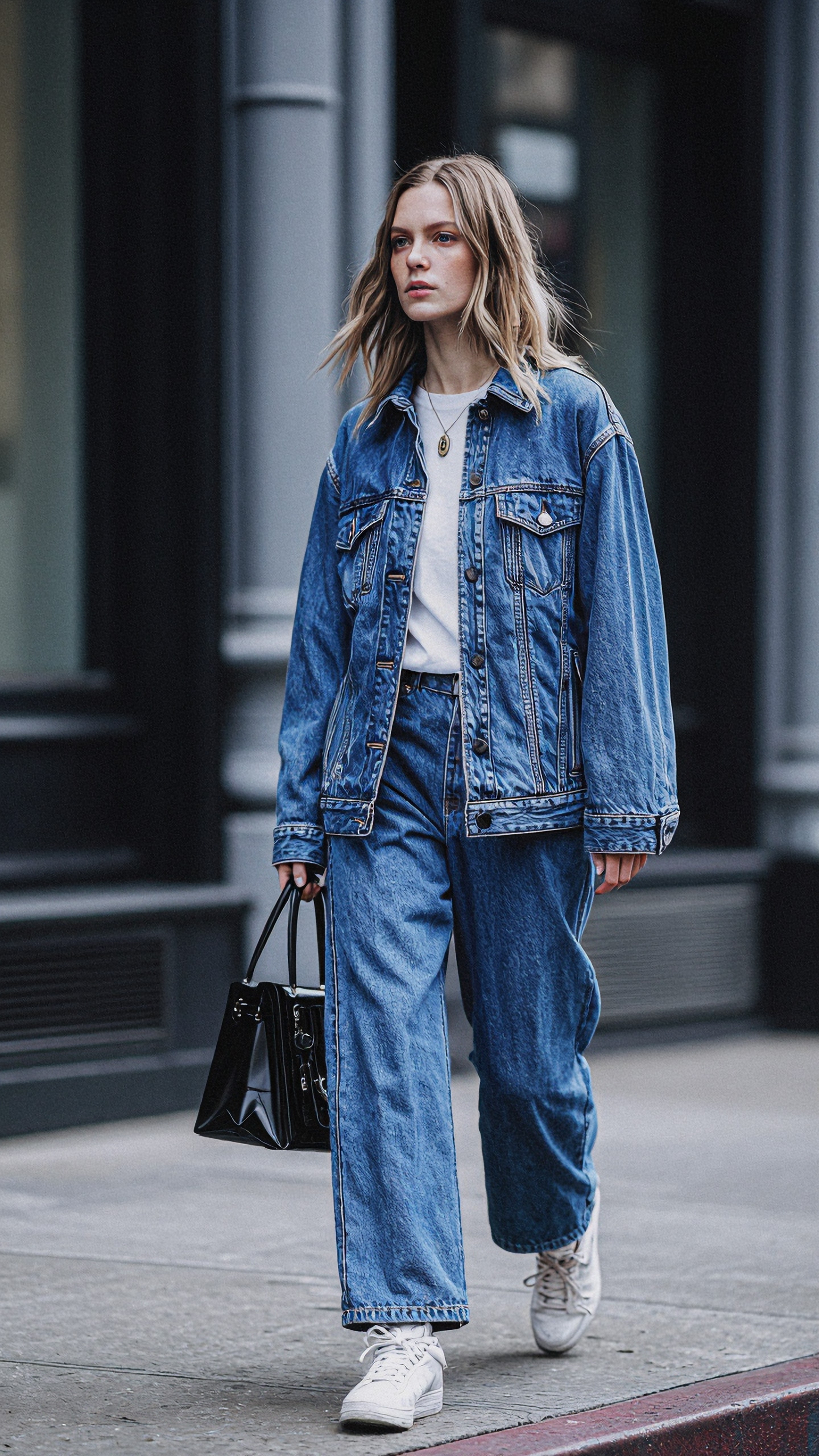
What to inspect: does the output commit to a specific denim trend, or does it fall back to generic jeans-and-jacket styling? Also check whether the full-body framing actually preserves shoes and hem shape.
The strongest result from this broad pass had good city context but weak trend specificity. It looked plausible, not directional.
The adjustment that improved the output
The improvement came from narrowing each image to one clear denim idea and attaching visible outfit decisions: rise, leg shape, wash contrast, footwear, bag shape, layer order, and shot type.
Once the prompt said "street-style full body" or "head-to-toe lookbook", plus named the silhouette and styling balance, the outputs improved immediately. The model stopped inventing random fashion noise and started respecting the clothes as the hero.
Case 1: Denim on denim outfit works when the washes are separated
The denim-on-denim trend is active in America today, but not every version reads current. The best outputs used either a strong wash contrast or a clear shape contrast: oversized trucker jacket with relaxed jeans, cropped denim shirt with puddling wide-leg jeans, or structured indigo top with faded lower half.
The weak point was tonal sameness. If jacket and jeans matched too closely, the model flattened the look and lost seam detail.
Test 2: contrast-wash double denim street style
This prompt is meant to force separation between upper and lower denim pieces while keeping the look wearable. It tests whether contrast in wash and proportion prevents the dreaded single-blue-blob problem.
Topic: Denim on denim outfit with contrast wash separation
Genre: Street Style
Camera: Nikon Z8
Lens: 40mm f/2
Lighting: Late afternoon natural light
Location: New York Lower East Side street corner with parked taxis and brick buildings
Style: American fashion week street-style realism
Final Prompt: street-style full body shot of a denim on denim outfit trending in America today, oversized medium-wash denim trucker jacket layered over a white rib tank, high-rise faded wide-leg jeans in a lighter wash, brown leather belt, pointed ankle boots, structured shoulder bag, small silver hoops, complete outfit visible head to toe, confident walking pose at a New York Lower East Side corner, late afternoon city light, texture-rich denim seams and pockets, strong wash contrast between jacket and jeans, modern American streetwear denim mood, Nikon Z8 realism, 40mm documentary framing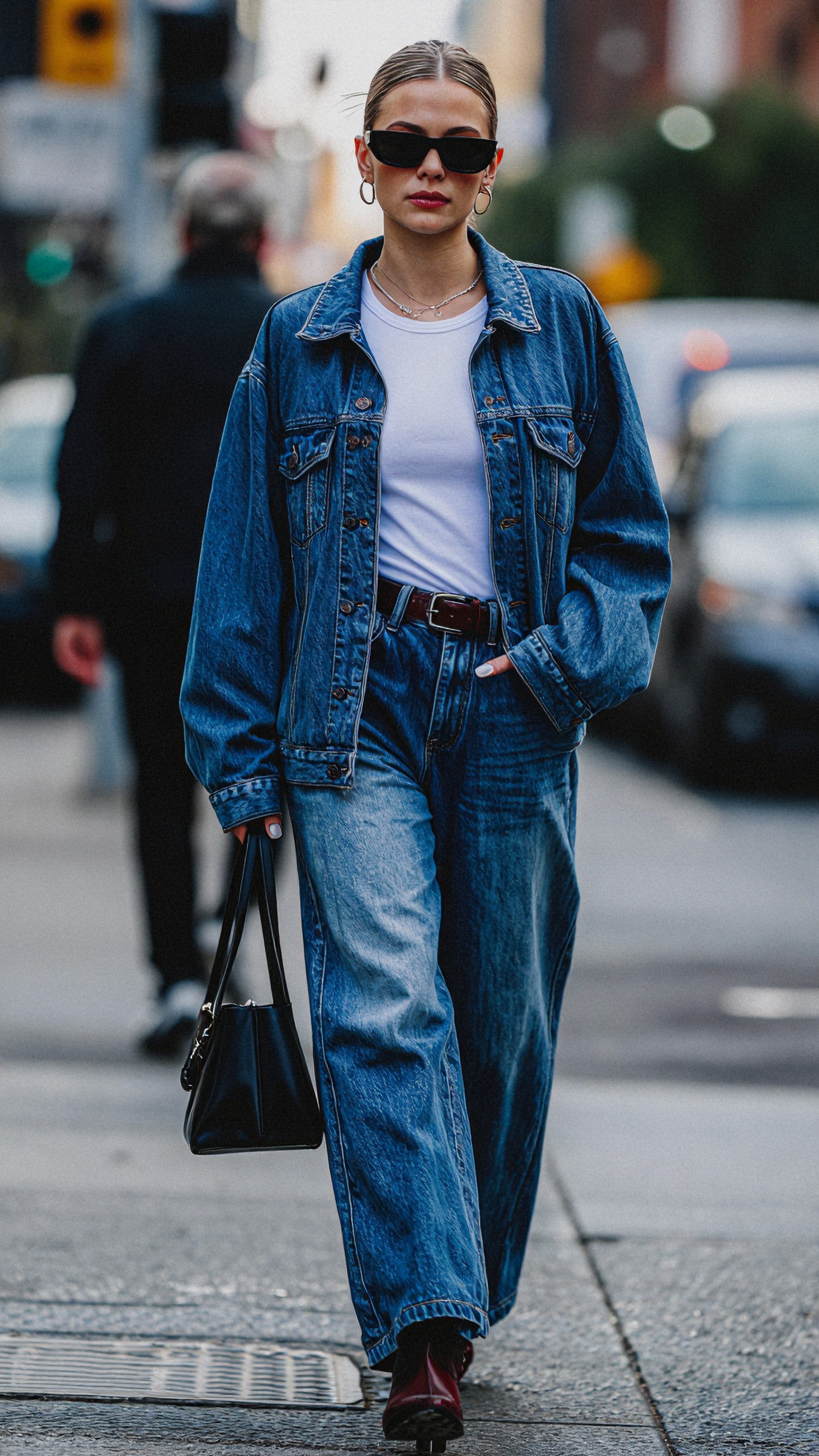
What to inspect: the jacket and jeans should read as separate garments immediately. Check pocket placement, cuff structure, and whether the boots remain visible under the hem.
This setup produced one of the most convincing trend-led images in the whole run. The wash contrast did most of the work.
Test 3: cleaner editorial double denim
This second denim-on-denim prompt checks if the model can hold a more polished silhouette without making it look stiff or dated. It is useful when you want magazine-style inspiration rather than candid streetwear.
Topic: Refined denim on denim outfit for editorial inspiration
Genre: Fashion Editorial
Camera: Sony A7R V
Lens: 50mm f/2.2
Lighting: Soft directional window light
Location: Industrial loft studio in Manhattan with pale concrete floor and muted backdrop
Style: Minimal American fashion editorial
Final Prompt: three-quarter outfit editorial featuring a refined denim on denim look, cropped dark indigo denim shirt with visible topstitching, matching but slightly deeper indigo wide-leg jeans, sleek black loafers, slim leather tote, delicate gold watch, styling focused on clean lines and full outfit logic, model standing with relaxed editorial posture, Manhattan loft studio, soft window light shaping the denim texture, minimal set, quiet palette of indigo black cream and steel gray, Sony A7R V detail, 50mm fashion framing, premium fabric realism, strong garment separation, current US fashion trend mood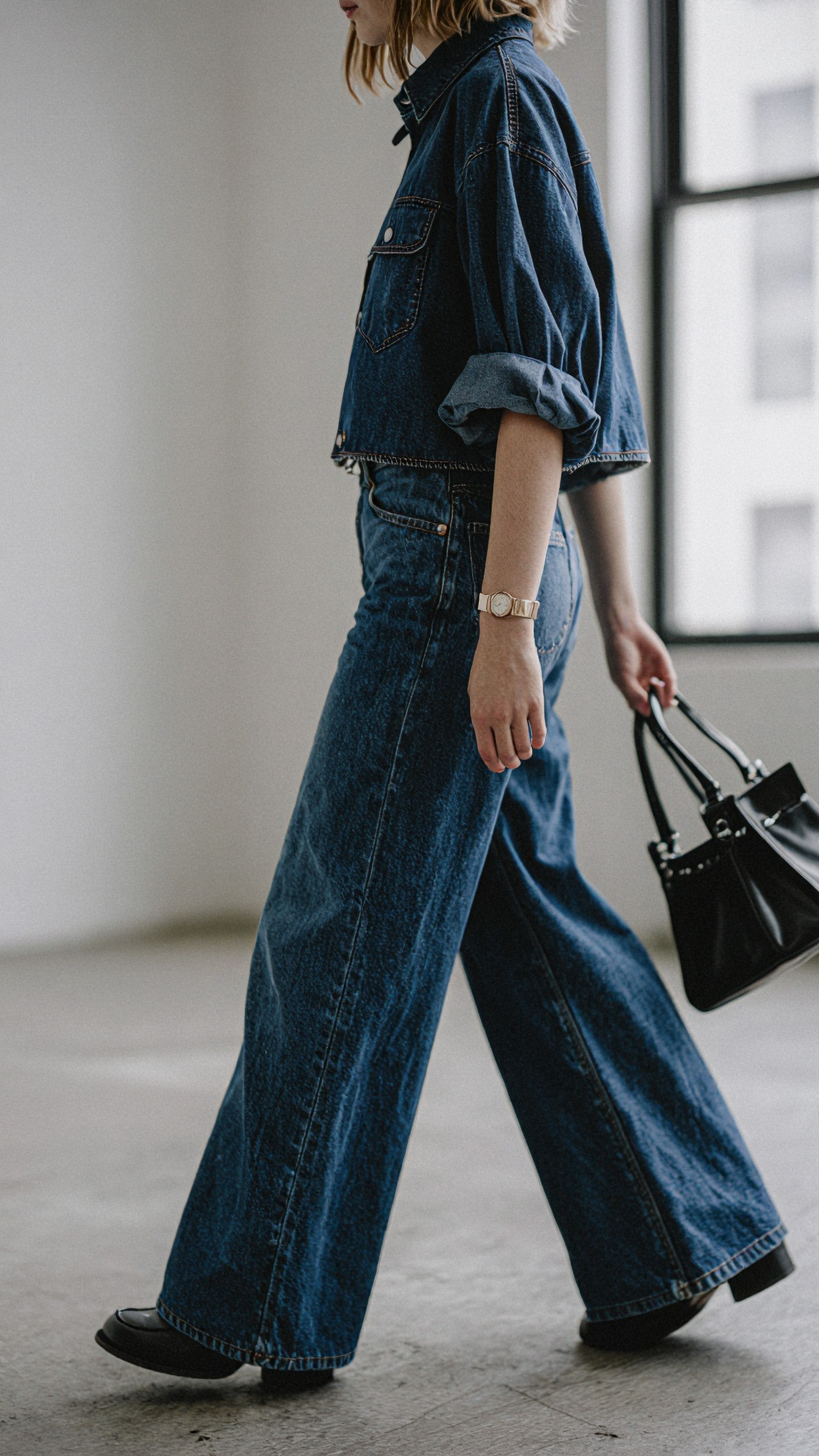
What to inspect: look for clean topstitching, believable drape at the waist, and whether the loafers support the polished direction. If the shirt turns into a jumpsuit-like shape, the prompt needs more garment separation.
Case 2: Wide-leg jeans outfit was the easiest trend signal to lock
If the goal is denim outfit ideas that instantly feel current, wide-leg jeans are the easiest anchor. In this test, wide-leg denim gave the model a strong silhouette to commit to. Even average outputs still felt closer to trend reality than average double-denim outputs.
What improved the images was specifying rise, break, shoe, and upper-body balance. Without those, the model sometimes gave a wide jean with an outdated top.
Test 4: everyday wide-leg jeans outfit in NYC
This prompt tests whether a practical, wearable wide-leg outfit can still read as directional. It is strong for inspiration pages because it does not rely on runway styling.
Topic: Wide leg jeans outfit for everyday American streetwear
Genre: Street Style
Camera: Fujifilm GFX100S
Lens: 45mm f/2.8
Lighting: Bright overcast daylight
Location: West Village sidewalk with café frontage and crosswalk texture
Style: Elevated casual streetwear editorial
Final Prompt: street-style full body fashion shot of a wide leg jeans outfit trending in America today, high-rise dark wash wide-leg jeans with long clean hem, fitted white tee tucked in, camel suede belt, cropped black leather jacket, retro sneakers, soft slouch shoulder bag, sunglasses, complete outfit visible from head to toe, walking across a West Village crosswalk, bright overcast daylight, modern American streetwear denim styling, emphasis on silhouette balance between fitted top and wide lower half, realistic fabric weight and movement, Fujifilm GFX100S look, editorial but wearable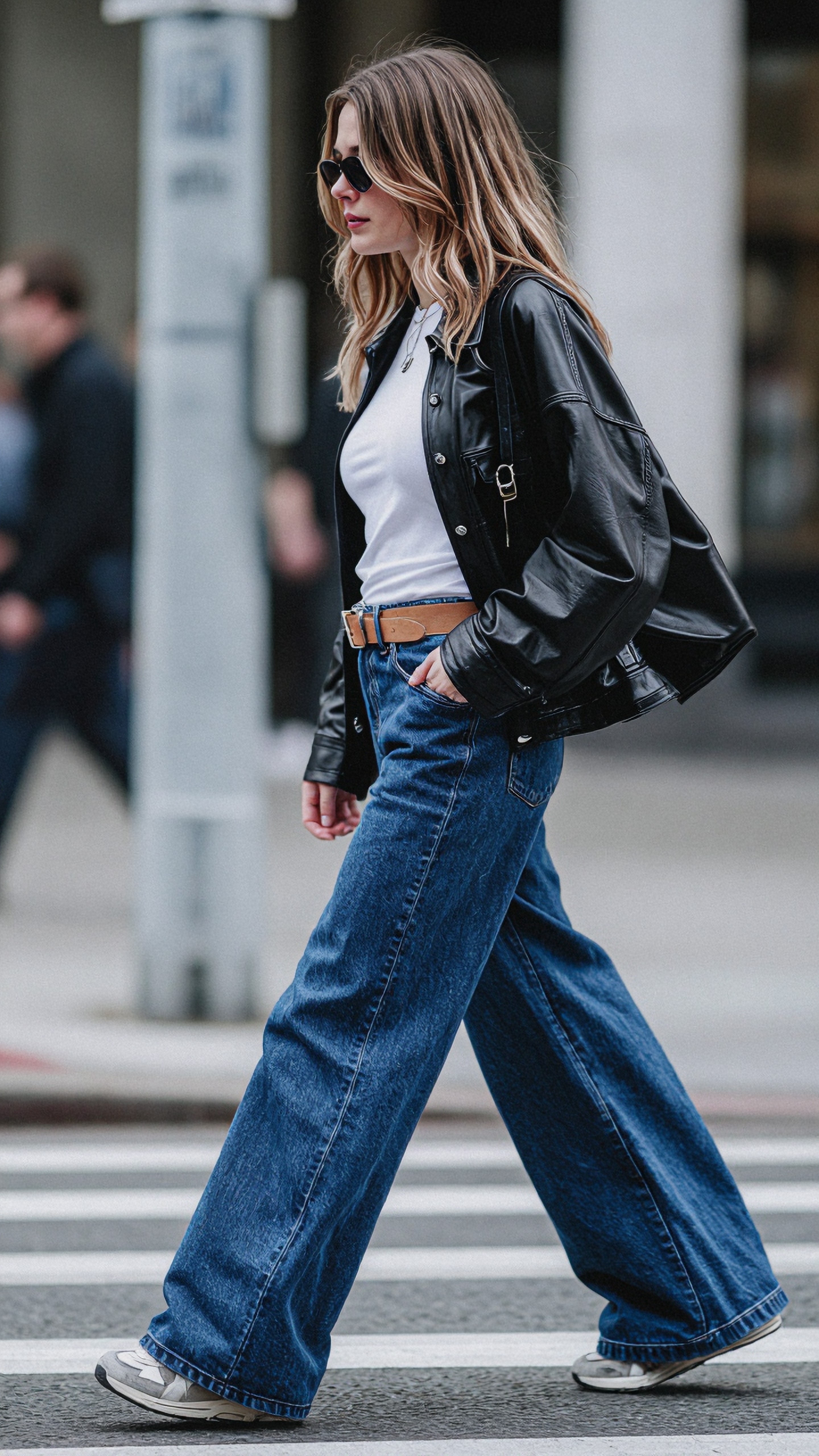
What to inspect: the hem should feel intentionally long but not melted into the shoes. The jacket must stay cropped enough to preserve the wide-leg proportion.
Test 5: lookbook version with a cleaner silhouette read
This prompt checks the same trend in a more controlled lookbook environment. It is useful when street backgrounds distract from the garment shape.
Topic: Head-to-toe lookbook for wide leg jeans outfit
Genre: Fashion Lookbook
Camera: Canon EOS R3
Lens: 70mm f/4
Lighting: Large softbox key light with gentle fill
Location: Minimal studio cyc wall in warm off-white
Style: Clean commercial lookbook
Final Prompt: head-to-toe lookbook image showing a wide leg jeans outfit with current US fashion proportions, full body centered composition, medium-blue ultra-wide-leg jeans, crisp tucked-in poplin shirt with sleeves rolled once, slim black belt, heeled ankle boots, compact crossbody bag, minimal jewelry, clear negative space around the figure, off-white cyc studio, softbox lighting for honest denim texture and seam detail, modern catalog-meets-editorial styling, Canon EOS R3 clarity, accurate full silhouette, polished but not sterile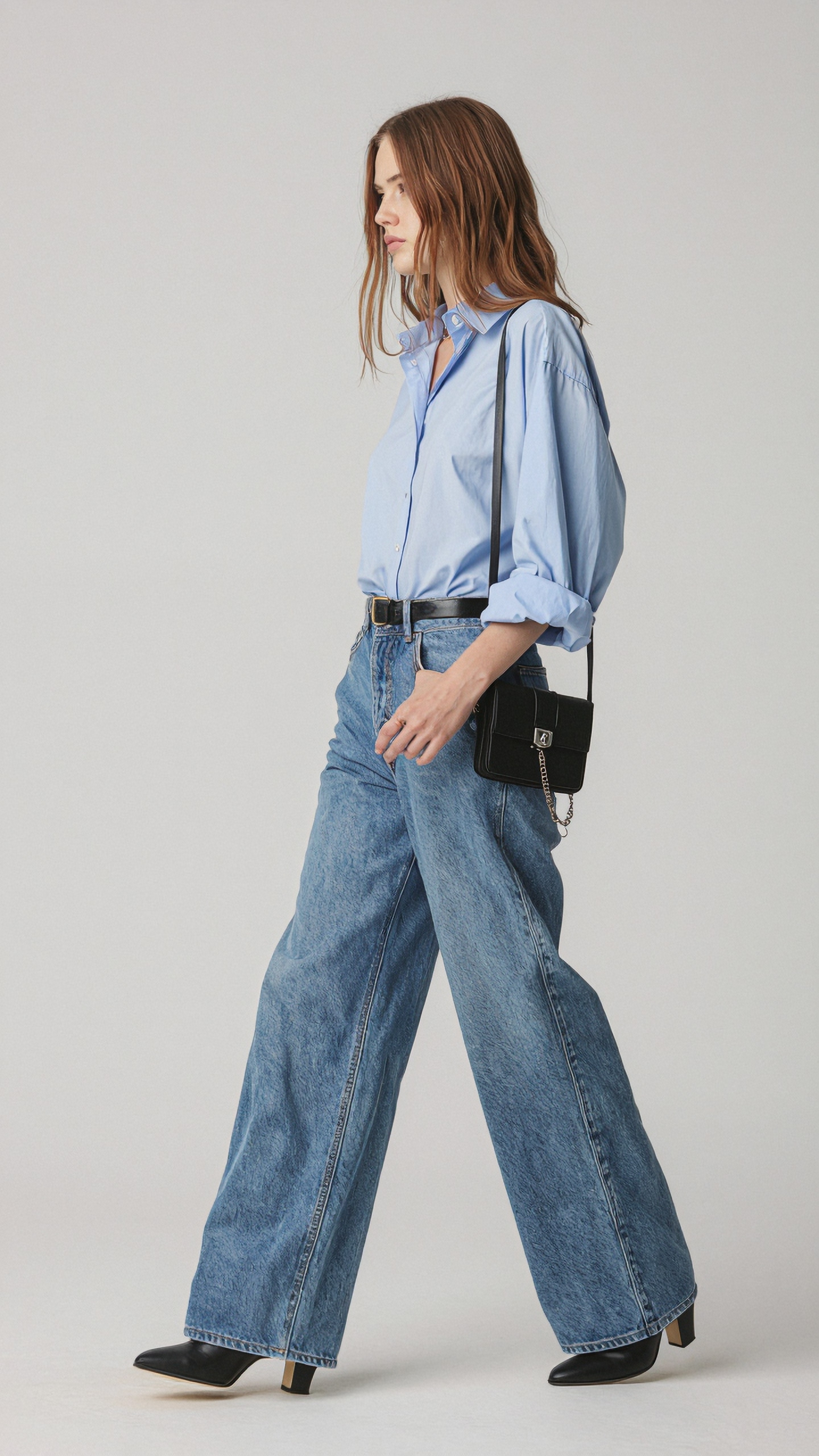
What to inspect: this should give a readable silhouette with fewer environmental distractions. Watch for unnatural stance, warped feet, or jeans that narrow suddenly at the knee.
Case 3: Clean minimal denim outfits looked strongest for retail and editorial use
Minimal denim outfits are less loud, but they convert well into controlled AI images because they reduce styling conflict. The risk is the model may flatten the image into something too plain, too corporate, or too old.
The adjustment that helped was adding texture contrast instead of color noise: raw denim with smooth knitwear, ecru denim with black leather, or washed blue denim with precise tailoring.
Test 6: minimal denim outfit for editorial retail feel
This prompt is designed to test whether simple styling can still feel current. It also checks if the model respects clean lines without draining all personality from the image.
Topic: Clean minimal denim outfit with modern American retail styling
Genre: Fashion Editorial
Camera: Leica SL2-S
Lens: 50mm f/2
Lighting: Soft skylight with controlled bounce
Location: Minimal downtown retail interior with brushed steel rail and pale oak floor
Style: Quiet luxury commercial editorial
Final Prompt: three-quarter outfit editorial of a clean minimal denim outfit, straight-to-wide dark indigo jeans with crisp front line, fine black knit top, long cream wool coat worn open, black square-toe boots, structured leather tote, subtle silver jewelry, modern downtown American retail setting with pale oak floor and brushed steel fixtures, calm expression, styling focused on silhouette, texture, and clean layering, soft skylight, restrained luxury palette, Leica SL2-S realism, 50mm balanced framing, denim remains the visual anchor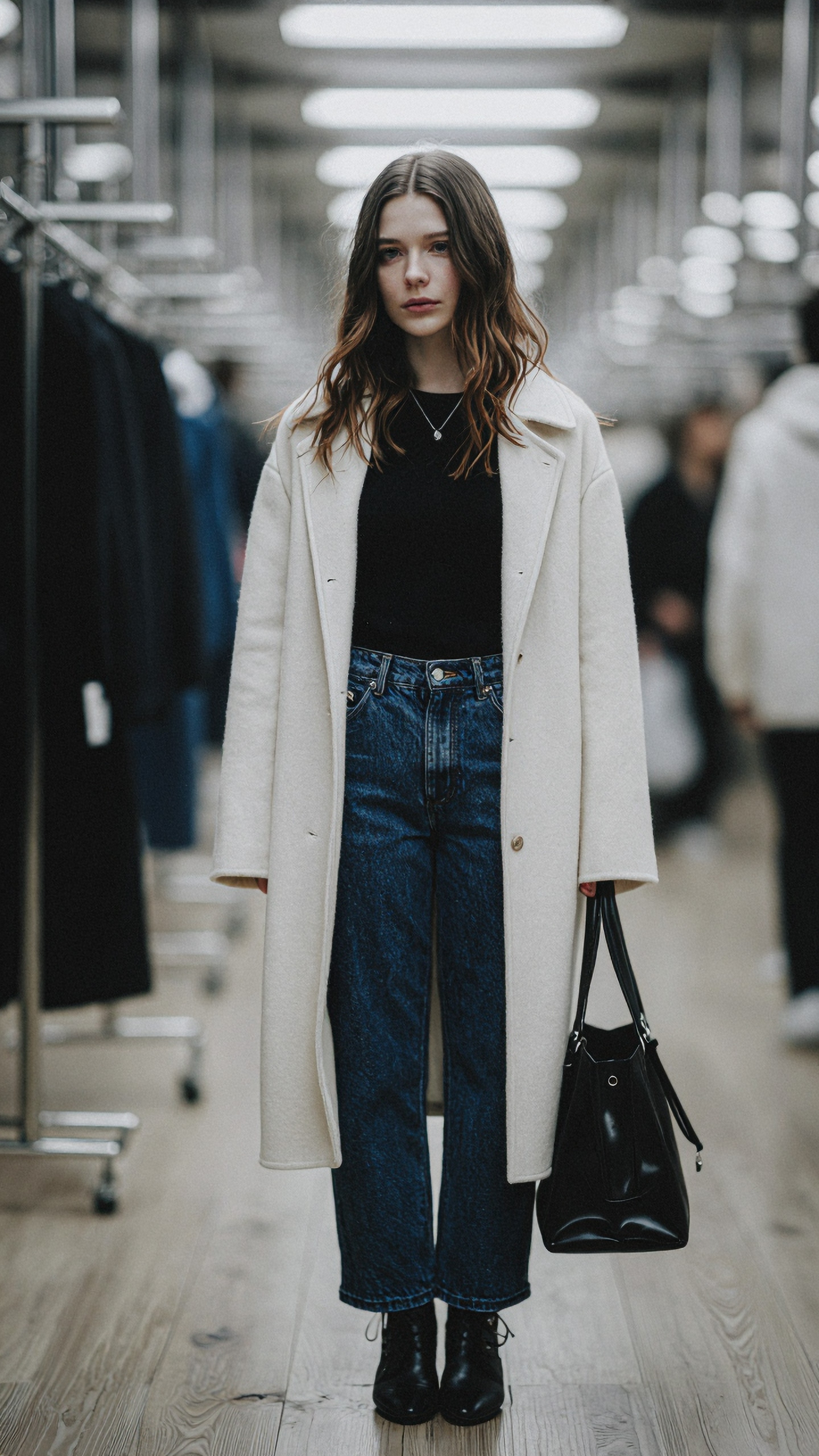
What to inspect: make sure the coat does not hide the denim completely. The jeans should still be the outfit anchor, not just a filler garment under outerwear.
Test 7: product flat lay for minimal denim outfit planning
This prompt checks whether the styling system works without a person. It is useful for article graphics, shopping guidance, or mood-board support.
Topic: Minimal denim outfit flat lay planning image
Genre: Product Editorial
Camera: Phase One XF IQ4
Lens: 80mm f/4
Lighting: Overhead diffused studio light
Location: Neutral stone tabletop studio set
Style: Premium retail styling board
Final Prompt: product flat lay of a clean minimal denim outfit trending in America today, dark straight-to-wide denim jeans, fine black knit tee, cream wool coat, black square-toe ankle boots, structured black leather tote, silver hoop earrings, slim belt, folded neatly with visible styling hierarchy on a neutral stone surface, overhead composition, premium retail editorial layout, fabric textures clear and tactile, restrained palette, Phase One detail, luxury merchandising feel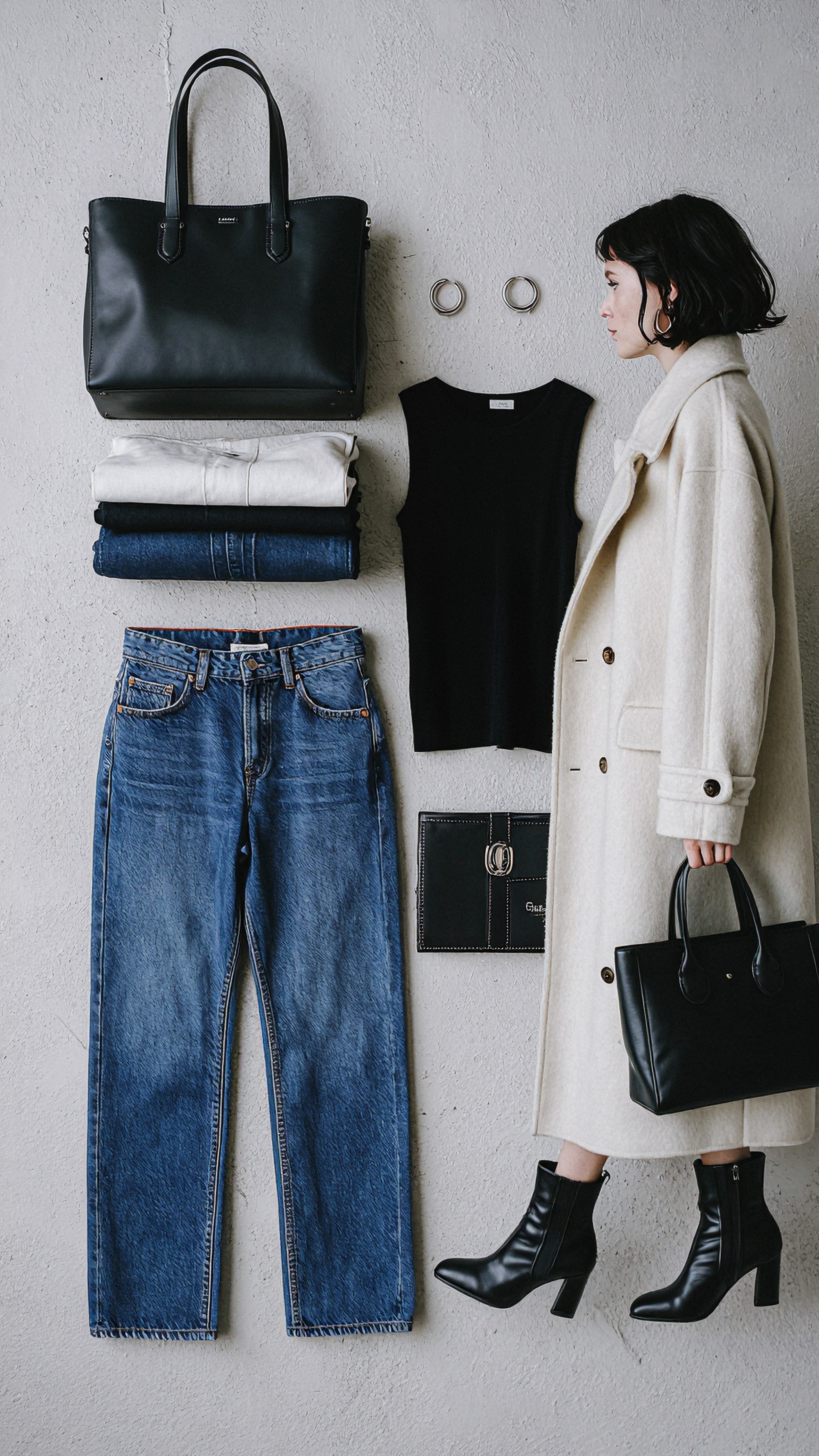
What to inspect: the item scale should make sense, and accessories should support the denim story rather than overpower it. This type of prompt often reveals if your outfit concept is coherent before you render a model shot.
Comparison table: which denim direction worked best in this test?
| Trend direction | Best use case | Strongest visual cue | Main failure risk | Prompt detail that mattered most | |---|---|---|---|---| | Denim on denim outfit | Street-style inspiration, trend pieces, editorial comparisons | Wash contrast and jacket-to-jean separation | Flat blue mass, jumpsuit confusion | Specify different washes and distinct top/bottom construction | | Wide leg jeans outfit | Everyday inspiration, lookbooks, trend explainers | Leg width and proportion with fitted or cropped top | Hem distortion, outdated top pairing | Define rise, break, shoe visibility, and top length | | Minimal denim outfits | Retail editorials, lookbooks, flat lays, capsule style guides | Clean layering and texture contrast | Blandness, loss of denim focus | Keep denim as anchor and use quiet but visible accessories |
A useful stress test: storefront and trend merchandising
Because this topic is inspiration-led, I also tested whether the trend could survive outside a model-centered image. This matters if you are building supporting visuals for trend articles, shopping pages, or visual explainers.
Test 8: storefront display for American denim trends
This prompt checks merchandising clarity. It is helpful for seeing whether your styling reads as a trend story even without a person wearing it.
Topic: American denim trend storefront display
Genre: Retail Visual Merchandising
Camera: Sony A1
Lens: 24-70mm at 35mm f/5.6
Lighting: Mixed storefront daylight and warm interior track lighting
Location: Soho fashion storefront with mannequins and folded denim wall
Style: Contemporary premium retail display
Final Prompt: storefront display presenting denim outfit ideas trending in America today, three mannequins styled in distinct looks: contrast-wash denim on denim, dark wide-leg jeans with fitted white tee and cropped leather jacket, clean minimal indigo denim with cream outerwear, visible shoes bags belts and accessories, folded denim stacks and signage in background, Soho storefront glass reflections, warm interior track lights mixed with daylight, premium visual merchandising, strong outfit separation, trend-led American fashion retail mood, Sony A1 crisp detail, 35mm storefront composition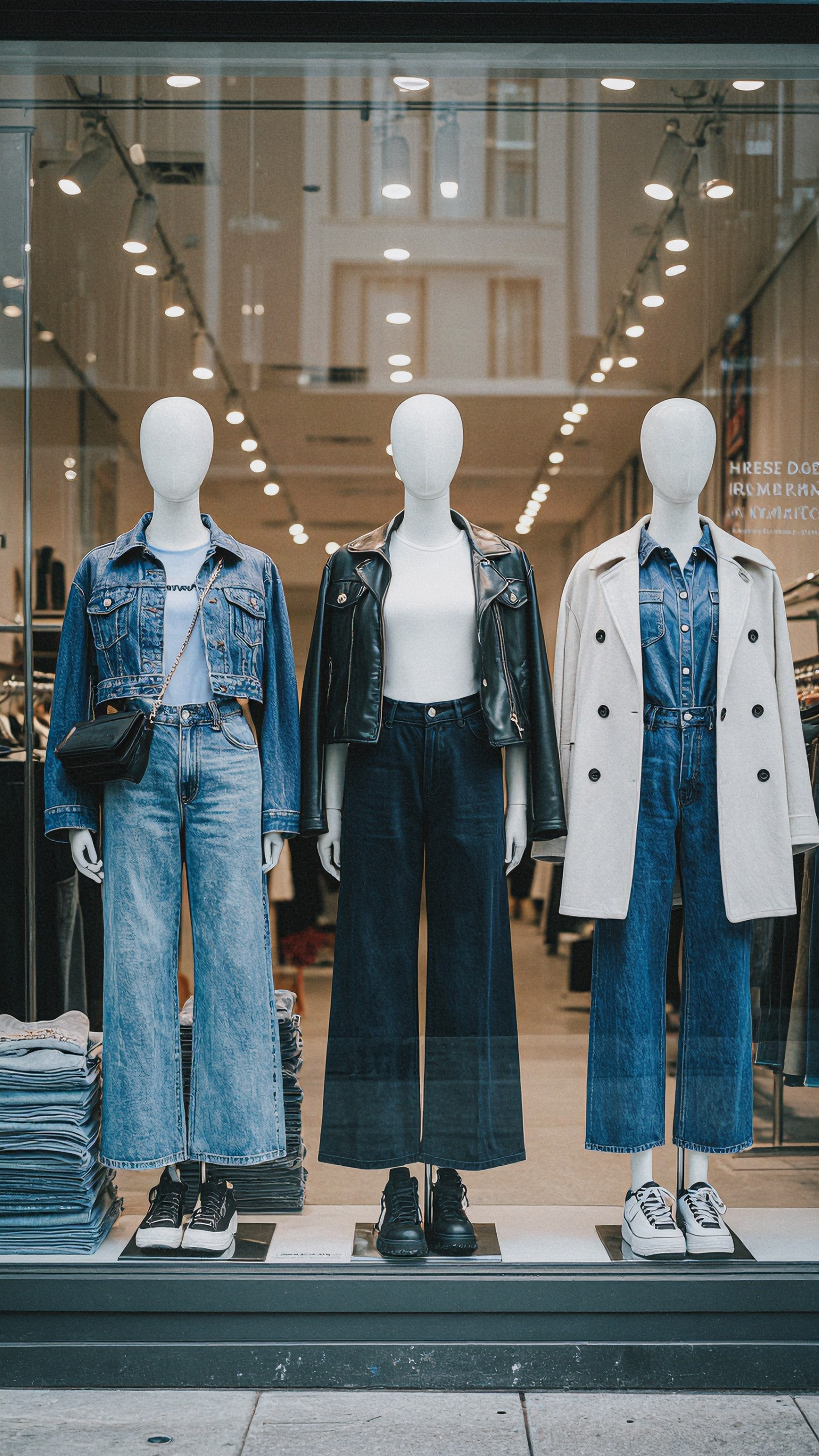
What to inspect: each mannequin should read as a separate styling idea at a glance. If all three merge into one generic denim story, the prompt needs stronger differentiation.
Strengths I saw across the workflow
A few things worked consistently well in this fashion test:
Full-body shot types improved outfit logic
When the prompt began with a clear fashion shot type like street-style full body or head-to-toe lookbook, the model treated the outfit as the subject. That sounds obvious, but many weak fashion outputs happen because the prompt still behaves like a portrait brief.
Specific shoes made the denim trend feel current
Pointed ankle boots, retro sneakers, loafers, and square-toe boots each changed the decade signal of the outfit. Shoes were not a minor accessory here; they told the model what kind of denim silhouette to finish.
New York context helped anchor American streetwear denim
Using SoHo, West Village, or Lower East Side settings made the trend read more like US fashion trends and less like generic urban fashion. The background does not need to dominate, but it should support the clothing logic.
Limitations and failure risks before publishing
There were still recurring issues worth catching before any result goes live.
1. Denim texture can fake quality from a distance
An image may look good on first pass but fail on zoom. Check:
- seam direction
- belt loop count
- pocket symmetry
- whiskering consistency
- hem realism
- whether the jacket placket and jean fly are both clean
If the texture is almost right but not reliable, run an [Upscaler](/upscaler) test and compare the result against the original.
2. Wide-leg jeans can become costume-wide
Some outputs exaggerated the volume until the jeans looked theatrical instead of wearable. If your search intent is inspiration, not runway fantasy, moderate the width with terms like clean hem, wearable proportion, or balanced with fitted top.
3. Minimal looks can drift into luxury-neutral sameness
A minimal denim outfit still needs one signal of now: the exact jean cut, square-toe boot, cropped jacket length, or structured tote shape. Without that, the image reads polished but not trend-aware.
4. Double denim can accidentally become a one-piece garment
This was the most common failure. If it happens, explicitly name closures, layering, and top structure: trucker jacket over rib tank, cropped shirt tucked into jeans, or visible belt separating top and bottom.
Pre-publish checklist for denim outfit inspiration images
Before publishing a generated image for this topic, I would check:
- Is the denim trend readable in under 2 seconds?
- Can I see the full outfit from shoulder line to shoe choice?
- Does the leg shape match the intended prompt?
- Are jacket and jeans clearly separate when using double denim?
- Do the accessories support the trend rather than randomize it?
- Does the setting help signal America today, especially for streetwear-led images?
- Does the image feel like fashion inspiration, not a generic portrait?
If several answers are no, revise the shot type before revising style adjectives. In this test, framing and garment logic mattered more than adding more trend words.
Transferable lesson for similar fashion topics
The biggest lesson from this case transfers easily to cargo pants, blazer styling, sneaker trend roundups, capsule wardrobe posts, and lookbook articles: the model needs a styling system, not a clothing keyword.
For fashion topics, prompt ingredients work best in this order:
1. shot type 2. silhouette 3. layering structure 4. shoes and bag 5. location/context 6. texture and palette
That is the order I would keep using inside [Create](/create) or when building variant tests across other trend-led topics in [Articles](/articles).
Practical recommendation: which denim direction should you generate first?
If your goal is trend inspiration content, here is what I would recommend:
Choose wide-leg jeans first if you need reliable trend recognition
This is the safest starting point for denim outfit ideas because the silhouette reads quickly and consistently.
Choose denim on denim if you want higher visual impact
This works best when you can spend time refining wash separation and garment boundaries. It can produce the strongest hero image, but it is less forgiving.
Choose minimal denim outfits for lookbook and retail support visuals
This is the best option for cleaner editorial packages, product stories, and capsule-style explainers. Just avoid stripping away all trend markers.
FAQ
What denim outfit ideas are trending in America today?
The most visible directions in this test were contrast-wash denim on denim, high-rise wide-leg jeans styled with fitted or cropped tops, and clean minimal indigo outfits with structured accessories.
How do I make a denim on denim outfit look current in AI images?
Use contrast in wash or shape. An oversized jacket with lighter wide-leg jeans works better than two nearly identical medium-blue pieces.
Why do wide-leg jeans generate better than other denim looks?
They give the model a strong silhouette cue. The width of the leg is easier for the model to interpret than subtler trend details like minimal styling restraint.
What is the main risk with minimal denim outfits?
They can become visually generic. Keep one strong current signal, such as dark indigo jeans, square-toe boots, or a compact structured bag.
What should I inspect most closely before publishing AI fashion images?
Check seams, hems, footwear visibility, pocket symmetry, and whether the outfit still reads as the intended trend at thumbnail size.
Conclusion
For anyone creating inspiration-led visuals around denim outfit ideas America today, this workflow is strongest when you treat the prompt like a fashion shot brief rather than a style keyword dump. The best results came from explicit full-body shot planning, clear silhouette control, and practical accessories that finished the look.
Who should use this workflow: editors, prompt builders, and creators making trend explainers, style comparisons, retail-support imagery, and fashion mood boards.
Who should avoid it: anyone expecting one generic prompt to produce dependable trend visuals across all denim categories without iteration.
The setting or prompt detail that mattered most was simple: make the outfit structure visible. In this test, the strongest result was never the one with the most adjectives. It was the one that clearly defined the denim silhouette, layering, shoes, and context from the start.