Double Denim Trend USA: Why It’s Back This Week and How Streetwear Is Changing the Look 한국어 요약
이 페이지는 ZView Space의 영어 원문을 한국어 검색 사용자도 이해할 수 있도록 정리한 SEO 요약입니다. 핵심은 단순한 얼굴 중심 이미지가 아니라 패션 에디토리얼, 룩북, 아웃핏, 프롬프트 테스트, 이미지 생성 워크플로우를 실제로 어떻게 구성할지입니다.
핵심 요약
- 원문 주제: Double Denim Trend USA: Why It’s Back This Week and How Streetwear Is Changing the Look
- 목적: AI 이미지 생성에서 outfit, silhouette, fabric, pose, location, camera framing을 더 명확하게 설계합니다.
- 활용 범위: Z-Image Turbo, Krea2 Turbo, Qwen Image, Anima, SeedVR2 같은 이미지 생성 및 업스케일 워크플로우에 적용할 수 있습니다.
- SEO 관점: 제목, 설명, 이미지 alt, 프롬프트 예시가 실제 검색 의도와 맞아야 색인 가능성이 높아집니다.
한국어 사용자를 위한 체크포인트
1. 프롬프트가 얼굴 묘사에만 머물지 않고 전체 스타일과 의상 구성을 설명하는지 확인합니다. 2. 패션 이미지라면 상의, 하의, 아우터, 신발, 액세서리, 소재감, 촬영 장소를 분리해서 씁니다. 3. 생성 결과는 바로 게시하지 말고 디테일, 손, 의상 형태, 배경 일관성, 이미지 품질을 비교합니다. 4. 글 본문에는 실제 테스트 기준과 실패를 줄이는 방법이 들어가야 검색엔진에서 얇은 콘텐츠로 보일 가능성이 줄어듭니다.
원문 미리보기
The short version: the double denim trend usa signal is real this week, but the version getting traction is not the old matching set look. In this test, the strongest images came from streetwear led styling systems: oversized jackets, washed or contrast denim,
---
The short version: the double denim trend usa signal is real this week, but the version getting traction is not the old matching-set look. In this test, the strongest images came from streetwear-led styling systems: oversized jackets, washed or contrast denim, relaxed leg lines, visible sneakers, and layered accessories that break up the denim-on-denim block. Cleaner editorial prompts still worked, but they looked less current unless the fit, wash contrast, and proportion were doing more of the work.
Rather than write a broad trend recap, I tested how AI image workflows interpret this week’s denim direction. The useful question was not just “can it make jeans on jeans outfit images?” but “which prompt logic actually produces the current US street style denim looks, and which one falls back into outdated catalog denim?”
Quick answer
- The current double denim trend reads best when the top and bottom are related, not identical.
- In this test, american streetwear denim prompts produced more trend-correct results than polished luxury-editorial prompts.
- The biggest success factor was silhouette control: boxy top, relaxed or straight leg bottom, and one non-denim breaker like a white tank, hoodie, cap, or visible belt.
- The most common failure was a flat matching wash that made the outfit look like a dated set rather than a current street style denim look.
- If you want dependable outfit ideation, build prompts in [Prompt Lab](/promptlab) first, then compare outputs in a simple gallery workflow like [Gallery](/gallery).
What I tested for this week’s denim outfit ideas
I compared two prompt directions across multiple fashion shot types:
1. Option A: streetwear-first double denim Built around New York sidewalk, off-duty styling, contrast washes, looser fit, sneakers, caps, crossbody bags, and visible layering.
2. Option B: clean editorial double denim Built around controlled fashion sets, coordinated denim pieces, cleaner lines, sharper styling, and more polished campaign framing.
Comparison criteria
I judged each output on five points:
| Criteria | What I looked for | Common failure | |---|---|---| | Trend accuracy | Did it look like current US fashion trends this week? | Outdated fitted denim set | | Silhouette clarity | Could I read the full outfit logic head to toe? | Cropped framing hid shoes or leg shape | | Wash separation | Did jacket, shirt, and jeans have useful tonal contrast? | One flat blue block | | Streetwear realism | Did accessories and stance support the look? | Styling too polished to feel current | | Garment texture | Could I see denim grain, seams, fading, distress, hardware? | Plastic-looking fabric or muddy stitching |
I used shot planning on purpose. For fashion topics, the image quality depends less on facial realism and more on whether the outfit system is visible. That meant full-body and three-quarter prompts were more useful than portrait-heavy setups.
Verdict first: streetwear is what makes the denim feel current
The strongest result was Option A, the streetwear-first workflow. It made the double denim trend usa feel timely because it introduced friction: washed trucker jacket over a plain tank, loose jeans with stacked hems, skate or retro sneakers, and accessories that interrupted the denim block.
Option B was still useful, especially for cleaner lookbook images, but it had a weak point. If the prompt did not explicitly ask for contrast in wash, proportion, and styling tension, the model often generated a too-coordinated denim set that looked retail-safe rather than trend-led.
Option A strengths: american streetwear denim reads more current
The best streetwear results had three repeatable traits:
- Fit contrast over fabric matching
- Washed, faded, or mixed-tone denim
- One visible streetwear anchor, usually sneakers, hoodie layering, cap, or utility bag
This workflow also handled trend-driven variation better. When I asked for fall denim trends, the generator naturally accepted added layers like gray hoodies, bombers under denim jackets, workwear boots, or knit beanies without losing the jeans-on-jeans idea.
The first test was meant to see whether a full-body street-style setup could keep the whole outfit legible while avoiding the “Canadian tuxedo” cliché.
Topic: Double denim trend USA streetwear outfit on a New York sidewalk
Genre: Street Style
Camera: Canon EOS R5
Lens: 35mm f/2
Lighting: Overcast diffusion
Location: Lower Manhattan sidewalk with crosswalk paint, parked cars, and muted storefronts
Style: Trend-led American streetwear editorial
Final Prompt: street-style full body shot of a trend-led double denim trend USA outfit on a Lower Manhattan sidewalk, styling-first composition, oversized faded indigo denim trucker jacket layered over a white rib tank, relaxed straight-leg medium-wash jeans with slight stacking at the hem, vintage black leather belt, gray crew socks, retro skate sneakers, navy cap, compact crossbody bag, silver chain and small hoop accessories, complete head-to-toe silhouette clearly visible, casual walking pose, denim texture and seam construction emphasized, realistic streetwear proportions, muted urban palette of indigo gray white and asphalt tones, documentary fashion framing, Canon EOS R5 look, 35mm f/2, natural city depth, clean editorial realism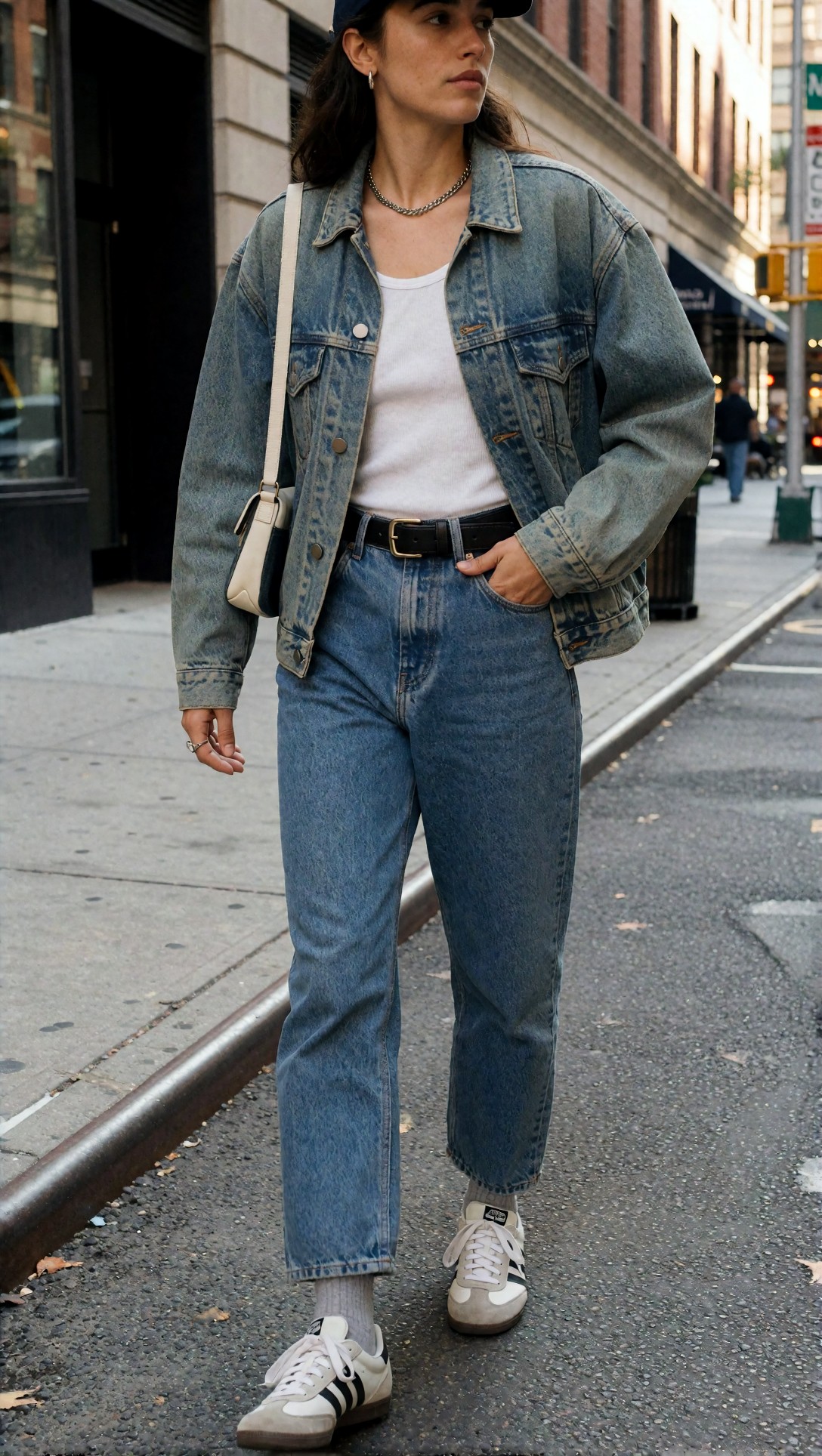
What to inspect: the wash separation between jacket and jeans should be obvious even within the same blue family. Also check whether the shoes and bag help break the denim block; when they disappear, the look feels flatter and less current.
The second test checked whether a more editorial three-quarter framing could keep the oversized proportions without turning the outfit into a generic denim ad.
Topic: Relaxed jeans on jeans outfit with contrast washes and layered basics
Genre: Fashion Editorial
Camera: Sony A7R V
Lens: 50mm f/2
Lighting: Soft natural window light with cool bounce
Location: Industrial loft studio with concrete floor and white cyc corner
Style: Clean magazine fashion story with streetwear influence
Final Prompt: three-quarter outfit editorial of a current jeans on jeans outfit, model secondary to the styling system, boxy light-wash denim overshirt worn open over a heather gray hoodie and white tank, darker washed loose-fit jeans with clean break, gum-sole sneakers, black beanie, minimal jewelry, full layering logic visible from shoulders to shoes, relaxed stance with one hand in pocket, denim grain, fading, pockets, stitching, and cuff shape sharply rendered, cool neutral palette with indigo contrast, industrial loft backdrop, sophisticated but off-duty, Sony A7R V look, 50mm f/2, magazine-ready composition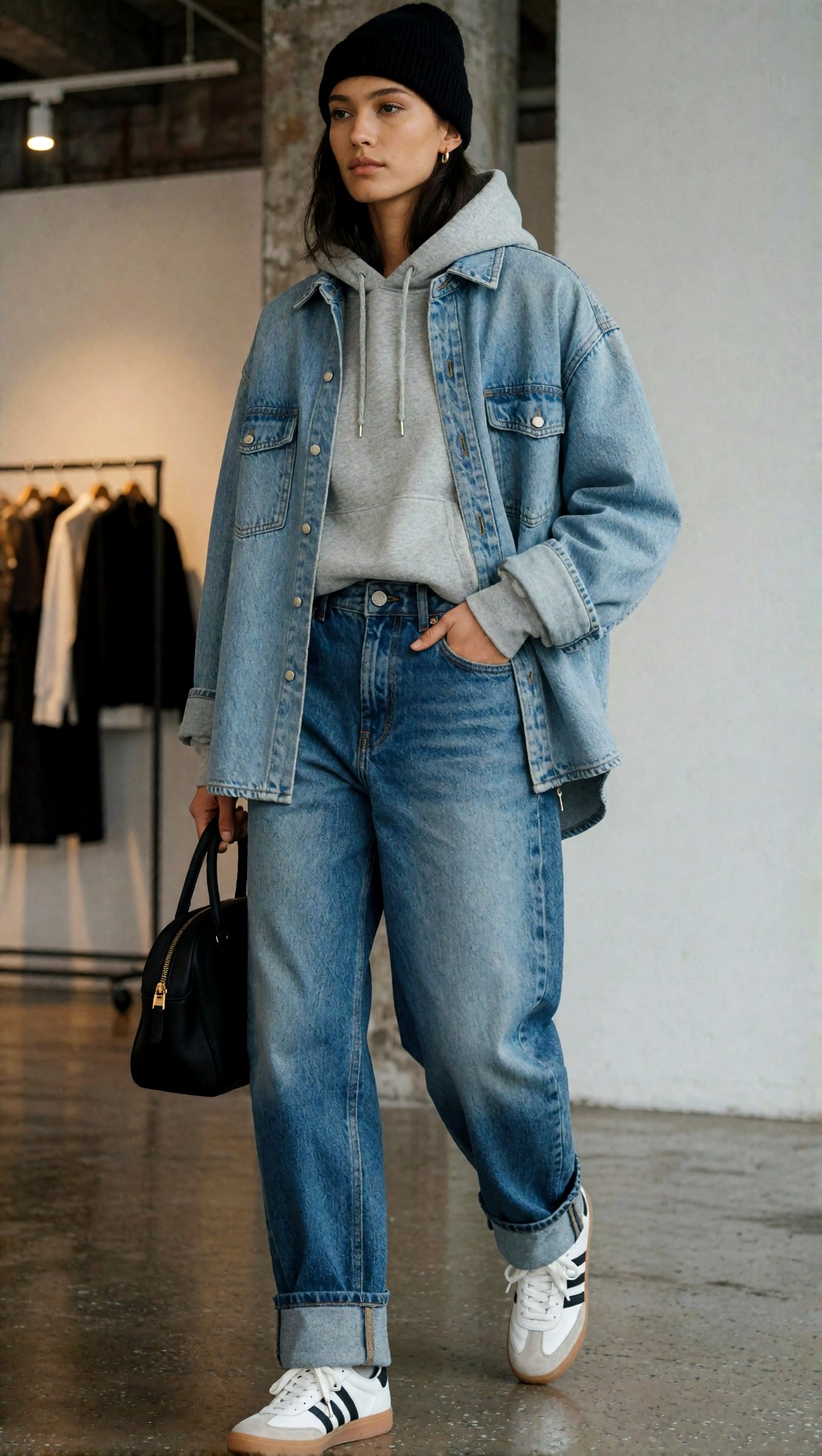
What to inspect: the hoodie layer is doing important work here. If the generator collapses the layers into one denim shirt and one jean, the image loses the streetwear cue that makes the trend feel current.
Where streetwear-first prompts performed best
- Social-style trend boards
- Head-to-toe outfit ideation
- Street style denim looks for weekly trend coverage
- Mixed-gender styling concepts
- Fall layering concepts
If you are building multiple variations fast, this workflow is easier to tune inside [/create](/create) because small changes to wash, fit, and shoes produce visible output differences.
Option B strengths: polished editorial denim is cleaner and more controllable
The alternative workflow was more useful than I expected for denim outfit ideas aimed at lookbooks, campaign mood boards, and retail presentations. When the prompt specified shape, set styling, and camera discipline, the outputs were more organized and easier to compare.
Its advantage was control. The garments sat more cleanly, background clutter was lower, and the denim texture often rendered better under studio or controlled daylight setups.
The first polished test checked whether a lookbook format could make double denim feel modern instead of costume-like.
Topic: Modern double denim lookbook with refined silhouette balance
Genre: Lookbook
Camera: Nikon Z8
Lens: 40mm f/2
Lighting: Large softbox key with gentle fill
Location: Minimal white studio with soft floor shadow
Style: Head-to-toe commercial fashion lookbook
Final Prompt: head-to-toe lookbook image focused on a modern double denim trend, coordinated but not identical denim styling, cropped dark indigo denim jacket with strong shoulder line over a cream fitted tee, high-rise relaxed straight jeans in a slightly lighter wash, tan leather belt, pointed suede ankle boots, structured mini shoulder bag, restrained jewelry, body centered with complete silhouette visible, clean stance, crisp studio separation, premium denim fabric detail, seams, metal buttons, fading, and hem weight clearly visible, contemporary US fashion trend direction, Nikon Z8 look, 40mm f/2, minimal white studio, polished commercial lookbook finish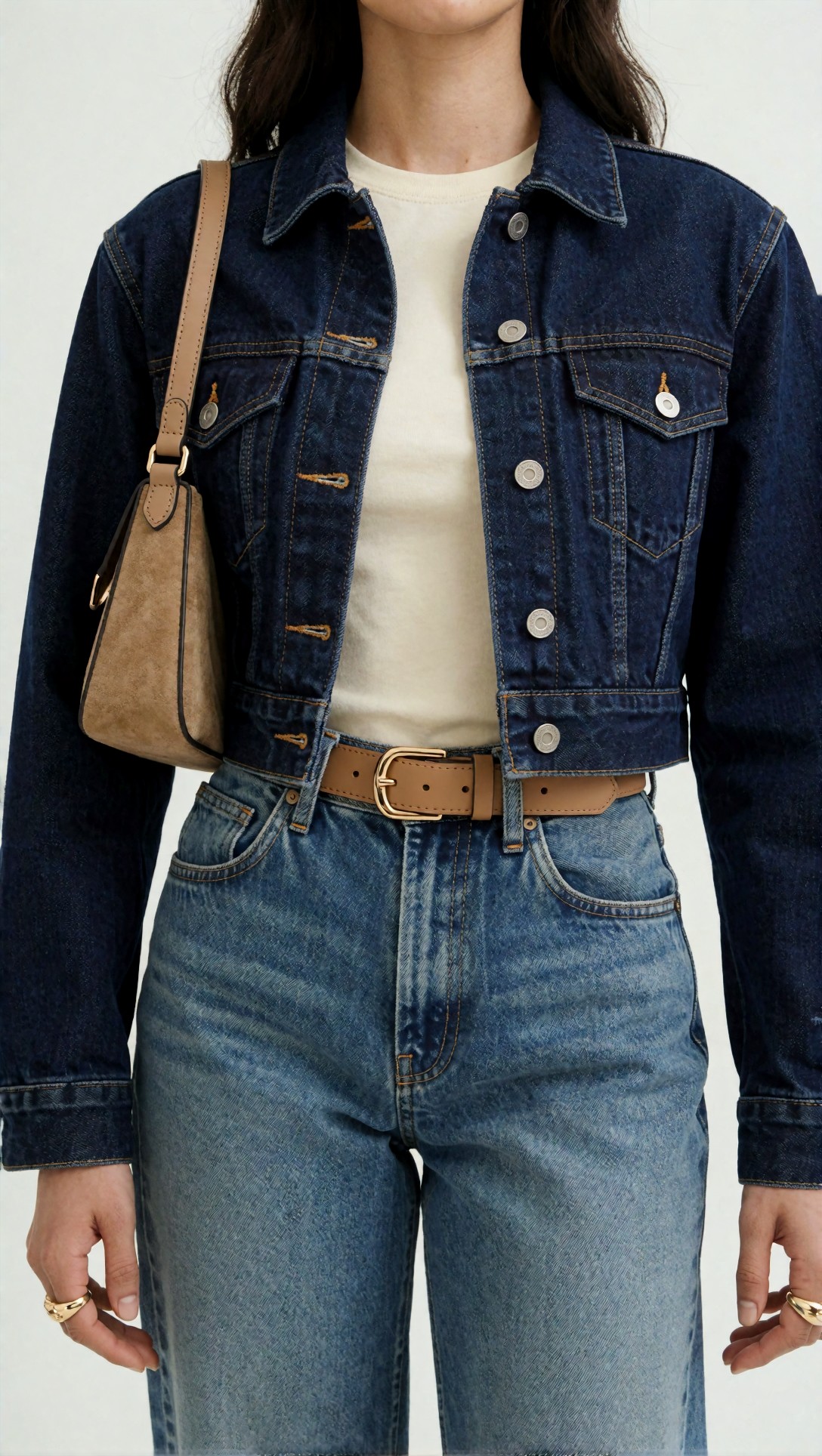
What to inspect: this should look cleaner than the streetwear version, but it still needs wash contrast. If the top and bottom merge into one tone, the result looks too uniform and less trend-aware.
The next test was designed to see whether retail-facing styling could support the trend through merchandising rather than attitude.
Topic: Double denim storefront display for fall denim trends
Genre: Product Editorial
Camera: Fujifilm GFX100S
Lens: 63mm f/2.8
Lighting: Soft storefront daylight with controlled interior practicals
Location: Contemporary SoHo retail window display
Style: Visual merchandising editorial
Final Prompt: storefront display showing fall denim trends through a double denim styling story, contemporary SoHo retail window with mannequins dressed in layered denim outfits, one look with oversized washed denim jacket over striped knit and loose jeans, another look with dark denim shirt jacket and ecru denim bottom, boots, sneakers, belts, bags, caps and folded knit accessories arranged as a cohesive American streetwear denim story, strong product visibility, clean glass reflections, premium merchandising composition, rich textile texture, indigo palette mixed with cream charcoal and tan, Fujifilm GFX100S look, 63mm f/2.8, upscale retail realism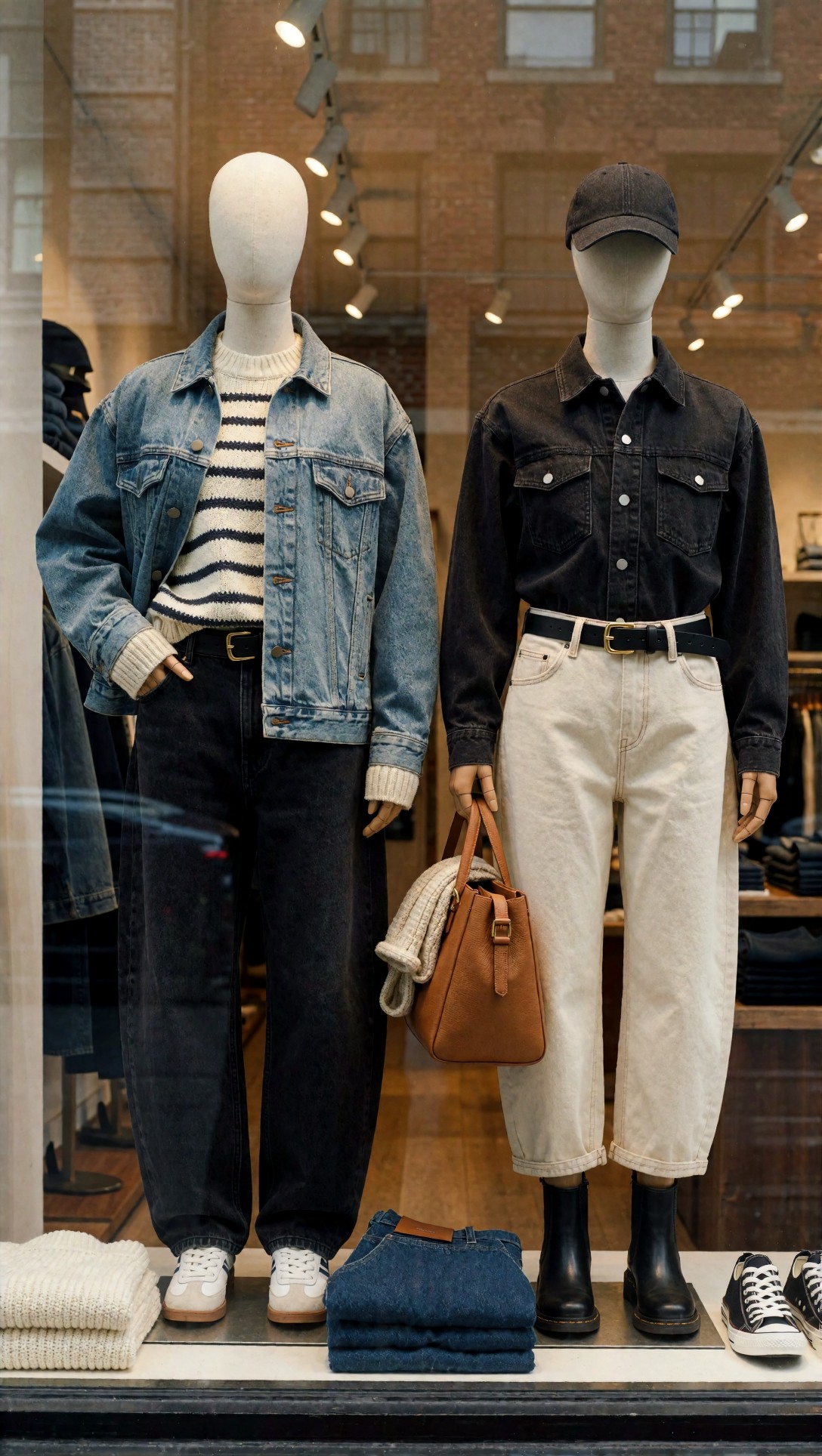
What to inspect: watch for whether accessories support the outfit logic rather than clutter the scene. This setup is valuable when you want denim styling ideas without relying on a human subject.
Where the cleaner editorial workflow works best
- Lookbook pages
- Retail concept visuals
- Product-line planning
- Mood boards for coordinated denim collections
- Articles where you need legible garment construction
For this kind of image set, the handoff from image generation to cleanup is often smoother if you plan to pass outputs through [Upscaler](/upscaler) for denim seam and fabric recovery.
Side-by-side tradeoffs: street style denim looks vs coordinated denim sets
Here is the practical difference I saw after comparing outputs side by side.
Streetwear-first workflow
Strong points
- Feels more aligned with current us fashion trends
- Better at relaxed, wearable outfit logic
- Easier to make the denim trend feel spontaneous
- Supports sneakers, hoodies, caps, and bags naturally
Weak points
- Can become messy if too many accessories compete
- More risk of muddy silhouettes in crowded urban scenes
- Full-body framing is essential, so crop mistakes hurt more
Clean editorial workflow
Strong points
- Better product clarity
- Stronger fabric and seam visibility in controlled light
- Easier to compare washes, cuts, and proportions across a set
- Useful for catalog, lookbook, and merchandising contexts
Weak points
- Can look too polished and lose trend energy
- More likely to default to generic matching denim set
- Needs explicit instructions to feel streetwear-adjacent
Prompt tests that exposed the difference fastest
The next pair of prompts was where the gap became most obvious. One asked for a New York street-style read; the other asked for a tighter campaign image. The streetwear version looked more current almost immediately.
This test checked whether movement and location context improved the realism of the outfit proportions.
Topic: New York street style double denim with oversized proportions
Genre: Street Style
Camera: Leica SL2
Lens: 24-70mm at 40mm f/3.2
Lighting: Late afternoon city light with soft reflected fill
Location: SoHo cast-iron block with pedestrians blurred in background
Style: Documentary luxury streetwear
Final Prompt: street-style full body image on a SoHo cast-iron block, oversized double denim trend USA outfit with washed blue denim chore jacket over white baby tee, low-slung relaxed jeans with puddled hem, burgundy sneakers, black leather shoulder bag, baseball cap, slim sunglasses, layered necklaces, complete head-to-toe visibility, slight walking motion, current American streetwear denim attitude, architectural city background softly active but not distracting, realistic denim drape and fading, editorial documentary framing, Leica SL2 look, 24-70mm at 40mm f/3.2, trend-led urban color grading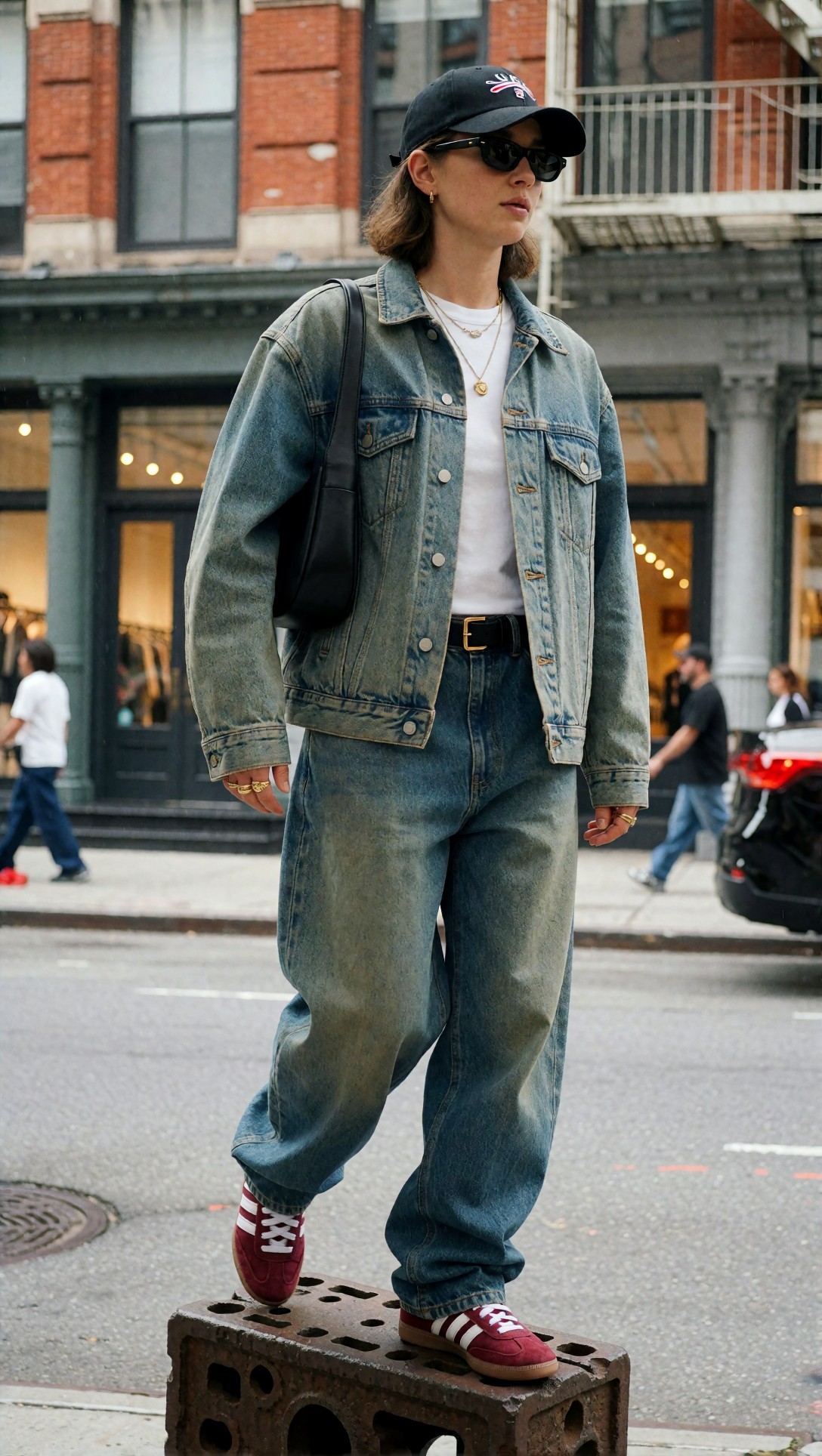
What to inspect: the puddled hem and bag scale matter more than they seem. If the jeans become too cleanly tailored or the bag shrinks out of proportion, the streetwear signal weakens.
This next prompt tested whether a campaign-like setup could still feel current when the styling stayed disciplined.
Topic: Refined double denim campaign with minimal styling clutter
Genre: Luxury Campaign
Camera: Hasselblad X2D 100C
Lens: 55mm f/2.5
Lighting: Studio daylight simulation with large diffused key and edge light
Location: Seamless pale gray editorial set
Style: Minimal luxury fashion campaign
Final Prompt: three-quarter outfit editorial campaign centered on a refined double denim trend look, tailored medium-wash denim shirt jacket tucked slightly at the waist over a slim white knit, matching-family wide straight jeans in a deeper wash, polished black loafers, structured leather tote, simple watch and hoop earrings, controlled pose, clean negative space, full outfit logic visible, premium denim weave and hardware detail, subtle contrast between top and bottom, pale gray set, elegant but current US trend styling, Hasselblad X2D 100C look, 55mm f/2.5, minimal luxury composition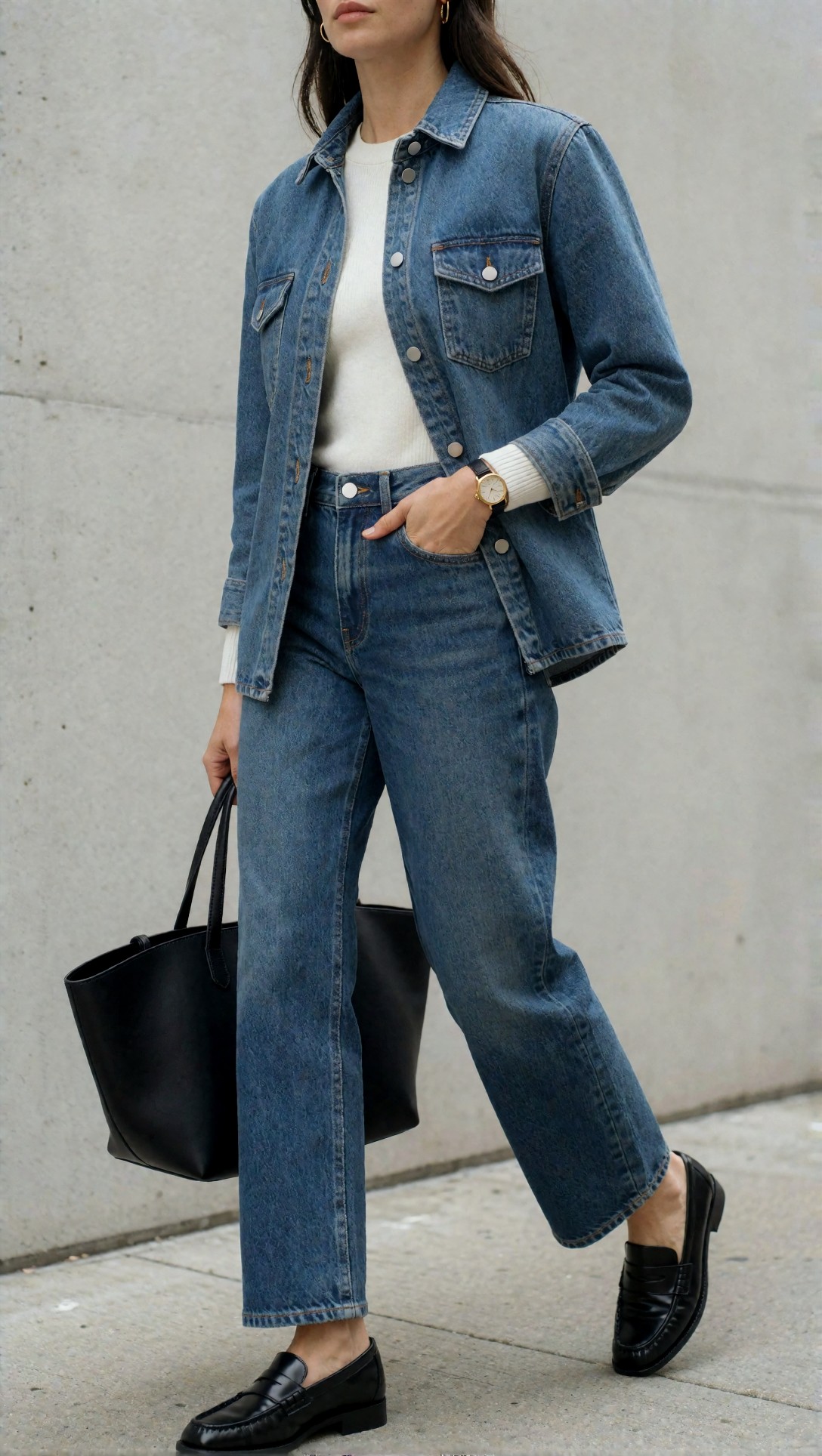
What to inspect: this should be more controlled and premium, but it may drift away from the week’s trend pulse if the loafers and tote dominate the read. It is a good test of whether polish is overpowering relevance.
Failure risks I kept seeing in both workflows
A few issues repeated across outputs regardless of style direction.
1. Matching wash overload
When jacket and jeans were both “mid-blue denim” with no added structure, the result looked flat. The fix was to specify faded light jacket + darker jean, or dark top + ecru bottom, or add a non-denim middle layer.
2. Missing footwear
For fashion trend content, shoes are not optional detail. If the image crop cut off the sneaker or boot, the whole styling system became weaker.
3. Denim that looked too thin
Some outputs rendered denim like soft jersey. Calling for seam weight, fading, hardware, hem structure, and visible grain improved this.
4. Streetwear accessories turning into noise
Bag, cap, hoodie, chain, sunglasses, and belt can all help. Too many at once often caused visual confusion. One or two anchors were enough.
This detail test was useful for checking whether the model could render denim as a fabric rather than a blue surface.
Topic: Denim garment detail macro showing wash, seam, hardware, and texture
Genre: Product Editorial
Camera: Canon EOS R3
Lens: 85mm f/2
Lighting: Directional soft key with subtle side shadow
Location: Editorial studio tabletop with folded indigo garments
Style: High-detail commercial textile study
Final Prompt: garment detail macro of current double denim trend pieces arranged editorially, close study of washed indigo denim jacket cuff, contrast stitching, copper hardware, belt loop, jean waistband, faded whiskering, pocket edge abrasion, stacked folded layers of different denim washes, tactile fabric realism emphasized, neutral studio background, precise textile rendering, restrained color palette of indigo steel gray and warm copper, Canon EOS R3 look, 85mm f/2, high-detail commercial product editorial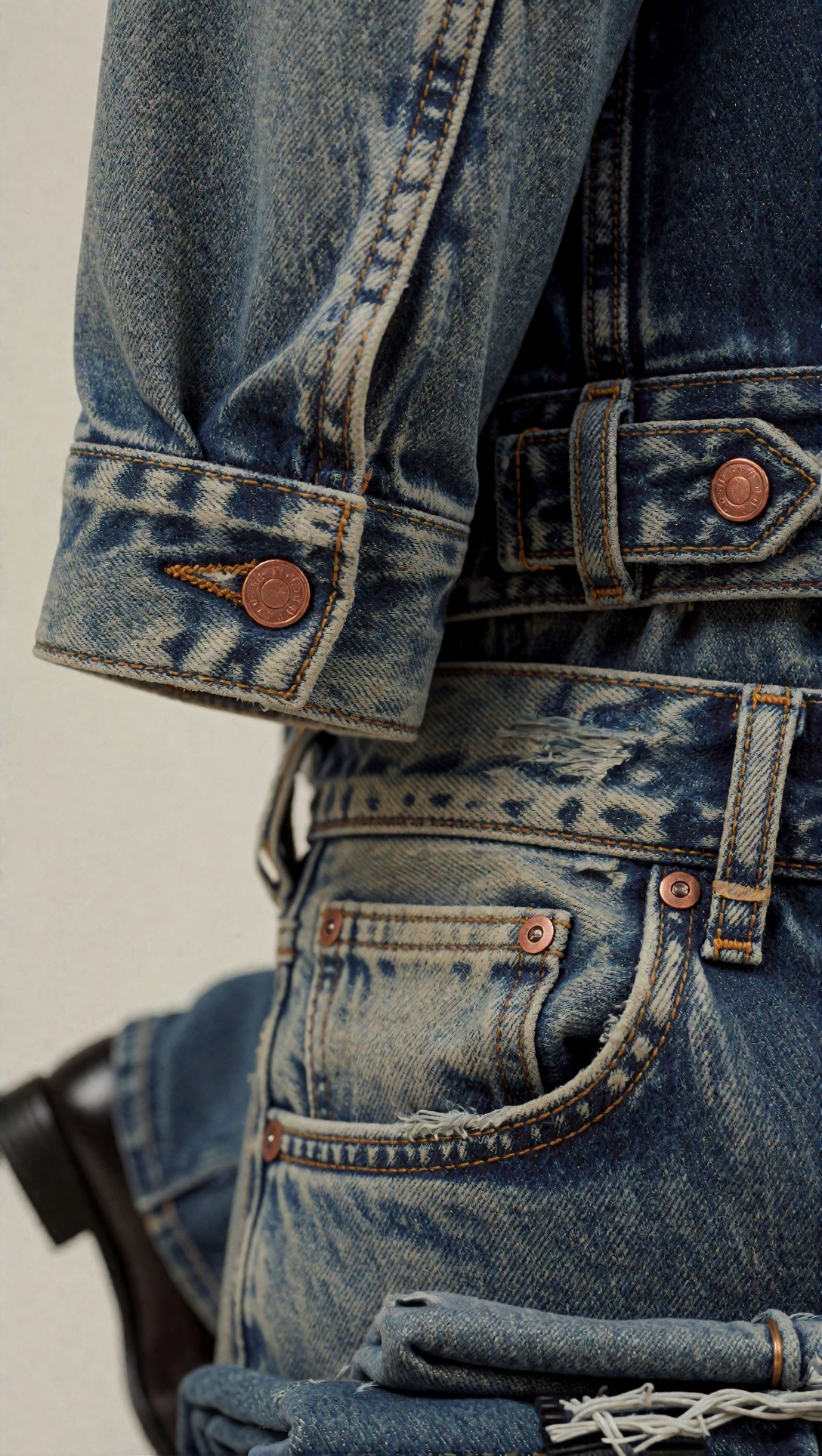
What to inspect: look closely at the stitch definition and fabric grain. If those details hold, your wider outfit prompts usually improve too because the model understands the material better.
A practical checklist for better jeans on jeans outfit prompts
Before generating, I would now check for these ingredients:
- Named shot type: full body, three-quarter, lookbook, storefront, flat lay
- Wash relationship: lighter top/darker bottom or vice versa
- Fit relationship: boxy top, relaxed bottom, or cropped top with wide leg bottom
- One visible breaker: tank, hoodie, belt, knit, or bag
- Shoes specified clearly
- Streetwear or editorial context stated directly
- Denim details requested: fading, seams, hardware, hem weight
If you are building a broader test set, you can compare these variables in a saved prompt sequence under [/tools](/tools) or keep iterative versions in [/articles](/articles) notes for weekly trend tracking.
More image test prompts for fall denim trends and street style variation
The next prompt was built to test a product-first angle without losing the style logic. Flat lays often expose whether the outfit itself works before pose and attitude carry it.
Topic: Double denim flat lay with accessories for fall styling
Genre: Product Editorial
Camera: Sony A1
Lens: 50mm f/4
Lighting: Soft top light with gentle side fill
Location: Neutral canvas backdrop studio table
Style: Clean commercial flat lay
Final Prompt: product flat lay of a double denim trend USA outfit system for fall, oversized washed denim jacket, darker straight-leg jeans, white rib tank, charcoal hoodie, retro sneakers, tan belt, black cap, silver chain, compact crossbody bag laid out with balanced spacing, sleeves and hems arranged to show silhouette logic, clear wash contrast between pieces, premium textile detail, seams, hardware and layering order visible, commercial styling board composition, neutral canvas background, Sony A1 look, 50mm f/4, crisp top-down fashion merchandising image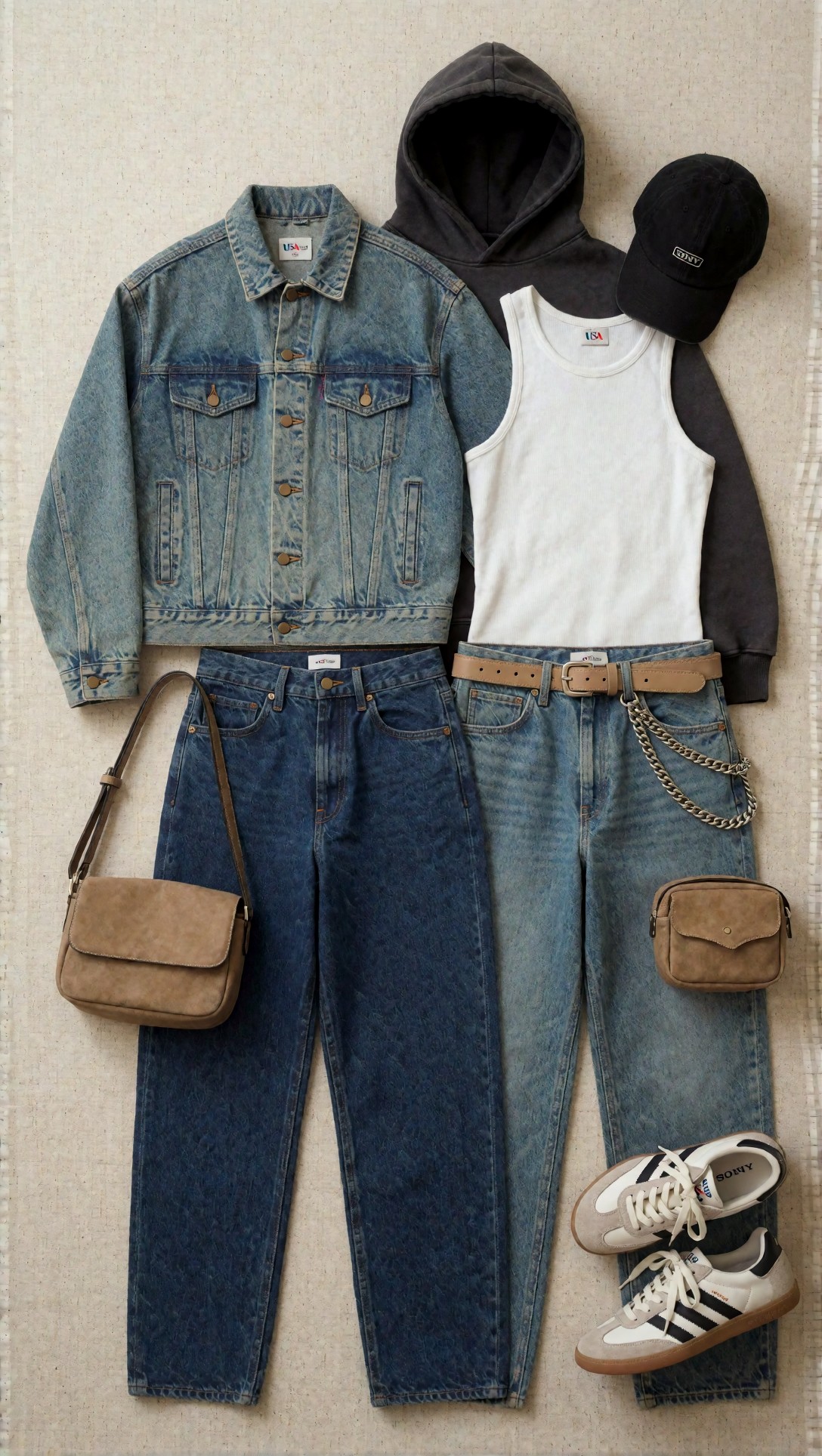
What to inspect: this should tell you quickly whether the outfit ingredients make sense together. If the washes fight each other or the accessories overwhelm the clothing, the problem will only get worse in on-model shots.
This test checked accessory support, especially whether bags and shoes could modernize a simple denim base.
Topic: Accessories close-up supporting an American streetwear denim look
Genre: Fashion Accessory Editorial
Camera: Nikon D850
Lens: 70mm f/2.8
Lighting: Soft morning daylight with reflective bounce
Location: Concrete bench outside a downtown gallery
Style: Contemporary streetwear accessory story
Final Prompt: accessories close-up tied to an American streetwear denim outfit, visible lower torso and hands secondary to styling, relaxed dark-wash jeans, frayed denim jacket hem entering frame, burgundy sneakers, rib socks, black leather shoulder bag, slim belt, silver rings and chain details, seated on a concrete bench outside a downtown gallery, focus on how accessories break up a jeans on jeans outfit, tactile leather and denim textures, cool city palette, Nikon D850 look, 70mm f/2.8, understated editorial streetwear realism
What to inspect: the accessories should support the denim rather than become luxury props detached from the trend. The bag scale and sneaker color often decide whether the look feels current.
The final prompt tested whether a mood-board collage could summarize the trend signal better than one hero image.
Topic: Mood-board collage explaining why double denim is back in US fashion
Genre: Mood Board
Camera: Mixed editorial capture style
Lens: Mixed 35mm and 50mm references
Lighting: Mixed daylight and studio references
Location: New York street, studio lookbook set, retail display wall, fabric swatch table
Style: Trend forecasting fashion collage
Final Prompt: mood-board collage explaining the return of the double denim trend USA, composed of street-style full body outfit photo, clean lookbook cutout, denim fabric swatches in light and dark washes, sneaker and belt accessory crops, storefront merchandising panel, handwritten style notes on silhouette and wash contrast, editorial layout with indigo cream charcoal and burgundy palette, trend-led American streetwear denim direction, sharp magazine collage design, tactile paper and textile detail, mixed documentary and studio fashion imagery, sophisticated forecasting board aesthetic
What to inspect: this is useful for seeing whether the trend has a coherent visual language. If the collage reads as one story, your individual prompts are probably aligned.
Best choice by use case
Choose streetwear-first if you want:
- Trend reporting
- Street style denim looks
- Current-feeling denim outfit ideas
- US-focused weekly fashion visuals
- More natural adoption of sneakers, caps, hoodies, and bags
Choose cleaner editorial if you want:
- Lookbook consistency
- Product clarity
- Retail and merchandising concepts
- Easier side-by-side garment comparison
- Fewer background variables
Hybrid setup I would use most often
If I were producing a full article package, I would not pick only one. I would use:
1. Streetwear full-body hero image for trend accuracy 2. Controlled lookbook image for garment readability 3. Detail macro or flat lay for texture proof 4. Mood-board collage for narrative context
That combination gives both the editorial argument and the visual evidence.
FAQ
Is the double denim trend actually back in the USA?
Yes, but the return is not about exact matching denim sets. The current read is looser, more streetwear-driven, and more focused on contrast in wash, fit, and accessories.
What makes a jeans on jeans outfit look modern instead of dated?
Relaxed proportions, visible layering, tonal contrast between denim pieces, and grounded footwear. A white tank, hoodie, belt, sneaker, or compact bag often keeps it from feeling too uniform.
Are streetwear prompts better than luxury editorial prompts for denim?
For trend accuracy this week, yes. For cleaner product presentation, no. Streetwear-first prompts matched the weekly trend signal better, while editorial prompts were easier to control.
What denim colors worked best in this test?
Light jacket with darker jeans, dark denim top with ecru or washed black bottom, and medium indigo paired with a gray or white non-denim layer performed best.
What is the main prompt detail that matters most?
Silhouette language. If you clearly specify fit, wash separation, shoes, and one styling breaker, the image has a much better chance of reading as current american streetwear denim instead of generic catalog denim.
Conclusion
My verdict is simple: if you are trying to visualize the double denim trend usa this week, use a streetwear-first workflow and treat double denim as a styling system, not a matching set. That is the setup that produced the most current-looking results in this test.
Use the cleaner editorial workflow if your goal is retail clarity, line planning, or lookbook consistency. Avoid it if you need fast trend energy without a lot of prompt tuning.
The single detail that mattered most was wash and silhouette separation. When the top and bottom were related but not identical, and the outfit included one clear streetwear anchor, the trend looked believable. When everything matched too neatly, the look lost the week’s fashion signal.