Editorial Fashion AI Back-to-Work Style: Comparing Blazer-and-Loafer Workflows for Elevated Basics 한국어 요약
이 페이지는 ZView Space의 영어 원문을 한국어 검색 사용자도 이해할 수 있도록 정리한 SEO 요약입니다. 핵심은 단순한 얼굴 중심 이미지가 아니라 패션 에디토리얼, 룩북, 아웃핏, 프롬프트 테스트, 이미지 생성 워크플로우를 실제로 어떻게 구성할지입니다.
핵심 요약
- 원문 주제: Editorial Fashion AI Back-to-Work Style: Comparing Blazer-and-Loafer Workflows for Elevated Basics
- 목적: AI 이미지 생성에서 outfit, silhouette, fabric, pose, location, camera framing을 더 명확하게 설계합니다.
- 활용 범위: Z-Image Turbo, Krea2 Turbo, Qwen Image, Anima, SeedVR2 같은 이미지 생성 및 업스케일 워크플로우에 적용할 수 있습니다.
- SEO 관점: 제목, 설명, 이미지 alt, 프롬프트 예시가 실제 검색 의도와 맞아야 색인 가능성이 높아집니다.
한국어 사용자를 위한 체크포인트
1. 프롬프트가 얼굴 묘사에만 머물지 않고 전체 스타일과 의상 구성을 설명하는지 확인합니다. 2. 패션 이미지라면 상의, 하의, 아우터, 신발, 액세서리, 소재감, 촬영 장소를 분리해서 씁니다. 3. 생성 결과는 바로 게시하지 말고 디테일, 손, 의상 형태, 배경 일관성, 이미지 품질을 비교합니다. 4. 글 본문에는 실제 테스트 기준과 실패를 줄이는 방법이 들어가야 검색엔진에서 얇은 콘텐츠로 보일 가능성이 줄어듭니다.
원문 미리보기
This test looks at editorial fashion AI back to work style through a narrow lens: can current image workflows produce convincing, trend aware office fashion images built around blazers, loafers, soft romantic layers, and elevated basics without collapsing into
---
This test looks at editorial fashion AI back to work style through a narrow lens: can current image workflows produce convincing, trend-aware office fashion images built around blazers, loafers, soft romantic layers, and elevated basics without collapsing into generic corporate stock aesthetics.
Plain verdict: yes, but only when the workflow is built around shot planning and garment hierarchy, not vague style adjectives. In this test, the strongest results came from a structured editorial workflow that locked silhouette, fabric, footwear, and bag logic first. The weaker workflow produced attractive images, but it drifted into beauty-led portraits, inconsistent shoes, and office scenes that hid the outfit.
Quick answer
- For back to work outfits in AI, full-body and three-quarter shot planning matters more than adding more trend keywords.
- A blazer-loafer prompt works best when the prompt states fit, trouser break, sock visibility, bag shape, and fabric texture.
- Romantic mood can work for office fashion if it is applied through light, palette, silk layers, bows, pleated skirts, and soft tailoring, not through portrait-heavy language.
- If you want usable outputs for moodboards, lookbooks, or concept testing, start in a structured workflow with repeatable prompt fields, then refine in [Prompt Lab](/promptlab).
- The most common failure was not anatomy. It was styling incoherence: heavy wool blazers with summery dresses, loafers with no weight, or bags that changed shape between frames.
What was tested
I tested two practical workflows for trend-driven AI office fashion editorial images:
1. Option A: structured prompt brief A shot-led workflow using a fixed prompt enhancer format with explicit camera, lens, lighting, location, style, and a dense final prompt.
2. Option B: mood-led prompt workflow A lighter workflow that begins with trend phrases like "editorial fashion AI," "romantic office look," and "elevated basics fashion," then adds visual details later.
The goal was not to find the most dramatic image. The goal was to see which workflow better handled:
- blazer proportion and shoulder line
- loafer shape and leather finish
- layering logic for elevated basics
- office-appropriate romantic styling
- consistency across editorial, lookbook, product, and retail views
- visibility of the full silhouette
I used multiple shot types because a single street-style frame can hide failures that become obvious in catalog, flat lay, or detail views. If you are building your own comparison set, [Create](/create) is the better place to run side-by-side prompt variants, while [Gallery](/gallery) is useful for reviewing visual drift across outputs.
Comparison checklist
| Criteria | Option A: Structured editorial brief | Option B: Mood-led prompting | |---|---|---| | Outfit visibility | Strong | Mixed | | Blazer fit accuracy | Strong | Mixed | | Loafer consistency | Strong | Weak to mixed | | Romantic mood control | Strong when subtle | Often overpowers styling | | Background realism | Good | Good | | Product/detail shots | Strong | Weak | | Prompt repeatability | Strong | Weak | | Best use | Lookbooks, concept boards, campaigns | Fast inspiration, mood exploration |
Where Option A was strongest
The structured workflow was clearly better for blazer outfit ideas that need to read as actual styling systems rather than a fashionable person standing near an office building. In this test, the strongest result came from specifying the outfit from outer layer to shoe, then describing how the garments should fall in the frame.
This matters because AI often treats office fashion as a scene prompt instead of a styling prompt. Once I specified blazer length, trouser rise, loafer finish, hosiery or sock treatment, and bag scale, the image model started making coherent wardrobe decisions.
Full-body street style did the best job showing trend relevance
The back-to-work trend right now is not only oversized blazers and chunky loafers. It is the balance between structure and softness: fluid midi skirts, silk blalouses, fine-gauge knits, belted waists, espresso leather, and cream or dove-gray tailoring. Option A captured that balance more reliably.
This first prompt tests whether the model can show the whole outfit logic in a real editorial frame without turning the image into a portrait.
Topic: Back-to-work editorial fashion with soft romantic tailoring
Genre: Street Style
Camera: Canon EOS R5
Lens: 35mm f/2
Lighting: Overcast diffusion
Location: Lower Manhattan sidewalk outside a sandstone office building, early fall morning
Style: Luxury fashion street editorial
Final Prompt: street-style full body fashion image, editorial back-to-work outfit built around a dove-gray oversized blazer with soft shoulder structure, ivory silk tie-neck blouse, charcoal pleated midi skirt, dark chocolate polished penny loafers with visible fine rib socks, structured burgundy top-handle bag, delicate gold earrings, thin belt, complete head-to-toe silhouette visible, model walking naturally across a New York sidewalk, romantic soft movement in the skirt and blouse bow, neutral office architecture in the background, elevated basics styling, realistic fabric drape, magazine-quality composition, subtle motion, refined autumn palette, documentary fashion framing, outfit remains the main subject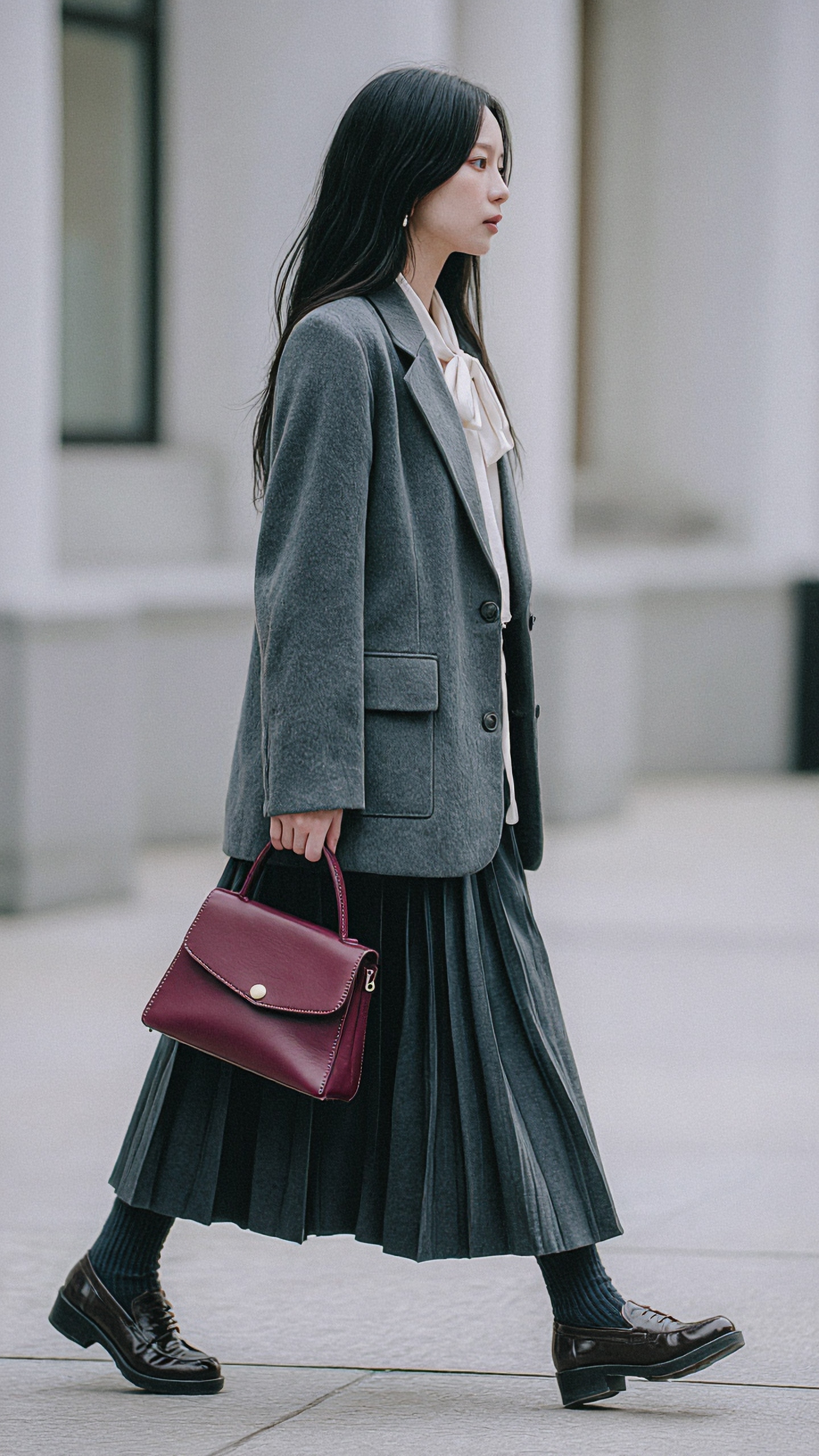
Inspect whether the blazer length relates correctly to the skirt volume and whether the loafers feel grounded rather than pasted onto the feet. The stronger outputs preserved the bag shape and kept the bow blouse secondary to the tailoring.
Three-quarter editorial frames improved fabric reading
A second strength of Option A was texture separation. Wool, silk, brushed cotton, and polished leather need to read differently or the image becomes flat. Structured prompts with controlled lighting gave more believable fabric hierarchy.
This prompt checks whether the model can hold onto soft romantic details without losing office realism.
Topic: Romantic office styling with elevated basics
Genre: Fashion Editorial
Camera: Nikon Z8
Lens: 50mm f/1.8
Lighting: Window light with soft bounce fill
Location: Paris editorial studio with pale plaster walls and brushed oak flooring
Style: High-end magazine fashion editorial
Final Prompt: three-quarter outfit editorial, refined back-to-work styling with a sand double-breasted blazer worn over a blush silk camisole and fine knit cardigan, high-waisted cream wide-leg trousers with a clean front crease, black horsebit loafers, slim leather watch, small top-handle bag placed at hip, soft romantic office mood, warm neutral palette, gentle body angle showing blazer lapel structure and trouser drape, complete outfit visible from head to shoe, elegant editorial posture, window-lit fashion studio, premium textile detail, polished but understated AI office fashion editorial look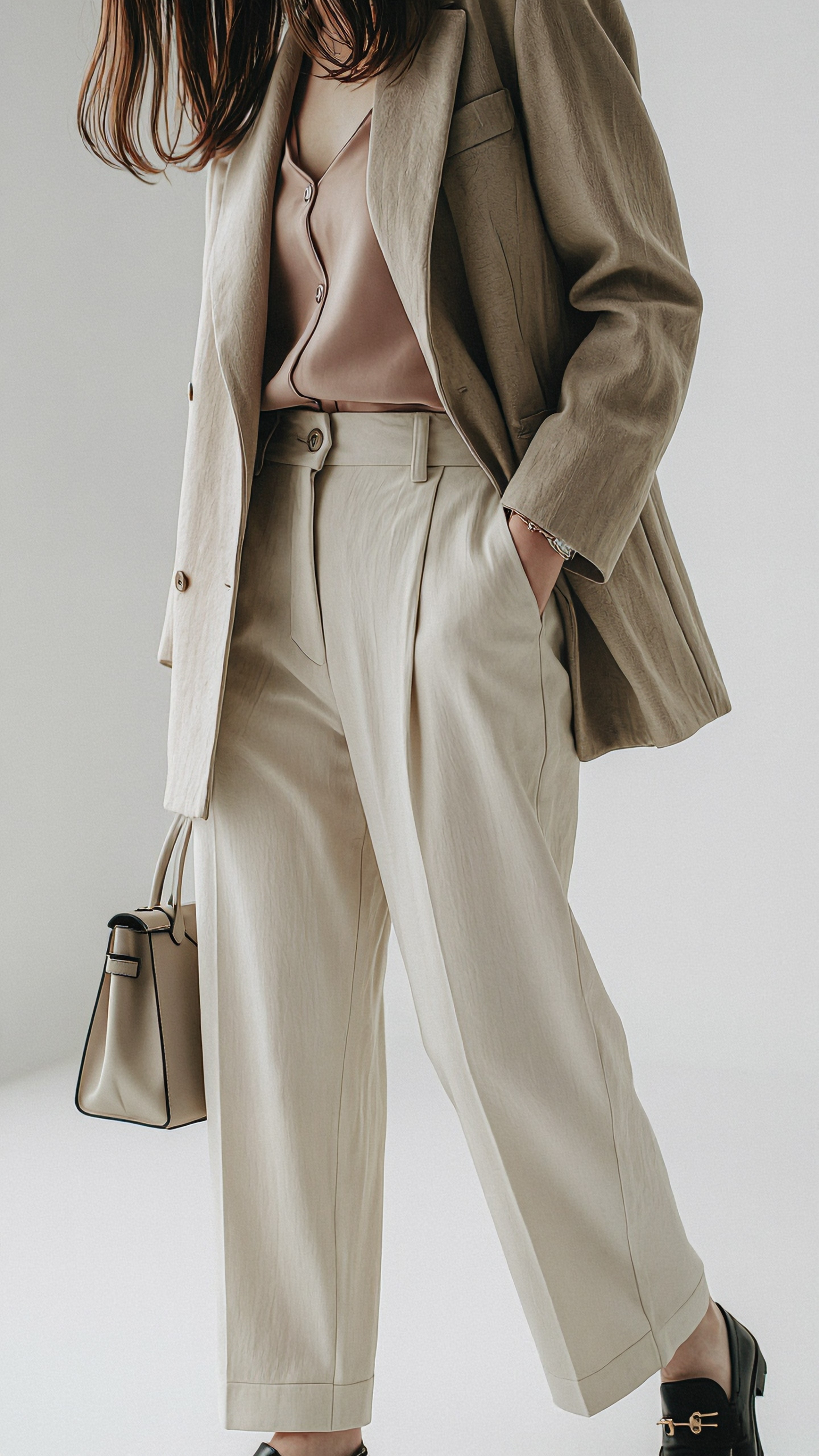
Check the lapel roll, the trouser crease, and the leather finish of the loafers. The better images separated matte wool from glossy silk instead of giving everything the same digital sheen.
Where Option B worked better than expected
The mood-led workflow was weaker for consistency, but it had one real advantage: it generated fresher atmosphere more quickly. If the goal is inspiration rather than production-ready continuity, mood-led prompts can surface useful ideas around color, light, and emotional tone.
In this test, Option B was surprisingly good for lookbook concepts and softer campaign imagery where exact product clarity matters less than overall direction.
Mood-first prompts generated more expressive campaign energy
When I started with romantic editorial language and then added office signifiers, the model often created attractive soft-focus environments, warm marble interiors, floral notes, and feminine styling accents that felt current. The tradeoff was weaker control over the practical outfit.
This prompt tests whether a mood-led setup can still keep a coherent back-to-work silhouette.
Topic: Soft romantic back-to-work fashion campaign
Genre: Luxury Campaign
Camera: Sony A7R V
Lens: 40mm f/2.5
Lighting: Golden hour interior backlight with bounce
Location: Milan office lobby with travertine floors, brass elevator doors, and warm reflected sunlight
Style: Elegant luxury fashion campaign
Final Prompt: head-to-toe lookbook image with romantic office styling, soft camel blazer over a cream draped blouse, blush pleated midi skirt, rich espresso leather loafers, sculptural handbag, delicate scarf tied at the neck, feminine elevated basics, warm sun entering a Milan office lobby, graceful standing pose that keeps the full silhouette visible, editorial campaign atmosphere, gentle movement in the skirt, polished leather texture, soft gold and beige palette, sophisticated back-to-work outfit direction, fashion-first composition rather than portrait emphasis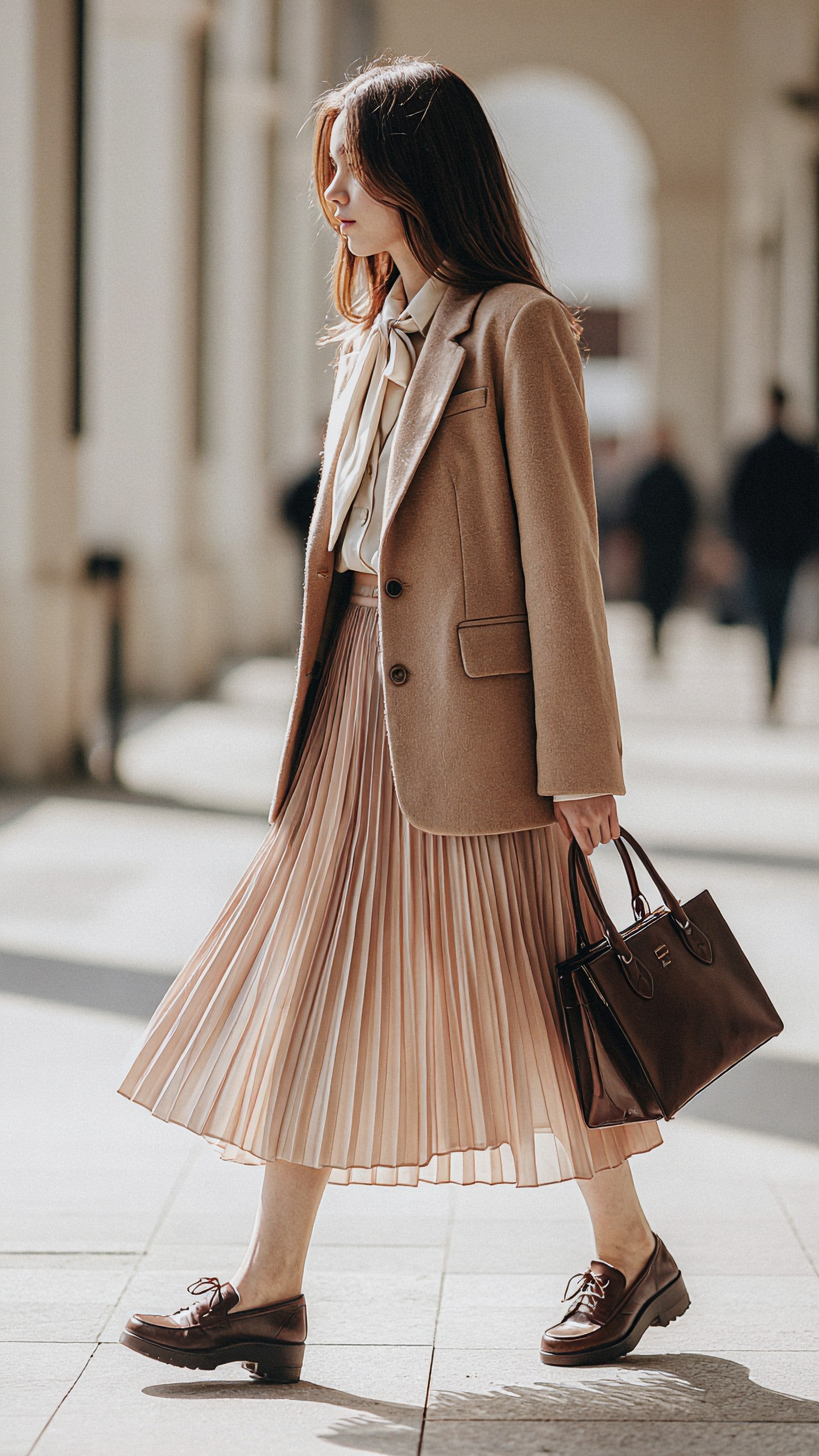
Inspect whether the atmosphere overwhelms the garment edges. In weaker results, the skirt became too fluid and the loafers lost their structure, which made the image feel more like a fragrance ad than office styling.
It was also useful for collage and trend-board ideation
For fast concepting, mood-led prompts are effective when you want a team to agree on direction before building precise product visuals. They are less reliable for final asset creation, but useful for early exploration.
This prompt checks whether the workflow can organize trends into a readable visual board rather than a chaotic scrapbook.
Topic: Back-to-work trend board with blazers, loafers, and elevated basics
Genre: Mood-Board Collage
Camera: Editorial scan aesthetic
Lens: Mixed crop editorial layout
Lighting: Soft daylight tabletop illumination
Location: Fashion studio desk with clipped printouts, fabric swatches, and styling notes
Style: Contemporary magazine concept board
Final Prompt: mood-board collage for editorial fashion AI back-to-work style, arranged fashion tears featuring oversized blazers, silk blouses, pleated skirts, tailored trousers, polished loafers, structured handbags, ribbon details, espresso leather, dove gray and cream palette, romantic office mood, tactile fabric swatches, handwritten styling notes, magazine clipping composition, premium editorial design language, trend-driven but practical, clear outfit logic, layered paper textures, clean layout suitable for a fashion concept presentation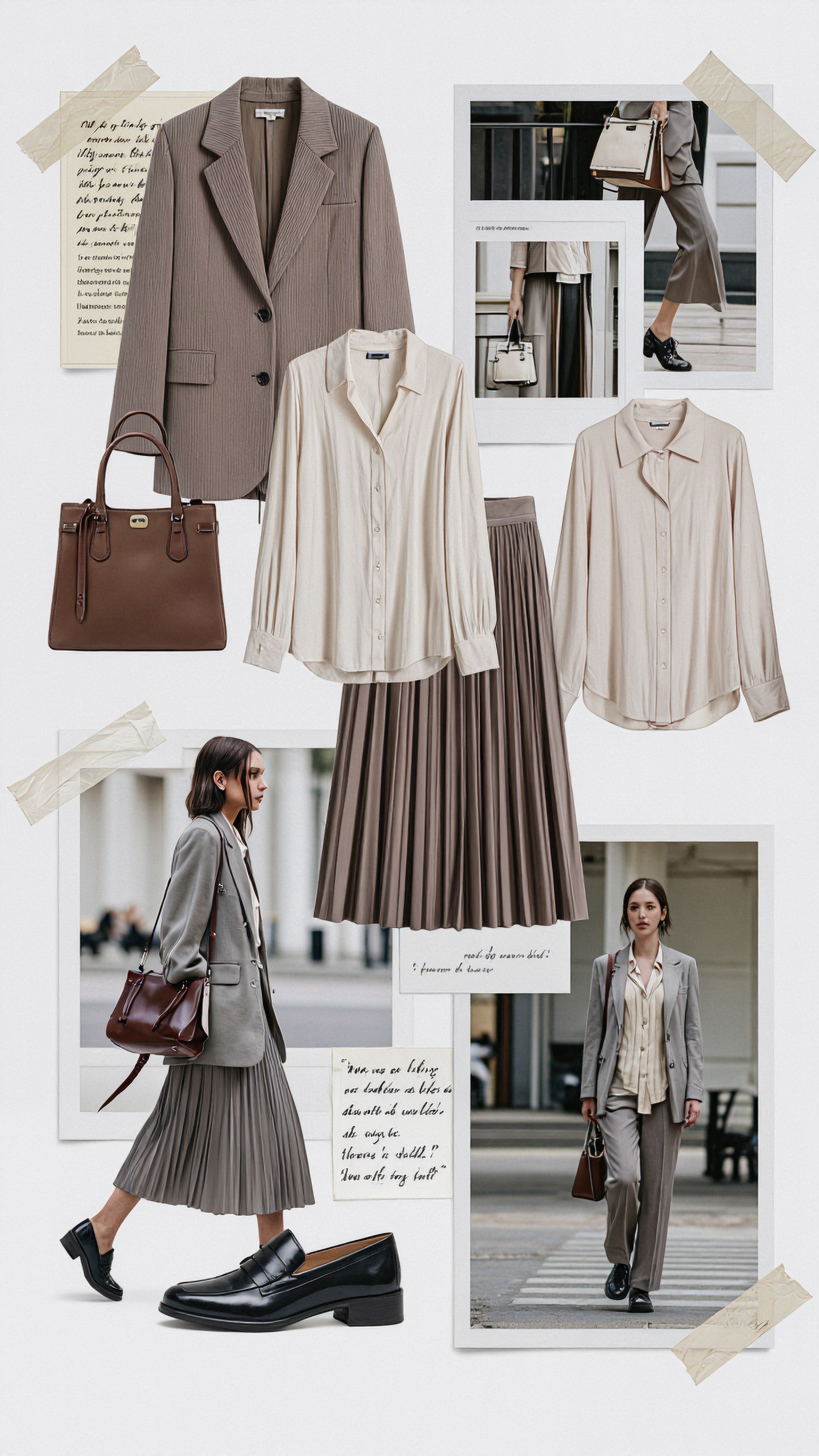
Look for whether the collage contains actual styling information or just attractive fragments. The best outputs made the loafer and blazer trend legible as a system rather than as isolated props.
Side-by-side tradeoffs: what failed and why
The gap between the two workflows became obvious once I pushed beyond single hero images.
Option A failures
Option A can become too controlled. Some outputs looked technically clean but emotionally flat. When every garment attribute was specified, the model occasionally produced catalog stiffness instead of editorial ease.
Another weak point: if the prompt over-specified both tailoring and romance, the image could split into competing signals. A severe blazer with a very delicate chiffon dress often looked like two prompts merged together.
Option B failures
Option B had the opposite problem. It was better at atmosphere than discipline. The most common issues were:
- loafers morphing into pumps or hybrid shoes
- blazer hem changing between images
- office setting dominating the frame
- soft-focus lighting hiding textile detail
- incomplete body framing, especially when the model prioritized face and hair
These are not small issues for AI office fashion editorial work. If the viewer cannot clearly see the shoe weight, skirt length, and blazer cut, the image stops being useful for styling decisions.
Prompt examples that expose the difference
The next prompts were the most revealing because they tested shot types where styling coherence is harder to fake.
Lookbook layout: Option A stayed organized
Lookbook pages are unforgiving. They expose garment proportion, repeated footwear, and whether the model can maintain a category-consistent wardrobe.
Topic: Minimal romantic office capsule lookbook
Genre: Lookbook
Camera: Fujifilm GFX100S
Lens: 45mm f/2.8
Lighting: Clean studio softbox with subtle floor bounce
Location: Scandinavian minimalist studio in Copenhagen
Style: Clean commercial lookbook
Final Prompt: head-to-toe lookbook layout featuring three coordinated back-to-work outfits built from elevated basics, outfit one with oversized charcoal blazer, ivory shell top, ankle-length cream trousers, oxblood loafers and slim belt, outfit two with cropped wool blazer, blush blouse, pleated taupe midi skirt, dark brown loafers and top-handle bag, outfit three with longline stone blazer, fine knit top, black tailored column skirt, glossy burgundy loafers and silk scarf, soft romantic fashion tone, each look shown full body with clear spacing, neutral studio background, consistent lighting, visible textile texture, fashion catalog precision with editorial refinement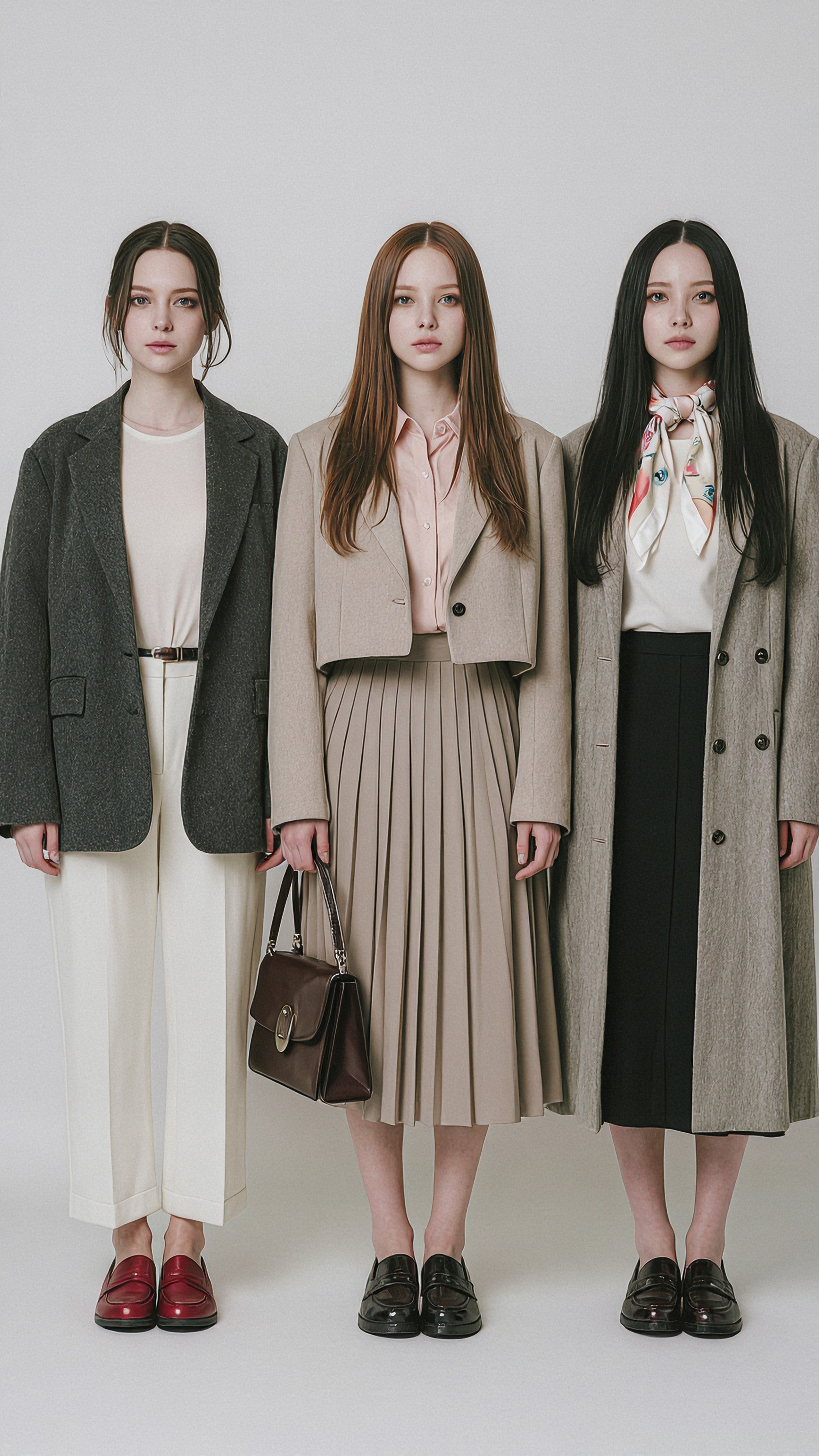
Check consistency across all three looks. The stronger outputs kept the loafers in the same family and avoided random sneaker substitution.
Catalog grid pages exposed hidden weakness in Option B
Mood-led prompting struggled with category grids because it wants to compose a scene, not a system. Product grouping often became messy.
Topic: Office fashion catalog grid focused on loafers and blazer pairings
Genre: Product Editorial
Camera: Phase One XF IQ4
Lens: 80mm f/2.8
Lighting: Large overhead diffusion with side fill cards
Location: Neutral e-commerce studio with pale warm backdrop
Style: Premium retail catalog page
Final Prompt: catalog grid page showing coordinated back-to-work fashion components, polished loafers in espresso, black and oxblood leather, oversized and fitted blazers in cream, navy and charcoal, silk blouses, fine knit tops, pleated skirts, tailored trousers, structured bags, romantic office palette, neat retail arrangement, front-facing product clarity, premium fabric and leather texture, minimal shadows, crisp luxury retail styling, editorial but highly legible composition suitable for fashion merchandising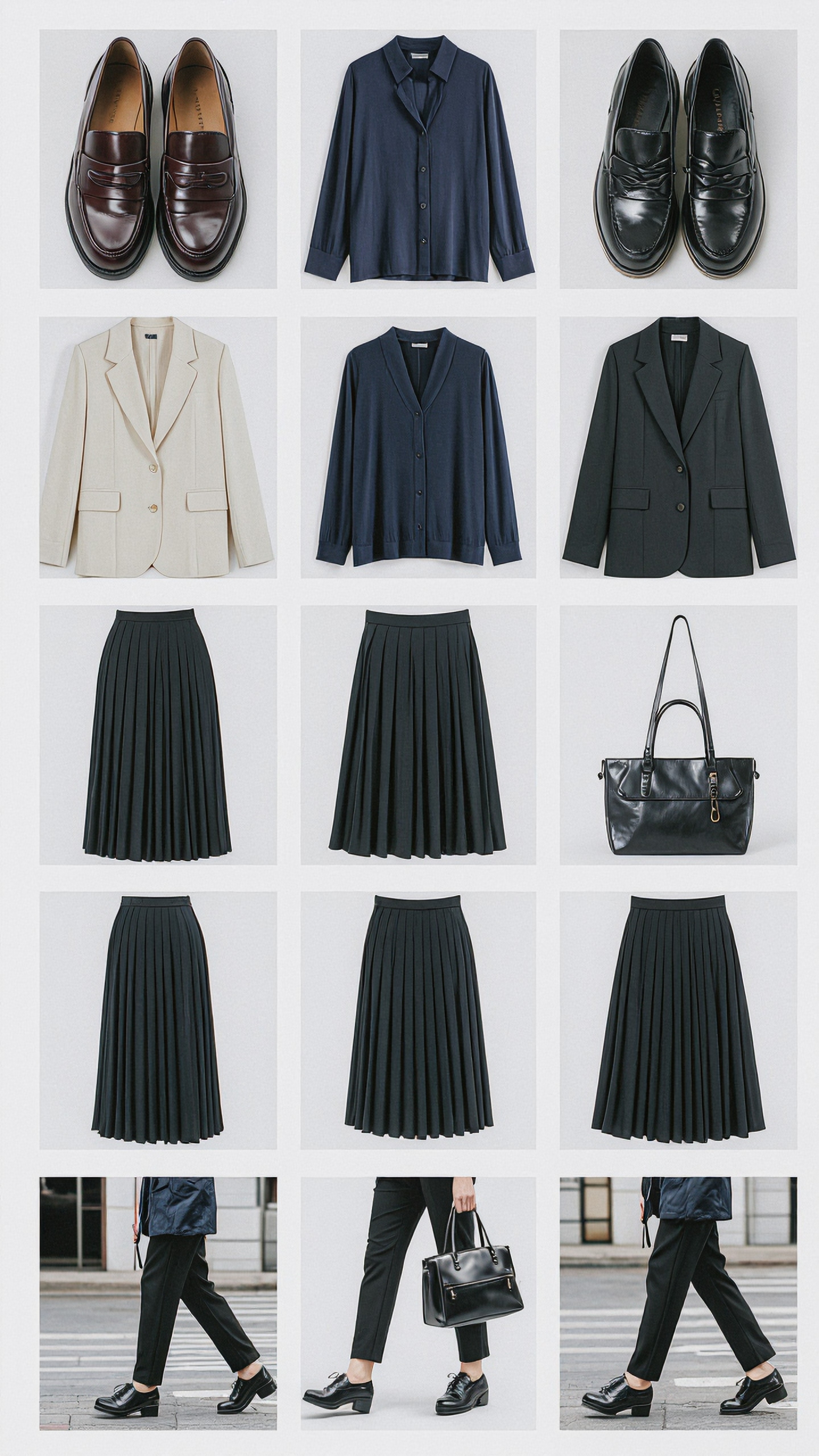
Inspect edge definition and category discipline. This is where mood-first workflows often blur products together or produce unrealistic object scale.
Runway or backstage prompts showed trend interpretation, not just product rendering
Trend articles need some fashion-world context. I tested whether the workflows could suggest why loafers and softer tailoring are trending without becoming costume-like.
Topic: Romantic tailoring trend seen backstage before a fashion presentation
Genre: Runway/Backstage Moment
Camera: Leica SL2-S
Lens: 24-70mm at 55mm f/3.5
Lighting: Mixed backstage tungsten with soft LED fill
Location: Milan Fashion Week backstage dressing area
Style: Documentary fashion realism
Final Prompt: runway backstage moment focused on styling preparation for a back-to-work inspired fashion presentation, visible outfit built around a slate blazer with narrow waist shaping, ivory draped blouse, tea-length pleated skirt, dark cherry loafers, structured satchel, ribbons and garment tags visible, stylist adjusting sleeve cuff, soft romantic editorial mood within a real backstage environment, racks of tailoring in the background, complete outfit silhouette readable, tactile wool and leather texture, natural documentary composition, trend-focused rather than theatrical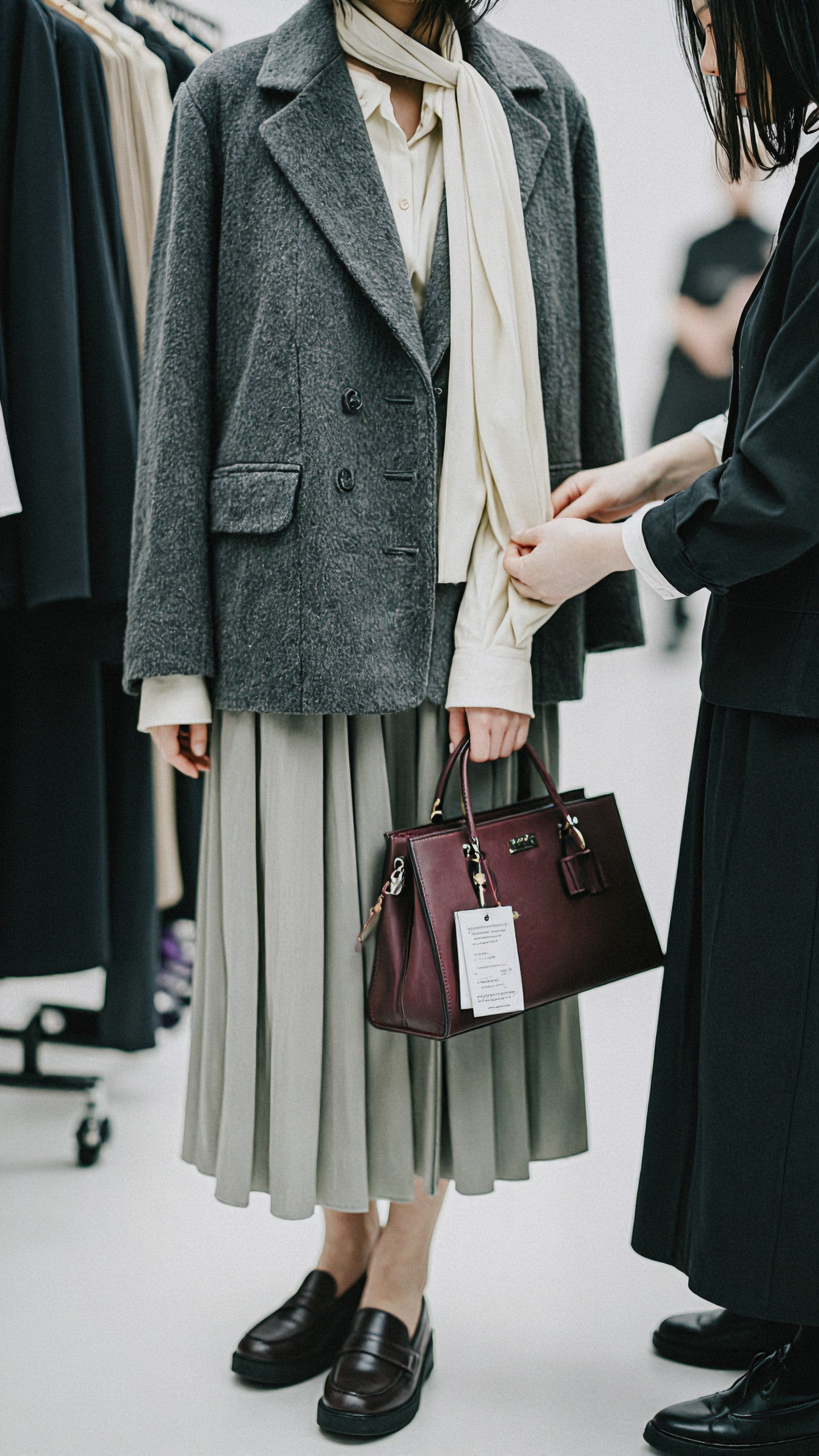
Look for whether the image still reads as wearable office fashion and not a runway costume. Good outputs made the setting richer without corrupting the practicality of the outfit.
Product flat lays clarified styling logic best
When a workflow could not hold a coherent dressed model, flat lays often revealed what the prompt was really saying. This was one of the most useful diagnostic tests in the whole comparison.
Topic: Elevated basics flat lay for a romantic office wardrobe
Genre: Product Editorial
Camera: Canon EOS 5DS R
Lens: 50mm f/4 overhead setup
Lighting: Soft daylight overhead with negative fill for shape
Location: Editorial styling table in a fashion studio
Style: Luxury retail editorial flat lay
Final Prompt: product flat lay of a romantic back-to-work outfit system, cream double-breasted blazer, blush silk blouse with tie neck, charcoal pleated midi skirt, burgundy penny loafers, ivory rib socks, slim leather belt, pearl earrings, structured top-handle bag, paper styling notes and fabric swatches nearby, overhead composition, premium texture detail, clear separation between garments, elegant color harmony, fashion editor wardrobe planning aesthetic, elevated basics with visible office practicality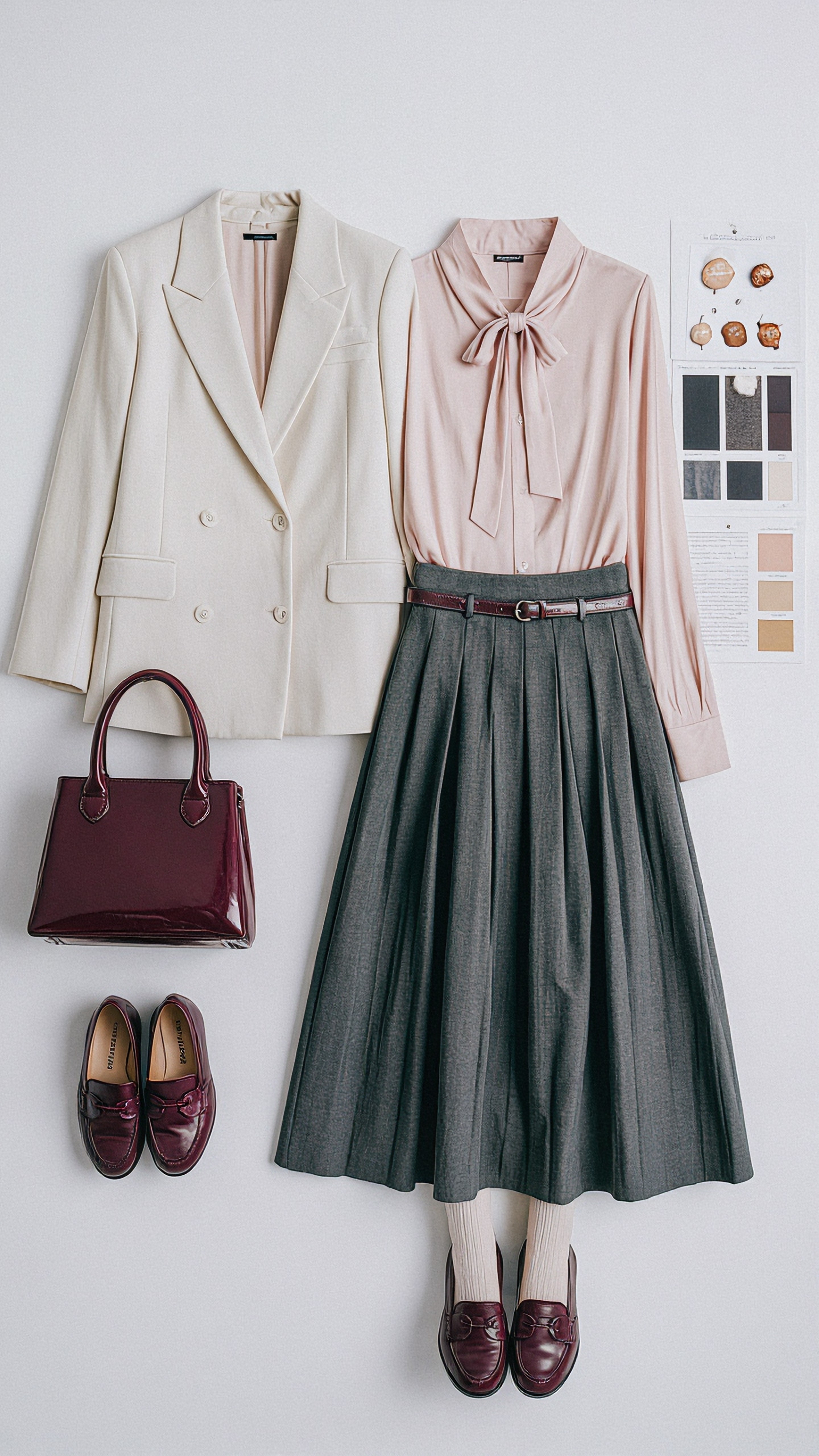
Inspect whether the pieces logically belong together in weight, color, and season. Flat lay tests are useful before moving to full-body generations, and they pair well with [Tools](/tools) for broader workflow support.
Garment detail macros were the best way to test loafer quality
The loafer trend today is easy to mention and hard to render well. Many generators create loafers that look like generic slip-ons unless the leather, vamp, welt, and sole are explicitly emphasized.
Topic: Polished loafers styled for office editorial fashion
Genre: Accessories Close-Up
Camera: Sony A1
Lens: 85mm f/2
Lighting: Soft side light with low warm bounce
Location: Paris studio floor with wool trouser hem and silk skirt edge entering frame
Style: Luxury accessories campaign
Final Prompt: accessories close-up focused on dark oxblood leather loafers worn with fine rib socks beneath a softly pleated midi skirt and tailored trouser hem layered nearby, editorial back-to-work styling context, visible leather shine, stitching, vamp structure, substantial sole, romantic office palette of burgundy, cream and charcoal, graceful standing pose cropped at mid-calf, fashion campaign composition, premium texture realism, shoe remains the hero while the outfit context stays clear
Check if the loafers have believable construction and weight. Weak outputs often smooth out stitching and lose the difference between patent shine and polished calf leather.
Storefront display prompts were useful for trend validation
Retail-style displays show whether a trend can be merchandised coherently. This was one of the clearest ways to compare scene discipline.
Topic: Store display for a romantic back-to-work capsule collection
Genre: Storefront Display
Camera: Nikon D850
Lens: 35mm f/4
Lighting: Early evening storefront illumination with interior accent lighting
Location: Seongsu fashion boutique window display
Style: Contemporary retail editorial
Final Prompt: storefront display presenting a back-to-work capsule wardrobe with romantic tailoring, mannequins styled in oversized blazers, silk blouses, pleated midi skirts, tailored cream trousers, polished chocolate loafers, structured handbags and soft ribbon accents, Seoul Seongsu boutique context, warm interior lighting, premium visual merchandising, clear outfit hierarchy, sophisticated neutral and blush palette, fashion-forward but wearable office styling, street reflections on glass kept subtle, full looks readable from head to toe
Inspect whether the mannequins preserve clean silhouette logic. Strong outputs treated the loafers and blazers as the anchor products instead of burying them in props.
Best choice by use case
Choose Option A if you need usable editorial outputs
Option A is the better workflow for:
- campaign concept frames that need visible outfit logic
- internal trend decks with consistent styling
- fashion lookbooks and category pages
- side-by-side testing of blazer, trouser, and loafer variations
- previsualization before upscaling in [Upscaler](/upscaler)
In this test, it produced the strongest result whenever the image needed to prove a styling argument.
Choose Option B if you need fast inspiration
Option B is the better workflow for:
- mood exploration
- color and atmosphere testing
- editorial brainstorming
- early-stage concept boards
- softer, more emotional fashion campaign direction
I would not use it for final trend evidence unless the image is later rebuilt with a more structured prompt.
Practical recommendation: the prompt ingredients that mattered most
Across both workflows, five ingredients consistently improved results:
1. Named shot type first "street-style full body" or "head-to-toe lookbook" immediately improved outfit visibility.
2. Footwear specificity "penny loafers," "horsebit loafers," or "polished leather loafers with visible rib socks" worked better than just "loafers."
3. Garment relationship Explain how the blazer sits over the blouse and how the skirt or trouser falls into the shoe.
4. Romantic mood through materials, not beauty language Silk tie-neck blouses, pleats, bows, pearl earrings, warm light, and soft movement gave the right tone without losing the office brief.
5. Scene restraint A simple lobby, sidewalk, studio, or boutique works better than an overly cinematic set that distracts from the outfit.
FAQ
What is the best way to prompt editorial fashion AI for back to work outfits?
Start with a shot type and full outfit structure. State the blazer cut, inner layer, bottom, shoe, bag, and the environment. The model needs wardrobe hierarchy more than trend adjectives.
Why do AI images often fail on loafers?
Loafers are small but structurally specific. If you do not mention leather finish, sole thickness, vamp shape, or sock treatment, the model often substitutes generic flats or pumps.
How do you make elevated basics fashion look less boring in AI?
Use texture contrast and silhouette contrast. Pair matte tailoring with silk or fine-gauge knits, and balance structured blazers with pleated skirts or fluid trousers. Keep the palette controlled.
Is a romantic mood compatible with office fashion editorial images?
Yes, if it comes through styling details and light rather than portrait styling. The safest route is soft tailoring, bows, pleats, pearl jewelry, warm neutrals, and polished leather accessories.
Should I use mood boards or full-body prompts first?
For inspiration, mood boards first. For actual comparison and output quality, full-body prompts first. Mood boards can hide structural clothing errors that become obvious in lookbook frames.
Editorial conclusion
For editorial fashion AI back to work style, the best workflow is the structured editorial brief. It is better for anyone who needs images that explain why blazers, loafers, and elevated basics are trending, not just images that feel fashionable at a glance.
Use the mood-led workflow if you are still searching for emotional direction, palette, or campaign atmosphere. Avoid it if you need reliable shoe design, repeatable tailoring, or clean category imagery.
The setting detail that mattered most in this test was not the city or the camera. It was the shot plan plus garment hierarchy: full-body visibility, clear blazer length, explicit loafer type, and restrained romantic cues. When those details were present, the outputs looked like fashion editorial decisions. When they were missing, the images fell back into generic office glamour.