How to Generate High-End Fashion Campaign Images With Qwen Image 2512 한국어 요약
이 페이지는 ZView Space의 영어 원문을 한국어 검색 사용자도 이해할 수 있도록 정리한 SEO 요약입니다. 핵심은 단순한 얼굴 중심 이미지가 아니라 패션 에디토리얼, 룩북, 아웃핏, 프롬프트 테스트, 이미지 생성 워크플로우를 실제로 어떻게 구성할지입니다.
핵심 요약
- 원문 주제: How to Generate High-End Fashion Campaign Images With Qwen Image 2512
- 목적: AI 이미지 생성에서 outfit, silhouette, fabric, pose, location, camera framing을 더 명확하게 설계합니다.
- 활용 범위: Z-Image Turbo, Krea2 Turbo, Qwen Image, Anima, SeedVR2 같은 이미지 생성 및 업스케일 워크플로우에 적용할 수 있습니다.
- SEO 관점: 제목, 설명, 이미지 alt, 프롬프트 예시가 실제 검색 의도와 맞아야 색인 가능성이 높아집니다.
한국어 사용자를 위한 체크포인트
1. 프롬프트가 얼굴 묘사에만 머물지 않고 전체 스타일과 의상 구성을 설명하는지 확인합니다. 2. 패션 이미지라면 상의, 하의, 아우터, 신발, 액세서리, 소재감, 촬영 장소를 분리해서 씁니다. 3. 생성 결과는 바로 게시하지 말고 디테일, 손, 의상 형태, 배경 일관성, 이미지 품질을 비교합니다. 4. 글 본문에는 실제 테스트 기준과 실패를 줄이는 방법이 들어가야 검색엔진에서 얇은 콘텐츠로 보일 가능성이 줄어듭니다.
원문 미리보기
High end fashion imagery depends on controlled styling, believable materials, precise lighting, and a strong point of view. Qwen Image 2512 can be useful for developing campaign concepts, visual directions, lookbooks, and pre production references, but it stil
---
High-end fashion imagery depends on controlled styling, believable materials, precise lighting, and a strong point of view. Qwen Image 2512 can be useful for developing campaign concepts, visual directions, lookbooks, and pre-production references, but it still needs structured prompting and careful review to avoid generic luxury clichés.
This guide focuses on practical prompt construction for fashion campaign images: editorial scenes, accessory close-ups, e-commerce-adjacent lookbooks, and beauty-led visuals.
What Qwen Image 2512 Is Good For in Fashion Workflows
Qwen Image 2512 is well suited to image generation tasks where the prompt describes a complete visual system: model, garment, pose, location, lighting, lens language, and art direction. For fashion use, its strongest applications are usually:
- Campaign mood exploration before a shoot
- Editorial concept boards for stylists and creative directors
- Seasonal lookbook references
- Luxury product and accessory compositions
- Beauty, fragrance, and cosmetics campaign drafts
- Background, lighting, and pose testing before production
The model can produce polished visuals, but the difference between a usable fashion image and a generic glossy render is usually in the prompt. Fashion campaigns need specificity: fabric behavior, silhouette, color palette, set design, and photographic constraints.
Prompt Structure for High-End Fashion Results
A reliable fashion prompt should include six elements:
1. Subject: model type, pose, expression, styling 2. Garment: silhouette, textile, color, construction details 3. Setting: studio, architectural space, street, landscape, set design 4. Lighting: hard flash, softbox, golden hour, rim light, overcast daylight 5. Camera language: lens, crop, depth of field, editorial framing 6. Quality controls: avoid warped hands, fake logos, plastic skin, over-sharpening
For Qwen Image 2512, prompts generally work best when written as art-direction briefs rather than keyword piles. Use precise nouns and avoid stacking too many incompatible aesthetics.
Use Case 1: Editorial Fashion Campaign Visual
Editorial fashion campaigns often rely on controlled drama: a strong silhouette, unusual environment, and restrained styling. The following prompt is designed for a luxury outerwear concept with architectural scale and cinematic lighting.
High-end editorial fashion campaign image for a winter outerwear collection, full-body portrait of a model standing in a vast concrete gallery with tall brutalist columns, oversized charcoal wool coat with sculptural shoulders, black leather gloves, minimal styling, calm confident expression, strong posture, cool grey and black color palette, directional softbox lighting from camera left, subtle rim light separating the coat from the background, 85mm fashion photography look, clean editorial composition, realistic fabric texture, natural skin detail, no visible brand logos, no text, no extra fingers, no distorted hands, no plastic skin, no exaggerated retouching, aspect ratio 4:5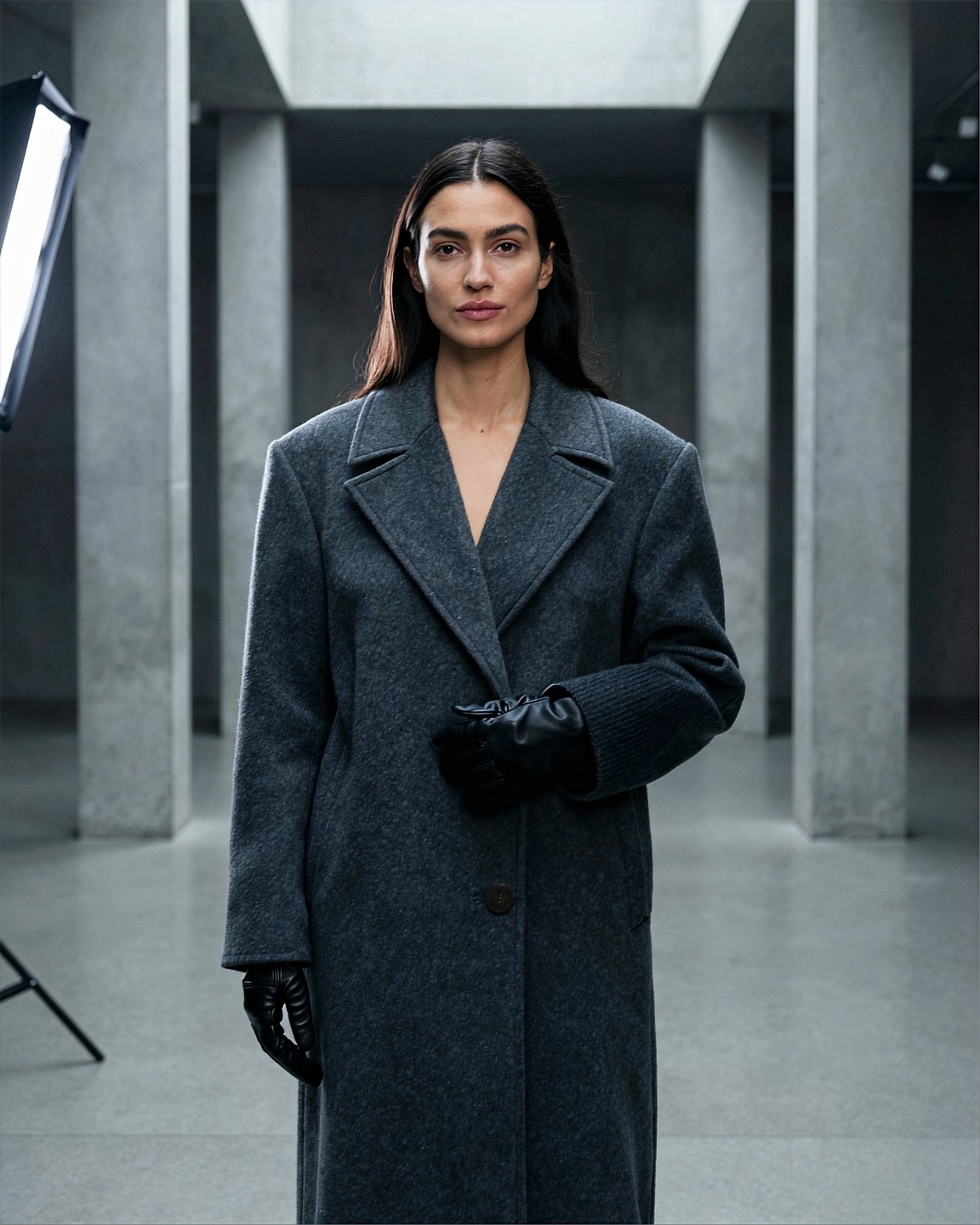
Why it works
The prompt defines a coherent campaign world: brutalist architecture, structured outerwear, cool palette, and controlled studio-style light. The negative constraints are not just generic; they target common fashion-image failures such as fake logos, hand distortion, and overly synthetic skin.
Use Case 2: Luxury Accessory and Product Campaign
Accessories require different control than full-body fashion. The product must be clear, readable, and premium without inventing brand marks. Qwen Image 2512 can generate strong reference images for handbags, jewelry, sunglasses, footwear, and watches if the prompt separates product detail from atmosphere.
Luxury fashion accessory campaign image featuring an unbranded structured handbag in deep oxblood leather placed on a polished dark stone plinth, elegant female model partially visible in the background wearing a cream silk blouse, shallow depth of field, focus on the handbag texture, precise stitching, subtle metal hardware with no logo, warm studio spotlight, soft shadow gradient, refined still-life composition, magazine advertising style, realistic leather grain, muted burgundy cream and charcoal palette, no readable text, no brand marks, no warped hardware, no duplicate handles, aspect ratio 3:4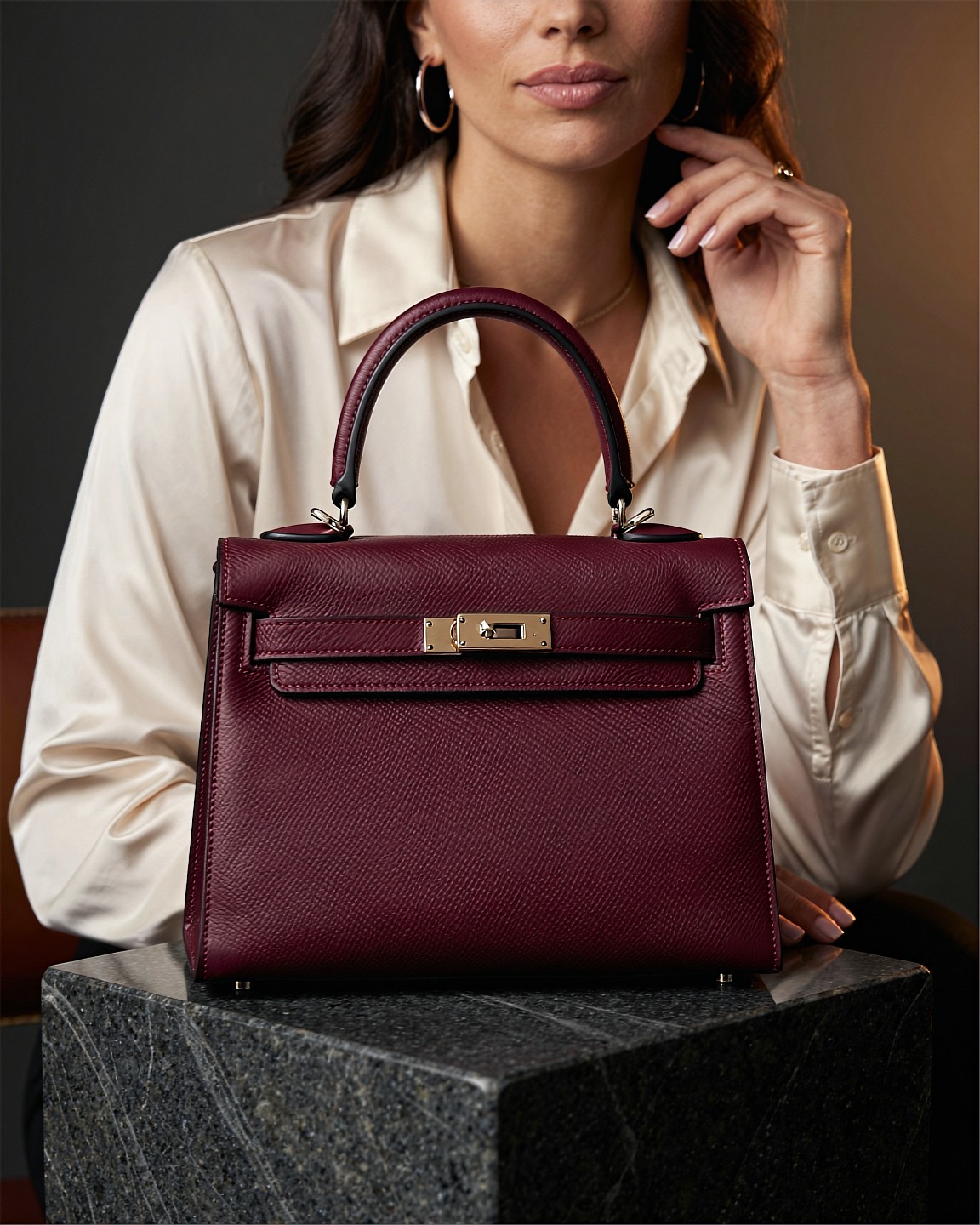
Technical notes
For product-led fashion images, emphasize material behavior and geometry: leather grain, stitching, hardware alignment, clean silhouette. If the generated image creates unreadable marks or pseudo-branding, regenerate with stronger constraints such as plain hardware, unbranded surface, or no emblem.
Use Case 3: Lookbook Image With Commercial Restraint
A lookbook image should be cleaner and more repeatable than an editorial campaign frame. The aim is to show the garment clearly while preserving a high-end visual tone. This is useful for early merchandising pages, collection previews, and stylist references.
Premium fashion lookbook image, model standing against a seamless warm beige studio backdrop, wearing a tailored ivory linen suit with relaxed wide-leg trousers and a sleeveless double-breasted vest, neutral sandals, hands resting naturally at sides, straight posture, minimal jewelry, soft diffused studio lighting, accurate garment proportions, visible linen texture, clean catalog-meets-editorial composition, 50mm lens perspective, full body crop with slight floor shadow, natural skin texture, no logo, no text, no extra limbs, no bent fingers, no unrealistic waist, aspect ratio 4:5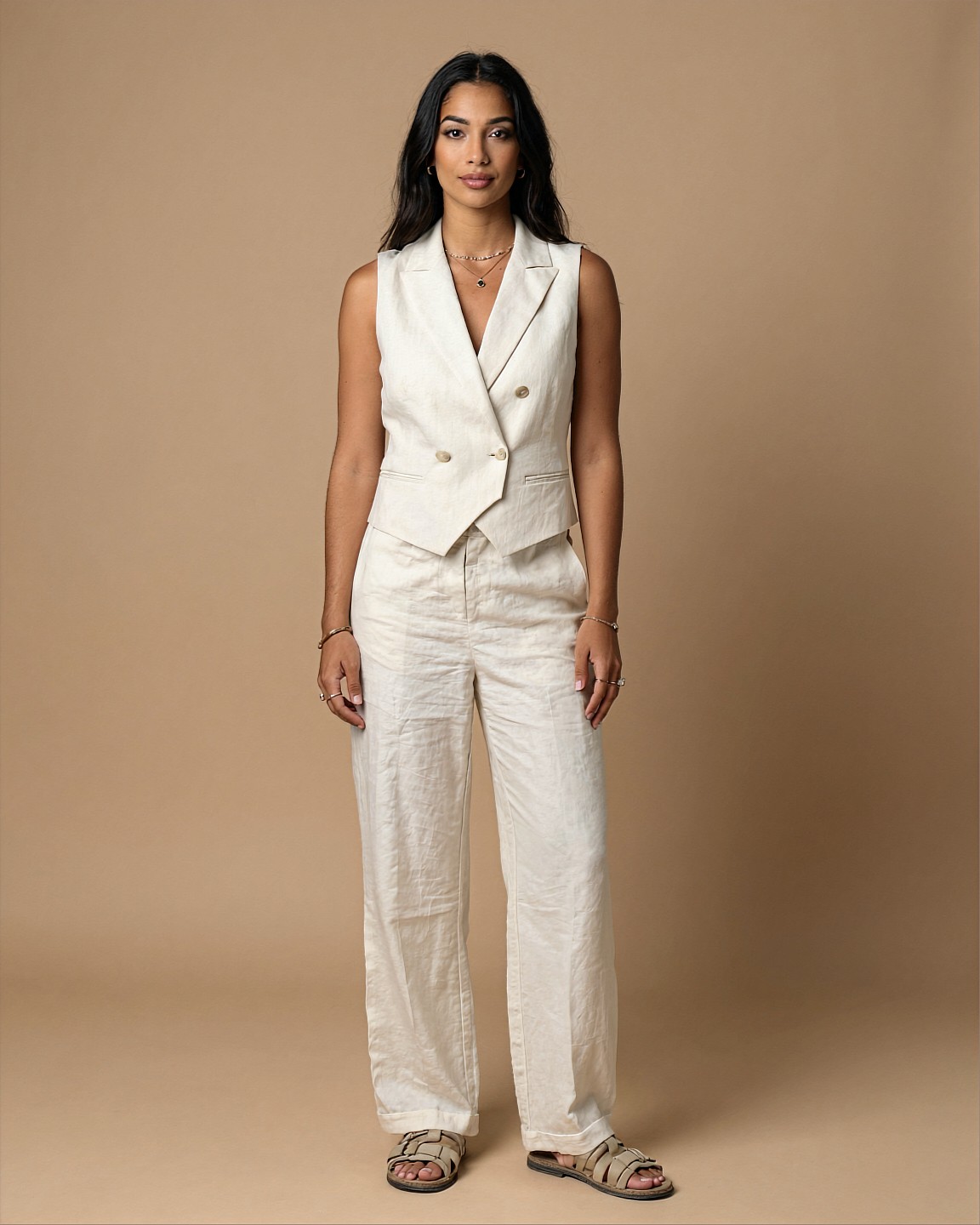
Where this fits in production
This type of prompt is practical for testing silhouettes, color stories, and styling combinations before a sample shoot. It can also help teams compare garment presentation styles: full-body, three-quarter crop, studio floor shadow, or neutral backdrop.
For multi-image consistency, keep the backdrop, lens language, lighting, and pose vocabulary stable across prompts. Change only the garment details and color palette.
Use Case 4: Beauty-Led Fashion Campaign
Beauty and fashion campaigns often overlap, especially for fragrance, jewelry, cosmetics, and couture accessories. Here, facial rendering, skin texture, hair styling, and lighting quality matter more than background complexity.
High-end beauty fashion campaign close-up, model with slicked-back hair and luminous natural skin wearing a black satin off-shoulder dress and single sculptural silver earring, three-quarter face angle, calm direct gaze, glossy editorial makeup with soft taupe eyeshadow and muted berry lip, dark gradient studio background, large diffused beauty dish reflection in the eyes, controlled highlights on cheekbones and satin fabric, 100mm portrait lens look, shallow depth of field, luxury magazine cover quality without text, realistic pores, symmetrical earring shape, no over-smoothed skin, no distorted eyes, no extra jewelry, aspect ratio 4:5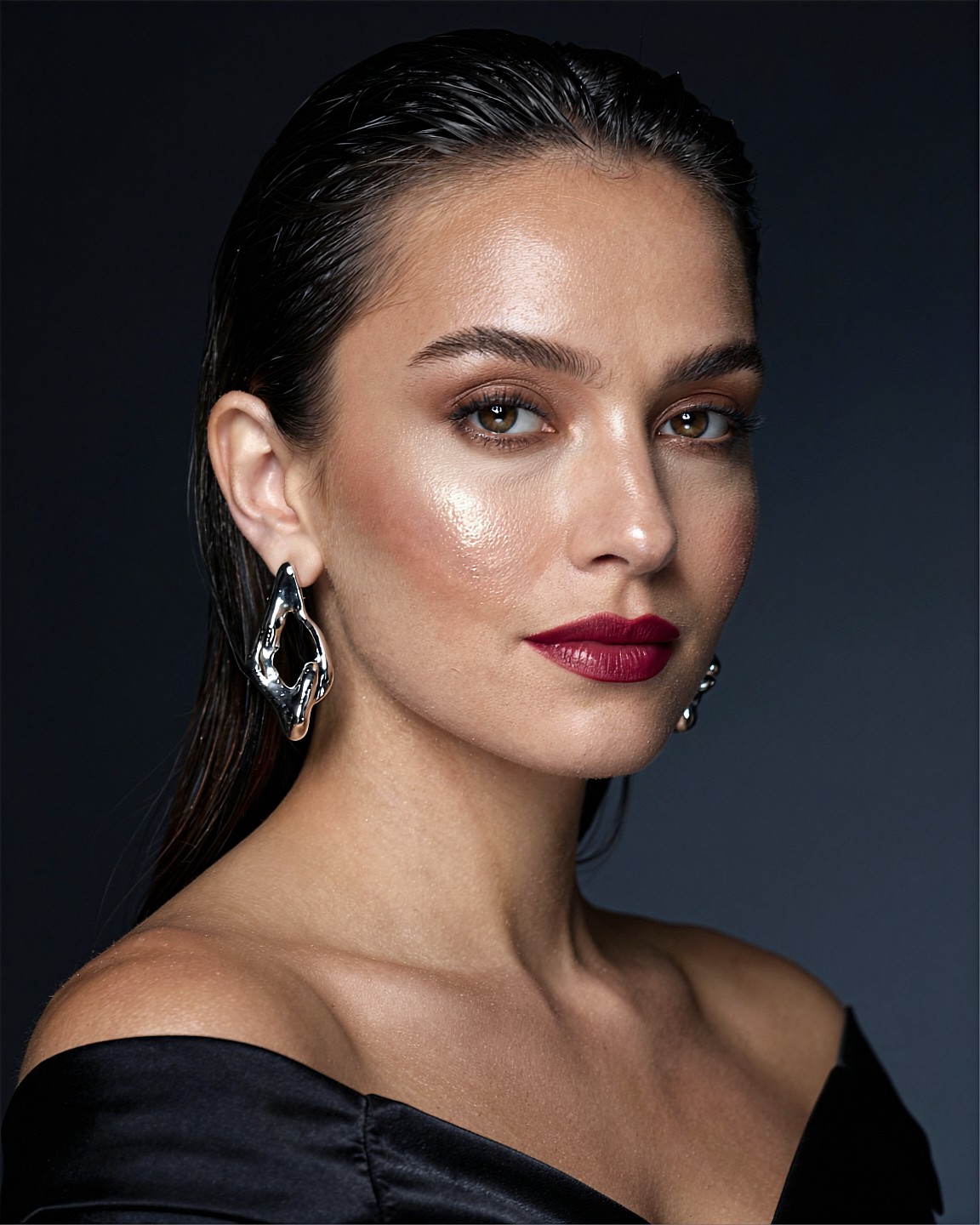
What to check before using the result
Beauty images need closer inspection than wide fashion frames. Review the eyes, teeth, earring geometry, hairline, skin texture, and neckline. Small artifacts are more visible in close-up campaign imagery and may require inpainting or manual retouching.
Controlling Aesthetic Without Overloading the Prompt
High-end fashion images often fail when the prompt mixes too many references: cinematic, streetwear, couture, cyberpunk, documentary, runway, and luxury editorial all at once. A cleaner approach is to choose one dominant visual logic.
Useful control terms include:
- For quiet luxury: restrained palette, soft daylight, natural fabric texture, minimal styling
- For editorial drama: sculptural silhouette, hard shadows, architectural set, high contrast
- For commercial polish: clean backdrop, accurate garment proportions, full-body crop
- For beauty campaigns: close-up, controlled highlights, precise makeup, realistic pores
Avoid vague quality boosters as the main direction. Terms like premium or cinematic can help, but they should not replace concrete details about lighting, styling, composition, and materials.
Practical Settings and Iteration Strategy
A good workflow is to generate in small controlled batches rather than changing everything at once.
1. Start with one prompt and a fixed aspect ratio. 2. Generate several variations. 3. Select the best composition, not just the sharpest image. 4. Modify one variable: lighting, garment color, pose, or background. 5. Use image editing or inpainting for hands, jewelry, seams, and product edges. 6. Upscale only after the image passes concept and anatomy checks.
For fashion campaign work, the most common useful aspect ratios are 4:5 for social and editorial crops, 3:4 for product-led layouts, 2:3 for magazine-style verticals, and 16:9 for campaign banners.
Limitations to Expect
Qwen Image 2512 can create convincing fashion visuals, but it is not a substitute for legal clearance, real product photography, or final retouching. Watch for:
- Invented logos or text-like marks
- Inconsistent garment construction
- Hands intersecting fabric or accessories
- Overly smooth skin and synthetic fabric sheen
- Jewelry asymmetry in close-ups
- Product geometry errors, especially bags and shoes
- Repeated model faces across unrelated concepts
If the output is intended for commercial use, avoid generating recognizable brand elements, celebrity likenesses, or protected designs. Use the model for concept development and original art direction rather than imitation.
Final Takeaway
Generating high-end fashion campaign images with Qwen Image 2512 is less about asking for luxury and more about specifying the visual system behind it. Strong prompts describe fabric, silhouette, lighting, pose, lens, setting, and constraints in one coherent direction.
For professional workflows, the model is most valuable as a fast visual development tool: campaign moodboards, lookbook tests, accessory compositions, and beauty references. The best results still come from iteration, selective editing, and a critical eye for fashion-specific details.
<!-- zview-hands-on-backfill -->
Practical Test Notes
What this article should verify
- Whether this prompt structure can produce fashion images that read as campaign-ready, not just generic luxury portraits.
- Whether Qwen Image 2512 can keep garment shape, material behavior, and styling logic consistent across editorial, accessory, lookbook, and beauty use cases.
- Whether the test setup gives enough control over lighting, lens language, and composition to match the intended fashion brief.
- Whether common failure points in fashion generation are reduced by explicit constraints, especially around hands, logos, skin texture, and product details.
Result checks
When reviewing the existing or future outputs, the main result checks are visual rather than theoretical. What to inspect:
- Face stability: natural eyes, believable symmetry, no melted features, and expression that fits the brief.
- Hand risk: finger count, hand posture, glove edges, and whether hands look anatomically plausible instead of hidden for convenience.
- Lighting control: does the light direction match the prompt, and do highlights on skin, satin, leather, or metal look intentional rather than random?
- Texture quality: wool, linen, leather, satin, and skin should each read differently; fabric should not collapse into smooth plastic surfaces.
- Background consistency: architecture, seamless studio backdrops, and dark gradient sets should remain coherent with no broken geometry or distracting artifacts.
- Product clarity: on accessory images, inspect stitching, handle count, hardware symmetry, edge finish, and absence of fake brand marks.
- Style consistency: framing, palette, and retouching level should feel editorially aligned, not like four unrelated image styles.
Failure risks
The main failure risks appear when prompts stack too many luxury cues without enough hierarchy. That can produce polished but generic images with weak fashion identity. Beauty close-ups may over-smooth skin; accessory scenes may distort hardware or duplicate handles; full-body looks may introduce warped hands, awkward feet, or incorrect garment drape. Another weak point is camera language: if lens, crop, and pose are underdefined, the output can drift into catalog, beauty, or cinematic territory inconsistently.
Practical recommendation
Use this setup if you need concept visuals, pitch boards, or pre-production references with a clear fashion art-direction brief. Avoid relying on it for final client delivery when product accuracy, exact garment construction, or branded details must be precise. The detail that matters most is prompt specificity: define one visual system clearly, then use result checks to reject images that look luxurious but fail on anatomy, material realism, or product fidelity.