How to Build a Korean Fashion Trend Mood Board With AI: Streetwear, Runway, Beauty, and Retail References 한국어 요약
이 페이지는 ZView Space의 영어 원문을 한국어 검색 사용자도 이해할 수 있도록 정리한 SEO 요약입니다. 핵심은 단순한 얼굴 중심 이미지가 아니라 패션 에디토리얼, 룩북, 아웃핏, 프롬프트 테스트, 이미지 생성 워크플로우를 실제로 어떻게 구성할지입니다.
핵심 요약
- 원문 주제: How to Build a Korean Fashion Trend Mood Board With AI: Streetwear, Runway, Beauty, and Retail References
- 목적: AI 이미지 생성에서 outfit, silhouette, fabric, pose, location, camera framing을 더 명확하게 설계합니다.
- 활용 범위: Z-Image Turbo, Krea2 Turbo, Qwen Image, Anima, SeedVR2 같은 이미지 생성 및 업스케일 워크플로우에 적용할 수 있습니다.
- SEO 관점: 제목, 설명, 이미지 alt, 프롬프트 예시가 실제 검색 의도와 맞아야 색인 가능성이 높아집니다.
한국어 사용자를 위한 체크포인트
1. 프롬프트가 얼굴 묘사에만 머물지 않고 전체 스타일과 의상 구성을 설명하는지 확인합니다. 2. 패션 이미지라면 상의, 하의, 아우터, 신발, 액세서리, 소재감, 촬영 장소를 분리해서 씁니다. 3. 생성 결과는 바로 게시하지 말고 디테일, 손, 의상 형태, 배경 일관성, 이미지 품질을 비교합니다. 4. 글 본문에는 실제 테스트 기준과 실패를 줄이는 방법이 들어가야 검색엔진에서 얇은 콘텐츠로 보일 가능성이 줄어듭니다.
원문 미리보기
If the goal is a korean fashion trend mood board that feels usable by a stylist, marketer, or brand team, the best workflow in this test was not a single prompt and not a single image type. The strongest boards came from a split approach: one workflow for wide
---
If the goal is a korean fashion trend mood board that feels usable by a stylist, marketer, or brand team, the best workflow in this test was not a single prompt and not a single image type. The strongest boards came from a split approach: one workflow for wide fashion context images like streetwear and runway, and a second workflow for controlled beauty and retail reference frames. Trying to force all four categories into one prompt style produced inconsistent garments, weak retail details, and too many face-first images that did not help with trend mapping.
What worked was treating the mood board like a real pre-production document: silhouette references, garment systems, color direction, textile cues, accessory logic, beauty campaign frames, and store-display context. In this test, the difference between a useful board and a pretty but vague one came down to prompt structure, aspect ratio choices, and how specifically the Korean context was described.
What I tested
I tested two practical workflows for building a Korean fashion trend mood board with AI:
- Option A: single-model text-to-image workflow for generating all image types from prompts only
- Option B: hybrid workflow using text-to-image for hero references, then image-to-image or variation passes for board consistency and category control
The categories tested were:
- Korean street fashion
- Seoul fashion week style and runway references
- Korean beauty campaign imagery
- Retail display and visual merchandising references
Comparison criteria were simple and operational:
1. Style lock: does the model keep a coherent Seoul/Korean fashion direction across frames? 2. Garment readability: can you actually inspect outerwear, layering, fabric, bag shape, footwear, and silhouette? 3. Category accuracy: does runway look like runway, retail look like retail, and beauty feel campaign-grade rather than random portraiture? 4. Board usefulness: would a designer or marketer learn something actionable from the outputs? 5. Failure rate: hands, text, accessories, mannequin logic, store fixtures, and over-stylized faces
My practical verdict: Option A is faster for exploration; Option B is better for deliverable quality.
The fast route that worked best for exploration
For early ideation, the single-model workflow was the most efficient way to map visual territory. It was especially strong for Korean street fashion and runway-adjacent images because those categories tolerate a bit of atmospheric interpretation. If the oversized blazer is slightly exaggerated or the footwear shape shifts between generations, the image can still do useful mood-board work.
The strongest result in this setup came from prompts that emphasized full-body styling systems rather than individual faces. Once I explicitly asked for layered proportions, bag placement, sock-shoe relationship, and pavement or venue context, the outputs started to feel closer to Seoul street observation than generic "Asian fashion editorial" drift.
This first prompt checks whether the model can render modern Seoul street layering without collapsing the outfit into a portrait crop.
Topic: Korean streetwear layering for a Seoul trend mood board
Genre: Street Style
Camera: Fujifilm GFX100 II
Lens: 63mm f/2.8
Lighting: Overcast diffusion
Location: Seongsu side street with cafes, concrete walls, parked scooters, subtle retail signage
Style: Korean magazine street fashion
Final Prompt: Full-body Korean street fashion reference for a trend mood board, young adult model walking through Seongsu in layered oversized charcoal blazer over a washed grey hoodie, wide-leg black trousers with visible volume, white ribbed socks, vintage running sneakers, structured crossbody bag, silver jewelry, natural dark hair, neutral expression, captured mid-step, emphasis on silhouette balance and garment drape, realistic Korean street environment with muted signage and concrete textures, overcast diffused daylight, Fujifilm GFX100 II realism, 63mm f/2.8 natural perspective, editorial composition with enough negative space for mood board layout, crisp textile detail, cool grey and asphalt color palette, authentic Seoul fashion energy, no portrait crop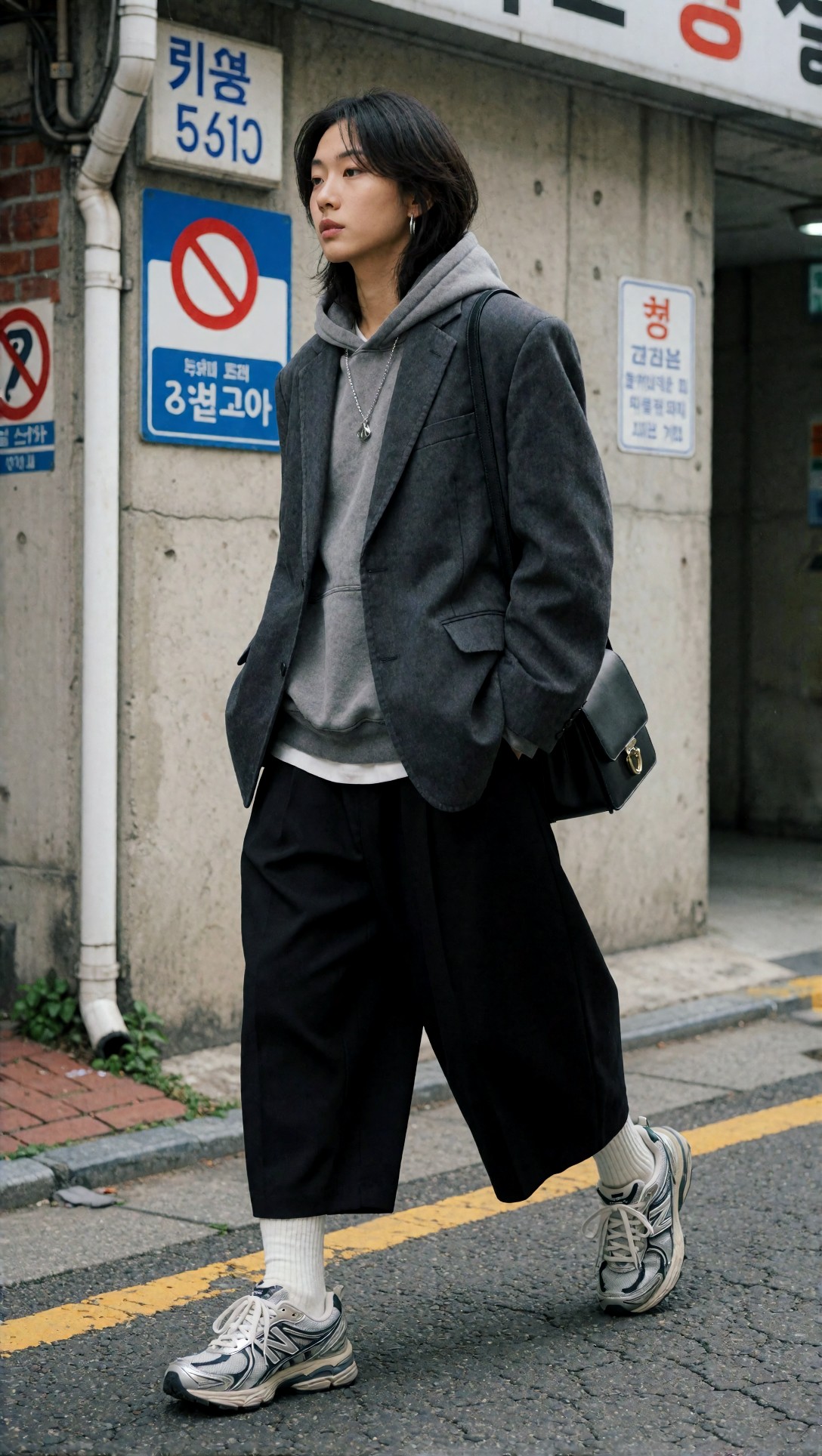
Inspect whether the blazer, hoodie, trouser width, and sneaker proportion read as one styling system. The weak point to watch is whether the model turns the scene into a beauty shot and crops away the footwear or bag.
For runway references, the single-model route produced good boards when I described the venue and garment motion, not just "Seoul Fashion Week" as a label. Generic mentions of fashion week often created vague catwalks with luxury-brand clichés. Adding seating geometry, lighting contrast, and textile movement improved accuracy.
This test checks whether the model can separate runway presentation from street style while preserving Korean trend cues like layered tailoring and utility detail.
Topic: Seoul fashion week runway tailoring and utility references
Genre: Fashion Editorial
Camera: Canon EOS R5
Lens: 70-200mm f/2.8 at 135mm
Lighting: Runway spotlight with dark audience falloff
Location: Minimal industrial fashion week venue in Seoul with polished concrete runway and seated editors
Style: Contemporary runway report
Final Prompt: Korean runway reference image for a fashion trend mood board, full-body model on a Seoul fashion week runway wearing a deconstructed navy trench layered over a technical vest, elongated white shirt hem, pleated wide trousers, leather utility belt, pointed black boots, clean slick hair, serious runway expression, stride captured at peak motion, industrial venue with polished concrete floor and dim audience, sharp runway spotlight creating contrast and fabric sheen, Canon EOS R5 look, 135mm runway compression, editorial trade-report framing, focus on silhouette, seam construction, movement of hem layers, dark navy, ivory, graphite palette, premium textile realism, no celebrity styling, no fantasy elements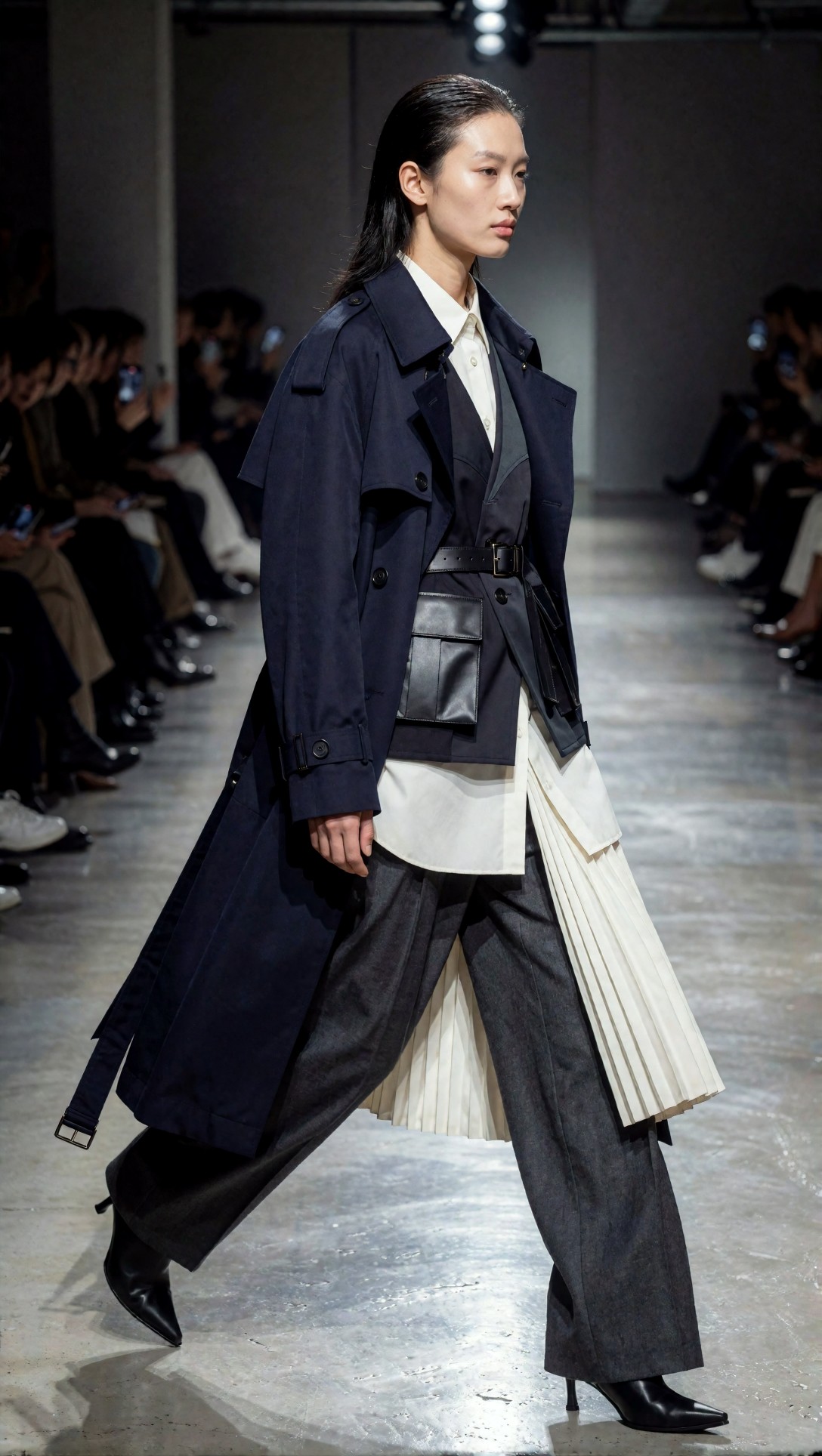
What to inspect here is garment construction and catwalk logic. A good result shows believable stride, hem movement, and venue depth; a weak result often produces impossible belts, tangled shirt layers, or an audience that looks AI-smeared.
Where the hybrid workflow pulled ahead
The hybrid workflow was better once the board needed to feel intentional rather than exploratory. In this setup, I generated broad candidate images first, then used variations or image-guided passes to keep color, model casting, composition rhythm, and category separation more stable.
This mattered most for beauty campaign and retail reference images. Those categories break quickly when the model improvises too much. Beauty needs controlled skin, product adjacency, makeup focus, and polished framing. Retail needs believable shelving, folded inventory logic, hanger spacing, fixture materials, and display hierarchy. Text generation remained unreliable, so I treated signage as abstract branding, not readable copy.
This beauty test checks whether the workflow can support cosmetics-led fashion direction without losing wardrobe context.
Topic: Korean beauty campaign tied to fashion trend color direction
Genre: Beauty Campaign
Camera: Sony A7R V
Lens: 85mm f/1.4
Lighting: Studio butterfly light with soft fill and subtle silver reflector
Location: Minimal cream studio set with translucent acrylic panels and reflective surface
Style: High-end Korean beauty advertising
Final Prompt: Korean beauty campaign reference for a fashion mood board, three-quarter composition of model wearing a soft tailored blush pink jacket with clean lapels and minimal jewelry, glass skin makeup, muted rose lip, softly defined eyes, hair neatly tucked behind ears, one hand near collar to reveal fabric texture, translucent acrylic set pieces creating elegant reflections, studio butterfly light with polished skin highlight control, Sony A7R V high-resolution beauty look, 85mm f/1.4 shallow depth with sharp eyes and visible textile weave, calm premium expression, palette of blush, cream, pearl, and soft taupe, composition that links beauty direction with apparel trend forecasting, luxury Korean campaign finish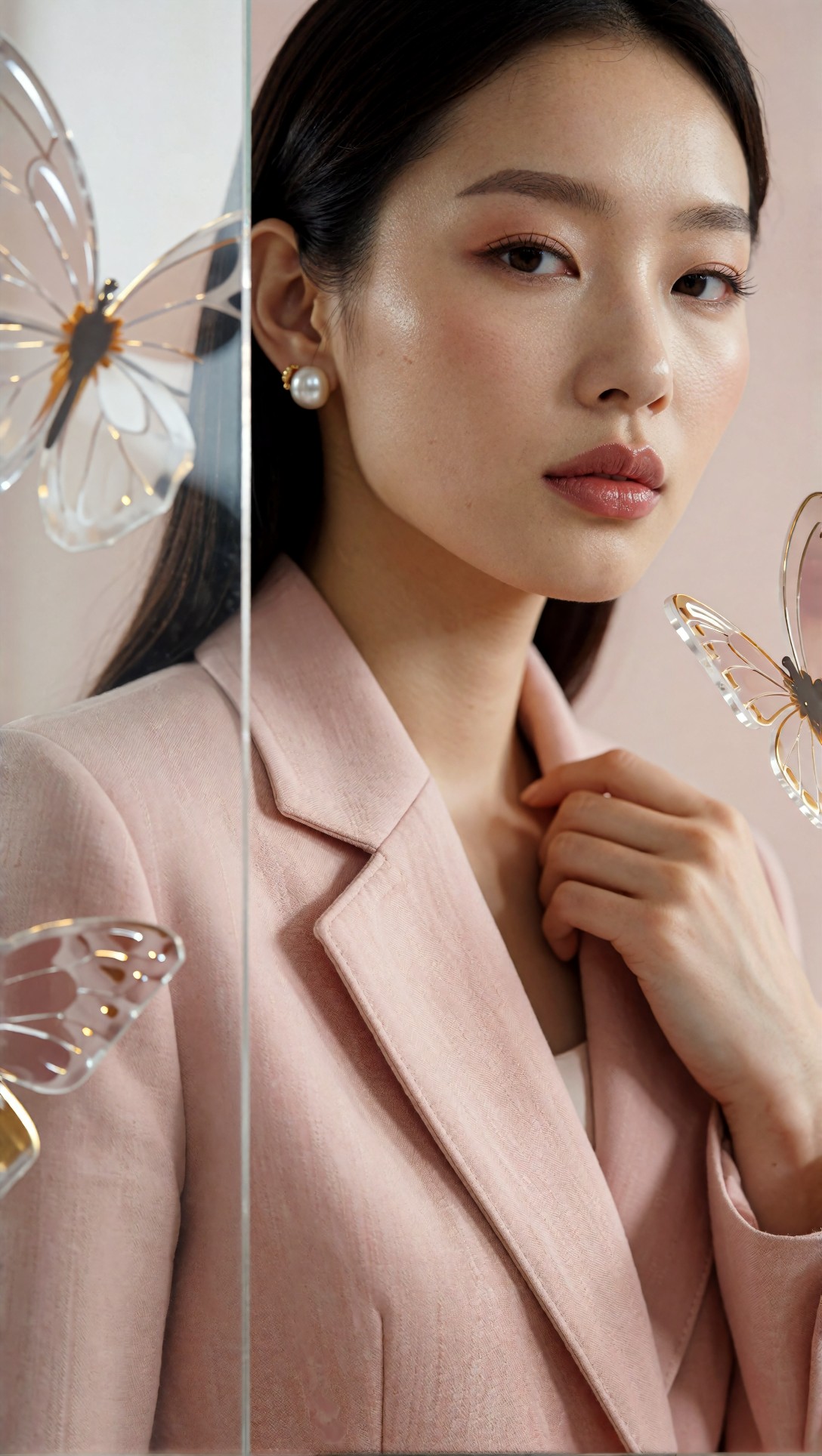
Inspect whether the makeup, skin texture, and jacket fabric all support one direction. If the face dominates too much and the garment becomes incidental, the image is less useful for a trend board.
Retail references improved the most from the hybrid approach because consistency matters more than spectacle. The useful outputs were front-facing, cleanly lit, and merchandising-focused. Dramatic editorial language usually made the store look like a set rather than a viable retail reference.
This prompt is meant to test fixture realism, product clarity, and whether the model understands premium Korean retail styling beyond vague boutique imagery.
Topic: Korean fashion retail display and visual merchandising reference
Genre: Product Editorial
Camera: Nikon Z8
Lens: 35mm f/2
Lighting: Softbox key light mixed with clean overhead retail illumination
Location: Premium Seoul department store concept corner with brushed steel racks, pale stone floor, folded knit tables
Style: Clean commercial retail look
Final Prompt: Korean fashion retail reference for a trend mood board, wide interior view of a premium Seoul department store fashion corner, coordinated display featuring muted sage bomber jackets, cream knitwear, straight denim, leather loafers, mini shoulder bags, neatly folded stacks, color-blocked rack sequencing, brushed steel fixtures, pale stone flooring, mirror panel accents, realistic spacing between garments, no readable brand text, no customers blocking product view, Nikon Z8 commercial realism, 35mm f/2 balanced interior framing, softbox-enhanced clean retail lighting with visible texture on cotton, knit, and leather, calm upscale atmosphere, merchandising-focused composition suitable for trend and retail planning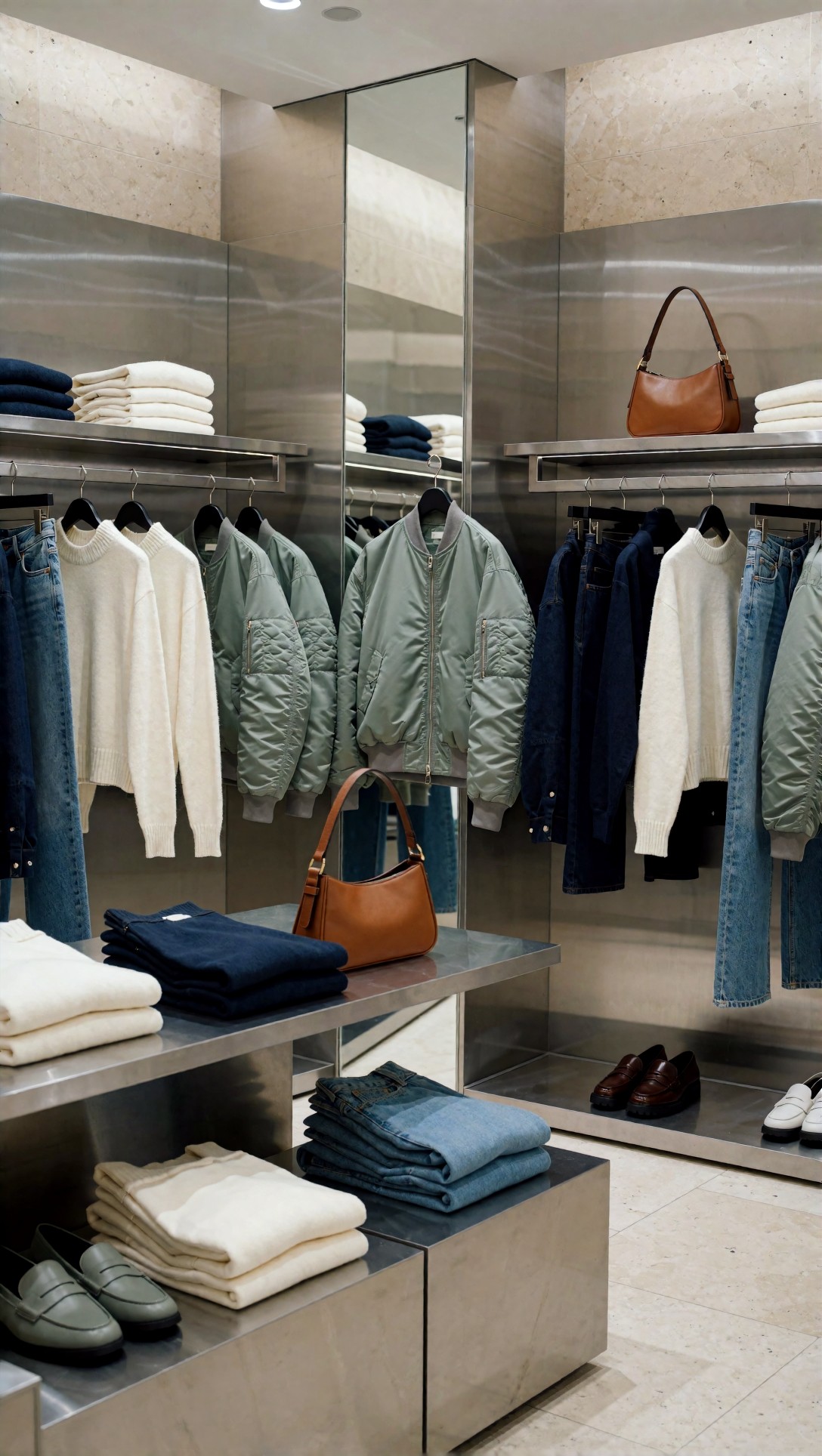
Check whether product categories are easy to parse at a glance. The common failure risk is clutter: duplicated garments, impossible shelf geometry, or accessory proportions that make the scene less trustworthy.
Side-by-side tradeoffs
Option A: text-to-image only
Strengths
- Fastest way to explore multiple Korean fashion trends
- Good for streetwear, runway atmosphere, and broad seasonal direction
- Easier to generate visual variety across palettes and silhouettes
- Useful when you need many candidate frames before narrowing the board
Weak points
- Inconsistent beauty framing and makeup precision
- Retail scenes often drift into lifestyle interiors instead of merchandising references
- Identity consistency across the board is weak unless you lock prompts tightly
- Easy to end up with too many face-led fashion images and not enough full-look evidence
Option B: hybrid workflow with variation or image guidance
Strengths
- Better board coherence across categories
- Stronger control of color story, casting feel, and visual rhythm
- More reliable for beauty, retail, and campaign-grade polish
- Easier to create a mood board that looks assembled on purpose rather than randomly generated
Weak points
- Slower and more iterative
- Requires stronger curation discipline
- If the seed image is weak, the entire board inherits its weaknesses
- Can over-homogenize results if every image is pushed through the same reference system
In this test, I would use Option A to gather raw visual lanes, then Option B to refine the final board into a client-facing or internal planning asset.
Prompt ingredients that made the difference
The best prompts used six practical ingredients repeatedly:
1. Specific Korean context: Seongsu, Apgujeong, Seoul fashion week venue, department store corner, beauty campaign set 2. Full-body styling language: not just clothes, but layering order, trouser volume, bag type, footwear, and outerwear proportion 3. Category-specific camera logic: long lens compression for runway, wider lenses for retail, portrait lens for beauty 4. Lighting that matches the use case: overcast streetwear, spotlight runway, studio-controlled beauty, clean retail illumination 5. Palette control: trend boards become more useful when color families are deliberate 6. Composition constraints: full-body, wide interior, three-quarter crop, negative space for board assembly
When prompts skipped these ingredients, the outputs looked stylish but not informative.
Streetwear and editorial references that exposed the model differences
This test checks whether the model can handle more youth-driven Korean street fashion with accessories and layered casual tailoring without turning everything into luxury minimalism.
Topic: Youth-driven Korean street fashion with layered casual tailoring
Genre: Fashion Editorial
Camera: Leica SL2-S
Lens: 50mm f/1.4
Lighting: Late afternoon natural light with soft shadow edges
Location: Hongdae alley with posters, brick textures, and mixed independent retail fronts
Style: Contemporary youth fashion editorial
Final Prompt: Full-body Korean street fashion editorial for a trend mood board, model standing casually in Hongdae wearing a cropped nylon windbreaker over a striped knit polo, long white tee underlayer, loose faded denim, chain detail at belt loop, compact nylon backpack, sporty sunglasses pushed up on head, low-profile sneakers, slightly slouched pose, confident but unforced expression, late afternoon Seoul street light with soft shadows, brick and poster textures in the background, Leica SL2-S realism, 50mm f/1.4 balanced subject context, detailed denim fading and nylon texture, blue, rust, cream, and asphalt palette, editorial framing focused on silhouette and styling logic, not a headshot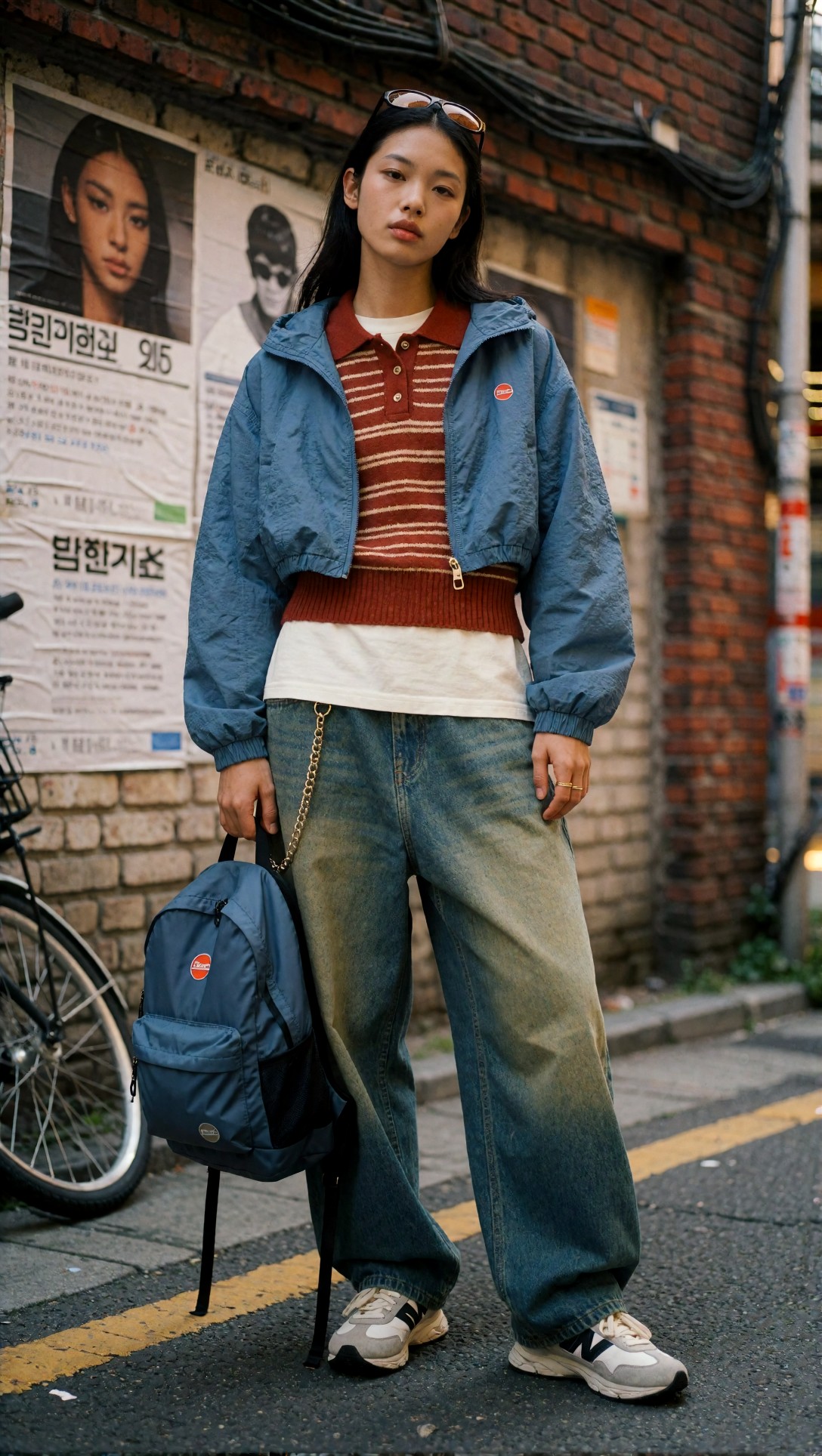
Look for whether the accessories belong to the outfit rather than appearing randomly attached. Good outputs show a coherent casual system; weak ones scramble backpack straps, chain placement, or underlayers.
This runway test pushes texture and formal fashion construction. It is useful for seeing whether the model can handle a more directional Seoul fashion week mood without drifting into costume.
Topic: Seoul fashion week avant-tailoring with fabric contrast
Genre: Runway Reportage
Camera: Panasonic Lumix S1R
Lens: 85mm f/1.8
Lighting: High-contrast runway key light with cool back rim
Location: Dark black-box runway venue in Seoul with reflective floor edge
Style: Modern Korean runway documentation
Final Prompt: Runway reference image for a Korean fashion trend mood board, full-length model walking a Seoul fashion week black-box runway in an ivory asymmetric blazer, graphite satin skirt-over-trouser layering, one leather glove, sculptural ear cuff, square-toe boots, wet-look slicked hair, composed severe expression, high-contrast runway key light with cool rim separating silhouette from dark venue, Panasonic Lumix S1R high-detail fashion capture, 85mm f/1.8 runway framing, emphasis on tailoring structure, fabric contrast between matte suiting and satin surface, refined editorial realism, no fantasy styling, no costume armor, useful for seasonal trend forecasting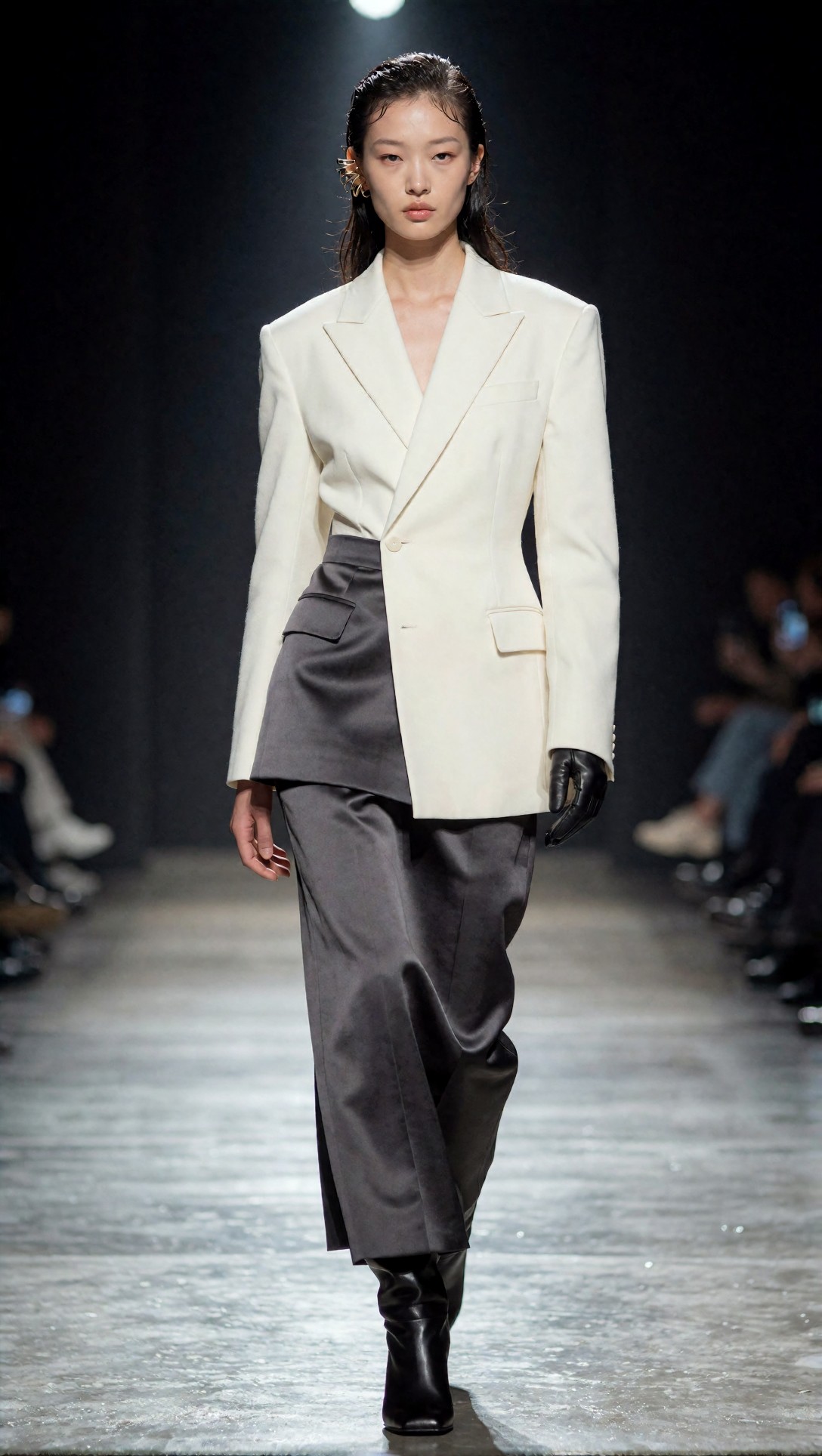
Inspect how the model handles asymmetric construction and layered lower-body garments. The failure risk is anatomy confusion around the skirt-trouser transition and glove rendering.
Beauty and retail prompts that usually need the hybrid pass
The next beauty prompt is intentionally tighter in art direction to test whether the model can hold both cosmetics detail and fashion relevance.
Topic: Korean beauty campaign with cool-tone fashion alignment
Genre: Luxury Campaign
Camera: Hasselblad X2D 100C
Lens: 90mm f/2.5
Lighting: Soft overhead key with large frontal diffusion and faint blue gel edge light
Location: Ice-blue studio set with lacquer panel and frosted backdrop
Style: Korean magazine cover
Final Prompt: Korean beauty and fashion campaign reference for a trend mood board, model in a structured powder-blue sleeveless top with architectural neckline, dewy skin, precise soft-grey eye makeup, glossy neutral lip, sleek low bun, shoulders angled toward camera, elegant direct gaze, lacquer panel reflection and frosted blue studio backdrop, soft overhead key with frontal diffusion and subtle cool edge light, Hasselblad X2D 100C ultra-detailed beauty rendering, 90mm f/2.5 premium compression, visible skin texture without plastic smoothing, fashion-led composition that keeps neckline and garment shape readable, palette of powder blue, silver, frost white, and pearl, premium Korean editorial finish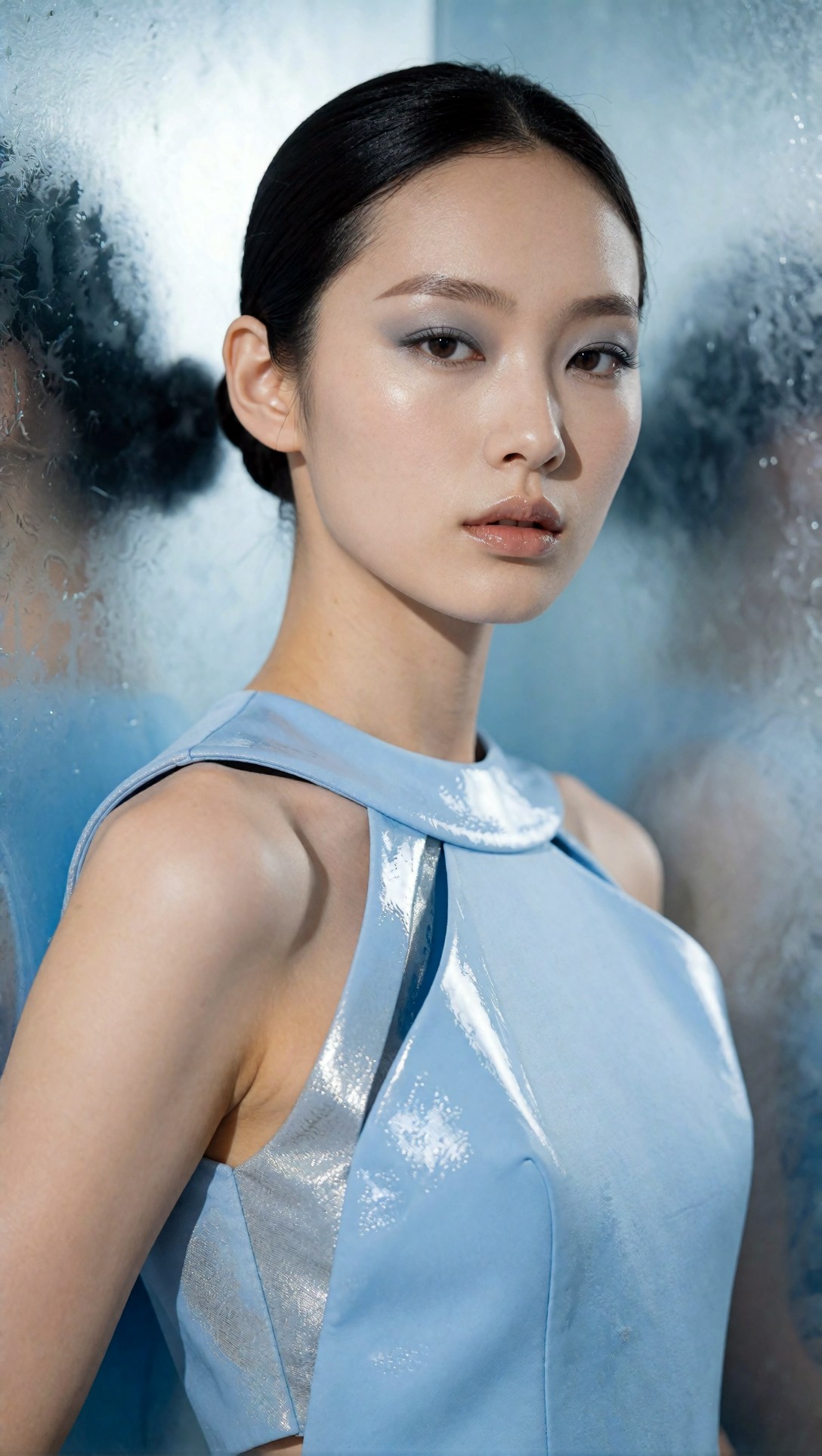
What to inspect is skin realism versus over-processing. A good image keeps pores, makeup finish, and neckline structure visible; a bad one turns into generic doll-like beauty content.
This retail test checks whether a more trend-driven retail scene can still remain commercially readable.
Topic: Korean streetwear retail merchandising with footwear and bag zoning
Genre: Commercial Interior
Camera: Canon EOS R3
Lens: 24mm f/2.8
Lighting: Bright diffused retail ceiling light with soft side fill
Location: Minimal Korean streetwear shop in Hannam with concrete walls, modular shelving, chrome clothing racks
Style: Clean commercial look
Final Prompt: Interior retail reference for a Korean fashion trend mood board, wide-angle view of a curated streetwear store in Hannam, zoning by product category with oversized outerwear on chrome racks, cargo trousers folded on low tables, sneaker wall with neutral-toned running shoes, mini technical bags on dedicated shelf, cap display, concrete walls, modular shelving, polished but believable merchandising layout, no readable signage, no crowd, Canon EOS R3 interior realism, 24mm f/2.8 wide composition with straight verticals, bright diffused retail lighting and soft side fill, emphasis on product clarity, fixture spacing, and trend merchandising logic, palette of black, sand, olive, silver, and off-white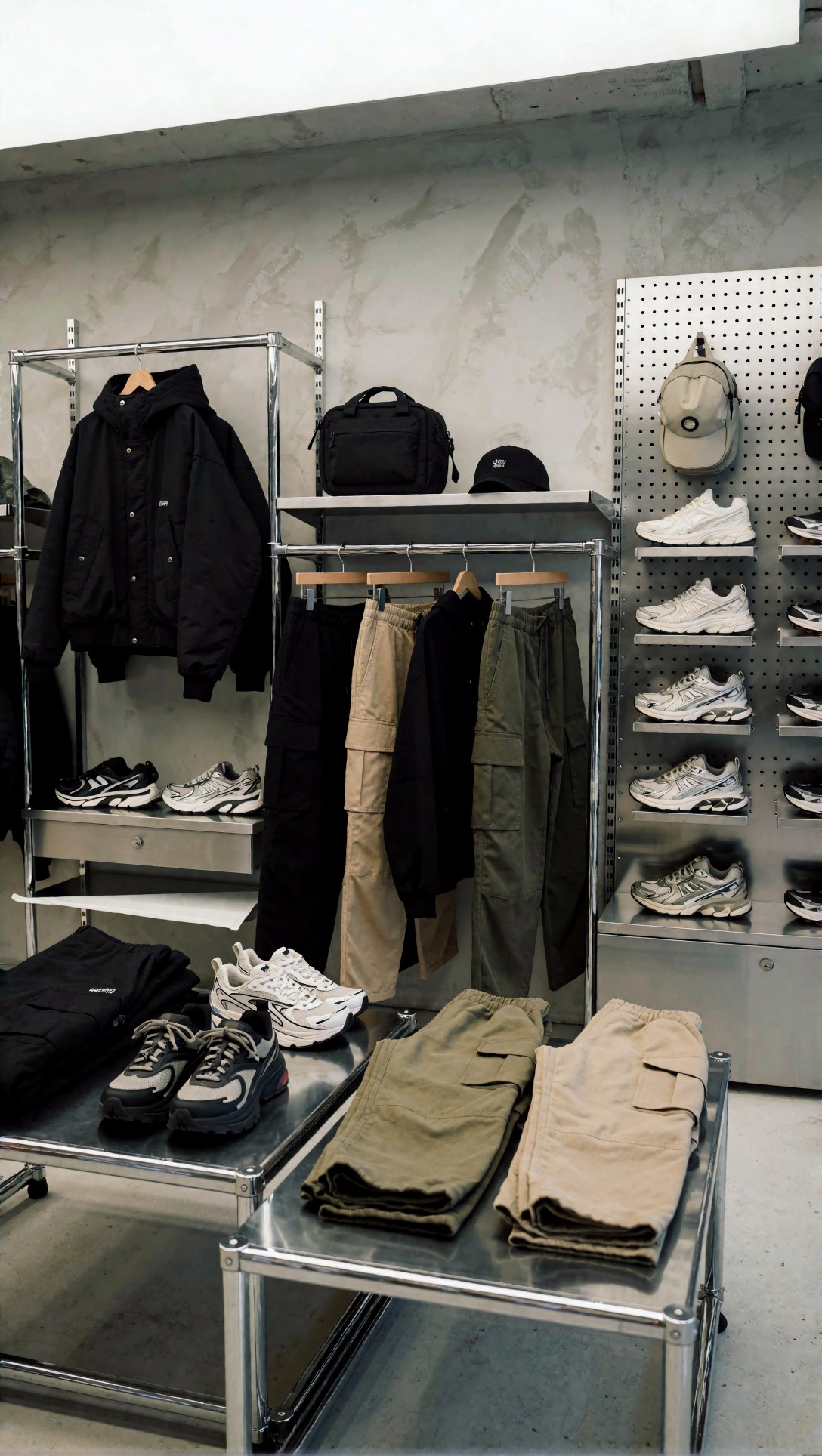
Inspect the store geometry and footwear wall. The strongest result should feel like a place a buyer could actually visit; the weak version usually warps shelving lines or duplicates shoes unnaturally.
A practical assembly method for the final mood board
After testing multiple prompt styles, the most reliable mood board build looked like this:
1. Generate 6 to 12 streetwear frames with different silhouette families 2. Keep 2 runway references for shape exaggeration and material direction 3. Add 2 beauty campaign frames only if they reinforce palette, finish, or brand tone 4. Add 2 retail references to connect trend with sell-through reality 5. Remove any image that does not clearly contribute one of these functions:
- silhouette
- color
- fabric
- accessories
- merchandising
- beauty finish
The mistake I made early in this test was keeping images because they were visually attractive. That produced a board with no clear read on trends. The stronger board was actually less flashy and more systematic.
Output checklist based on observed quality
Use this checklist before calling the board finished:
- Are at least half the images full-body or wide enough to show complete styling?
- Can you name the trend signal in each image within three seconds?
- Do the runway images show construction, not just drama?
- Do the beauty images support fashion direction rather than replacing it?
- Do retail scenes show believable product hierarchy and fixtures?
- Is the color story coherent across categories?
- Are bags, shoes, and accessories readable enough to matter?
- Did you remove images with bad hands, collapsed textiles, warped shelves, or impossible layering?
If the answer is no to more than two of those, I would regenerate rather than trying to design around weak images.
Best workflow by use case
Use Option A if:
- You are trend scouting quickly
- You need a lot of Korean fashion direction in one sitting
- The board is internal and exploratory
- Streetwear and runway matter more than retail precision
Use Option B if:
- The board will be shared with clients, teams, or buyers
- You need stronger consistency across categories
- Beauty and retail references are important
- You want a board that feels edited, not randomly sampled
Best split by board section
- Streetwear: Option A first, then selective refinement
- Runway: Option A is usually enough if prompts are specific
- Beauty: Option B is safer
- Retail: Option B is strongly recommended
What I would change next
If I were running this test again, I would lock a tighter seasonal palette earlier. The biggest improvement in board quality came when I stopped asking for broad "Korean fashion trends" and started specifying a narrow lane like graphite, blush, sage, and cream, or black, sand, olive, and silver. That made the mood board look curated and made failures easier to spot.
I would also build the first pass around silhouette types, not image categories alone. For example:
- oversized tailoring
- cropped utility outerwear
- fluid wide-leg bottoms
- technical accessories
- glass-skin beauty finish
- minimalist retail fixture language
That approach gave the board stronger internal logic than simply asking for streetwear, runway, beauty, and retail as separate buckets.
Editorial conclusion
For building a korean fashion trend mood board, the workflow I would recommend to most users is a two-stage process: use text-to-image for fast discovery, then refine with a hybrid consistency pass for beauty and retail. That is the best balance of speed and reliability I found in this test.
Use this workflow if you need actionable references for styling, campaign planning, retail direction, or brand mood development. Avoid it if you need exact product fidelity, readable brand text, or technically perfect store signage straight out of generation. The setting that mattered most was not a hidden model parameter; it was prompt specificity around full-body fashion information, category-appropriate camera logic, and tightly controlled Korean context. Without those details, the board looked fashionable. With them, it became useful.