How to Choose Between SEEDVR2 3B and 7B for Low-VRAM Upscaling Workflows 한국어 요약
이 페이지는 ZView Space의 영어 원문을 한국어 검색 사용자도 이해할 수 있도록 정리한 SEO 요약입니다. 핵심은 단순한 얼굴 중심 이미지가 아니라 패션 에디토리얼, 룩북, 아웃핏, 프롬프트 테스트, 이미지 생성 워크플로우를 실제로 어떻게 구성할지입니다.
핵심 요약
- 원문 주제: How to Choose Between SEEDVR2 3B and 7B for Low-VRAM Upscaling Workflows
- 목적: AI 이미지 생성에서 outfit, silhouette, fabric, pose, location, camera framing을 더 명확하게 설계합니다.
- 활용 범위: Z-Image Turbo, Krea2 Turbo, Qwen Image, Anima, SeedVR2 같은 이미지 생성 및 업스케일 워크플로우에 적용할 수 있습니다.
- SEO 관점: 제목, 설명, 이미지 alt, 프롬프트 예시가 실제 검색 의도와 맞아야 색인 가능성이 높아집니다.
한국어 사용자를 위한 체크포인트
1. 프롬프트가 얼굴 묘사에만 머물지 않고 전체 스타일과 의상 구성을 설명하는지 확인합니다. 2. 패션 이미지라면 상의, 하의, 아우터, 신발, 액세서리, 소재감, 촬영 장소를 분리해서 씁니다. 3. 생성 결과는 바로 게시하지 말고 디테일, 손, 의상 형태, 배경 일관성, 이미지 품질을 비교합니다. 4. 글 본문에는 실제 테스트 기준과 실패를 줄이는 방법이 들어가야 검색엔진에서 얇은 콘텐츠로 보일 가능성이 줄어듭니다.
원문 미리보기
If you are trying to upscale AI images on limited hardware, the choice between SEEDVR2 3B and SEEDVR2 7B is less about which model is "better" and more about which one fits your real workflow. On paper, 7B promises more capacity. In practice, 3B is often the m
---
If you are trying to upscale AI images on limited hardware, the choice between SEEDVR2 3B and SEEDVR2 7B is less about which model is "better" and more about which one fits your real workflow. On paper, 7B promises more capacity. In practice, 3B is often the model that actually lets you finish batches, test variations, and recover detail without constant memory failures.
This guide looks at how to choose between them for low-VRAM systems, where throughput, stability, and image consistency matter more than benchmark bragging rights.
What changes between 3B and 7B in real use
The practical difference is simple:
- SEEDVR2 3B is easier to run, easier to batch, and usually the safer choice on constrained GPUs.
- SEEDVR2 7B can preserve or infer finer structure in difficult images, but it asks for more VRAM, longer runtimes, and stricter settings discipline.
For low-VRAM workflows, that trade-off affects three things immediately:
1. Whether the upscale runs at all 2. How large an image tile or resolution you can process 3. How many retries you can afford while tuning settings
If your work involves frequent upscaling of portraits, product shots, anime frames, or stylized concept art, reliability often matters more than chasing the heaviest model.
Start with your hardware, not the model card
A common mistake is choosing 7B first and then designing the workflow around avoiding crashes. That usually leads to tiny tiles, slow passes, and fragmented results.
A better approach:
- If you have tight VRAM headroom, start with 3B
- If you have some room for slower, more careful passes, test 7B only on select images
- If you need repeatable batch upscaling, favor 3B
In other words, the correct model is the one that lets you finish the job with acceptable quality.
For creators building polished image sets from text-to-image outputs, this matters when preparing client previews, portfolio crops, or final social assets.
Topic: Fashion portrait prepared for low-VRAM upscale testing
Genre: Fashion Editorial
Camera: Sony A7R V
Lens: 50mm f/1.2
Lighting: Softbox key light
Location: Minimal gray studio with seamless backdrop
Style: Clean commercial look
Final Prompt: Editorial fashion portrait of a young woman in a structured ivory blazer and satin trousers, seated on a chrome stool in a minimal gray studio, calm direct gaze, relaxed hands, clean centered composition with negative space, softbox key light with gentle falloff, subtle catchlights, neutral gray background, refined skin texture, crisp tailoring detail, soft fabric sheen, muted palette of ivory, silver, and stone, premium magazine finish, Sony A7R V realism, 50mm f/1.2 depth separation, highly detailed but natural image prepared for upscale evaluation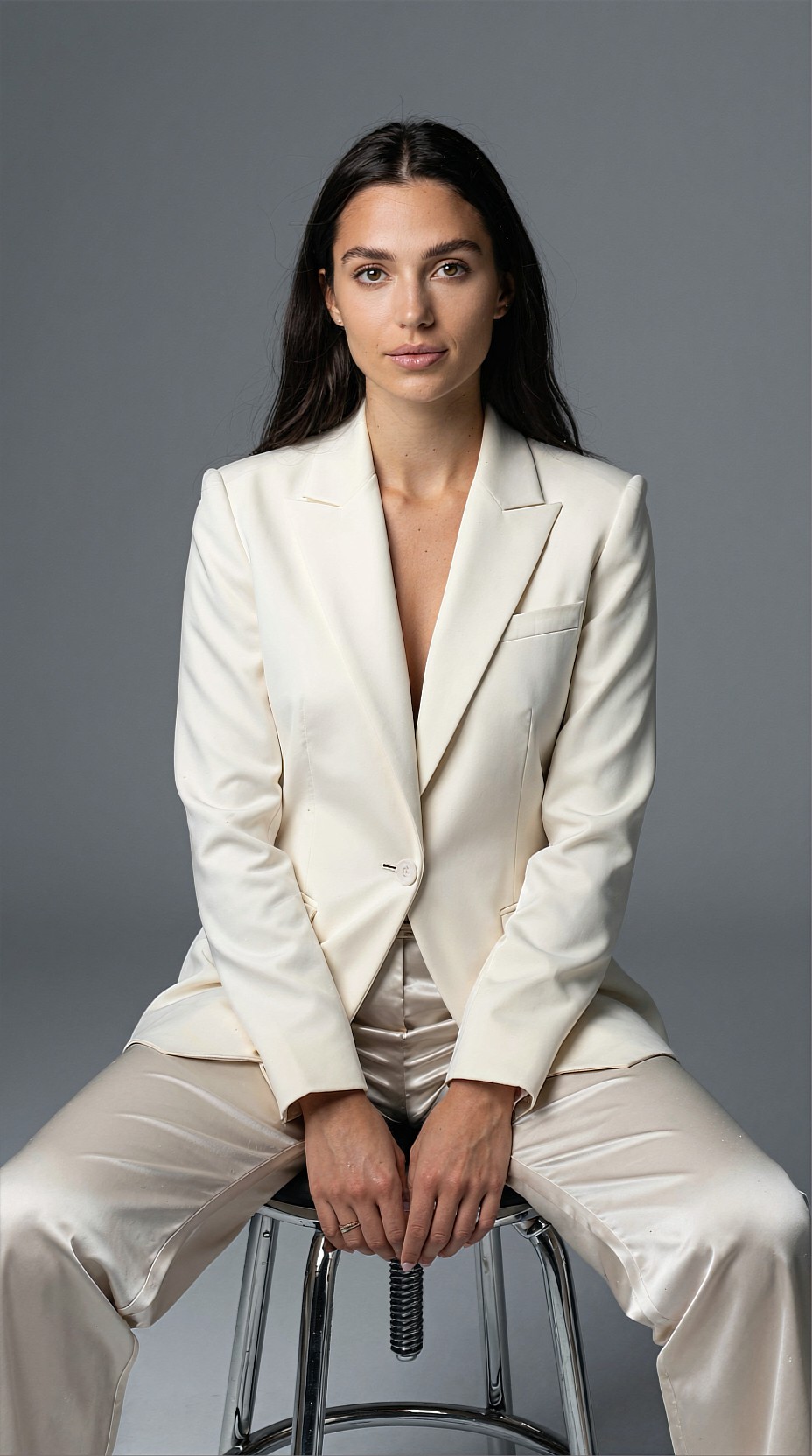
Choose 3B when speed and stability matter most
SEEDVR2 3B is the practical default for low-VRAM users because it gives you more room to work.
Best use cases for 3B
- Upscaling large batches of generated portraits
- Cleaning up product renders for ecommerce mockups
- Enhancing anime or illustration outputs for posting and layout
- Testing multiple prompt variations before final selection
- Social media delivery where turnaround matters more than microscopic detail recovery
Why 3B often wins
- Lower memory pressure
- Fewer out-of-memory interruptions
- More flexibility for tile settings
- Better fit for iterative workflows
- Easier to combine with denoise, face refinement, or light inpainting steps
If you generate 20 images and only 4 need a final premium pass, 3B is usually the smarter first-stage upscaler.
Topic: E-commerce skincare bottle image for efficient upscale workflow
Genre: Product Editorial
Camera: Canon EOS R5
Lens: 100mm f/2.8 Macro
Lighting: Studio butterfly light
Location: White acrylic tabletop set in a commercial studio
Style: High-end beauty advertising
Final Prompt: Luxury skincare serum bottle with frosted glass body and brushed silver cap placed on a white acrylic tabletop, clean reflected base, minimal water droplets, precise label typography, centered product composition, butterfly studio lighting with soft overhead glow and subtle side fill, premium beauty campaign mood, crisp glass edges, controlled highlights, white and pale silver palette, immaculate commercial styling, Canon EOS R5 macro realism, 100mm f/2.8 macro detail, ultra-clean upscale-friendly texture and packaging definition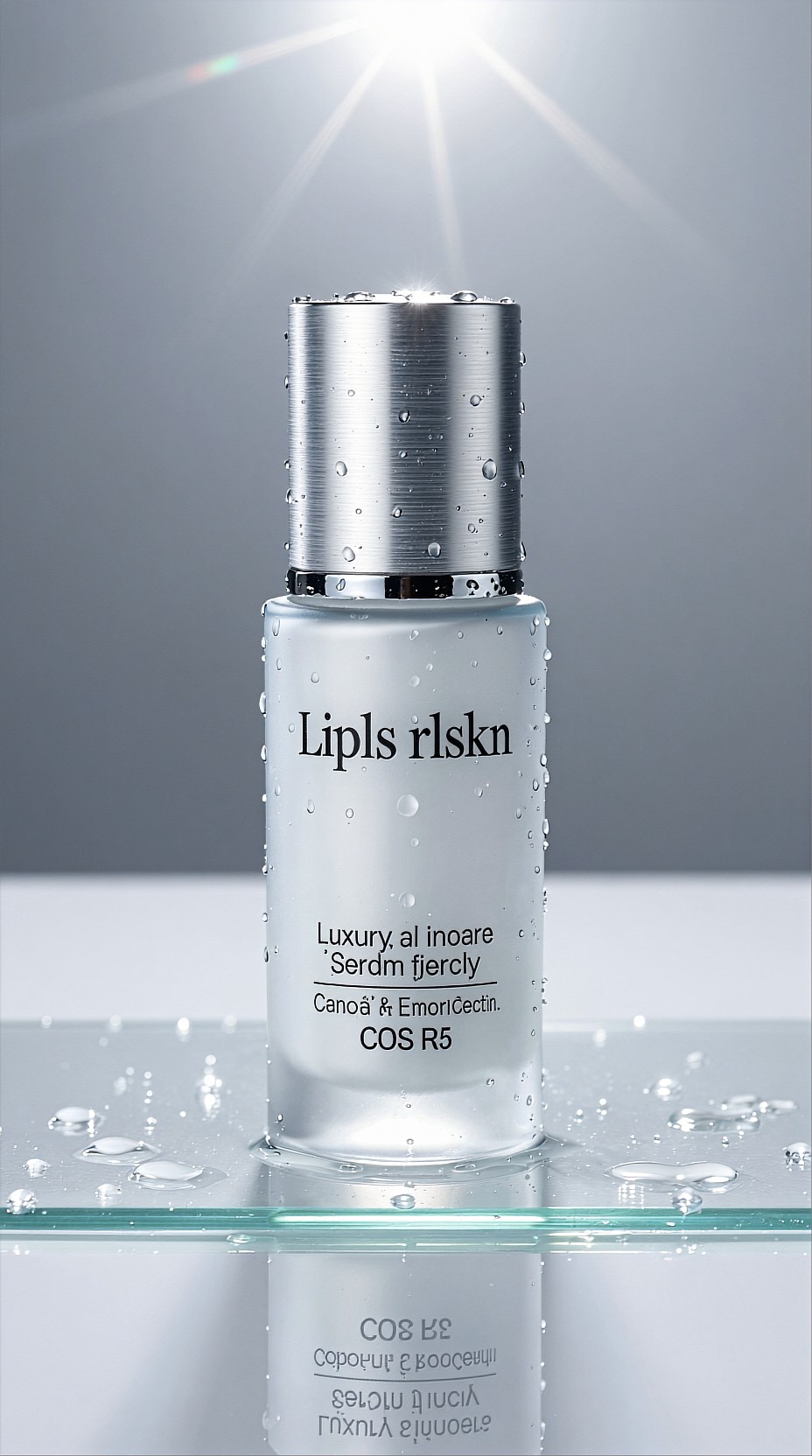
Choose 7B when the source image is difficult
SEEDVR2 7B makes more sense when the image itself is the problem. If the original output has ambiguous textures, weak local structure, or dense detail that smaller models tend to smooth over, the larger model may recover more convincing results.
Best use cases for 7B
- Intricate costumes and accessories
- Dense architectural scenes
- Complex cinematic frames with layered depth
- Detailed product materials like brushed metal, embroidery, glass, or leather
- Important hero images where processing time is acceptable
Where 7B earns its cost
- Hard edges mixed with subtle texture
- Fine hair separation in close portraits
- Decorative surfaces and pattern retention
- Scenes with many small visual elements
This does not mean 7B always looks better. On some images, especially stylized outputs, it can push detail in directions you do not want. Low-VRAM users should treat 7B as a selective tool, not an always-on default.
Topic: Ornate fantasy heroine portrait needing high-detail upscale
Genre: Luxury Campaign
Camera: Nikon Z8
Lens: 85mm f/1.8
Lighting: Sunset backlight
Location: Palace terrace with carved stone arches
Style: Cinematic realism
Final Prompt: Regal fantasy heroine standing on a carved palace terrace at sunset, wearing an embroidered deep emerald velvet gown with metallic threadwork, jeweled collar, layered rings, and delicate crown detail, poised three-quarter pose, confident expression, loose wind-swept hair strands, warm sunset backlight outlining silhouette, soft ambient fill across the face, intricate stone arches and distant glowing city in the background, rich palette of emerald, gold, sandstone, and amber, Nikon Z8 clarity, 85mm f/1.8 portrait compression, high-detail textiles, jewelry sparkle, cinematic realism designed to test fine upscale recovery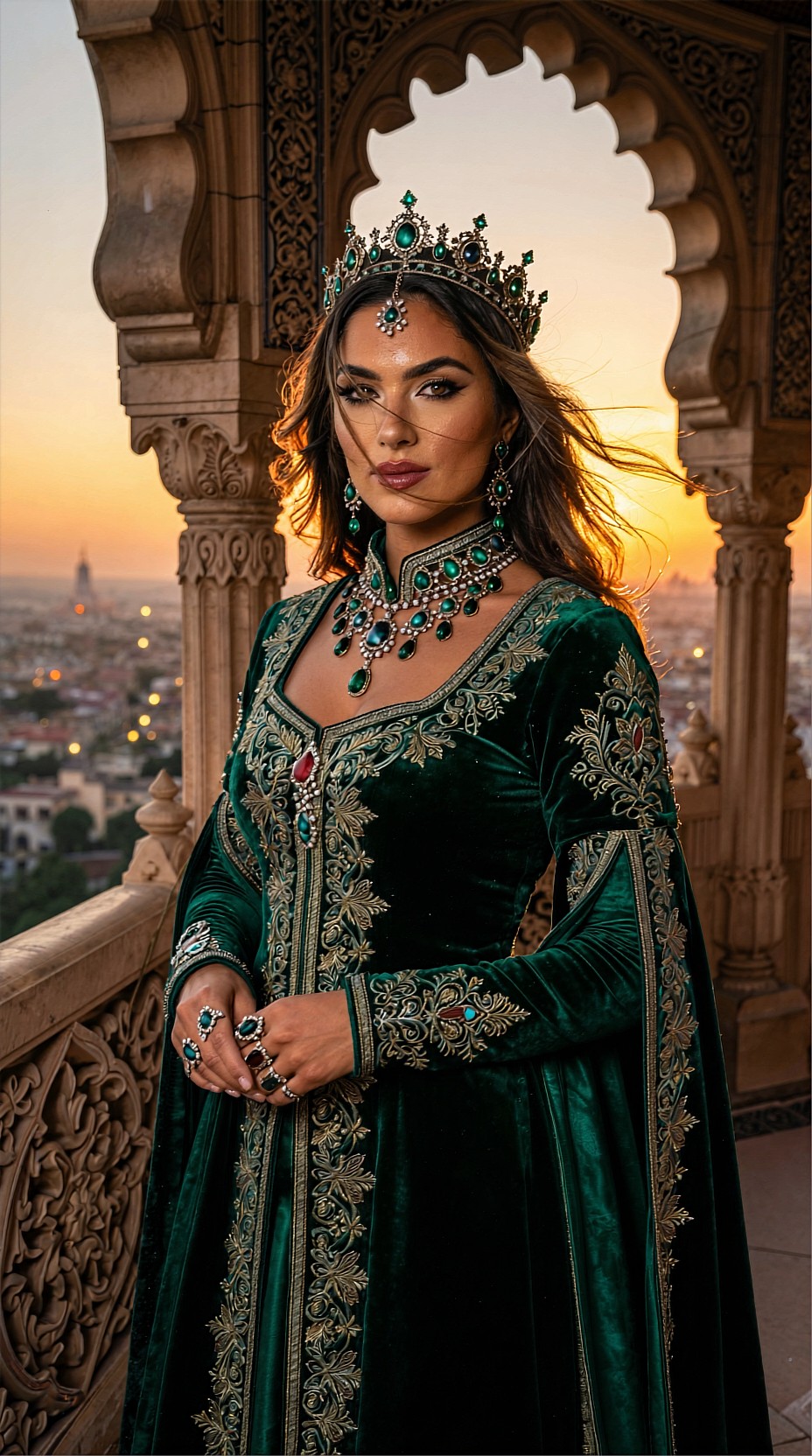
For portraits: 3B is usually enough
Portrait workflows are where many users overestimate the need for 7B. If the goal is clean skin texture, stable facial structure, believable hair, and sharper eyes, 3B is often sufficient, especially when the base image is already strong.
This applies to:
- Beauty campaigns
- Lifestyle portraits
- influencer-style social content
- fashion lookbooks
- character portraits generated from text prompts
A larger model can help if hair accessories, lace, or jewelry are especially detailed, but for standard portraits, 3B often gives a better speed-to-quality ratio.
Topic: Lifestyle portrait for social campaign upscale
Genre: Lifestyle Portrait
Camera: Fujifilm GFX100 II
Lens: 110mm f/2
Lighting: Overcast diffusion
Location: Quiet Seoul side street with muted storefronts
Style: Korean magazine cover
Final Prompt: Stylish young woman in a charcoal trench coat layered over a cream knit dress, standing on a quiet Seoul side street with muted signage and clean storefront glass, soft half-smile, hands in pockets, relaxed editorial pose, overcast diffused daylight creating smooth skin tones and gentle contrast, subtle wind movement in hair, neutral urban palette with charcoal, cream, dusty blue, and concrete gray, vertical cover composition with elegant negative space, Fujifilm GFX100 II medium-format detail, 110mm f/2 shallow depth, polished Korean magazine cover look with natural texture and upscale-ready facial clarity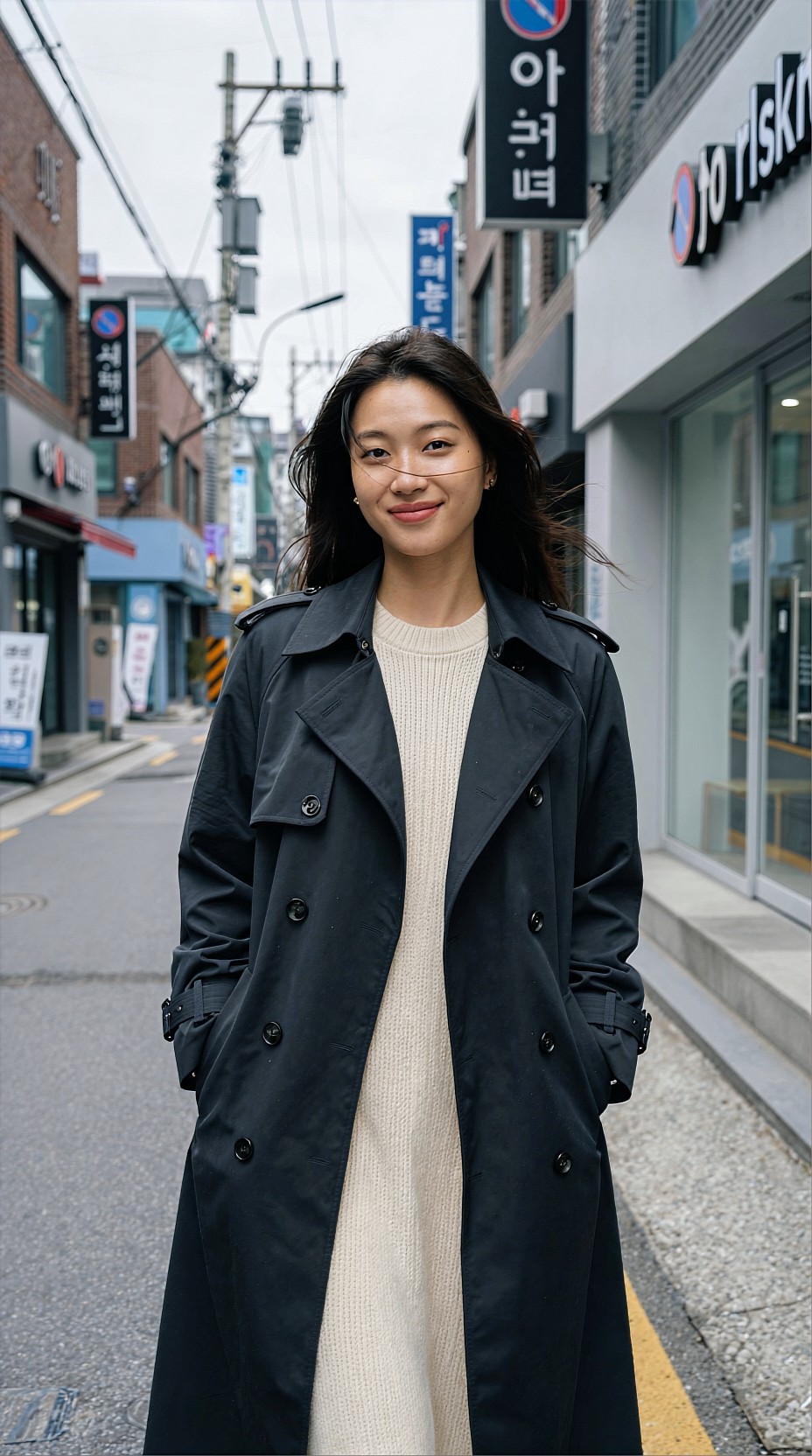
For products and design images: decide based on texture density
Product renders and commercial stills are a good place to compare 3B and 7B directly.
Use 3B when:
- The object has simple geometry
- The label is large and clean
- The lighting is controlled
- The image is already close to final
Use 7B when:
- The surface has microtexture
- There are reflective materials with layered detail
- The scene includes packaging, fabric, glass, and metal together
- The image is a hero frame for ads or print
For AI-generated product imagery, this is often the difference between a quick catalog asset and a flagship campaign visual.
Topic: Premium watch still life for selective 7B upscale
Genre: Product Editorial
Camera: Hasselblad X2D 100C
Lens: 90mm f/2.5
Lighting: Neon rim light
Location: Dark stone pedestal set with reflective black backdrop
Style: Luxury fashion campaign
Final Prompt: High-end stainless steel wristwatch with deep blue dial displayed on a dark stone pedestal, angled three-quarter product pose, polished bracelet links, fine bezel markings, sapphire crystal reflections, controlled neon rim light tracing the outer silhouette with soft frontal fill, reflective black backdrop with subtle gradient, palette of midnight blue, silver, and graphite, ultra-premium campaign styling, Hasselblad X2D 100C precision, 90mm f/2.5 product compression, sharp engraved details, clean metal texture, refined reflections, dramatic but elegant luxury visual intended for high-detail upscale work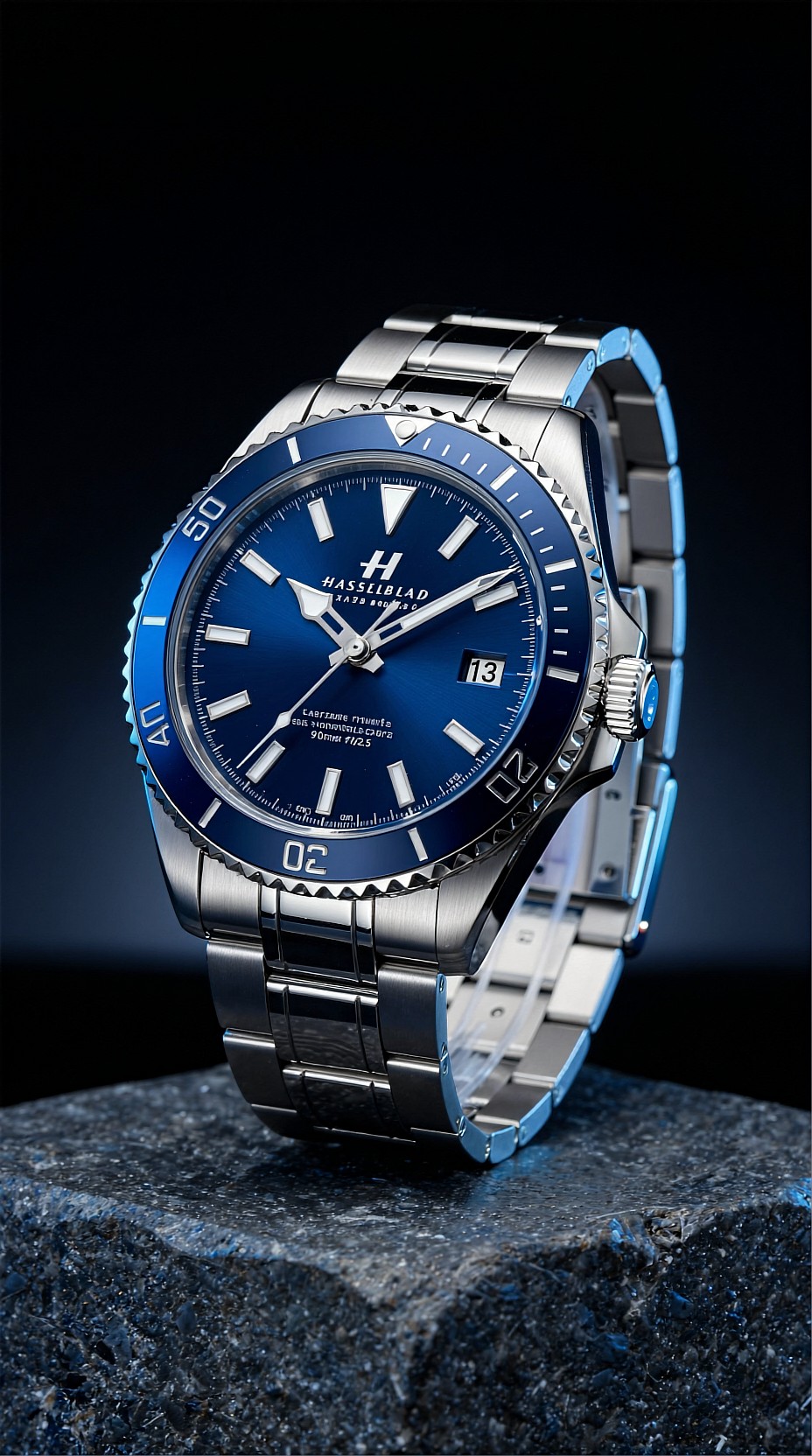
For anime, illustration, and stylized outputs: consistency beats size
Stylized images create a different problem. You are not always trying to recover realistic micro-detail. Often, you want to preserve line integrity, shape language, color blocking, and the original rendering intent.
In these cases, 3B often performs more predictably on low-VRAM systems because you can keep settings conservative and rerun quickly if linework shifts.
7B may help with complex costumes or background density, but it can also overinterpret flat stylized areas.
Good candidates for 3B
- Anime character portraits
- Key visuals for posters or thumbnails
- Clean cel-shaded scenes
- Stylized game splash concepts
Topic: Anime key visual intended for stable low-VRAM upscaling
Genre: Anime Key Visual
Camera: Cinematic capture style
Lens: 35mm equivalent f/2.0
Lighting: Golden hour
Location: Hilltop shrine overlooking a coastal town
Style: Cinematic realism
Final Prompt: Anime heroine in a navy school-inspired coat with red ribbon detail standing on a hilltop shrine path above a coastal town, long dark hair moving in the breeze, determined but soft expression, one hand holding a satchel strap, low sun golden hour glow along the hair edges, warm sky gradient and distant sea haze, stone lanterns and autumn grass framing the composition, rich cel-shaded color blocking with refined atmospheric depth, deep navy, crimson, gold, and pale blue palette, cinematic poster framing, clean line integrity, highly polished anime key visual designed for upscale consistency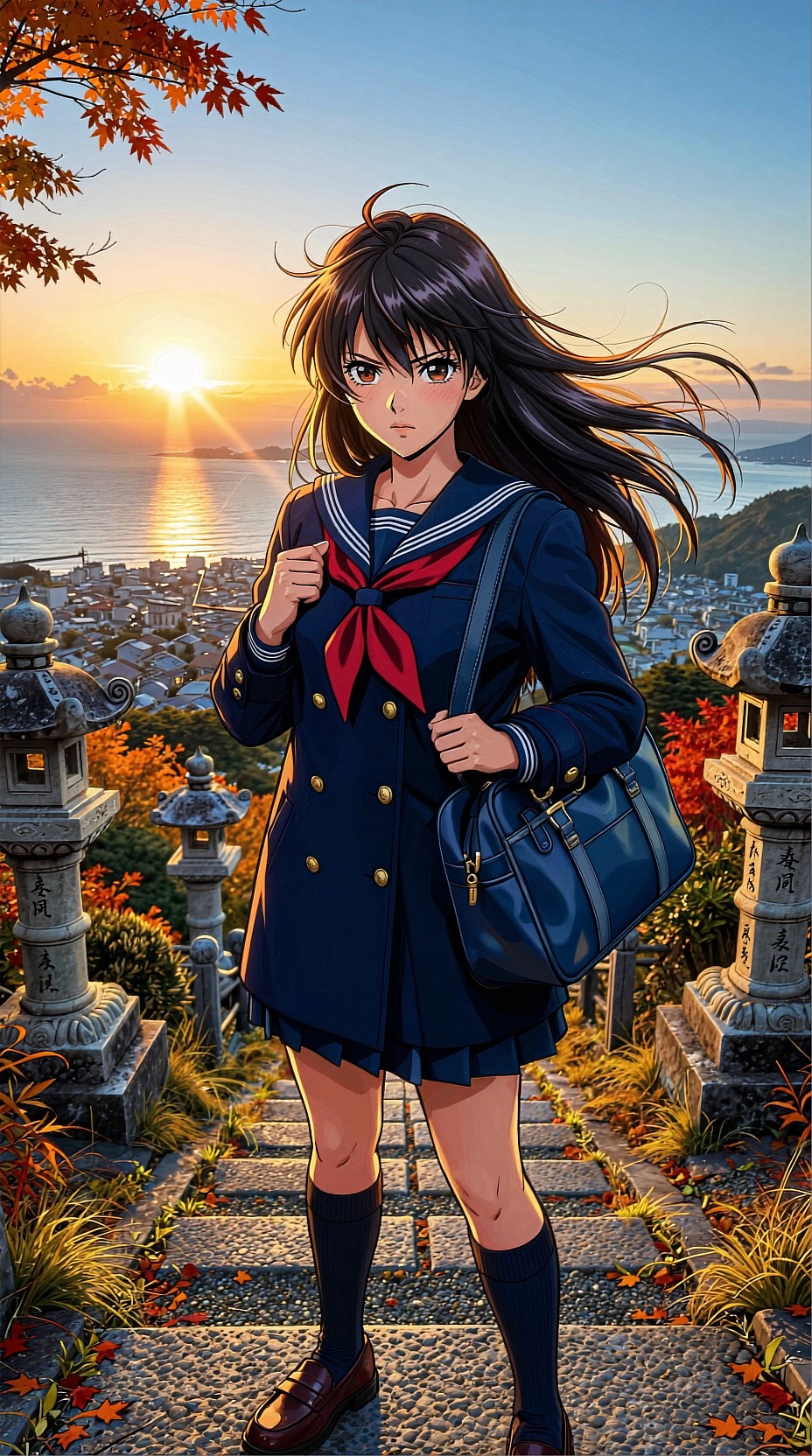
A practical low-VRAM workflow that works
If you are unsure which model to commit to, use a two-tier workflow:
Workflow A: efficient default
1. Generate and curate base images 2. Upscale all promising images with 3B 3. Review at 100% zoom 4. Identify the few frames where fine detail still breaks down 5. Re-run only those hero images with 7B
This saves VRAM, time, and frustration.
Workflow B: single-image quality pass
Use 7B first only when:
- The image is mission-critical
- You are working on one or two final frames
- The source composition is complex enough to justify the cost
For most editorial and commercial creators, Workflow A is the safer baseline.
Topic: Cinematic travel image selected for 3B first pass then 7B hero pass
Genre: Cinematic Travel
Camera: Panasonic Lumix S1H
Lens: 24mm f/1.8
Lighting: Beach reflection
Location: Dawn boardwalk beside a tropical shoreline
Style: Elegant resort editorial
Final Prompt: Traveler in a flowing sand-colored linen set walking barefoot along a dawn boardwalk beside a tropical shoreline, carrying a woven tote and straw hat, reflective beach light bouncing softly into the face, relaxed posture, contemplative expression, gentle sea mist, pale sunrise sky with peach and aqua tones, weathered wood texture underfoot, palms and quiet resort villas fading into the background, cinematic wide composition, elegant resort editorial styling, Panasonic Lumix S1H motion-rich realism, 24mm f/1.8 environmental depth, fine fabric movement and serene atmosphere suited for hero-image upscale comparison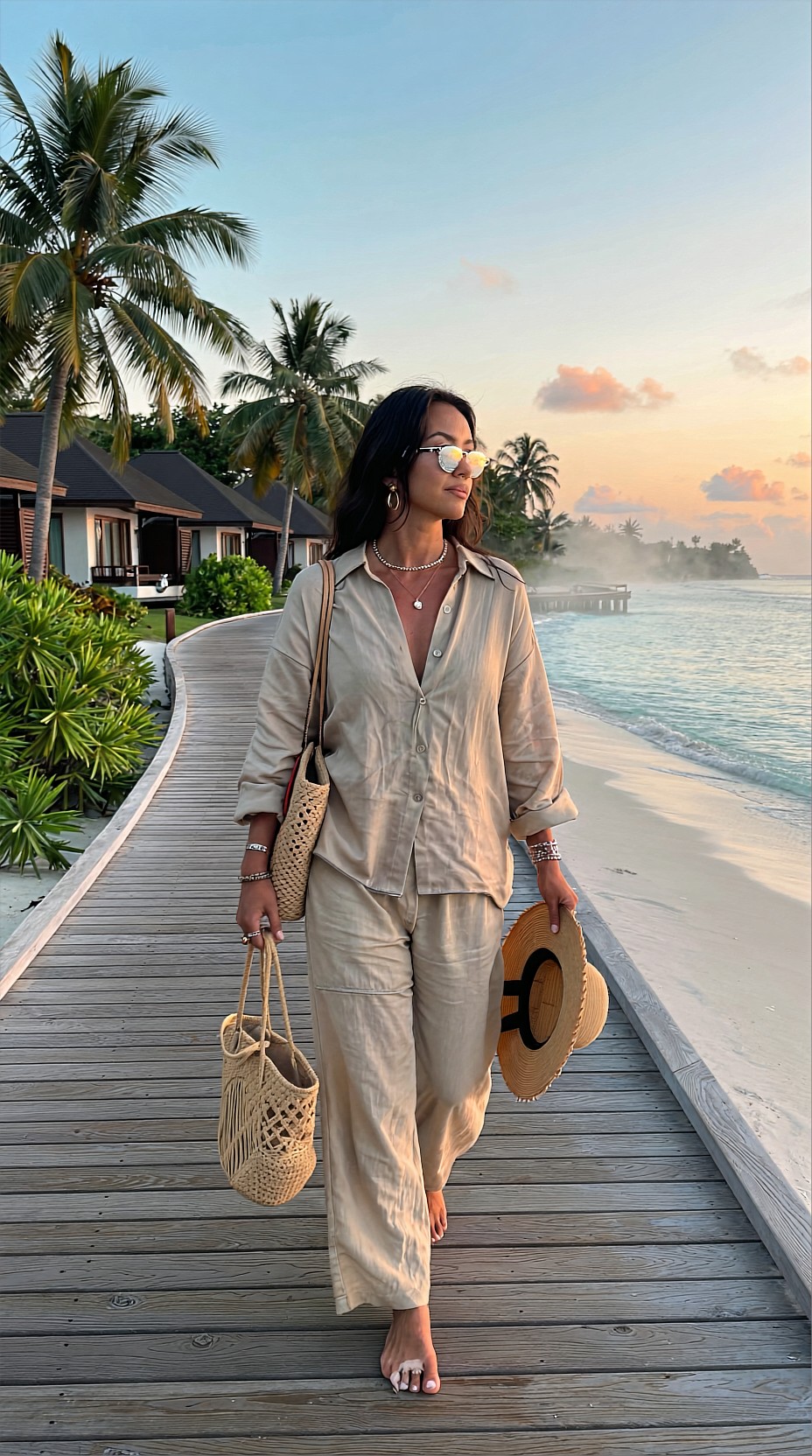
When low VRAM changes your quality judgment
On limited hardware, you cannot judge quality in isolation. You have to judge quality per resource cost.
Ask these questions:
- Does 7B improve the image enough to justify the slower pass?
- Does 3B let you preserve more consistency across a series?
- Are you sacrificing tile size or introducing seams just to run the larger model?
- Will clients or viewers actually notice the difference at the final delivery size?
Many AI image workflows end in web delivery, carousel posts, thumbnails, pitch decks, or moderate-resolution print comps. In those contexts, 3B often wins because it gets you to a cleaner finished output with fewer compromises.
Topic: Street-style editorial image where delivery size matters more than max model size
Genre: Street Style
Camera: Leica SL2-S
Lens: 35mm f/1.4
Lighting: Neon rim light
Location: Rainy Tokyo alley at night
Style: Clean commercial look
Final Prompt: Street-style portrait of a young man wearing a black technical jacket over a slate hoodie and tailored trousers in a rainy Tokyo alley at night, hands relaxed at sides, focused expression, wet pavement reflecting cyan and magenta signage, neon rim light shaping the shoulders and jawline, soft ambient fill from storefront windows, layered urban depth with vending machines and blurred umbrellas in the background, rich texture in fabric and rain droplets, dynamic off-center composition, Leica SL2-S cinematic clarity, 35mm f/1.4 immersive perspective, modern clean commercial look with upscale-ready edge definition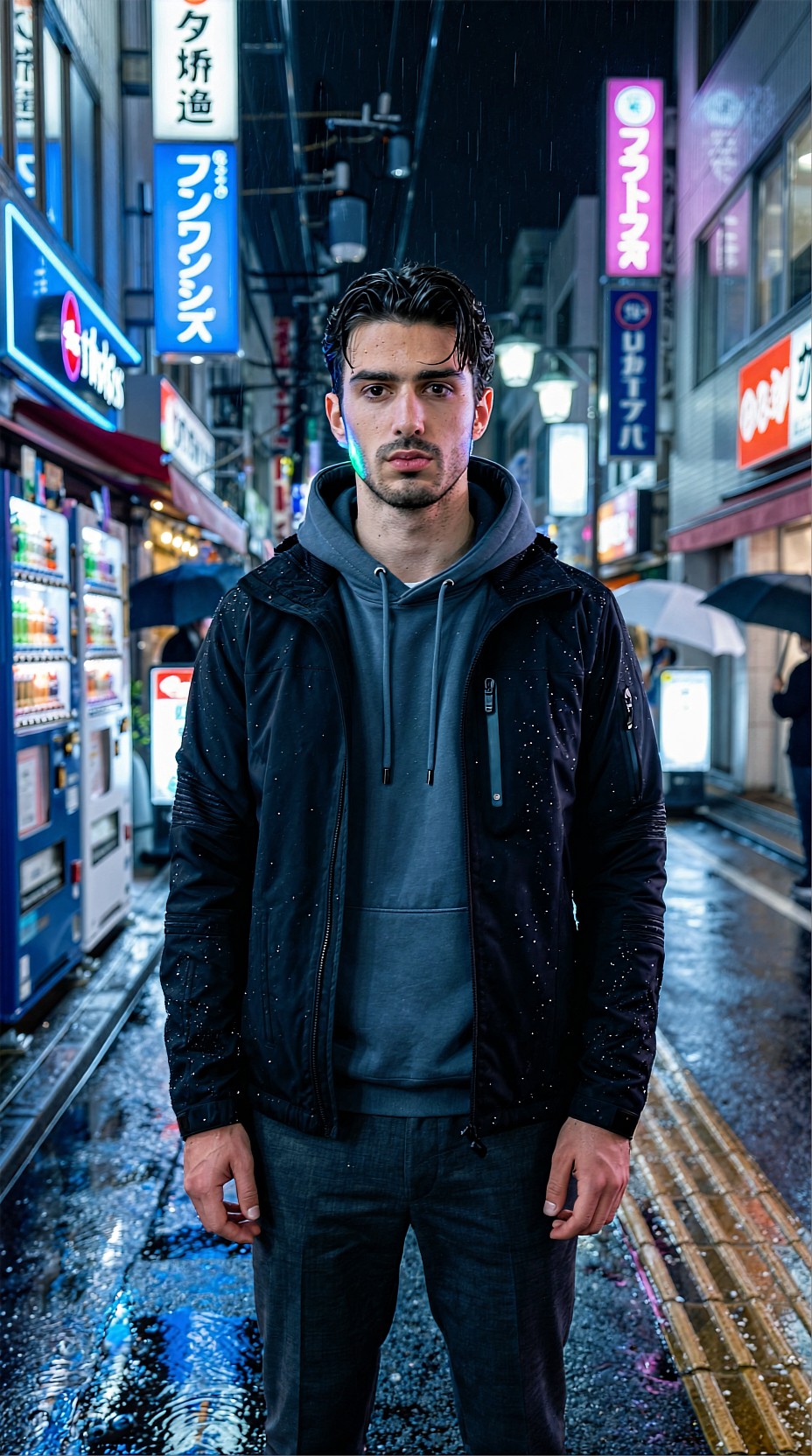
Simple decision rules
If you want the shortest version of this article, use these rules:
Pick SEEDVR2 3B if you need:
- The most reliable low-VRAM option
- Batch throughput
- Faster iteration
- Good portrait and stylized-image results
- A practical default for everyday use
Pick SEEDVR2 7B if you need:
- Maximum recovery on difficult images
- Better handling of dense visual information
- Final-pass treatment for hero frames
- Extra texture interpretation on materials and ornament
Best overall strategy
- Default to 3B
- Escalate to 7B only when the image earns it
Topic: Beauty close-up chosen to compare 3B default against 7B final pass
Genre: Beauty Campaign
Camera: Canon EOS R3
Lens: 85mm f/1.2
Lighting: Softbox key light
Location: Rose-beige studio set with glossy panel accents
Style: High-end beauty advertising
Final Prompt: Close-up beauty portrait of a model with luminous skin, softly swept-back hair, pearl earrings, and a satin rose-beige off-shoulder top, calm confident expression, slightly turned shoulders, direct eye contact, softbox key light creating smooth gradients and precise catchlights, subtle glossy studio panels in the background, refined palette of rose beige, pearl white, and warm taupe, sharp eyelashes, natural lip texture, premium cosmetic campaign composition, Canon EOS R3 realism, 85mm f/1.2 creamy separation, clean high-end beauty advertising look designed for detailed upscale comparison
Final takeaway
For low-VRAM upscaling workflows, SEEDVR2 3B is the model most people should start with. It is the better fit for iterative production, stable batches, and everyday image finishing across portraits, stylized art, and commercial assets.
SEEDVR2 7B is best treated as a selective upgrade path for complex hero images that genuinely benefit from extra model capacity.
That approach is less glamorous than saying "always use the bigger model," but it is the one that usually produces more finished images, with fewer crashes, in less time.