How to Generate Tropical Hotel Campaign Images With Qwen Image 2512 한국어 요약
이 페이지는 ZView Space의 영어 원문을 한국어 검색 사용자도 이해할 수 있도록 정리한 SEO 요약입니다. 핵심은 단순한 얼굴 중심 이미지가 아니라 패션 에디토리얼, 룩북, 아웃핏, 프롬프트 테스트, 이미지 생성 워크플로우를 실제로 어떻게 구성할지입니다.
핵심 요약
- 원문 주제: How to Generate Tropical Hotel Campaign Images With Qwen Image 2512
- 목적: AI 이미지 생성에서 outfit, silhouette, fabric, pose, location, camera framing을 더 명확하게 설계합니다.
- 활용 범위: Z-Image Turbo, Krea2 Turbo, Qwen Image, Anima, SeedVR2 같은 이미지 생성 및 업스케일 워크플로우에 적용할 수 있습니다.
- SEO 관점: 제목, 설명, 이미지 alt, 프롬프트 예시가 실제 검색 의도와 맞아야 색인 가능성이 높아집니다.
한국어 사용자를 위한 체크포인트
1. 프롬프트가 얼굴 묘사에만 머물지 않고 전체 스타일과 의상 구성을 설명하는지 확인합니다. 2. 패션 이미지라면 상의, 하의, 아우터, 신발, 액세서리, 소재감, 촬영 장소를 분리해서 씁니다. 3. 생성 결과는 바로 게시하지 말고 디테일, 손, 의상 형태, 배경 일관성, 이미지 품질을 비교합니다. 4. 글 본문에는 실제 테스트 기준과 실패를 줄이는 방법이 들어가야 검색엔진에서 얇은 콘텐츠로 보일 가능성이 줄어듭니다.
원문 미리보기
A tropical hotel campaign needs more than pretty beach scenes. It needs images that sell a specific experience: arrival, relaxation, dining, wellness, and aspirational lifestyle. With Qwen Image 2512, you can build that campaign faster if your prompts are stru
---
A tropical hotel campaign needs more than pretty beach scenes. It needs images that sell a specific experience: arrival, relaxation, dining, wellness, and aspirational lifestyle. With Qwen Image 2512, you can build that campaign faster if your prompts are structured around commercial intent rather than generic travel aesthetics.
This guide explains how to generate tropical hotel campaign images that look consistent, premium, and useful across websites, paid ads, booking pages, social media, and sales decks.
Why Qwen Image 2512 works for hotel campaign visuals
Tropical hospitality imagery usually depends on a mix of architecture, landscape, styling, and human presence. That makes prompting harder than single-subject product shots. Qwen Image 2512 is most useful here when you define:
- the campaign goal
- the hotel scene type
- the customer fantasy being sold
- the photographic treatment
- the brand visual direction
Instead of asking for a "luxury tropical hotel," build prompts around individual campaign deliverables. This gives you cleaner image sets and better control over composition.
Start with campaign use cases, not random scenes
A hotel marketing team rarely needs one hero image only. Most campaigns need a set of assets for different placements. Common AI image generation use cases include:
- homepage hero banners for resort websites
- paid social ads promoting seasonal offers
- OTA and booking page lifestyle imagery
- spa, pool, and dining promotional visuals
- email campaign headers for honeymoon or family packages
- pitch deck visuals for hotel developers or operators
- editorial-style content for blogs and destination guides
A strong workflow is to break the campaign into scene categories:
1. exterior hero image 2. poolside lifestyle image 3. in-room hospitality scene 4. dining or spa experience image
That structure also helps maintain visual consistency across the campaign.
Build prompts around buyer intent
Search intent matters here. People looking for tropical hotel visuals often want one of these outcomes:
- luxury resort advertising inspiration
- hotel social media campaign images
- tropical destination branding visuals
- AI prompts for travel marketing
- photoreal resort lifestyle imagery
So your prompts should communicate not just place, but purpose. If the image is for a booking homepage, lead with architecture and atmosphere. If it is for social media, include human energy, styling, and movement.
Prompt a resort hero shot that sells the property first
Your first asset is usually the widest and most commercial: the arrival image or exterior hero. This is where you establish the hotel identity through symmetry, landscaping, water features, sky tone, and premium atmosphere.
Focus on:
- strong architectural readability
- tropical planting and texture
- a premium but believable sky
- clear focal hierarchy
- negative space for copy placement
Topic: Tropical Beachfront Hotel Arrival Hero
Genre: Luxury Campaign
Camera: Canon EOS R5
Lens: 24mm f/4
Lighting: Sunset Backlight
Location: Palm-lined beachfront resort entrance in Phuket with reflecting pools, stone pathway, open-air lobby, and ocean visible beyond
Style: Elegant Resort Editorial
Final Prompt: Ultra-premium tropical beachfront hotel arrival scene, wide architectural hero image of a palm-lined resort entrance in Phuket, symmetrical composition with reflecting pools and textured stone pathway leading to an open-air teak wood lobby, ocean horizon visible in the background, a few discreet staff figures in refined linen uniforms for scale, soft sunset backlight with warm amber glow on the architecture, gentle pink-blue sky, lush tropical foliage with layered greens, polished natural materials, clean negative space in the upper left for campaign copy, elegant resort editorial style, Canon EOS R5 realism, 24mm f/4 perspective, crisp architectural detail, premium hospitality atmosphere, photoreal textures, cinematic yet commercial color grading, luxury travel advertising quality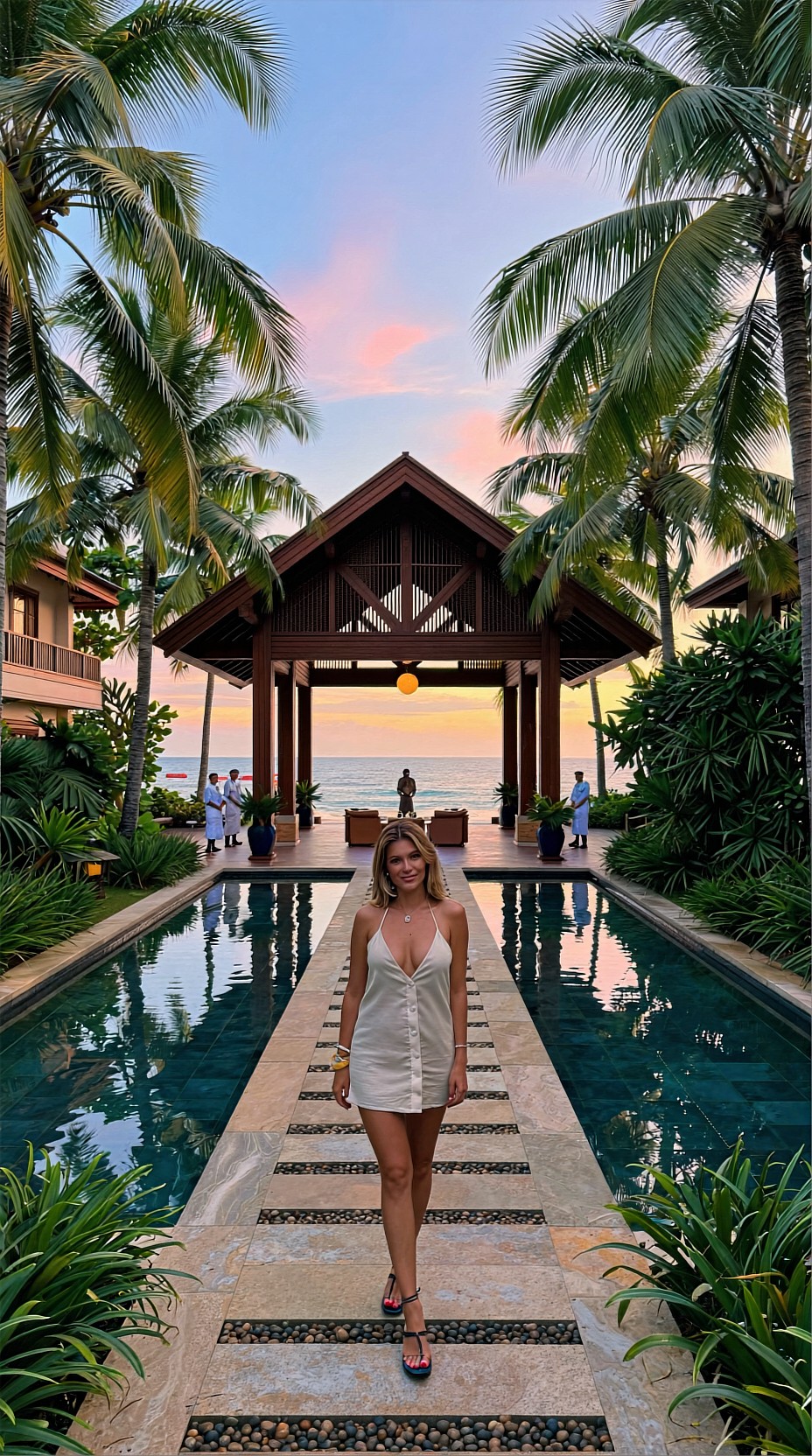
This type of image works well for website headers, brochure covers, and travel landing pages.
Add people when the campaign needs aspiration
Empty hotel images can look polished, but lifestyle images usually convert better for ads and social placements because they imply emotion and use. The key is to show guests interacting naturally with the environment rather than posing like stock models.
Useful directions for tropical lifestyle scenes:
- relaxed but intentional body language
- resortwear that matches the property tier
- interaction with pool, terrace, or beach club spaces
- visible weather and airflow for realism
- layered foreground and background depth
Topic: Poolside Couple at a Tropical Luxury Resort
Genre: Lifestyle Portrait
Camera: Sony A7R V
Lens: 50mm f/1.8
Lighting: Golden Hour
Location: Infinity pool terrace at a tropical hotel in Bali overlooking jungle and distant ocean
Style: Clean Commercial Look
Final Prompt: Sophisticated couple enjoying a luxury tropical hotel pool terrace in Bali, standing beside an infinity pool with one guest seated on the edge and the other adjusting a light resort shirt, relaxed confident expressions, refined neutral resortwear in ivory, sand, and muted olive tones, jungle foliage surrounding the terrace with a distant ocean line, warm golden hour light skimming skin and water surface, subtle breeze moving hair and fabric, premium lounge chairs and folded towels in the background, composition framed for social ad use with strong subject focus and spacious margins, Sony A7R V clarity, 50mm f/1.8 shallow depth of field, clean commercial look, natural skin texture, polished but believable luxury travel campaign aesthetic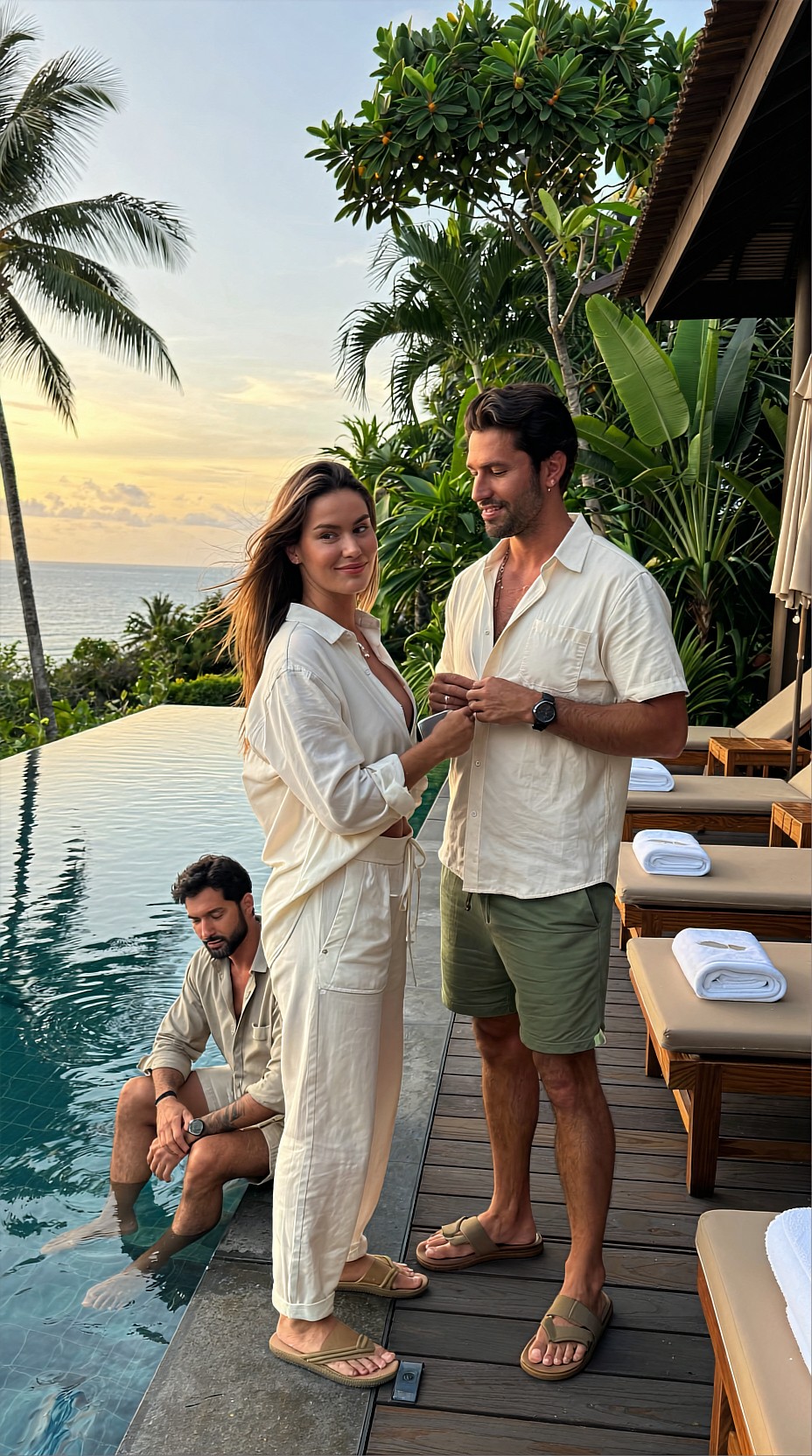
This is a strong format for Instagram ads, carousel campaigns, and package promotions targeting couples or honeymoon travelers.
Show the room experience, not just the room
Hotel room visuals often fail because they focus on furniture inventory instead of guest experience. For campaign imagery, create a narrative moment: breakfast in bed, curtains opening to ocean light, or a guest stepping onto a private terrace.
When prompting room scenes, include:
- the room category or signature feature
- a guest action
- tactile materials such as linen, wood, stone, and glass
- visible exterior context like sea, garden, or lagoon
- a restrained color palette that supports brand identity
Topic: Oceanfront Suite Morning Experience
Genre: Product Editorial
Camera: Nikon Z8
Lens: 35mm f/2
Lighting: Soft Morning Window Light
Location: Private oceanfront suite in the Maldives with sliding doors opening to a deck above turquoise water
Style: Luxury Fashion Campaign
Final Prompt: Refined tropical hotel suite campaign image showing a serene morning experience in a private oceanfront villa in the Maldives, a woman in a soft white robe opening sheer curtains toward a sunlit deck above turquoise water, breakfast tray with tropical fruit, coffee, and folded newspaper placed on a rumpled linen bed, warm oak wood, pale stone, woven textures, and airy drapery throughout the suite, calm facial expression and natural posture, soft morning window light creating gentle highlights and realistic interior shadows, balanced composition with interior foreground and bright seascape beyond, Nikon Z8 realism, 35mm f/2 environmental framing, luxury fashion campaign polish, premium hospitality storytelling, crisp fabric detail, tasteful color palette of ivory, aqua, beige, and sea glass blue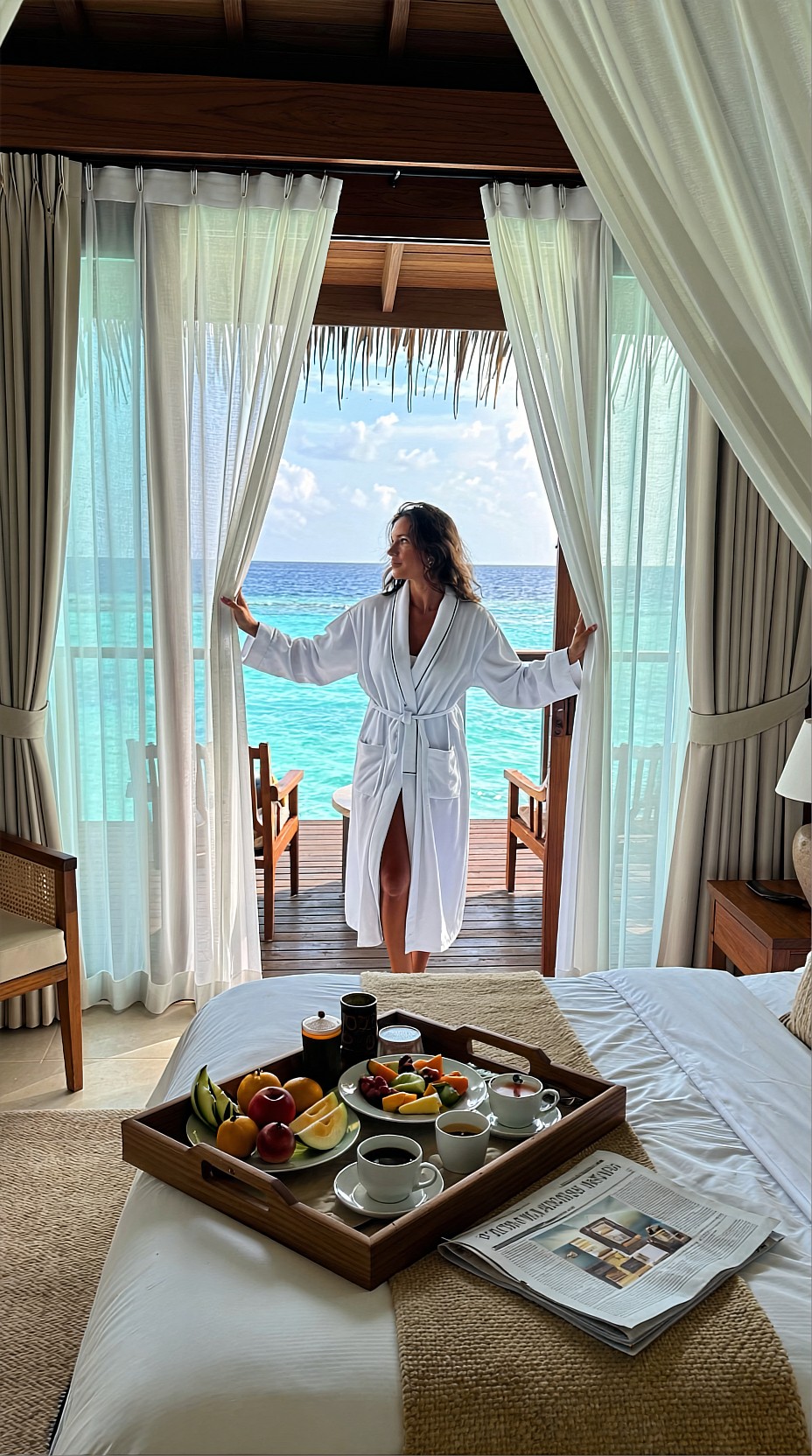
This kind of image performs well on room detail pages, package banners, and email campaigns centered on upgrades or premium stays.
Include revenue-driving amenities in the image set
A tropical hotel campaign should not stop at rooms and pools. Revenue often comes from spa bookings, destination dining, beach clubs, and private experiences. Generate imagery for these touchpoints so the campaign can support upsells, not just awareness.
High-value amenity scenes include:
- oceanfront spa treatments
- chef-led dining moments
- rooftop sunset cocktails
- private cabana service
- yoga or wellness sessions
Topic: Oceanfront Spa Treatment Pavilion
Genre: High-End Beauty Advertising
Camera: Fujifilm GFX 100S
Lens: 80mm f/1.7
Lighting: Overcast Diffusion
Location: Open-air spa pavilion at a tropical hotel in Koh Samui surrounded by palms and facing the sea
Style: Cinematic Realism
Final Prompt: Luxury tropical hotel spa campaign image featuring an open-air treatment pavilion in Koh Samui, elegant female guest lying on a massage bed in a cream robe while a therapist in a minimalist taupe uniform prepares warm oils and herbal compresses, soft sea breeze moving sheer curtains, layered palm trees and muted ocean horizon beyond, overcast diffusion creating flattering skin tones and calm shadow transitions, natural wood pavilion architecture, stone bowls, rolled towels, botanical textures, soothing palette of sage, sand, coconut, and sea blue, intimate composition with selective focus on the guest and treatment setting, Fujifilm GFX 100S medium-format detail, 80mm f/1.7 creamy depth, cinematic realism, premium wellness branding, tactile texture, serene upscale hospitality mood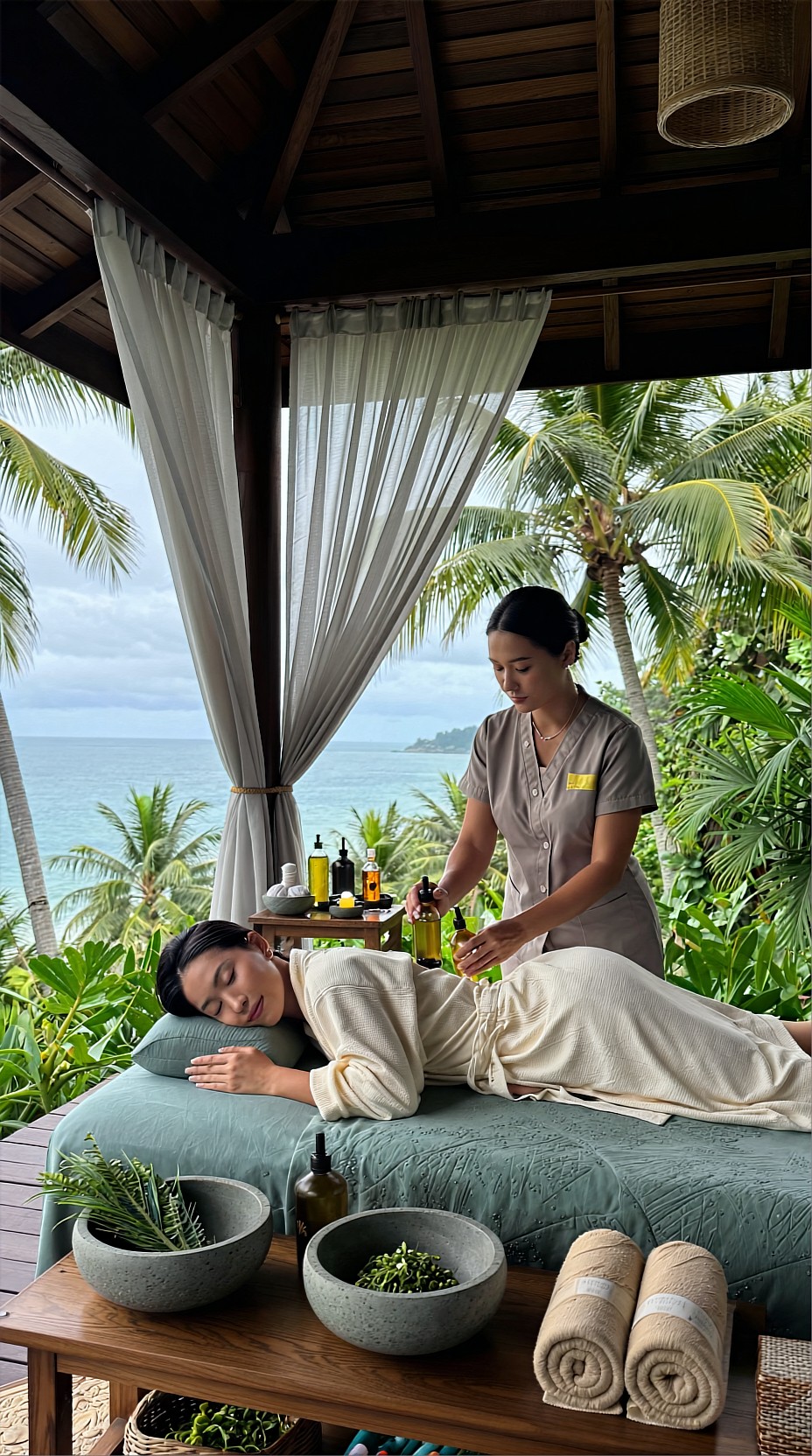
This prompt style is useful for spa landing pages, wellness package ads, and seasonal retreat promotions.
Keep the campaign visually consistent
A single strong image is not enough. A campaign needs coherence across multiple outputs. When generating several images in Qwen Image 2512, keep these variables stable unless you intentionally want contrast:
- color palette
- wardrobe direction
- time of day
- architecture materials
- guest demographic and styling
- level of retouching realism
- aspect ratio by placement
For example, if your resort brand leans minimalist luxury, avoid mixing saturated party scenes with muted editorial architecture unless they belong to separate audience segments.
Create a dining image that feels editorial, not generic
Dining images work best when they communicate place-specific luxury. Avoid prompting a standard restaurant table scene. Instead, define cuisine mood, tablescape details, wardrobe, and environmental cues such as sea wind, candlelight, or sunset color.
Topic: Sunset Dinner Terrace at a Tropical Hotel
Genre: Cinematic Travel
Camera: Leica SL2-S
Lens: 75mm f/2
Lighting: Candlelight and Sunset Glow
Location: Cliffside open-air restaurant terrace at a tropical resort in Langkawi overlooking the Andaman Sea
Style: Korean Magazine Cover
Final Prompt: Editorial tropical hotel dining campaign image set on a cliffside restaurant terrace in Langkawi, stylish guest seated at a finely set table with grilled seafood, tropical cocktails, ceramic plates, and linen napkins, wearing an elegant coral silk resort outfit with understated jewelry, calm anticipatory expression while looking toward the glowing sea horizon, candlelight on the table mixing with rich sunset glow, ocean breeze lifting hair slightly, blurred diners and lanterns in the background, layered composition with foreground glassware sparkle and deep coastal backdrop, Leica SL2-S cinematic rendering, 75mm f/2 intimate compression, Korean magazine cover polish, refined tropical palette of coral, gold, teal, and charcoal, luxury destination dining atmosphere, sharp premium detail without stock-photo stiffness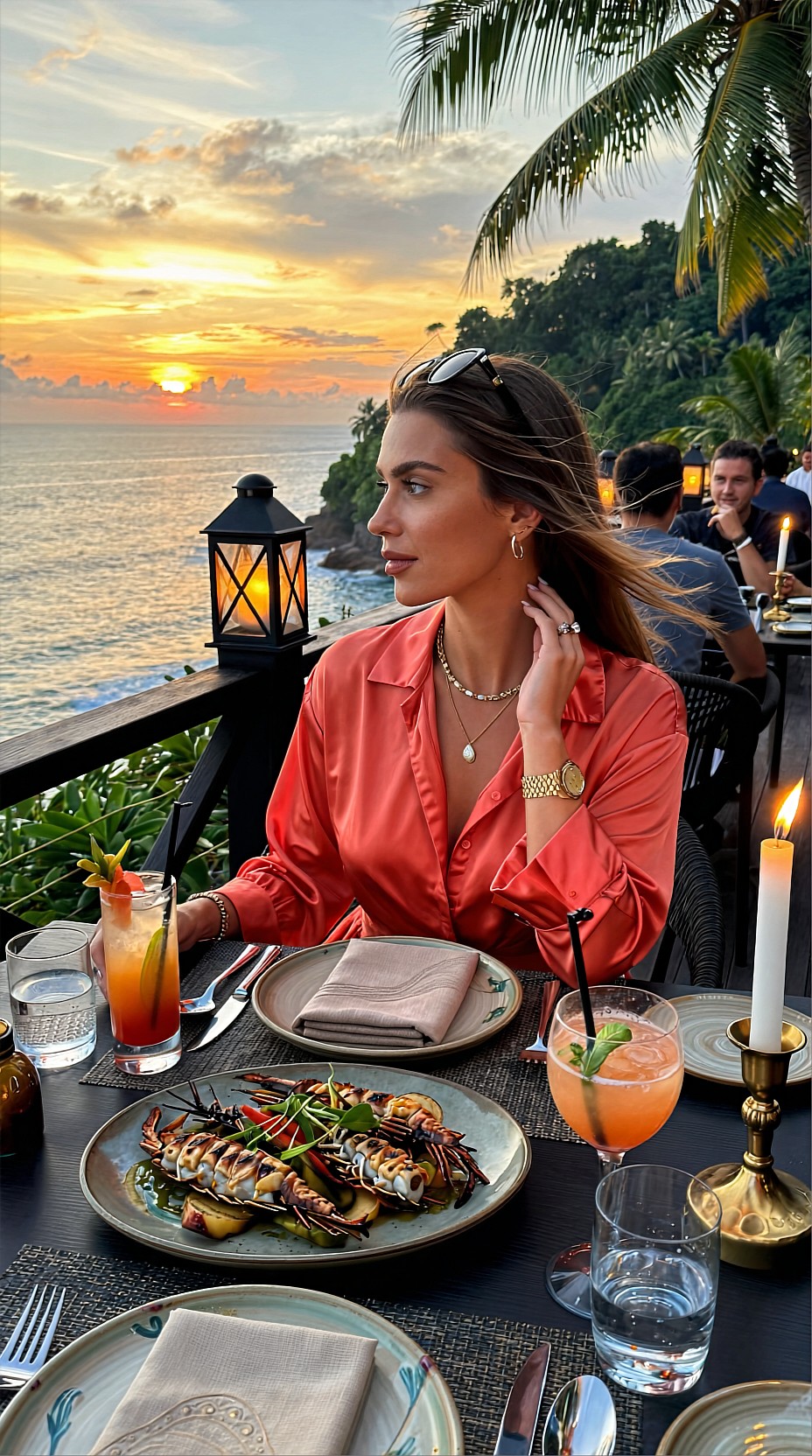
This image style supports restaurant bookings, destination wedding content, and premium food-and-beverage marketing.
Practical tips for better Qwen Image 2512 outputs
To improve results consistently, treat each prompt like a creative brief.
Specify the business purpose
Mention whether the image is for:
- a homepage hero
- a vertical social ad
- an email banner
- a brochure spread
- a booking conversion page
That affects composition and negative space.
Use luxury cues carefully
Premium hospitality is usually communicated through restraint:
- natural materials
- tailored resortwear
- soft atmospheric light
- uncluttered framing
- believable staff or guest interaction
Avoid overloading prompts with too many dramatic elements at once.
Balance realism and polish
The best hotel campaign visuals feel aspirational but plausible. Include:
- subtle wind or humidity
- realistic skin texture
- fabric drape
- material detail in wood, stone, linen, and water
- depth created by foreground objects or layered scenery
Generate by asset type
Do not try to create every campaign need from one master prompt. Build image families:
- hero architecture
- couple lifestyle
- suite interior
- spa or wellness
- dining experience
That makes selection and editing easier later.
A simple workflow for production
Here is a practical sequence for generating tropical hotel campaign images with Qwen Image 2512:
1. define the hotel brand position: romantic, family-friendly, wellness, ultra-luxury, or design-led 2. list the 4 to 6 assets required by channel 3. lock a palette, styling direction, and time-of-day strategy 4. write one prompt per scene type using a commercial photography structure 5. generate variations and compare composition, realism, and brand fit 6. refine weak prompts by adjusting camera distance, lighting, and subject action 7. export the best set and crop for web, ads, and social placements
Final takeaway
To generate better tropical hotel campaign images with Qwen Image 2512, think like a creative director, not just a prompt writer. Define the booking message, match each image to a business use case, and structure prompts so architecture, people, mood, and brand identity work together.
If you build your image set scene by scene, Qwen Image 2512 can help produce tropical resort visuals that are far more useful for real hotel marketing than generic travel imagery.
<!-- zview-hands-on-backfill -->
Practical Test Notes
What this article should verify
- Whether the prompt structure can produce a cohesive tropical hotel campaign set rather than isolated pretty travel images.
- Whether scene-by-scene prompting keeps brand style consistency across arrival, pool, suite, dining, and wellness visuals.
- Whether Qwen Image 2512 can hold commercial hospitality details such as architecture, linens, props, uniforms, and negative space for ad layouts.
- Whether people, interiors, and landscapes remain believable enough for campaign mockups without heavy corrective editing.
Result checks
Use this test setup to review the existing examples or any future generations as a full campaign set, not one image at a time.
- Face stability and hand risk: inspect guests and staff for asymmetry, extra fingers, awkward arm angles, or mannequin-like expressions.
- Lighting control: check whether sunset, golden hour, morning window light, and overcast diffusion stay consistent with the prompt instead of flattening the whole scene.
- Texture quality: inspect wood, stone, linens, water, foliage, and skin for plastic smoothing, repeated patterns, or oversharpened surfaces.
- Background consistency: verify that horizons, pool edges, door frames, palms, and interior lines stay physically plausible and do not warp near the edges.
- Hospitality product clarity: check that breakfast trays, spa tools, towels, lounge furniture, and uniforms read clearly and support the intended offer.
- Style consistency: compare color palette, composition discipline, and luxury tone across all images so the set feels like one campaign.
Failure risks
The main failure risks appear when prompts ask for too many signals at once: architecture, people, fashion styling, weather, copy space, and emotional storytelling in a single frame. That can lead to confused composition or background clutter. Human presence is also a likely weak point, especially in poolside or spa scenes where hands, feet, robes, and relaxed poses must look natural. Interior-exterior transitions can fail too; bright ocean views may blow out while room details become muddy. If each prompt uses a different visual language, the campaign may feel mismatched even when individual images look attractive.
Practical recommendation
This setup is best for marketers, hotel creatives, and freelancers who need concept-grade campaign visuals with clear scene planning. It is less suitable for teams that need strict property accuracy or publication-ready lifestyle images without retouching. The detail that matters most is not exotic location wording; it is tight control of commercial intent, composition, and scene function in every prompt.