How to Make AI Resort Photos Look Like Premium Travel Ads 한국어 요약
이 페이지는 ZView Space의 영어 원문을 한국어 검색 사용자도 이해할 수 있도록 정리한 SEO 요약입니다. 핵심은 단순한 얼굴 중심 이미지가 아니라 패션 에디토리얼, 룩북, 아웃핏, 프롬프트 테스트, 이미지 생성 워크플로우를 실제로 어떻게 구성할지입니다.
핵심 요약
- 원문 주제: How to Make AI Resort Photos Look Like Premium Travel Ads
- 목적: AI 이미지 생성에서 outfit, silhouette, fabric, pose, location, camera framing을 더 명확하게 설계합니다.
- 활용 범위: Z-Image Turbo, Krea2 Turbo, Qwen Image, Anima, SeedVR2 같은 이미지 생성 및 업스케일 워크플로우에 적용할 수 있습니다.
- SEO 관점: 제목, 설명, 이미지 alt, 프롬프트 예시가 실제 검색 의도와 맞아야 색인 가능성이 높아집니다.
한국어 사용자를 위한 체크포인트
1. 프롬프트가 얼굴 묘사에만 머물지 않고 전체 스타일과 의상 구성을 설명하는지 확인합니다. 2. 패션 이미지라면 상의, 하의, 아우터, 신발, 액세서리, 소재감, 촬영 장소를 분리해서 씁니다. 3. 생성 결과는 바로 게시하지 말고 디테일, 손, 의상 형태, 배경 일관성, 이미지 품질을 비교합니다. 4. 글 본문에는 실제 테스트 기준과 실패를 줄이는 방법이 들어가야 검색엔진에서 얇은 콘텐츠로 보일 가능성이 줄어듭니다.
원문 미리보기
AI resort images often look attractive at first glance but fail at the details that make premium travel advertising believable: weak composition, generic lighting, inconsistent styling, and no clear brand perspective. If you want AI generated resort photos to
---
AI resort images often look attractive at first glance but fail at the details that make premium travel advertising believable: weak composition, generic lighting, inconsistent styling, and no clear brand perspective.
If you want AI-generated resort photos to feel like polished travel ads, the goal is not just "beautiful tropical scenery." The goal is controlled luxury. That means building prompts around art direction, guest experience, camera realism, and visual hierarchy. In this guide, you'll learn how to make resort images look more editorial, more premium, and more usable for campaigns, landing pages, and hospitality concepts.
What makes a resort image look premium?
Premium travel ads usually share a few consistent traits:
- A clear subject, not a cluttered scene
- Lighting that feels intentional and flattering
- Architecture and landscape that support the story
- Styling that signals upscale travel without looking costume-like
- Clean composition with room for copy when needed
- Realistic textures in water, linen, stone, wood, and skin
In AI image generation, these qualities rarely happen by accident. You need to specify them.
Start with the advertising angle, not the location
A common mistake is prompting only for the destination: "luxury tropical resort with pool." That may produce a pretty image, but it usually lacks campaign purpose.
Instead, decide what kind of ad image you need:
- Hero banner for a resort homepage
- Couples campaign for honeymoon packages
- Wellness-focused spa promotion
- Family-friendly poolside booking ad
- Sunset dining visual for social media or paid ads
This changes the framing, subject, wardrobe, and emotional tone.
For example, a homepage hero image needs strong composition and negative space. A honeymoon ad benefits from intimacy and soft body language. A spa visual needs calm textures and restrained color.
Use cases for AI-generated resort advertising images
AI resort visuals are useful when you need:
- Concept art for a new hotel or villa brand
- Moodboards for travel campaign planning
- Landing page visuals for booking funnels
- Social ad variations for different traveler segments
- Editorial-style content for luxury travel blogs
- Test creative for destination marketing before a shoot
The best results come when the image serves a specific business use instead of trying to show everything at once.
Build prompts around guest experience
Premium resort ads sell a feeling of arrival, ease, privacy, and aspiration. So your prompts should describe the moment, not just the place.
Good examples of ad-ready moments include:
- A guest stepping onto a private villa terrace at sunrise
- A couple enjoying an infinity pool with ocean horizon alignment
- A wellness traveler in a serene spa courtyard
- An elegant dinner setup overlooking the sea at sunset
These scenarios create narrative. Narrative makes the image feel designed rather than random.
Topic: Sunrise villa arrival at a luxury island resort
Genre: Cinematic Travel
Camera: Canon EOS R5
Lens: 35mm f/1.8
Lighting: Golden hour sunrise
Location: Private overwater villa terrace in the Maldives with calm lagoon reflections
Style: Elegant resort editorial
Final Prompt: A sophisticated female traveler arriving at a private overwater villa terrace in the Maldives at sunrise, lightweight ivory resortwear, barefoot, one hand resting on a sliding teak door, relaxed posture, serene confident expression, warm golden light reflecting across the lagoon, soft breeze moving linen curtains, infinity horizon, minimal luxury architecture, polished wood deck, pale sand and aqua water palette, cinematic travel composition with copy space on one side, realistic skin texture, detailed woven fabrics, subtle jewelry, premium hospitality mood, Canon EOS R5 realism, 35mm f/1.8 environmental framing, refined color grading, high-end travel ad quality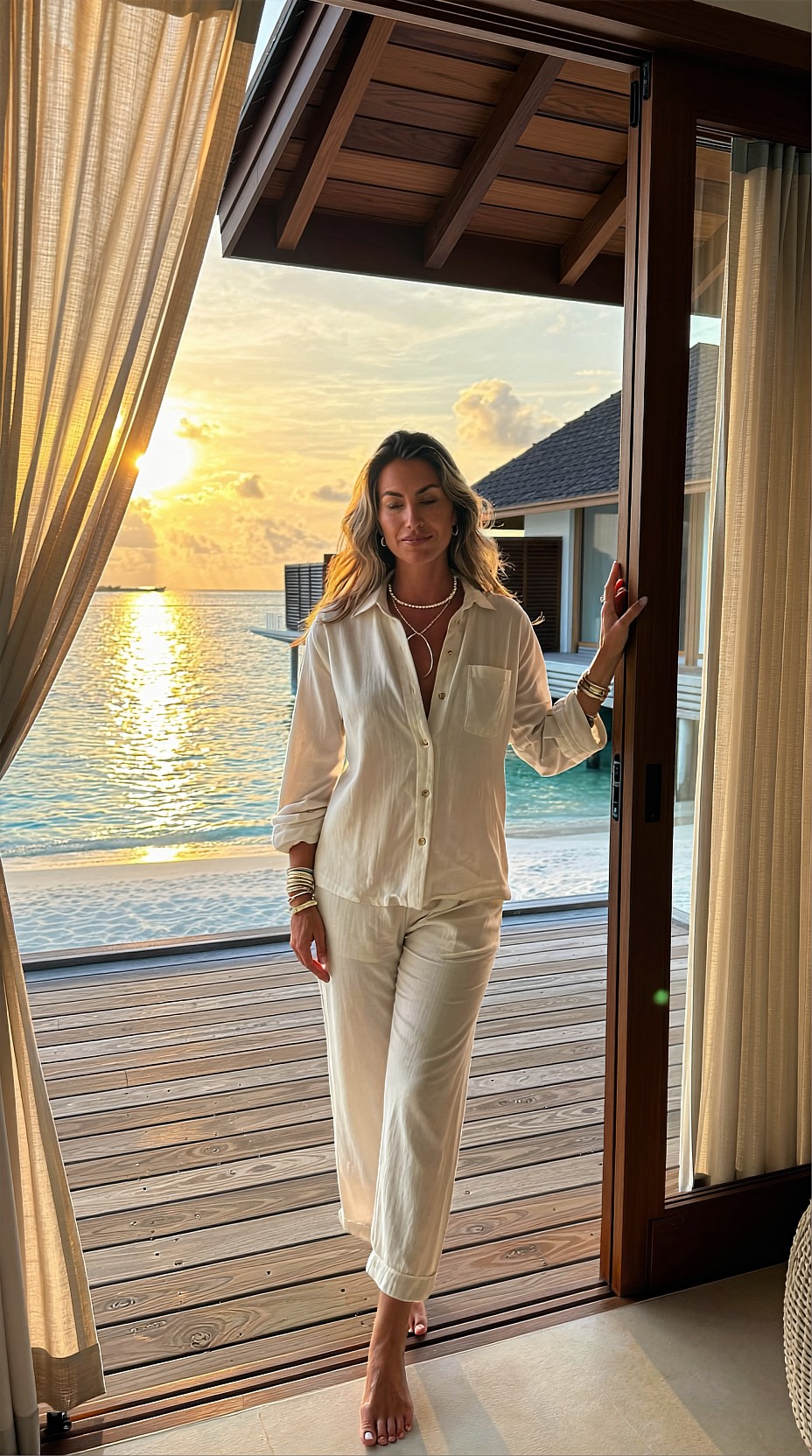
Choose compositions that feel like ad photography
Travel ads are rarely framed like casual vacation snapshots. They use composition to guide attention and support branding.
Useful composition patterns
- Wide hero shot: ideal for homepage banners and destination pages
- Mid shot with subject: useful for social posts and campaign creatives
- Layered foreground-background scene: adds depth and realism
- Symmetrical architecture framing: works well for luxury resorts and spas
- Negative space composition: essential for text overlays and paid media
When prompting, mention whether the image should feel like a banner, editorial spread, or commercial campaign shot. That small change often improves results.
Make lighting do the premium work
Lighting is one of the biggest differences between average AI resort art and convincing luxury advertising.
Avoid flat midday light unless you have a reason to use it. Premium travel visuals usually lean on:
- Golden hour for warmth and aspiration
- Sunset backlight for romance
- Overcast diffusion for spa and wellness calm
- Window-filtered natural light for interiors
- Controlled poolside reflections for clean skin and fabric tones
Light should support the experience you are selling.
Topic: Couple at infinity pool during sunset honeymoon campaign
Genre: Luxury Campaign
Camera: Nikon Z8
Lens: 50mm f/1.2
Lighting: Sunset backlight
Location: Cliffside infinity pool resort in Santorini overlooking the Aegean Sea
Style: Cinematic realism
Final Prompt: An elegant couple standing waist-deep at a cliffside infinity pool in Santorini during sunset, refined neutral swimwear and a lightweight cream cover-up, intimate but natural body language, soft smiles, glowing sunset backlight outlining their silhouettes, expansive Aegean horizon merging with the pool edge, whitewashed resort architecture in the background, terracotta and gold color accents, luxury honeymoon atmosphere, balanced composition with premium ad spacing, realistic wet skin highlights, detailed water ripples, polished stone textures, cinematic realism, Nikon Z8 look, 50mm f/1.2 depth separation, romantic travel advertising finish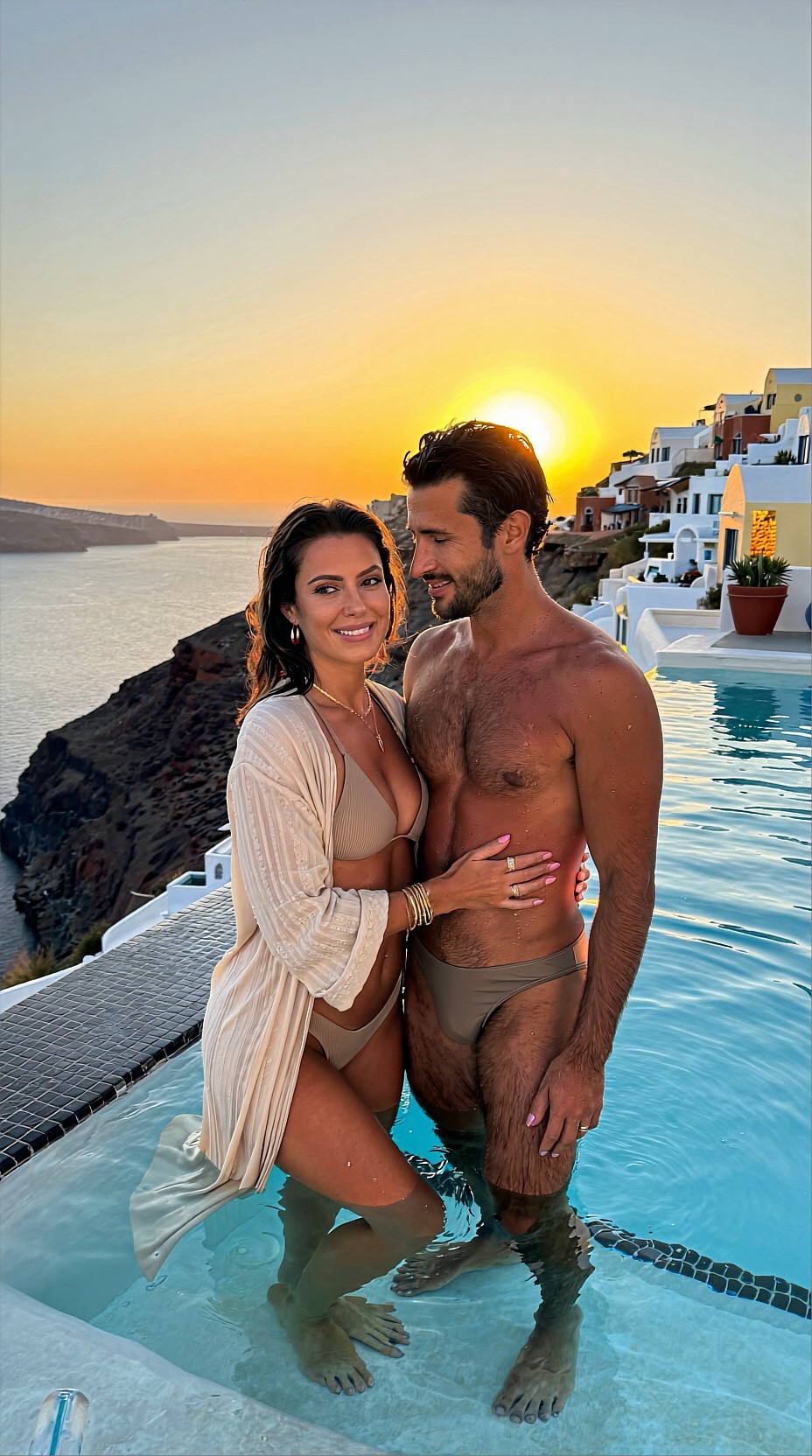
Direct styling like a creative director
Wardrobe is one of the fastest ways to shift an AI image from generic tourism to premium hospitality.
Use styling language such as:
- Ivory linen set
- Tailored resortwear
- Minimal gold jewelry
- Soft neutral swimwear
- Structured sun hat
- Textured spa robe
- Leather sandals
Also define the emotional register:
n- Refined ease
- Relaxed confidence
- Quiet luxury
- Romantic intimacy
- Restorative calm
Premium does not mean overloaded. Simplicity usually reads as more expensive.
Match the setting to the brand tier
Not every resort should look the same. A premium beach club, jungle retreat, desert spa, and urban rooftop hotel all need different visual language.
Examples of setting-specific direction
- Tropical island resort: airy fabrics, bright water, teak, sunlit minimalism
- Mediterranean luxury hotel: limestone, white walls, soft gold sunset, olive tones
- Wellness retreat: stone, foliage, steam, muted palette, diffused light
- Family resort: clean daylight, joyful movement, polished but approachable styling
The more precisely you define the environment, the less generic the output becomes.
Topic: Wellness guest in a premium spa courtyard
Genre: Beauty Campaign
Camera: Fujifilm GFX100 II
Lens: 80mm f/1.7
Lighting: Overcast diffusion
Location: Stone spa courtyard at a Bali jungle wellness resort with shallow reflecting pool and tropical greenery
Style: High-end beauty advertising
Final Prompt: A poised wellness traveler seated beside a shallow reflecting pool in a stone spa courtyard at a Bali jungle resort, textured white spa robe, neatly wrapped hair, calm meditative expression, elegant straight posture, soft hands resting on knees, diffused overcast light creating smooth skin and gentle shadows, tropical greenery and warm volcanic stone in the background, subtle mist in the air, muted green, ivory, and charcoal palette, luxury wellness atmosphere, close editorial composition with premium skincare-ad styling, ultra-detailed fabric texture, realistic stone moisture, serene cinematic finish, Fujifilm GFX100 II medium-format look, 80mm f/1.7 shallow depth and refined tonal range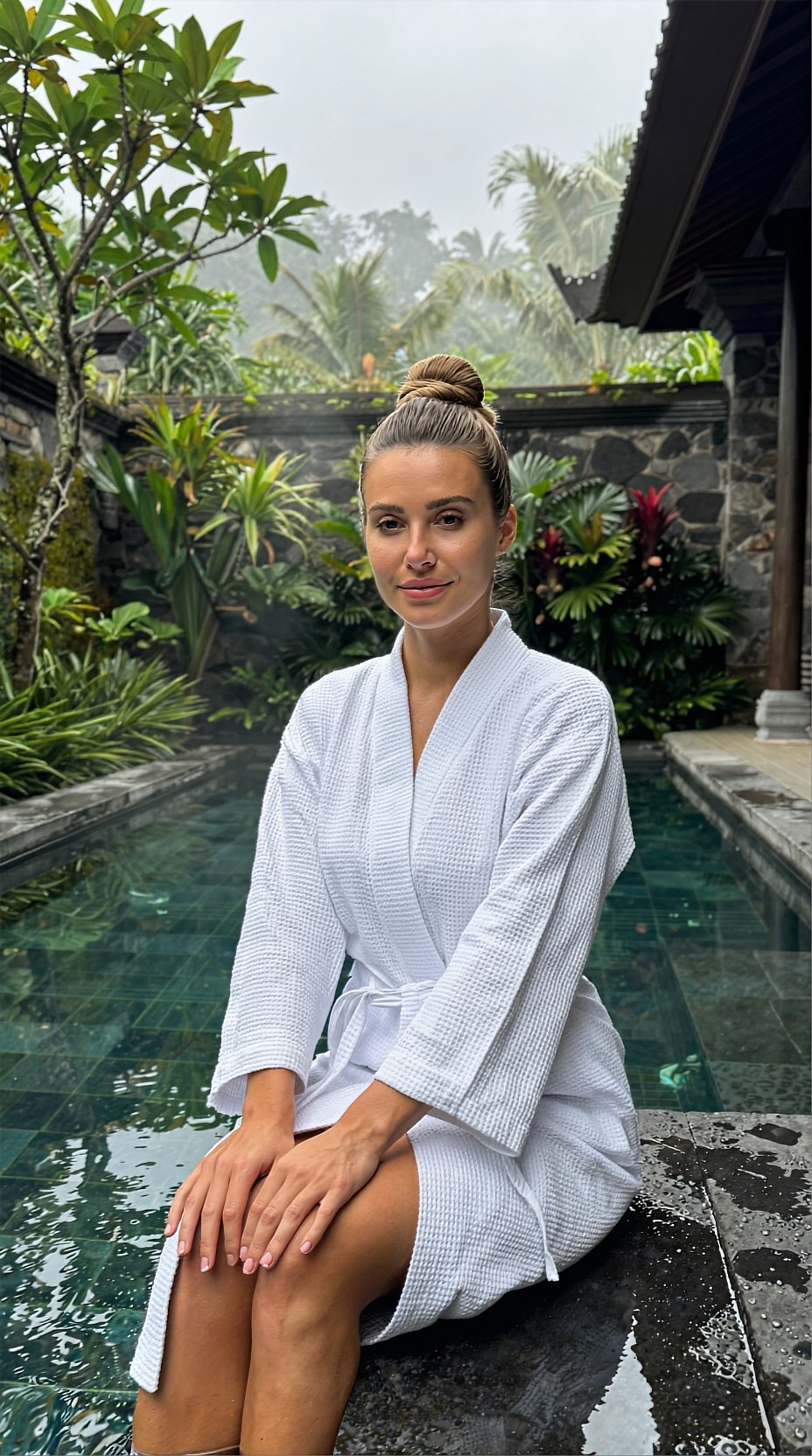
Add material detail to improve realism
Luxury travel ads rely heavily on texture. AI images become more convincing when you specify tactile surfaces.
Include details like:
- Sunlit linen curtains
- Wet stone around the pool edge
- Polished teak decking
- Matte limestone walls
- Crisp white bedding
- Glass reflections from balcony doors
- Fine sand texture and soft foam lines
These details help the image feel photographed instead of assembled.
Avoid common prompt mistakes
If your resort images still look cheap or synthetic, these are usually the reasons:
1. Too many focal points
A pool, beach, breakfast, mountain, and spa in one frame usually weakens the result.
2. Generic luxury wording
Words like "ultra luxury" or "5-star" do less than concrete visual instructions.
3. No subject behavior
If the person is just "standing at a resort," the image often feels lifeless. Give them an action or emotional posture.
4. Repetitive lighting
Using the same golden-hour formula for every image makes a campaign feel flat.
5. Weak brand consistency
If one image feels cinematic, another feels catalog-like, and another feels influencer-style, the set won't work together.
Create campaign variety without losing consistency
A useful workflow is to lock a few constants across a series:
- Similar color palette
- Shared styling direction
- Consistent aspect ratio
- Repeated destination tone
- Matching realism level
Then vary:
- Shot distance
- Time of day
- Subject count
- Activity
- Interior vs exterior setting
That approach works well for hotel websites, booking platforms, ad sets, and editorial content clusters.
Topic: Elegant seaside dining at a luxury Mediterranean resort
Genre: Product Editorial
Camera: Sony A7R V
Lens: 24-70mm f/2.8 at 50mm
Lighting: Blue hour with candlelight accents
Location: Oceanfront terrace restaurant at a luxury resort on the Amalfi Coast
Style: Clean commercial look
Final Prompt: A refined oceanfront dining scene at a luxury Amalfi Coast resort during blue hour, beautifully set table for two with polished glassware, linen napkins, ceramic plates, candlelight, chilled white wine, and understated floral accents, no overcrowding, ocean horizon visible beyond the terrace, elegant rattan and stone textures, staff-level precision in table styling, rich navy, cream, and amber palette, premium hospitality composition designed for a booking ad, subtle sea breeze movement in table linen, realistic reflections in glass and cutlery, Sony A7R V commercial sharpness, 24-70mm f/2.8 at 50mm, clean resort advertising finish with upscale editorial restraint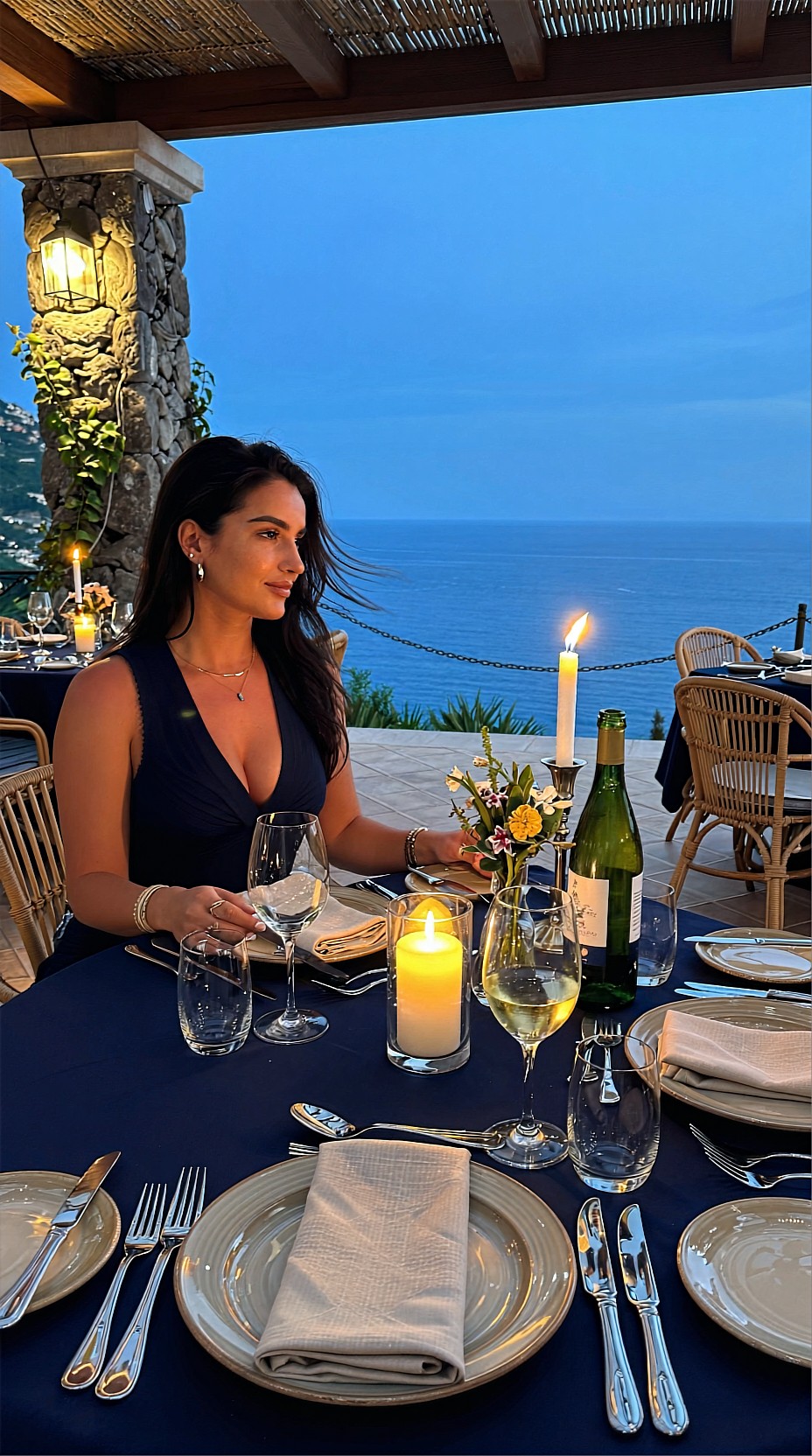
Best prompt formula for premium resort ads
A strong resort prompt usually combines five elements:
1. Subject or moment — who is there and what are they doing? 2. Visual genre — editorial, cinematic travel, luxury campaign, wellness advertising 3. Technical realism — camera, lens, lighting, composition 4. Environment detail — architecture, materials, weather, mood 5. Brand tone — elegant, calm, exclusive, romantic, family-friendly
This structure is especially effective across Midjourney, Flux, SDXL workflows, and prompt-enhanced generator interfaces.
Practical workflow for better outputs
Here is a simple production workflow you can use:
Step 1: Define the ad goal
Example: homepage hero for a premium Maldives villa brand.
Step 2: Pick one moment
Example: guest opening onto sunrise terrace.
Step 3: Set visual language
Example: elegant resort editorial, warm neutrals, airy fabrics.
Step 4: Add camera and lighting realism
Example: Canon EOS R5, 35mm, golden sunrise.
Step 5: Add texture and composition cues
Example: teak deck, linen curtains, copy space, calm lagoon.
Step 6: Generate variations
Change only one variable at a time: lens, time of day, or subject pose.
One more prompt for family-friendly premium travel creative
Luxury does not always mean adult-only minimalism. Resorts targeting families still need polish, but the energy is brighter and more open.
Topic: Family poolside morning at a premium beach resort
Genre: Lifestyle Portrait
Camera: Leica SL2-S
Lens: 35mm f/2
Lighting: Beach reflection daylight
Location: Palm-lined family pool at a luxury beach resort in Phuket
Style: Luxury fashion campaign
Final Prompt: A stylish young family enjoying a calm morning by a palm-lined pool at a luxury Phuket beach resort, coordinated resortwear in soft beige, sky blue, and white, parents seated at the pool edge while a child stands between them smiling naturally, relaxed affectionate interaction, bright beach-reflected daylight with clean flattering skin tones, turquoise pool water, manicured tropical landscaping, premium sun loungers, rolled towels, and subtle cabana details in the background, spacious composition with polished hospitality branding feel, realistic fabric folds, natural expressions, crisp water reflections, Leica SL2-S visual character, 35mm f/2 lifestyle framing, upscale family travel ad finish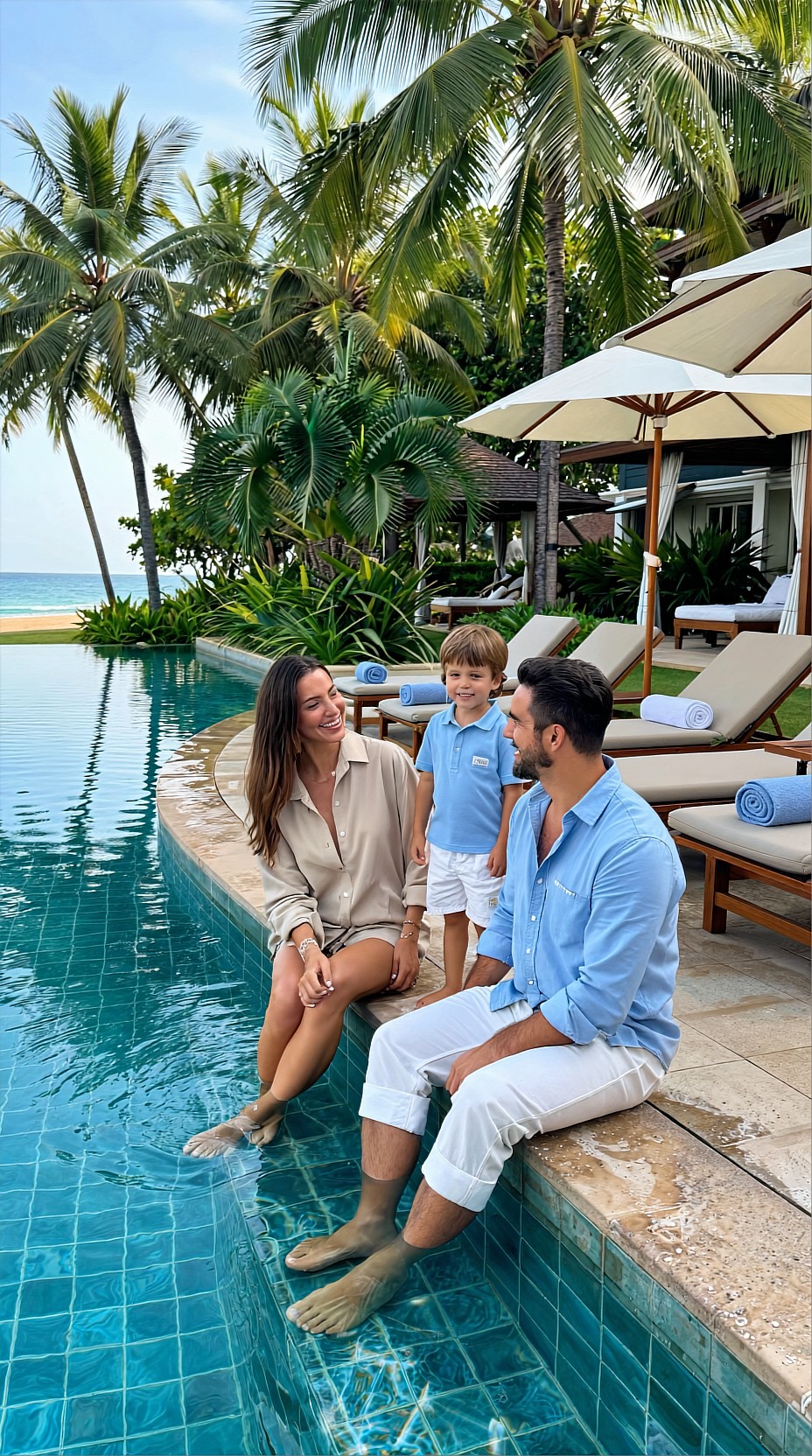
Final takeaway
To make AI resort photos look like premium travel ads, focus less on generic luxury keywords and more on ad logic: the customer moment, the composition, the lighting, the styling, and the material detail.
The best prompts act like mini creative briefs. They tell the model what kind of travel image to create, why it exists, and how it should feel. When you approach resort visuals this way, the outputs become much more useful for hospitality branding, content production, and conversion-focused marketing.