How to Make Korean Fashion Model Images Look Less AI-Generated 한국어 요약
이 페이지는 ZView Space의 영어 원문을 한국어 검색 사용자도 이해할 수 있도록 정리한 SEO 요약입니다. 핵심은 단순한 얼굴 중심 이미지가 아니라 패션 에디토리얼, 룩북, 아웃핏, 프롬프트 테스트, 이미지 생성 워크플로우를 실제로 어떻게 구성할지입니다.
핵심 요약
- 원문 주제: How to Make Korean Fashion Model Images Look Less AI-Generated
- 목적: AI 이미지 생성에서 outfit, silhouette, fabric, pose, location, camera framing을 더 명확하게 설계합니다.
- 활용 범위: Z-Image Turbo, Krea2 Turbo, Qwen Image, Anima, SeedVR2 같은 이미지 생성 및 업스케일 워크플로우에 적용할 수 있습니다.
- SEO 관점: 제목, 설명, 이미지 alt, 프롬프트 예시가 실제 검색 의도와 맞아야 색인 가능성이 높아집니다.
한국어 사용자를 위한 체크포인트
1. 프롬프트가 얼굴 묘사에만 머물지 않고 전체 스타일과 의상 구성을 설명하는지 확인합니다. 2. 패션 이미지라면 상의, 하의, 아우터, 신발, 액세서리, 소재감, 촬영 장소를 분리해서 씁니다. 3. 생성 결과는 바로 게시하지 말고 디테일, 손, 의상 형태, 배경 일관성, 이미지 품질을 비교합니다. 4. 글 본문에는 실제 테스트 기준과 실패를 줄이는 방법이 들어가야 검색엔진에서 얇은 콘텐츠로 보일 가능성이 줄어듭니다.
원문 미리보기
AI fashion portraits often fail in the same visible ways: skin that looks airbrushed into plastic, symmetry that feels unnatural, clothing that ignores gravity, and backgrounds that read like a polished blur instead of a real place. This is especially noticeab
---
AI fashion portraits often fail in the same visible ways: skin that looks airbrushed into plastic, symmetry that feels unnatural, clothing that ignores gravity, and backgrounds that read like a polished blur instead of a real place. This is especially noticeable in Korean fashion model imagery, where viewers expect a specific balance of clean styling, natural skin, understated expression, and editorial realism.
This guide compares the prompt and workflow choices that make images look synthetic versus believable. The goal is not "perfect realism" in every frame, but a more convincing editorial result that fits Korean fashion references across lookbooks, beauty campaigns, street style, and magazine-style portraiture.
What usually makes AI fashion models look fake
Before changing prompts, it helps to identify the patterns that make generated images feel artificial.
Common failure points
- Skin is too poreless and evenly lit.
- Eyes are oversized or too glassy.
- Facial symmetry is unnaturally precise.
- Hairlines, bangs, and flyaways are simplified.
- Garments cling in impossible ways or lose fabric structure.
- Accessories merge into clothing.
- Hands look posed without tension or purpose.
- Backgrounds lack depth cues, local detail, or social context.
- The overall frame looks like a beauty filter rather than a photographed scene.
For Korean fashion images, the most effective correction is usually less stylization, more photographic specificity. Models tend to improve when prompts describe camera choice, lighting behavior, wardrobe material, pose logic, and environment details together.
Principle 1: Use real editorial references instead of vague beauty language
A prompt like "beautiful Korean model, perfect face, luxury clothes" usually pushes the model toward generic AI beauty. A better direction is to define the image as if it were a real editorial assignment.
Better prompt ingredients:
- age range and styling role, such as university street style, beauty campaign, or Seoul showroom lookbook
- wardrobe materials, such as wool, satin, washed denim, leather, cotton poplin
- expression, such as neutral, observant, reserved, softly confident
- body language, such as mid-step, leaning on railing, seated naturally, adjusting sleeve
- image purpose, such as magazine cover, ecommerce campaign, seasonal brand lookbook
Topic: Korean fall streetwear model in Seoul
Genre: Street Style
Camera: Fujifilm GFX100S
Lens: 80mm f/1.7
Lighting: Overcast Diffusion
Location: Seongsu backstreet with concrete walls, cafe signage, and parked scooters
Style: Korean magazine street editorial
Final Prompt: Young Korean fashion model wearing layered fall streetwear in Seongsu, oversized charcoal wool blazer over a white ribbed top, straight-leg faded denim, black loafers, slim leather shoulder bag, natural mid-step pose as if crossing between cafes, calm observant expression, soft overcast daylight, subtle wind moving loose hair strands, realistic skin texture with light pores and natural lip tone, concrete wall textures, small Korean signs, parked scooters, shallow medium-format depth of field, balanced editorial composition, muted gray, navy, cream, and washed blue palette, believable fabric folds, candid but polished Korean magazine street editorial realism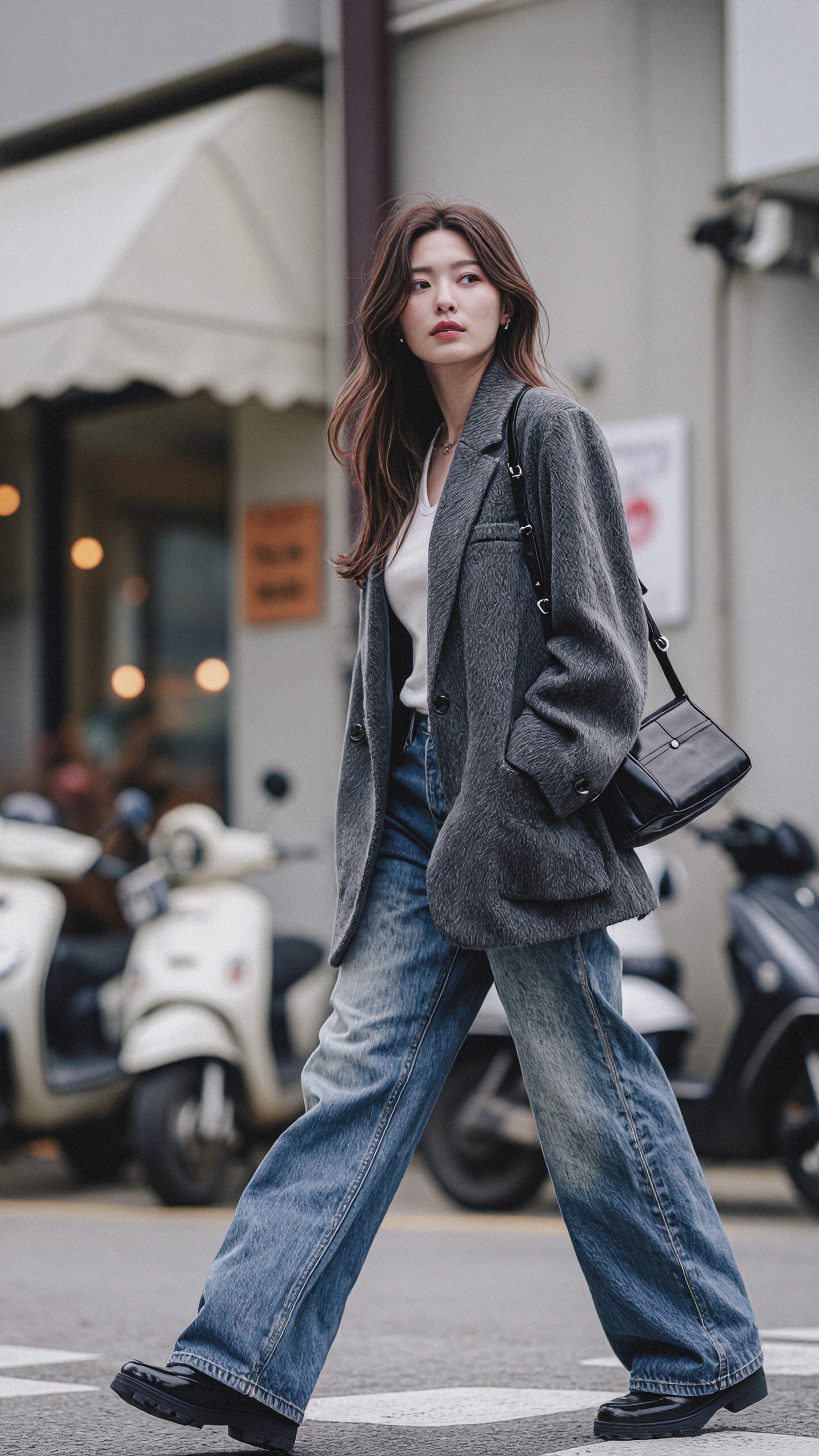
This kind of prompt gives the model a job to perform. It also replaces generic attractiveness with image logic.
Principle 2: Ask for natural skin texture, not flawless skin
One of the fastest ways to reduce the AI look is to stop requesting perfection. Real Korean fashion and beauty imagery is polished, but it still preserves texture around cheeks, lips, under-eyes, and hairline.
Useful phrases include:
- natural skin texture
- visible pores but clean finish
- soft editorial retouching, not plastic skin
- realistic lip texture
- subtle baby hairs and flyaways
- controlled makeup with skin still visible
Less useful phrases include:
n- perfect face
- flawless skin
- ultra smooth skin
- doll-like beauty
Topic: Korean beauty campaign portrait with natural skin
Genre: Beauty Campaign
Camera: Canon EOS R5
Lens: 100mm f/2.8 macro
Lighting: Studio butterfly light with soft fill
Location: Minimal cream studio set with reflective acrylic base
Style: High-end beauty advertising
Final Prompt: Korean fashion model in a refined beauty campaign portrait, wearing a cream silk camisole and delicate gold earrings, hair tied back with soft face-framing strands, direct but relaxed eye contact, subtle peach and taupe makeup, studio butterfly light with gentle fill creating clean cheekbone definition, realistic skin with visible pores and soft under-eye texture, natural lip lines, smooth but not plastic retouching, cream background with minimal reflective acrylic surface, elegant shoulder-up composition, premium cosmetic-ad aesthetic, warm beige and soft rose palette, crisp eyelash detail, believable hairline, luxury beauty realism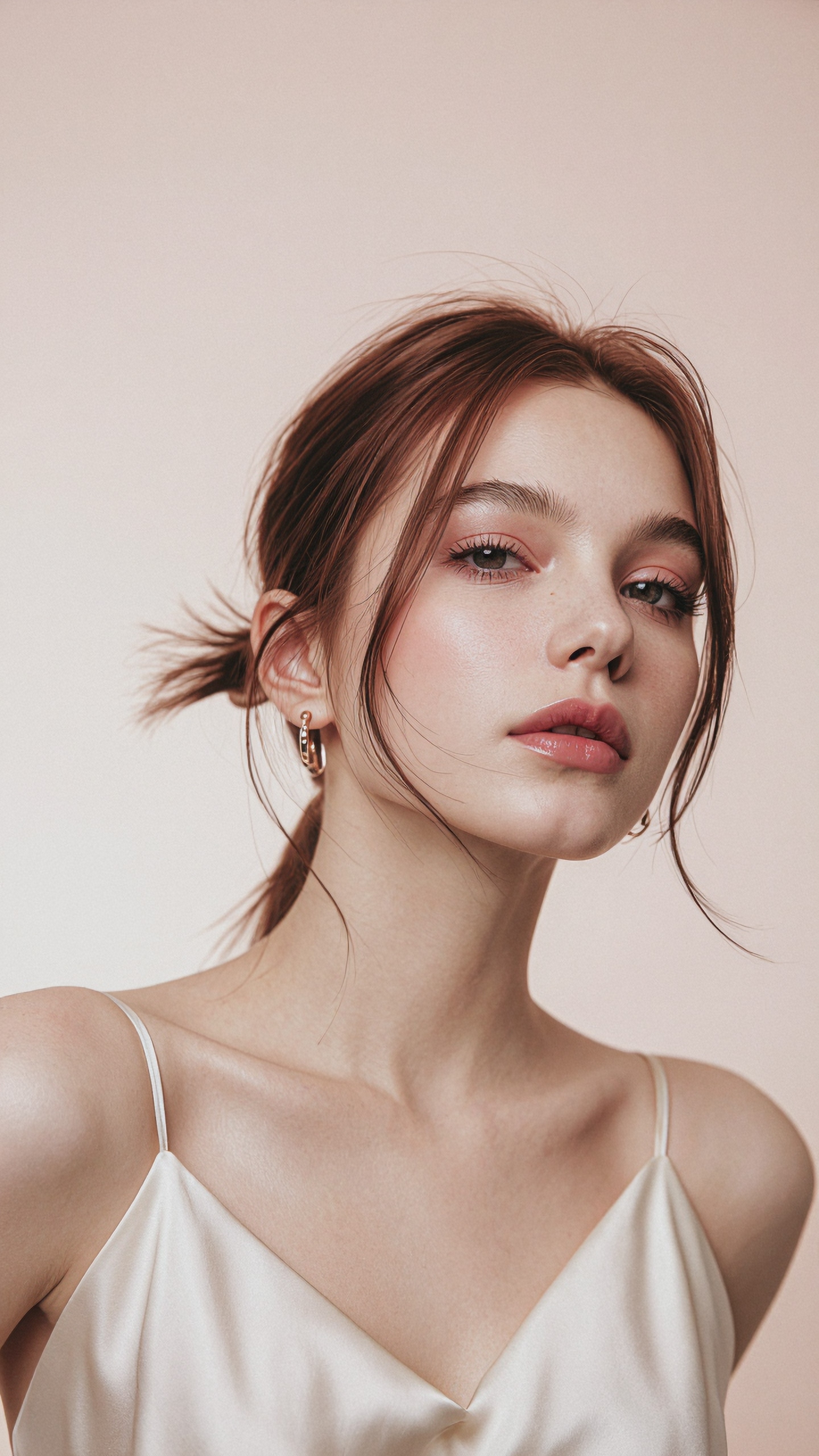
For close-up portraits, camera and lens specification matter more than many users expect. Macro or portrait lenses encourage the model toward finer facial rendering.
Principle 3: Tone down symmetry and center-framed perfection
AI often defaults to hyper-symmetrical faces and centered compositions because they are easy pattern solutions. Real editorials usually feel more human when there is slight asymmetry in pose, hair placement, shoulder angle, and gaze.
Try adding:
- slight head tilt
- one shoulder higher than the other
- gaze just off camera
- asymmetric hair placement
- weight shifted to one leg
- one hand interacting with garment or bag
Topic: Korean resort fashion model on hotel balcony
Genre: Luxury Campaign
Camera: Nikon Z8
Lens: 50mm f/1.8
Lighting: Sunset backlight with soft reflected fill
Location: Busan ocean-view hotel balcony at dusk
Style: Elegant resort editorial
Final Prompt: Korean fashion model on a luxury Busan hotel balcony at dusk, wearing an ivory satin slip dress layered with a lightweight beige cardigan, one shoulder slightly dropped, head gently tilted, gaze looking just past the camera, one hand resting on balcony rail and the other adjusting the cardigan sleeve, sunset backlight with soft reflection from pale stone walls, natural skin texture, refined but understated makeup, ocean skyline softly visible in the distance, warm coral and cool blue evening tones, fabric catching breeze with believable drape, cinematic editorial framing, sophisticated asymmetry and quiet elegance instead of posed perfection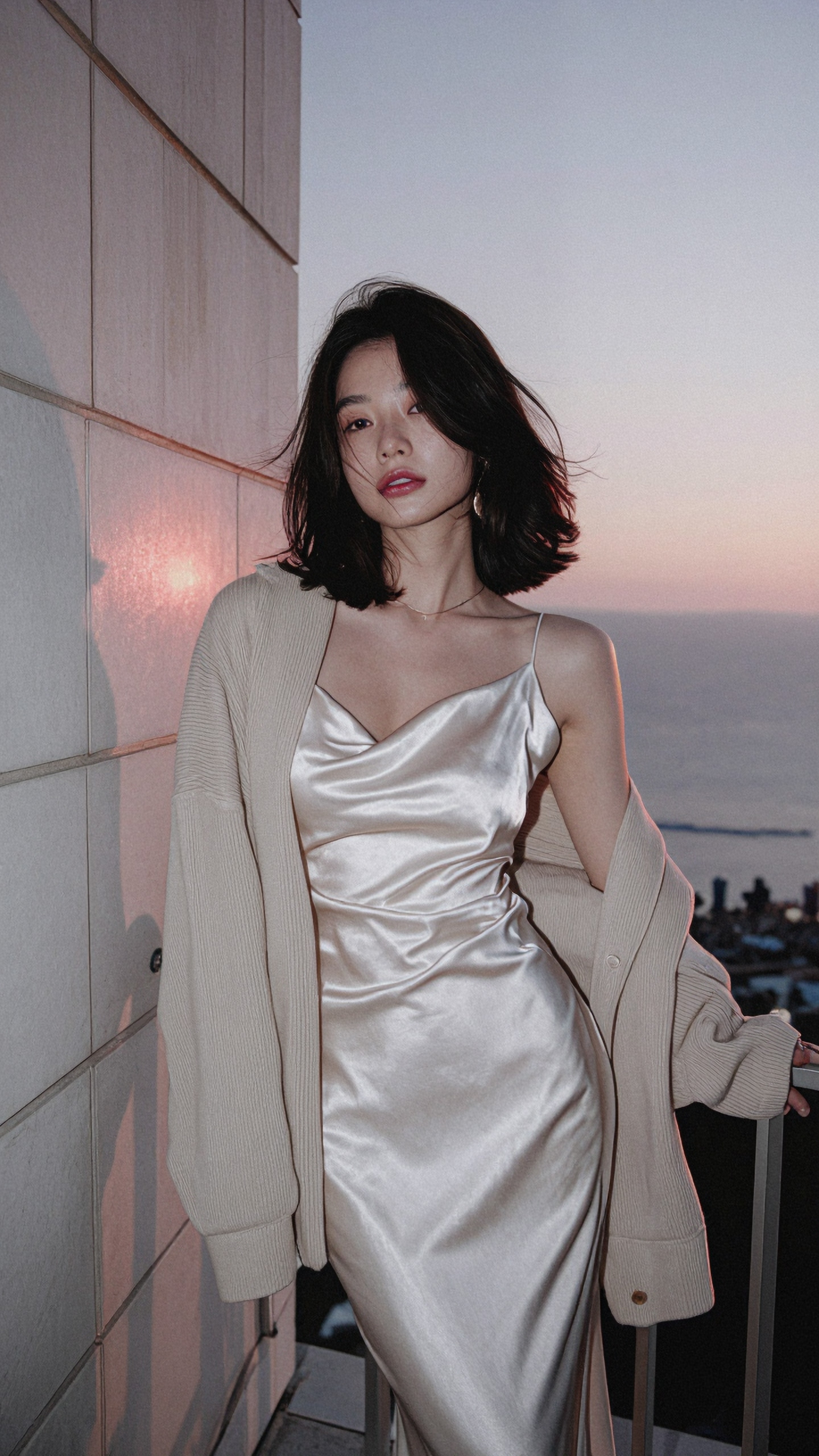
The result is often less "AI portrait" and more "photograph of a styled person."
Principle 4: Put the model in a real Korean setting with useful detail
Many synthetic images fail because the subject is specific but the environment is not. "Seoul street" is often too broad. A more believable image usually names a type of neighborhood, architecture, signage, weather, and time of day.
Good environmental cues:
- Seongsu industrial cafe street
- Apgujeong luxury retail block
- Hongdae alley after rain
- subway entrance with glass reflections
- rooftop studio in Gangnam
- Jeju pension garden with volcanic stone walls
Topic: Korean model in rainy Hongdae night fashion
Genre: Lifestyle Portrait
Camera: Sony A7 IV
Lens: 35mm f/1.4
Lighting: Neon rim light with wet street reflections
Location: Hongdae alley after rain with storefront signs and puddles
Style: Cinematic realism
Final Prompt: Korean female fashion model walking through a rainy Hongdae alley at night, wearing a cropped black leather jacket, gray pleated mini skirt, sheer tights, chunky boots, and a compact crossbody bag, slight glance over her shoulder with a reserved expression, neon shop signs reflecting in puddles, wet pavement, subtle rim light along hair and jacket edges, realistic raindrop sheen on fabric, background depth with storefront windows, poster layers, and passing umbrellas, 35mm cinematic street perspective, natural skin texture despite low light, cool magenta, cyan, and tungsten highlights, believable motion energy, urban Korean nightlife realism without exaggerated cyberpunk effects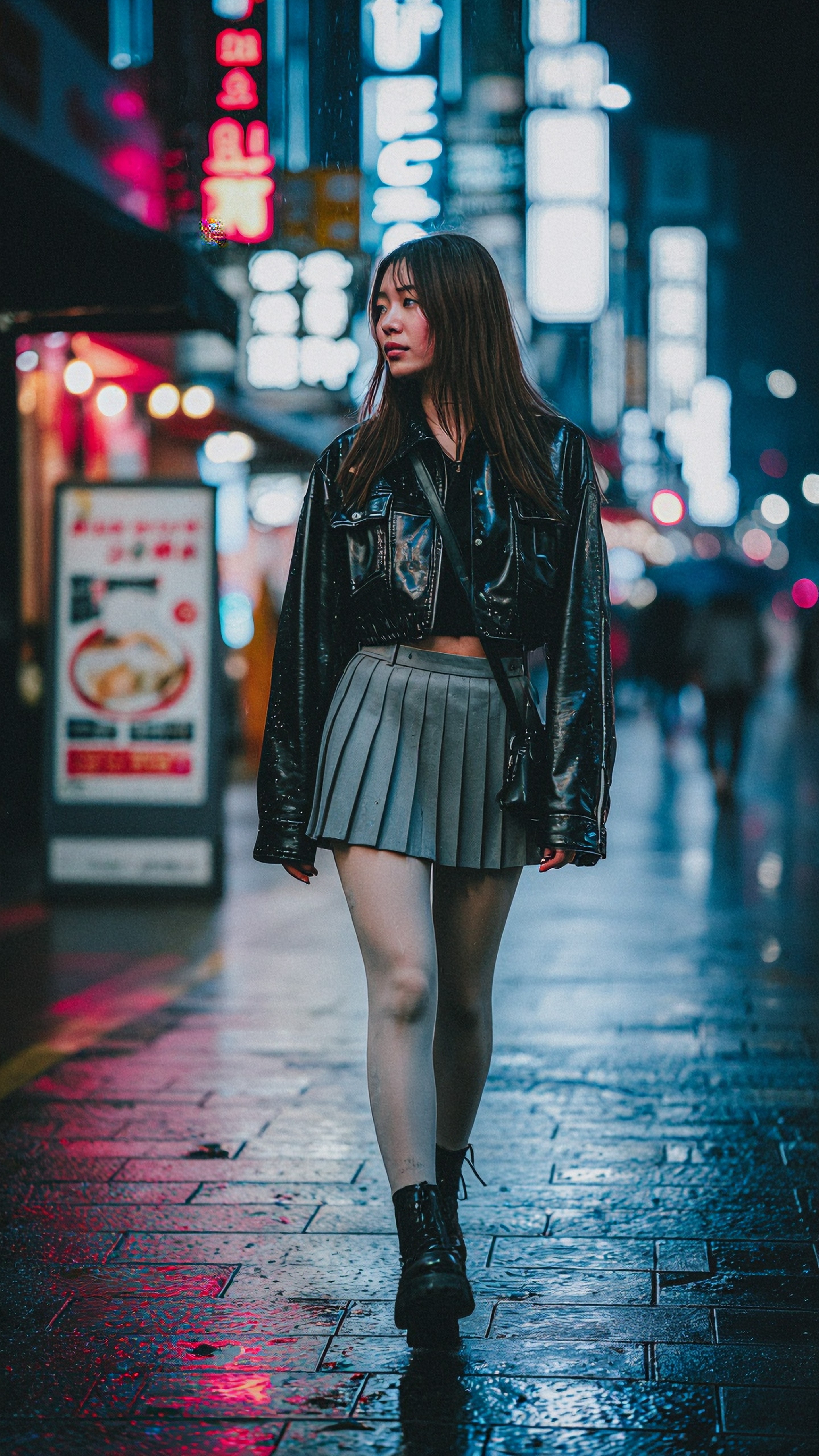
Specific settings also help clothing behave more realistically, because the model has to resolve how a garment sits in space.
Principle 5: Describe fabric behavior and garment construction
If clothing looks painted on, the image will read as AI even when the face is strong. Korean fashion imagery often depends on fabric quality and silhouette, so prompts should mention weight, layering, seams, shine, and drape.
Useful wording:
- structured wool blazer with visible lapel edge
- washed denim with natural creases at knees and hips
- cotton shirt with crisp cuff folds
- satin skirt catching soft reflected highlights
- leather jacket with subtle grain and seam definition
Topic: Korean showroom lookbook with tailored outerwear
Genre: Fashion Editorial
Camera: Hasselblad X2D 100C
Lens: 90mm f/2.5
Lighting: Large softbox key light with window-style ambient fill
Location: Minimal Seoul showroom with pale concrete floor and clothing rack in background
Style: Clean commercial look
Final Prompt: Korean fashion model in a Seoul showroom lookbook wearing a structured camel wool coat over a crisp white cotton shirt and black tailored trousers, visible lapel shape, natural sleeve creases, clean trouser break over polished loafers, standing with weight shifted to one leg and one hand lightly holding the coat edge, softbox key light blended with window-style ambient fill, pale concrete floor, minimal garment rack in the background, realistic fabric texture and seam definition, tidy but not stiff posture, medium-format commercial sharpness, restrained neutral palette, high-end Korean brand lookbook realism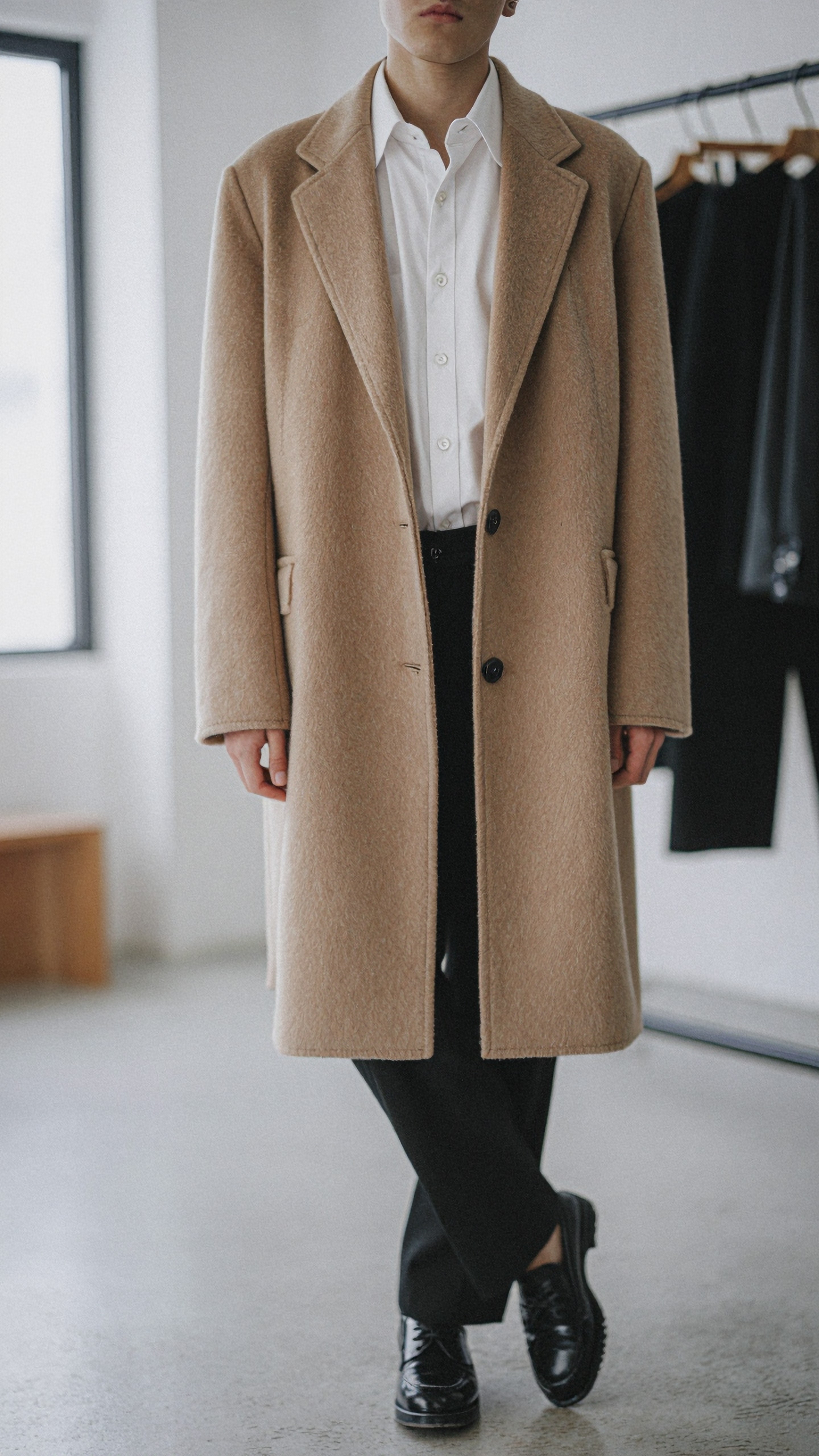
This is especially useful for ecommerce, seasonal campaigns, and brand presentation images where the clothes matter more than dramatic atmosphere.
Principle 6: Use believable expressions and restrained posing
An exaggerated smile or a vacant high-fashion stare can both look synthetic if the rest of the image is trying to be realistic. Korean fashion editorials often benefit from controlled, low-intensity expression.
Good options:
- soft confidence
- neutral gaze
- quiet curiosity
- reserved half-smile
- thoughtful expression
Also give the model something to do:
- adjusting cuff
- holding coffee cup
- tucking hair behind ear
- checking phone while walking
- seated with bag on lap
Topic: Korean spring cafe fashion portrait
Genre: Lifestyle Portrait
Camera: Leica SL2-S
Lens: 75mm f/2
Lighting: Window light with soft indoor bounce
Location: Quiet Seoul cafe with wood table, glass frontage, and morning light
Style: Clean editorial lifestyle
Final Prompt: Korean fashion model seated by a Seoul cafe window in spring morning light, wearing a pale blue cropped cardigan over a white tank, cream wide-leg trousers, simple silver jewelry, one hand loosely around a coffee cup and the other tucking hair behind the ear, thoughtful relaxed expression, realistic skin texture and subtle makeup, wood table surface, glass reflections, soft city blur beyond the window, natural posture with slightly rounded shoulders instead of rigid posing, airy cream, light blue, and warm wood palette, intimate lifestyle editorial realism with premium but believable styling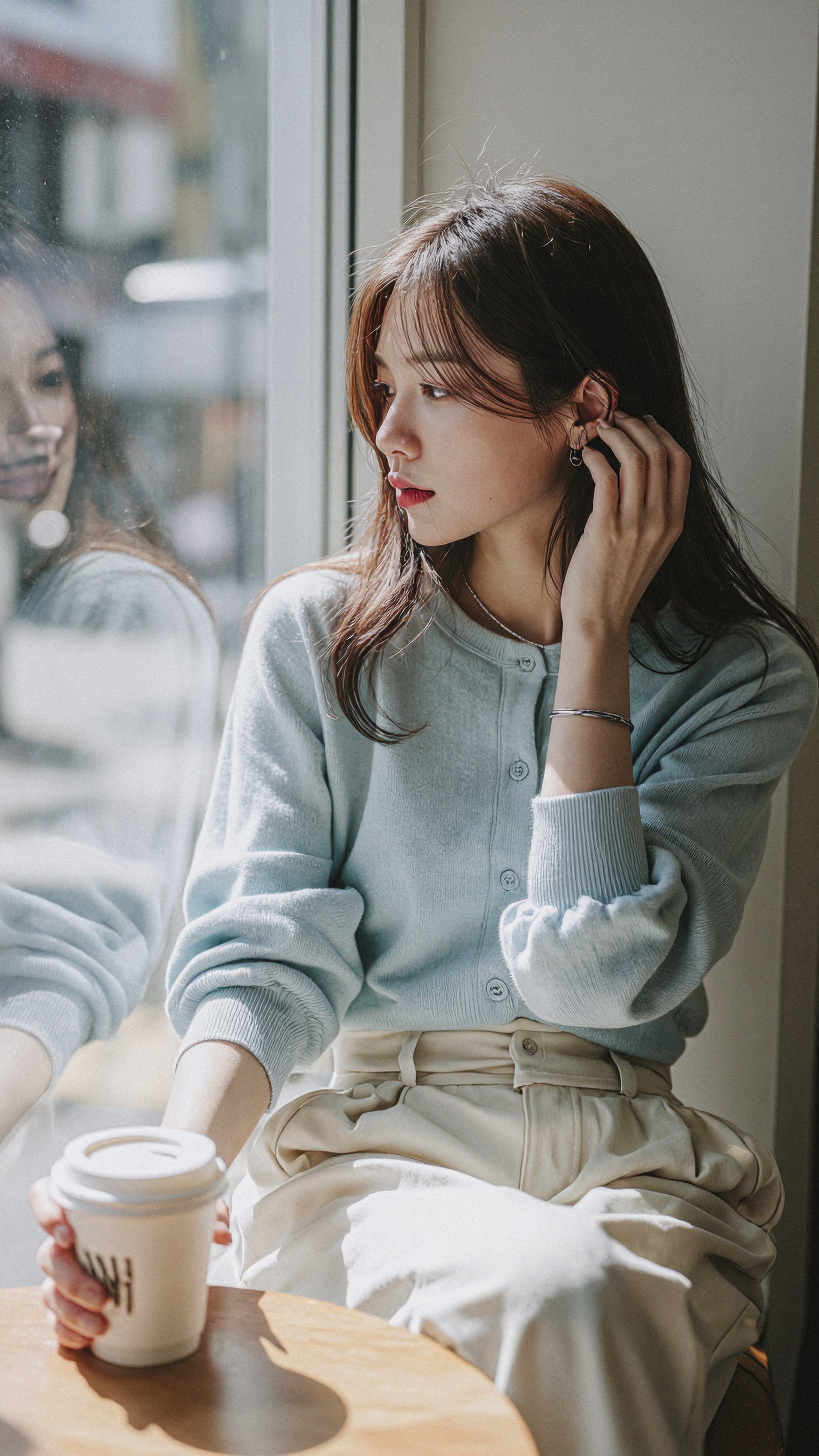
For social content, this type of prompt is often more useful than a formal studio setup because it creates relatability without losing polish.
Principle 7: Match lens choice to the intended fashion image
Lens mismatch is a common reason images feel wrong. Extreme portrait compression can flatten clothing, while very wide lenses can distort limbs and facial proportions.
A practical comparison:
- 35mm: good for environmental fashion, movement, and street context
- 50mm: balanced for half-body editorials and lifestyle work
- 85mm: strong for portraits and beauty-led fashion frames
- 100mm macro: useful for close beauty detail
If the goal is a Korean fashion magazine feel, 50mm and 85mm are often the safest starting points.
Topic: Korean magazine cover portrait in studio
Genre: Fashion Editorial
Camera: Sony A1
Lens: 85mm f/1.8
Lighting: Soft beauty dish key with subtle side fill
Location: Neutral gray studio backdrop with editorial floor sweep
Style: Korean magazine cover
Final Prompt: Korean fashion model photographed for a modern magazine cover, wearing a black off-shoulder knit top and sculptural silver earrings, slight turn of the shoulders, chin relaxed, direct calm eye contact, soft beauty dish key light with subtle side fill shaping the face naturally, neutral gray seamless backdrop, realistic skin texture, individual eyebrow hairs, softly defined lips, elegant collarbone line, premium 85mm portrait compression, generous negative space for cover layout, monochrome-inspired gray, black, and silver palette, polished Korean magazine cover style without artificial facial perfection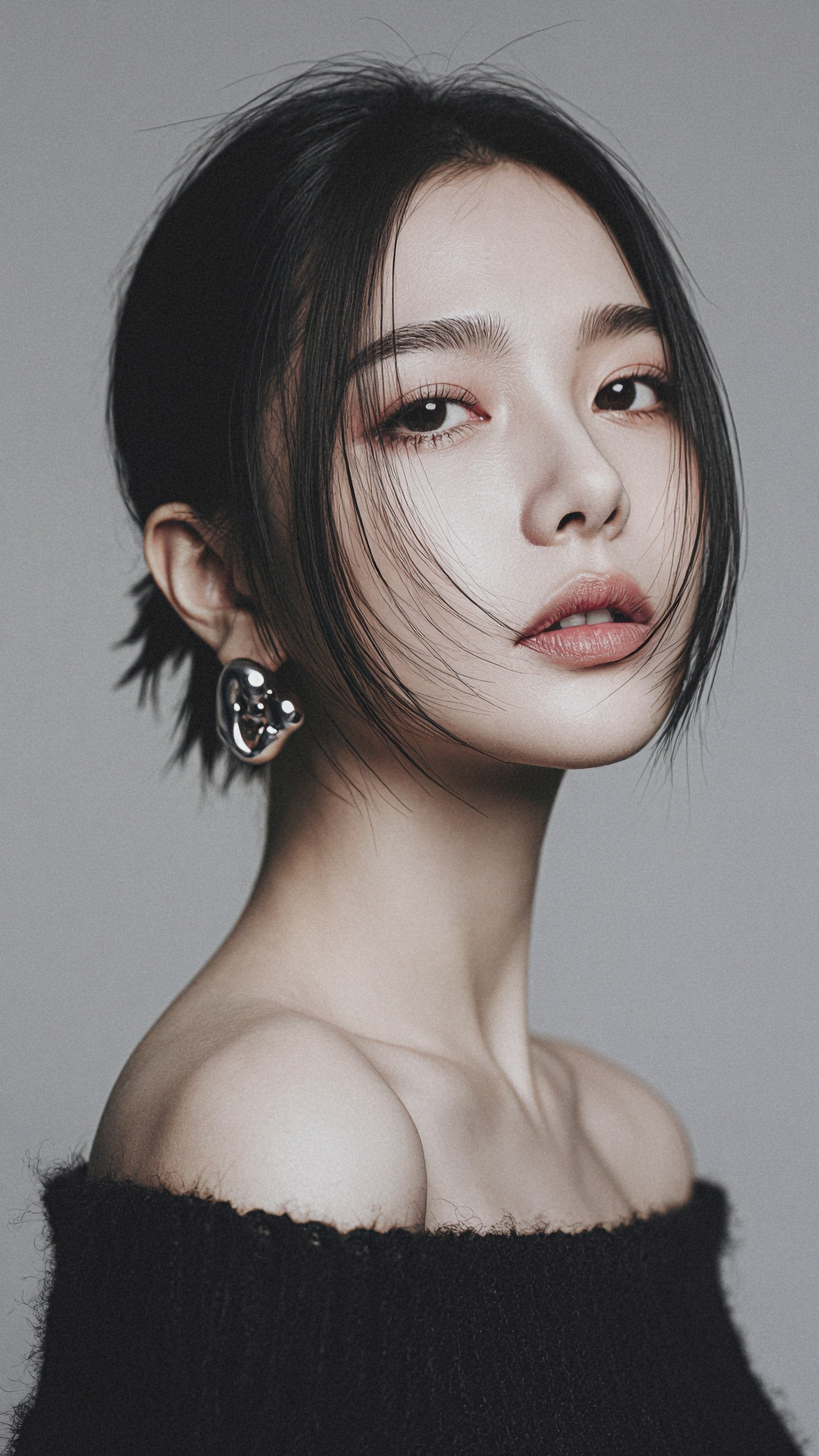
The more the lens choice supports the framing, the less the output tends to drift into synthetic anatomy.
Principle 8: Keep color grading restrained
Oversaturated color, glowing skin, and excessive bloom often push images toward a generated look. Korean fashion references usually work better with restrained palettes and consistent tonal control.
Safer grading directions:
- muted neutrals
- warm beige and cream
- soft blue-gray urban tones
- understated contrast
- selective highlight control
Topic: Korean autumn campus fashion lookbook
Genre: Street Style
Camera: Canon EOS R6 Mark II
Lens: 50mm f/1.2
Lighting: Late afternoon soft sun through trees
Location: Yonsei-style campus walkway with stone buildings and fallen leaves
Style: Seasonal brand lookbook
Final Prompt: Korean fashion model on a university-style campus walkway in autumn, wearing a navy cable-knit sweater layered over a white shirt, plaid midi skirt, knee-high socks, loafers, and a tan satchel, gentle half-smile, walking slowly with one hand holding the bag strap, late afternoon sunlight filtered through trees, subtle shadows on stone building walls, realistic wool and cotton textures, fallen leaves scattered naturally, restrained navy, cream, brown, and muted gold palette, soft commercial color grading, believable youth fashion lookbook realism inspired by Korean seasonal catalog photography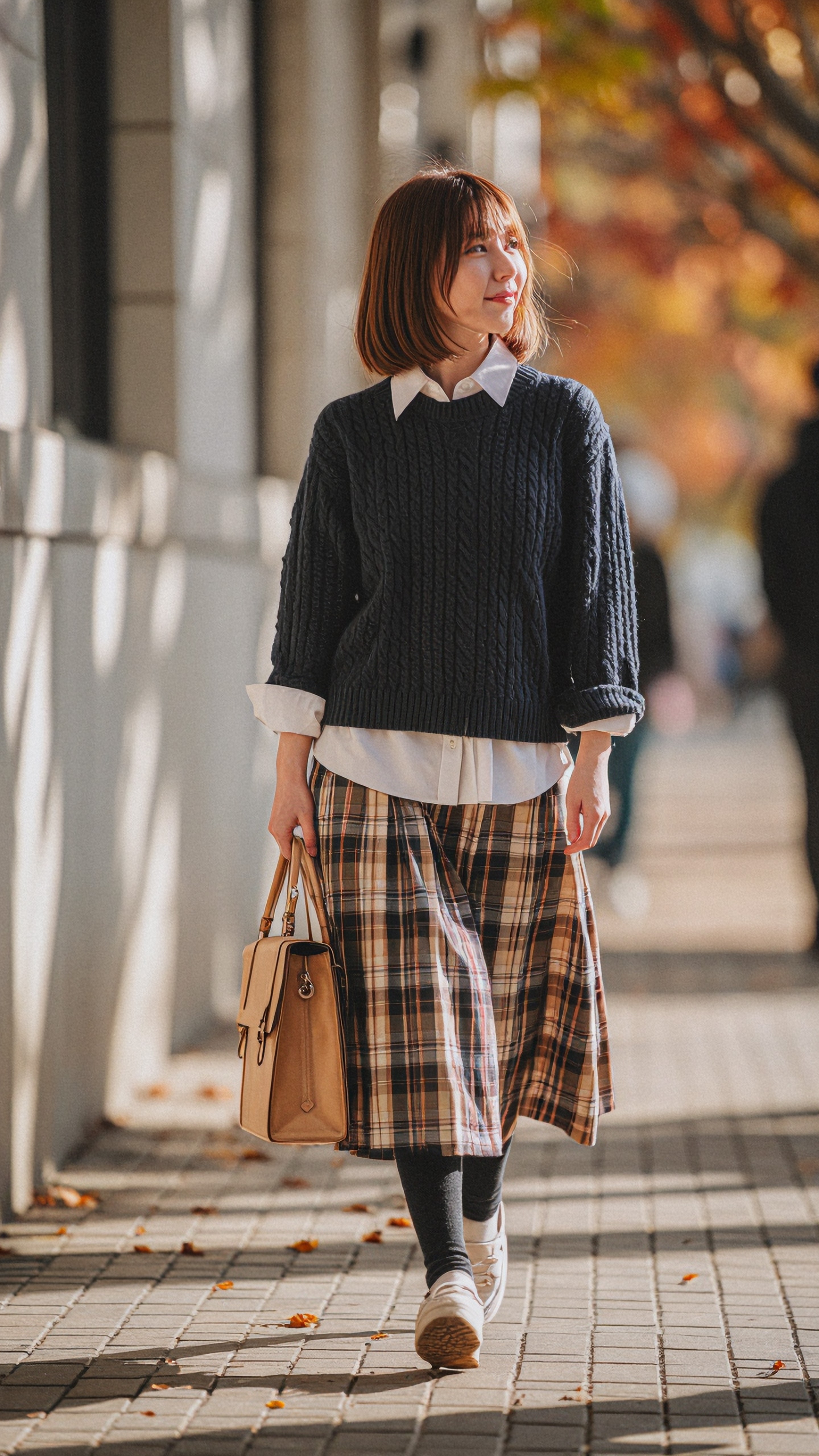
This is a strong setup for back-to-school campaigns, casual apparel ads, and Pinterest-style fashion visuals.
Principle 9: Use motion carefully instead of freezing everything
Many AI portraits look fake because every strand of hair, every fold, and every facial feature is locked into stillness. A small amount of motion can improve realism.
Examples:
- walking with coat moving slightly
- hair lifted by light wind
- turning body mid-step
- hand adjusting bag strap
- skirt reacting to movement
Topic: Korean airport fashion style capture
Genre: Street Style
Camera: Nikon D850
Lens: 70-200mm f/2.8 at 135mm
Lighting: Bright terminal daylight with reflected floor fill
Location: Incheon Airport departures hall
Style: Clean paparazzi-meets-editorial look
Final Prompt: Korean fashion model in an airport style capture at Incheon departures, wearing a long beige trench coat over a white tee and black straight trousers, white sneakers, sunglasses pushed up on head, sleek carry-on case in one hand and passport wallet in the other, mid-walk stride with coat hem moving naturally, candid composed expression, bright terminal daylight softened by reflected light from polished floors, glass architecture and subtle traveler blur in the background, realistic fabric motion and luggage detail, crisp but natural 135mm compression, neutral travel palette, polished airport fashion realism with documentary energy
Motion is useful for commercial travel imagery, social thumbnails, and fashion content that should feel observed rather than generated.
Principle 10: Build realism through use case, not only aesthetics
When an image has a practical job, prompt choices become clearer. Some common use cases:
Brand lookbook
Prioritize fabric accuracy, clean lighting, and repeatable framing.
Beauty campaign
Prioritize skin texture, precise makeup detail, and controlled close-up composition.
Social content for fashion labels
Prioritize candid body language, trend-aware styling, and location context.
Ecommerce hero image
Prioritize garment silhouette, color accuracy, and minimal distraction.
Magazine-style editorial
Prioritize atmosphere, composition, and story cues without losing realism.
Topic: Korean premium handbag campaign portrait
Genre: Product Editorial
Camera: Panasonic Lumix S1R
Lens: 85mm f/1.8
Lighting: Large octabox key with subtle edge light
Location: Apgujeong boutique exterior with stone facade and soft morning traffic blur
Style: Luxury fashion campaign
Final Prompt: Korean fashion model featured in a premium handbag campaign outside an Apgujeong boutique, wearing a fitted cream blazer dress with sheer black stockings and pointed heels, holding a structured burgundy leather handbag prominently at hip level, poised standing posture with one knee slightly bent, composed expression, large octabox key light balanced with natural morning street ambience and a subtle edge light on hair, stone facade, boutique window reflections, passing traffic softly blurred in the distance, realistic handbag stitching and leather grain, refined skin texture, editorial luxury composition, cream, burgundy, black, and pale stone palette, high-end accessory campaign realism
This is where many prompts improve the most. Once the intended output is clear, the visual system has fewer chances to drift into generic AI patterns.
A practical prompt formula that usually works
If you want Korean fashion model images to look less AI-generated, a reliable structure is:
1. Define the fashion use case. 2. Name a real photographic setup. 3. Specify wardrobe materials and silhouette. 4. Add a believable expression and physical action. 5. Anchor the image in a specific Korean environment. 6. Request natural texture instead of perfection. 7. Keep grading restrained.
Topic: Korean rooftop evening fashion editorial
Genre: Fashion Editorial
Camera: RED Komodo 6K still frame capture style
Lens: 50mm T1.5
Lighting: Blue hour ambient with practical tungsten accents
Location: Gangnam rooftop with city towers, vents, and low concrete walls
Style: Cinematic fashion realism
Final Prompt: Korean fashion model on a Gangnam rooftop at blue hour, wearing a dark espresso leather jacket over a slate silk blouse and high-waisted black trousers, standing near a low concrete wall with one hand in pocket and the other resting on the edge, composed introspective expression, soft city wind moving hair slightly, blue hour ambient light mixed with warm tungsten practicals from rooftop access door, realistic skin texture, subtle makeup, city towers glowing in the distance, visible rooftop vents and concrete wear, cinematic 50mm framing with believable depth, deep blue, charcoal, amber, and espresso palette, elegant but grounded Korean fashion editorial realism
Final comparison: what to remove and what to add
Remove or reduce
- perfect face
- flawless skin
- ultra detailed symmetrical beauty
- fantasy glow
- generic luxury background
- overexposed bloom
- excessive sharpening
Add instead
- realistic skin texture
- slight asymmetry
- garment structure and drape
- specific Seoul or Korea-based context
- natural body language
- restrained retouching
- camera and lens clarity
- muted editorial color control
The biggest shift is simple: stop prompting for idealized beauty alone, and start prompting for photographed fashion situations. Korean model images look more believable when they feel cast, styled, lit, and placed in the world rather than merely rendered.
If the image still looks synthetic after a first pass, the best revisions are usually small: reduce symmetry, lower skin smoothing, simplify styling, switch to softer light, or replace a vague location with a more concrete one. In model-review terms, realism comes less from one magic keyword and more from a stack of grounded decisions.