Influencer Street Style in Tokyo: Tested Prompt Formulas for Blazers, Denim, Sneakers, and Crossbody Styling 한국어 요약
이 페이지는 ZView Space의 영어 원문을 한국어 검색 사용자도 이해할 수 있도록 정리한 SEO 요약입니다. 핵심은 단순한 얼굴 중심 이미지가 아니라 패션 에디토리얼, 룩북, 아웃핏, 프롬프트 테스트, 이미지 생성 워크플로우를 실제로 어떻게 구성할지입니다.
핵심 요약
- 원문 주제: Influencer Street Style in Tokyo: Tested Prompt Formulas for Blazers, Denim, Sneakers, and Crossbody Styling
- 목적: AI 이미지 생성에서 outfit, silhouette, fabric, pose, location, camera framing을 더 명확하게 설계합니다.
- 활용 범위: Z-Image Turbo, Krea2 Turbo, Qwen Image, Anima, SeedVR2 같은 이미지 생성 및 업스케일 워크플로우에 적용할 수 있습니다.
- SEO 관점: 제목, 설명, 이미지 alt, 프롬프트 예시가 실제 검색 의도와 맞아야 색인 가능성이 높아집니다.
한국어 사용자를 위한 체크포인트
1. 프롬프트가 얼굴 묘사에만 머물지 않고 전체 스타일과 의상 구성을 설명하는지 확인합니다. 2. 패션 이미지라면 상의, 하의, 아우터, 신발, 액세서리, 소재감, 촬영 장소를 분리해서 씁니다. 3. 생성 결과는 바로 게시하지 말고 디테일, 손, 의상 형태, 배경 일관성, 이미지 품질을 비교합니다. 4. 글 본문에는 실제 테스트 기준과 실패를 줄이는 방법이 들어가야 검색엔진에서 얇은 콘텐츠로 보일 가능성이 줄어듭니다.
원문 미리보기
This test is about building influencer street style images that actually read like Tokyo fashion content instead of generic city portraits. I ran a focused prompt session around four styling anchors—blazers, denim, sneakers, and crossbody bags—and compared whi
---
This test is about building influencer street style images that actually read like Tokyo fashion content instead of generic city portraits. I ran a focused prompt session around four styling anchors—blazers, denim, sneakers, and crossbody bags—and compared which prompt ingredients kept the outfit visible, which ones broke silhouette logic, and when a model or setting change was the faster fix.
The goal was commercial-investigation practical: if you want Tokyo street fashion outfit images for content mockups, concept boards, social campaigns, or prompt workflow testing, these are the prompt formulas that produced the most usable results.
What to know first
- Full-body framing mattered more than model beauty language. When the frame cropped above the ankle, sneaker styling usually collapsed.
- "Tokyo street" alone was too vague. Adding district context like Harajuku side street, Shibuya crossing edge, or Daikanyama back lane improved wardrobe coherence.
- Blazer + denim prompts worked best when the silhouette was specified: oversized shoulder, straight-leg denim, low-profile sneaker, compact crossbody.
- The strongest outputs treated the person as a styling carrier, not the main subject. Outfit logic improved when every layer was named.
- If hands kept tangling with the bag strap, switching to a walking pose or one-hand pocket pose fixed more than negative prompting did.
Test setup
In this test, I generated street-style fashion scenes with a social-first urban cool brief and a tasteful sexy edge. I kept the styling fashion-led: jacket shape, denim rise, sneaker profile, bag placement, fabric texture, and visible layering.
What was tested:
- street-style full-body prompts for Tokyo sidewalks
- three-quarter editorial prompts for blazer and bag interaction
- lookbook and catalog formats for outfit comparison
- accessory/detail prompts to stabilize sneaker and crossbody rendering
- scene variation across Harajuku, Shibuya, and quieter Tokyo retail streets
I used this as a prompt-planning workflow rather than a single-model verdict. If you want to build your own variants, [Prompt Lab](/promptlab) is the easiest place to iterate, and [Gallery](/gallery) is useful for comparing style consistency across runs.
What looked good immediately in Tokyo street fashion tests
The strongest result came from prompts that described the outfit as a system.
When I specified oversized blazer + fitted or clean base layer + straight or relaxed denim + low-profile sneakers + crossbody worn high on torso, the image models usually understood the visual hierarchy. Tokyo street fashion feels intentional when the silhouette reads top-to-bottom in one glance.
Three things worked right away:
1. Layer order: blazer over cropped knit tank or fitted tee gave the frame a cleaner center line. 2. Sneaker profile language: "low-profile retro runner" or "clean leather court sneaker" worked better than just "sneakers." 3. Bag placement: "compact leather crossbody worn across the chest" was more stable than simply naming a bag.
Quick prompt checklist for usable street style outfit ideas
| Element | Strong wording | Weak wording | What changed in output | |---|---|---|---| | Shot framing | full body, head-to-toe, outfit visible | stylish portrait | better shoe visibility and cleaner silhouette | | Blazer fit | oversized structured blazer, strong shoulder | blazer | more editorial proportion | | Denim | high-rise straight-leg denim, washed indigo | jeans | better leg shape and hem consistency | | Sneakers | low-profile retro running sneakers | sneakers | fewer random chunky-shoe substitutions | | Bag | compact crossbody worn high across torso | handbag | clearer styling logic and pose control | | Location | Harajuku side street, Shibuya fashion block | Tokyo street | less generic tourism background |
Where the first results failed
The weak point was not realism overall. It was outfit drift.
Common failures I saw:
- blazer length changing between shots
- denim switching from straight-leg to skinny without prompt reason
- sneakers becoming bulky tech runners that overpowered the look
- crossbody straps melting into lapels or arms
- Tokyo backgrounds turning into neon-heavy cyberpunk scenes when the prompt was too aesthetic-first
Another repeated issue: when I pushed "sexy" too hard without keeping it fashion-specific, the image shifted away from influencer street style and toward glam portrait language. The fix was to anchor sensuality in styling details—cropped knit, open blazer line, long legs, confident stride—rather than body-description terms.
The prompt ingredients that changed the result
The most useful formula was simple:
shot type + full outfit map + exact silhouette + Tokyo micro-location + movement pose + texture cues + social editorial finish
That gave me more consistent outputs than stacking quality adjectives.
The ingredients that mattered most were:
1. Named shot type
If the shot type said "street-style full body" or "head-to-toe lookbook," the generator usually protected the clothing better.
2. Specific silhouette language
Use terms like:
- oversized structured blazer
- cropped rib tank
- high-rise straight-leg denim
- ankle-break hem
- low-profile leather sneaker
- compact crossbody worn cross-chest
3. Movement instead of static posing
Walking, mid-step, turning at curb, one hand in pocket, adjusting blazer cuff—these poses reduced awkward bag-hand collisions.
4. Tokyo fashion context, not just Tokyo tourism
"Harajuku side street with boutique signage" outperformed "Tokyo city street." The model stayed in street-fashion mode instead of travel-poster mode.
Prompt example 1: baseline blazer-denim formula
This first test checks whether the model can hold the full outfit structure in a clean social-style frame without over-designing the background.
Topic: Influencer street style with oversized blazer, denim, sneakers, and crossbody bag in Tokyo
Genre: Street Style
Camera: Canon EOS R5
Lens: 35mm f/2
Lighting: Overcast diffusion
Location: Harajuku side street with boutique storefronts and clean pavement
Style: Social-first urban fashion editorial
Final Prompt: street-style full body fashion shot of a Tokyo influencer street style outfit, walking confidently on a Harajuku side street, oversized charcoal blazer with structured shoulders over a fitted black ribbed crop tank, high-rise straight-leg medium wash denim with clean hem, low-profile white leather sneakers, compact black leather crossbody worn high across the chest, silver hoop earrings and slim sunglasses, confident sensual styling with tasteful exposed waist, full outfit clearly visible head to toe, one hand in blazer pocket, natural stride, boutique storefronts softly behind, neutral grey and denim blue palette, crisp fabric texture, editorial but social-ready composition, Canon EOS R5 look, 35mm documentary fashion framing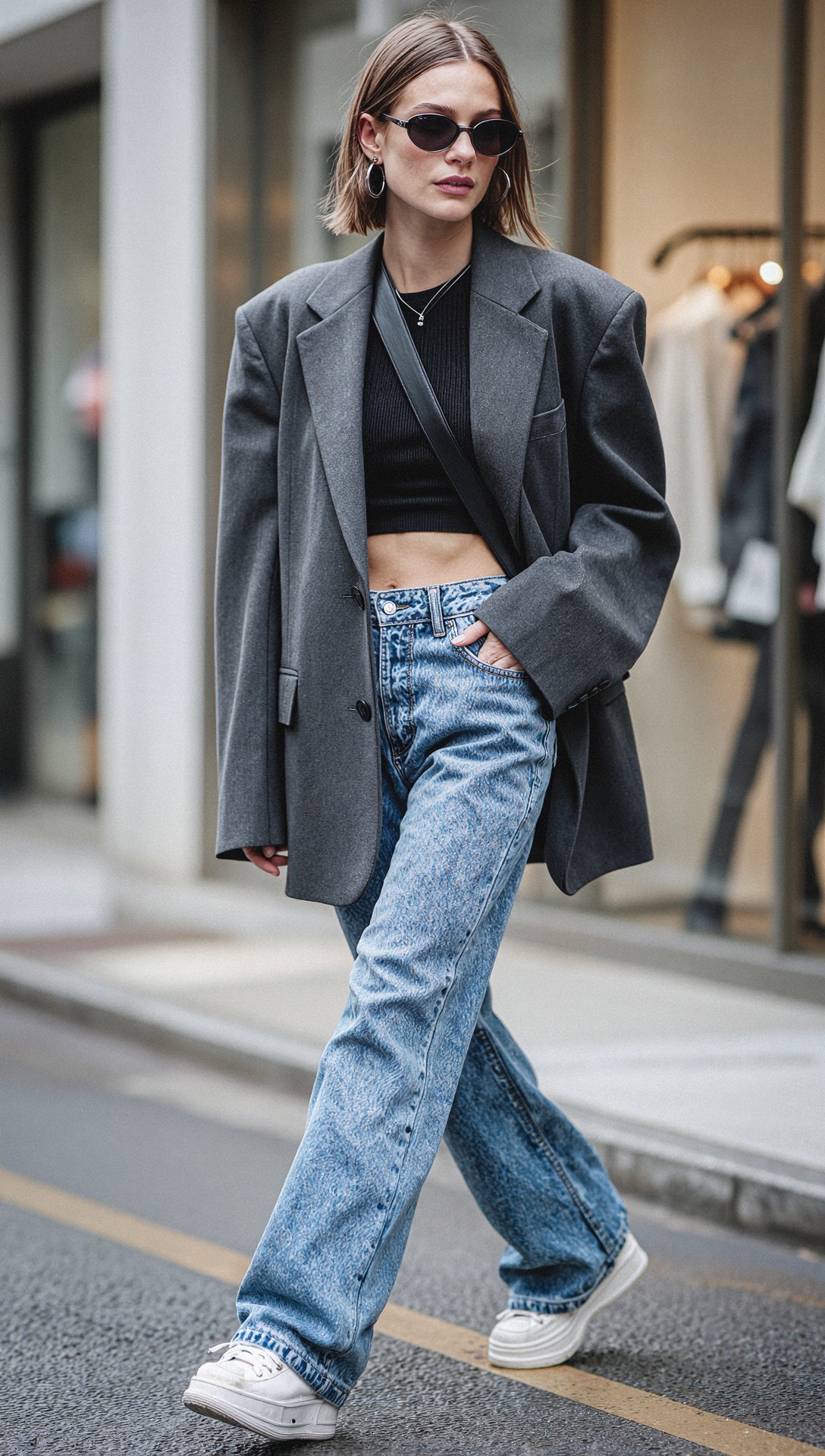
Inspect whether the blazer actually reads oversized while the denim stays straight-leg. The strongest generations keep the crossbody high and compact instead of turning it into a shoulder tote.
Prompt example 2: blazer line and bag interaction
This one tests a three-quarter outfit editorial crop, mainly to see whether lapels, strap placement, and torso styling stay clean.
Topic: Tokyo street fashion blazer styling with crossbody placement
Genre: Fashion Editorial
Camera: Nikon Z8
Lens: 50mm f/1.8
Lighting: Soft late afternoon daylight
Location: Daikanyama back lane with quiet concrete walls and minimalist cafes
Style: Modern magazine street editorial
Final Prompt: three-quarter outfit editorial image focused on influencer street style in Tokyo, woman leaning lightly against a concrete wall in Daikanyama, oversized sand blazer worn open over a fitted white cropped knit top, dark indigo straight-leg denim, slim cream retro sneakers, small tan leather crossbody strapped diagonally across torso, blazer sleeves pushed slightly, layered necklaces, confident relaxed expression, body-conscious yet tasteful fashion mood, outfit logic clearly visible from shoulder to shoes with lower frame preserving sneaker shape, minimalist Tokyo cafe backdrop, beige cream and indigo palette, realistic textile texture, polished magazine styling, Nikon Z8 realism, 50mm fashion framing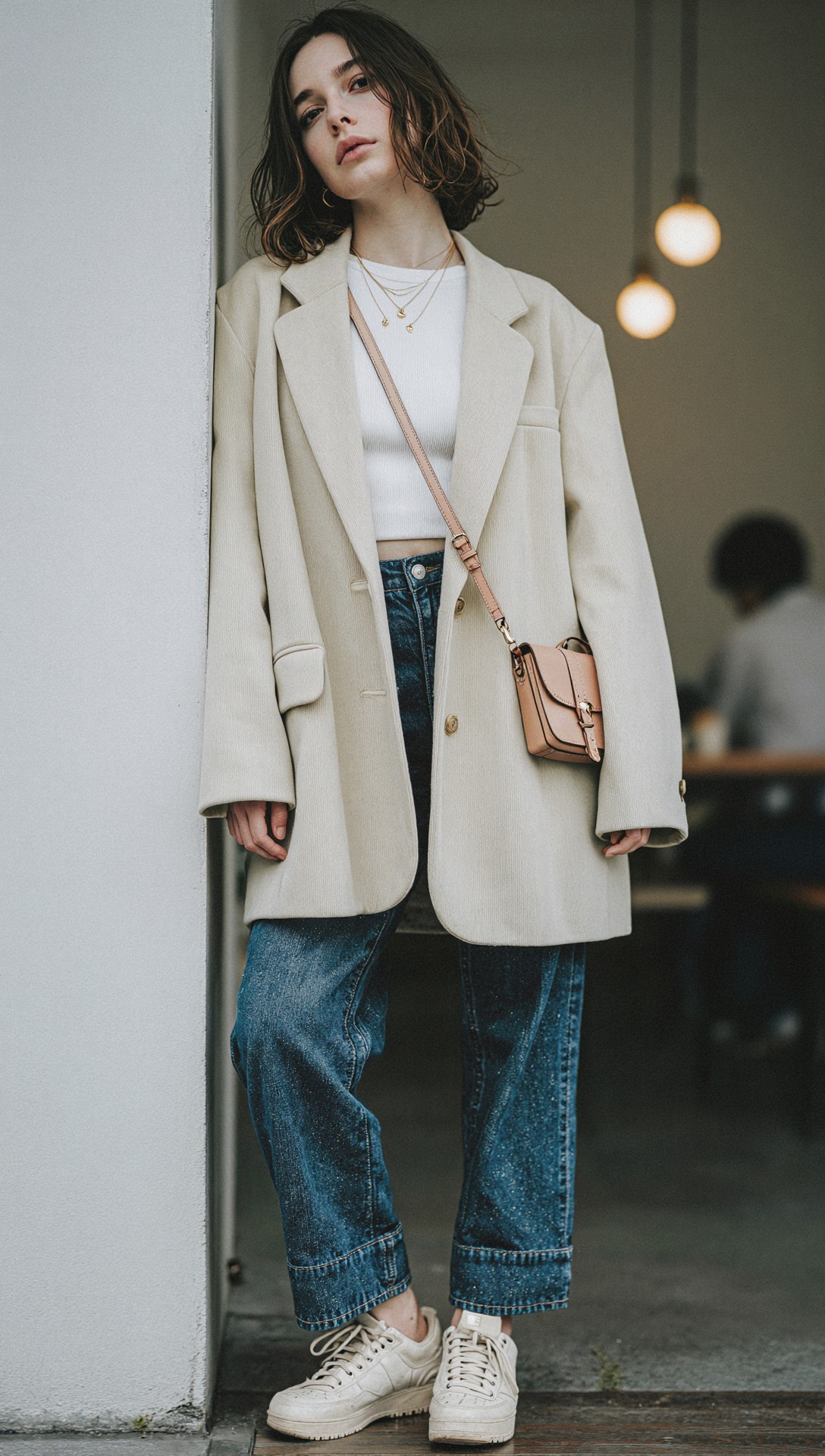
Check the strap path across the blazer. In weaker outputs, the strap disappears under lapels or the blazer closes itself in a way that kills the styling line.
What I corrected after the first pass
After the first round, I stopped using broad style adjectives like "trendy" and "cool." They added little. I replaced them with corrections tied to visible errors.
Useful corrections:
- If the blazer looked too office-like: add "streetwear proportion, oversized shoulder, relaxed open front".
- If denim turned too polished: add "washed texture, natural creasing, straight-leg with ankle break".
- If sneakers became bulky: add "low-profile sole, sleek retro runner shape".
- If the bag looked luxury-formal: add "compact everyday crossbody, practical city styling".
Prompt example 3: stronger denim behavior
This test is meant to stabilize denim cut and hem length, which drifted often in early generations.
Topic: Tokyo influencer denim-forward street style outfit
Genre: Lifestyle Fashion
Camera: Sony A7R V
Lens: 40mm f/2.5
Lighting: Bright cloud cover with soft street reflections
Location: Shibuya fashion block near crosswalk side lane, not the main tourist center
Style: Clean urban commercial look
Final Prompt: street-style full body image centered on denim silhouette in influencer street style, Tokyo sidewalk scene near a Shibuya fashion block, oversized black blazer over a soft grey fitted tank, high-rise straight-leg vintage wash denim with visible seam structure and natural creasing, hem falling just above sleek black retro running sneakers, compact nylon crossbody bag worn close to the ribcage, long stride, confident social influencer attitude, full-body framing with clear leg line, muted black grey blue palette, realistic washed denim texture, clean commercial fashion composition, Sony A7R V detail, 40mm modern documentary styling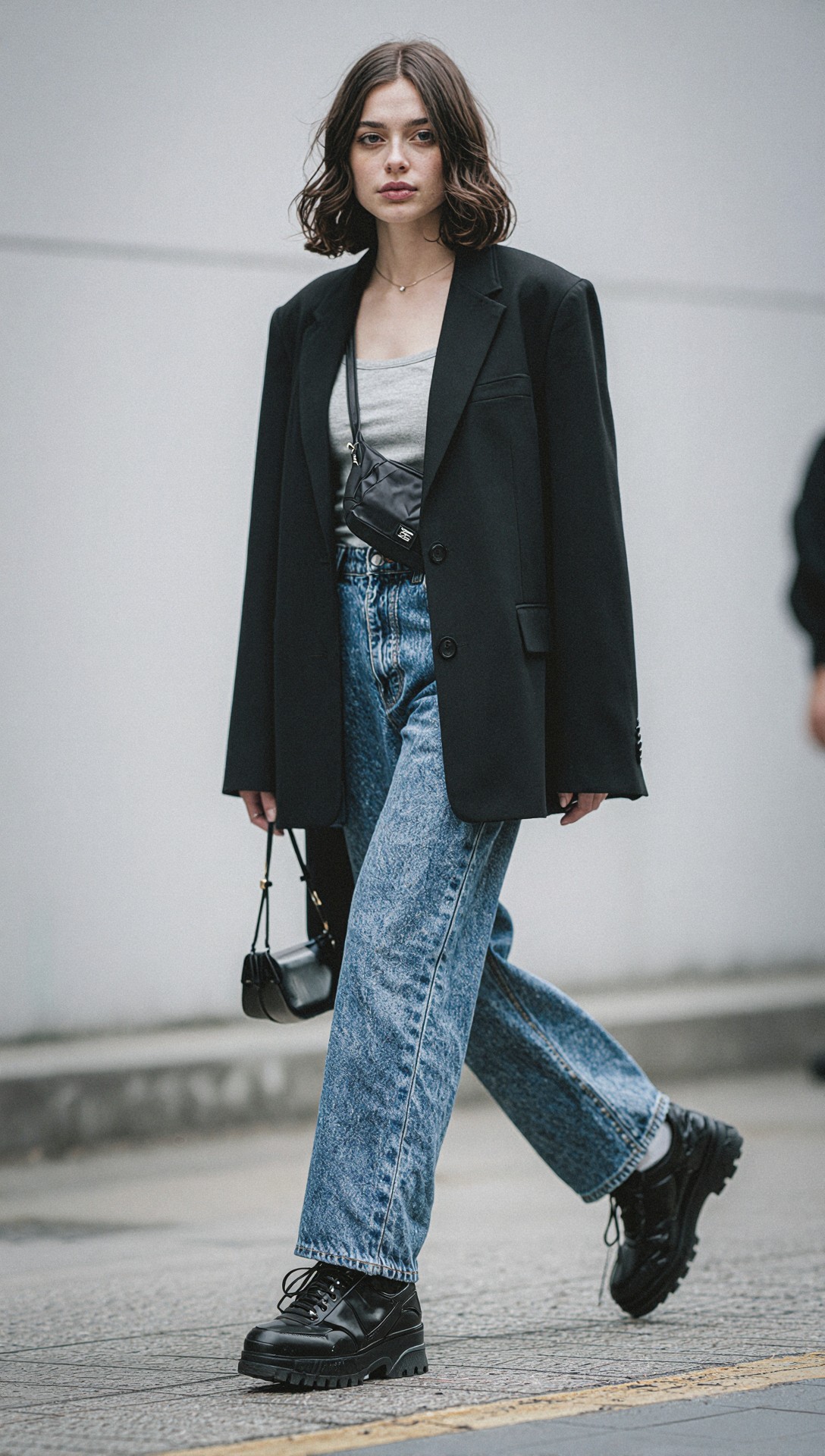
Inspect the denim from hip to hem. Good outputs keep one consistent cut; bad ones taper the lower leg or blur the hem into the sneakers.
Prompt example 4: sneaker-led outfit visibility
This test checks whether the model can keep sneaker shape visible without making the frame look like a footwear ad.
Topic: Tokyo streetwear outfit with visible low-profile sneakers
Genre: Streetwear Editorial
Camera: Fujifilm GFX100S
Lens: 45mm f/2.8
Lighting: Morning overcast with bright ambient fill
Location: Cat street style district in Tokyo with textured pavement and storefront glass
Style: Contemporary streetwear campaign
Final Prompt: head-to-toe streetwear editorial shot for influencer street style, Tokyo Cat Street setting, tailored oversized navy blazer over a fitted black bodysuit-style top, relaxed straight-leg light wash denim cropped to reveal ankle, clean low-profile grey and white retro sneakers fully visible, compact crossbody in matte black technical fabric, model mid-step crossing textured pavement, strong legs, tasteful sexy fashion energy, complete outfit readable from head to toe, reflections in storefront glass, cool blue grey palette, premium textile and leather detail, Fujifilm GFX100S clarity, 45mm fashion documentary angle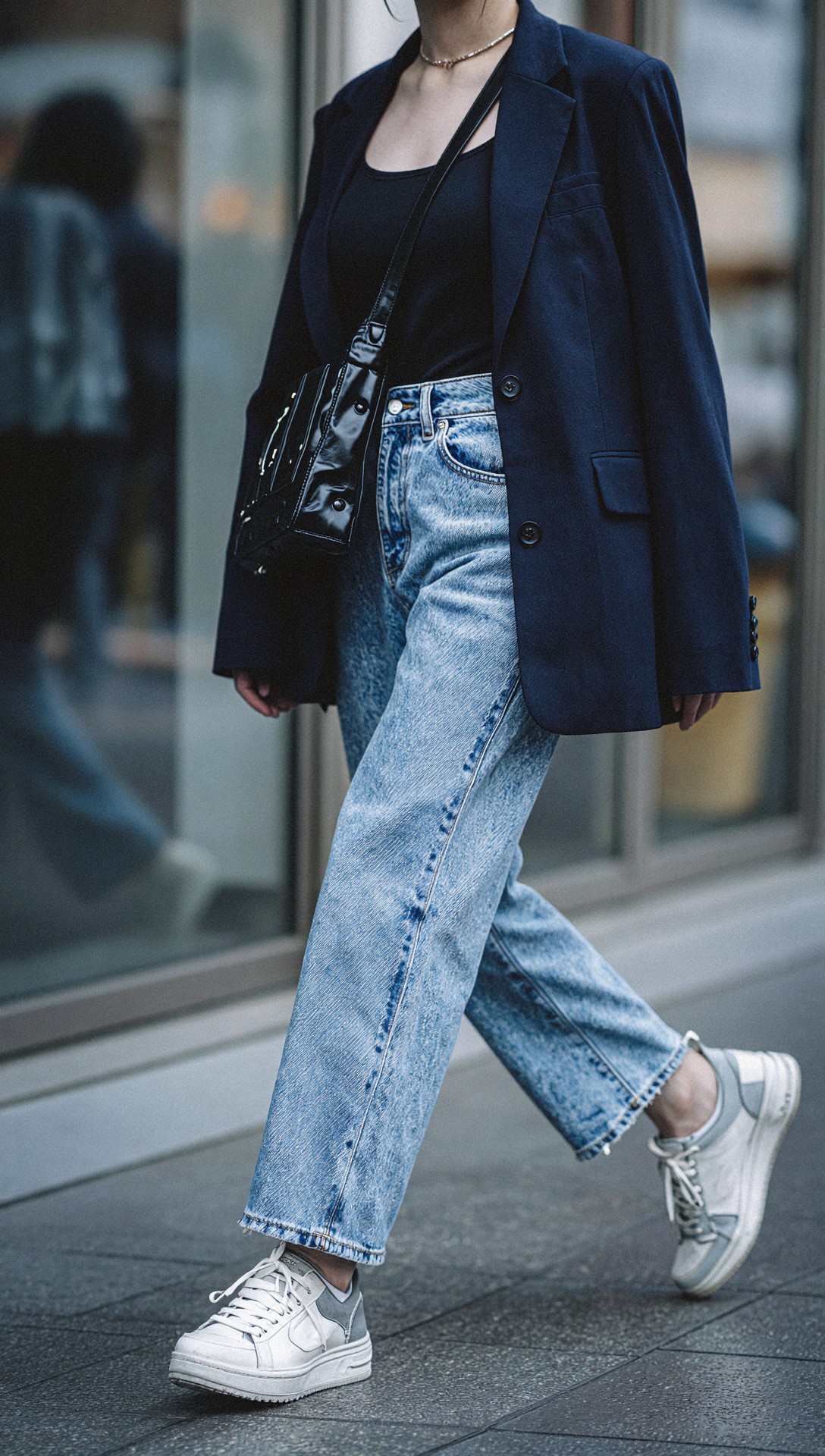
Look at sole thickness and toe shape. The strongest result gives a slim sneaker profile that supports the blazer-denim balance instead of overpowering it.
A useful pattern: social influencer images need less atmosphere, more wardrobe control
One clear takeaway from this session: for influencer street style, the best-performing prompts were not the most cinematic. They were the ones with tighter outfit instructions.
When I added too much atmosphere—rain haze, strong neon, dramatic motion blur—the garments lost hierarchy. This matters if your goal is outfit ideation, ad concepting, or product styling references.
If you want more controlled output passes, generate base looks in [/create](/create), then isolate stronger formulas for iteration in [/promptlab](/promptlab).
Prompt example 5: lookbook version for outfit comparison
This one is less about mood and more about consistency. It tests whether the same formula can work in a cleaner head-to-toe presentation.
Topic: Head-to-toe Tokyo street fashion lookbook with blazer and denim
Genre: Lookbook Photography
Camera: Leica SL2
Lens: 50mm f/2
Lighting: Soft bounced daylight
Location: Minimal exterior wall outside a contemporary Tokyo retail space
Style: Clean fashion lookbook
Final Prompt: head-to-toe lookbook fashion image inspired by influencer street style in Tokyo, full outfit centered against a minimal retail exterior wall, oversized taupe blazer, fitted black square-neck tank, dark washed straight-leg denim, white leather low-top sneakers, compact chest-worn crossbody bag in chocolate brown, slick ponytail, slim metal jewelry, one foot forward, shoulders relaxed, outfit proportions clearly visible for styling comparison, tasteful sensual confidence, soft neutral palette with dark denim contrast, catalog-clean composition with subtle editorial realism, Leica SL2 precision, 50mm balanced framing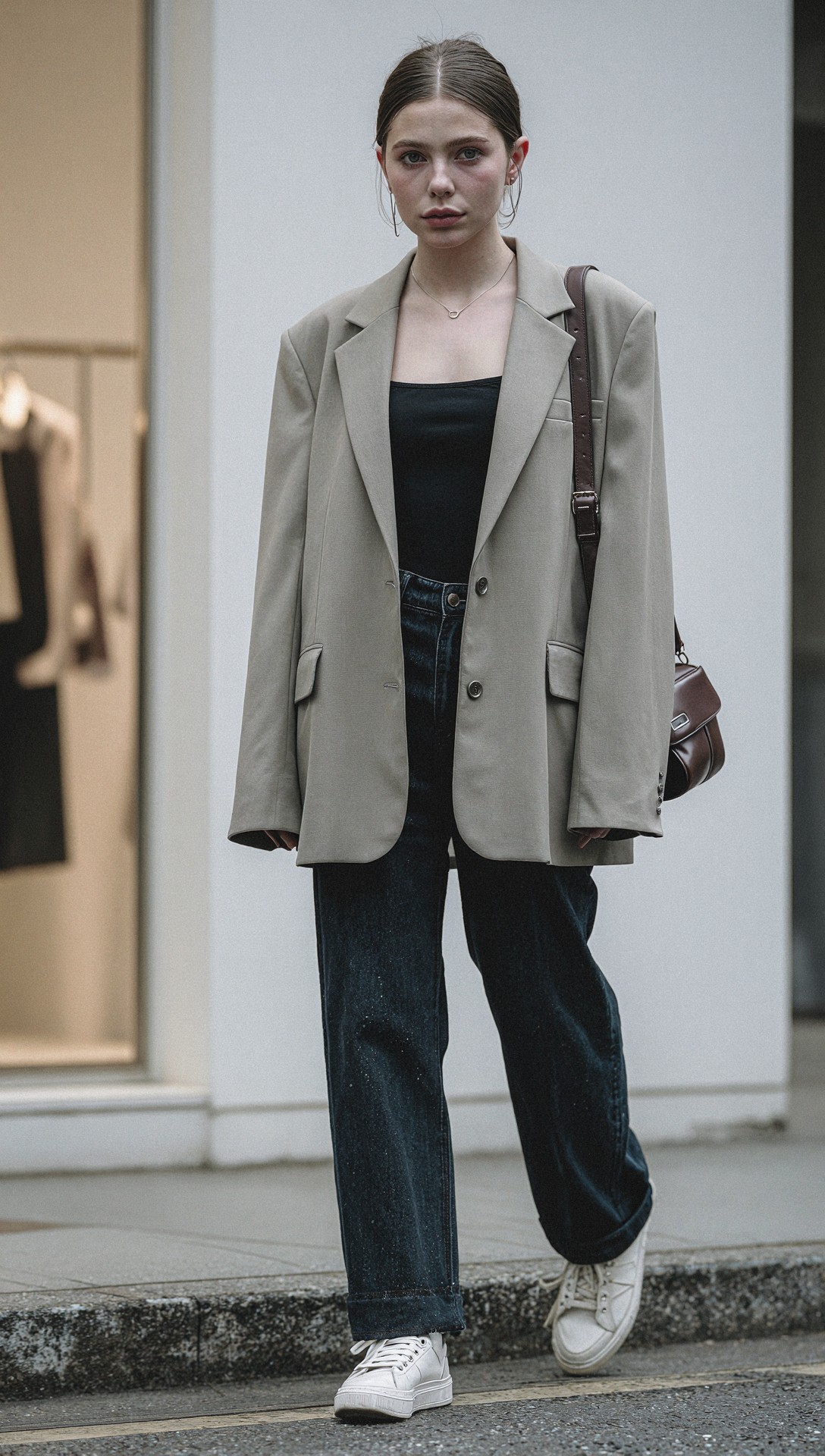
Inspect whether the image reads as an outfit reference rather than a portrait. This setup is useful when you need easy side-by-side comparisons in mood boards or client selects.
Prompt example 6: accessories close-up for bag stability
I included a tighter crop because crossbody bags were a repeated failure point. This checks hardware, strap direction, and fabric interaction.
Topic: Crossbody accessory styling within Tokyo influencer street fashion
Genre: Accessories Editorial
Camera: Canon EOS R3
Lens: 85mm f/2
Lighting: Softbox key with natural ambient street fill
Location: Outside a Tokyo concept store entrance with matte stone facade
Style: Luxury-accessory-meets-street editorial
Final Prompt: accessories close-up fashion image from a Tokyo influencer street style look, frame from upper thigh to chest, oversized graphite blazer worn open over a fitted espresso knit top, compact structured leather crossbody with visible strap hardware worn diagonally across the torso, top edge of straight-leg denim visible, hint of low-profile sneaker at bottom edge, hand adjusting blazer cuff instead of touching bag, refined sensual street styling, tactile leather grain and wool texture, muted charcoal brown palette, concept store stone facade behind, premium accessory focus with outfit context, Canon EOS R3 look, 85mm controlled detail framing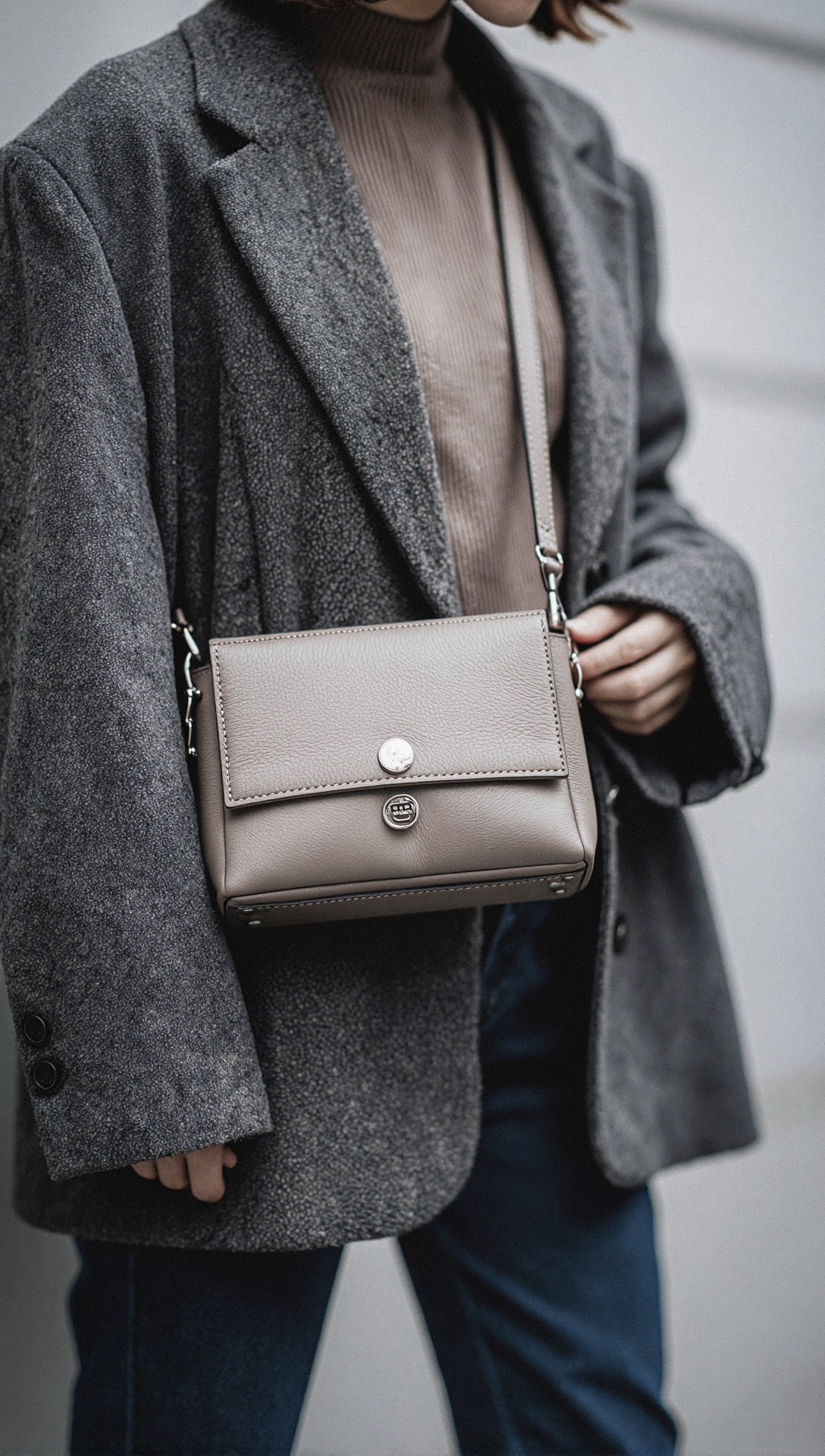
Check the bag hardware and strap attachment points. If the bag looks fused to the blazer or the strap changes width mid-frame, the model is not stable enough for accessory-focused fashion work.
When to switch models or settings
Prompting can only fix so much. In this workflow, I would switch models or settings in four situations.
Switch if footwear keeps mutating
If sneakers keep changing from shot to shot, use a model that handles product structure better, or move to a cleaner lookbook setup before returning to street scenes.
Switch if Tokyo turns into fantasy neon
Some models over-index on pop-culture Tokyo cues. If your prompt says Tokyo street fashion and the result becomes cyberpunk signage overload, lower stylization or choose a more editorial-commercial model.
Switch if hands and straps stay broken
This is often faster than endless reprompting. A walking pose, one-hand pocket pose, or crop adjustment helps, but if the same issue persists, swap models.
Switch if fabric texture matters for campaign mockups
For blazer wool, washed denim grain, and leather bag detail, higher-resolution editorial models or a second-pass upscale are worth it. If the composition is strong but texture is weak, send the best frame through [Upscaler](/upscaler).
Prompt example 7: storefront display for merchandising logic
This test checks whether the same styling system can work without relying on a live model pose. It is useful for retail concept boards and campaign planning.
Topic: Tokyo street fashion outfit displayed as influencer styling system
Genre: Product Editorial
Camera: Hasselblad X2D 100C
Lens: 55mm f/2.5
Lighting: Window-lit retail daylight with soft fill cards
Location: Tokyo boutique storefront display in Daikanyama
Style: Premium retail visual merchandising
Final Prompt: storefront display fashion image showing influencer street style outfit logic in a Tokyo boutique window, oversized camel blazer layered over a fitted black crop top, straight-leg medium wash denim draped on mannequin form, clean white low-profile sneakers placed naturally below, compact black crossbody slung diagonally across torso form, tasteful sexy urban styling through silhouette and proportion, clear garment layering, boutique glass reflections, wood and concrete retail interior, neutral warm palette with blue denim contrast, premium merchandising realism, Hasselblad X2D 100C quality, 55mm refined commercial framing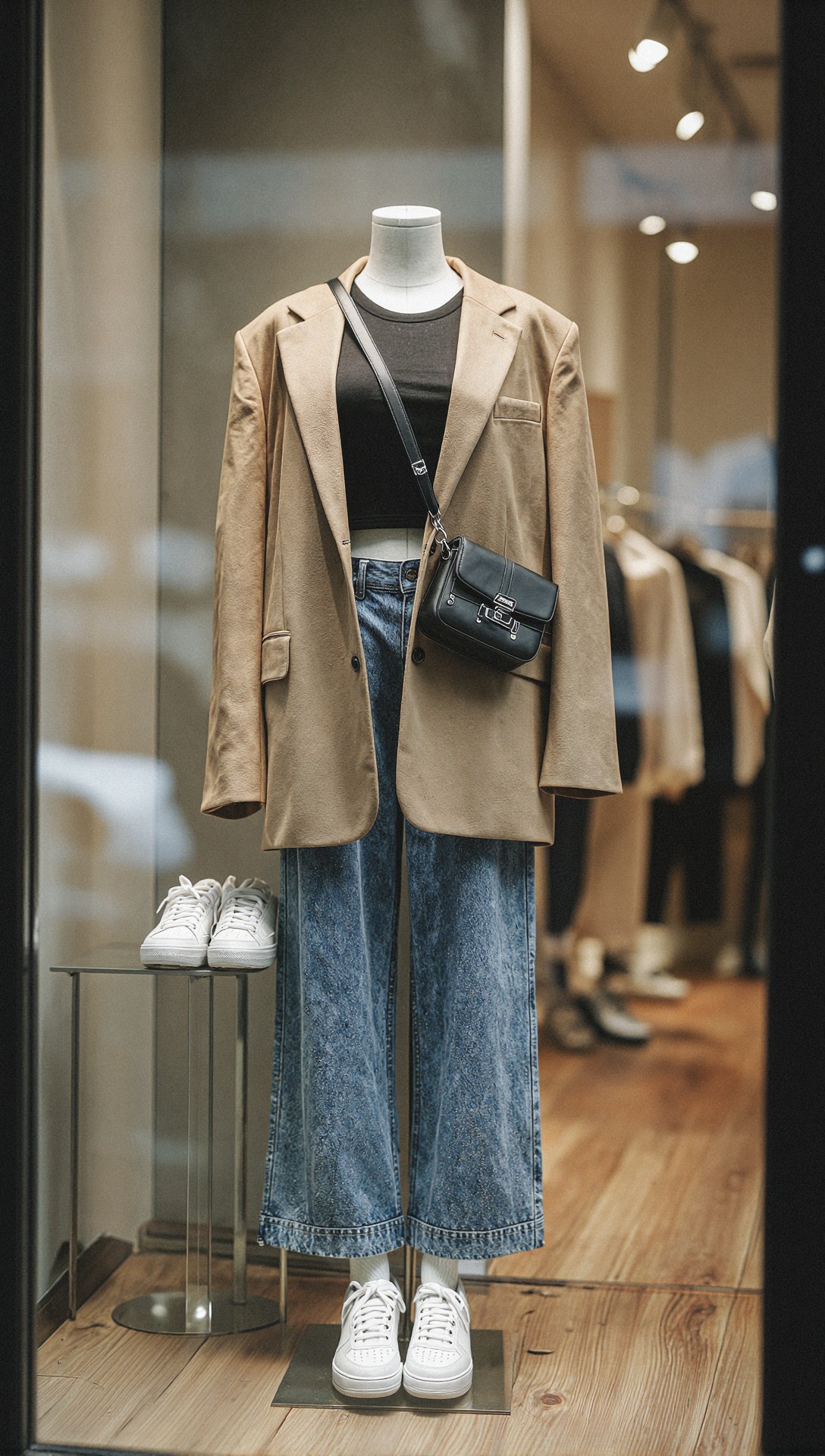
Inspect whether the pieces still make sense as an outfit when separated from a walking person. If not, the styling formula is too dependent on pose and not strong enough on its own.
Prompt example 8: mood-board collage for style lock
The last test checks style lock across multiple image fragments. This is useful before a larger batch run.
Topic: Mood-board collage for Tokyo influencer street style with blazer, denim, sneakers, and crossbody
Genre: Mood Board Collage
Camera: Mixed editorial capture aesthetic
Lens: 24-70mm fashion editorial range
Lighting: Mixed soft daylight and controlled studio cutout lighting
Location: Harajuku street references, fabric swatches, sneaker detail, bag crop, blazer silhouette notes
Style: Fashion concept board
Final Prompt: mood-board collage for influencer street style in Tokyo, composed of street-style full body frame, three-quarter blazer crop, washed denim texture detail, low-profile sneaker close-up, compact crossbody hardware crop, Harajuku storefront reference, neutral cool palette with charcoal, indigo, white, and tan, tasteful sexy urban cool direction, editorial layout with tape edges, styling notes, silhouette emphasis, fabric swatches, social campaign planning aesthetic, polished fashion concept presentation, 24-70mm mixed editorial visual language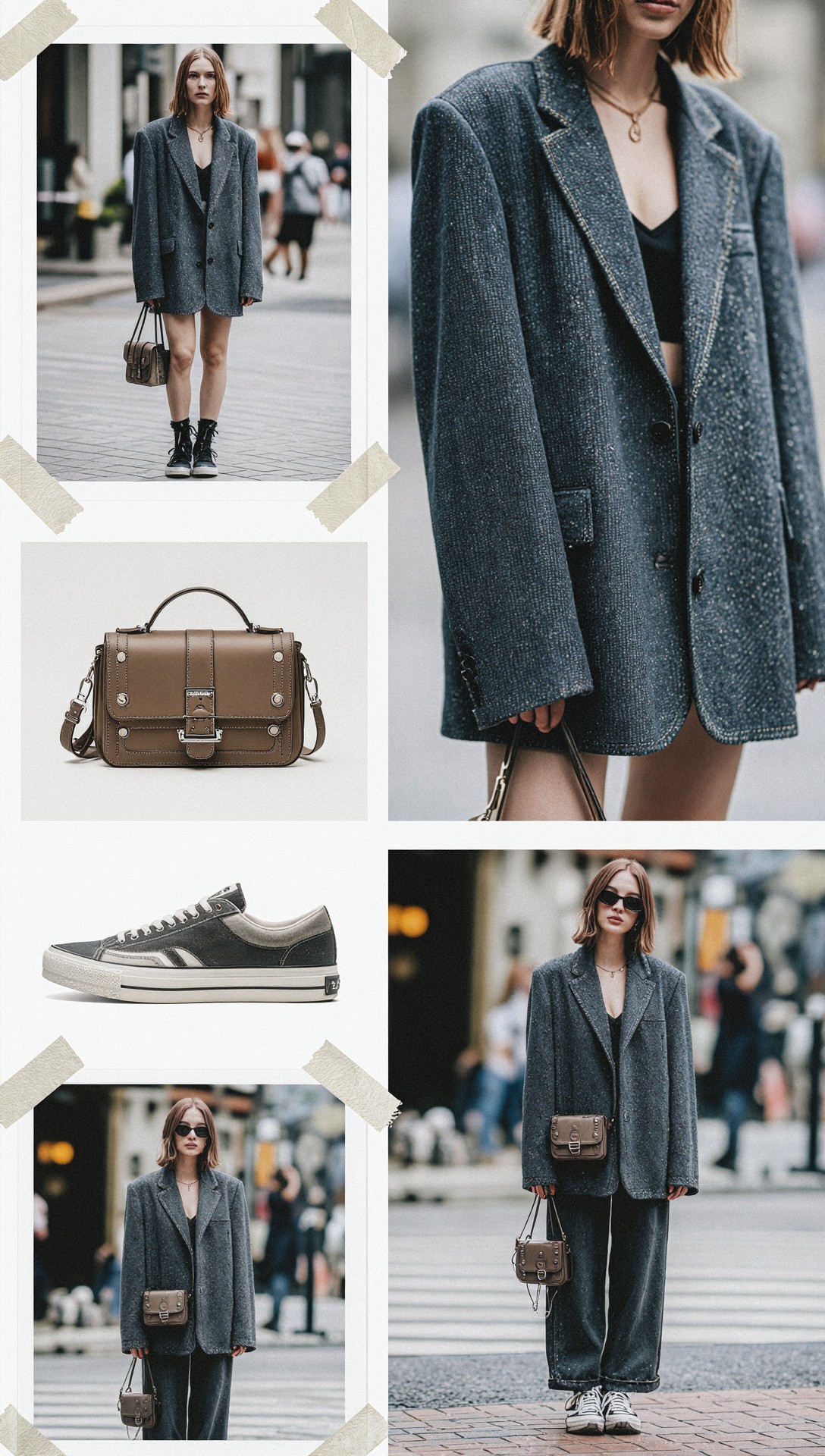
Inspect whether all panels point to the same styling identity. If one panel starts drifting into Y2K clubwear or luxury formalwear, your prompt language needs tighter boundaries.
Strengths of this workflow
The strongest result from this test was repeatable outfit direction. Once the prompt included a named shot type, visible silhouette, and a Tokyo fashion micro-location, the outputs became much more usable.
This workflow works well for:
- social campaign mockups
- fashion concepting
- street style outfit ideas
- testing blazer-denim styling variations
- planning influencer-style brand visuals before production
It also works well when you need a middle ground between raw streetwear and polished editorial. The output can feel social-native without becoming sloppy.
Limitations and failure risks
This setup is not perfect.
Main risks:
- subtle garment construction can get flattened in busy scenes
- crossbody straps still fail more often than other accessories
- sneaker branding and exact product identity are unreliable without product-specific workflows
- some models confuse Tokyo street fashion with costume-heavy youth fashion unless the prompt is narrowed carefully
If your use case is exact retail SKU imagery, this workflow is not enough by itself. It is better for concept direction than exact catalog replacement.
Practical recommendation: use this prompt logic by outfit priority
If your main priority is the blazer silhouette, start with three-quarter editorial or lookbook framing.
If your priority is full outfit logic, start with a full-body street-style shot.
If your priority is sneakers or crossbody detail, run a dedicated accessory or lower-frame test instead of hoping one hero shot does everything.
A simple quality checklist I would use before keeping an image:
- Can I identify blazer fit in one glance?
- Does the denim cut stay consistent from thigh to hem?
- Are both sneakers readable and proportionate?
- Does the crossbody sit in a believable place on the torso?
- Does the background support Tokyo street fashion instead of distracting from it?
For more prompt references and workflow tests, browse [/articles](/articles) or compare visual outputs inside [/gallery](/gallery).
FAQ
How do you prompt influencer street style without getting a generic city portrait?
Use a named fashion shot type, full-body framing, and a complete outfit map. Generic portrait wording usually hides the clothes or overemphasizes the face.
What makes Tokyo street fashion prompts look more accurate?
Add a fashion-specific location cue such as Harajuku side street, Daikanyama retail lane, or Shibuya fashion block. That keeps the image in wardrobe mode instead of tourist mode.
Why do sneakers fail so often in street style image generation?
They sit at the edge of the frame, and many models simplify them when the composition prioritizes face or background. Clear head-to-toe framing and precise sneaker profile language help.
Is a crossbody bag better than a shoulder bag for influencer street style prompts?
In this test, yes. A compact crossbody gave stronger outfit structure and read more social-first and practical, especially with oversized blazers and denim.
Should I use one prompt for everything or split by garment focus?
Split by focus. One prompt for the hero outfit, one for sneaker clarity, and one for bag detail gave better results than trying to force one all-purpose prompt.
Closing operator note
If your goal is influencer street style images with Tokyo energy, this workflow is worth using when you need outfit-led concepts, social campaign visuals, or style testing around blazers, denim, sneakers, and crossbody styling. It is less suitable for exact e-commerce accuracy or product-locked brand replication.
Who should use it: fashion marketers, prompt operators, mood-board builders, and creators testing Tokyo street fashion outfit directions.
Who should avoid it: anyone needing exact SKU fidelity, precise logo control, or guaranteed accessory geometry in a single pass.
The setting that mattered most in this session was not an advanced effect. It was full-body fashion framing paired with explicit silhouette language. Once that was in place, the outputs became noticeably more useful, more consistent, and much closer to real street style outfit ideas than generic city-fashion prompts.