이번 테스트는 하나의 실용적인 질문에서 출발했다. Japan lookbook outfit를 어떻게 프롬프트해야, 이미지가 랜덤한 옷을 입은 관광객 초상처럼 보이지 않고 스타일링 중심의 패션 디렉션으로 읽히는가. 스트리트웨어, 일본식 미니멀 패션, 에디토리얼 트래블 씬 전반에 걸쳐 시즌별 시티 룩북 워크플로를 돌려본 뒤, 어떤 프롬프트 요소가 실루엣과 레이어링, 도쿄라는 맥락을 실제로 하나로 묶어주는지 비교했다.
짧게 요약하면 이렇다. 가장 좋은 결과는 이미지를 패션 에디터의 샷 리스트처럼 다루는 프롬프트에서 나왔다. "Tokyo street fashion"이나 "Japan lookbook" 정도만 요청했을 때는 모델이 막연한 여행 이미지, 코스튬처럼 과장된 스타일링, 혹은 아웃핏의 논리를 가려버리는 크롭 프레이밍으로 자주 흘렀다.
먼저 알아둘 것
- 먼저 명확한 패션 샷 타입을 지정해야 한다. 그렇지 않으면 모델이 아웃핏보다 얼굴과 배경을 우선할 수 있다.
- 레이어 순서, 실루엣, 신발은 함께 명시하는 편이 좋다. 하나라도 빠지면 스타일링 논리가 자주 무너진다.
- 도쿄와 일본 레퍼런스는 Harajuku side street, minimalist Ginza retail, train platform editorial, lookbook studio page처럼 구체적인 패션 맥락과 연결될 때 가장 잘 작동한다.
- 섹시한 무드가 필요하다면 노출보다 핏과 자신감으로 방향을 잡는 편이 낫다. 그렇지 않으면 결과가 흔한 글래머 이미지로 미끄러질 수 있다.
- 텍스처가 중요하다면, 우선 의복 구조가 맞는지 확인한 뒤 좋은 결과물만 [upscaler](/upscaler)에 넣어라.
테스트 구성
이번 테스트에서는 시즌별 아웃핏 콘셉트를 네 가지 축으로 생성했다.
1. 도쿄 스트리트웨어 풀바디 룩 2. 일본식 미니멀 패션 에디토리얼 3. 트래블 스타일 시티 룩북 프레임 4. 룩북 일관성을 위한 제품 및 디테일 보조 이미지
옷 자체보다 프레이밍, 렌즈 선택, 장소 언어를 더 많이 바꿨다. 목표는 단순히 예쁜 결과가 아니었다. 반복 가능한 Japan lookbook 프롬프트 구조를 만드는 것이 목표였고, 그 구조는 다음을 유지해야 했다.
- 전체 아웃핏 가시성
- 일관된 레이어링
- 사실적인 원단 표현
- 유용한 도시 맥락
- 액세서리 논리
- 장면 전반의 무드 일관성
프롬프트 작성과 버전 관리는 [Prompt Lab](/promptlab), 반복 생성은 [Create](/create) 같은 워크플로와 잘 맞는다.
첫 패스에서 바로 좋았던 것
첫 배치에서 가장 강했던 결과는 35mm에서 50mm 프레이밍의 풀바디 스트리트 스타일 프롬프트였다. 이 조합은 모델이 아우터, 상의, 하의, 가방, 신발을 모두 보여줄 충분한 여지를 주면서도, 장면을 멀리서 찍은 여행 엽서처럼 만들지 않았다.
또 하나 즉각적인 성과가 있었다. 일본식 미니멀 패션은 붐비는 나이트라이프 프롬프트보다 정돈된 리테일 공간이나 조용한 도시 건축에 더 잘 반응했다. 배경이 시끄러워지는 순간, 모델은 도시를 주제로 삼고 아웃핏을 장식물처럼 다루기 시작했다.
세 번째 패턴은 계절감의 명확성이었다. 프롬프트에 초봄 트렌치 레이어링, 습한 여름의 가벼운 세퍼레이츠, 가을의 레더-니트 대비, 겨울의 울 테일러링을 분명히 적었을 때 모델은 텍스타일을 훨씬 설득력 있게 처리했다.
빠른 체크리스트: 아웃핏 정확도를 높인 프롬프트 요소
| Prompt ingredient | What it improved | Common failure when missing | |---|---|---| | Shot type first | Full-body outfit visibility | Cropped portrait or scenery-heavy frame | | Specific silhouette | Better garment proportion | Random oversized layers with no structure | | Layer order | Outfit logic | Jacket floating over wrong top shape | | Shoe + bag callout | Styling completion | Bare lower half detail or mismatched accessories | | Tokyo location with fashion context | Regional identity | Generic Asian city backdrop | | Fabric words like twill, wool, satin, rib knit, denim | Texture realism | Plastic-looking cloth | | Motion cue like walking, turning, adjusting coat | Natural drape | Stiff mannequin posture |
첫 프롬프트가 실패한 지점
약점은 넓고 모호한 언어였다. 예를 들어 "Tokyo fashion girl in Japan street outfit" 같은 프롬프트는 반복적으로 세 가지 문제를 만들었다.
- 아웃핏이 불완전하거나 일부가 가려진다
- 서로 관련 없는 트렌드가 한 룩에 뒤섞인다
- 배경 간판이 과하게 시끄러워지고, 때로는 읽히지도 않으면서 시선을 분산시킨다
"editorial travel" 프롬프트에서는 과도한 스타일화도 반복해서 보였다. 장면이 지나치게 동경을 자극하고 의상이 충분히 구체적이지 않으면, 모델은 실제 아웃핏 디자인 대신 바람에 흩날리는 머리카락과 영화적인 블러로 빈자리를 메웠다.
미니멀 룩도 고유한 실패 패턴이 있었다. "Japanese minimalist fashion"만 요청하고 의복 구조를 주지 않으면 결과는 지나치게 무균질해졌다. 베이지 룸, 베이지 옷, 형태 없음, 엣지 없음. 시각적으로는 깔끔하지만 유용한 Japan fashion trends 레퍼런스라고 보기 어렵다.
결과를 바꾼 프롬프트 요소
가장 큰 개선은 프롬프트를 피사체 중심에서 스타일링 시스템 중심으로 바꿨을 때 나왔다. 실제로는 아웃핏을 하나의 완성된 스택으로 설명하는 방식이다.
- 아우터
- 상의 레이어
- 하의 실루엣
- 신발
- 가방
- 주얼리 또는 아이웨어
- 원단의 질감과 움직임
- 포즈 또는 동작
- 정확한 도시 맥락
또 하나 일관성을 높인 방법은 절제된 섹시 무드 신호를 의복의 핏으로 주는 것이었다. 예를 들면 side-slit midi skirt, fitted rib knit, waist emphasis, tall boots, lean tailoring, clean neckline, satin camisole under structured layer 같은 요소다. 이렇게 하면 에디토리얼한 관능은 유지하면서도 결과가 글래머 코드로 흐르지 않고 패션 중심에 머문다.
Test 1: Streetwear full body with Tokyo context
이 테스트는 전형적인 도쿄 스트리트 패션 아웃핏이 머리부터 발끝까지 읽히는지, 특히 신발과 가방이 제대로 보이는지를 확인한다. 동시에 모델이 스트리트웨어를 코스튬 스타일링으로 오해하는지도 드러난다.
Topic: Spring Tokyo Streetwear Lookbook
Genre: Street Style
Camera: Canon EOS R5
Lens: 35mm f/2
Lighting: Bright overcast diffusion
Location: Harajuku side street with clean shop fronts, light pedestrian depth, muted signage
Style: Japanese street fashion editorial
Final Prompt: street-style full body fashion shot, a Japan lookbook outfit for early spring in Tokyo, confident woman walking through a Harajuku side street, complete styling visible from head to toe, cropped khaki trench jacket over fitted white rib tank, high-waisted charcoal pleated mini skirt layered over sheer black tights, slouchy knee-high leather boots, compact shoulder bag, silver hoop earrings, slim rectangular sunglasses, tasteful sexy mood through sharp fit and leg line, natural stride, one hand adjusting jacket collar, documentary fashion framing, soft overcast light, realistic twill and rib-knit texture, balanced urban background, editorial color palette of khaki white charcoal and black, magazine-ready composition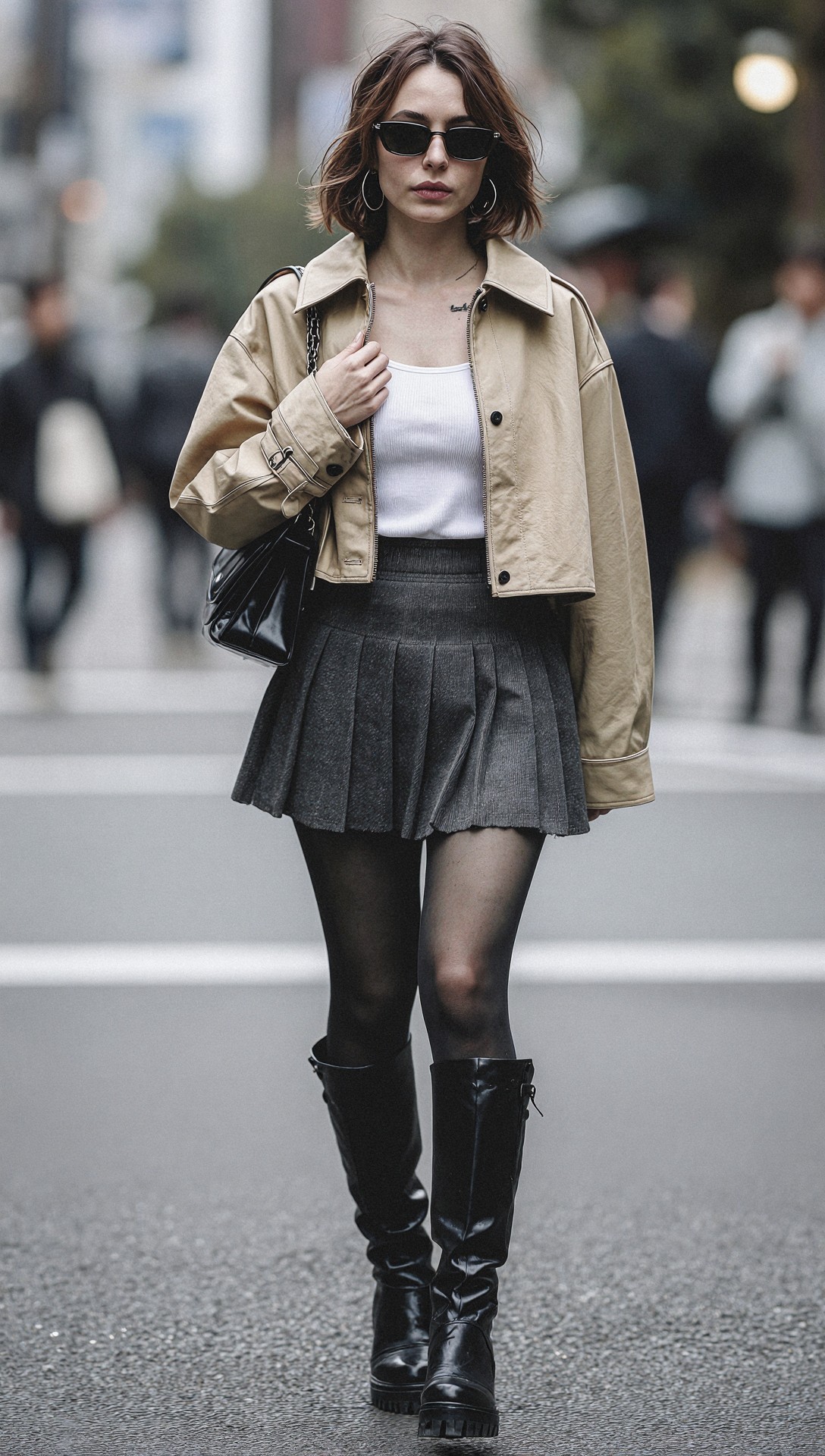
부츠가 완전히 보이는지, 그리고 스커트 길이에 비해 비율이 자연스러운지 확인해보자. 좋은 버전은 레이어가 또렷하고, 이미지가 붐비는 여행 스냅으로 바뀌지 않으면서도 설득력 있는 Harajuku 거리 배경을 유지한다.
Test 2: Minimalist lookbook with stronger silhouette control
이 테스트는 일본식 미니멀 패션이 장식이 아니라 비율만으로도 관능을 유지할 수 있는지를 본다. 모델이 랜덤한 액세서리를 덧붙이지 않도록, 깔끔한 기하감과 통제된 팔레트를 사용했다.
Topic: Japanese Minimalist Summer Lookbook
Genre: Fashion Editorial
Camera: Nikon Z7 II
Lens: 50mm f/2.8
Lighting: Window-lit soft daylight
Location: quiet Ginza-inspired concrete arcade with luxury retail windows
Style: Clean commercial look
Final Prompt: head-to-toe lookbook fashion image, Japan lookbook outfit with Japanese minimalist fashion direction for summer city dressing, fitted black sleeveless knit top tucked into a high-waisted ivory column midi skirt with side slit, thin leather belt, low sculptural sandals, small structured black handbag, delicate gold cuff, sleek pulled-back hair, body-conscious but refined silhouette, standing in a quiet Ginza-style arcade, full outfit visible, calm confident expression, soft daylight reflecting from concrete and glass, crisp garment edges, premium knit and matte cotton texture, restrained palette of black ivory and warm stone, clean editorial composition with minimal background clutter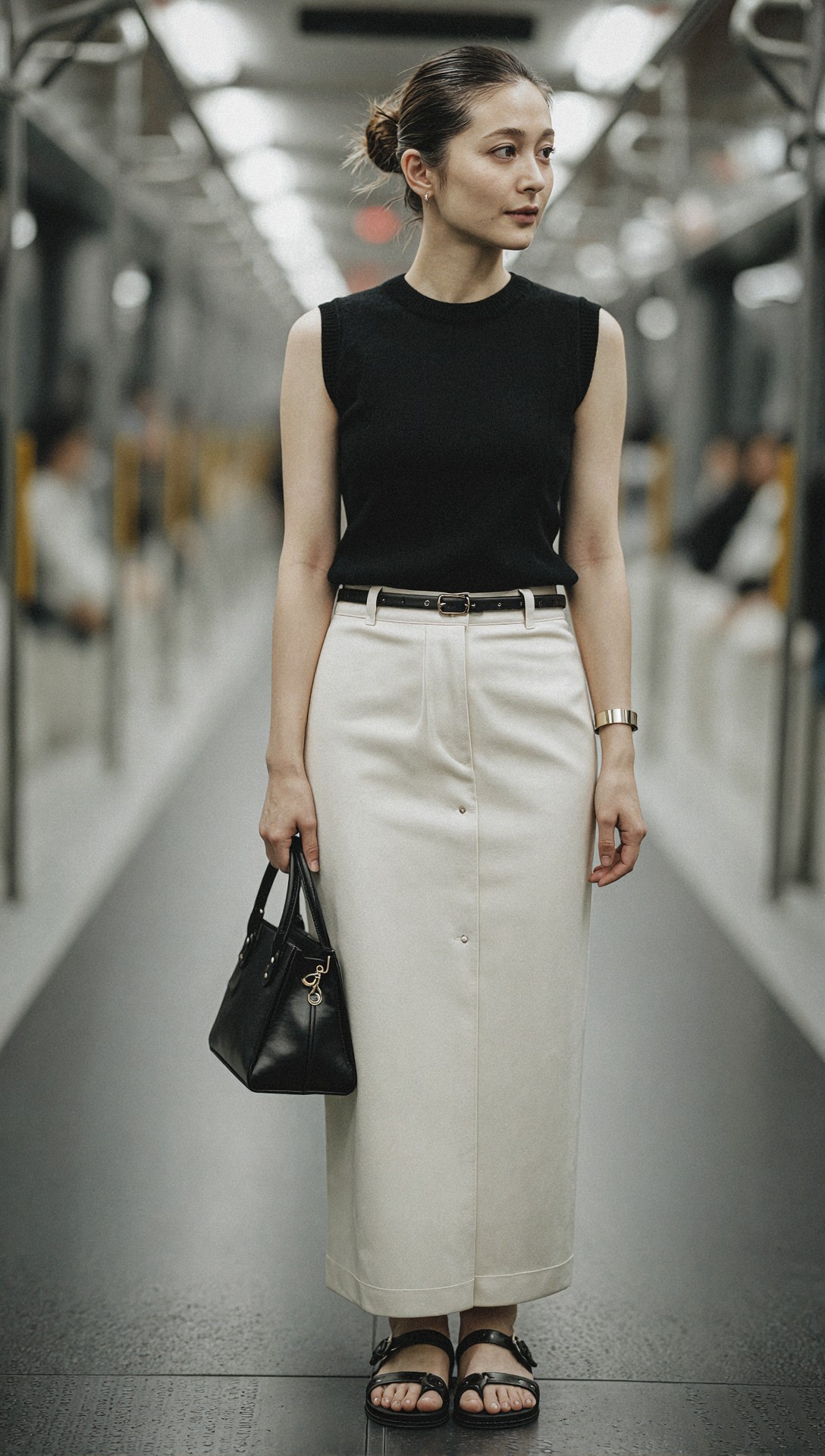
가장 좋은 결과는 몸에 맞는 상의와 곧게 떨어지는 스커트 사이의 긴장을 보여줘야 한다. 평평한 베이지 톤 일색으로 흘러서는 안 된다. 슬릿 위치와 샌들 렌더링은 자주 실패하는 지점이니 특히 확인할 것.
예시 프롬프트와 점검 메모
Test 3: Editorial travel scene without losing the outfit
이 프롬프트는 여성용 휴가 아웃핏 아이디어가 흔한 여행 광고가 아니라 패션 스프레드처럼 읽히는지 확인하기 위한 것이다. 핵심은 전체 스타일링 스택을 보여주면서도 도시 장면에 적절한 생기를 남겨두는 데 있다.
Topic: Tokyo Editorial Travel Lookbook in Late Summer
Genre: Cinematic Travel Fashion
Camera: Sony A7 IV
Lens: 40mm f/2.5
Lighting: Golden hour side light
Location: elevated pedestrian bridge overlooking Shibuya streets at sunset
Style: Editorial travel campaign
Final Prompt: three-quarter outfit editorial image, Japan lookbook outfit for late summer travel in Tokyo, confident woman paused on a pedestrian bridge above Shibuya, espresso satin camisole under an oversized light beige blazer, high-waisted relaxed cream trousers, slim leather sandals, mini crossbody bag, narrow sunglasses, subtle layered necklace, tasteful sexy mood through satin sheen and tailored drape, torso-to-shoe visibility prioritized, warm sunset side light, cinematic city depth behind her, clean composition with traffic blur far below, rich fabric contrast between satin and suiting, elegant travel-fashion direction, magazine editorial realism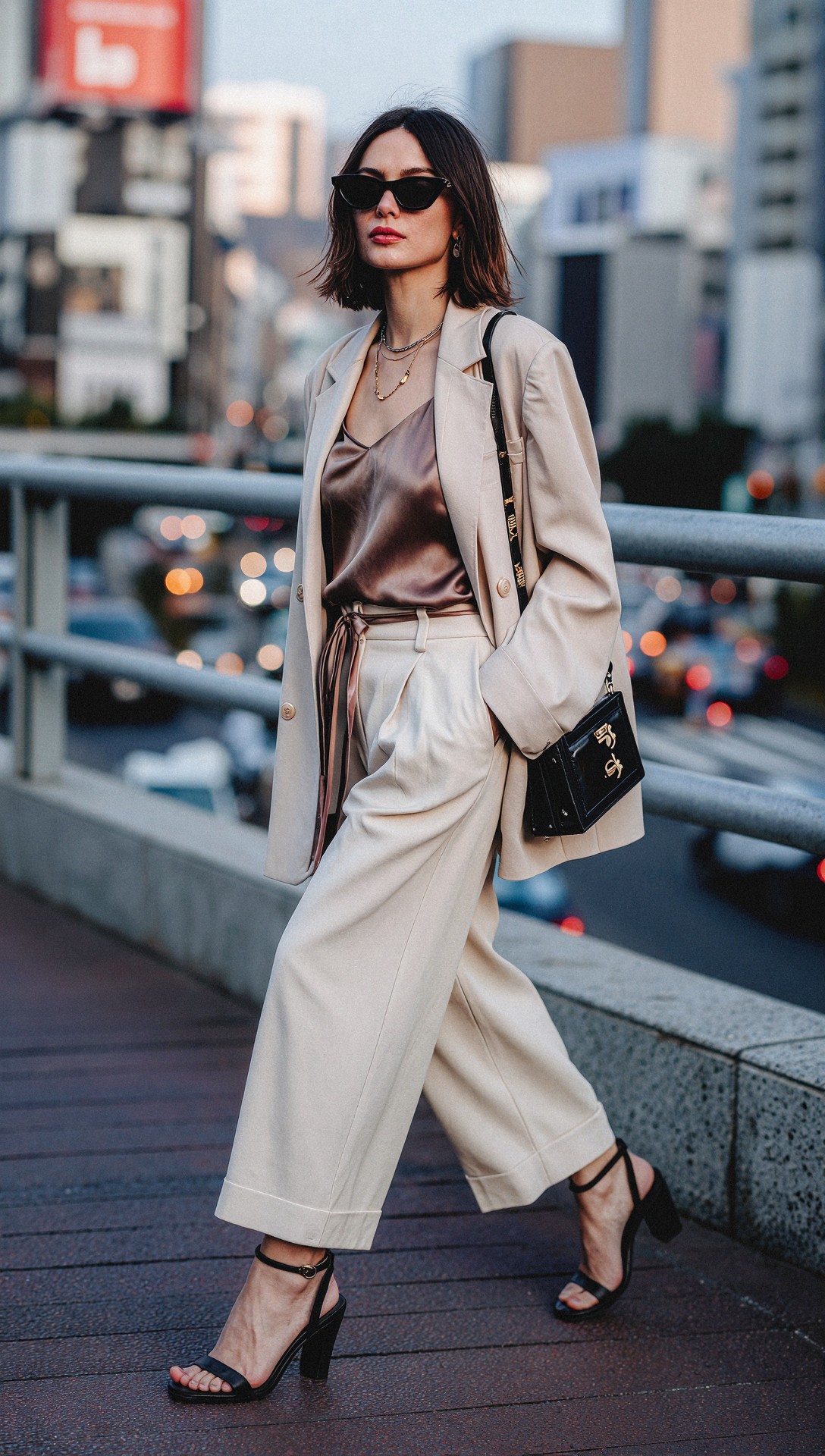
트라우저가 형태 없는 와이드 팬츠로 무너지면서 신발이 사라지지 않는지 확인하자. 더 나은 결과물은 블레이저의 구조를 유지하고, satin camisole을 의도된 스타일링 포인트로 살려낸다.
Test 4: Autumn layering for Tokyo street fashion outfit
이 테스트는 더 촘촘한 가을 레이어링이 움직임 속에서도 일관성을 유지하는지 보기 위해 사용했다. 가을은 모델이 옷을 과하게 겹치거나 허리선을 잃기 쉬운 시즌이다.
Topic: Autumn Tokyo Street Fashion Outfit
Genre: Street Style Editorial
Camera: Fujifilm GFX 100S
Lens: 45mm f/2.8
Lighting: Soft cloudy afternoon
Location: Daikanyama backstreet with cafés, bicycles, textured pavement
Style: Contemporary fashion magazine street story
Final Prompt: street-style full body fashion photograph, Japan lookbook outfit for autumn in Tokyo, full silhouette visible while walking through Daikanyama, cropped dark brown leather jacket over a fitted cream fine-knit turtleneck, high-waisted plaid midi skirt with front slit, tall black heeled boots, medium-sized top-handle bag, sheer tights, subtle gold earrings, confident stride, tasteful sexy editorial mood through fitted knit and slit skirt balanced by structured outerwear, soft cloudy light, rich leather grain and wool texture, calm upscale neighborhood setting, realistic movement in skirt hem, clean fashion-story composition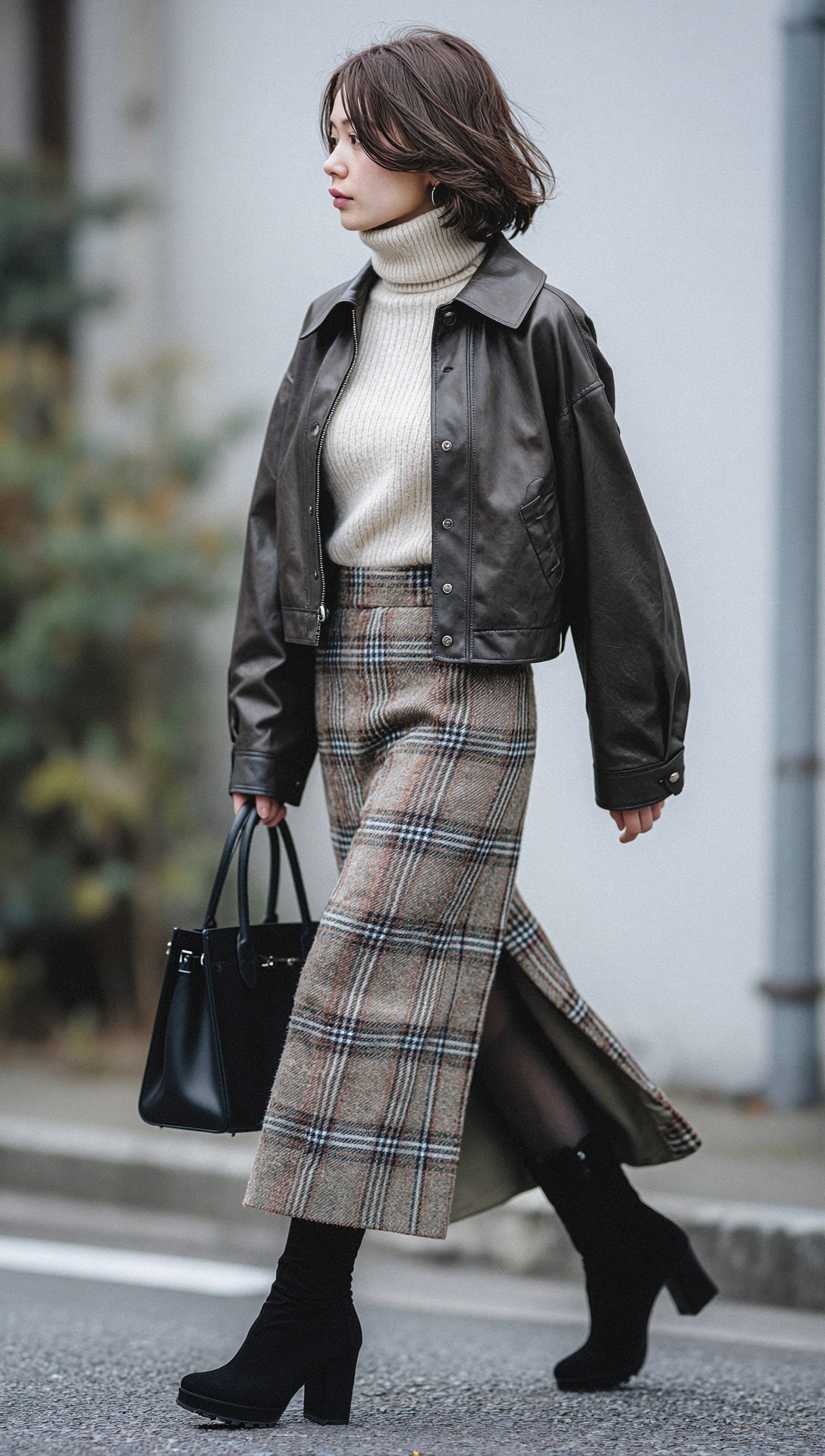
터틀넥에서 재킷 칼라로 이어지는 전환, 그리고 스커트 슬릿과 부츠 높이의 비율을 점검하자. 이 요소들이 서로 충돌하면, 룩이 의도적으로 스타일링된 것이 아니라 모델이 대충 조립한 것처럼 느껴진다.
Test 5: Winter lookbook with stronger outerwear logic
이 테스트는 모델이 겨울 아웃핏을 두껍고 형태 없는 코트로 뭉개지 않고, 우아하면서도 몸의 라인이 읽히게 유지할 수 있는지 본다. 동시에 어두운 팔레트에서도 울 텍스처가 살아남는지 확인할 수 있다.
Topic: Winter Tokyo Minimal Tailoring
Genre: Luxury Fashion Campaign
Camera: Leica SL2-S
Lens: 50mm f/1.4
Lighting: Cold morning daylight with soft bounce
Location: Marunouchi business district arcade with stone columns
Style: Luxury urban lookbook
Final Prompt: head-to-toe winter fashion lookbook shot, Japan lookbook outfit with refined Tokyo tailoring, charcoal long wool coat worn open over a fitted black mock-neck knit dress, waist defined by slim leather belt, sheer black tights, pointed knee-high boots, structured top-handle bag, leather gloves in one hand, elegant confident stance beneath a Marunouchi arcade, tasteful sexy mood through long clean line and fitted dress under the coat, cold daylight with subtle bounce, visible wool, knit, and leather textures, editorial luxury styling, architectural background with restrained city detail, premium monochrome palette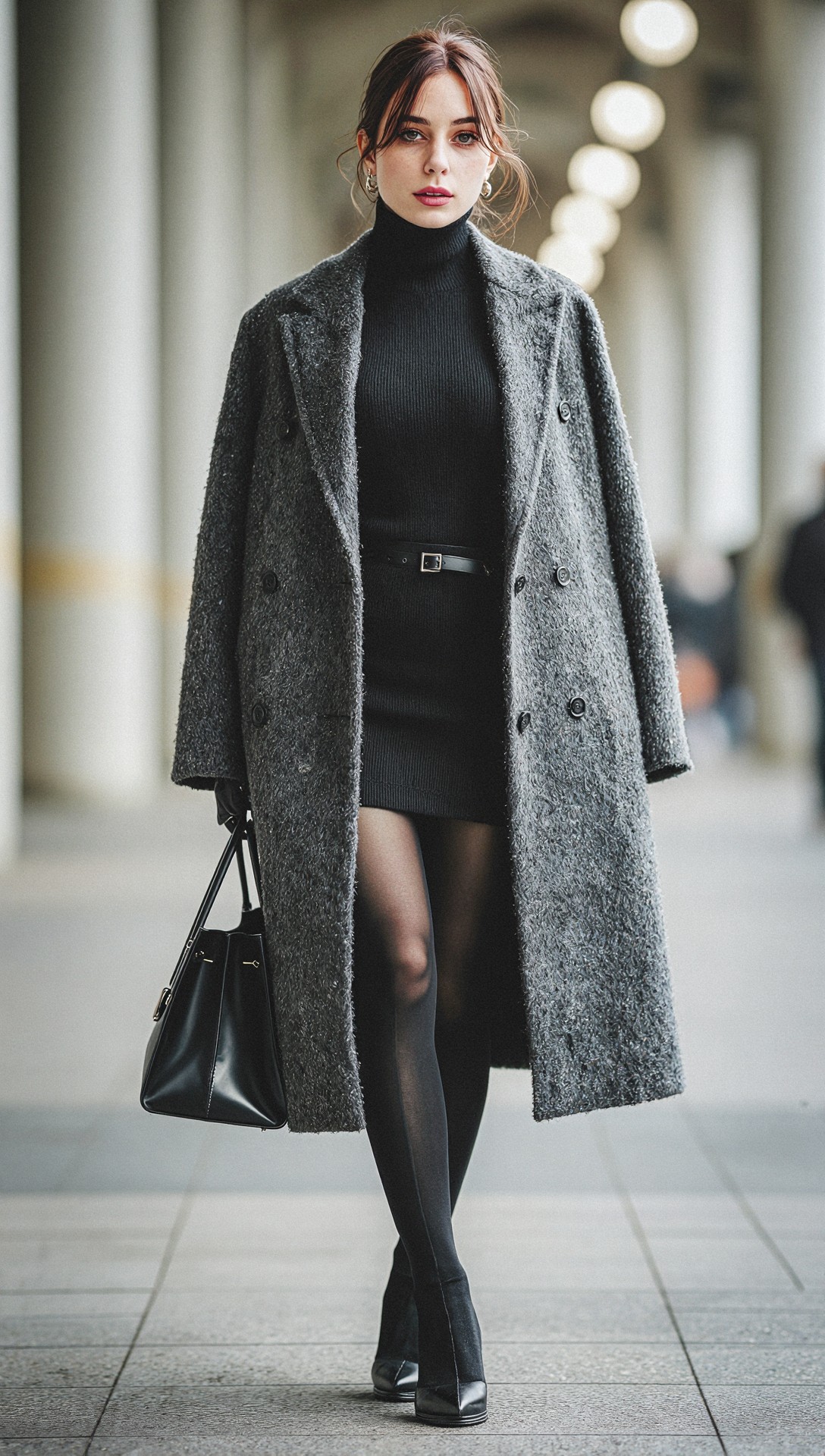
성공한 이미지는 드레스 형태가 읽히도록 코트를 충분히 열어두되, 겨울 룩의 논리가 무너질 정도로 과하게 열려 있지는 않아야 한다. 벨트 위치와 부츠가 타이츠와 섞여버리지 않는지도 자세히 볼 것.
점검 후 수정이 필요했던 부분
첫 번째 성공 출력 이후에도 세 가지 반복 이슈는 계속 수정해야 했다.
1. 움직임이 있는 샷에서 신발이 사라졌다
이 문제는 와이드 트라우저, 긴 스커트, 복잡한 바닥 패턴에서 가장 자주 발생했다. 해결은 단순했다. head-to-toe visibility를 명시하고, 신발 종류를 필드 리스트에만 적지 말고 Final Prompt 안에도 직접 넣는 것이다.
2. 트래블 씬이 옷보다 더 주목받았다
도시 랜드마크가 너무 유명하거나 화면 중심에 오면, 이미지는 목적지 콘텐츠로 변한다. arcade, side street, station platform, retail frontage, bridge, backstreet café strip처럼 패션과 관련 있는 도시 공간을 쓰는 편이 결과가 더 좋았다.
3. 미니멀 프롬프트가 감정적으로 평평해졌다
한 가지 긴장 지점을 추가하면 훨씬 좋아졌다. slit skirt, satin camisole, fitted knit, sharp shoulder line, patent accessory 같은 요소들이다. 이런 포인트가 없으면 이미지는 깔끔하지만 기억에 남지 않는다.
Test 6: Catalog grid page for styling consistency
이 프롬프트는 모델이 여러 가지 Japan lookbook outfit 변형을 하나의 일관된 에디토리얼 시스템으로 제시할 수 있는지 확인한다. 시즌별 옵션 전반에 동일한 시각 언어가 필요할 때 유용하다.
Topic: Japan Seasonal Lookbook Catalog Grid
Genre: Catalog Fashion Layout
Camera: Hasselblad X2D 100C
Lens: 55mm f/2.5
Lighting: Even studio softbox lighting
Location: seamless light gray studio backdrop with editorial layout design
Style: Clean fashion catalog page
Final Prompt: catalog grid page showing four coordinated Japan lookbook outfit variations, each full body and clearly separated, spring Tokyo streetwear, summer Japanese minimalist fashion, autumn editorial travel tailoring, winter urban wool layering, styling-first composition with complete outfit logic visible in every frame, consistent model scale, shoes bags and outerwear fully shown, tasteful sexy mood through fitted silhouettes and refined layering, clean gray backdrop, studio-lit garment clarity, premium layout spacing, high-end retail lookbook design, realistic fabric textures, restrained typography-free composition suitable for fashion merchandising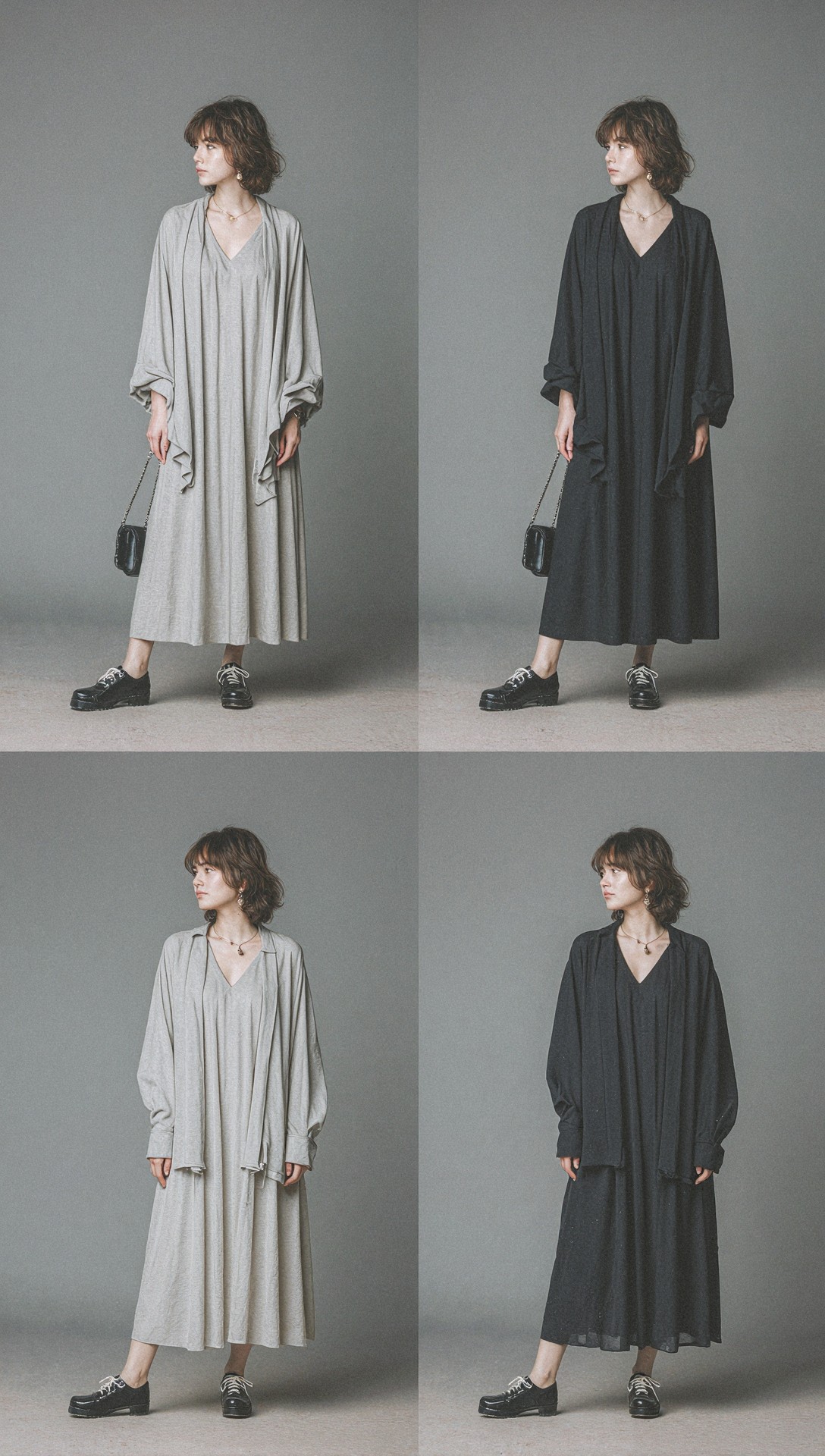
네 개의 룩이 모두 같은 브랜드 세계관에 속해 보이는지 확인하자. 약한 출력은 보통 패널마다 비율이 흔들리거나, 특정 시즌 하나가 전혀 다른 미학으로 변형되는 식으로 무너진다.
Test 7: Storefront display for retail context
많은 패션 프롬프트 세트가 머천다이징을 놓치기 때문에 이 테스트를 포함했다. 하지만 storefront 프레이밍은 트렌드 방향을 또렷하게 보여주는 데 꽤 유용하다. 이 테스트는 사람 스타일링만이 아니라 Japan fashion trends display를 모델이 얼마나 잘 이해하는지도 볼 수 있다.
Topic: Tokyo Storefront Seasonal Styling Display
Genre: Product Editorial
Camera: Panasonic Lumix S1R
Lens: 24-70mm at 45mm f/4
Lighting: Evening storefront illumination with soft street reflections
Location: minimalist Aoyama boutique window
Style: High-end retail visual merchandising
Final Prompt: storefront display image focused on a Japan lookbook outfit merchandising concept, minimalist Aoyama boutique window with two mannequins styled in coordinated autumn city looks, cropped leather jacket, fitted knit top, plaid midi skirt, knee-high boots on one mannequin, oversized blazer, satin camisole, tailored cream trousers, heeled sandals on the other, small leather bags and silver accessories arranged with intention, sexy editorial mood through silhouette and styling rather than body display, polished glass reflections, warm interior light against cool Tokyo evening street, luxury Japanese fashion photography aesthetic, clean merchandising composition, rich textile detail and strong color harmony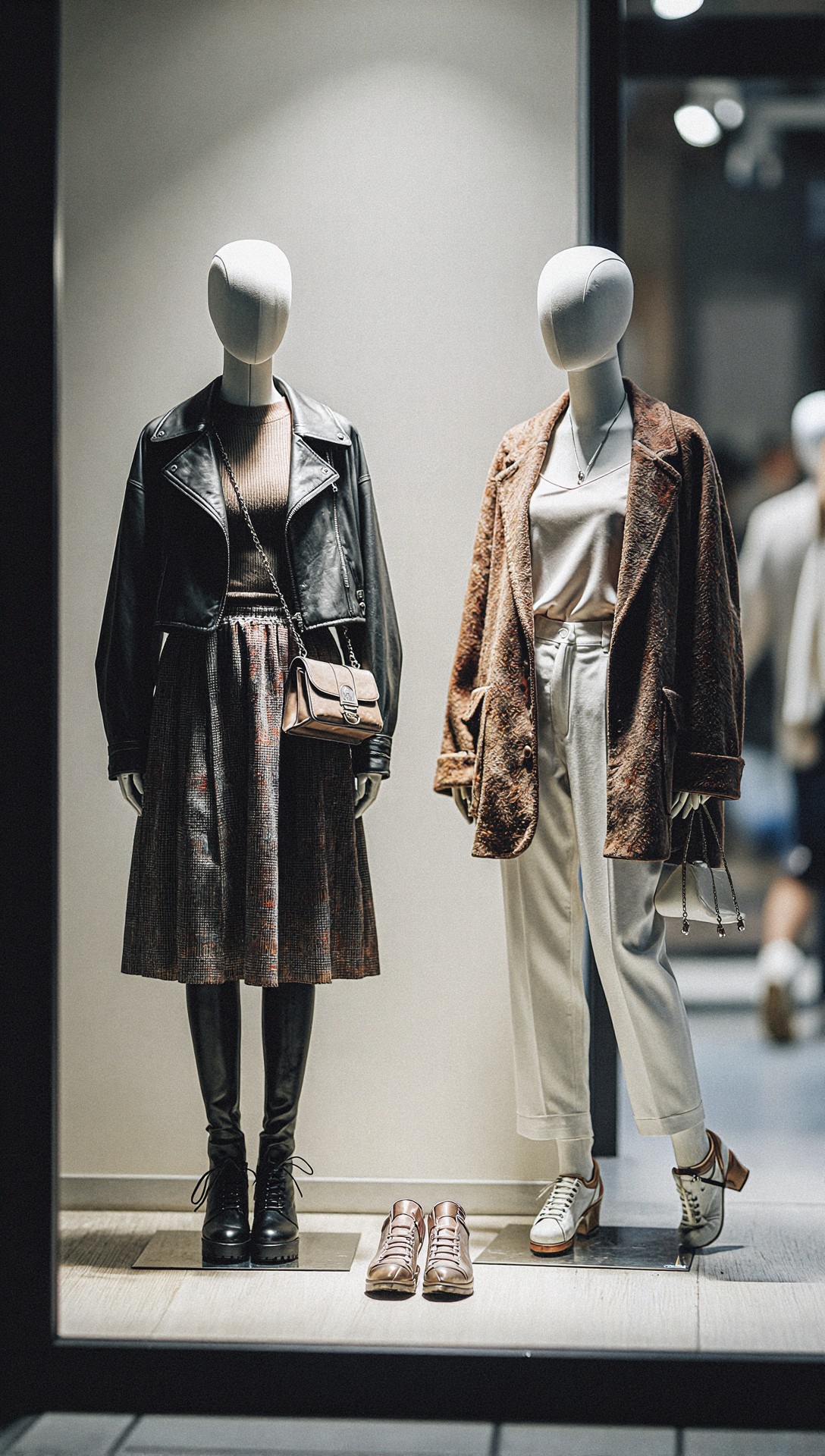
여기서 점검할 것은 제품의 명확성이다. 마네킹이나 의상이 지나치게 인간적으로 보이거나 초현실적으로 변하면, 모델이 머천다이징 모드에서 이탈하고 있다는 뜻이다.
모델이나 설정을 바꿔야 할 때
이 워크플로에서는 하나의 모델로 모든 것을 해결하려고 하지 않는 편이 낫다.
다음과 같은 경우에는 패션/에디토리얼 모델 또는 스타일 튜닝된 체크포인트를 사용하라:
- 의복 레이어링이 안정적으로 필요할 때
- 액세서리가 선명하게 읽혀야 할 때
- 영화적 분위기보다 룩북 일관성이 더 중요할 때
다음과 같은 경우에는 시네마틱 모델을 사용하라:
- 트래블 씬 자체가 의미를 더할 때
- 분위기 있는 조명과 도시의 깊이를 원할 때
- 제품 정확도가 조금 떨어져도 감수할 수 있을 때
다음과 같은 경우에는 스타일라이제이션을 낮추거나 프롬프트 규율을 더 강화하라:
- 손이 가방이나 재킷과 시각적으로 경쟁하기 시작할 때
- 간판이 혼란스러워질 때
- 아웃핏보다 얼굴이 과하게 우선될 때
- 스커트 슬릿, 부츠 형태, 밑단 길이가 계속 변형될 때
실무적으로는 이렇게 나누면 편하다.
- lookbook/catalog pages: 더 깔끔한 모델, 균일한 조명, 직접적인 프레이밍
- streetwear/editorial travel: 더 분위기 있는 모델, 대신 더 타이트한 의상 언어
- detail/product support: 더 높은 해상도 패스 후, 구도가 승인된 다음에만 [upscale](/upscaler)
생성 전에 아이디어를 넓히고 싶다면, 막연한 트렌드 문구로 바로 프롬프트하기보다 [gallery](/gallery)와 [articles](/articles)에서 더 좁고 선명한 비주얼 레퍼런스 범위를 모으는 편이 유용하다.
Test 8: Garment detail macro for texture verification
마지막 테스트는 원단의 사실성을 확인하는 단계다. 가짜 레더, 뭉개진 rib knit, 불분명한 하드웨어는 여기서 바로 드러난다. 최종 업스케일 전에 거치는 게이트로 적합하다.
Topic: Japan Lookbook Outfit Garment Detail
Genre: Fashion Detail Editorial
Camera: Canon EOS R3
Lens: 85mm f/2
Lighting: directional softbox with subtle edge light
Location: studio corner styled as a modern Tokyo showroom
Style: Premium garment detail campaign
Final Prompt: garment detail macro from a Japan lookbook outfit, close framing on the waist-to-hem section of an autumn editorial look, cropped dark brown leather jacket edge, fitted cream fine-knit top, high-waisted plaid midi skirt with precise front slit, black leather belt hardware, partial view of tall boots and structured handbag, tasteful sexy fashion mood through close attention to fit and materials, modern Tokyo showroom atmosphere, premium detail photography, realistic leather grain, knit ribbing, wool plaid texture, polished metal hardware, shallow depth of field, clean luxury composition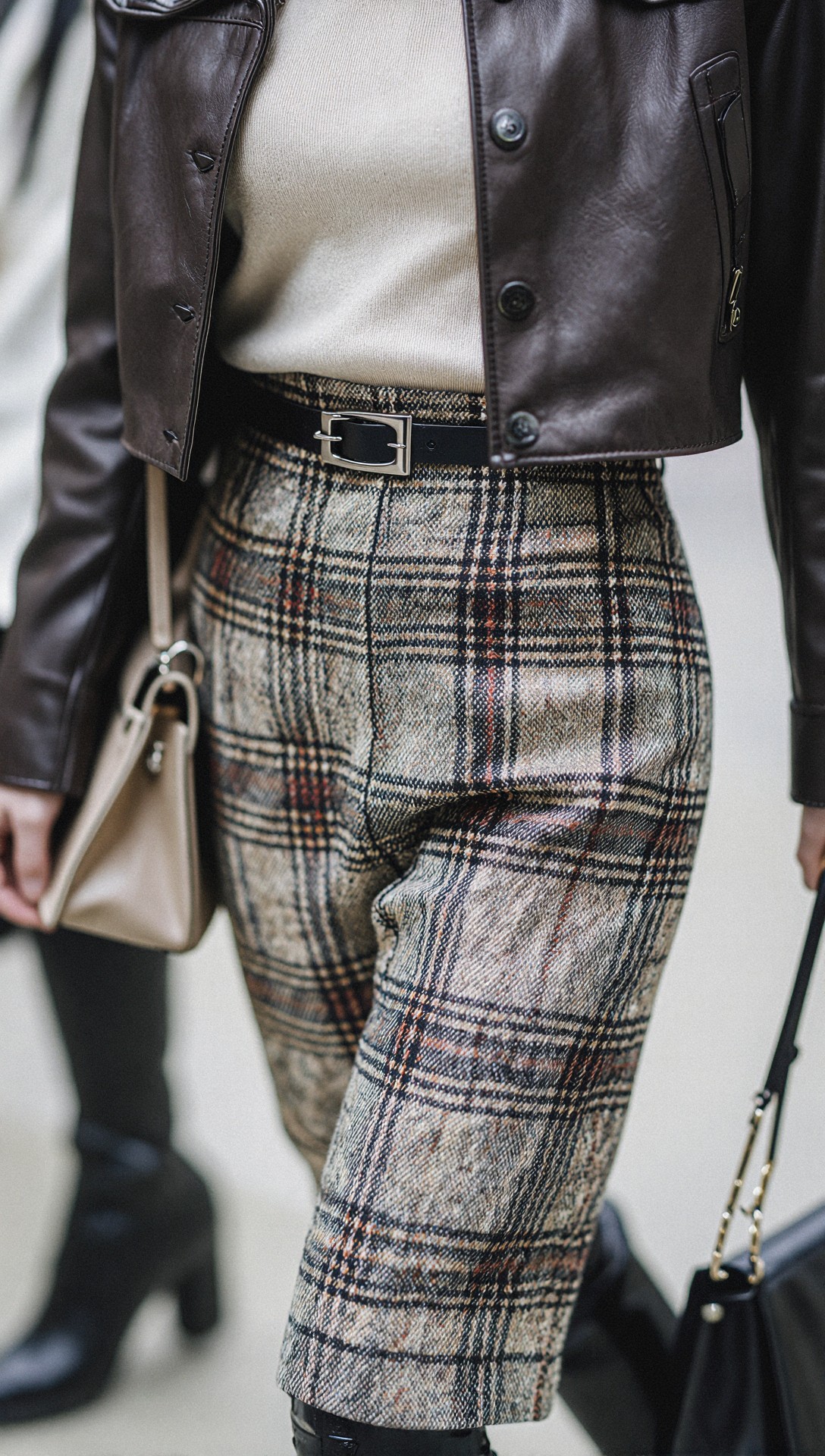
각 원단이 첫눈에 서로 다른 재질로 읽히는지 확인하자. 레더, 울, 니트가 모두 같은 표면 거동을 보인다면, 모델은 실제 텍스타일 제어 없이 스타일 언어만 흉내 내고 있는 것이다.
이번 테스트에서 얻은 실전 권장사항
목표가 엄격한 제품 정확도보다 영감에 있다면, 가장 성능이 좋았던 워크플로는 프롬프트를 다음 순서로 구성하는 것이다.
1. 샷 타입 2. 시즌 3. 도시 패션 맥락 4. 전체 아웃핏 스택 5. 실루엣과 핏 6. 액세서리 7. 무드 신호 8. 조명과 구도
이번 세션 내내 도움이 된 간단한 운영 규칙도 있었다. 프롬프트만 보고 5초 안에 아웃핏을 스케치할 수 없다면, 생성도 깔끔하게 나오지 않을 가능성이 높다.
계속 유지할 것
- 아웃핏 논리가 중요할 때는 반드시 full-body 또는 head-to-toe를 요청할 것.
- 강한 관능 신호는 하나만 사용할 것. 다섯 개는 과하다.
- 도쿄는 랜드마크 관광이 아니라 패션 공간으로 고정할 것.
- 원단은 직접 언급할 것.
- 신발과 가방은 선택적 장식이 아니라 필수 구성요소로 다룰 것.
다음에 바꿔볼 것
다음 테스트에서는 더 강한 네거티브 제약을 넣어볼 생각이다.
- no portrait crop
- no oversized random layers
- no excessive signage clutter
- no mismatched footwear
또한 같은 아웃핏을 street, retail, detail 뷰에 반복 적용하기 위해 더 통제된 시드 워크플로도 시험해볼 예정이다.
FAQ
관광 사진처럼 나오지 않게 Japan lookbook outfit를 프롬프트하려면?
"street-style full body"나 "head-to-toe lookbook" 같은 패션 샷 타입으로 시작하고, 전체 아웃핏 스택을 완전히 정의하라. 그다음 막연한 여행 언어 대신 Harajuku side street나 Ginza arcade 같은 도쿄 패션 맥락을 붙이면 된다.
Tokyo street fashion outfit 프롬프트에는 무엇이 가장 잘 먹히나?
중간 광각의 에디토리얼 프레이밍, 보이는 신발, 그리고 구체적인 레이어링이다. 이번 테스트에서는 과하게 영화적인 장망원 초상 언어보다 35mm에서 50mm의 다큐멘터리 룩이 더 좋은 성능을 보였다.
Japanese minimalist fashion 프롬프트를 덜 지루하게 만들려면?
하나의 통제된 긴장 지점을 추가하라. 예를 들면 slit skirt, satin layer, fitted knit, sharp tailoring, strong leather accessory. 미니멀리즘은 중성 컬러만으로 완성되지 않는다. 형태 대비가 필요하다.
에디토리얼 트래블 씬은 여성용 휴가 아웃핏 아이디어에 적합한가?
그렇다. 다만 아웃핏이 여전히 주제가 되어야 한다. 도시 분위기는 보조로 두고 torso-to-shoe visibility를 분명히 지정하라. 그렇지 않으면 모델이 이미지를 목적지 콘텐츠로 바꿔버릴 수 있다.
패션 이미지는 언제 업스케일해야 하나?
실루엣, 신발 렌더링, 액세서리 위치를 확인한 뒤 업스케일하라. 업스케일은 텍스처 디테일에는 도움이 되지만, 잘못된 레이어링이나 무너진 아웃핏 비율을 안정적으로 고쳐주지는 않는다.
마무리 노트
이 워크플로는 Japan lookbook outfit 영감을 원하면서도 스타일링 논리가 눈에 보여야 하는 크리에이터에게 가장 잘 맞는다. 스트리트웨어 캡슐, 미니멀 시티 드레싱, 에디토리얼 트래블 콘셉트, 패션 머천다이징 레퍼런스가 여기에 포함된다. 반대로 느슨한 무드 이미지 정도만 원한다면 효용이 떨어진다. 이 세팅의 강점은 정밀함에 있기 때문이다.
누가 쓰면 좋은가: 프롬프트 빌더, 패션 마케터, 비주얼 리서처, 도쿄 지향의 시즌 룩북을 구성하는 크리에이터. 피하는 편이 나은 사람: 열린 미감 중심 프롬프트를 선호하고, 의복을 세부적으로 지정하고 싶지 않은 사용자.
이번 테스트에서 가장 중요했던 설정은 비밀스러운 모델 트릭이 아니었다. 핵심은 프롬프트 규율이었다. 먼저 샷 타입을 명명하고, 실루엣이 읽히게 만들고, 전체 아웃핏이 끝까지 보이도록 강제하는 것. 이 한 가지 변화가 스트리트웨어, 미니멀리즘, 에디토리얼 트래블 씬 전반에서 가장 안정적인 개선을 만들어냈다.