Japan Lookbook Outfit Prompts: Tested Seasonal Styling for Streetwear, Minimalism, and Editorial Travel Scenes 한국어 요약
이 페이지는 ZView Space의 영어 원문을 한국어 검색 사용자도 이해할 수 있도록 정리한 SEO 요약입니다. 핵심은 단순한 얼굴 중심 이미지가 아니라 패션 에디토리얼, 룩북, 아웃핏, 프롬프트 테스트, 이미지 생성 워크플로우를 실제로 어떻게 구성할지입니다.
핵심 요약
- 원문 주제: Japan Lookbook Outfit Prompts: Tested Seasonal Styling for Streetwear, Minimalism, and Editorial Travel Scenes
- 목적: AI 이미지 생성에서 outfit, silhouette, fabric, pose, location, camera framing을 더 명확하게 설계합니다.
- 활용 범위: Z-Image Turbo, Krea2 Turbo, Qwen Image, Anima, SeedVR2 같은 이미지 생성 및 업스케일 워크플로우에 적용할 수 있습니다.
- SEO 관점: 제목, 설명, 이미지 alt, 프롬프트 예시가 실제 검색 의도와 맞아야 색인 가능성이 높아집니다.
한국어 사용자를 위한 체크포인트
1. 프롬프트가 얼굴 묘사에만 머물지 않고 전체 스타일과 의상 구성을 설명하는지 확인합니다. 2. 패션 이미지라면 상의, 하의, 아우터, 신발, 액세서리, 소재감, 촬영 장소를 분리해서 씁니다. 3. 생성 결과는 바로 게시하지 말고 디테일, 손, 의상 형태, 배경 일관성, 이미지 품질을 비교합니다. 4. 글 본문에는 실제 테스트 기준과 실패를 줄이는 방법이 들어가야 검색엔진에서 얇은 콘텐츠로 보일 가능성이 줄어듭니다.
원문 미리보기
This test was built around one practical question: how do you prompt a Japan lookbook outfit so the image reads as styling first fashion direction rather than a tourist portrait with random clothes. I ran a seasonal city lookbook workflow across streetwear, Ja
---
This test was built around one practical question: how do you prompt a Japan lookbook outfit so the image reads as styling-first fashion direction rather than a tourist portrait with random clothes. I ran a seasonal city lookbook workflow across streetwear, Japanese minimalist fashion, and editorial travel scenes, then compared which prompt ingredients actually held silhouette, layering, and Tokyo context together.
The short version: the best results came from prompts that treated the image like a shot list for a fashion editor. When I only asked for "Tokyo street fashion" or "Japan lookbook," the model often drifted into vague travel imagery, costume-like styling, or cropped framing that hid the outfit logic.
What to know first
- Use a named fashion shot type first, or the model may prioritize face and scenery over the outfit.
- Specify layer order, silhouette, and footwear together; leaving one out often causes broken styling logic.
- Tokyo and Japan references work best when tied to a specific fashion context like Harajuku side street, minimalist Ginza retail, train platform editorial, or lookbook studio page.
- For sexy mood direction, keep it in fit and confidence rather than exposed skin, or the result can slide into generic glamour.
- If texture matters, send good outputs through the [upscaler](/upscaler) only after you confirm the garment structure is correct.
Test setup
In this test, I generated seasonal outfit concepts across four buckets:
1. Tokyo streetwear full-body looks 2. Japanese minimalist fashion editorials 3. Travel-style city lookbook frames 4. Product and detail support images for lookbook consistency
I varied framing, lens choice, and location language more than the clothing itself. The goal was not just pretty output. The goal was a repeatable Japan lookbook prompt structure that preserved:
- full outfit visibility
- coherent layering
- fabric realism
- useful city context
- accessory logic
- mood consistency across scenes
For prompt drafting and version control, this is the kind of workflow that fits well inside [Prompt Lab](/promptlab) and iterative generation in [Create](/create).
First pass wins: what looked good immediately
The strongest result in the first batch was full-body street-style prompting with 35mm to 50mm framing. That combination gave the model enough room to show outerwear, top, bottom, bag, and shoes without turning the scene into a distant travel postcard.
Another immediate win: Japanese minimalist fashion responded better to clean retail or quiet urban architecture than crowded nightlife prompts. As soon as the background got too loud, the model started using the city as the subject and the outfit as decoration.
A third pattern was seasonal clarity. When the prompt explicitly said early spring trench layering, humid summer lightweight separates, autumn leather-and-knit contrast, or winter wool tailoring, the model handled textiles more convincingly.
Quick checklist: prompt ingredients that improved outfit accuracy
| Prompt ingredient | What it improved | Common failure when missing | |---|---|---| | Shot type first | Full-body outfit visibility | Cropped portrait or scenery-heavy frame | | Specific silhouette | Better garment proportion | Random oversized layers with no structure | | Layer order | Outfit logic | Jacket floating over wrong top shape | | Shoe + bag callout | Styling completion | Bare lower half detail or mismatched accessories | | Tokyo location with fashion context | Regional identity | Generic Asian city backdrop | | Fabric words like twill, wool, satin, rib knit, denim | Texture realism | Plastic-looking cloth | | Motion cue like walking, turning, adjusting coat | Natural drape | Stiff mannequin posture |
Where the first prompts failed
The weak point was broad language. Prompts such as "Tokyo fashion girl in Japan street outfit" consistently produced three problems:
- the outfit was incomplete or partially hidden
- the styling mixed unrelated trends in one look
- background signage became noisy and sometimes unreadable in distracting ways
I also saw recurring over-stylization in "editorial travel" prompts. If the scene was too aspirational and the clothing too unspecific, the model substituted wind-blown hair and cinematic blur for actual outfit design.
Minimalist looks had their own failure mode. When I asked for "Japanese minimalist fashion" without garment architecture, the output leaned sterile: beige room, beige clothes, no shape, no edge. That is visually neat but not a useful Japan fashion trends reference.
The prompt ingredients that changed the result
The biggest improvement came from changing the prompts from subject-led to styling-system-led. In practice, that meant describing the outfit as a complete stack:
- outerwear
- top layer
- bottom silhouette
- shoes
- bag
- jewelry or eyewear
- fabric behavior
- pose or action
- exact urban context
I also got better consistency by using tasteful sexy mood cues through garment fit: side-slit midi skirt, fitted rib knit, waist emphasis, tall boots, lean tailoring, clean neckline, satin camisole under structured layer. That kept the editorial sensuality fashion-focused instead of glamour-coded.
Test 1: Streetwear full body with Tokyo context
This test checks whether a classic Tokyo street fashion outfit stays readable from head to toe, especially shoes and bag. It also reveals whether the model confuses streetwear with costume styling.
Topic: Spring Tokyo Streetwear Lookbook
Genre: Street Style
Camera: Canon EOS R5
Lens: 35mm f/2
Lighting: Bright overcast diffusion
Location: Harajuku side street with clean shop fronts, light pedestrian depth, muted signage
Style: Japanese street fashion editorial
Final Prompt: street-style full body fashion shot, a Japan lookbook outfit for early spring in Tokyo, confident woman walking through a Harajuku side street, complete styling visible from head to toe, cropped khaki trench jacket over fitted white rib tank, high-waisted charcoal pleated mini skirt layered over sheer black tights, slouchy knee-high leather boots, compact shoulder bag, silver hoop earrings, slim rectangular sunglasses, tasteful sexy mood through sharp fit and leg line, natural stride, one hand adjusting jacket collar, documentary fashion framing, soft overcast light, realistic twill and rib-knit texture, balanced urban background, editorial color palette of khaki white charcoal and black, magazine-ready composition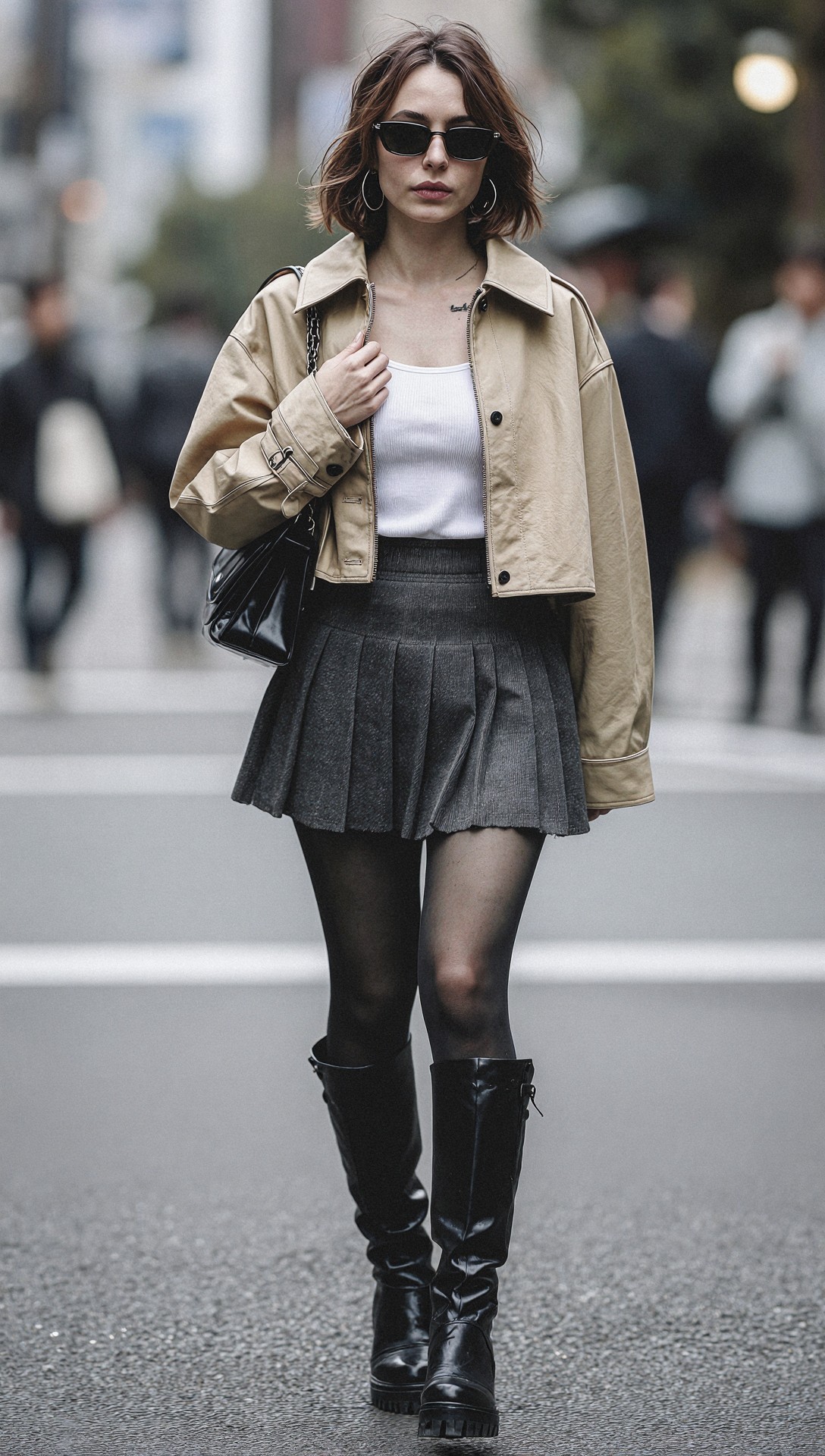
Inspect whether the boots are fully visible and proportionate to the skirt length. The good version has clear layering and a believable Harajuku street backdrop without turning the image into a crowded travel snapshot.
Test 2: Minimalist lookbook with stronger silhouette control
This one tests whether Japanese minimalist fashion can hold sensuality through proportion instead of ornament. I used clean geometry and controlled palette to stop the model from adding random accessories.
Topic: Japanese Minimalist Summer Lookbook
Genre: Fashion Editorial
Camera: Nikon Z7 II
Lens: 50mm f/2.8
Lighting: Window-lit soft daylight
Location: quiet Ginza-inspired concrete arcade with luxury retail windows
Style: Clean commercial look
Final Prompt: head-to-toe lookbook fashion image, Japan lookbook outfit with Japanese minimalist fashion direction for summer city dressing, fitted black sleeveless knit top tucked into a high-waisted ivory column midi skirt with side slit, thin leather belt, low sculptural sandals, small structured black handbag, delicate gold cuff, sleek pulled-back hair, body-conscious but refined silhouette, standing in a quiet Ginza-style arcade, full outfit visible, calm confident expression, soft daylight reflecting from concrete and glass, crisp garment edges, premium knit and matte cotton texture, restrained palette of black ivory and warm stone, clean editorial composition with minimal background clutter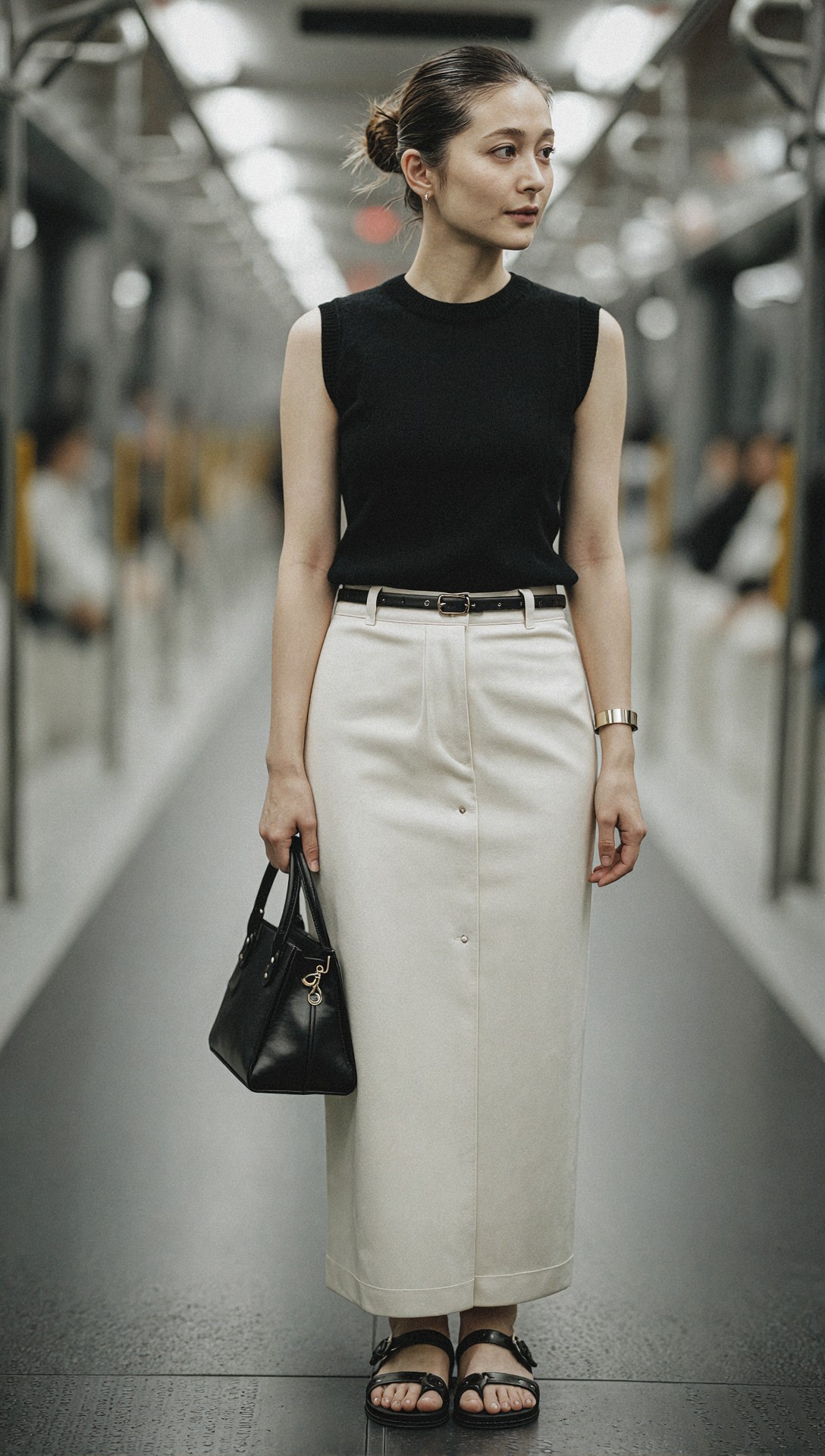
The strongest result should show tension between the fitted top and straight skirt rather than a flat beige-on-beige outfit. Watch for the slit placement and sandal rendering; those are common failure points.
Example prompts and inspection notes
Test 3: Editorial travel scene without losing the outfit
This prompt is meant to check whether a vacation outfit idea for women can still read like a fashion spread, not a generic travel ad. The key is keeping the full styling stack visible while giving the city scene enough life.
Topic: Tokyo Editorial Travel Lookbook in Late Summer
Genre: Cinematic Travel Fashion
Camera: Sony A7 IV
Lens: 40mm f/2.5
Lighting: Golden hour side light
Location: elevated pedestrian bridge overlooking Shibuya streets at sunset
Style: Editorial travel campaign
Final Prompt: three-quarter outfit editorial image, Japan lookbook outfit for late summer travel in Tokyo, confident woman paused on a pedestrian bridge above Shibuya, espresso satin camisole under an oversized light beige blazer, high-waisted relaxed cream trousers, slim leather sandals, mini crossbody bag, narrow sunglasses, subtle layered necklace, tasteful sexy mood through satin sheen and tailored drape, torso-to-shoe visibility prioritized, warm sunset side light, cinematic city depth behind her, clean composition with traffic blur far below, rich fabric contrast between satin and suiting, elegant travel-fashion direction, magazine editorial realism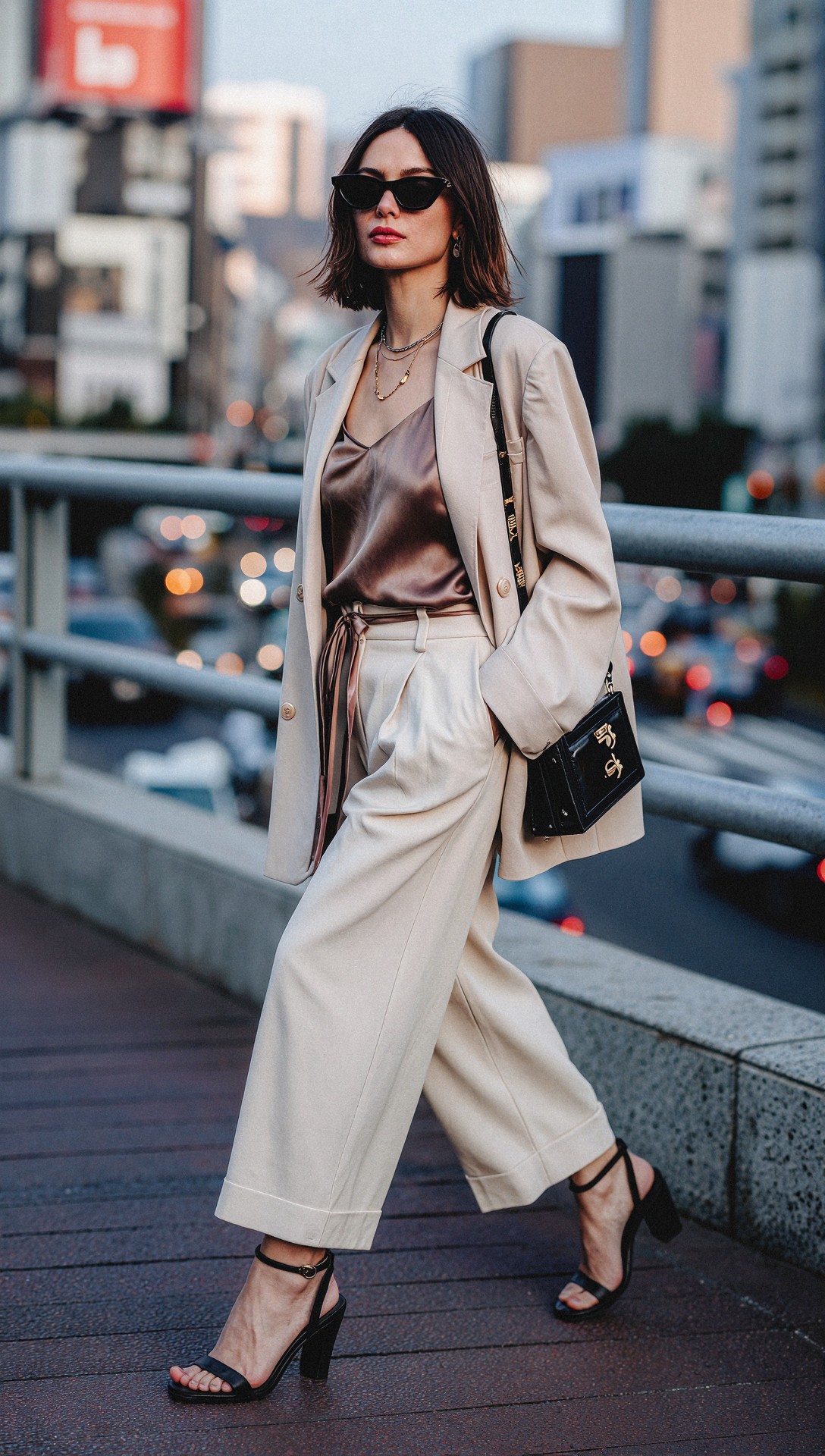
Check that the trousers do not collapse into shapeless wide pants with invisible footwear. The better generations keep the blazer structure intact and preserve the satin camisole as a deliberate styling focal point.
Test 4: Autumn layering for Tokyo street fashion outfit
I used this to test whether denser seasonal layering would stay coherent under motion. Autumn is where models often overstack garments or lose waist definition.
Topic: Autumn Tokyo Street Fashion Outfit
Genre: Street Style Editorial
Camera: Fujifilm GFX 100S
Lens: 45mm f/2.8
Lighting: Soft cloudy afternoon
Location: Daikanyama backstreet with cafés, bicycles, textured pavement
Style: Contemporary fashion magazine street story
Final Prompt: street-style full body fashion photograph, Japan lookbook outfit for autumn in Tokyo, full silhouette visible while walking through Daikanyama, cropped dark brown leather jacket over a fitted cream fine-knit turtleneck, high-waisted plaid midi skirt with front slit, tall black heeled boots, medium-sized top-handle bag, sheer tights, subtle gold earrings, confident stride, tasteful sexy editorial mood through fitted knit and slit skirt balanced by structured outerwear, soft cloudy light, rich leather grain and wool texture, calm upscale neighborhood setting, realistic movement in skirt hem, clean fashion-story composition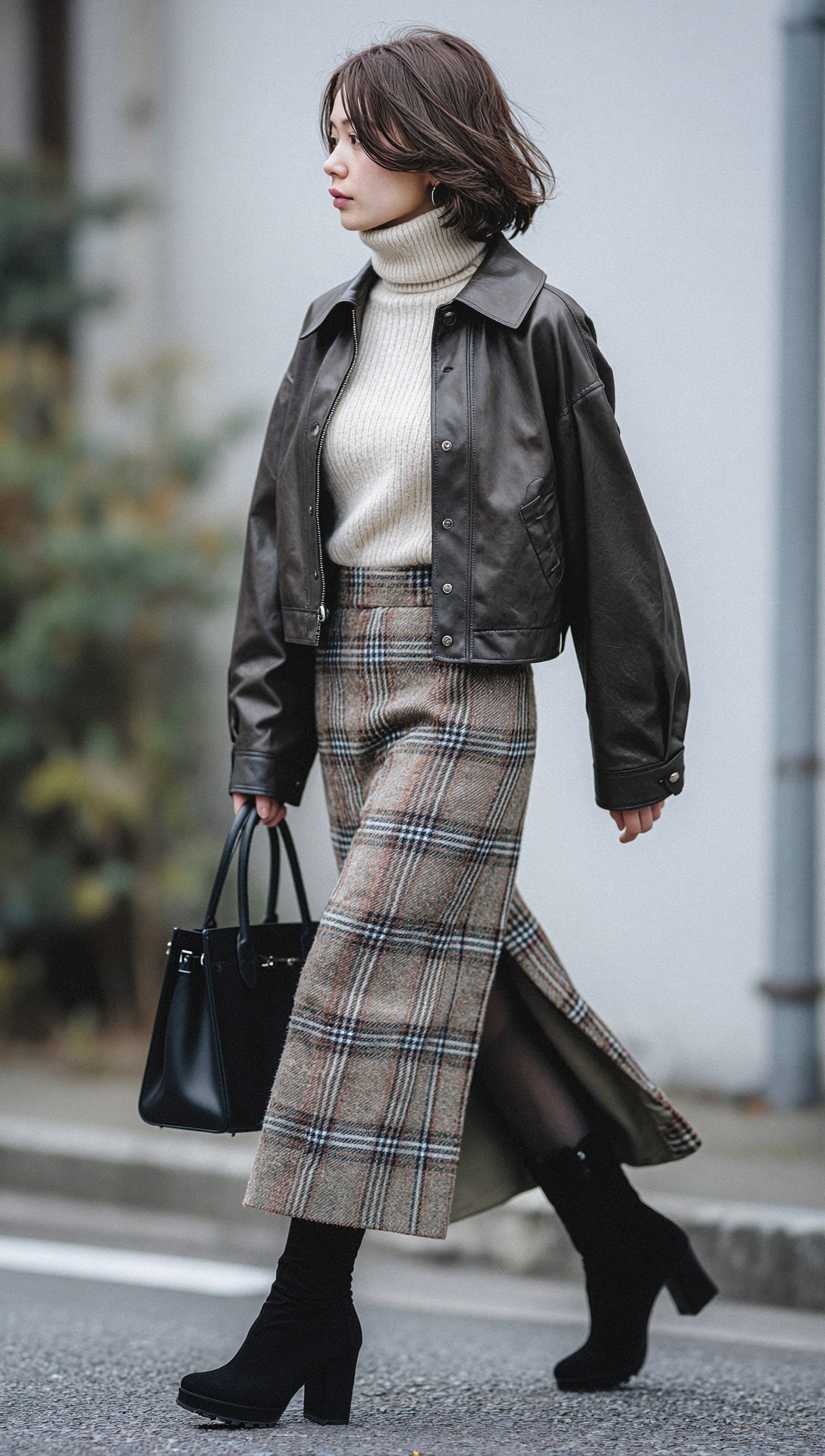
Inspect the transition from turtleneck to jacket collar and the proportion between skirt slit and boot height. If those elements fight each other, the look feels assembled by the model instead of styled on purpose.
Test 5: Winter lookbook with stronger outerwear logic
This test checks if the model can keep a winter outfit elegant and body-aware without defaulting to bulky shapeless coats. It also reveals whether wool texture survives darker palettes.
Topic: Winter Tokyo Minimal Tailoring
Genre: Luxury Fashion Campaign
Camera: Leica SL2-S
Lens: 50mm f/1.4
Lighting: Cold morning daylight with soft bounce
Location: Marunouchi business district arcade with stone columns
Style: Luxury urban lookbook
Final Prompt: head-to-toe winter fashion lookbook shot, Japan lookbook outfit with refined Tokyo tailoring, charcoal long wool coat worn open over a fitted black mock-neck knit dress, waist defined by slim leather belt, sheer black tights, pointed knee-high boots, structured top-handle bag, leather gloves in one hand, elegant confident stance beneath a Marunouchi arcade, tasteful sexy mood through long clean line and fitted dress under the coat, cold daylight with subtle bounce, visible wool, knit, and leather textures, editorial luxury styling, architectural background with restrained city detail, premium monochrome palette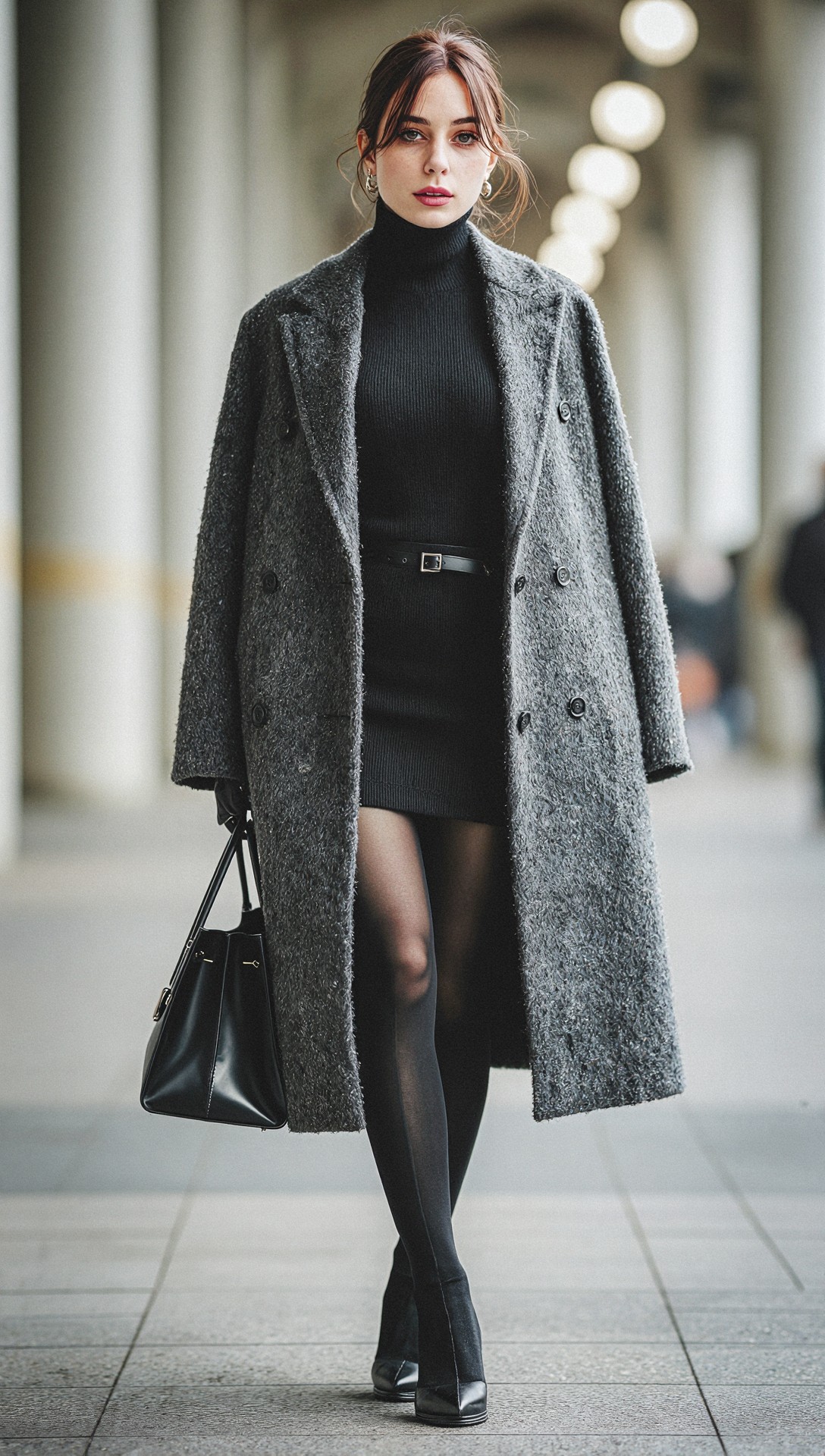
The successful image should keep the coat open enough to read the dress shape but not so open that the winter logic breaks. Look closely at belt placement and whether the boots merge into the tights.
What needed correction after inspection
After the first successful outputs, I still had to correct three recurring issues.
1. Shoes disappeared in motion shots
This happened most often with wide trousers, long skirts, and busy pavement. The fix was simple: explicitly request head-to-toe visibility and mention the shoe type in the Final Prompt, not just the field list.
2. Travel scenes stole attention from the clothes
If the city landmark was too famous or too central, the image became destination content. I got better results using fashion-relevant city spaces: arcade, side street, station platform, retail frontage, bridge, backstreet café strip.
3. Minimalist prompts became emotionally flat
Adding one tension point improved them a lot: slit skirt, satin camisole, fitted knit, sharp shoulder line, or patent accessory. Without that, the images were clean but forgettable.
Test 6: Catalog grid page for styling consistency
This prompt checks whether the model can present multiple Japan lookbook outfit variations as a coherent editorial system. It is useful when you want one visual language across seasonal options.
Topic: Japan Seasonal Lookbook Catalog Grid
Genre: Catalog Fashion Layout
Camera: Hasselblad X2D 100C
Lens: 55mm f/2.5
Lighting: Even studio softbox lighting
Location: seamless light gray studio backdrop with editorial layout design
Style: Clean fashion catalog page
Final Prompt: catalog grid page showing four coordinated Japan lookbook outfit variations, each full body and clearly separated, spring Tokyo streetwear, summer Japanese minimalist fashion, autumn editorial travel tailoring, winter urban wool layering, styling-first composition with complete outfit logic visible in every frame, consistent model scale, shoes bags and outerwear fully shown, tasteful sexy mood through fitted silhouettes and refined layering, clean gray backdrop, studio-lit garment clarity, premium layout spacing, high-end retail lookbook design, realistic fabric textures, restrained typography-free composition suitable for fashion merchandising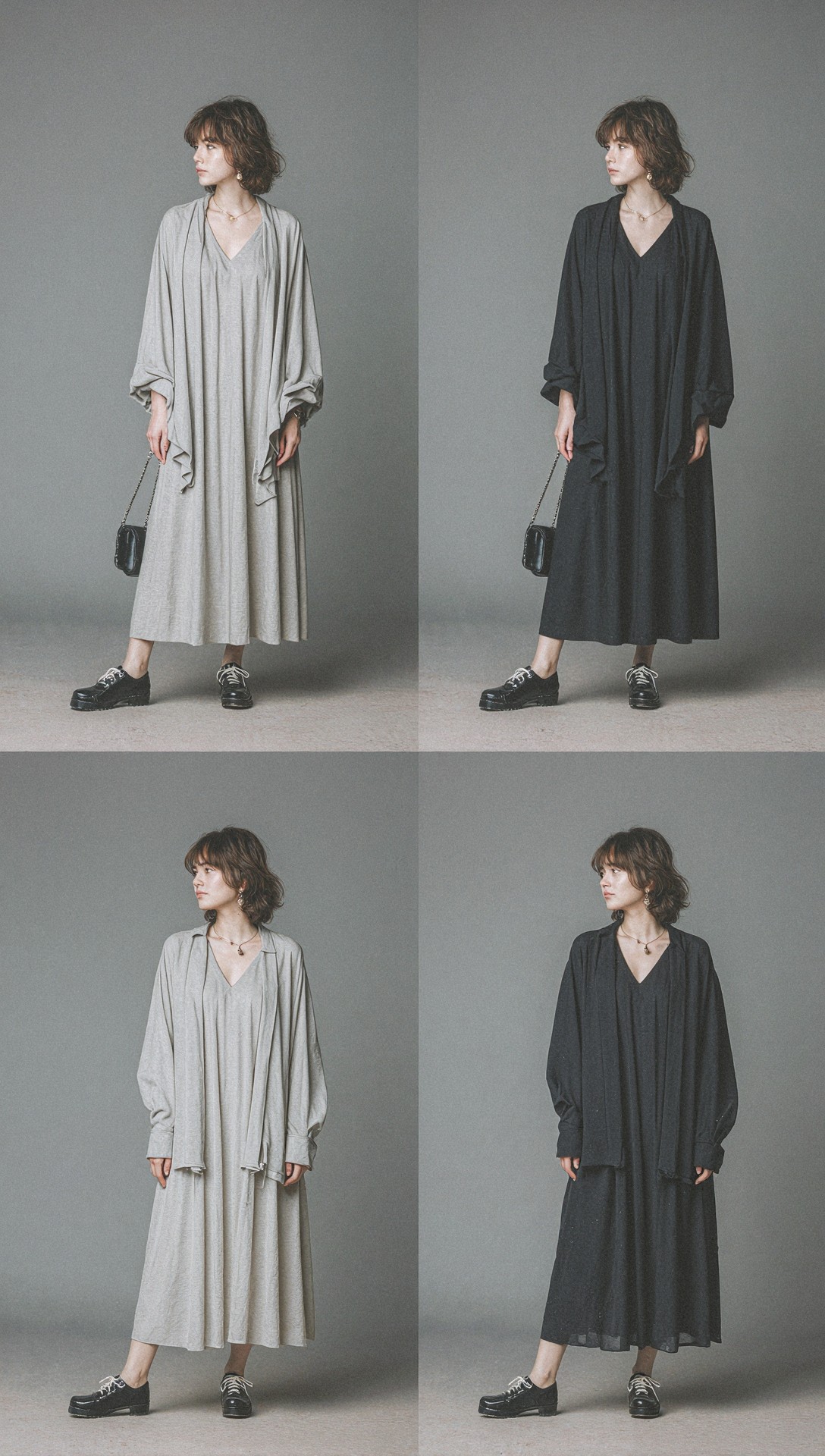
Inspect whether all four looks feel like the same brand world. The weak outputs usually drift into inconsistent proportions between panels or mutate one season into a different aesthetic entirely.
Test 7: Storefront display for retail context
I included this because many fashion prompt sets ignore merchandising, even though storefront framing helps clarify trend direction. This is useful for testing how well the model understands a Japan fashion trends display rather than only human styling.
Topic: Tokyo Storefront Seasonal Styling Display
Genre: Product Editorial
Camera: Panasonic Lumix S1R
Lens: 24-70mm at 45mm f/4
Lighting: Evening storefront illumination with soft street reflections
Location: minimalist Aoyama boutique window
Style: High-end retail visual merchandising
Final Prompt: storefront display image focused on a Japan lookbook outfit merchandising concept, minimalist Aoyama boutique window with two mannequins styled in coordinated autumn city looks, cropped leather jacket, fitted knit top, plaid midi skirt, knee-high boots on one mannequin, oversized blazer, satin camisole, tailored cream trousers, heeled sandals on the other, small leather bags and silver accessories arranged with intention, sexy editorial mood through silhouette and styling rather than body display, polished glass reflections, warm interior light against cool Tokyo evening street, luxury Japanese fashion photography aesthetic, clean merchandising composition, rich textile detail and strong color harmony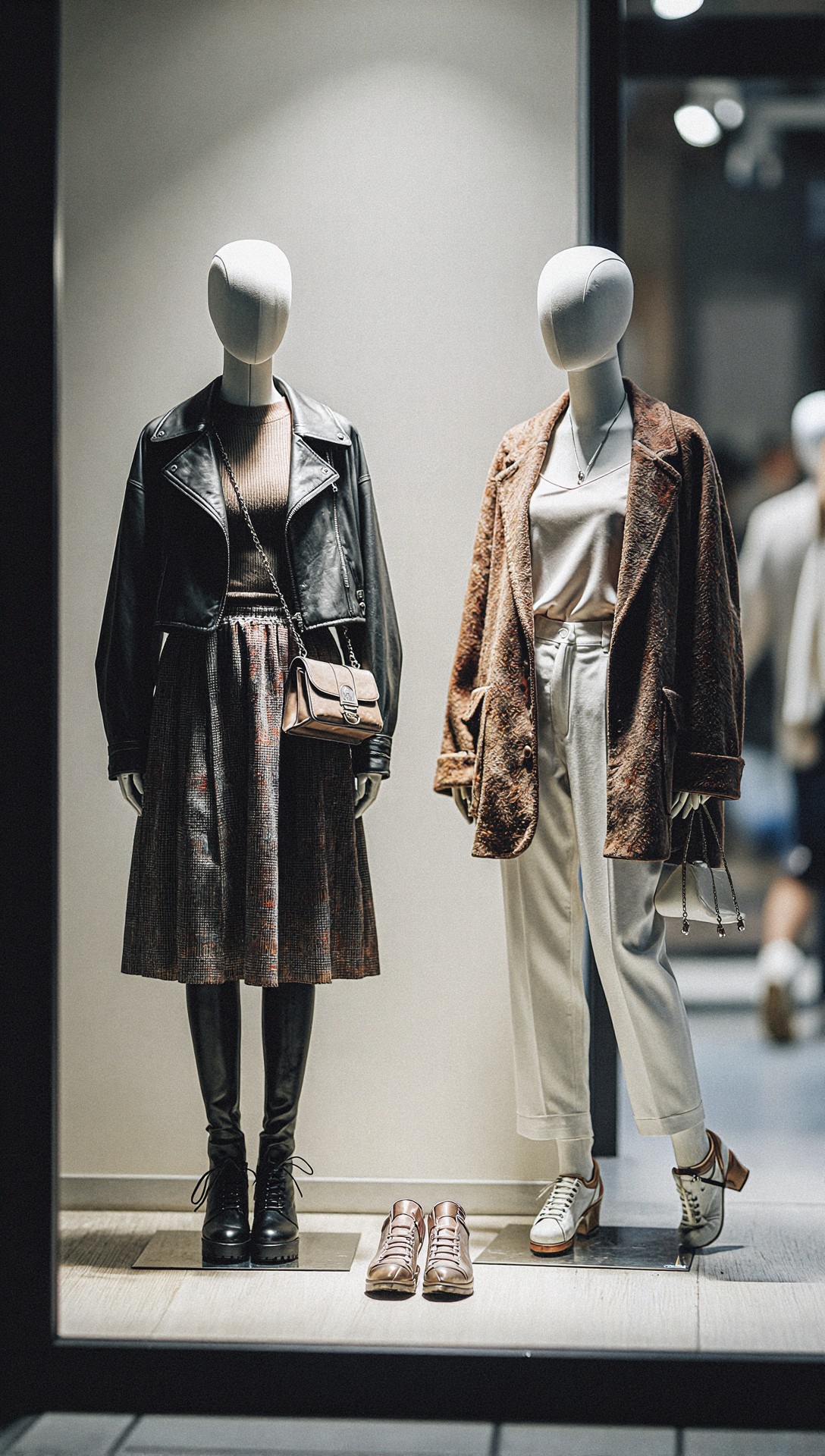
What to inspect here is product clarity. If the mannequins or garments become too humanized or surreal, the model is slipping out of merchandising mode.
When to switch models or settings
In this workflow, I would not force one model to do everything.
Use a fashion/editorial model or style-tuned checkpoint when:
- you need reliable garment layering
- accessories must read clearly
- lookbook consistency matters more than cinematic atmosphere
Use a cinematic model when:
- the travel scene itself adds meaning
- you want atmospheric light and urban depth
- you can tolerate a little less product precision
Lower stylization or increase prompt discipline when:
- hands start competing with bags or jackets
- signage becomes chaotic
- the face is over-prioritized compared with the outfit
- skirt slit, boot shape, or hem length keeps mutating
A practical split is this:
- lookbook/catalog pages: cleaner model, even lighting, direct framing
- streetwear/editorial travel: more atmospheric model, but tighter wardrobe language
- detail/product support: higher-resolution pass, then [upscale](/upscaler) only after composition is approved
If you need idea expansion before generating, [gallery](/gallery) and [articles](/articles) are useful for collecting a tighter visual reference range instead of prompting from a vague trend phrase.
Test 8: Garment detail macro for texture verification
This final test checks fabric realism. It is where fake leather, muddy rib knit, and unclear hardware become obvious, so it is a good gate before final upscale.
Topic: Japan Lookbook Outfit Garment Detail
Genre: Fashion Detail Editorial
Camera: Canon EOS R3
Lens: 85mm f/2
Lighting: directional softbox with subtle edge light
Location: studio corner styled as a modern Tokyo showroom
Style: Premium garment detail campaign
Final Prompt: garment detail macro from a Japan lookbook outfit, close framing on the waist-to-hem section of an autumn editorial look, cropped dark brown leather jacket edge, fitted cream fine-knit top, high-waisted plaid midi skirt with precise front slit, black leather belt hardware, partial view of tall boots and structured handbag, tasteful sexy fashion mood through close attention to fit and materials, modern Tokyo showroom atmosphere, premium detail photography, realistic leather grain, knit ribbing, wool plaid texture, polished metal hardware, shallow depth of field, clean luxury composition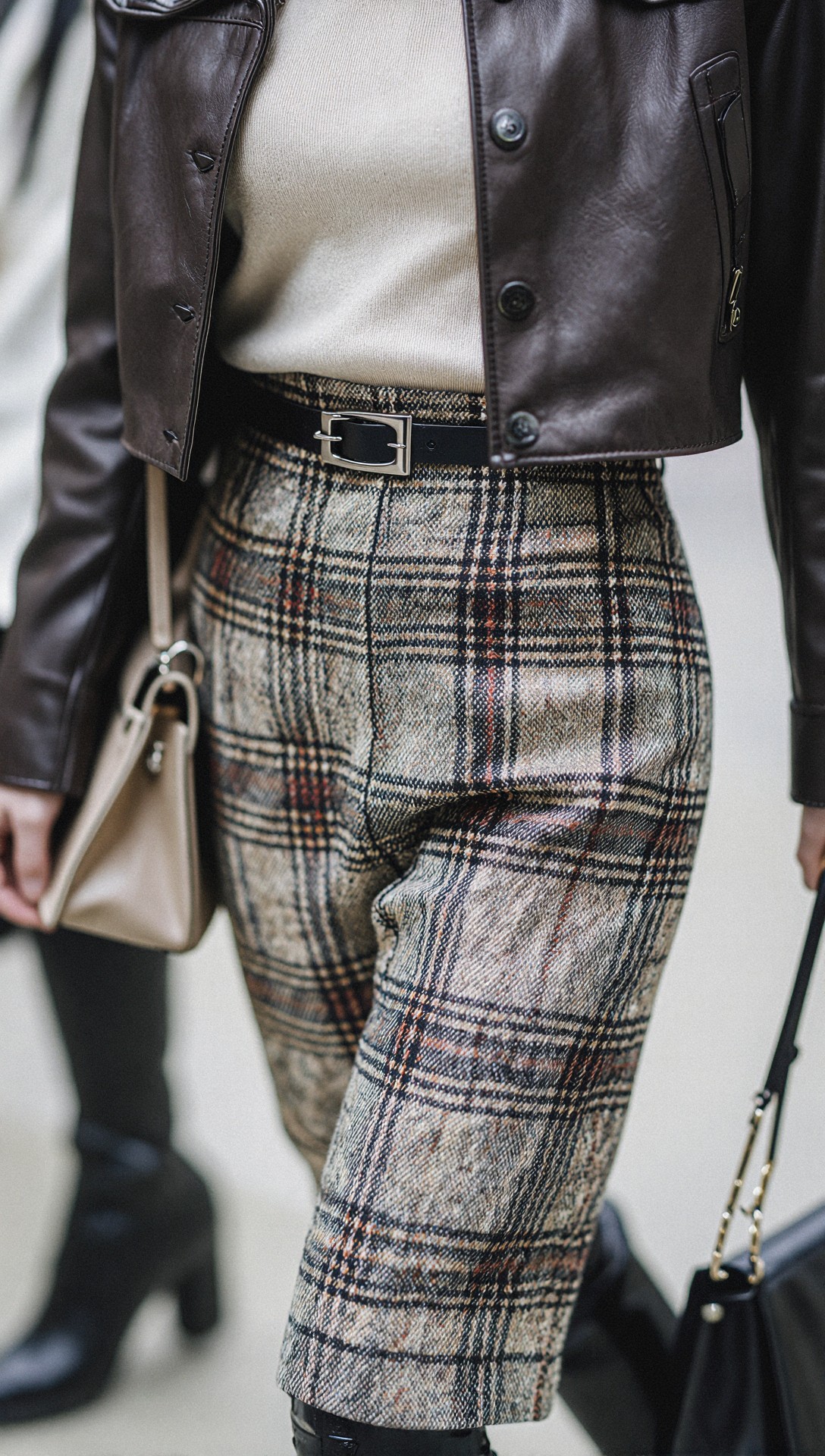
Inspect whether each fabric reads as a different material from a single glance. If leather, wool, and knit all share the same surface behavior, the model is giving you style language without actual textile control.
Practical recommendations from this test
If your goal is inspiration, not strict product accuracy, the best-performing workflow is to build the prompt in this order:
1. shot type 2. season 3. city fashion context 4. full outfit stack 5. silhouette and fit 6. accessories 7. mood cue 8. lighting and composition
A simple operator rule helped throughout this session: if the outfit cannot be sketched from the prompt in five seconds, it probably will not generate cleanly.
What I would keep doing
- Ask for full-body or head-to-toe whenever outfit logic matters.
- Use one strong sensual cue, not five.
- Anchor Tokyo through fashion spaces, not landmark tourism.
- Mention fabrics directly.
- Treat shoes and bags as required components, not optional flair.
What I would change next
I would test stronger negative constraints for:
- no portrait crop
- no oversized random layers
- no excessive signage clutter
- no mismatched footwear
I would also trial a more controlled seed workflow for repeating the same outfit across street, retail, and detail views.
FAQ
How do I prompt a Japan lookbook outfit without getting a tourist photo?
Start with a fashion shot type like "street-style full body" or "head-to-toe lookbook" and define the complete outfit stack. Then use a Tokyo fashion context like Harajuku side street or Ginza arcade instead of broad travel language.
What works best for Tokyo street fashion outfit prompts?
Mid-wide editorial framing, visible shoes, and specific layering. A 35mm to 50mm documentary look performed better in this test than overly cinematic long-lens portrait language.
How do I make Japanese minimalist fashion prompts less boring?
Add one controlled tension point: a slit skirt, satin layer, fitted knit, sharp tailoring, or strong leather accessory. Minimalism needs shape contrast, not just neutral colors.
Are editorial travel scenes good for vacation outfit ideas for women?
Yes, but only if the outfit remains the subject. Keep the city atmosphere secondary and specify torso-to-shoe visibility, otherwise the model may turn the image into destination content.
When should I upscale fashion images?
Upscale after you verify silhouette, shoe rendering, and accessory placement. Upscaling helps texture detail, but it does not reliably fix incorrect layering or broken outfit proportions.
Closing note
This workflow is best for creators who want Japan lookbook outfit inspiration with visible styling logic: streetwear capsules, minimalist city dressing, editorial travel concepts, and fashion merchandising references. It is less useful for anyone who only wants loose mood images, because the strength of this setup is precision.
Who should use it: prompt builders, fashion marketers, visual researchers, and creators assembling a Tokyo-leaning seasonal lookbook. Who should avoid it: users who prefer open-ended aesthetic prompting and do not want to specify garments in detail.
The setting that mattered most in this test was not a secret model trick. It was prompt discipline: name the shot type first, make the silhouette legible, and force the full outfit to stay visible. That single change produced the most reliable improvement across streetwear, minimalism, and editorial travel scenes.