Japanese Fashion Photography Prompts for Street Style Lookbooks: Tested Poses, Layers, and Tokyo Backdrops 한국어 요약
이 페이지는 ZView Space의 영어 원문을 한국어 검색 사용자도 이해할 수 있도록 정리한 SEO 요약입니다. 핵심은 단순한 얼굴 중심 이미지가 아니라 패션 에디토리얼, 룩북, 아웃핏, 프롬프트 테스트, 이미지 생성 워크플로우를 실제로 어떻게 구성할지입니다.
핵심 요약
- 원문 주제: Japanese Fashion Photography Prompts for Street Style Lookbooks: Tested Poses, Layers, and Tokyo Backdrops
- 목적: AI 이미지 생성에서 outfit, silhouette, fabric, pose, location, camera framing을 더 명확하게 설계합니다.
- 활용 범위: Z-Image Turbo, Krea2 Turbo, Qwen Image, Anima, SeedVR2 같은 이미지 생성 및 업스케일 워크플로우에 적용할 수 있습니다.
- SEO 관점: 제목, 설명, 이미지 alt, 프롬프트 예시가 실제 검색 의도와 맞아야 색인 가능성이 높아집니다.
한국어 사용자를 위한 체크포인트
1. 프롬프트가 얼굴 묘사에만 머물지 않고 전체 스타일과 의상 구성을 설명하는지 확인합니다. 2. 패션 이미지라면 상의, 하의, 아우터, 신발, 액세서리, 소재감, 촬영 장소를 분리해서 씁니다. 3. 생성 결과는 바로 게시하지 말고 디테일, 손, 의상 형태, 배경 일관성, 이미지 품질을 비교합니다. 4. 글 본문에는 실제 테스트 기준과 실패를 줄이는 방법이 들어가야 검색엔진에서 얇은 콘텐츠로 보일 가능성이 줄어듭니다.
원문 미리보기
If you are trying to generate Japanese fashion photography with a believable Tokyo street style look, the usual failure is not image quality. It is outfit logic. Models often look polished, but the layers do not relate to each other, the pose hides the silhoue
---
If you are trying to generate Japanese fashion photography with a believable Tokyo street-style look, the usual failure is not image quality. It is outfit logic. Models often look polished, but the layers do not relate to each other, the pose hides the silhouette, or the background reads as generic neon city instead of an actual street-fashion context. In this test, I focused on prompts that keep the styling system visible: outerwear, base layer, bottom, shoes, bag, accessories, and how those pieces sit on the body in a Tokyo setting.
I approached this as a tutorial, not a mood board. The goal was simple: produce usable lookbook and editorial images that feel close to Japanese street snaps, fashion week side-street coverage, and contemporary Tokyo retail campaigns. The strongest results came from prompts that specified shot type first, then outfit structure, then backdrop, then pose.
Quick answer
- Use a named fashion shot type first: street-style full body, three-quarter outfit editorial, lookbook, storefront display, or garment detail.
- Describe layer order and silhouette, not just garments. "Cropped leather jacket over ribbed knit mini dress with sheer tights and square-toe boots" performs better than a loose list of fashion items.
- Tokyo backgrounds work best when they are specific but not overloaded: Harajuku side street, Shibuya back alley, Daikanyama boutique frontage, Ginza night crosswalk.
- For editorial street documentary mood, 35mm to 50mm framing produced the best balance between outfit readability and environmental context.
- If the model keeps drifting toward beauty portrait behavior, force full-body visibility, walking or stance direction, and shoe exposure.
Test setup
In this test, I evaluated prompt structures for Japanese fashion photography across street style, lookbook, retail, accessory, and detail images. I prioritized:
- full outfit readability
- layered styling accuracy
- Tokyo background consistency
- pose usefulness for fashion presentation
- texture visibility for leather, denim, knits, sheer fabrics, and hardware
The most reliable workflow was built in [Prompt Lab](/promptlab), with output comparisons reviewed against gallery-style batches similar to what you would save in [Gallery](/gallery). For cleanup and edge repair on texture-heavy fashion shots, an upscaling pass like [Upscaler](/upscaler) helped most on boots, jewelry, and plaid textiles.
Why AI struggles with Tokyo street fashion prompts
The problem is that Japanese fashion photography is usually read by viewers through styling relationships, not single hero items. AI models often understand "Tokyo street fashion" as a visual mood: signs, nightlife, a fashionable person, layered clothes. But that is not enough for a usable lookbook image.
The common failures I saw were:
- too much background energy, not enough outfit separation
- fashionable garments with no clear silhouette logic
- jacket hems, bags, and skirts merging into each other
- poses that crop out footwear or hide the waistline
- generic "cyber Tokyo" lighting replacing real editorial street-snap balance
- sexy mood overemphasized through body pose while clothing detail becomes secondary
In short, the model wants to make a cool image. A lookbook prompt needs it to make a readable outfit.
The workflow that produced the most reliable result
The strongest result came from a four-part prompt order:
1. Shot type 2. Styling system 3. Tokyo context 4. Pose and image behavior
I had more consistency when the prompt opened like an editor's assignment brief: "street-style full body" or "three-quarter outfit editorial" rather than "Japanese fashion photography" alone.
Then I specified the outfit as a system:
n- bottom
- outerwear
- underlayer
- shoes
- bag
- accessories
- fabric and fit
After that, the location got a realistic anchor: Harajuku side street, Shibuya back lane, Daikanyama café frontage, Ginza storefront reflection. This reduced the generic nightlife drift.
Finally, I added pose behavior that helps clothing read clearly: walking mid-stride, standing with one knee relaxed, hands adjusting lapel, turning slightly to show side seam, seated curb pose with boots visible.
What worked best by use case
| Use case | Best framing | Why it worked | Main risk | |---|---|---|---| | Street snap outfit | 35mm full body | Keeps full silhouette and city context together | Background clutter | | Lookbook editorial | 50mm head-to-toe | Cleaner garment proportions | Can lose documentary feel | | Tokyo night fashion | 40mm three-quarter | Good for layers and signage balance | Legs/shoes may crop too high | | Accessories focus | 85mm close crop | Better texture and hardware detail | Outfit context weakens | | Storefront campaign | 35mm to 50mm | Combines styling with retail context | Reflections can distort limbs |
Prompt examples with inspection notes
1) Harajuku full-body street snap for visible layering
This first test checks whether the model can hold a sexy editorial mood without sacrificing garment logic. I used a full-body street-style setup so the boots, hemline, jacket crop, and bag placement all stay visible.
Topic: Japanese street-style full-body look in Harajuku
Genre: Street Style
Camera: Canon EOS R5
Lens: RF 35mm f/1.8
Lighting: Overcast diffusion
Location: Harajuku side street with boutique signage, tiled sidewalk, subdued pedestrian traffic
Style: Editorial street documentary
Final Prompt: street-style full body Japanese fashion photography, confident woman in a cropped black leather jacket over a ribbed charcoal body-conscious mini dress, sheer black tights, square-toe knee-high leather boots, compact shoulder bag with silver hardware, layered chain necklace, slim sunglasses pushed up on head, visible silhouette and garment fit, standing mid-stride with one leg forward and one hand adjusting jacket lapel, full outfit clearly readable from head to toe, Harajuku side street with boutique storefronts and muted signage, documentary fashion week street snap energy, tasteful sexy editorial mood, realistic fabric texture, clean proportions, city background softly active but not distracting, Canon EOS R5 look, 35mm environmental framing, natural magazine color grading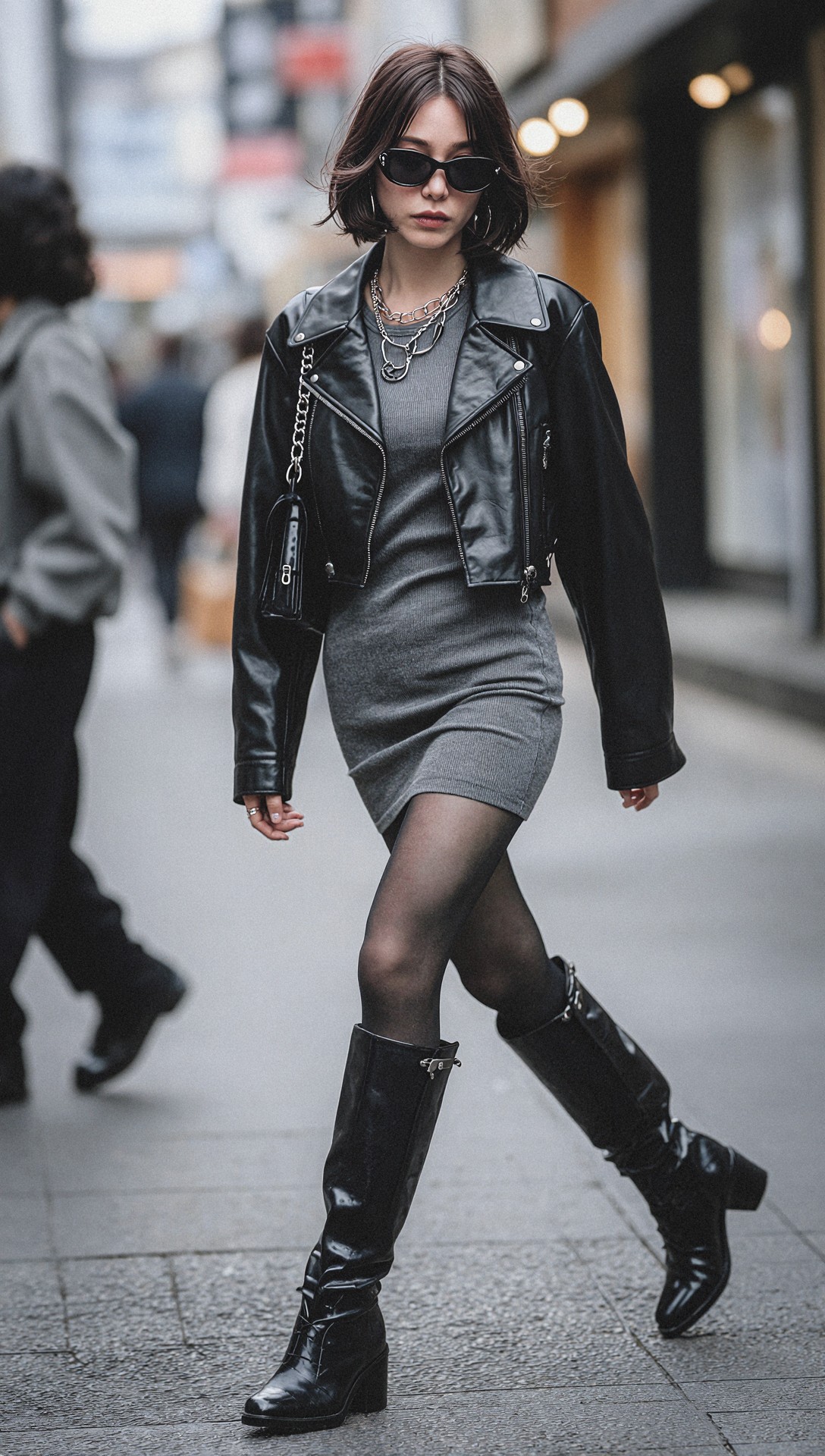
Inspect whether the leather jacket stays cropped and distinct from the dress waistline. The weak outputs usually merge tights and boots or lose the shoulder-bag strap against the jacket.
2) Shibuya three-quarter outfit editorial for pose control
This test checks how well the model handles a body-conscious silhouette when the crop is tighter. Three-quarter framing helps if your model keeps drifting into awkward full-body leg shapes.
Topic: Tokyo night three-quarter outfit editorial in Shibuya
Genre: Fashion Editorial
Camera: Sony A7R V
Lens: 50mm f/2
Lighting: Neon rim light with soft storefront spill
Location: Shibuya back alley near fashion retail, wet pavement, restrained signage glow
Style: Contemporary Japanese magazine editorial
Final Prompt: Japanese fashion photography, three-quarter outfit editorial in Shibuya at night, fitted burgundy faux-fur cropped jacket over a black satin camisole, high-waisted tailored mini skirt, sheer tights, pointed ankle boots, small top-handle bag, crystal earrings, confident sensual stance with hips angled and shoulders squared, one hand holding bag low to keep the outfit visible, frame from mid-thigh upward but enough room to read skirt fit and jacket proportion, wet pavement reflections, Tokyo retail back alley atmosphere, tasteful sexy street editorial, controlled neon edge light, crisp textile detail, stylish but believable magazine composition, Sony A7R V realism, 50mm fashion framing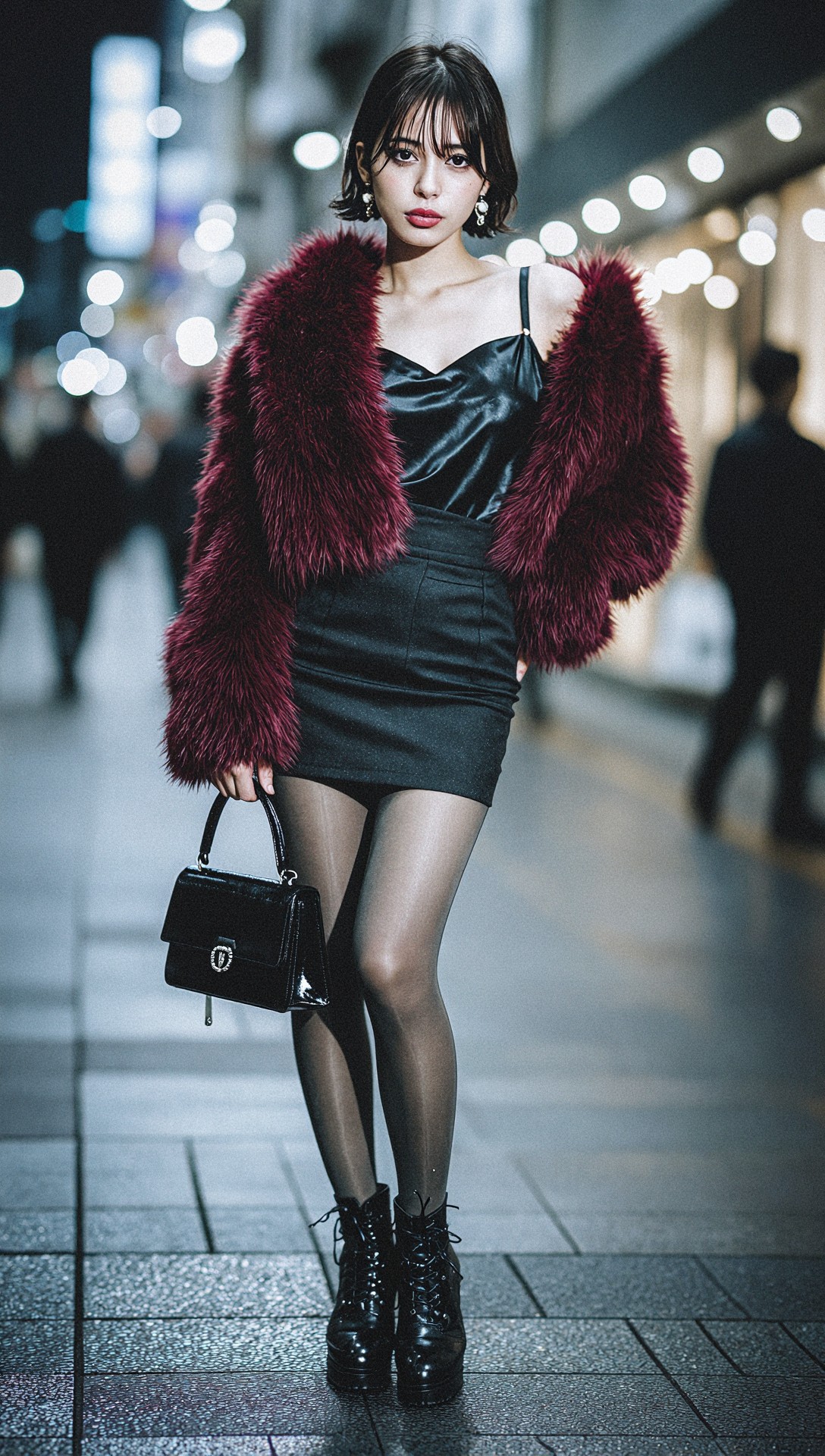
Check whether the satin top remains visible under the jacket and whether the mini skirt waistband reads cleanly. On weaker generations, neon lighting tends to flatten the burgundy jacket texture.
3) Daikanyama head-to-toe lookbook for cleaner outfit reading
This setup checks a common solution when busy Tokyo backgrounds keep stealing attention: move to a quieter fashion neighborhood and use lookbook language. It loses some raw street energy but gains consistency.
Topic: Head-to-toe Japanese lookbook shot in Daikanyama
Genre: Fashion Editorial
Camera: Nikon Z8
Lens: 40mm f/2
Lighting: Soft morning daylight
Location: Daikanyama boutique frontage with clean concrete wall and minimal café exterior
Style: Modern Japan lookbook
Final Prompt: head-to-toe lookbook image for Japanese fashion photography, fitted ivory trench coat worn open over a taupe knit bodysuit, charcoal pleated mini skirt, sheer espresso tights, heeled loafers, structured mini bag, slim leather belt, delicate gold jewelry, full silhouette visible with clear separation between coat, bodysuit, and skirt, model standing slightly turned to show layering and side profile, poised confident expression, tasteful sexy fashion direction, Daikanyama boutique frontage with quiet luxury retail atmosphere, clean editorial composition, realistic textile folds, premium lookbook clarity, Nikon Z8 detail, 40mm balanced perspective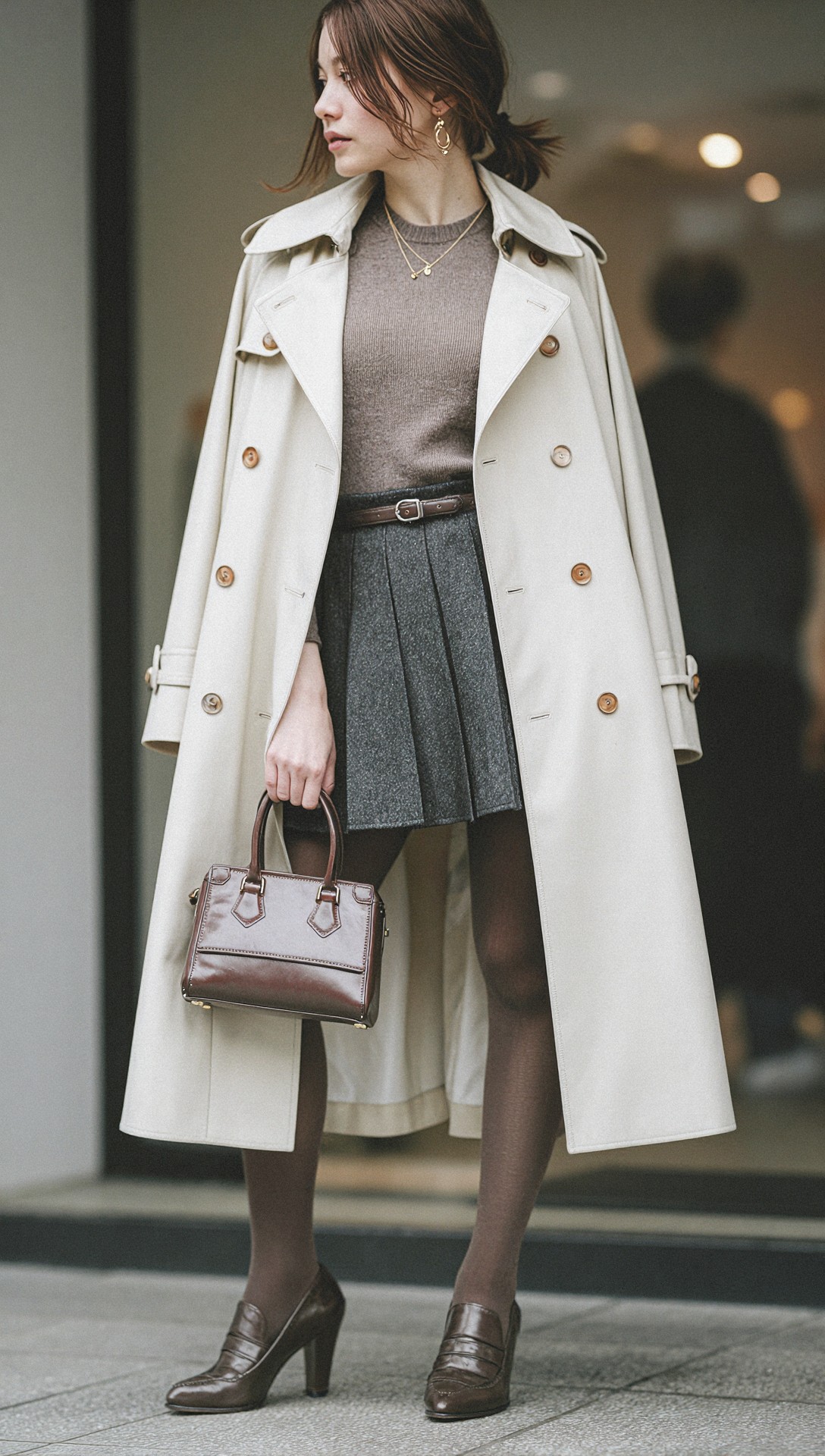
Inspect the hem relationships: coat length versus skirt length is the main test here. The strongest result is the one where the coat opening frames the torso instead of swallowing it.
4) Ginza crosswalk editorial for movement and luxury styling
This prompt tests motion. Street-style prompts often improve when the pose includes a simple walking action, but only if the camera framing still shows the complete silhouette.
Topic: Ginza luxury street-style walking look
Genre: Lifestyle Fashion Editorial
Camera: Fujifilm GFX100S
Lens: GF 45mm f/2.8
Lighting: Cloudy daylight with storefront reflections
Location: Ginza crosswalk near luxury storefronts, polished stone, sparse traffic
Style: Refined luxury campaign with documentary realism
Final Prompt: Japanese fashion photography street-style walking shot in Ginza, body-conscious camel wrap coat cinched over a black fine-knit turtleneck, short leather skirt, opaque stockings, high-heel knee boots, oversized clutch, sleek belt, geometric earrings, confident walking pose with coat opening slightly to reveal the layered outfit, full body visible and footwear unobstructed, luxury storefront reflections and polished city stone surfaces, restrained Tokyo elegance, sexy but sophisticated editorial mood, premium fabric detail, realistic movement in hem and coat belt, balanced environmental composition, Fujifilm GFX100S medium-format depth, 45mm fashion documentary perspective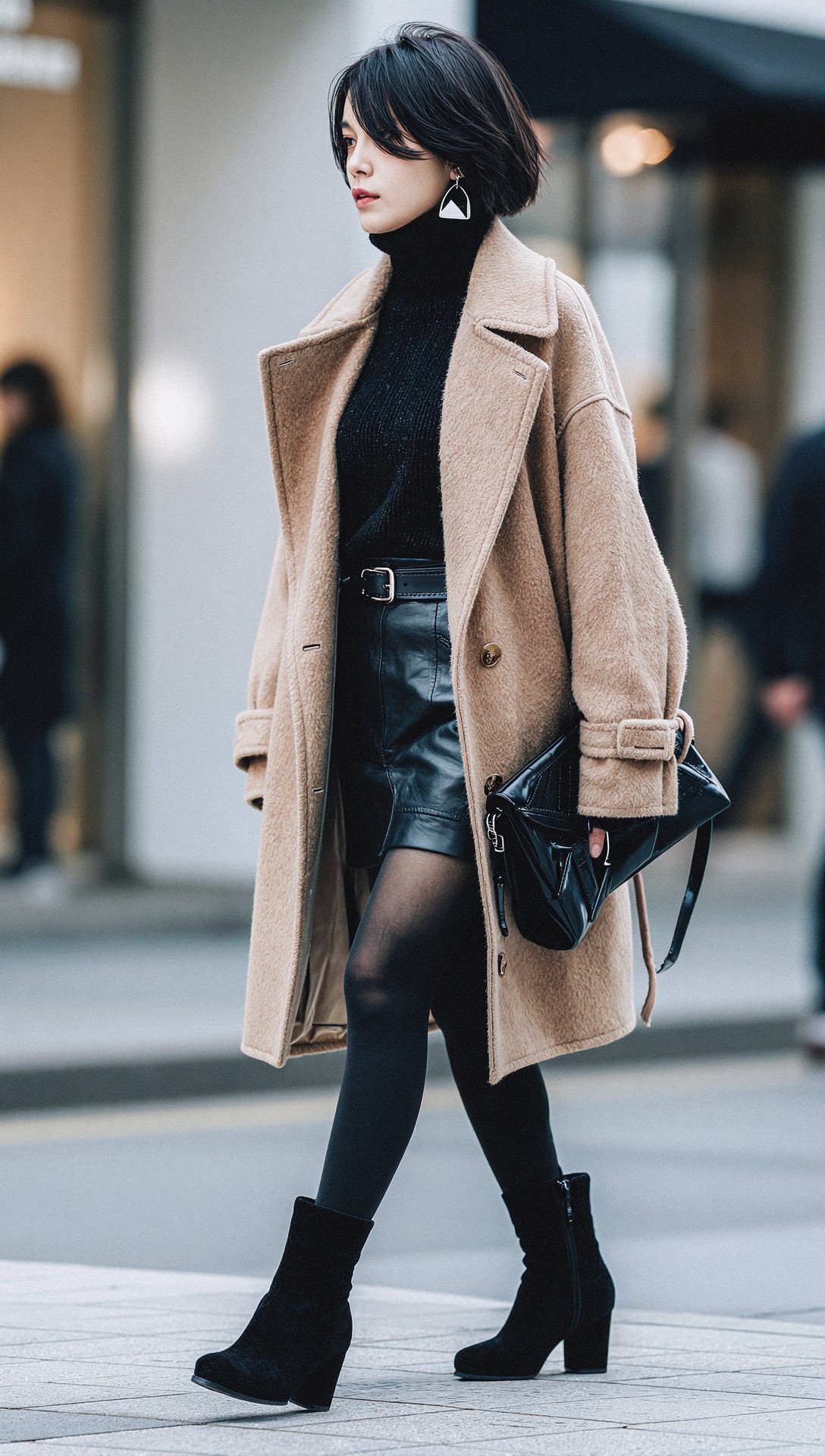
Look at the leg motion and boot symmetry. A good output keeps one stride natural without tangling the coat belt, clutch, and skirt into one shape.
What these tests showed about strengths
The best prompts shared a few traits:
Specific shot types improved reliability
When the prompt named the image role clearly, outputs got easier to direct. "Street-style full body" and "head-to-toe lookbook" were much stronger than broad fashion language.
Layer order mattered more than adjective density
I got better outfit control from construction details than from mood words. "Cropped jacket over knit dress with sheer tights and knee boots" consistently outperformed long aesthetic descriptors.
Tokyo worked best as a fashion district, not a cyber setting
Harajuku, Daikanyama, Ginza, and Shibuya each signal a different wardrobe logic. That helped the model settle into a believable styling context. The result felt more like Japan lookbook photography and less like generic neon travel art.
Sexy mood can work if you tie it to silhouette, not exposure
This article's mood direction was sexy, but in the strongest outputs that came through body-conscious fit, leg line, heel choice, and confident posture. The weak outputs interpreted sexy as random skin exposure or beauty-campaign posing.
5) Omotesando storefront display for retail context
This test moves away from pure model imagery and checks whether the styling can survive inside a retail-facing visual. It is useful for campaign pages, shop headers, or fashion landing visuals.
Topic: Omotesando storefront display with styled mannequin and live-model fashion context
Genre: Product Editorial
Camera: Leica SL2-S
Lens: 35mm f/2
Lighting: Soft indoor window light with controlled practical highlights
Location: Omotesando boutique window display, minimal luxury retail interior
Style: High-end retail campaign
Final Prompt: Japanese fashion photography storefront display in Omotesando, luxury boutique window scene featuring a confident model beside a styled mannequin, matching outfit story with fitted cream blazer, black corset-inspired knit top, tailored shorts, sheer tights, patent slingback heels, compact handbag, layered bracelets, full styling system visible as a retail concept, elegant sexy tone without overt posing, model standing in profile with one hand on blazer waist to reveal shape, boutique glass reflections subtle and controlled, premium visual merchandising, clean urban luxury atmosphere, realistic fabrics and display textures, Leica SL2-S editorial realism, 35mm retail storytelling frame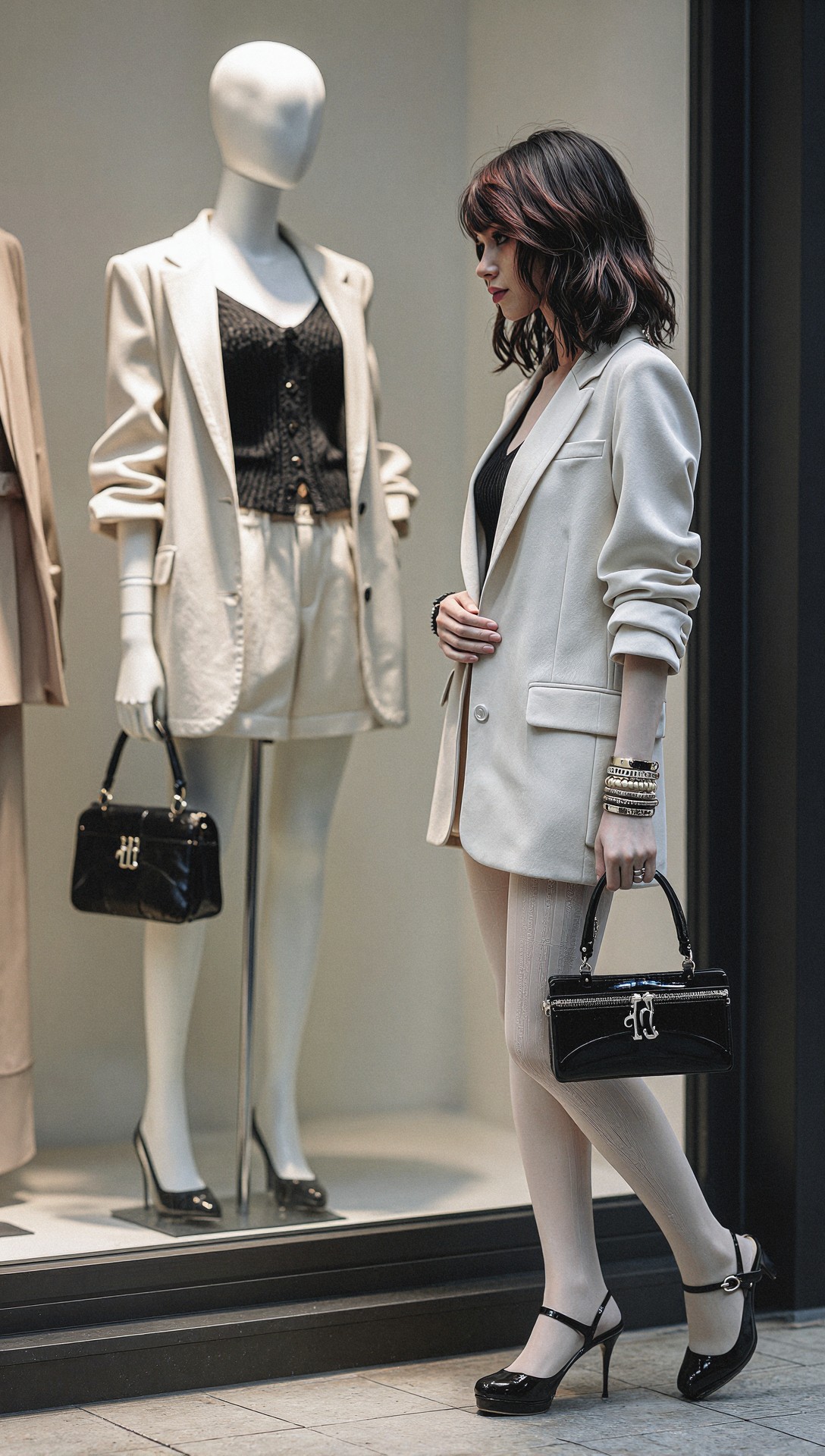
Inspect reflections first. The best generations keep the window readable without adding phantom limbs or duplicate accessories in the glass.
6) Accessories close-up for bag, jewelry, and hardware clarity
This prompt checks whether the model can preserve the fashion story when you crop tighter. It is useful after you already have a full-body hero image and need supporting assets.
Topic: Tokyo street-fashion accessories close-up
Genre: Luxury Campaign
Camera: Canon EOS R3
Lens: 85mm f/1.8
Lighting: Softbox key light mixed with ambient street glow
Location: Shinjuku fashion arcade entrance at dusk
Style: Luxury accessories editorial
Final Prompt: Japanese fashion photography accessories close-up, cropped from waist to upper thigh focusing on a black croc-embossed mini bag, silver chain belt, stacked rings, sheer tights, and the edge of a fitted blazer dress, body-conscious styling with tasteful sexy editorial attitude, one hand gripping the bag handle while the other adjusts the blazer hem, Shinjuku fashion arcade entrance softly blurred in background, mixed studio-soft and urban ambient light, premium hardware sparkle, sharp material definition, rich black tonal separation, Canon EOS R3 look, 85mm close fashion crop, polished magazine accessory image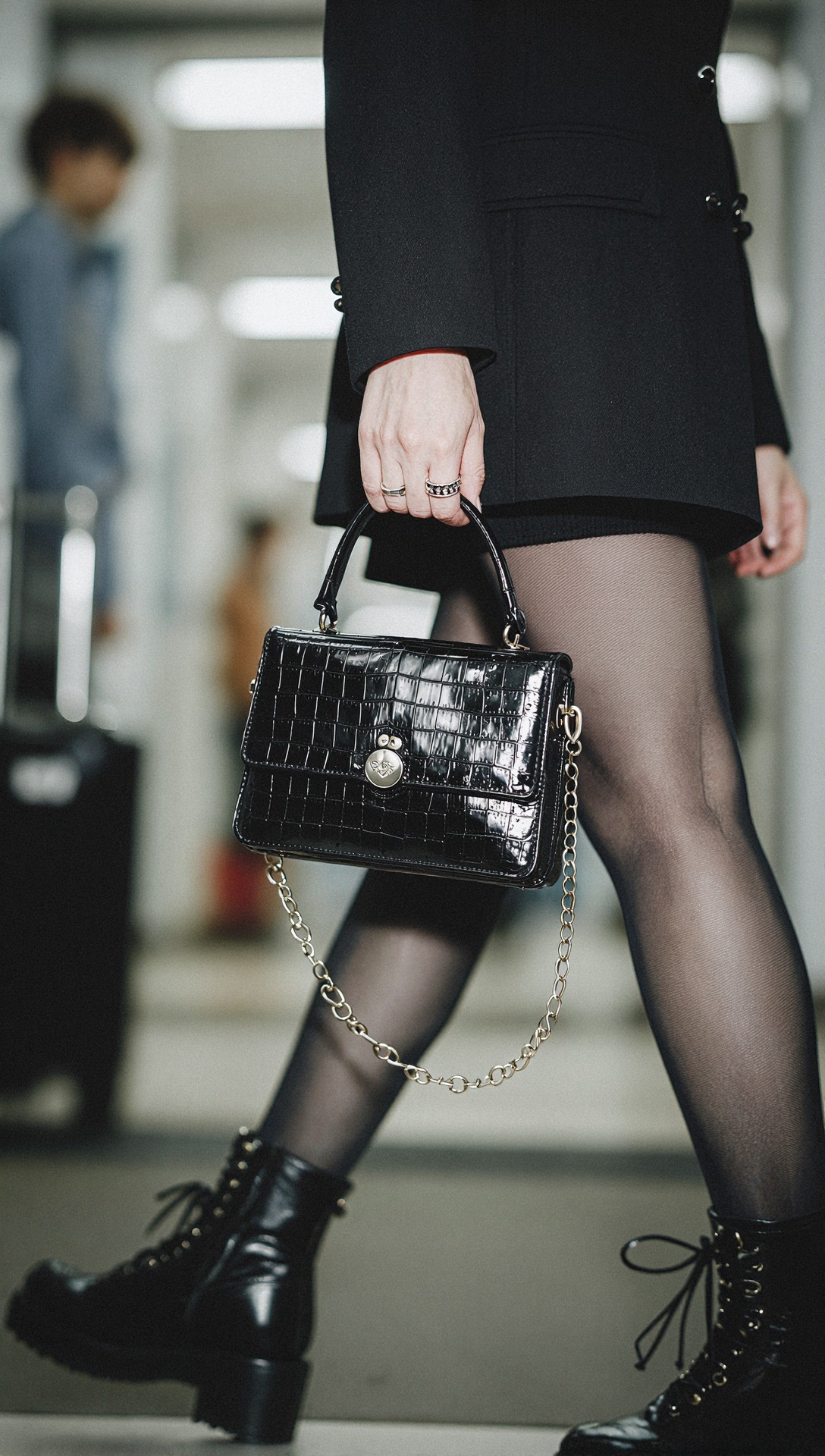
Check whether the hardware remains distinct from the bag texture. On lower-quality outputs, chain belt links often melt into the blazer seam or the hand pose becomes unusable.
Failure risks and common mistakes to avoid
1. Prompting "Tokyo street fashion" without naming the shot plan
This usually creates an atmospheric city image with fashionable clothing, but not a usable editorial frame. Always define whether you need a street snap, lookbook, storefront, or detail image.
2. Listing too many garments without hierarchy
When outerwear, top, skirt, tights, jewelry, scarf, hat, and bag all compete equally, the model starts collapsing edges. Prioritize the hero layers.
3. Overloading neon language
If every line mentions glow, signage, rain, reflections, nightlife, and cyber color, the clothing becomes secondary. In this test, one controlled lighting idea was enough.
4. Forgetting shoes
Street-style lookbooks fail fast when shoes disappear behind crops, cars, or shadows. If footwear matters, say "full body visible and footwear unobstructed."
5. Using portrait lenses for outfit-first images
An 85mm prompt can be useful for accessories or controlled garment detail, but it is less reliable for full Tokyo street context. For Japanese fashion photography centered on styling systems, 35mm to 50mm was stronger.
6. Letting sexy mood override styling clarity
If the prompt leans too hard on sensual body language, the generator may convert the image into glamour posing. Keep the mood attached to silhouette, tailoring, leg line, and confidence.
7) Garment detail macro for texture and construction
This test checks whether supporting detail shots can match the same styling story as the hero image. It is especially useful for leather, knit ribbing, buttons, pleats, and hosiery texture.
Topic: Japanese fashion garment detail macro
Genre: Fashion Editorial
Camera: Panasonic Lumix S1R
Lens: 85mm f/2 macro-style close focus
Lighting: Window side light with negative fill
Location: Tokyo studio corner styled like a minimalist showroom
Style: Clean commercial look
Final Prompt: garment detail macro for Japanese fashion photography, close crop of a fitted black leather mini skirt waistband, ribbed knit top tucked cleanly, slim belt with brushed silver buckle, sheer tights texture, edge of cropped blazer sleeve with covered buttons, styling-focused image showing fabric construction and body-conscious fit, tasteful sensual editorial angle, Tokyo minimalist showroom mood, side light emphasizing texture and seam quality, premium commercial clarity, Panasonic Lumix S1R precision, 85mm close detail composition, neutral luxury palette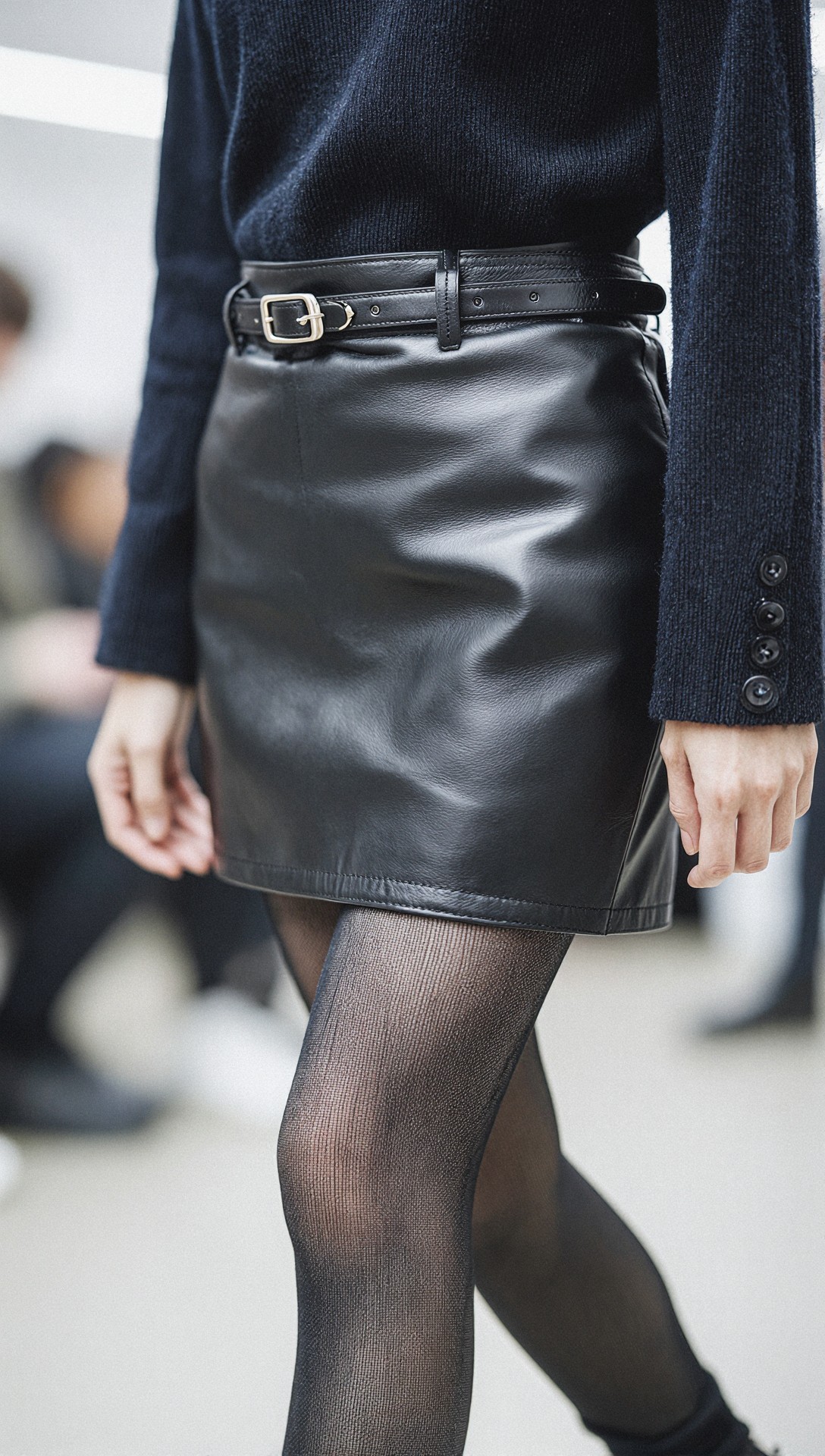
Inspect seam accuracy and texture transitions between leather, knit, and hosiery. This prompt succeeds when each fabric reads differently without turning plastic.
A practical workflow you can reuse
If I wanted repeatable Japanese fashion photography outputs again, I would use this sequence:
1. Build the hero full-body street-style image first. 2. Generate a cleaner lookbook variation of the same outfit. 3. Add one movement shot for editorial energy. 4. Create one retail or storefront variation if the image is meant for brand context. 5. Finish with accessory and garment detail support images.
This produces a usable set instead of a single attractive image. If you want to iterate faster, start in [Create](/create), then move promising prompts into [Prompt Lab](/promptlab) for controlled revisions.
8) Mood-board collage for style lock before hero generation
This last prompt is not a final campaign image. It is a planning tool that helps lock the visual vocabulary before generating your main lookbook shots.
Topic: Japanese fashion editorial mood-board collage for Tokyo street lookbook
Genre: Mood-board Collage
Camera: Mixed editorial capture aesthetic
Lens: 24-70mm fashion documentary range
Lighting: Mixed overcast street light, boutique interior light, and flash test frames
Location: Harajuku, Shibuya, Daikanyama, Ginza visual references arranged as a fashion board
Style: Editorial concept development board
Final Prompt: mood-board collage for Japanese fashion photography, editorial planning board showing Tokyo street-style references, full-body outfit snapshots, cropped accessory details, fabric swatches, boutique façade fragments, wet pavement textures, heeled boots, structured mini bags, leather jackets, fitted knit dresses, pleated skirts, sheer tights, silver jewelry, sexy but tasteful styling direction, color palette of black, charcoal, burgundy, cream, and metallic silver, documentary fashion magazine layout, pinned and layered composition, useful pre-production visual guide for a Japan lookbook and street snap editorial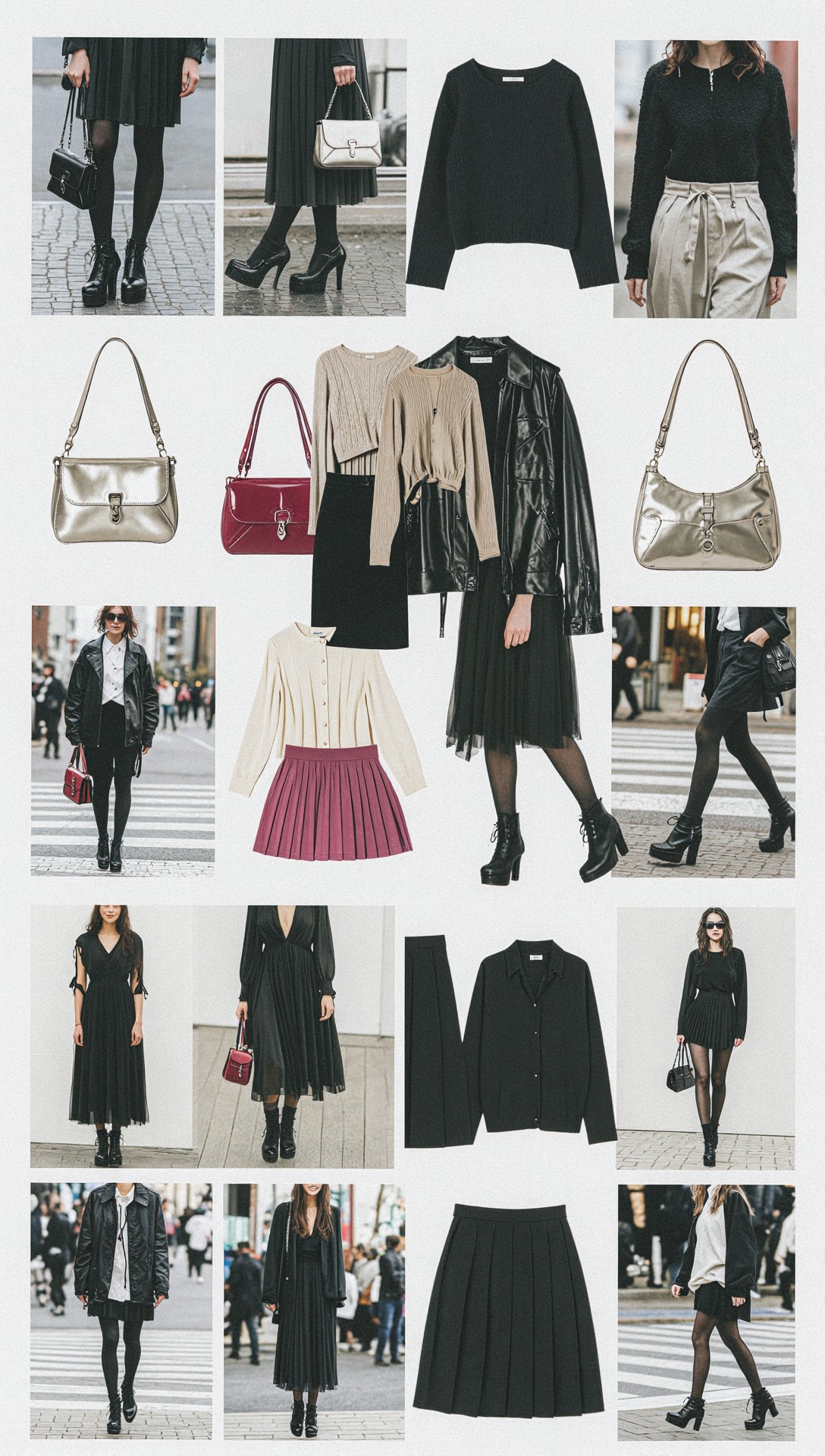
Inspect whether the collage keeps a coherent color and styling system. If this image drifts into random scrapbook aesthetics, your later hero shots will usually drift too.
Compact checklist for better Japanese fashion photography prompts
Use this before you hit generate:
- [ ] Did I name the shot type first?
- [ ] Is the full outfit logic visible: outerwear, top, bottom, shoes, bag, accessories?
- [ ] Did I describe fit and silhouette, not just garment names?
- [ ] Is the Tokyo setting specific enough to guide styling?
- [ ] Did I choose a focal length that fits the image purpose?
- [ ] Is the pose helping the clothes read clearly?
- [ ] Did I control the sexy mood so it stays editorial, not glamour-only?
- [ ] Did I reduce background clutter and avoid generic cyberpunk overload?
FAQ
What is the best prompt format for Japanese fashion photography?
A shot-type-first format worked best in this test. Start with the image role, then define outfit structure, then Tokyo location, then pose and lighting.
Which Tokyo backdrop works best for street-style lookbooks?
Harajuku and Daikanyama were the most reliable for outfit readability. Shibuya is useful for nightlife editorial mood, but it creates more background competition.
What lens wording helps with Tokyo street fashion prompts?
For outfit-first images, 35mm, 40mm, and 50mm gave the best balance of styling visibility and environmental context. Use 85mm mainly for accessories and garment details.
How do I make AI fashion images look sexier without losing the outfit?
Describe body-conscious tailoring, leg line, heel shape, fitted layers, and confident posture. Avoid vague sensual wording that pushes the model toward beauty portrait or glamour framing.
Why do my street-style prompts keep hiding shoes or bags?
Because the model defaults to portrait composition unless you force fashion-readability language. Add "full body visible," "footwear unobstructed," and a pose that leaves the bag strap and hemline clear.
Final recommendation
If your goal is a usable Japanese fashion photography workflow for Tokyo street-style lookbooks, use this method when you care about garments more than facial close-ups. It is best for editors, brand builders, lookbook designers, and prompt users who need outfit logic to survive generation.
I would avoid this workflow if you mainly want expressive beauty portraits or abstract neon city art. It is deliberately restrictive because that is what made the fashion results stronger.
The single prompt detail that mattered most in this test was shot type plus silhouette visibility. Once I clearly told the model what kind of fashion image it was making and how the outfit should read on the body, the Tokyo background, pose, and mood became much easier to control. For more fashion prompt experiments and comparison-style tests, the closest next step is browsing related workflows in [Articles](/articles) and refining variants in [Tools](/tools).