If you want a Japanese streetwear lookbook that actually reads like a Tokyo street snap instead of a generic fashion portrait, prompt structure matters more than model choice. In this test, the strongest results came from prompts that locked the full outfit system first: oversized outer layer, visible denim shape, specific footwear, and a crossbody bag placed clearly in frame. The weaker prompts looked fashionable at a glance, but they lost the styling logic in cropped framing, vague layering, or inconsistent bag placement.
Quick answer
- Start with a named fashion shot type so the model knows how much of the outfit to show.
- For Japanese streetwear, specify silhouette before color: oversized jacket, wide denim, stacked hem, chunky sneaker or leather shoe, crossbody bag.
- If you want a usable lookbook image, ask for head-to-toe visibility and a real Tokyo setting like Harajuku, Shibuya, or a clean side street.
- Editorial mood works best when the prompt says clean urban editorial and keeps the person secondary to the outfit.
- The easiest failure to spot is when the model nails the jacket but drops the footwear or hides the bag behind the body.
Verdict first: the formula that worked best
For this tutorial, I compared two prompt workflows for building a Japanese streetwear lookbook.
- Option A: outfit-first prompt formula
- Option B: mood-first editorial prompt formula
Option A produced more reliable full-body outfit reads. It was better for oversized layers, denim proportions, footwear visibility, and crossbody bag placement.
Option B gave moodier, cooler images on the first pass, but it drifted faster. I saw more cropped legs, less consistent shoe rendering, and more scenes where the bag became a vague accessory instead of part of the outfit system.
If your goal is a beginner-friendly Japan lookbook workflow you can repeat across multiple looks, start with Option A and only add extra mood styling after the outfit is already stable.
What was tested
I tested prompts against the same style goal: clean urban editorial images inspired by Japanese streetwear, with a tasteful sexy mood carried by confident silhouette and styling rather than exposed skin.
The comparison criteria were simple:
1. Silhouette clarity — can you read the full outfit shape quickly? 2. Layer fidelity — do oversized layers sit correctly over tops and denim? 3. Footwear accuracy — are the shoes visible and proportionate? 4. Bag logic — does the crossbody bag sit naturally on the body? 5. Tokyo context — does the image feel like street snap outfit coverage, not random urban fashion? 6. Repeatability — can the formula produce a set, not just one lucky frame?
I also checked whether the prompts held up across use cases in [PromptLab](/promptlab), gallery-style iteration in [Gallery](/gallery), and full prompt drafting workflows in [Create](/create).
The comparison checklist
| Test area | Option A: Outfit-first formula | Option B: Mood-first formula | |---|---|---| | Full-body consistency | Strong | Medium | | Oversized layer control | Strong | Medium | | Denim shape accuracy | Strong | Medium | | Footwear visibility | Strong | Weak to medium | | Crossbody bag placement | Strong | Medium | | Editorial atmosphere | Medium to strong | Strong | | Tokyo street fashion feel | Strong when location is named | Strong when the scene lands | | Beginner friendliness | High | Medium |
Option A strengths: outfit-first prompts gave the cleanest Japanese streetwear lookbook results
The strongest prompt structure began with the shot type, then locked the outfit in a top-to-bottom order. That sounds basic, but it fixed most of the common failures.
The winning pattern looked like this:
- shot type
- outerwear
- inner layer
- denim cut
- footwear
- crossbody bag
- accessories
- Tokyo setting
- editorial framing and lighting
This formula kept the image focused on styling instead of drifting into portrait mode.
Why this worked
In this test, models handled oversized layers better when the prompt specified both the garment and the relationship between pieces. “Oversized bomber over fitted rib tank with wide-leg washed denim” performed better than “Japanese streetwear layered look.”
It also helped to describe where the bag sat: high crossbody on chest, low sling across torso, or resting at hip. Without that, the bag often floated, merged with the jacket, or vanished behind an arm.
Test 1: full-body street snap for oversized outerwear
This first test checks whether the model can hold a complete streetwear silhouette with visible jacket volume, denim line, and shoes in one frame.
Topic: Japanese streetwear lookbook with oversized bomber, wide denim, crossbody bag
Genre: Street Style
Camera: Fujifilm GFX100S
Lens: 45mm f/2.8
Lighting: Overcast diffusion
Location: Harajuku side street with clean storefronts, muted signage, pedestrian crosswalk textures
Style: Clean urban editorial
Final Prompt: street-style full body fashion image for a Japanese streetwear lookbook, confident model shown head to toe with the styling system clearly visible, oversized charcoal bomber jacket layered over a fitted black rib tank, low-slung faded wide-leg denim with soft stacking at the hem, chunky black leather sneakers, compact nylon crossbody bag worn high across the chest, silver chain and slim sunglasses, tasteful sexy mood through body-conscious top balanced by oversized outerwear, standing on a Harajuku side street with minimal traffic and clean storefront lines, relaxed editorial pose with one foot forward and jacket slightly open, neutral cool palette with denim texture and matte nylon detail, documentary fashion framing, realistic outfit proportions, strong garment separation, Tokyo street fashion atmosphere, Fujifilm GFX100S look, 45mm lens, crisp textile detail, magazine-ready composition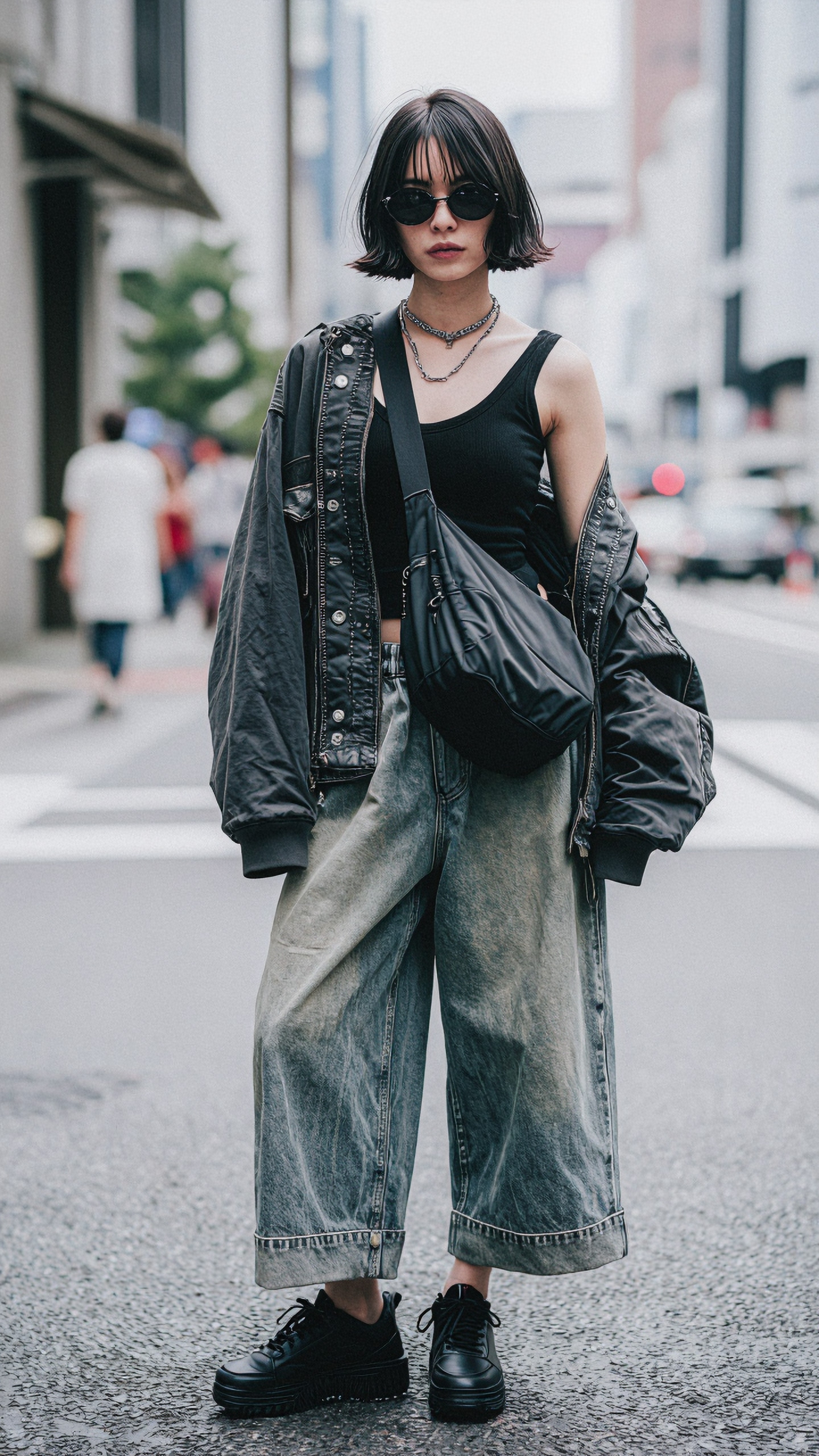
Inspect whether the bomber keeps its volume without swallowing the torso. The key tell is the footwear: if the shoes are cropped or softened into blobs, the prompt needs stronger head-to-toe framing language.
Test 2: lookbook framing for denim shape control
This test is meant to expose whether the denim cut reads as Japanese streetwear rather than generic blue jeans.
Topic: Japanese streetwear lookbook focused on oversized layer and washed denim silhouette
Genre: Fashion Editorial
Camera: Canon EOS R5
Lens: 50mm f/1.8
Lighting: Soft daylight bounce
Location: Minimal concrete alley in Shibuya with pale walls and subtle urban texture
Style: Tokyo editorial lookbook
Final Prompt: head-to-toe lookbook frame for a Japanese streetwear lookbook, full outfit visibility with emphasis on silhouette and layering, cropped oversized olive field jacket over a fitted white stretch top, heavily washed indigo wide-leg denim with a long straight break and stacked hem, black square-toe leather shoes, slim technical crossbody bag resting at the hip, layered rings and narrow belt, confident clean pose against a minimal Shibuya concrete alley, tasteful sensual editorial energy through fitted inner layer and relaxed stance, neutral expression, soft daylight with gentle bounce, clear separation between jacket, top, denim, and shoes, fashion catalog precision with urban realism, Canon EOS R5, 50mm lens, detailed textile grain, controlled color, modern Japan lookbook mood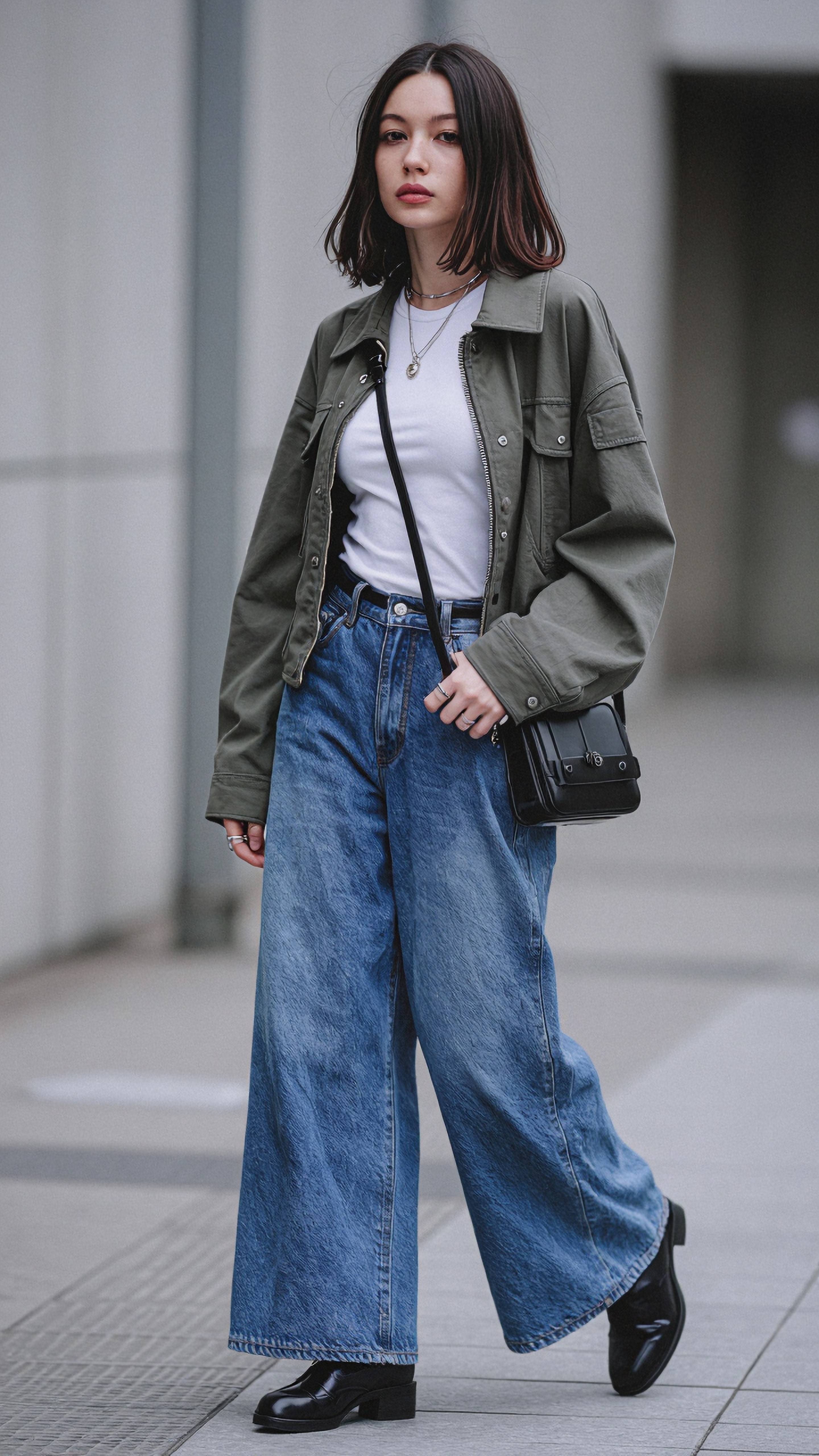
What to inspect: the denim should have a deliberate shape, not taper randomly. If the hem floats above the shoe or collapses into an undefined puddle, the model is losing outfit logic.
Option B strengths: mood-first prompts gave stronger atmosphere and magazine energy
The alternative workflow started with editorial mood, scene, and attitude first, then added clothing details. This worked better when I wanted a more stylized Tokyo street fashion image with cinematic color and stronger campaign energy.
The problem is that this setup was less dependable for shopping-style clarity. It often produced better first impressions, but weaker garment accounting.
When mood-first prompts are useful
Use this workflow when you want:
- a campaign-like urban streetwear image
- stronger attitude and scene presence
- a looser street snap feel
- collage, storefront, or accessory-led images where strict full-body read matters less
Test 3: editorial three-quarter frame with stronger mood
This test checks how much styling survives when the image shifts toward atmosphere and away from strict catalog coverage.
Topic: Tokyo street fashion editorial with oversized layers and crossbody styling
Genre: Fashion Editorial
Camera: Sony A7R V
Lens: 40mm f/2.5
Lighting: Late afternoon directional light with soft shadow
Location: Shibuya backstreet with vending machines, tiled walls, reflective glass
Style: Contemporary magazine campaign
Final Prompt: three-quarter outfit editorial for a Japanese streetwear lookbook, Tokyo street fashion mood with visible styling logic, oversized black blazer layered over a body-skimming slate camisole, relaxed dark denim with a slightly slouched waist, sleek retro runner sneakers, soft leather crossbody bag worn diagonally across the torso, sharp sunglasses and small hoop earrings, confident sensual styling without explicit exposure, leaning against a tiled Shibuya wall with one knee bent, late afternoon light creating clean urban contrast, cool gray and ink-blue palette, documentary-meets-campaign composition, emphasis on fabric drape, bag placement, and attitude, Sony A7R V look, 40mm lens, premium editorial finish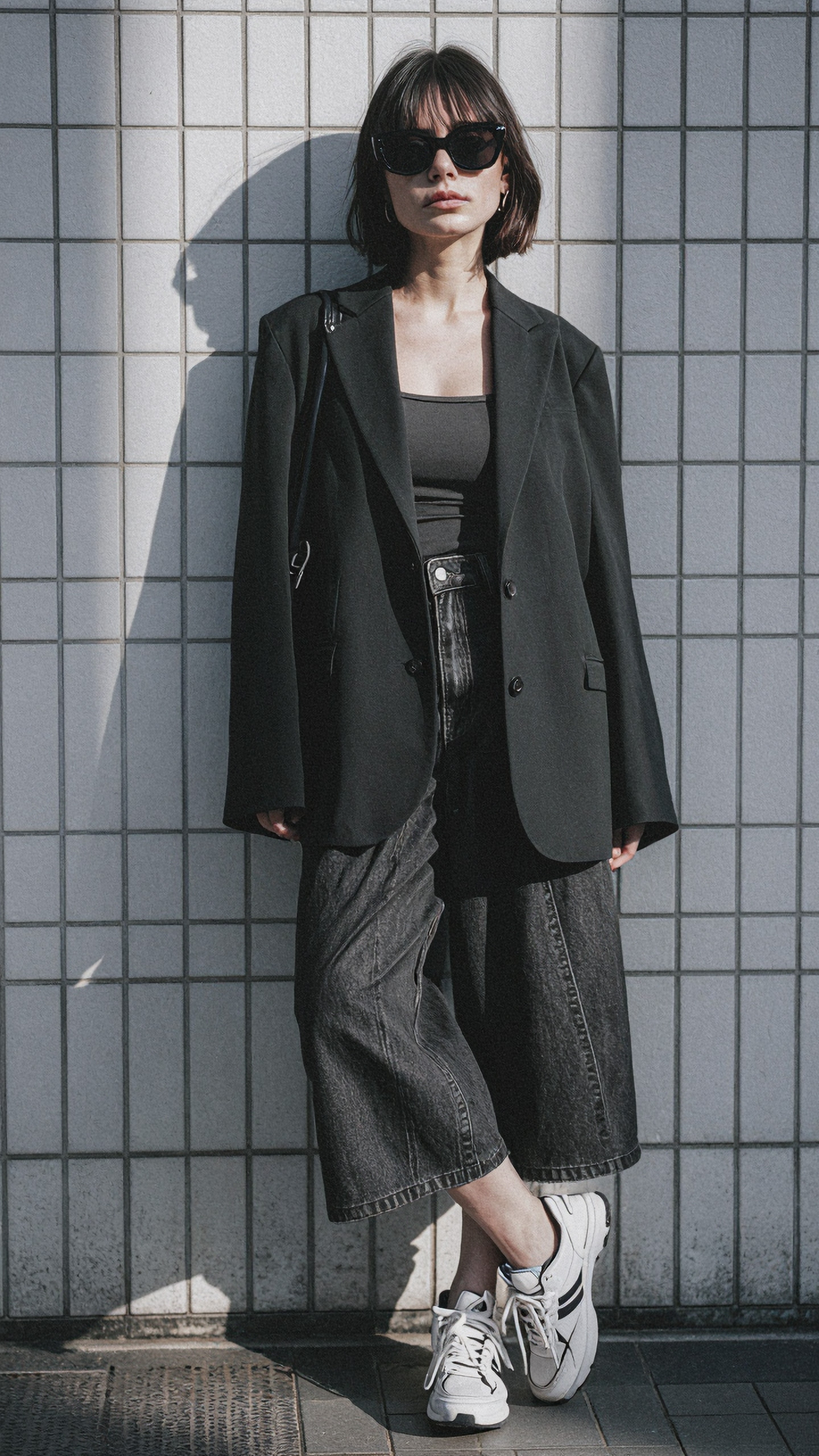
Inspect whether the lower leg and shoes still feel intentional. In this workflow, the weak point is usually the hand-to-bag interaction or a crop that makes the jeans less readable.
Test 4: mood-board collage for style lock before final lookbook shots
This is useful when you want to establish a coherent fashion direction before generating individual outfit frames.
Topic: Japanese streetwear lookbook mood board with denim, oversized layers, footwear, crossbody bags
Genre: Mood-Board Collage
Camera: Mixed editorial capture aesthetic
Lens: 24-70mm documentary fashion range
Lighting: Soft studio scan plus ambient city light mix
Location: Tokyo fashion reference board with Harajuku and Shibuya visual cues
Style: Editorial concept board
Final Prompt: mood-board collage for a Japanese streetwear lookbook, multiple panels showing oversized nylon jackets, washed wide-leg denim, chunky leather sneakers, slim crossbody bags, metallic accessories, Tokyo street references, storefront textures, concrete alleys, transit signage, lookbook tearsheets, fabric swatches, body-conscious base layers styled under oversized outerwear, clean urban editorial direction with tasteful sexy mood, cool neutrals with faded indigo and black, polished magazine concept board layout, highly legible outfit planning references, modern Tokyo street fashion art direction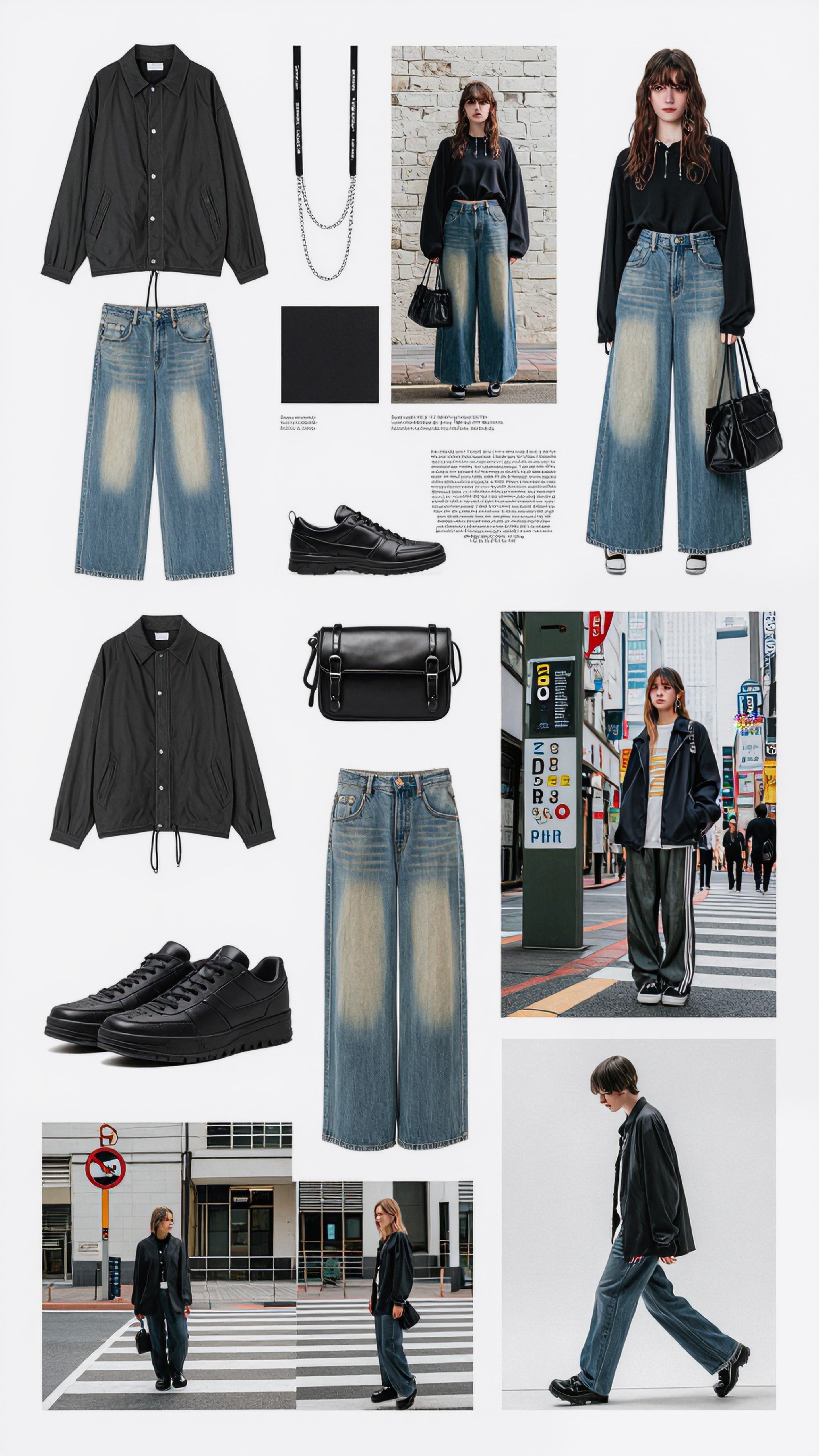
Inspect whether the collage reinforces the same silhouette language across panels. If one panel drifts into luxury tailoring and another into skatewear, your final lookbook set will feel inconsistent.
Side-by-side tradeoffs you should expect
Here is the practical difference after repeated runs.
Where Option A wins
- Cleaner head-to-toe lookbook coverage
- Better denim and footwear visibility
- More stable bag placement
- Easier for beginners to troubleshoot
Where Option B wins
- Better editorial mood on the first try
- More natural-looking street energy
- Stronger for campaign, collage, and scene-led frames
The weak points
Option A can look a bit stiff if the location and body language are too plain.
Option B can produce fashionable images that are hard to use in a real Japanese streetwear lookbook because one key product category disappears. Most often that is footwear, then the bag.
Prompt ingredients that changed results the most
These details consistently improved image quality:
1. Named shot type
“Street-style full body” and “head-to-toe lookbook” outperformed generic “fashion photo.”
2. Garment order
Outerwear to footwear worked better than color palette first.
3. Specific denim language
Use washed indigo wide-leg denim, stacked hem, slouched waist, straight break, not just “jeans.”
4. Bag position
Say high across chest, resting at hip, or diagonal torso sling.
5. Tokyo anchor
Harajuku, Shibuya, clean side street, storefront, alley, station-adjacent sidewalk. This helped the images feel like street snap outfit coverage instead of generic city fashion.
Prompt examples that expose the difference
Test 5: catalog grid page for outfit comparison
This prompt checks whether the model can keep multiple looks coherent inside one visual system. It is good for comparing denim and footwear across a set.
Topic: Japanese streetwear lookbook catalog page with multiple outfit formulas
Genre: Fashion Catalog
Camera: Nikon Z8
Lens: 35mm f/2
Lighting: Soft studio daylight simulation
Location: Minimal editorial layout with Tokyo-inspired captions and white negative space
Style: Clean commercial lookbook
Final Prompt: catalog grid page for a Japanese streetwear lookbook, four coordinated head-to-toe outfit panels with consistent model scale and clear garment visibility, look one oversized nylon jacket with fitted tank and faded wide-leg denim, look two cropped blazer with washed straight denim and square-toe shoes, look three slouchy zip hoodie layered under technical coat with loose denim and retro sneakers, look four oversized striped shirt under short trench with black denim and compact crossbody bag, each outfit featuring visible footwear and bag placement, tasteful sexy editorial energy through fitted base layers and confident posture, crisp white layout with subtle Tokyo street fashion captions, high garment clarity, strong retail-editorial hybrid styling, Nikon Z8, 35mm fashion catalog precision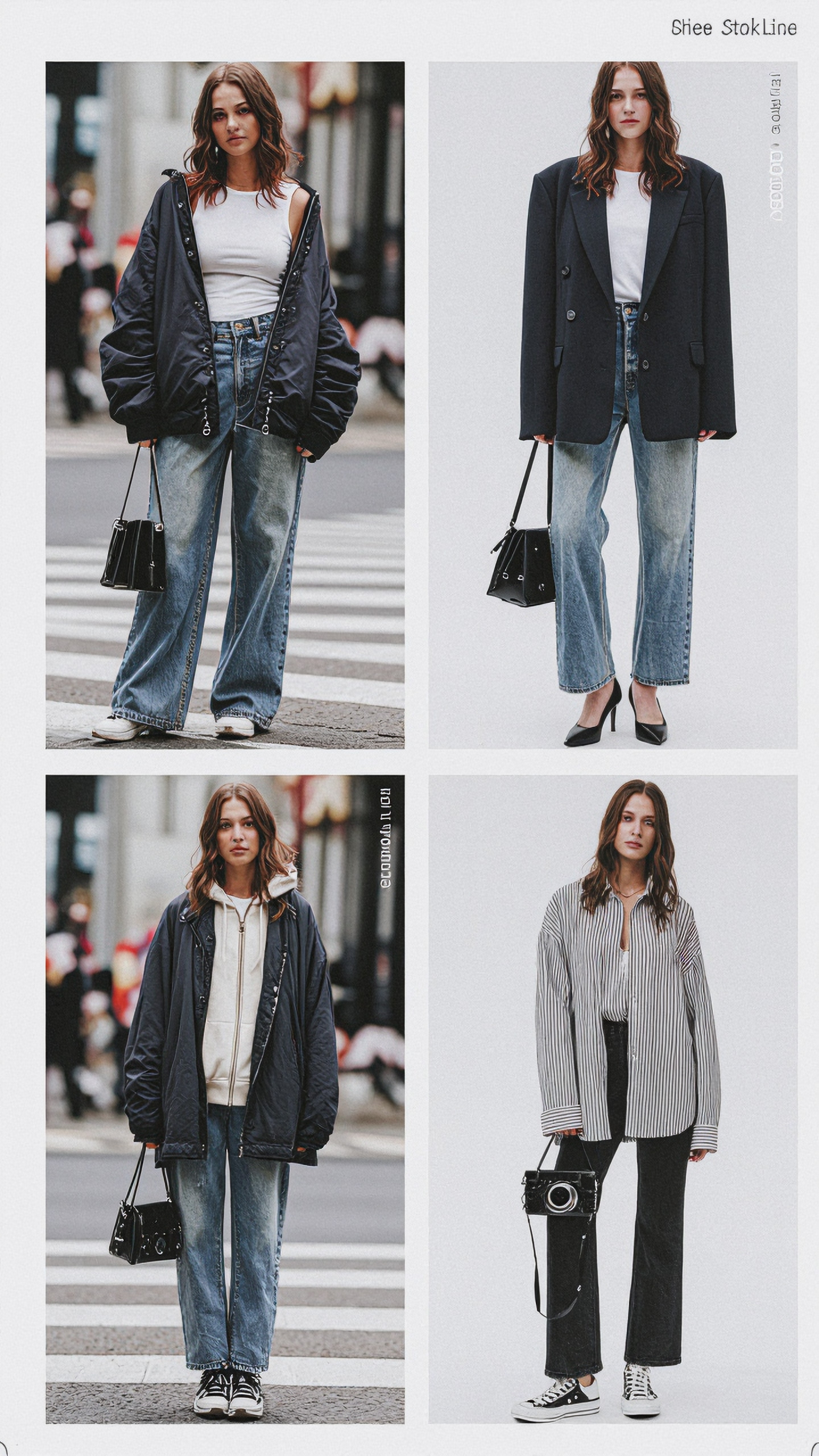
Inspect consistency between panels. The common failure is one strong outfit and three weaker ones with different proportions, which tells you the prompt needs tighter repeated structure.
Test 6: accessories close-up for crossbody bag and shoe material quality
This test is not for the whole look. It isolates the accessories so you can check whether your chosen bag and footwear language is actually rendering cleanly.
Topic: Japanese streetwear accessories close-up with crossbody bag and footwear
Genre: Product Editorial
Camera: Leica SL2-S
Lens: 85mm f/2
Lighting: Controlled softbox key with subtle shadow edge
Location: Concrete stair landing in Tokyo retail district
Style: Luxury-meets-street accessory editorial
Final Prompt: accessories close-up for a Japanese streetwear lookbook, frame focused on lower torso to feet with compact technical crossbody bag strap crossing an oversized jacket, washed denim texture, black leather sneaker-shoe hybrid with thick sole, silver hardware, ribbed socks, concrete stair setting in a Tokyo retail district, clean urban editorial styling, sensual confidence through stance and fit rather than skin exposure, crisp material contrast between nylon, denim, leather, and metal, premium accessory storytelling, Leica SL2-S look, 85mm lens, controlled product detail, fashion magazine crop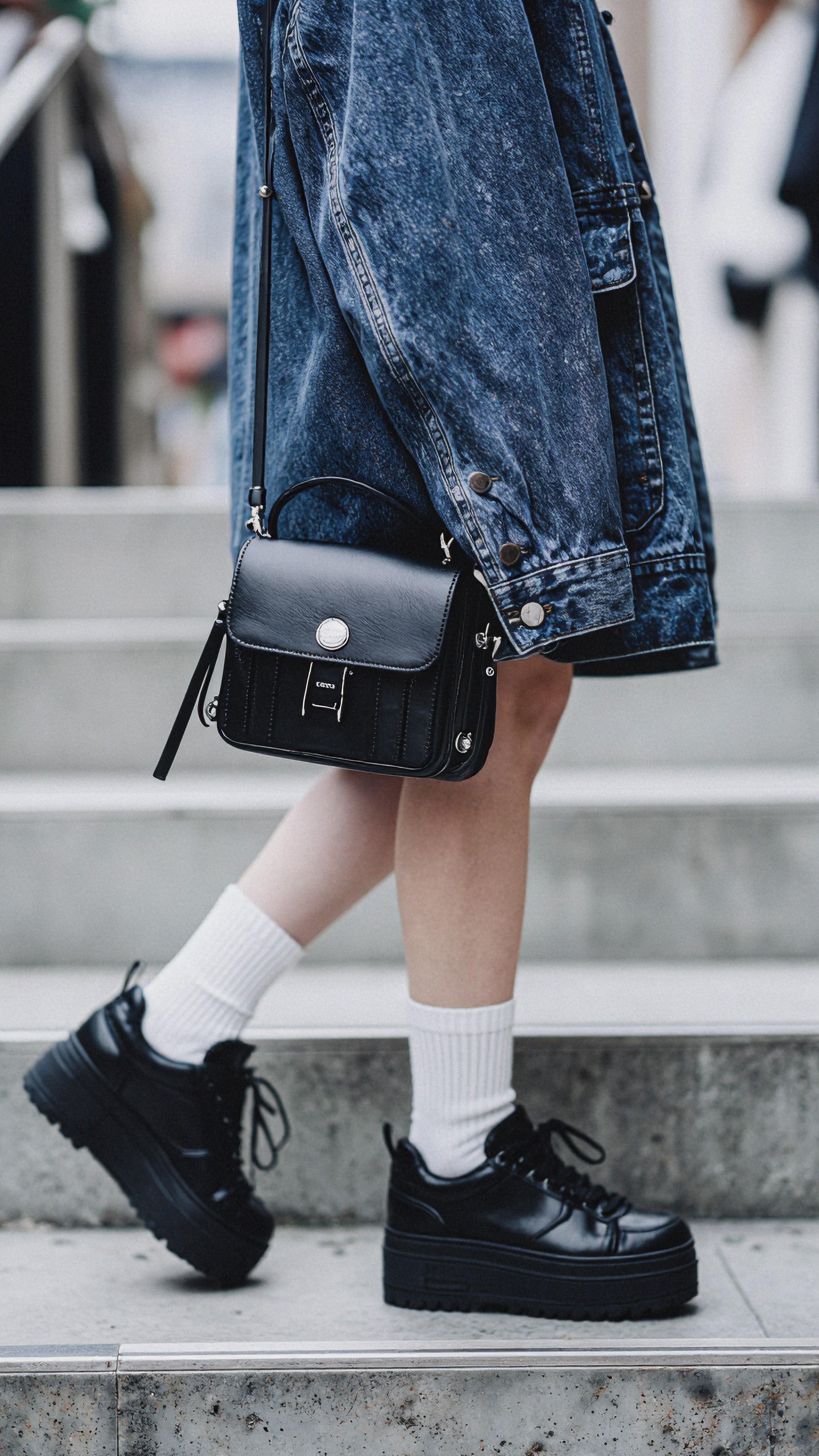
Inspect the strap geometry and shoe construction. If the strap clips into the jacket or the sole shape looks melted, the model needs simpler accessory wording or a dedicated detail pass.
Where failures showed up most often
These were the repeated misses in this test:
- Bag disappears behind the arm when pose language is too dramatic.
- Shoes get cropped in three-quarter shots unless you explicitly call for full lower-body visibility.
- Denim loses shape when too many adjectives compete: distressed, washed, oversized, pleated, stacked, puddled, faded all at once.
- Streetwear turns costume-like if you overload accessories without grounding them in clean editorial framing.
A good beginner rule: only push one styling variable hard per image. If the outerwear is very oversized, keep the bag simple. If the denim has a strong wash and shape, use quieter footwear.
Test 7: storefront display for styling logic without a visible face focus
This checks whether the outfit works as merchandising, which is a good way to test whether your prompt really describes clothes or just mood.
Topic: Japanese streetwear storefront display with oversized layers, denim, footwear, crossbody bag
Genre: Retail Editorial
Camera: Panasonic Lumix S1R
Lens: 35mm f/2.8
Lighting: Evening window light with interior practicals
Location: Harajuku boutique storefront display
Style: Modern Tokyo retail campaign
Final Prompt: storefront display image for a Japanese streetwear lookbook, boutique window presentation in Harajuku featuring a styled mannequin or minimally posed model with oversized cropped bomber, fitted charcoal knit top, faded wide-leg denim, black leather sneakers, compact crossbody bag draped across the torso, silver accessories, tasteful sexy mood expressed through sleek body line and confident styling, clean urban editorial merchandising, glass reflections, warm interior practical lights, cool evening street tones outside, strong outfit readability from head to toe, premium Tokyo retail atmosphere, Panasonic Lumix S1R, 35mm lens, realistic fabric detail and visual merchandising balance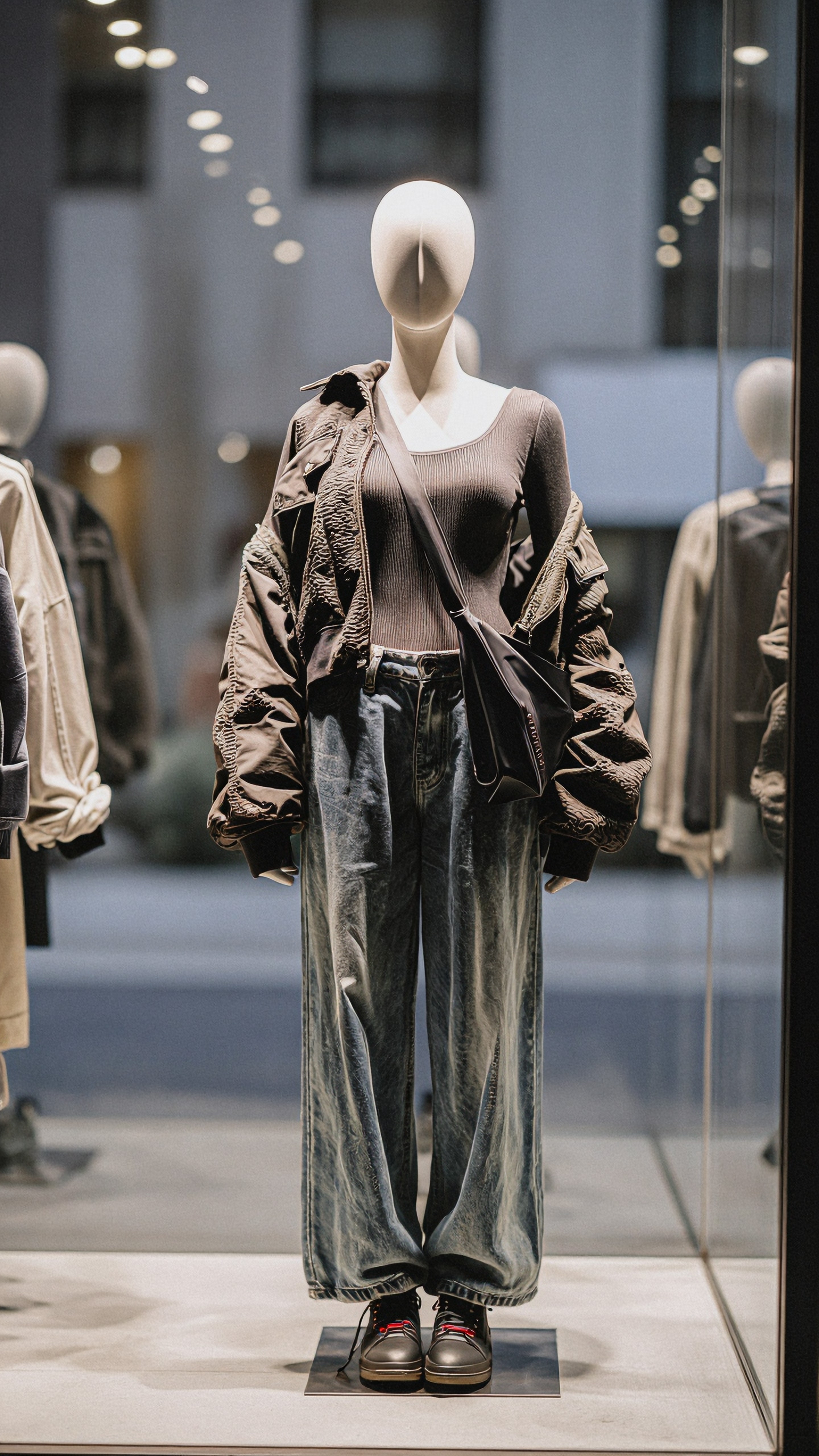
Inspect whether the outfit still reads clearly through reflections and retail layering. If the look collapses in a storefront scene, your prompt is relying too much on model pose and not enough on garment description.
Test 8: garment detail macro for layered texture control
This final test checks the small details that make Japanese streetwear prompts feel intentional: seam lines, denim grain, hardware, and layered fabric contrast.
Topic: Japanese streetwear garment detail showing layered fabrics and hardware
Genre: Fashion Detail Editorial
Camera: Hasselblad X2D 100C
Lens: 90mm f/2.5
Lighting: Soft side light with gentle contrast
Location: Minimal studio corner with concrete and brushed metal surfaces
Style: High-end editorial texture study
Final Prompt: garment detail macro for a Japanese streetwear lookbook, close framing on oversized matte nylon jacket hem layered over a fitted rib top, faded indigo denim waistband and pleat area, compact crossbody bag with metal buckle and technical strap, hand resting naturally near pocket, subtle glimpse of black leather footwear at the bottom edge, tasteful sensual fashion mood through body-aware fit and styling precision, cool neutral palette, concrete and brushed metal studio corner, premium textile and hardware rendering, Hasselblad X2D 100C, 90mm lens, sharp seam detail, refined editorial texture study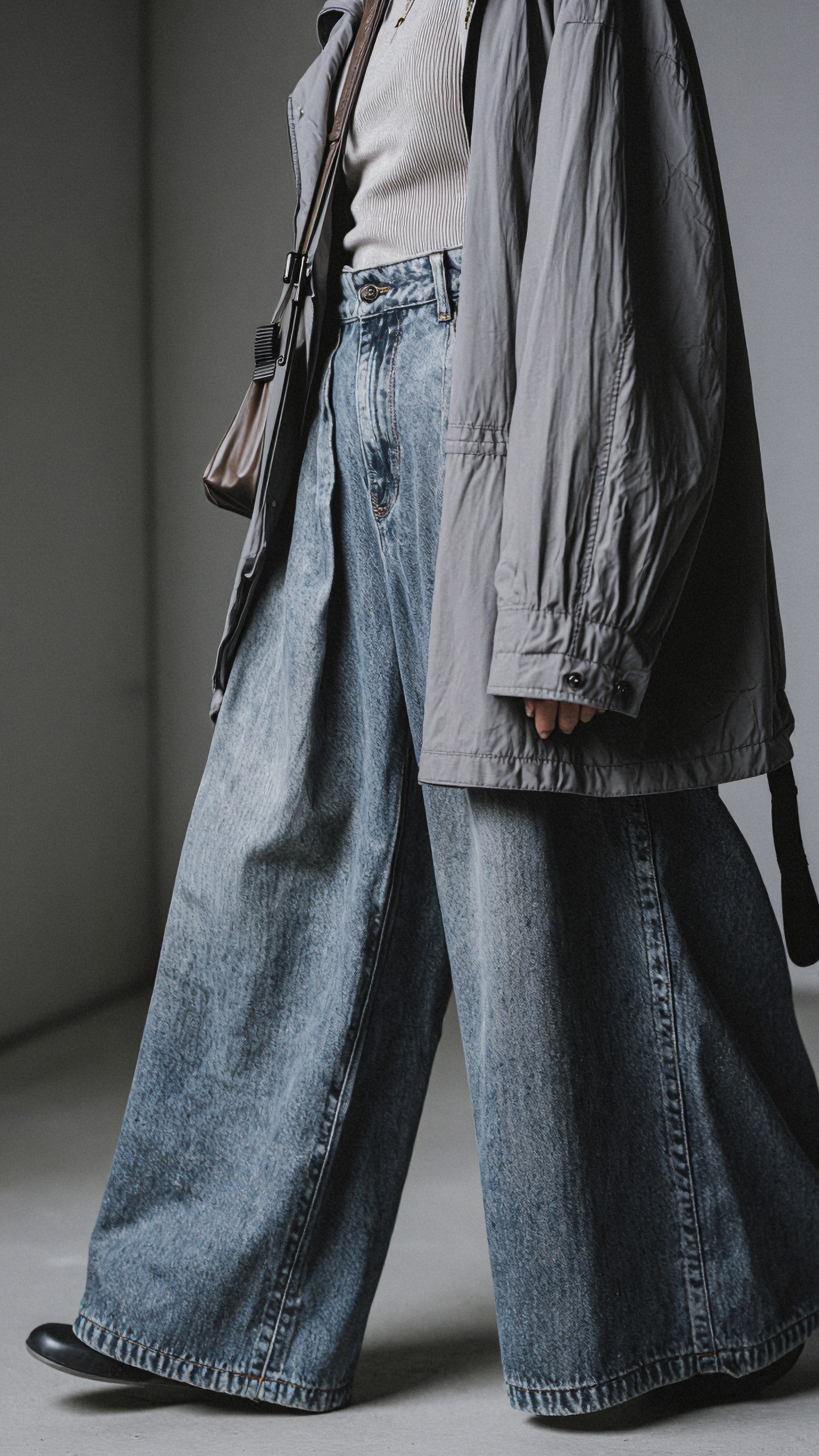
Inspect seam definition and hardware edges. If these details are muddy, the final lookbook images will often feel synthetic even when the wider composition works.
Best choice by use case
Choose Option A if you want a repeatable Japanese streetwear lookbook
This is the best setup for:
- beginners
- prompt libraries
- outfit comparison sets
- product-linked fashion images
- clean editorial pages for [Articles](/articles) or [Gallery](/gallery)
Start with one outfit formula and swap only one category at a time:
- jacket shape
- denim wash
- footwear type
- bag position
That makes it much easier to see what changed.
Choose Option B if you want more editorial atmosphere
This is better for:
- campaign-like hero shots
- social thumbnails
- concept boards
- mood exploration before final production
I would use Option B after building a stable outfit formula in [Create](/create), not before.
A practical checklist before you generate
Use this checklist for each prompt:
- Did I choose a shot type that shows enough of the outfit?
- Did I specify outerwear, top, bottom, shoes, and bag in that order?
- Did I name a Tokyo context?
- Did I describe denim shape, not just color?
- Did I tell the model where the crossbody bag sits?
- Did I keep the sexy mood tasteful and styling-led rather than body-only?
If you miss two or more of these, the image usually starts to drift.
FAQ
What makes a Japanese streetwear lookbook prompt work better than a general streetwear prompt?
The biggest difference is silhouette specificity and context. Japanese streetwear prompts work better when they name oversized layering, denim shape, footwear style, bag placement, and a Tokyo setting.
Which shot type is best for Japanese streetwear outfit prompts?
For beginners, street-style full body and head-to-toe lookbook are the safest choices. They keep the footwear and bag visible and make denim proportions easier to judge.
How do I make AI show crossbody bags correctly in fashion prompts?
Describe both the bag type and the position: high across chest, diagonal torso sling, or resting at hip. Also avoid poses where both arms cross the torso, because that often hides the strap.
Why do AI fashion images often fail on shoes and hems?
Because the frame drifts upward or the prompt gives too much attention to face, lighting, or mood. Strong head-to-toe framing language usually fixes this.
Can I use these prompts for retro street style or street snap outfit pages?
Yes. Keep the structure, then swap in retro pieces like washed trucker jackets, runner sneakers, striped knits, or square-toe loafers. The workflow stays the same.
Editorial conclusion
My clear recommendation: use the outfit-first workflow if your goal is a reliable Japanese streetwear lookbook with oversized layers, denim, footwear, and crossbody bags all visible and believable. That is the best choice for beginners, lookbook builders, and anyone making comparison sets.
Use the mood-first workflow if you want stronger campaign atmosphere and can tolerate more drift in shoes, hems, or accessory placement.
Who should use this workflow: creators building Tokyo street fashion lookbooks, street snap outfit pages, catalog grids, or prompt libraries with repeatable outfit formulas.
Who should avoid it: anyone looking for loose portrait prompts where outfit detail is secondary. This method is built for styling clarity, not face-led glamour.
The prompt detail that mattered most in this test was simple: state the shot type, then describe the outfit top to bottom, and explicitly place the bag. That one change did more for output quality than adding extra adjectives or mood language.