K-Pop Airport Fashion Prompt Examples: Clean Travel Looks, Luxury Layers, and Candid Paparazzi Setups 한국어 요약
이 페이지는 ZView Space의 영어 원문을 한국어 검색 사용자도 이해할 수 있도록 정리한 SEO 요약입니다. 핵심은 단순한 얼굴 중심 이미지가 아니라 패션 에디토리얼, 룩북, 아웃핏, 프롬프트 테스트, 이미지 생성 워크플로우를 실제로 어떻게 구성할지입니다.
핵심 요약
- 원문 주제: K-Pop Airport Fashion Prompt Examples: Clean Travel Looks, Luxury Layers, and Candid Paparazzi Setups
- 목적: AI 이미지 생성에서 outfit, silhouette, fabric, pose, location, camera framing을 더 명확하게 설계합니다.
- 활용 범위: Z-Image Turbo, Krea2 Turbo, Qwen Image, Anima, SeedVR2 같은 이미지 생성 및 업스케일 워크플로우에 적용할 수 있습니다.
- SEO 관점: 제목, 설명, 이미지 alt, 프롬프트 예시가 실제 검색 의도와 맞아야 색인 가능성이 높아집니다.
한국어 사용자를 위한 체크포인트
1. 프롬프트가 얼굴 묘사에만 머물지 않고 전체 스타일과 의상 구성을 설명하는지 확인합니다. 2. 패션 이미지라면 상의, 하의, 아우터, 신발, 액세서리, 소재감, 촬영 장소를 분리해서 씁니다. 3. 생성 결과는 바로 게시하지 말고 디테일, 손, 의상 형태, 배경 일관성, 이미지 품질을 비교합니다. 4. 글 본문에는 실제 테스트 기준과 실패를 줄이는 방법이 들어가야 검색엔진에서 얇은 콘텐츠로 보일 가능성이 줄어듭니다.
원문 미리보기
If you are trying to generate believable k pop airport fashion images, the hard part is usually not the clothing idea. It is getting the full travel look to read correctly at once: layered outfit, luggage, movement, candid energy, and a location that feels lik
---
If you are trying to generate believable k-pop airport fashion images, the hard part is usually not the clothing idea. It is getting the full travel look to read correctly at once: layered outfit, luggage, movement, candid energy, and a location that feels like an airport instead of a random mall corridor.
In this test, I focused on prompts that could hold together the full styling system rather than just producing attractive faces. The strongest results came from prompts that treated airport fashion as a mix of street style editorial and observational paparazzi photography, with very explicit wardrobe logic and scene anchors.
What I tested
I tested prompt structures for eight common airport-fashion setups:
- clean monochrome travel looks
- luxury layered winter outfits
- off-duty denim styling
- oversized blazer silhouettes
- candid paparazzi arrivals
- group travel coordination
- rainy-day terminal scenes
- premium luggage-forward editorial shots
The main quality checks were:
- whether the outfit reads full-body
- whether the bag and suitcase styling make sense
- whether the airport setting is recognizable
- whether hands interact naturally with phones, handles, and outerwear
- whether the image feels like Korean street fashion or luxury fashion editorial rather than generic influencer portraiture
Why airport-fashion prompts often fail
Most image models drift into one of three bad habits when asked for K-pop airport fashion.
First, they over-prioritize the face and collapse the outfit into a waist-up portrait. That loses the reason readers look for airport-fashion references in the first place: silhouette, layering, sneakers, outerwear, bags, and luggage balance.
Second, they confuse "airport" with "travel" and generate hotel lobbies, train stations, or duty-free retail interiors with no arrival-gate logic. In this test, adding check-in counters, departure boards, terminal glass, security rope lines, rolling luggage, or curbside drop-off cues improved consistency.
Third, they flatten K-fashion styling into generic luxury casualwear. The better prompts specified styling relationships: oversized coat over knit set, wide-leg trousers with low-profile sneakers, baseball cap with mask lowered under chin, tote plus hard-shell carry-on, or soft neutral palette broken by one sharp accessory.
The workflow that produced the most reliable result
The most reliable workflow was simple but strict:
1. Start from silhouette, not celebrity identity. I avoided naming real idols and instead described the outfit logic in detail. 2. Lock the camera intention early. Street-style telephoto and paparazzi-style medium distance gave more believable airport images than beauty-lens closeups. 3. Include one travel interaction. Pulling luggage, adjusting sunglasses, holding passport, checking phone, or walking with entourage helped the pose feel less staged. 4. Use environment anchors sparingly but clearly. Too many airport objects created visual clutter. Two to four cues were enough. 5. Describe fabric hierarchy. Wool coat, brushed knit, washed denim, pebbled leather, nylon duffel, aluminum suitcase, or ribbed jersey gave the model something real to render.
In this test, the strongest result came from prompts that combined clean editorial styling language with candid movement cues. If the prompt leaned too editorial, the image looked like a studio campaign in a fake airport. If it leaned too candid without wardrobe specificity, the look became generic commuterwear.
The prompt ingredients that mattered most
For this topic, the best prompt ingredients were:
- full-body or three-quarter framing
- outerwear plus bag plus luggage in the same sentence
- specific Korean fashion cues like oversized tailoring, tonal layering, premium basics, and understated luxury
- airport architecture references such as terminal glass, polished floors, signage blur, curbside barriers, or gate lighting
- motion verbs like striding, pausing, turning, adjusting, or rolling
The weak point across almost every setup was hand accuracy around luggage handles and phones. When this setup works, the model gives you a coherent styling story. When it fails, the first artifacts usually appear in the hands, suitcase geometry, or background text.
Prompt tests and inspection notes
1) Clean monochrome travel look
This first test checks whether the model can hold a restrained all-black or charcoal airport outfit without collapsing into a vague black blob. It also tests shoe visibility and luggage contrast.
Topic: Clean monochrome K-pop airport fashion travel look
Genre: Street Style Editorial
Camera: Sony A7R V
Lens: 50mm f/2
Lighting: Overcast Diffusion
Location: Incheon International Airport departure hall with glass walls, polished floor reflections, soft crowd blur
Style: Clean Commercial Look
Final Prompt: Full-body Korean-inspired K-pop airport fashion look, stylish young pop idol figure in a refined monochrome travel outfit, oversized charcoal wool coat over a black ribbed knit top, relaxed straight-leg tailored trousers, low-profile black leather sneakers, slim silver jewelry, black baseball cap, structured leather tote, matte hard-shell carry-on suitcase, walking calmly through Incheon airport departure hall, subtle confident expression, natural stride, polished floor reflections, glass terminal architecture, soft background travelers out of focus, premium fabric texture, understated luxury, Korean street fashion balance, realistic proportions, crisp garment edges, editorial composition, high detail, natural skin texture, travel candid energy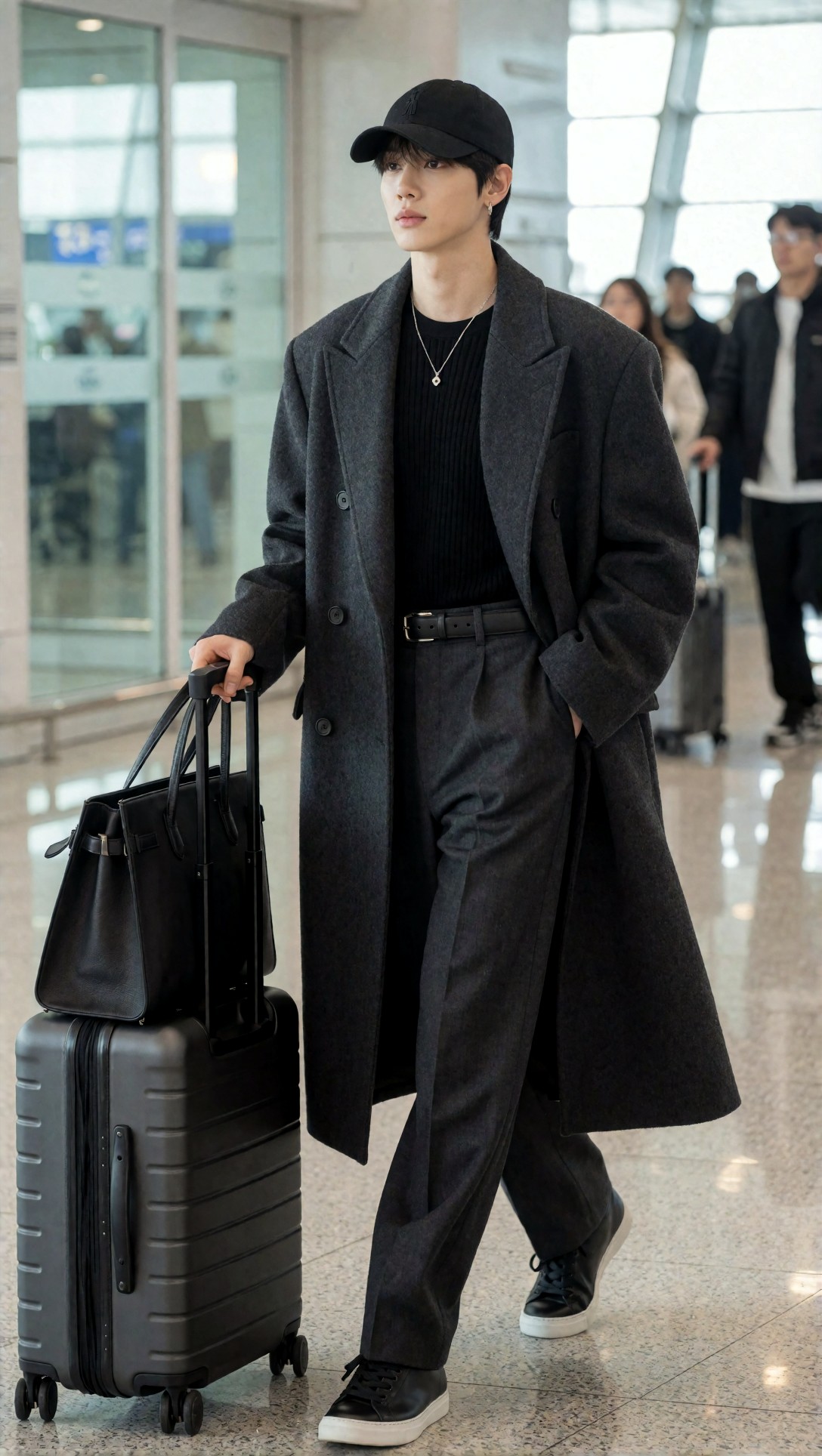
Inspect whether the coat hem, trouser break, and sneakers all remain visible in one frame. The best outputs keep separation between black garments using texture rather than artificial highlights.
2) Luxury layered winter arrival
This setup is meant to test complex layering: scarf, coat, knitwear, boots, and premium handbag. It is also useful for checking whether winter styling still reads mobile rather than stiff.
Topic: Luxury layered winter K-pop airport fashion arrival
Genre: Luxury Fashion Editorial
Camera: Canon EOS R5
Lens: 85mm f/1.8
Lighting: Cool Window Light with Terminal Bounce
Location: Airport arrival corridor near international exit doors, chrome rails, muted signage, winter atmosphere
Style: Korean Magazine Cover
Final Prompt: Elegant K-pop airport fashion scene with a stylish Korean pop-star-inspired traveler wearing a camel oversized cashmere coat layered over a cream turtleneck and fine wool midi skirt, tall dark leather boots, soft plaid scarf, quilted designer shoulder bag, compact rolling suitcase, poised near airport arrival doors, chin slightly raised, composed but candid expression, luxury layered winter styling, cool terminal light reflecting from glass and metal, refined neutral palette of camel cream espresso and slate gray, visible textile depth, polished editorial realism, premium airport candid aesthetic, balanced full-body composition, realistic luggage scale, subtle paparazzi atmosphere, high-end Korean fashion magazine feel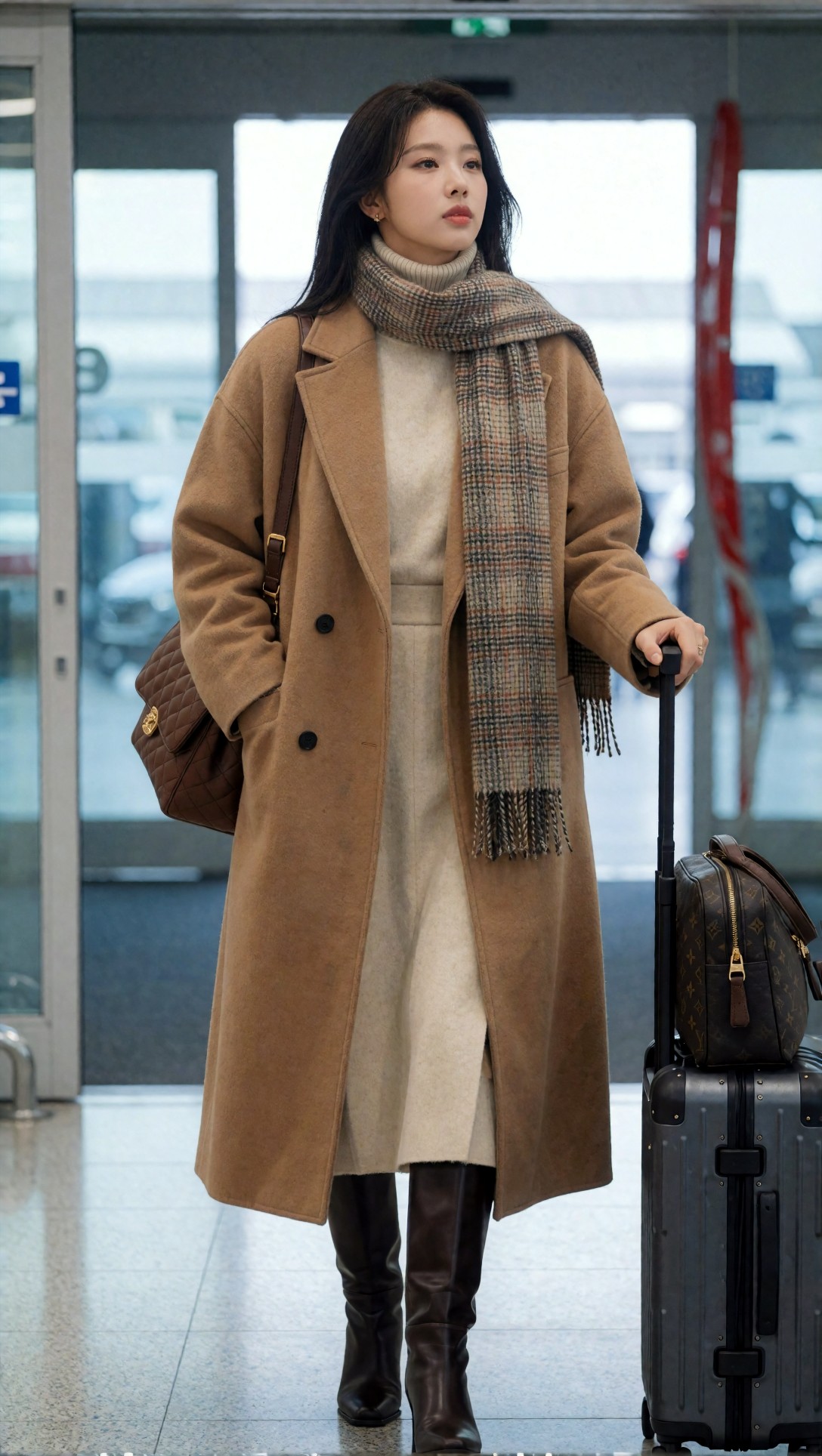
Check whether the scarf and coat collar stay clean instead of fusing together. The strongest images show clear fabric contrast between cashmere, leather, and knit surfaces.
3) Off-duty denim with cap and tote
This prompt tests a more casual K fashion outfit that still feels intentional. It is a good stress test for denim texture, cap fit, and natural walking posture.
Topic: Off-duty denim K-pop airport fashion with relaxed layers
Genre: Lifestyle Fashion Photography
Camera: Fujifilm GFX100S
Lens: 63mm f/2.8
Lighting: Soft Morning Terminal Light
Location: Airport check-in lane with rope barriers, departure board glow, minimal crowd
Style: Korean Street Fashion
Final Prompt: Korean street-fashion-inspired K-pop airport fashion, off-duty idol travel look in light-wash straight-leg denim, white fitted tee, cropped navy cardigan, oversized beige trench draped open, white retro sneakers, navy cap, oversized sunglasses, canvas monogram tote, passport in hand, small rolling luggage, mid-stride in airport check-in lane, relaxed expression, casual but polished styling, balanced proportions, visible denim grain and cotton texture, practical travel outfit logic, candid fashion-photo energy, departure board glow in background, neutral modern terminal design, realistic body posture, fresh understated palette, full outfit clearly visible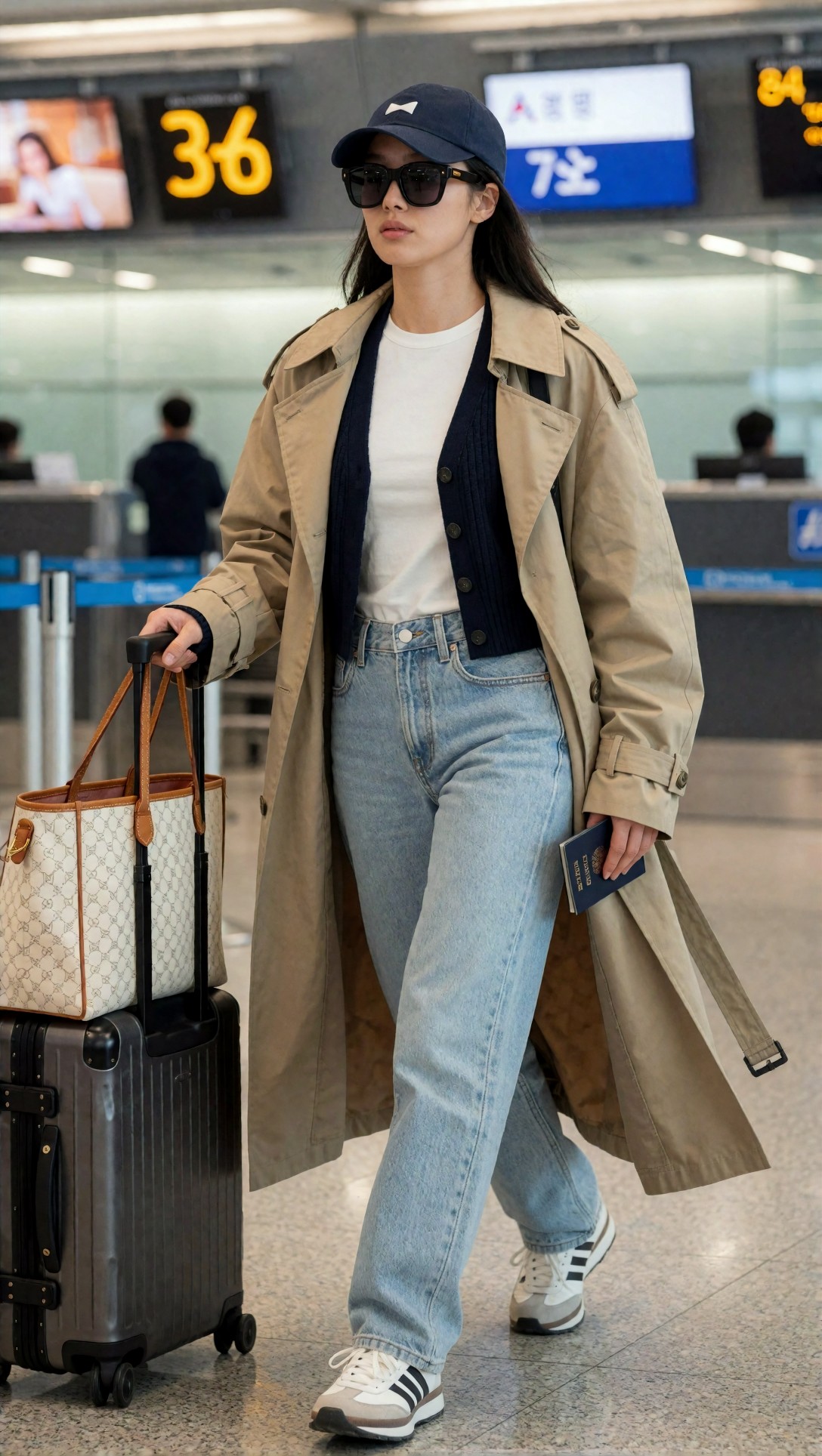
Inspect the denim first. In weaker generations, jeans turn into smooth blue pants with no seams or weight. Also check whether the trench hangs naturally rather than behaving like a cape.
4) Oversized blazer and wide-leg trouser silhouette
This test is for readers looking for a sharper luxury fashion editorial angle inside airport styling. It checks silhouette control and whether the model preserves volume in tailoring.
Topic: Tailored oversized blazer K-pop airport fashion silhouette
Genre: Fashion Editorial
Camera: Nikon Z8
Lens: 35mm f/1.8
Lighting: Softbox-like Skylight from Large Terminal Windows
Location: Quiet VIP terminal lounge entrance with marble floor, smoked glass, minimal signage
Style: Luxury Fashion Campaign
Final Prompt: Sophisticated K-pop airport fashion editorial image, Korean-inspired celebrity traveler wearing an oversized dove-gray blazer over a fitted black tank, fluid wide-leg charcoal trousers, pointed loafers, slim belt, oversized leather weekender bag, small aluminum carry-on, walking past a VIP terminal lounge entrance, sharp posture with one hand adjusting blazer lapel, cool self-possessed expression, modern Korean tailoring, clean luxury color palette, soft architectural airport background with marble floor and smoked glass, strong silhouette emphasis, premium drape and movement, magazine-quality composition, realistic fashion proportions, subtle candid tension, polished but not staged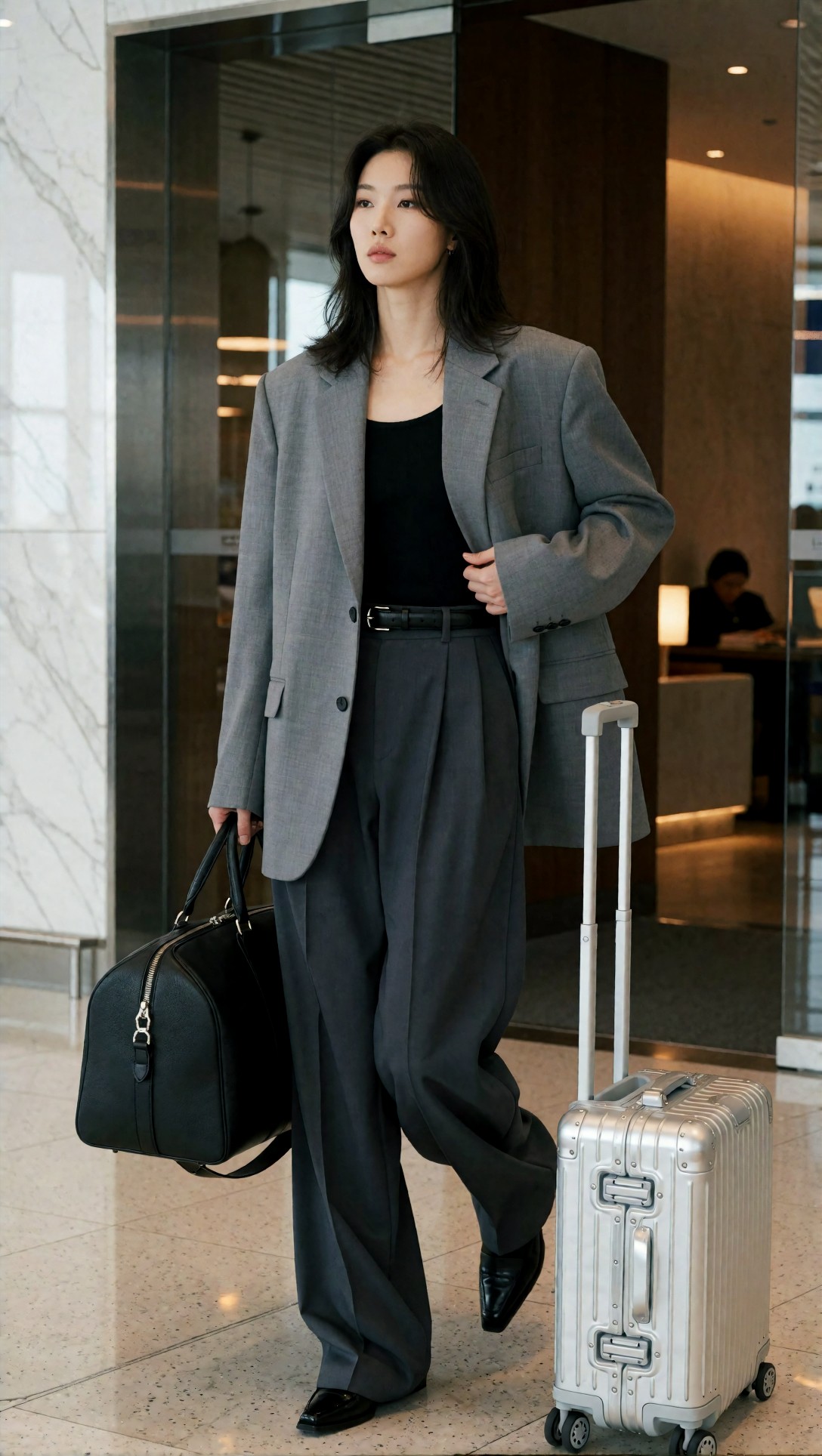
The key inspection point here is the shoulder-to-trouser ratio. The best outputs keep the blazer oversized without making the body look misshapen or losing the fluid line of the trousers.
5) Candid paparazzi curbside arrival
This setup checks whether the model can move away from polished terminal interiors and create the more chaotic airport-fashion images people often reference online. It also reveals hand and luggage failures quickly.
Topic: Candid paparazzi-style K-pop airport fashion curbside arrival
Genre: Cinematic Travel Photography
Camera: Leica SL2-S
Lens: 90mm f/2.8
Lighting: Late Afternoon Natural Light with Flash Pop
Location: Airport curbside drop-off zone with black van, traffic barriers, security cones, terminal entrance
Style: Cinematic Realism
Final Prompt: Realistic paparazzi-style K-pop airport fashion moment, fashionable Korean idol figure stepping out at airport curbside drop-off, wearing a cream bomber jacket over a black hoodie, loose technical trousers, designer sneakers, dark sunglasses, luxury duffel bag on shoulder, one hand pulling a compact suitcase, turning slightly toward cameras with a neutral guarded expression, black van in background, traffic cones and airport barriers, slight flash reflection, compressed telephoto perspective, lively candid atmosphere, premium street-luxury styling, realistic motion, layered urban travel textures, natural imperfections, high-detail editorial documentary feel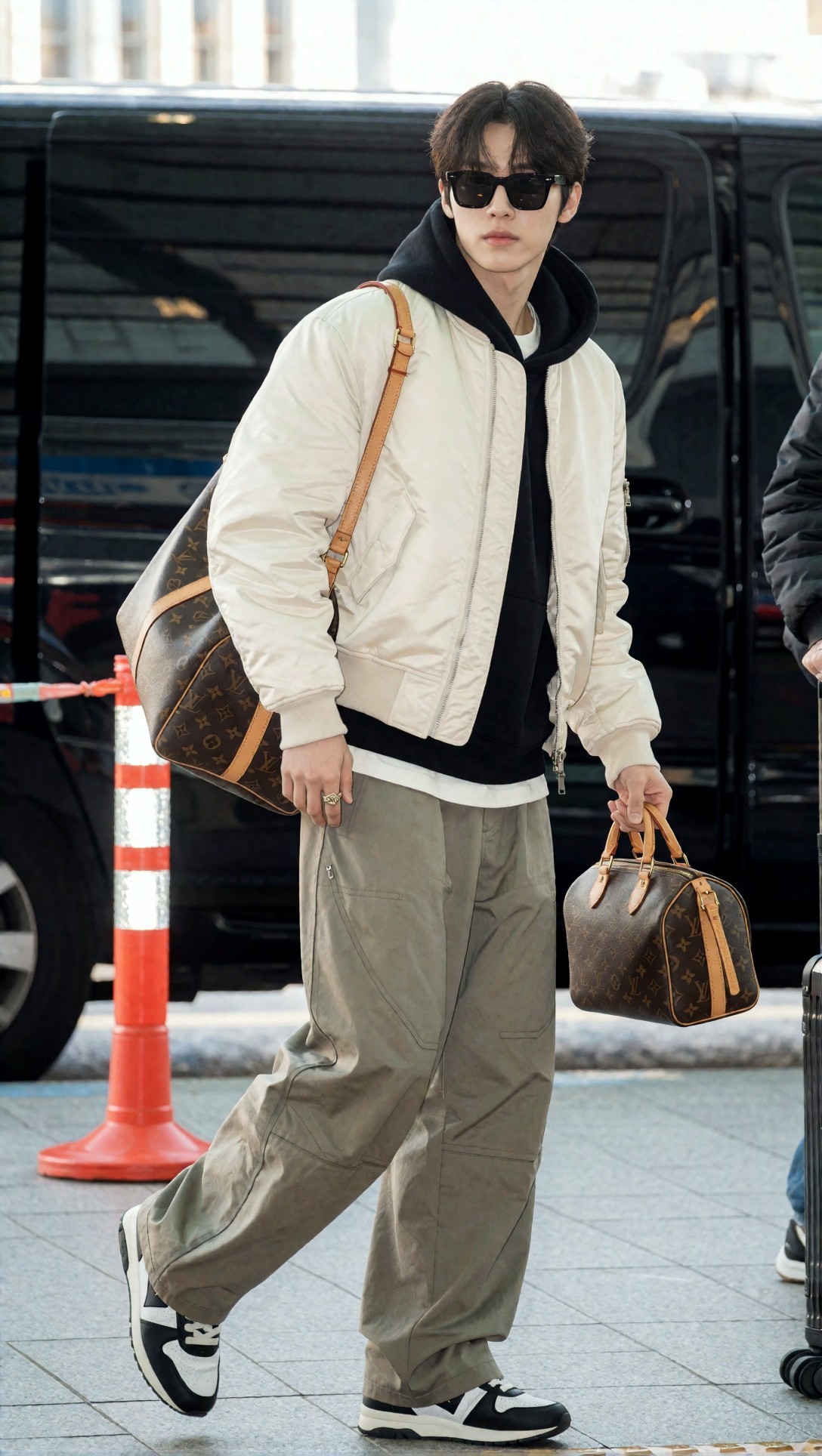
Inspect the suitcase handle, shoulder strap, and leg motion together. In this test, curbside prompts produced the most believable candid energy but also the highest rate of hand distortions.
6) Coordinated group airport styling
This prompt is meant to test style lock across multiple subjects. Group airport looks are much harder than solo shots because the model tends to randomize proportions and styling cohesion.
Topic: Coordinated group K-pop airport fashion departure scene
Genre: Street Style Documentary
Camera: Canon EOS-1D X Mark III
Lens: 70-200mm f/2.8 at 135mm
Lighting: Neutral Terminal Ambient Light
Location: Airport security approach zone with lane dividers, rolling suitcases, bright ceiling panels
Style: Candid Press Photo
Final Prompt: Small group of three K-pop-inspired travelers in coordinated airport fashion, each wearing distinct but harmonized neutral-toned outfits, one in oversized blazer and denim, one in long wool coat with knit set, one in bomber jacket and wide-leg trousers, mixed luxury totes and carry-on luggage, walking together toward airport security approach, subtle conversation and natural gestures, candid press-photo framing from a short distance, realistic spacing between subjects, visible footwear, Korean fashion coordination rather than matching uniforms, terminal ceiling lights, lane dividers, rolling luggage movement, editorial street-style realism, clean color harmony of black taupe gray and cream, high detail garment textures and believable airport atmosphere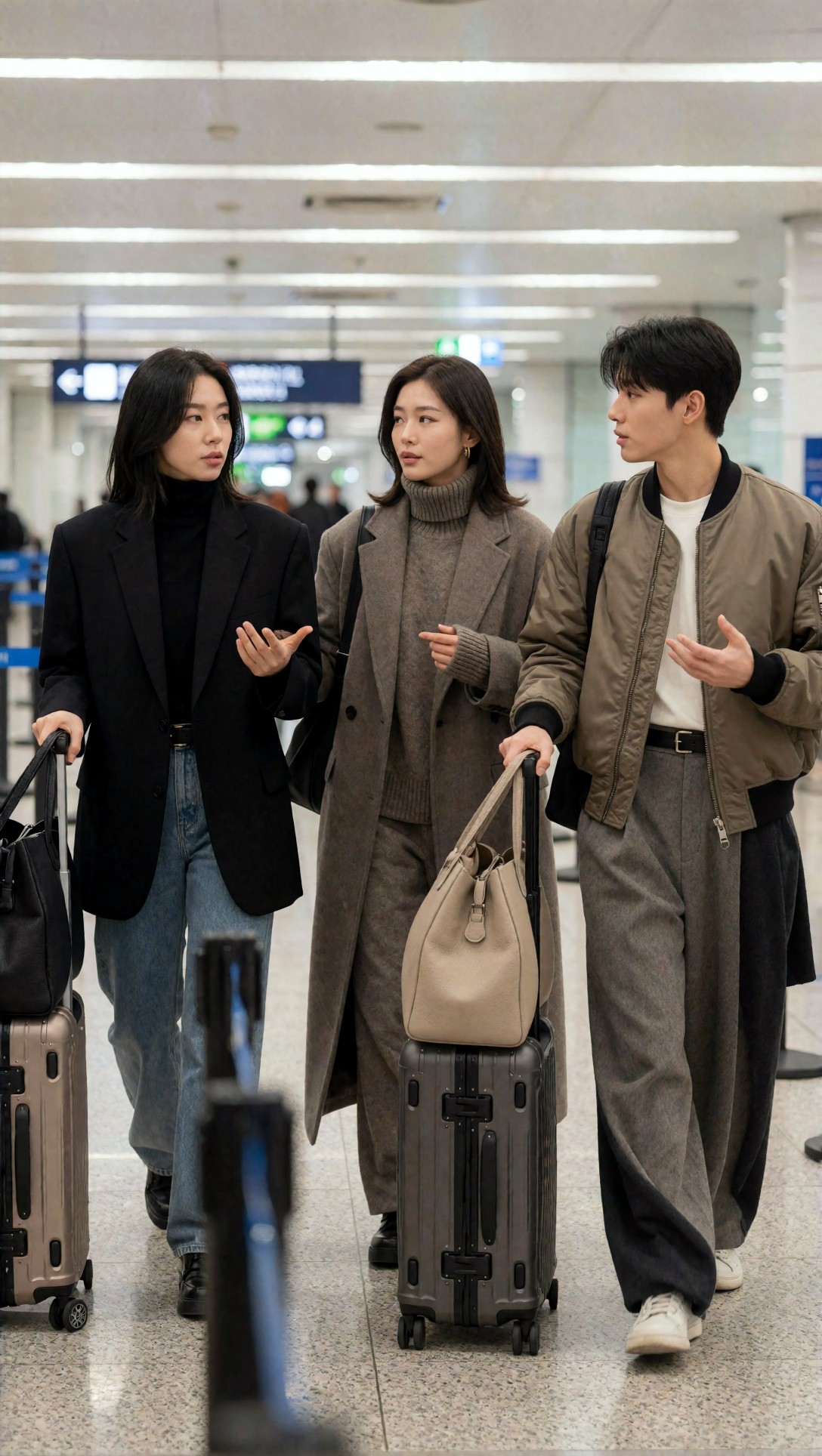
What to inspect is consistency rather than individual beauty. The strongest group outputs preserve separate outfit identities while maintaining one shared styling language.
7) Rainy-day airport entrance look
This setup checks weather integration, wet-surface reflections, and whether outerwear still reads cleanly under difficult lighting. It is useful if you want Korean fashion trends with more mood.
Topic: Rainy-day K-pop airport fashion entrance scene
Genre: Editorial Lifestyle Portrait
Camera: Panasonic Lumix S1R
Lens: 24-70mm f/2.8 at 50mm
Lighting: Rainy Overcast Light with Reflected Ground Fill
Location: Covered airport entrance with wet pavement, taxi lane, umbrella stand, sliding glass doors
Style: Modern Korean Editorial
Final Prompt: Moody K-pop airport fashion image on a rainy travel day, stylish Korean pop-culture traveler wearing a forest-green trench coat over a cream hoodie and black pleated trousers, chunky loafers, dark umbrella, crossbody leather bag, compact carry-on, pausing near sliding airport doors, wet pavement reflections, soft overcast light, composed introspective expression, practical layered travel styling with fashion-forward silhouette, visible water texture on ground but dry clothing under covered entrance, restrained palette with green cream black and silver, realistic airport entrance details, cinematic yet wearable Korean street-fashion mood, full-body framing, premium fabric detail, believable rainy-day atmosphere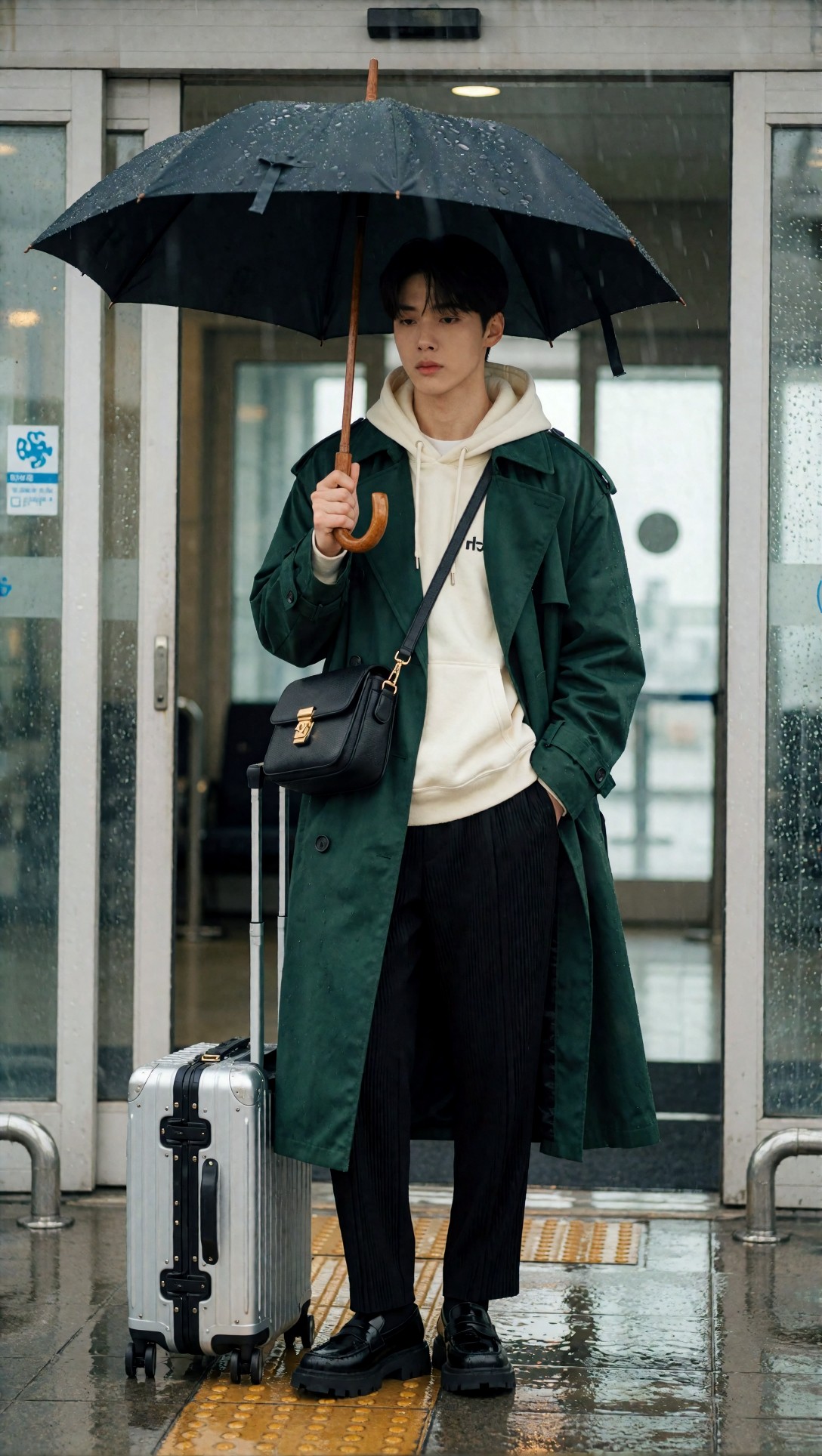
The important check here is whether the rain affects the environment without making the subject look soaked in an implausible way. Good outputs also keep reflections controlled rather than mirror-like.
8) Luggage-forward luxury airport editorial
This final test focuses on bag and luggage clarity. It is best for users who want AI fashion photography that highlights accessories as much as apparel.
Topic: Luggage-forward luxury K-pop airport fashion editorial
Genre: Product-Led Fashion Campaign
Camera: Hasselblad X2D 100C
Lens: 55mm f/2.5
Lighting: Soft Directional Indoor Light with Edge Highlights
Location: Minimal premium airport lounge corridor with brushed metal walls and warm floor lighting
Style: High-End Travel Campaign
Final Prompt: High-fashion K-pop airport fashion editorial centered on luxury travel accessories, Korean-inspired celebrity traveler in an ivory knit set layered with a long stone-gray coat, sleek white sneakers, premium leather crossbody pouch, sculptural hard-shell suitcase and matching weekender bag featured prominently, standing in a minimalist airport lounge corridor, one hand on suitcase handle and the other adjusting coat sleeve, calm focused expression, elegant travel posture, warm edge highlights on brushed metal walls, soft ambient luxury lighting, refined palette of ivory stone gray and muted gold, strong accessory visibility without losing full outfit silhouette, realistic proportions, premium texture rendering, fashion-campaign composition with candid travel plausibility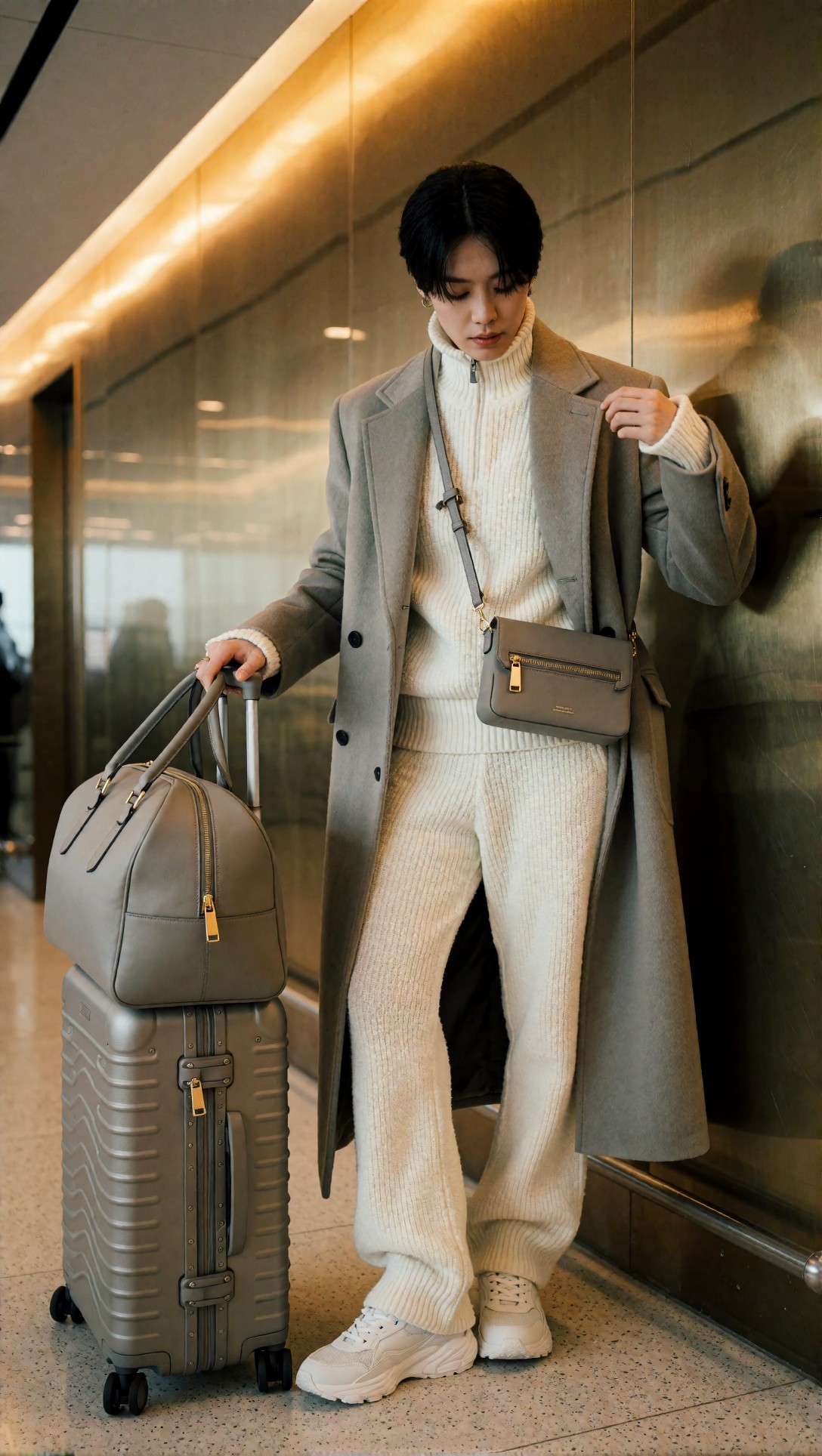
Inspect whether the accessory hierarchy is clear. The best result keeps the suitcase and bag prominent without shrinking the person into a product prop.
Where each workflow works best
Best for clean inspiration boards
Use the monochrome, oversized blazer, and luggage-forward prompts if you want sharp, reusable references for outfit planning, editorial moodboards, or retail-style travel styling concepts. These gave the cleanest garment reads in this test.
Best for social-style airport coverage
Use the paparazzi curbside, off-duty denim, and group travel prompts if you want something closer to fan-site or press-arrival energy. These feel more alive, but they also generate more anatomical mistakes.
Best for seasonal variation
Use the winter layered and rainy-day prompts when you need Korean fashion trends translated into practical weather styling. The tradeoff is that layers can merge if your prompt is not explicit about fabric and structure.
Strengths observed in this test
The strongest result pattern was clear silhouette plus one believable travel action. Models handled airport-fashion prompts much better when the subject was walking, turning, pausing with luggage, or adjusting outerwear.
Another strength was the way airport fashion naturally benefits from layered prompt writing. Because the style is built from outerwear, footwear, accessories, and luggage, the model has multiple opportunities to communicate fashion intent beyond the face.
For AI fashion photography specifically, airport settings also help create believable commercial realism. Reflections, signage blur, polished floors, and terminal lighting can make even heavily styled looks feel grounded.
Failure risks and common mistakes
Asking for "idol airport outfit" with no clothing logic
This usually returns a pretty person in generic casualwear. The weak point is not beauty quality but outfit specificity.
Forgetting luggage or travel props
Without a tote, suitcase, passport, or curbside cue, the image often reads as mall street style instead of airport fashion.
Overloading the scene with airport details
Too many signs, gates, seats, counters, and crowds can cause visual noise and broken perspective. In this test, fewer environment anchors worked better.
Using portrait lenses for every setup
An 85mm close portrait can be useful for layered winter fashion, but if you use portrait framing too often, you lose shoe styling and silhouette balance. For k-pop airport fashion, that is a major loss.
Not specifying fabric types
If you only say "luxury outfit," many models invent smooth synthetic-looking surfaces. Explicit materials improved quality more than adding generic adjectives.
Ignoring hand risk
Any prompt involving phone use, suitcase pulling, sunglasses adjustment, or group walking should be reviewed closely for finger and handle errors.
Practical checklist before you keep a generation
- Is the frame full-body or at least wide enough to show the full silhouette?
- Can you identify outerwear, inner layer, bottoms, shoes, bag, and luggage clearly?
- Does the airport background contain two to four believable travel cues?
- Do the fabrics look distinct from each other?
- Are the hands believable around handles, phones, or bags?
- Does the pose feel like travel movement rather than studio posing?
- Does the look read as Korean street fashion or luxury travel styling, not generic casualwear?
- Is one styling idea dominant, instead of several conflicting trends?
What I would change next
If I were pushing this test further, I would split the workflow into two branches.
For editorial clarity, I would keep backgrounds minimal and use prompts similar to the blazer and luggage-forward setups. For authentic candid energy, I would lower styling perfection slightly, add mild asymmetry, and introduce more incidental airport clutter around the curbside and group scenes.
I would also test negative prompting or generation controls for:
- extra fingers on luggage handles
- distorted suitcase wheels
- unreadable footwear
- over-sharpened skin in supposedly candid images
- terminal signage turning into distracting pseudo-text
Final recommendation
If your goal is inspiration for k-pop airport fashion, use a workflow that starts with silhouette, layers, accessories, and one travel action, then adds only a few airport anchors. That is the setting that mattered most in this test.
The best choice for most users is the clean editorial-candid hybrid: full-body framing, premium everyday wardrobe, realistic luggage, and a recognizable terminal or curbside environment. It gives enough style control for outfit ideation without becoming a fake luxury campaign.
Use this workflow if you want wearable references, Korean street fashion moodboards, luxury travel outfit concepts, or AI fashion photography with a practical styling focus. Avoid it if your real goal is celebrity likeness generation or tight beauty portraits, because airport fashion works best when the entire outfit system is visible.
In short: the strongest result came from treating airport fashion as movement plus wardrobe logic, not face-first glamour. If you get that one detail right, the rest of the image becomes much easier to control.