Korean Fashion Trends 2026: Tested AI Prompt Directions for Streetwear, Minimalist Looks, and Runway Styling 한국어 요약
이 페이지는 ZView Space의 영어 원문을 한국어 검색 사용자도 이해할 수 있도록 정리한 SEO 요약입니다. 핵심은 단순한 얼굴 중심 이미지가 아니라 패션 에디토리얼, 룩북, 아웃핏, 프롬프트 테스트, 이미지 생성 워크플로우를 실제로 어떻게 구성할지입니다.
핵심 요약
- 원문 주제: Korean Fashion Trends 2026: Tested AI Prompt Directions for Streetwear, Minimalist Looks, and Runway Styling
- 목적: AI 이미지 생성에서 outfit, silhouette, fabric, pose, location, camera framing을 더 명확하게 설계합니다.
- 활용 범위: Z-Image Turbo, Krea2 Turbo, Qwen Image, Anima, SeedVR2 같은 이미지 생성 및 업스케일 워크플로우에 적용할 수 있습니다.
- SEO 관점: 제목, 설명, 이미지 alt, 프롬프트 예시가 실제 검색 의도와 맞아야 색인 가능성이 높아집니다.
한국어 사용자를 위한 체크포인트
1. 프롬프트가 얼굴 묘사에만 머물지 않고 전체 스타일과 의상 구성을 설명하는지 확인합니다. 2. 패션 이미지라면 상의, 하의, 아우터, 신발, 액세서리, 소재감, 촬영 장소를 분리해서 씁니다. 3. 생성 결과는 바로 게시하지 말고 디테일, 손, 의상 형태, 배경 일관성, 이미지 품질을 비교합니다. 4. 글 본문에는 실제 테스트 기준과 실패를 줄이는 방법이 들어가야 검색엔진에서 얇은 콘텐츠로 보일 가능성이 줄어듭니다.
원문 미리보기
The short version: if you want believable korean fashion trends 2026 images from AI, broad prompts are not enough. In this test, the strongest results came from prompts that locked three things at once: silhouette , styling system , and scene context . When I
---
The short version: if you want believable korean fashion trends 2026 images from AI, broad prompts are not enough. In this test, the strongest results came from prompts that locked three things at once: silhouette, styling system, and scene context. When I asked for “Korean fashion” in generic terms, the models drifted into either K-pop costume styling or vague luxury basics. When I specified Seoul street layers, minimalist proportions, or runway casting and set design, the outputs became much more usable.
For beginners, the practical takeaway is simple: treat Korean fashion as a set of styling directions, not a nationality label. The best prompts described garments, layering logic, fabric behavior, accessories, and where the look would realistically appear.
What I tested
I tested two prompt workflows across streetwear, minimalist fashion, and runway looks:
- Option A: trend-led prompts focused on named styling ingredients and silhouette cues
- Option B: scene-led prompts focused on editorial context, camera language, and fashion environment first
I compared them on:
- silhouette accuracy
- garment layering
- textile detail
- accessory coherence
- full-body composition
- background consistency
- whether the image felt like Seoul street fashion, Korean minimalist fashion, or Seoul Fashion Week runway rather than a generic fashion photo
My main observation was that Option A gave more reliable clothes, while Option B gave better atmosphere and stronger editorial framing.
Verdict first: which workflow worked best
If your goal is outfit ideation, Option A won. It was better at producing readable outfits with distinct separates: boxy blazers, wide trousers, longline outerwear, micro-layering, practical bags, and sneaker or loafer choices that made sense together.
If your goal is moodboards, campaign references, or runway outfit ideas, Option B was more convincing. It produced stronger lighting, casting, motion, and set design, but it also failed more often by inventing garments that looked expensive yet less specifically Korean in styling logic.
The strongest overall workflow for beginners was a hybrid: start with Option A for the wardrobe system, then add Option B scene language for finish.
The workflow that gave the cleanest fashion read
This was the most dependable approach in this test: define the outfit architecture first, then define the visual treatment. That kept the model from replacing Korean street fashion with random oversized luxurywear.
What helped most:
- naming proportions like cropped, longline, wide-leg, dropped shoulder, column silhouette
- specifying 3 to 5 garments instead of one hero item
- adding accessory rules like slim shoulder bag, wired earphones, silver jewelry, tabi-inspired shoes, clean sneakers, soft leather tote
- describing texture contrast such as washed denim with crisp cotton poplin, matte wool with glossy nylon, brushed knit with technical shell
This first prompt was meant to check whether the model could hold a believable 2026 Seoul streetwear silhouette without turning it into costume-heavy youth fashion.
Topic: Korean streetwear layered silhouette for 2026
Genre: Street Style
Camera: Fujifilm GFX100 II
Lens: GF 55mm f/1.7
Lighting: Overcast diffusion
Location: Seongsu backstreet with concrete storefronts, cafe signage, and muted urban textures
Style: Korean magazine street fashion
Final Prompt: Full-body Korean street fashion look for 2026 photographed in Seongsu, model walking naturally across a narrow backstreet, layered styling with cropped charcoal bomber jacket over pale grey hooded sweatshirt, long white inner tee visible at hem, wide-leg washed black trousers with soft break, clean white sneakers, slim nylon crossbody bag, silver rings, loose dark hair, calm expression, realistic fashion week off-duty energy, overcast soft light, concrete walls, subtle Korean storefront typography in background, cinematic but clean composition, premium fabric texture, natural body proportions, full outfit clearly visible, editorial street style realism, Fujifilm GFX100 II look, GF 55mm f/1.7 depth and tonal detail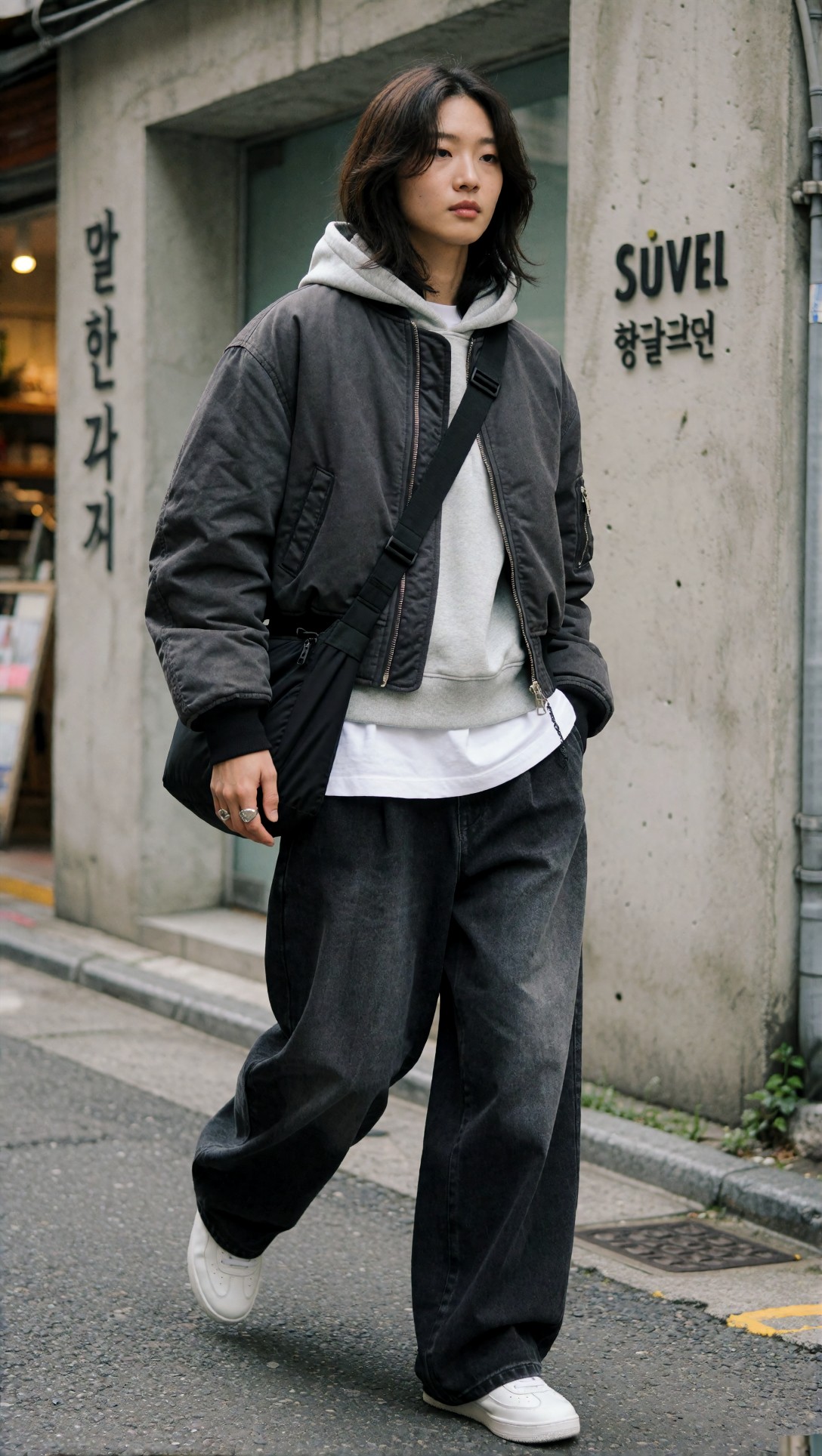
Inspect whether the model keeps the full-body silhouette readable. The key evidence here is the hem layering, trouser volume, and whether the bag and shoes support the outfit instead of looking randomly attached.
This second test checked whether minimalist Korean fashion could stay restrained without becoming bland beige-core. I wanted structure, proportion, and quiet luxury details rather than empty simplicity.
Topic: Korean minimalist fashion with precise tailoring
Genre: Fashion Editorial
Camera: Canon EOS R5
Lens: RF 50mm f/1.2L
Lighting: Soft window light with white bounce fill
Location: Minimal Seoul apartment studio with brushed concrete floor, ivory walls, and low oak furniture
Style: Clean commercial look
Final Prompt: Full-body Korean minimalist fashion editorial for 2026 inside a quiet Seoul apartment studio, model standing in relaxed three-quarter pose wearing an ivory collarless wool jacket, crisp light taupe sleeveless knit, high-waisted wide-leg cream trousers with sharp front crease, black square-toe flats, structured dark espresso leather handbag, minimal silver earrings, center-parted hair, neutral expression, restrained palette of ivory taupe espresso and soft black, emphasis on tailoring lines and fabric drape, uncluttered background, refined Korean minimalist fashion mood, realistic textile detail, clean composition with negative space, Canon EOS R5 realism, RF 50mm f/1.2L shallow depth of field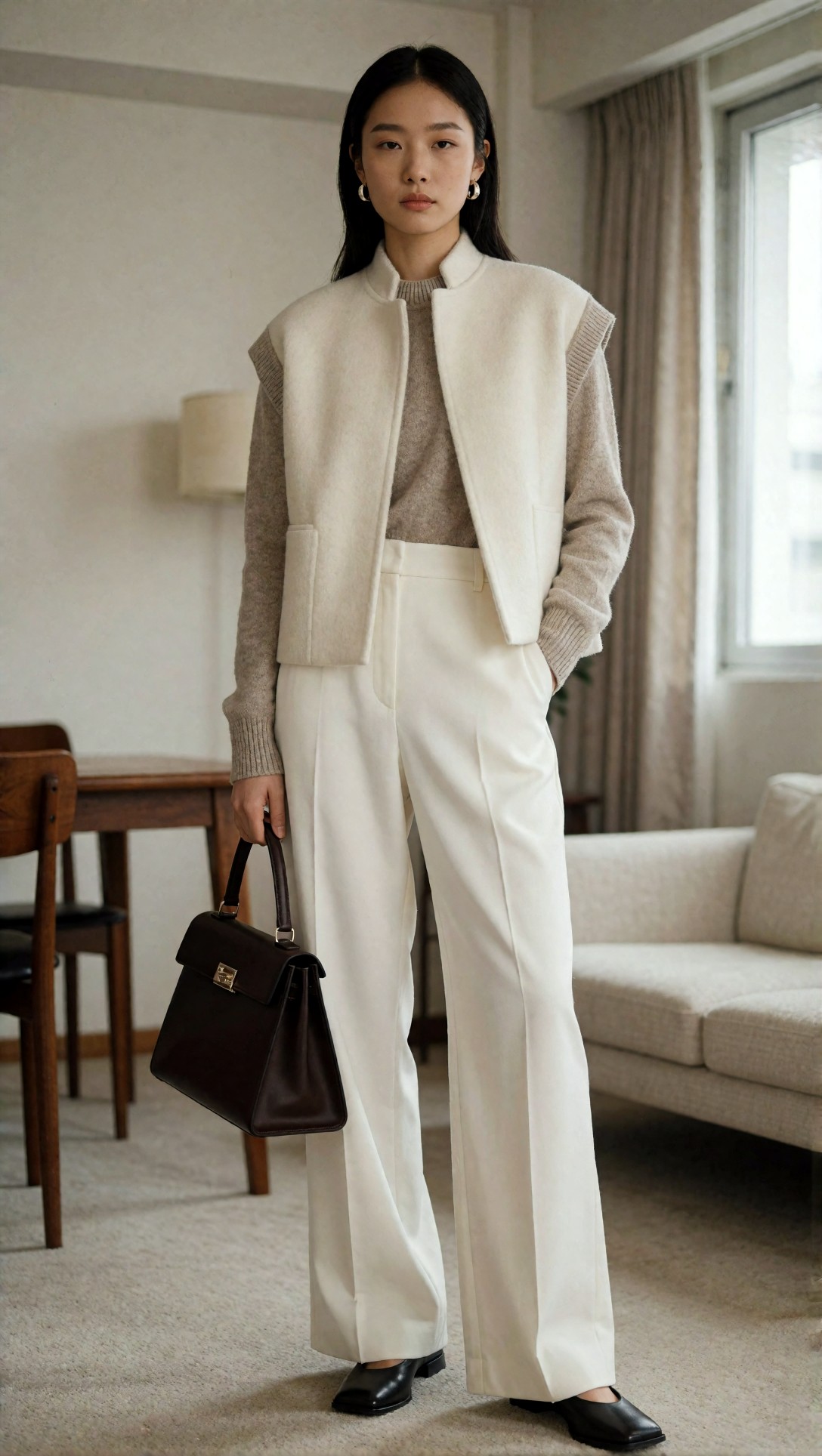
Look at the jacket edge definition and trouser crease. In good outputs, the outfit feels intentional and architectural; in weak outputs, the model smooths everything into one flat cream mass.
Where the scene-led workflow was stronger
Option B was better when I wanted the image to feel like it belonged in an editorial package. It handled runway atmosphere, backstage energy, and luxury department-store styling better than the trend-led approach.
Its advantage was not clothing precision. Its advantage was context. The model understood how to stage a look when I gave it cues like polished runway floor, casting lineup, directional spotlights, mirrored set pieces, retail display geometry, or rainy Seoul nightlife.
This prompt tested runway styling with enough specificity to avoid the usual generic couture drift. I wanted Seoul fashion week energy, not Paris fantasy gowns.
Topic: Seoul Fashion Week runway tailoring with wearable edge
Genre: Runway Fashion
Camera: Nikon Z9
Lens: NIKKOR Z 70-200mm f/2.8 at 135mm
Lighting: Directional runway spotlights with dim ambient fill
Location: Modern Seoul Fashion Week runway with reflective floor and sculptural metal backdrop
Style: High-fashion runway realism
Final Prompt: Seoul Fashion Week inspired runway look for 2026, full-body female model striding confidently on reflective runway, sharp graphite oversized blazer with sculpted shoulders, sheer smoke-grey inner layer, asymmetrical belt detail, fluid black maxi skirt over tailored trousers, pointed heeled boots, metallic ear cuff, slick low ponytail, composed runway expression, cool steel and charcoal color palette, directional spotlights cutting through dim venue atmosphere, seated audience in soft blur, realistic catwalk motion, editorial high-fashion styling with wearable Korean edge, Nikon Z9 runway capture, 135mm compression, crisp textile detail and natural movement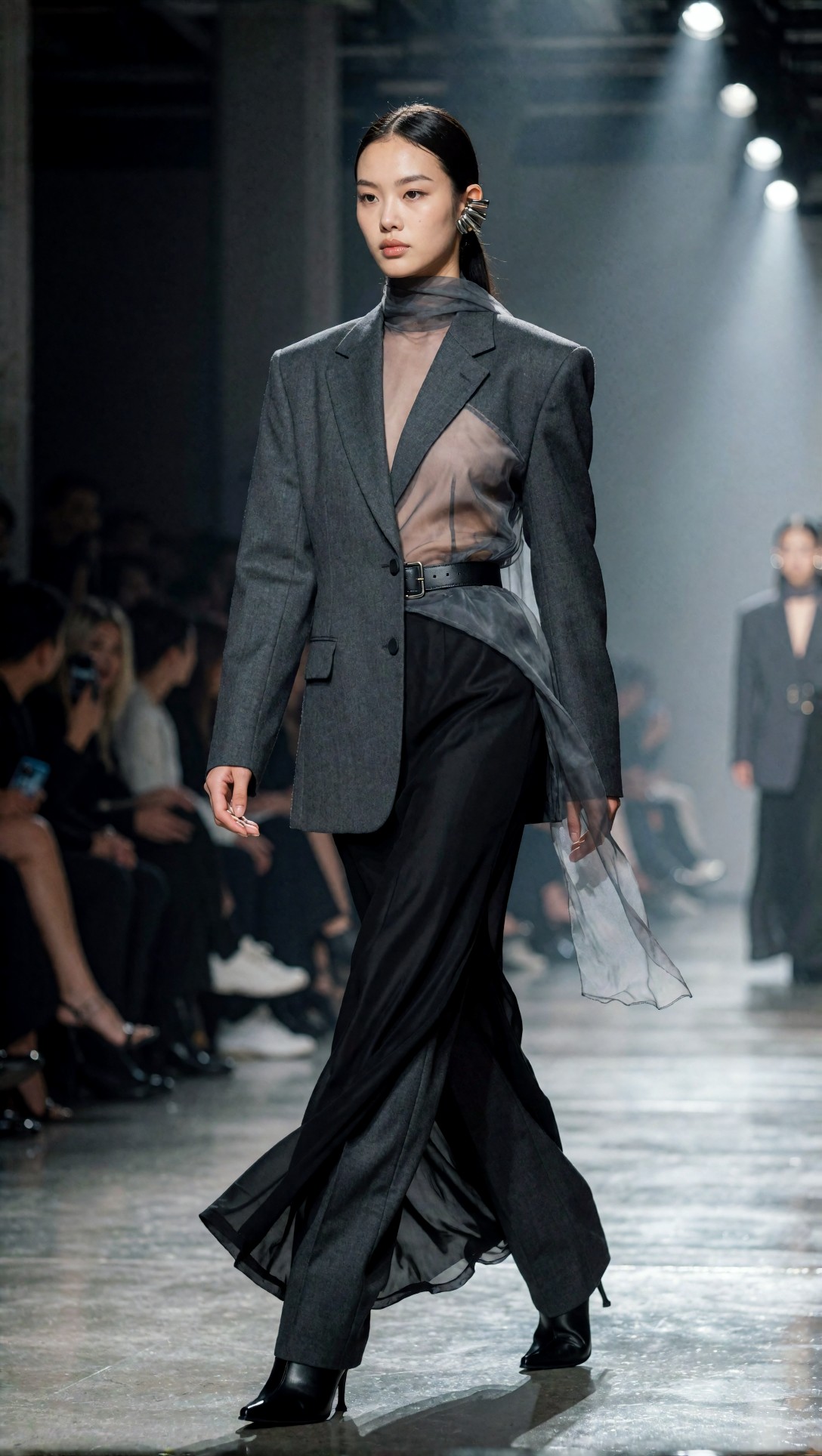
Check whether the outfit still reads as layered ready-to-wear rather than costume. The useful outputs keep the blazer, skirt-over-trouser idea, and boot line coherent while preserving catwalk movement.
This next one checked a retail-display and product-merchandising angle, useful for brand teams building K fashion outfit references rather than character portraits.
Topic: Korean fashion retail display with 2026 minimalist trend direction
Genre: Product Editorial
Camera: Sony A7R V
Lens: 35mm f/2.8
Lighting: Softbox key light with practical store lighting
Location: Premium Seoul concept store with modular racks, folded knits, brushed steel fixtures, and stone display tables
Style: Luxury retail campaign
Final Prompt: Editorial retail scene showing Korean fashion trends 2026 inside a premium Seoul concept store, coordinated display of minimalist outfits on mannequins and racks, palette of soft stone, ink black, muted olive, and warm cream, longline coats, cropped jackets, wide-leg trousers, ribbed knits, square-toe shoes, compact leather bags, neatly folded textiles, polished brushed steel fixtures, clean stone tables, balanced composition with one mannequin in foreground wearing a complete K fashion outfit, realistic store lighting mixed with softbox refinement, premium textile texture, modern merchandising logic, Sony A7R V look, 35mm environmental framing, luxury campaign realism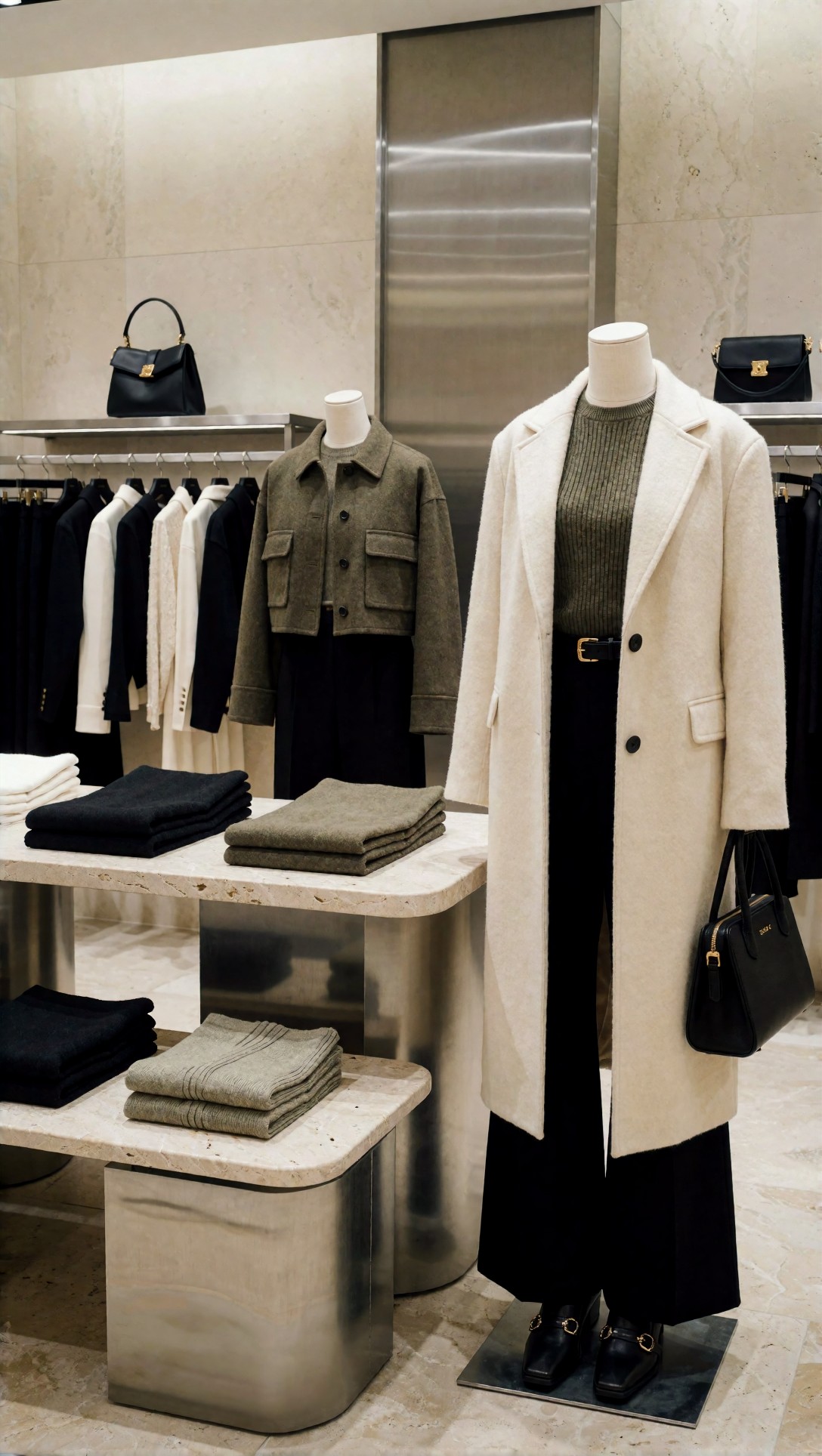
Inspect whether the display feels merchandised rather than chaotic. Strong results show repeated silhouettes and color planning; weak ones produce random garments with no retail logic.
The weak points I kept seeing
Both workflows had repeat failure modes.
1. “Korean fashion” often collapsed into idol styling
The model sometimes added stagewear details that were too glossy, too youthful, or too costume-like for the requested use case. This happened most when the prompt included “trendy” without concrete garments.
2. Minimalism was easy to over-sanitize
When the prompt said “minimalist” but did not describe proportion and fabric, many outputs looked like generic catalog basics. The Korean part disappeared first.
3. Streetwear backgrounds could overpower the outfit
Neon signs, scooters, crowds, and wet streets looked cinematic, but they often stole attention from the silhouette. For outfit evaluation, simpler backgrounds worked better.
4. Runway prompts sometimes invented impossible garments
The scene-led method loved dramatic shapes. That helped mood, but it could break wearability. If you need runway outfit ideas that could plausibly be produced, specify material behavior and hem logic.
This test was built to expose whether the model could handle Korean street fashion at night without turning the image into a cyberpunk poster.
Topic: Night Seoul street fashion with controlled visual noise
Genre: Lifestyle Portrait
Camera: Leica SL2-S
Lens: 50mm f/2 APO-Summicron-SL
Lighting: Neon rim light with soft storefront spill
Location: Apgujeong side street after rain with subtle reflections and luxury storefront windows
Style: Cinematic realism
Final Prompt: Full-body Korean street fashion image set on an Apgujeong side street after light rain, model paused near a luxury storefront window, wearing deep navy oversized mac coat over striped fine-gauge knit, dark straight-leg trousers cropped at ankle, polished black loafers with visible grey socks, compact leather shoulder bag, understated silver chain, natural pose with one hand in pocket, composed expression, restrained use of neon reflections, wet pavement but not cluttered, elegant urban Seoul nightlife atmosphere, cinematic realism, realistic fabric response to moisture and light, Leica SL2-S rendering, 50mm f/2 balanced editorial framing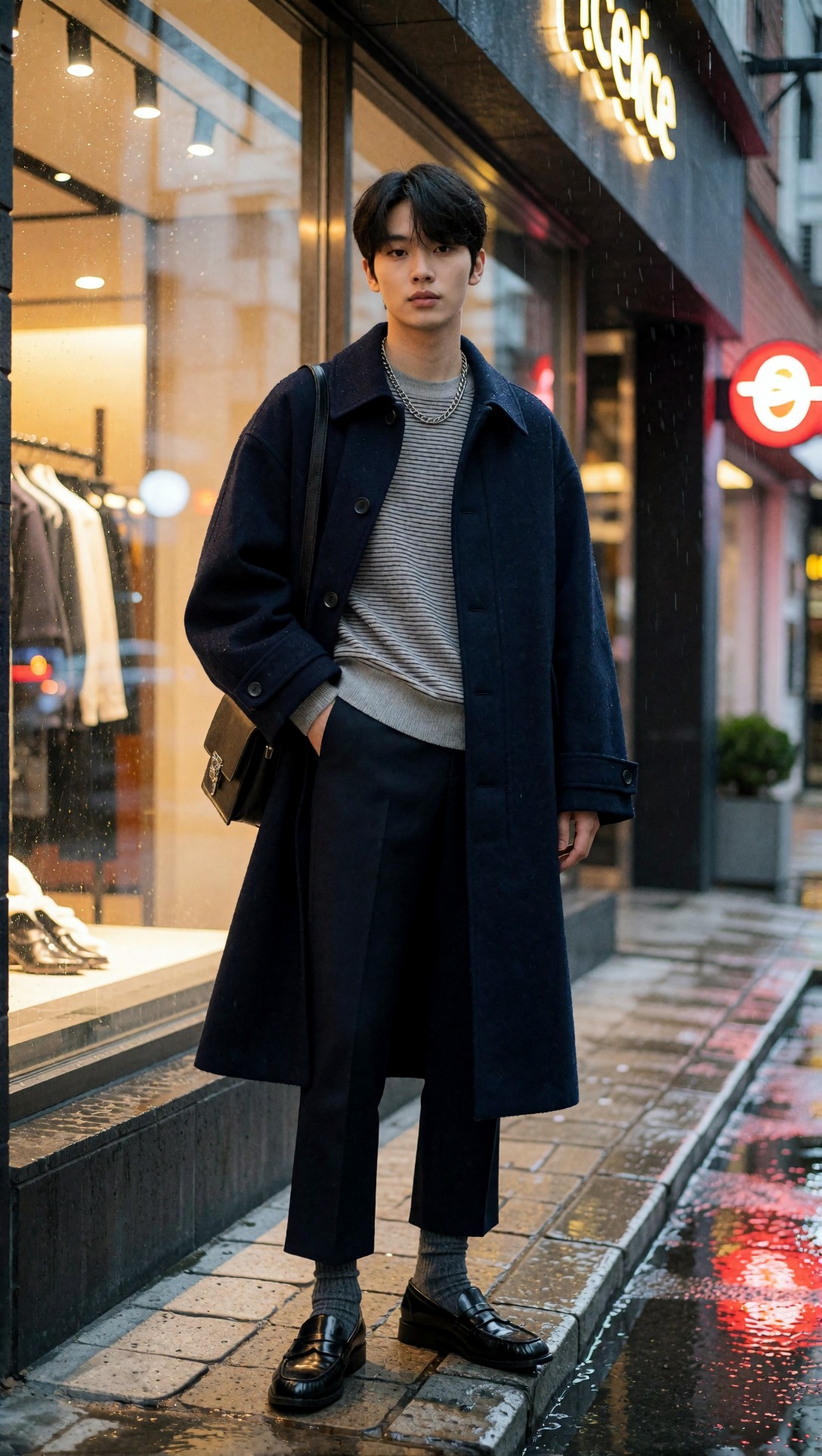
What to inspect here is background control. The best outputs keep the reflections secondary and let the coat length, knit stripe, and loafer styling carry the fashion story.
This test checked whether the model could represent a menswear-leaning K fashion outfit without defaulting to either officewear or skatewear extremes.
Topic: Korean menswear-inspired minimalist street tailoring
Genre: Fashion Editorial
Camera: Hasselblad X2D 100C
Lens: XCD 80mm f/1.9
Lighting: Soft daylight with negative fill
Location: Seoul gallery courtyard with pale stone walls and sparse landscaping
Style: Contemporary Korean editorial
Final Prompt: Full-body contemporary Korean fashion editorial in a Seoul gallery courtyard, androgynous menswear-inspired look for 2026 with slate oversized double-breasted blazer, washed white tee tucked loosely into pleated charcoal wide trousers, black leather belt, soft square-toe derbies, slim portfolio bag, subtle metal watch, relaxed upright pose, calm confident expression, palette of slate white charcoal and black, minimal but directional styling, emphasis on tailoring balance and trouser volume, pale stone background with sparse landscaping, quiet contemporary mood, realistic garment drape and high-end textile detail, Hasselblad X2D 100C tonal richness, XCD 80mm f/1.9 portrait-editorial compression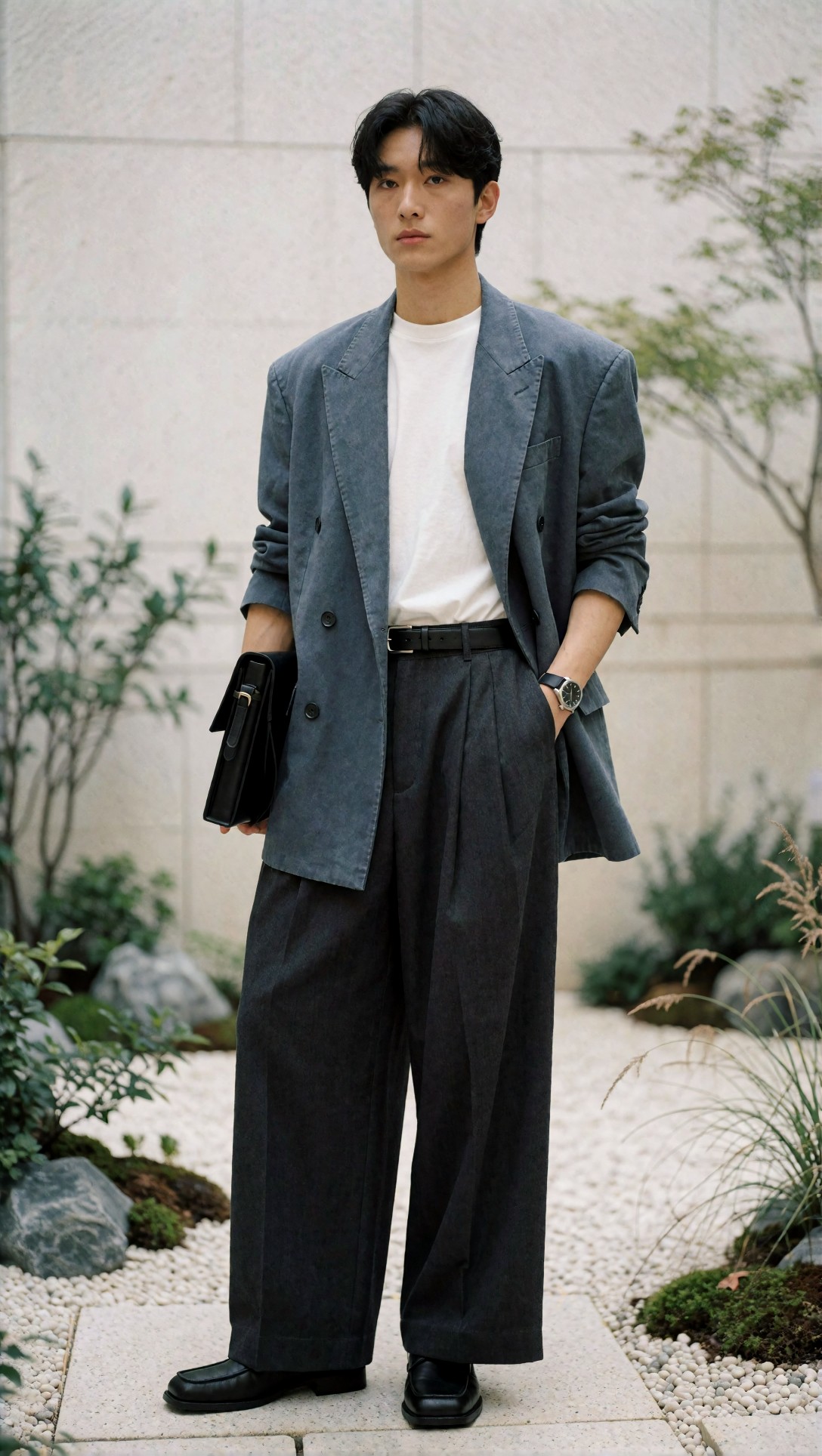
Look for shoulder shape and trouser volume. The useful images preserve the oversized blazer without shrinking the trousers into standard office pants.
Side-by-side tradeoffs that actually matter
Here is where the comparison became useful.
For streetwear
- Trend-led prompts gave better layering and accessory coherence.
- Scene-led prompts gave better environment and mood.
- If you care about outfit design first, use trend-led.
- If you care about campaign energy first, use scene-led.
For Korean minimalist fashion
- Trend-led prompts were much better at proportion control.
- Scene-led prompts often made the image look premium but too internationally generic.
- If the goal is product development or lookbook planning, trend-led is safer.
For runway outfit ideas
- Scene-led prompts produced stronger catwalk realism.
- Trend-led prompts reduced nonsense garments.
- The best runway outputs used a hybrid prompt: one sentence for garment system, one sentence for show context.
This pair of tests was designed to expose that difference directly: one runway-oriented, one lookbook-oriented, both using similar wardrobe language.
Topic: Korean runway knit layering concept for 2026
Genre: Runway Fashion
Camera: Canon EOS R3
Lens: RF 70-200mm f/2.8L at 120mm
Lighting: Overhead runway spots with cool side fill
Location: Industrial Seoul Fashion Week venue with matte black seating and silver truss lighting
Style: Avant-garde ready-to-wear
Final Prompt: Seoul Fashion Week runway image featuring a 2026 Korean fashion knit-layering concept, full-body model mid-stride wearing sand beige sleeveless longline knit over crisp white shirt with elongated cuffs, slim black neck scarf, soft olive technical cargo skirt layered over straight black trousers, angular leather ankle boots, sleek tucked-back hair, neutral runway face, cool-toned lighting, industrial venue with matte black seating and silver truss elements, avant-garde but wearable ready-to-wear styling, realistic catwalk posture, crisp garment layering logic, Canon EOS R3 action clarity, RF 70-200mm at 120mm compression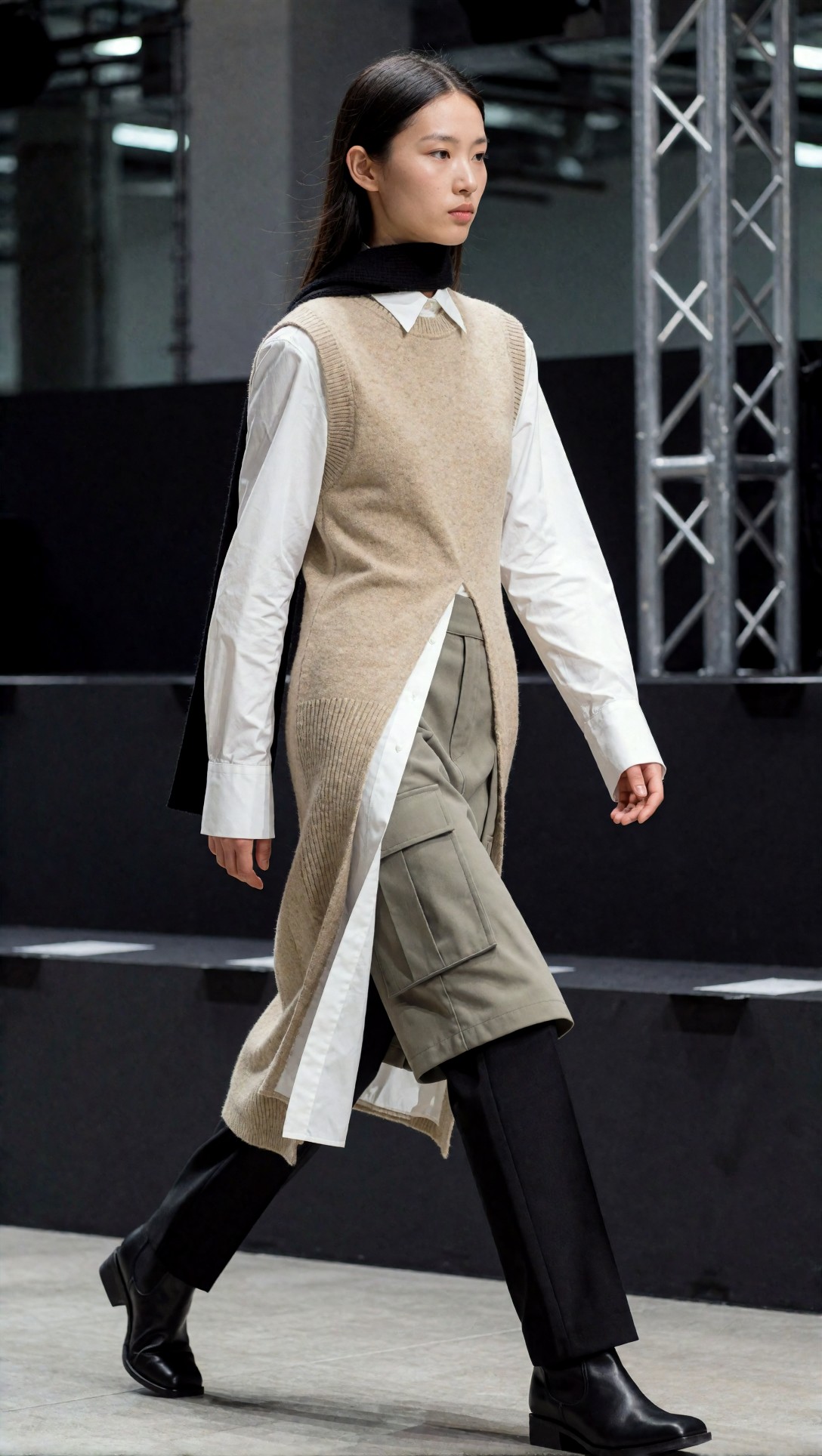
Inspect whether the layered skirt-over-trouser relationship stays readable. The weak outputs merge the lower half into one strange tube; the strong ones separate fabric weights clearly.
Topic: Korean lookbook version of the same knit-layering trend
Genre: Fashion Lookbook
Camera: Panasonic Lumix S1R II
Lens: 65mm f/2
Lighting: Large softbox key with gentle floor bounce
Location: Neutral studio with warm grey seamless backdrop
Style: Modern commercial lookbook
Final Prompt: Full-body Korean fashion lookbook image for 2026 showing a wearable knit-layering outfit in a neutral studio, model standing front-facing with slight contrapposto, sand beige sleeveless longline knit over crisp white shirt with elongated cuffs, slim black neck scarf, soft olive technical wrap skirt layered over straight black trousers, angular leather ankle boots, clean tucked-back hair, minimal expression, warm grey seamless background, large soft light for accurate fabric color, commercial lookbook clarity, sharp separation between each garment layer, realistic textile texture, Panasonic Lumix S1R II detail, 65mm balanced full-body framing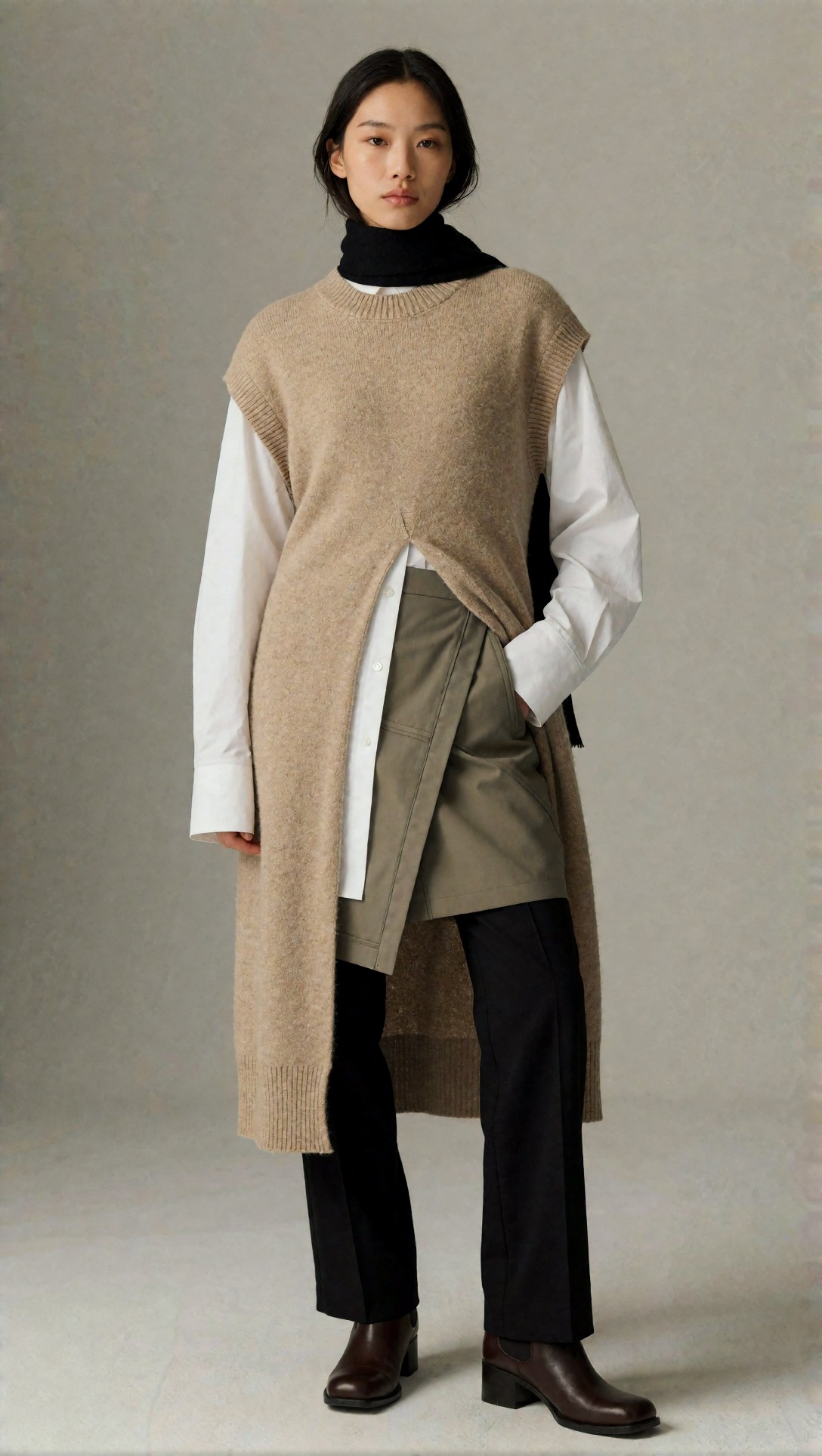
Compare this result with the runway version. The lookbook setup usually makes fabric hierarchy easier to judge, even if it feels less exciting.
Why these prompt ingredients were chosen
A lot of beginners ask why prompts need this much detail. In this test, each ingredient solved a specific failure risk.
- Topic kept the image from drifting into unrelated fashion subgenres.
- Genre controlled composition. Street style, runway, product editorial, and lookbook all frame clothing differently.
- Camera and lens nudged distance and compression, which matters for full-body silhouette accuracy.
- Lighting affected textile readability more than most people expect. Overcast and softbox setups were much better for checking black fabrics and layered neutrals.
- Location anchored the styling logic. A Seoul gallery courtyard gives different fashion cues than a wet nightlife street.
- Style prevented generic outputs by telling the model whether the image should read as campaign, editorial, lookbook, or runway documentation.
This next prompt tested a softer spring-ready K fashion outfit with feminine tailoring and accessories, mainly to see whether the model could hold polish without over-decorating.
Topic: Soft feminine Korean fashion tailoring for spring 2026
Genre: Luxury Campaign
Camera: Sony A1
Lens: 90mm f/2.8 Macro G OSS
Lighting: Morning sunlight diffused through sheer curtains
Location: Seoul hotel suite with pale stone bathroom doorway and muted blush seating
Style: High-end fashion advertising
Final Prompt: Elegant Korean fashion campaign image for spring 2026, full-body model in a Seoul hotel suite wearing a pale blush cropped tailored jacket, ivory silk tank, high-waisted dove grey midi skirt with clean column silhouette, delicate slingback heels, mini top-handle bag, fine pearl earrings, softly waved hair, poised expression, morning sunlight filtered through sheer curtains, palette of blush ivory dove grey and soft black, premium textile detail with silk sheen and tailored structure, luxurious but restrained Korean styling, balanced full-body composition, subtle interior architecture, Sony A1 precision, 90mm f/2.8 refined commercial depth
Inspect the accessory restraint. The strongest result keeps the bag, earrings, and shoes refined and small-scale; weaker outputs tend to add unnecessary jewelry or distort the skirt shape.
This final prompt checked a more youth-oriented casual direction: practical layering, campus-adjacent styling, and everyday wearability.
Topic: Everyday Korean casual layering for young street style 2026
Genre: Lifestyle Fashion
Camera: Ricoh GR IIIx
Lens: 40mm equivalent f/2.8
Lighting: Late afternoon natural light
Location: Hongdae pedestrian lane with posters, brick walls, and cafe terraces
Style: Casual Korean editorial
Final Prompt: Full-body everyday Korean street style image for 2026 in Hongdae, model crossing a pedestrian lane wearing faded indigo denim jacket over a fine stripe shirt and soft heather grey hoodie, loose khaki trousers cropped above the shoe, retro running sneakers, canvas tote with small keychain detail, natural loose hair, easy half-smile, lived-in casual styling, late afternoon natural light, posters and cafe terraces softly visible in background, realistic youthful energy without costume styling, emphasis on practical layering and color harmony, candid editorial framing, Ricoh GR IIIx street-photography feel
What matters here is whether the outfit feels wearable. The best images look like a real K fashion outfit someone could actually put on, not a trend board assembled by random chance.
Best choice by use case
Use trend-led prompts if you need:
- outfit ideation
- capsule wardrobe planning
- garment and accessory combinations
- Korean minimalist fashion references
- cleaner full-body outputs with readable proportions
Use scene-led prompts if you need:
- runway outfit ideas
- Seoul fashion week moodboards
- campaign and editorial atmosphere
- retail display concepts
- stronger visual storytelling around the outfit
Use the hybrid method if you need:
- the safest all-around results
- images that look editorial but still preserve the garment logic
- prompts that beginners can reuse with fewer random failures
A simple hybrid formula that worked repeatedly in this test was:
1. Start with the full outfit in plain garment terms. 2. Add one silhouette sentence. 3. Add one location sentence tied to Seoul or a plausible fashion context. 4. Add one lighting choice that supports fabric inspection. 5. End with a style direction like lookbook, Korean editorial, or runway realism.
Practical checklist before you save a result
Based on output quality, this is the checklist I would use before keeping any image about korean fashion trends 2026:
- Can you identify every garment layer clearly?
- Does the silhouette read from head to toe without cropped framing?
- Do shoes and bag match the outfit logic?
- Are black fabrics separated well, or did they merge into one shape?
- Does the background support the look rather than overwhelm it?
- Does the styling feel specifically Korean in proportion and restraint, not just “Asian fashion” in generic terms?
- If it is a runway image, does the garment still look wearable?
- If it is minimalist, is there enough structure and texture to avoid flat catalog blandness?
What I would change next
In a second test round, I would push harder on seasonal variation. Most strong outputs leaned transitional: jackets, knits, layering, and tailored separates. That matches current AI strengths because layering creates clearer visual hooks. But it also means summer styling can come out too plain unless the prompt includes fabric behavior, cut, and accessory detail.
I would also test more menswear-only prompts and more retail display prompts, because those were more stable than expected and useful for people building brand references.
Final editorial recommendation
If you are new to AI image prompting and researching korean fashion trends 2026, start with a trend-led wardrobe prompt and keep the background simple. That is the best choice for fashion students, content creators, resellers, stylists, and anyone collecting usable K fashion outfit references.
Use a scene-led workflow if your goal is campaign mood, Seoul Fashion Week atmosphere, or runway outfit ideas where environment matters almost as much as the clothes.
Avoid scene-heavy prompts if you mainly need garment accuracy. They are attractive, but they introduce more styling drift.
The setting detail that mattered most in this test was not the camera model or the city name. It was the combination of full-body framing, precise layering language, and a realistic fashion context. If those three pieces are present, the model is much more likely to produce Korean street fashion, Korean minimalist fashion, or runway styling that actually reads the way you intended.