Lookbook Photography Trend Today: What Spring-to-Summer Outfit Searches Are Driving AI Fashion Visuals 한국어 요약
이 페이지는 ZView Space의 영어 원문을 한국어 검색 사용자도 이해할 수 있도록 정리한 SEO 요약입니다. 핵심은 단순한 얼굴 중심 이미지가 아니라 패션 에디토리얼, 룩북, 아웃핏, 프롬프트 테스트, 이미지 생성 워크플로우를 실제로 어떻게 구성할지입니다.
핵심 요약
- 원문 주제: Lookbook Photography Trend Today: What Spring-to-Summer Outfit Searches Are Driving AI Fashion Visuals
- 목적: AI 이미지 생성에서 outfit, silhouette, fabric, pose, location, camera framing을 더 명확하게 설계합니다.
- 활용 범위: Z-Image Turbo, Krea2 Turbo, Qwen Image, Anima, SeedVR2 같은 이미지 생성 및 업스케일 워크플로우에 적용할 수 있습니다.
- SEO 관점: 제목, 설명, 이미지 alt, 프롬프트 예시가 실제 검색 의도와 맞아야 색인 가능성이 높아집니다.
한국어 사용자를 위한 체크포인트
1. 프롬프트가 얼굴 묘사에만 머물지 않고 전체 스타일과 의상 구성을 설명하는지 확인합니다. 2. 패션 이미지라면 상의, 하의, 아우터, 신발, 액세서리, 소재감, 촬영 장소를 분리해서 씁니다. 3. 생성 결과는 바로 게시하지 말고 디테일, 손, 의상 형태, 배경 일관성, 이미지 품질을 비교합니다. 4. 글 본문에는 실제 테스트 기준과 실패를 줄이는 방법이 들어가야 검색엔진에서 얇은 콘텐츠로 보일 가능성이 줄어듭니다.
원문 미리보기
This is a trend test, not a trend forecast. For this lookbook photography trend today review, I compared two common AI fashion image workflows against the same spring to summer outfit directions: a pure text to image editorial setup and a more controlled lookb
---
This is a trend test, not a trend forecast. For this lookbook photography trend today review, I compared two common AI fashion image workflows against the same spring-to-summer outfit directions: a pure text-to-image editorial setup and a more controlled lookbook/catalog workflow. The short version: text-first workflows are better at mood, campaign energy, and streetwear attitude, while layout-controlled lookbook workflows are better at outfit clarity, product logic, and repeatable merchandising visuals.
If you are searching for what is actually driving AI fashion photography right now, the answer is fairly concrete. The strongest prompts are not abstract style prompts. They are outfit-system prompts built around visible layers, practical seasonal transitions, accessories, silhouette balance, and retail or editorial context. In this test, the prompts that performed best described garments and shot plans more precisely than faces or beauty details.
Quick answer
- Spring-to-summer AI fashion visuals are currently being pushed by layer-light outfits: trench over tank, oversized shirt over knit top, long shorts, parachute pants, loafers, ballet flats, slim sneakers, shoulder bags, and visible jewelry stacks.
- For editorial fashion AI, text-to-image gives the stronger atmosphere, especially for Seoul street style, campaign imagery, and runway-inspired scenes.
- For lookbook photography and catalog-like outputs, a structured workflow with stronger framing constraints produces cleaner head-to-toe outfit visibility.
- The weak point across both workflows is consistency in hems, hands, bag straps, and repeated garment details across multiple shots.
- If your goal is outfit research, start with controlled full-body prompts. If your goal is campaign concepting, start with scene-led editorial prompts.
What was tested
I tested two workflows using the same trend brief:
1. Option A: text-to-image editorial generation for streetwear campaign, editorial fashion AI, and runway outfit ideas. 2. Option B: lookbook-style controlled generation for head-to-toe outfit pages, cleaner product visibility, and more commercial framing.
The shared fashion brief was based on current spring-to-summer search behavior patterns that show up repeatedly in generated visual requests:
- relaxed tailoring with warmer-weather layering
- soft utility pieces
- full-body silhouette visibility
- mixed texture fabrics like poplin, denim, crochet, washed leather, nylon, and lightweight wool
- city settings that signal trend context: Seoul, Tokyo, London, New York, Paris
- accessories as part of the outfit logic, not decoration added at the end
Comparison criteria
| Criteria | Option A: Text-to-image editorial | Option B: Controlled lookbook workflow | |---|---|---| | Trend atmosphere | Strong | Moderate | | Full outfit readability | Moderate | Strong | | Styling coherence | Strong when prompt is detailed | Stronger across simpler scenes | | Background consistency | Variable | Better | | Garment detail accuracy | Mixed | Better on front-facing looks | | Campaign energy | Strongest | Weaker | | Catalog or retail use | Limited | Best fit | | Multi-image consistency | Weak without extra control | Better but still imperfect |
In practice, I found Option A produced the strongest trend feeling, while Option B produced the strongest shopping and styling utility.
For readers building their own tests, the easiest places to compare results are [Prompt Lab](/promptlab), [Create](/create), and the wider reference sets in the [Gallery](/gallery).
Why these searches are shaping AI fashion visuals
The current wave of AI fashion prompts is not only about "summer outfits." It is about transition dressing that still reads editorial on a feed or campaign page. That matters because image models respond better when the outfit has structure.
The repeated visual pattern I saw was this: searches around runway outfit ideas and streetwear campaign aesthetics tend to reward prompts that specify how the outfit is assembled. That means shirt open over fitted top, low-slung trouser or long short, sharp shoe choice, bag scale, metal hardware, and textile contrast.
When prompts stayed vague, the model often defaulted to generic resortwear or influencer-style posing. When the prompts specified the silhouette system, the result looked closer to a real lookbook or campaign planning board.
Option A: Editorial text-to-image is strongest for mood and trend signal
The strongest result from Option A was its ability to make an image feel current without relying on a literal runway. It handled movement, urban context, layered styling, and directional color palettes better than the more constrained workflow.
This is the setup I would use for:
- streetwear campaign ideation
- editorial fashion AI concept frames
- trend boards built around city-specific styling
- runway-inspired visuals with atmosphere
The weak point is that the same freedom that creates energy also creates errors. Trouser widths shift, bag straps melt into jackets, and shoes become less reliable when the pose is dynamic.
Test 1: street-style full body for transitional layering
This prompt checks whether the model can keep the full outfit readable while still giving a believable street-style image. I used it to test jacket length, shirt layering, bag placement, and shoe clarity.
Topic: Spring-to-summer city layering with relaxed tailoring and soft utility accessories
Genre: Street Style
Camera: Fujifilm GFX 100S
Lens: 45mm f/2.8
Lighting: Overcast diffusion
Location: Seongsu side street with concrete storefronts, silver railings, and muted retail signage
Style: Contemporary Korean streetwear campaign
Final Prompt: street-style full body fashion image, head-to-toe outfit clearly visible, model walking through Seongsu on an overcast afternoon, oversized stone trench worn open over a ribbed white tank, pale blue striped poplin shirt layered loosely under the trench, charcoal long tailored shorts hitting below the knee, dark brown loafers with thin socks, slouchy black shoulder bag, silver chain necklace and narrow sunglasses, relaxed straight posture with one hand adjusting the bag strap, documentary 45mm framing, clean urban perspective, visible garment drape and fabric texture, neutral gray and blue palette with soft contrast, editorial streetwear campaign composition, full silhouette prioritized over facial detail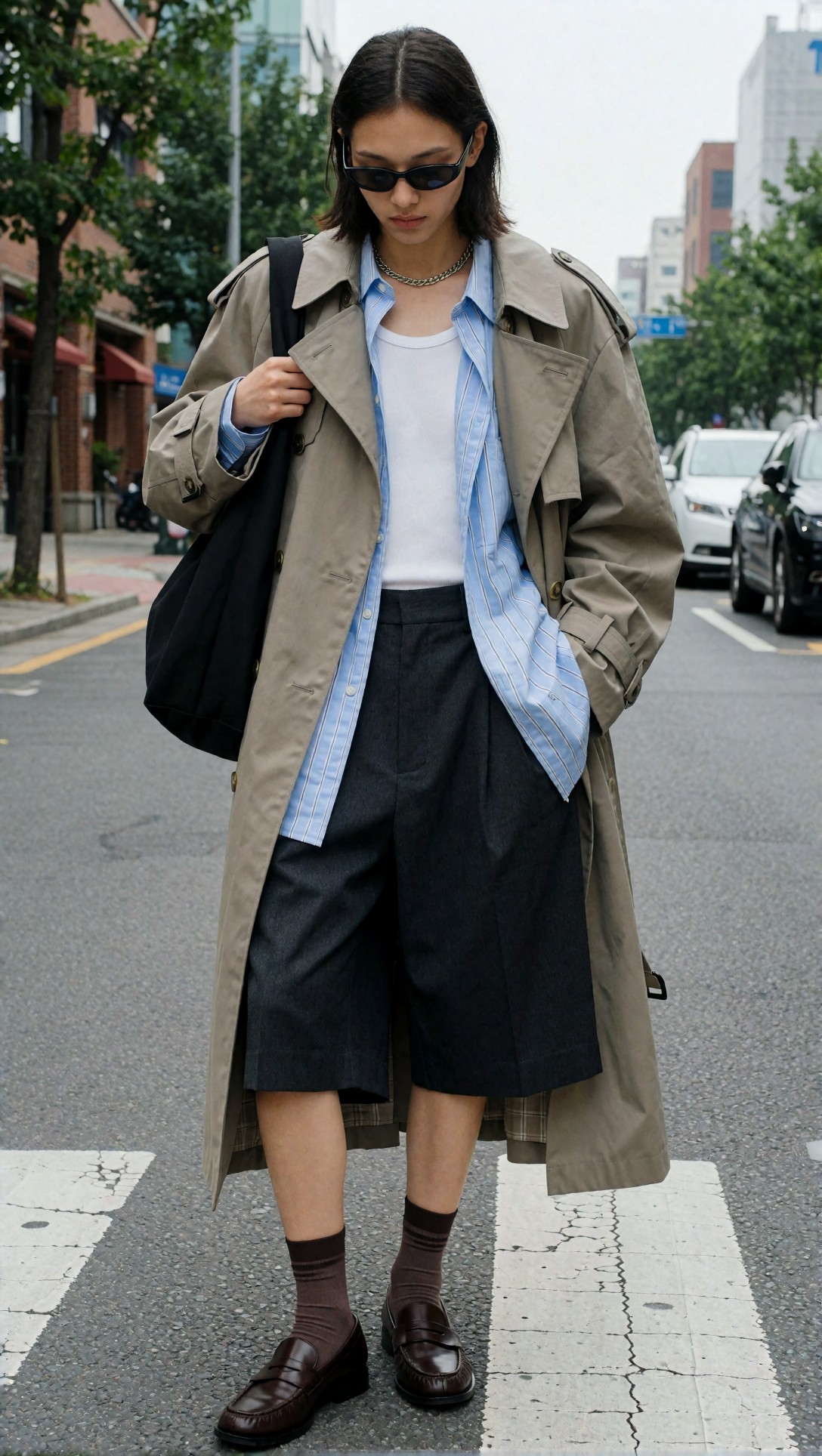
Inspect whether the trench, shirt, tank, and shorts remain logically layered. The best outputs keep the hem relationships clean and preserve the loafers without turning them into generic sneakers.
Test 2: three-quarter editorial for runway outfit ideas
This test pushes the model toward a more fashion-week visual language. It checks whether stronger direction improves styling confidence without losing textile realism.
Topic: Runway-inspired spring tailoring with sheer layers and metallic accessories
Genre: Fashion Editorial
Camera: Canon EOS R5
Lens: 50mm f/1.8
Lighting: Window light with negative fill
Location: Minimal Paris studio with raw plaster wall and polished concrete floor
Style: Luxury fashion editorial
Final Prompt: three-quarter outfit editorial image, spring-to-summer runway-inspired look, cropped technical blazer in dove gray over a sheer fine-knit long-sleeve top, high-waist fluid black trousers with deep front pleats, pointed silver slingback heels, sculptural cuff bracelet, structured mini bag in brushed leather, poised standing pose angled slightly to camera, controlled expression, clean magazine composition with soft window light and subtle shadow depth, visible fabric transparency and tailoring lines, cool neutral palette with metallic accents, premium editorial realism, garment silhouette and accessory proportion sharply defined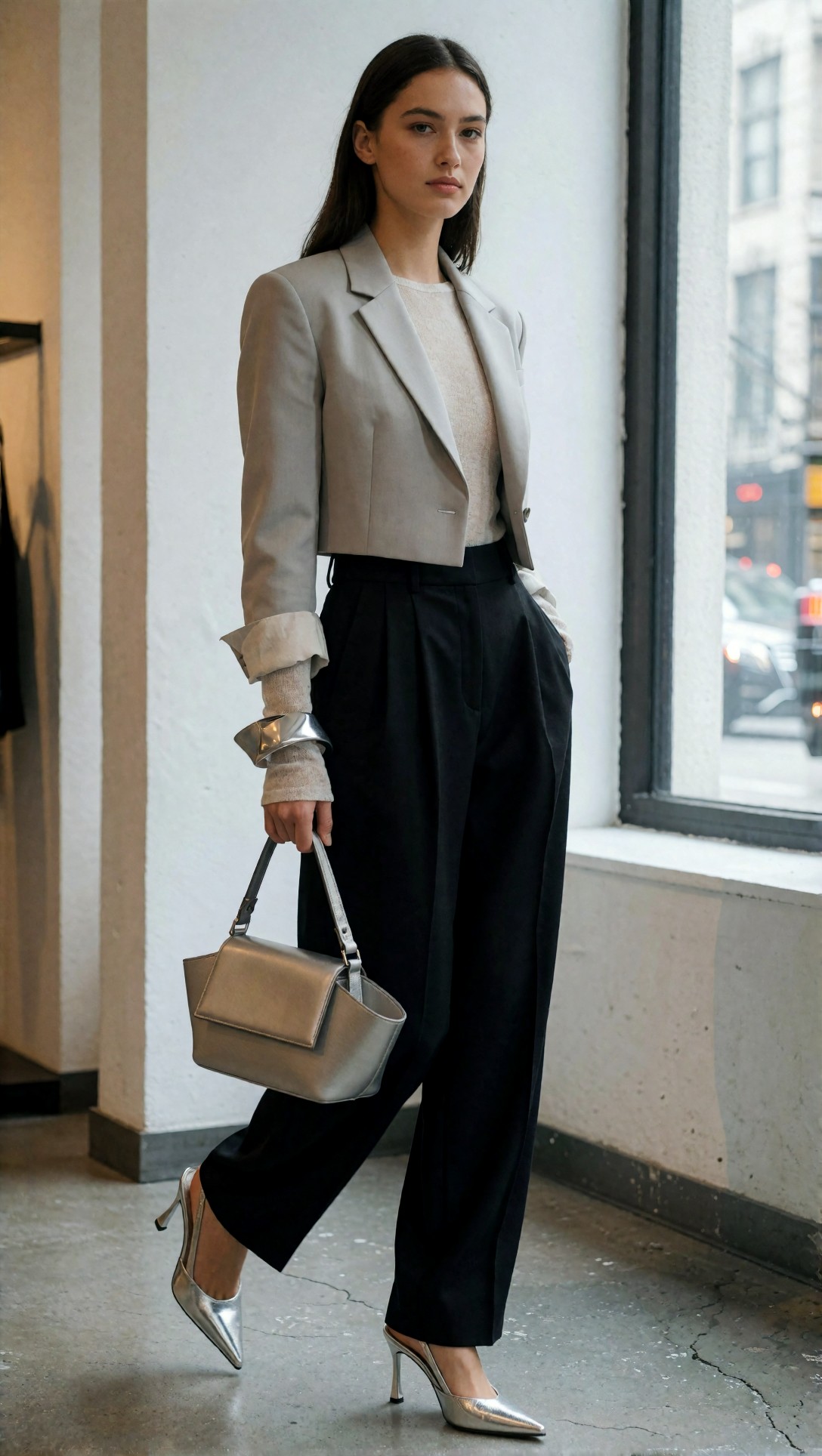
Check the transparency of the knit layer and the trouser pleats. In weaker generations, the blazer becomes too formal or the slingbacks lose shape.
Where Option A performed best
- Street context: Seoul, Tokyo, and London prompts gave stronger fashion-culture cues than generic city prompts.
- Layer interaction: open shirts, trenches, vests, and knit overlays looked more natural here.
- Campaign framing: slight motion and imperfect posture often improved realism.
- Color direction: dusty blue, butter yellow, stone, tobacco, washed black, and silver accents read clearly.
Failure risks in Option A
The weak point was repeatability. If you need six matching looks for a brand deck, Option A drifts quickly.
Common issues I saw:
- asymmetrical hems that were not designed that way
- inconsistent shoe pairs
- jewelry doubling or floating
- bags merging into torso lines
- hands becoming distracting when a pose is too active
This is where a more controlled workflow becomes useful.
Option B: Controlled lookbook generation is better for outfit clarity
Option B gave less atmosphere, but it was better for the practical question buyers and stylists actually ask: Can I see the outfit properly?
This setup worked best when the prompt locked the shot type, pose, framing, and background simplicity. It is the better workflow for lookbook photography, e-commerce planning, retail display ideation, and outfit comparison boards.
Test 3: head-to-toe lookbook for silhouette clarity
This test is meant to expose whether a model can maintain clean body framing and honest proportions. It also checks if the background stays secondary to the garment system.
Topic: Minimal spring-to-summer lookbook with crisp separates and visible accessories
Genre: Fashion Lookbook
Camera: Sony A7R V
Lens: 40mm f/2.5
Lighting: Large softbox key with white bounce fill
Location: Neutral studio seamless in warm light gray
Style: Clean commercial lookbook
Final Prompt: head-to-toe lookbook image on a warm light gray seamless background, full outfit centered and fully visible from shoes to hair, oversized butter-yellow button shirt worn open over a fitted oatmeal knit tank, cream wide-leg trousers with sharp crease, black slim belt, tan leather sandals, woven shoulder bag, slim gold bangles, balanced front-facing stance with slight weight shift, commercial lookbook clarity, true garment proportions, crisp fabric texture, soft even studio lighting, clean shadow under feet, no dramatic pose, styling system fully readable for merchandising review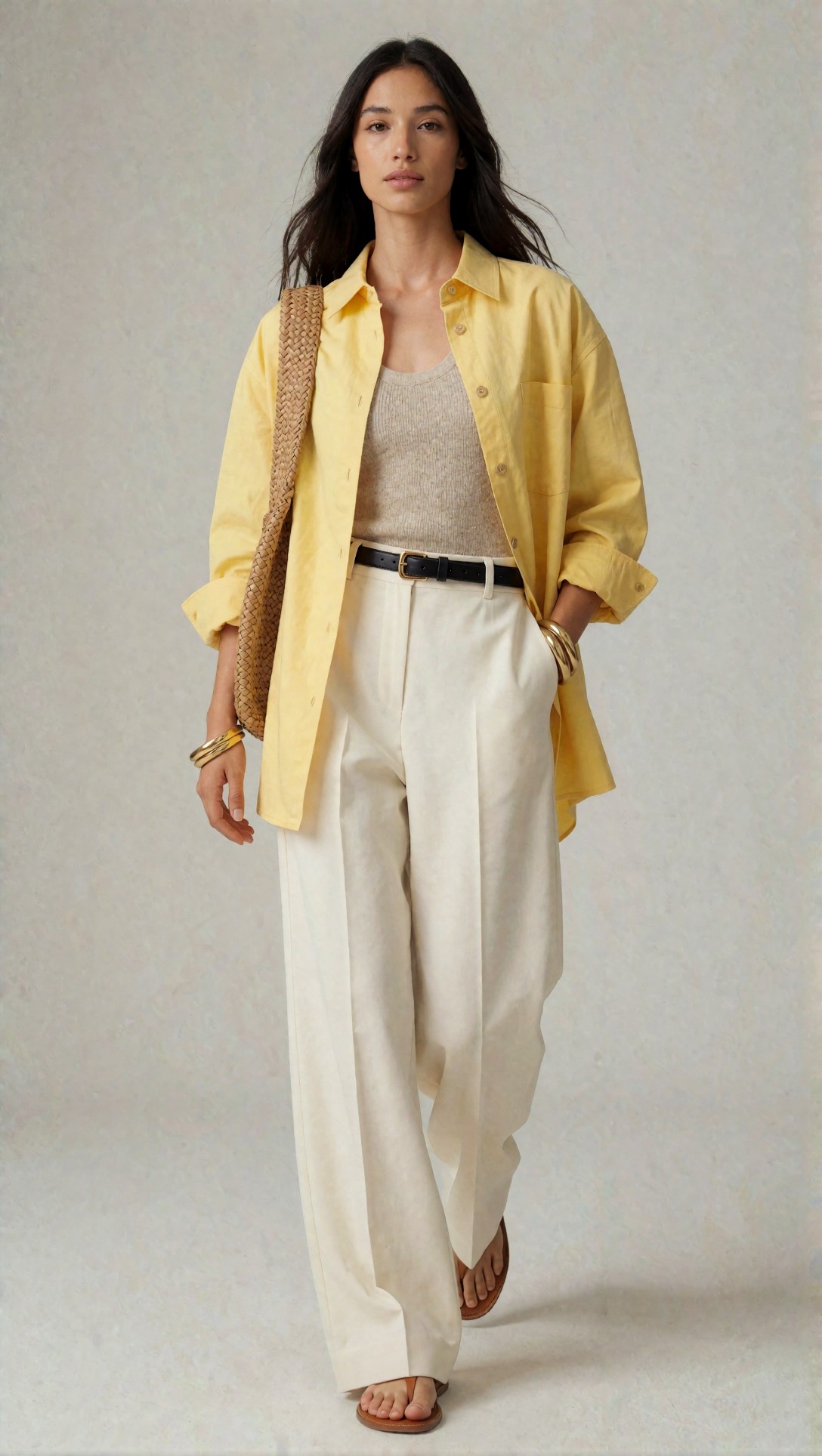
Inspect the trouser break, sandal accuracy, and how the shirt hangs over the knit tank. This is where controlled setups usually beat editorial prompts.
Test 4: catalog grid page for merchandising logic
This prompt checks whether the model can present multiple looks in a coherent layout. It is useful when testing whether a trend can become a shop page or buying plan.
Topic: Spring capsule wardrobe shown as coordinated full-body outfit series
Genre: Product Editorial
Camera: Nikon Z8
Lens: 35mm f/4
Lighting: Even studio soft light
Location: White studio layout environment designed as a fashion catalog page
Style: Contemporary retail catalog
Final Prompt: catalog grid page showing four coordinated spring-to-summer full-body looks, each model framed head-to-toe with consistent scale and spacing, wardrobe built around blue poplin shirt, rib tank, long tailored shorts, washed denim jacket, cream trousers, black loafers, slim sneakers, woven tote, narrow sunglasses, silver jewelry, minimalist white background, retail-ready layout, clear outfit differentiation with strong seasonal layering logic, clean product visibility, balanced negative space, fashion merchandising page aesthetic, accurate fabric and accessory separation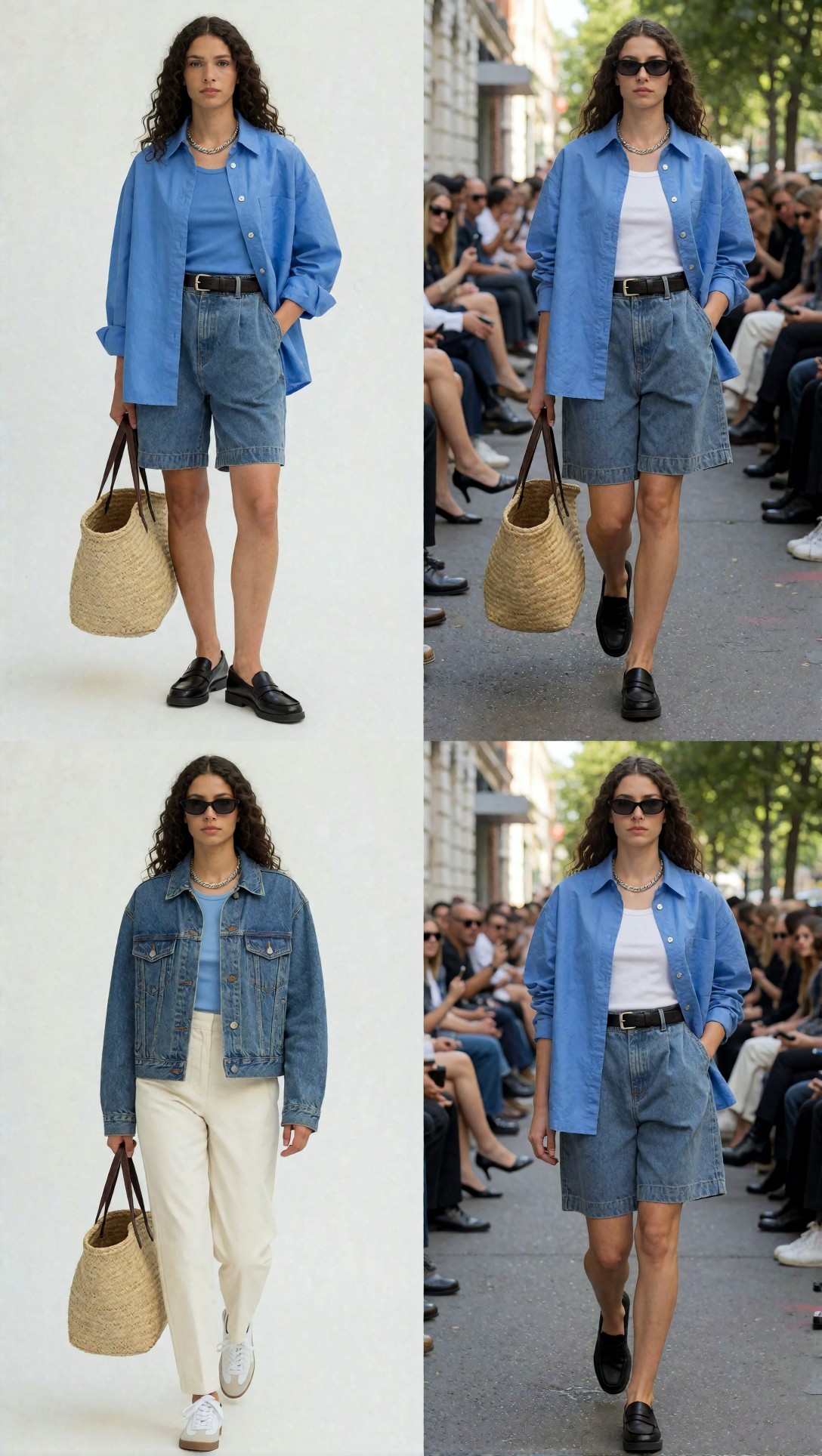
Look for grid consistency first, then check whether each outfit is genuinely different rather than re-colored copies. Models often fake variation badly if the accessory logic is not explicit.
Where Option B performed best
- Head-to-toe readability: strongest overall result
- Retail planning: best for assortments and capsule stories
- Garment checks: easier to inspect collars, hems, trouser widths, shoe category, and bag scale
- Prompt stability: less dramatic drift across reruns
Limitations of Option B
The clean workflow can over-sanitize the image. In some outputs, the fashion felt merchandised rather than current.
I also saw these recurring issues:
n- studio backgrounds that flatten texture
- too-static posing
- accessories reading as placeholders rather than styled elements
- less convincing city trend context
- weaker energy for editorial fashion AI and streetwear campaign concepts
If the brief needs emotional pull, controlled lookbook setups need stronger styling contrast or a secondary mood board stage.
Side-by-side tradeoffs: what changes in the images
The simplest way to explain the difference is this:
- Option A sells the idea of the outfit in the world.
- Option B sells the outfit itself.
That distinction matters for current spring-to-summer trend work because the strongest visuals today often start as campaign mood, then get translated into usable lookbook frames.
Checklist: when comparing outputs
Use this quick checklist on any generated fashion image:
- Can you identify every major garment layer without guessing?
- Are shoes readable enough to classify the style correctly?
- Does the bag sit in a believable place on the body?
- Do textures match the prompt: poplin, denim, nylon, crochet, leather, lightweight wool?
- Is the silhouette internally consistent from shoulder to hem?
- Does the background support the fashion story rather than distract from it?
- Would this image help a stylist, buyer, or art director make a decision?
If the answer is no to more than two of these, the image may be visually attractive but operationally weak.
Prompts that expose the difference most clearly
The next tests focus on scenarios where editorial energy and lookbook clarity split apart fast.
Test 5: runway/backstage moment for movement and styling hierarchy
This test checks whether the model can preserve outfit logic in a busier scene. It is a good stress test for editorial fashion AI because backstage prompts often cause detail collapse.
Topic: Backstage runway styling with lightweight tailoring, mesh layers, and accessories in motion
Genre: Fashion Documentary
Camera: Leica SL2-S
Lens: 35mm f/2
Lighting: Mixed backstage tungsten and soft overhead spill
Location: Milan runway backstage with garment racks, taped floor marks, and production bustle
Style: Documentary luxury fashion week coverage
Final Prompt: runway backstage moment with full outfit still readable, model stepping past garment racks during final call, washed black sleeveless blazer over fine mesh taupe top, slate wide trousers cropped above the ankle, strappy low heels, oversized leather clutch tucked under arm, layered metal rings and ear cuff, natural motion with focused expression, assistants blurred in background, backstage tape markings and hanging garments visible, mixed warm backstage lighting, fashion documentary realism, styling hierarchy preserved despite environmental complexity, texture and silhouette accuracy prioritized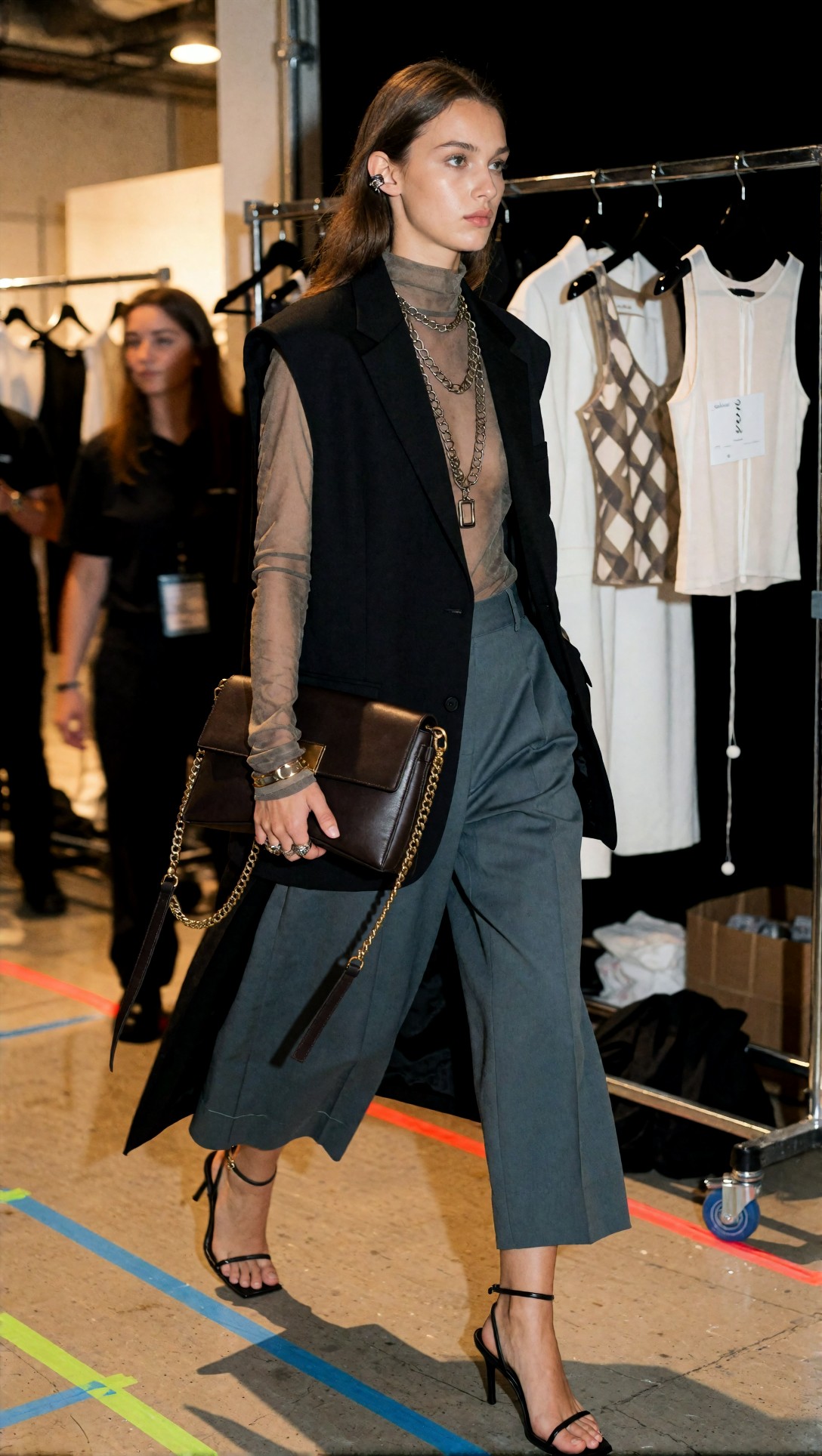
Inspect whether the background activity destroys the outfit read. The stronger generations keep the sleeveless blazer and cropped trouser proportion intact even with motion blur nearby.
Test 6: storefront display for retail trend translation
This test checks whether current trend styling survives when no person is present. It is useful for turning campaign trends into store concepts and display planning.
Topic: Spring-to-summer storefront display built around relaxed tailoring and soft utility pieces
Genre: Product Editorial
Camera: Phase One XF IQ4
Lens: 55mm f/4
Lighting: Morning storefront daylight with gentle interior fill
Location: Scandinavian minimalist retail window on a quiet city street
Style: High-end retail display design
Final Prompt: storefront display featuring a curated spring-to-summer fashion story, mannequins styled in stone trench, pale blue poplin shirt, rib tank, cream wide-leg trouser, charcoal long shorts, loafers, woven tote, slim sunglasses, polished retail window with pale wood risers and brushed steel fixtures, clean city reflection on glass, merchandising balance, high-end display composition, fabric texture and accessory placement carefully visible, contemporary trend direction translated into physical retail language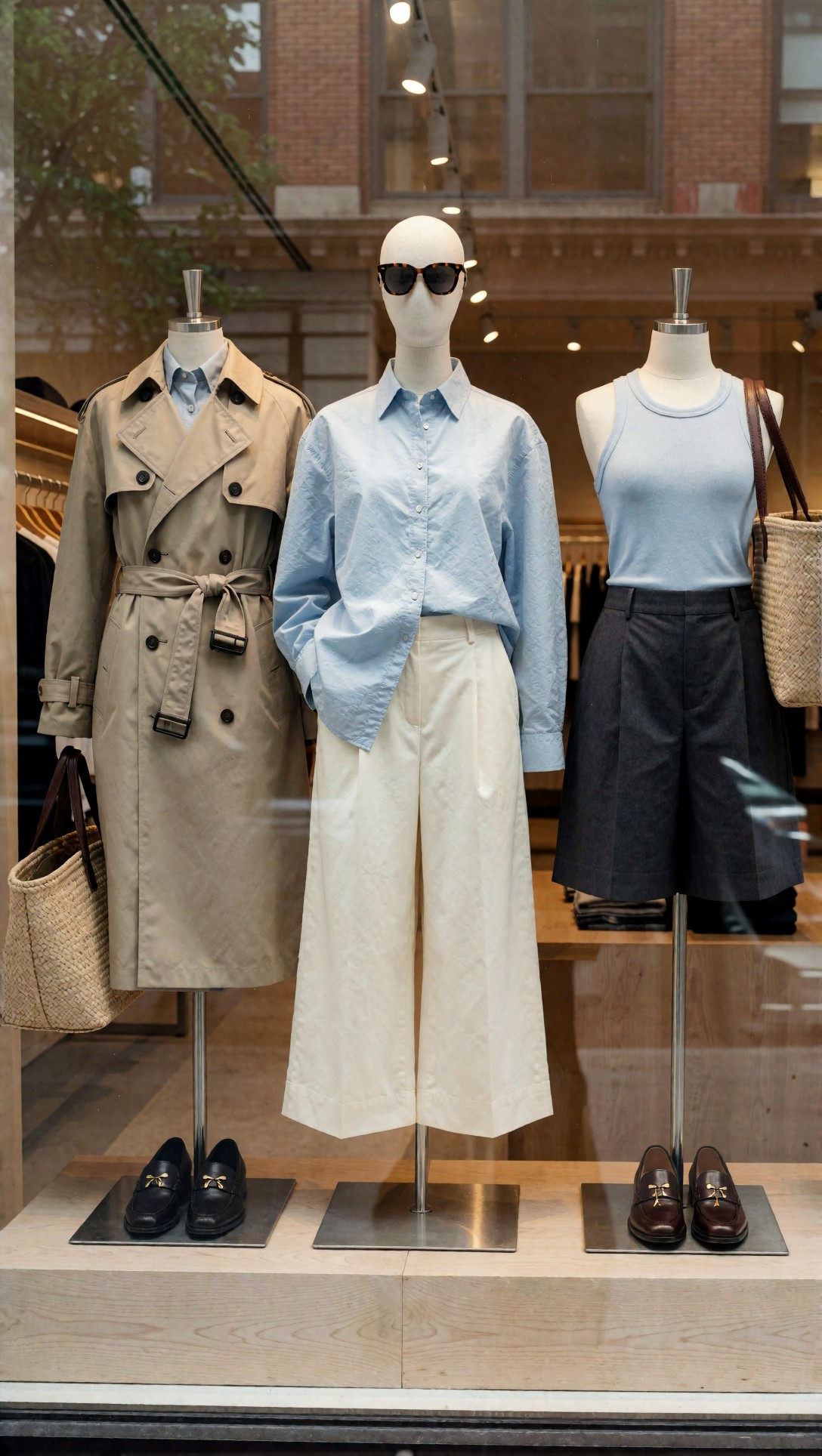
Look for whether the display feels like one collection story instead of random pieces on mannequins. Weak outputs usually lose scale logic between shoes, bags, and risers.
Test 7: garment detail macro for fabric truth
This prompt is not about overall composition. It is meant to test whether the model understands the material cues that make spring-to-summer styling believable.
Topic: Fabric and construction detail from a transitional spring shirt and trouser pairing
Genre: Luxury Campaign
Camera: Sony A1
Lens: 85mm f/2
Lighting: Soft directional studio light with edge highlight
Location: Neutral editorial studio set with matte stone plinth
Style: Premium garment detail campaign
Final Prompt: garment detail macro focused on the meeting point between a pale blue striped poplin shirt, fine-knit oatmeal tank, and cream pleated trouser waistband, visible stitching, button placket, subtle fabric wrinkles, belt loop construction, brushed metal buckle, hand resting naturally near side seam without obscuring details, soft directional light revealing weave and structure, premium campaign crop, tactile realism, neutral palette, editorial luxury finish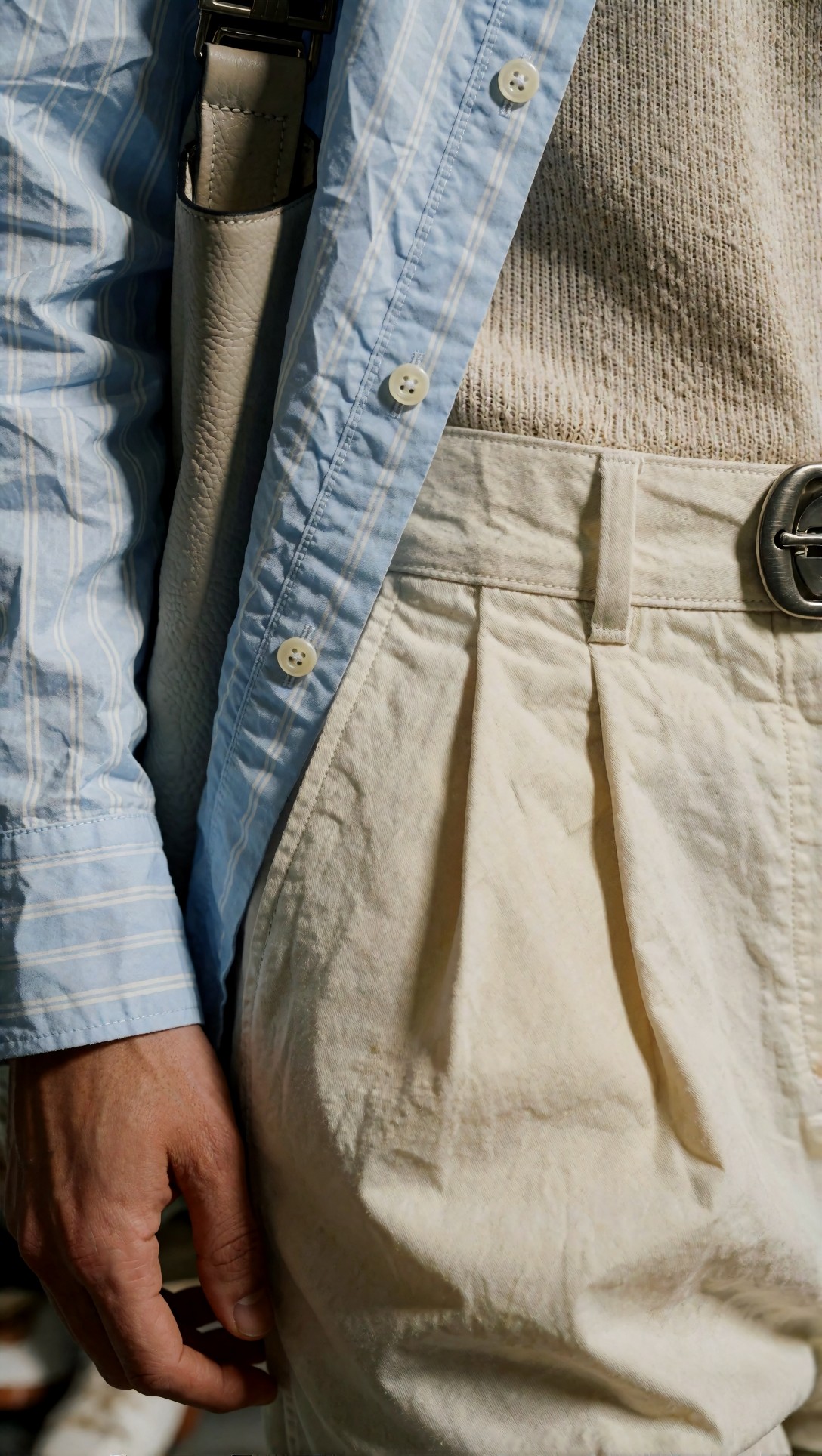
Inspect button spacing, stripe continuity, and whether pleats emerge from a believable waistband. Macro prompts reveal fake textile understanding very quickly.
Test 8: mood-board collage for campaign direction before generation lock
This final prompt checks concept alignment rather than a finished single frame. It is useful when you want to identify which trend signals are worth pushing into a full series.
Topic: Spring-to-summer AI fashion campaign concept board with city, runway, retail, and accessory references
Genre: Mood-board Collage
Camera: Mixed editorial capture aesthetic
Lens: 24-70mm documentary fashion range
Lighting: Mixed daylight, studio soft light, and runway spill
Location: Seoul street, Paris studio, Milan backstage, minimalist retail interior
Style: Fashion creative direction board
Final Prompt: mood-board collage for a spring-to-summer fashion campaign, combining street-style full-body outfit, clean lookbook frame, backstage runway detail, accessory close-up, storefront merchandising scene, color swatches in butter yellow, stone, charcoal, pale blue, brushed silver, visible notes of poplin, mesh, denim, lightweight wool, woven leather, collage arranged like a fashion editor planning board, contemporary trend intelligence, styling system emphasized over beauty, premium magazine layout energy, cohesive seasonal direction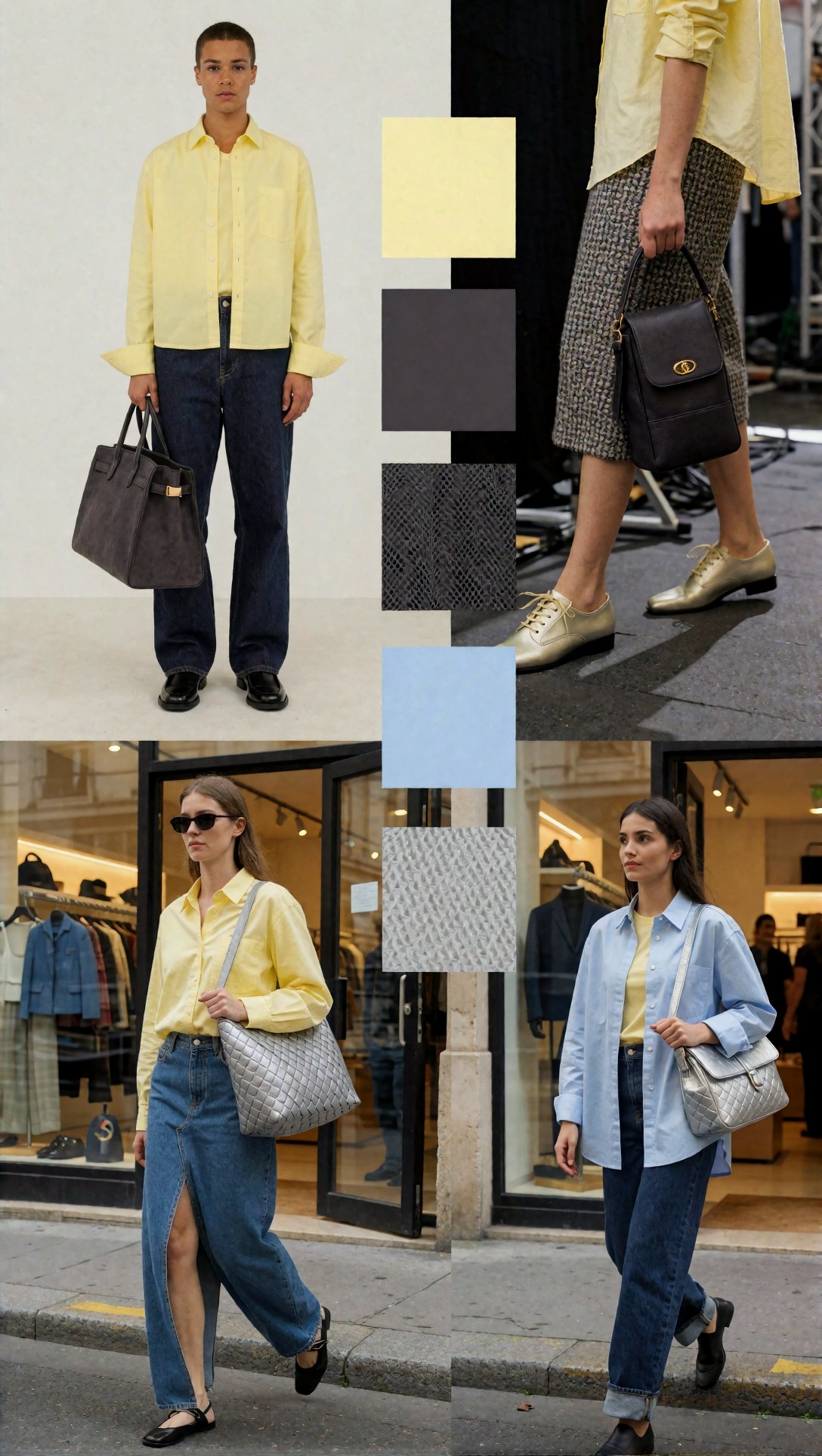
Inspect whether the collage components point toward one coherent trend story. If the board splits into unrelated aesthetics, the prompt needs tighter garment logic.
Best choice by use case
Use Option A if you need trend atmosphere
Choose the editorial text-to-image workflow if your goal is:
- campaign concepting
- social-first fashion imagery
- streetwear campaign ideation
- editorial fashion AI mood frames
- runway outfit ideas with context and motion
This setup works best when your prompt includes:
- a named city or fashion context
- full outfit hierarchy
- one or two key accessories
- a realistic lens choice
- an action that does not hide shoes or bag placement
Use Option B if you need usable lookbook photography
Choose the controlled lookbook workflow if your goal is:
- product planning
- collection presentation
- outfit comparison
- capsule merchandising
- layout testing for retail or catalog
This setup works best when your prompt includes:
- strict full-body framing
- front-facing or slightly angled pose
- simple background
- garment proportions stated clearly
- visible shoe and bag categories
My practical recommendation
If I were building a real fashion image set from these tests, I would not choose only one workflow.
I would start with Option A to discover the strongest trend interpretation, then rebuild the selected looks in Option B for cleaner lookbook delivery. That two-step sequence produced the most usable results in this comparison.
If you need help refining prompt structure or taking outputs further, the supporting tools at [Create](/create), [Upscaler](/upscaler), and [Tools](/tools) are the logical next steps after concept generation.
FAQ
What does "lookbook photography trend today" actually mean in AI image generation?
In practice, it means the outfit and styling system are the main subject, not just the person. Current AI fashion prompts perform best when they describe seasonal layering, full-body silhouette, accessories, and the scene where the outfit belongs.
Is AI fashion photography better for editorials or for catalog images?
Right now, editorials are easier to make visually exciting, but catalog and lookbook images are easier to make operationally useful. If accuracy matters more than mood, controlled lookbook prompts usually win.
Which fashion prompt detail matters most?
The most important detail is the outfit structure: outerwear, top, bottom, shoes, bag, and accessories in a clear relationship. Without that, the model tends to improvise generic fashion content.
How do I get more realistic runway outfit ideas?
Use a specific context such as Milan backstage or Paris studio editorial, keep the silhouette explicit, and avoid overloading the prompt with beauty language. The more clearly the garments are staged, the better the result.
Why do AI lookbook images often fail on shoes and hands?
Those areas sit at the edge of full-body composition and often get distorted when the pose is too dynamic. Cleaner stance, slightly wider framing, and simpler hand actions improve reliability.
Editorial conclusion
The verdict is straightforward. If you want the strongest read on the lookbook photography trend today, focus on prompts that treat fashion as a system: layers, proportion, texture, accessories, and context. In this test, the better campaign images came from editorial text-to-image prompting, but the better decision-making images came from controlled lookbook generation.
Who should use the editorial workflow: art directors, social teams, and anyone testing trend mood, city energy, or streetwear campaign direction.
Who should use the controlled workflow: stylists, merchandisers, fashion startups, and anyone who needs clean outfit visibility for planning.
Who should avoid relying on AI alone: teams that need exact SKU fidelity across multiple angles without manual correction.
The single prompt detail that mattered most was not camera jargon or dramatic lighting. It was clear outfit architecture. When the prompt specified how the clothes relate to each other from shoulder to shoe, the images looked current and useful. When it did not, the trend signal disappeared fast.