New York Fashion Week Street Style Today: Which Looks Feel Most Searchable for Everyday Wear? 한국어 요약
이 페이지는 ZView Space의 영어 원문을 한국어 검색 사용자도 이해할 수 있도록 정리한 SEO 요약입니다. 핵심은 단순한 얼굴 중심 이미지가 아니라 패션 에디토리얼, 룩북, 아웃핏, 프롬프트 테스트, 이미지 생성 워크플로우를 실제로 어떻게 구성할지입니다.
핵심 요약
- 원문 주제: New York Fashion Week Street Style Today: Which Looks Feel Most Searchable for Everyday Wear?
- 목적: AI 이미지 생성에서 outfit, silhouette, fabric, pose, location, camera framing을 더 명확하게 설계합니다.
- 활용 범위: Z-Image Turbo, Krea2 Turbo, Qwen Image, Anima, SeedVR2 같은 이미지 생성 및 업스케일 워크플로우에 적용할 수 있습니다.
- SEO 관점: 제목, 설명, 이미지 alt, 프롬프트 예시가 실제 검색 의도와 맞아야 색인 가능성이 높아집니다.
한국어 사용자를 위한 체크포인트
1. 프롬프트가 얼굴 묘사에만 머물지 않고 전체 스타일과 의상 구성을 설명하는지 확인합니다. 2. 패션 이미지라면 상의, 하의, 아우터, 신발, 액세서리, 소재감, 촬영 장소를 분리해서 씁니다. 3. 생성 결과는 바로 게시하지 말고 디테일, 손, 의상 형태, 배경 일관성, 이미지 품질을 비교합니다. 4. 글 본문에는 실제 테스트 기준과 실패를 줄이는 방법이 들어가야 검색엔진에서 얇은 콘텐츠로 보일 가능성이 줄어듭니다.
원문 미리보기
In this test, I used New York fashion week street style as a prompt target and checked which outfit directions actually read as wearable, current, and likely to be searched for everyday inspiration rather than admired as pure fashion spectacle. The goal was no
---
In this test, I used New York fashion week street style as a prompt target and checked which outfit directions actually read as wearable, current, and likely to be searched for everyday inspiration rather than admired as pure fashion spectacle. The goal was not to mimic runway drama. It was to see which NYFW street style today signals survive image generation well: soft romantic layering, practical outerwear, low-heel shoes, useful bags, and styling details that still look editorial without becoming costume.
What to know first
- The most searchable everyday looks were the ones with a clear outfit system: coat, dress or knit, practical shoe, shoulder bag, and one visible texture contrast.
- The weakest outputs were over-styled “fashion week” prompts that pushed too many accessories, exaggerated proportions, or luxury-logo clutter.
- Romantic mood worked best when tied to structure: slip dress plus wool coat, sheer blouse plus tailored trouser, midi skirt plus boots.
- Street scenes in SoHo, Tribeca, and outside a show venue gave stronger New York signals than vague “city fashion” wording.
- If you want usable outfit inspiration, prompt for full-body framing first, then crop later in [zview Create](/create) or save variants in the [gallery](/gallery).
Test setup
I ran a set of outfit-led prompts across fashion editorial and street-style shot types, with the subject treated as secondary to the styling system. I was testing for:
- full outfit readability
- garment layering accuracy
- fabric separation in coats, knits, satin, suede, and leather
- whether the look felt like street style trends New York rather than generic luxury fashion
- whether the outfit looked wearable enough to map to real shopping or closet planning
The strongest prompt pattern was simple: one romantic hero piece, one practical outerwear piece, one grounded shoe, one bag, and a believable sidewalk or show-entry context. I also used [Prompt Lab](/promptlab) logic to keep each shot brief specific rather than stacking trend words.
Production note from the session
The first pass looked stylish but too expensive in a vague way. A lot of images came back as “fashion woman in city,” with dramatic coats, impossible heel choices, and bags that looked decorative rather than useful. Once I shifted from mood-only language to exact outfit architecture, the results became more searchable.
That was the main lesson from this session: New York fashion week street style becomes more helpful when the prompt describes why someone would wear the outfit from curb to coffee to office, not just how editorial it sounds.
What looked good immediately in NYFW street style today
Three directions translated well on the first or second try.
Soft tailoring with romantic texture
This was the most reliable category. Long wool coats over satin or chiffon pieces gave the model enough contrast to separate layers cleanly. It also felt current without trying too hard.
Before this prompt, I wanted to test whether a romantic dress can still read like everyday street style if the coat and shoes stay grounded.
Topic: New York fashion week street style with romantic soft tailoring
Genre: Street Style
Camera: Canon EOS R5
Lens: 35mm f/2
Lighting: Overcast diffusion
Location: SoHo sidewalk outside a fashion show venue, muted traffic, late winter city atmosphere
Style: Romantic urban editorial
Final Prompt: street-style full body shot of a New York fashion week attendee wearing a long camel wool coat over a blush satin midi slip dress, fine rib knit layer at the neckline, knee-high brown leather boots, structured shoulder bag, slim gold earrings, soft scarf movement, complete outfit visible head to toe, practical walking pose on a SoHo sidewalk outside a fashion show venue, romantic feminine styling with wearable proportions, neutral and dusty rose palette, fabric texture clearly separated between wool, satin, and leather, candid editorial realism, Canon EOS R5 look, 35mm documentary framing, overcast New York light, detailed garment fit, natural motion, trend-forward but everyday searchable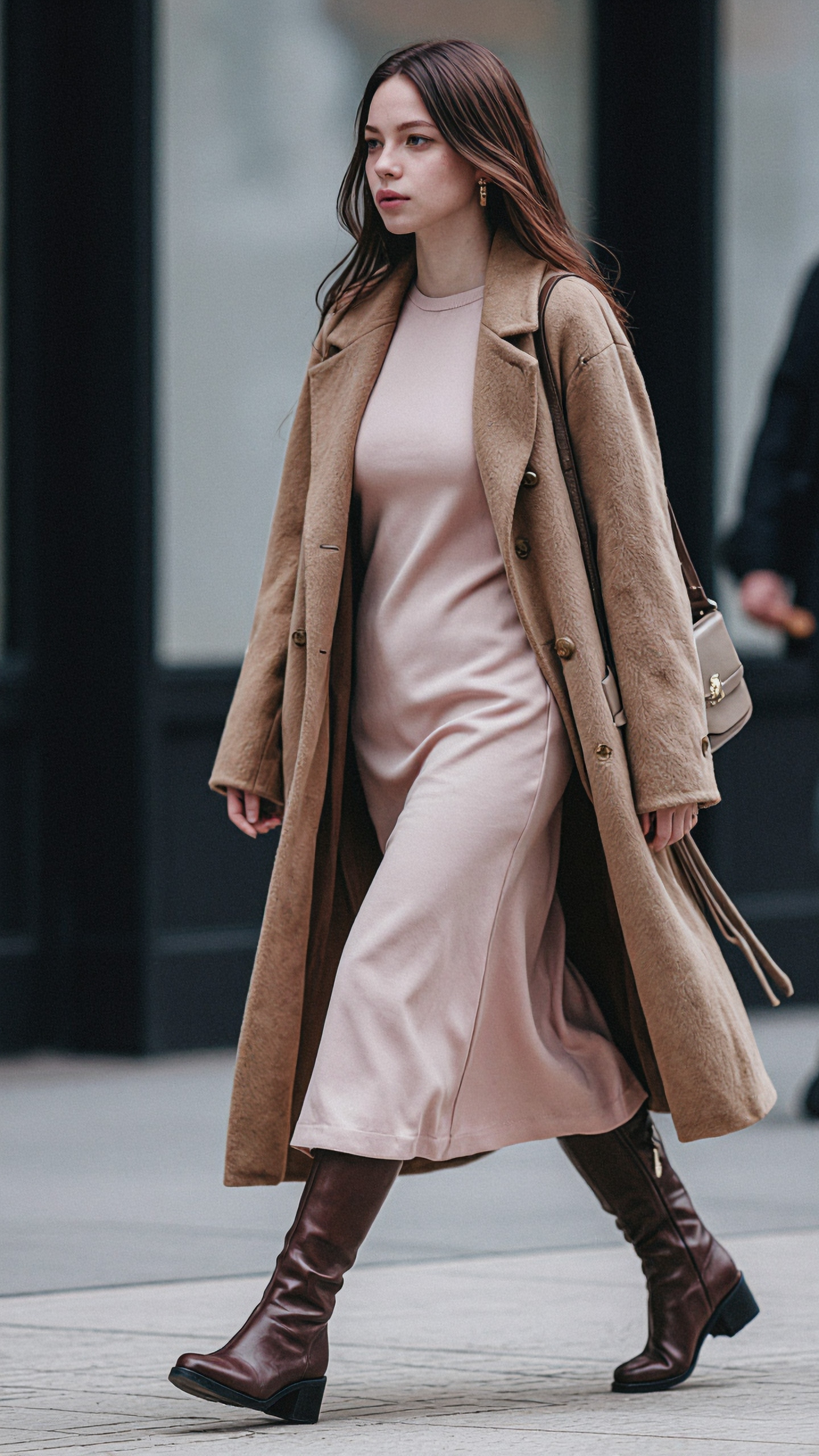
Inspect whether the coat hangs cleanly over the slip dress and whether the boots feel like a realistic styling choice rather than a runway fantasy. The strongest outputs kept the silhouette long and soft without losing the practicality of the outfit.
Midi skirt plus knit plus sharp outerwear
This combination consistently looked “saveable.” It is one of the clearest fashion week outfits categories that can move into everyday wardrobes.
This test checks whether the generator can keep a feminine romantic mood while preserving office-to-weekend usefulness.
Topic: wearable NYFW street style with knit and midi skirt
Genre: Fashion Editorial
Camera: Nikon Z7 II
Lens: 50mm f/2.8
Lighting: Cool morning daylight with soft reflector fill
Location: Tribeca crosswalk near cast-iron buildings and black car curbside drop-off
Style: Clean commercial fashion editorial
Final Prompt: three-quarter outfit editorial of New York fashion week street style today, woman styled in a cream fitted knit top tucked into a flowing dusty mauve midi skirt, charcoal tailored overcoat draped over shoulders, pointed low heel slingbacks, medium leather tote, delicate chain necklace, complete styling logic visible with top, skirt, coat, shoes, and bag, poised crossing-the-street motion in Tribeca, romantic mood with practical city polish, soft movement in hemline, realistic wearable runway influence, clean commercial composition, Nikon Z7 II detail, 50mm fashion framing, controlled daylight, refined textures, everyday wardrobe inspiration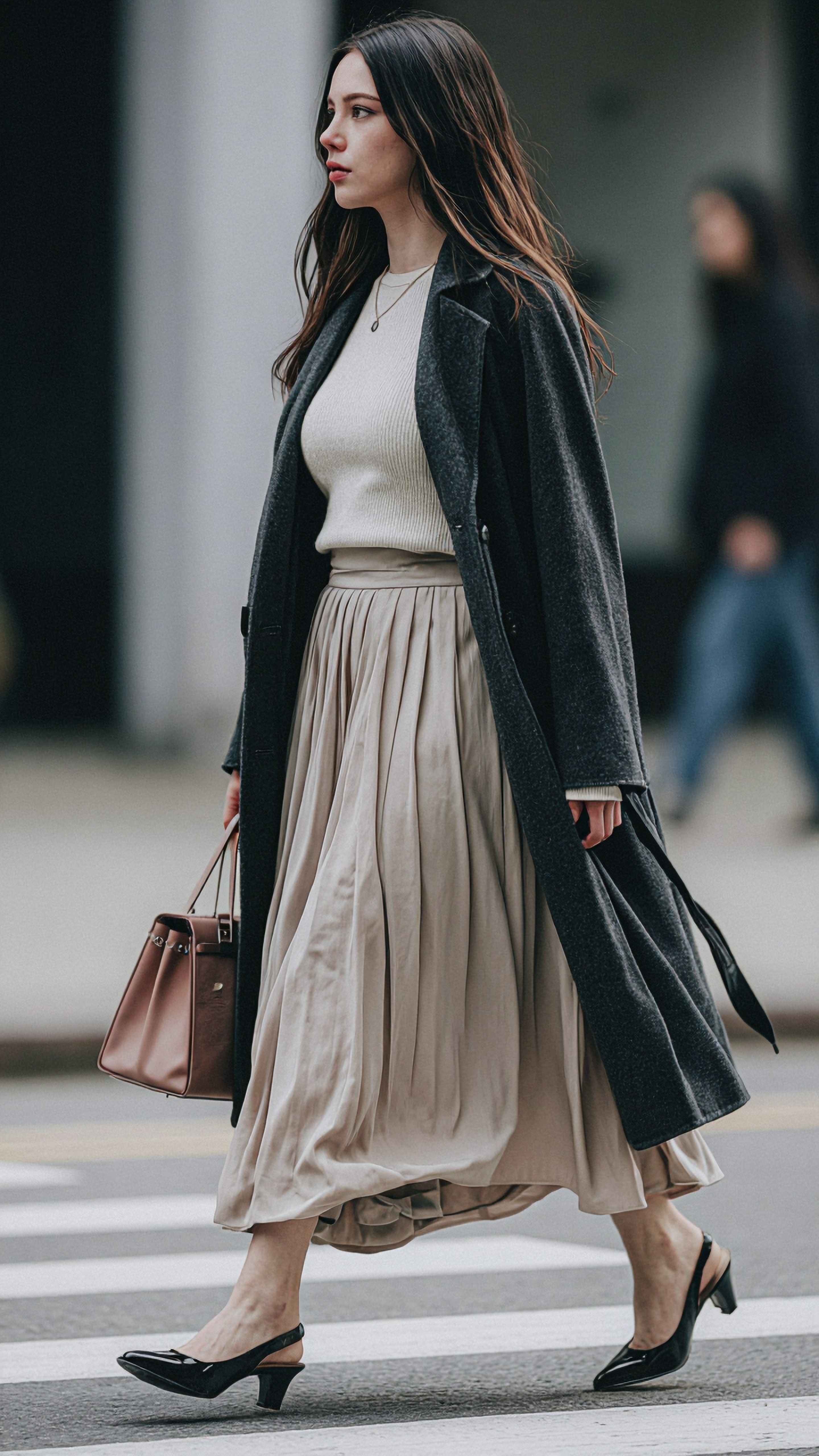
Check the skirt hem and shoe relationship. Weak outputs either clipped the foot shape or turned the slingbacks into abstract heels. Good ones kept the outfit grounded and clearly shop-able.
Tonal layering with one feminine accent
Monochrome beige, stone, and blush worked better than louder palettes. The image models handled these tones well, and the looks felt more searchable for real wardrobes.
I used this prompt to test style lock: can a tonal outfit still feel like US fashion trends right now if the romantic note is subtle instead of obvious?
Topic: tonal New York street style with romantic layering
Genre: Lifestyle Fashion Portrait
Camera: Sony A7R IV
Lens: 40mm f/2.5
Lighting: Golden hour side light
Location: Upper East Side townhouse block with soft autumn reflections
Style: Luxury fashion campaign with everyday realism
Final Prompt: head-to-toe lookbook style image inspired by New York fashion week street style, tonal stone and oatmeal layered outfit featuring a belted trench, lightweight cashmere knit, bias-cut cream skirt, suede ankle boots, soft blush crossbody bag, silk scarf tied at the bag handle, full silhouette visible, gentle walking pose on an Upper East Side block, romantic and polished mood, warm golden side light, tactile suede and cashmere detail, restrained luxury, wearable runway look for everyday city dressing, Sony A7R IV clarity, 40mm natural perspective, elegant editorial composition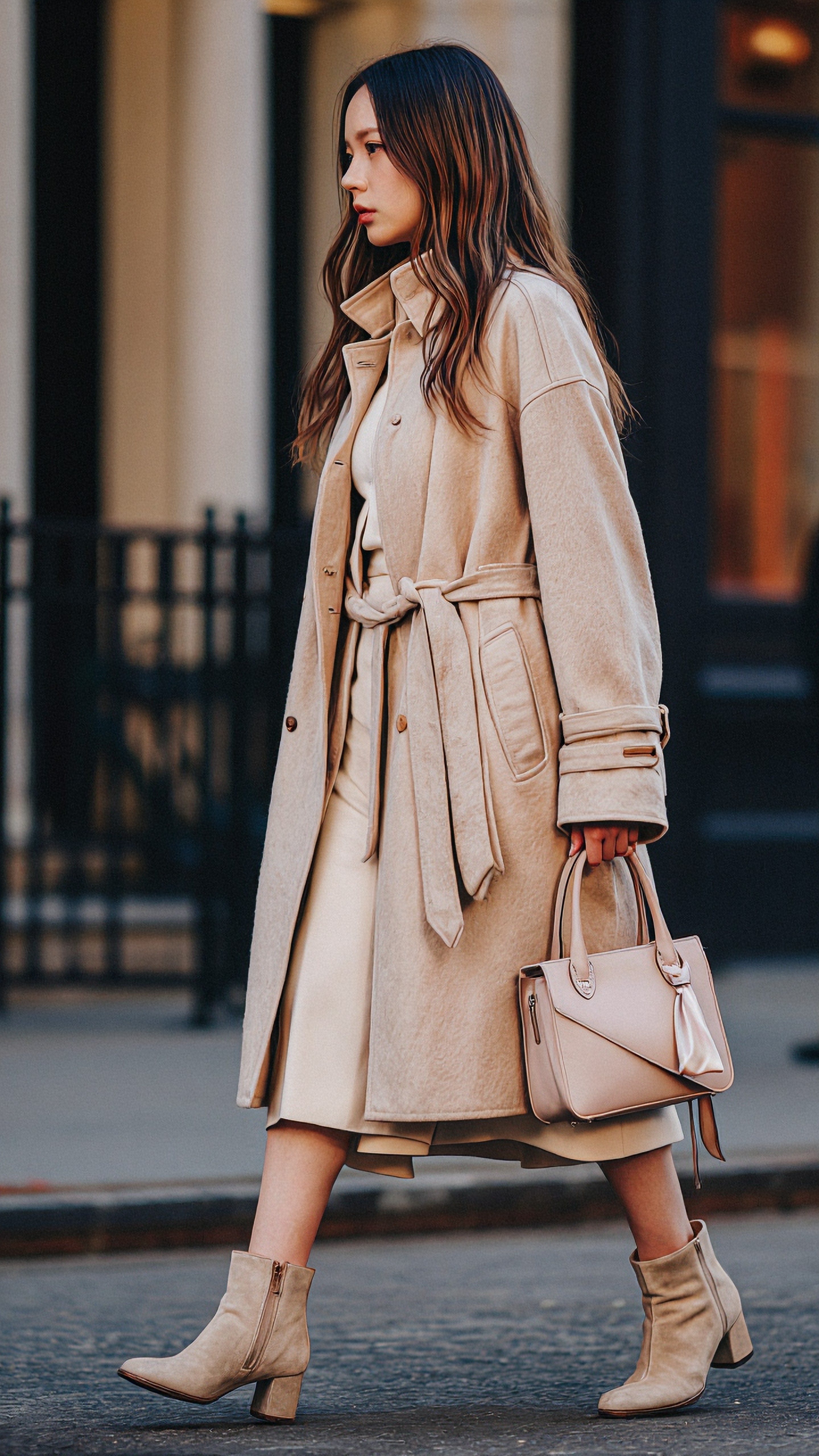
Inspect whether the model preserves tonal separation. The weak point here was fabric flattening: trench, knit, and skirt sometimes merged into one beige mass unless texture language was explicit.
What needed correction
The biggest failure mode was not anatomy. It was styling drift.
Too much “fashion week,” not enough outfit logic
When prompts leaned on phrases like “bold street style,” “it-girl,” or “statement fashion,” the result often became oversized coats, random sunglasses, extra bags, and impractical shoes. These images looked social-first, not searchable.
Romantic mood could become costume
Because the requested mood was romantic, some outputs exaggerated ruffles, lace, and pink haze. That worked for editorials but not for wearable runway looks. The fix was to assign romance to one or two garments only, then stabilize the rest with tailoring.
This next test was designed to control that drift by forcing clearer layering rules.
Topic: romantic street style with controlled layering for everyday wear
Genre: Street Style
Camera: Fujifilm GFX 100S
Lens: 45mm f/2.8
Lighting: Bright overcast daylight
Location: West Village sidewalk with brownstone steps and parked bicycles
Style: Documentary fashion realism
Final Prompt: street-style full body image of an attendee during New York fashion week wearing a soft ivory blouse with subtle sheer sleeves under a cropped taupe cardigan, dark high-waist straight trousers, long wool wrap coat, square-toe ankle boots, medium structured satchel, minimal pearl earrings, complete outfit visible and layered in a believable way, romantic styling expressed through texture not costume, West Village sidewalk context, practical walking movement, documentary fashion realism, bright overcast detail, Fujifilm GFX 100S medium format look, 45mm natural full-body framing, garment fit and fabric drape prioritized over facial close-up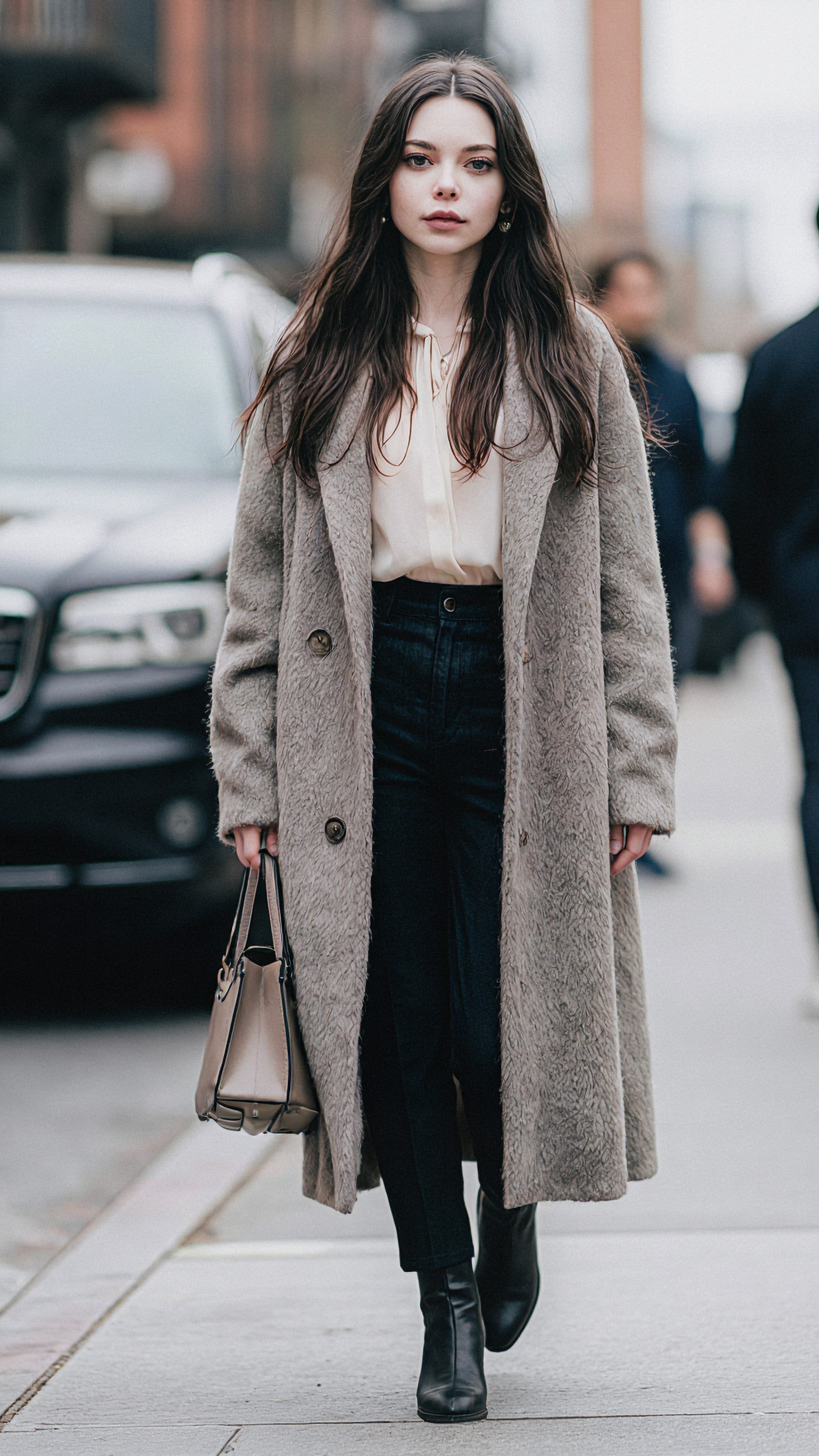
Inspect whether the blouse remains delicate without turning bridal. Good results show romance through sleeve texture and softness, not through excessive embellishment.
Footwear and bag realism were easy to lose
A surprising number of images generated beautiful coats and weak shoes. Bags also drifted into sculptural shapes with no real opening, strap logic, or scale.
This matters because for NYFW street style today, the most searchable looks are often carried by shoes and bags that people can actually imagine buying.
Backgrounds could become generic luxury city scenes
If the location was not pinned to New York, the scene often drifted toward polished but placeless storefronts. That reduced the trend-report feeling. Mentioning curbside barriers, cast-iron fronts, brownstones, or show-entry queues helped.
The prompt ingredients that changed the result
Here are the exact ingredients that moved the output from vague fashion imagery to useful inspiration.
1) Start with the shot type, not the trend word
The best prompts began with a specific fashion shot type: street-style full body, three-quarter outfit editorial, or head-to-toe lookbook. That forced visibility of the styling system.
2) Name the outfit structure in order
A reliable formula was:
- outerwear
- base layer or top
- bottom or dress
- shoes
- bag
- accessories
- silhouette cue
- fabric cue
When this order was missing, the generator improvised.
3) Use one romantic material, one practical material
Satin plus wool. Chiffon plus leather. Cashmere plus suede. This pairing gave the output a soft editorial mood while keeping it wearable.
4) Lock the location to a real New York context
SoHo sidewalk, Tribeca crosswalk, West Village brownstones, show venue entrance. These phrases produced stronger street style trends New York cues than “urban fashion backdrop.”
5) Ask for movement, but controlled movement
Walking pose, coat swing, hem movement, crossing street. Enough action to feel candid, not so much that the shoes, hands, or garment edges break.
Everyday-searchable NYFW looks: quick checklist
| Look direction | Why it worked in this test | Common failure | Best fix | |---|---|---|---| | Long coat + slip dress + boots | Strong romantic contrast, easy silhouette read | Dress disappears under coat | Name satin slip and visible hem | | Knit + midi skirt + low heel | Feels practical and current | Shoe distortion | Specify low heel slingback or ankle boot | | Tonal trench layering | Searchable and polished | Fabrics merge | Add suede, cashmere, twill, satin cues | | Sheer blouse + trouser + wrap coat | Romantic without costume | Blouse becomes bridal | Use “subtle sheer sleeves,” not lace-heavy language | | Floral dress + city outerwear | Very trend-aligned | Too spring editorial, not city-ready | Add leather jacket or wool coat and grounded bag |
Prompt examples and image inspection notes
Floral dress, but anchored for the city
This was a useful test because floral romantic dressing can quickly lose New York edge. I wanted to see whether a delicate dress could still feel like New York fashion week street style once grounded by outerwear and boots.
Topic: floral romantic dress adapted for New York fashion week street style
Genre: Fashion Editorial
Camera: Leica SL2
Lens: 50mm f/1.4
Lighting: Soft cloudy afternoon light
Location: sidewalk near Spring Studios entrance with black SUVs and show guests in background
Style: Modern feminine street editorial
Final Prompt: street-style full body fashion image outside a New York show venue, attendee wearing a dark floral midi dress with soft ruffle movement, cropped black leather jacket, sheer black tights, heeled ankle boots, compact shoulder bag, delicate rings, complete outfit visible head to toe, romantic styling balanced by city toughness, subtle crowd context near Spring Studios, dark florals, black leather, and muted berry tones, candid pause before entering a show, Leica SL2 clarity, 50mm editorial realism, soft cloudy light, highly readable layering, fashionable but realistic everyday inspiration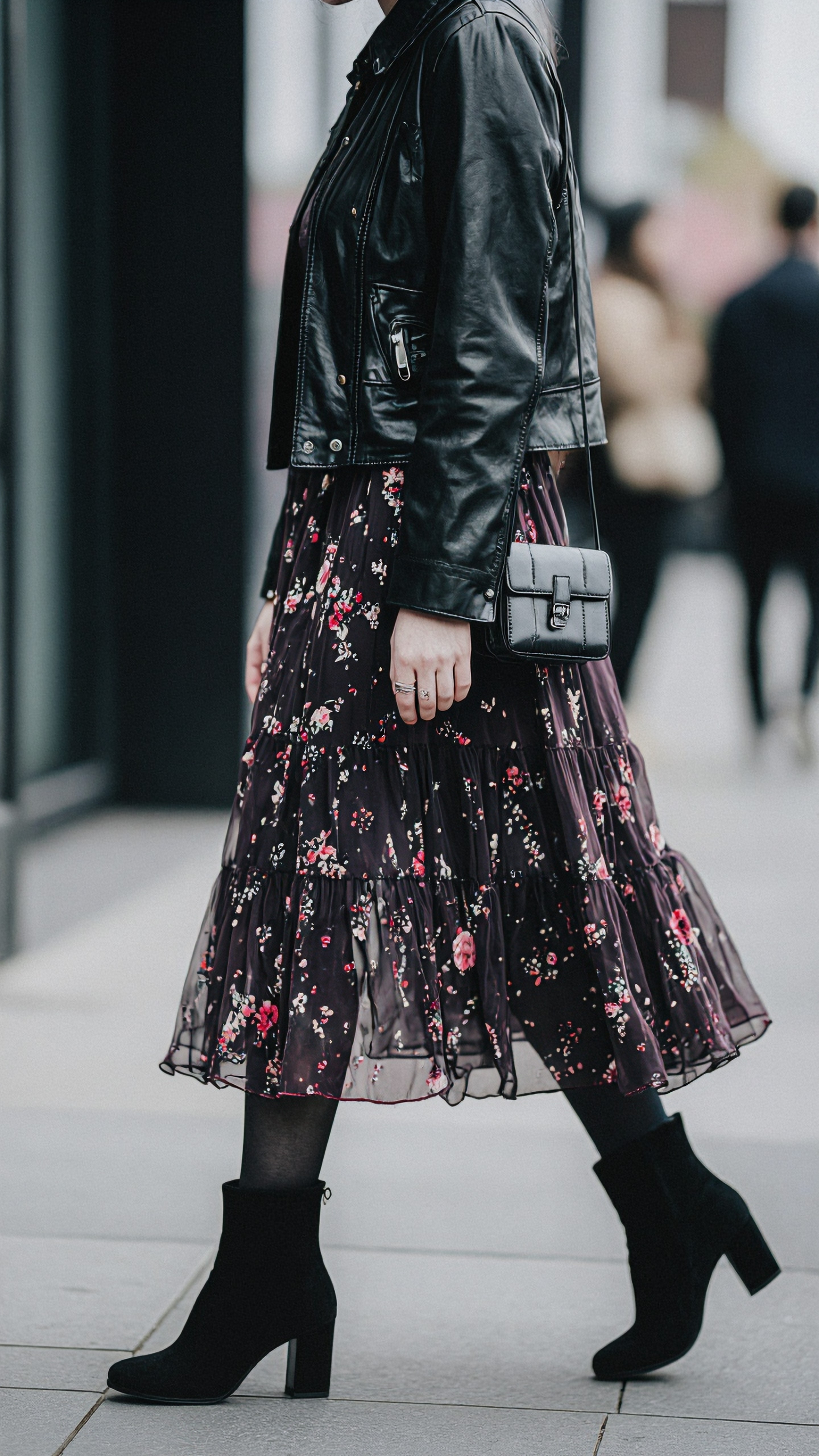
Inspect whether the leather jacket actually balances the dress. The strongest images gave the floral print enough detail to read feminine while the boots and jacket kept it urban.
Accessories-first prompt for searchability
A lot of real outfit searches start from “what bag with this coat” or “which shoes make this dress wearable.” This test deliberately put the accessory logic in focus without abandoning the outfit.
Topic: searchable street style accessories with romantic outerwear
Genre: Luxury Campaign
Camera: Canon EOS R3
Lens: 85mm f/2
Lighting: Late afternoon window bounce mixed with outdoor ambient
Location: fashion week venue steps in Manhattan
Style: Accessories-led fashion campaign
Final Prompt: accessories close-up within a full outfit context inspired by New York fashion week street style, cropped composition showing a soft dove-gray wool coat over a blush pleated dress, burgundy leather shoulder bag with visible hardware and practical strap, suede mid-heel boots, silk scarf tied loosely at the neck, hands naturally holding phone and invitation, Manhattan fashion week venue steps, romantic refined mood, premium material detail, realistic product clarity, Canon EOS R3 look, 85mm controlled detail, elegant accessories-led composition that still explains the full styling system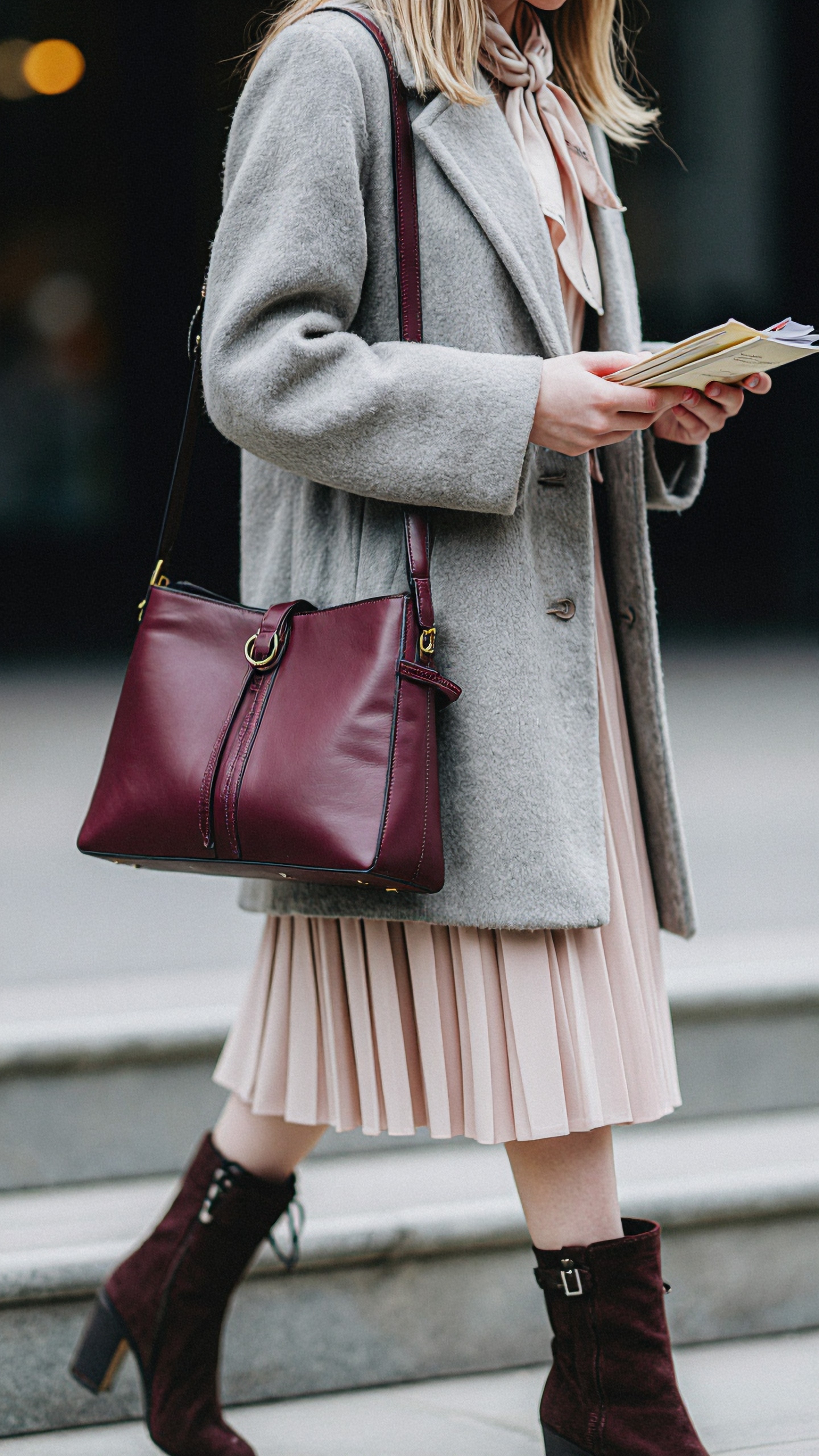
Check bag scale, strap logic, and hand behavior. This setup is worth using when your first full-body generations get the mood right but fail on the item details.
Catalog-style grid for wearable runway looks
I tested a layout-based prompt because some inspiration searches are less about atmosphere and more about comparing outfit formulas quickly.
Topic: everyday wearable runway looks from NYFW in a catalog grid
Genre: Product Editorial
Camera: Phase One XF IQ4
Lens: 55mm f/4
Lighting: Studio softbox with neutral fill
Location: clean editorial studio with pale stone backdrop
Style: Contemporary catalog layout
Final Prompt: catalog grid page showing four head-to-toe outfit variations inspired by New York fashion week street style today, each look fully visible and built around romantic everyday wear: look one camel coat with satin slip dress and boots, look two fitted knit with flowing midi skirt and slingbacks, look three trench with cashmere knit and bias skirt, look four sheer blouse with straight trousers and wrap coat, consistent studio stance, garment detail prioritized, pale stone backdrop, clean magazine catalog design, realistic fabric texture, refined neutral and blush palette, Phase One fashion imaging quality, editorial but shop-able outfit comparison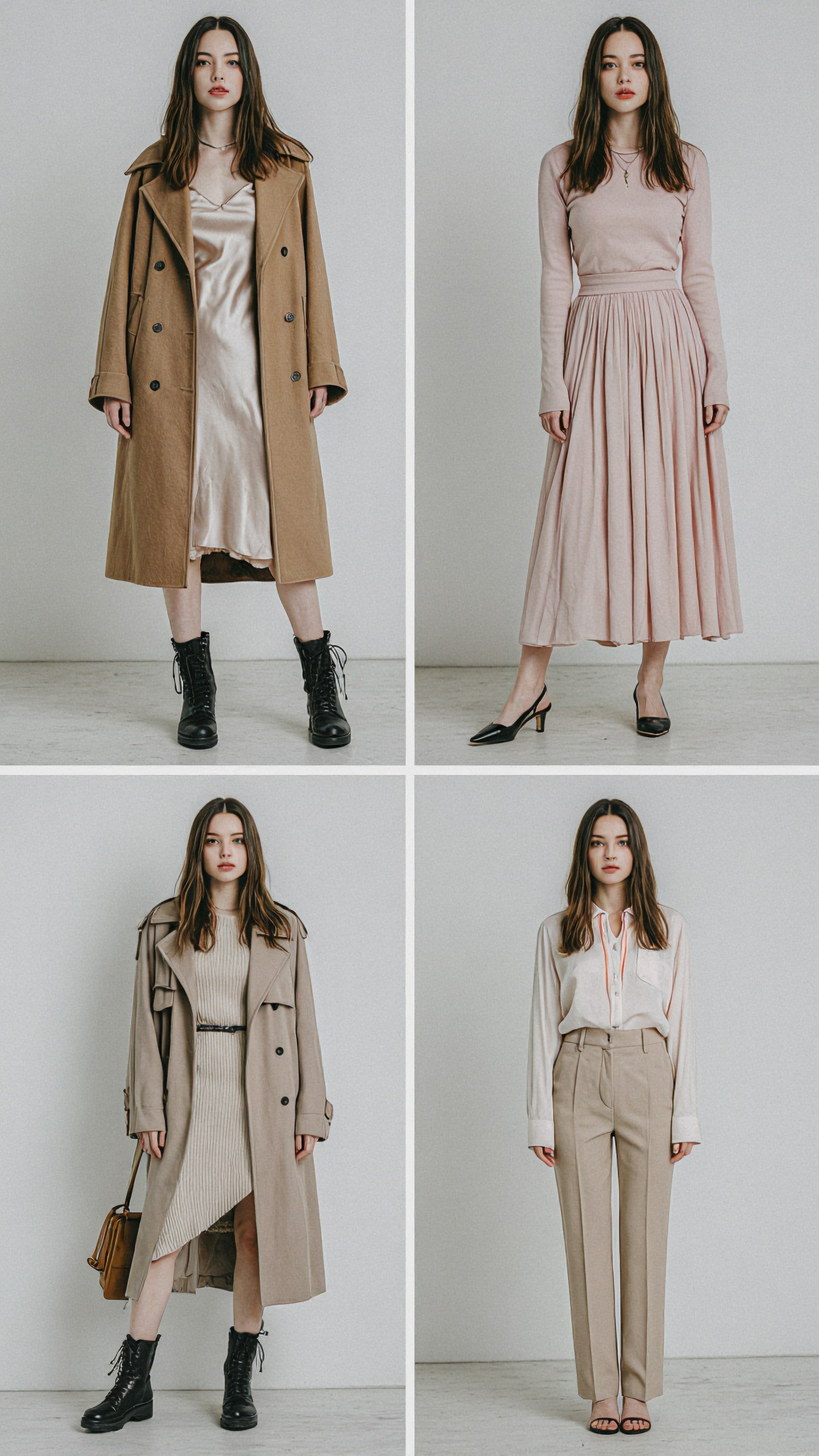
Inspect consistency across all four looks. The weak point is often proportion drift between frames, but when it works, this is one of the clearest ways to compare wearable runway looks at a glance.
Backstage-to-street transition test
This setup checks whether the model can retain fashion-week energy while still producing outfit ideas that feel useful beyond the venue.
Topic: backstage inspired NYFW styling transitioning to street wearability
Genre: Runway Backstage Moment
Camera: Sony FX3 cinematic capture
Lens: 24-70mm at 35mm f/2.8
Lighting: Mixed backstage practicals and doorway daylight
Location: backstage corridor opening onto a Manhattan side street
Style: Cinematic realism
Final Prompt: runway/backstage moment showing a model stepping from a backstage corridor onto a Manhattan side street in an outfit that bridges runway and everyday wear, dusty rose slip skirt, soft gray oversized blazer, fine knit top, tall leather boots, compact structured bag, hair slightly undone, show staff blurred in background, full outfit visible, romantic but practical silhouette, cinematic transition from indoor practical lights to cool daylight, subtle tension and movement, Sony FX3 filmic realism, 35mm documentary framing, strong garment texture and believable city styling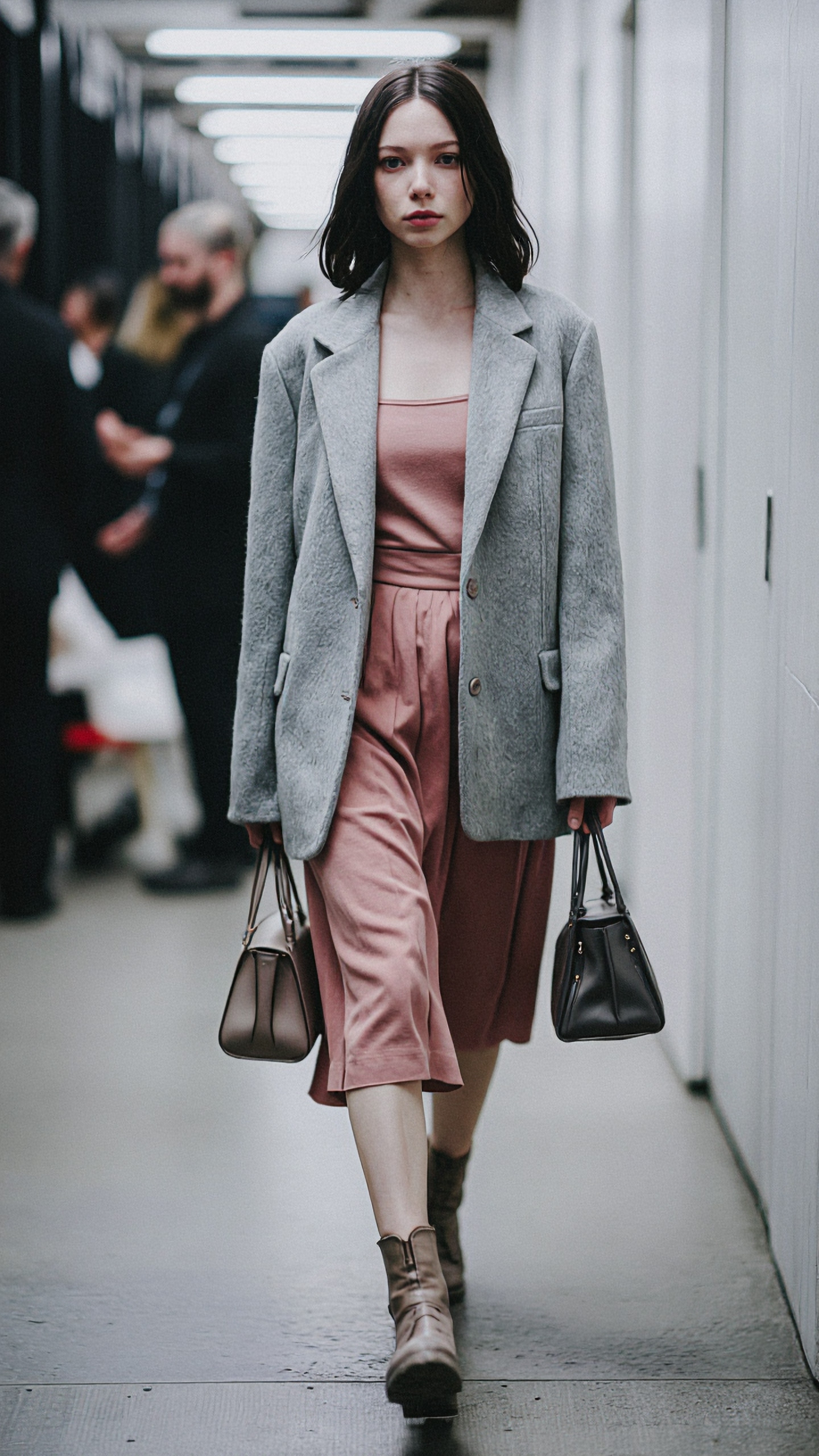
Inspect whether the blazer and skirt proportions stay believable. This kind of prompt is useful when you want more editorial tension than a plain sidewalk shot provides.
When to switch models or settings
Not every fashion image task should use the same setup.
Stay with a general editorial model when:
- you need broad silhouette exploration
- you are comparing coat, skirt, and boot combinations
- you want quick ideation for fashion week outfits
Switch to a model with stronger detail rendering when:
- the bag hardware matters
- shoe shape keeps collapsing
- fabric texture is flattening
- you need product-level clarity on pleats, knit ribs, suede, or stitching
This next prompt was built specifically to test texture recovery in details that weaker outputs often blur.
Topic: garment texture detail from romantic NYFW street style
Genre: Product Editorial
Camera: Nikon D850
Lens: 85mm f/1.8
Lighting: Soft directional studio daylight simulation
Location: editorial studio corner styled like a showroom rail area
Style: High-detail textile study
Final Prompt: garment detail macro inspired by New York fashion week street style, close but context-aware view of a romantic everyday outfit showing camel wool coat lapel, blush satin slip dress strap and bodice texture, fine knit underlayer, suede boot shaft edge, gold clasp of a structured leather bag, carefully styled on body with partial torso-to-knee framing, soft directional light, showroom rail context in background, premium textile realism, elegant neutral and rose palette, Nikon D850 sharpness, 85mm detail rendering, fashion editor fabric study with wearable styling emphasis
Inspect edge fidelity: satin sheen, wool grain, suede nap, and hardware shape. If those details still look mushy, upscale selectively in the [upscaler](/upscaler) rather than increasing prompt complexity.
Lower motion or simplify composition when:
- hands break near the bag strap
- skirts tangle into legs
- crossing-street scenes create doubled feet
- crowd backgrounds overpower the look
Use mood-board outputs when trend direction is still unclear
Before forcing a perfect final image, mood boards are useful for checking whether the direction feels “today” in New York or just vaguely feminine.
This test was for trend alignment rather than final polished output.
Topic: trend watch mood board for romantic New York street style today
Genre: Mood-Board Collage
Camera: Mixed editorial source aesthetic
Lens: 35mm and 50mm fashion references
Lighting: Mixed overcast street light and warm indoor editorial light
Location: collage of SoHo street corners, boutique windows, runway invites, and fabric swatches
Style: Fashion editor trend board
Final Prompt: mood-board collage exploring New York fashion week street style today for everyday wear, arranged editorially with outfit reference photos, camel and charcoal outerwear, blush satin, dusty floral prints, suede boots, leather shoulder bags, show venue snippets, New York sidewalks, textile swatches, handwritten styling notes, romantic feminine mood with practical city structure, polished magazine trend-watch aesthetic, strong palette cohesion in taupe, rose, cream, and black, layered visual storytelling, fashion editor reference board for wearable runway inspiration
Inspect whether the palette and product story feel coherent. If the mood board already looks over-precious or too pastel, your final street prompts will probably skew away from realistic New York styling.
One more useful retail-context test
Search intent around inspiration often overlaps with shopping imagination. So I also tested whether the same trend directions still looked convincing in a retail display, not just on the street.
Topic: New York fashion trend retail display with romantic everyday styling
Genre: Storefront Display
Camera: Panasonic Lumix S1R
Lens: 24-70mm at 50mm f/4
Lighting: Warm storefront lighting with cool dusk street reflections
Location: Manhattan boutique window in Nolita
Style: Visual merchandising editorial
Final Prompt: storefront display inspired by New York fashion week street style, mannequins styled in romantic everyday outfits for current US fashion trends: long wool coat over satin midi dress, fitted knit with flowing skirt, cropped leather jacket over floral dress, suede boots, structured bags, silk scarves, tasteful jewelry, full head-to-toe outfit visibility in a Nolita boutique window, warm interior light against cool dusk reflections, elegant visual merchandising, realistic fabric drape and accessory placement, Panasonic Lumix S1R commercial clarity, 50mm storefront framing, trend-forward but wearable city fashion presentation
Inspect whether the outfit formulas still make sense off-body. If a trend only works in a dramatic street-style pose and falls apart in a retail display, it is probably less searchable for everyday wear.
Practical guidance: which looks feel most searchable?
After the full set, the most searchable everyday directions were not the loudest ones. They were the outfits with enough romantic softness to feel fresh, but enough structure to answer an immediate styling question.
Most likely to earn saves or searches
- long wool coat over a slip or bias-cut midi dress
- fitted knit with flowing midi skirt and low heel or boot
- wrap coat with straight trouser and subtle sheer blouse
- cropped leather jacket over a dark floral dress
- tonal trench-based layering with suede accessories
Less useful unless you want pure editorial mood
- oversized volume on every layer at once
- ultra-high heels with daytime sidewalk scenes
- heavy lace or ruffle stacking
- metallic statement accessories in every frame
- luxury-logo-heavy styling with no practical anchor
FAQ
What counts as New York fashion week street style in image prompts?
In practice, it reads best as show-adjacent city dressing: full outfits with editorial polish, but realistic outerwear, shoes, and bags. The New York part comes from context cues like sidewalks, venue entry, brownstones, cast-iron buildings, and curbside motion.
What are the most wearable NYFW street style trends right now?
In this test, the strongest options were soft tailoring, midi lengths, tonal layering, floral pieces grounded by leather or wool, and accessories that feel useful rather than decorative.
Why do fashion week prompts often look too costume-like?
Because “fashion week” pushes many models toward spectacle. You usually get better results by describing the exact outfit logic and then adding the fashion-week context after that.
Which shot type is best for outfit inspiration?
Street-style full body is the best starting point. If details fail, switch to three-quarter editorial or accessories-led crops. For side-by-side comparison, use a catalog-grid layout.
Should I use an upscaler for fashion images?
Yes, but mainly after silhouette and styling are already correct. If the outfit logic is wrong, upscaling just sharpens the wrong image. Use the [upscaler](/upscaler) for textiles, hardware, and boot detail after a strong base generation.
Closing notes from the session
If your goal is inspiration, this workflow is worth using for trend mapping, outfit planning, and visualizing New York fashion week street style in a way that feels close to actual everyday wear. It is especially useful for editors, content teams, stylists, and shoppers who want to test combinations before building a look set.
I would avoid this exact workflow if you only want dramatic runway fantasy. The prompts here deliberately suppress spectacle in favor of outfit readability.
The setting that mattered most was not a sampler tweak or camera token. It was the prompt detail that defined the outfit in sequence: outerwear, base, bottom, shoe, bag, accessory, fabric, and New York context. When that structure was present, the images looked searchable. When it was missing, the results drifted into generic fashion imagery.
If I were continuing this test, I would next compare romantic NYFW street style against cleaner minimalist variants in [articles](/articles) and build a saved prompt set in [tools](/tools) for coats, skirts, boots, and bag-first iterations.