NYFW Beauty and Outfit Trends: Testing the Looks Driving US Style Searches 한국어 요약
이 페이지는 ZView Space의 영어 원문을 한국어 검색 사용자도 이해할 수 있도록 정리한 SEO 요약입니다. 핵심은 단순한 얼굴 중심 이미지가 아니라 패션 에디토리얼, 룩북, 아웃핏, 프롬프트 테스트, 이미지 생성 워크플로우를 실제로 어떻게 구성할지입니다.
핵심 요약
- 원문 주제: NYFW Beauty and Outfit Trends: Testing the Looks Driving US Style Searches
- 목적: AI 이미지 생성에서 outfit, silhouette, fabric, pose, location, camera framing을 더 명확하게 설계합니다.
- 활용 범위: Z-Image Turbo, Krea2 Turbo, Qwen Image, Anima, SeedVR2 같은 이미지 생성 및 업스케일 워크플로우에 적용할 수 있습니다.
- SEO 관점: 제목, 설명, 이미지 alt, 프롬프트 예시가 실제 검색 의도와 맞아야 색인 가능성이 높아집니다.
한국어 사용자를 위한 체크포인트
1. 프롬프트가 얼굴 묘사에만 머물지 않고 전체 스타일과 의상 구성을 설명하는지 확인합니다. 2. 패션 이미지라면 상의, 하의, 아우터, 신발, 액세서리, 소재감, 촬영 장소를 분리해서 씁니다. 3. 생성 결과는 바로 게시하지 말고 디테일, 손, 의상 형태, 배경 일관성, 이미지 품질을 비교합니다. 4. 글 본문에는 실제 테스트 기준과 실패를 줄이는 방법이 들어가야 검색엔진에서 얇은 콘텐츠로 보일 가능성이 줄어듭니다.
원문 미리보기
If you are trying to generate images inspired by NYFW beauty and outfit trends , the hard part is not getting a fashionable image. The hard part is getting a look that reads like current New York fashion week styling instead of a random luxury editorial with v
---
If you are trying to generate images inspired by NYFW beauty and outfit trends, the hard part is not getting a fashionable image. The hard part is getting a look that reads like current New York fashion week styling instead of a random luxury editorial with vague makeup. In this test, I focused on the pairings people actually search for right now: polished skin with oversized tailoring, ballet-core makeup with sheer layers, metallic eyes with utility dressing, red lips with monochrome suiting, and backstage beauty with full outfit logic still visible.
The goal was simple: create trend-led images that work for inspiration boards, lookbooks, and social mockups without losing garment detail, silhouette, or styling coherence.
Quick answer
- The strongest results came from prompts that named both the beauty direction and the outfit structure in the same sentence.
- Street-style and three-quarter editorial framing were more reliable than tight beauty crops for trend inspiration.
- Models often over-prioritize faces unless the prompt explicitly asks for shoes, bags, layers, and full-body silhouette visibility.
- Runway-inspired prompts worked best when the location, lighting, and garment textures were concrete rather than generic.
- If you want cleaner outputs, build the shot first, then add makeup, then accessories, then fabric and color constraints.
Test setup
I tested a fashion-first prompt workflow designed for image generators that tend to drift toward portrait beauty shots. The test set covered:
- street style full-body looks
- three-quarter outfit editorials
- runway and backstage moments
- lookbook and catalog layouts
- accessories and garment detail shots
- mood-board style compositions
The evaluation criteria were practical:
| What I checked | Why it matters for NYFW-inspired images | |---|---| | Full outfit visibility | Trend images fail if shoes, layers, or proportions disappear | | Beauty-outfit pairing | Makeup should support the styling, not feel pasted on | | Fabric and texture clarity | Tailoring, sheer layers, leather, satin, and denim need separation | | Background consistency | Sidewalk, backstage, retail, and editorial sets should match the styling | | Accessory logic | Bags, sunglasses, earrings, belts, and footwear should feel intentional |
If you want to test variations quickly, this type of workflow pairs well with iterative prompt saving in [Prompt Lab](/promptlab) and side-by-side output review in the [gallery](/gallery).
Why NYFW-inspired prompts often miss the mark
This problem happens because many image models treat "fashion week" as a loose signal for glamorous people, flash photography, and expensive clothes. That sounds useful, but in practice it creates three recurring failures.
1. Beauty takes over and the outfit disappears
If you mention dewy skin, glossy lips, metallic eyes, or editorial beauty before the clothing system, the generator often moves toward a face-led composition. That is fine for a beauty campaign, but weak for fashion week inspiration.
2. The outfit is fashionable, but not trend-specific
A model can produce a good coat, a good boot, and a good bag, yet still miss the current styling logic. NYFW trend imagery usually depends on pairings: soft makeup with sharp tailoring, athletic layers with polished accessories, or minimal beauty with exaggerated proportions.
3. Street style context gets flattened
New York sidewalk fashion, backstage runway energy, and clean showroom lookbooks all have different visual rhythms. If the prompt does not anchor the scene, the output often lands in a generic luxury lobby.
The workflow that gave the most reliable results
The strongest result in this test came from a four-part prompt order:
1. Choose the shot type first 2. Describe the outfit structure second 3. Add the beauty direction as a pairing, not the main subject 4. Lock the scene, lighting, and accessory details last
That order mattered. When I started with makeup, the model cropped too tight. When I started with the shot and silhouette, the full look held together better.
My working prompt formula
- Shot type
- Fashion context
- Garment stack from outerwear to shoes
- One clear beauty direction
- Bag and accessory logic
- Palette and fabric cues
- Lighting and location
- Composition notes
A useful rule in this test: if the prompt could work for any city, it was too vague for NYFW.
Prompt tests: fashion week makeup and outfits that held together
Test 1: Street style works best when the silhouette comes before the makeup
This first test was meant to check whether a current sidewalk look could keep both outfit proportion and a subtle beauty trend visible. I used an oversized tailoring setup because it consistently reads as New York when the styling is precise.
Topic: NYFW oversized blazer street style with polished clean-girl makeup
Genre: Street Style
Camera: Canon EOS R5
Lens: 35mm f/2
Lighting: Overcast diffusion
Location: New York sidewalk outside fashion week venue, early morning curbside crowd energy
Style: Documentary fashion editorial
Final Prompt: street-style full body fashion image inspired by NYFW beauty and outfit trends, complete outfit visible from head to shoes, oversized charcoal blazer layered over a fine white rib tank, long pleated grey skirt with movement, pointed black slingback heels, structured burgundy shoulder bag, slim sunglasses, delicate gold earrings, polished clean-girl makeup with brushed brows and soft rosy lip, hair tucked behind ears, model crossing a Manhattan sidewalk near a fashion week venue, subtle paparazzi energy, neutral cool palette with one rich bag accent, visible tailoring texture and pleat detail, documentary editorial composition, Canon EOS R5 look, 35mm f/2, natural stride, realistic city depth, trend-led but wearable styling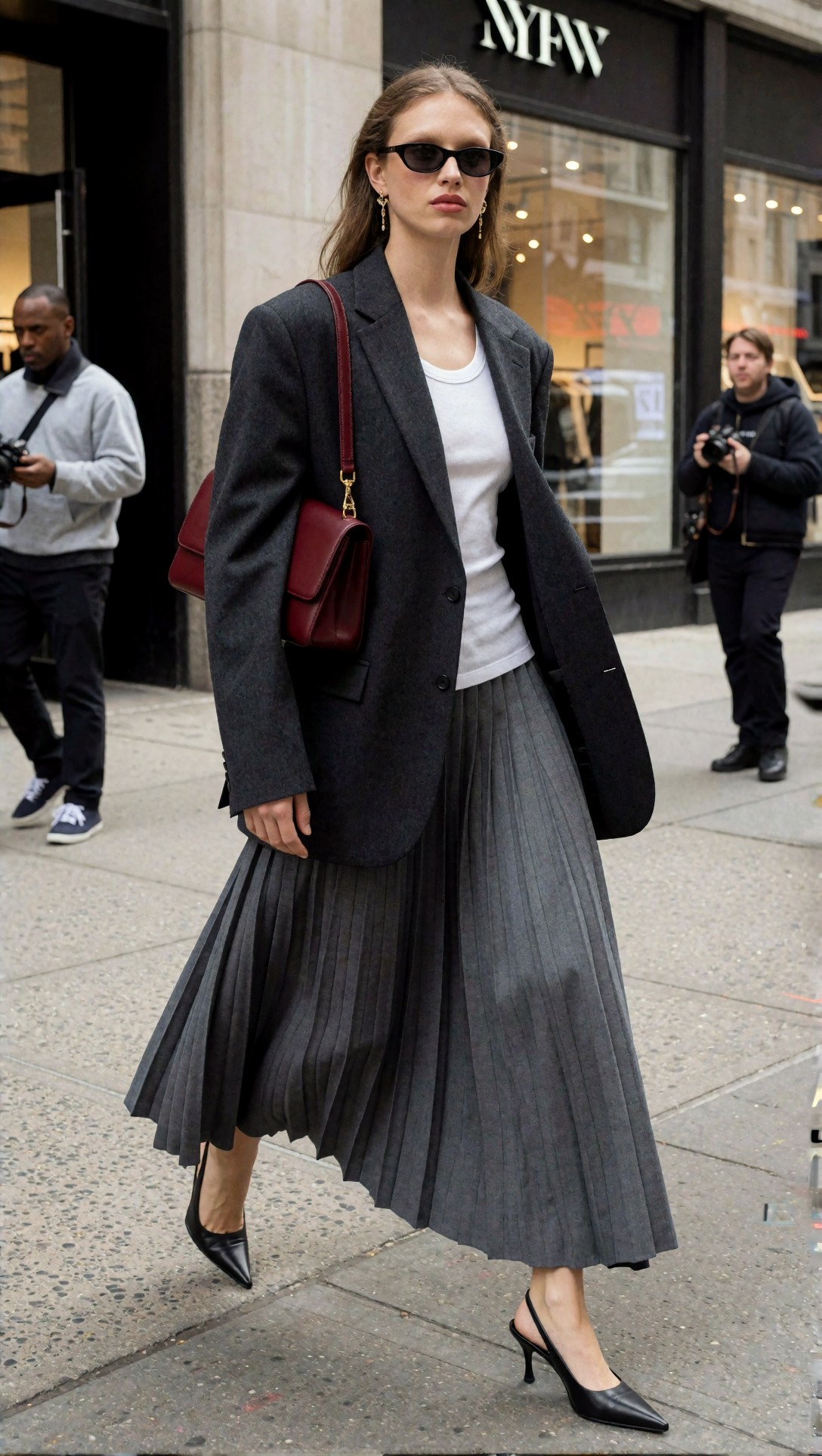
Inspect whether the blazer remains oversized without swallowing the tank and skirt line. The key failure risk is the model turning this into a portrait with a handbag ad feel instead of a full-body outfit read.
Test 2: Three-quarter editorials are better for beauty pairing tests than pure runway shots
This test checked whether ballet-core beauty could support sheer layering without becoming costume-like. Three-quarter framing gave the model enough room to show the outfit while still making makeup legible.
Topic: NYFW sheer layering with ballet-core beauty styling
Genre: Fashion Editorial
Camera: Sony A7R V
Lens: 50mm f/1.8
Lighting: Soft window light with white bounce
Location: Minimal SoHo studio loft with pale plaster walls and matte concrete floor
Style: Clean magazine editorial
Final Prompt: three-quarter outfit editorial inspired by New York fashion week and nyfw beauty trends, model visible from head to mid-calf, soft ivory sheer long-sleeve layer over structured bandeau top, high-waisted satin trousers in oyster grey, wrap belt detail, square-toe ballet flats, satin mini bag, ribbon choker, ballet-core beauty styling with luminous skin, petal pink cheeks, diffused mauve eye, satin bow in sleek low bun, quiet neutral palette, fabric transparency and satin texture clearly separated, relaxed editorial stance in a SoHo loft studio, clean magazine composition, Sony A7R V look, 50mm f/1.8, modern refined styling system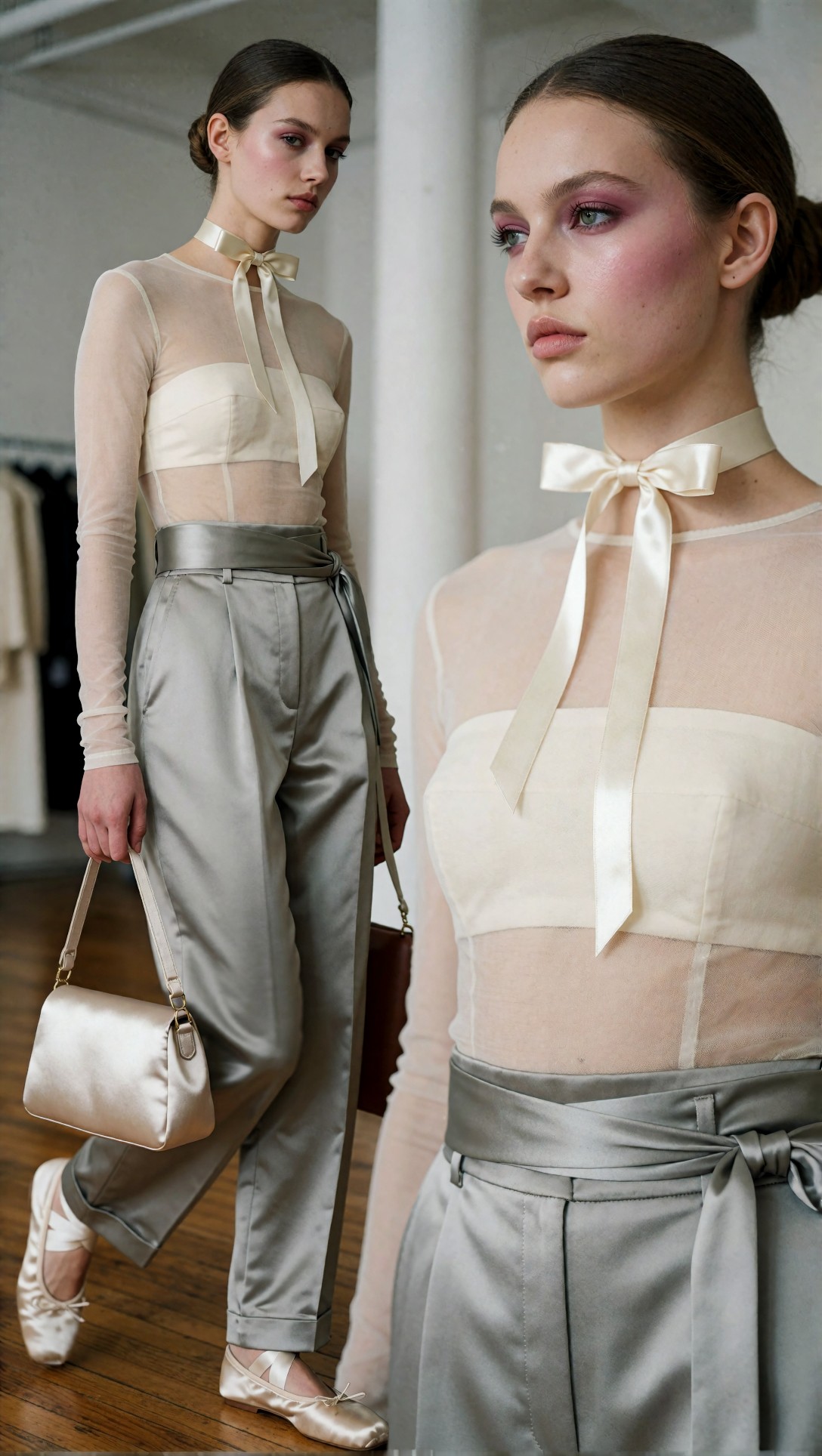
Check whether the sheer layer stays readable and whether the trousers keep structure. In weaker outputs, the generator often confuses ballet-core with tutu styling, which makes the image less useful for current outfit inspiration.
Test 3: Metallic eyes need a grounded outfit or the image turns into beauty advertising
This prompt was designed to test a bolder makeup element while keeping the clothing trend-led. Utility dressing gave the metallic eye something sturdy to balance against.
Topic: NYFW metallic eye makeup with utility dressing
Genre: Fashion Campaign
Camera: Nikon Z8
Lens: 40mm f/2
Lighting: Late afternoon side light with soft silver reflector
Location: Industrial Chelsea loading dock with muted concrete and steel textures
Style: Modern urban luxury campaign
Final Prompt: head-to-toe lookbook image based on NYFW beauty and outfit trends, full silhouette clearly visible, stone trench coat worn open over graphite utility vest and crisp white tee, relaxed cargo trousers with precise seam detail, silver leather ankle boots, compact black crossbody bag, stacked ear cuffs, metallic silver eye makeup paired with otherwise minimal skin and nude lip, sharp middle part hair tucked into collar, industrial Chelsea background, urban luxury campaign feel, cool grey palette with reflective silver accents, camera level composition showing layers, fabric weight, bag placement, and footwear clearly, Nikon Z8 look, 40mm f/2, confident still pose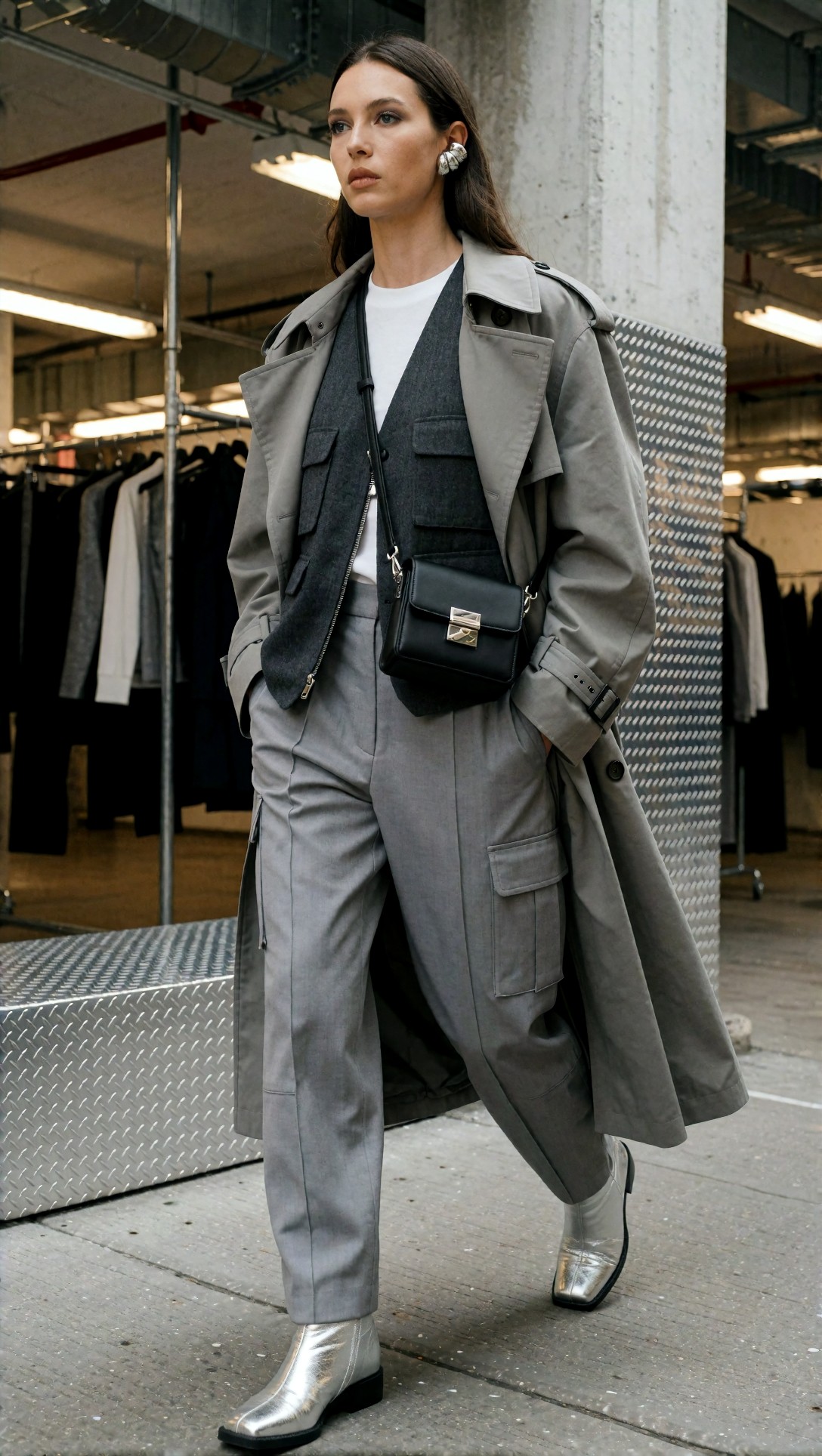
Inspect the eye makeup intensity versus the outfit. The best outputs keep the metallic eye as an accent. The weak point is over-glam drift, where the utility pieces become generic nightclub styling.
What changed the output quality most
The biggest quality jump came from naming the pairing logic directly. Instead of saying "runway beauty look" or "fashion week outfit," I had better results with pairings like:
- red lip with monochrome suiting
- glossy skin with leather outerwear
- soft lilac eye with denim layering
- minimal makeup with sculptural outerwear
That gave the model a relationship to follow, not just a mood.
Test 4: Monochrome suiting holds shape well in runway-adjacent prompts
This test checked whether a classic beauty anchor could make a very structured outfit feel current rather than corporate.
Topic: NYFW red lip paired with monochrome cream suiting
Genre: Runway Backstage Moment
Camera: Fujifilm GFX100S
Lens: 45mm f/2.8
Lighting: Bright backstage strip lights with soft shadow falloff
Location: Fashion week backstage dressing area with garment racks, steamers, mirrors, and call sheets
Style: Editorial backstage realism
Final Prompt: runway backstage moment inspired by fashion week makeup and outfits, full outfit visible in a candid pre-show pause, monochrome cream oversized double-breasted blazer with matching wide-leg trousers, sharp white tank, ivory kitten heels, sculptural cuff bracelet, cream clutch tucked under arm, classic blue-red lip as the key beauty trend, clean skin, brushed lashes, sleek low ponytail, backstage mirrors and garment racks softly visible, crisp tailoring and off-white tonal variation clearly rendered, editorial realism with fashion week energy, Fujifilm GFX100S look, 45mm f/2.8, candid but composed, trend-led American runway context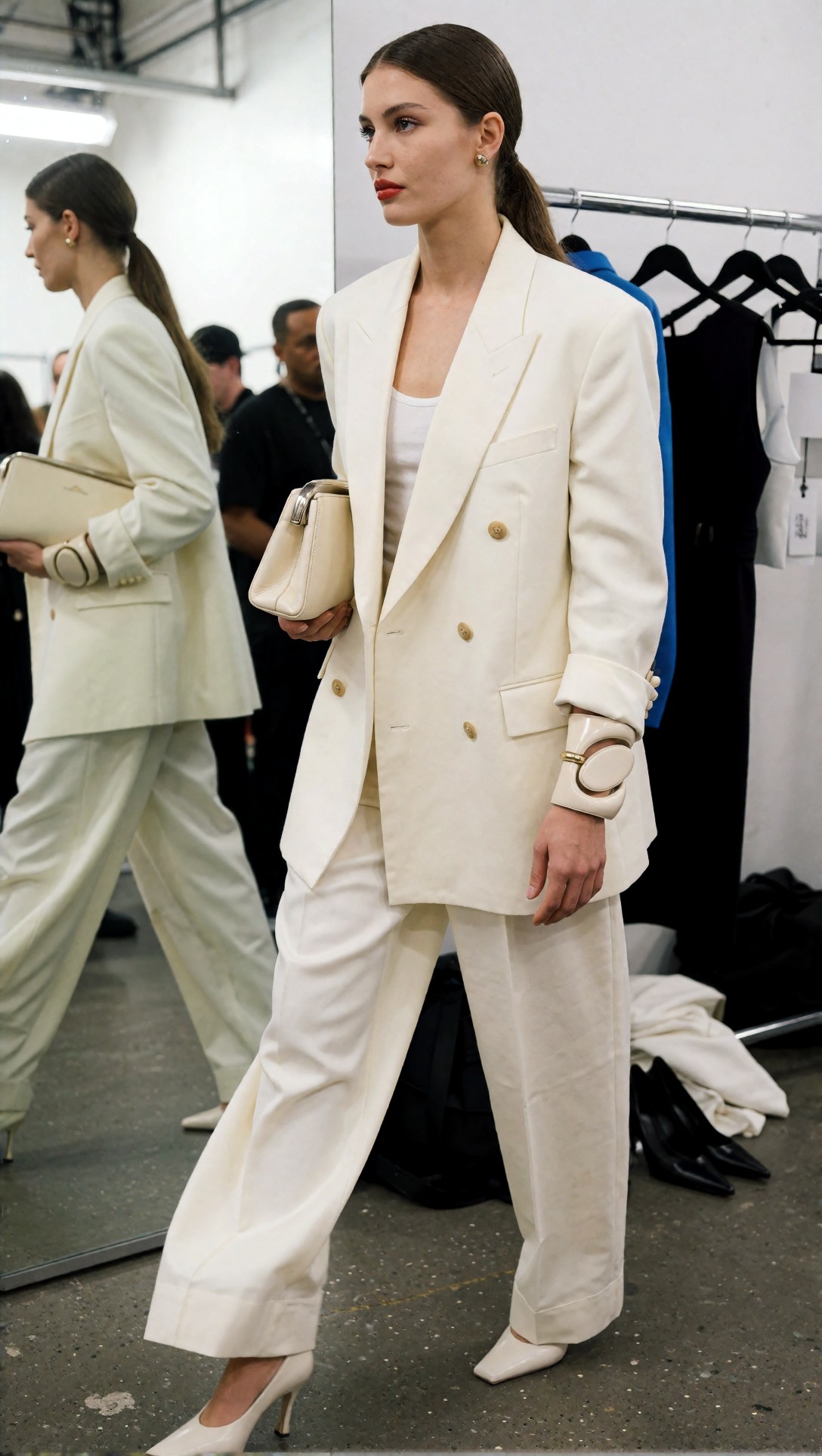
Look at tonal separation. Cream-on-cream prompts often collapse into flat beige, so the image only works if lapels, trouser drape, tank, and shoes all remain distinct.
Test 5: Denim layering needs explicit fit instructions
This was a practical stress test because denim can become muddy fast. I paired it with a softer eye look to keep the image aligned with search intent around wearable US fashion trends.
Topic: NYFW denim-on-denim with soft lilac eye
Genre: Street Style
Camera: Leica SL2
Lens: 35mm f/1.4
Lighting: Cool daylight after light rain
Location: Lower Manhattan crosswalk with wet pavement reflections
Style: Elevated street editorial
Final Prompt: street-style full body image reflecting us fashion trends seen around New York fashion week, cropped indigo denim jacket over pale grey fitted knit top, high-waisted dark denim maxi skirt with front slit, heeled ankle boots, slouchy suede tote, thin silver chain necklace, soft lilac eye makeup with natural lip and brushed-up brows, hair loose and slightly wind-touched, wet pavement reflections, city crosswalk, rich denim texture and wash contrast clearly visible, balanced silhouette from shoulders to shoes, Leica SL2 look, 35mm f/1.4, candid motion with editorial polish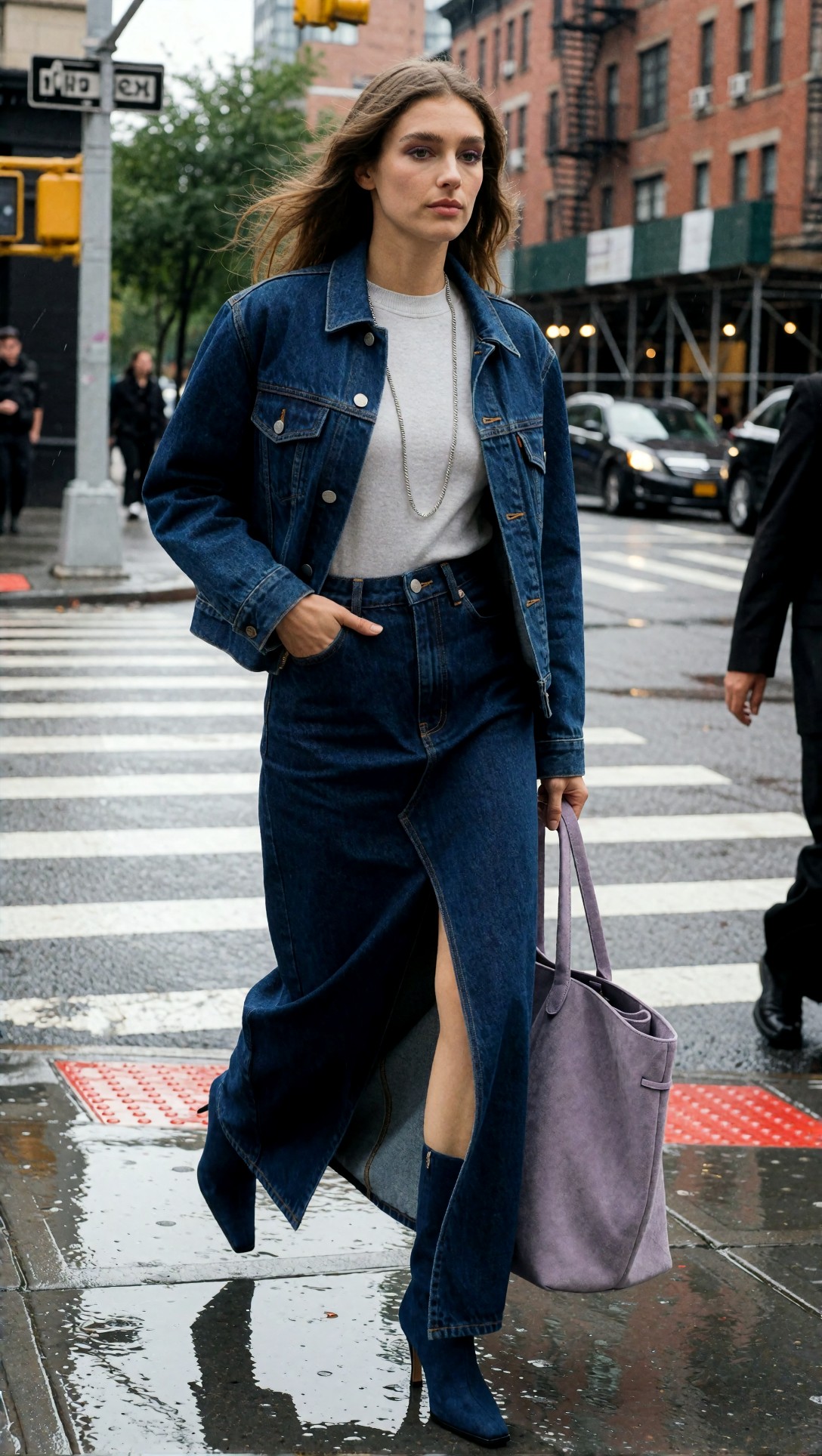
Inspect the denim wash contrast first. If jacket and skirt merge into one block, the trend signal weakens and the styling starts to look accidental.
A workflow for beginners that is easier to control
If you are new to fashion prompting, do not try to generate a perfect campaign image on the first pass. A simpler route is:
1. Generate a full-body lookbook image 2. Save the strongest outfit formula 3. Re-run it in street style or backstage context 4. Add one beauty trend change at a time
That method is slower, but more reliable. You can build and compare versions in [Create](/create), then upscale only the winners in the [upscaler](/upscaler) once fabric detail is worth preserving.
Test 6: Catalog grid prompts are useful for trend sorting before hero image generation
This prompt checked whether a model could organize multiple NYFW-inspired pairings in one clean visual system. It is less cinematic, but very good for inspiration planning.
Topic: NYFW beauty and outfit trend catalog grid
Genre: Product Editorial
Camera: Hasselblad X2D 100C
Lens: 55mm f/2.5
Lighting: Even studio softbox lighting
Location: Clean off-white studio layout with magazine grid design
Style: Contemporary retail editorial
Final Prompt: catalog grid page showing four coordinated NYFW beauty and outfit trends, each panel featuring a head-to-toe look with complete outfit logic, look one oversized tailoring with polished skin and burgundy bag, look two sheer ivory layers with ballet-core makeup and satin flats, look three utility charcoal layers with metallic silver eye and ankle boots, look four dark denim layering with soft lilac eye and suede tote, clean off-white studio background, editorial grid layout, labels and spacing implied visually, clothing textures and accessory categories clearly separated, modern retail editorial style, Hasselblad X2D 100C look, 55mm f/2.5, structured magazine-like composition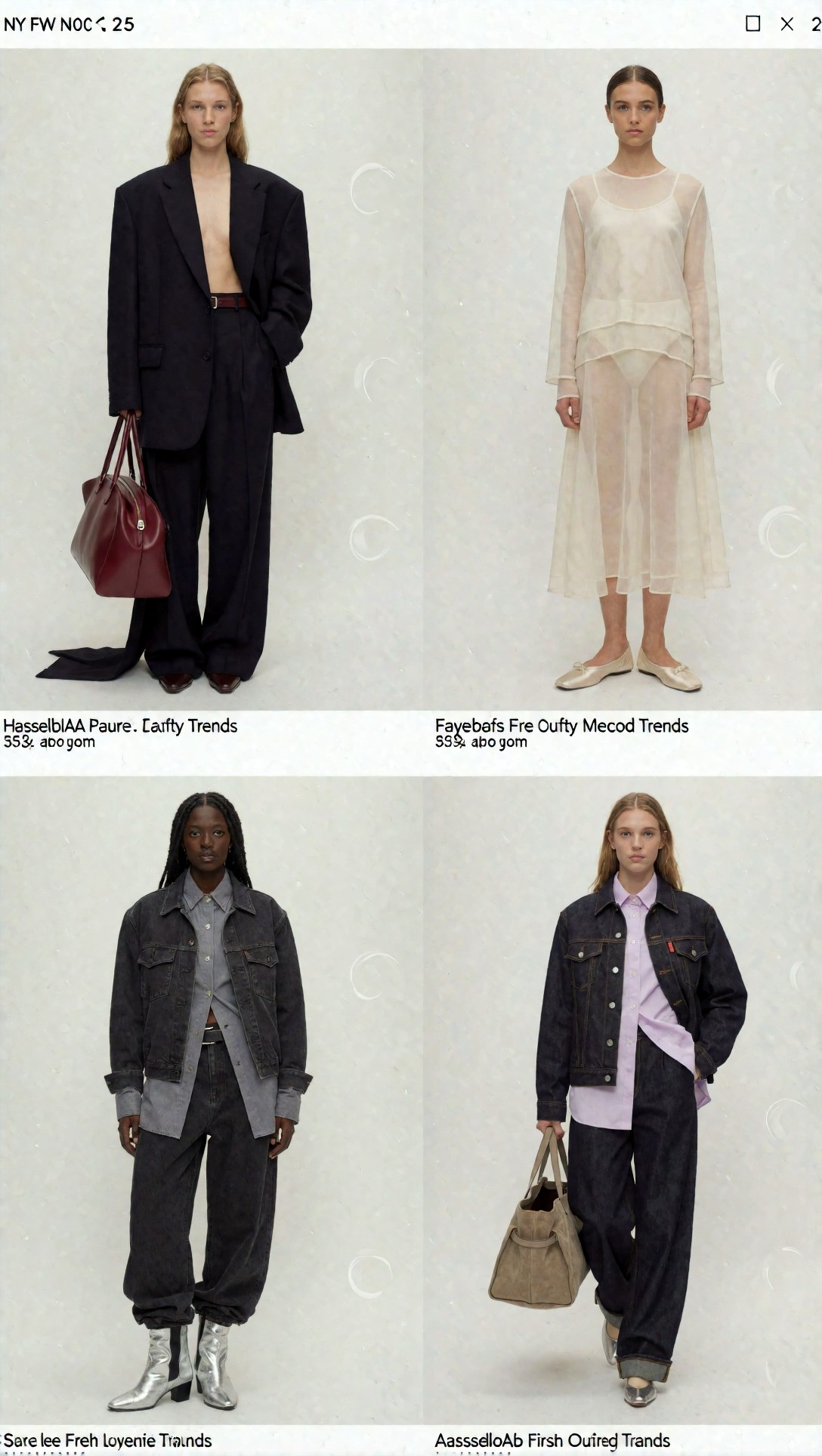
Inspect whether each panel keeps a separate identity. The common failure is visual blending, where all four looks collapse into the same coat-and-trouser formula.
Test 7: Accessories close-ups help lock trend direction before full outfit reruns
This was meant to test whether the accessory story supported the beauty trend. It is useful when a full-body image feels under-styled or too generic.
Topic: NYFW accessories pairing with glossy skin and leather outerwear
Genre: Luxury Campaign
Camera: Canon EOS R3
Lens: 85mm f/2
Lighting: Studio butterfly light with soft edge fill
Location: Dark espresso studio set with polished plinth and mirror panel
Style: High-end accessories editorial
Final Prompt: accessories close-up tied to NYFW beauty and outfit trends, cropped from shoulder to thigh but with styling system still visible, black leather trench lapel framing a fitted chocolate knit, oversized gold earrings, slim rectangular sunglasses, structured oxblood bag in hand, glossy skin beauty direction with clear brow shape and neutral lacquered lip, rich leather grain and polished hardware emphasized, dark espresso studio set with mirror panel reflection, luxurious but trend-led American editorial styling, Canon EOS R3 look, 85mm f/2, precise accessory hierarchy and tonal contrast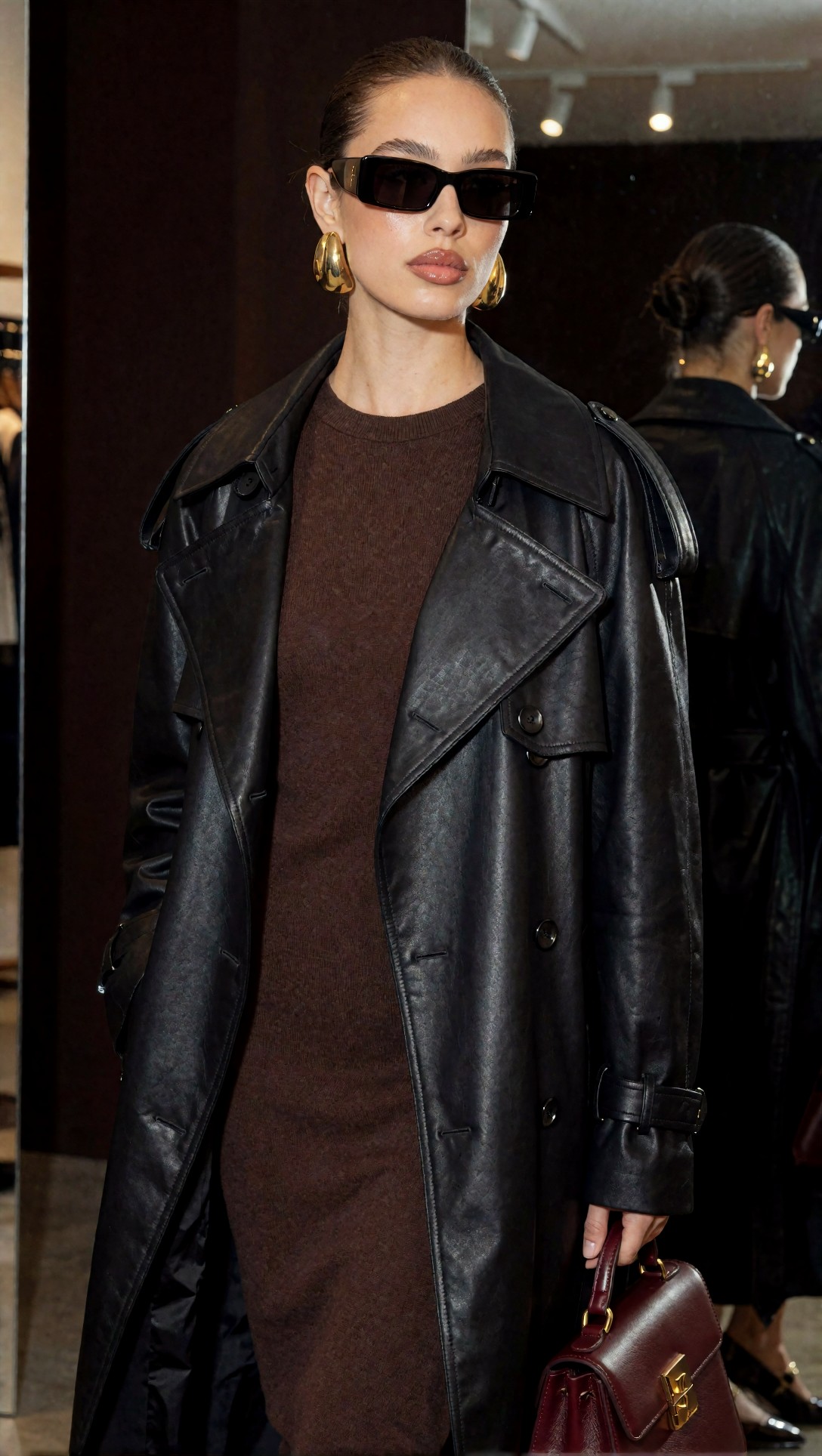
Check whether the bag remains the lead accessory without the generator over-enlarging jewelry. This kind of prompt is useful for style-locking details before returning to a full-body scene.
Common mistakes I would avoid
Using "fashion week" as the only trend cue
That usually produced glossy but empty images. The model needs specifics: silhouette, garment stack, accessory category, and one beauty signal.
Asking for "editorial beauty styling" without body framing
This often cuts the outfit at the knee or waist. If the search intent is inspiration, viewers need to see how the look is built.
Overloading one prompt with too many trends
When I combined metallic eye, ballet-core ribbons, oversized tailoring, fringe bag, and sheer skirt in one image, the result looked indecisive. One strong beauty cue plus one strong outfit direction worked better.
Forgetting footwear
This happened more than expected. If shoes are not named, a lot of otherwise good fashion images fail at the bottom of frame.
Not specifying texture separation
For NYFW-style looks, materials carry the trend. Satin, leather, suede, denim, wool, and sheer mesh need to be named, or the image turns flat.
Test 8: Mood-board collage prompts help when you need trend synthesis instead of one final scene
This final test was used to see whether the model could summarize multiple street style beauty trends into one useful planning image. It works best for concepting, not final campaign delivery.
Topic: NYFW mood-board collage of beauty and outfit pairings trending now
Genre: Mood-Board Collage
Camera: Mixed editorial capture style
Lens: 24-70mm editorial range simulation
Lighting: Mixed natural daylight and studio tear-sheet lighting
Location: fashion editor desk collage with New York street style references, runway tear sheets, accessory crops, fabric swatches
Style: Trend forecast editorial board
Final Prompt: mood-board collage visualizing NYFW beauty and outfit trends driving style inspiration, layered composition of New York sidewalk full-body tailoring look, backstage cream suiting with red lip, utility look with metallic eye, denim layering with lilac eye, close-up accessories in oxblood and silver hardware, fabric swatches of leather satin denim and wool, clean editorial tearsheet arrangement, off-white paper background with tape shadows and layout rhythm, trend forecast fashion editor desk aesthetic, mixed framing but cohesive color story of charcoal cream burgundy silver and indigo, detailed textures, contemporary magazine research board feel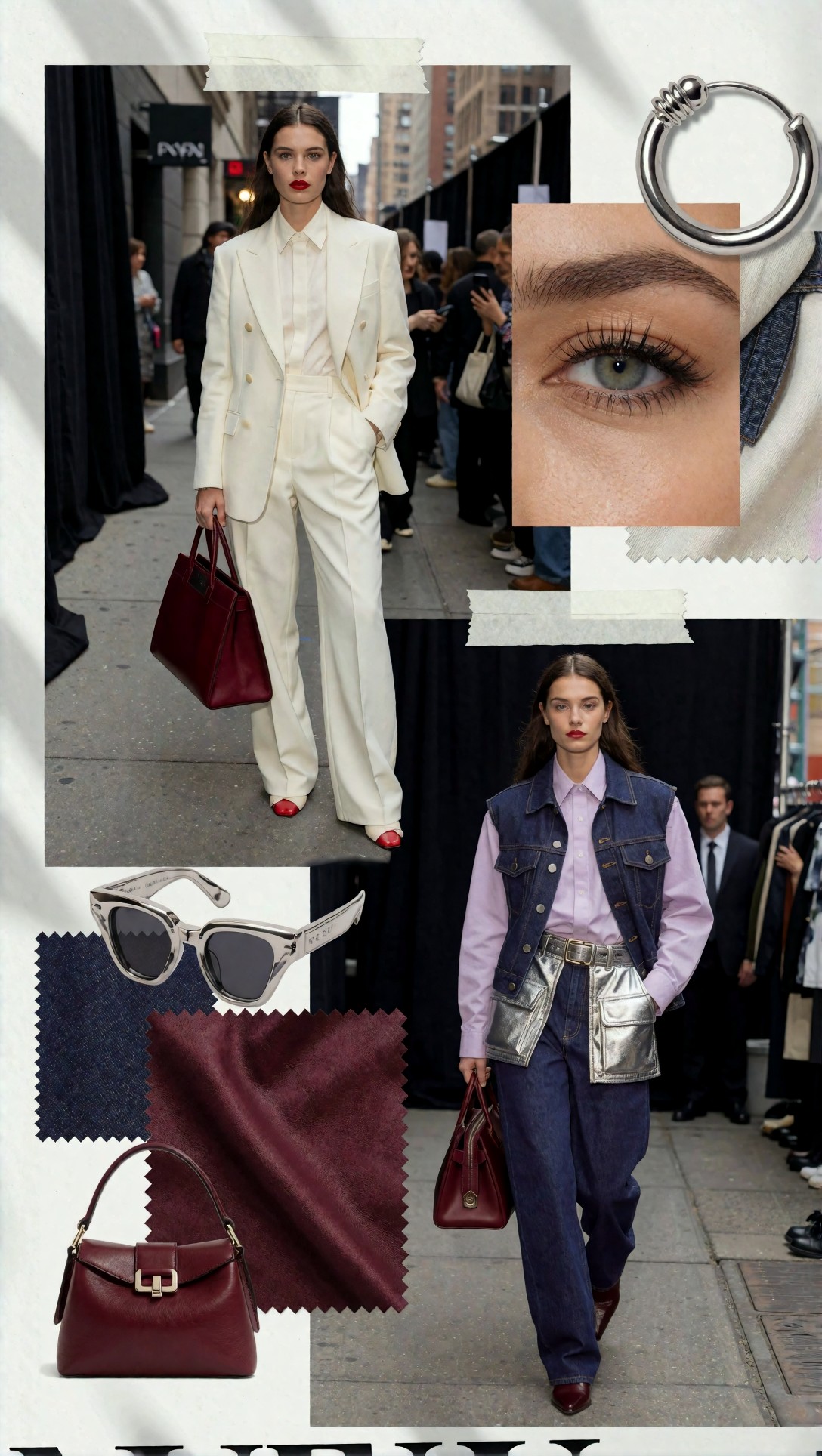
Inspect whether the collage keeps a clean hierarchy instead of becoming cluttered. This is strongest for ideation and weaker for direct social-ready publishing.
Strengths of this approach
It keeps style and beauty connected
The best part of this workflow is that makeup stops floating as a separate concept. It behaves like part of the styling system.
It is beginner-friendly
Starting from shot type and garment stack is easier than trying to describe a whole editorial mood in one go.
It adapts well to different outputs
The same core look can be moved from street style to backstage to catalog grid with small changes. That makes it useful if you are building multiple assets from one trend idea.
For more workflow experiments like this, browsing related tests on [articles](/articles) or reverse-building a styling concept in [tools](/tools) can help shorten the prompt drafting phase.
Limitations and failure risks
Trend timing moves faster than model priors
A model may still lean on older fashion-week clichés. If the output feels generic, the problem is often not image quality but stale styling logic.
Beauty details can destabilize faces
Metallic lids, graphic liner, and glossy textures sometimes create asymmetry or messy lash rendering. If the face starts breaking down, simplify the makeup cue.
Layered garments can merge
Long coats over vests over knits over skirts are visually dense. The strongest fix is naming fabric, fit, and contrast between each layer.
Compact checklist for better NYFW image prompts
- Choose a named shot type first
- Show the full outfit whenever inspiration is the goal
- List garments from outer layer to shoes
- Add one beauty trend, not five
- Name one bag and one jewelry direction
- Include palette and fabric terms
- Anchor the scene in a real New York fashion context
- Check whether the generated image still reads as current, not generic luxury
FAQ
What are the easiest NYFW beauty and outfit trends to generate well?
Oversized tailoring with polished natural makeup is the easiest. The silhouette is clear, and the beauty cue is subtle enough not to distort the frame.
How do I make runway beauty looks work in AI image generation?
Keep the beauty trend tied to an outfit structure and specify the scene. "Runway beauty" alone often becomes a close-up face image.
Should I use street style or backstage prompts for inspiration images?
Street style is better for wearable outfit reading. Backstage is better when you want more fashion week atmosphere and stronger beauty visibility.
Why do my fashion week prompts look expensive but not current?
Usually because the styling is too generic. Add a specific pairing like red lip with cream suiting or metallic eye with utility dressing.
Final recommendation
If your goal is inspiration, this workflow is worth using. It is best for creators, marketers, stylists, and small teams who want trend-led images that actually show how beauty and clothing work together. It is less ideal if you only need close-up makeup ads or abstract editorial art.
What matters most is this: start with the shot type and complete outfit logic, then add one beauty trend as a supporting signal. In this test, that single decision produced the most reliable NYFW beauty and outfit trends imagery, and it did more for output quality than changing camera language or adding extra stylistic adjectives.