This test is about office siren outfit ideas that actually translate well into AI images when you want sharp workwear, polished editorial styling, and enough street appeal to feel current rather than corporate. The main finding: the best outputs came from prompts that treated the look as a full styling system—tailored outer layer, body-conscious base, leg line, shoe shape, bag, jewelry, and urban setting—rather than just asking for an "office siren outfit" and hoping the model understood the trend.
Quick answer: what to know first
- The strongest office siren images came from full-body or three-quarter fashion shot types, not portrait-led prompts.
- Models handled the trend best when the prompt named specific garments: pinstripe pencil skirt, fitted turtleneck, slingback heels, rectangular glasses, structured tote.
- "Sexy" worked best as controlled tailoring and silhouette tension, not exposed skin. Too much ambiguity pushed results into nightclub styling.
- Street appeal improved when the location was concrete: SoHo sidewalk, London financial district side street, Seongsu crosswalk, Milan office arcade.
- If you want cleaner garment logic, build and test the look first in [Prompt Lab](/promptlab), then refine final outputs in [Create](/create).
What was tested
I tested eight prompt structures around the same core trend: office siren styling with polished editorial framing. The goal was commercial-investigation practical: identify which prompt ingredients produce usable fashion images for mood boards, social posts, lookbooks, or product-style concept work.
Test setup
- Focus: office siren outfit ideas with urban editorial mood
- Shot types: street-style full body, three-quarter editorial, lookbook, catalog grid, runway/backstage, flat lay, storefront display, accessories close-up
- Visual priorities: silhouette clarity, fabric texture, accessory logic, proportion, shoe visibility, workplace polish with street-style edge
- Common failure checks: over-sexualized styling, broken tailoring, missing shoes, confused office setting, weak bag rendering, inconsistent layers
- Review flow: generate first pass, compare outfit logic, upscale promising frames in [Upscaler](/upscaler), save best references to [Gallery](/gallery)
Best result: the full-body street-style office siren look
The strongest result in this test was a street-style full-body shot with a charcoal pinstripe blazer, fitted cream knit, knee-length pencil skirt, sheer tights, pointed slingbacks, and a structured leather tote. It worked because the prompt defined the tension that makes the trend recognizable: conservative tailoring on top, body-conscious fit through the waist and hips, sleek accessories, and an urban sidewalk context.
When this setup worked, the image looked like an editorial street-style capture rather than a random business outfit. The sharpest generations also used 35mm or 40mm framing, which gave enough environment to sell the city mood without hiding the clothes.
To test silhouette control and whether the model could keep the outfit legible from head to toe, I used a street-style framing with named garments and a real city context.
Topic: Office Siren Street-Style Full Look
Genre: Street Style
Camera: Canon EOS R5
Lens: 35mm f/2
Lighting: Overcast diffusion
Location: SoHo sidewalk outside glass office buildings, New York
Style: Polished editorial street fashion
Final Prompt: street-style full body fashion shot of an office siren outfit on a city sidewalk in SoHo, sharp charcoal pinstripe oversized blazer layered over a fitted cream fine-rib turtleneck, high-waisted black pencil skirt to the knee, sheer black tights, pointed slingback heels, structured dark oxblood leather tote, slim rectangular glasses, delicate gold hoop earrings, sleek straight hair tucked behind ears, confident walking pose with one hand holding coffee and the other carrying the tote, complete outfit visible head to toe, wet pavement reflections, glass office towers and passing cabs in soft focus, urban polished mood, body-conscious but tasteful silhouette, premium wool texture, clean editorial composition, Canon EOS R5 look, 35mm documentary fashion framing, realistic garment drape, subdued gray black cream palette with oxblood accent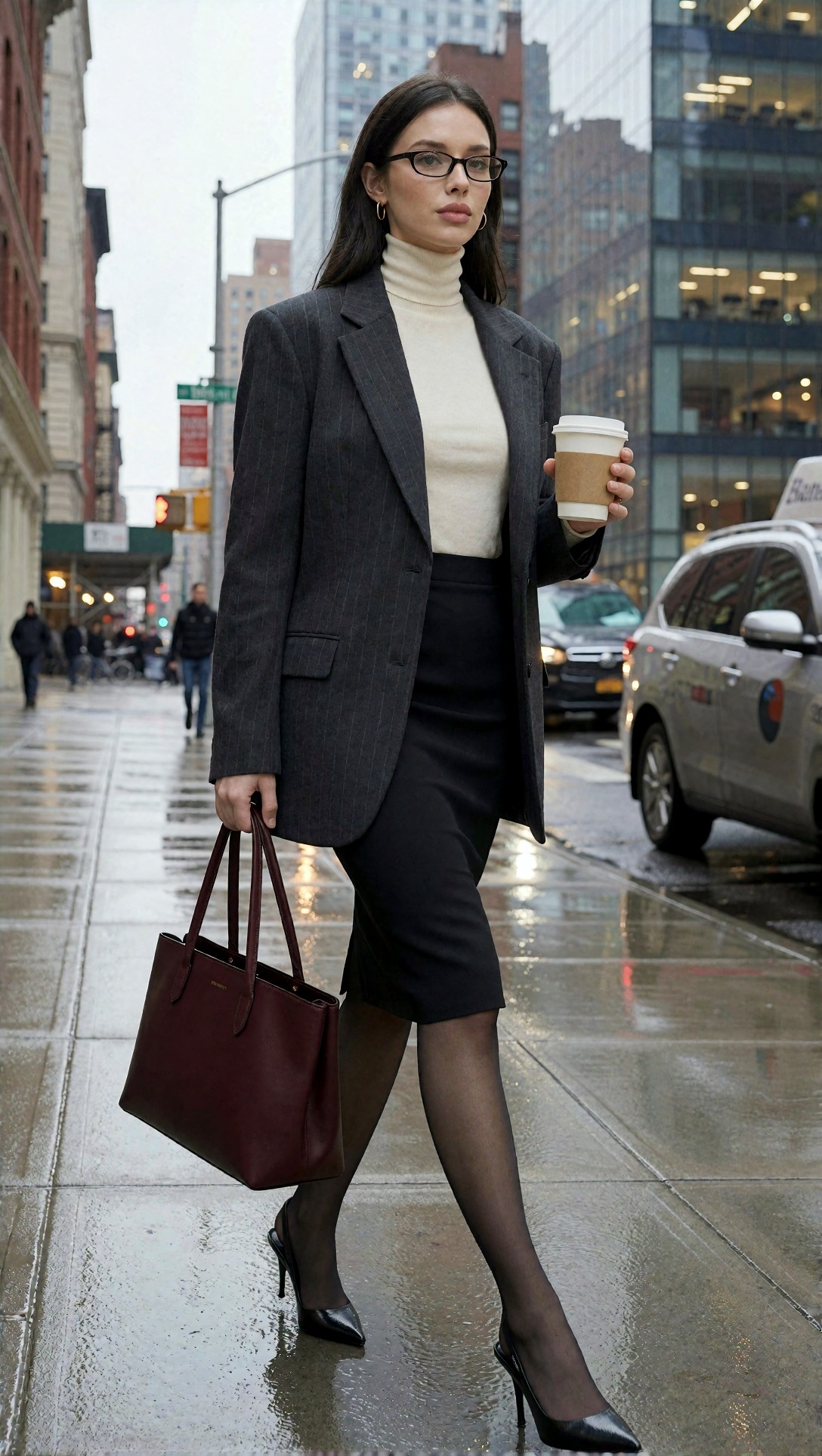
Inspect whether the blazer stays oversized while the knit remains fitted, and whether the shoes and tote both read clearly. In the best outputs, the pinstripe texture stayed visible and the model preserved the office-to-street balance without turning the look into nightlife wear.
Why that prompt worked better than broader office siren outfit prompts
The phrase office siren outfit is too loose on its own. In this test, generic prompts often produced one of three weak outcomes:
1. plain corporate suiting with no fashion tension 2. Y2K clubwear with a blazer added on top 3. portrait-heavy images where the outfit was cropped or partially hidden
The better prompts all did three things:
- chose a named shot type first
- defined the garment stack from outerwear to shoes
- anchored the trend in a specific editorial environment
Here is the short checklist that separated usable outputs from throwaways:
| Prompt ingredient | Helped output | If missing | |---|---|---| | Shot type named first | Better framing and full outfit visibility | Cropped body, unclear styling | | Specific jacket + base layer + skirt/pants | Stronger silhouette logic | Generic officewear | | Shoes and bag named | Better trend recognition | Incomplete styling | | Real street or office district location | More believable editorial mood | Empty studio feel | | Tasteful sensual direction | Sharper office siren identity | Either too stiff or too revealing |
Three-quarter editorial shots gave the cleanest blazer-and-waist tension
The second-best workflow used a three-quarter outfit editorial. This was useful when the blazer waist, skirt rise, and neckline relationship mattered more than shoe detail. I found this framing especially good for fall fashion trend content where you want a more magazine-like image than a candid sidewalk shot.
This prompt was designed to test shape control around the waist, lapel structure, and texture contrast between suiting wool and a fitted satin or knit base.
Topic: Office Siren Three-Quarter Editorial Tailoring
Genre: Fashion Editorial
Camera: Nikon Z8
Lens: 50mm f/2
Lighting: Softbox key light with cool window fill
Location: Minimalist corporate lobby with stone floor and steel elevator doors
Style: Luxury magazine editorial
Final Prompt: three-quarter outfit editorial of office siren fashion in a modern corporate lobby, sharply tailored black blazer with strong shoulders and a cinched waist over a soft ivory satin camisole, slim graphite midi pencil skirt with back slit, sheer tights, black pointed pumps partially visible, slim leather shoulder bag under the arm, narrow metal watch, rectangular silver glasses, poised stance leaning slightly near brushed steel elevator doors, complete upper and mid silhouette clearly visible, polished but sexy workwear energy, cool gray stone and steel background, luxury magazine styling, tactile contrast between matte wool suiting and fluid satin, Nikon Z8 clarity, 50mm fashion framing, refined urban color grading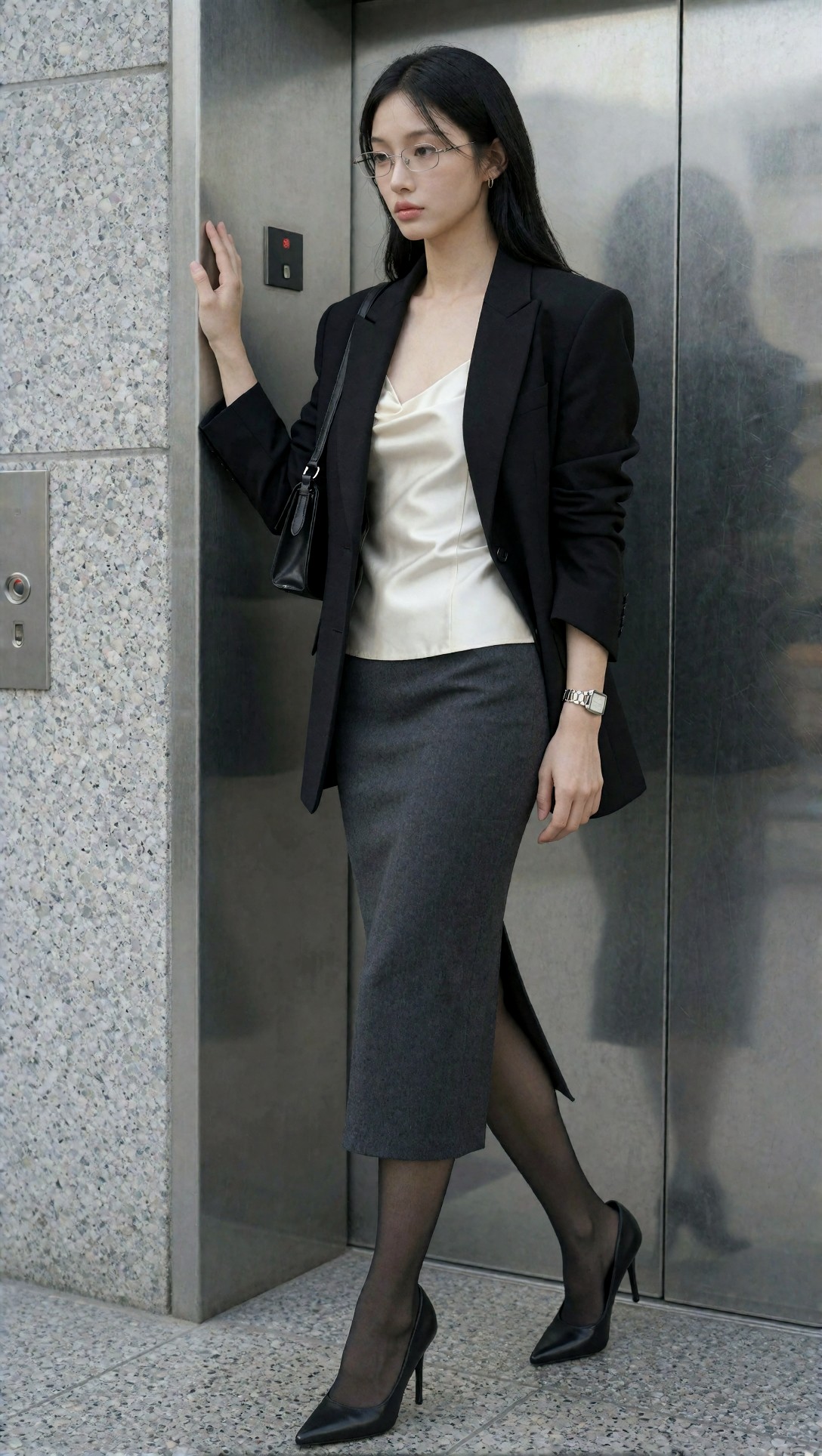
Check whether the waist looks intentionally shaped rather than warped by the model. The best images showed clean lapels, believable fabric contrast, and a controlled expression that kept the focus on styling instead of face glamour.
Head-to-toe lookbook prompts were best for comparing office siren outfit ideas fast
For commercial investigation, lookbook-style prompts were the most efficient. They were not always the most atmospheric, but they made it easy to compare skirt lengths, shoe shapes, and layering options. If your goal is to generate references before shopping, styling, or building campaign concepts, this is the fastest route.
I used this setup to test whether the model could present the trend as a complete outfit recipe rather than a cinematic scene.
Topic: Office Siren Head-to-Toe Lookbook
Genre: Fashion Lookbook
Camera: Sony A7R V
Lens: 40mm f/2.5
Lighting: Clean studio daylight simulation
Location: Seamless light gray editorial backdrop
Style: Clean commercial lookbook
Final Prompt: head-to-toe lookbook fashion image showing a full office siren outfit against a light gray studio backdrop, cropped dove-gray blazer, fitted black mock-neck knit top, high-waisted charcoal wide-leg trousers with sharp front crease, pointed patent pumps, structured top-handle mini bag, narrow belt, slim oval sunglasses pushed up on head, silver hoop earrings, model standing straight with slight hip angle, full body visible from head to toe, emphasis on tailoring lines, hem length, trouser break and shoe shape, polished editorial workwear with subtle street-style attitude, cool monochrome palette, crisp studio rendering, Sony A7R V detail, 40mm balanced fashion framing, premium fabric texture, clean commercial composition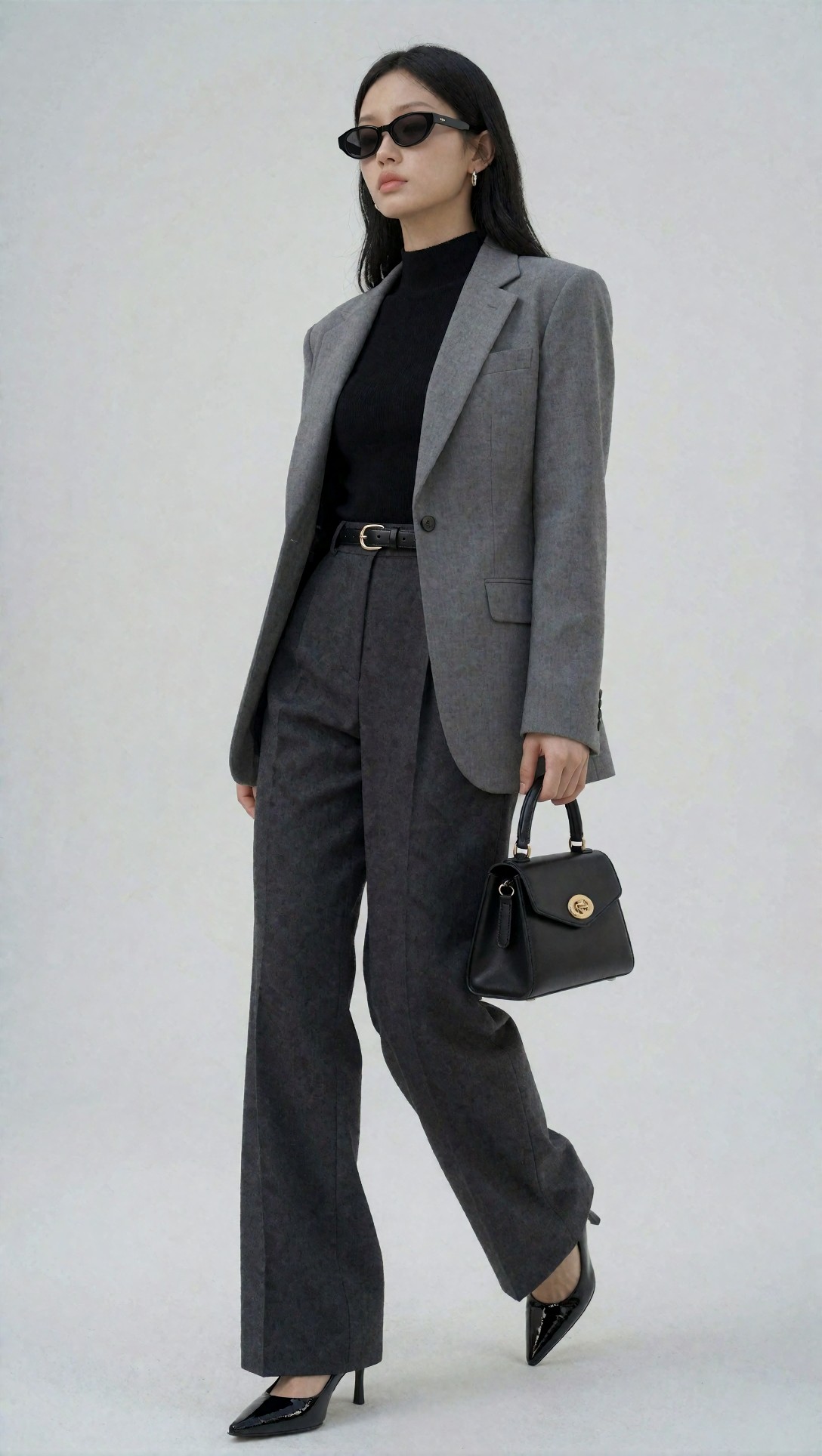
Inspect hem length and trouser break first. This setup often revealed proportion mistakes quickly, especially when models invented extra folds or made the cropped blazer too short to feel office-appropriate.
Catalog grid pages were surprisingly useful for outfit planning
A catalog grid is less glamorous, but in this test it was excellent for comparing multiple office siren outfit ideas in one frame. It is especially useful if you are building Pinterest-style planning assets or social carousels around polished editorial fashion.
This prompt tests consistency across several related outfit variations and whether the model can keep the trend direction coherent.
Topic: Office Siren Outfit Catalog Grid
Genre: Product Editorial
Camera: Fujifilm GFX100S
Lens: 45mm f/2.8
Lighting: Bright diffused studio panel lighting
Location: Editorial catalog layout on off-white background
Style: Modern fashion e-commerce editorial
Final Prompt: catalog grid page featuring four coordinated office siren outfit ideas arranged in a clean editorial layout on an off-white background, look one with pinstripe blazer and pencil skirt, look two with fitted cardigan and tailored trousers, look three with waistcoat and slim midi skirt, look four with trench coat over body-conscious knit dress and heels, each look shown head to toe with shoes and bags visible, structured leather bags, pointed pumps, slingbacks, rectangular glasses, gold minimal jewelry, cohesive black gray cream oxblood palette, layout designed like a premium fashion buying guide, consistent model scale, clear garment separation, high fashion e-commerce polish, Fujifilm GFX100S detail, 45mm clean rendering, crisp typography-free composition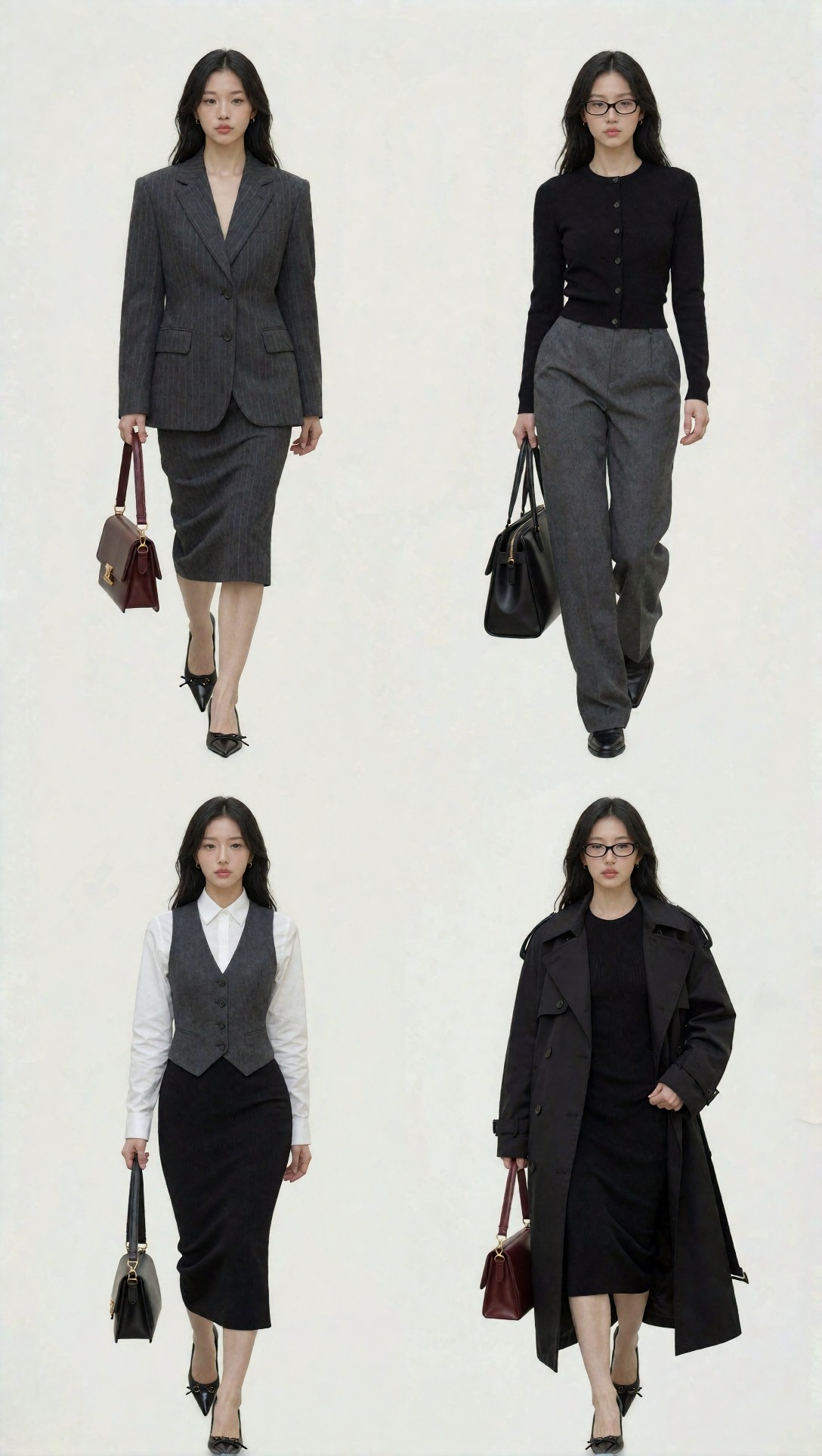
What to inspect: consistency between the four looks and whether each one reads as a distinct variation rather than repeated clothing with minor edits. The weak outputs tended to duplicate the same shoe or bag across all panels without enough styling differentiation.
Where the output struggled
The weak point across nearly all generations was tailoring precision under sensual styling pressure. Once the prompt leaned too hard into the sexy mood without garment specificity, several problems showed up:
- blazers turned into cropped club jackets
- pencil skirts became mini skirts with inconsistent waistlines
- tights disappeared or merged with skin tone
- handbags warped into unstructured shapes
- office locations became vague luxury lobbies with no street or work context
Another recurring issue: when I asked for glasses, tote, coffee cup, phone, and gloves all in one image, the hands often broke. For this trend, fewer props produced stronger fashion results.
To test failure risk around more dramatic styling, I pushed the look toward a runway/backstage mood. This made strengths and weaknesses easy to spot.
Topic: Office Siren Runway Backstage Variation
Genre: Runway Documentary
Camera: Leica SL2-S
Lens: 24-70mm at 55mm f/3.2
Lighting: Mixed backstage fluorescents with warm vanity bulbs
Location: Milan Fashion Week backstage dressing area
Style: Documentary high-fashion realism
Final Prompt: runway backstage moment showing an office siren inspired fashion look during Milan Fashion Week, model standing near garment racks in a sharply tailored chocolate brown skirt suit with a fitted semi-sheer espresso blouse underneath, narrow leather belt, pointed pumps, slim top-handle bag, rectangular glasses, hair in a sleek low bun, stylists blurred in background, full outfit visible in a candid documentary frame, body-conscious yet tasteful workwear sensuality, premium suiting fabric, backstage mirrors and bulbs, garment tags and steamers visible, Leica SL2-S realism, 55mm backstage fashion composition, slightly imperfect live atmosphere, rich brown and camel palette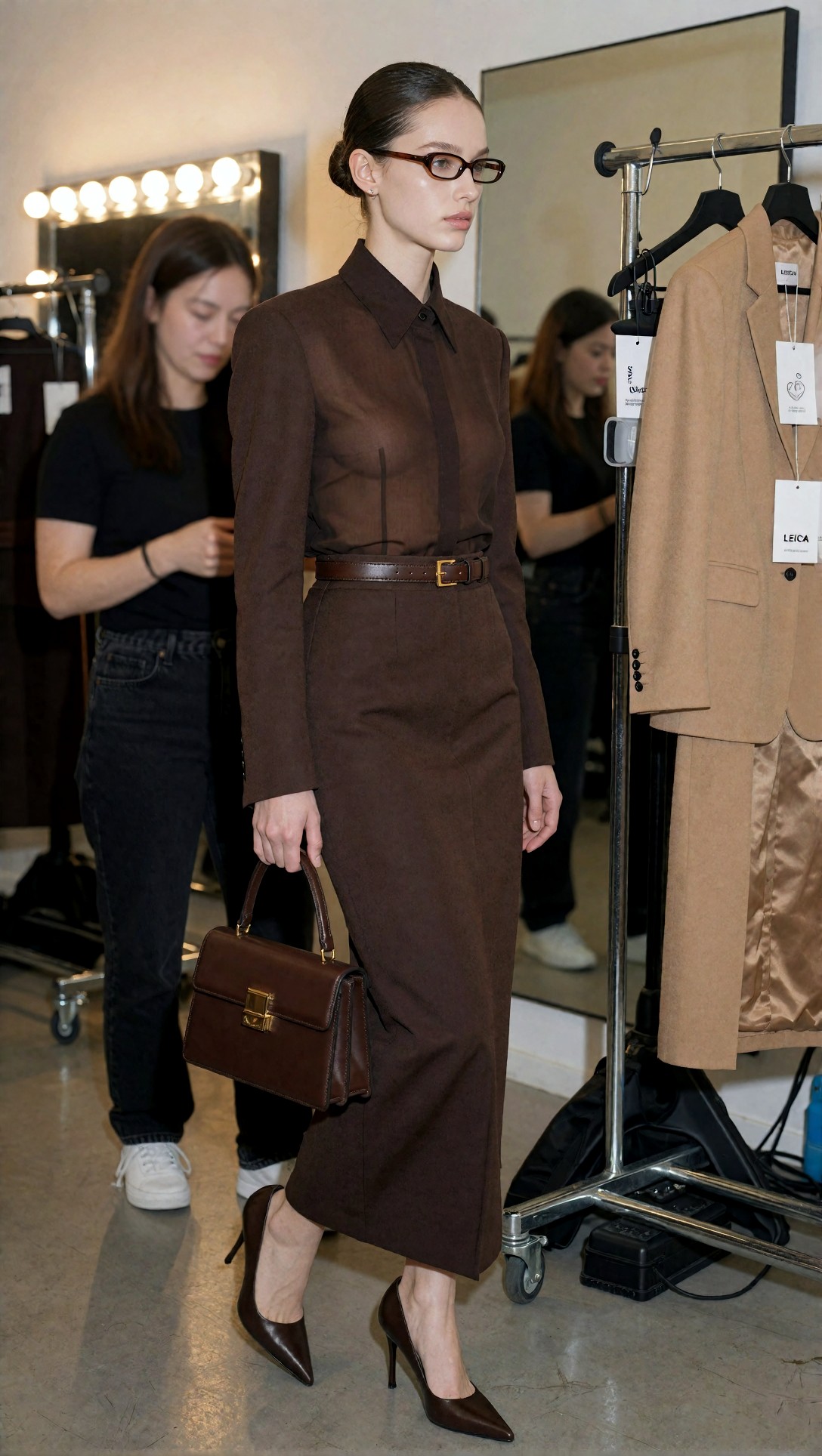
Inspect the blouse transparency and suit structure together. In stronger generations, the sensual note remained editorial; in weaker ones, the blouse styling became inconsistent or the tailoring lost its clean line under busy backstage details.
Recommended prompt changes for better office siren results
After comparing the outputs, these changes improved results most consistently:
1. Name the silhouette, not just the trend
Instead of writing only "office siren outfit ideas," specify the core shape:
- oversized blazer + fitted knit + pencil skirt
- cropped blazer + high-waist trouser + pointed pump
- waistcoat + midi skirt + slingback
- trench + body-skimming dress + tote
2. Keep the sexy mood in the fit, not exposure
The trend read better when sensuality came from:
- a defined waist
- narrow skirt line
- sheer tights
- sleek pumps
- fitted knit or satin underlayer
It became less usable when the prompt centered cleavage, bare midriff, or nightclub language.
3. Use environments that support the outfit logic
Best locations in this test:
- New York sidewalk near office towers
- London financial district side street
- Paris stone arcade
- Seongsu glass-front retail block
Weaker locations:
- generic studio with no fashion direction
- vague office interior with random desks
- luxury penthouse scenes that drifted away from workwear
To test a stronger city-specific street result, I used a London framing with clear layering and a practical coat system for fall fashion trends.
Topic: Fall Office Siren Street Layering
Genre: Street Fashion Editorial
Camera: Canon EOS R3
Lens: 40mm f/2.8
Lighting: Soft autumn daylight after rain
Location: London financial district side street with stone buildings
Style: British polished street editorial
Final Prompt: street-style full body image of a fall office siren outfit on a London financial district side street after rain, long charcoal wool trench coat worn open over a fitted black fine-gauge turtleneck and dark plaid midi pencil skirt, sheer tights, sharp pointed knee-high leather boots, structured burgundy work tote, slim leather gloves in one hand, rectangular glasses, sleek blowout hair, confident stride across wet pavement, complete outfit visible with strong coat movement and clear skirt line, sexy but tasteful editorial workwear mood, stone architecture and black cabs softly blurred behind, deep charcoal black burgundy palette, Canon EOS R3 realism, 40mm urban fashion framing, crisp wool and leather textures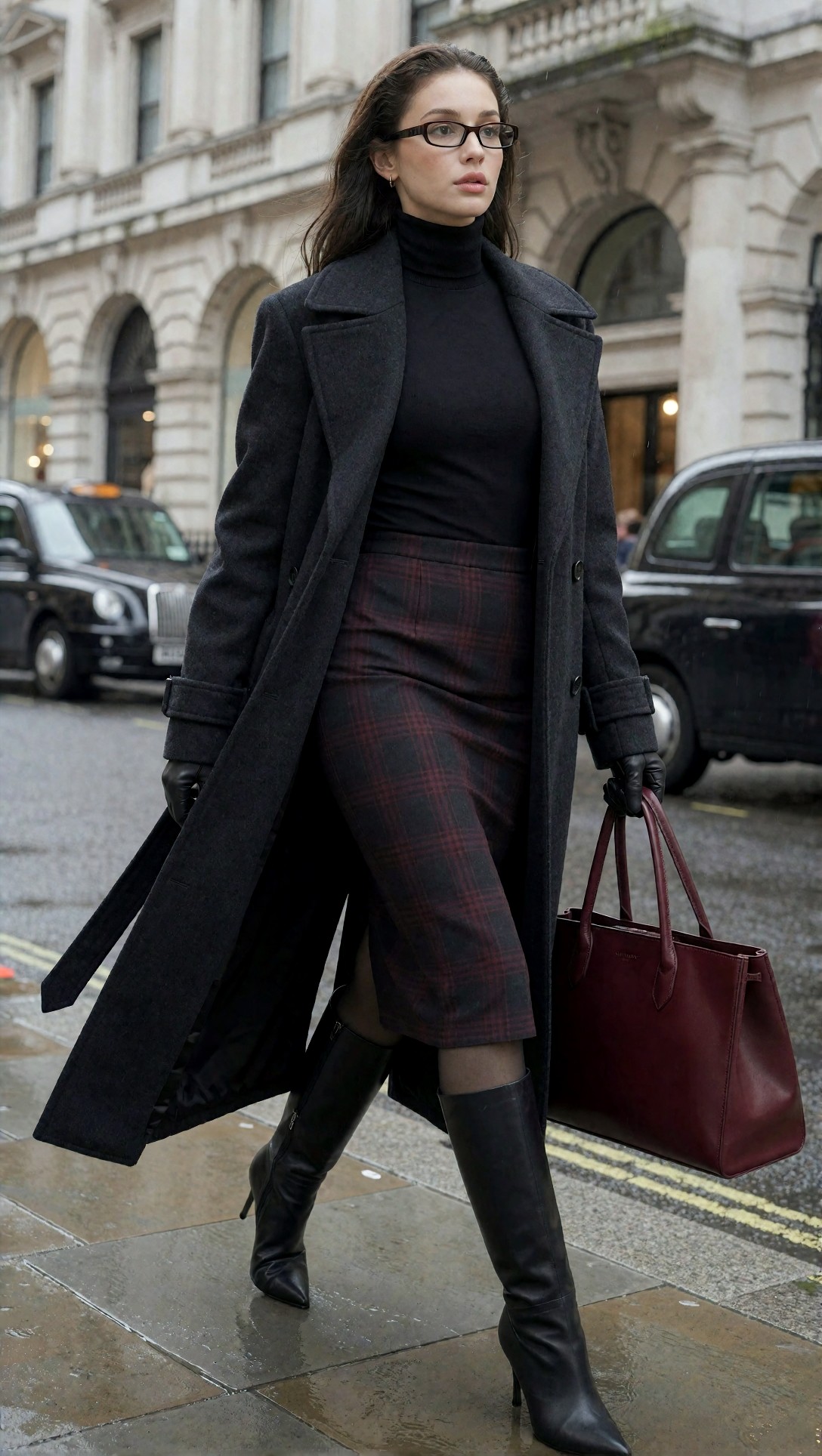
Check whether the trench stays open enough to show the outfit architecture underneath. This version worked well because the coat added movement without hiding the office siren silhouette.
Product-led prompts helped when clothing details mattered more than model consistency
If the goal is shopping investigation or styling system analysis, not influencer-style imagery, product-led shots were more reliable. Flat lays and storefront displays removed hand errors and made accessory hierarchy clearer.
Flat lay: best for building a wearable office siren formula
This prompt tests whether the outfit concept works as a merchandise set before you spend time on full editorial generations.
Topic: Office Siren Outfit Flat Lay
Genre: Product Editorial
Camera: Phase One XF IQ4
Lens: 80mm f/4
Lighting: Overhead soft studio diffusion
Location: Matte stone tabletop in editorial studio
Style: Luxury retail flat lay
Final Prompt: product flat lay of an office siren outfit arranged on a matte stone tabletop in an editorial studio, charcoal pinstripe blazer, cream fitted knit top, black knee-length pencil skirt, sheer black tights, pointed slingback heels, structured oxblood leather tote, slim rectangular glasses, gold watch, small hoop earrings, red-brown lipstick tube and compact notebook as supporting props, garments carefully layered to show silhouette logic and premium fabric texture, luxury retail styling, controlled spacing, monochrome palette with oxblood accent, Phase One high-detail product realism, overhead composition, crisp wool knit leather and hosiery textures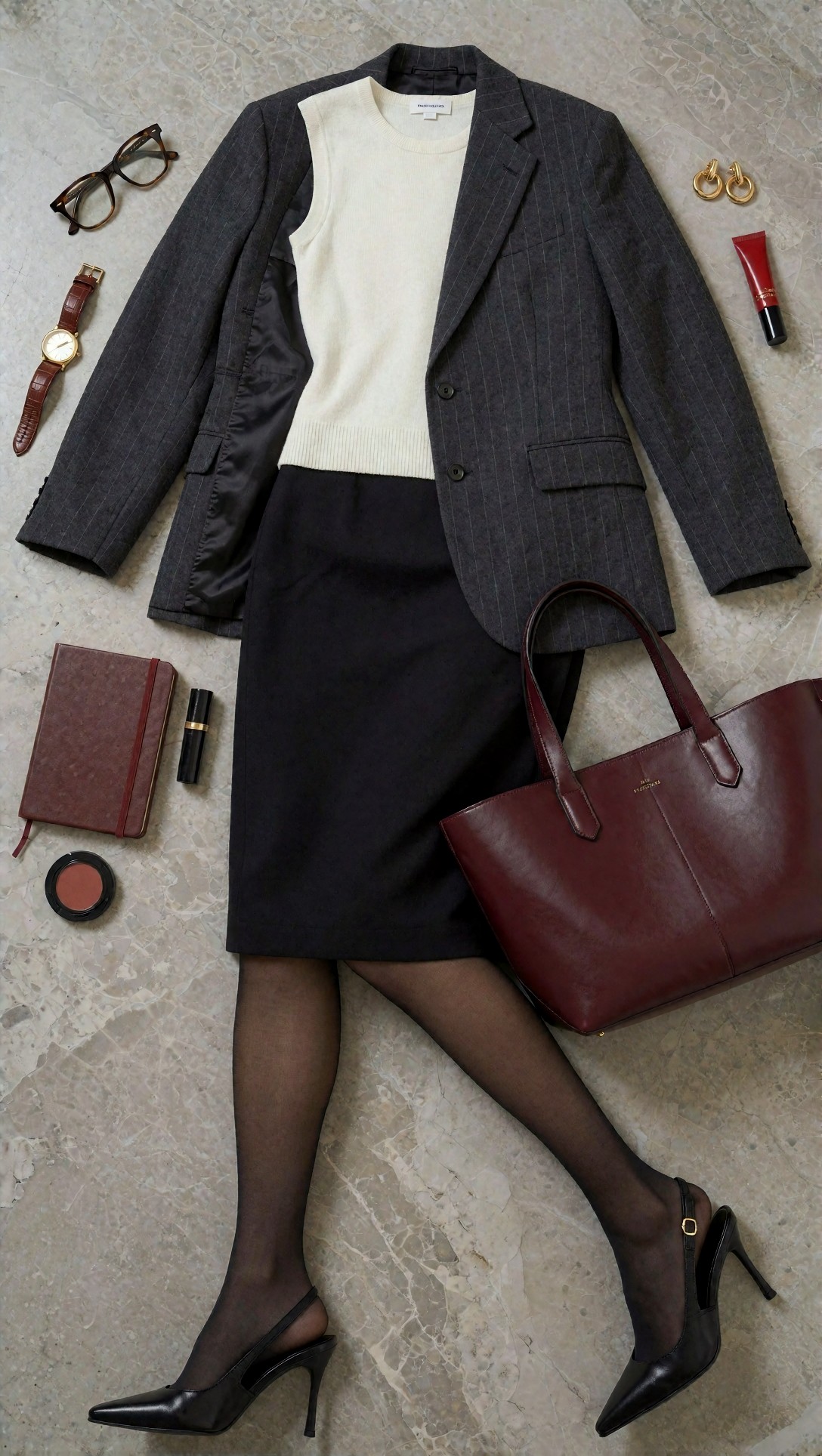
Inspect whether each item is instantly identifiable and whether the palette feels coherent. This is a strong option when you need to decide between shoe shapes or bag colors before generating full scenes.
Storefront display: best for merchandising and trend framing
This setup was useful for retail concepts and trend storytelling. It gave a stronger sense of how office siren outfit ideas function as a shop-floor story rather than a single look.
Topic: Office Siren Storefront Display
Genre: Retail Visual Merchandising
Camera: Hasselblad X2D 100C
Lens: 55mm f/2.5
Lighting: Evening storefront lighting with soft interior spotlights
Location: Seongsu fashion boutique window, Seoul
Style: Contemporary luxury retail display
Final Prompt: storefront display showcasing office siren fashion in a Seongsu boutique window at dusk, mannequin styling with sharply tailored black blazer, fitted taupe knit, graphite pencil skirt, sheer tights, pointed heels, structured leather bag, second display with pinstripe trousers and waistcoat, minimalist chrome fixtures, smoked glass reflections, polished Seoul fashion retail mood, sensual but refined workwear trend presentation, full outfit visibility, clean merchandising balance, luxury urban display styling, Hasselblad X2D clarity, 55mm storefront composition, rich fabric and leather texture, cool city evening tones with warm spotlight highlights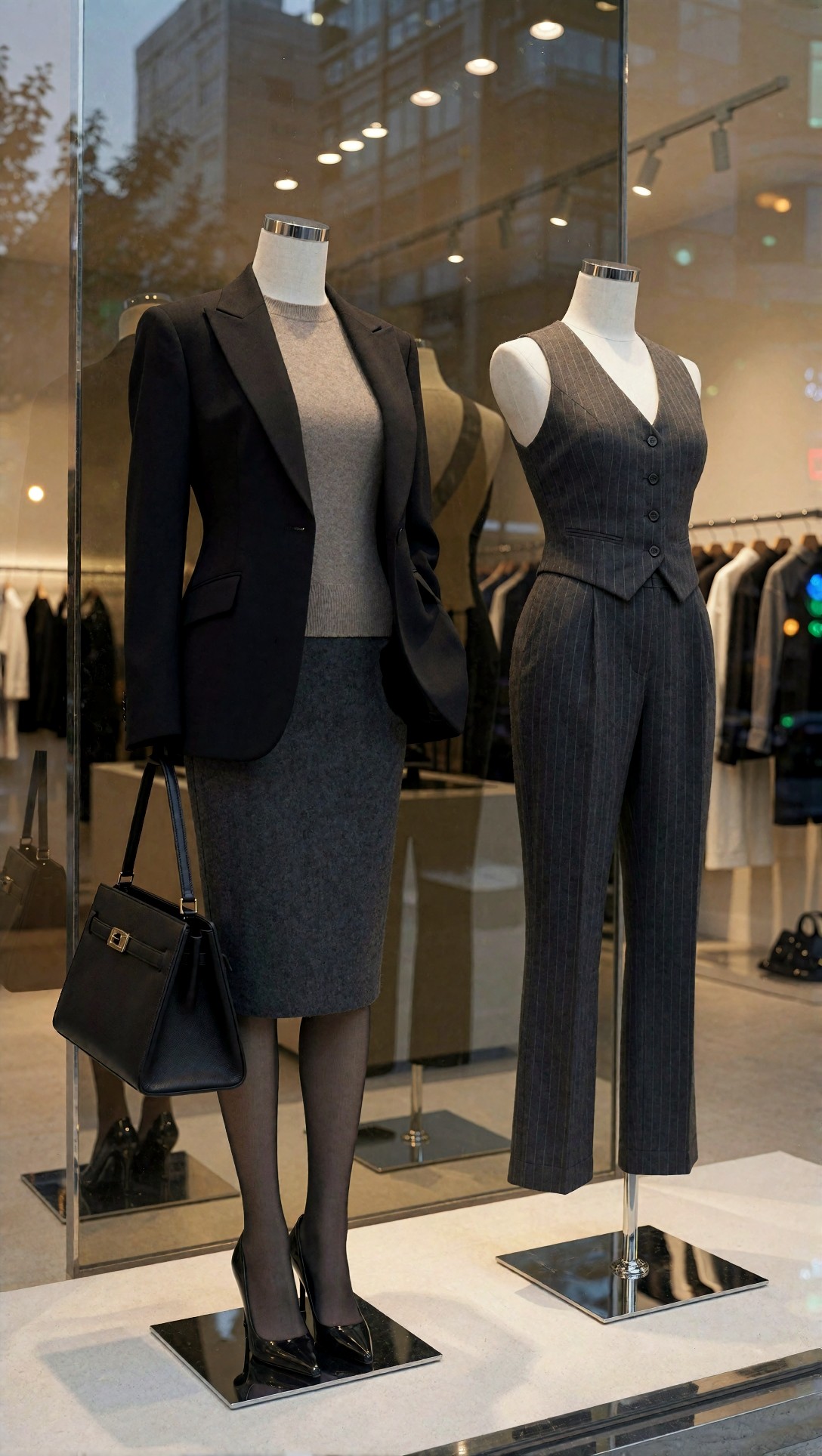
Inspect reflection control and whether the mannequin styling still reads clearly through the glass. The strongest images balanced retail realism with enough contrast to preserve fabric and accessory detail.
Accessories close-up worked best for finishing the trend, not defining it
Accessories are part of the office siren signal, but they did not carry the trend alone. Glasses, slim watches, pointed pumps, and structured bags helped support the look after the clothing was already correct.
I used one close-up prompt to test whether accessory polish could elevate the final image set without losing the workwear context.
Topic: Office Siren Accessories Close-Up
Genre: Luxury Accessories Editorial
Camera: Sony A1
Lens: 85mm f/1.8
Lighting: Window light with silver bounce fill
Location: Paris cafe terrace table near business district
Style: High-end fashion accessories campaign
Final Prompt: accessories close-up editorial capturing office siren styling details on a Paris cafe terrace table, structured black leather handbag beside slim rectangular glasses, pointed slingback heels crossed under a chair, sheer tights visible, cuff of a charcoal blazer and cream silk blouse sleeve, gold watch, black espresso cup and folded financial newspaper, refined urban workwear sensuality, focus on luxury accessory textures and styling coherence, muted black cream gold palette, shallow but controlled depth of field, Sony A1 crisp luxury detail, 85mm campaign framing, elegant street-to-office mood
Look for clean leather edges, believable eyewear shape, and sensible scale between props. This kind of image is useful as a supporting slide in a carousel, but it did not replace full-body outfit testing.
Mood-board collage prompts were good for direction setting, weaker for purchase-ready clarity
Mood boards were useful early in the workflow when I wanted to define palette, tailoring direction, and city mood before locking a final outfit. They were less useful for practical evaluation because they can hide proportion errors inside collage styling.
This prompt tests style lock: whether the model can maintain a coherent trend language across references, textures, and outfit fragments.
Topic: Office Siren Mood Board Direction
Genre: Mood-Board Collage
Camera: Mixed editorial tear-sheet aesthetic
Lens: 24-70mm fashion reference mix
Lighting: Mixed natural daylight and studio editorial light
Location: collage of New York office street scenes, tailoring swatches, accessories and lookbook tears
Style: Fashion editor concept board
Final Prompt: mood-board collage for office siren outfit ideas featuring editorial tear sheets of sharp blazers, fitted knits, pencil skirts, pointed pumps, structured leather bags, rectangular glasses, wet New York sidewalks, steel office lobbies, monochrome tailoring swatches, oxblood accessory accents, sexy but tasteful workwear energy, high-fashion planning board layout with layered photos, fabric close-ups, product snippets and silhouette notes, polished urban editorial aesthetic, cool gray black cream palette with burgundy accents, magazine-quality fashion concept board
Inspect whether the collage holds one consistent visual language. Good outputs help with art direction; bad ones turn into a trend soup of random businesswear and beauty imagery.
Recommended settings and workflow changes
Based on this test, here is what I would actually use for reliable office siren generations:
Best practical workflow
1. Start with a flat lay or catalog grid to clarify garments. 2. Move to a head-to-toe lookbook for proportion checks. 3. Then generate street-style full body or three-quarter editorial hero images. 4. Upscale only the winners where fabric texture and shoe edges already look correct in the base image.
Prompt settings that improved results
- use 35mm to 50mm for full outfits and editorial realism
- ask for head-to-toe visibility explicitly
- define one hero bag and one shoe type, not many accessories
- use a restricted palette: black, charcoal, cream, taupe, oxblood
- state tasteful sensuality through silhouette, not skin exposure
- avoid stacking too many actions like walking, holding phone, fixing glasses, and carrying coffee all at once
If your outputs look too corporate
Add one or two of these:
- sheer tights
- satin camisole under tailored blazer
- sharp pointed slingbacks
- oxblood bag or lipstick accent
- narrow rectangular glasses
If your outputs look too nightlife-coded
Remove or reduce:
- deep plunging tops
- ultra-short hemlines
- neon club lighting
- heavy glam portrait language
- vague "sexy office look" phrasing without tailoring details
For more outfit prompt iteration, [Prompt Lab](/promptlab) is the easiest place to refine garment stacks before generating hero images. If you want examples of how visual tests evolve, the broader archive at [Articles](/articles) is useful for comparing workflow patterns.
Who should use this approach
This workflow is best for:
- creators building Instagram influencer outfit concepts with cleaner wardrobe logic
- marketers or editors testing polished editorial workwear visuals before a shoot
- users comparing street style outfit ideas against lookbook-style outputs
- fashion sellers or stylists who need trend boards, retail concepts, or content planning assets
It is less ideal for people who only want beauty portraits or abstract fashion mood images. The value here comes from showing the entire styling system and comparing how each prompt component affects garment clarity.
FAQ
What defines an office siren outfit in AI image prompts?
The most reliable definition is tailored workwear with a body-conscious silhouette: blazer, fitted knit or satin base, pencil skirt or sharp trousers, pointed shoes, structured bag, slim glasses, and a polished city context.
Which shot type is best for office siren outfit ideas?
In this test, street-style full body gave the strongest overall results. Head-to-toe lookbook was best for fast comparison, and three-quarter editorial was best for waist-and-blazer styling details.
How do I make office siren prompts look tasteful instead of costume-like?
Keep the sensual mood in the fit and styling tension, not overt exposure. Use precise tailoring terms, realistic office-adjacent locations, and a restrained palette.
Are skirts better than trousers for this trend?
Skirts usually signal the office siren trend faster, especially pencil or slim midi shapes. Trousers can work well if the blazer is sharp, the waist is defined, and the shoe shape stays sleek.
What color palette worked best in the test?
Black, charcoal, cream, taupe, and oxblood produced the most convincing polished editorial results. Bright colors tended to weaken the trend identity unless the whole art direction was built around them.
Editorial conclusion
In this test, the strongest office siren outfit ideas came from prompts that behaved like a fashion editor's shot brief, not a trend label. Full-body street style won for overall impact, lookbook framing won for comparison speed, and product-led prompts were the safest way to lock the wardrobe before chasing atmosphere.
Use this workflow if you want sharp workwear with street appeal, clear outfit logic, and commercially useful fashion images. Avoid it if your main goal is beauty portraiture or highly abstract editorial art. The setting detail that mattered most was simple: name the shot type first, then define the full garment stack from blazer to shoes. That single change produced the biggest jump in usable outputs.