Old Money Summer Outfit vs Japanese Minimalist Fashion: Which Lookbook Prompts Feel More Natural in AI Styling Tests? 한국어 요약
이 페이지는 ZView Space의 영어 원문을 한국어 검색 사용자도 이해할 수 있도록 정리한 SEO 요약입니다. 핵심은 단순한 얼굴 중심 이미지가 아니라 패션 에디토리얼, 룩북, 아웃핏, 프롬프트 테스트, 이미지 생성 워크플로우를 실제로 어떻게 구성할지입니다.
핵심 요약
- 원문 주제: Old Money Summer Outfit vs Japanese Minimalist Fashion: Which Lookbook Prompts Feel More Natural in AI Styling Tests?
- 목적: AI 이미지 생성에서 outfit, silhouette, fabric, pose, location, camera framing을 더 명확하게 설계합니다.
- 활용 범위: Z-Image Turbo, Krea2 Turbo, Qwen Image, Anima, SeedVR2 같은 이미지 생성 및 업스케일 워크플로우에 적용할 수 있습니다.
- SEO 관점: 제목, 설명, 이미지 alt, 프롬프트 예시가 실제 검색 의도와 맞아야 색인 가능성이 높아집니다.
한국어 사용자를 위한 체크포인트
1. 프롬프트가 얼굴 묘사에만 머물지 않고 전체 스타일과 의상 구성을 설명하는지 확인합니다. 2. 패션 이미지라면 상의, 하의, 아우터, 신발, 액세서리, 소재감, 촬영 장소를 분리해서 씁니다. 3. 생성 결과는 바로 게시하지 말고 디테일, 손, 의상 형태, 배경 일관성, 이미지 품질을 비교합니다. 4. 글 본문에는 실제 테스트 기준과 실패를 줄이는 방법이 들어가야 검색엔진에서 얇은 콘텐츠로 보일 가능성이 줄어듭니다.
원문 미리보기
This test compares old money summer outfit prompts against Japanese minimalist fashion prompts to see which lookbook direction feels more natural in AI styling workflows. Instead of judging trend appeal, I focused on how image models handled garment logic, fab
---
This test compares old money summer outfit prompts against Japanese minimalist fashion prompts to see which lookbook direction feels more natural in AI styling workflows. Instead of judging trend appeal, I focused on how image models handled garment logic, fabric realism, accessories, silhouette consistency, and the kind of small styling decisions that make a fashion image feel editorial rather than assembled by autocomplete.
In practice, both aesthetics are easy to describe but hard to render cleanly. Old money summer styling asks for quiet luxury cues without drifting into yacht cliché. Japanese minimalist fashion asks for restraint, proportion control, and subtle texture variation without collapsing into a plain beige catalog. In this test, the stronger results came from whichever prompt made the outfit system more explicit.
What to know first
- Old money summer outfit prompts usually produce faster visual recognition, but they also trigger more stereotypes: boat shoes, blazers over beaches, and over-polished resort scenes.
- Japanese minimalist fashion often gives cleaner silhouettes and more believable layering, but some models flatten the styling into generic basics.
- The best outputs came from prompts that named fabric, rise, hem length, shoe shape, bag structure, and shot type.
- If you want a publishable lookbook image, inspect buttons, pleats, hand placement, tucked layers, and sandal anatomy before using it.
- For controlled prompt iteration, it helps to compare variants inside [Prompt Lab](/promptlab) and save side-by-side references in the [Gallery](/gallery).
Test setup
I ran the comparison as a lookbook exercise rather than a single hero-image test.
What was tested:
- 4 old money summer outfit prompt directions
- 4 Japanese minimalist fashion prompt directions
- full-body and three-quarter framing
- editorial, lookbook, flat lay, retail, and detail shot plans
- natural-light and controlled-light setups
What I inspected in each generation:
- outfit coherence from head to toe
- realism of linen, cotton poplin, silk, leather, and knit textures
- whether the model understood warm-weather layering
- shoe and bag accuracy
- whether the mood stayed refined and tasteful rather than generic luxury cosplay
Why this comparison is difficult for image models
These two aesthetics overlap more than prompt language suggests. Both live in a restrained palette. Both reward clean cuts and expensive-looking materials. Both often avoid loud logos. That similarity causes style bleed.
The weak point is that many models recognize fashion labels as mood clusters, not as actual wardrobe systems. So when prompted loosely, old money summer outfit ideas may become any mix of cream trousers, oversized sunglasses, and a marina backdrop. Meanwhile, minimal wardrobe prompts often become loose beige clothing with no structure, no tension, and no editorial intent.
Another problem is temperature logic. Summer styling should show breathable fabrics, open necklines, lighter layering, exposed ankles, or sandal choices that make seasonal sense. Models frequently miss this and add heavy jackets, autumn wool, or impossible knit density.
First attempt: both styles looked correct at a glance, but not on inspection
My first pass used broad descriptors: quiet luxury, refined summer elegance, Japanese minimalism, capsule wardrobe lookbook. At thumbnail size, both sets looked acceptable. At full size, the difference was clear.
The old money outputs had stronger immediate identity. They signaled “wealth-coded summer” quickly through white trousers, striped shirting, loafers, gold jewelry, woven bags, and Mediterranean settings. But they also failed more often in proportion. I saw too many random blazers, confused trouser breaks, and resort backgrounds that overpowered the clothing.
The Japanese minimalist outputs were less flashy but more stable. Trouser width, shirt drape, and neutral palettes held together more consistently. The downside was emotional flatness. Some generations felt like e-commerce basics rather than a deliberate lookbook.
Prompt test 1: baseline old money summer outfit
This first prompt checks whether the model can establish the classic old money summer vocabulary without falling into costume. I used a street-style full-body setup because it exposes trouser fit, shoe logic, and layering mistakes quickly.
Topic: Old money summer outfit lookbook baseline
Genre: Street Style
Camera: Canon EOS R5
Lens: 35mm f/2
Lighting: Soft golden hour side light
Location: upscale European coastal promenade with stone facades and muted storefronts
Style: luxury fashion campaign
Final Prompt: street-style full body fashion image of a confident woman wearing an old money summer outfit, cream high-waisted pleated linen trousers, fitted ivory ribbed knit tank, lightweight camel sweater draped over shoulders, brown leather belt, structured raffia top-handle bag, slim gold jewelry, dark tortoiseshell sunglasses, refined leather sandals, tasteful sexy silhouette with defined waist and long leg line, walking naturally on an elegant coastal promenade, complete outfit visible head to toe, relaxed editorial pose, quiet luxury palette of cream camel white and tan, crisp linen texture, subtle breeze, documentary fashion framing, premium lookbook realism, no loud logos, background secondary to styling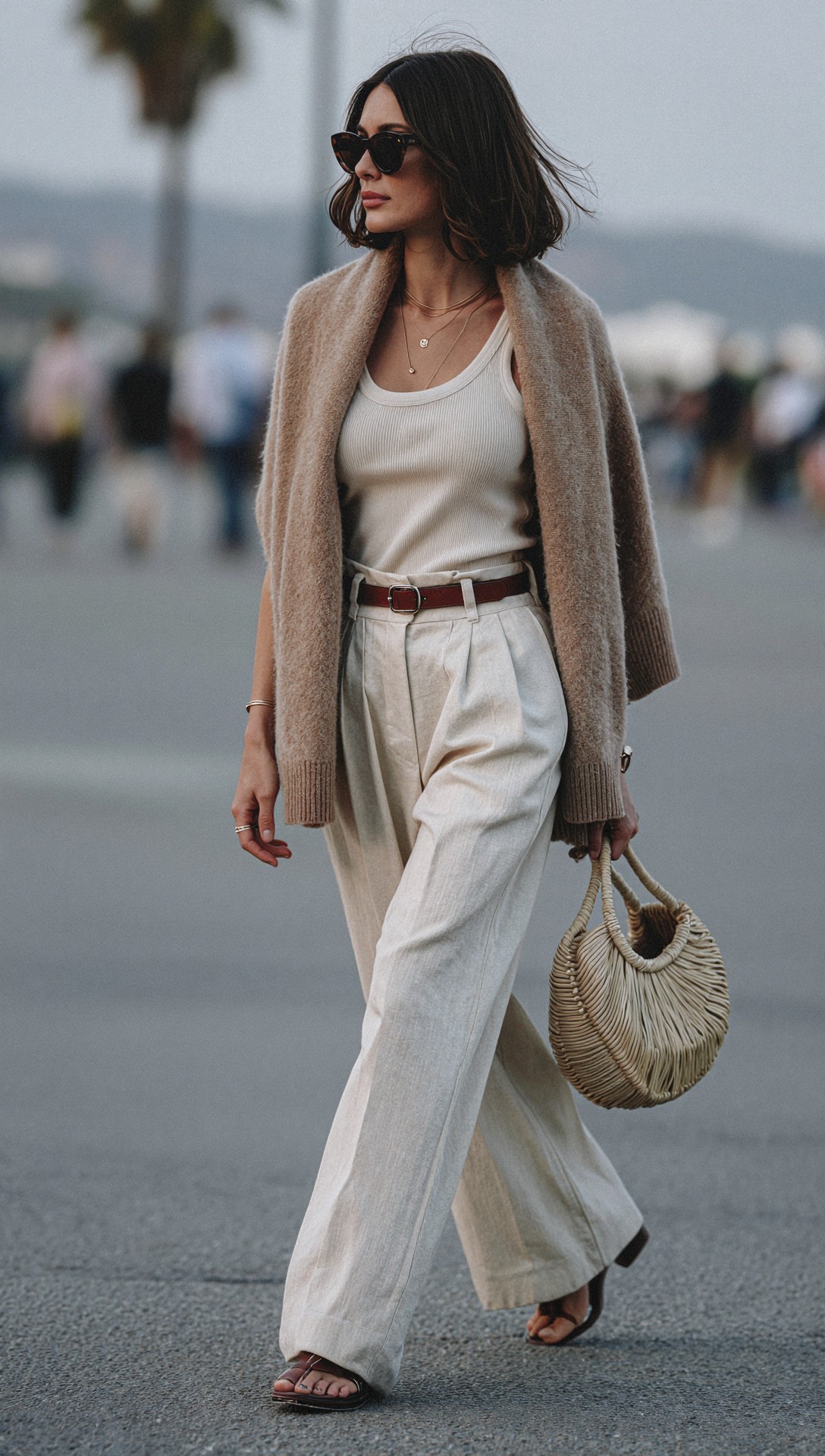
Inspect whether the trousers read as linen rather than generic satin, and whether the draped knit sits logically on the shoulders. The common failure here is over-accessorizing or turning the sandals into undefined foot blobs.
Prompt test 2: baseline Japanese minimalist fashion
This version checks style lock on a cleaner wardrobe system. The target was not “plain clothes,” but proportion-led minimalism with a precise silhouette.
Topic: Japanese minimalist fashion summer lookbook baseline
Genre: Head-to-Toe Lookbook
Camera: Nikon Z7 II
Lens: 50mm f/2.8
Lighting: Overcast diffusion
Location: quiet Tokyo side street with concrete walls and restrained signage
Style: clean commercial look
Final Prompt: head-to-toe summer lookbook image of Japanese minimalist fashion, confident woman in a charcoal sleeveless fine-gauge knit top tucked into high-rise wide-leg oat trousers, black leather slide sandals, slim rectangular shoulder bag, delicate silver earrings, sharp clean center-part hair, tasteful body-conscious fit through the torso with relaxed leg volume, complete silhouette visible, standing on a quiet Tokyo side street with concrete texture and muted urban depth, restrained palette of oat charcoal black and soft stone, editorial minimal wardrobe styling, fabric drape and seam detail clearly visible, natural pose, modern understated sensuality, no logos, no clutter, precise proportion control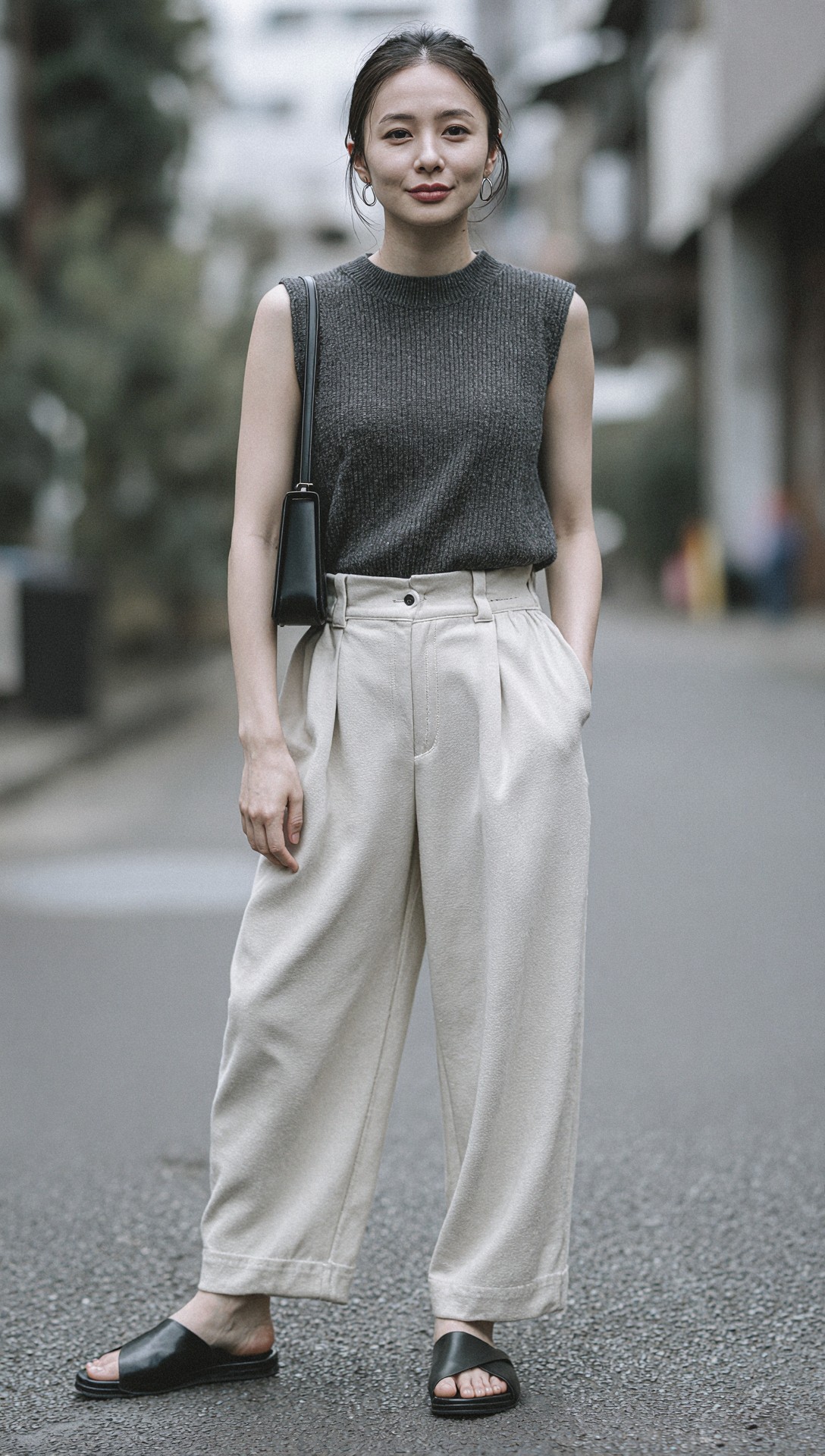
What to inspect is proportion discipline: does the model keep the top fitted and the trousers wide, or does everything become equally loose? Also check whether the sandals and bag remain sharp and minimal instead of mutating into luxury-brand noise.
The adjustment that improved the output
The strongest improvement came from replacing aesthetic labels with construction details. Once I stopped asking for “quiet luxury” or “minimalist elegance” as if those phrases were enough, the output quality moved up.
What worked better:
- naming garment categories in order from top to bottom
- defining fit relationship between top and bottom
- specifying fabric behavior like crisp poplin, washed linen, dry cotton, polished leather
- using a real shot type with clear framing
- giving the model a retail or city context that suits the wardrobe instead of a vague luxury backdrop
For old money prompts, adding discipline around restraint was essential. For Japanese minimalist prompts, adding sensual tension through shape and material kept the images from becoming too plain.
Where old money summer outfit prompts improved most
The old money set became more natural when I reduced status symbols and increased wardrobe logic. Instead of “wealthy resort woman,” I specified a breathable summer outfit with a social setting that suggested polish without cosplay.
Prompt test 3: old money three-quarter editorial with better layering
This prompt checks whether a slightly dressier old money summer outfit can hold detail without drifting into formalwear. The three-quarter crop is useful for testing shirt closure, waist placement, and bag integration.
Topic: Old money summer outfit editorial refinement
Genre: Three-Quarter Outfit Editorial
Camera: Sony A7R V
Lens: 40mm f/2.5
Lighting: late afternoon window bounce with warm ambient fill
Location: elegant hotel veranda overlooking a garden courtyard
Style: elegant resort editorial
Final Prompt: three-quarter outfit editorial showing a confident woman in a refined old money summer outfit, pale blue striped cotton poplin shirt worn slightly open at the collar and tucked into tailored white Bermuda shorts with clean front pleats, slim tan leather belt, sculpted brown leather mules, woven clutch, vintage-inspired gold watch, tasteful sexy summer styling with bare legs and structured waist, seated casually on an elegant hotel veranda, upper thighs to head visible with enough framing for bag and shoes, soft movement in the shirt fabric, relaxed but controlled pose, palette of white pale blue tan and warm stone, crisp cotton and leather texture, understated quiet luxury, magazine-quality realism, no nautical clichés, no heavy blazer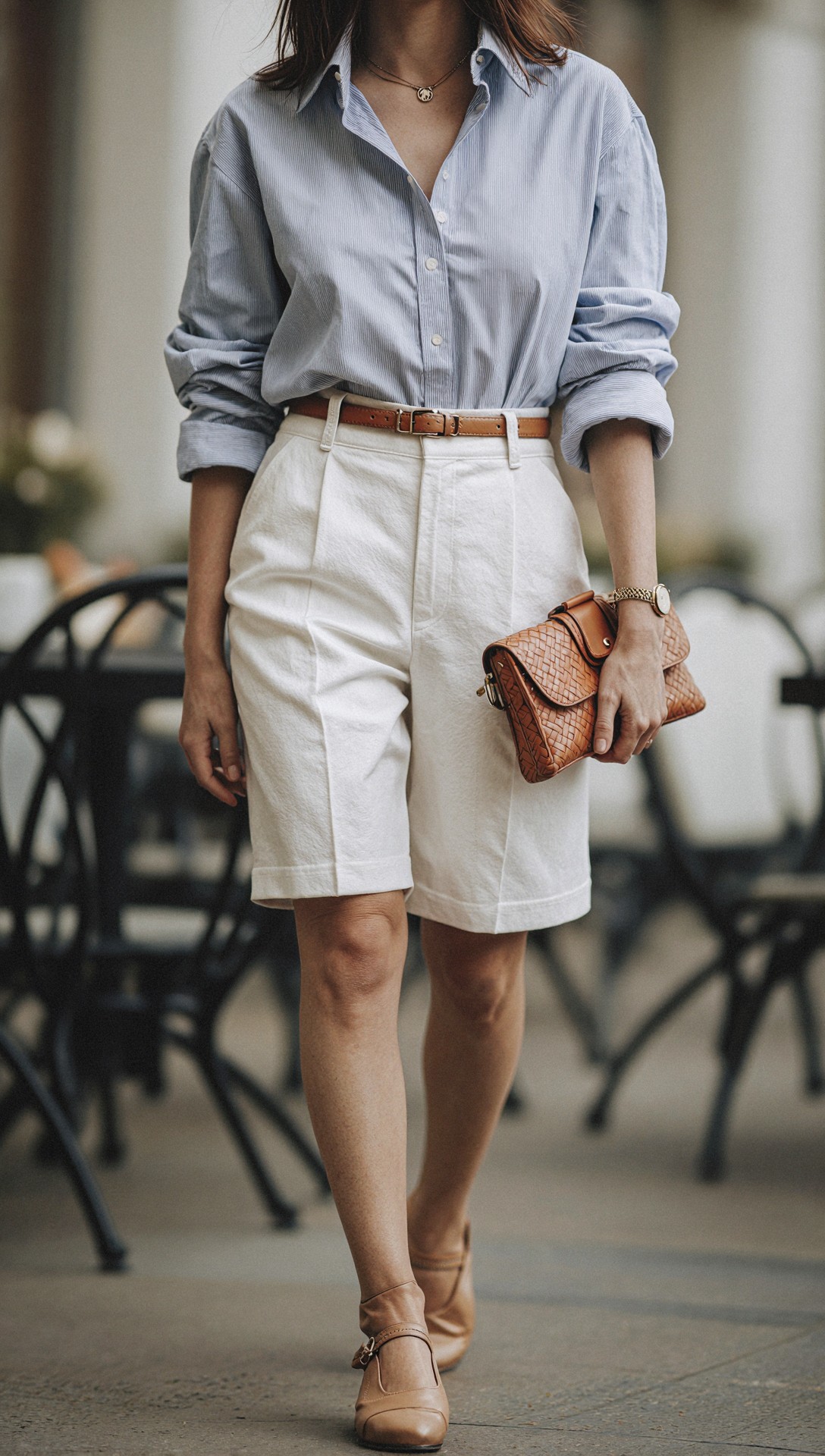
Inspect the shirt placket, collar edges, and short length. Models often turn Bermuda shorts into mini shorts or awkward culvy skorts when the prompt is not explicit enough.
Prompt test 4: old money catalog grid for capsule wardrobe lookbook
I used a catalog-style grid to test consistency across multiple outfit cells. This is where old money prompts often fail because accessories mutate between panels.
Topic: Old money summer outfit capsule wardrobe grid
Genre: Catalog Grid Page
Camera: Fujifilm GFX 100S
Lens: 45mm f/2.8
Lighting: high-key studio softbox with gentle shadow definition
Location: seamless off-white studio set designed like a luxury retail catalog
Style: clean commercial look
Final Prompt: catalog grid page featuring four coordinated old money summer outfit ideas on the same model, lookbook layout with full-body cells, outfit 1 cream linen trousers and black bandeau knit with shoulder sweater and leather sandals, outfit 2 white midi skirt and blue oxford shirt with woven bag, outfit 3 ivory tailored shorts and sleeveless camel knit with mules, outfit 4 relaxed white jeans and striped knit polo with loafers, all outfits in refined quiet luxury summer palette, complete styling logic visible in each cell, tasteful sexy silhouette, structured accessories, polished but natural poses, premium capsule wardrobe presentation, consistent body proportions, clean shadows, crisp textile realism, no logos, no duplicated limbs, editorial retail clarity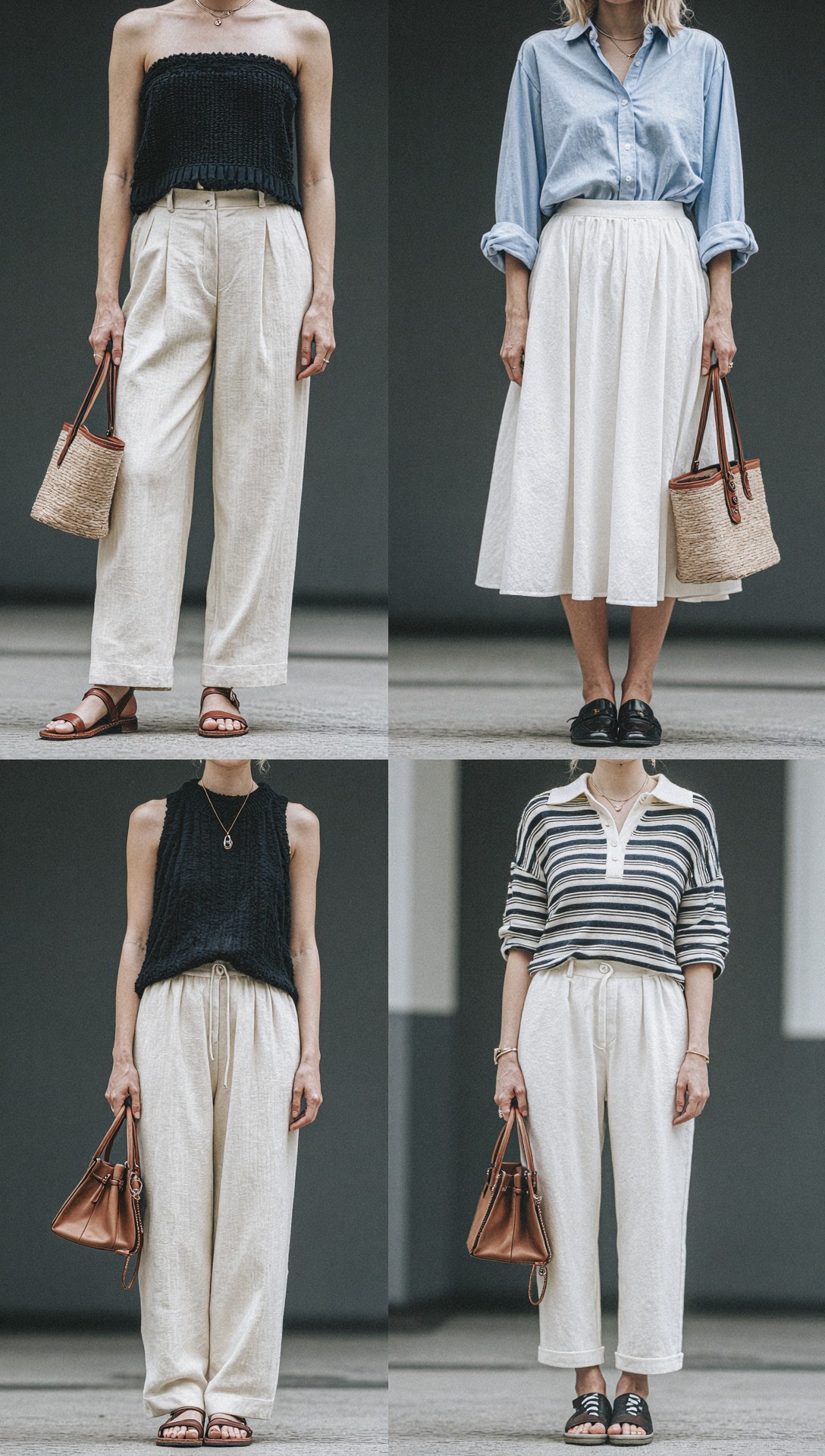
Check panel-to-panel consistency first. Hands, shoe shape, and bag color are the first areas to break in grid layouts, even when the clothing looks stable at a distance.
Where Japanese minimalist fashion felt more natural
Japanese minimalist fashion performed better when the prompt emphasized proportion, architecture, and negative space. Models seem more comfortable generating sparse environments with clean wardrobe hierarchies than producing “rich but discreet” social signals.
The strongest results used grounded urban settings like Tokyo side streets, concrete retail interiors, and clean storefront windows. That context helped the garments feel intentional instead of under-styled.
Prompt test 5: Japanese minimalist street-style full body with shape control
This prompt checks whether the model can keep a strong silhouette while staying understated. It also tests whether body-conscious mood can remain tasteful inside a restrained palette.
Topic: Japanese minimalist fashion proportion-led street styling
Genre: Street Style
Camera: Leica SL2
Lens: 50mm f/2
Lighting: bright overcast daylight
Location: Daikanyama side street with clean concrete storefronts and subtle greenery
Style: cinematic realism
Final Prompt: street-style full body image of Japanese minimalist fashion in summer, confident woman wearing a fitted black sleeveless square-neck top, high-waisted stone wide-leg trousers with sharp front crease, thin black leather belt, sleek flat sandals, compact shoulder bag, minimal silver cuff, tasteful sensual styling through clean waist definition and elongated silhouette, walking through a Daikanyama side street with concrete storefronts and soft greenery, complete outfit visible, modern restrained expression, palette of black stone slate and muted green, precise seam detail, elegant drape, quiet urban energy, fashion-editor realism, no logos, no excess accessories, no oversized cluttered layers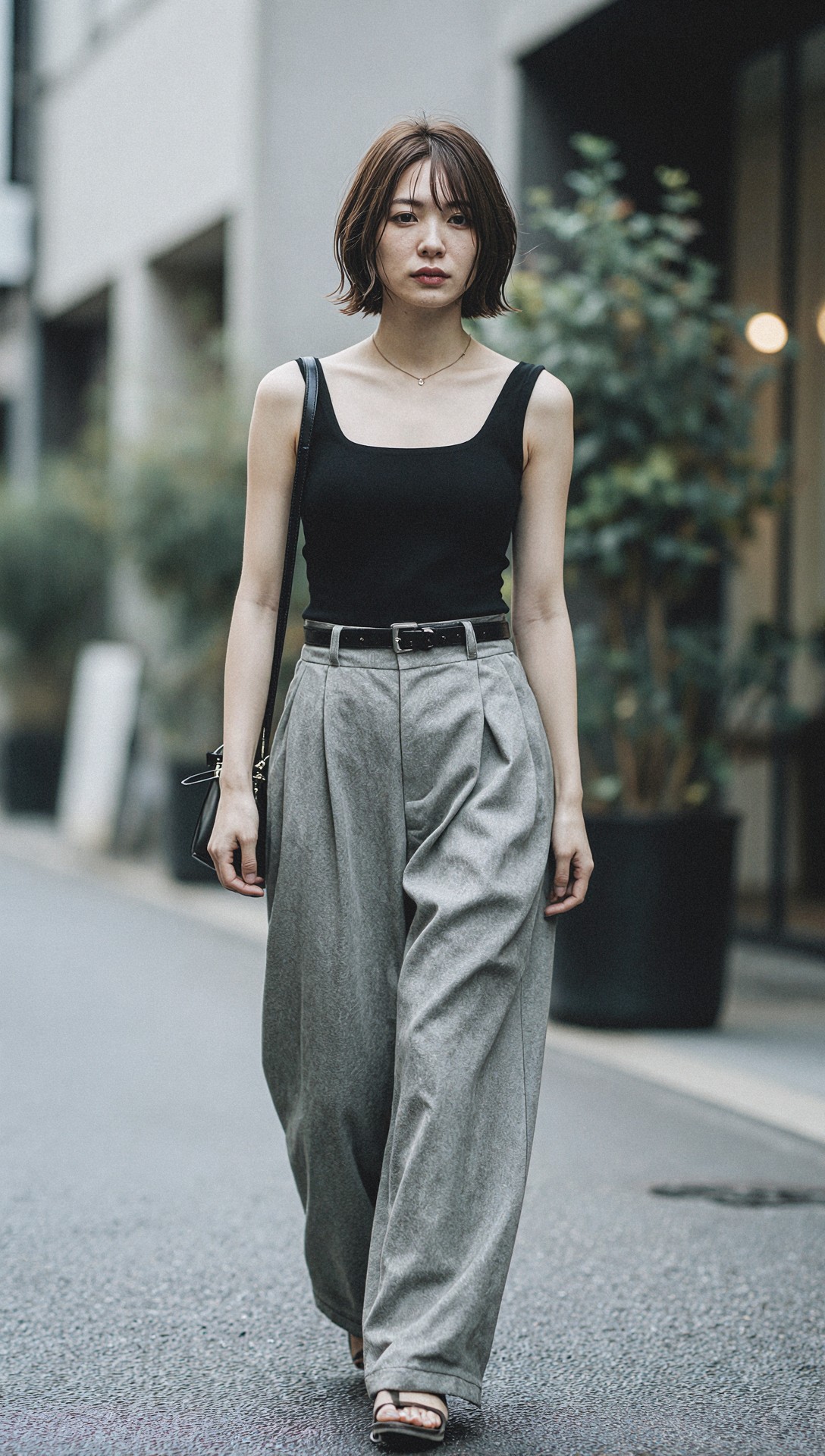
Inspect the front crease, waistline, and square neckline. If those three elements stay intact, the model usually understands the rest of the outfit logic.
Prompt test 6: Japanese minimalist retail display / storefront test
A storefront display is a good stress test because the model has to understand styling without leaning on a human pose. It also reveals whether the wardrobe can carry visual interest on its own.
Topic: Japanese minimalist fashion storefront display
Genre: Storefront Display
Camera: Panasonic Lumix S1R
Lens: 24-70mm at 45mm f/4
Lighting: soft morning window light with subtle interior track lighting
Location: minimalist Tokyo boutique window in Aoyama
Style: luxury retail editorial
Final Prompt: storefront display of Japanese minimalist fashion summer capsule wardrobe in an Aoyama boutique window, two mannequins styled with complete outfits, look one ivory sleeveless poplin top with black fluid midi skirt and leather slides, look two cropped sand jacket over fitted rib tank with wide charcoal trousers and structured tote, styling focused on silhouette, fabric drape, hem length, bag scale and shoe shape, clean glass reflections, restrained color palette of ivory black sand charcoal, tasteful editorial sensuality through fitted inner layers and sharp lines, quiet premium retail mood, immaculate visual merchandising, no logos, no busy props, crisp fashion photography realism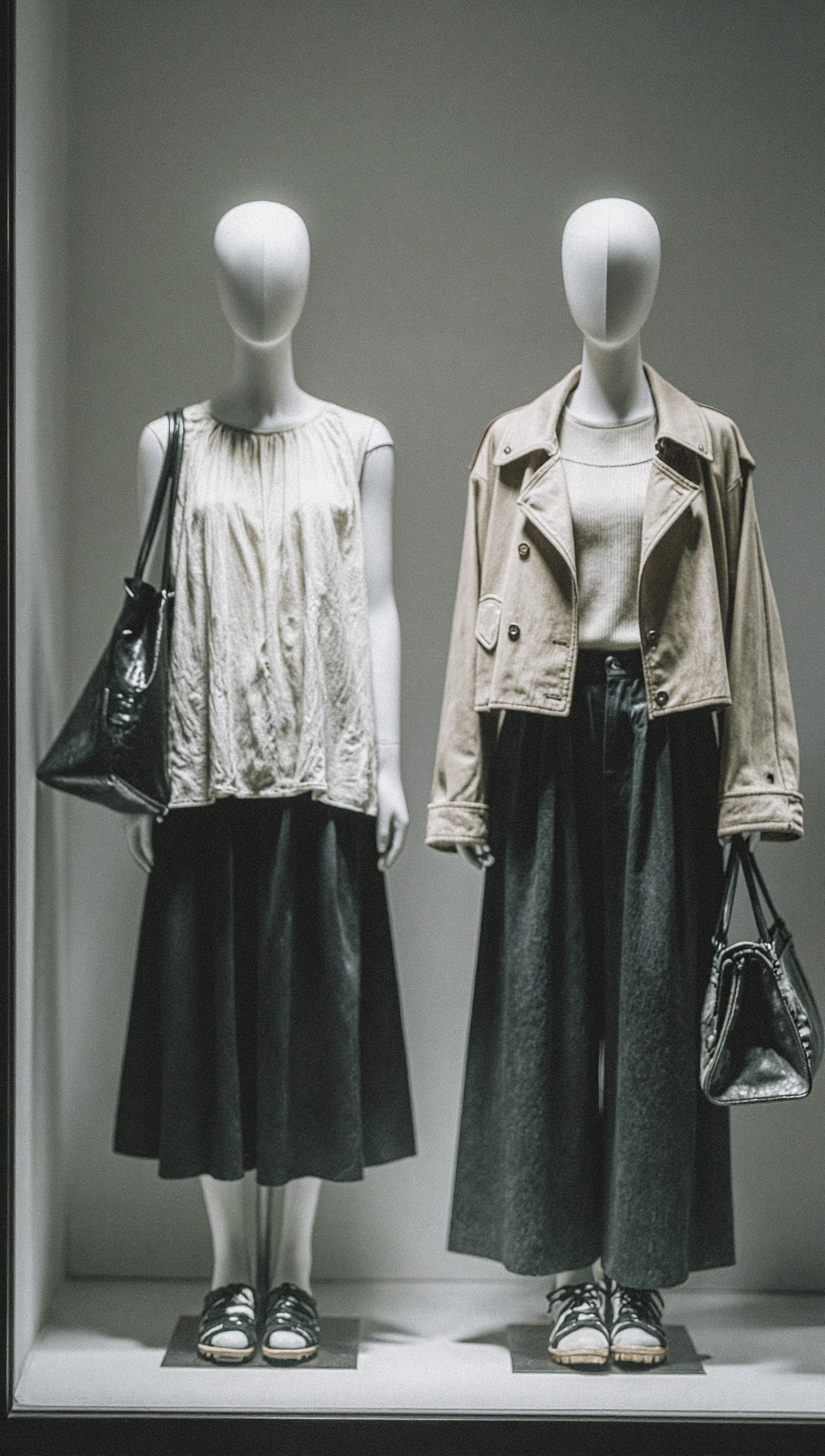
Inspect hem symmetry and mannequin hand logic if present. Also check that the boutique environment stays minimal; many models add random plants, extra racks, or luxury clutter that weakens the minimalist read.
Practical comparison: which prompt family was easier to control?
| Test area | Old money summer outfit | Japanese minimalist fashion | |---|---|---| | Immediate style recognition | Strong | Moderate | | Risk of cliché | High | Low to moderate | | Garment proportion stability | Medium | Strong | | Accessory accuracy | Medium | Stronger when kept simple | | Fabric realism | Good with explicit linen/cotton cues | Good with poplin, dry knits, fluid trousers | | Background drift | High toward resorts and yachts | Lower in urban retail settings | | Best use case | aspirational lookbooks, resort capsule concepts | clean editorials, capsule wardrobe pages, retail visuals | | Main failure mode | costume-like quiet luxury | overly plain basics |
A useful surprise: detail shots favored old money prompts
While Japanese minimalist styling won more often in full-look consistency, old money prompts produced stronger close detail images. Leather, raffia, striped shirting, gold hardware, and woven summer accessories gave the model more texture cues to work with.
That matters if your output set needs supporting images for a fashion article, store page, or visual guide.
Prompt test 7: old money accessories close-up
This test checks texture realism and accessory coherence. It is less about face rendering and more about whether the styling world holds together under magnification.
Topic: Old money summer outfit accessories detail
Genre: Accessories Close-Up
Camera: Canon EOS R3
Lens: 85mm f/1.8
Lighting: sunlit terrace bounce light
Location: limestone cafe terrace on the Italian coast
Style: luxury fashion campaign
Final Prompt: accessories close-up from an old money summer outfit on a limestone cafe terrace, cropped composition showing torso to knees and hands, crisp blue striped cotton shirt tied softly at the waist over ivory linen shorts, layered slim gold bracelets, vintage-style watch, woven raffia bag with polished tan leather trim resting beside the hip, elegant leather mule visible in lower frame, tasteful sensual summer styling with subtle skin and waist definition, warm sunlit bounce light, rich fabric and leather texture, refined coastal palette, premium editorial realism, no oversized jewelry, no logo-heavy details, focus on tactile summer luxury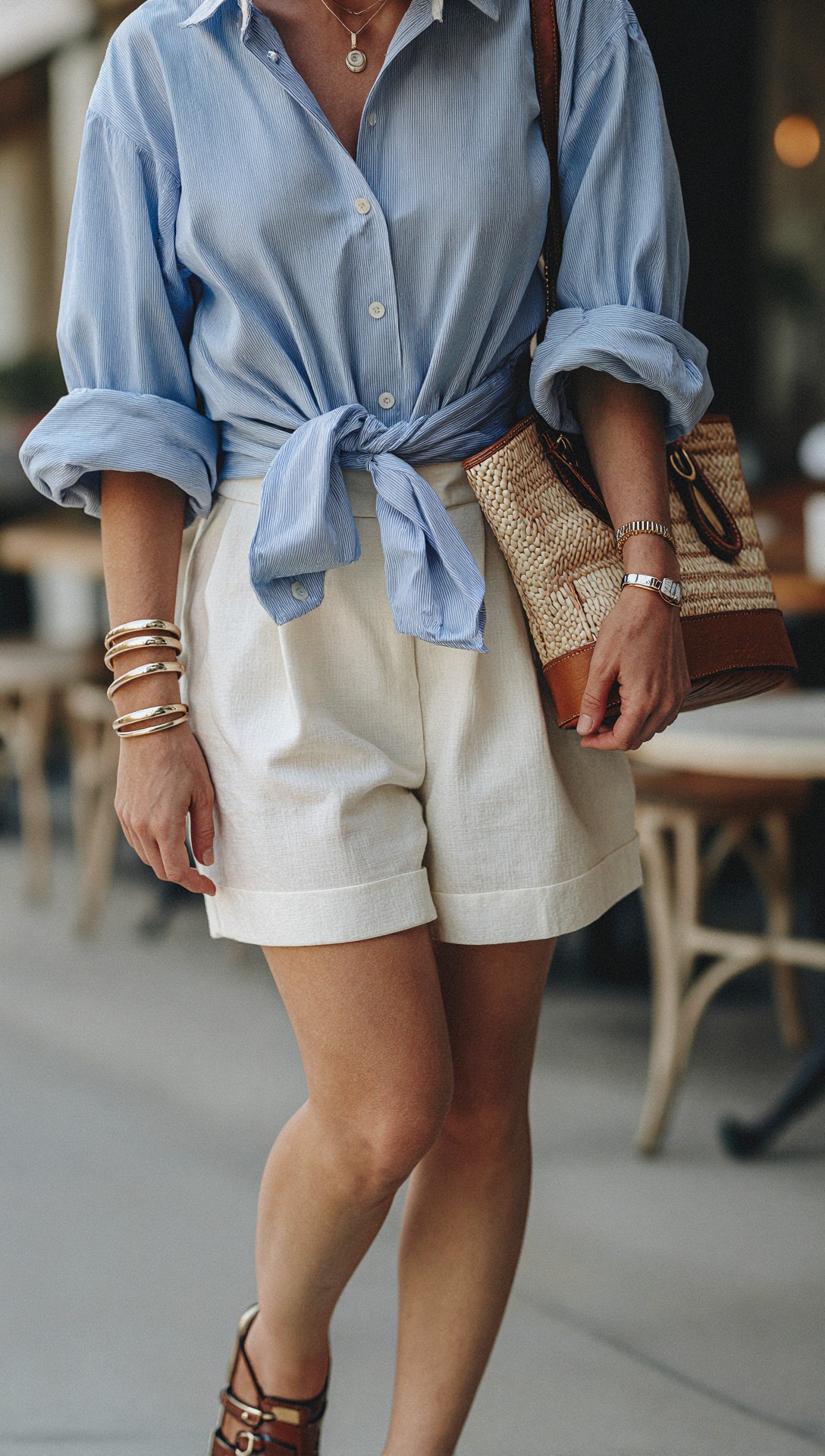
Inspect bracelet anatomy, watch face geometry, and the join between raffia and leather trim. These are the details that separate a usable editorial crop from a decorative but unreliable AI image.
Where both styles still failed
Even after refinement, several recurring errors stayed consistent.
1. Summer fabric confusion
Models often rendered linen like shiny satin, or made cotton poplin too thick for warm weather. This problem was worse in old money prompts because the style relies heavily on breathable luxury fabrics.
2. Shoe anatomy
Sandals, mules, and loafers still broke more than expected. Japanese minimalist prompts did a little better because simpler footwear reduced complexity.
3. Mixed seasonal signals
A prompt could ask for a summer lookbook and still return heavy knit layers, boots, or late-autumn color grading. Mentioning exposed ankles, open necklines, lighter drape, and warm-weather settings helped.
4. Sexy mood drift
Because the mood direction here was confident and tasteful, not explicit, I had to guard against overcorrection. Some models pushed old money prompts toward swimsuit-adjacent resort glamour; others made minimalist prompts too severe and erased sensuality entirely.
Prompt test 8: garment detail macro for minimalist fabric realism
This final test checks whether the model can show subtle material quality without relying on loud styling devices. It is especially useful for article headers, insert images, and comparison callouts.
Topic: Japanese minimalist fashion garment detail macro
Genre: Garment Detail Macro
Camera: Hasselblad X2D 100C
Lens: 90mm f/2.5
Lighting: diffused studio daylight through scrim
Location: neutral editorial studio with soft gray backdrop
Style: high-end fashion material study
Final Prompt: garment detail macro of Japanese minimalist fashion summer styling, close editorial crop from collarbone to hips showing a fitted off-white rib tank layered under a cropped sand cotton jacket with clean topstitching, paired with high-rise black fluid trousers, one hand in pocket, visible belt line, subtle silver ring, tasteful body-conscious tension through tailored fit and negative space, diffused studio daylight, extreme clarity on rib knit texture, cotton weave, seam precision and trouser drape, restrained palette of off-white sand black and silver, high-end fashion material study, elegant editorial realism, no beauty-focus portrait, no distracting background props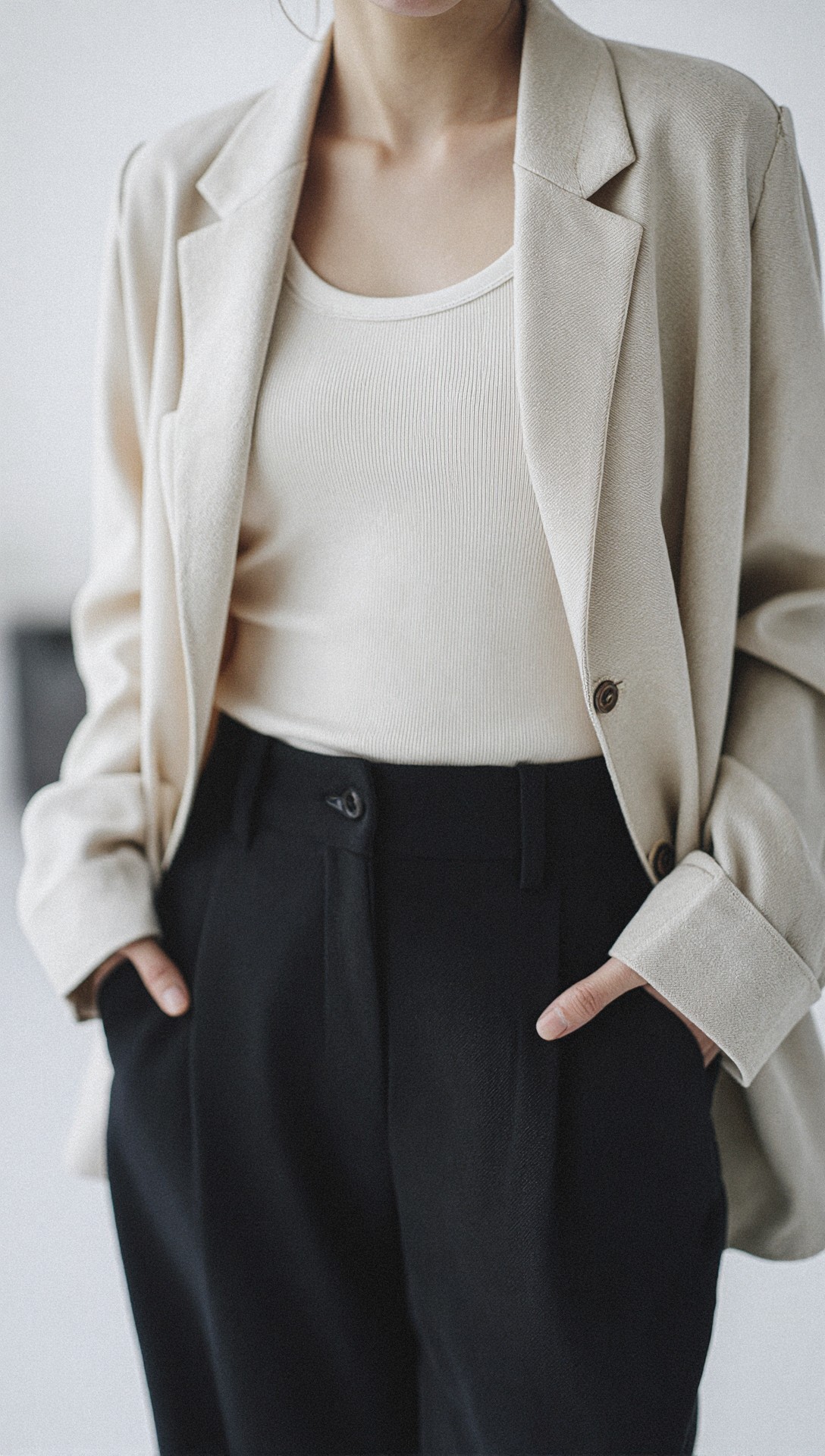
Inspect whether the rib knit remains fine and believable, and whether the jacket topstitching looks intentional rather than randomly generated. If these details hold, the model is usually safe for quiet close-range fashion crops.
What to inspect before publishing the result
Before sending any lookbook image live, I would run this checklist.
Publish checklist for old money summer outfit and minimalist lookbooks
- Top-to-bottom logic: does the outfit still make sense when you read it as top, bottom, shoes, bag, accessories?
- Fabric seasonality: do linen, poplin, knit, and leather look summer-appropriate?
- Tuck and waist accuracy: is the shirt actually tucked, and does the waistband align correctly?
- Footwear anatomy: count straps, soles, and toe direction.
- Accessory restraint: is the look refined, or did the model add random jewelry and hardware?
- Background relevance: does the scene support the styling, or is it stealing attention?
- Mood control: does the image feel confidently sensual in a fashion-editorial way, not exaggerated?
- Consistency across a set: for multi-image lookbooks, make sure bag shape, silhouette, and palette stay coherent.
If an image passes most of that list but still feels “off,” the cause is usually proportion. AI often gets items right individually but misses their relationship on the body.
Best use cases for each prompt direction
When old money summer outfit prompts are the better choice
Use them when you want:
- aspirational summer lookbooks
- quiet luxury outfit roundups
- accessory-led editorial images
- capsule wardrobe pages with visible texture contrast
They work best when you keep the scene polished but not theatrical. A good workflow is to build the prompt in [Create](/create), then compare alternate garment wording in [Prompt Lab](/promptlab).
When Japanese minimalist fashion is the better choice
Use it when you want:
- proportion-focused outfit studies
- minimalist retail or storefront imagery
- capsule wardrobe lookbook pages
- cleaner, more believable urban styling visuals
It is the safer option if consistency matters more than immediate trend signaling. For final output cleanup, minimalist images also tend to upscale more cleanly in the [Upscaler](/upscaler) because edges and fabrics are simpler.
Transferable lesson for similar style comparisons
This result transfers well to other close-adjacent aesthetics like Scandinavian minimalism vs quiet luxury, French summer tailoring vs resort chic, or capsule wardrobe vs luxury basics.
The main lesson is simple: do not prompt the vibe before prompting the clothes.
Start with:
1. shot type 2. garment order 3. fit relationship 4. fabric language 5. shoes and bag 6. setting that matches the wardrobe 7. only then the broader style label
When this setup works, the model stops guessing what the aesthetic means and starts building an outfit that actually supports it.
FAQ
Which style looked more natural overall in AI fashion tests?
Japanese minimalist fashion looked more natural overall in full-body lookbook tests because the models handled clean proportion and restrained accessories more consistently. Old money summer outfit prompts had stronger identity at first glance but also more cliché drift.
Why do old money summer outfit prompts sometimes look fake?
They often trigger shortcut symbols like yachts, blazers, pearls, and resort scenery before the model resolves fabric, fit, and seasonal logic. The fix is to specify trousers, shirts, footwear, texture, and proportion before using terms like quiet luxury.
Are old money summer outfit ideas better for editorial images or catalog pages?
They are usually better for editorial and accessory-led images. Catalog grids can work, but they need strong consistency controls because bags, shoes, and hemlines mutate easily across panels.
How do I make Japanese minimalist fashion prompts less boring?
Add controlled tension: fitted top plus wide trouser, cropped jacket over fluid skirt, clean silver jewelry, visible seam detail, and a real urban retail context. Minimal does not mean visually empty.
What matters most for capsule wardrobe lookbook prompts?
Consistency of silhouette, palette, and accessories matters more than dramatic scenery. If the wardrobe is the subject, the background should frame the outfit rather than compete with it.
Editorial conclusion
In this test, Japanese minimalist fashion produced the more natural lookbook images overall, especially when I needed believable proportions, clean retail framing, and repeatable results across a set. Old money summer outfit prompts were still valuable, but they worked best when tightly controlled and stripped of cliché.
Who should use this workflow: editors, prompt builders, and store owners who need publishable fashion visuals with clear outfit logic. Who should avoid it: anyone hoping a vague “quiet luxury” prompt will do the full styling job by itself.
The setting detail that mattered most was not luxury level but context fit. Old money images improved when placed in believable refined summer spaces, while minimalist images improved in structured urban or retail environments. The prompt detail that mattered most was fit relationship between garments. Once that was explicit, the styling looked less generated and more dressed.