Pinterest Coquette Outfit Ideas With Harajuku Influence: Tested Bows, Cardigans, Socks, and Platform Shoe Styling 한국어 요약
이 페이지는 ZView Space의 영어 원문을 한국어 검색 사용자도 이해할 수 있도록 정리한 SEO 요약입니다. 핵심은 단순한 얼굴 중심 이미지가 아니라 패션 에디토리얼, 룩북, 아웃핏, 프롬프트 테스트, 이미지 생성 워크플로우를 실제로 어떻게 구성할지입니다.
핵심 요약
- 원문 주제: Pinterest Coquette Outfit Ideas With Harajuku Influence: Tested Bows, Cardigans, Socks, and Platform Shoe Styling
- 목적: AI 이미지 생성에서 outfit, silhouette, fabric, pose, location, camera framing을 더 명확하게 설계합니다.
- 활용 범위: Z-Image Turbo, Krea2 Turbo, Qwen Image, Anima, SeedVR2 같은 이미지 생성 및 업스케일 워크플로우에 적용할 수 있습니다.
- SEO 관점: 제목, 설명, 이미지 alt, 프롬프트 예시가 실제 검색 의도와 맞아야 색인 가능성이 높아집니다.
한국어 사용자를 위한 체크포인트
1. 프롬프트가 얼굴 묘사에만 머물지 않고 전체 스타일과 의상 구성을 설명하는지 확인합니다. 2. 패션 이미지라면 상의, 하의, 아우터, 신발, 액세서리, 소재감, 촬영 장소를 분리해서 씁니다. 3. 생성 결과는 바로 게시하지 말고 디테일, 손, 의상 형태, 배경 일관성, 이미지 품질을 비교합니다. 4. 글 본문에는 실제 테스트 기준과 실패를 줄이는 방법이 들어가야 검색엔진에서 얇은 콘텐츠로 보일 가능성이 줄어듭니다.
원문 미리보기
This test was about building a Pinterest coquette outfit image set that actually reads as outfit inspiration, not just a pink portrait with random bows added on top. In practice, the strongest generations came from prompts that treated coquette styling as a fu
---
This test was about building a Pinterest coquette outfit image set that actually reads as outfit inspiration, not just a pink portrait with random bows added on top. In practice, the strongest generations came from prompts that treated coquette styling as a full system: cardigan shape, skirt length, sock height, platform shoe weight, bag scale, and Harajuku street context all had to be specified together. When I left any of those vague, the model drifted into generic kawaii looks or soft-focus beauty shots.
Quick answer: what to know first
- The best Pinterest coquette outfit prompts describe the full silhouette, not only mood words like romantic, pastel, or feminine.
- Harajuku influence works best when anchored with specific pieces: oversized bow hair clip, cropped cardigan, pleated mini, lace socks, chunky platforms, small shoulder bag.
- Full-body shot types outperform portrait framing for outfit inspiration because you can actually inspect sock length, hem balance, and shoe proportion.
- Platform shoes are the easiest element to lose unless you explicitly ask for head-to-toe framing and visible feet.
- If the result looks too costume-like, reduce accessory count and add one grounding detail such as a grey sidewalk, shopfront, or overcast Tokyo street light.
Test setup: what was tested
In this test, I ran a set of outfit-focused prompts designed around coquette outfit ideas with light Harajuku influence rather than full cosplay or Lolita styling. The goal was beginner-friendly inspiration images that feel pin-worthy and useful for planning looks.
I tested four recurring variables:
1. Bow placement — hair bow, blouse bow, shoe bow, bag bow, or all four. 2. Cardigan structure — cropped fitted cardigan vs oversized slouchy cardigan. 3. Sock logic — ankle lace socks, crew socks, over-knee socks, and scrunched socks. 4. Platform shoe styling — Mary Jane platforms, loafers, heeled platforms, and thick sole sneakers.
I also rotated shot plans to see which gave the cleanest fashion read:
- street-style full body
- three-quarter outfit editorial
- head-to-toe lookbook
- accessories close-up
- product flat lay
- storefront display
- garment detail macro
- mood-board collage
For workflow, I kept prompts structured and then checked outputs for five things: silhouette clarity, fabric readability, styling coherence, shoe visibility, and whether the image actually felt like Pinterest coquette outfit inspiration instead of a vague anime-fashion mood image. When I wanted faster iterations, I used [Prompt Lab](/promptlab) for prompt variations and saved stronger sets to [Gallery](/gallery).
Comparison checklist: which setup gave the most usable outfit inspiration?
| Test element | Strongest result | Weakest result | What I observed | |---|---|---|---| | Bows | One hero bow plus one secondary bow | Bows on every item | Too many bows made outfits read costume-heavy rather than wearable Pinterest styling | | Cardigans | Cropped cardigan with defined waist | Oversized cardigan without hem detail | Slouchy knit often swallowed the coquette silhouette | | Socks | Lace crew socks or over-knee socks | Unspecified socks | If sock length was not named, the model often replaced them with bare legs or tights | | Platforms | Mary Jane platforms | Generic platform shoes | Mary Janes held the romantic-feminine brief better than sneaker-like platforms | | Shot type | Head-to-toe lookbook or street-style full body | Tight portrait | Portrait crops destroyed the usefulness of the styling test | | Setting | Harajuku side street or pastel boutique exterior | Abstract pink background | Real fashion context made the outfit feel more believable and less synthetic |
The strongest result: a balanced Pinterest coquette outfit with Harajuku street context
The best image in this batch used a head-to-toe street-style setup with one oversized ribbon bow in the hair, a fitted pastel cardigan, a short pleated skirt, lace crew socks, and black platform Mary Janes. What made it work was proportion. The cardigan stopped at the waist, the skirt had enough volume to separate from the socks, and the platforms gave the outfit weight so it did not dissolve into a sugary blur.
The Harajuku influence also worked better when treated as street styling rather than fantasy styling. A real sidewalk, signage, shop windows, and layered accessories gave the image structure.
This first prompt was meant to test whether the model could keep the full outfit visible while preserving the romantic playful pastel mood.
Topic: Pinterest coquette outfit with Harajuku influence, bows, cardigan, lace socks, platform Mary Janes
Genre: Street Style
Camera: Canon EOS R5
Lens: 35mm f/2
Lighting: Overcast diffusion
Location: Harajuku side street with pastel storefronts and narrow Tokyo sidewalk
Style: Tokyo street fashion editorial
Final Prompt: street-style full body fashion shot of a Pinterest coquette outfit with Harajuku influence, complete head-to-toe silhouette visible, fitted blush pink cropped cardigan over a cream lace-trim camisole, soft pleated mini skirt in dusty rose, white lace crew socks, glossy black platform Mary Jane shoes, oversized satin bow hair clip, small pearl shoulder bag, layered charm bracelet and ribbon choker, confident feminine pose mid-step on a Harajuku side street, pastel storefront reflections, subtle Tokyo signage, romantic playful pastel palette, body-conscious but tasteful editorial mood, garment textures crisp and readable, outfit logic prioritized over face, documentary fashion framing, high detail fabrics, polished magazine color grading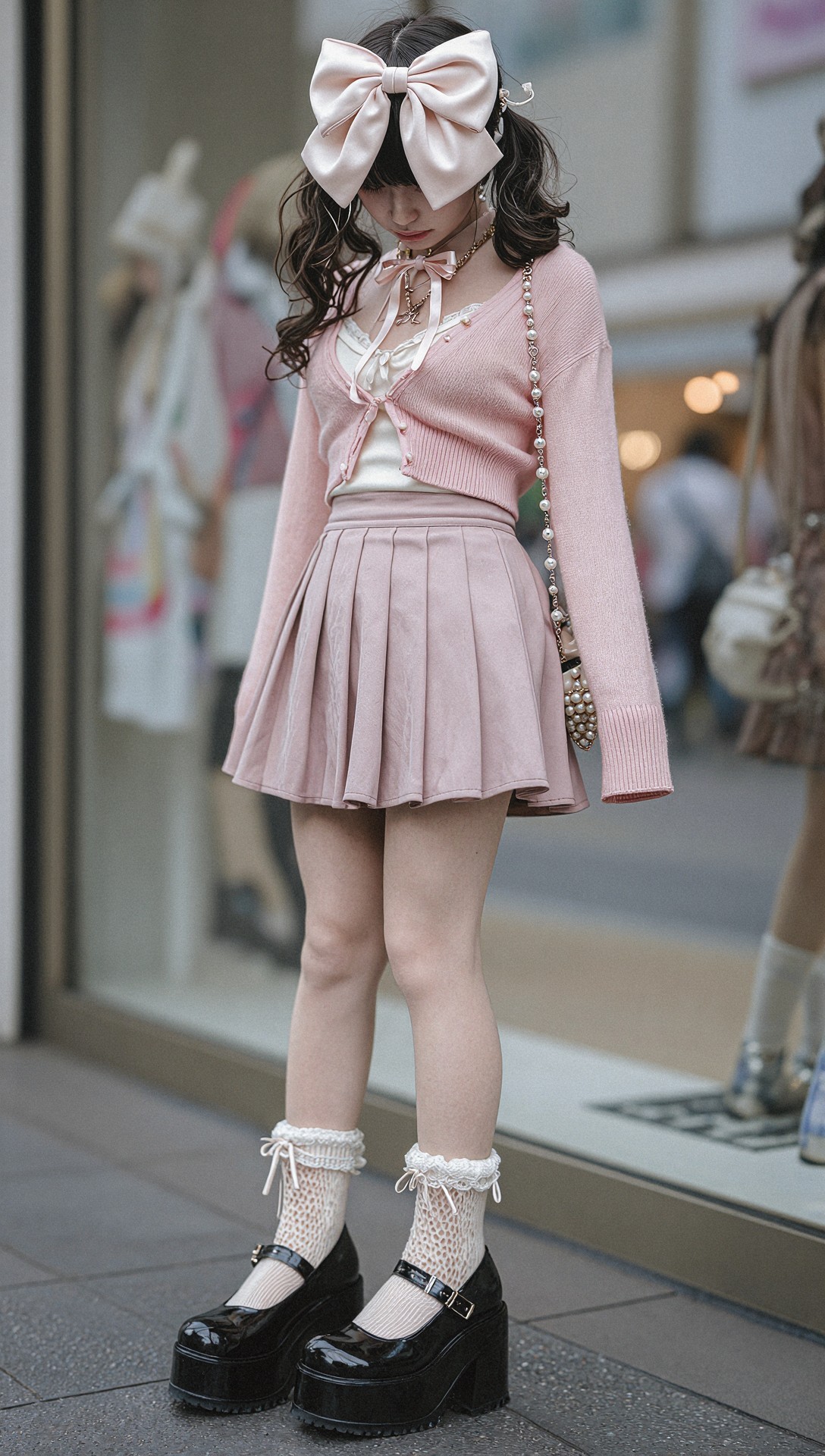
Inspect whether the cardigan hem, skirt volume, sock height, and platform sole all remain visible at once. If the shoes are cropped or the socks turn into generic tights, the prompt needs stronger head-to-toe language.
Why bows worked best when they were controlled
The early failures were simple: if I asked for "coquette bows everywhere," the generator often overloaded the image with ribbons on the blouse, cuffs, socks, shoes, and hair. That sounds on-theme, but visually it flattened the styling. The outfit stopped reading as wearable coquette outfit ideas and started looking like a costume rack.
The cleaner solution was to choose one bow as the visual anchor, then let smaller ribbon details support it.
This prompt tested whether a three-quarter editorial crop could still show enough bow hierarchy without turning cluttered.
Topic: Coquette bow hierarchy in a Harajuku-inspired pastel outfit
Genre: Fashion Editorial
Camera: Nikon Z7 II
Lens: 50mm f/2
Lighting: Softbox key light with soft window fill
Location: Minimal pastel studio set styled like a Japanese magazine editorial
Style: Clean commercial look
Final Prompt: three-quarter outfit editorial image focused on a Pinterest coquette outfit, model visible from head to below knees, oversized ivory ribbon bow in hair as the hero accessory, fitted baby blue cardigan with pearl buttons, white ruffle blouse with one small neck bow, blush A-line mini skirt, lace-trim knee socks, black patent platform loafers partially visible, mini shoulder bag with subtle ribbon charm, romantic feminine styling with Harajuku polish, playful pastel set design, clean commercial fashion composition, tasteful sexy mood through fitted silhouette and confident posture, fabric texture and accessory separation highly readable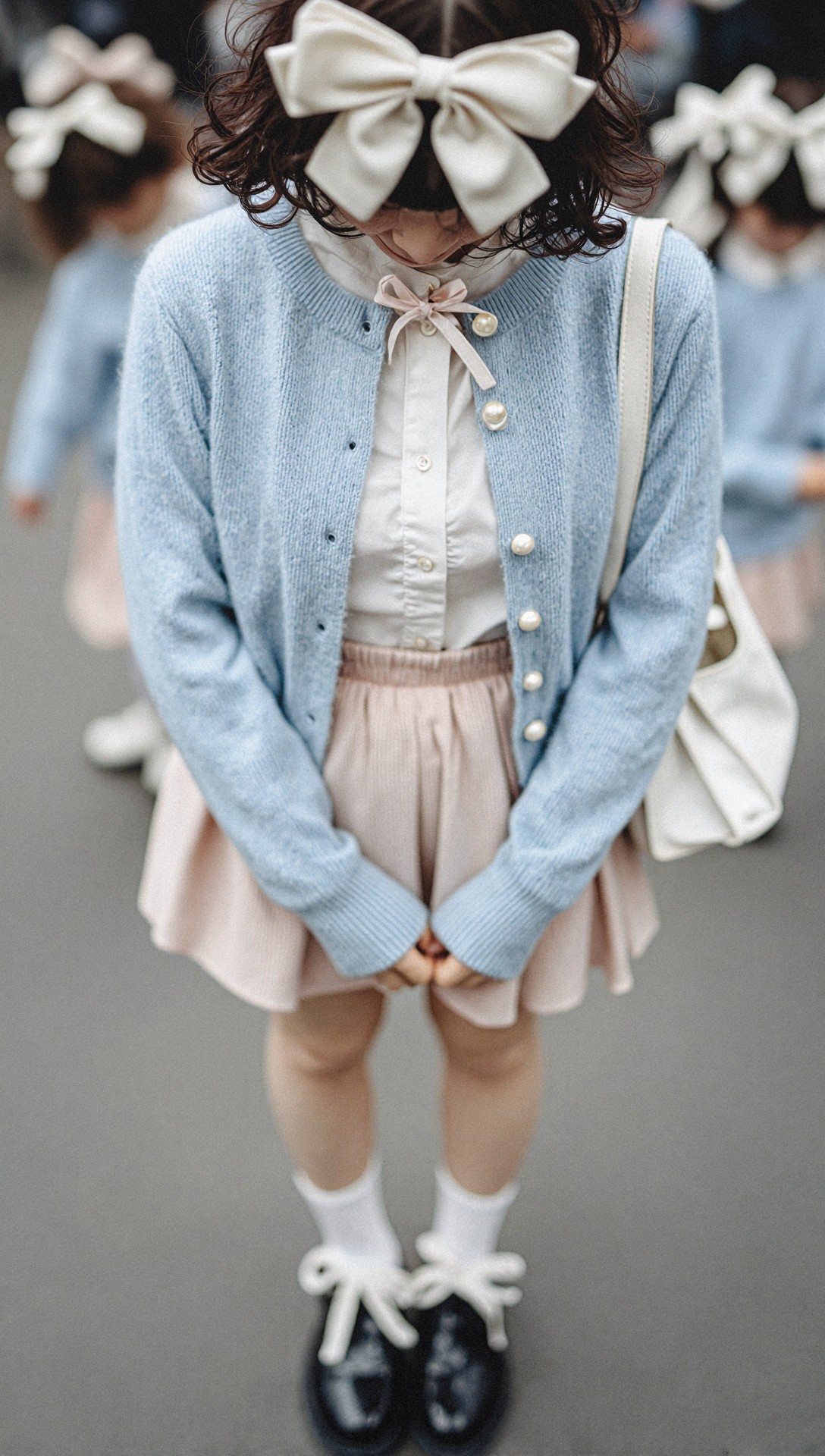
Check if the image clearly establishes one main bow and one minor bow. If every accessory turns into ribbon decoration, reduce words like "frilly," "extra bows," and "ornate" in the next iteration.
Cardigans: fitted shapes beat oversized knits for coquette readability
This was one of the clearest findings in the test. Oversized cardigans are popular in mood boards, but AI models often turn them into undefined fuzzy layers that hide the waist and collapse the outfit structure. For a Pinterest coquette outfit, the fitted cropped cardigan was much more reliable.
It gave the generator a usable line: shoulders, waist, skirt start, sock break, shoe base. That made the image look styled rather than piled on.
This prompt specifically tested cardigan fit and whether the model could keep knit texture visible without losing shape.
Topic: Fitted cardigan styling for a Pinterest coquette outfit
Genre: Head-to-Toe Lookbook
Camera: Sony A7R V
Lens: 40mm f/2.5
Lighting: Bright soft studio daylight
Location: Seamless cream lookbook backdrop with light shadow
Style: Modern fashion lookbook
Final Prompt: head-to-toe lookbook fashion image showing a Pinterest coquette outfit with Harajuku influence, fitted cropped lavender cardigan with clear ribbed knit texture and pearl buttons, white sweetheart neckline top, soft pink pleated mini skirt, ivory lace crew socks, black double-strap platform Mary Janes, compact heart clasp shoulder bag, ribbon hair clip, front-facing relaxed stance with slight hip angle, full outfit visible from hair accessory to shoes, romantic playful pastel palette, beginner-friendly outfit inspiration, styling system emphasized with clean spacing between layers, commercial lookbook clarity, crisp garment edges, balanced proportions, tasteful sensuality through fitted silhouette not exposure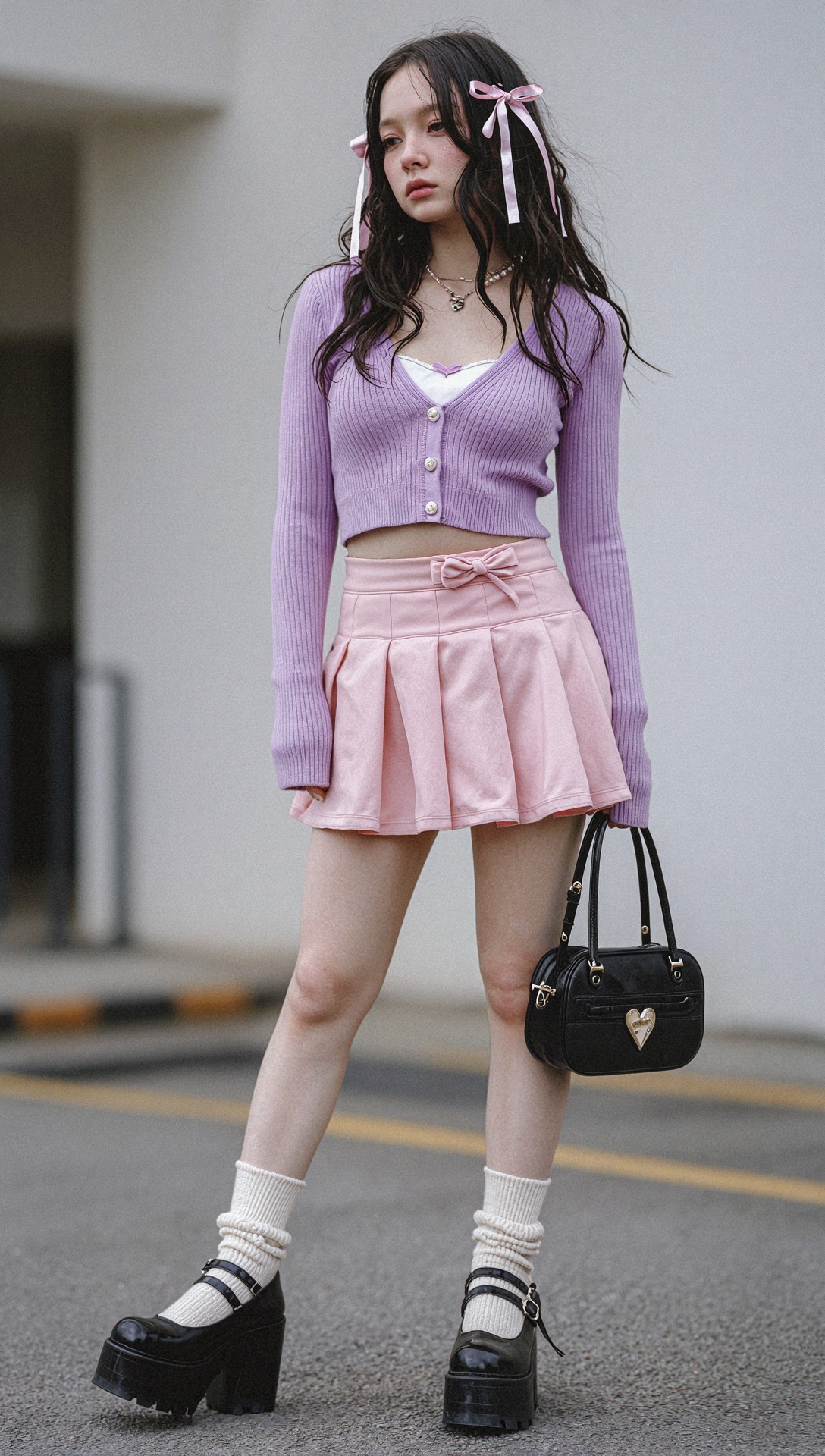
Inspect the cardigan hem and sleeve volume first. If the knit becomes bulky or the cardigan extends too low, the output will lose the coquette shape and start reading more soft-grunge than romantic feminine.
Socks and platforms: the pairing that made the outfit feel finished
The sock test mattered more than I expected. In many generations, socks were either omitted or converted into plain tights unless I named both the height and trim. White lace crew socks gave the cleanest result. Over-knee socks also worked, but they pushed the look more into anime fashion editorial territory, which may or may not match your board.
Platform shoes were another common failure point. If I said only "platform shoes," the model might produce sneakers, boots, or vague dark footwear. "Black patent platform Mary Janes" consistently gave a better romantic read.
This prompt tested the sock-shoe relationship under real street lighting.
Topic: Lace socks and platform Mary Janes in coquette street styling
Genre: Street Style
Camera: Fujifilm GFX100S
Lens: 45mm f/2.8
Lighting: Late afternoon cloud-filtered natural light
Location: Tokyo pedestrian crossing near Harajuku boutiques
Style: Contemporary magazine street fashion
Final Prompt: street-style full body image centered on the styling logic of a Pinterest coquette outfit, cropped cream cardigan layered over a satin bow-front camisole, dusty pink pleated skirt, white lace crew socks with scalloped trim clearly visible above black patent platform Mary Jane shoes, mini structured handbag, ribbon barrette, delicate chain belt, model standing at a Tokyo pedestrian crossing near Harajuku boutiques, complete outfit visible with emphasis on sock height and platform sole thickness, romantic feminine mood with playful pastel accents, stylish and slightly sexy through leg line and fitted layers, realistic city context, sharp textile detail, balanced documentary-editorial framing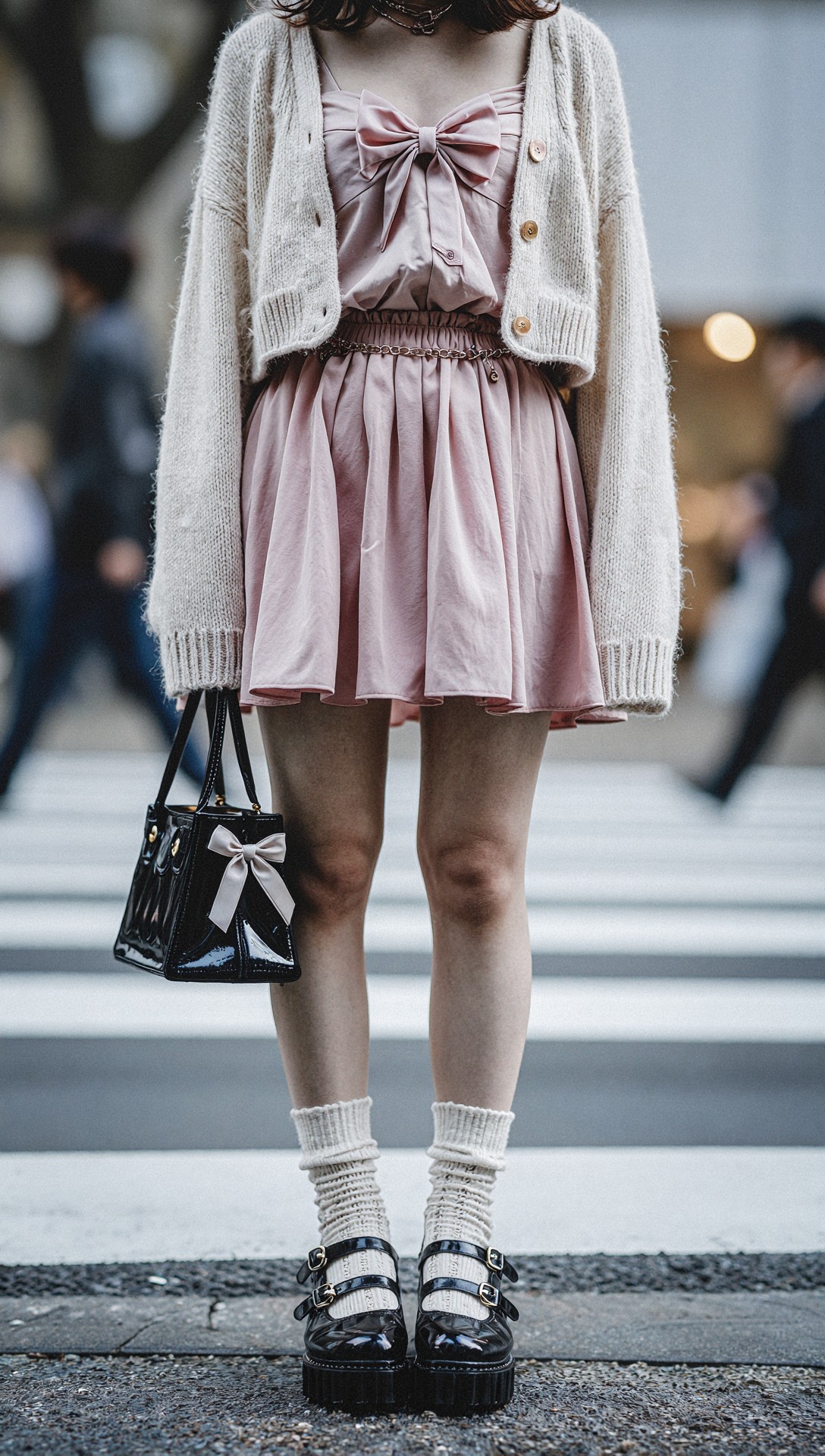
Look at the gap between skirt hem, sock top, and shoe opening. If those transitions blur together, the generator is not understanding the styling system and the image will feel less useful as outfit inspiration.
Where the output struggled
The weak point was consistency when too many signals competed at once. The model struggled most in these situations:
1. Too many cute descriptors
Words like "adorable," "sweet," "frilly," "princess," and "girly" often nudged the image away from fashion planning and into costume styling. The result was still on-theme, but less practical.
2. Harajuku without restraint
If I leaned too hard on Harajuku references, the generator sometimes mixed decora, Lolita, idol styling, and cosplay details into one look. For a wearable Pinterest coquette outfit, that was too noisy.
3. Portrait bias
Some models still prefer face-first composition. Even with outfit prompts, they may crop mid-thigh or hide shoes behind pose angles. That is why shot type needs to be named directly.
4. Texture confusion
Lace socks, fuzzy cardigan knits, satin bows, and glossy patent shoes can all compete for attention. When every surface is high-detail, the image may look cluttered.
This prompt was designed to intentionally push the model toward a more layered editorial setup and reveal where it starts to overcomplicate the look.
Topic: Maximal coquette layering with Harajuku editorial energy
Genre: Runway/Backstage Moment
Camera: Panasonic Lumix S1R
Lens: 24-70mm at 50mm f/3.2
Lighting: Mixed backstage tungsten and soft fill
Location: Tokyo fashion week backstage dressing area
Style: Anime fashion editorial meets runway documentary
Final Prompt: runway backstage fashion moment featuring a Pinterest coquette outfit with Harajuku influence, layered bow hair accessory, pearl-trim cardigan, lace camisole, pleated mini skirt, over-knee socks, stacked platform heels, mini bag with ribbon details, garment rack and mirrors in background, stylized Tokyo street fashion energy, romantic playful pastel palette with black patent accents, complete outfit still visible despite backstage environment, editorial sensuality through posture and fitted silhouette, documentary realism, busy but readable composition, emphasis on how multiple coquette elements interact in one styling system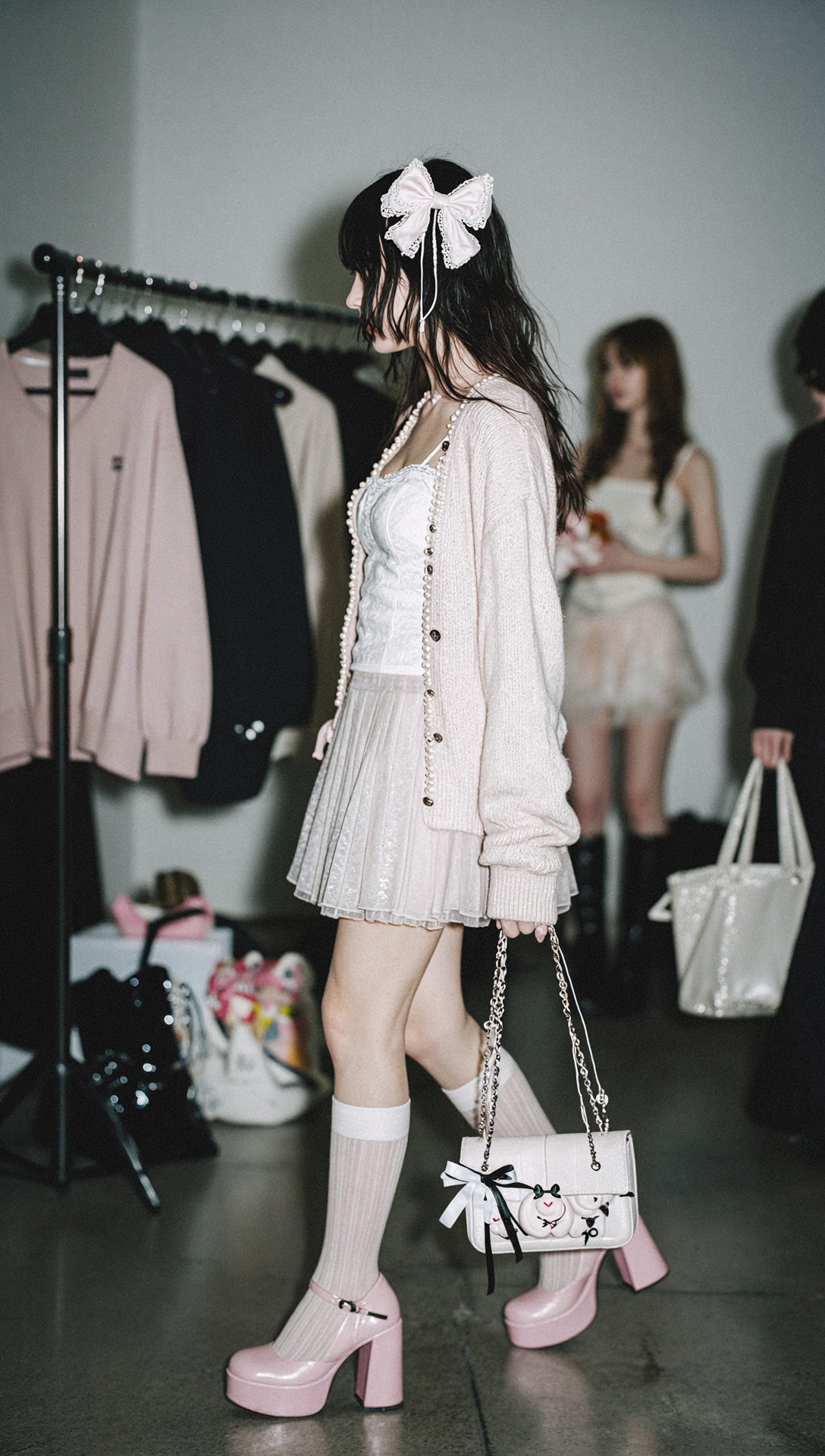
What to inspect here is failure risk: hands, bow duplication, messy sock rendering, or platforms turning uneven. If the image starts feeling overloaded, you have found the model's complexity ceiling for this style.
Product and accessory tests helped stabilize the outfit logic
A good workaround for unstable outfit generations was to separately test key accessories and fabric language. That made the next full-body prompt more precise because I could borrow the exact terms that rendered well.
For example, a clean accessories close-up clarified whether the generator understood patent leather, pearl trim, ribbon clips, and heart-shaped bag hardware.
This prompt checked accessory clarity before rolling those details back into larger outfit prompts.
Topic: Coquette accessories for a Harajuku-influenced outfit
Genre: Accessories Close-Up
Camera: Leica SL2
Lens: 85mm f/2
Lighting: Studio window light with white bounce
Location: Soft pink tabletop editorial set
Style: Luxury accessories campaign
Final Prompt: accessories close-up for a Pinterest coquette outfit mood, glossy black patent platform Mary Jane shoes with visible straps, white lace crew socks with scalloped trim, satin ribbon hair clip, pearl-trim mini shoulder bag with heart clasp, delicate charm bracelet arranged as a coordinated styling set on a soft pink tabletop, romantic feminine fashion campaign aesthetic, pastel tones with polished black contrast, highly detailed materials, tactile textures, editorial product styling, tasteful sensual fashion energy through luxurious surfaces and shape emphasis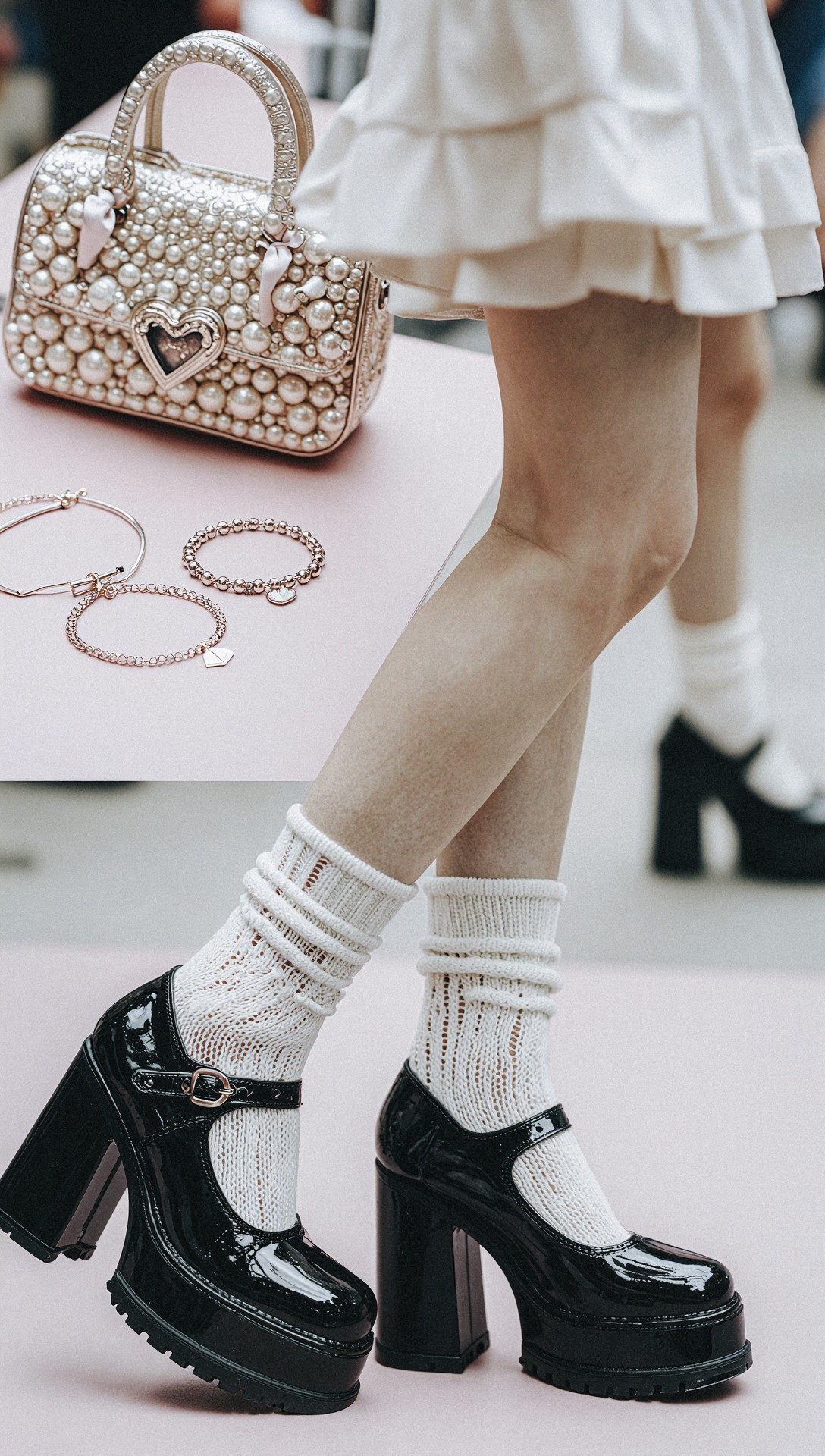
Inspect whether each accessory remains distinct and correctly finished. If the patent leather looks matte or the lace trim melts together, the full outfit prompt will likely inherit those same texture problems.
A flat lay was better than expected for beginners planning coquette outfit ideas
If you are generating inspiration for shopping, wardrobe planning, or pin-board comparison, a flat lay can be more useful than a model image. It removes pose errors and helps you judge color balance, layering, and accessory count quickly.
This was especially helpful for deciding whether to use ankle socks, crew socks, or over-knee socks before moving back to body shots.
This prompt tested item coordination rather than body rendering.
Topic: Pinterest coquette outfit flat lay with Harajuku-inspired styling pieces
Genre: Product Editorial
Camera: Canon EOS 5D Mark IV
Lens: 50mm f/4 top-down
Lighting: Soft diffused overhead light
Location: Whitewashed studio tabletop with editorial styling props
Style: E-commerce meets magazine flat lay
Final Prompt: product flat lay of a Pinterest coquette outfit arranged for styling inspiration, blush cropped cardigan, white lace-trim camisole, dusty rose pleated mini skirt, white lace crew socks, glossy black platform Mary Jane shoes, pearl mini shoulder bag, oversized satin hair bow, charm bracelet, ribbon choker, neatly arranged on a whitewashed tabletop with fashion magazine pages and pale rose petals as restrained props, romantic playful pastel direction, Harajuku-influenced but wearable, clean item spacing, fabric textures easy to compare, editorial shopping-board composition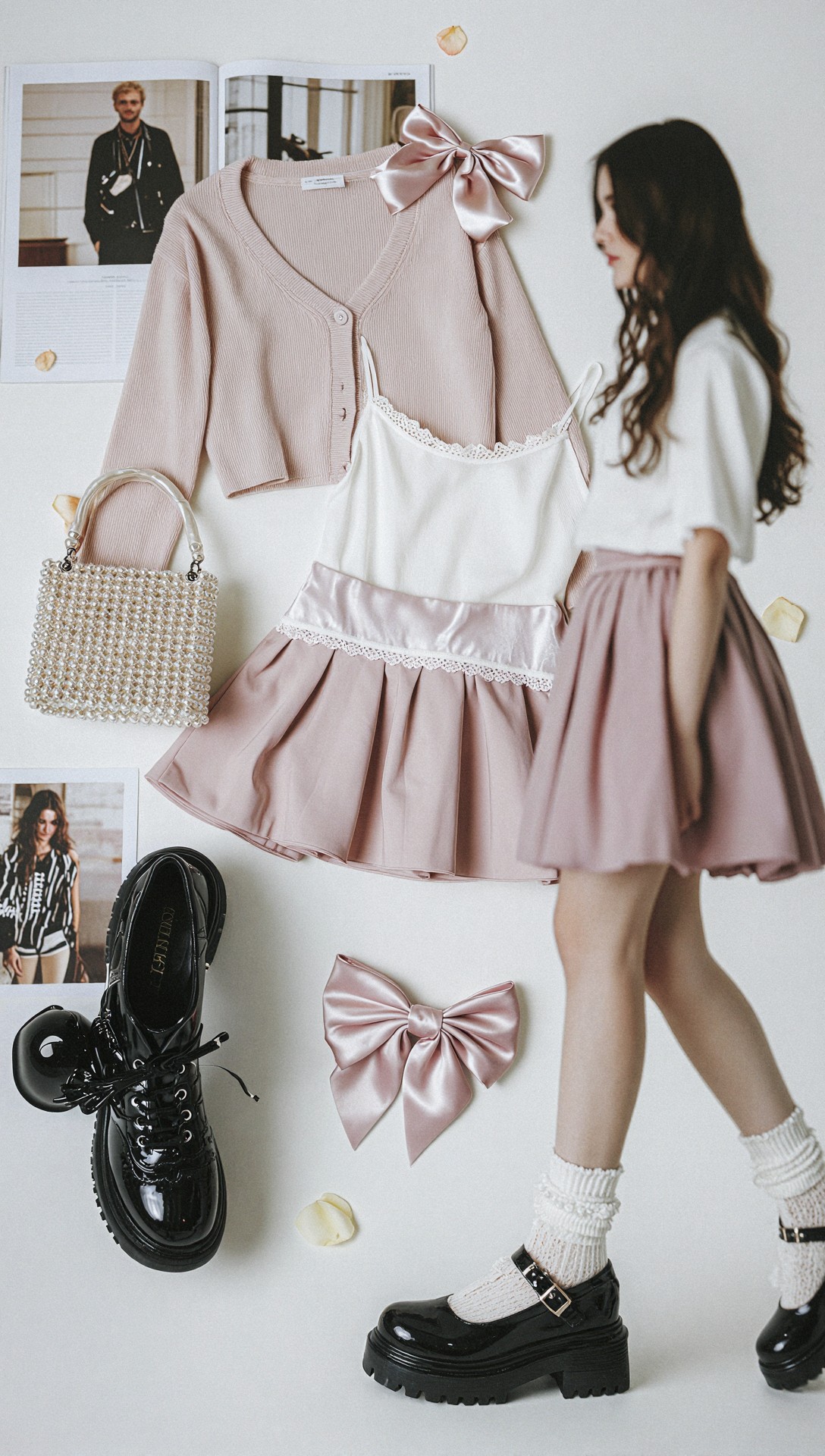
Check whether the pieces feel balanced as a system before worrying about facial expression or pose. If the flat lay already looks overcrowded, the worn version almost certainly will too.
Recommended prompt changes and settings
After the weaker runs, these adjustments improved output quality the most.
Use named shot types every time
For fashion topics, this matters more than extra adjectives. I got more consistent full looks by starting prompts with phrases like:
- street-style full body
- head-to-toe lookbook
- three-quarter outfit editorial
- accessories close-up
- product flat lay
Lock the outfit architecture
Instead of writing "cute coquette look," write the structure in order:
- hair accessory
- cardigan
- underlayer top
- skirt
- socks
- shoes
- bag
- jewelry
This reduced dropped items and random substitutions.
Keep one contrast color
Pastel-only prompts sometimes washed out. Black patent shoes or a dark mini bag helped the outfit read clearly.
Add a real location
Harajuku alley, Tokyo boutique frontage, pastel dressing room, or clean lookbook backdrop all worked better than abstract pink fog.
This prompt tested a more controlled storefront concept where outfit, merchandising, and context all reinforce the same story.
Topic: Storefront display styling for a Pinterest coquette outfit
Genre: Storefront Display
Camera: Hasselblad X2D 100C
Lens: 55mm f/2.5
Lighting: Morning window light with soft reflections
Location: Harajuku boutique storefront with pastel mannequins and ribbon displays
Style: Fashion retail campaign
Final Prompt: storefront display image showing a Pinterest coquette outfit with Harajuku influence in a curated retail context, mannequin or model styled in a fitted blush cardigan, cream camisole, pleated rose mini skirt, white lace socks, black patent platform Mary Janes, pearl mini shoulder bag, oversized ribbon hair accessory, pastel boutique window, refined Japanese retail merchandising, romantic feminine palette with polished black accents, complete outfit visible, fashion-first composition emphasizing how the pieces work together, chic slightly sexy campaign energy, glossy reflections, premium textile detail, visual clarity for shopping inspiration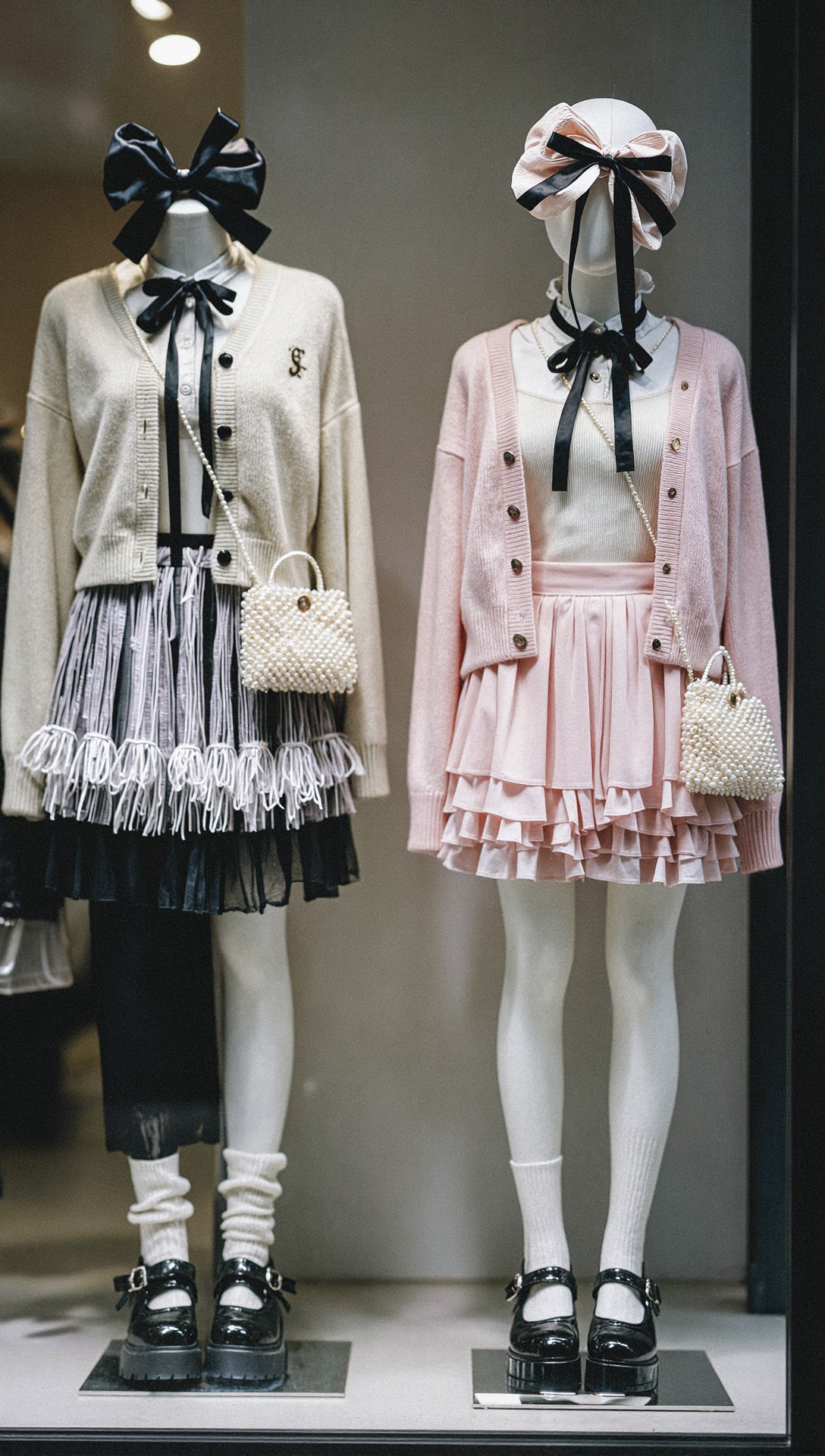
Inspect whether the store context supports the outfit instead of overwhelming it. Good retail scenes add scale and shopping relevance; bad ones fill the frame with unrelated decor.
Best workflow if you want repeatable Pinterest-ready results
In this test, the most efficient workflow was:
1. Build a flat lay or accessories prompt first. 2. Identify exact item wording that renders cleanly. 3. Move to a head-to-toe lookbook prompt. 4. Then create a street-style variation for atmosphere. 5. Upscale only the strongest images with [Upscaler](/upscaler) after checking shoes, sock trim, and cardigan texture.
If you are still shaping the prompt, use [Create](/create) for quick reruns and [Tools](/tools) if you want to compare prompt variants or save reference setups.
Image test prompts for mood-board and detail control
A mood-board prompt was useful when I wanted to lock palette and styling references without forcing the model into one pose too early.
Topic: Pinterest coquette outfit mood board with Harajuku fashion references
Genre: Mood-Board Collage
Camera: Mixed editorial scan style
Lens: Mixed crop collage composition
Lighting: Soft scanned paper texture and diffused studio light
Location: Editorial collage layout with Tokyo street clippings and fabric swatches
Style: Fashion concept board
Final Prompt: mood-board collage for a Pinterest coquette outfit, curated arrangement of Harajuku street snapshots, blush cardigan styling, ribbon hair accessories, pleated mini skirts, lace socks, black platform Mary Janes, pearl mini bags, pastel fabric swatches, handwritten styling notes, magazine tears, Tokyo boutique signage fragments, romantic feminine and playful pastel direction, anime fashion editorial influence kept wearable, polished collage composition with tactile paper texture, clear outfit logic and retail inspiration focus
Inspect whether the collage keeps a coherent palette and product story. This is less about anatomical accuracy and more about style lock before full-scene generation.
For detail validation, a fabric-and-trim macro helped me see whether the model really understood lace, satin, knit ribbing, and glossy shoe surfaces.
Topic: Garment detail macro for coquette textures and trims
Genre: Garment Detail Macro
Camera: Nikon D850
Lens: 85mm macro f/3.5
Lighting: Side-lit soft studio light
Location: Neutral editorial studio table
Style: Luxury fashion material study
Final Prompt: garment detail macro image focused on the tactile elements of a Pinterest coquette outfit, ribbed pastel cardigan cuff with pearl button, satin ribbon bow, lace sock scallop edge, glossy black patent platform Mary Jane strap, pleated skirt fabric texture, arranged in an elegant editorial material study, romantic feminine pastel palette with high-contrast black patent accent, luxury fashion detail photography, sensual but tasteful emphasis on materials and finish, ultra-clear texture rendering, premium magazine styling
What to inspect is edge discipline: lace should look like lace, satin should catch light cleanly, and patent leather should feel glossy without becoming plastic. If those materials fail here, simplify textures in the main outfit prompt.
Who should use this approach
This workflow is best for:
- beginners collecting coquette outfit ideas for Pinterest boards
- creators building Tokyo street fashion or anime fashion editorial references
- sellers or stylists planning outfit visuals before sourcing garments
- prompt writers who need outfit-first images rather than beauty portraits
It is less useful if you want highly experimental avant-garde Harajuku styling, because the more subcultures you mix, the easier it is for the output to become noisy.
FAQ
What makes a Pinterest coquette outfit prompt work better?
Specific garment structure. Name the cardigan fit, skirt type, sock height, and shoe style. Mood words alone are not enough.
How do I add Harajuku influence without making the look costume-like?
Use one or two street-style anchors: Tokyo sidewalk, boutique signage, platform Mary Janes, ribbon hair clip. Avoid stacking every kawaii signal into one image.
Which shot type is best for coquette outfit ideas?
Head-to-toe lookbook and street-style full body were the most useful in this test because they showed the entire styling system clearly.
Why do platform shoes disappear in generated fashion images?
Because the framing drifts upward. Add "complete head-to-toe silhouette visible" and mention socks and shoes together so the model treats the lower half as important.
Should I generate flat lays or model shots first?
For beginners, flat lays are a strong starting point. They help you balance color and accessories before dealing with pose, anatomy, and crop issues.
Final take
In this test, the strongest Pinterest coquette outfit results came from controlled outfit architecture, not from piling on more pastel adjectives. One hero bow, one fitted cardigan, named sock height, and clearly specified platform Mary Janes gave the most reliable images. Harajuku influence worked best as a street context and accessory language, not as maximal subculture overload.
I would use this workflow if you want wearable inspiration, pin-board consistency, or fashion-editorial prompts that keep the outfit visible. I would avoid it if your goal is chaotic maximalism or face-first beauty imagery. The single detail that mattered most was simple: force the prompt to respect the full head-to-toe styling system, especially the socks-to-platform-shoe relationship.