If you are trying to generate quiet luxury outfits for fall with AI, the hard part is not getting a beige coat. It is getting a full outfit that feels expensive, controlled, and modern without sliding into random “old money” clichés, costume styling, or luxury logos everywhere. In this test, I focused on prompt formulas that keep the outfit logic visible: coat shape, knit weight, trouser break, leather finish, bag scale, shoe profile, and the overall silhouette.
Most image models can produce “minimalist fashion” on command. Fewer can reliably produce polished fall looks that read as quiet luxury instead of generic neutral-core. The good results came from treating each image like a fashion shot brief, not a vibe prompt.
Quick answer
- The strongest prompts named the shot type first, then specified the layering system and fabric hierarchy.
- AI performed better when I described silhouette and texture together: brushed wool coat, fine-gauge knit, pleated wide-leg trouser, polished leather boot.
- “Quiet luxury” worked best when I avoided brand names and trend spam and instead defined restraint: tonal palette, clean hardware, precise tailoring, no loud prints.
- Full-body and three-quarter fashion framing were more reliable than portrait-heavy prompts for quiet luxury outfits for fall.
- If you want repeatable output, build prompts in modules and refine inside [zview PromptLab](/promptlab) before batch generating.
What I tested
This was a hands-on prompt test focused on fall street style and editorial outfit visibility.
Test setup
- Subject: polished minimalist fall outfits with a tasteful, confident, slightly sensual fashion mood
- Goal: make styling read as expensive through cut, material, and proportion rather than logos
- Shot mix: street-style full body, editorial three-quarter, lookbook, catalog, retail display, accessory close-up, detail macro, mood board
- What I checked: silhouette clarity, texture realism, layering consistency, shoe-to-hem proportion, bag scale, hand stability, and background distraction
- Workflow tools: concept drafting in [zview Create](/create), prompt iteration in [PromptLab](/promptlab), visual comparisons against references in [Gallery](/gallery)
Why AI struggles with quiet luxury fall outfits
The main problem is that “quiet luxury” is a styling system, not a single garment category.
When prompts are too broad, the model often fills the gap with stereotypes:
- giant camel coats with no structure
- random gold jewelry overload
- officewear that feels stiff instead of relaxed
- summer fabrics in a fall scene
- mismatched accessories that break the minimalist look
- overly glamorous faces while the clothes become secondary
In this test, the weak point was usually outfit cohesion. The coat might look right, but the trousers were too flimsy. The knit might look expensive, but the shoes turned sporty. The bag might be elegant, but the hardware became oversized and flashy.
Another consistent issue was body framing. If the prompt did not explicitly request head-to-toe visibility, the model cropped out the boots or cut the coat hem, which ruins outfit evaluation.
The workflow that produced the most reliable result
The strongest result came from a five-part workflow.
1. Start with a fashion shot type
Naming the shot type early gave the model a structure to follow. “Street-style full body” and “head-to-toe lookbook” were the most dependable when I needed the whole outfit visible.
2. Define the outfit as a layering system
Instead of saying “quiet luxury fall outfit,” I listed:
n- bottom
- outerwear
- base layer
- footwear
- bag
- jewelry
- palette
- silhouette
This reduced random substitutions.
3. Pair texture words with fit words
The most useful formula was:
fabric + cut + finish + proportion
For example: brushed wool longline coat, fine rib knit top, high-waisted pleated wide-leg trousers, polished leather knee boots, structured top-handle bag, tonal espresso and oatmeal palette.
4. Control the scene so it supports the clothing
Quiet luxury looked more convincing in settings like:
- clean city sidewalk after light rain
- Scandinavian minimalist retail interior
- Paris editorial street corner
- subdued studio catalog backdrop
Busy backdrops often made the outfit less legible.
5. Add one sensual element, not five
Because the requested mood leaned sexy, the best images used tasteful body-conscious structure: a fitted knit under oversized tailoring, a slit skirt with tall boots, a cinched waist under a coat, or a sharp heel shape. When the prompt pushed sensuality too hard, the model started prioritizing legs, chest, or dramatic posing over styling quality.
A practical formula for quiet luxury outfits
Here is the prompt logic that held up best across image generations:
| Prompt ingredient | What to specify | Why it helped | |---|---|---| | Shot type | full body, three-quarter editorial, lookbook, flat lay | prevents crop errors | | Hero layer | wool coat, cashmere knit, leather trench, tailored blazer | anchors the outfit | | Silhouette | column, relaxed tailoring, cinched waist, long line | keeps the style coherent | | Fabric cues | brushed wool, cashmere, suede, fine rib knit, polished leather | creates quiet luxury realism | | Palette | camel, espresso, charcoal, cream, olive, black | avoids noisy styling | | Accessories | structured bag, slim belt, understated gold jewelry | supports the look without clutter | | Setting | Paris street, minimalist retail, soft studio, Milan sidewalk | adds believable context | | Failure guardrails | no logos, no fast-fashion clutter, no neon, no busy prints | protects the aesthetic |
Prompt tests with inspection notes
1) Full-body street style for the most dependable outfit read
This test checks whether the model can render a complete polished fall silhouette with coherent layers from coat to shoe. It is the best starting prompt if you want outfit-first results.
Topic: Quiet luxury fall street-style outfit with polished minimalist layering
Genre: Street Style
Camera: Canon EOS R5
Lens: 35mm f/2
Lighting: Overcast diffusion
Location: Paris side street with wet pavement and understated storefronts
Style: Luxury fashion campaign meets documentary street style
Final Prompt: street-style full body fashion shot of a woman wearing quiet luxury outfits for fall, complete head-to-toe visibility, long brushed camel wool coat worn open over a fitted espresso fine-rib knit top, high-waisted cream pleated wide-leg trousers, dark chocolate polished leather knee boots, structured top-handle leather bag, slim gold hoops, narrow belt, confident walking pose, tasteful sensuality through body-conscious knit under relaxed tailoring, polished minimalist street style, clean Paris sidewalk, wet pavement reflection, no visible logos, no loud prints, refined neutral palette of camel espresso cream and black, realistic fabric texture, accurate garment drape, editorial composition, premium tailoring details, natural movement, fashion magazine realism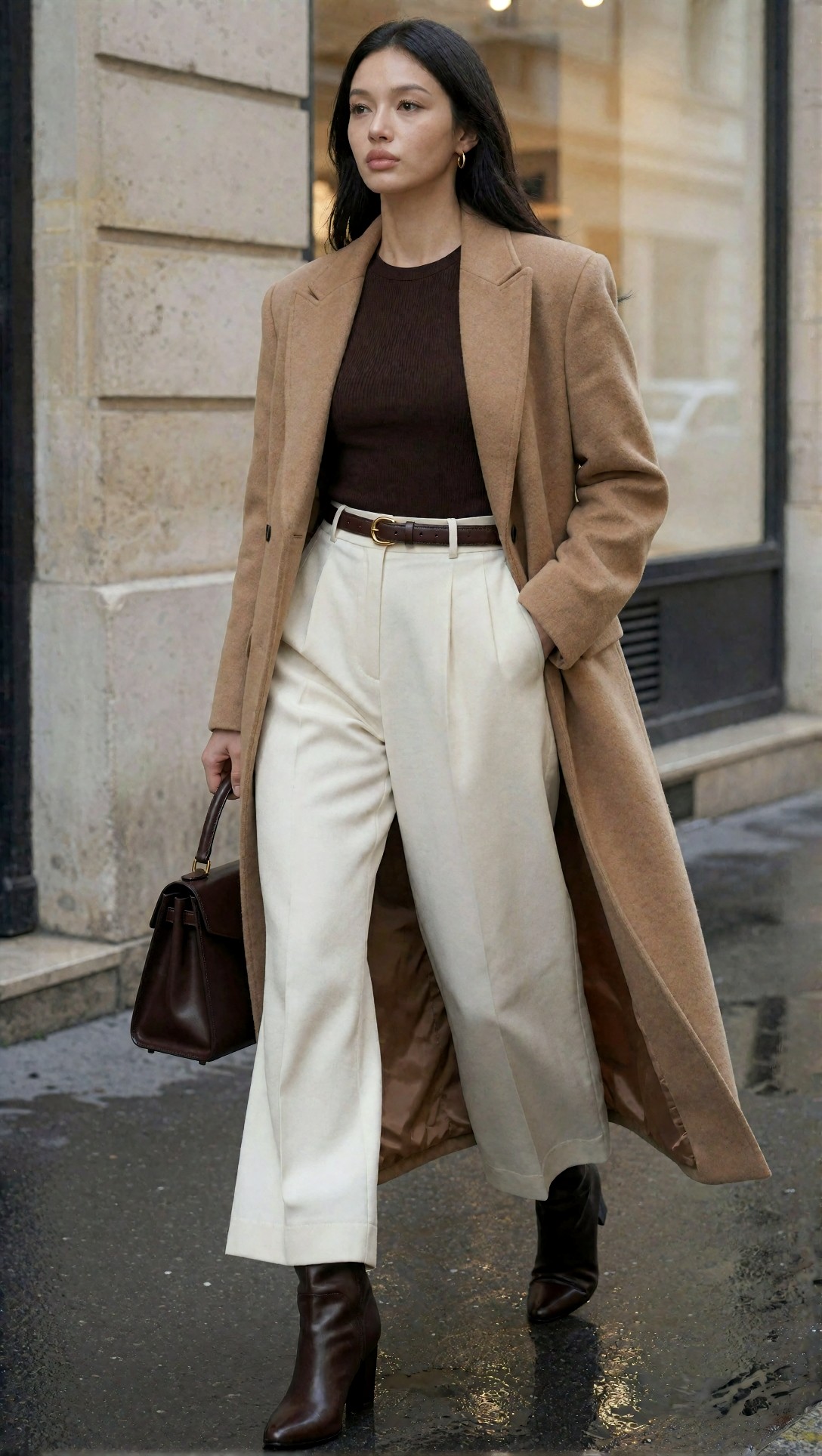
Inspect the trouser break over the boots and the coat weight at the hem. In the strongest outputs, the boots feel integrated into the silhouette instead of pasted on as a separate style idea.
2) Three-quarter editorial framing for waist definition and knit texture
This test is useful when full-body shots are good but the expensive feeling is missing. I used it to push knit quality, belt placement, and the relationship between tailoring and shape.
Topic: Refined fall editorial outfit with fitted knit and tailored outerwear
Genre: Fashion Editorial
Camera: Sony A7R V
Lens: 50mm f/1.8
Lighting: Soft window light with negative fill
Location: Minimalist townhouse entry in London
Style: Clean luxury editorial
Final Prompt: three-quarter outfit editorial fashion image, polished quiet luxury outfits for fall, woman framed from mid-thigh upward but with enough room to show coat shape and skirt line, charcoal cashmere wrap coat draped over shoulders, fitted cream fine-gauge turtleneck, high-waisted dark olive column midi skirt with back slit, tall black leather heeled boots partially visible, compact structured shoulder bag with subtle hardware, sleek hair, poised stance, tasteful sexy mood through clean waist definition and elegant skirt slit, no flashy branding, soft London townhouse interior entry, muted stone walls, refined editorial styling, tactile knit detail, smooth tailoring, sophisticated neutral palette, magazine-quality composition, understated luxe atmosphere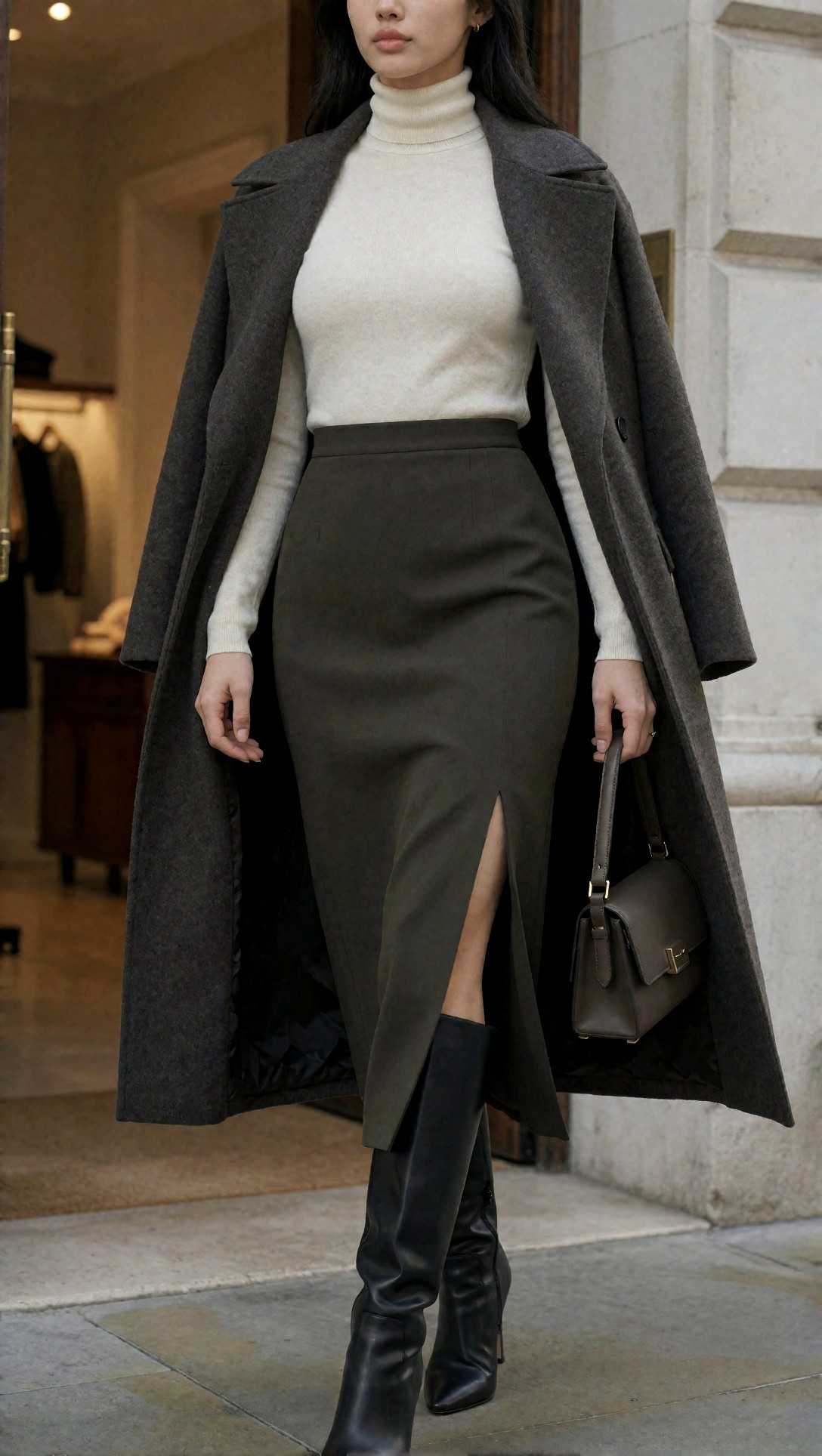
Check whether the coat still reads as substantial and whether the skirt slit stays tasteful instead of becoming random leg exposure. The weak point here is accessory drift: some generations replace the bag with something trendier and louder.
3) Head-to-toe lookbook prompt for clean capsule wardrobe outfit ideas
This prompt checks catalog-like consistency. It was especially good for readers looking for capsule wardrobe outfit ideas and a minimal wardrobe angle rather than cinematic street scenes.
Topic: Head-to-toe fall lookbook outfit in quiet luxury capsule wardrobe styling
Genre: Lookbook Photography
Camera: Nikon Z8
Lens: 40mm f/2
Lighting: Large softbox key plus subtle floor bounce
Location: Neutral studio backdrop in warm stone gray
Style: Clean commercial lookbook
Final Prompt: head-to-toe lookbook fashion image on a plain warm gray studio background, quiet luxury outfits for fall styled as a modern capsule wardrobe, single model standing naturally with full outfit clearly visible, deep navy tailored double-breasted blazer, fine cashmere crewneck in soft oatmeal tucked into high-rise straight-leg charcoal trousers, pointed dark brown leather ankle boots, structured satchel, slim watch, subtle gold ring stack, polished minimalist street style adapted for catalog clarity, body-conscious but tasteful fit, no clutter, no logos, even lighting, crisp garment edges, accurate trouser length, luxe fabric texture, premium retail lookbook quality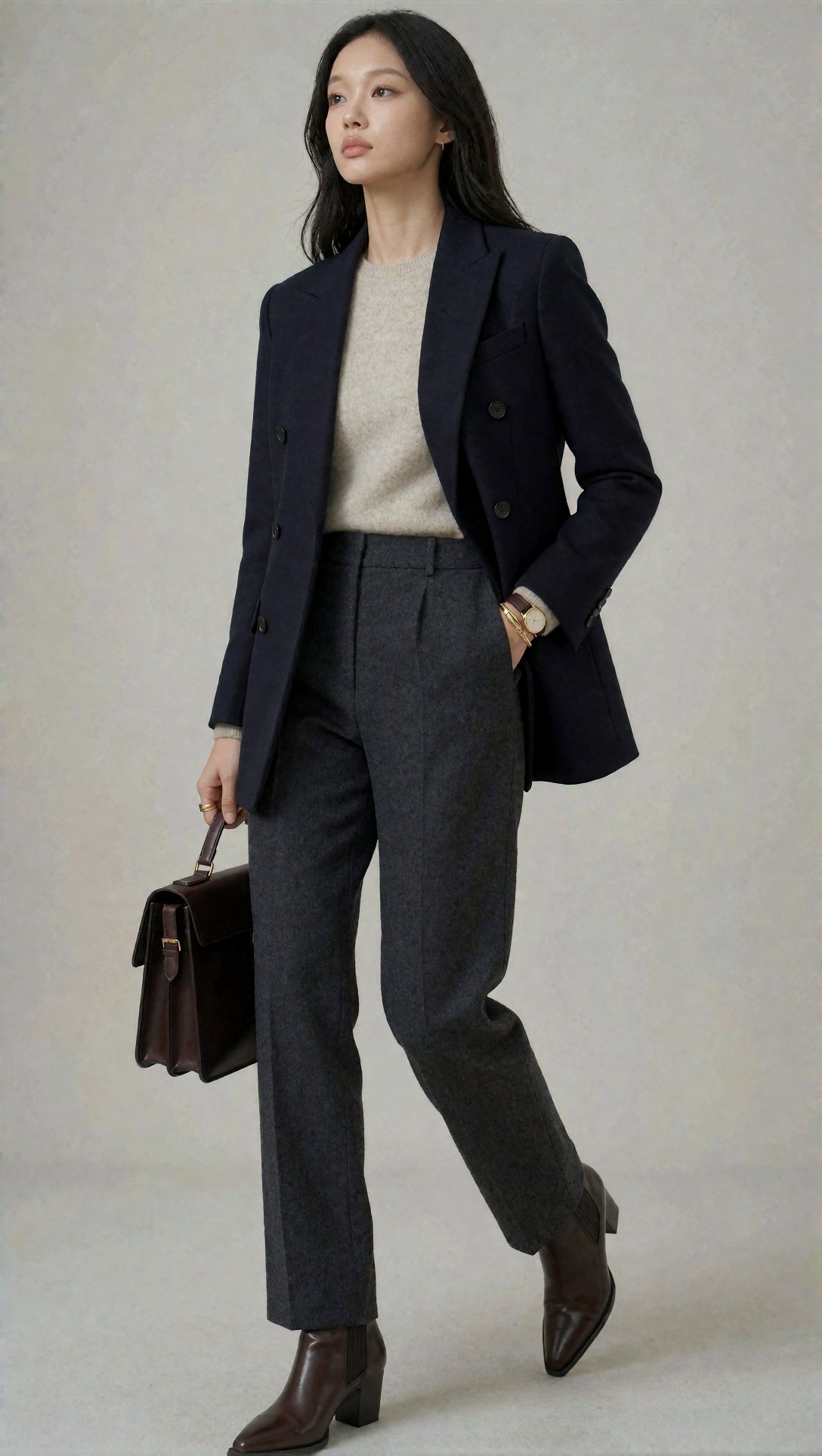
Inspect edge separation between blazer, knit, and trouser waistband. This setup usually produces the most shoppable image logic, but it can become too sterile if you do not include a clear palette and boot shape.
4) Street-style leather-and-knit variation for a sexier fall silhouette
This test checks how far you can push the sexy mood without losing quiet luxury restraint. I found that one fitted element plus one structured outer layer worked much better than combining several revealing cues.
Topic: Quiet luxury fall outfit with leather trench and body-conscious knit dress
Genre: Fashion Street Editorial
Camera: Leica SL2-S
Lens: 35mm f/1.4
Lighting: Late afternoon soft sun with open shade
Location: Milan fashion district sidewalk
Style: High-end street editorial
Final Prompt: street-style full body editorial image, quiet luxury outfits for fall with tasteful sensuality, woman wearing a dark espresso leather trench coat over a fitted rib-knit midi dress in warm taupe, sharp square-toe knee-high leather boots, slim sculptural earrings, compact clutch, confident stride, entire silhouette visible from head to toe, polished minimalist styling, no visible logos, no glossy nightclub vibe, luxurious matte leather finish, controlled body-conscious shape, elegant movement, Milan sidewalk with stone facades, sophisticated fall palette of espresso taupe and black, fashion week street style realism, premium texture detail, refined and understated rather than flashy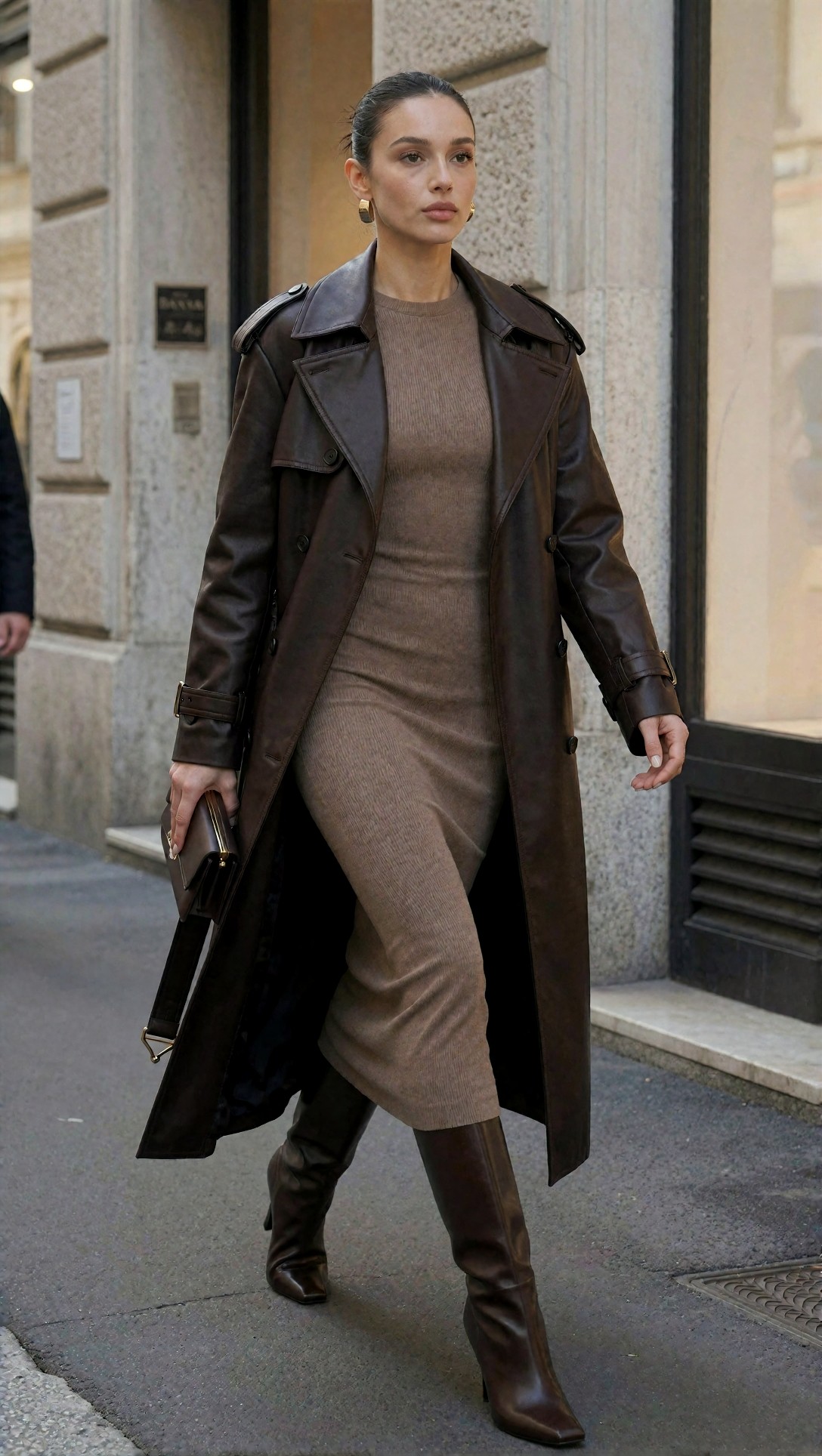
Look at the leather finish first. The strongest result has matte, expensive-looking leather; the weak outputs turn it plastic or overly shiny, which immediately cheapens the look.
Where the workflow was strongest
The best results consistently shared three qualities.
Fabric hierarchy looked intentional
When the prompt specified both soft and structured materials, the output felt more believable. A wool coat over a fine knit and polished leather boot reads like an outfit decision. A prompt with only “luxury fall fashion” usually flattened all textures into the same visual weight.
Accessories stayed subordinate
Quiet luxury breaks quickly when the bag hardware, sunglasses, or jewelry dominate the frame. In this test, phrases like subtle hardware, slim gold jewelry, and structured bag performed better than generic “luxury accessories.”
The outfit had a visible line
Good images had a clear silhouette: long coat with wide trouser, blazer with straight leg, fitted knit with column skirt. The model could be walking, standing, or turning, but the line of the outfit was still readable.
Prompt test: retail and merchandising angles
5) Storefront display prompt for trend direction and outfit grouping
This test checks whether the model understands quiet luxury as a merchandising story, not just one person wearing neutrals. It is useful for thumbnails, collections, and seasonal concept boards.
Topic: Fall quiet luxury storefront display with coordinated minimalist outfits
Genre: Retail Visual Merchandising
Camera: Fujifilm GFX100S
Lens: 45mm f/2.8
Lighting: Soft interior retail lighting with window daylight spill
Location: Scandinavian minimalist boutique storefront
Style: Premium retail campaign
Final Prompt: storefront display featuring quiet luxury outfits for fall, polished minimalist street style visual merchandising, mannequins styled in coordinated tonal outfits including camel wool wrap coat, charcoal oversized blazer, cream cashmere knit, pleated espresso trousers, suede midi skirt, knee boots, loafers, structured leather bags, folded scarves, clean shelving, understated fall styling story, Scandinavian minimalist boutique with large glass windows, tasteful sexy mood expressed through sleek silhouettes and sharp styling rather than exposed skin, premium retail presentation, no logos, no loud sale signage, calm palette of cream camel charcoal olive and espresso, realistic textile detail, elegant symmetry, luxury department store quality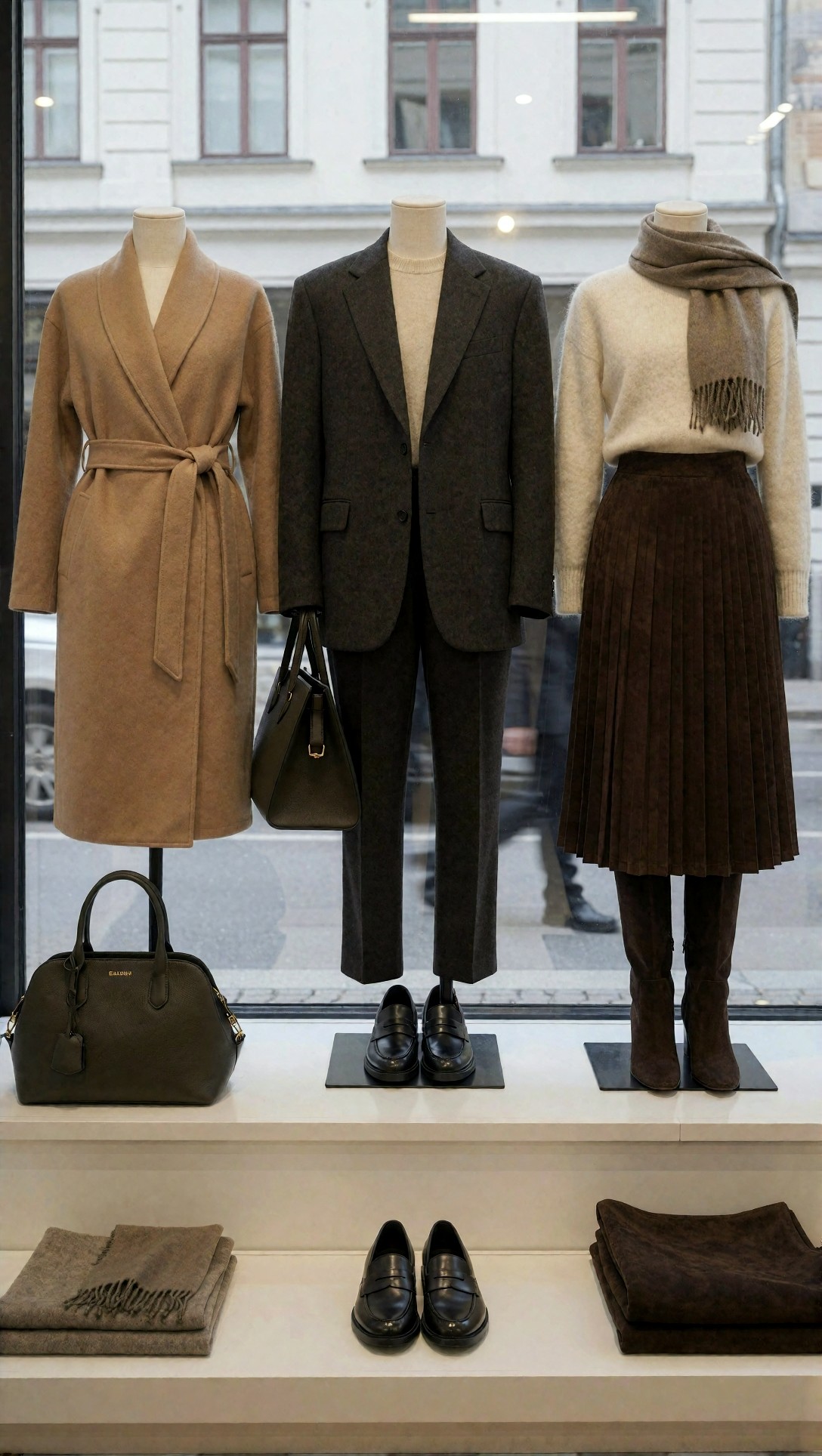
Inspect whether each mannequin tells a coherent outfit story. The weak point is random accessory clutter around the display, especially if the prompt does not explicitly ask for clean shelving and no sale signage.
6) Product flat lay for capsule planning and prompt control
This test was one of the most stable because flat lays remove face and pose issues. It is ideal if you want to plan a minimal wardrobe or generate outfit components before moving into model shots.
Topic: Quiet luxury fall capsule wardrobe flat lay
Genre: Product Editorial
Camera: Hasselblad X2D 100C
Lens: 55mm f/2.5
Lighting: Overhead diffused studio light
Location: Textured stone tabletop studio set
Style: Luxury e-commerce editorial
Final Prompt: product flat lay of quiet luxury outfits for fall arranged as a capsule wardrobe, overhead composition on a pale stone surface, brushed camel wool coat, cream cashmere sweater, espresso ribbed knit top, charcoal wide-leg trousers, black leather knee boots, dark brown loafers, structured top-handle bag, suede belt, slim gold jewelry, silk scarf, tasteful polished minimalist styling, body-conscious and sexy only through sleek item selection and silhouette planning, no clutter, no logos, clean spacing, premium textile detail, refined tonal color story, luxury editorial product styling, crisp edge definition, elevated retail campaign aesthetic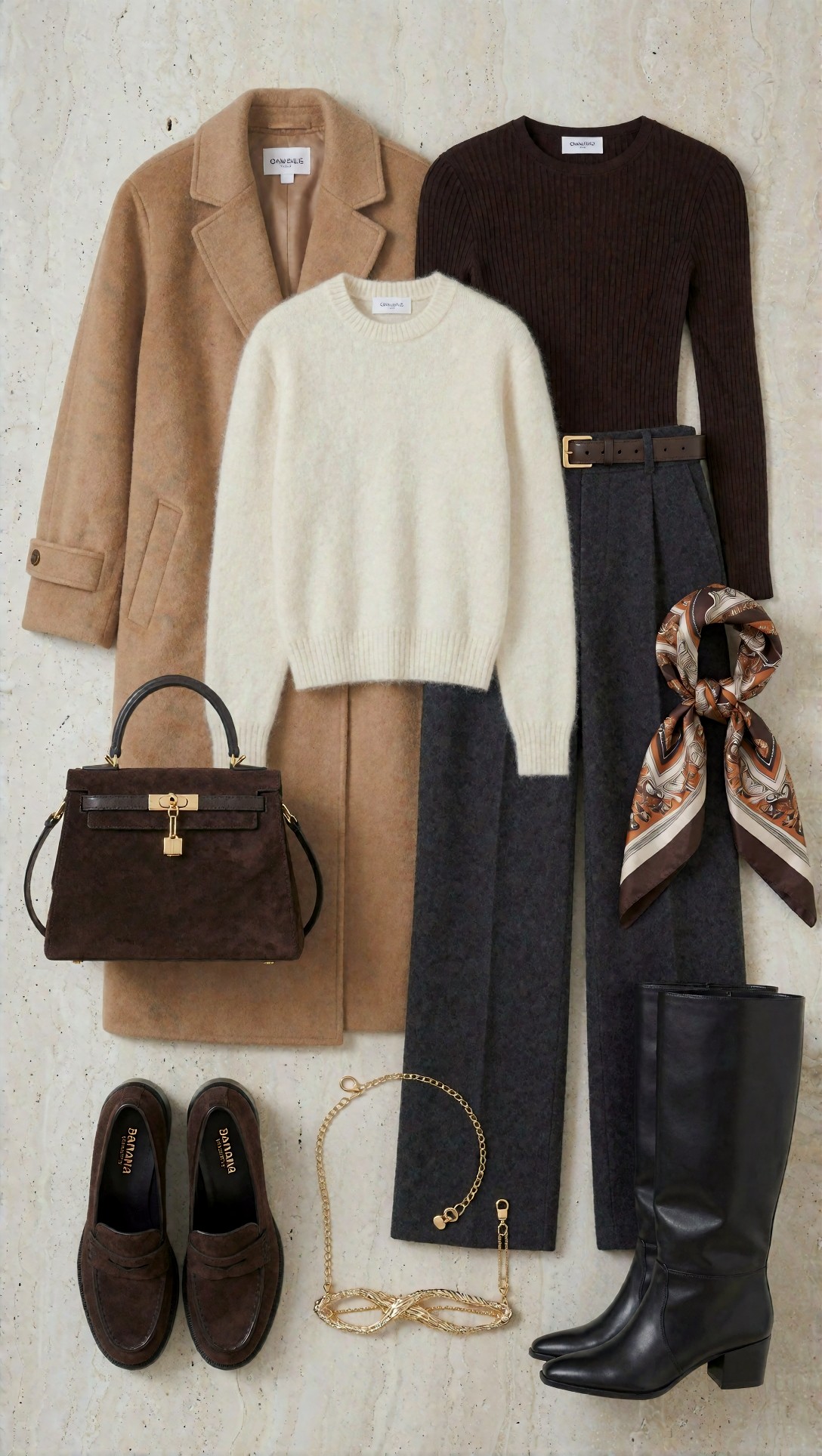
Inspect texture transitions between wool, cashmere, suede, and leather. If everything has the same sheen, the image loses the quiet luxury feel.
Prompt test: details that make or break the expensive look
7) Garment detail macro for textile realism
This test checks whether the materials are convincing enough to support the whole outfit story. I used it when wider shots looked fine at a glance but weak on inspection.
Topic: Luxury fall garment detail showing knit, coat, belt, and leather texture
Genre: Fashion Detail Editorial
Camera: Canon EOS R3
Lens: 85mm f/1.8
Lighting: Directional studio side light with soft fill
Location: Neutral editorial studio corner
Style: High-end fashion detail study
Final Prompt: garment detail macro image focused on the tactile elements of quiet luxury outfits for fall, close framed section of a brushed wool camel coat cinched lightly over a fitted cream rib-knit top, dark brown leather belt with understated hardware, hint of charcoal pleated trouser waistband, polished leather glove holding a structured bag handle, tasteful sensual editorial mood through precise fit and material contrast, no face emphasis, no branding, luxury fashion detail study, visible weave and grain, controlled shadows, rich autumn neutral palette, premium magazine styling, realistic luxury texture and construction detail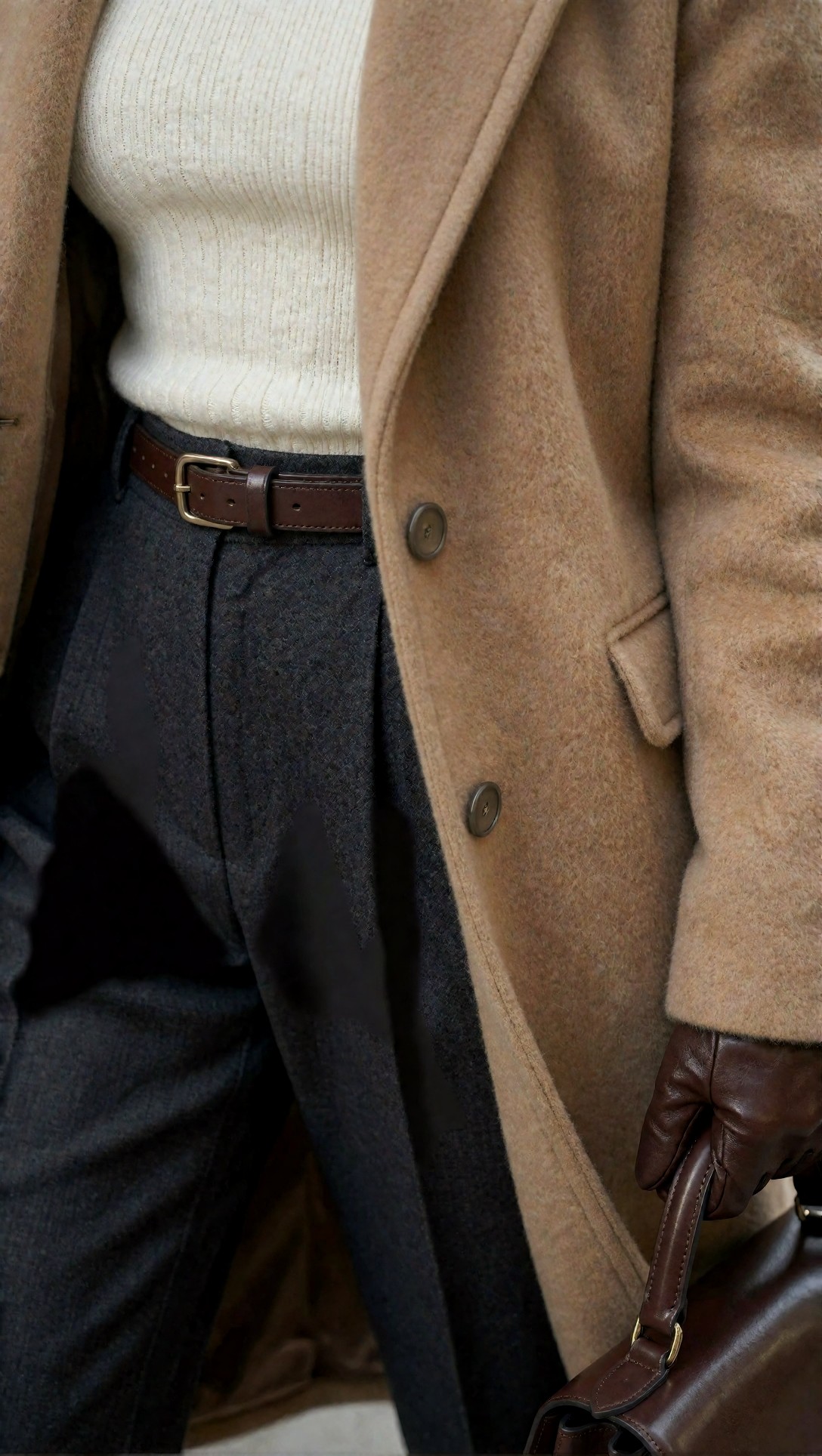
Check weave definition and hardware scale. The common failure is oversized buckles or fake-looking leather grain, which makes the whole styling feel mass-market.
8) Accessories close-up for bag-and-shoe sophistication
This prompt isolates the part many models mishandle: quiet accessories. It helps test whether the model can produce expensive restraint instead of “designer coded” exaggeration.
Topic: Quiet luxury fall accessories close-up with polished leather and understated gold accents
Genre: Luxury Accessories Campaign
Camera: Sony FX3 cinematic still
Lens: 70mm at f/2.8
Lighting: Softbox key with warm practical background glow
Location: Marble console in upscale hotel lobby
Style: Elegant accessories advertising
Final Prompt: accessories close-up campaign image inspired by quiet luxury outfits for fall, structured espresso leather handbag placed beside black pointed ankle boots, camel wool scarf draped casually, slim gold cuff and watch, hint of cream coat sleeve and charcoal trouser hem entering frame, polished minimalist styling, tasteful sensual mood through sleek lines and rich materials, upscale hotel lobby marble console, warm ambient background glow, no logos, no oversized hardware, luxurious but understated, excellent leather grain, refined color grading, premium advertising composition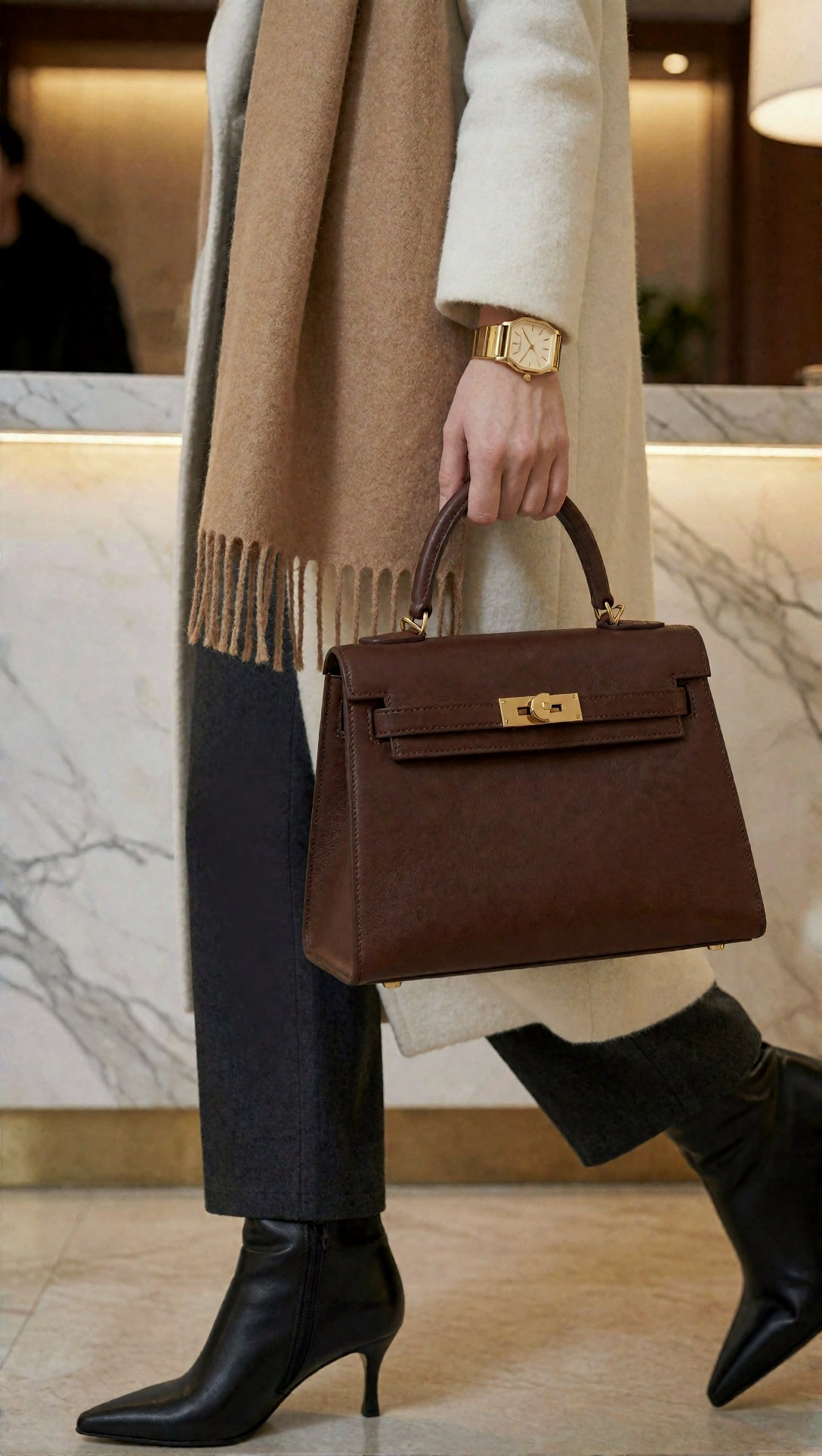
Inspect leather grain, zipper placement, and hardware brightness. The strongest images keep the metal quiet and let shape and finish do the work.
Common mistakes to avoid
Using “old money” as the whole prompt
This often pushes the model toward costume shorthand: pearls, mansions, heavy loafers, and polished clichés. If you want overlap with related searches like old money summer outfit, keep only the restraint and tailoring logic, not the stereotype package.
Forgetting season-specific fabrics
A frequent failure was thin satin skirts, linen trousers, or spring blazers showing up in a fall scene. For quiet luxury outfits for fall, call out wool, suede, leather, cashmere, rib knit, flannel, and heavier cotton.
Asking for sexy before asking for tailored
When the sensual mood came too early in the prompt, the model often over-prioritized pose and body exposure. The stronger formula was:
1. shot type 2. outfit architecture 3. materials 4. palette 5. then tasteful sensuality
Letting the scene overpower the clothing
Busy cafés, traffic-heavy streets, and decorative interiors can look attractive, but they reduce outfit readability. If the purpose is style testing, simpler backgrounds usually win.
Ignoring negative constraints
In this test, short guardrails mattered. Phrases like no visible logos, no loud prints, no clutter, and understated hardware prevented a lot of drift.
A compact checklist before you generate
Use this quick checklist if your first outputs feel close but not quite polished.
- Choose a named fashion shot type first
- Ask for full-body or head-to-toe visibility when outfit evaluation matters
- Specify one hero outerwear piece
- Specify one fitted element and one relaxed element for balance
- Name at least three fabrics
- Lock the palette to 3 to 5 fall neutrals
- Define shoes clearly, including toe shape and height
- Keep accessories structured and minimal
- Add “no logos, no loud prints, no clutter” when needed
- Use a location that supports the outfit, not competes with it
What I would recommend for beginners
If you are new to fashion prompting, start with a lookbook or flat lay before jumping into editorial street scenes.
Best for beginners:
- Prompt 3 for clean full-outfit control
- Prompt 6 for capsule wardrobe planning
- Prompt 1 once you want more atmosphere without losing outfit clarity
Best when you want mood and movement:
- Prompt 4 for a stronger sexy editorial edge
- Prompt 2 for polished waist-level styling and knit texture
Best when your results look cheap:
- Prompt 7 to test if the materials are believable
- Prompt 8 to fix bag and shoe language
If you want to compare more fashion-oriented workflows, it helps to save side-by-side prompt variants in [/articles](/articles) research notes or build a prompt stack inside [PromptLab](/promptlab).
FAQ
How do I make quiet luxury outfits look expensive in AI images?
Focus on tailoring, texture, and proportion instead of labels. Name fabrics like brushed wool, cashmere, suede, and polished leather, then pair them with a clear silhouette such as longline coat, column skirt, or pleated wide-leg trousers.
What colors work best for quiet luxury outfits for fall?
The most reliable palettes in this test were camel, cream, espresso, charcoal, navy, black, and olive. Keeping the palette narrow helped the model avoid clutter and trend confusion.
Are street-style prompts better than studio prompts?
For realism and mood, yes. For consistency and outfit inspection, studio lookbook prompts were stronger. If you need a reliable first pass, studio wins. If you need editorial atmosphere, street style is worth the extra iteration.
Why do AI fashion images often get the shoes wrong?
Shoes are frequently cropped, simplified, or swapped unless you specify full-body framing and shoe details. Mention boot height, toe shape, finish, and how the hem interacts with the shoe.
Can these prompts work for a minimal wardrobe or capsule wardrobe article?
Yes. The flat lay and lookbook formulas are especially useful for minimal wardrobe planning because they separate the styling system into repeatable components.
Final recommendation
For most people trying to generate quiet luxury outfits for fall, the best workflow is simple: start with a full-body or lookbook shot type, define the outfit as layers, lock the fabrics and palette, and keep the accessories restrained. In this test, that produced the strongest result far more often than generic luxury wording.
Who should use this workflow: anyone building fashion mood boards, outfit concepts, capsule wardrobe visuals, street-style editorials, or retail-style collections with a polished minimalist direction.
Who should avoid it: anyone looking for loud trend fashion, logo-heavy luxury, or face-first glamour imagery. This setup is built for styling clarity, not maximal spectacle.
If I had to keep only one rule, it would be this: describe the outfit like an editor styling a shoot, not like a shopper naming an aesthetic. That single shift mattered more than camera choice, location, or any other setting.