Quiet Luxury Tokyo Style: Tested Outfit Prompts for Japanese Minimalist Wardrobes, Leather Bags, and Loafer Looks 한국어 요약
이 페이지는 ZView Space의 영어 원문을 한국어 검색 사용자도 이해할 수 있도록 정리한 SEO 요약입니다. 핵심은 단순한 얼굴 중심 이미지가 아니라 패션 에디토리얼, 룩북, 아웃핏, 프롬프트 테스트, 이미지 생성 워크플로우를 실제로 어떻게 구성할지입니다.
핵심 요약
- 원문 주제: Quiet Luxury Tokyo Style: Tested Outfit Prompts for Japanese Minimalist Wardrobes, Leather Bags, and Loafer Looks
- 목적: AI 이미지 생성에서 outfit, silhouette, fabric, pose, location, camera framing을 더 명확하게 설계합니다.
- 활용 범위: Z-Image Turbo, Krea2 Turbo, Qwen Image, Anima, SeedVR2 같은 이미지 생성 및 업스케일 워크플로우에 적용할 수 있습니다.
- SEO 관점: 제목, 설명, 이미지 alt, 프롬프트 예시가 실제 검색 의도와 맞아야 색인 가능성이 높아집니다.
한국어 사용자를 위한 체크포인트
1. 프롬프트가 얼굴 묘사에만 머물지 않고 전체 스타일과 의상 구성을 설명하는지 확인합니다. 2. 패션 이미지라면 상의, 하의, 아우터, 신발, 액세서리, 소재감, 촬영 장소를 분리해서 씁니다. 3. 생성 결과는 바로 게시하지 말고 디테일, 손, 의상 형태, 배경 일관성, 이미지 품질을 비교합니다. 4. 글 본문에는 실제 테스트 기준과 실패를 줄이는 방법이 들어가야 검색엔진에서 얇은 콘텐츠로 보일 가능성이 줄어듭니다.
원문 미리보기
I ran this as a fashion prompt session, not a trend roundup: eight image tests built around quiet luxury Tokyo style , with a tight focus on Japanese minimalist wardrobes, structured leather bags, and loafer led outfits that read polished rather than flashy. T
---
I ran this as a fashion prompt session, not a trend roundup: eight image tests built around quiet luxury Tokyo style, with a tight focus on Japanese minimalist wardrobes, structured leather bags, and loafer-led outfits that read polished rather than flashy. The useful part was not whether the models could make beige tailoring. It was whether they could hold silhouette discipline, leather quality, and Tokyo street context without drifting into generic old-money clichés.
What to know first
- The strongest results came from prompts that specified shot type, full outfit visibility, and one controlled accessory hero.
- Most failures happened when "quiet luxury" was left too broad; models filled the gap with country-club styling instead of urban Japanese minimalism.
- Loafers improved when I defined toe shape, sock treatment, and trouser break.
- Leather bags needed explicit notes on structure, finish, hardware restraint, and scale relative to the body.
- If you want repeatable outfit outputs, build prompts in [Prompt Lab](/promptlab) first, then compare variants in [Gallery](/gallery).
Test setup
In this test, I used a consistent fashion-editorial workflow: one prompt idea, then small changes to silhouette language, accessory detail, and scene location. The goal was inspiration, but practical inspiration—the kind that helps you generate cleaner lookbook concepts or mood-board references inside [Create](/create).
What I tested:
- Tokyo street-style full body shots
- three-quarter editorial outfit framing
- head-to-toe lookbook compositions
- leather bag and loafer accessory close-ups
- storefront and retail display context
- one capsule-wardrobe collage for styling consistency
What I watched most closely:
- whether the outfit looked like Japanese minimalist fashion rather than generic luxury
- whether garments layered naturally on the body
- whether bags looked premium without oversized logos
- whether loafers matched the trouser silhouette
- whether the scene felt like Tokyo, not a vague luxury city backdrop
What looked good immediately in the quiet luxury tests
The first good sign was fabric restraint. When the prompt mentioned dry wool, crisp cotton poplin, smooth calfskin, brushed black leather, or compact knit, the generators usually responded with better material hierarchy. Quiet luxury Tokyo style works when textures do the talking.
The second strong point was proportion. Cropped trousers, long clean coats, slim belts, square or almond-toe loafers, and medium-sized top-handle bags gave the outputs a believable city uniform. Full-body framing also helped the model understand the outfit system instead of improvising random luxury pieces.
A third win: Tokyo context became more convincing when I asked for understated side streets, polished concrete storefronts, station-adjacent sidewalks, or Aoyama-style retail facades instead of famous landmarks. The stronger result was less tourist image, more fashion operator reference.
Where the prompts broke
The weak point was that many models interpret "quiet luxury" as European old-money summer styling: linen by the coast, large sunglasses, resort energy, too much cream-on-cream, and occasionally preppy blazers that feel more Lake Como than Tokyo.
Another failure risk was over-sexualization when the body-conscious mood was left unstructured. For this article, I kept the mood confident and tasteful, but the model needed explicit wardrobe architecture: fitted knit, longline skirt slit, sharp shoulder, high-waist trouser, sleek loafer. Without that, it drifted toward generic glamour rather than fashion styling.
Hands were a secondary issue in bag-carrying shots. The more important issue, though, was bag geometry. Some runs softened a structured leather tote into an inflated pillow shape, which kills the minimalist luxury signal.
Quick checklist: what separated the usable outputs
| Element | Worked best | Common failure | Fix in prompt | |---|---|---|---| | Outerwear | Long wool coat, collar defined, straight drape | Puffy coat or vague blazer | Specify hem length, shoulder shape, fabric weight | | Trousers | High-waist tailored trouser, slight ankle crop | Random wide-leg puddling | Add inseam behavior and shoe visibility | | Loafers | Polished black or dark espresso leather, almond toe | Chunky platform drift | State classic slim profile, low heel, visible vamp | | Bags | Structured top-handle or east-west shoulder bag | Oversized logo tote | Say no visible logos, smooth calfskin, restrained hardware | | Tokyo context | Aoyama side street, modern storefront, muted signage | Tourist landmark or generic city blur | Use neighborhood-style cues, polished concrete, narrow street | | Quiet luxury mood | Neutral palette with one dark anchor | Monotone beige washout | Add black, charcoal, chocolate, or navy grounding piece |
The prompt ingredients that changed the result
Three prompt ingredients made the biggest difference in this session.
1. Outfit logic before beauty logic
When I opened with the shot type and complete outfit structure, the model respected the clothing more. This matters for capsule wardrobe lookbook images because styling consistency falls apart when the face becomes the primary subject.
This first test checks whether a street-style full body shot can hold a clean Tokyo luxury silhouette without adding noisy extras.
Topic: Quiet luxury Tokyo street-style full body outfit with leather bag and loafers
Genre: Street Style
Camera: Fujifilm GFX100S
Lens: 45mm f/2.8
Lighting: Overcast diffusion
Location: Aoyama side street with polished concrete storefronts and subtle signage
Style: Luxury minimal city editorial
Final Prompt: street-style full body fashion shot, quiet luxury Tokyo style, confident woman walking through an Aoyama side street, complete visible outfit logic with charcoal long wool coat worn open over a fine-gauge fitted black knit top, high-waist cream tailored ankle trousers, slim black leather belt, polished black almond-toe loafers with sheer black socks, medium structured black calfskin top-handle bag with minimal hardware, clean layered silhouette, tasteful sensuality through precise fit not exposure, neutral palette anchored by black, soft overcast light, polished concrete storefront background, Tokyo street fashion outfit, Japanese minimalist fashion, full body framing, editorial walking pose, luxury fabric texture, realistic coat drape, crisp trouser crease, restrained premium styling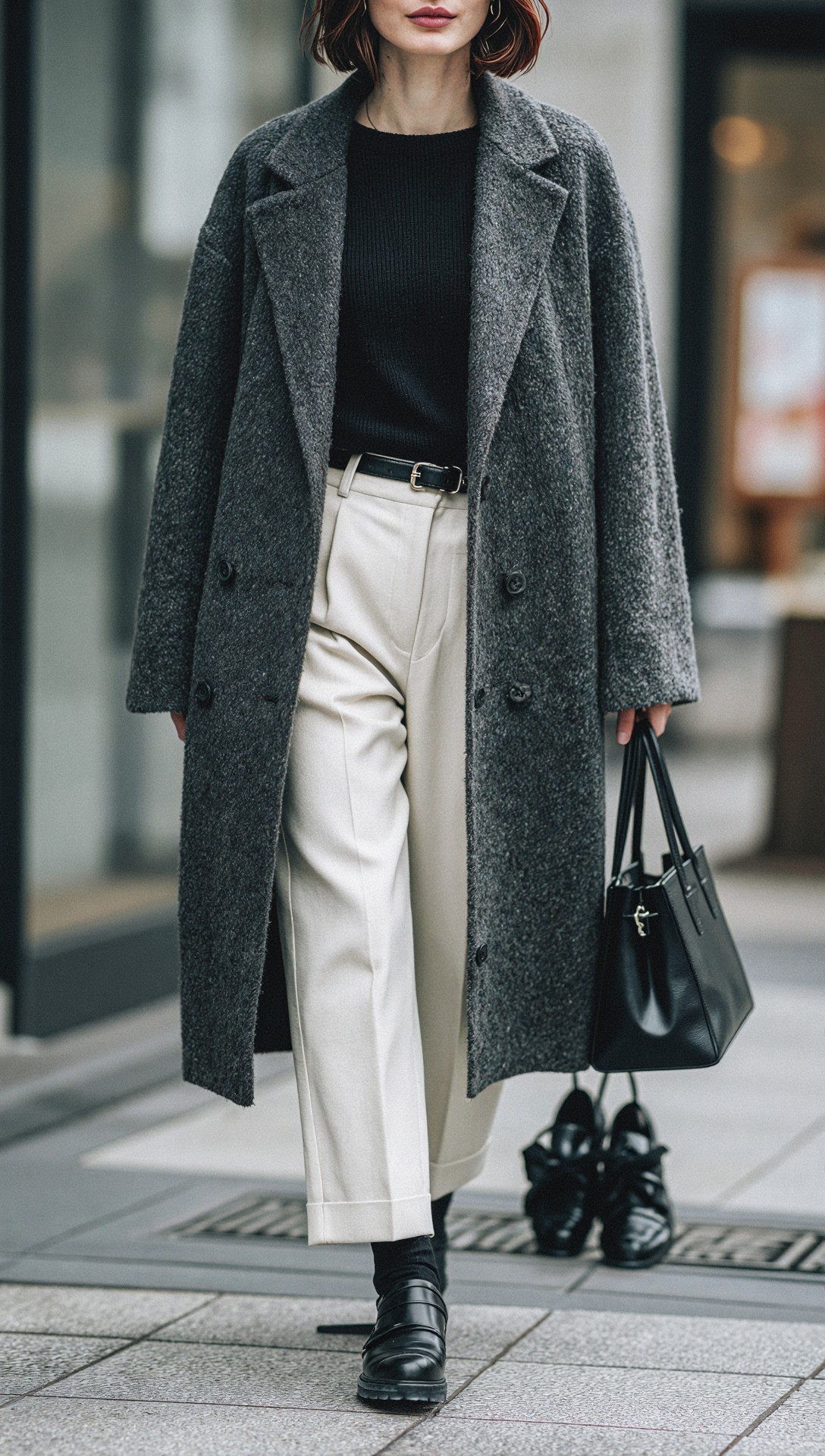
Inspect whether the trousers end cleanly above the loafer and whether the bag stays structured in motion. If the image turns too beige or too resort-like, the Tokyo signal is too weak.
2. Leather and hardware language
Quiet luxury bags fail fast when the model invents giant buckles, chain straps, or logo plates. In this test, explicit leather language improved results more than brand-adjacent wording.
This second prompt checks if a three-quarter editorial frame can show bag quality and garment fit at the same time.
Topic: Japanese minimalist wardrobe with structured leather shoulder bag
Genre: Fashion Editorial
Camera: Canon EOS R5
Lens: 50mm f/1.8
Lighting: Soft window light with negative fill
Location: Minimal Tokyo apartment entryway with stone floor, walnut console, and soft gray walls
Style: Clean luxury lookbook editorial
Final Prompt: three-quarter outfit editorial, quiet luxury Tokyo style inside a refined Tokyo apartment entryway, model standing with one shoulder angled to camera, visible outfit from head to loafers, ivory silk-cotton blouse tucked into dark taupe high-waist straight trousers, cropped black cashmere cardigan draped over shoulders, espresso smooth calfskin east-west shoulder bag with no visible logo and restrained gold hardware, dark brown slim loafers, minimal jewelry, body-conscious but tasteful fit, elegant posture, Japanese minimalist fashion mood, soft window light shaping fabric and leather grain, muted interior, premium capsule wardrobe lookbook composition, realistic textile contrast, editorial color discipline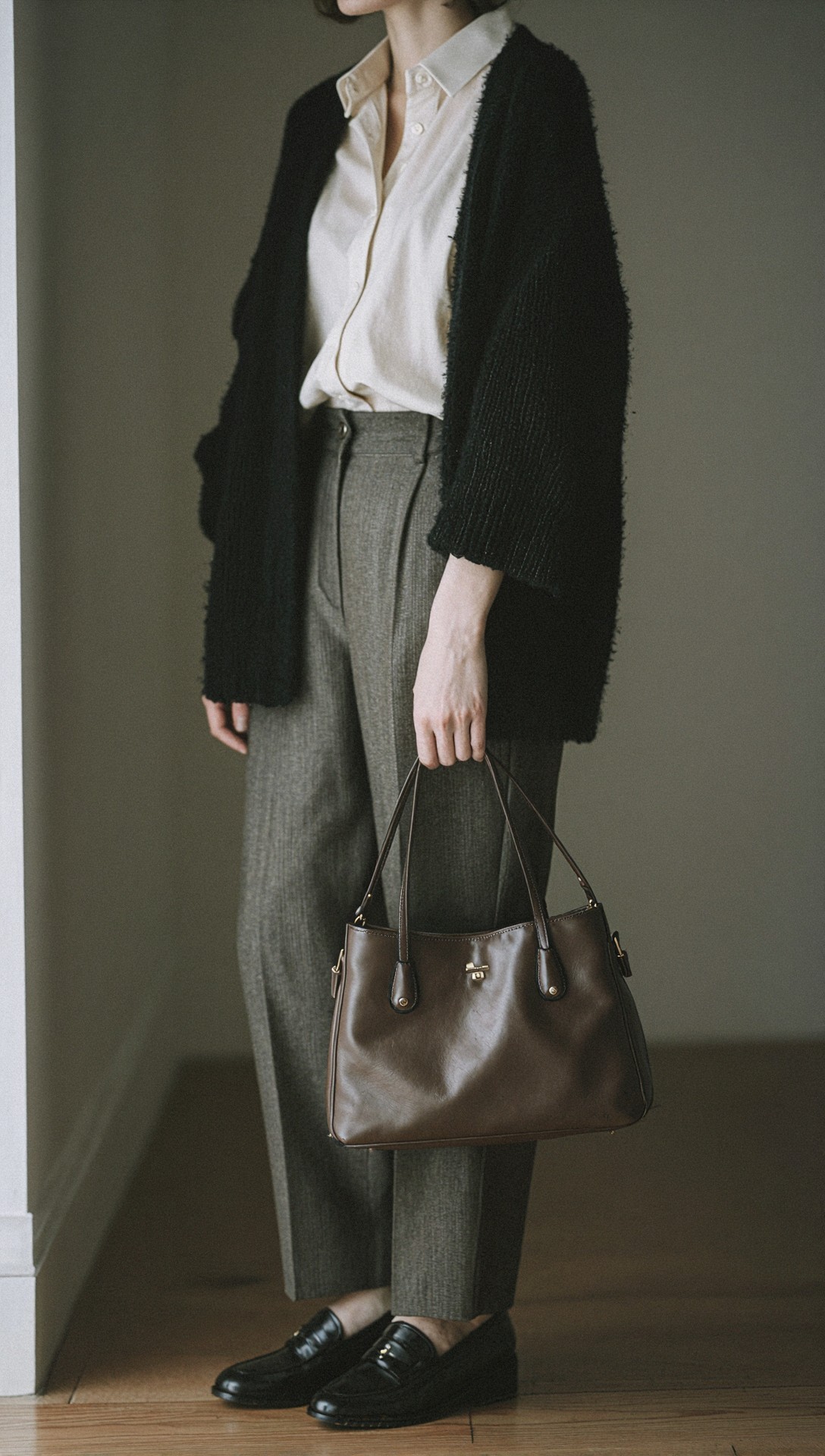
Look for hardware restraint and leather grain. The strongest result will keep the bag compact and architectural instead of turning it into a generic hobo bag.
3. Trouser break, sock styling, and shoe shape
Loafers were the easiest item to lose. If I did not specify the sock treatment and trouser crop, the shoes became anonymous flats or exaggerated platforms.
This test isolates the loafer look inside a more formal head-to-toe lookbook frame.
Topic: Head-to-toe quiet luxury loafer outfit for Tokyo office-to-gallery dressing
Genre: Lookbook Photography
Camera: Sony A7R V
Lens: 40mm f/2.5
Lighting: Large softbox key with gentle floor bounce
Location: White seamless studio with a brushed steel pedestal and one stone bench
Style: Modern minimalist fashion catalog
Final Prompt: head-to-toe lookbook image, quiet luxury Tokyo style office-to-gallery outfit, complete full-body styling visible against a clean studio set, fitted bone-color sleeveless knit, black high-waist pleated wool trousers with exact ankle crop and slight front break, glossy black almond-toe penny loafers, sheer black socks visible above shoe line, slim leather watch, structured dark oxblood top-handle bag placed at side, long clean silhouette, confident stance, tasteful sexy mood through sharp fit and posture, Japanese minimalist fashion, luxury minimal city palette, catalog clarity, precise garment separation, realistic wool texture, balanced studio lighting, no oversized logos, no chunky shoes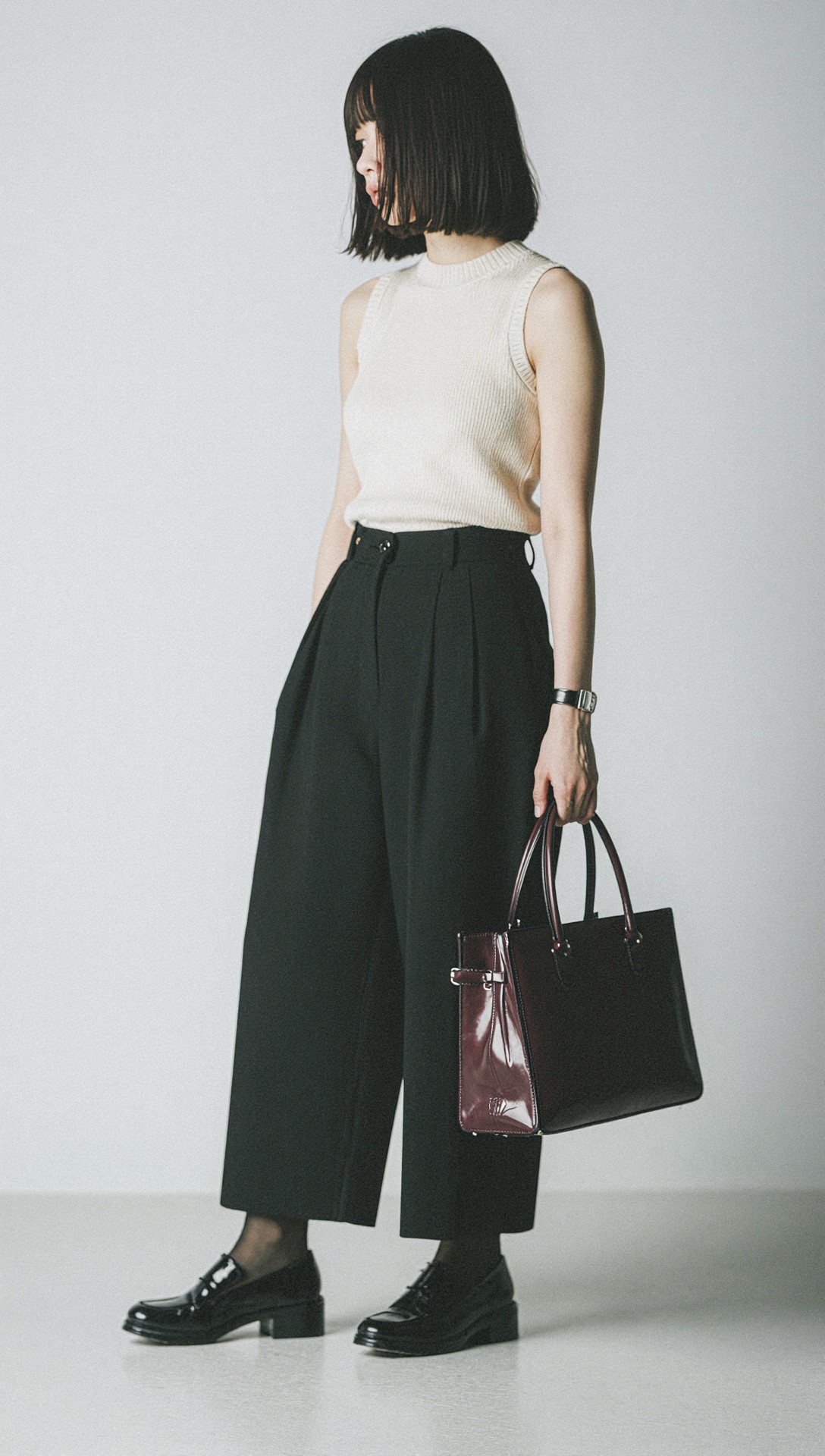
Check whether the socks are rendered as a deliberate styling choice rather than disappearing. If the trousers puddle, the silhouette stops reading Tokyo-sharp and starts reading generic menswear borrow.
Image test prompts and inspection notes
Test 4: old money summer outfit influence, but corrected for Tokyo
A lot of people searching this topic also want the old money summer outfit feel. In image generation, that reference is useful only if you cool it down and urbanize it.
This prompt checks whether a softer summer palette can still stay in the quiet luxury Tokyo lane.
Topic: Soft summer quiet luxury outfit adapted to Tokyo street fashion
Genre: Lifestyle Fashion Campaign
Camera: Nikon Z8
Lens: 35mm f/2
Lighting: Late afternoon natural light with reflected fill
Location: Omotesando backstreet beside a minimal café facade and tiled sidewalk
Style: Urban luxury campaign
Final Prompt: street-style full body summer fashion image, quiet luxury Tokyo style with subtle old money summer outfit influence, woman leaning lightly near a minimal café facade in Omotesando, complete outfit visible with lightweight sand trench worn open over a ribbed espresso tank, ivory midi column skirt with back slit, dark brown leather loafers, slim belt, structured tan calfskin handbag, oversized but refined sunglasses, sleek low bun, body-conscious yet polished silhouette, Tokyo street fashion outfit, Japanese minimalist fashion, warm late afternoon light, neutral palette with chocolate and ivory contrast, luxury minimal city mood, clean sidewalk composition, premium fabric detail, restrained styling, no resort background, no beach elements, no logos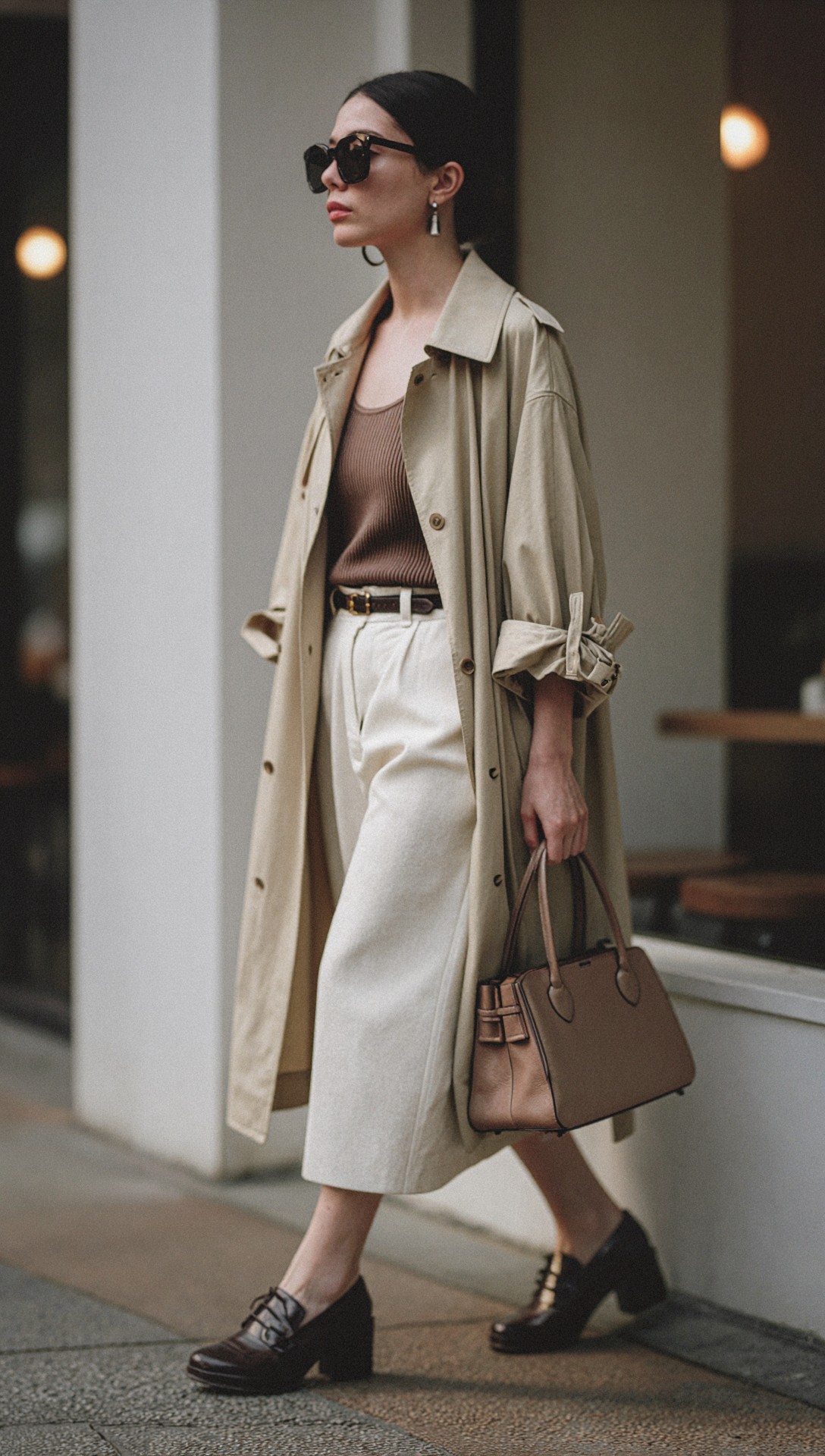
Inspect the skirt line and bag proportion. If the model introduces straw accessories, bright sun hats, or coastal architecture, it has slipped into vacation imagery.
Test 5: capsule wardrobe lookbook consistency
The strongest inspiration images often are not single shots; they are systems. This test checks if the model can keep one wardrobe logic across multiple outfit tiles.
Topic: Quiet luxury Tokyo capsule wardrobe lookbook page
Genre: Catalog Grid Page
Camera: Hasselblad X2D 100C
Lens: 55mm f/2.5
Lighting: Controlled studio daylight simulation
Location: Minimal editorial studio layout with off-white backdrop and narrow gray borders
Style: Luxury capsule wardrobe catalog
Final Prompt: fashion catalog grid page showing four coordinated head-to-toe outfits in quiet luxury Tokyo style, Japanese minimalist fashion system, each look fully visible and styled around a capsule wardrobe of black loafers, structured leather bags, fine-gauge knits, straight trousers, midi skirts, long wool coats, crisp shirts, muted palette of black cream taupe stone and espresso, tasteful sexy mood through precise silhouettes and skirt slit details, clean editorial layout, consistent model styling, visible garment layering, premium fabric texture, luxury minimal city direction, lookbook page clarity, no loud graphics, no logos, modern fashion merchandising composition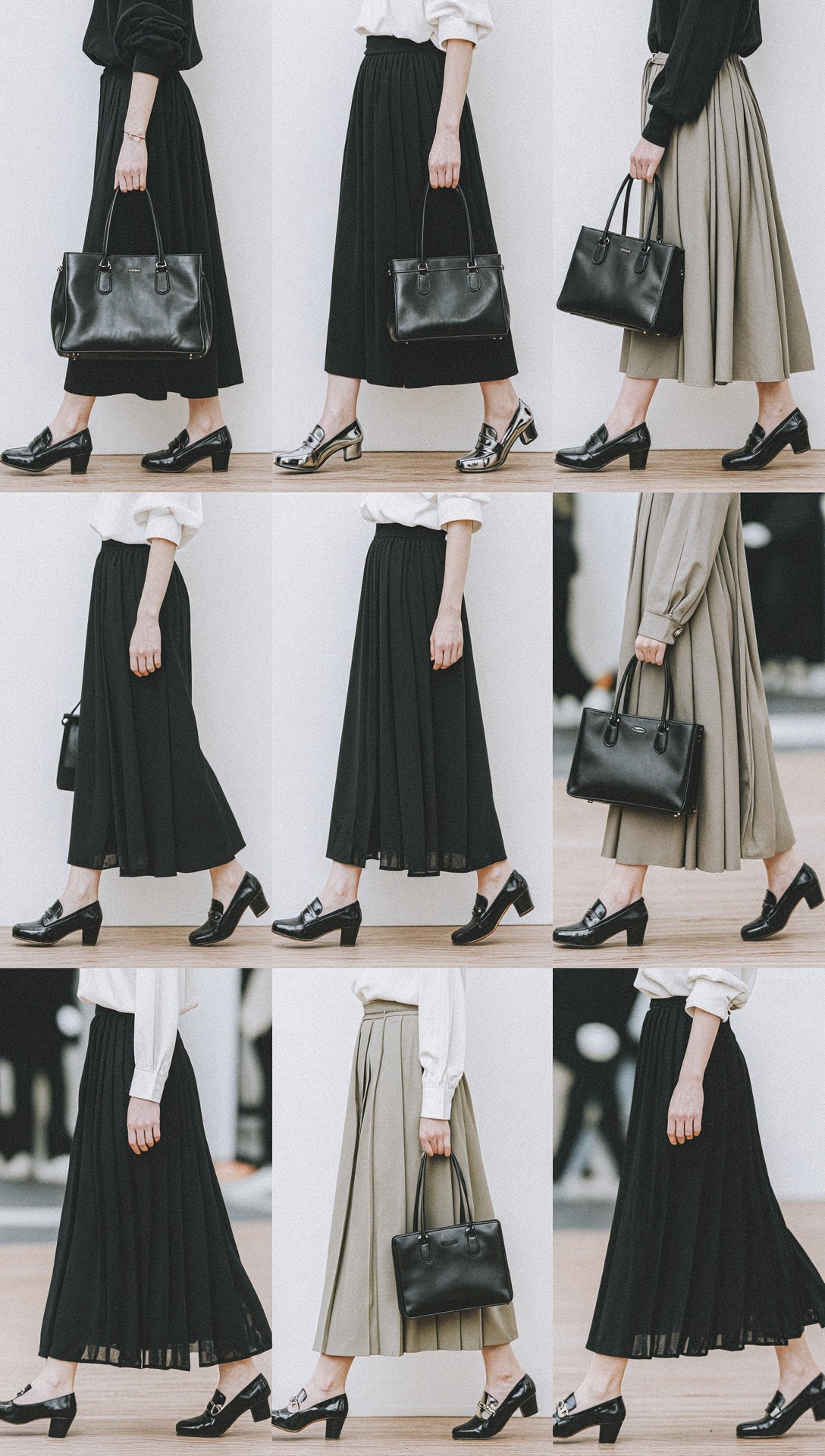
What to inspect here is consistency: same body scale, same loafer family, same accessory vocabulary. If one tile suddenly becomes flashy or trend-heavy, the style lock is weak.
Test 6: storefront display for minimal wardrobe merchandising
For inspiration, store-display prompts are underrated. They reveal whether the wardrobe pieces work as a system before you put them on a person.
This prompt tests visual merchandising for a minimal wardrobe built around leather bags and loafers.
Topic: Quiet luxury Tokyo storefront display with minimalist wardrobe pieces
Genre: Retail Visual Merchandising
Camera: Leica SL2-S
Lens: 24-70mm at 35mm f/4
Lighting: Soft interior retail lighting with cool daylight spill from street
Location: Aoyama boutique window with stone plinths and brushed metal rack
Style: High-end minimalist retail editorial
Final Prompt: storefront display scene in quiet luxury Tokyo style, refined Aoyama boutique window featuring a Japanese minimalist fashion capsule wardrobe, long black wool coat, ivory poplin shirt, taupe pleated trousers, dark espresso midi skirt, polished black loafers, structured calfskin top-handle bag and east-west shoulder bag arranged on stone plinths, no visible logos, restrained hardware, muted retail palette, elegant city luxury merchandising, subtle sensuality in sharp silhouettes and fitted knit styling, modern Tokyo boutique context, clean reflections on glass, realistic fabric and leather textures, high-end retail editorial composition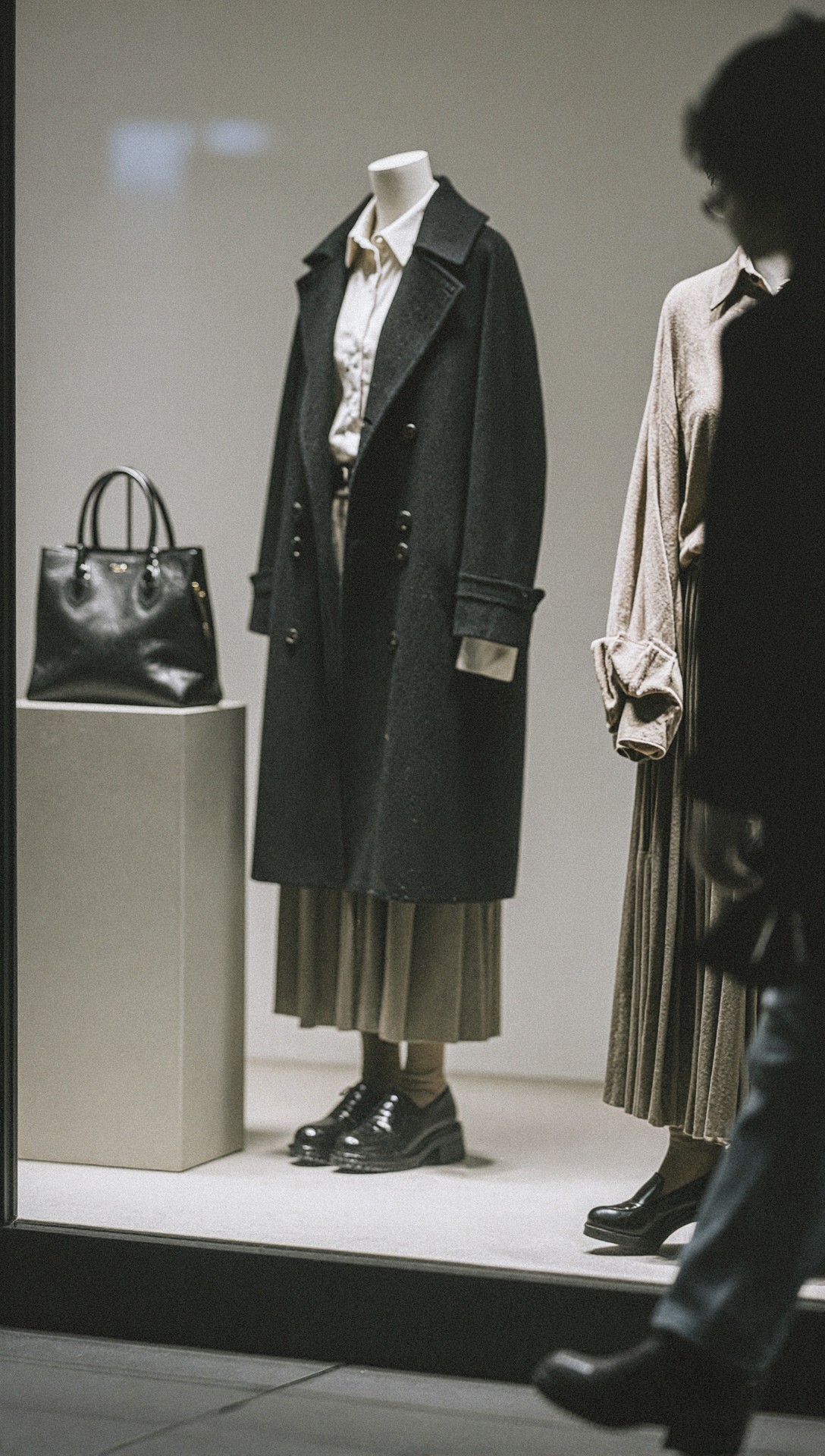
Check if the bags and shoes feel merchandised as one family. Weak outputs often mismatch glossy patent loafers with soft slouchy bags, which breaks the quiet luxury signal.
Test 7: garment detail macro for fabric credibility
Once the big silhouette works, zoom in. This is where many AI fashion images fall apart, especially with knitwear, leather piping, and coat seams.
This prompt is meant to test texture detail and whether premium materials survive close inspection.
Topic: Garment detail macro of quiet luxury Tokyo outfit textures
Genre: Product Editorial
Camera: Sony A1
Lens: 85mm f/1.8 macro-style close detail
Lighting: Directional softbox with subtle edge light
Location: Minimal studio corner with gray plaster wall backdrop
Style: Luxury fabric study
Final Prompt: garment detail macro editorial image focused on quiet luxury Tokyo style textures, close view of black fine-gauge knit tucked into cream tailored wool trouser waistband, slim black leather belt, edge of a structured calfskin bag, sleeve of a charcoal wool coat, polished penny loafer vamp partially visible, Japanese minimalist fashion, premium construction details, luxury minimal city aesthetic, tasteful sensuality through close-fit tailoring and tactile surfaces, realistic stitching, leather grain, wool texture, controlled studio light, refined editorial crop, no face emphasis, high material credibility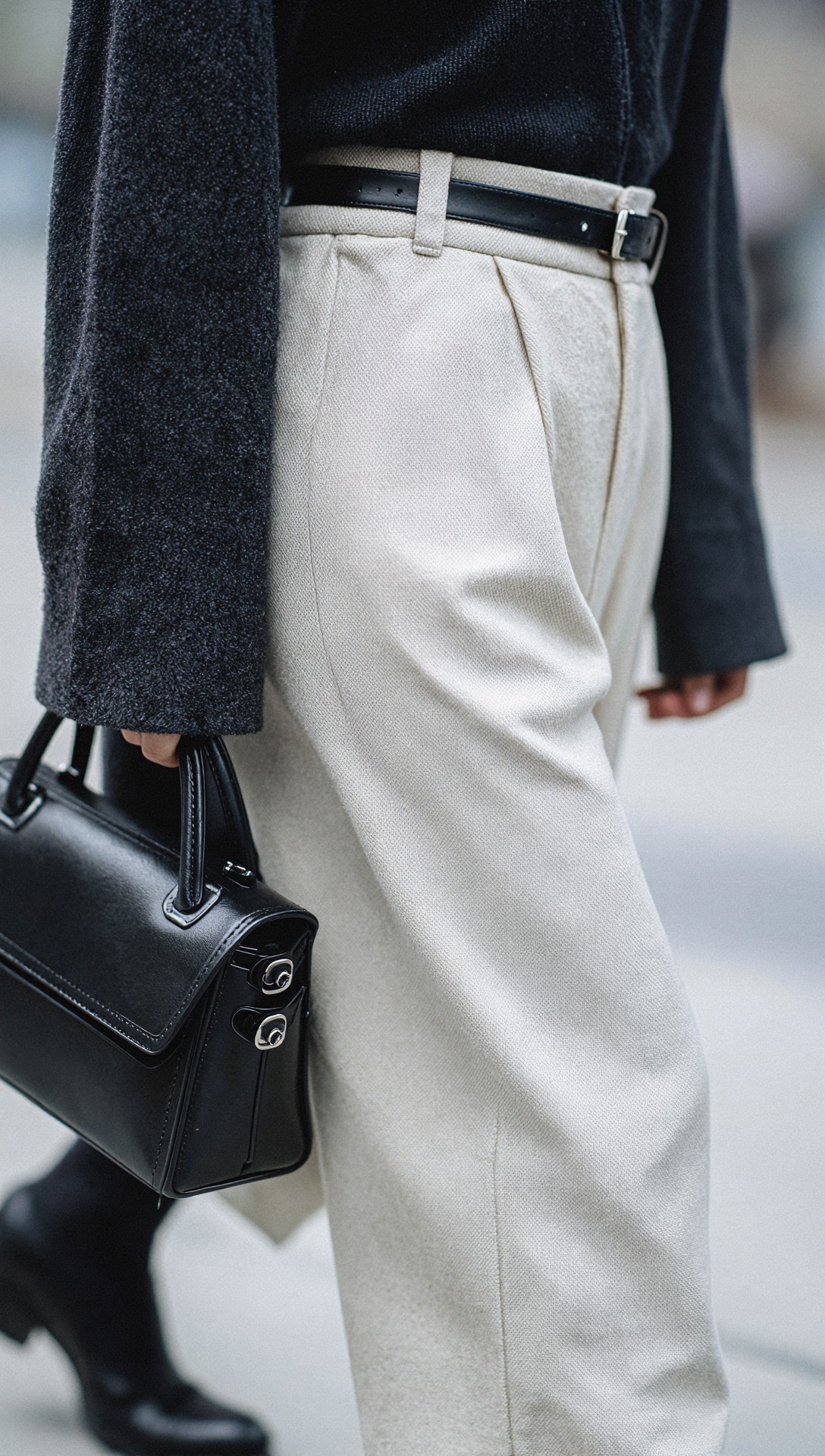
Inspect seams, belt edges, and knit density. If leather turns plasticky or the wool loses structure, the model may be fine for mood boards but weak for product-adjacent references.
Test 8: accessories close-up with bag and loafers as co-stars
Because this article is partly about leather bags and loafer looks, I wanted one shot where accessories do most of the storytelling.
This prompt checks product clarity and proportion in a fashion context rather than isolated e-commerce style.
Topic: Accessories close-up of leather bag and loafers in quiet luxury Tokyo styling
Genre: Luxury Accessories Campaign
Camera: Phase One XF IQ4
Lens: 80mm f/2.8
Lighting: Window side light with polished floor reflection
Location: Tokyo hotel lobby corner with stone floor and smoked glass wall
Style: Quiet luxury accessories editorial
Final Prompt: accessories close-up fashion campaign image, quiet luxury Tokyo style, lower three-quarter crop showing a fitted black knit dress under a long camel coat, hand holding a medium black structured calfskin bag with restrained gold hardware, feet in polished dark espresso almond-toe loafers with sheer socks, seated on a low stone bench in a refined Tokyo hotel lobby, Japanese minimalist fashion, luxury minimal city atmosphere, tasteful sensuality through leg line and precise dress fit, elegant posture, premium leather grain, clean reflections on stone floor, muted palette, no logos, sophisticated accessory hierarchy, high-end editorial composition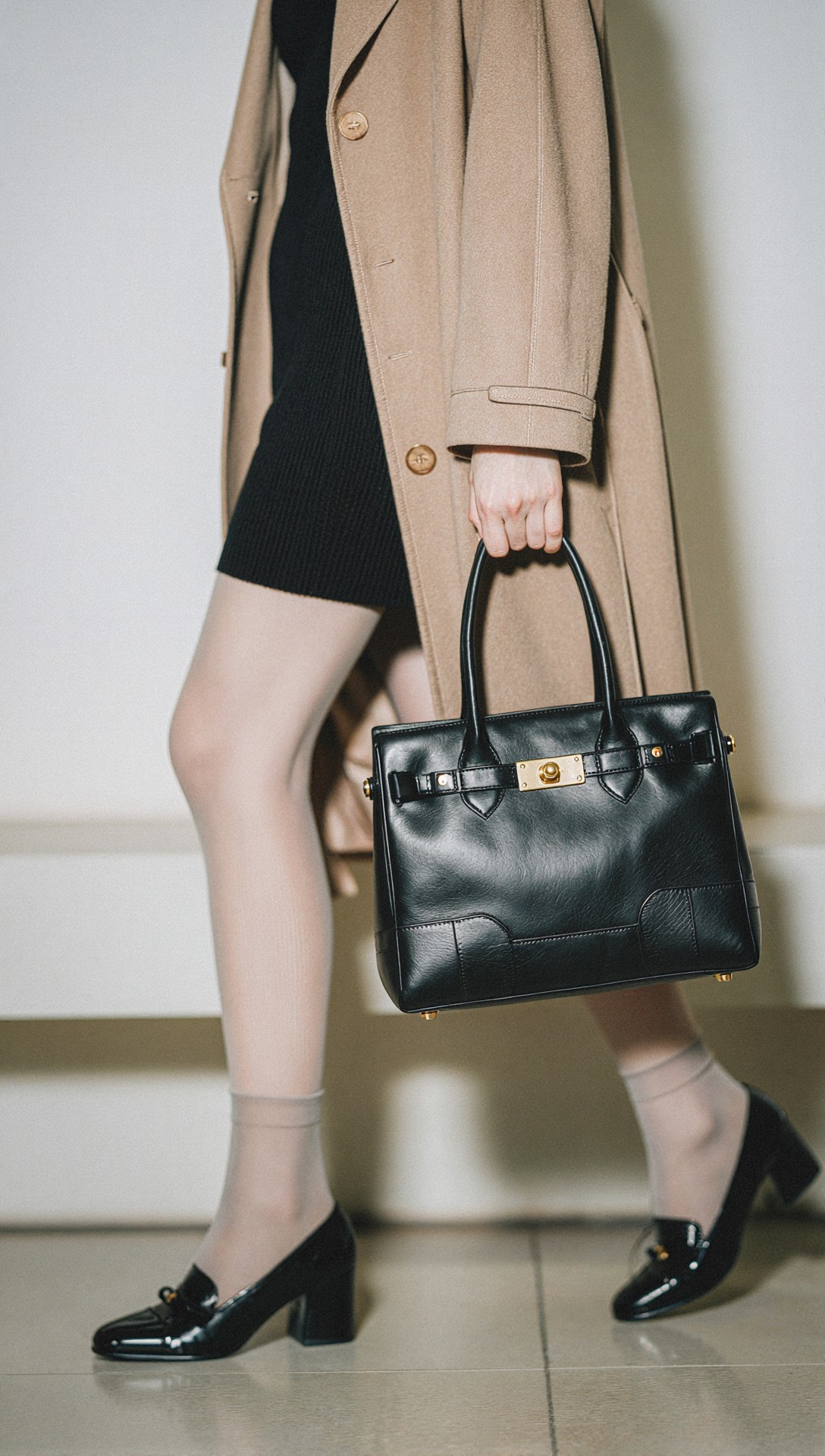
Inspect toe shape, hardware scale, and whether the coat hem interacts naturally with the bag. If the bag handle melts into the hand or the loafer becomes too chunky, this is where it shows.
Test 9: mood-board collage for style lock before generation
Before a big fashion batch, I often test the aesthetic as a collage. This is useful when you want inspiration rather than one final hero shot.
This last prompt checks whether the generator understands the style ecosystem of quiet luxury Tokyo style.
Topic: Mood-board collage for quiet luxury Tokyo style wardrobe planning
Genre: Mood-Board Collage
Camera: Mixed editorial cutout composition
Lens: Mixed framing simulation
Lighting: Soft neutral editorial lighting
Location: Collage board with Tokyo street snippets, fabric swatches, accessory cutouts, and storefront references
Style: Fashion editor planning board
Final Prompt: editorial mood-board collage for quiet luxury Tokyo style, composition featuring Tokyo side street fragments, Aoyama storefront details, Japanese minimalist fashion outfit cutouts, long wool coats, crisp shirts, straight trousers, midi skirts, black and espresso loafers, structured leather bags, fabric swatches in cream charcoal taupe black and chocolate, tasteful sexy mood through sleek fitted knits and clean silhouettes, luxury minimal city concept board, layered magazine tears, accessory studies, styling notes feel, premium fashion planning aesthetic, balanced negative space, sophisticated editorial collage
The key thing to inspect is coherence. A good collage output should feel like one disciplined wardrobe direction, not a random collection of expensive-looking objects.
When to switch models or settings
If your model is good at cinematic lifestyle but weak at garment logic, switch as soon as you notice these signs:
- trouser hems keep changing from shot to shot
- leather bags lose shape in motion
- loafers become platform shoes even after correction
- Tokyo streets look too neon, too touristy, or too cyberpunk
- all fabrics flatten into one smooth synthetic texture
Use a fashion-editorial leaning model when:
- you need full-body outfit readability
- you want consistent accessory vocabulary
- you are building a lookbook or catalog page
- silhouette and drape matter more than dramatic atmosphere
Use a more cinematic model when:
- you want one hero street-style image with stronger mood
- lighting and city ambience matter more than wardrobe repeatability
- you can accept some accessory drift in exchange for scene energy
Settings I would change next
In this test, the strongest result usually came from moderate stylization, not extreme stylization. Too much style pressure made the outfits more fashionable but less wearable and less Tokyo-minimal.
What I would change next:
- lower stylization if the accessories get exaggerated
- increase image guidance or prompt adherence if the palette drifts warm-beige everywhere
- use portrait-to-fashion aspect ratios only if full shoe visibility is preserved
- rerun with one accessory anchor phrase repeated exactly: "structured black calfskin bag, polished almond-toe loafers"
- for texture checks, send finalists through [Upscaler](/upscaler) before judging leather and wool detail
Practical recommendations for better quiet luxury Tokyo prompts
If your goal is inspiration, start with wardrobe architecture, not adjectives. "Quiet luxury" on its own is too open. The prompt should identify:
- one outerwear shape
- one bottom silhouette
- one specific loafer profile
- one bag structure
- one Tokyo setting cue
- one palette anchor darker than cream
A reliable formula in this test was:
1. named shot type 2. full visible outfit logic 3. restrained premium materials 4. Tokyo neighborhood-style context 5. one tasteful body-conscious element 6. explicit no-logo, no-chunky-shoe guardrails
For more controlled iterations, I would sketch the wardrobe system in [Prompt Lab](/promptlab) and save only the strongest silhouettes to [Articles](/articles) or your own reference set.
FAQ
What makes quiet luxury Tokyo style different from generic quiet luxury?
The Tokyo version is sharper, more urban, and usually more restrained in color and branding. It depends on silhouette discipline, compact accessories, polished shoes, and minimalist city context rather than resort or aristocratic cues.
Which garments matter most in AI prompts for Japanese minimalist fashion?
Long clean coats, straight or lightly pleated trousers, fitted fine-gauge knits, crisp shirts, midi skirts, structured leather bags, and slim classic loafers made the biggest difference in this test.
Why do AI images keep turning quiet luxury into old-money summer outfit visuals?
Because many training patterns connect luxury minimalism with coastal leisurewear. Add explicit Tokyo cues, darker grounding pieces, and urban materials like polished concrete, wool, and calfskin to prevent that drift.
Are loafers better than ballet flats for this prompt theme?
For this specific workflow, yes. Loafers gave stronger outfit structure and helped the images read as city-smart and editorial. Ballet flats can work, but they often soften the look too much unless the rest of the silhouette is very sharp.
What is the most important prompt detail for leather bags?
State the bag structure and finish clearly: medium size, smooth or lightly grained calfskin, restrained hardware, no visible logo, and whether it is top-handle, east-west shoulder, or compact tote.
Closing operator note
This workflow is best for readers who want quiet luxury Tokyo style as image inspiration with enough prompt control to produce believable minimalist wardrobes, not just expensive-looking fashion pictures. It is especially useful for capsule wardrobe lookbooks, editorial references, storefront concepts, and accessory-focused fashion scenes.
Avoid this setup if you want loud trend styling, logo-heavy luxury, or highly romantic resort fashion. The strongest result in this session came from one simple discipline: define the outfit system before the mood. If I had to keep only one detail, it would be this—spell out the loafer shape and the bag structure, because those two items decide whether the image reads as Japanese minimalist city luxury or collapses into generic fashion gloss.