Qwen Image 2512 Prompt Examples for Ocean View Resort Rooms 한국어 요약
이 페이지는 ZView Space의 영어 원문을 한국어 검색 사용자도 이해할 수 있도록 정리한 SEO 요약입니다. 핵심은 단순한 얼굴 중심 이미지가 아니라 패션 에디토리얼, 룩북, 아웃핏, 프롬프트 테스트, 이미지 생성 워크플로우를 실제로 어떻게 구성할지입니다.
핵심 요약
- 원문 주제: Qwen Image 2512 Prompt Examples for Ocean View Resort Rooms
- 목적: AI 이미지 생성에서 outfit, silhouette, fabric, pose, location, camera framing을 더 명확하게 설계합니다.
- 활용 범위: Z-Image Turbo, Krea2 Turbo, Qwen Image, Anima, SeedVR2 같은 이미지 생성 및 업스케일 워크플로우에 적용할 수 있습니다.
- SEO 관점: 제목, 설명, 이미지 alt, 프롬프트 예시가 실제 검색 의도와 맞아야 색인 가능성이 높아집니다.
한국어 사용자를 위한 체크포인트
1. 프롬프트가 얼굴 묘사에만 머물지 않고 전체 스타일과 의상 구성을 설명하는지 확인합니다. 2. 패션 이미지라면 상의, 하의, 아우터, 신발, 액세서리, 소재감, 촬영 장소를 분리해서 씁니다. 3. 생성 결과는 바로 게시하지 말고 디테일, 손, 의상 형태, 배경 일관성, 이미지 품질을 비교합니다. 4. 글 본문에는 실제 테스트 기준과 실패를 줄이는 방법이 들어가야 검색엔진에서 얇은 콘텐츠로 보일 가능성이 줄어듭니다.
원문 미리보기
Creating convincing ocean view resort room images with Qwen Image 2512 requires more than naming a bed, a window, and a beach. Interior scenes depend on spatial clarity, controlled lighting, material contrast, and a prompt structure that tells the model what s
---
Creating convincing ocean view resort room images with Qwen Image 2512 requires more than naming a bed, a window, and a beach. Interior scenes depend on spatial clarity, controlled lighting, material contrast, and a prompt structure that tells the model what should dominate the frame.
For this subject, the main challenge is balance: the room must feel desirable, but the ocean view still needs to read clearly through glass without collapsing into an overexposed background. Below is a practical breakdown of how to prompt these scenes, followed by four production-ready examples designed for different editorial and commercial use cases.
What matters when prompting resort room interiors
Ocean view resort rooms sit between architectural visualization, hospitality marketing, and lifestyle imagery. That means prompts work best when they define five things precisely:
- Primary visual subject: suite bedroom, terrace lounge, bathroom, or guest arrival moment
- Camera position: wide corner composition, eye-level bed view, balcony-facing perspective, or detail crop
- Light behavior: soft morning light, sunset glow, overcast coastal diffusion, or controlled interior practicals
- Material hierarchy: linen bedding, pale oak, travertine, brushed brass, sheer curtains, glass reflections
- Exterior context: calm turquoise water, rocky coastline, tropical horizon, or moody sea atmosphere
For Qwen Image 2512, this level of structure helps reduce common issues such as warped furniture geometry, overly generic hotel decor, and windows that look pasted on rather than integrated into the room.
Use case 1: Hero image for a resort booking page
A booking-page hero image should prioritize clarity and broad appeal. In practice, that means a clean composition, a wide but believable lens choice, and lighting that reveals the room without flattening it. Avoid overcomplicated decor instructions. Focus on layout, premium materials, and the relationship between bed and ocean view.
Topic: Ocean View Resort Room Hero Suite
Genre: Luxury Campaign
Camera: Canon EOS R5
Lens: 24mm f/2.8
Lighting: Soft Morning Light
Location: Contemporary beachfront resort suite in Maldives with floor-to-ceiling glass facing a turquoise lagoon
Style: Elegant Resort Editorial
Final Prompt: Spacious ocean view resort room in a contemporary Maldives beachfront suite, king bed with crisp white linen and a light sand-colored upholstered headboard, pale oak flooring, woven bench at the foot of the bed, sheer curtains gently moving in the sea breeze, floor-to-ceiling windows opening to a bright turquoise lagoon and private deck, clean symmetrical composition from a slightly elevated corner angle, no clutter, refined tropical styling with a ceramic vase and subtle greenery, soft morning light filling the room evenly while preserving detail in the exterior water and sky, calm premium atmosphere, natural fabric texture, realistic furniture proportions, soft blue, white, and beige palette, polished hospitality photography look, Canon EOS R5 realism, 24mm f/2.8 wide interior perspective, high detail, cinematic but credible luxury resort marketing image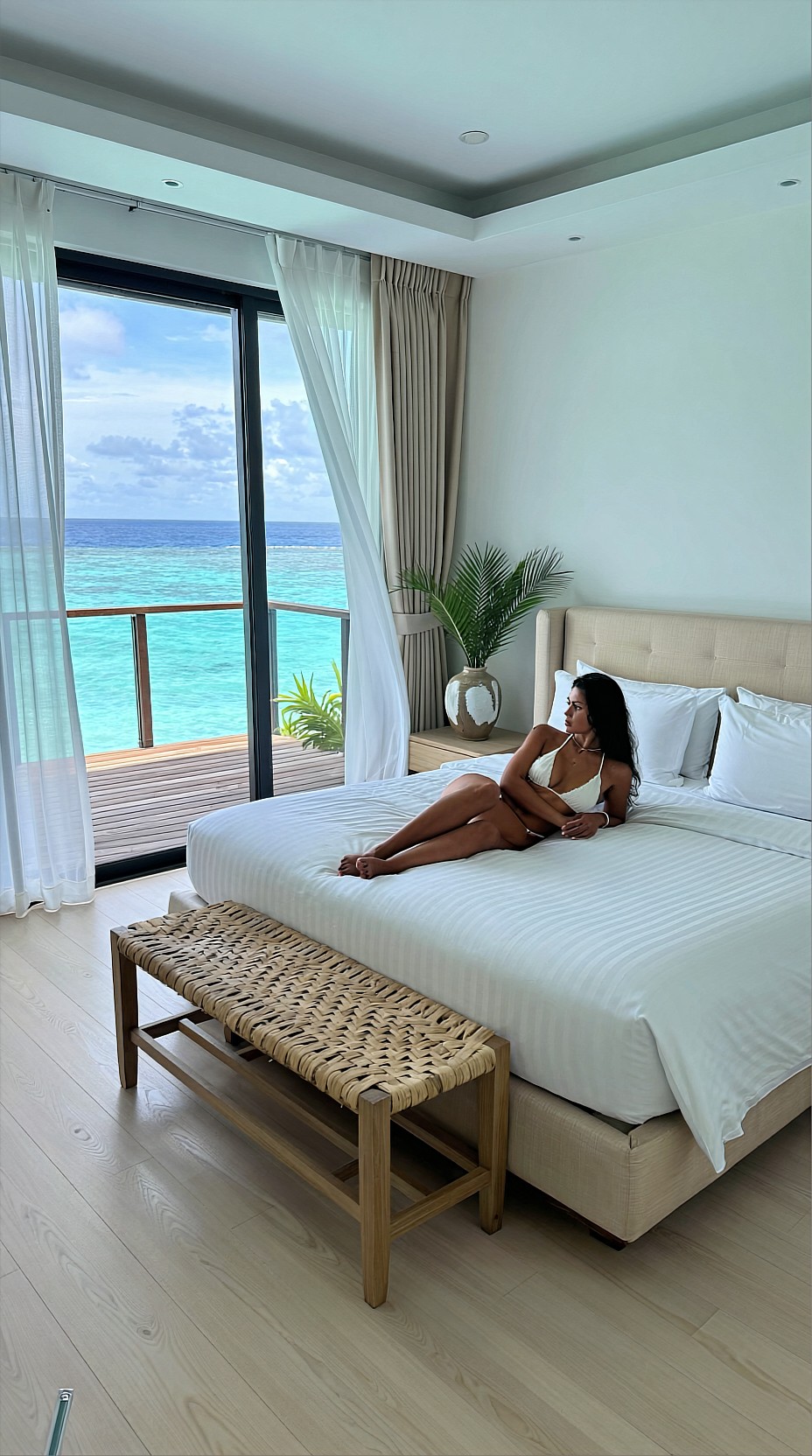
This type of prompt is useful for:
- resort landing pages
- OTA listing visuals
- homepage hero banners
- brochure covers for premium room categories
Use case 2: Lifestyle editorial with the room as context
Not every resort room image should be empty. For travel editorials, the room often works better when a guest is present, because scale and mood become easier to read. The key is to keep the person integrated into the space rather than turning the image into a fashion portrait with an incidental window.
Topic: Guest Relaxing in Ocean View Resort Room
Genre: Lifestyle Portrait
Camera: Sony A7R V
Lens: 50mm f/1.8
Lighting: Golden Hour
Location: Cliffside resort room in Santorini with open balcony doors overlooking the Aegean Sea
Style: Cinematic Realism
Final Prompt: Elegant traveler relaxing inside an ocean view resort room in Santorini, seated sideways on the edge of a neatly made king bed, wearing a lightweight ivory resort robe, bare feet on smooth limestone floor, calm contemplative expression while looking toward open balcony doors and the Aegean Sea, warm golden hour sunlight entering from the side and creating long soft shadows across white plaster walls and textured bedding, minimal Mediterranean interior with built-in shelving, brushed brass reading lamps, linen drapery, and a small breakfast tray with coffee and fruit, composition centered on the relationship between guest and sea view rather than close portrait framing, breezy atmosphere, warm white, soft blue, and sunlit stone palette, realistic skin texture and fabric folds, premium travel editorial look, Sony A7R V detail, 50mm f/1.8 natural depth separation, cinematic yet grounded hospitality storytelling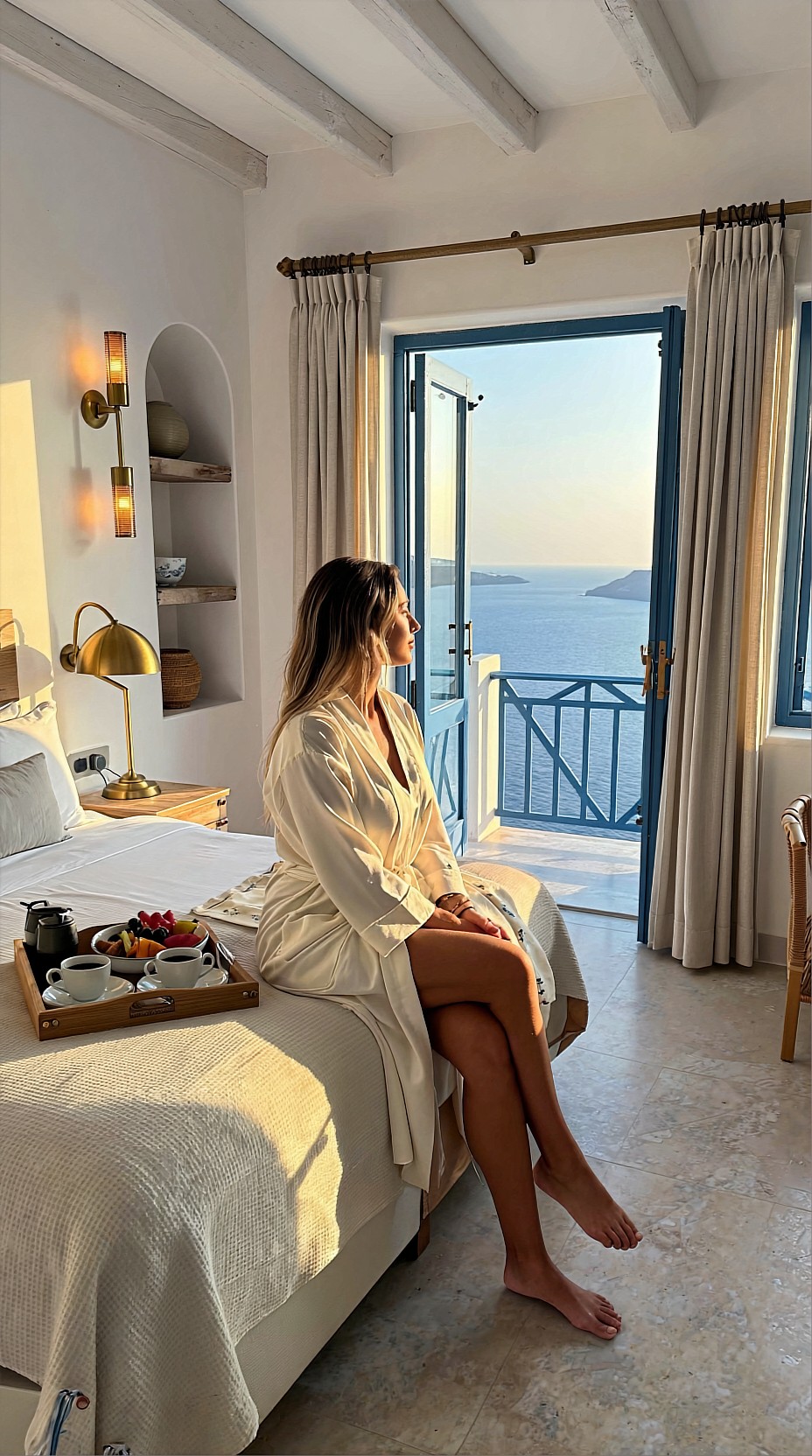
This approach works well for:
- travel magazine features
- social campaign visuals for slow luxury travel
- blog headers about resort experiences
- destination storytelling where architecture and mood both matter
Prompting tips for windows, reflections, and exposure
Large windows are the central technical problem in this category. If the prompt is vague, the model may produce blown-out glass, inconsistent horizon lines, or an ocean view that feels disconnected from the room.
To improve results, specify:
- time of day so exterior brightness is controlled
- window type such as sliding glass doors or floor-to-ceiling panels
- view character like calm lagoon, deep blue open sea, or rocky coast
- interior-exterior balance by describing visible detail both indoors and outdoors
- composition logic such as eye-level view from sofa, corner-wide suite shot, or bathroom-to-ocean framing
Material prompts also help. Terms like travertine vanity, matte limestone floor, washed linen curtains, and teak terrace furniture give the model better anchors than generic words like luxury decor.
Use case 3: Bathroom scene for premium suite upselling
Bathrooms are strong upsell visuals because they communicate privacy and indulgence. In ocean view contexts, they also add visual variation to a room set. A good prompt should define the foreground materials clearly while treating the sea view as an extension of the bathing experience.
Topic: Ocean View Resort Bathroom Suite
Genre: Product Editorial
Camera: Nikon Z8
Lens: 35mm f/4
Lighting: Overcast Diffusion
Location: Private luxury resort bathroom in Seychelles overlooking a quiet tropical bay through full-height glass
Style: Clean Commercial Look
Final Prompt: High-end ocean view resort bathroom in a Seychelles luxury suite, freestanding oval stone bathtub positioned near full-height glass with a direct view to a quiet tropical bay, double travertine vanity with brushed brass fixtures, rolled white towels, subtle spa accessories, matte limestone floor, textured plaster walls, and a teak stool with folded robe, overcast coastal daylight creating soft even illumination with no harsh glare, carefully controlled reflections on glass and metal, composition from doorway angle showing both bath architecture and the sea beyond, serene neutral palette of stone, cream, pale sand, and muted aqua, pristine hospitality styling, realistic waterline and horizon detail outside, Nikon Z8 precision, 35mm f/4 architectural balance, premium resort brochure quality, crisp surfaces, natural textures, calm and understated luxury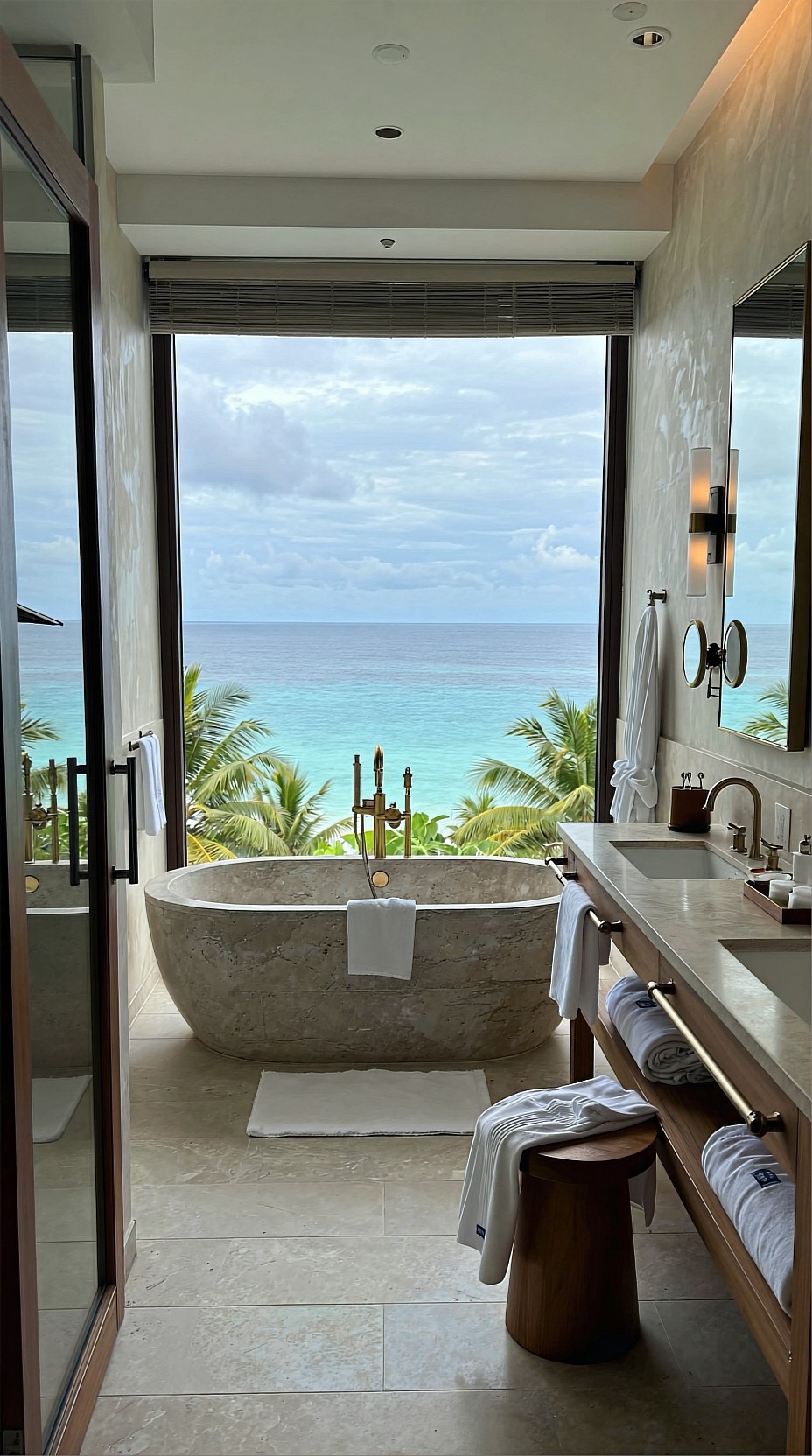
This image type is practical for:
- suite comparison pages
- spa and wellness campaign assets
- upsell modules for premium room categories
- editorial spreads focused on interior details
Use case 4: Sunset terrace-bedroom transition for campaign visuals
When you need a more atmospheric image, the transition between interior room and outdoor terrace is often more effective than a straightforward bed shot. It introduces depth, layered lighting, and a stronger sense of place. The prompt should tell Qwen Image 2512 how to prioritize the threshold between inside and outside.
Topic: Sunset Ocean View Resort Room with Terrace Lounge
Genre: Cinematic Travel
Camera: Fujifilm GFX100 II
Lens: 45mm f/2.8
Lighting: Sunset Backlight
Location: Luxury coastal resort suite in Bali with open terrace, plunge pool, and Indian Ocean horizon
Style: High-End Resort Campaign
Final Prompt: Cinematic ocean view resort room in Bali at sunset, interior bedroom flowing seamlessly into an open terrace lounge with a small plunge pool and direct view of the Indian Ocean, low modern bed dressed in ivory linen, warm walnut accents, textured woven rug, open wood-framed sliding doors, soft curtains catching the breeze, terrace with cushioned lounge chair and small table set for evening tea, backlit sunset sky casting amber and coral light into the suite while interior practical lamps add a gentle warm glow, composition layered from inside the room looking outward to create depth, no people, atmosphere of quiet exclusivity, rich natural textures including wood grain, linen, stone, and reflective water, color palette of sunset orange, soft beige, deep teal, and warm brown, refined campaign framing, Fujifilm GFX100 II medium-format detail, 45mm f/2.8 elegant perspective, cinematic realism, premium hospitality advertising quality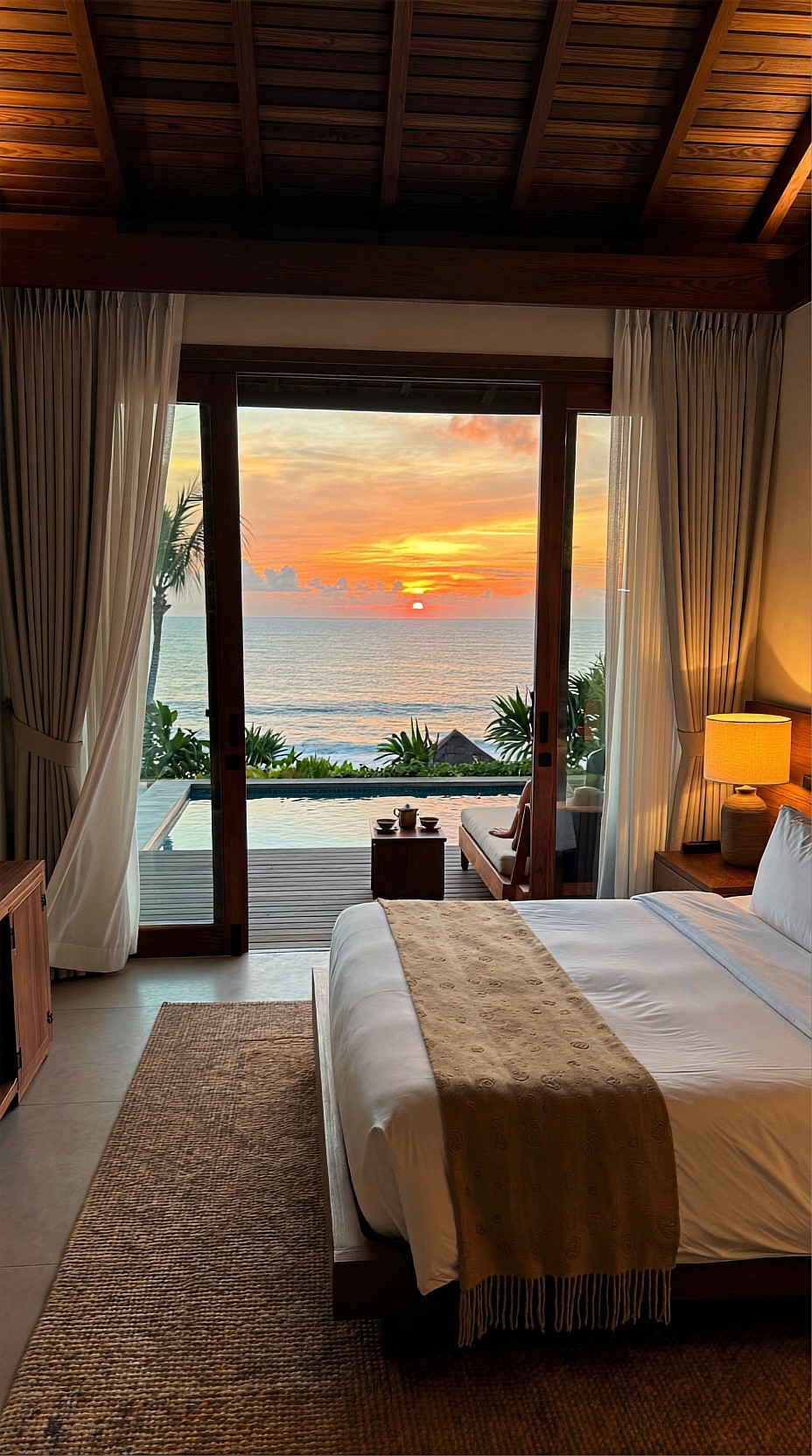
This setup is especially useful for:
- seasonal resort campaigns
- premium email headers
- social ads emphasizing atmosphere over floorplan clarity
- visual storytelling for honeymoon or couples-focused packages
How to adapt these prompts for different outputs
The same base scene can be tuned for multiple production needs.
For ecommerce-style hospitality listings
Use clearer geometry, wider framing, and restrained styling language. Emphasize room layout, bed size, bathroom visibility, and direct line of sight to the ocean.
For editorial features
Add atmosphere, human presence, and subtle narrative objects such as books, breakfast trays, or open terrace doors. Keep these details selective so the room still reads cleanly.
For social media crops
Prompt for stronger foreground anchors: chair, robe, tray, lamp, or window frame. This helps when the final image is trimmed into vertical or square formats.
For luxury branding
Use more precise material language and color control. Mention tactile details, tonal harmony, and light quality rather than vague luxury keywords.
Common failure points to watch
Even well-structured prompts can produce weak results if the scene asks for too many focal priorities. Watch for these issues:
- bed, balcony, bathroom, and person all competing in one frame
- unrealistic ultra-wide distortion in compact rooms
- exterior sea view brighter than the rest of the image by several stops
- furniture style inconsistency across the room
- excessive decorative clutter that weakens premium hospitality aesthetics
A practical fix is to simplify the visual goal of each image. Decide whether the image is primarily about layout, mood, guest experience, or materials. Then let every prompt detail support that one purpose.
Final take
Qwen Image 2512 can produce strong ocean view resort room visuals when prompts are built like art direction notes rather than simple object lists. The most reliable prompts define spatial composition, lighting logic, material hierarchy, and the exact role of the ocean view in the frame.
The four examples above cover a useful range: booking-page hero imagery, lifestyle editorial, bathroom upsell visuals, and sunset campaign atmosphere. If you keep each prompt focused on a single commercial objective, the outputs are usually more coherent, more realistic, and easier to deploy across hospitality content workflows.
<!-- zview-hands-on-backfill -->
Practical Test Notes
What this article should verify
- Whether this prompt structure can reliably separate the interior subject from the ocean view without turning the windows into blown-out white shapes or pasted-on scenery.
- Whether camera, lighting, and material instructions are specific enough to improve room geometry, furniture proportions, and surface realism across suite, bathroom, and terrace compositions.
- Whether lifestyle variants with a guest can keep the person secondary to the room and view, instead of drifting into portrait-first framing.
- Whether the model can maintain a consistent high-end hospitality style across different times of day and resort locations.
Result checks
For the existing images or any future reruns, the result checks should focus on what to inspect rather than assumed quality:
- Window handling: exterior horizon, water color, and sky should read clearly through glass with believable brightness balance.
- Room geometry: inspect bed edges, vanities, door frames, balcony lines, and tub placement for warping or impossible architecture.
- Lighting control: indoor shadows and highlights should match the stated morning, golden hour, overcast, or sunset setup.
- Texture quality: linen, wood, travertine, plaster, brass, and curtains should look distinct rather than smoothed into a generic luxury finish.
- Background consistency: the sea view should match the room orientation and location cues, with no abrupt coastline shifts or disconnected reflections.
- Human stability where relevant: in the guest scene, inspect face coherence, hand anatomy, robe folds, posture, and eyeline toward the view.
- Style consistency: images should feel editorial or commercial as prompted, without mixing brochure realism with overly dramatic fantasy rendering.
Failure risks
The main failure risks are predictable for this subject. Wide interior prompts can over-prioritize the room and reduce the ocean view to a flat backdrop. Strong sunset or backlight wording can also cause clipped highlights, muddy interiors, or unnatural glow around window frames. Location-rich prompts may introduce decorative stereotypes that override the cleaner architectural brief. In lifestyle shots, the model may center too much on the person, weaken the room layout, or produce unstable hands and awkward seating contact with the bed. Bathroom scenes are especially vulnerable to reflection errors, duplicate fixtures, and impossible sightlines through glass.
Practical recommendation
Use this test setup if you need resort interior concepts for editorial mockups, travel visuals, or hospitality mood boards. Avoid relying on it unchanged for strict architectural documentation or furniture-accurate product work. The detail that matters most is the relationship between camera position, light behavior, and exterior visibility; if those three elements are vague, the whole scene usually becomes less credible.