이 테스트는 실제로 사용할 만한 의상 이미지를 만들어내는 retro street style Tokyo 프롬프트를 구축하는 데 초점을 둔다. 질감이 눈에 보이는 빈티지 재킷, 적절한 밑위와 밑단 떨어짐을 가진 루스 데님, 그리고 무작위 잡동사니가 아니라 스타일링 선택으로 읽히는 추억의 액세서리를 목표로 했다. 나는 이를 룩북 프롬프트 해체처럼 접근해, 어떤 프롬프트 요소가 실루엣을 안정적으로 유지하고 어떤 요소가 모던 럭셔리 쪽으로 흐르거나, 레이어링이 깨지거나, 배경이 옷을 삼켜버리는 흔한 실패를 유발하는지 확인했다.
먼저 알아둘 것
- 가장 강한 프롬프트는 하나의 주인공 아우터웨어 피스, 하나의 데님 핏, 그리고 최대 두세 개의 액세서리를 중심으로 의상을 고정했다.
- 도쿄 스트리트 패션은 장소가 구체적일 때 더 잘 읽힌다. 단순히 “Japan city street”가 아니라 Harajuku side street, Shimokitazawa vintage strip, alley vending machine glow처럼 지정하는 것이 좋다.
- 루스 데님은 프롬프트가 밑위, 다리 라인, 워싱, 신발과의 상호작용을 명시하지 않으면 자주 실패한다.
- 여기서 섹시한 패션 무드는 노출 자체가 아니라 자신감 있는 스타일링과 몸의 비율을 의식한 구성으로 접근할 때 가장 잘 작동한다.
- 모델이 의상을 압도하기 시작하면, 더 패션 중심의 촬영 유형이나 카탈로그 스타일 프레이밍으로 전환한다.
테스트 설정
이 테스트에서 나는 프롬프트를 분위기 문구가 아니라 스타일링 브리프처럼 다뤘다. 목표는 폭넓은 트렌드 에세이가 아니라, Japan lookbook 또는 street snap outfit 콘셉트에 사용할 수 있는 이미지 프롬프트 영감을 얻는 것이었다.
테스트한 것:
- 의상 가독성을 위한 전신 스트리트 스타일 프롬프트
- 재킷 실루엣과 레이어링을 위한 3/4 에디토리얼 프롬프트
- 더 깔끔한 의류 분리를 위한 카탈로그 및 리테일 스타일 프롬프트
- 추억의 아이템을 일관되게 유지하기 위한 액세서리 및 디테일 프롬프트
- 도쿄 스트리트 패션 맥락을 위한 배경 구체성
관찰한 것:
- 재킷 칼라 형태, 지퍼/플래킷 정확도, 소재 질감
- 힙부터 밑단까지 이어지는 데님 볼륨
- 벨트, 체인 백, 틴티드 안경, 스니커즈가 의도적으로 보이는지 여부
- 움직임이 있는 포즈에서 손과 가방 왜곡
- 이미지가 일반적인 사이버펑크나 럭셔리 캠페인 언어로 흐르지 않고 retro street style 안에 머무는지 여부
관련 워크플로 도구로는 [PromptLab](/promptlab), [Create](/create), 그리고 더 넓은 범위의 [Gallery](/gallery) 페이지가 가장 유용한 동반 자료다.
프롬프트가 달성해야 하는 것
retro street style Tokyo의 경우, 프롬프트는 단순히 “vintage outfit in Japan”이라고 말하는 것 이상을 해야 한다. 다음 다섯 가지를 동시에 고정해야 한다.
1. 읽기 쉬운 전신 실루엣 2. 믿을 만한 빈티지와 어반 아이템의 조합 3. 스트리트 패션에 특화된 느낌의 도쿄 장소 단서 4. 시대감과 개성을 암시할 만큼 충분한 액세서리 디테일 5. 지나치게 영화적이지 않고 의상이 잘 보이게 하는 카메라 설정
이 테스트에서 약한 프롬프트들은 의상 논리보다 무드를 먼저 좇았기 때문에 실패했다. 멋진 얼굴, 네온 보케, 넓은 의미의 “cool girl in Tokyo” 에너지는 만들었지만, 데님 형태는 일관되지 않았고, 재킷 디테일은 단순화되었으며, 액세서리는 나중에 덧붙인 것처럼 보였다.
가장 강한 결과는 스타일링 시스템을 순서대로 설명한 프롬프트에서 나왔다. 아우터웨어, 상의, 데님, 신발, 가방, 액세서리, 포즈, 그리고 장면 순서다.
의상 논리 분해하기: 피사체, 스타일, 카메라, 빛, 장소
Subject: 스타일링이 먼저, 인물은 그다음
Subject는 의상 시스템이어야 한다. 내가 “confident woman in Tokyo”를 중심으로 프롬프트를 작성했을 때, 이미지는 자주 포트레이트 논리로 흘렀다. 반대로 “street-style full body with cropped vintage leather jacket, low-slung loose denim, pointed boots, mini shoulder bag”을 중심으로 작성했을 때는 의상이 온전하게 유지되었다.
Style: 레트로지만 코스튬은 아니게
이 글의 주제는 빈티지 어반 쿨에 가깝기 때문에, 스타일에는 오래된 아이템과 현재적인 아이템 사이의 마찰이 필요하다.
- 빈티지 가죽, 나일론, 또는 바시티 아우터웨어
- 골지 또는 몸에 맞는 이너 레이어
- 루스 데님 또는 퍼들 진
- 좁은 선글라스, 체인 벨트, 바게트 백, 후프 이어링, 올드스쿨 스니커즈 같은 추억의 액세서리
핵심은 시대적 표식을 과하게 넣지 않는 것이다. 레퍼런스가 너무 많으면 생성기가 코스튬이나 패러디 쪽으로 밀려난다.
Camera: 블러보다 의상 가시성
Tokyo street fashion 프롬프트에서는 35mm와 40mm가 가장 균형이 좋았다. 이들은 환경을 유지하면서도 옷이 작아 보이지 않게 했다. 50mm는 3/4 의상 에디토리얼에 잘 맞았다. 85mm는 액세서리나 의류 디테일 크롭에서만 안정적이었다.
Lighting: 강한 네온보다 확산광
흐린 낮, 부드러운 늦은 오후, 또는 제어된 매장 조명 spill light가 직물 디테일을 잘 보존했다. 강한 네온은 종종 드라마틱하게 보였지만, 데님 워싱과 재킷 색상을 덜 신뢰할 수 있게 만들었다.
Location: 도쿄의 구체성이 중요하다
많은 패션 프롬프트의 약점은 가짜처럼 느껴지는 지역성이다. “Tokyo street”는 너무 넓다. 이 테스트에서 더 나은 앵커는 다음과 같았다.
- 층층이 쌓인 간판이 있는 하라주쿠 골목
- 시모키타자와 빈티지 쇼핑 거리
- 자판기와 타일 벽 근처의 뒷골목
- 패션 피플의 발길이 있는 고가 철도 아래 통로
이 정도의 맥락이면 고정관념을 강요하지 않으면서도 Japanese streetwear를 암시하기에 충분했다.
베이스라인 프롬프트: 사용할 수는 있지만 너무 모호함
이 첫 번째 프롬프트는 아이디어는 맞지만 스타일링 디테일이 아직 충분히 구체화되지 않았을 때 어떤 일이 생기는지 테스트합니다. 많은 사용자가 이 수준에서 멈추기 때문에 베이스라인으로 유용합니다.
Topic: Retro street style Tokyo outfit with vintage jacket and loose denim
Genre: Street Style
Camera: Canon EOS R5
Lens: 35mm f/2
Lighting: Overcast daylight
Location: Harajuku side street with signage, pavement, and storefront reflections
Style: Cinematic realism fashion editorial
Final Prompt: street-style full body fashion shot in Tokyo, retro street style Tokyo outfit, confident model wearing a vintage cropped leather jacket over a fitted tank, loose faded denim jeans, pointed ankle boots, mini shoulder bag, slim sunglasses, silver hoops, layered belt detail, walking pose, body-conscious silhouette with relaxed oversized denim contrast, Harajuku side street with posters and signs, overcast daylight, documentary fashion framing, Canon EOS R5 look, 35mm lens, realistic fabric texture, visible jacket grain, natural city color, editorial street snap composition, full outfit clearly visible from head to toe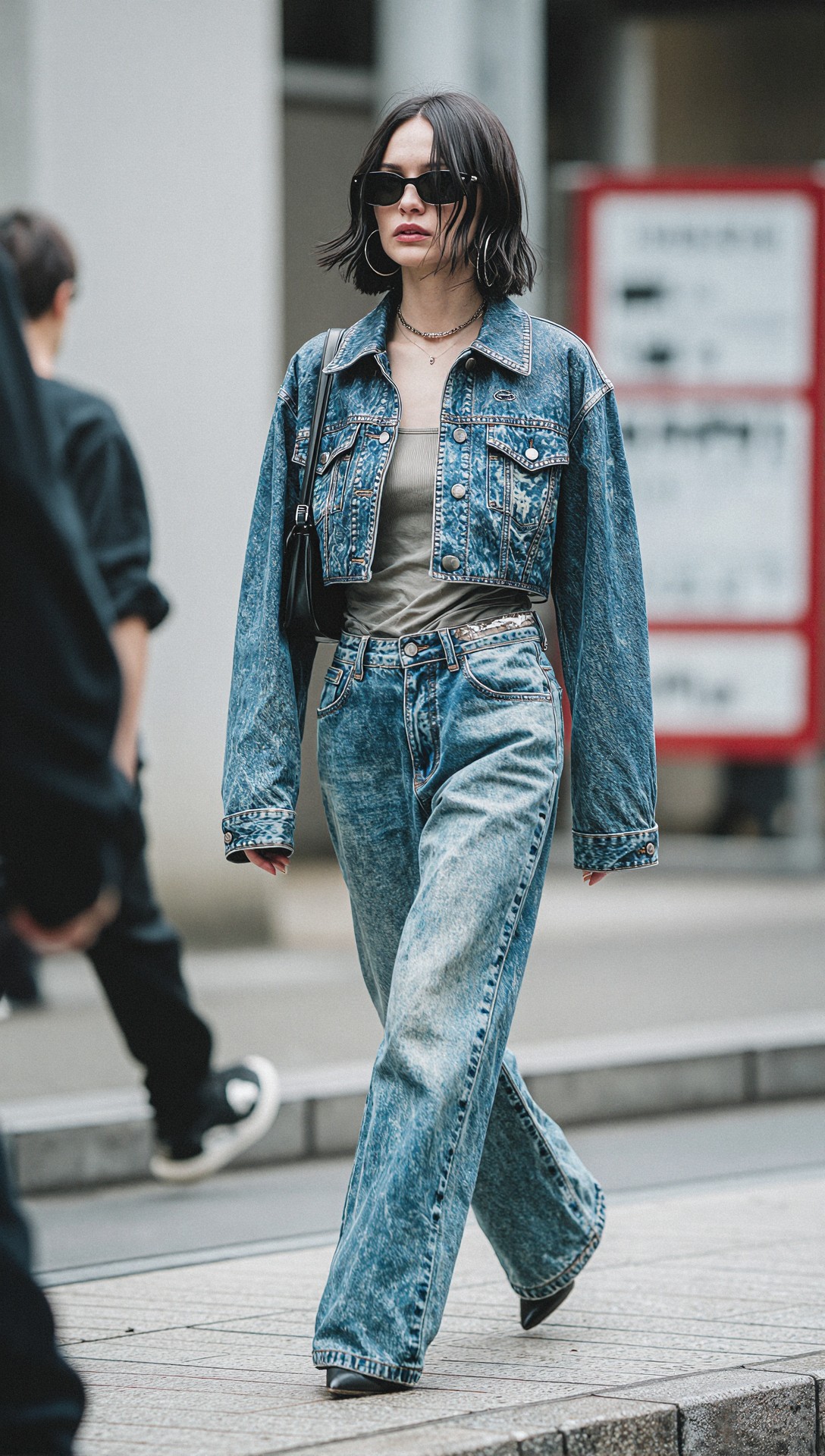
모델이 전체 아웃핏을 읽기 쉽게 유지하는지, 데님이 무릎과 밑단까지 루스한 상태를 유지하는지 확인하세요. 제 테스트에서는 이런 종류의 베이스라인이 분위기는 잘 잡는 경우가 많지만, 재킷의 하드웨어를 단순화하거나 액세서리를 너무 일반적으로 만들 수 있었습니다.
첫 번째 개선: 분위기를 더하기 전에 실루엣을 고정하기
첫 번째로 유용했던 개선점은 정확한 핏 관계를 명명하는 것이었습니다. 단순히 “loose denim”이라고만 쓰는 대신, low-rise, wide leg, stacked hem, 그리고 재킷이 허리에 어떻게 걸치는지를 명시했습니다. 이렇게 하니 모델이 straight-leg jeans를 만들어내거나 프레임을 너무 높게 크롭하는 흔한 문제가 줄었습니다.
이 변경이 중요한 이유
street snap outfit 생성에서는 보통 데님이 가장 먼저 흔들립니다. rise가 불명확하면 모델은 mid-rise slim jeans로 기본 설정하는 경향이 있습니다. hem interaction이 불명확하면 신발이 사라지거나 팬츠가 깔끔한 스튜디오용 trousers처럼 변합니다.
이 정제된 버전은 더 구체적인 핏 언어에서도 outfit architecture가 안정적으로 유지되는지 확인합니다.
Topic: Tokyo street snap with cropped vintage bomber and low-rise wide-leg denim
Genre: Fashion Editorial
Camera: Sony A7R V
Lens: 40mm f/2.5
Lighting: Soft late afternoon daylight
Location: Shimokitazawa vintage shopping lane with racks, pavement signs, and bicycles
Style: Japanese streetwear magazine editorial
Final Prompt: street-style full body fashion shot, retro street style Tokyo lookbook image, model wearing a worn-in vintage nylon bomber cropped at the waist, fitted ribbed cream baby tee, low-rise wide-leg indigo denim with long stacked hem, slim pointed boots visible below the denim break, baguette shoulder bag, narrow tinted sunglasses, chain belt, silver hoop earrings, confident walking pose, sexy but tasteful fashion attitude, styling-focused composition with complete outfit visible, Shimokitazawa vintage lane background with storefront racks and layered signs, soft late afternoon daylight, Sony A7R V realism, 40mm editorial framing, crisp textile detail, authentic washed denim texture, cool urban palette, modern Japanese street fashion energy without cosplay exaggeration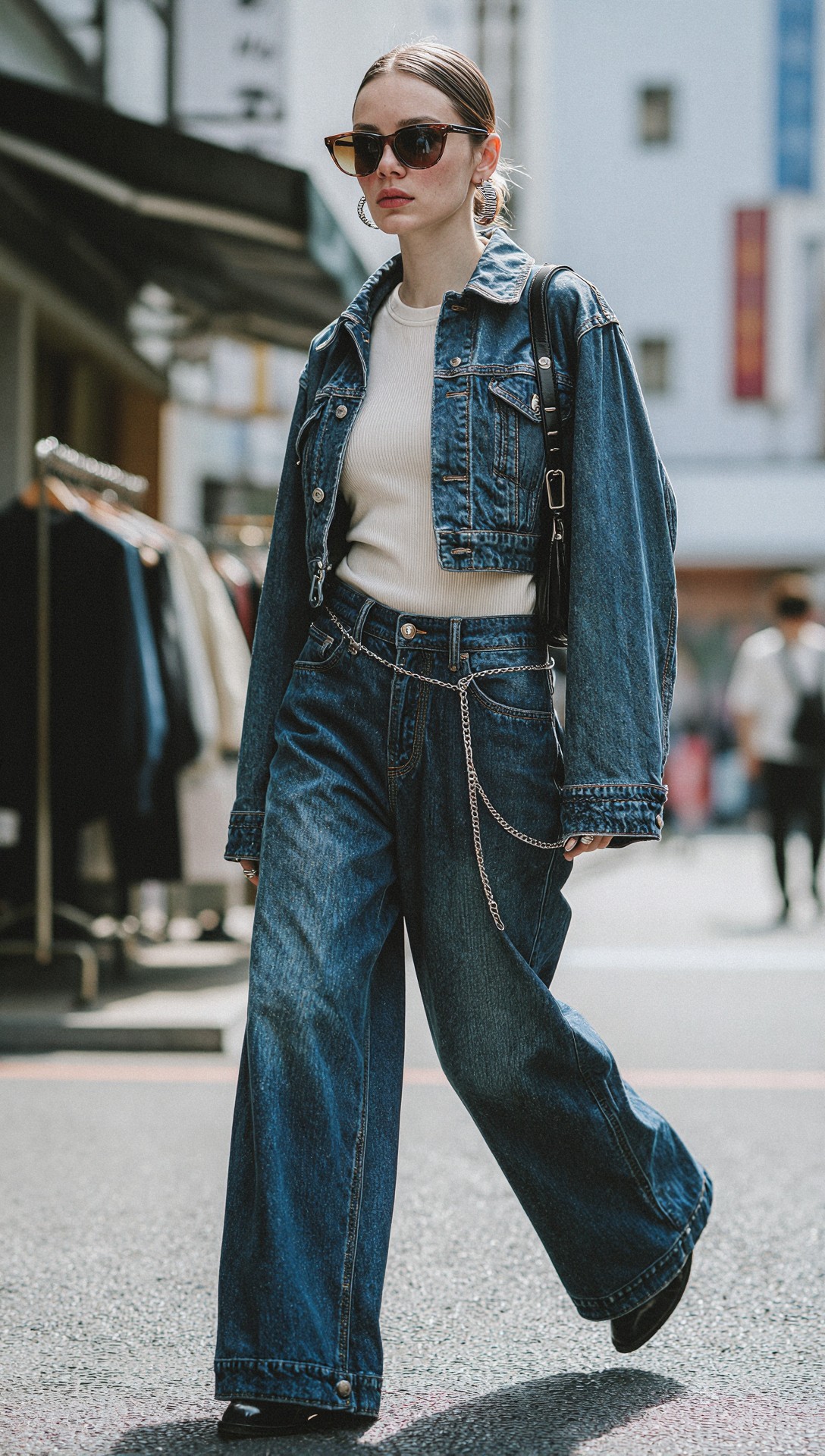
재킷이 데님이 시작되는 지점에서 정확히 끝나는지 확인하세요. 그 긴장감이 실루엣을 의도적으로 보이게 만듭니다. 또한 부츠 위로 떨어지는 hem break도 살펴보세요. 강한 Y2K denim outfit 프롬프트도 바로 이 지점에서 자주 실패합니다.
결과를 가장 많이 개선한 프롬프트 요소
1. 아우터웨어의 구체성
“Vintage jacket”은 너무 넓은 표현입니다. 프롬프트에서 하나의 카테고리와 하나의 소재 상태를 명명했을 때 더 깔끔한 결과를 얻었습니다.
- cracked leather biker
- washed nylon bomber
- faded varsity jacket
- oversized suede trucker
2. 데님 형태 언어
가장 강한 출력은 네 가지 데님 컨트롤을 모두 사용했습니다.
- rise: low-rise 또는 mid-low rise
- cut: wide-leg 또는 baggy straight
- wash: faded indigo, dirty light wash, 또는 charcoal rinse
- hem behavior: stacked, puddled, 또는 grazing the shoe
3. 제한된 수량의 복고 액세서리
액세서리는 두세 개가 다섯 개보다 더 잘 작동했습니다. Narrow sunglasses, chain belt, baguette bag, earbuds cord, hoop earrings, retro sneakers 모두 효과가 있었지만, 한 번에 너무 많이 넣으면 이미지가 costume-board 같은 에너지로 밀려났습니다.
4. 포즈 선택
Walking poses가 street style에 가장 잘 어울렸습니다. 난간에 기대는 포즈는 editorial stills에 잘 맞았습니다. 매우 dynamic한 pose는 손과 가방 왜곡을 증가시켰습니다.
다음 프롬프트는 재킷 디테일을 더 많이 원하고 움직임으로 인한 리스크를 줄이고 싶은 사용자를 위해 더 깔끔한 editorial pose를 테스트합니다.
Topic: Three-quarter Tokyo outfit editorial with faded varsity jacket and baggy denim
Genre: Fashion Editorial
Camera: Nikon Z8
Lens: 50mm f/1.8
Lighting: Open shade with storefront bounce
Location: Quiet alley in Harajuku with tiled wall, vending machine glow, and concrete steps
Style: Vintage urban cool magazine spread
Final Prompt: three-quarter outfit editorial, retro street style Tokyo fashion image, model leaning casually near concrete steps in Harajuku, faded oversized varsity jacket with ribbed striped cuffs, fitted charcoal camisole, baggy light-wash denim sitting low on the hip, retro sneakers, mini shoulder bag tucked under arm, tinted oval sunglasses, stacked rings, visible layered textures and relaxed but body-conscious silhouette, open shade with soft storefront bounce, Nikon Z8 clarity, 50mm fashion framing, concrete, tile, and vending machine color accents, polished street magazine composition, full outfit logic clearly readable, premium textile detail, no luxury-gala styling, no cyberpunk overload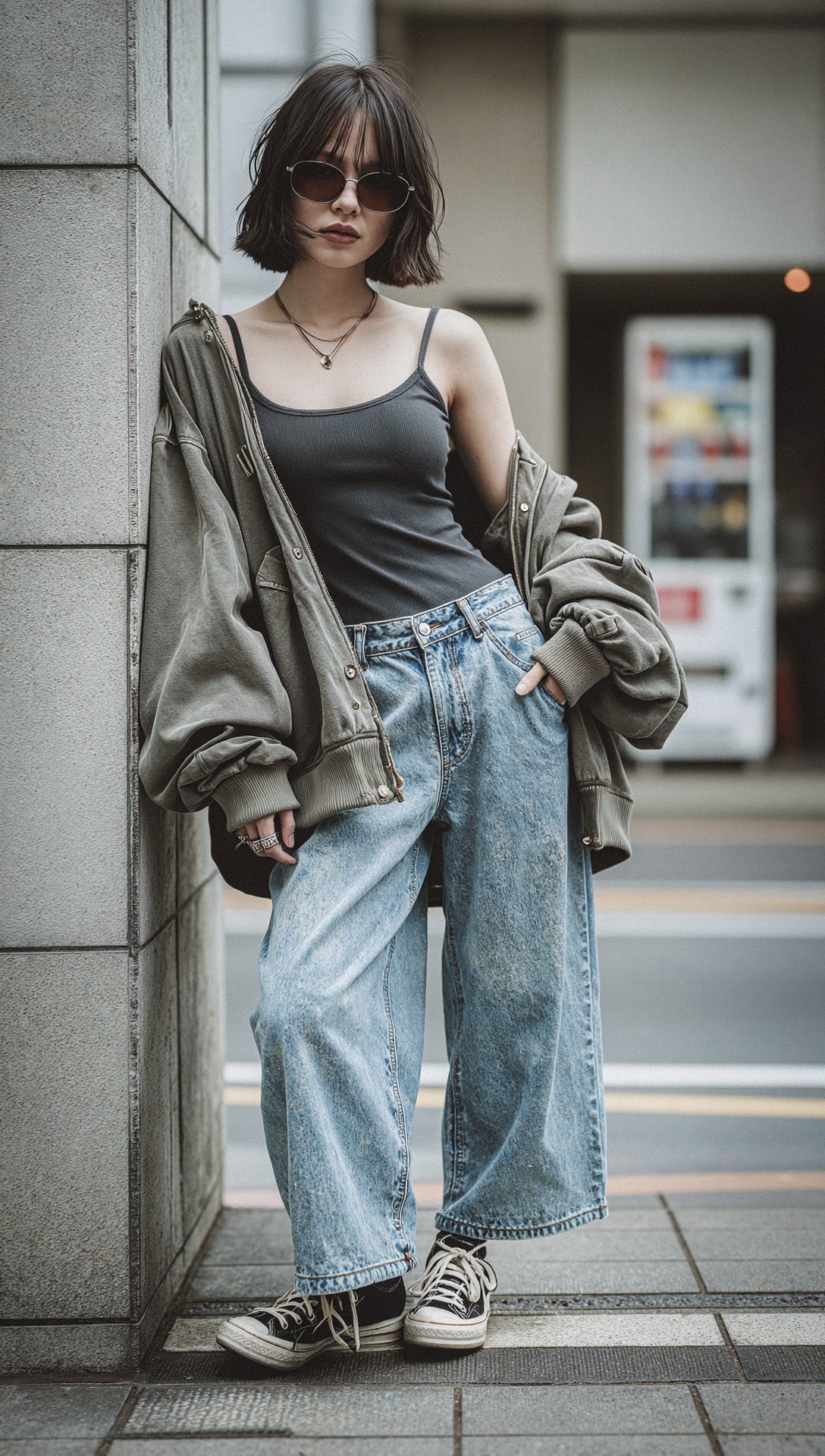
ribbed cuff stripes, 엉덩이 부분의 bag volume, 그리고 tank가 bodysuit처럼 변하지 않고 fitted 상태를 유지하는지 확인하세요. 이 설정은 walking street 프롬프트보다 outerwear shape 면에서 더 안정적이었습니다.
빠른 체크리스트: 보통 잘 작동하는 것 vs 보통 깨지는 것
| 프롬프트 요소 | 보통 잘 작동함 | 보통 깨짐 | |---|---|---| | Location wording | Harajuku side street, Shimokitazawa lane, Tokyo underpass | generic “Japan city”, “neon Tokyo” | | 재킷 프롬프트 | 재킷 유형 하나 + 소재 상태 하나 | 한 줄에 여러 재킷 레퍼런스 | | 데님 프롬프트 | rise + cut + wash + hem behavior | 핏 디테일 없는 “baggy jeans” | | 액세서리 | 레트로 아이템 2~3개 | 4개를 넘는 액세서리 과다 레이어링 | | 촬영 유형 | full body street style, three-quarter editorial | 신발이나 밑단을 가리는 portrait-led crop | | 조명 | overcast, open shade, late afternoon | 원단을 흐리게 만드는 강한 mixed neon | | 무드 | confident, sexy, fashion-forward | 옷에서 초점을 빼앗는 모호한 “hot model” 표현 |
다듬은 프롬프트: 룩북이 출판 가능한 수준으로 느껴지기 시작할 때
실루엣을 수정한 뒤, 다음으로 효과가 컸던 개선은 더 의도적인 머리부터 발끝까지 보이는 룩북 프레이밍을 사용하는 것이었습니다. 이렇게 하면 배경의 혼란이 줄고, 세대별 스타일링 변형을 비교하기가 쉬워졌습니다.
이 프롬프트는 즉흥적인 스트리트 스냅 느낌보다 더 깔끔한 Japan lookbook 페이지를 원하는 사용자에게 적합합니다.
Topic: Head-to-toe Tokyo lookbook with suede trucker jacket and puddle denim
Genre: Lookbook Photography
Camera: Fujifilm GFX100S
Lens: 45mm f/2.8
Lighting: Bright overcast diffusion
Location: Minimal exterior corridor near a Tokyo concept store, brushed metal door and concrete floor
Style: Clean commercial fashion lookbook with retro street edge
Final Prompt: head-to-toe lookbook fashion shot, retro street style Tokyo outfit presented with full silhouette clarity, model standing relaxed in a Tokyo concept store exterior corridor, oversized faded suede trucker jacket, second-skin black top, dark indigo puddle denim with low waist and wide leg, square-toe heeled boots, slim shoulder bag, narrow sunglasses, chain necklace, glossy lip, confident sensual posture without glamour excess, bright overcast diffusion, Fujifilm GFX100S detail, 45mm lookbook composition, neutral concrete and brushed metal backdrop, full-body framing with visible shoe shape and denim pooling, premium fabric separation, editorial color restraint, sharp garment texture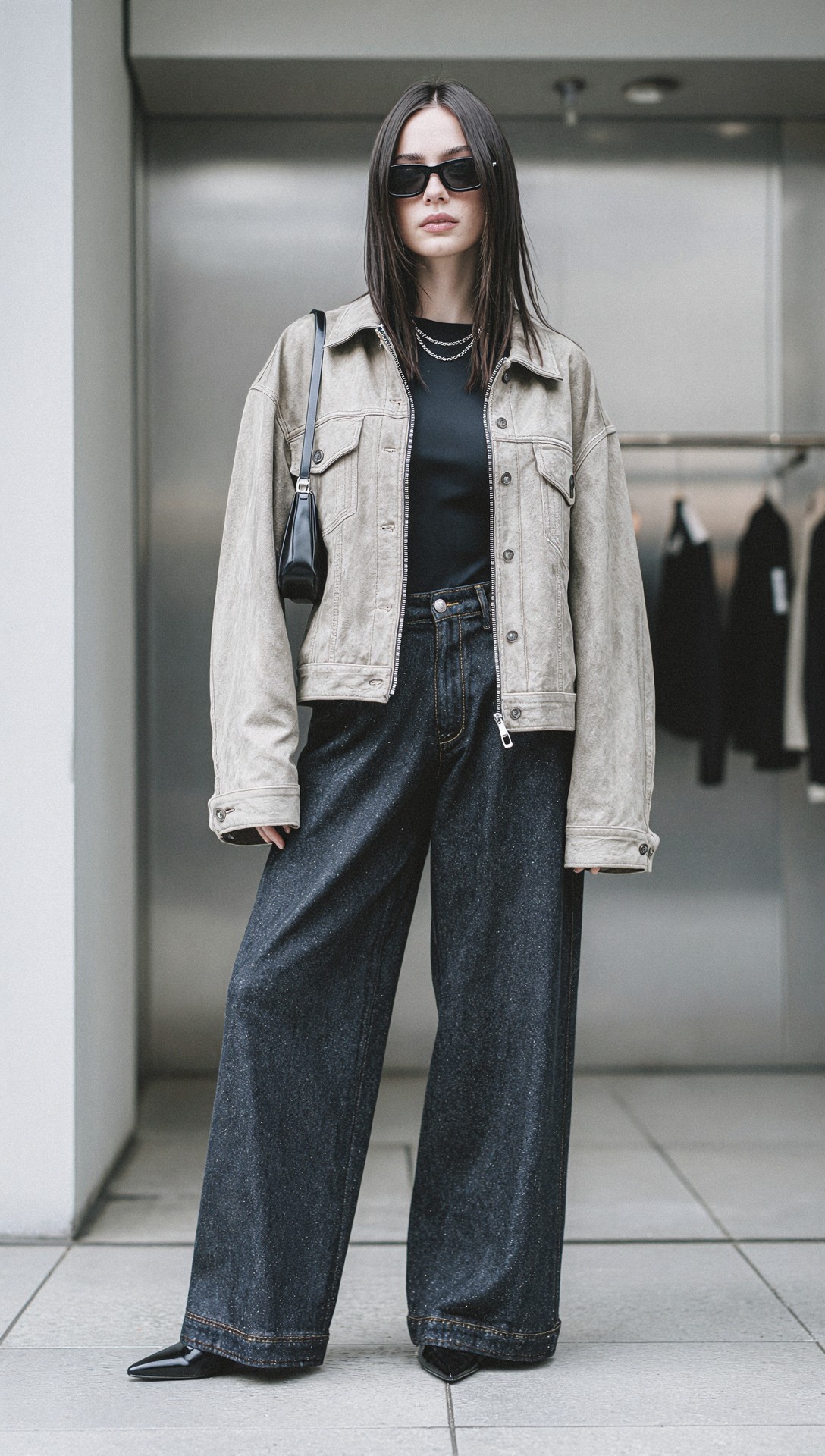
스웨이드의 결, 고여 쌓이는 데님, 몸 주변의 여백을 살펴보세요. 이 테스트에서 이런 유형의 프롬프트는 의류 판독성이 가장 안정적이었고, 배경 간섭도 가장 적었습니다.
의상을 잃지 않고 레트로 액세서리 테스트하기
액세서리는 retro street style 프롬프트가 살아나거나 무너지는 지점입니다. 핵심은 단순히 나열하는 것이 아니라, 사용 방식에 고정하는 것입니다. baguette bag은 팔 아래에 있어야 합니다. chain belt는 허리선을 끊어줘야 합니다. 선글라스는 피사체가 되기보다 얼굴형을 보조해야 합니다.
다음 설정은 더 타이트한 프레임에서 액세서리의 위계를 테스트합니다.
Topic: Tokyo accessories-led outfit editorial with leather blazer, loose denim, and throwback bag
Genre: Street Style Editorial
Camera: Leica SL2-S
Lens: 35mm f/2
Lighting: Cloudy daylight with subtle silver reflector fill
Location: Omotesando backstreet with glass storefront and clean sidewalk reflections
Style: Contemporary Japanese streetwear editorial
Final Prompt: three-quarter outfit street editorial in Tokyo, styling-focused image featuring an oversized vintage leather blazer, fitted espresso halter top, loose medium-wash denim with long break, sleek pointed mules, compact baguette bag tucked close under the arm, slim rectangular sunglasses, chain belt, small hoop earrings, confident direct stance, sexy editorial restraint, Omotesando backstreet with polished storefront reflections and minimal foot traffic, cloudy daylight with soft reflector fill, Leica SL2-S realism, 35mm documentary fashion framing, rich leather grain, visible denim seam detail, refined urban palette, complete accessory logic integrated into the outfit rather than floating props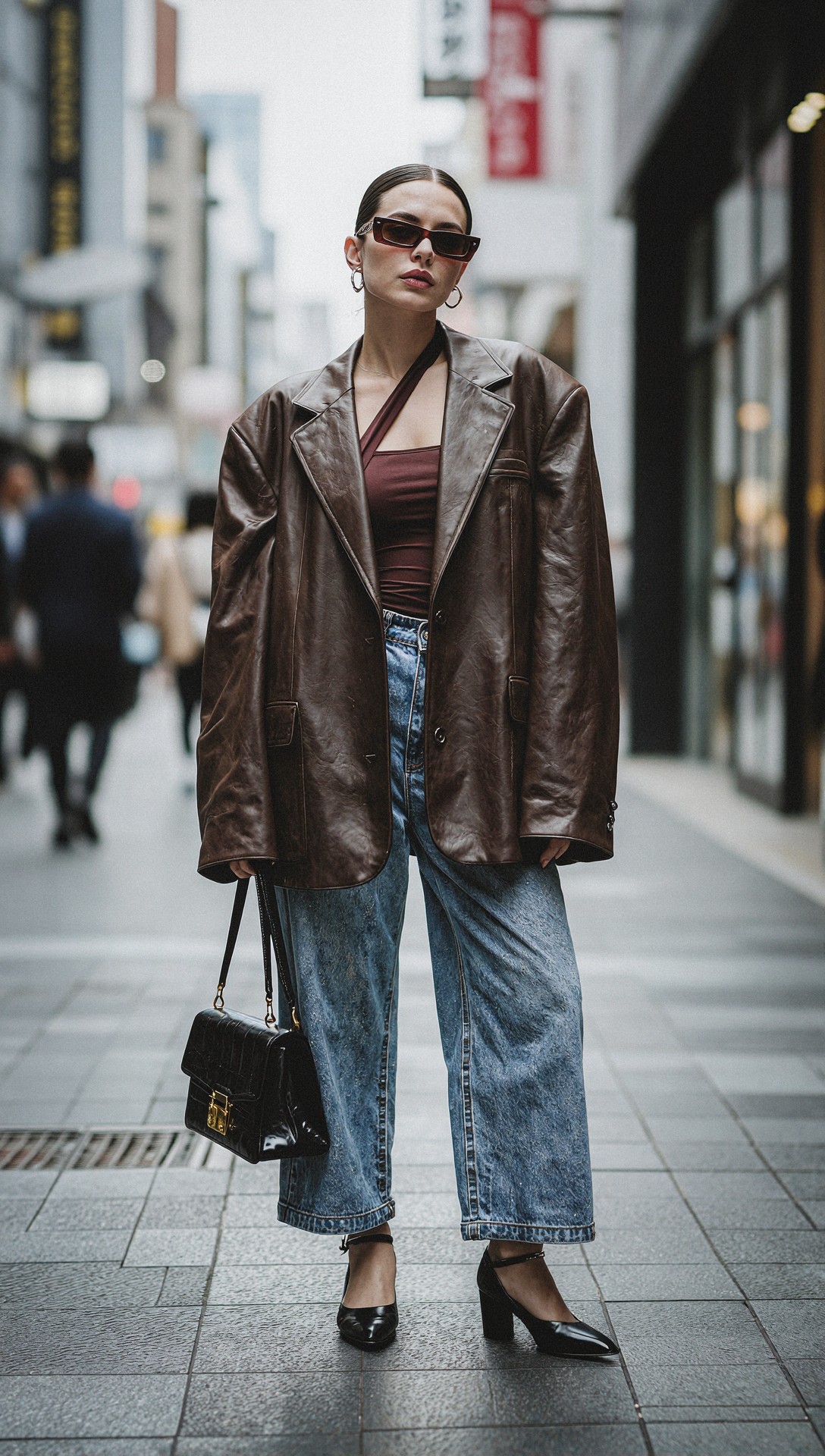
가방 스트랩, 체인 벨트, 선글라스가 한 번에 모두 일관성을 유지하는지 확인하세요. 여기서 약점은 액세서리 변형이며, 특히 포즈 때문에 한쪽 팔이 가방에 너무 가까이 놓일 때 문제가 생깁니다.
Retro street style Tokyo 프롬프트에서 자주 발생하는 실패 지점
얼굴 중심으로 흐르는 현상
프롬프트 초반에 “beautiful model”이라고 쓰면, 생성기는 옷보다 피부와 표정을 우선시하는 경우가 많습니다. 해결책은 간단합니다. 촬영 유형과 의상 구조를 먼저 제시하세요.
데님 붕괴
루스 데님이 갑자기 테일러드 트라우저, 스키니 진, 또는 모호한 파란색 튜브처럼 변할 수 있습니다. 해결책은 rise, width, wash, and hem behavior를 지정하는 것입니다.
빈티지 재킷 단순화
레더 재킷이나 varsity jacket은 하드웨어, 리브, 사용감이 사라질 수 있습니다. cracked finish, ribbed cuff, faded panels, heavy zip, worn collar처럼 눈에 보이는 단서를 추가하세요.
도쿄가 네온 판타지로 변하는 현상
영감을 찾는 용도라면 그런 룩도 재미있을 수 있지만, 옷이 빛과 블러 속으로 사라진다면 실용성이 떨어집니다. 광범위한 cyber-city 표현 대신, 구체적인 지역과 현실감 있는 디테일을 사용하세요.
배경이 팔레트와 충돌할 때
장면이 너무 복잡하면 워싱 데님과 바랜 아우터가 벽에 묻혀 밋밋해질 수 있습니다. 더 깔끔한 골목, 복도, 또는 매장 전면의 가장자리 구도가 보통 도움이 됩니다.
이 테스트 프롬프트는 의도적으로 더 복잡한 거리 맥락을 밀어붙여, 의상이 묻히기 전까지 이 설정이 얼마나 버틸 수 있는지 확인합니다.
Topic: Busy Tokyo street-style full body with vintage biker jacket and washed baggy jeans
Genre: Street Style Photography
Camera: Canon EOS R3
Lens: 24-70mm at 35mm f/2.8
Lighting: Early evening ambient light with storefront spill
Location: Shibuya side street with crosswalk edge, stacked signs, and passing pedestrians
Style: Editorial street snap realism
Final Prompt: street-style full body photo on a busy Tokyo side street, retro street style Tokyo outfit anchored by a cropped cracked-leather biker jacket, fitted off-shoulder knit top, washed baggy jeans with low waist and soft stacked hem, retro running sneakers, compact shoulder bag, narrow sunglasses pushed up on head, hoop earrings, confident stride, sexy and fashion-led but still documentary, Shibuya side street with layered signs and blurred foot traffic, early evening ambient light with storefront spill, Canon EOS R3 street realism, 35mm zoom framing, outfit remains the main subject with clear jacket texture and denim volume, grounded city color, authentic street snap composition, no nightclub neon fantasy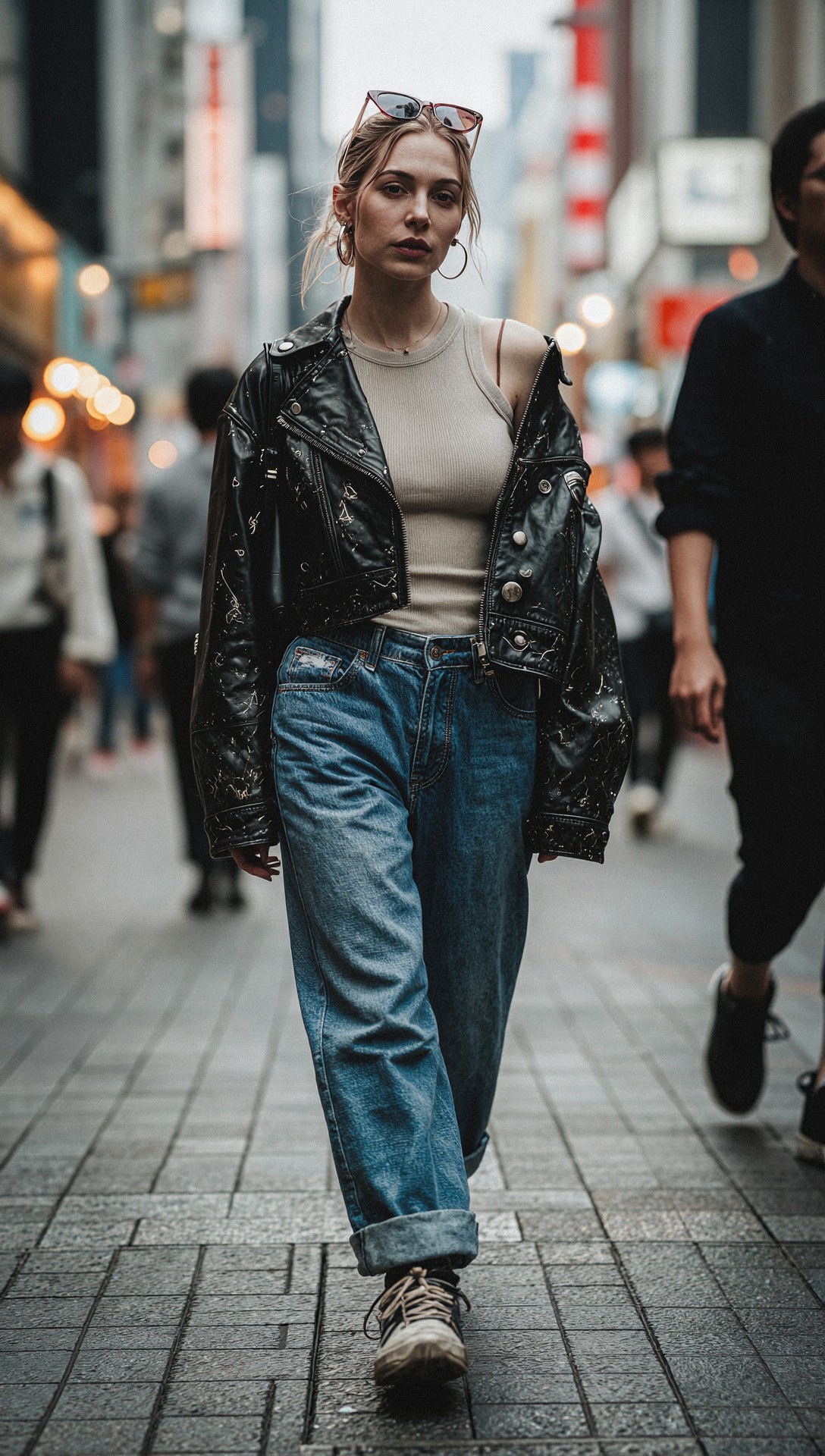
중요한 검토 지점은 배경의 에너지가 맥락을 더해주는지, 아니면 의상에서 대비를 빼앗는지입니다. 제 테스트에서는 재킷과 상의 사이에 강한 톤 분리가 있을 때만 붐비는 장면이 잘 작동했습니다.
product-style 프롬프트가 street 프롬프트보다 더 나은 경우
목표가 “거리 위의 사람” 같은 현실감보다 순수한 의상 영감이라면, product-style 레이아웃이 실제 장면 프롬프트보다 더 좋은 결과를 낼 수 있습니다. 포즈 리스크를 제거하고 재킷, 데님, 신발, 가방을 더 깔끔하게 비교할 수 있게 해줍니다.
이 프롬프트는 hero image를 생성하기 전에 레퍼런스를 구축하는 사용자를 위한 catalog grid page 접근 방식을 테스트합니다.
Topic: Catalog grid page for retro Tokyo streetwear outfit components
Genre: Product Editorial
Camera: Phase One XF IQ4
Lens: 80mm f/2.8
Lighting: Softbox top light with gentle edge fill
Location: Studio set designed as a clean editorial catalog page
Style: High-end fashion buying guide layout
Final Prompt: catalog grid fashion page showing a retro street style Tokyo outfit system, neatly styled components including worn leather jacket, fitted baby tee, low-rise loose denim, pointed ankle boots, baguette bag, narrow sunglasses, chain belt, hoop earrings, laid out and partially styled on model cutouts, clean editorial grid with labels and spacing, sexy fashion attitude conveyed through silhouette and styling rather than skin exposure, neutral studio backdrop, Phase One commercial detail, 80mm precision, crisp fabric texture, accurate denim wash, luxury-meets-vintage buying guide aesthetic, Japanese streetwear inspiration board feel, polished magazine layout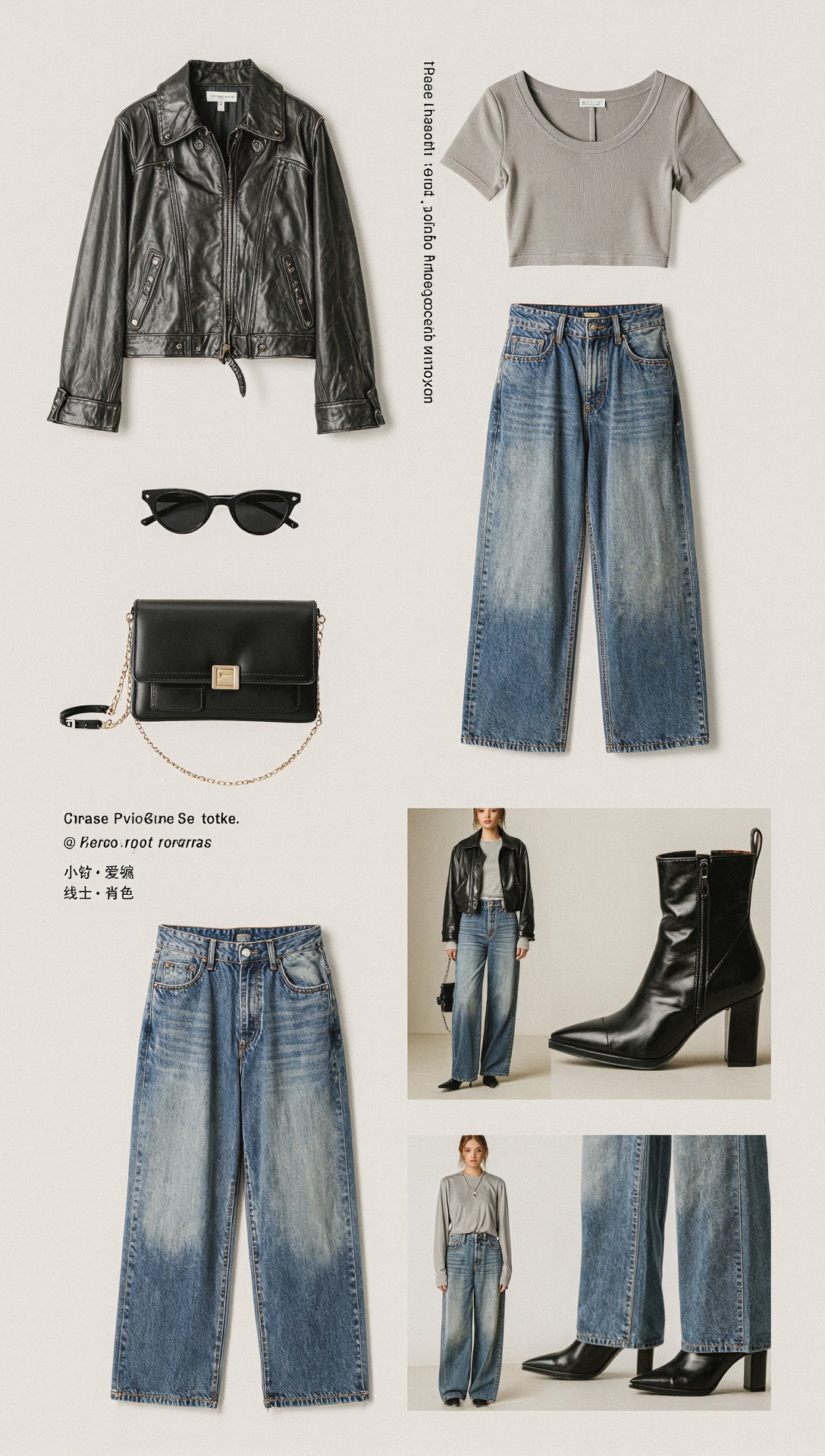
생성기가 각 아이템을 명확히 구분해 유지하는지, 그리고 데님 워싱이 현실적으로 남아 있는지 확인하세요. 이 형식은 previsualization에는 강력하지만, 거리 분위기가 필요하다면 활용도는 낮습니다.
디테일 테스트: 재킷과 액세서리는 별도 프롬프트가 필요합니다
전신 이미지는 실루엣을 증명할 수 있지만, 소재의 진실성까지 증명하는 경우는 드뭅니다. 빈티지 아우터와 throwback 액세서리에는 별도의 디테일 프롬프트를 쓰는 것이 가치 있습니다.
다음 프롬프트는 모델이 레트로한 도시 감성을 잃지 않으면서 재킷의 사용감, 하드웨어, 레이어드 스타일링을 렌더링할 수 있는지 확인합니다.
Topic: Garment detail macro of vintage jacket styling in Tokyo streetwear look
Genre: Fashion Detail Editorial
Camera: Sony A1
Lens: 85mm f/1.8
Lighting: Window light with black flag contrast control
Location: Tokyo vintage store fitting area with metal rack and mirror edge
Style: Luxury garment detail campaign
Final Prompt: garment detail macro focusing on retro street style Tokyo outerwear styling, close crop of a worn vintage leather jacket layered over a fitted ribbed top, visible cracked grain, zipper hardware, sleeve creases, chain necklace, hoop earring edge, denim waistband and belt detail entering frame, tasteful sensual fashion mood, Tokyo vintage store fitting area with mirror edge and metal rack softly blurred, Sony A1 precision, 85mm shallow depth, controlled window light with contrast, premium editorial detail, tactile leather texture, realistic wear marks, no beauty portrait dominance, styling remains the subject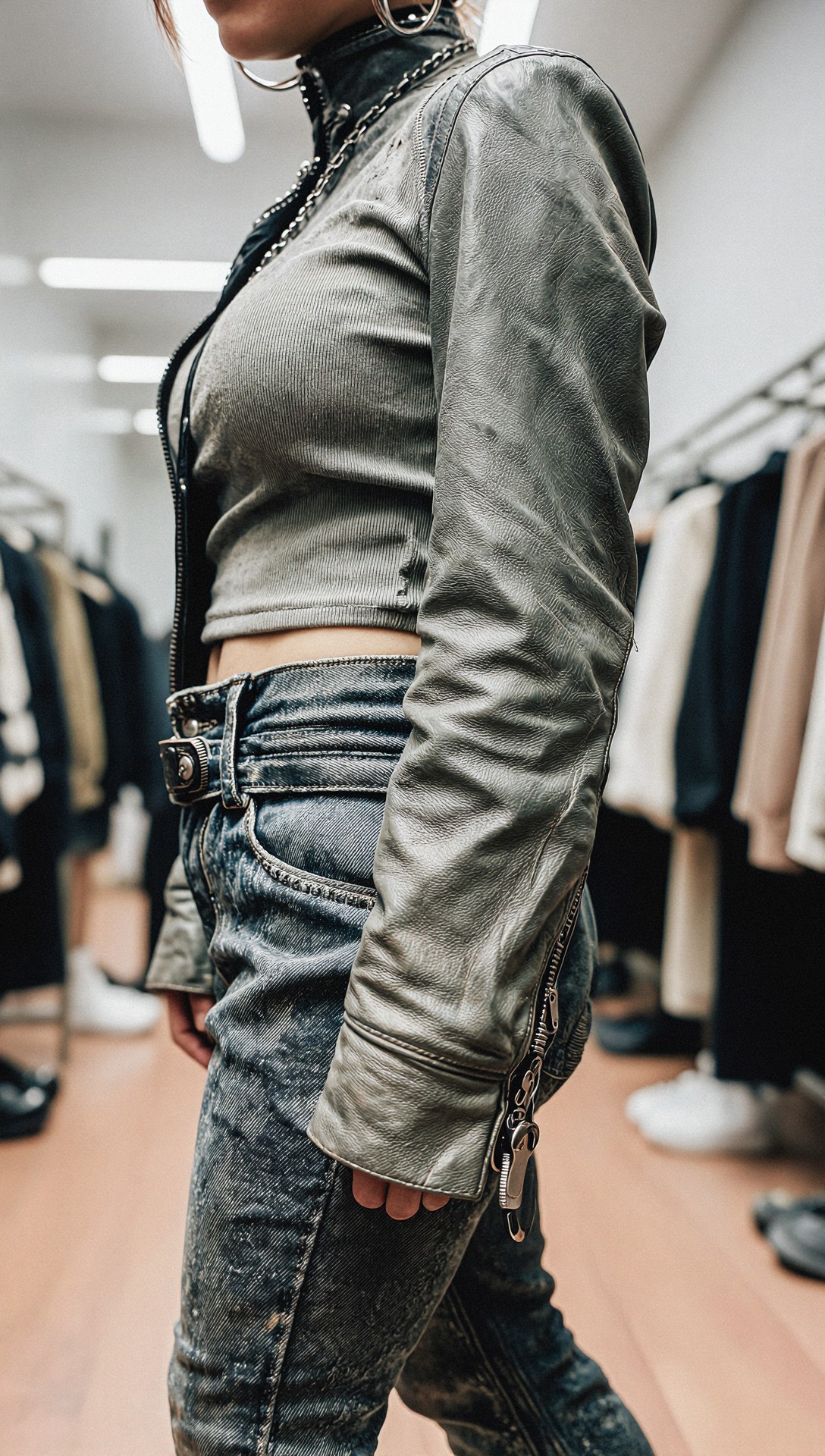
가죽이 플라스틱처럼 보이지 않고 자연스럽게 오래된 느낌인지, 그리고 얕은 depth of field 속에서도 지퍼 이빨과 솔기가 살아남는지 확인하세요. 이는 전체 workflow에서 가장 유용했던 support prompt 중 하나였습니다.
액세서리 역시 별도 테스트가 필요했으며, 특히 선글라스와 가방이 그랬습니다.
Topic: Accessories close-up for throwback Tokyo street style styling system
Genre: Accessories Editorial
Camera: Nikon D850
Lens: 85mm f/2
Lighting: Soft directional studio light with subtle chrome reflections
Location: Acrylic pedestal setup inspired by Tokyo concept retail display
Style: Premium accessories campaign with Y2K streetwear influence
Final Prompt: accessories close-up image for retro street style Tokyo, narrow tinted sunglasses, compact baguette bag, chain belt, silver hoops, and retro ring stack arranged on and around a styled torso wearing a fitted knit top and vintage jacket shoulder, acrylic pedestal and mirrored retail display cues inspired by Tokyo concept stores, sexy fashion attitude through sharp styling and glossy finish, Nikon D850 clarity, 85mm commercial framing, soft directional light, chrome reflections, detailed hardware, rich material contrast, editorial merchandising composition, Japanese streetwear accessory story with visible texture and clean product separation
하드웨어의 대칭성과 가방 비율을 확인하세요. 이 지점에서 모델은 스트랩 길이를 자주 오해하거나 일관성 없는 금속 마감을 만들어냅니다.
최종 생성 전에 스타일을 고정하는 데 도움이 되는 무드보드 프롬프트
여러 outfit generation에서 더 안정적인 일관성을 원했을 때, 먼저 mood-board 이미지를 만드는 것이 도움이 되었습니다. 이것은 하나의 visual brief처럼 작동합니다. palette, jacket types, denim washes, shoes, Tokyo context를 한 보드 안에 모아주는 방식입니다.
Topic: Mood-board collage for retro Tokyo street fashion lookbook direction
Genre: Mood Board Collage
Camera: Mixed editorial capture aesthetic
Lens: Mixed 35mm and 50mm fashion references
Lighting: Mixed overcast street light and clean studio scans
Location: Harajuku, Shimokitazawa, Tokyo concept retail, and vintage archive references
Style: Fashion editor concept board
Final Prompt: mood-board collage defining retro street style Tokyo, layered editorial board with street-style full body references, three-quarter jacket studies, loose denim silhouettes, throwback accessories, Tokyo street signage fragments, vintage shop textures, washed indigo palette, leather brown, charcoal, silver hardware, confident sexy fashion attitude, Japanese streetwear inspiration board, magazine tear-sheet layout, mixed documentary street images and clean product cutouts, balanced spacing, tactile paper collage feeling, clear styling system for vintage jackets, loose denim, pointed boots, baguette bags, and tinted sunglasses
여기서 주로 확인해야 할 것은 photorealism이 아니라 style coherence입니다. 보드가 Tokyo context 없이 무작위 Y2K internet nostalgia로 흘러가면, seed reference로는 큰 도움이 되지 않습니다.
retro street style Tokyo를 위한 재사용 가능한 프롬프트 패턴
이번 테스트에서 가장 안정적인 결과를 만든 패턴은 다음과 같습니다.
Prompt formula
- Shot type: street-style full body, three-quarter editorial, head-to-toe lookbook, catalog grid, garment detail, accessories close-up
- Hero outerwear: jacket type 1개 + material condition 1개
- Base layer: fitted top, camisole, baby tee, knit, halter
- Denim logic: rise + cut + wash + hem behavior
- Shoes: 잘 보이고 시대감과 맞는 것
- Accessories: 최대 2~3개
- Mood: confident, sexy, editorial restraint
- Tokyo context: 특정 district 또는 retail/street setting 1개
- Camera and light: 35mm/40mm/50mm와 soft daylight 또는 controlled bounce
- Quality control phrase: full outfit visible, fabric texture clear, no cyberpunk overload, styling remains main subject
Reusable template
Topic: [specific retro Tokyo outfit idea]
Genre: [street style / fashion editorial / lookbook photography / product editorial]
Camera: [real camera body]
Lens: [35mm, 40mm, 50mm, or 85mm with aperture]
Lighting: [overcast daylight / open shade / storefront bounce / studio softbox]
Location: [specific Tokyo street or retail context]
Style: [vintage urban cool / Japanese streetwear editorial / clean commercial lookbook]
Final Prompt: [named shot type], retro street style Tokyo fashion image, [hero jacket] over [fitted base layer], [denim rise] [denim cut] [wash] with [hem behavior], [shoes], [bag], [2 accessories], confident sexy editorial pose, full outfit logic visible, [specific Tokyo location details], [lighting], [camera/lens realism], clear fabric texture, grounded color palette, styling remains the main subject
빠르게 iterate하고 싶다면, 첫 번째 image generation에는 [Create](/create)를 사용하고, clothing language를 더 정교하게 다듬을 때는 [PromptLab](/promptlab)을 사용하며, denim seams와 jacket texture가 이미 올바를 때에만 [Upscaler](/upscaler)를 사용하세요. Upscaling은 잘못된 silhouette logic을 고쳐주지 않습니다.
테스트에서 얻은 실용적인 추천 사항
street inspiration에 가장 적합한 방식
가장 강한 Tokyo street fashion 분위기를 원한다면 35mm 또는 40mm framing의 street-style full body prompts를 사용하세요.
garment accuracy에 가장 적합한 방식
즉흥적인 city energy보다 jacket cut과 denim fit이 더 중요하다면 head-to-toe lookbook 또는 three-quarter editorial prompts를 사용하세요.
accessory planning에 가장 적합한 방식
별도의 accessory prompt를 하나 사용하세요. full-body street image 하나가 bag hardware, sunglass shape, belt details를 동시에 완전히 해결해줄 것이라고 기대하지 마세요.
multi-image consistency에 가장 적합한 방식
mood-board collage로 시작한 뒤, lookbook frames로 이동하고, 마지막에 hero street-style image를 생성하세요.
FAQ
retro street style Tokyo 프롬프트가 덜 generic하게 보이려면 어떻게 해야 하나요?
특정 Tokyo setting, 하나의 vintage outerwear hero piece, 그리고 상세한 denim fit language를 사용하세요. 일반적인 “Tokyo girl fashion” 식의 표현은 보통 styling-led outfit image가 아니라 portrait를 생성합니다.
Y2K denim outfit prompt에는 어떤 denim wording이 가장 잘 작동하나요?
rise, leg shape, wash, hem interaction을 명확히 지정하세요. 예: “low-rise wide-leg faded indigo denim with long stacked hem over pointed boots.”
Tokyo street fashion 이미지에 neon lighting을 사용해야 하나요?
분위기가 fabric truth보다 더 중요할 때만 사용하세요. 이번 테스트에서는 overcast daylight와 storefront bounce가 강한 neon보다 jacket과 denim detail을 더 잘 보존했습니다.
일부 generation에서 vintage jackets가 가짜처럼 보이는 이유는 무엇인가요?
프롬프트에 material wear cues가 부족하기 때문입니다. jacket type에 따라 cracked grain, faded panels, ribbed cuffs, worn collar, heavy zip, suede nap 등을 추가하세요.
Japan lookbook에는 어떤 shot type이 가장 적합한가요?
outfit readability를 위해서는 head-to-toe lookbook frame이 가장 안전한 선택입니다. location storytelling도 함께 원할 때만 full-body street style을 사용하세요.
Conclusion
이 workflow는 retro street style Tokyo inspiration을 원하면서도 outfit을 실제로 활용할 수 있을 만큼의 control이 필요한 사용자에게 가장 적합합니다. stylists, prompt builders, lookbook planners, 그리고 generic city portraits가 아니라 Japanese streetwear references를 생성하려는 사람들에게 잘 맞습니다. 반면 dramatic nightlife mood만 원하는 사용자에게는 덜 적합합니다. 장면이 더 cinematic해질수록 clothing logic이 무너질 가능성이 커지기 때문입니다.
무엇보다 하나의 setting detail만 유지해야 한다면, 그것은 바로 define the denim completely입니다. jacket이 첫인상을 만들어낼 수는 있지만, 이미지가 진짜 retro Tokyo street styling으로 읽히는지 아니면 또 하나의 모호한 fashion render로 보이는지를 결정하는 것은 denim fit입니다. 가장 강한 결과는 구체적인 shot planning, 절제된 accessories, 그리고 outfit과 경쟁하지 않고 이를 뒷받침하는 Tokyo locations에서 나왔습니다.