Runway to Street AI Fashion Photography: Which Looks Translate Best This Week 한국어 요약
이 페이지는 ZView Space의 영어 원문을 한국어 검색 사용자도 이해할 수 있도록 정리한 SEO 요약입니다. 핵심은 단순한 얼굴 중심 이미지가 아니라 패션 에디토리얼, 룩북, 아웃핏, 프롬프트 테스트, 이미지 생성 워크플로우를 실제로 어떻게 구성할지입니다.
핵심 요약
- 원문 주제: Runway to Street AI Fashion Photography: Which Looks Translate Best This Week
- 목적: AI 이미지 생성에서 outfit, silhouette, fabric, pose, location, camera framing을 더 명확하게 설계합니다.
- 활용 범위: Z-Image Turbo, Krea2 Turbo, Qwen Image, Anima, SeedVR2 같은 이미지 생성 및 업스케일 워크플로우에 적용할 수 있습니다.
- SEO 관점: 제목, 설명, 이미지 alt, 프롬프트 예시가 실제 검색 의도와 맞아야 색인 가능성이 높아집니다.
한국어 사용자를 위한 체크포인트
1. 프롬프트가 얼굴 묘사에만 머물지 않고 전체 스타일과 의상 구성을 설명하는지 확인합니다. 2. 패션 이미지라면 상의, 하의, 아우터, 신발, 액세서리, 소재감, 촬영 장소를 분리해서 씁니다. 3. 생성 결과는 바로 게시하지 말고 디테일, 손, 의상 형태, 배경 일관성, 이미지 품질을 비교합니다. 4. 글 본문에는 실제 테스트 기준과 실패를 줄이는 방법이 들어가야 검색엔진에서 얇은 콘텐츠로 보일 가능성이 줄어듭니다.
원문 미리보기
This test is about runway to street AI fashion photography with a comparison driven goal: which fashion looks survive the jump from catwalk concept to believable street/editorial imagery, and which ones break once you ask an image model to show full outfits, l
---
This test is about runway to street AI fashion photography with a comparison-driven goal: which fashion looks survive the jump from catwalk concept to believable street/editorial imagery, and which ones break once you ask an image model to show full outfits, layering, fabric, and context. In this run, the strongest results came from looks with clear silhouette logic, limited accessory complexity, and scenes that matched the styling story. The weakest results came from over-styled runway ideas that depended on fragile details like sheer layering, mixed hardware, or hard-to-read footwear.
Quick answer
- Tailored outerwear, denim-led layering, and monochrome luxury street looks translated best in this week’s tests.
- High-concept runway styling with transparent fabrics, extreme proportion shifts, or stacked jewelry failed more often in full-body shots.
- Street-style full body and three-quarter editorial framing gave the best balance of outfit readability and model stability.
- If you need campaign-ready consistency, build the outfit first, then add runway attitude through location, pacing, and casting cues.
- For cleaner outputs, use simpler garment hierarchies and inspect hands, hems, shoe shape, and bag straps before upscaling in [zview UpScaler](/upscaler).
What was tested
I tested a practical workflow for turning runway-inspired outfits into images that could pass as streetwear campaign frames, lookbook pages, and luxury fashion editorial shots. The goal was not "most dramatic image." It was which looks actually translate when you need readable clothing and repeatable outputs.
Test setup:
- Full-body and three-quarter fashion compositions
- Street, editorial, lookbook, runway/backstage, retail, accessory, and detail shot types
- Prompt structures built to keep styling visible rather than beauty-led
- Focus on coat shape, trouser break, knit texture, denim structure, leather finish, footwear, and bag clarity
- Quality checks for silhouette consistency, fabric separation, hand errors, and background coherence
I also treated this as an operator test rather than a trend summary. In this test, the strongest result was not always the most fashionable prompt. It was the one that kept the outfit logic intact across generations.
Before you generate: preparation checklist
Use this checklist before opening your image tool in [zview Create](/create) or refining language in [PromptLab](/promptlab).
| Checklist item | Why it matters in runway-to-street translation | Pass/fail sign | |---|---|---| | Pick one outfit thesis | Models drift when a look mixes too many runway signals | One clear silhouette reads at a glance | | Limit statement accessories | Bags, belts, layered jewelry, and hardware often tangle | Straps and metal details stay clean | | Choose a realistic street context | Street context stabilizes styling better than abstract sets | Outfit looks wearable, not costume-like | | Lock the shot type | Full-body and three-quarter frames preserve styling logic | Hemline, shoes, and bag remain visible | | Name the fabric textures | Texture words improve coat, denim, wool, and leather rendering | Materials separate clearly | | Keep palette controlled | Too many accent colors reduce garment hierarchy | Eye lands on outfit, not noise |
What to know first about look selection
The looks that translated best had three traits:
1. A dominant garment with a readable shape, like an oversized wool coat or cropped leather jacket. 2. A grounded bottom-half story, such as straight denim, wide trousers, or a column skirt with clear shoe visibility. 3. One scene that explained the outfit, like a Seoul side street, a Paris curbside editorial, or a minimalist retail display.
The weak point was complex runway styling that depends on movement, translucency, or stylist-only tricks. AI often compresses those ideas into visual clutter.
Step-by-step workflow for runway outfit ideas that hold up
Step 1: Start with a street-style full body test
Start with the most honest frame: full body, visible shoes, visible bag, visible layer breaks. If the outfit works here, it usually adapts well to editorial and lookbook variants.
This first prompt checks whether a runway-inspired tailored street look can stay readable without collapsing into generic city fashion.
Topic: Runway-inspired tailored street look in Seoul
Genre: Street Style
Camera: Canon EOS R5
Lens: 35mm f/2
Lighting: Overcast diffusion
Location: Seongsu side street with concrete storefronts and muted signage
Style: Modern luxury streetwear editorial
Final Prompt: street-style full body fashion photograph of a runway-inspired tailored outfit on a city sidewalk in Seongsu, complete outfit clearly visible from head to toe, oversized charcoal wool blazer layered over a fine ribbed black knit top, high-waisted wide-leg tailored trousers with sharp front crease, polished square-toe leather loafers, structured black shoulder bag, slim silver earrings, narrow belt, clean layered silhouette, confident walking pose, neutral expression, concrete storefront background, muted gray and espresso palette, documentary fashion framing, crisp wool texture, realistic trouser drape, premium editorial composition, Canon EOS R5 look, 35mm f/2, soft overcast light, luxury streetwear campaign realism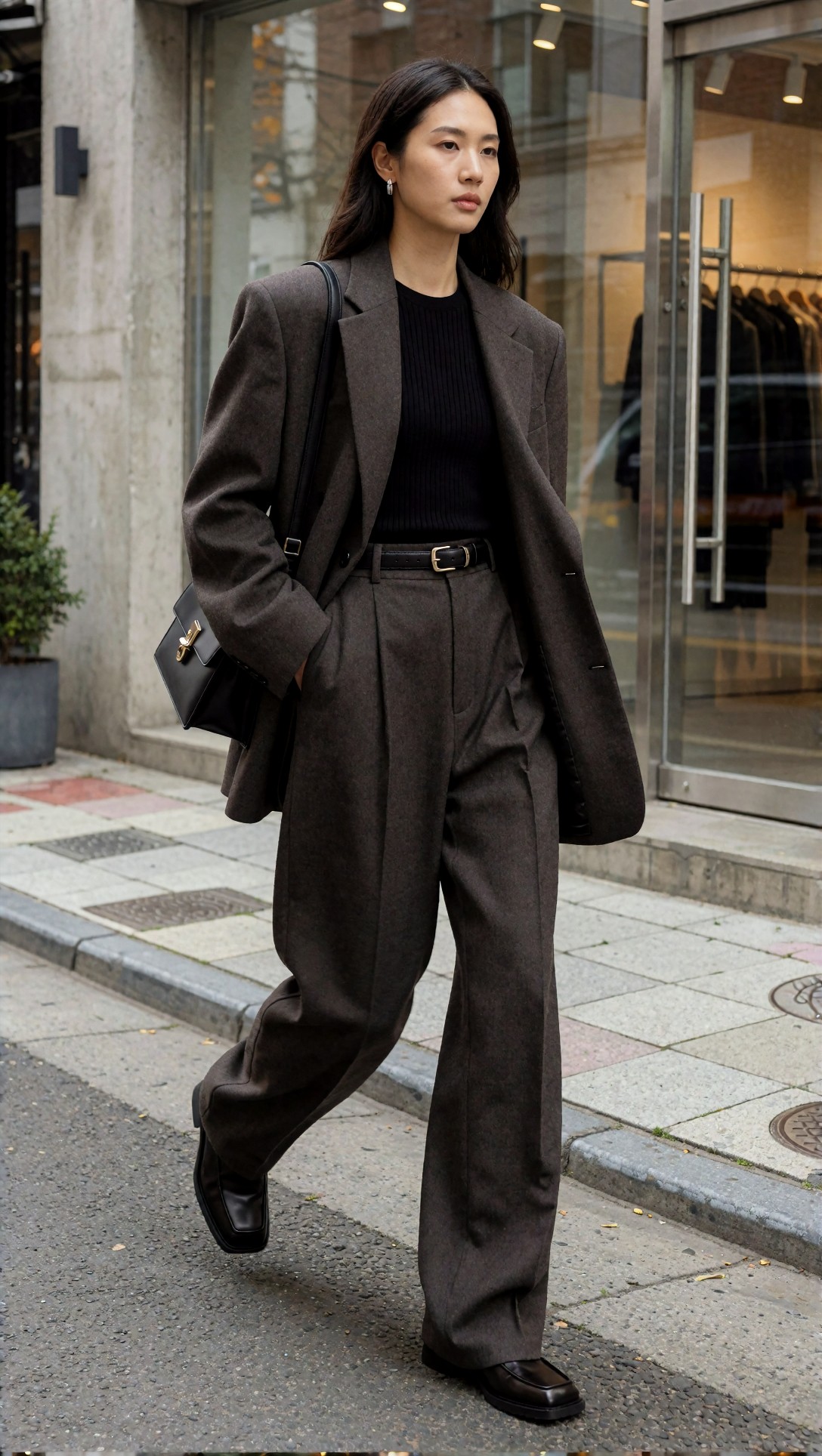
Inspect whether the blazer shoulder line, trouser crease, and shoe shape remain clean. If the model swaps loafers for boots or loses the bag structure, the prompt needs stronger bottom-half and accessory language.
This second prompt checks denim translation, because denim often performs better than soft tailoring when you need believable streetwear campaign outputs.
Topic: Runway denim layering for New York sidewalk editorial
Genre: Fashion Editorial
Camera: Nikon Z8
Lens: 40mm f/2
Lighting: Late afternoon open shade
Location: Lower Manhattan sidewalk with cast-iron facades and parked taxis
Style: Contemporary streetwear campaign
Final Prompt: street-style full body AI fashion image of a runway-to-street denim look on a Lower Manhattan sidewalk, full outfit readability prioritized, cropped faded indigo denim jacket over a white poplin shirt with long cuffs, slate gray tank layer, dark rinsed straight-leg jeans with visible seam structure, black pointed ankle boots, compact burgundy crossbody bag, slim sunglasses, layered but controlled silhouette, one hand adjusting jacket hem while walking, cast-iron building backdrop, restrained navy gray burgundy palette, tactile denim grain, strong editorial realism, contemporary campaign framing, Nikon Z8 look, 40mm f/2, open shade lighting, sharp fabric texture and clean full-body composition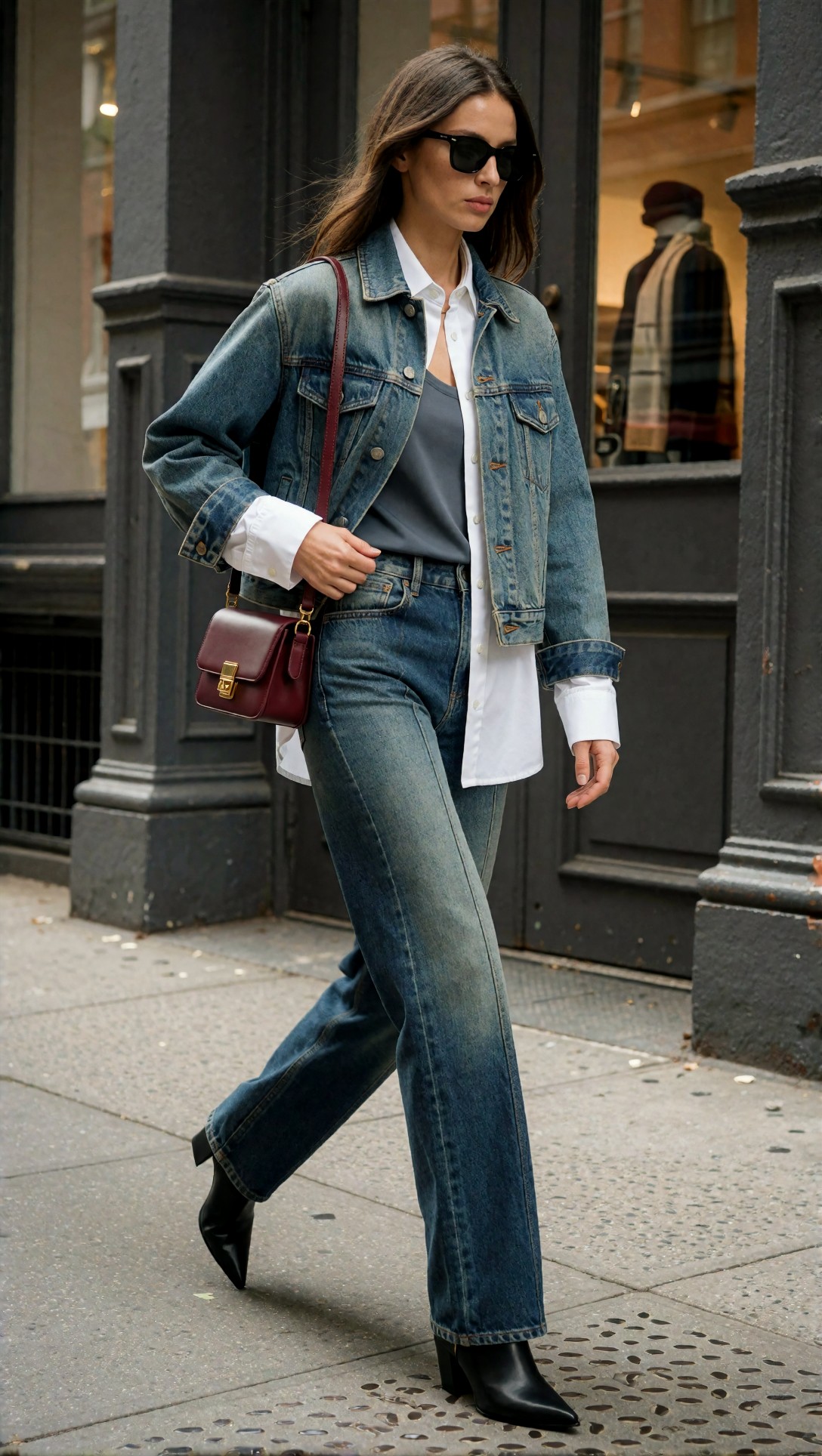
Check whether the jeans and jacket stay in the same denim family without turning into a matching suit by accident. In this test, denim worked well because seams and structure give the model clear anchors.
Step 2: Convert the winner into a three-quarter outfit editorial
Once a full-body version works, move to a three-quarter crop. This is where many looks improve: faces stabilize, outerwear textures sharpen, and the image feels more editorial. The tradeoff is reduced shoe visibility.
This prompt tests whether a monochrome leather-and-knit look can carry luxury fashion editorial energy without losing garment separation.
Topic: Monochrome leather street editorial in Paris
Genre: Fashion Editorial
Camera: Sony A7R V
Lens: 50mm f/2
Lighting: Soft morning daylight with light bounce
Location: Quiet Paris side street near stone facades and wrought-iron balconies
Style: Luxury fashion editorial
Final Prompt: three-quarter outfit editorial photograph of a runway-to-street monochrome look in Paris, model framed from mid-thigh upward with enough lower-body visibility to show outfit structure, cropped black leather jacket over a charcoal fine-gauge turtleneck, high-waisted black wool trousers with fluid drape, slim heeled leather ankle boots partly visible, compact top-handle bag, sculptural silver cuff, clean black graphite palette, composed stance near a stone facade, subtle motion in jacket hem, luxury editorial mood, premium leather grain, soft knit texture, restrained background detail, Sony A7R V look, 50mm f/2, soft morning daylight, elegant magazine composition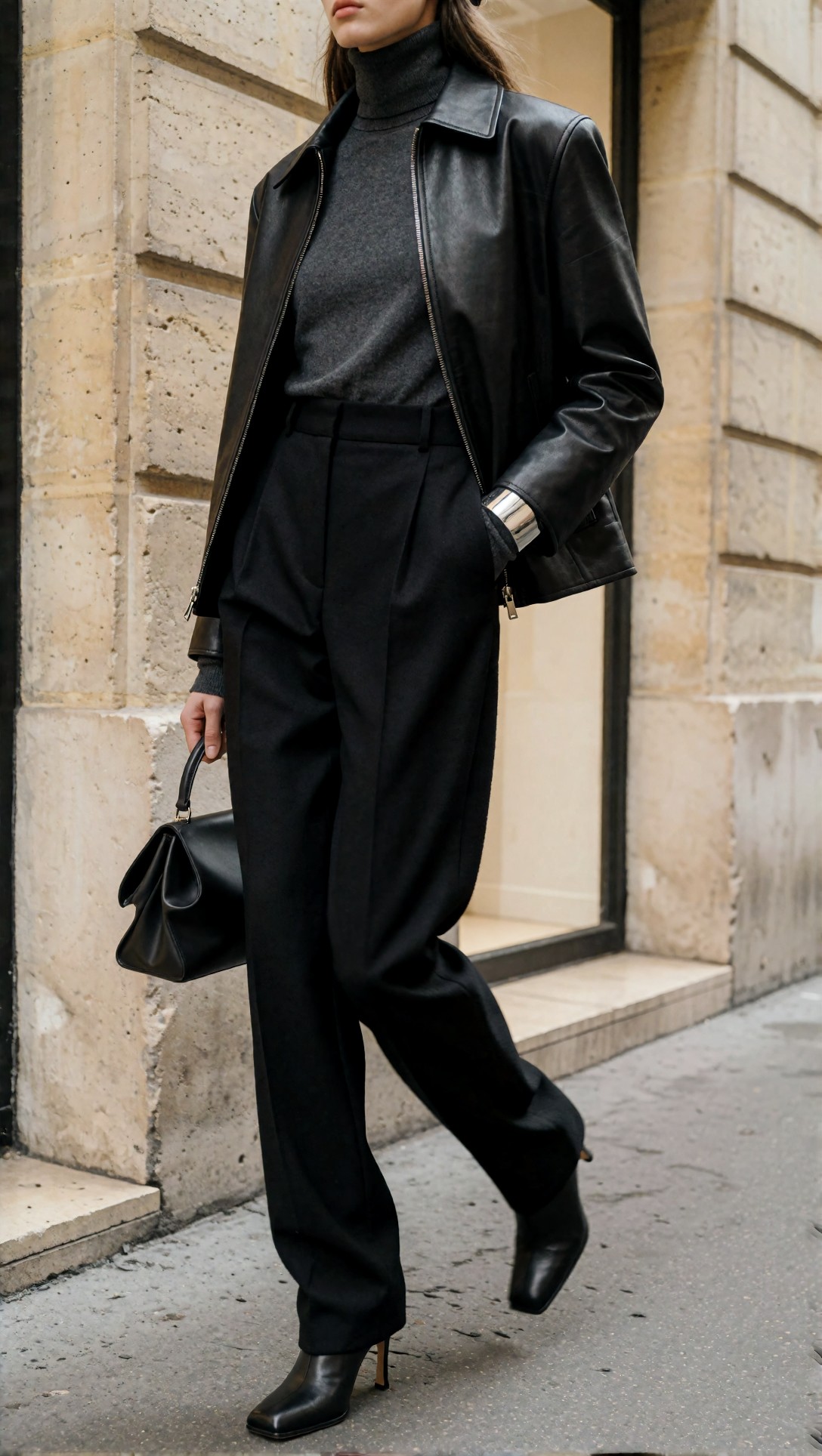
Inspect leather texture and whether the jacket edge stays crisp against the knit. The failure risk here is tonal blending: black-on-black prompts often flatten unless you explicitly separate leather, wool, and knit surfaces.
This prompt tests a softer runway outfit idea with a skirt silhouette, which often looks strong editorially but can fail around hemlines and footwear.
Topic: Minimalist runway skirt look for London street editorial
Genre: Street Style
Camera: Fujifilm GFX100S
Lens: 45mm f/2.8
Lighting: Bright overcast daylight
Location: Marylebone street with pale stone buildings and understated shop windows
Style: Clean commercial fashion look
Final Prompt: three-quarter outfit fashion image translating a minimalist runway look into London street style, full styling system still visible, long camel trench worn open over a cream crewneck knit, graphite column midi skirt with clean vertical line, dark brown knee-high leather boots, structured tan tote, fine gold hoop earrings, controlled neutral palette of camel cream graphite and chocolate, model pausing at a curb with relaxed posture, city background understated and elegant, garment layering easy to read, premium wool and leather texture, clean commercial editorial framing, Fujifilm GFX100S look, 45mm f/2.8, bright overcast light, realistic luxury fashion image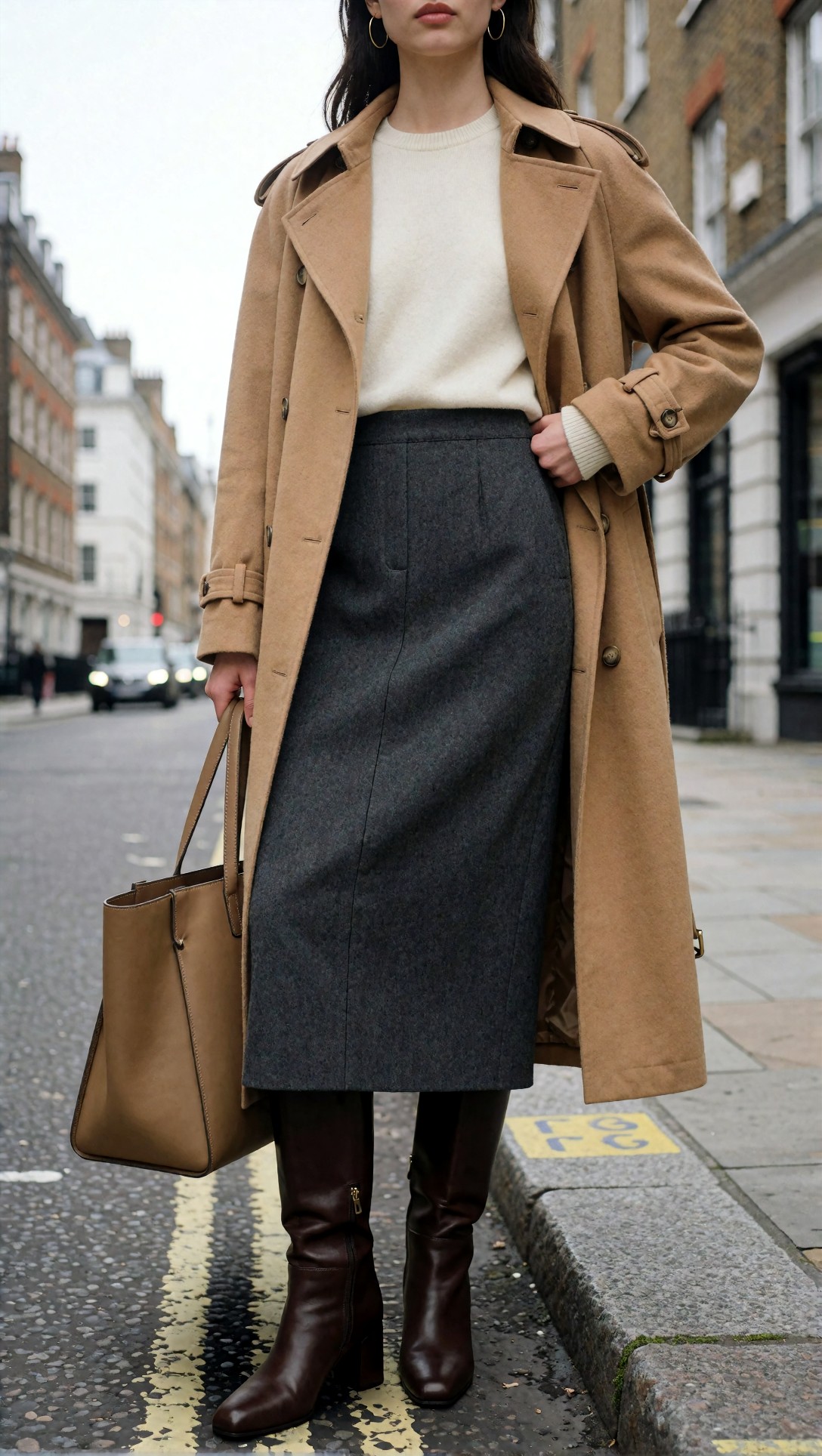
Check the trench opening, skirt edge, and boot height. In this test, skirt looks were less stable than trouser looks, but they improved when the silhouette was columnar rather than flilled or asymmetrical.
Step 3: Test a head-to-toe lookbook version
A good runway-to-street image is not always a good lookbook image. Lookbooks punish messy proportions, because the background is quieter and the garment has nowhere to hide.
This prompt checks whether a utility-luxury look can hold shape in a clean catalog-style setup.
Topic: Head-to-toe luxury utility lookbook outfit
Genre: Lookbook Photography
Camera: Hasselblad X2D 100C
Lens: 55mm f/2.5
Lighting: Large softbox key with gentle fill
Location: Minimal studio corner with warm gray seamless backdrop
Style: High-end lookbook photography
Final Prompt: head-to-toe lookbook fashion photograph of a runway-inspired utility luxury outfit, complete outfit centered and fully visible against a warm gray seamless backdrop, sand-colored belted field jacket with oversized patch pockets, white fine cotton tee, dark olive straight trousers with crisp hem, black leather derby shoes, medium brown crossbody pouch, minimal styling with clear garment hierarchy, upright neutral pose, front-facing catalog clarity with subtle editorial polish, visible stitching, cotton twill texture, leather finish, restrained earthy palette, Hasselblad X2D 100C look, 55mm f/2.5, softbox key light with gentle fill, premium clean commercial fashion output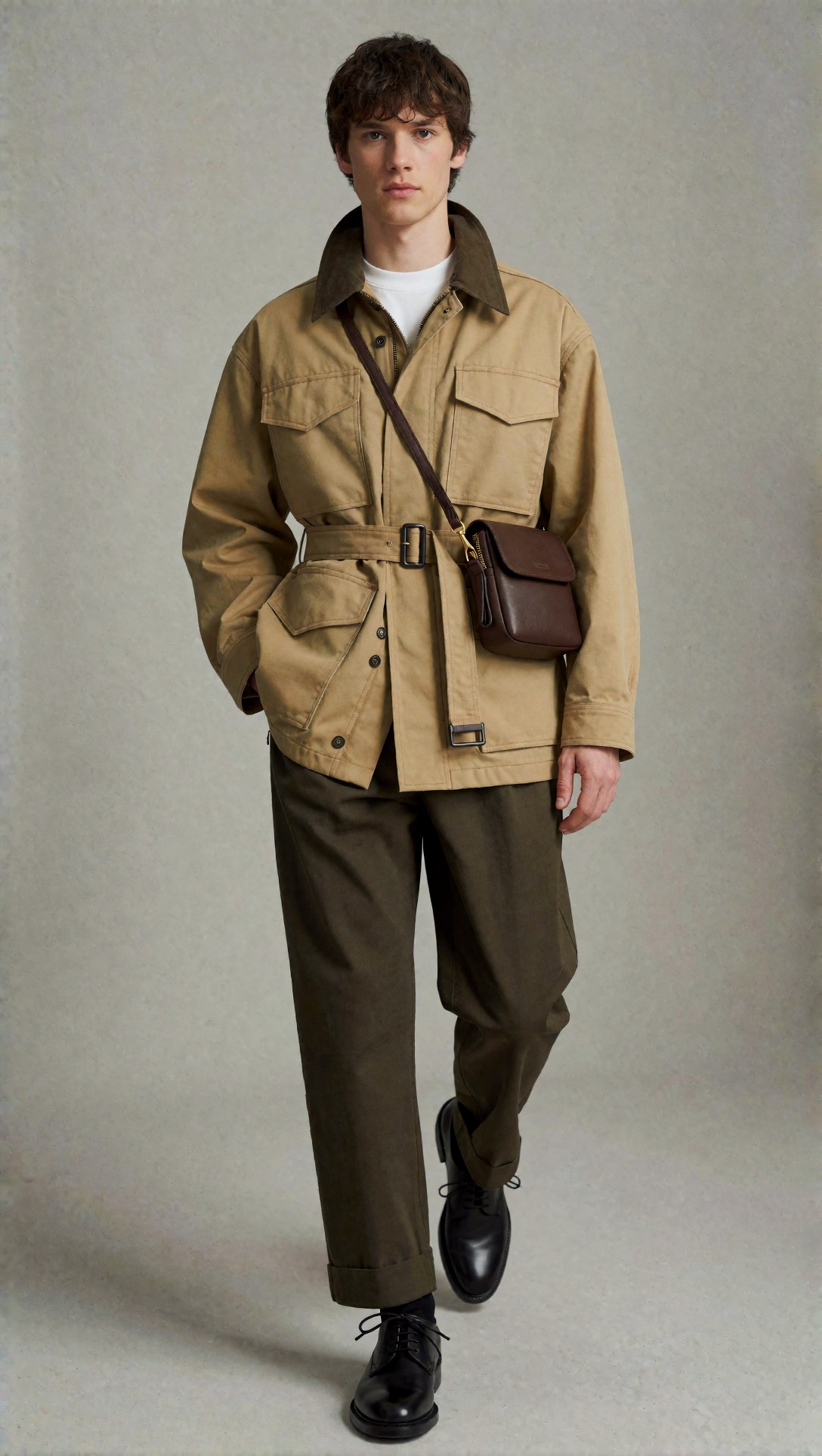
Inspect pocket symmetry, belt wrap logic, and trouser hem alignment. Utility pieces often translate well because visible pockets and seams help the model maintain construction.
Step 4: Pressure-test the trendier runway/backstage angle
Some readers want a stronger runway reference. The issue is that backstage energy can introduce clutter, extra limbs, and unstable accessories. Use it as a comparison frame, not your first hero image.
This prompt tests whether an oversized streetwear silhouette still reads in a runway/backstage context.
Topic: Backstage-to-street oversized streetwear silhouette
Genre: Fashion Editorial
Camera: Leica SL2
Lens: 24-70mm at 50mm f/3.5
Lighting: Mixed backstage practicals with soft bounced fill
Location: Milan runway backstage corridor with garment racks and tape marks on floor
Style: Editorial fashion documentary
Final Prompt: runway backstage moment showing a fashion look that can translate to streetwear campaign use, full outfit visible in a candid standing pose, oversized slate bomber jacket over a washed black hoodie, elongated white tee peeking below hem, loose technical cargo trousers, gray and black performance sneakers, nylon crossbody bag, minimal rings, clear layering logic, backstage corridor with garment racks softly blurred, tape marks and production atmosphere present but not messy, cool neutral palette, documentary editorial realism, visible nylon and jersey texture, Leica SL2 look, 24-70mm at 50mm f/3.5, mixed backstage practical lighting with soft fill, luxury streetwear magazine frame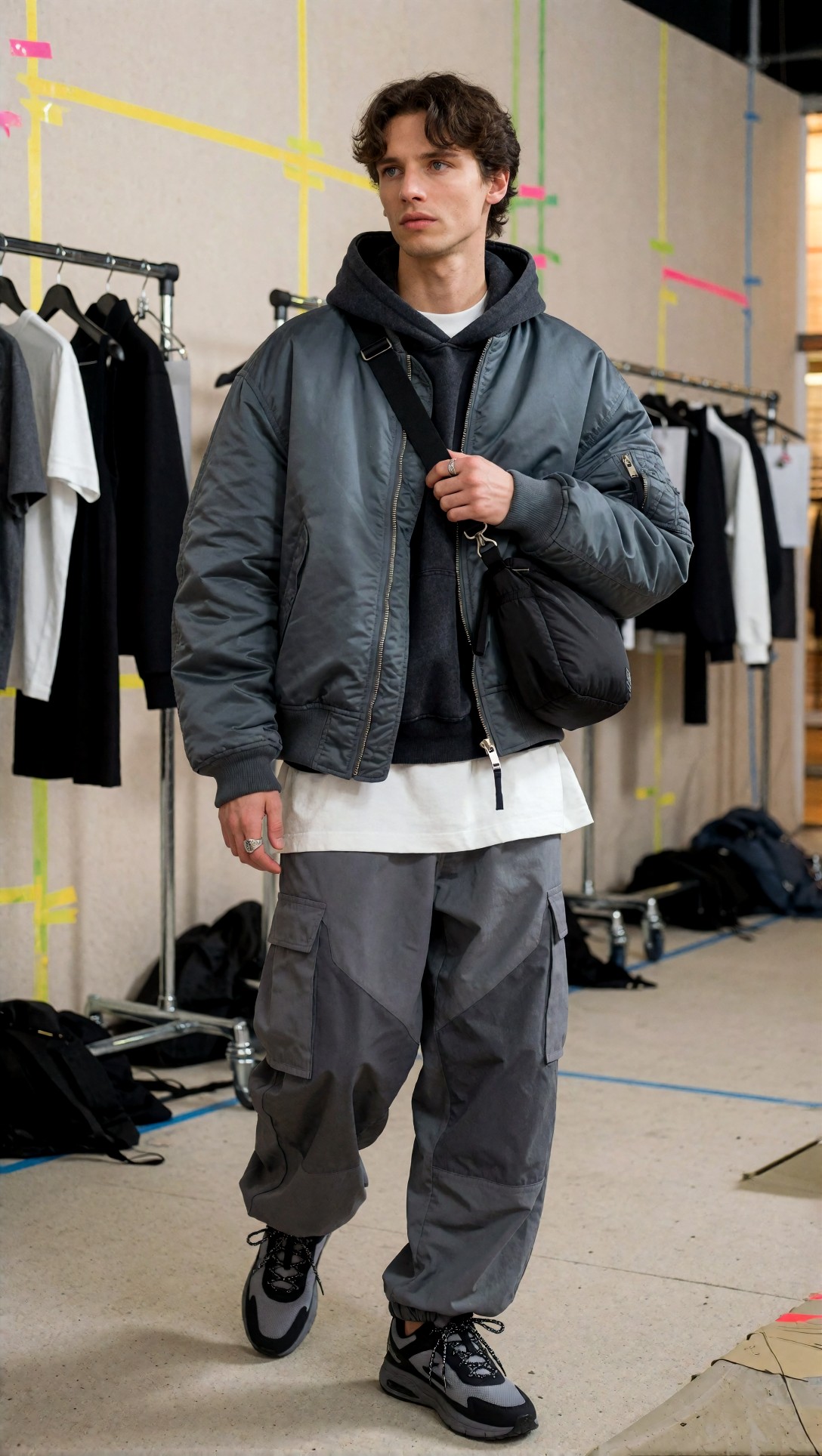
Inspect whether the cargo pockets stay anatomically plausible and whether the sneaker proportions remain believable. In this test, sporty oversized looks held up better backstage than delicate luxury looks.
Step 5: Add a retail/storefront version for campaign use
If the image may support a streetwear campaign or brand story, test the same outfit logic in a storefront or retail-adjacent setting. This often improves commercial clarity.
This prompt checks whether the model can connect styling to a retail scene without making the image look like generic ecommerce.
Topic: Storefront luxury street campaign with layered outerwear
Genre: Luxury Campaign
Camera: Canon EOS R3
Lens: 35mm f/1.8
Lighting: Golden hour side light
Location: Scandinavian minimalist fashion storefront with large glass windows and brushed metal frames
Style: Luxury streetwear campaign
Final Prompt: storefront display inspired street campaign image featuring a full runway-to-street outfit outside a minimalist fashion boutique, complete head-to-toe styling visible, deep navy oversized wool coat layered over a pale blue shirt and black fine merino knit, cropped black tailored trousers, white leather sneakers, structured tote bag, slim scarf, clean luxury styling with quiet confidence, model pausing near large glass windows with warm side light reflections, retail context elegant and understated, cool blue navy black palette with warm highlights, sharp coat texture, premium fabric separation, Canon EOS R3 look, 35mm f/1.8, golden hour side light, polished luxury campaign composition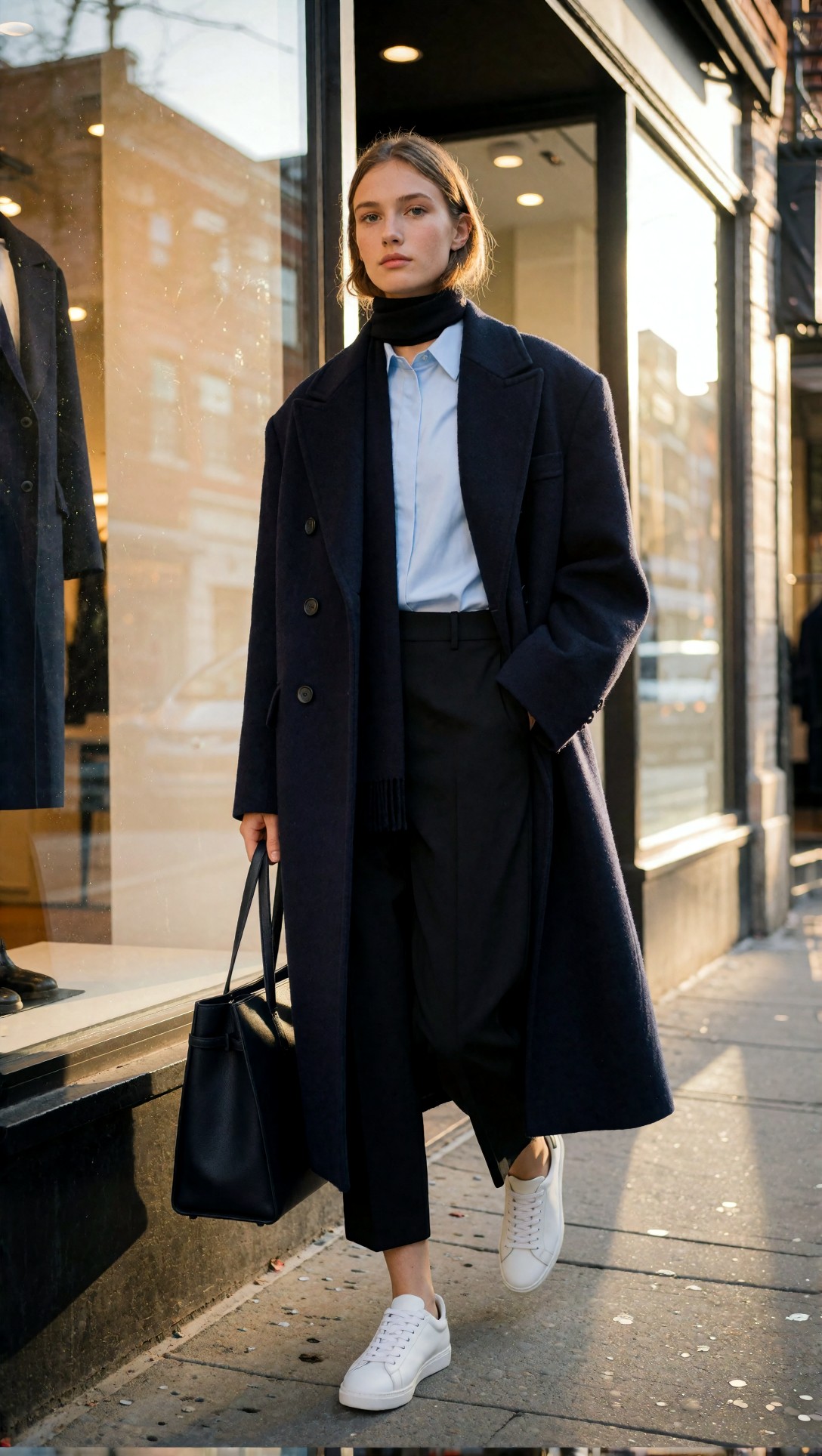
Inspect window reflections, coat hem consistency, and whether the sneakers remain premium rather than sportswear-generic. This setup worked well when the storefront was minimal, not visually busy.
Step 6: Test garment detail before scaling the concept
Before generating a larger set, run a detail or macro check. This saves time because many outfit prompts look fine at a glance but fail on texture, trims, or stitching.
This prompt checks whether the key garment material is genuinely strong enough to support a luxury fashion editorial series.
Topic: Garment detail macro of runway-inspired outerwear texture
Genre: Product Editorial
Camera: Sony A1
Lens: 85mm f/2
Lighting: Directional window light with negative fill
Location: Neutral editorial studio with textured plaster wall
Style: Premium fashion product editorial
Final Prompt: garment detail macro image focused on the material quality of a runway-to-street outerwear look, close framing on the upper torso and sleeve of a charcoal double-faced wool coat layered over a black rib knit, visible horn buttons, sharp seam finish, subtle lapel structure, edge of a structured leather bag entering frame, tactile editorial composition, no beauty emphasis, premium textile inspection mood, restrained charcoal black palette, visible weave and soft shadow depth, Sony A1 look, 85mm f/2, directional window light with negative fill, luxury product editorial realism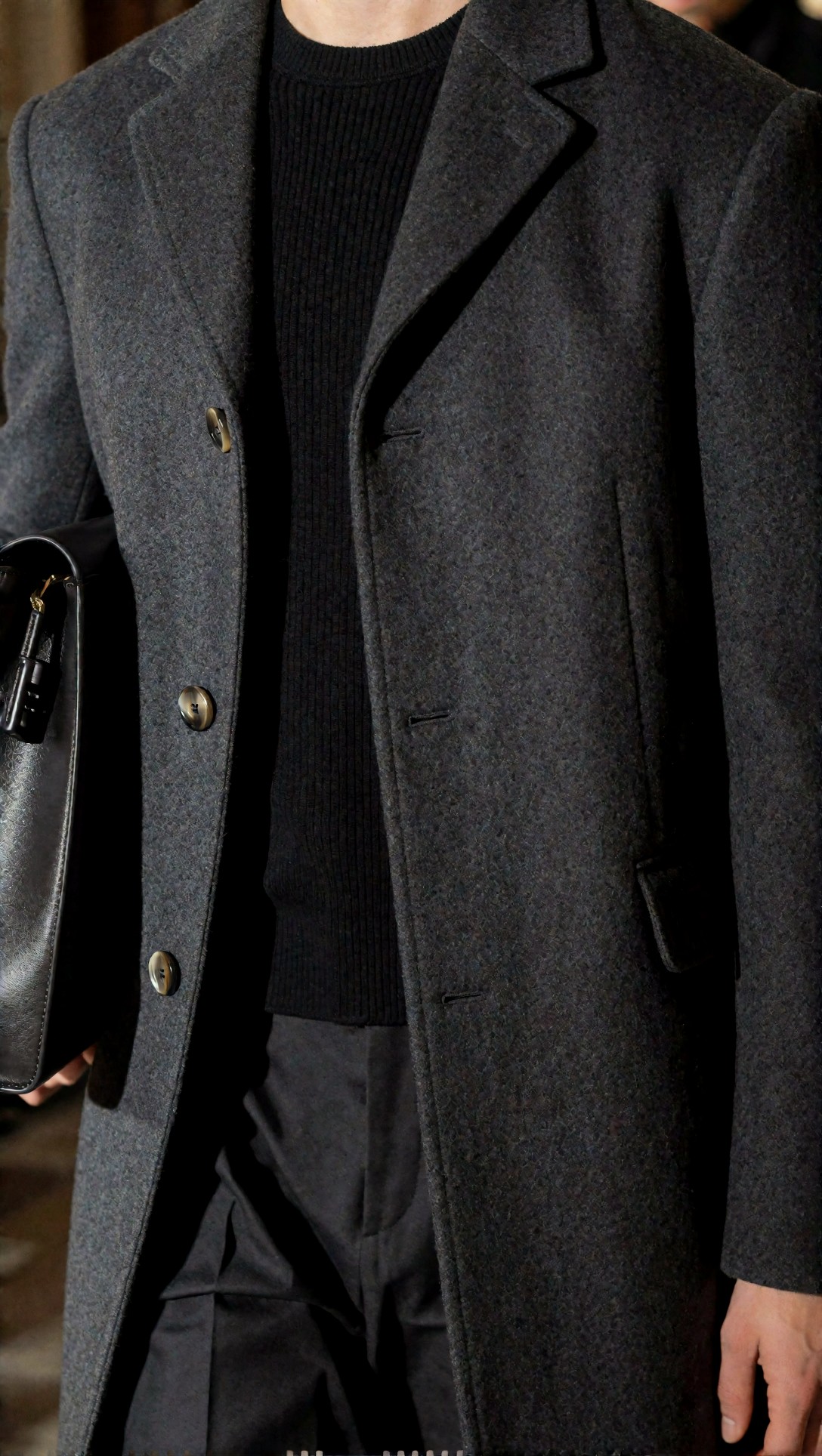
Inspect weave consistency, button geometry, and seam realism. If the hero fabric does not hold up here, it will not improve by simply upscaling later in [zview UpScaler](/upscaler).
Step 7: Test accessories separately
Bags, sunglasses, belts, and jewelry are frequent weak points in runway to street AI fashion photography. A separate accessory test reveals whether your styling system is robust or just image-level convincing.
This prompt checks whether accessory-led luxury survives without anatomy confusion.
Topic: Accessories close-up for runway-to-street luxury styling
Genre: Product Editorial
Camera: Nikon D850
Lens: 85mm f/2.2
Lighting: Soft diffused daylight with silver reflector
Location: Paris cafe terrace table and stone wall setting
Style: Luxury accessories editorial
Final Prompt: accessories close-up image supporting a runway-to-street fashion story, focus on a structured oxblood leather shoulder bag, square black sunglasses, slim silver cuff, and black leather gloves styled with the cuff of a charcoal wool coat and cream knit sleeve, elegant editorial crop with styling logic visible, bag hardware clean and minimal, stone wall and cafe terrace elements softly blurred, rich oxblood charcoal cream palette, tactile leather grain and polished metal detail, Nikon D850 look, 85mm f/2.2, diffused daylight with subtle reflector, refined luxury accessories editorial
Inspect bag hardware symmetry, strap attachment, and whether the glove edges look natural. In this test, accessory close-ups were often easier to stabilize than including all accessories in one full-body frame.
Step 8: Build a mood-board collage to lock direction before batch generation
A mood-board prompt is useful when you need campaign direction, not just one image. It helps lock palette and silhouette before generating a set for [zview Gallery](/gallery) or article comparisons.
This prompt checks style lock rather than photoreal perfection.
Topic: Runway-to-street trend mood board with tailoring, denim, and leather
Genre: Mood-Board Collage
Camera: Mixed editorial capture style
Lens: Mixed 35mm, 50mm, and 85mm fashion crops
Lighting: Mixed overcast street light, soft studio light, and golden hour accents
Location: Seoul street, Paris facade, minimal studio, and luxury storefront montage
Style: Editorial fashion concept board
Final Prompt: mood-board collage for a runway-to-street AI fashion photography concept, arranged as a refined editorial board with multiple image panels showing tailored outerwear, dark denim layering, monochrome leather styling, structured bags, polished loafers, storefront context, fabric detail crops, and a restrained palette of charcoal navy camel oxblood and cream, fashion editor layout, clean white margins, premium magazine design feel, no chaotic scrapbook clutter, cohesive luxury streetwear direction, mixed documentary and studio realism, texture-first composition, sophisticated campaign planning board
Inspect palette discipline and whether each panel supports the same fashion thesis. If the board feels fragmented, your prompts are mixing trends instead of comparing them.
Which looks translated best in this comparison
Strongest result: tailored outerwear with controlled layering
This category produced the most reliable outputs. Wool coats, oversized blazers, fine-gauge knits, and wide trousers gave the model clear shape boundaries.
Why it worked:
- Strong shoulder line and long vertical drape
- Easy palette control
- Good texture separation between wool, knit, and leather
- Full-body and three-quarter framing both worked
Best for:
- Luxury fashion editorial
- Streetwear campaign visuals with elevated styling
- Lookbook photography that needs polish without excessive correction
Runner-up: denim-led runway outfit ideas
Denim was more forgiving than expected. Seams, fades, and jacket structure gave image models strong visual anchors.
Why it worked:
- Denim construction is legible
- Street context feels natural
- Transitional styling reads as wearable rather than costume-like
Best for:
- AI fashion photography for trend stories
- Urban campaign directions
- Street-first versions of runway concepts
Mixed result: monochrome leather looks
Leather looked expensive when the lighting and material wording were precise. It failed when the scene was too dark or the black tones blended together.
Best for:
- Controlled three-quarter editorial shots
- Accessory-led campaign frames
- Luxury fashion editorial with simple backgrounds
Weakest result: fragile runway styling with too many moving parts
Looks with sheer layers, excessive jewelry stacks, complicated draping, or hard-to-read shoes under long hems were the least reliable.
Why they failed:
- Layer edges merged
- Hardware multiplied or warped
- The model improvised the lower half
- Street realism disappeared quickly
Quality-control checklist for output review
Use this after every generation round.
- Is the complete outfit logic visible in under two seconds?
- Do outerwear, top, bottom, shoes, and bag each remain distinct?
- Are trouser hems, skirt edges, and shoe openings anatomically plausible?
- Does the fabric rendering match the prompt: wool, denim, leather, knit, nylon?
- Are accessories clean, or do straps and hardware distort?
- Does the location support the styling, or distract from it?
- Is the image more street/editorial than costume/runway fantasy?
- Would this frame still work after a mild crop, or is the outfit too fragile?
If more than two items fail, regenerate before moving into upscale or batch variations.
Troubleshooting weak outputs
Problem: the image looks fashionable but not wearable
What I would change next:
- Reduce one styling layer
- Simplify accessory count
- Replace abstract set language with a real city or store context
- Add a walking or paused curbside pose instead of vague drama words
Problem: full-body shots keep breaking at shoes or hands
What helps:
- Use street-style full body rather than “dynamic fashion pose”
- Name the exact shoe type and hem relation
- Keep one hand occupied with jacket hem or bag strap
- Avoid floor-length garments in early tests
Problem: black outfits turn muddy
What helps:
- Separate materials by name: leather, rib knit, wool, brushed cotton
- Add one lighter underlayer or bag color
- Use soft daylight rather than dark cinematic lighting
Problem: accessories become deformed
What helps:
- Run accessory close-up prompts first
- Reduce hardware complexity
- Use structured bags instead of chain-heavy mini bags
- Move jewelry from stacked to single statement pieces
Problem: the lookbook version feels flat
What helps:
- Add subtle editorial polish, not extra styling
- Keep studio background warm gray or off-white instead of pure white
- Use visible fabric and stitch language
- Preserve a relaxed but upright pose
Practical recommendation by use case
Use tailored outerwear if you need reliable runway-to-street conversion
This is the safest option for comparison-driven testing. It gives the cleanest hit rate across street, editorial, and lookbook formats.
Use denim if you need streetwear campaign energy
Denim translates better than many trend-heavy runway looks because it already belongs to the street context. If your goal is a campaign with motion and urban realism, start here.
Use monochrome leather only when you can control lighting
It can look premium, but it is less forgiving. Better for fewer hero frames than large batches.
Avoid highly fragile runway concepts for first-pass production
If a look depends on transparency, heavy drape complexity, micro-accessories, or unusual proportion tricks, test it as a mood board first rather than a production frame.
FAQ
What is the best shot type for runway to street AI fashion photography?
Street-style full body is the best first test because it reveals whether the entire outfit works. Three-quarter editorial shots usually produce the prettiest result, but they hide some fit problems.
Which fashion looks are easiest for AI image models to translate from runway to street?
Tailored outerwear, denim layering, utility-luxury separates, and controlled monochrome looks are the most stable. They have clear silhouette logic and easier fabric separation.
How do I make AI fashion photography look more editorial and less generic?
Use a named shot type, a real location, controlled palette, specific fabric words, and one clear styling system. Avoid broad beauty descriptors and keep the focus on garment structure.
Should I upscale runway-to-street images before checking details?
No. Check hems, hands, hardware, and fabric texture first. Upscaling in [zview UpScaler](/upscaler) helps presentation, but it does not fix a broken outfit structure.
Where should I refine prompts for fashion image tests?
Use [PromptLab](/promptlab) to tighten material language, shot framing, and accessory control before generating larger batches.
Summary recommendation
For runway to street AI fashion photography, the best-performing workflow this week was: start with a full-body street-style test, promote only the stable looks into three-quarter editorial and lookbook frames, then run separate detail and accessory checks before batch generation. In this test, tailored outerwear and denim-led looks translated best; complex runway styling translated worst.
Who should use this workflow: editors, marketers, and creators who need believable AI fashion photography, runway outfit ideas with commercial use, or a streetwear campaign direction that still feels luxury-led.
Who should avoid it: anyone expecting one prompt to reproduce highly experimental runway styling with perfect accessories, transparent fabrics, and flawless full-body anatomy in one pass.
The setting detail that mattered most was context matched to styling. A strong outfit improved when the location explained it. The prompt detail that mattered most was clear garment hierarchy. If the coat, top, bottom, shoes, and bag each had a job, the image held together. If they competed, the result looked like AI styling instead of fashion direction.