Runway to Street Outfit Trends This Week: Wearable New York Fashion Week Looks for the US 한국어 요약
이 페이지는 ZView Space의 영어 원문을 한국어 검색 사용자도 이해할 수 있도록 정리한 SEO 요약입니다. 핵심은 단순한 얼굴 중심 이미지가 아니라 패션 에디토리얼, 룩북, 아웃핏, 프롬프트 테스트, 이미지 생성 워크플로우를 실제로 어떻게 구성할지입니다.
핵심 요약
- 원문 주제: Runway to Street Outfit Trends This Week: Wearable New York Fashion Week Looks for the US
- 목적: AI 이미지 생성에서 outfit, silhouette, fabric, pose, location, camera framing을 더 명확하게 설계합니다.
- 활용 범위: Z-Image Turbo, Krea2 Turbo, Qwen Image, Anima, SeedVR2 같은 이미지 생성 및 업스케일 워크플로우에 적용할 수 있습니다.
- SEO 관점: 제목, 설명, 이미지 alt, 프롬프트 예시가 실제 검색 의도와 맞아야 색인 가능성이 높아집니다.
한국어 사용자를 위한 체크포인트
1. 프롬프트가 얼굴 묘사에만 머물지 않고 전체 스타일과 의상 구성을 설명하는지 확인합니다. 2. 패션 이미지라면 상의, 하의, 아우터, 신발, 액세서리, 소재감, 촬영 장소를 분리해서 씁니다. 3. 생성 결과는 바로 게시하지 말고 디테일, 손, 의상 형태, 배경 일관성, 이미지 품질을 비교합니다. 4. 글 본문에는 실제 테스트 기준과 실패를 줄이는 방법이 들어가야 검색엔진에서 얇은 콘텐츠로 보일 가능성이 줄어듭니다.
원문 미리보기
This week’s test focused on runway to street outfit trends pulled from the New York fashion conversation and translated into image prompts that produce outfits people in the US could realistically wear. I treated this like an operator session, not a mood board
---
This week’s test focused on runway to street outfit trends pulled from the New York fashion conversation and translated into image prompts that produce outfits people in the US could realistically wear. I treated this like an operator session, not a mood-board exercise: generate trend-led looks, inspect whether the garments read as wearable, fix the prompt where styling drifted into costume, and keep only the setups that held together from silhouette to shoes.
What to know first
- The strongest prompts described layering logic, not just trend words.
- New York fashion week references worked best when paired with specific US street contexts like SoHo sidewalk, Brooklyn cafe line, or office commute.
- Models often exaggerated runway styling unless the prompt explicitly said wearable proportions, practical footwear, and repeatable wardrobe pieces.
- Full-body framing mattered. Cropped editorial prompts made it harder to judge whether a look could actually leave the runway and work on the street.
- If you want to refine these outputs further, use [Prompt Lab](/promptlab) for prompt iteration and [Gallery](/gallery) to compare styling consistency across generations.
Test setup
In this test, I generated a set of New York fashion week-inspired outfit scenes across street style, lookbook, retail, accessory, and detail shots. The goal was simple: find street style outfit ideas that preserve runway energy without turning into fantasy styling.
What I tested:
- relaxed tailoring
- updated denim and leather layering
- practical statement outerwear
- tonal dressing with visible texture
- flats, loafers, boots, and sneakers instead of runway-only footwear
- bag scale, hem length, and proportion control
What I watched for:
- whether the outfit reads head-to-toe in one glance
- whether fabric texture survives generation
- whether the styling logic stays coherent across jacket, top, bottom, shoes, and bag
- whether the scene supports the outfit instead of distracting from it
What looked good immediately in these runway to street trends
The best outputs came from trends that already have a clear everyday translation. In this batch, that meant oversized blazers with slim knit layers, long skirts with flat boots, dark denim with polished outerwear, and tonal neutrals broken by one sharper accessory.
A useful pattern emerged: if the runway source trend had a strong silhouette but simple fabric story, image models handled it well. Clean wool coats, straight-leg trousers, leather shoulder bags, rib-knit tops, and loafers consistently rendered better than highly deconstructed garments.
Another early win was using street-style full body and head-to-toe lookbook shot types. Those prompt formats forced the system to show the whole outfit architecture. That matters for wearable runway looks, because the difference between inspiration and actual outfit planning is usually in hemline, shoe choice, and bag proportion.
Test 1: Relaxed tailoring with real commuter energy
This prompt was meant to check whether a NYFW-inspired tailored look could read polished without becoming costume-officewear. I specifically wanted visible layering and practical shoes.
Topic: New York fashion week inspired relaxed tailoring for everyday US street wear
Genre: Street Style
Camera: Canon EOS R5
Lens: 35mm f/2
Lighting: Overcast diffusion
Location: SoHo sidewalk outside a minimalist fashion showroom
Style: Trend-led urban editorial
Final Prompt: street-style full body fashion shot of a wearable New York fashion week inspired outfit on a SoHo sidewalk, complete styling system visible from head to toe, oversized charcoal blazer layered over a fine ribbed ivory knit top, straight-leg dark navy trousers with clean break, polished black loafers, medium structured leather shoulder bag, slim belt, small gold hoops, soft scarf tucked into blazer, practical proportions, confident walking pose, neutral expression, documentary fashion framing, visible garment fit and drape, textured wool and knit detail, muted city palette of charcoal ivory navy and black, subtle background pedestrians blurred, editorial realism, trend-led but practical US street styling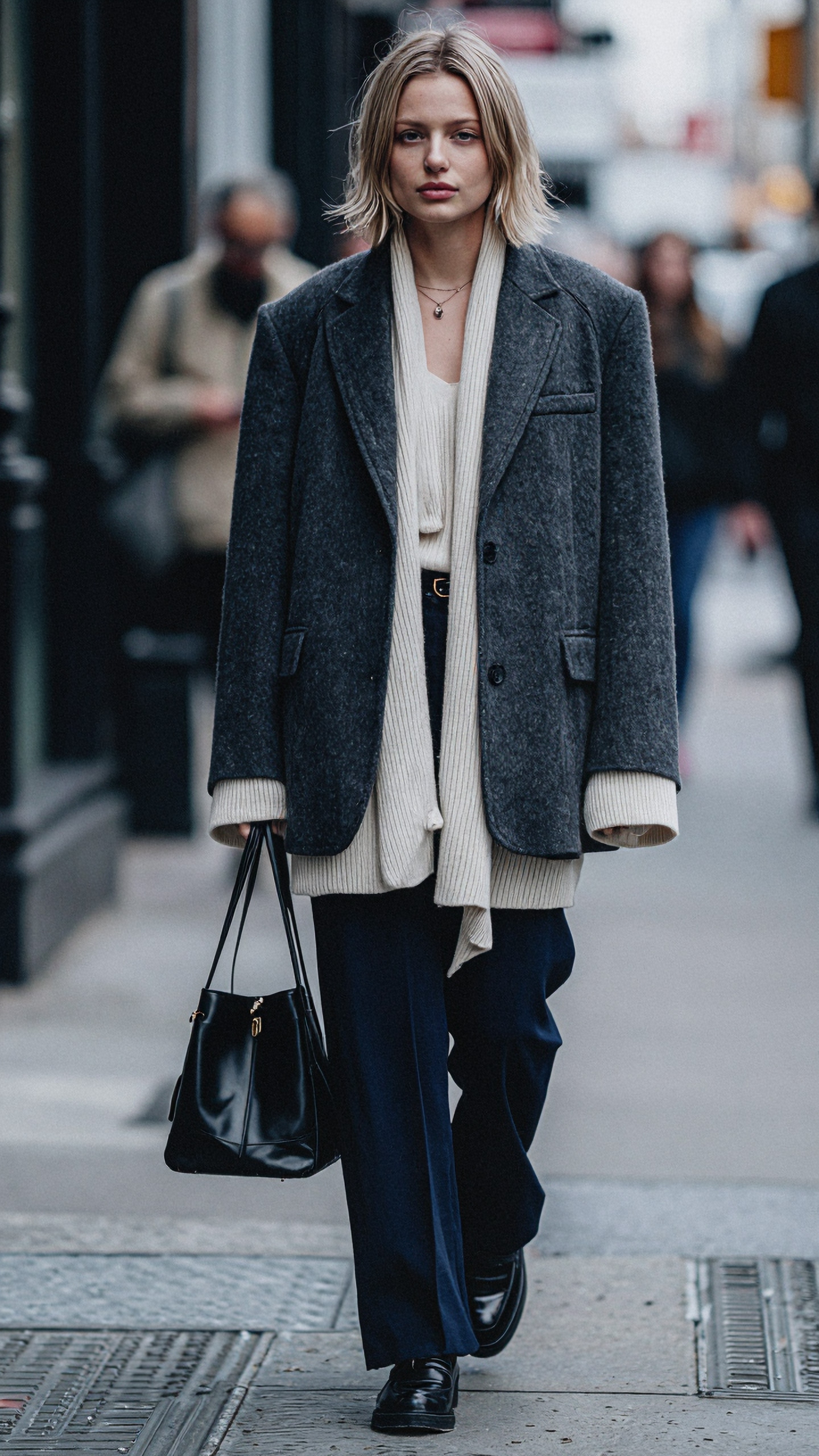
Inspect whether the blazer length feels wearable and whether the loafers remain visible. The strongest results kept the trousers clean and avoided random runway embellishment on the jacket.
Test 2: Long skirt plus boots, which often breaks on proportion
This test checked a common failure point: skirts either become too formal or the boots disappear into the hem. I used a slightly more directed silhouette description to stop that collapse.
Topic: Wearable runway long skirt styling for New York street style
Genre: Fashion Editorial
Camera: Nikon Z8
Lens: 50mm f/2
Lighting: Soft late afternoon daylight
Location: Upper East Side townhouse block with clean sidewalk lines
Style: Modern American fashion editorial
Final Prompt: three-quarter outfit editorial focused on a wearable runway to street silhouette, New York street style influence, crisp camel cropped jacket over a fitted black mock-neck knit, mid-calf fluid dark olive skirt with clear movement, black flat knee boots fully visible below hem, structured burgundy top-handle bag, leather gloves in hand, understated earrings, body turned slightly while walking, complete outfit logic readable, refined practical layering, polished but real city dressing, soft late afternoon light, elegant urban background, rich fabric texture in wool leather and fluid skirt material, magazine-grade composition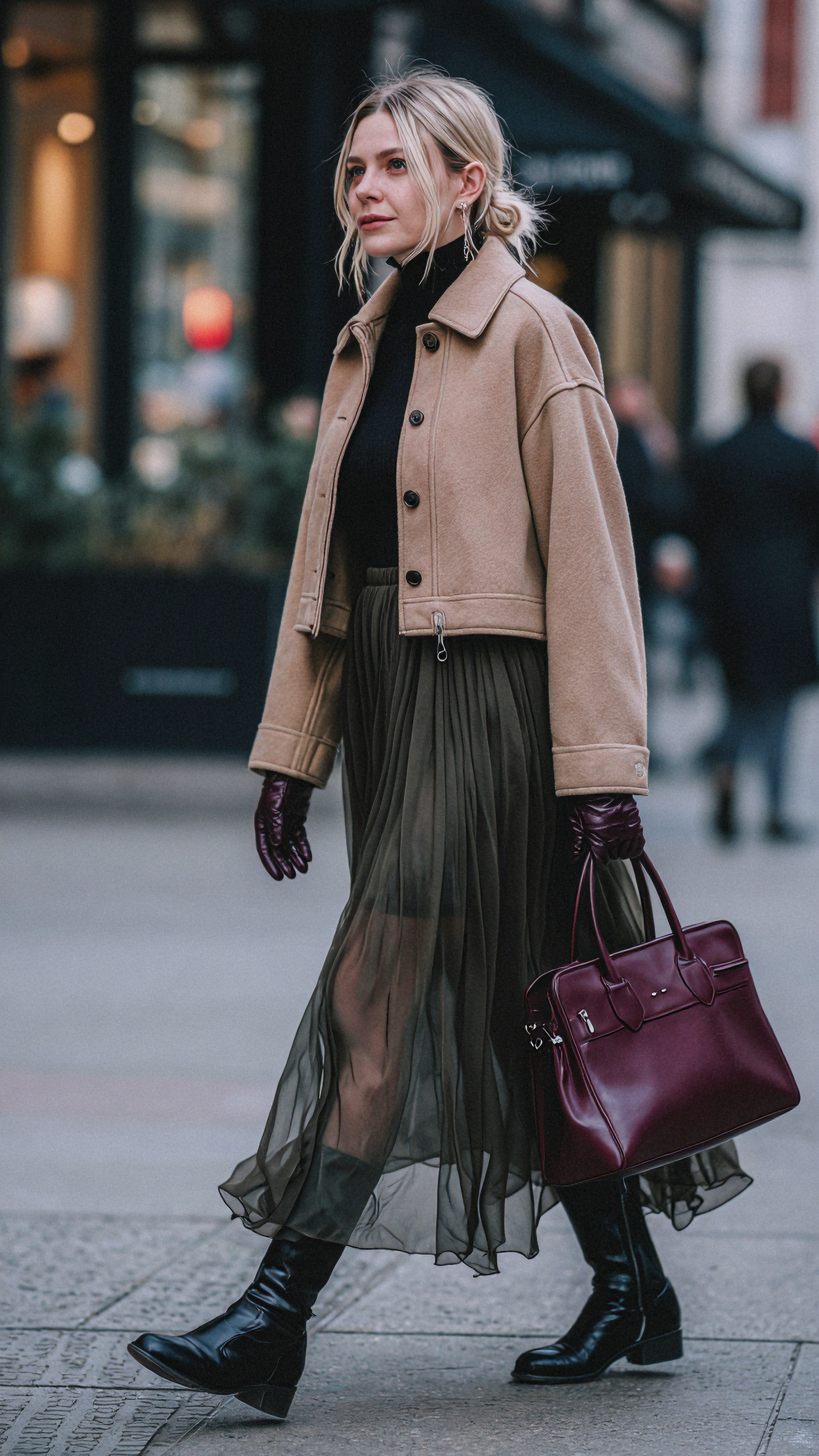
Inspect the gap between skirt hem and boot top. If the model hides the boot shaft or over-stylizes the jacket, the look stops reading as practical.
What needed correction
The weak point was predictable: as soon as the prompt leaned too hard on “runway,” some models introduced theatrical volume, impossible shoes, or styling contradictions. I saw these failure modes repeatedly:
- outerwear too oversized to function in real movement
- high-fashion accessories that did not match the rest of the outfit
- mixed seasonal signals, like heavy wool with bare-leg styling
- shapeless monochrome looks that sounded expensive in text but looked flat in image
- runway makeup or posing that pulled focus away from the clothes
The fix was not to remove fashion language entirely. The fix was to anchor the trend with practical constraints. Terms like “wearable proportions,” “repeatable wardrobe pieces,” “practical footwear,” and “complete outfit logic visible” did real work.
The prompt ingredients that changed the result
Four ingredients moved the output from inspiration-board to actual designer inspired outfits.
1. Shot type first, trend second
When I began with the shot type, the model understood what had to be visible. “Street-style full body” and “head-to-toe lookbook” outperformed vague editorial framing.
2. Layer order
Listing garments in the order a person would actually wear them improved coherence. Outerwear, top, bottom, shoes, bag, accessories produced fewer strange substitutions.
3. One trend anchor, not five
The best images had one clear trend signal: oversized blazer, dark denim, tonal monochrome, leather trench, or metallic accessory. Stacking too many current signals made the outfit synthetic.
4. Regional context
“New York sidewalk,” “Brooklyn coffee queue,” and “midtown office commute” created better US fashion trends outputs than generic “city street.” The scene pushed the styling toward reality.
Quick checklist: prompt ingredients that usually work
| Element | Strong version | Weak version | |---|---|---| | Shot plan | street-style full body, lookbook, storefront display | fashion photo, stylish portrait | | Trend anchor | one clear runway-inspired trend | multiple trend words stacked together | | Styling order | coat, top, bottom, shoes, bag, accessories | random garment list | | Wearability cue | practical footwear, wearable proportions | dramatic, avant-garde, statement everything | | Context | SoHo, Brooklyn, office commute, department store | city, urban, fashion background | | Inspection goal | texture, hemline, bag scale, layering | general beauty or mood |
Example prompts and inspection notes
Test 3: Dark denim polished enough for trend coverage
This prompt tested one of the safest runway to street translations this week: dark denim with sharper accessories. I used a lookbook format to check whether the pieces read as something people would actually copy.
Topic: Dark denim runway to street outfit trend for wearable US styling
Genre: Lookbook
Camera: Fujifilm GFX100S
Lens: 45mm f/2.8
Lighting: Clean studio window light
Location: Minimal downtown loft lookbook set
Style: Contemporary designer lookbook
Final Prompt: head-to-toe lookbook image of a wearable New York fashion week inspired dark denim outfit, full body centered framing, dark indigo straight-leg jeans with crisp structure, black fitted turtleneck tucked cleanly, cropped chocolate leather jacket, pointed flat slingbacks, slim espresso belt, oversized tortoiseshell sunglasses, medium suede tote bag, subtle gold cuff, quiet luxury palette with denim depth and leather contrast, standing pose with slight weight shift, complete silhouette visible, polished but practical American wardrobe styling, clean loft background, high fabric clarity, premium editorial lookbook composition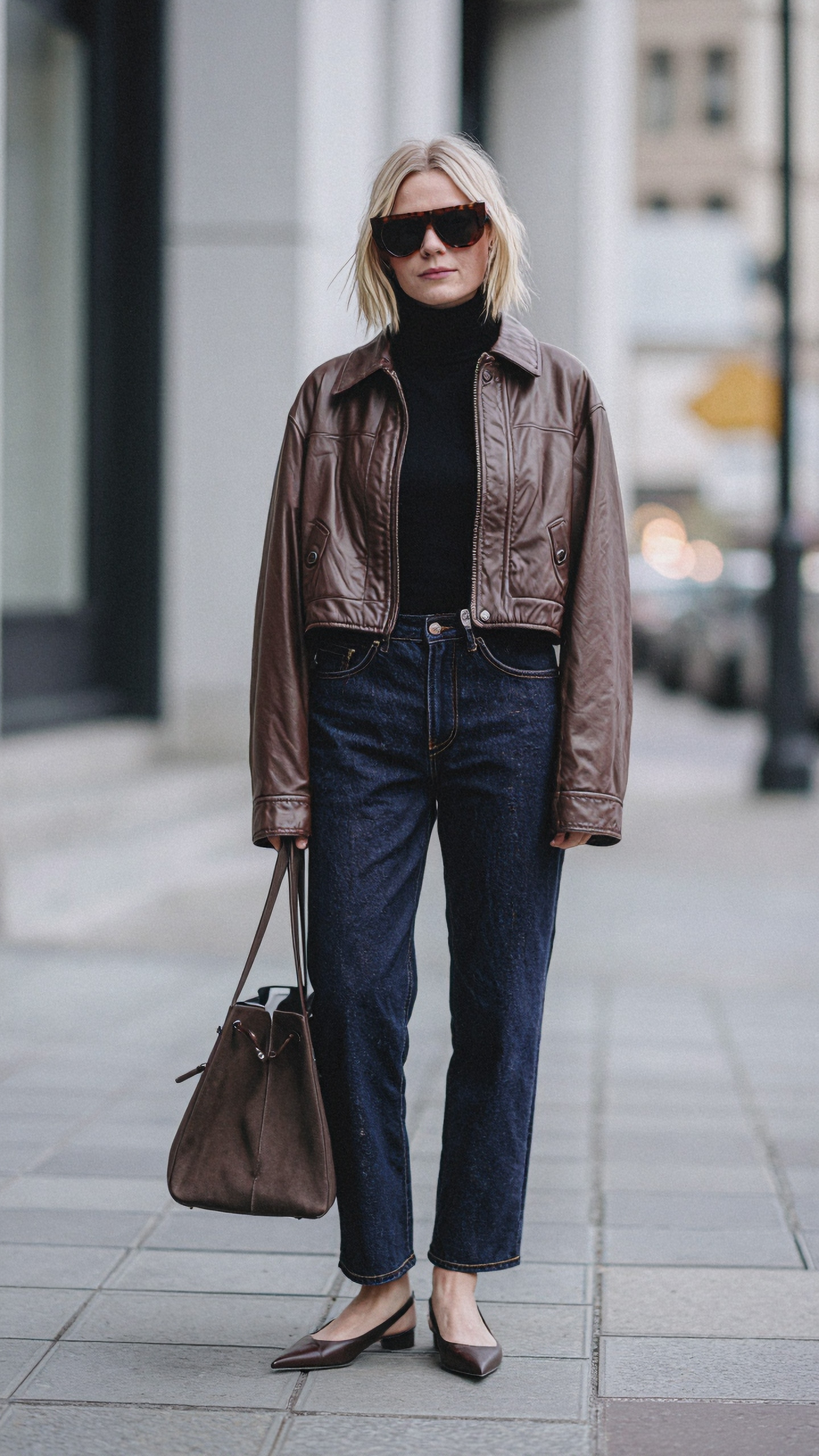
Inspect whether the denim stays dark and structured rather than turning washed-out or overly baggy. The best generations kept the jeans simple and let the leather jacket provide the runway signal.
Test 4: Sport-lux layering for real street style outfit ideas
This one was meant to test whether an athletic note could survive without looking like activewear. The key was to keep one tailored layer in place.
Topic: Sport-lux layering inspired by New York fashion week for city street wear
Genre: Street Style
Camera: Sony A7R V
Lens: 40mm f/2.5
Lighting: Bright cloudy daylight
Location: Brooklyn sidewalk near a cafe and brownstone corner
Style: Clean commercial street editorial
Final Prompt: street-style full body fashion image showing a wearable sport-lux runway to street outfit on a Brooklyn sidewalk, navy trench coat worn open over a heather gray zip-neck knit, crisp white tee base layer, tailored black ankle trousers, retro low-profile sneakers in off-white and gum sole, nylon crossbody bag, baseball cap in tonal navy, thin silver jewelry, confident mid-step pose, complete outfit visible, practical layering with city realism, textures of trench fabric knit jersey and technical nylon clearly rendered, palette of navy gray black and white, trend-led but everyday American styling, natural editorial composition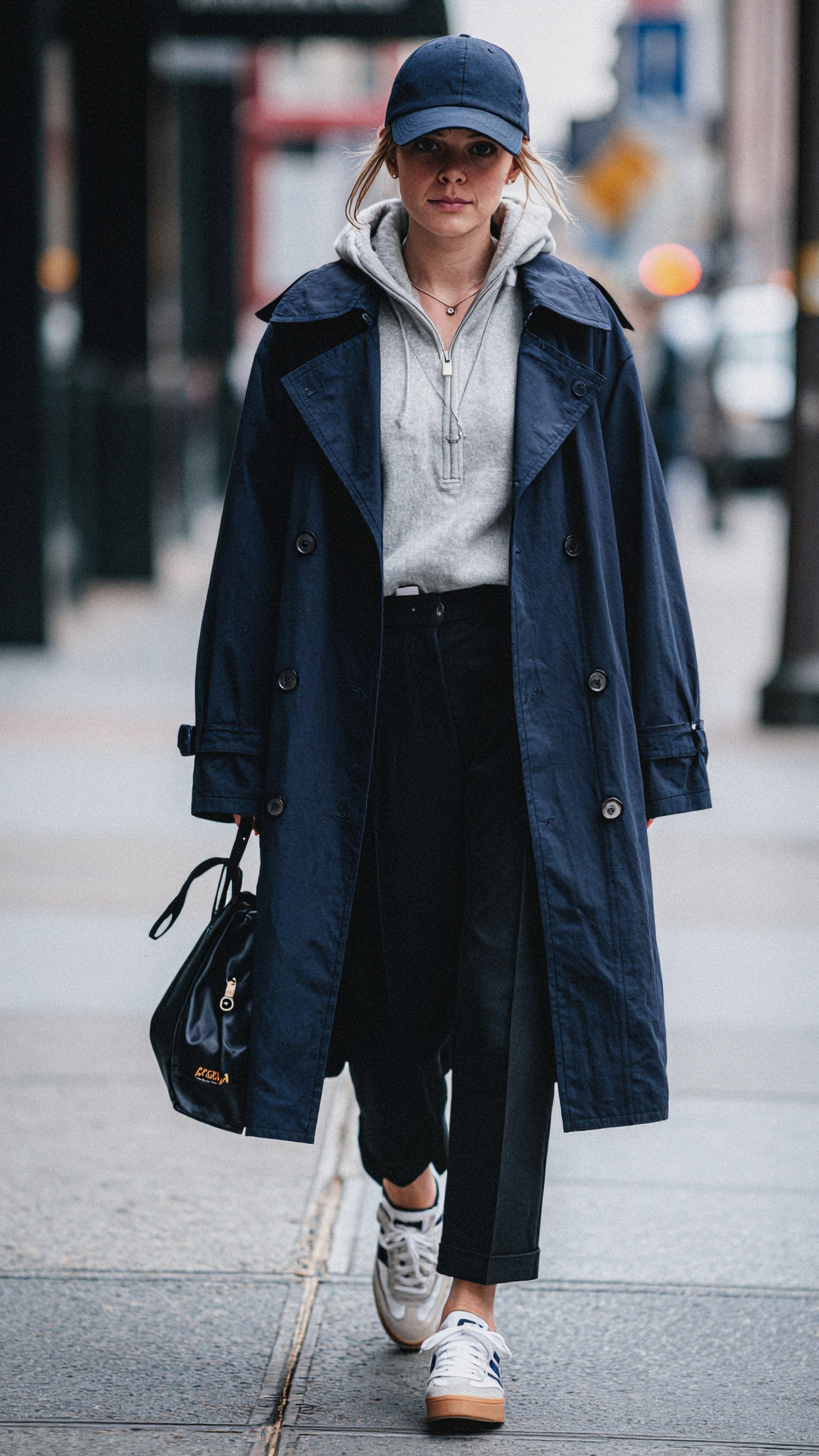
Inspect the shoe shape and trouser hem. If the sneakers become bulky or the coat loses structure, the sporty note starts overpowering the outfit.
Test 5: Statement outerwear without costume drift
Outerwear is where image models like to exaggerate. This test was built to keep the coat as the hero while grounding everything else.
Topic: Wearable statement coat from runway to street trends in New York
Genre: Fashion Campaign
Camera: Leica SL2-S
Lens: 50mm f/1.8
Lighting: Cold morning natural light with soft bounce
Location: Midtown crosswalk with clean architecture and muted traffic
Style: Luxury fashion campaign with practical styling
Final Prompt: street-style full body campaign image of a wearable runway-inspired statement outerwear look in New York, long oxblood leather trench coat with clean lines and realistic shine, fine black crewneck knit, charcoal straight trousers, sleek black ankle boots with low block heel, structured black satchel, leather gloves, minimal jewelry, crossing a midtown street with controlled movement, full outfit visible, coat remains dominant but proportions stay practical, cool urban atmosphere, refined American city style, visible leather grain and tailoring detail, sophisticated palette of oxblood charcoal and black, cinematic but realistic editorial finish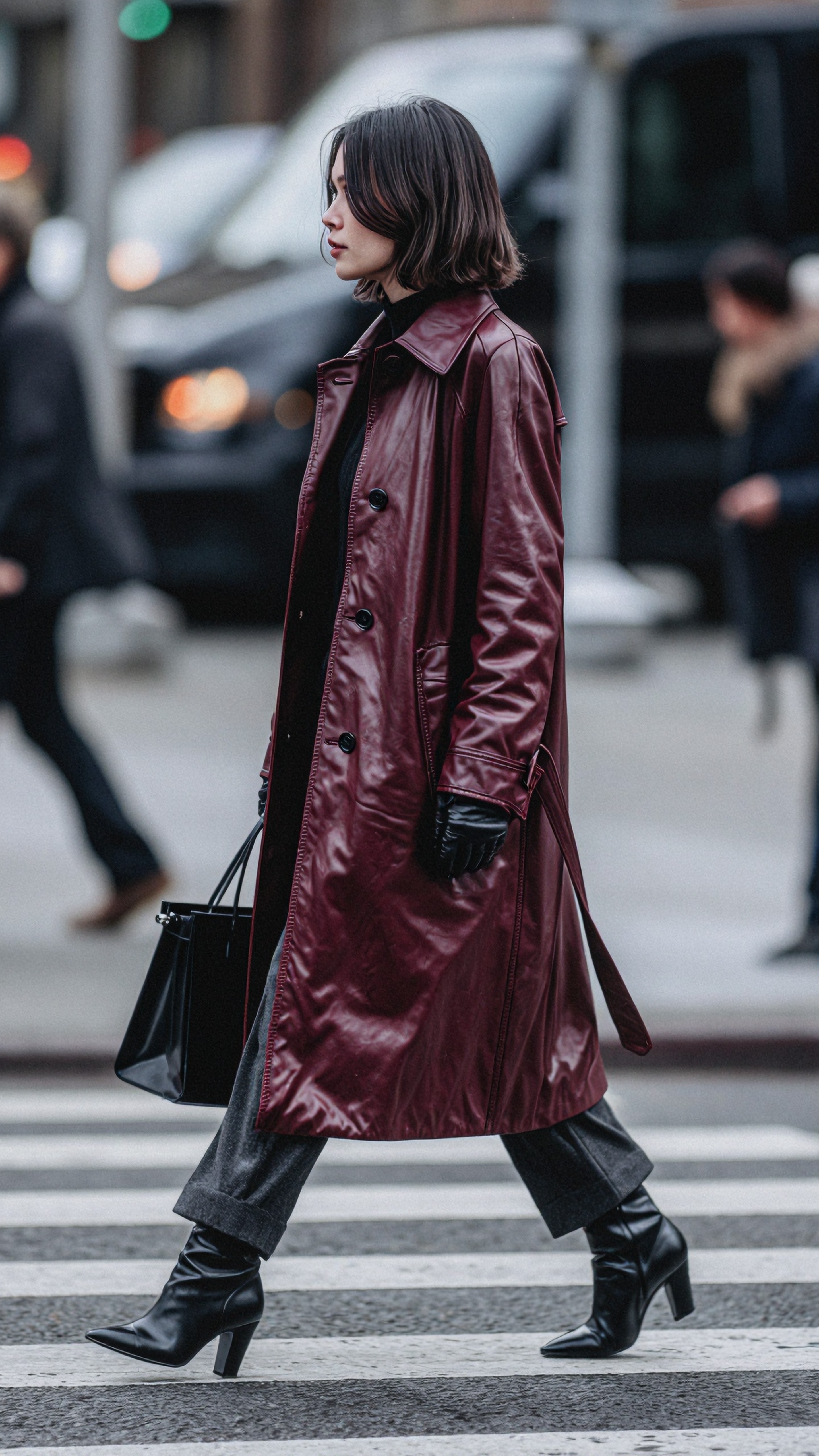
Inspect whether the trench keeps believable length and sleeve shape. Weak outputs often turned this into glossy sci-fi leather; strong outputs kept it matte and wearable.
Test 6: Catalog-grid planning for repeatable outfits
I included a catalog grid test because inspiration searchers often need combinations, not just one hero shot. This is useful when building multiple street style outfit ideas from one trend family.
Topic: Catalog grid of wearable runway inspired separates for US fall styling
Genre: Product Editorial
Camera: Phase One XF IQ4
Lens: 80mm f/2.8
Lighting: Softbox key light with clean fill
Location: E-commerce studio set with warm neutral backdrop
Style: Premium retail catalog
Final Prompt: catalog grid page showing a coordinated runway to street outfit trend assortment for New York inspired US styling, neatly arranged wearable separates and accessories including oversized taupe blazer, black rib knit top, dark denim trousers, pleated midi skirt, loafers, flat knee boots, structured shoulder bag, suede tote, slim belt, silk scarf, gold hoop earrings, each item clearly separated but visually cohesive, premium retail styling, neutral warm backdrop, clean commercial layout, sharp product edges, realistic fabric textures, fashion-forward but practical wardrobe system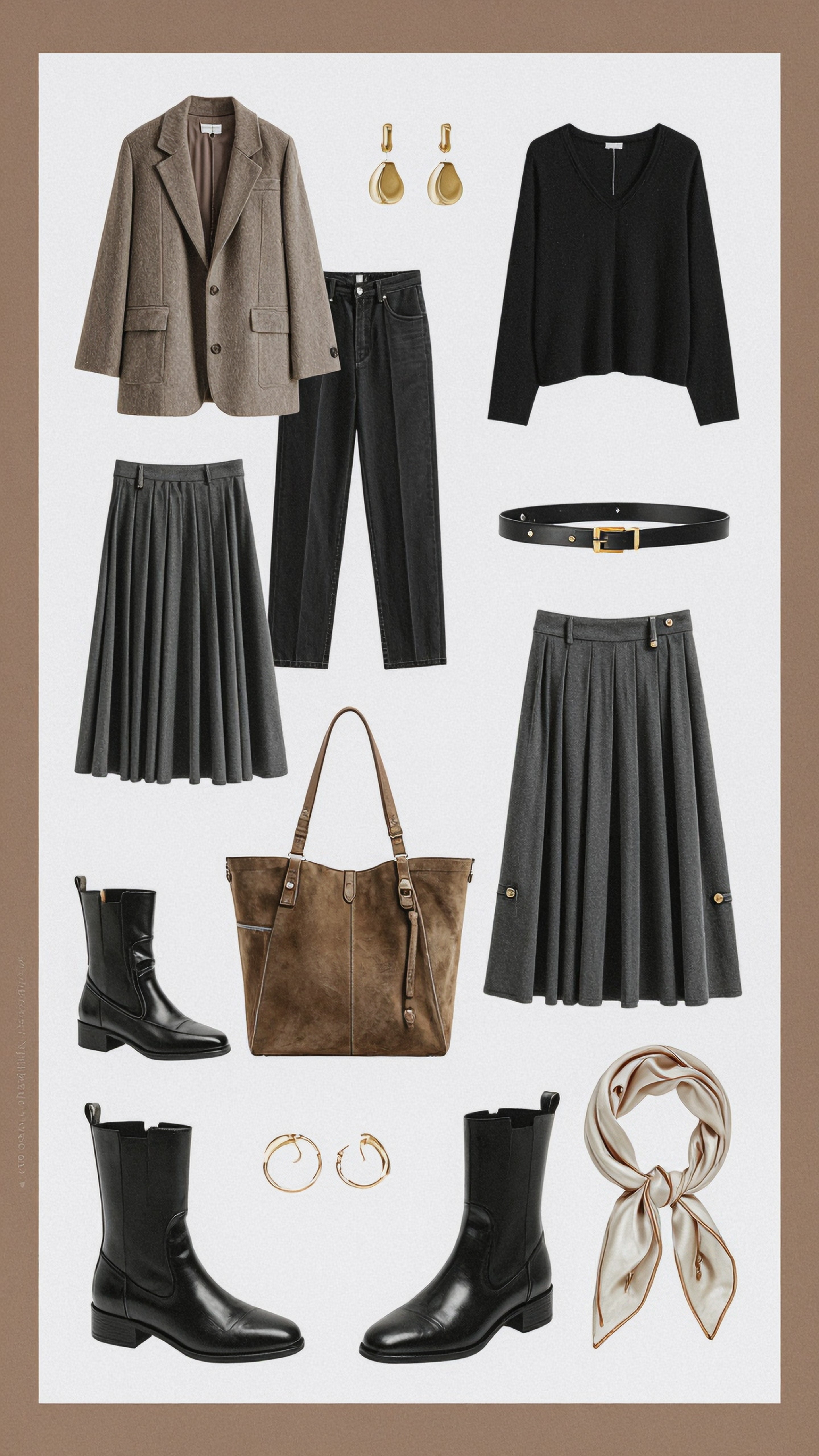
Inspect product clarity and whether the garments share one visual language. The best result should feel like a real mini capsule, not a random collage of trend pieces.
When textures failed and how I corrected them
Texture mattered more than trend naming. Wool, leather, denim, and knit all need distinct surfaces or the outfit looks cheap and flat.
When the first pass blurred material differences, I added:
- “visible leather grain”
- “rib-knit texture”
- “crisp structure”
- “fluid skirt material”
- “matte wool finish”
That usually improved separation between garments. If detail was still weak, I would generate wider for composition, then clean the winning image in the [Upscaler](/upscaler). For side-by-side testing of small prompt changes, [Create](/create) is the faster way to compare outfit fidelity.
Test 7: Garment detail macro for fabric honesty
This prompt checked whether the trend survives close inspection. If the macro fails, the full-body image is often only succeeding at a distance.
Topic: Garment detail macro of layered wearable runway fabrics
Genre: Product Editorial
Camera: Canon EOS R3
Lens: 85mm f/2 macro
Lighting: Directional window light with white bounce
Location: Minimal studio corner with garment rack nearby
Style: High-end fashion material study
Final Prompt: garment detail macro of a wearable runway to street outfit focusing on the meeting of materials, cropped view showing oxblood leather trench lapel, charcoal wool trouser waistband, black rib-knit sweater texture, silk scarf edge, and gold hardware on a structured bag strap, editorial fashion material study, directional soft daylight, premium tactile realism, subtle shadow depth, luxury but practical wardrobe language, color palette of oxblood charcoal black and warm gold, extremely clear texture separation, clean composition intended for fashion inspection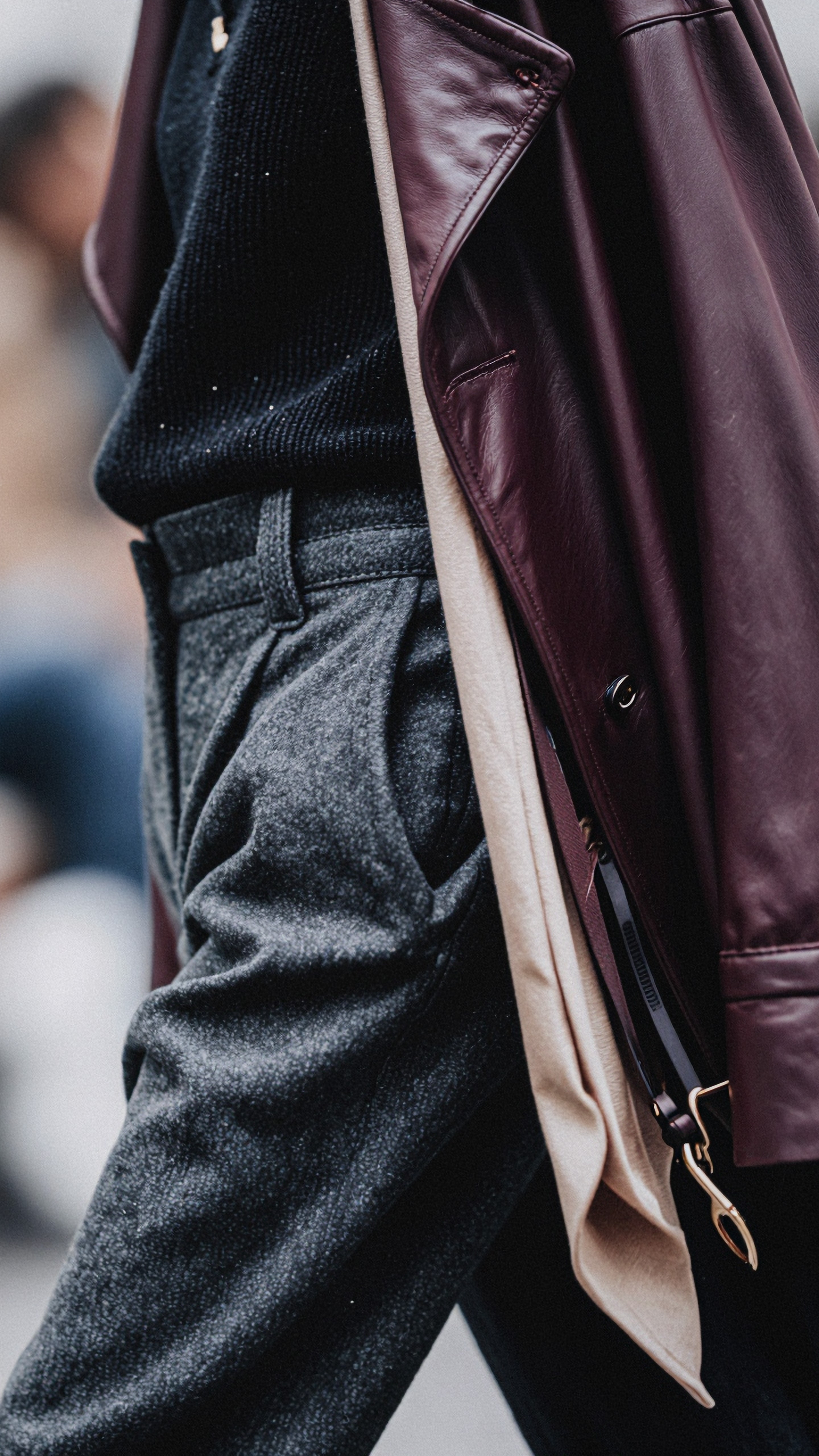
Inspect whether each material is distinct on first glance. If the leather, wool, and knit all read as one generic smooth surface, the prompt needs stronger texture vocabulary.
When to switch models or settings
Not every model likes fashion prompts in the same way. In this test, I would switch models or settings in three situations.
Switch when full-body proportion keeps breaking
If legs, hems, or shoe scale distort across generations, move to a model that handles pose and apparel structure more consistently. Fashion is less forgiving than portrait work because one bad proportion ruins the outfit logic.
Switch when accessories merge into the clothing
Bags disappearing into coats, belts melting into trousers, and jewelry duplicating are signs the model is not separating objects cleanly. A cleaner commercial or catalog-tuned model often helps.
Switch when the prompt keeps getting more complicated
If you need five corrective clauses to keep the look wearable, the model is fighting the task. That is usually the point to simplify the prompt or change engines rather than stack more instructions.
Test 8: Storefront display for trend translation without a person
This test was useful for checking whether the trend itself is coherent as merchandising. If the storefront works, the outfit family is probably strong enough to style multiple ways.
Topic: New York fashion week inspired storefront display of wearable runway to street looks
Genre: Retail Editorial
Camera: Panasonic Lumix S1R
Lens: 24-70mm at 45mm f/4
Lighting: Early evening storefront illumination with soft interior spotlights
Location: Madison Avenue boutique window display
Style: Luxury retail visual merchandising
Final Prompt: storefront display featuring wearable runway to street outfit trends inspired by New York fashion week, three mannequins styled in coordinated but practical US fashion looks, first look with oversized camel blazer and dark denim, second look with black knit and olive midi skirt with flat boots, third look with oxblood leather trench and charcoal trousers, visible bags shoes scarves and jewelry, elegant retail merchandising, polished glass reflections, early evening city ambience, warm interior spotlights highlighting fabric texture, sophisticated palette, trend-led but accessible styling system, high-end department store window composition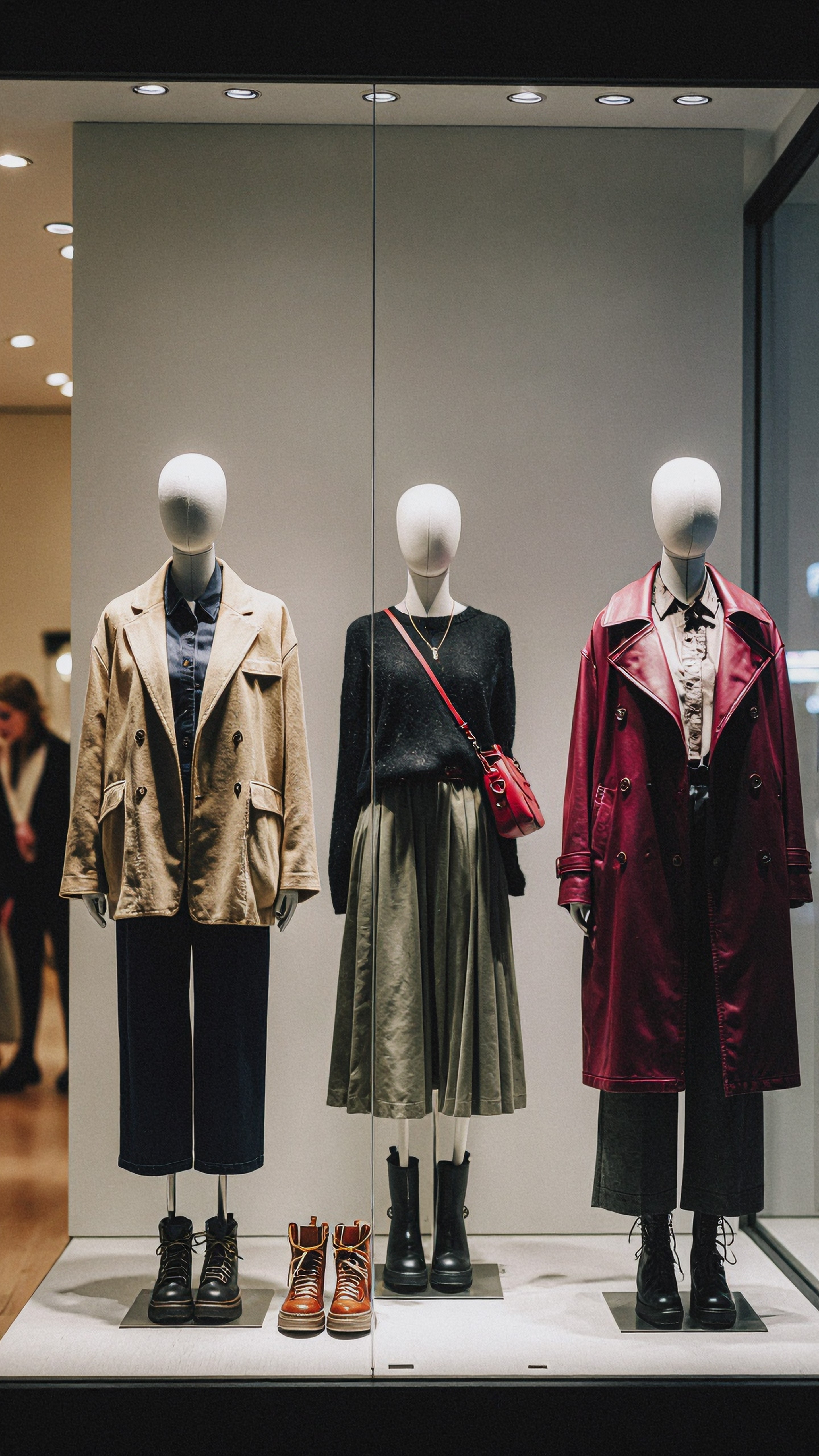
Inspect whether each mannequin has a complete outfit story and whether the display feels shoppable. Weak results often make one look strong and the others generic.
Practical recommendations from this test
If your goal is inspiration, not fantasy fashion art, build prompts around one trend + one wearable context + one full outfit system.
What worked best in this session:
- oversized tailoring with slim knit underlayers
- dark denim styled with leather or structured outerwear
- long skirts with flat or low-heel boots
- tonal neutral dressing with one richer accent color like oxblood or burgundy
- medium-size structured bags instead of tiny novelty accessories
What I would avoid if the aim is wearable output:
- “avant-garde” unless you truly want runway exaggeration
- vague terms like “chic” or “fashion forward” without garment specifics
- too many accessories in one prompt
- portrait crops for outfit decision-making
- mixing trend signals from different seasons
FAQ
What are the easiest runway to street trends to wear in the US right now?
Relaxed tailoring, dark denim, leather outerwear, long skirts with flat boots, and tonal knit-based layering are the easiest to translate into daily outfits.
How do I make New York fashion week prompts look wearable instead of theatrical?
Use practical context, full-body framing, visible shoes, realistic bag scale, and terms like “wearable proportions” or “repeatable wardrobe pieces.” Keep one trend anchor per prompt.
Which shot type is best for street style outfit ideas?
Street-style full body is the best starting point. It shows silhouette, hemline, layering, and footwear at once.
Why do fashion image prompts often fail on shoes and bags?
These are small but decisive styling elements. If the prompt does not explicitly include shoe type, bag shape, and scale, the model often improvises badly.
Should I use editorial or catalog prompts for designer inspired outfits?
Use editorial prompts when you want mood and context. Use catalog or lookbook prompts when you need clearer shopping logic and repeatable outfit structure.
Closing operator note
For readers looking for runway to street outfit trends this week, this workflow is best for people who want inspiration they can actually act on: stylists building references, content teams planning trend visuals, and shoppers translating New York fashion week energy into realistic outfits. It is less useful if your goal is pure fantasy fashion imagery, because the prompts here intentionally constrain drama.
The setting that mattered most was not a secret filter. It was the prompt detail that forced the model to respect the outfit as a system: shot type, full-body visibility, practical footwear, and explicit layering order. If I were running the next round, I would keep those locked, then vary only one trend signal at a time.
For more workflow testing, browse [articles](/articles) for prompt breakdowns and use [tools](/tools) when you need to compare generation, prompt extraction, and finishing steps in one place.