This tutorial shows how to generate a usable Scandinavian fashion capsule wardrobe lookbook with AI image models without drifting into generic beige portraits or luxury-campaign nonsense. In this test, I built eight prompt variations around clean summer layers, everyday luxury, and capsule wardrobe logic, then compared which prompt ingredients actually kept the outfit structure visible.
The goal is simple: get consistent outfit images that show silhouette, fabric, layering, shoes, bag, and styling context clearly enough to use for mood boards, concept decks, or prompt iteration inside [Prompt Lab](/promptlab) and image batches in [Create](/create).
Quick answer
- Use shot type first, then build the outfit. Models hold Scandinavian styling better when the framing is defined before the garments.
- Keep the palette narrow: ivory, stone, oat, soft blue, black, muted sage performed better than broad color language.
- The strongest prompts described layer logic: overshirt over tank, wide-leg trouser break, leather sandal, slouch tote, fine jewelry.
- Weak outputs usually failed on shoe visibility, trouser length, or turning minimalism into blank basics with no material contrast.
- For a true capsule wardrobe Europe feel, specify practical luxury textures like poplin, linen, light wool, brushed cotton, suede, and pebbled leather.
What was tested
I tested a summer-focused Scandinavian minimalist outfit workflow across eight shot plans:
- street-style full body
- three-quarter outfit editorial
- head-to-toe lookbook
- catalog grid page
- runway/backstage moment
- product flat lay
- storefront display
- accessories close-up
The test criteria were practical rather than aesthetic-only:
| Checkpoint | What I looked for | Common failure | |---|---|---| | Outfit readability | Can you identify every major garment quickly? | Blurred layering or cropped shoes | | Capsule logic | Do the pieces feel repeatable across looks? | Random trend items with no system | | Scandinavian fashion signal | Clean lines, muted palette, useful luxury | Generic influencer styling | | Texture realism | Linen, cotton, leather, knit separation | Plastic fabric or over-smoothed cloth | | Summer wearability | Light layers and breathable structure | Heavy coats or autumn drift |
Before you generate: preparation checklist
Before writing prompts, define the wardrobe system. This matters more than adding extra adjectives.
Preparation checklist for a Scandinavian minimalist outfit set
- Choose a 12-piece capsule base before prompting.
- Limit the palette to 4 core neutrals + 1 accent.
- Decide whether the output is for lookbook, retail, editorial, or mood board.
- Use one regionally clear context: Scandinavian minimalist retail, Copenhagen street, Nordic apartment, clean studio set.
- Write garment names that imply fit: boxy shirt, wide-leg trouser, straight midi skirt, relaxed blazer, minimal leather sandal.
- Add one or two luxury signals only: soft calfskin tote, brushed silver cuff, fine rib knit.
In this test, the best-performing base capsule was:
- white poplin shirt
- oatmeal linen blazer
- black rib tank
- cream fine-gauge knit
- wide-leg stone trousers
- black tailored shorts
- straight ivory midi skirt
- blue relaxed denim
- leather slide sandal
- black ballet flat
- tan suede tote
- slim silver jewelry
Step 1: Lock the silhouette before the mood
The biggest improvement came from leading with body framing and outfit visibility. If I started with vague trend language like "clean girl summer" or "quiet luxury minimal style," the model often produced polished but unhelpful images.
For a Scandinavian fashion capsule wardrobe, the prompt works better when it says exactly how the outfit should read head to toe.
This first test checks whether a street-style frame can preserve full outfit logic without over-stylizing the subject.
Topic: Scandinavian fashion capsule wardrobe street look with clean summer layers
Genre: Street Style
Camera: Canon EOS R5
Lens: 35mm f/2
Lighting: Overcast diffusion
Location: Copenhagen side street with pale stone buildings, bicycles, minimal storefronts
Style: Scandinavian minimalist editorial
Final Prompt: street-style full body fashion shot of a Scandinavian fashion capsule wardrobe outfit, complete head-to-toe visibility, relaxed boxy white poplin shirt worn open over a black rib tank, high-waisted stone wide-leg trousers with a clean break, black leather slide sandals, tan suede tote, slim silver cuff and small hoops, hair simple and natural, walking pose with slight motion, muted palette of ivory stone black and tan, soft overcast Nordic light, Copenhagen street context with restrained architecture, documentary fashion framing, emphasis on garment proportion, breathable summer layering, crisp fabric texture, practical everyday luxury, editorial realism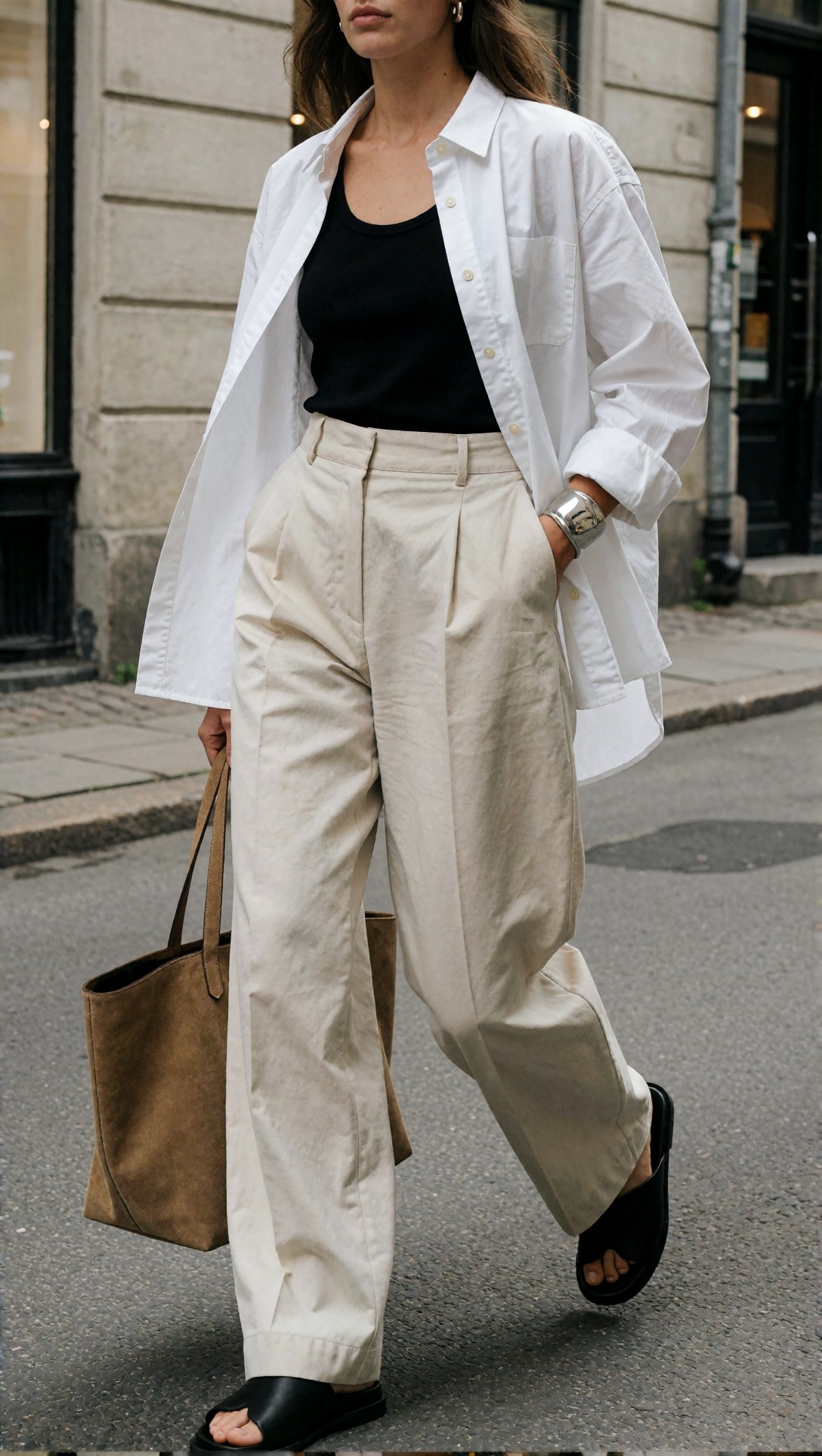
Inspect whether the sandals, trouser hem, and tote remain visible at once. In my test, this framing gave the most reliable outfit read, but some outputs still over-fitted the shirt at the waist.
This second test checks whether a more controlled editorial frame can keep the same outfit logic while improving fabric separation.
Topic: Scandinavian minimalist outfit with tailored summer layering
Genre: Fashion Editorial
Camera: Sony A7R V
Lens: 50mm f/2
Lighting: Window light with soft bounce
Location: Nordic apartment interior with limewashed walls, oak floor, sheer curtains
Style: Clean commercial look
Final Prompt: three-quarter outfit editorial featuring a Scandinavian minimalist outfit built as a summer capsule wardrobe, model standing near a tall window in a calm Nordic apartment, oatmeal linen blazer over a black rib tank, stone pleated wide-leg trousers, black ballet flats visible, tan suede tote placed in hand, fine silver jewelry, relaxed but upright posture, neutral expression, light oat ivory black palette, soft directional window light, visible linen weave and cotton rib texture, uncluttered Scandinavian interior, modern everyday luxury, composition focused on silhouette, layer balance, and premium material contrast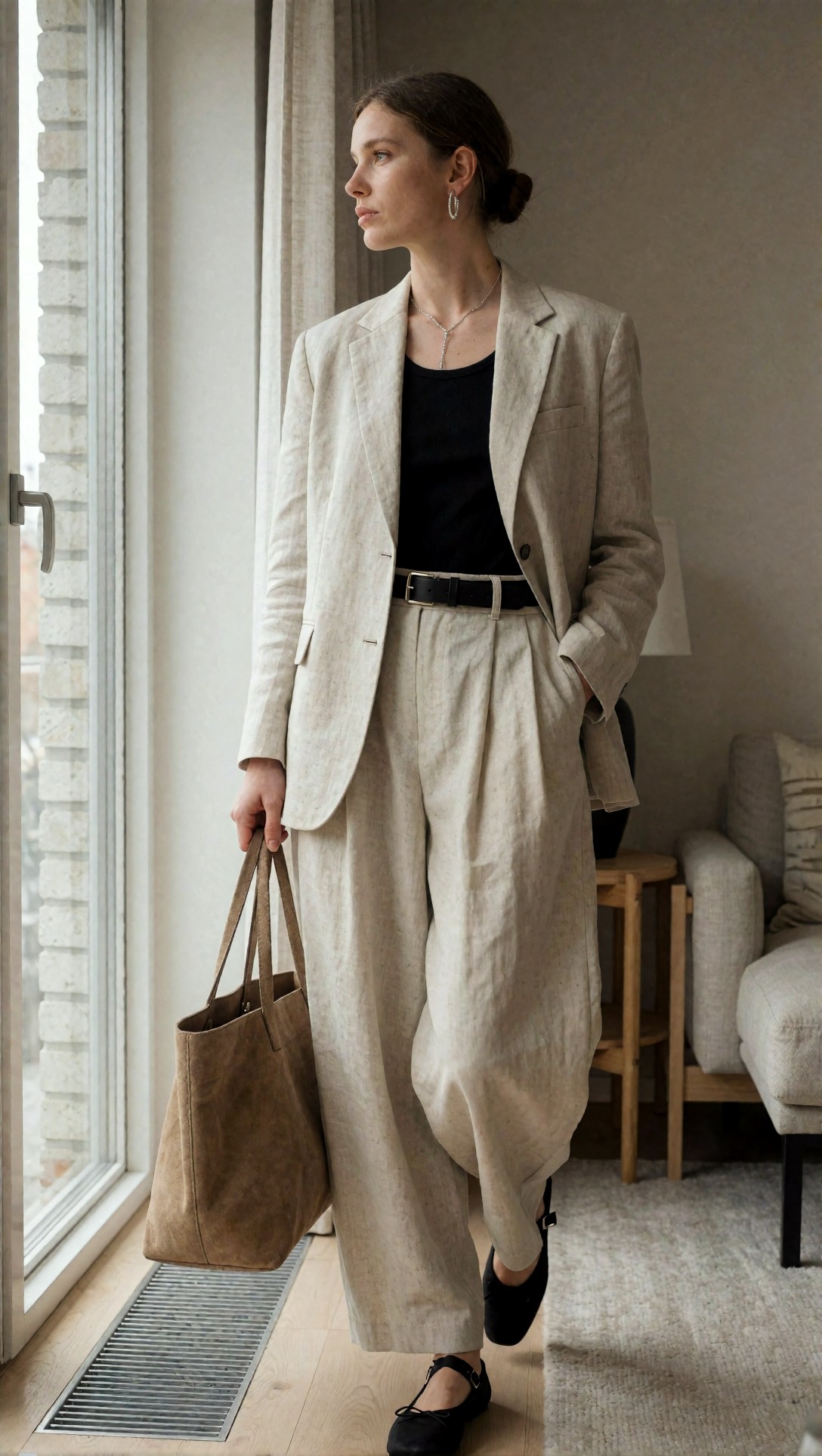
Check if the blazer still looks breathable rather than corporate. The strong outputs kept the blazer unstructured; weak ones turned it into a formal suit jacket with shoulder pads.
Step 2: Build capsule repetition into the prompt
A capsule wardrobe lookbook fails if every image looks like a different brand campaign. I got better consistency by repeating two to three anchor pieces across shots.
For this step, I tested a classic lookbook angle that should show wardrobe repeatability and proportion with almost no scene noise.
Topic: Scandinavian fashion capsule wardrobe core lookbook outfit
Genre: Lookbook Photography
Camera: Nikon Z8
Lens: 40mm f/2
Lighting: Soft studio daylight simulation
Location: Seamless warm white studio set
Style: Minimal luxury lookbook
Final Prompt: head-to-toe lookbook image on a seamless studio background showing a Scandinavian fashion capsule wardrobe summer outfit, full body centered composition, cream fine-gauge knit tucked into an ivory straight midi skirt, black leather belt, black ballet flats, tan structured tote, delicate silver chain, clean posture with slight shift in weight, styling focused on proportion and repeatable capsule pieces, muted neutrals with subtle contrast, soft studio daylight effect, premium textile detail, quiet Scandinavian fashion direction, no excessive posing, no dramatic glamour, clear retail-ready outfit visibility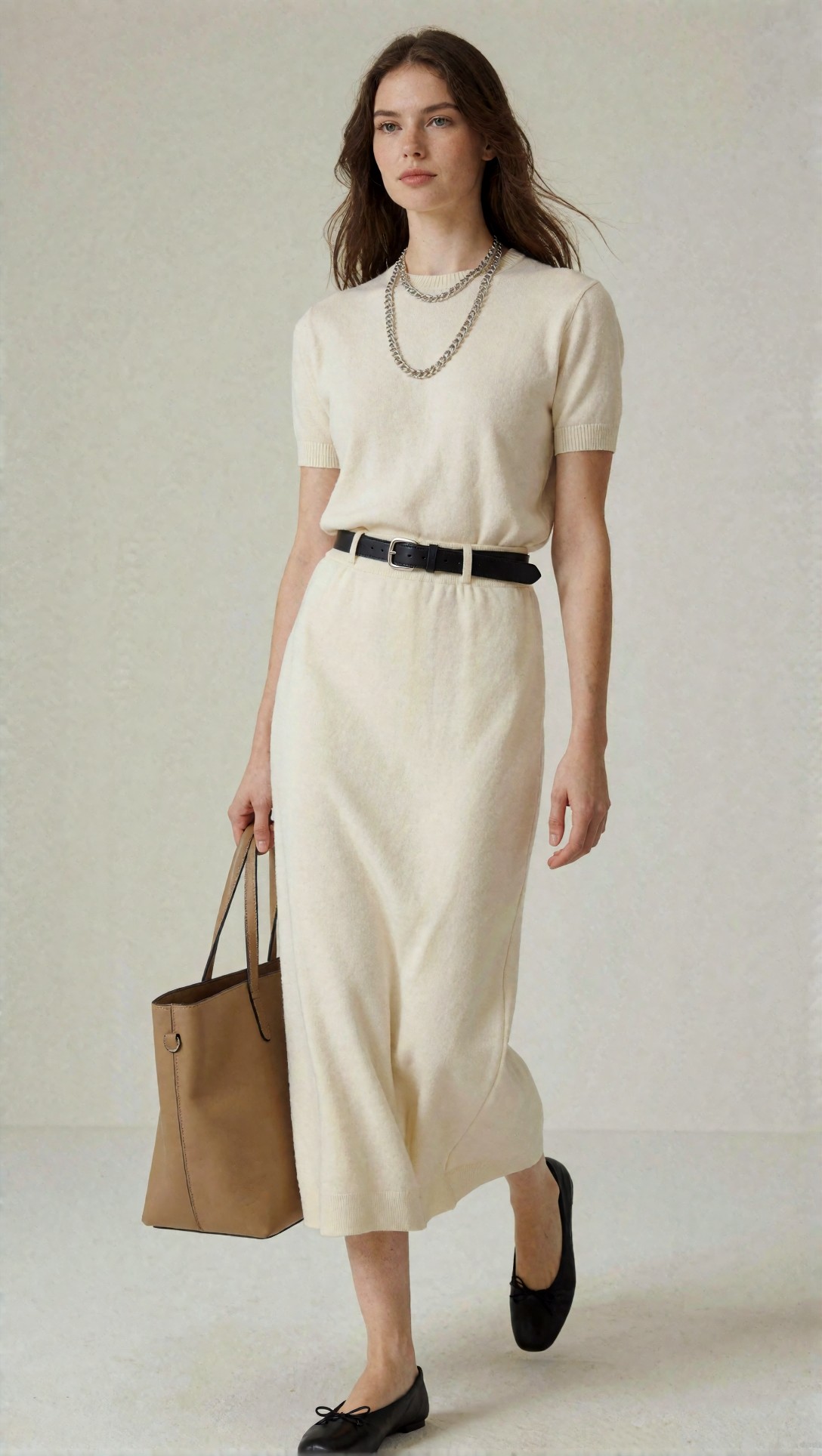
Inspect whether the knit, skirt, flats, and tote feel like reusable wardrobe components rather than one-off styling props. In the strongest images, the knit texture and skirt drape were easy to read; weaker images merged them into one flat ivory block.
This test checks whether a catalog-grid concept can communicate a capsule wardrobe lookbook better than single-image editorials.
Topic: Capsule wardrobe Europe summer catalog page in Scandinavian style
Genre: Product Editorial
Camera: Fujifilm GFX100S
Lens: 45mm f/2.8
Lighting: Large softbox top light with gentle fill
Location: Minimal studio layout board with editorial grid composition
Style: High-end catalog design
Final Prompt: catalog grid page showing a Scandinavian fashion capsule wardrobe for summer, multiple coordinated outfit panels in one composition, each panel displaying a repeatable capsule combination using white poplin shirt, black rib tank, stone trousers, tailored black shorts, ivory midi skirt, oatmeal blazer, slide sandals, ballet flats, suede tote and silver jewelry, clean magazine layout feeling, restrained Scandinavian design language, soft neutral shadows, precise garment separation, luxury retail presentation, emphasis on wardrobe system rather than personality, cohesive oat ivory black and soft blue palette, premium editorial merchandising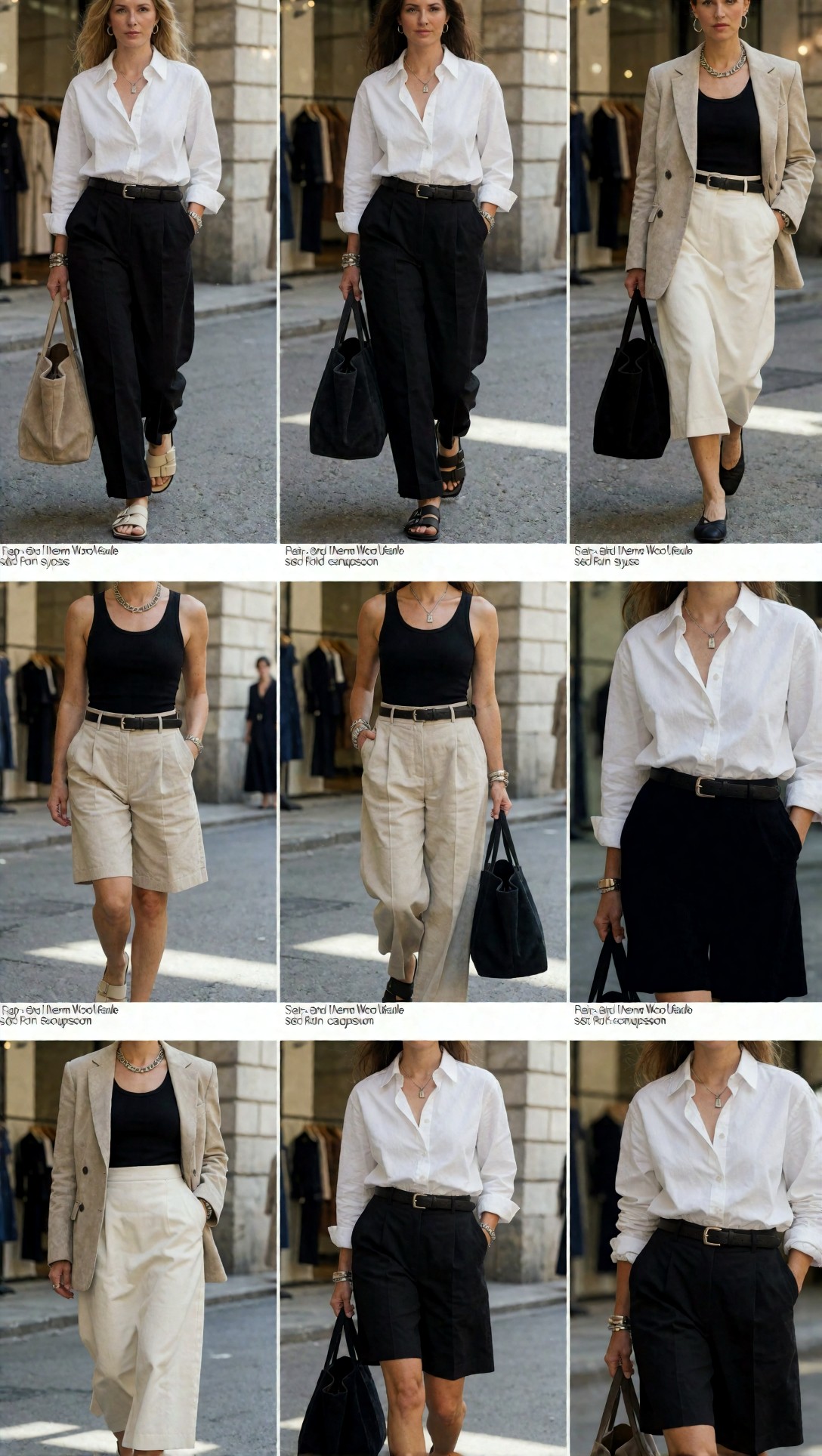
Look for consistency across the panels. The weak point here was model drift: some generators changed body shape, fabric tone, or shoe style panel to panel. If that happens, use this more as a mood-board generator than a strict e-commerce layout.
Step 3: Add trend signal without losing the minimal wardrobe
The search interest around clean girl summer can easily push prompts toward beauty-led content. In this test, the best approach was to treat trend language as a small modifier, not the core instruction.
This prompt checks whether a runway/backstage format can add trend energy while keeping the styling system readable.
Topic: Clean girl summer interpreted as Scandinavian fashion capsule wardrobe backstage look
Genre: Runway Documentary
Camera: Leica SL2-S
Lens: 24-70mm at 45mm f/2.8
Lighting: Mixed backstage tungsten with soft flash fill
Location: Copenhagen fashion week backstage rail and styling area
Style: Trend-led fashion reportage
Final Prompt: runway backstage moment focused on a Scandinavian fashion capsule wardrobe summer look, full outfit visible in candid documentary framing, white oversized shirt layered over a fine black tank and tailored black shorts, black ballet flats, suede tote on styling table, silver jewelry, garment rack in background with matching neutral capsule pieces, clean girl summer mood translated into practical Scandinavian styling, fresh restrained makeup, emphasis on fabrics and outfit assembly, warm backstage ambient light with gentle flash fill, editorial realism, trend-aware but not glamorous, visible clothing rails, notes, and minimalist fashion-week context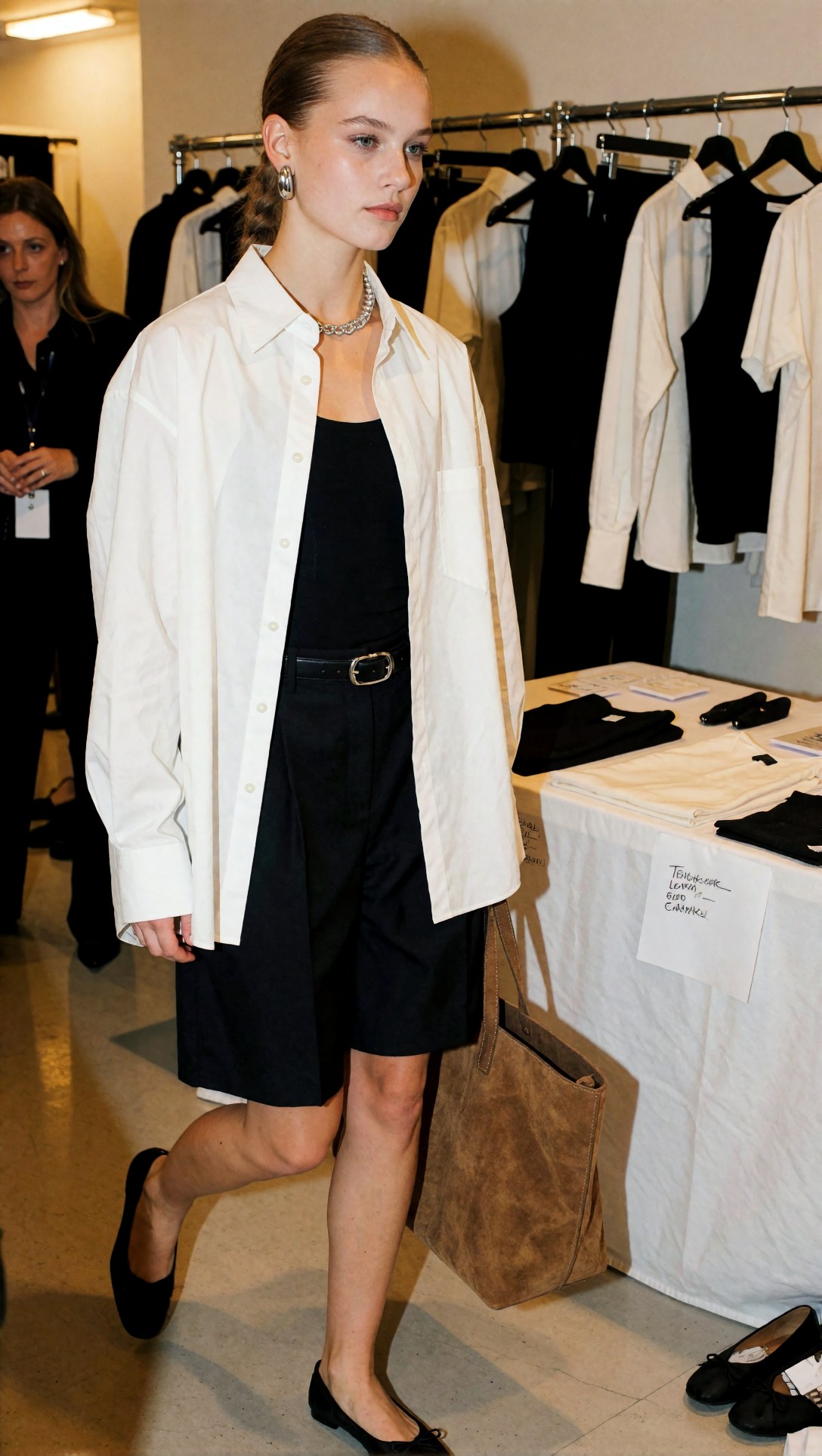
Inspect whether the outfit still reads as wearable and modular. The better outputs showed clear backstage context without turning into chaotic event photography.
This next test is useful when you want a more aspirational image for a mood board or gallery, but still need head-to-toe logic.
Topic: Scandinavian fashion summer campaign built from capsule wardrobe pieces
Genre: Luxury Campaign
Camera: Hasselblad X2D 100C
Lens: 55mm f/2.5
Lighting: Late afternoon natural light with soft negative fill
Location: Scandinavian minimalist retail courtyard with pale concrete and oak accents
Style: Elegant resort editorial
Final Prompt: head-to-toe fashion campaign image centered on a Scandinavian fashion capsule wardrobe, relaxed summer luxury styling with oatmeal linen blazer draped over shoulders, white tank, soft blue relaxed denim, black leather sandals, tan suede tote, silver cuff, calm confident pose, pale concrete courtyard outside a minimalist Nordic boutique, clean architectural lines, soft late afternoon light, premium denim and linen texture, understated elegance, no loud logos, no clutter, visual focus on the layered outfit system and refined everyday wearability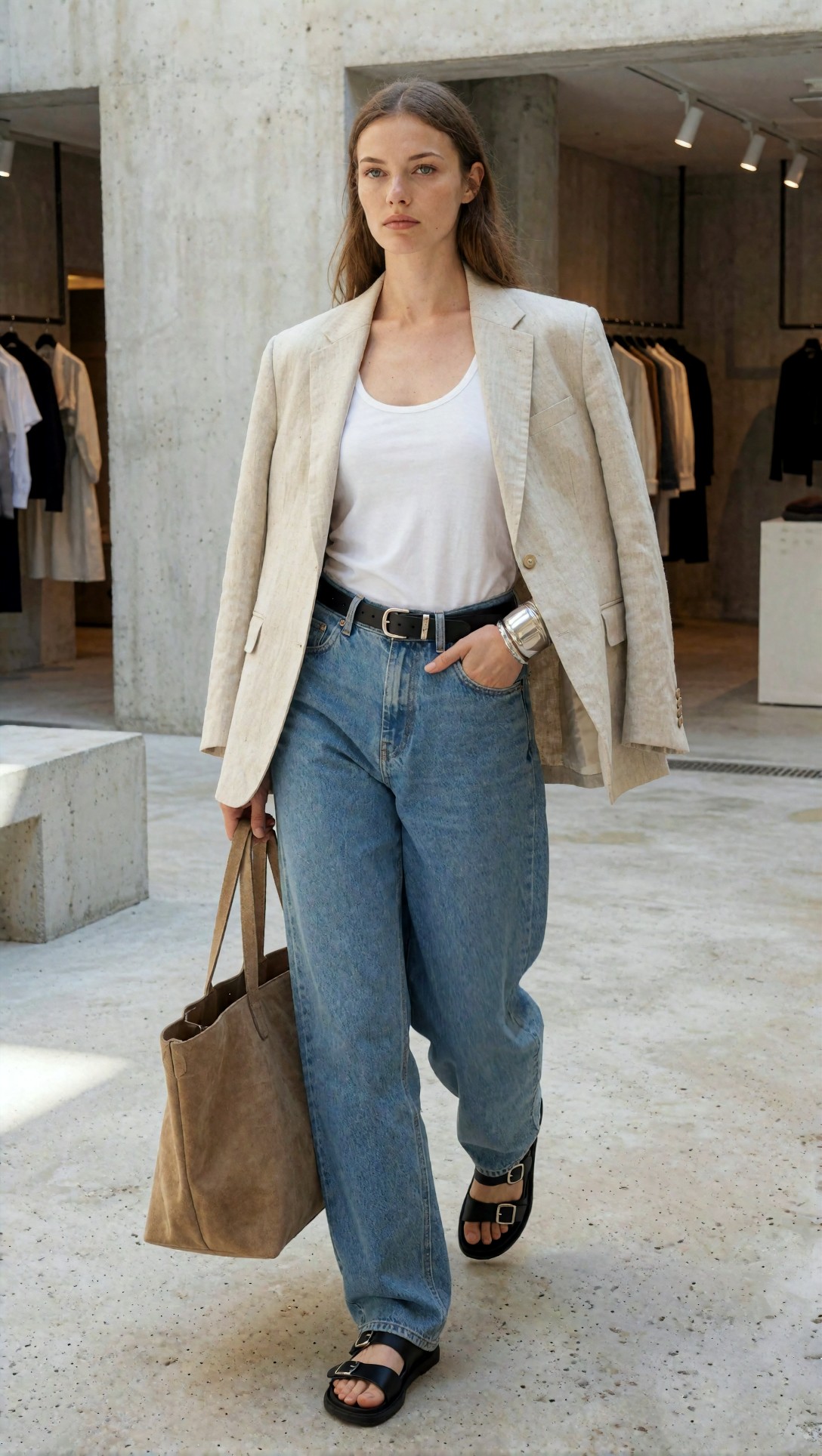
Check whether the denim stays relaxed rather than distressed or overly trendy. In my test, mentioning "soft blue relaxed denim" worked better than simply saying jeans.
Step 4: Generate support images that make the wardrobe believable
A lookbook gets more useful when you add non-model images. These were some of the most reliable outputs in the whole test because flat lays and retail scenes reduce anatomy errors.
This prompt checks whether the model can show a minimal wardrobe as a coherent product system.
Topic: Scandinavian capsule wardrobe summer flat lay essentials
Genre: Product Styling
Camera: Phase One XF IQ4
Lens: 80mm f/2.8
Lighting: Diffused top light with soft shadow falloff
Location: Limewashed tabletop with subtle stone texture
Style: Clean luxury product editorial
Final Prompt: product flat lay of a Scandinavian fashion capsule wardrobe for summer arranged with editorial precision, white poplin shirt, oatmeal linen blazer, black rib tank, ivory midi skirt, stone wide-leg trousers, tailored black shorts, black leather slide sandals, black ballet flats, tan suede tote, slim silver jewelry, folded and layered to show texture and proportion, muted Nordic palette, breathable textiles, clear spacing between items, luxury but practical merchandising, top-down composition, no extra props except a minimal fashion notebook and sunglasses, premium catalog realism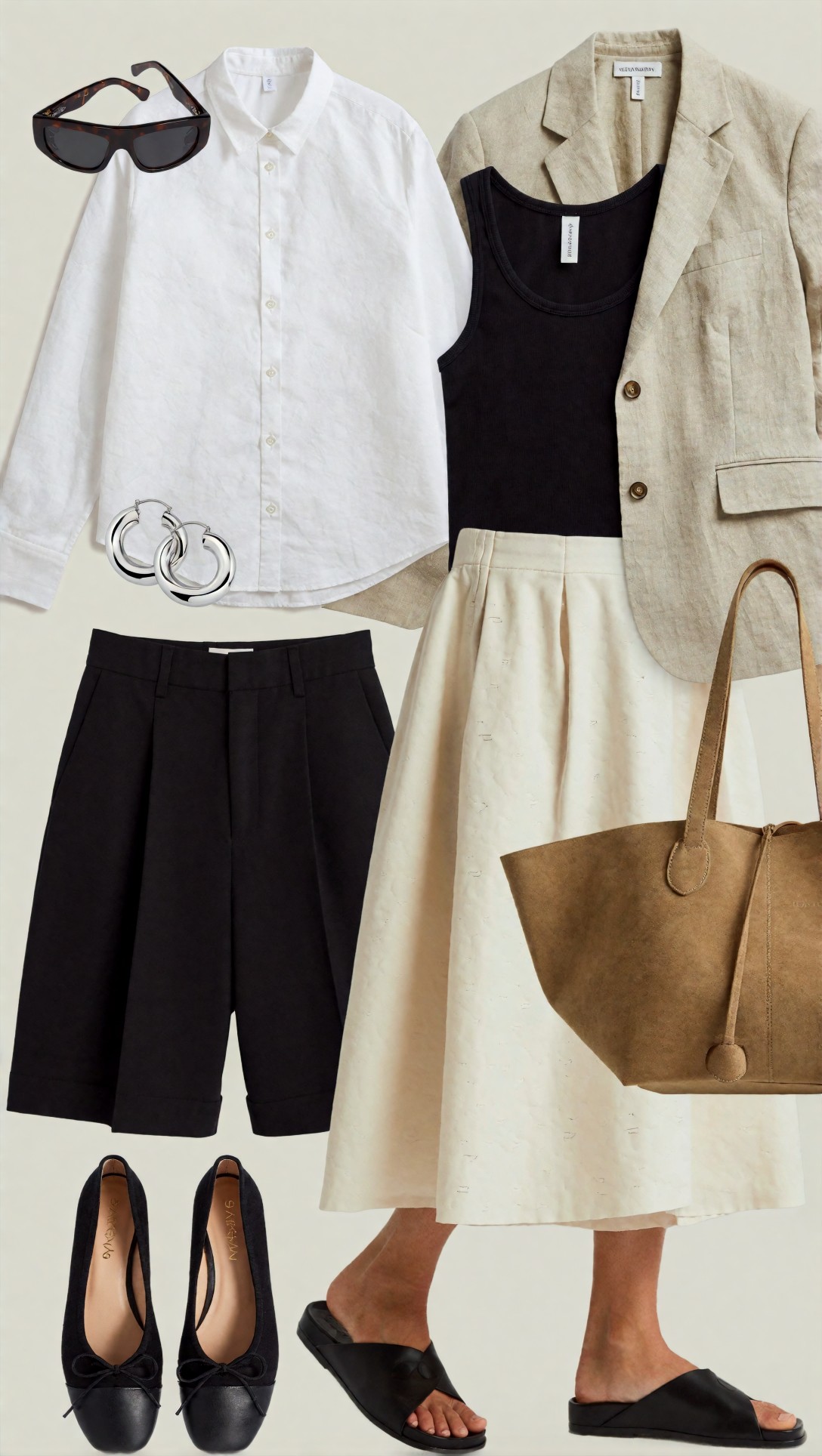
Inspect edge definition and scale. The strongest result showed good textile separation; weaker outputs made shoes too small or the tote proportionally odd.
This next test is useful for creators building concept imagery for store visuals, Pinterest boards, or retail campaigns.
Topic: Scandinavian minimalist retail display for capsule wardrobe summer collection
Genre: Retail Editorial
Camera: Panasonic Lumix S1R
Lens: 35mm f/4
Lighting: Soft storefront daylight with interior ambient fill
Location: Scandinavian minimalist boutique window in Stockholm
Style: Luxury retail visual merchandising
Final Prompt: storefront display presenting a Scandinavian fashion capsule wardrobe for summer, minimalist boutique window with pale oak fixtures, rail of coordinated neutral garments, mannequin styled in white poplin shirt, black rib tank, stone wide-leg trousers, black sandals, tan tote, folded knitwear stacks, suede and leather accessories, restrained signage, clean Scandinavian fashion merchandising, soft daylight on glass, subtle street reflections, premium retail realism, visual emphasis on styling system, palette discipline, and everyday luxury presentation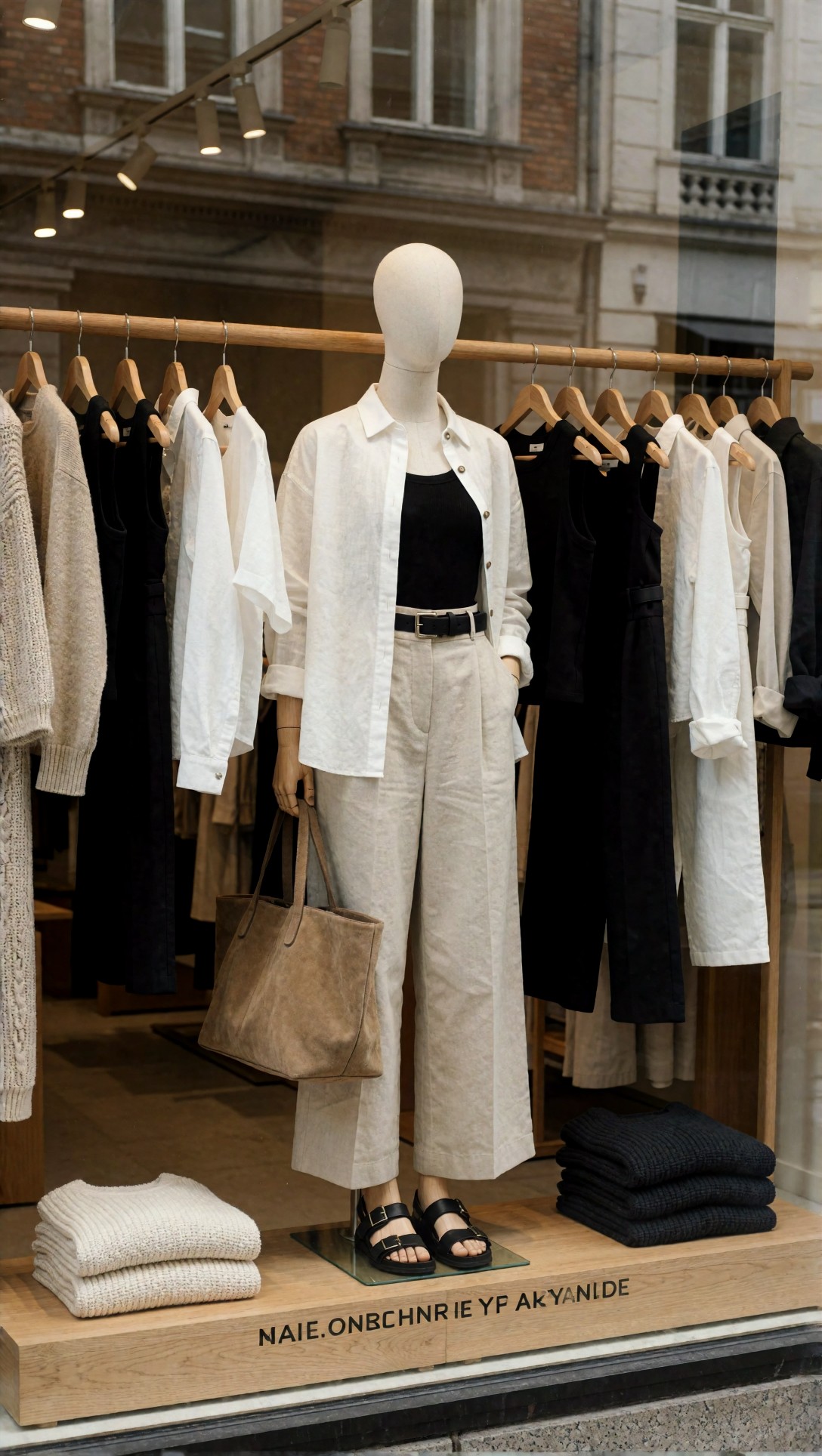
Check whether the mannequin styling remains full and logical. A common failure was incomplete outfits on mannequins or random extra accessories appearing in the window.
Step 5: Use detail prompts to fix weak wardrobe signals
When the full-body images looked too generic, detail shots helped define the language of the wardrobe. This is especially useful if your model keeps flattening all neutrals into the same material.
This test checks whether accessories can carry the Scandinavian fashion cue without becoming flashy.
Topic: Scandinavian capsule wardrobe accessories in understated summer luxury
Genre: Accessories Editorial
Camera: Canon EOS R3
Lens: 85mm f/2
Lighting: Soft side light with silver reflector
Location: Oak bench inside minimalist Nordic apartment
Style: Quiet luxury accessories campaign
Final Prompt: accessories close-up for a Scandinavian fashion capsule wardrobe, tan suede tote with clean structure, black leather ballet flats, slim silver cuff, delicate chain, dark sunglasses, white poplin shirt folded nearby, styled on an oak bench in a Nordic interior, careful composition with negative space, soft side light revealing suede nap and polished leather texture, understated summer luxury, muted palette, premium editorial product detail, tactile realism, no loud branding
Inspect texture first. In the better results, suede and leather were clearly different; in weaker ones, both surfaces became glossy and synthetic.
The final detail test checks garment texture and construction, which is where many minimalist prompts fail.
Topic: Garment detail study for Scandinavian minimalist summer tailoring
Genre: Fashion Detail Editorial
Camera: Nikon D850
Lens: 85mm f/1.8
Lighting: Controlled studio side light
Location: Neutral fabric backdrop in editorial studio
Style: High-end garment study
Final Prompt: garment detail macro focused on Scandinavian fashion capsule wardrobe tailoring, close study of oatmeal linen blazer sleeve, white poplin cuff, black rib tank edge, ivory skirt waistband, visible stitching, natural fabric creasing, premium summer textile contrast, clean editorial composition, restrained Nordic palette, side light emphasizing weave and structure, no face emphasis, fashion editor shot brief, tactile realism, luxury construction details, refined minimal wardrobe language
Check for believable stitching, seam placement, and cloth behavior. If the model cannot separate poplin from linen from rib knit, the wider lookbook images will usually feel cheap too.
Quality-control checklist for Scandinavian fashion images
Use this before saving a batch to your [Gallery](/gallery) or sending outputs to an [Upscaler](/upscaler).
Pass/fail checklist
- [ ] Full outfit visible when the shot type requires it
- [ ] Shoes are not cropped, melted, or replaced by random heels
- [ ] Palette stays within the planned capsule range
- [ ] At least two textures are visibly distinct
- [ ] Accessories support the look instead of stealing attention
- [ ] The outfit feels wearable in summer, not transitional autumn
- [ ] Scandinavian fashion signal comes from cut, palette, and materials, not stereotypes
- [ ] Background context supports the wardrobe type: retail, studio, street, or backstage
- [ ] No unnecessary logos, excessive jewelry, or unrelated props
- [ ] Multiple images look like one wardrobe system, not disconnected campaigns
Strengths observed in this workflow
The strongest result from this test was the combination of:
- named fashion shot type
- one clear setting
- two to four anchor garments
- fabric-specific wording
- a narrow neutral palette
This setup worked especially well for capsule wardrobe lookbook images, retail concepts, and flat lays. It also reduced the usual AI tendency to over-sexualize or over-glamorize fashion prompts that are supposed to be about outfit systems.
Another advantage: Scandinavian styling translates well to AI when the wardrobe is built on shape and texture rather than print or branding. That makes it easier to iterate inside [Articles](/articles) workflows or prompt tests without losing the core concept.
Troubleshooting weak outputs
If the image looks too generic
Add one construction detail per garment:
- "boxy poplin shirt with crisp collar"
- "unstructured linen blazer"
- "wide-leg trouser with clean front pleat"
- "straight midi skirt with fluid drape"
If the output becomes too luxury-editorial
Remove mood words first. Keep only practical styling terms and one environment cue. "Everyday luxury" was usually enough; adding "high fashion, elite, expensive" made results less useful.
If summer layers turn into autumn outfits
Use explicit climate markers:
n- open shirt layering
- breathable linen
- bare ankle visibility
- leather slide sandals
- light cotton knit
If faces or bodies become the main subject
Reorder the prompt so styling appears before person description. In this test, putting the outfit system in the first half of the Final Prompt improved style lock.
If all neutrals blend together
State material contrast, not just color contrast. For example: matte linen blazer, crisp poplin shirt, rib knit tank, suede tote, polished leather flat.
FAQ
What defines a Scandinavian fashion capsule wardrobe in AI prompts?
Clear silhouette, restrained palette, practical layering, and visible material quality. The prompt should communicate wardrobe logic, not just "minimal style."
Which shot type works best for Scandinavian minimalist outfit generation?
Street-style full body and head-to-toe lookbook were the most reliable in this test. They showed the whole outfit system with the fewest distracting variables.
How many pieces should I mention in one outfit prompt?
Usually 4 to 6 major items is enough: outer layer, top, bottom, shoes, bag, and one accessory note. More than that often causes visual conflict.
Is this better for editorials or shopping-style images?
It works for both, but the prompt emphasis changes. Use studio and catalog language for shopping-style clarity; use architectural locations and documentary framing for editorial mood.
Summary recommendation
If you want a Scandinavian fashion capsule wardrobe lookbook that feels modern, useful, and consistent, this workflow is worth using. It is best for creators making fashion mood boards, editorial concepts, retail visuals, or prompt packs around Scandinavian fashion, capsule wardrobe Europe, and clean summer layers.
I would avoid this exact setup if you want maximal trend chaos, heavy color, or personality-first portraiture. The method is strongest when styling system matters more than the face.
The setting detail that mattered most in this test was not camera choice or luxury wording. It was visible outfit logic: shot type first, full-body readability, restrained palette, and specific fabric contrast. Get those right, and the model is far more likely to produce a clean, believable Scandinavian minimalist outfit instead of a vague beige fashion image.