Street Snap Outfit Prompts: Tested Tokyo Candid Styling Setups for Jackets, Wide Pants, Loafers, and Tote Bags 한국어 요약
이 페이지는 ZView Space의 영어 원문을 한국어 검색 사용자도 이해할 수 있도록 정리한 SEO 요약입니다. 핵심은 단순한 얼굴 중심 이미지가 아니라 패션 에디토리얼, 룩북, 아웃핏, 프롬프트 테스트, 이미지 생성 워크플로우를 실제로 어떻게 구성할지입니다.
핵심 요약
- 원문 주제: Street Snap Outfit Prompts: Tested Tokyo Candid Styling Setups for Jackets, Wide Pants, Loafers, and Tote Bags
- 목적: AI 이미지 생성에서 outfit, silhouette, fabric, pose, location, camera framing을 더 명확하게 설계합니다.
- 활용 범위: Z-Image Turbo, Krea2 Turbo, Qwen Image, Anima, SeedVR2 같은 이미지 생성 및 업스케일 워크플로우에 적용할 수 있습니다.
- SEO 관점: 제목, 설명, 이미지 alt, 프롬프트 예시가 실제 검색 의도와 맞아야 색인 가능성이 높아집니다.
한국어 사용자를 위한 체크포인트
1. 프롬프트가 얼굴 묘사에만 머물지 않고 전체 스타일과 의상 구성을 설명하는지 확인합니다. 2. 패션 이미지라면 상의, 하의, 아우터, 신발, 액세서리, 소재감, 촬영 장소를 분리해서 씁니다. 3. 생성 결과는 바로 게시하지 말고 디테일, 손, 의상 형태, 배경 일관성, 이미지 품질을 비교합니다. 4. 글 본문에는 실제 테스트 기준과 실패를 줄이는 방법이 들어가야 검색엔진에서 얇은 콘텐츠로 보일 가능성이 줄어듭니다.
원문 미리보기
If you are trying to generate a street snap outfit image that feels like Tokyo sidewalk photography rather than a polished studio fashion ad, the hard part is usually not the clothes. It is getting the outfit logic, candid framing, and city context to hold tog
---
If you are trying to generate a street snap outfit image that feels like Tokyo sidewalk photography rather than a polished studio fashion ad, the hard part is usually not the clothes. It is getting the outfit logic, candid framing, and city context to hold together in the same image. In this test, I focused on jackets, wide pants, loafers, and tote bags because that combination is where many fashion prompts either become too formal, too minimal, or lose the relaxed street-style rhythm that makes Japanese streetwear references work.
The goal here is simple: produce reliable street style outfit ideas with a candid city sidewalk mood, while keeping the styling system visible from head to toe. I tested shot planning, lens choice, garment wording, and scene density to see which prompt structure gave the strongest results.
Quick answer
- The most reliable street snap outfit prompts start with a named fashion shot type and specify the full outfit stack in order: outerwear, top, pants, shoes, bag, accessories.
- Tokyo references work better when the location is specific but not overloaded. "Harajuku side street" or "Shibuya back lane" held better than long cinematic location lists.
- Wide pants and loafers often fail at the hemline. Add wording about ankle break, shoe visibility, and stride direction.
- Candid mood improves when the pose is an action, not a pose: crossing the street, adjusting a tote strap, waiting at a curb, stepping past a storefront.
- If the model starts dominating the image, pull the prompt back toward styling language and full-body framing.
What was tested
I ran a small fashion prompt set aimed at Tokyo street fashion outfit inspiration rather than portrait generation.
Test variables:
- shot type
- full-body vs three-quarter framing
- jacket silhouette language
- wide-pant hem control
- loafer visibility
- tote bag scale and carry position
- sidewalk density and signage
- candid motion cues
Success criteria:
1. Full outfit readable in one frame 2. Jacket shape and trouser width consistent 3. Loafers visible and proportionate 4. Tote bag integrated into styling, not floating as a random prop 5. Scene feels like urban streetwear photography, not luxury campaign overproduction
For adjacent experiments, the same prompt structure also maps well to [Prompt Lab](/promptlab), [Create](/create), and visual comparison inside the [Gallery](/gallery).
Why street snap outfit prompts fail so often
The core problem is that AI image models are better at isolated fashion signals than at complete outfit systems. They can understand "oversized blazer" and "wide-leg trousers" separately, but they often break when both need to interact with body framing, footwear, and motion.
In this test, the most common failures were:
- jackets shrinking into cropped office blazers when the rest of the outfit was not anchored
- wide pants becoming shapeless tubes with no fabric weight
- loafers disappearing under hems
- tote bags clipping through coats or hands
- "candid" turning into awkward mid-walk anatomy
- Tokyo street context becoming neon tourism wallpaper instead of a usable sidewalk backdrop
This happens because a street snap outfit image asks the model to solve multiple priorities at once: styling hierarchy, body position, urban composition, and documentary realism. If the prompt is too broad, the model picks one priority and drops the rest.
The workflow that produced the most reliable result
The strongest result came from a five-part prompt workflow:
1. Start with the shot type
For fashion topics, this mattered more than expected. Starting with "street-style full body" or "three-quarter outfit editorial" consistently improved clothing readability.
2. Describe the outfit in stacking order
I had better stability when I listed garments top to bottom:
- jacket
- inner layer
- pants
- shoes
- tote bag
- jewelry or eyewear
That reduced random substitutions.
3. Add one movement cue
A candid city sidewalk image works better with a small action:
- stepping off a curb
- turning slightly toward traffic
- adjusting cuff or tote strap
- waiting at a crosswalk
Too much action increased limb errors.
4. Keep Tokyo context specific but light
"Harajuku side street, overcast afternoon, tiled sidewalk, shop windows, passing bicycles" worked better than a long list of landmarks. The image stayed grounded in influencer street style without looking like a travel poster.
5. Reserve sensuality for silhouette, not exposure
Because the requested mood is sexy, I leaned into body-aware tailoring: waisted jackets, fluid trousers, open collar lines, slight heel on loafers, fitted knit under oversized outerwear. That kept the result tasteful and fashion-led.
A practical comparison: which setup worked best
| Setup | Best use | Strength | Weak point | |---|---|---|---| | Street-style full body | Complete outfit inspiration | Best for silhouette and shoes | Can flatten face detail | | Three-quarter outfit editorial | Jacket and tote styling | Strong garment proportion | Pants hem sometimes cropped | | Head-to-toe lookbook | Clean comparison across outfits | Best structure control | Less candid energy | | Accessories close-up | Loafers, tote, belt logic | Good texture detail | Not enough for full outfit search intent | | Storefront display / flat lay | Planning colorways | Useful for styling systems | Does not satisfy street snap mood alone |
For readers looking for street style outfit ideas, the best main image remains street-style full body, with a supporting detail shot for shoes or accessories.
Prompt examples with inspection notes
1) Full-body Tokyo sidewalk test for overall silhouette
This first test checks whether the model can hold a complete street snap outfit without collapsing the shoes or tote bag. I used a moving sidewalk action to keep the mood candid.
Topic: Tokyo street snap outfit with oversized jacket, wide pants, loafers, and tote bag
Genre: Street Style
Camera: Canon EOS R5
Lens: 35mm f/2
Lighting: Overcast diffusion
Location: Harajuku side street with tiled sidewalk, compact storefronts, muted signage, passing bicycles
Style: Japanese streetwear editorial
Final Prompt: street-style full body fashion photograph of a confident woman in a candid Tokyo sidewalk moment, wearing an oversized charcoal blazer over a fitted cream ribbed knit top, high-waisted wide-leg black trousers with soft fabric drape and visible hem break, polished dark brown leather loafers, large structured canvas tote bag worn on one shoulder, slim belt, silver hoop earrings, narrow sunglasses, subtle sensual styling through tailored waist and fluid movement, crossing a Harajuku side street mid-step, complete outfit visible head to toe, documentary 35mm framing, natural urban posture, muted grey and cream palette with rich leather texture, storefront reflections, light pedestrian motion blur in background, realistic editorial composition, focus on outfit silhouette and garment layering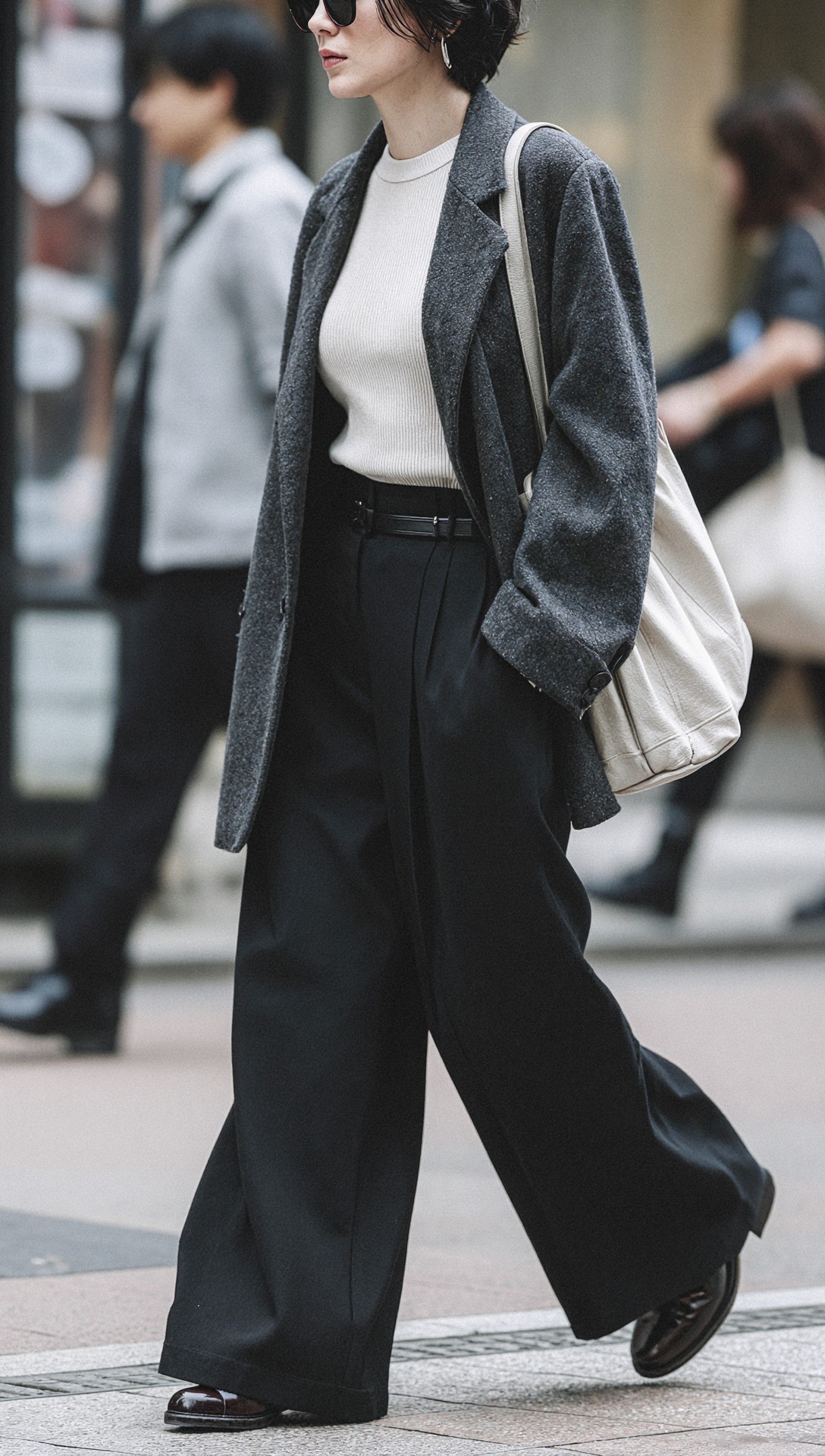
Inspect whether the blazer keeps its oversized shoulder line and whether the trouser hem still reveals the loafers. In the stronger outputs, the tote sits naturally under the arm instead of floating away from the torso.
2) Three-quarter outfit editorial for jacket-to-trouser balance
This test is for readers who want a more polished Tokyo street fashion outfit image without losing candid energy. It also checks whether a body-conscious inner layer can add a sexy mood without shifting into portrait-first output.
Topic: Tokyo candid outfit with relaxed blazer and wide trousers
Genre: Fashion Editorial
Camera: Sony A7R V
Lens: 50mm f/2
Lighting: Soft late afternoon daylight
Location: Shibuya back lane near concrete walls and glass retail frontage
Style: Clean contemporary magazine editorial
Final Prompt: three-quarter outfit editorial image on a Tokyo city sidewalk, stylish woman turning slightly while adjusting the strap of a slouchy black leather tote bag, wearing a sand-colored relaxed double-breasted jacket over a fitted black square-neck knit, fluid dove-grey wide pants with precise front pleats, chunky black loafers with low stacked heel, fine chain necklace and slim watch, tasteful sexy mood through clean neckline and strong waist-to-hem proportion, shot in Shibuya back lane with concrete textures and glass storefront reflections, 50mm editorial realism, balanced composition showing jacket length, trouser volume, and bag proportion, neutral palette, crisp fabric detail, understated influencer street style energy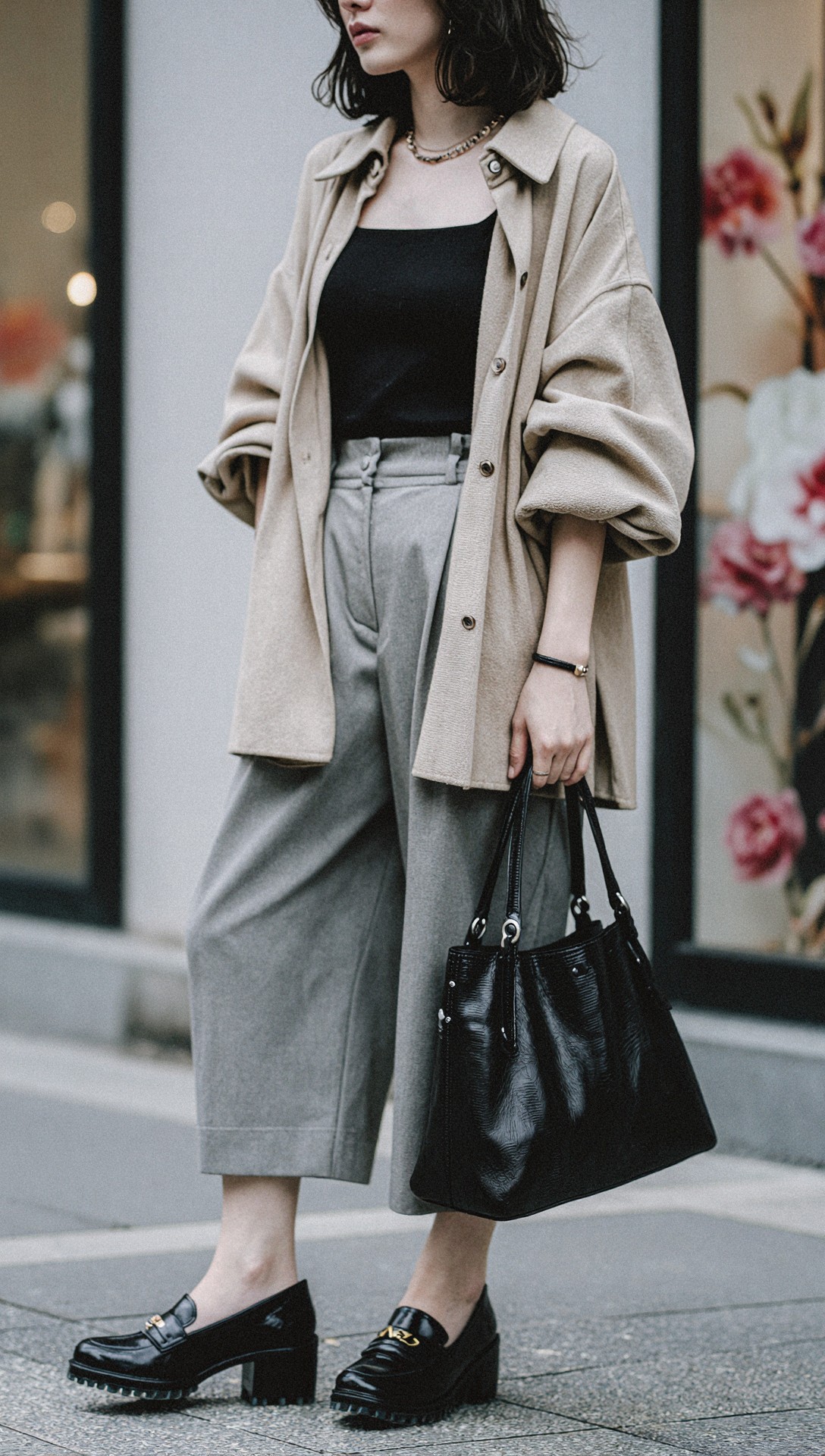
Check whether the jacket length ends at a believable point relative to the hips and whether the tote scale matches the body. Weak outputs often turn the square-neck knit into an evening top, which shifts the whole look out of streetwear.
3) Head-to-toe lookbook version for cleaner outfit control
When candid images became unstable, this setup was the fallback. It is less spontaneous, but it holds silhouette better and is useful if you want reliable urban streetwear references.
Topic: Head-to-toe street snap outfit study in Tokyo-inspired styling
Genre: Lookbook
Camera: Nikon Z7 II
Lens: 40mm f/2
Lighting: Open shade
Location: Minimal Tokyo apartment entryway opening onto a quiet city lane
Style: Modern fashion lookbook
Final Prompt: head-to-toe lookbook fashion image with Tokyo street styling influence, full outfit centered and clearly visible, woman standing naturally near an apartment entry facing a quiet city lane, wearing a cropped olive utility jacket layered over a fitted white tank, extra-wide navy trousers with clean pressed crease and soft pooling controlled above the shoe, glossy oxblood loafers, oversized natural canvas tote with black handles, thin leather belt, simple rings, softly confident expression, sexy mood expressed through fitted inner layer and strong silhouette contrast, open-shade daylight, 40mm realistic framing, minimalist urban background, clean editorial styling notes, emphasis on garment fit, layering logic, and shoe visibility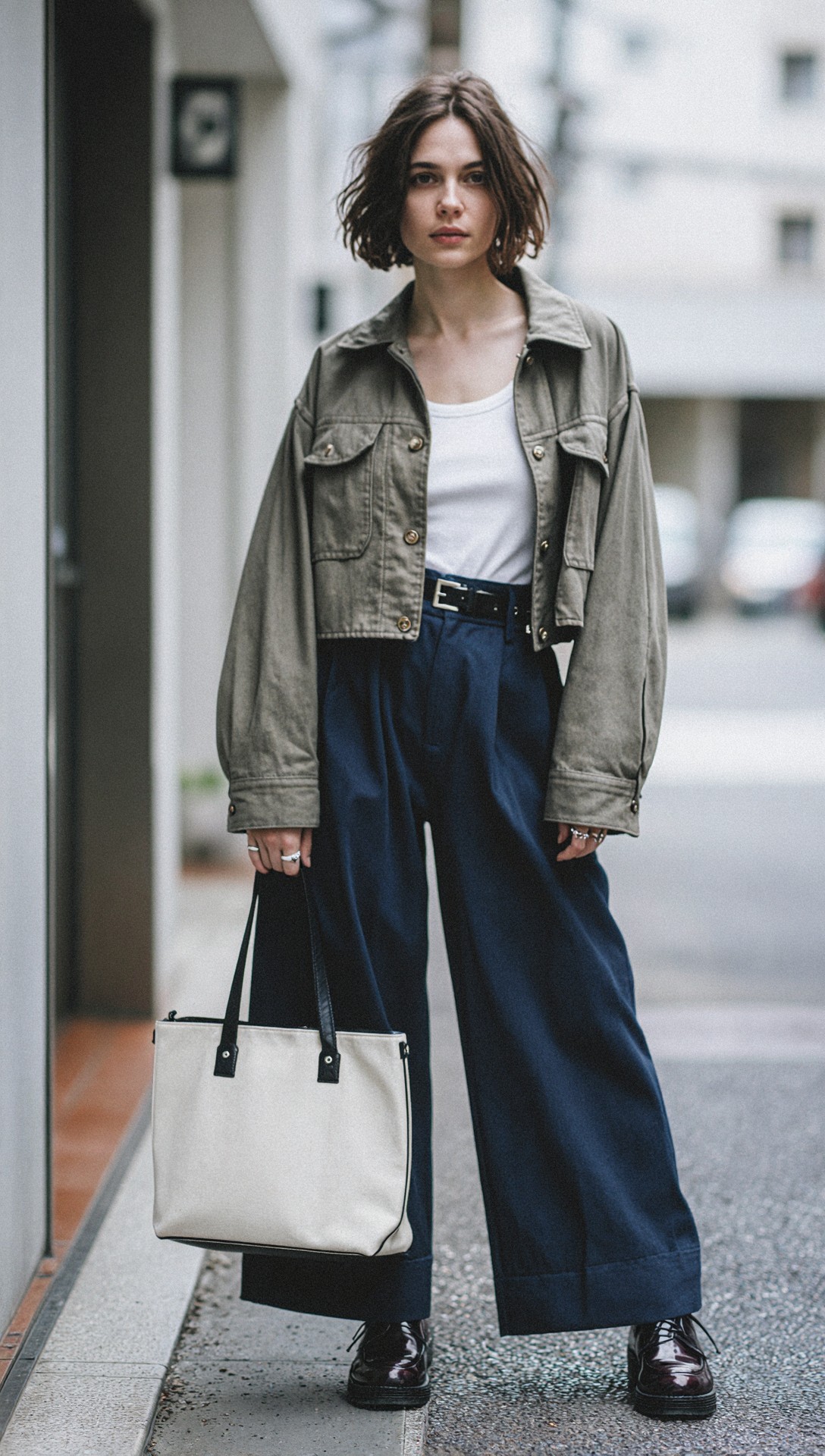
Inspect this one for hem discipline. In the best images, the pants look intentionally wide rather than inflated, and the loafers remain visible enough to finish the outfit logic.
4) Street-style crossing shot for motion realism
This test checks the hardest part of the whole set: candid movement. If a model can walk naturally while keeping jacket, wide pants, and loafers readable, the prompt is strong.
Topic: Candid Tokyo crosswalk street snap with tailored outerwear
Genre: Lifestyle Fashion
Camera: Fujifilm GFX100S
Lens: 45mm f/2.8
Lighting: Bright overcast city light
Location: Aoyama sidewalk near low-rise boutiques and crosswalk lines
Style: Premium street fashion reportage
Final Prompt: street-style full body candid fashion image captured while walking across an Aoyama crosswalk, woman in a navy belted jacket worn open over a fitted taupe knit top, cream high-waisted wide trousers moving with stride, black penny loafers clearly visible beneath the hem, oversized dark tote bag swinging slightly at the side, hair tucked behind ears, poised but natural expression, tasteful sensuality through confident posture and close-to-body knit under structured outerwear, boutique-lined Tokyo sidewalk, bright overcast lighting, documentary luxury fashion reportage look, complete outfit visible, realistic motion, strong fabric movement, subtle background pedestrians, editorial color separation and high garment clarity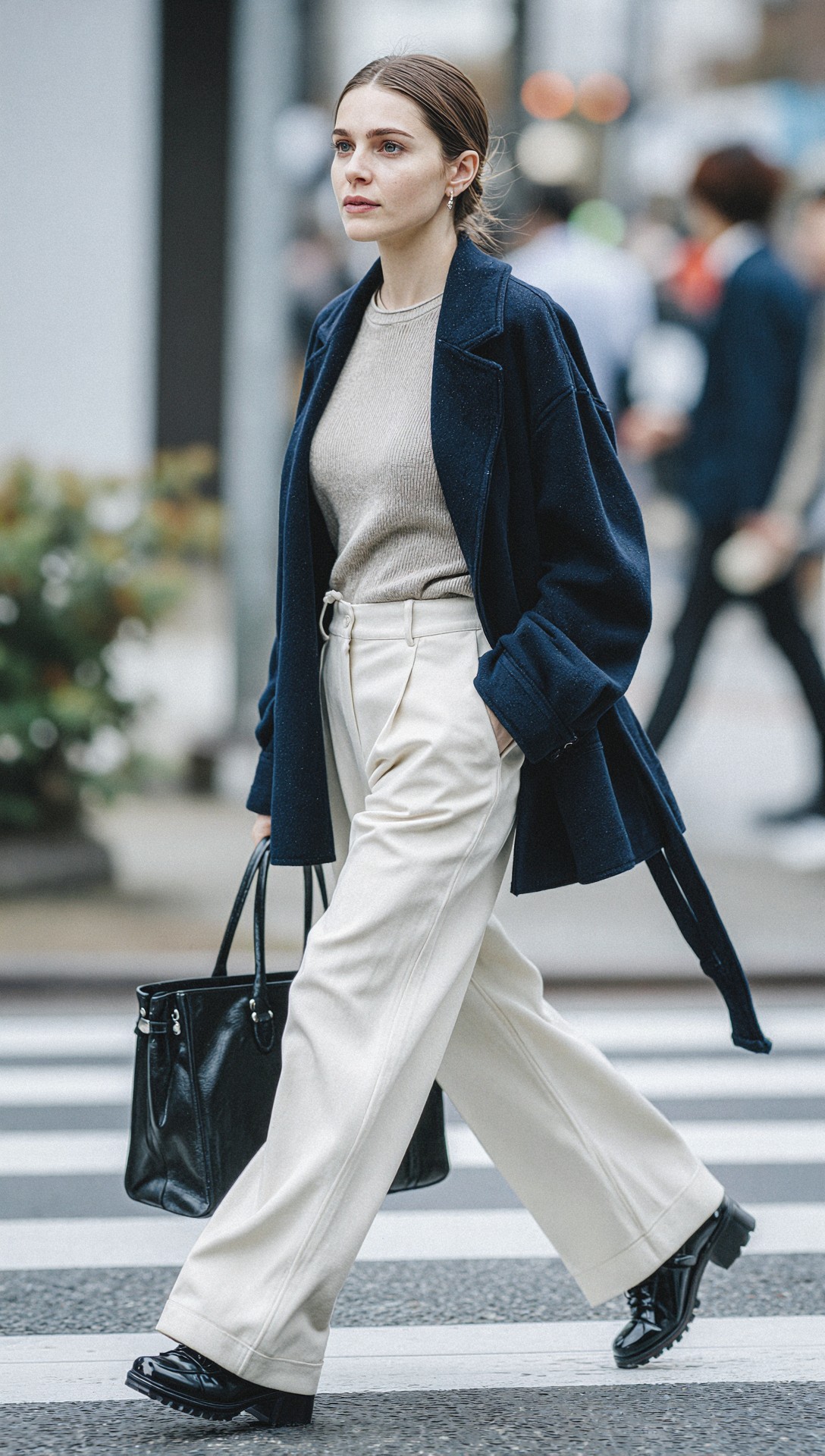
Look closely at the hands, tote strap, and ankle area. The good versions show believable bag swing and one visible loafer landing cleanly; the bad ones tangle the trousers around both feet.
5) Accessories close-up for loafers and tote integration
A lot of generated street style outfit ideas look fine from a distance and fall apart in the accessories. This prompt isolates the relationship between trouser hem, loafer shape, and tote texture.
Topic: Loafers, wide-pant hem, and tote bag detail from a Tokyo street outfit
Genre: Product Editorial
Camera: Leica SL2-S
Lens: 85mm f/2
Lighting: Soft window bounce with street fill
Location: Tokyo sidewalk edge beside a boutique window
Style: Luxury accessories editorial
Final Prompt: accessories close-up editorial crop from a Tokyo street snap outfit, focusing on polished black leather loafers, the lower drape of charcoal wide-leg trousers with subtle crease, and a structured beige canvas tote bag with dark leather trim resting against the leg, one hand adjusting the bag strap, boutique window reflections and sidewalk texture visible, fashion-focused composition, tactile leather and canvas detail, elegant urban styling, sexy mood conveyed through confident stance and precise tailoring rather than skin exposure, 85mm refined depth of field, premium magazine accessory story realism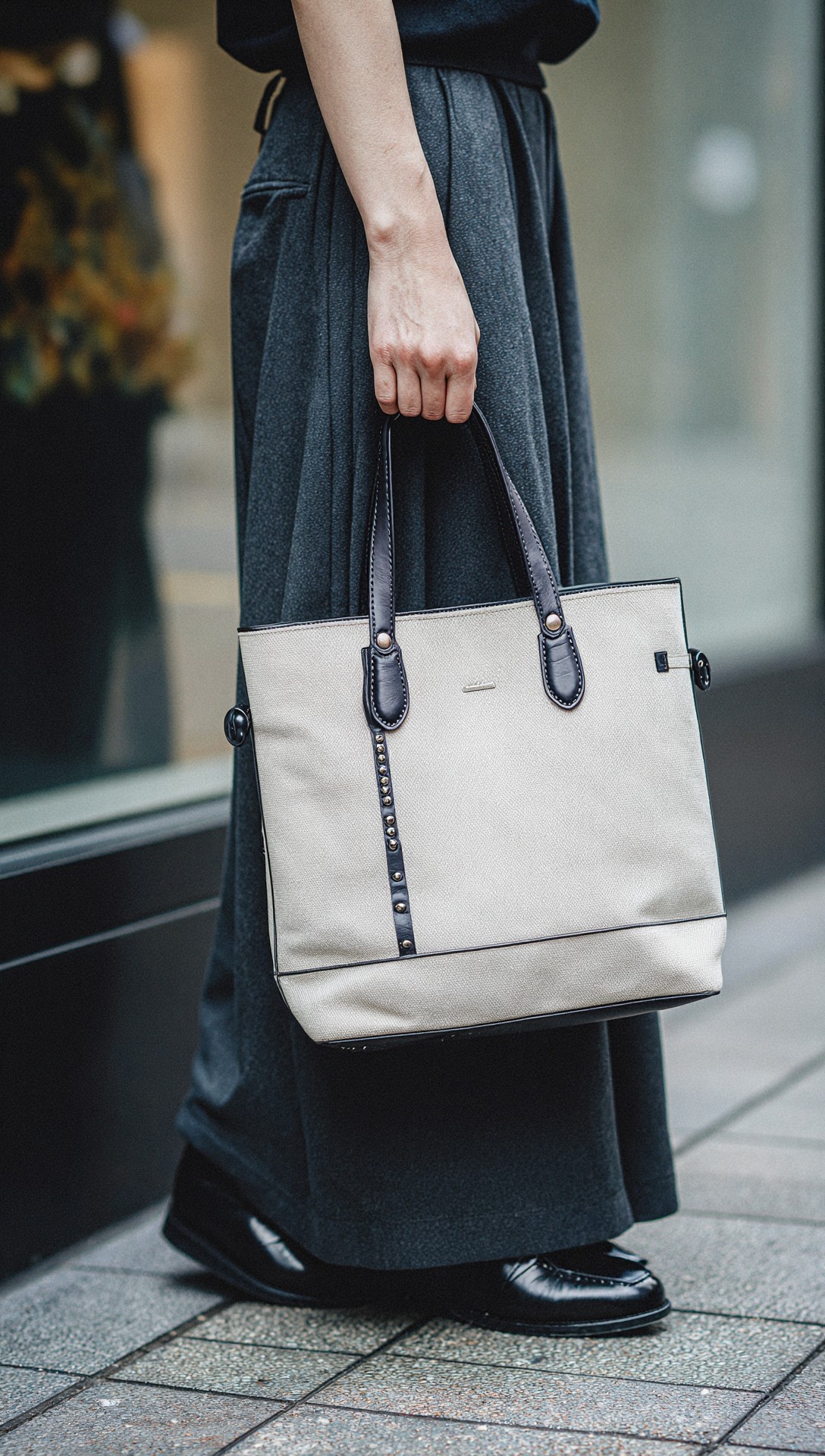
Inspect material separation here. The best results show distinct leather shine, canvas grain, and trouser weight; weaker outputs merge the tote and pant edge into one flat block.
6) Storefront display planning shot for outfit color logic
This is not the hero image, but it is useful when you want to plan a Japanese streetwear palette before generating people. It helped me reduce random color drift in later prompts.
Topic: Tokyo storefront display featuring jacket, wide pants, loafers, and tote styling system
Genre: Retail Fashion
Camera: Panasonic Lumix S1R
Lens: 24-70mm at 45mm f/4
Lighting: Soft indoor display lighting with cool daylight spill
Location: Small Harajuku boutique window display
Style: Contemporary fashion merchandising
Final Prompt: storefront display fashion image in a Harajuku boutique window, curated street snap outfit styling system presented on a mannequin and display stand: oversized stone blazer, fitted black knit top, fluid espresso wide pants, polished burgundy loafers, large cream tote bag, slim metal jewelry, styling arranged to communicate full silhouette and layering logic, glass reflections, cool Tokyo daylight mixing with warm retail lights, tasteful sexy editorial merchandising, clean fashion composition, visible textures of wool, knit, leather, and canvas, modern Japanese street fashion mood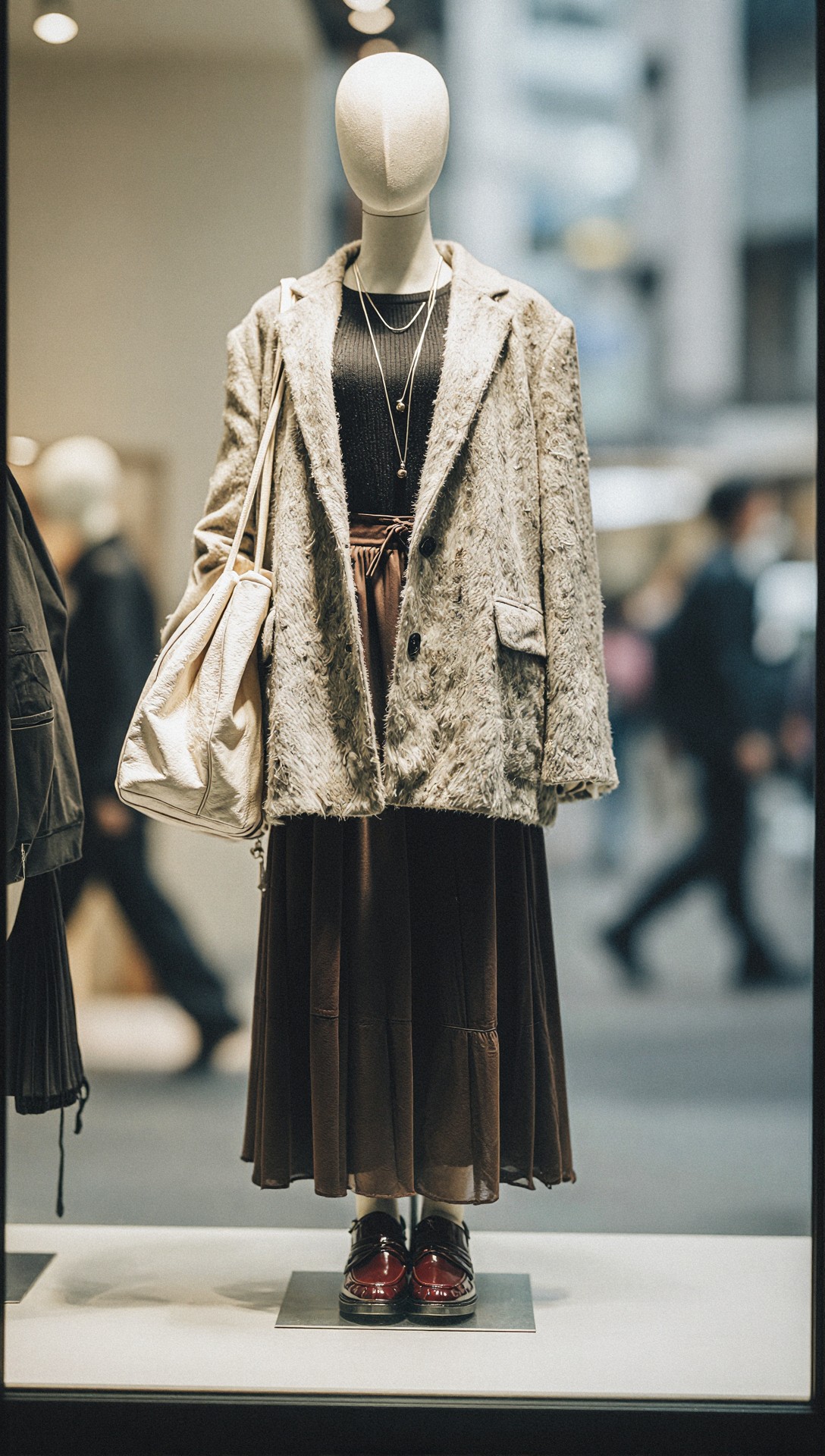
Inspect whether the outfit pieces feel like one system rather than separate products. This setup often reveals if your palette is too busy before you move back into full-body street scenes.
7) Garment detail macro for fabric and tailoring realism
This test checks whether the jacket and trouser materials read like actual clothes rather than generic smooth fabric. It is especially useful if your model keeps producing plastic-looking blazers.
Topic: Tailoring texture detail from a Tokyo street snap outfit
Genre: Garment Detail Editorial
Camera: Canon EOS R3
Lens: 100mm macro f/2.8
Lighting: Directional softbox with natural ambient spill
Location: Covered Tokyo sidewalk arcade
Style: High-end fabric editorial
Final Prompt: garment detail macro image from a Tokyo street fashion outfit, close study of an oversized wool-blend blazer sleeve, fitted knit underlayer at the waist, pleated wide trouser waistband, and the top edge of a leather tote bag, hand lightly touching the jacket cuff, rich textile definition, visible weave, premium tailoring, subtle urban background blur from a covered Tokyo shopping arcade, sexy fashion mood through body-aware fit and tactile clothing contrast, polished editorial macro realism, crisp stitching, nuanced neutral color palette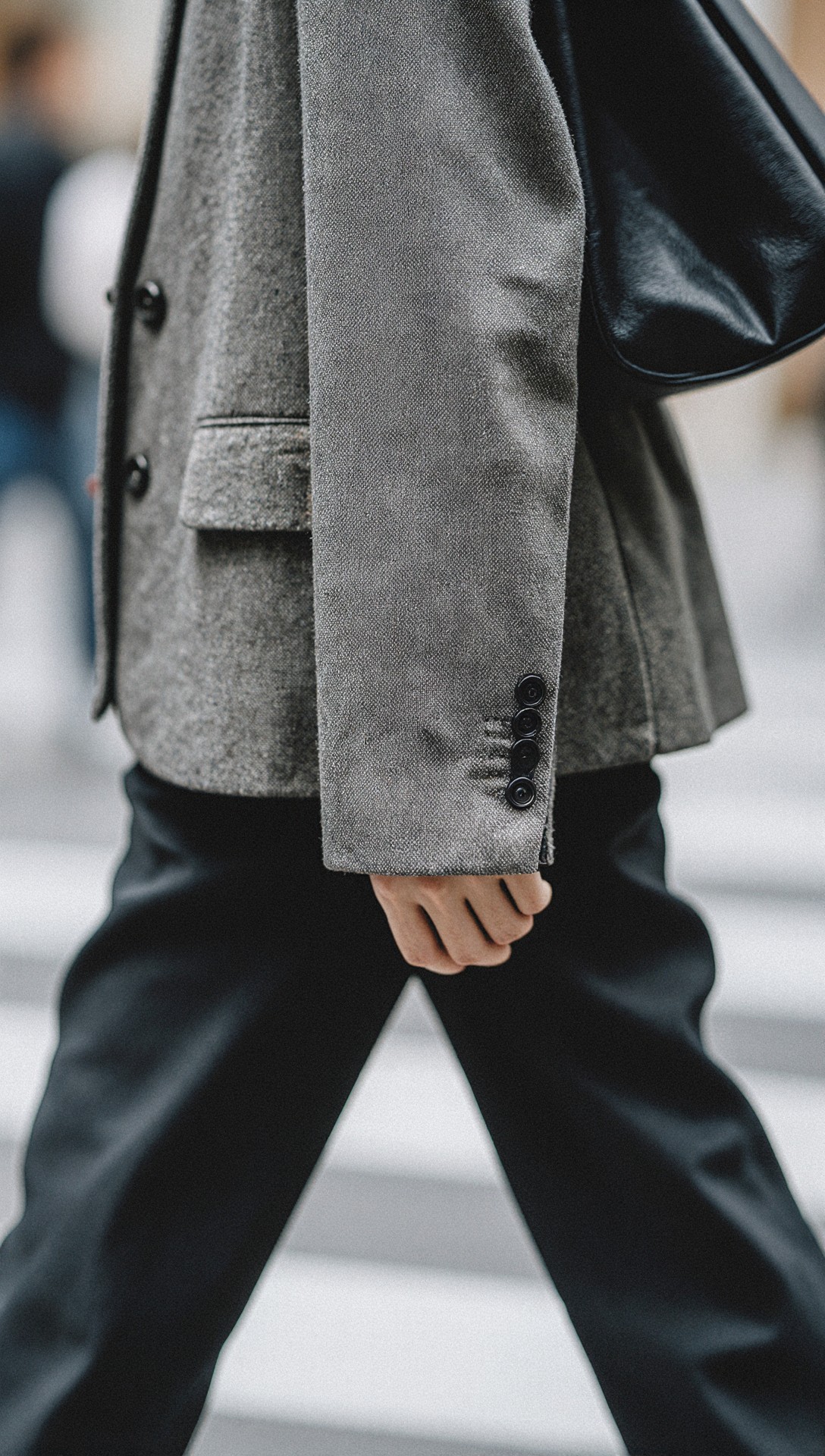
Check for weave, seam lines, and believable layering thickness. In stronger outputs, the knit looks compressed under the blazer in a realistic way instead of hovering flat against the body.
8) Mood-board collage for prompt locking before final generation
This final test is useful when you want repeatable influencer street style direction across multiple images. It does not replace a final hero shot, but it helps lock the visual vocabulary.
Topic: Tokyo street snap outfit mood board for jacket, wide pants, loafers, and tote bag
Genre: Mood-Board Collage
Camera: Mixed editorial scan aesthetic
Lens: Mixed 35mm and 50mm fashion framing
Lighting: Overcast street light, storefront glow, and neutral studio cutout lighting
Location: Tokyo fashion district references including Harajuku and Aoyama
Style: Fashion direction board
Final Prompt: mood-board collage for a Tokyo street snap outfit concept, combining editorial cutouts and styled image panels showing oversized jackets, fitted knit tops, wide-leg trousers, polished loafers, structured tote bags, neutral and deep earthy palette, candid city sidewalk references from Harajuku and Aoyama, close accessory crops, storefront texture, tailoring swatches, documentary 35mm fashion framing, tasteful sexy city styling, premium magazine direction board aesthetic, cohesive layout focused on outfit system, silhouette, fabric, layering, and urban mood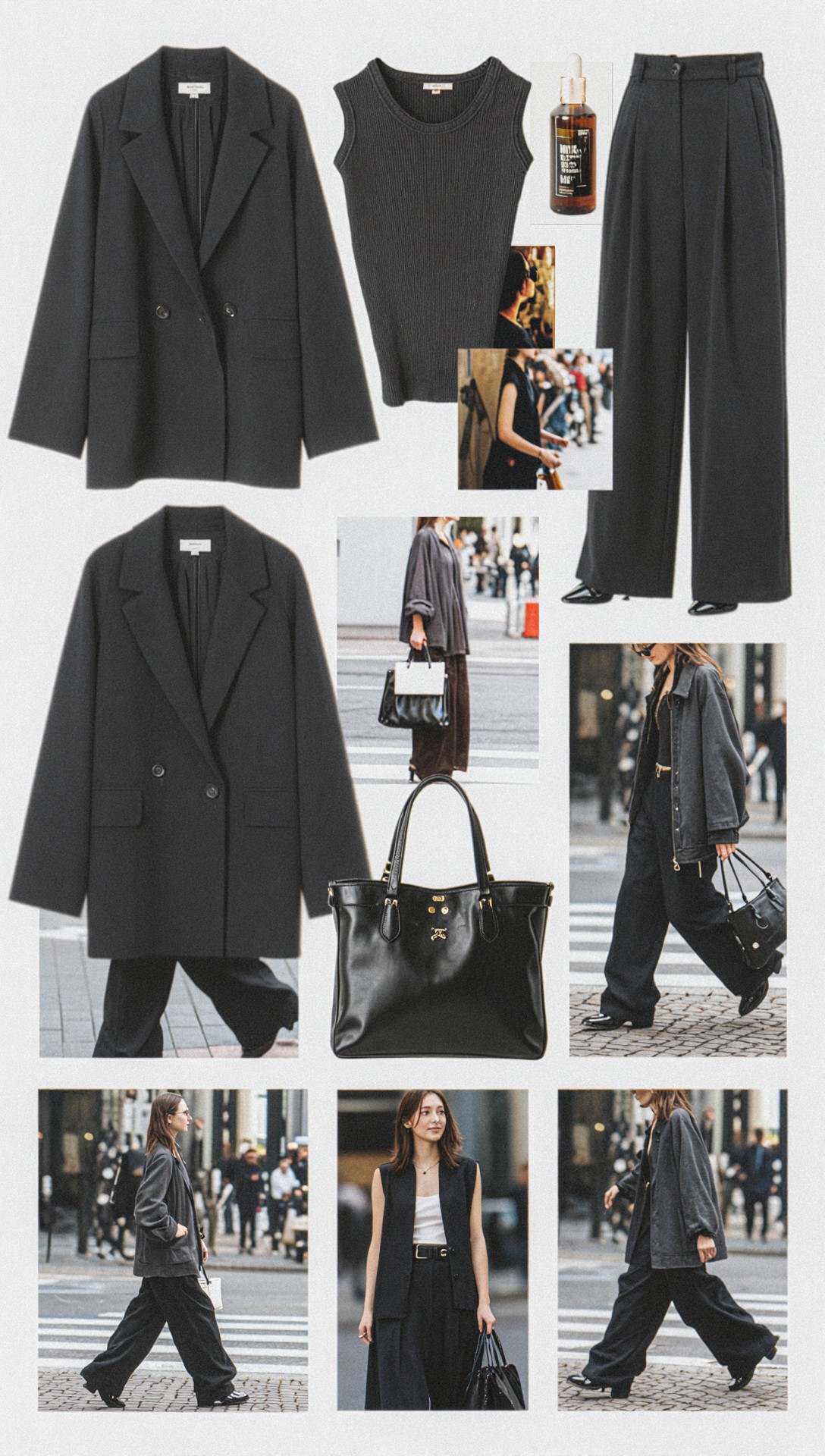
Inspect whether the collage creates one consistent styling language. If the board drifts into unrelated trends, the final prompts will usually drift too.
What consistently improved output quality
Strong points from this workflow
The strongest part of this workflow was outfit coherence. Once the prompt started with a clear shot type and listed garments in sequence, the model was much less likely to turn the scene into a generic portrait.
Other gains:
- loafers became more visible when described as polished and paired with a specific trouser hem
- tote bags behaved better when their material and carry position were named
- Tokyo context looked more believable with boutique streets, tiled sidewalks, and muted signage instead of neon overload
- sexy mood translated best through fitted base layers and controlled tailoring, not exposed skin
For refinement passes, I would send the best outputs through an [upscaler](/upscaler) only after verifying shoe edges and bag straps. Upscaling weak anatomy rarely fixes the underlying problem.
Common mistakes to avoid
1. Prompting "Tokyo street fashion" without outfit architecture
That usually generates mood, not usable styling. You need a readable clothing stack.
2. Asking for oversized everything
If the jacket, pants, and tote are all only described as oversized, the image often loses proportion. Give one or two pieces structure.
3. Using dramatic cinematic lighting for sidewalk candids
For this topic, overcast or soft daylight was more reliable. Harsh stylized lighting made the images look like campaigns, not street snaps.
4. Forgetting the hemline
Wide pants and loafers need a relationship. Specify cropped break, soft pooling, or visible vamp area.
5. Overloading the location
When I added too many Tokyo signifiers, the outfit became secondary. Search intent here is inspiration for a street snap outfit, not tourism imagery.
Compact checklist for better street snap outfit prompts
Use this before generating:
- [ ] Start with a named fashion shot type
- [ ] List garments in outfit order
- [ ] Specify jacket silhouette and fabric
- [ ] Control trouser width and hem break
- [ ] Name the loafer material and shape
- [ ] Set tote size, material, and carry position
- [ ] Add one candid action only
- [ ] Keep Tokyo location specific but brief
- [ ] Use sensuality through tailoring and fit, not exposure
- [ ] Check full-body framing if the outfit is the main subject
FAQ
How do I make a street snap outfit image feel candid instead of posed?
Use a small action like crossing a street, adjusting a tote strap, or waiting at a curb. Pair that with documentary focal lengths like 35mm or 50mm and avoid symmetrical studio posing.
What is the best prompt format for Tokyo street fashion outfit images?
In this test, the best format was: shot type first, then outfit stack, then one movement cue, then a short Tokyo location note, then palette and texture direction.
Why do wide pants hide loafers in AI-generated street style images?
The model tends to prioritize trouser volume over footwear visibility. Add wording about hem break, visible loafer vamp, stride angle, or slight crop above the shoe.
Should I use lookbook prompts or candid street prompts first?
If you need reliable silhouette control, start with a lookbook-style prompt. If you already know the outfit works and want stronger mood, move to street-style full body prompts next.
Where can I test variations quickly?
Use [Create](/create) for generation, save your best patterns in [Prompt Lab](/promptlab), and compare outputs against similar styling references in the [Gallery](/gallery) or other [articles](/articles).
Final recommendation
If your goal is street snap outfit inspiration, use the full-body or three-quarter editorial workflow first. It is the best balance of candid city mood and readable styling. This approach works especially well for readers exploring Tokyo street fashion outfit references, Japanese streetwear, and smart street style outfit ideas built around jackets, wide pants, loafers, and tote bags.
Who should use this workflow: anyone generating outfit-led fashion images where silhouette matters more than facial close-up detail.
Who should avoid it: anyone mainly trying to create portrait beauty shots or highly theatrical campaign imagery.
The setting that mattered most in this test was not a secret model parameter. It was prompt discipline: start with the shot type, keep the outfit stack explicit, and control the trouser-to-loafer relationship. That single detail had the biggest effect on whether the final image read as a credible street snap or just another vague urban fashion render.