Summer Dresses vs Denim Outfits: Which US Fashion Trend Search Intent Is Winning This Week? 한국어 요약
이 페이지는 ZView Space의 영어 원문을 한국어 검색 사용자도 이해할 수 있도록 정리한 SEO 요약입니다. 핵심은 단순한 얼굴 중심 이미지가 아니라 패션 에디토리얼, 룩북, 아웃핏, 프롬프트 테스트, 이미지 생성 워크플로우를 실제로 어떻게 구성할지입니다.
핵심 요약
- 원문 주제: Summer Dresses vs Denim Outfits: Which US Fashion Trend Search Intent Is Winning This Week?
- 목적: AI 이미지 생성에서 outfit, silhouette, fabric, pose, location, camera framing을 더 명확하게 설계합니다.
- 활용 범위: Z-Image Turbo, Krea2 Turbo, Qwen Image, Anima, SeedVR2 같은 이미지 생성 및 업스케일 워크플로우에 적용할 수 있습니다.
- SEO 관점: 제목, 설명, 이미지 alt, 프롬프트 예시가 실제 검색 의도와 맞아야 색인 가능성이 높아집니다.
한국어 사용자를 위한 체크포인트
1. 프롬프트가 얼굴 묘사에만 머물지 않고 전체 스타일과 의상 구성을 설명하는지 확인합니다. 2. 패션 이미지라면 상의, 하의, 아우터, 신발, 액세서리, 소재감, 촬영 장소를 분리해서 씁니다. 3. 생성 결과는 바로 게시하지 말고 디테일, 손, 의상 형태, 배경 일관성, 이미지 품질을 비교합니다. 4. 글 본문에는 실제 테스트 기준과 실패를 줄이는 방법이 들어가야 검색엔진에서 얇은 콘텐츠로 보일 가능성이 줄어듭니다.
원문 미리보기
This test looks at summer dresses vs denim outfits as a live image generation brief: not which wardrobe is universally better, but which visual direction better satisfies current comparison style search intent around US fashion trends, summer outfit ideas, and
---
This test looks at summer dresses vs denim outfits as a live image-generation brief: not which wardrobe is universally better, but which visual direction better satisfies current comparison-style search intent around US fashion trends, summer outfit ideas, and what people are likely trying to see this week. I approached it like an operator brief for zview.space—build both directions, compare what models get right and wrong, and see which one creates clearer, more publishable fashion results with less prompt repair.
In practice, the answer was not just about trend taste. Dress-led prompts produced faster emotional clarity and stronger romantic mood control. Denim-led prompts produced better structure, layering logic, and clearer outfit combinatorics for shoppers. If the search intent is comparison, the winning result depends on whether the page needs airy seasonal inspiration or repeatable outfit logic.
What to know first
- Summer dresses won on mood, softness, and fast-read trend imagery, especially for casual summer dresses and romantic editorial scenes.
- Denim outfits won on modular styling, clearer piece separation, and stronger usefulness for jeans outfits women can actually rebuild.
- Models were more likely to over-glamorize dresses and more likely to distort denim fit, pocket placement, and leg proportions.
- For trend-driven comparison pages, the strongest workflow was not one hero image but a matched set: one dress editorial, one denim editorial, one retail or catalog-style visual for each.
- If you want to test these ideas quickly, [Prompt Lab](/promptlab) is the easiest place to iterate wording, and [Gallery](/gallery) is useful for comparing visual drift across generations.
Test setup: what I generated and why
I ran this as a fashion shot-planning exercise rather than a single prompt contest.
The brief was simple: create publishable visuals for a comparison article targeting users searching for summer outfit ideas, denim outfit ideas, summer dresses outfit ideas, and US fashion trends. The mood direction was romantic, but the output still had to behave like fashion coverage—full silhouettes, visible accessories, fabric read, and real styling logic.
What I tested:
- street-style full body shots
- three-quarter editorial outfit frames
- head-to-toe lookbook compositions
- storefront and retail context
- flat lays and detail shots for styling support
- mood-board style comparison imagery
I kept the camera language realistic and used varied focal lengths so outfit visibility stayed readable. For workflow, this kind of project fits well with [Create](/create) for first-pass generation and [Tools](/tools) when you need prompt utilities or support steps around cleanup.
The use case: a comparison page that has to feel current, not generic
The scenario was a trend-comparison article for US readers asking a very specific question: if they are choosing between floaty dress-led summer styling and more grounded denim outfits, which visual lane feels more relevant right now?
That matters because searchers using a phrase like summer dresses vs denim outfits are not looking for a history of fashion. They want visual evidence:
- Which direction looks fresher this week?
- Which one reads more wearable?
- Which style produces better summer outfit ideas?
- Which option works for browsing, shopping inspiration, or social posting?
A generic AI fashion image often fails this intent because it gives you one pretty subject and no styling system. For this page, the model had to show garment hierarchy, seasonal logic, and enough context for a reader to compare categories.
Why this comparison is unusually hard for image models
This case looks simple, but it creates several conflicts inside the prompt.
1. Dresses are easy to romanticize, hard to differentiate
Most image models already associate summer dresses with warm light, movement, flowers, linen, and soft femininity. That gives quick beauty, but not always useful comparison. Many first-pass dress outputs looked interchangeable: pale slip dress, generic flutter hem, soft smile, vague resort background.
2. Denim needs structure accuracy
Denim prompts ask the model to solve fit and construction at the same time: rise, wash, hem break, seam direction, jacket layering, belt position, and silhouette balance. The weak point showed up immediately in lower-body anatomy and inconsistent fabric tension around the knees and hips.
3. Comparison pages need parity
If one visual is a dreamy campaign shot and the other is a practical catalog frame, the reader is not comparing trends—they are comparing photography styles. I had to force shot parity so the dress side and denim side were evaluated under similar visual pressure.
First attempt: the obvious prompts gave biased results
My first pass used broad prompt language: “romantic summer dress editorial” versus “cool denim street style editorial.” The outputs were attractive, but the comparison was unfair.
The dress images came back with instant atmosphere: warm light, soft movement, peach-pink palette, delicate sandals, and natural scene coherence.
The denim images came back with mixed priorities: stronger jackets and bags, but inconsistent jean length, repeated pocket shapes, and occasional confusion between shorts, jeans, and skirt-like folds.
That revealed the central issue: models have a built-in shortcut for dresses. They can imply seasonality fast. Denim needs more exact wording to avoid defaulting into a generic “casual woman in jeans” image.
First dress-side test
This prompt was meant to check whether a romantic summer-dress setup could create trend clarity without becoming too bridal, too resort-heavy, or too generic.
Topic: Summer dresses trend comparison for US fashion editorial
Genre: Fashion Editorial
Camera: Canon EOS R5
Lens: 50mm f/2
Lighting: Golden hour backlight with soft fill
Location: New York sidewalk café district in early evening summer light
Style: Romantic street-style editorial
Final Prompt: street-style full body fashion editorial, romantic summer dress trend look for a US fashion comparison article, one model secondary to styling, visible complete outfit with soft ivory cotton midi dress, delicate floral texture, lightly cinched waist, cropped blush cardigan draped over shoulders, tan leather flat sandals, small woven shoulder bag, fine gold jewelry, loose ribbon hair accessory, walking past a New York sidewalk café, full silhouette visible, soft warm evening light, feminine editorial mood, realistic garment drape, clear hem movement, gentle peach and cream color palette, documentary fashion framing, trend-report atmosphere, crisp textile detail, balanced background, natural motion without blur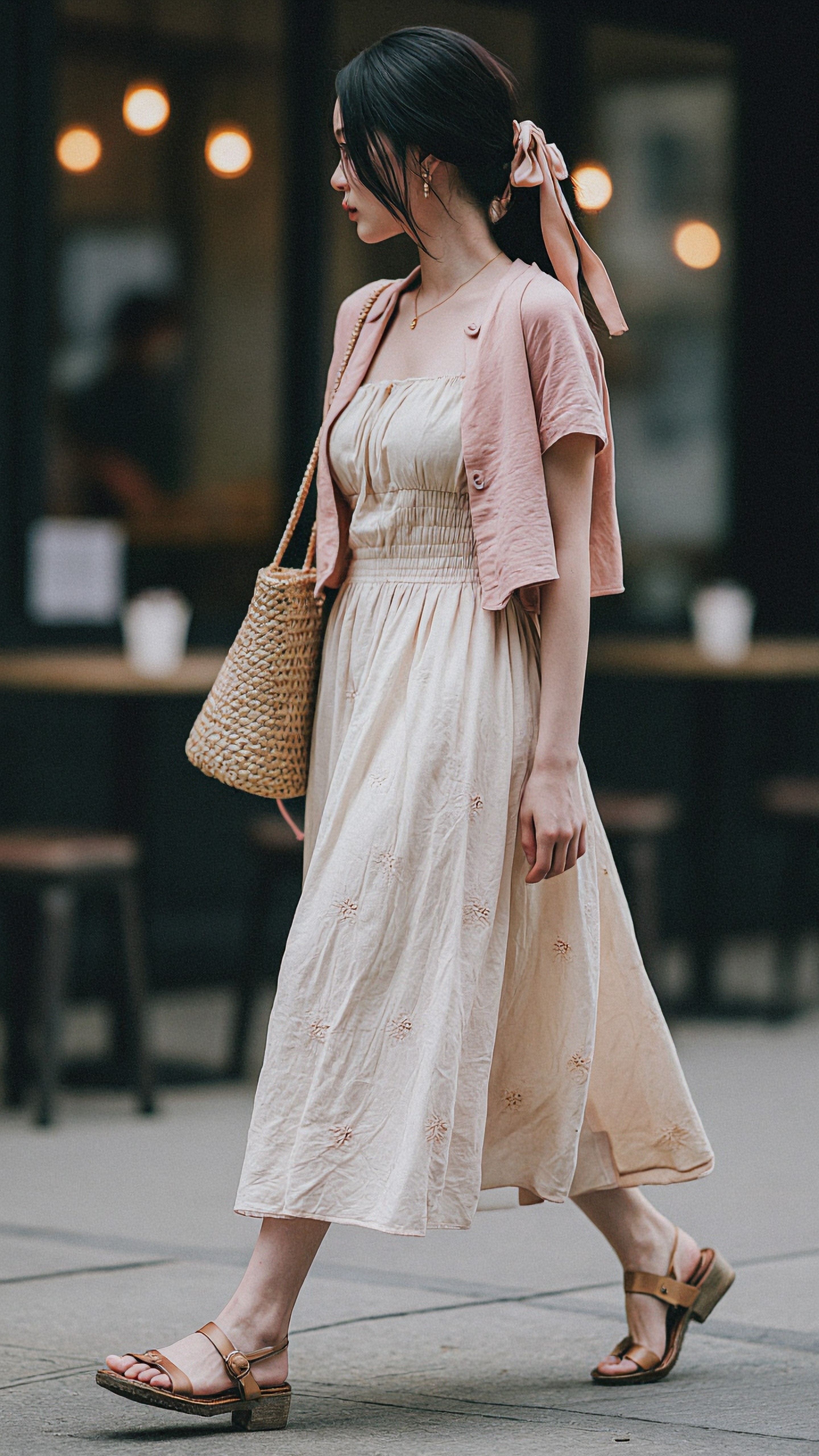
What to inspect: check whether the dress hem, waist definition, and cardigan layering stay legible at full body distance. Also inspect whether the scene reads like city fashion coverage rather than wedding-adjacent lifestyle imagery.
First denim-side test
This prompt tested whether denim could compete on visual interest while preserving fit logic and seasonal wearability.
Topic: Denim outfits trend comparison for US fashion editorial
Genre: Street Style
Camera: Sony A7R V
Lens: 40mm f/2.5
Lighting: Overcast diffusion
Location: SoHo side street with storefront reflections
Style: Clean commercial street fashion
Final Prompt: street-style full body fashion comparison image focused on denim outfit ideas, styling system more important than face, model wearing light-wash high-rise straight-leg jeans, white ribbed tank, soft blue cropped denim jacket, brown leather belt, cream slingback flats, structured mini bag, thin gold hoops, complete head-to-toe silhouette visible on a SoHo side street, overcast summer light for accurate denim texture, clear seam lines, believable jean fit through hip and knee, practical but trend-aware US fashion mood, subtle romantic softness in color grading, editorial street framing, storefront reflections and city context, crisp cotton and denim texture, natural stride pose, no exaggerated glamour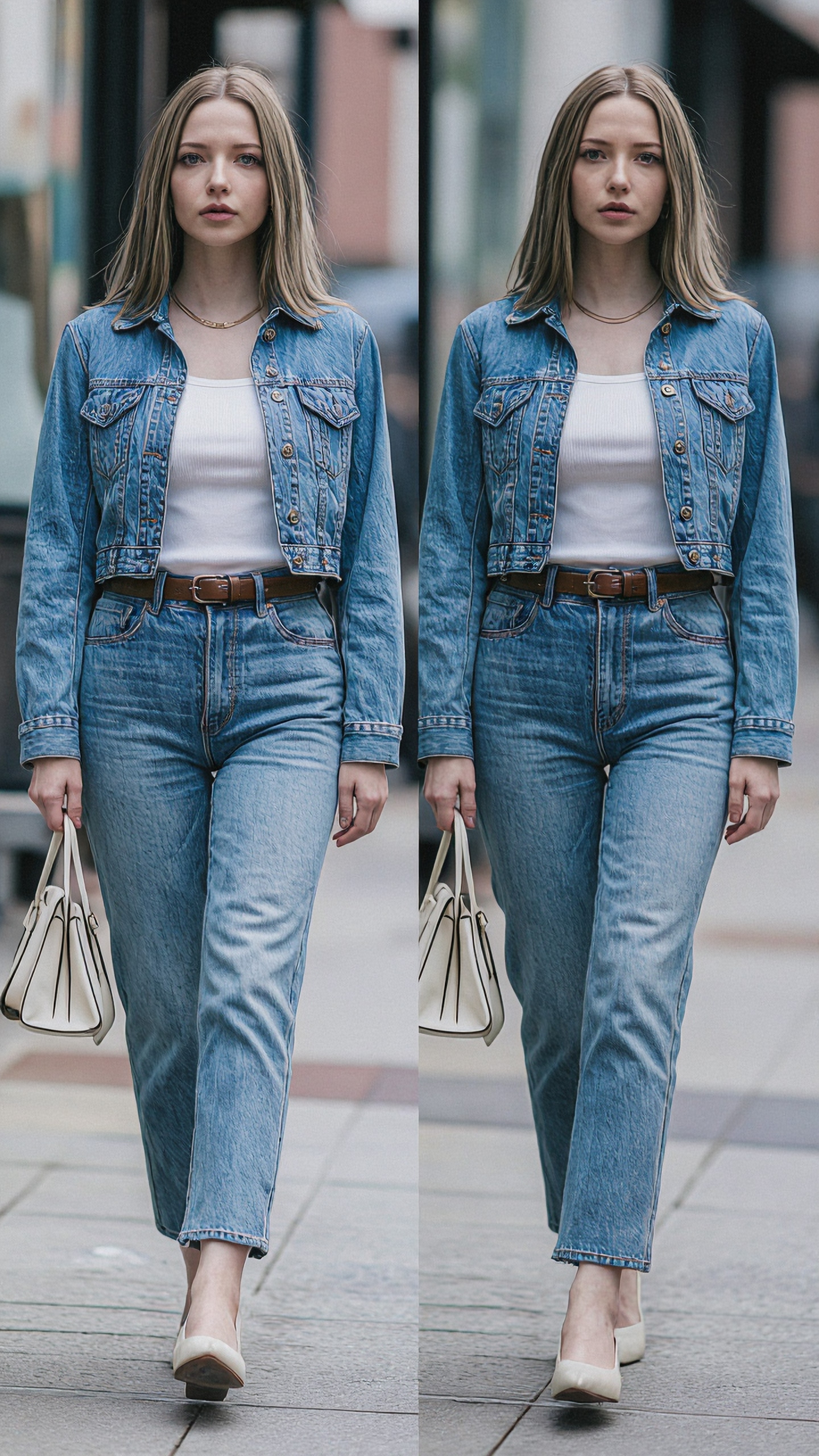
What to inspect: the key check is jean construction. Look at the rise, inseam, hem length, and whether the jacket and jeans accidentally merge into one blue mass.
What improved the output: matching shot logic and adding garment hierarchy
The strongest adjustment was simple: stop prompting “vibes” first and start prompting outfit logic first.
Instead of asking for a summery mood, I specified:
- the shot type
- exact garment stack
- intended silhouette
- accessory logic
- city or retail context
- what seasonal signal should dominate
Once I did that, the comparison became much more honest.
For dresses, I reduced generic softness and added practical styling anchors like cardigan drape, sandals, bag shape, and city context.
For denim, I spelled out jean cut, shoe profile, bag scale, wash tone, and whether the top needed visual contrast.
The adjustment phase: making dresses more useful and denim more romantic
The surprise from this test was that each side improved by borrowing from the other.
- Dresses got better when I added structure.
- Denim got better when I added softness.
That made the comparison feel closer to actual US fashion trend coverage, where the strongest looks often mix ease with intention.
Test: a more structured summer-dress lookbook image
This prompt checked whether a dress-led image could shift from dreamy to useful by making the full outfit easier to copy.
Topic: Summer dresses outfit ideas in a lookbook format
Genre: Fashion Lookbook
Camera: Nikon Z8
Lens: 35mm f/4
Lighting: Bright window daylight with soft studio bounce
Location: Minimal downtown showroom with pale wood floor
Style: Clean commercial lookbook with romantic styling
Final Prompt: head-to-toe lookbook fashion image for summer dresses outfit ideas, full body styling visibility, soft rose cotton poplin midi dress with square neckline and subtle puff sleeves, slim tan belt, cream ballet flats, woven basket bag, light cardigan folded over forearm, delicate pendant necklace, complete silhouette centered in a minimal showroom, neutral pale wood and white backdrop, bright daylight with soft bounce for fabric accuracy, romantic but practical mood, catalog clarity with editorial polish, visible garment fit, clean hemline, soft blush, cream, and honey color palette, retail-friendly composition, texture-rich cotton and leather details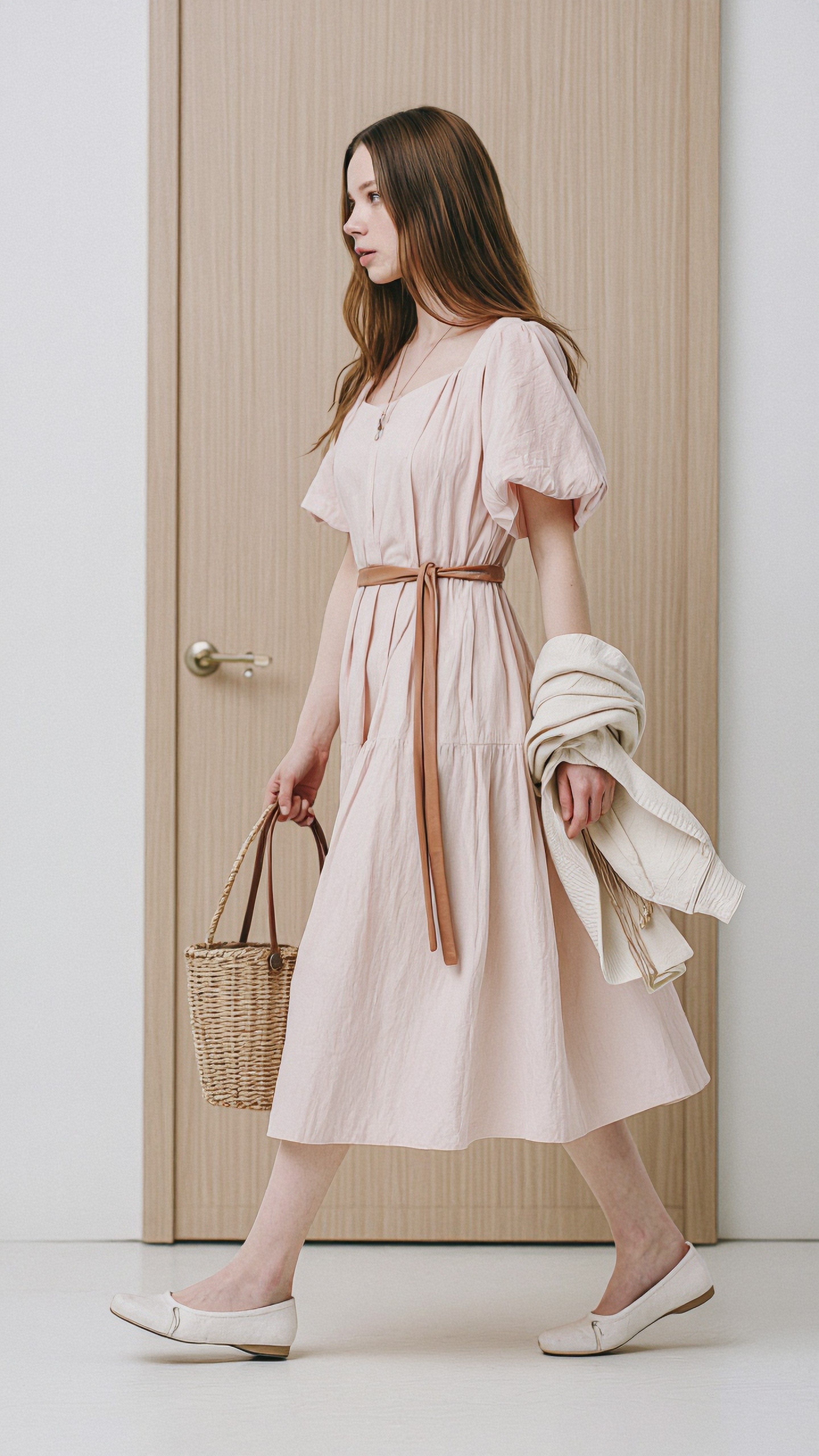
What to inspect: this should show whether the dress still feels aspirational once the background becomes simple and the styling needs to carry the image alone. The belt placement and shoe proportion matter more here than facial expression.
Test: a softer denim editorial
This prompt was designed to see if denim could inherit some of the romantic mood without losing category clarity.
Topic: Denim outfit ideas with romantic summer styling
Genre: Fashion Editorial
Camera: Fujifilm GFX100S
Lens: 45mm f/2.8
Lighting: Late afternoon warm side light
Location: Brooklyn brownstone stoop with summer flowers
Style: Romantic urban editorial
Final Prompt: three-quarter outfit editorial image for denim outfit ideas, styling-forward but wearable, model shown secondary to wardrobe in light indigo wide-leg jeans with pressed front crease, ivory sleeveless knit top tucked cleanly, faded denim overshirt worn open, blush silk scarf tied to bag handle, nude leather sandals, crescent shoulder bag, fine layered jewelry, seated and turning slightly on a Brooklyn brownstone stoop with potted summer flowers, warm side light, full outfit logic visible from shoulder to shoe, soft romantic tone without losing denim structure, refined US fashion trend coverage, realistic denim weight, clear seams and pockets, polished editorial composition, muted blue, ivory, blush, and sandstone palette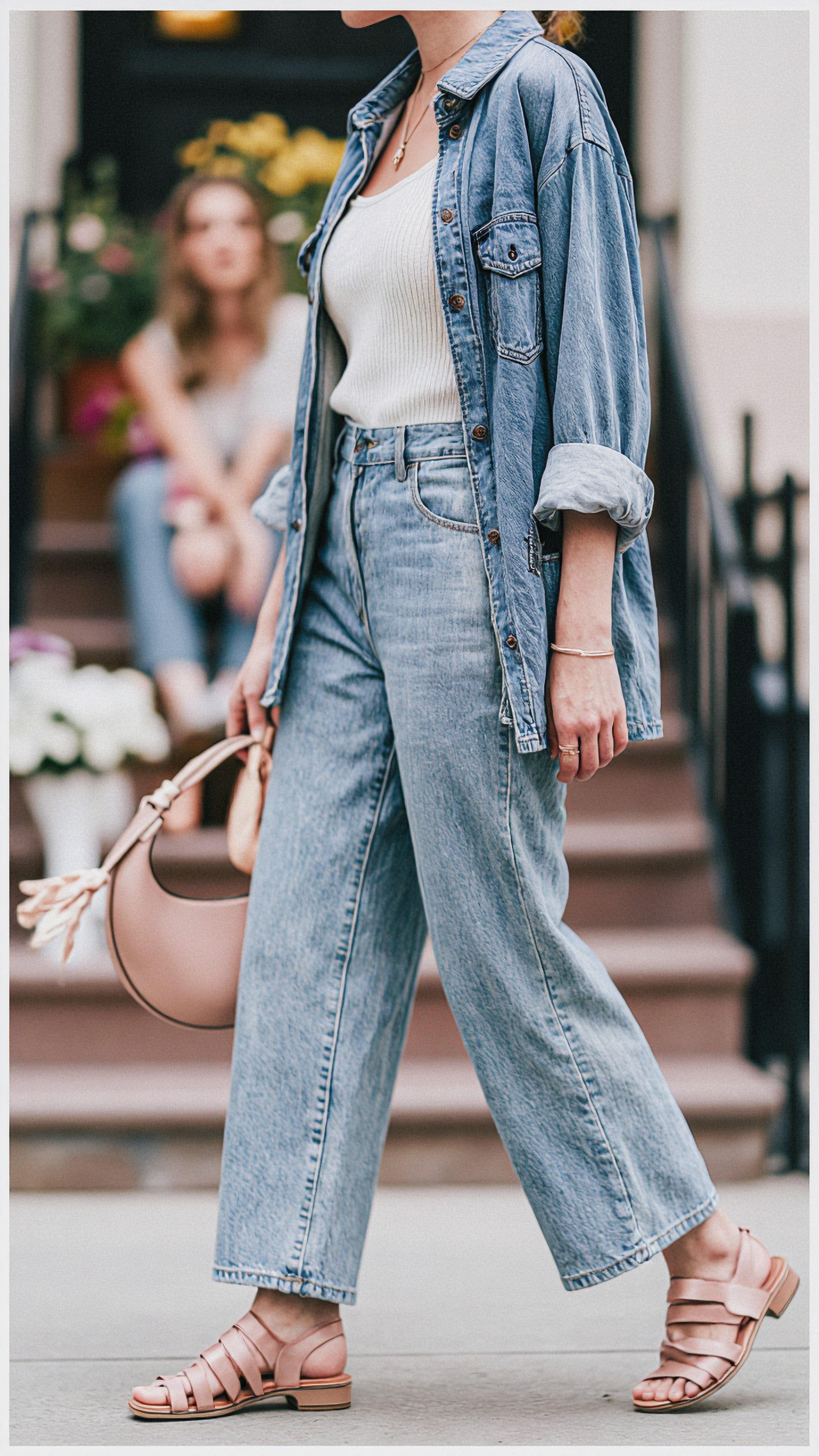
What to inspect: pay attention to whether the wide-leg jean shape remains symmetrical and believable while seated. Also inspect whether the scarf and flowers add softness or distract from the denim hierarchy.
Comparison table: which direction handled current search intent better?
| Test goal | Summer dresses | Denim outfits | Stronger for search intent? | |---|---|---|---| | Fast seasonal recognition | Very strong | Moderate | Summer dresses | | Outfit rebuild potential | Moderate | Strong | Denim outfits | | Romantic mood control | Very strong | Moderate to strong after prompt tuning | Summer dresses | | Garment construction accuracy | Strong on simple dresses, weaker on trims | Mixed, especially jeans fit | Summer dresses slightly | | Accessory integration | Strong but often repetitive | Strong when specified clearly | Tie | | “What is trending this week” visual freshness | Strong in editorial scenes | Strong in street-style and retail scenes | Depends on audience | | Comparison-page usefulness | Better for inspiration | Better for practical styling | Denim outfits |
The table captures the main result from this test: if the user wants to feel the trend, dresses win quickly. If the user wants to decode the trend into pieces they can wear, denim is often the stronger answer.
Prompt examples tied to the actual failure points
Rather than dump all prompts at the end, I used each one to solve a specific issue that showed up during generation.
When the model made dresses too dreamy
This next prompt tested a more retail-aware dress image, where product logic had to remain visible.
Topic: Casual summer dresses in a retail storefront context
Genre: Lifestyle Fashion Campaign
Camera: Leica SL2-S
Lens: 35mm f/2
Lighting: Soft morning window light with storefront reflection
Location: US boutique storefront with linen displays and neutral merchandising
Style: Elegant resort editorial meets retail display
Final Prompt: storefront display fashion scene focused on casual summer dresses, romantic retail styling more important than person, visible outfit featuring butter yellow linen midi dress on a model standing near boutique entrance, white flat sandals, braided belt, raffia handbag, light cream cardigan folded over one arm, nearby racks of similar dresses and folded summer knits, soft morning light through glass, boutique merchandising in warm neutrals, full head-to-toe outfit readability, feminine but commercial atmosphere, clear fabric weave, tasteful US trend-report look, subtle reflection in storefront glass, balanced composition showing outfit and retail context equally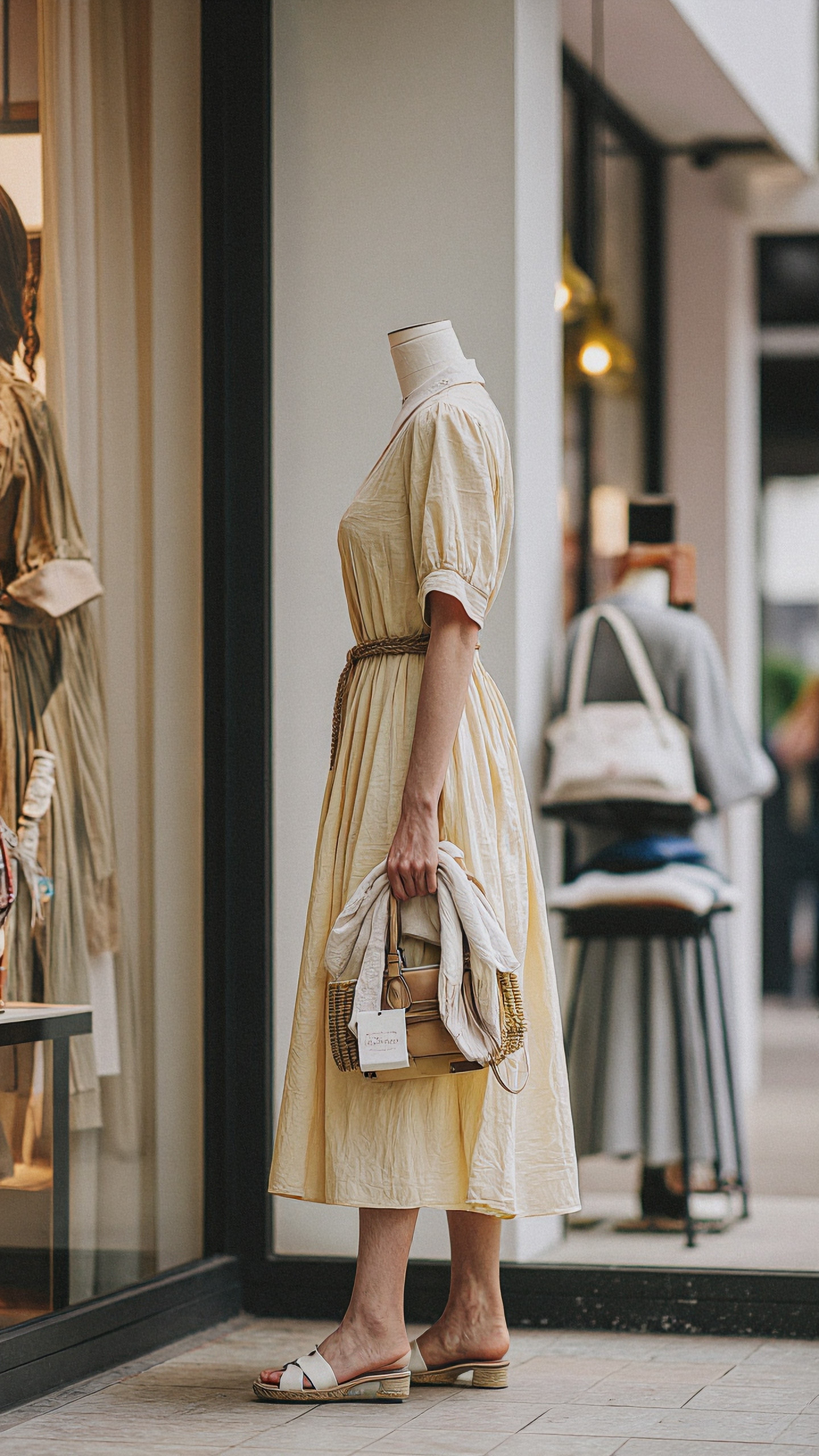
What to inspect: make sure the dress remains the hero even with display props in frame. The risk here is clutter—racks, reflections, and signage can steal attention from the silhouette.
When denim lacked category separation
This prompt was built to make each denim component readable on a catalog-style page.
Topic: Jeans outfits women can compare on a catalog grid page
Genre: Product Editorial
Camera: Hasselblad X2D 100C
Lens: 55mm f/3.5
Lighting: Softbox key light with even fill
Location: Minimal e-commerce studio set with warm stone backdrop
Style: Clean commercial fashion catalog
Final Prompt: catalog grid page style fashion composition for jeans outfits women search intent, one look shown in full body with supporting cropped detail panels, light-wash straight jeans, white fitted tank, pale chambray shirt tied loosely at waist, tan sandals, structured ivory tote, gold bangles, styling system clearly separated by panel layout, warm stone studio backdrop, softbox lighting for accurate denim color and seam clarity, polished commercial fashion direction, romantic softness in palette not pose, visible waistband, pocket shape, hem finish, and shoe pairing, comparison-friendly layout for trend article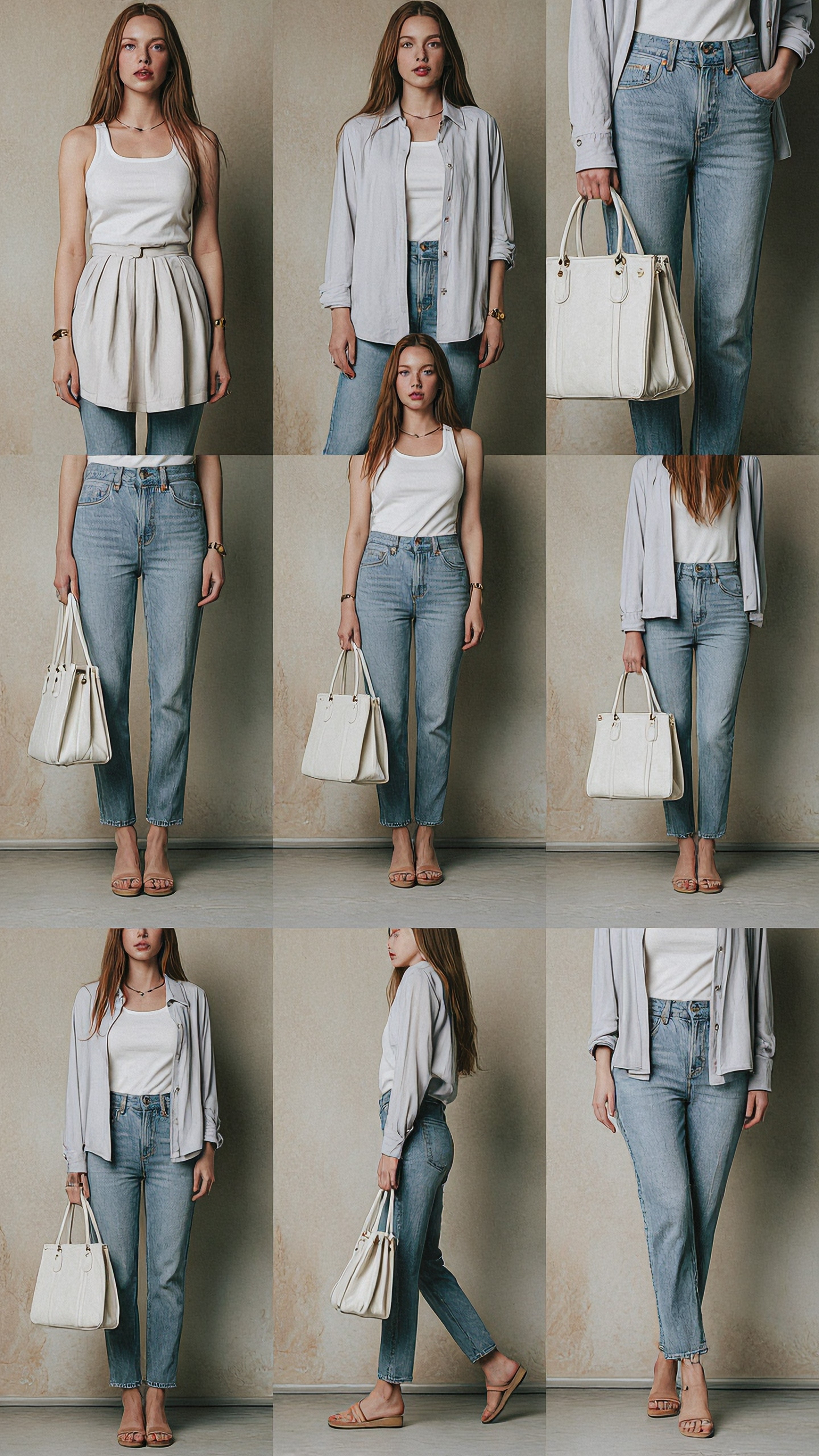
What to inspect: this is a utility image. Check that the waistband, wash variation, and hem are all readable enough for a comparison article, not just attractive enough for social media.
When both sides needed equal editorial pressure
To compare fairly, I needed parallel frames. This dress-side editorial was built to mirror the denim complexity rather than rely on default prettiness.
Topic: Summer dresses editorial with full styling logic
Genre: Fashion Editorial
Camera: Canon EOS R3
Lens: 24-70mm at 45mm f/3.2
Lighting: Sunset backlight with negative fill
Location: Los Angeles hotel terrace with pale stone and soft greenery
Style: Luxury fashion campaign with romantic restraint
Final Prompt: three-quarter outfit editorial for summer dresses comparison, visible styling system with dusty rose slip midi dress layered under a light cream cropped knit, slim metallic sandals, structured top-handle mini bag, pearl drop earrings, soft low bun with ribbon, model leaning against pale stone terrace wall at a Los Angeles hotel, sunset backlight, subtle breeze, full dress line and layering visible, romantic but modern US fashion trend mood, refined luxury campaign composition, texture contrast between satin slip and knit layer, warm blush and stone palette, elegant restraint, realistic proportions, garment clarity over facial emphasis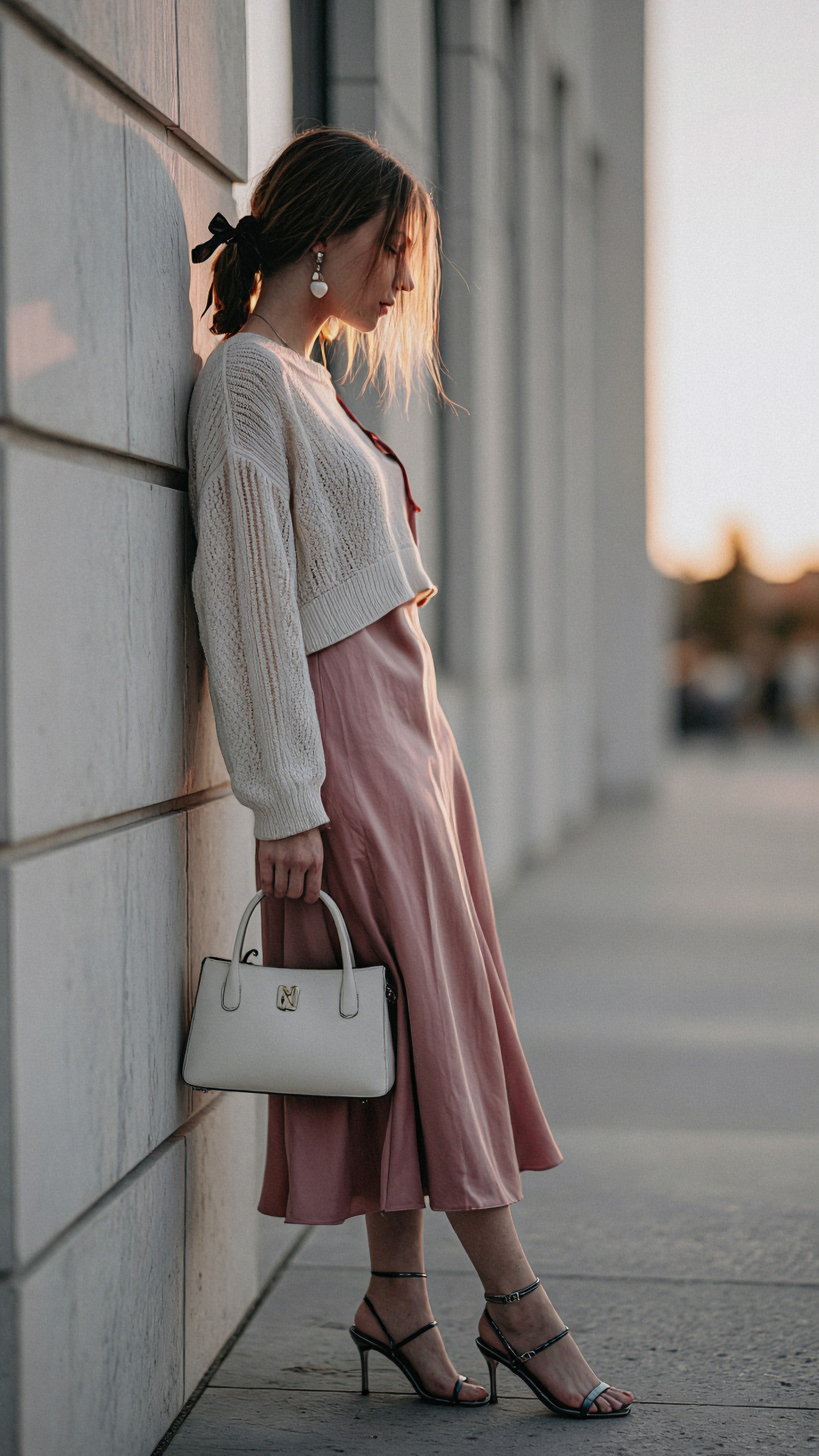
What to inspect: the knit-over-slip combination should add trend depth. Watch for melted fabric edges at the neckline and whether the bag scale feels believable against the dress length.
When I needed denim to look trend-led, not basic
This prompt was meant to push denim into “current week” territory using silhouette and styling rather than louder scenery.
Topic: Denim outfits as a trend-forward editorial look
Genre: Street Style Editorial
Camera: Sony A1
Lens: 50mm f/2
Lighting: Cloudy bright daylight
Location: Manhattan crosswalk near fashion offices
Style: Modern city fashion report
Final Prompt: street-style full body editorial image for denim outfits trend comparison, outfit-driven composition featuring dark indigo barrel-leg jeans, soft white sleeveless blouse with delicate ruffle collar, cropped ecru denim jacket carried over shoulder, pointed slingback flats, small burgundy shoulder bag, fine gold watch, walking across a Manhattan crosswalk near fashion offices, cloudy bright daylight for clean denim read, complete silhouette visible, modern city trend-report framing, romantic softness through blouse texture and color, confident practical styling, believable jeans volume, accurate shoe-to-hem spacing, polished but not posed atmosphere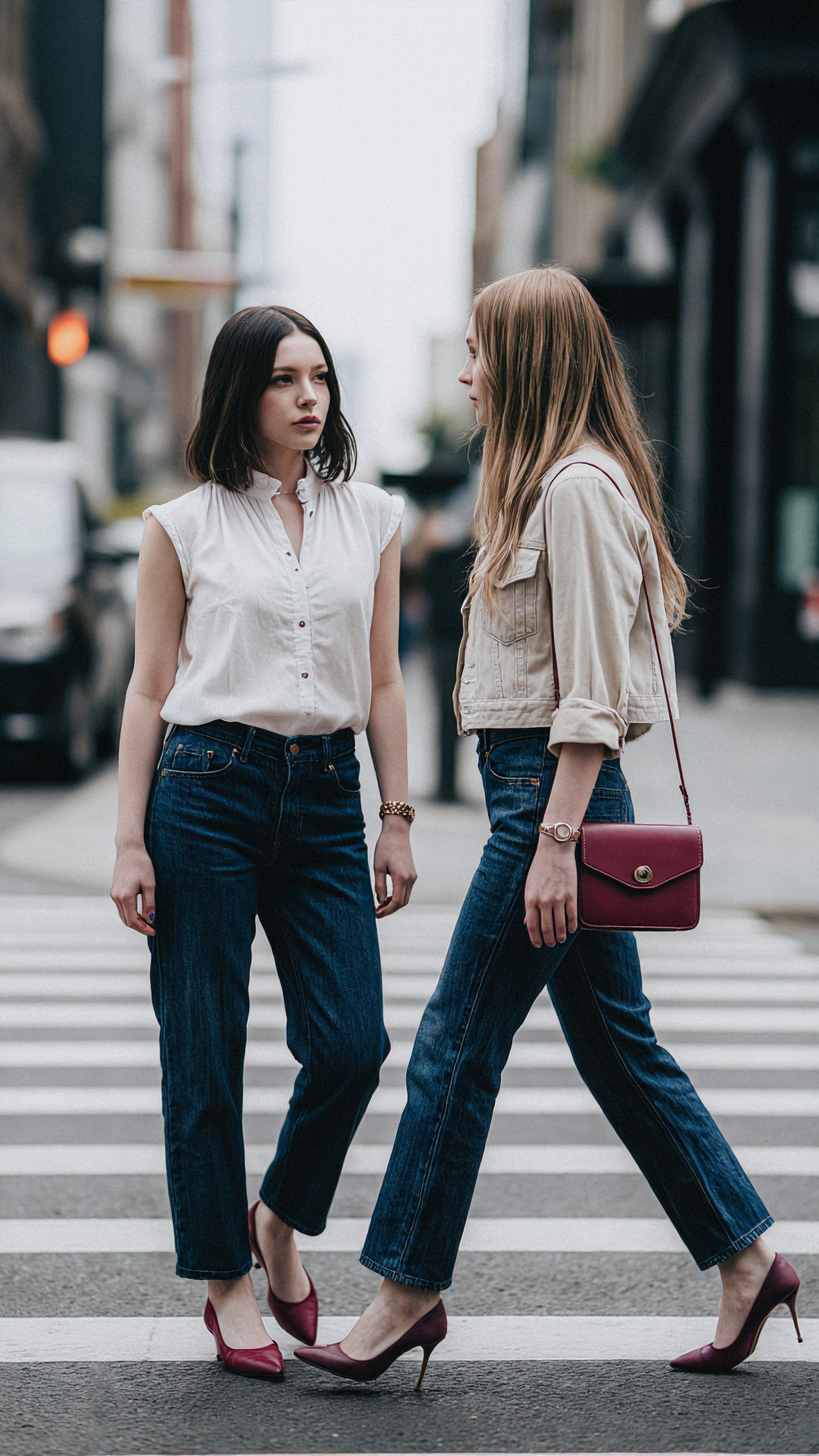
What to inspect: this test succeeds if the jeans silhouette reads intentional rather than accidental. The barrel shape should be visible without making the legs look anatomically warped.
Strengths: where each visual direction actually wins
Summer dresses were strongest for:
- romantic campaign headers
- casual summer dresses inspiration
- emotional “save this look” imagery
- warm-weather trend recaps
- social-preview thumbnails for editorial articles
The strongest result on the dress side was immediate legibility. Even at a glance, the season was obvious. Hem movement, light fabric, and warm palette did a lot of work with relatively little prompt weight.
Denim outfits were strongest for:
- practical shopping comparison content
- jeans outfits women can reconstruct from basics
- layered styling stories
- city trend coverage
- retail and catalog support visuals
The strongest denim outputs felt more useful in a comparison article because they had more moving parts: top, jean cut, bag, shoes, and outer layer all contributed to the verdict.
Limitations and failure risks before publishing
This is where many AI fashion articles fall apart. Attractive images are not enough.
Dress-side failure risks
- repetitive pale dress designs with little true trend variation
- accidental bridal or vacation-adjacent tone
- missing shoe detail under long hems
- generic floral texture that looks printed-on rather than woven
Denim-side failure risks
- warped leg shape
- fused jacket and jean textures
- inconsistent washes on left and right leg
- floating belts or broken belt loops
- pocket geometry that collapses under movement
Shared risks
- incomplete full-body framing
- accessories drifting in scale
- hands interfering with bag readability
- backgrounds overpowering styling
If you are publishing these results, it helps to run close checks and, if needed, upscale only after you confirm the garment logic. [Upscaler](/upscaler) is useful for improving detail visibility, but it cannot fix bad pocket placement or a broken hemline decision.
What to inspect before publishing the result
Use this checklist like an editor, not a fan.
Publish checklist
- Is the full outfit visible enough to support comparison intent?
- Can you identify the exact silhouette: slip, midi, wide-leg, straight-leg, barrel-leg?
- Do shoes, bag, and outer layer make sense with the main garment?
- Does the image communicate summer without relying only on sunlight?
- Does the romantic mood support the fashion story rather than blur it?
- Are denim seams, pockets, rise, and hems anatomically believable?
- Does the dress image feel like a real style option, not just a soft-focus fantasy?
- If used side by side, are both images equally editorial or equally commercial?
Additional prompt tests for support assets
A comparison article usually needs supporting assets beyond hero images. These two prompts helped build that layer.
Flat lay for fast outfit decoding
This prompt tested whether a dress-versus-denim article needed a non-model asset to make comparison easier for readers.
Topic: Summer dresses versus denim outfits flat lay comparison
Genre: Product Editorial
Camera: Nikon D850
Lens: 50mm f/5.6
Lighting: Overhead diffused studio light
Location: Neutral linen-covered tabletop set
Style: Editorial retail flat lay
Final Prompt: product flat lay comparison image for summer dresses vs denim outfits, two complete summer styling systems arranged side by side on a neutral linen tabletop, left side with romantic blush floral midi dress, cream cardigan, tan sandals, woven bag, pearl earrings, right side with light-wash straight jeans, white ribbed tank, pale denim overshirt, slingback flats, structured mini bag, gold hoops, garments arranged with clean editorial spacing, overhead composition, accurate fabric texture, visible color contrast, comparison-friendly retail aesthetic, soft romantic mood through palette and material choice, crisp merchandising detail
What to inspect: look for clean separation between the two outfit systems. This image is useful if the article needs quick visual logic rather than only aspirational full-body scenes.
Mood-board collage for trend framing
This prompt checked whether a comparison could be summarized as a trend board without losing category clarity.
Topic: US fashion trends mood-board comparing dresses and denim
Genre: Mood-Board Collage
Camera: Mixed editorial tear-sheet aesthetic
Lens: 35mm and 50mm fashion cropping simulation
Lighting: Mixed natural editorial light
Location: Composite board of New York street style, boutique textures, and fabric details
Style: Fashion magazine trend board
Final Prompt: mood-board collage for US fashion trends this week comparing summer dresses and denim outfits, editorial tear-sheet composition with one full-body romantic dress street-style image, one full-body denim city look, close crop of floral cotton texture, close crop of indigo denim seam and pocket, accessory snippets including woven bag and burgundy shoulder bag, boutique display fragments, soft handwritten style labels, blush, cream, indigo, and tan palette, modern fashion magazine art direction, romantic but analytical trend-report mood, layered paper collage realism, clear outfit category contrast without chaos
What to inspect: this should feel like editorial evidence, not scrapbook noise. Make sure the denim texture crop and dress fabric crop are distinct enough to support the article's comparison angle.
Transferable lesson for similar fashion topics
The broader lesson from this test is useful for any style comparison prompt:
When one category has built-in mood and the other has built-in structure, the prompt should compensate in the opposite direction.
That means:
- add structure to easy-pretty categories like dresses
- add softness and emotional framing to technical categories like denim
- keep shot parity when the page is meant to compare
- decide whether the image is for inspiration, utility, or both
This also transfers well to comparisons like linen sets vs cargo pants, ballet flats vs sneakers, or resort wear vs city tailoring.
Practical recommendation: which setup is best for which article angle?
Use summer-dress visuals when:
- the article lead needs immediate seasonal recognition
- the page targets casual summer dresses and soft feminine styling
- the social card or thumbnail needs warmth and movement
- the editorial mood is more inspirational than instructional
Use denim visuals when:
- the article needs practical outfit breakdowns
- the reader is likely comparing multiple wearable options
- the page leans toward jeans outfits women can rebuild from basics
- your scene is urban, retail, or street-style focused
Use both in matched pairs when:
- the search intent is directly comparative
- you want a stronger editorial argument
- you need one emotional image and one utility image per category
FAQ
Are summer dresses or denim outfits trending more in US fashion imagery right now?
In this test, summer dresses generated faster trend recognition, but denim outfits produced more actionable styling ideas. For a comparison page, dresses lead on mood while denim leads on practical outfit logic.
Which is better for summer outfit ideas in AI-generated editorials?
If the goal is dreamy, romantic, seasonal imagery, dresses are easier. If the goal is reusable combinations with clear layers, denim performs better once the prompt specifies fit and accessories.
Why do AI models often struggle more with denim than dresses?
Denim requires accurate construction: seams, rise, hem length, wash consistency, and believable leg shape. Dresses can hide more errors through softer silhouettes and movement.
What shot type works best for comparing summer dresses vs denim outfits?
A full-body street-style or head-to-toe lookbook frame is usually best. It keeps silhouette, shoes, bag, and seasonal context visible enough for true comparison.
Editorial conclusion
For summer dresses vs denim outfits, the winning search-intent strategy is not choosing one side and ignoring the other. In this test, summer dresses were the stronger visual opener for trend-driven interest, while denim outfits were the stronger closer for practical comparison.
Who should use this workflow: editors, prompt operators, and fashion-content teams building comparison pages, lookbook explainers, or trend recaps with side-by-side visual reasoning.
Who should avoid it: anyone expecting one generic fashion prompt to cover both categories fairly. That approach biases the results toward dresses and makes denim look weaker than it is.
The setting detail that mattered most was shot parity plus explicit garment hierarchy. Once the prompt named the shot type, the exact silhouette, the accessory logic, and a real fashion context, the comparison stopped feeling generic and started acting like evidence.