Summer Outfit Trends Today: Testing Which US Searches Lean Coastal, Sporty, or Minimal 한국어 요약
이 페이지는 ZView Space의 영어 원문을 한국어 검색 사용자도 이해할 수 있도록 정리한 SEO 요약입니다. 핵심은 단순한 얼굴 중심 이미지가 아니라 패션 에디토리얼, 룩북, 아웃핏, 프롬프트 테스트, 이미지 생성 워크플로우를 실제로 어떻게 구성할지입니다.
핵심 요약
- 원문 주제: Summer Outfit Trends Today: Testing Which US Searches Lean Coastal, Sporty, or Minimal
- 목적: AI 이미지 생성에서 outfit, silhouette, fabric, pose, location, camera framing을 더 명확하게 설계합니다.
- 활용 범위: Z-Image Turbo, Krea2 Turbo, Qwen Image, Anima, SeedVR2 같은 이미지 생성 및 업스케일 워크플로우에 적용할 수 있습니다.
- SEO 관점: 제목, 설명, 이미지 alt, 프롬프트 예시가 실제 검색 의도와 맞아야 색인 가능성이 높아집니다.
한국어 사용자를 위한 체크포인트
1. 프롬프트가 얼굴 묘사에만 머물지 않고 전체 스타일과 의상 구성을 설명하는지 확인합니다. 2. 패션 이미지라면 상의, 하의, 아우터, 신발, 액세서리, 소재감, 촬영 장소를 분리해서 씁니다. 3. 생성 결과는 바로 게시하지 말고 디테일, 손, 의상 형태, 배경 일관성, 이미지 품질을 비교합니다. 4. 글 본문에는 실제 테스트 기준과 실패를 줄이는 방법이 들어가야 검색엔진에서 얇은 콘텐츠로 보일 가능성이 줄어듭니다.
원문 미리보기
This test looks at summer outfit trends today through an image generation workflow, not a generic style roundup. The goal was practical: generate fashion visuals that match current US search intent around summer outfit ideas , then see whether image models nat
---
This test looks at summer outfit trends today through an image-generation workflow, not a generic style roundup. The goal was practical: generate fashion visuals that match current US search intent around summer outfit ideas, then see whether image models naturally interpret those searches as coastal summer outfits, sporty summer outfits, or minimal summer outfits.
What made this useful is that the trend terms sound simple, but image outputs were not. In this test, the strongest results came from prompts that treated outfit logic as the main subject: silhouette, fabric, shoes, bag, layering, and retail or editorial context. The weak point was generic "summer fashion" language, which pushed many generations toward vague vacation imagery instead of distinct trend directions.
What to know first
- Current summer-style search language splits cleanly into three visual lanes: coastal, sporty, and minimal.
- Image models often blur those lanes unless the prompt locks garment structure, footwear, accessories, and scene context.
- Coastal prompts usually over-index on beach clichés unless you specify styling hierarchy and merchandising detail.
- Sporty prompts tend to drift into activewear unless you define whether the look is street-style sporty, tennis-inspired, or retro athletic.
- Minimal prompts produce the most usable outputs, but they can become flat if texture, tailoring, and color contrast are under-specified.
Test setup
I treated this as a trend-mapping exercise for inspiration-led search intent. Instead of asking a model for one perfect image, I tested whether a set of prompts could reliably separate the three styles a user is likely looking for right now.
What was tested:
- Search-led fashion prompts for US summer styling
- Full-body editorial and lookbook framing
- Retail, street-style, storefront, detail, and mood-board outputs
- Romantic mood direction layered on top of trend categories
- Prompt specificity vs broad trend phrasing
I used a shot-planning approach similar to what works in [Prompt Lab](/promptlab) when the subject is styling rather than portraiture. For reference checks, I compared whether the outputs would feel usable in a gallery, a trend board, or a shopping-adjacent article such as those published in [Articles](/articles).
Why summer outfit ideas are hard for image models
The phrase summer outfit ideas sounds straightforward, but it hides several competing visual assumptions.
First, models tend to map "summer" to weather before they map it to fashion structure. That means beaches, sun flare, exposed skin, and generic vacation poses appear faster than coherent outfits.
Second, the phrase "trending summer style" often triggers collage-like aesthetic averages. You get linen, white dresses, sneakers, baskets, and sunglasses, but not a clear silhouette system.
Third, trend categories overlap. Coastal can borrow from minimal. Sporty can borrow from coastal through striped knits and tennis whites. Minimal can absorb sporty sneakers. Without constraints, the model delivers a mood, not a usable category.
That was the main reason to test separate prompts and inspect which words actually held the line.
First pass: one broad prompt for summer outfit trends today
My first attempt used a broad editorial brief aimed at capturing US fashion trends in one image. It produced attractive but unhelpful results: bright boardwalk scenes, soft dresses, random straw bags, and a mix of sneakers and sandals with no category discipline.
The images were not bad. They were just too blended to answer the actual query. If someone searches summer outfit trends today, they usually want pattern recognition: what direction is strong right now, and what are the visual differences?
To test that failure mode directly, I started with a broad street-style frame.
This prompt checks whether a model can infer multiple trend directions from one high-level brief without collapsing them into generic vacation content.
Topic: summer outfit trends today in the US interpreted as a fashion street-style overview
Genre: Street Style
Camera: Canon EOS R5
Lens: 35mm f/2
Lighting: bright overcast diffusion
Location: New York sidewalk near fashion retail with light pedestrian movement
Style: contemporary fashion trend report with soft romantic mood
Final Prompt: street-style full body fashion image showing a current US summer outfit trend interpretation on a New York sidewalk, styling is the main subject, complete head-to-toe look visible with lightweight romantic summer dress layered under a cropped knit, delicate textures, slim leather belt, soft structured shoulder bag, mixed sandals and sporty influence kept subtle, visible fabric movement, polished but wearable silhouette, editorial documentary framing, storefront reflections in background, soft romantic palette of ivory blush pale blue and sand, natural walking pose, fashion-first composition, Canon EOS R5 realism, 35mm fashion reportage, clear garment fit, realistic textile detail, magazine-ready trend report image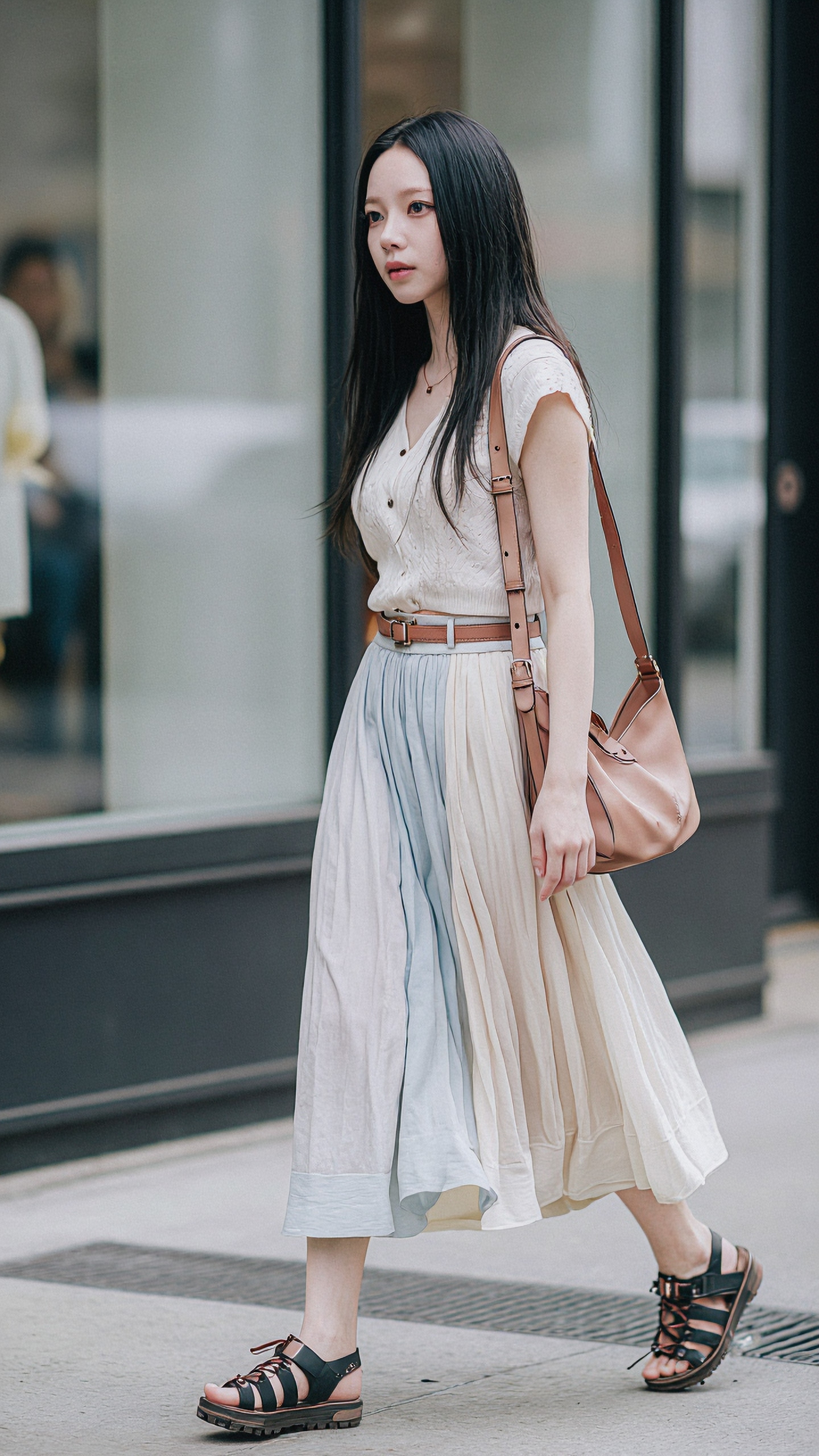
What to inspect: look for category drift. If the image reads only as "nice summer outfit" and not as a clearly classifiable trend direction, the prompt is too broad for trend-led inspiration content.
The output revealed the core issue: the model understood season and mood, but not trend segmentation.
The adjustment that improved the output
The fix was not simply adding more adjectives. What improved the output was splitting trend intent into separate visual systems:
1. Coastal = breezy layers, resort textures, marine-adjacent palette, open environment, soft movement 2. Sporty = athletic references integrated into fashion styling, grounded footwear logic, city or court context 3. Minimal = sharp silhouette, controlled palette, textile contrast, clean retail or editorial setting
Once the prompts were separated this way, the images became more useful. They were no longer trying to summarize all of summer at once.
A practical comparison: which lane is best for which search?
| Search need | Best visual lane | What the model does well | Common failure risk | Best fix | |---|---|---|---|---| | General inspiration for summer outfit ideas | Minimal or coastal | Produces cohesive, wearable looks quickly | Becomes generic vacation or plain basics | Specify silhouette and accessories | | Romantic warm-weather trend board | Coastal | Handles flowy fabrics, dresses, baskets, sandals | Too beach-tourism coded | Add city resort or boardwalk retail context | | City casual trend update | Sporty | Good with sneakers, polos, tennis references, nylon layers | Turns into gymwear | Use "street-style sporty" and define bag/jewelry | | Polished capsule wardrobe search | Minimal | Strong tailoring, clean palette, sharp product visibility | Lacks visual interest | Add texture and one romantic soft element | | Visual comparison of trending summer style | All three, but separately | Gives clearer editorial distinction | Categories bleed together | One prompt per lane, same framing for comparison |
Coastal summer outfits: where the model overreached
The strongest coastal images came from prompts that treated the setting as supportive rather than dominant. When I wrote "beach," the model often made the scene the story. When I wrote "boardwalk boutique district" or "seaside resort promenade," the outfit stayed primary.
This first coastal test was designed to keep the styling visible while still signaling warmth, softness, and motion.
This prompt checks style lock for coastal summer outfits without letting the background overpower the clothes.
Topic: coastal summer outfits with romantic resort styling
Genre: Fashion Editorial
Camera: Sony A7R V
Lens: 50mm f/1.8
Lighting: golden hour beach reflection
Location: seaside promenade outside a coastal boutique hotel
Style: elegant resort editorial with soft romantic mood
Final Prompt: three-quarter outfit editorial of a coastal summer outfit, styling-forward fashion image with a soft romantic direction, flowing ivory slip dress layered with a pale blue lightweight cardigan draped over shoulders, woven straw tote, flat leather sandals, shell-inspired jewelry, silk scarf tied to bag, visible fabric texture and hem movement, model secondary to outfit logic, ocean-adjacent promenade outside a boutique hotel, warm reflected sunset light, refined pose with full outfit readability, muted sea-glass palette, luxury resort editorial composition, Sony A7R V detail, 50mm framing, premium textile realism, balanced background, trend-report quality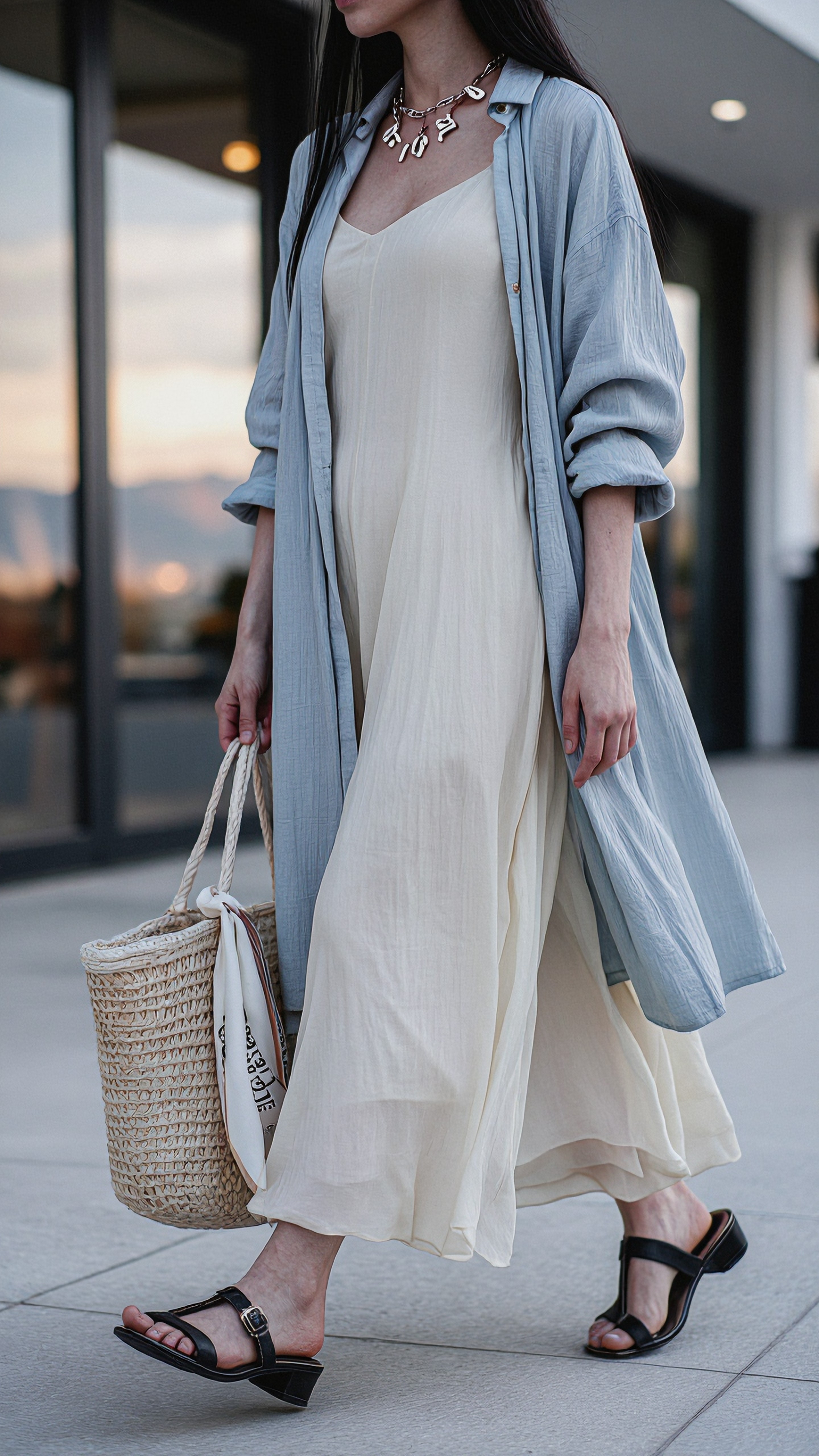
What to inspect: the key test is whether the cardigan, sandals, tote, and jewelry read as one coherent styling system. If the image turns into generic beachwear or swim-adjacent content, the prompt needs stronger outfit hierarchy.
The result was directionally right, but still a little too vacation-led. The dress often became eveningwear rather than day styling.
So I made the next adjustment: more retail realism, less fantasy resort language.
This prompt tests whether a slightly commercial setting improves daywear credibility for coastal looks.
Topic: coastal summer outfits interpreted as wearable US summer outfit ideas
Genre: Head-to-Toe Lookbook
Camera: Nikon Z8
Lens: 40mm f/2
Lighting: soft morning sun with storefront bounce
Location: coastal town shopping street with whitewashed storefronts
Style: clean commercial fashion lookbook with romantic summer softness
Final Prompt: head-to-toe lookbook image focused on a wearable coastal summer outfit trend, full outfit visible from head to sandals, white cotton midi dress with subtle gathered waist, cropped fine-gauge knit in oat color, woven belt, tan fisherman sandals, small raffia shoulder bag, gold pendant necklace, oversized sunglasses in hand, styling reads practical and current, shot on a coastal town shopping street with boutique windows and pale stone pavement, soft morning light, upright pose, clear garment construction, breathable fabrics, romantic but grounded fashion mood, Nikon Z8 sharpness, 40mm natural perspective, retail-ready seasonal styling image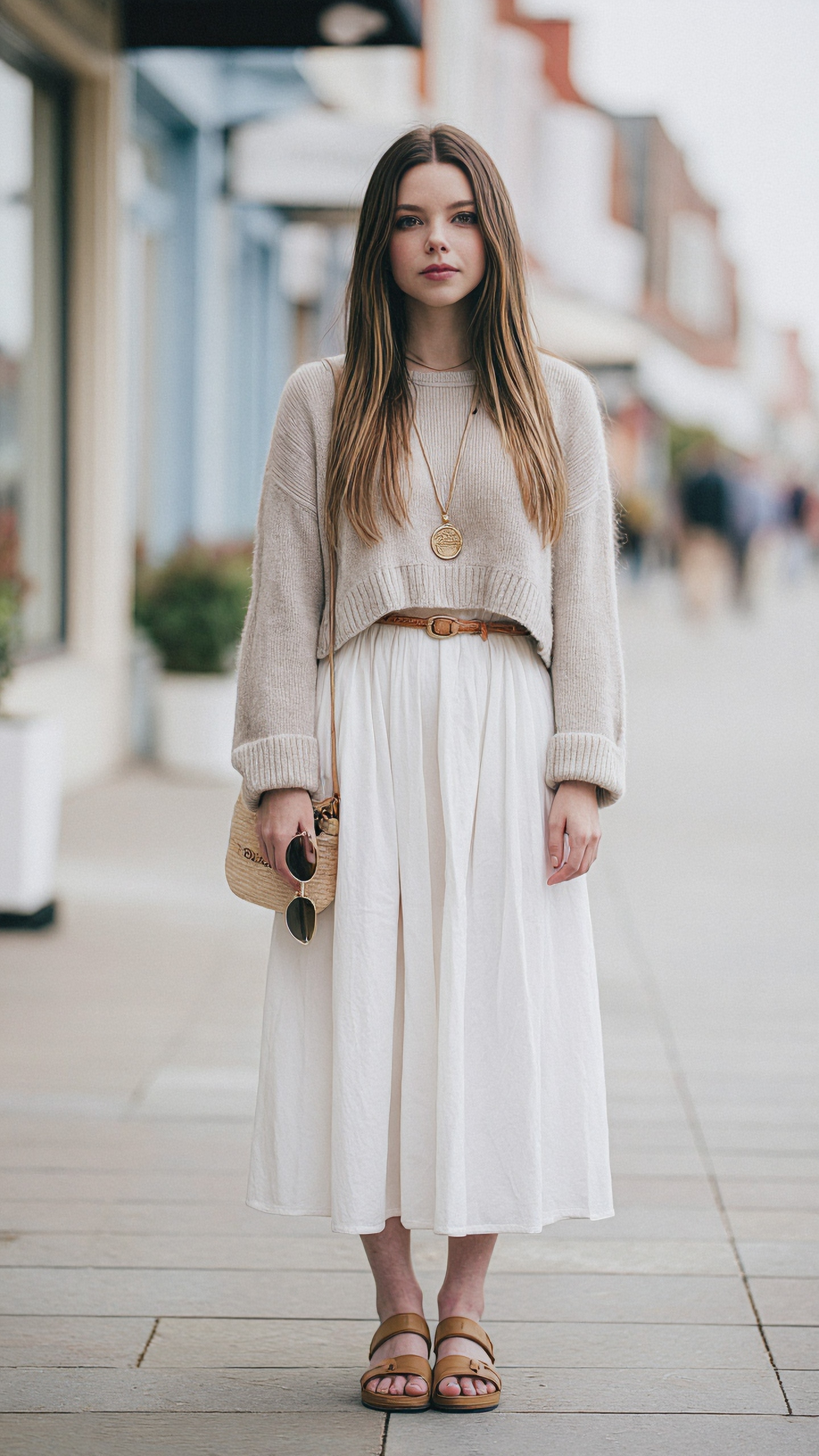
What to inspect: check if the image feels buyable rather than cinematic. Garment seams, shoe shape, bag scale, and dress length should look plausible for trend inspiration, not costume.
Sporty summer outfits: useful when the prompt avoids fitness language
Sporty was the easiest category to derail. If I used words like "athletic," "performance," or even "training," the model leaned into activewear sets. That is not what most inspiration-led users mean by sporty summer outfits.
The strongest results came from references like tennis, track influence, retro sport trims, and city movement, while keeping the garments in a fashion-editorial register.
This prompt tests whether sporty can stay fashion-led instead of turning into workout imagery.
Topic: sporty summer outfits with romantic tennis-inspired styling
Genre: Street Style
Camera: Fujifilm GFX100S
Lens: 45mm f/2.8
Lighting: late afternoon open shade
Location: New York sidewalk near a tennis club and cafe frontage
Style: luxury street-style editorial with soft romantic accents
Final Prompt: street-style full body image of a sporty summer outfit trend, complete outfit visible and styling-first, pleated cream tennis skirt paired with a blush knit polo, lightweight white zip cardigan tied loosely over shoulders, retro low-profile sneakers, ribbed socks, slim crossbody bag, delicate gold jewelry, oversized tortoiseshell sunglasses, soft romantic color accents balanced with athletic references, city sidewalk near tennis club and cafe frontage, natural walking pose, editorial documentary framing, Fujifilm GFX100S clarity, 45mm perspective, crisp fabric texture, polished sporty-not-gym fashion image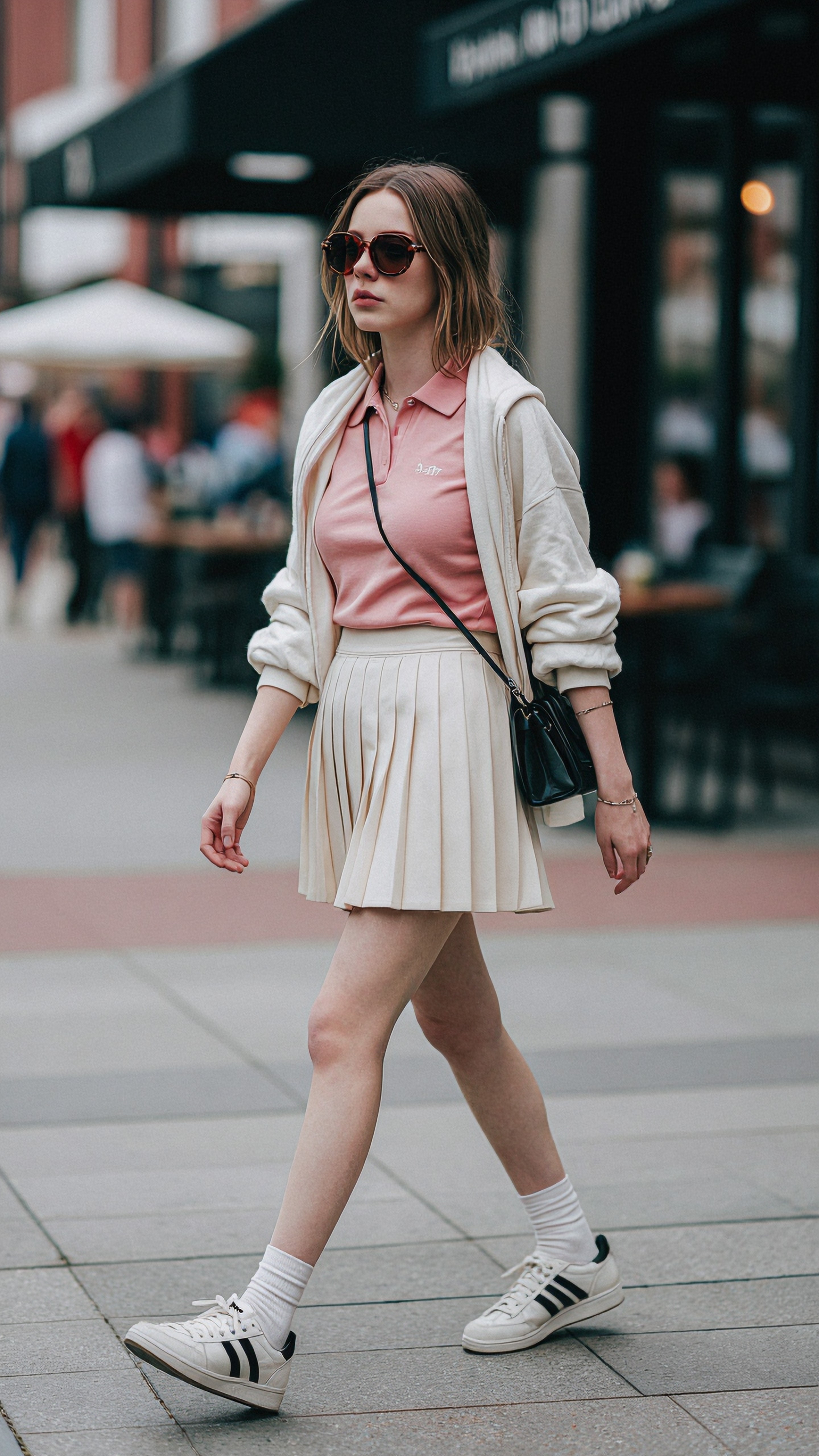
What to inspect: the line between sporty and activewear is the main risk. The skirt should read as styled fashion, not match-day uniform, and the accessories should support that interpretation.
This worked better than expected, especially because the accessories prevented a full slide into sports catalog territory.
Then I tested a more urban sporty version with a slightly tougher silhouette, since many trending summer style searches now mix femininity with utility.
This prompt checks whether nylon, sneakers, and romantic softness can coexist without losing readability.
Topic: sporty summer outfits with utility layering for city wear
Genre: Fashion Editorial
Camera: Leica SL2-S
Lens: 35mm f/2
Lighting: overcast city diffusion
Location: SoHo side street with concrete, glass, and retail signage
Style: modern city editorial with romantic utility contrast
Final Prompt: three-quarter outfit editorial focused on a sporty summer outfit for city wear, lightweight blush nylon midi skirt, white fitted tank, cropped technical windbreaker in pale stone tied open, sleek vintage-inspired sneakers, small shoulder bag, delicate chain necklace, hair ribbon as soft romantic detail, silhouette shows movement and practical layering, shot in SoHo on a clean side street with subtle retail context, overcast diffusion keeps fabrics legible, calm confident stance, fashion editor composition, Leica SL2-S realism, 35mm outfit visibility, premium urban summer styling, clear distinction from gymwear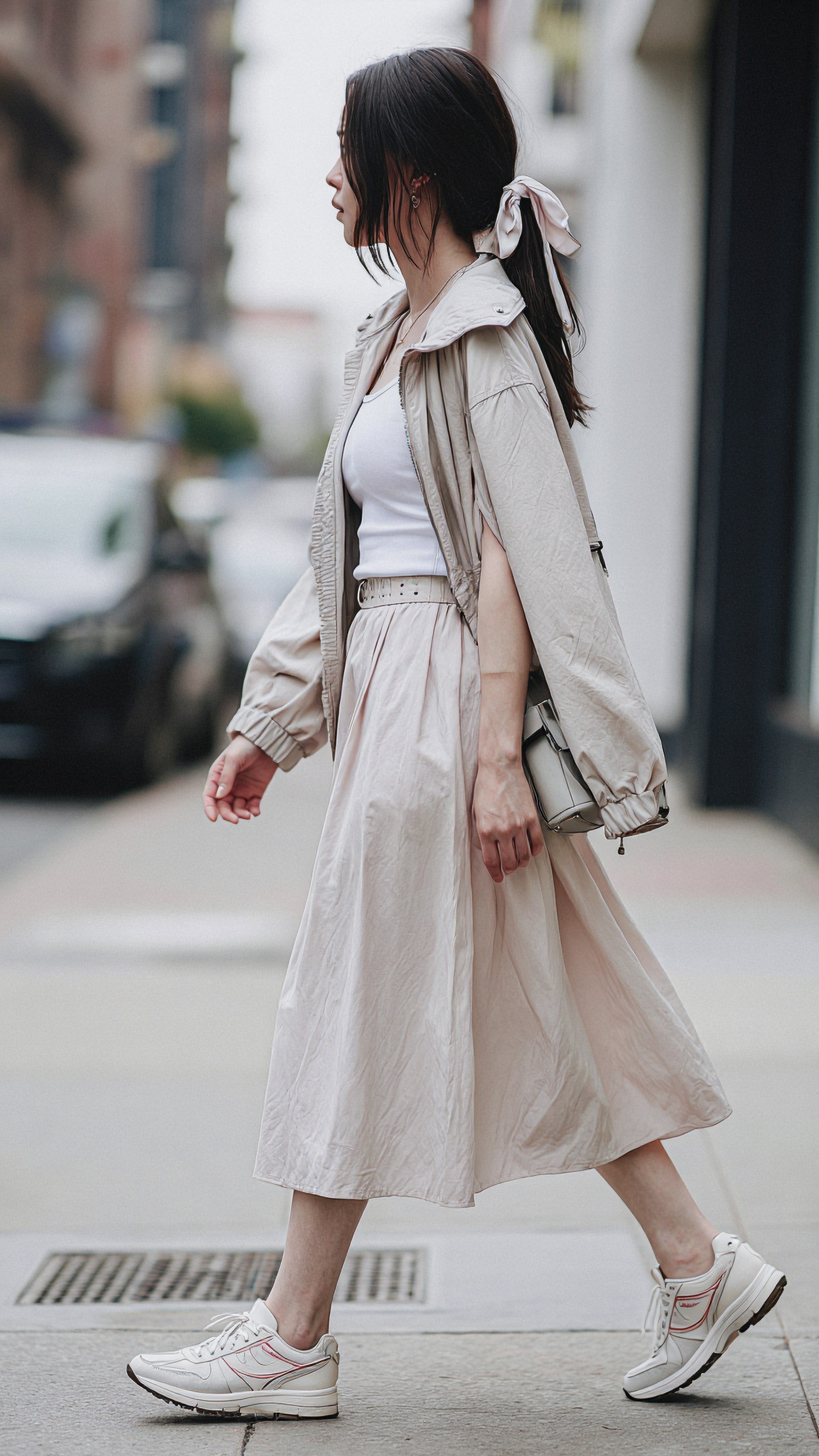
What to inspect: inspect proportion. The windbreaker length, skirt volume, and sneaker scale need to balance. If one element dominates, the look reads accidental rather than trend-aware.
Minimal summer outfits: the most stable, but easy to flatten
Minimal was the most reliable category for image generation. The issue was not coherence. The issue was sameness.
If the prompt only says neutral palette, clean lines, and tailoring, many images end up looking like sterile e-commerce basics. To make minimal summer outfits feel current, I had to add tactile contrast and one soft romantic note.
This prompt tests whether minimal can stay warm and feminine without losing its clean structure.
Topic: minimal summer outfits with romantic texture contrast
Genre: Head-to-Toe Lookbook
Camera: Canon EOS R3
Lens: 50mm f/2.2
Lighting: softbox daylight simulation
Location: Scandinavian minimalist retail interior
Style: clean commercial lookbook with refined romantic mood
Final Prompt: head-to-toe lookbook image of a minimal summer outfit trend, full outfit shown clearly in a Scandinavian minimalist retail setting, ivory sleeveless column dress in matte cotton, fine rib cardigan in warm beige folded over arm, narrow leather sandals, structured mini tote, pearl drop earrings, slim gold cuff, styling relies on proportion and textile contrast rather than print, subtle romantic softness in movement and accessories, neutral palette of ivory sand and blush undertones, standing pose with clear silhouette, Canon EOS R3 commercial sharpness, 50mm balanced perspective, premium fabric realism, polished capsule-wardrobe visual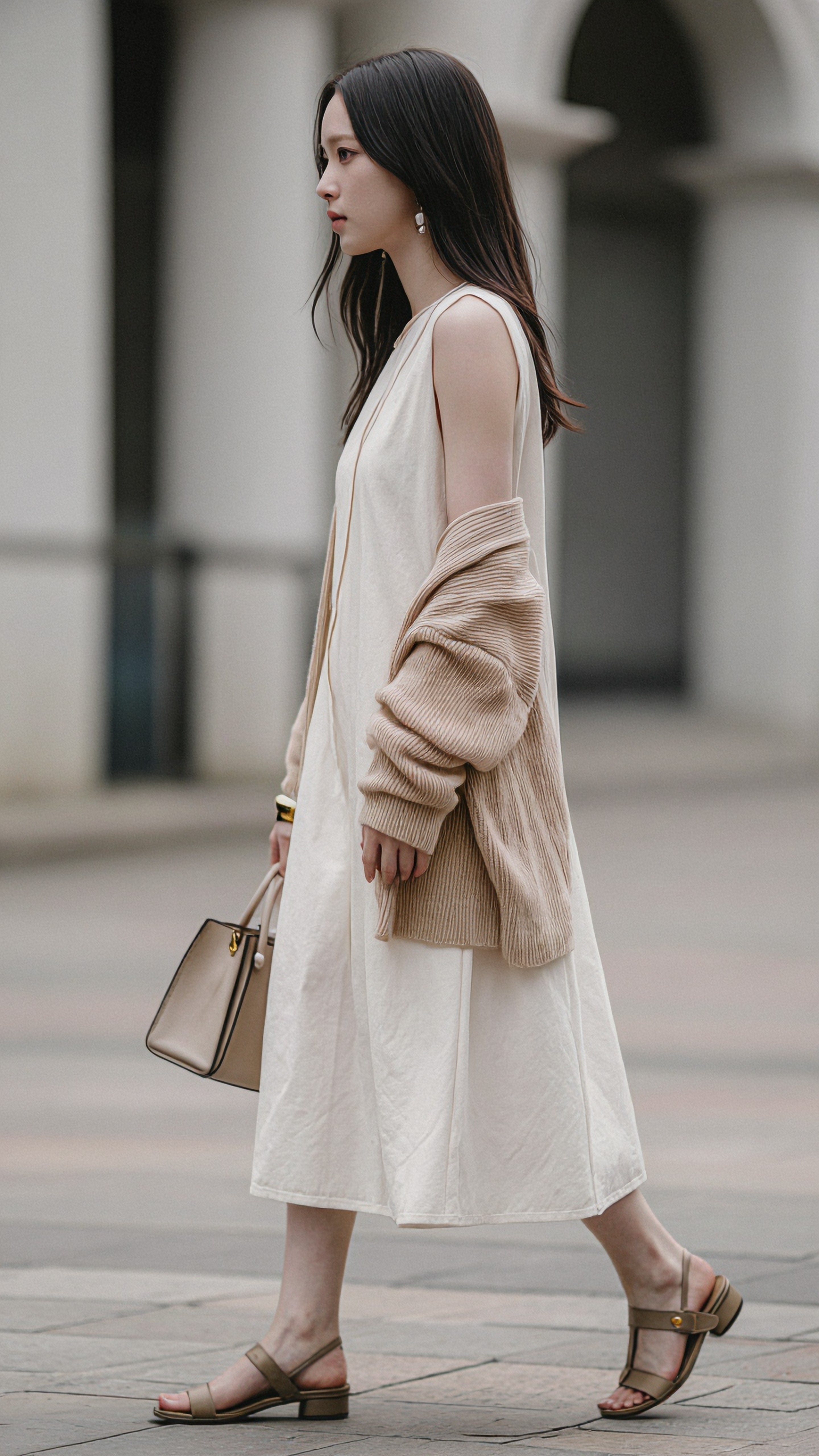
What to inspect: minimal images succeed or fail on material realism. Look for cotton weight, sandal construction, bag edge definition, and whether the accessories are understated rather than absent.
For the second minimal test, I wanted a more editorial and less retail outcome.
This prompt checks whether minimal styling can still feel like a trend report when placed in a magazine-style city context.
Topic: minimal summer outfits for current US fashion trends
Genre: Fashion Editorial
Camera: Hasselblad X2D 100C
Lens: 55mm f/2.5
Lighting: early evening window bounce and ambient street light
Location: quiet Manhattan hotel lobby entrance
Style: understated luxury campaign with romantic restraint
Final Prompt: three-quarter outfit editorial showing a current minimal summer outfit trend, tailored cream vest worn over a fluid pale blush midi dress, slim leather thong sandals, compact top-handle bag, fine gold earrings, clean center-part hair, styling is elegant and modern with soft romantic undertone, photographed at a quiet Manhattan hotel lobby entrance with stone, brass, and glass textures, poised still stance, full outfit logic readable, no clutter, Hasselblad X2D tonal depth, 55mm luxury editorial framing, subtle warm evening color, precise tailoring, high-end trend feature image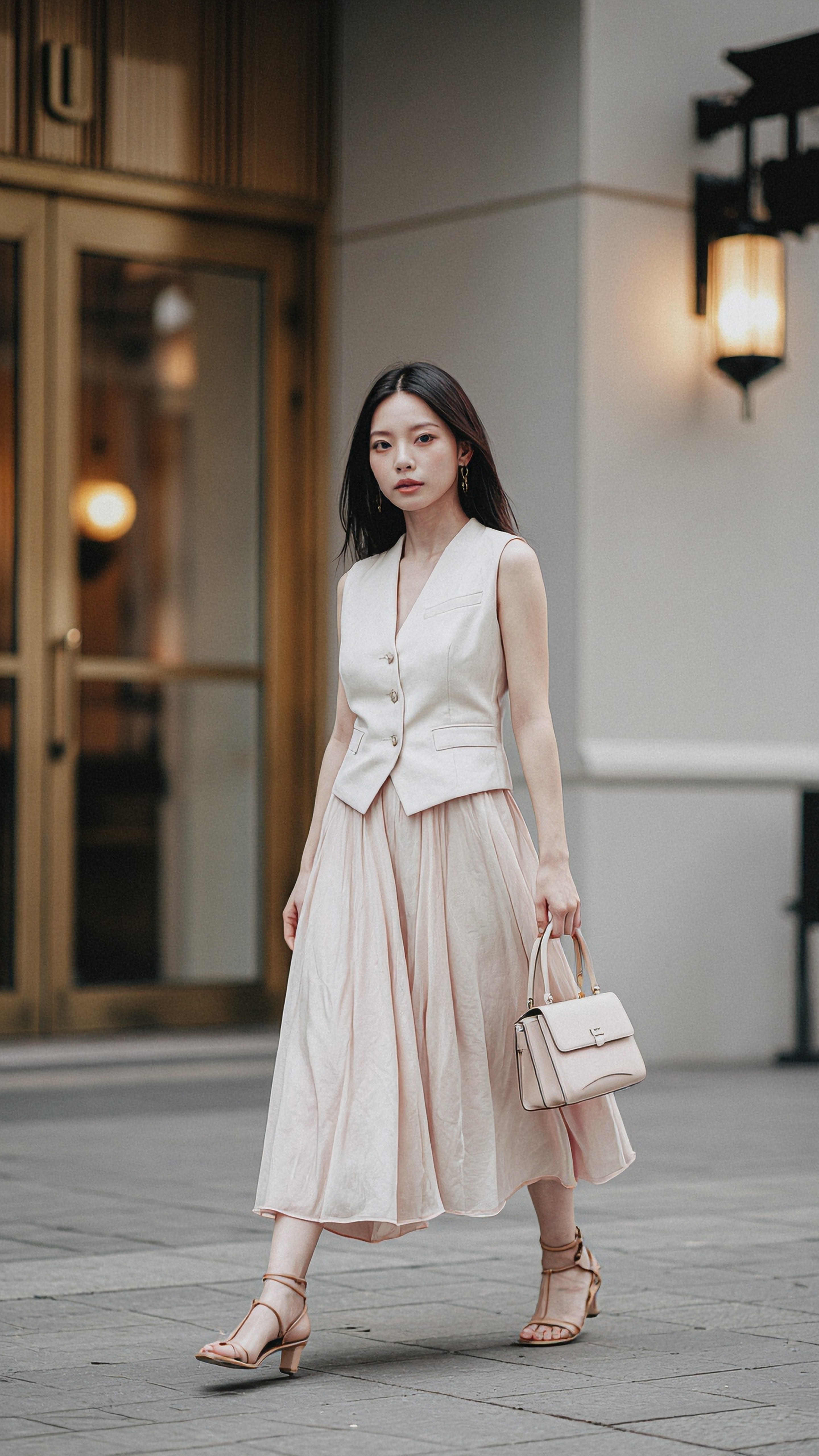
What to inspect: check for over-smoothing. Minimal looks often lose texture in generation. The vest and dress should remain materially distinct, and the bag should not melt into the silhouette.
Mood-board and product-level checks helped classify the trend lanes
After the main outfit images, I ran two support tests. These were less about hero images and more about verifying whether the category logic held together when translated into shopping or editorial planning assets.
The first was a mood-board collage. This is useful when a trend article needs to show relationships between garments and palettes rather than just one look.
This prompt tests category separation across coastal, sporty, and minimal within one controlled composition.
Topic: summer outfit trends today mood-board comparing coastal sporty and minimal directions
Genre: Mood-Board Collage
Camera: editorial collage capture style
Lens: mixed layout simulation with 35mm and 50mm fashion crops
Lighting: soft studio daylight
Location: magazine layout table with pinned swatches and print tear sheets
Style: fashion trend forecasting board with romantic summer tone
Final Prompt: mood-board collage comparing three current summer outfit trend directions in the US, coastal sporty and minimal, include full-body fashion tear-sheet style images, fabric swatches, accessory cutouts, sandals sneakers raffia bag structured tote pearl jewelry, palette notes in ivory blush sea-glass blue soft beige and clean white, romantic but analytical fashion forecasting layout, visible garment hierarchy and silhouette comparison, elegant editorial board styling, clean magazine art direction, high detail paper texture, balanced composition, trend-report visual for a fashion article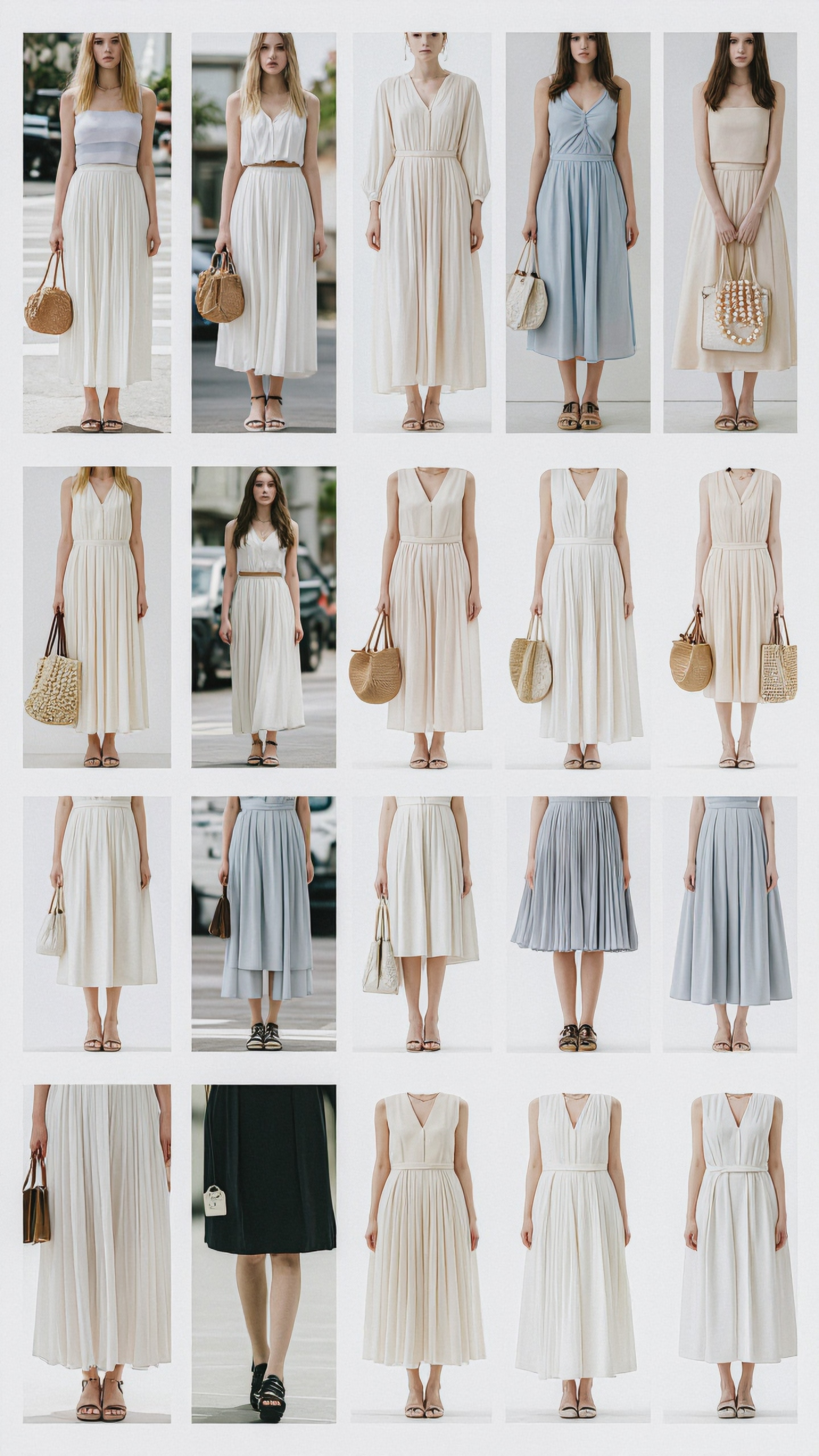
What to inspect: the collage should clarify category differences, not blur them. If all three lanes share the same dress-and-sandal formula, the trend mapping is not strong enough.
The second support test was accessories. This mattered because accessory choice was one of the clearest ways to keep categories distinct.
This prompt checks whether bags, shoes, and jewelry anchor the trend story even without a visible model.
Topic: accessories that separate coastal sporty and minimal summer outfit ideas
Genre: Product Editorial
Camera: Phase One XF IQ4
Lens: 80mm f/2.8
Lighting: diffused studio top light with soft side fill
Location: neutral editorial tabletop set with linen and stone surfaces
Style: high-end fashion accessories editorial with romantic restraint
Final Prompt: accessories close-up editorial comparing current summer outfit directions, arranged as three styled accessory stories on a neutral tabletop, coastal set with raffia shoulder bag shell jewelry leather sandals silk scarf, sporty set with retro sneakers rib socks slim crossbody and sporty sunglasses, minimal set with structured mini tote clean leather sandals pearl earrings gold cuff, elegant romantic color palette, clear separation of each trend lane, premium material detail, tactile surfaces of linen stone and brushed metal, Phase One XF IQ4 precision, 80mm product clarity, luxury magazine accessory spread
What to inspect: watch for material confusion. Raffia should not look like leather, sneakers should not become generic loafers, and pearl jewelry should stay refined rather than oversized costume styling.
What I would inspect before publishing generated fashion results
Before using any result for a trend article, gallery, or inspiration page in [Gallery](/gallery) or a production flow in [Create](/create), I would run this checklist.
Pre-publish checklist for trending summer style images
- Category clarity: Can a viewer identify coastal, sporty, or minimal in under two seconds?
- Full outfit logic: Are top, bottom, shoes, bag, and accessories all visible or strongly implied?
- Silhouette discipline: Does the outfit have a coherent proportion system?
- Fabric realism: Linen, cotton, knit, nylon, leather, and raffia should read differently.
- Footwear accuracy: Shoes often break the look first in fashion generation.
- Accessory scale: Bags and jewelry should fit the outfit category and body proportion.
- Background control: The location should support the styling, not become the subject.
- Romantic mood balance: Softness should come through texture and light, not through vague beauty cues.
- Hand and hemline check: Hands, bag straps, pleats, and dress edges are common failure points.
- Retail plausibility: Ask whether a real shopper could understand and recreate the look.
If a result passed most of these but lacked texture detail, I would consider a light enhancement pass through [Upscaler](/upscaler). That helped most on woven accessories, rib knits, and sandal edges, but it could not fix category confusion created by a weak prompt.
Strengths observed across the workflow
One clear strength of this workflow is that it answers inspiration intent without pretending to be a live trend dashboard. The images become useful when they show how the categories differ in styling terms.
Another strength is prompt portability. Once the category is defined, you can switch shot types without losing the trend lane. Coastal worked in lookbook, storefront, and accessories. Sporty worked in street style and catalog. Minimal worked in retail and luxury editorial.
The strongest result overall was minimal, because models handled clean structure reliably. The most visually appealing category was coastal, once the setting was constrained. The most informative category for comparison content was sporty, because it exposed prompt drift very quickly.
Limitations and failure risks
This workflow has a few persistent weak points.
1. Trend recency is interpretive, not live
A model does not truly know what is trending today in the same way a live search dataset or retailer feed would. It assembles a visual average from learned patterns. That means this workflow is best for trend-shaped inspiration, not factual claims about rankings or market share.
2. Romantic mood can soften category boundaries
Because this article used a romantic mood direction, there was a constant risk of drifting toward dresses and delicate styling even in sporty prompts. The fix was to keep footwear and outer layer language specific.
3. Fashion images fail in the details
Many outputs looked convincing at first glance but broke under inspection: melted sandal straps, impossible tote handles, asymmetrical pleats, necklace collisions, or cardigan drapes that ignored gravity.
4. US framing still benefits from local context
A New York sidewalk, coastal shopping street, or minimalist retail interior helped the model land closer to US fashion trends than vague summer landscapes did.
Practical recommendation: which prompt strategy to use
If your goal is inspiration content around summer outfit trends today, I would not use one catch-all prompt.
Use this structure instead:
- For broad inspiration pages: generate one strong image per category
- For shopping-adjacent articles: use lookbook or product-editorial prompts with high garment readability
- For social carousels or visual explainers: use a mood-board comparison image plus one hero image per lane
- For testing prompt stability: keep camera and framing similar while changing only category ingredients
If I were building this into a repeatable workflow, I would save category-specific templates in [Tools](/tools) or a prompt library and only swap garments, palette notes, and location details per article.
Prompt ingredient logic: why these words mattered
A few prompt ingredients consistently improved the outputs:
- Shot type first: "street-style full body" or "head-to-toe lookbook" forced outfit visibility
- Specific shoes: sandals, retro sneakers, or thong sandals anchored the lane immediately
- Bag type: raffia, crossbody, or structured mini tote prevented visual blending
- One outer layer: cardigan, windbreaker, or vest helped establish silhouette hierarchy
- Retail or city context: boutique street, hotel entrance, tennis-club cafe, minimalist retail
- Texture language: matte cotton, fine rib knit, nylon, raffia, leather, pearl
Without those ingredients, the model produced pretty summer atmospheres but weaker fashion evidence.
FAQ
What are the main visual directions inside summer outfit trends today?
In this test, the clearest directions were coastal, sporty, and minimal. They map well to current inspiration searches because each one has distinct outfit logic, accessories, and setting cues.
How do I prompt coastal summer outfits without getting generic beach images?
Use a fashion shot type, then specify garments and a commercial or editorial location like a seaside promenade or coastal shopping street. Keep the beach secondary and the outfit primary.
What makes sporty summer outfits work in AI images?
Treat sporty as a styling reference, not a fitness brief. Tennis skirts, knit polos, retro sneakers, and city accessories worked better than pure activewear language.
Why do minimal summer outfits often look better in generation?
Minimal prompts are easier for models to render coherently because they rely on cleaner silhouettes and fewer competing elements. The tradeoff is that they can become flat unless you add texture and one soft focal detail.
Should I upscale fashion trend images before publishing?
Only if the category and silhouette are already correct. Upscaling can improve visible fabric and accessory edges, but it will not repair weak outfit logic.
Editorial conclusion
For anyone creating inspiration-led content around summer outfit trends today, this workflow is most useful when the goal is visual comparison rather than a single all-purpose hero image. It works well for editors, prompt operators, and creators who need to show how coastal summer outfits, sporty summer outfits, and minimal summer outfits differ in real styling terms.
I would recommend this approach to people building trend boards, galleries, and shopping-adjacent explainers. I would avoid it if the goal is hard reporting on live fashion data or exact market movements.
The setting detail that mattered most was context that supports styling without stealing focus. The prompt detail that mattered most was clear outfit logic from head to toe: garment structure, shoes, bag, accessories, and silhouette. Once that was in place, the generated images stopped looking like generic summer scenes and started functioning as evidence.