Transitional Fall Outfit Ideas: Which US Searches Are Rising and How They Translate Into Better AI Fashion Prompts 한국어 요약
이 페이지는 ZView Space의 영어 원문을 한국어 검색 사용자도 이해할 수 있도록 정리한 SEO 요약입니다. 핵심은 단순한 얼굴 중심 이미지가 아니라 패션 에디토리얼, 룩북, 아웃핏, 프롬프트 테스트, 이미지 생성 워크플로우를 실제로 어떻게 구성할지입니다.
핵심 요약
- 원문 주제: Transitional Fall Outfit Ideas: Which US Searches Are Rising and How They Translate Into Better AI Fashion Prompts
- 목적: AI 이미지 생성에서 outfit, silhouette, fabric, pose, location, camera framing을 더 명확하게 설계합니다.
- 활용 범위: Z-Image Turbo, Krea2 Turbo, Qwen Image, Anima, SeedVR2 같은 이미지 생성 및 업스케일 워크플로우에 적용할 수 있습니다.
- SEO 관점: 제목, 설명, 이미지 alt, 프롬프트 예시가 실제 검색 의도와 맞아야 색인 가능성이 높아집니다.
한국어 사용자를 위한 체크포인트
1. 프롬프트가 얼굴 묘사에만 머물지 않고 전체 스타일과 의상 구성을 설명하는지 확인합니다. 2. 패션 이미지라면 상의, 하의, 아우터, 신발, 액세서리, 소재감, 촬영 장소를 분리해서 씁니다. 3. 생성 결과는 바로 게시하지 말고 디테일, 손, 의상 형태, 배경 일관성, 이미지 품질을 비교합니다. 4. 글 본문에는 실제 테스트 기준과 실패를 줄이는 방법이 들어가야 검색엔진에서 얇은 콘텐츠로 보일 가능성이 줄어듭니다.
원문 미리보기
This test looked at transitional fall outfit ideas through a practical image making lens: which between season outfit searches appear to be rising in the US style conversation, and which of those ideas actually convert into usable AI fashion images. The main f
---
This test looked at transitional fall outfit ideas through a practical image-making lens: which between-season outfit searches appear to be rising in the US style conversation, and which of those ideas actually convert into usable AI fashion images. The main finding was simple: prompts built around light layering systems performed better than prompts built around broad trend words like "fall fashion trends." When the outfit logic was explicit—dress + knit layer + loafers + structured bag, or tank + trench + midi skirt + boots—the outputs became more coherent, more seasonal, and less likely to drift into either peak summer or heavy winter styling.
Quick answer
- The strongest rising outfit directions were light trenches, cardigans over slip or midi dresses, denim with soft knits, loafers with bare or sheer legs, and skirts paired with lightweight boots.
- In this test, AI models handled summer to fall outfits best when the prompt specified fabric weight, shoe choice, and one clear outer layer.
- Broad prompts often overproduced scarves, thick coats, or dark winter palettes too early.
- Romantic fashion direction worked best when anchored by tangible garments: satin midi dress, rib knit cardigan, suede ankle boot, leather shoulder bag.
- If you want cleaner results, generate outfit concepts first in [PromptLab](/promptlab), then refine or enlarge selected frames in the [Upscaler](/upscaler).
Test setup: what was tested
I treated this as a trend-translation exercise rather than a style forecast. The goal was not to declare winners across the whole fashion market, but to see which US-facing search themes around early fall fashion, light layers outfit ideas, and what to wear between seasons could be turned into reliable image outputs.
Inputs used in the test
- Search-intent framing: informational, trend-driven, outfit-specific
- Visual mood: romantic, soft editorial, wearable rather than runway-extreme
- Shot planning: full-body first, detail shots second
- Common outfit themes tested:
- trench over summer dress
- cardigan + tank + midi skirt
- denim + blouse + loafers
- lightweight blazer + shorts-to-boots transition
- slip skirt + knit top + suede accessories
- retail display and flat-lay versions of the same trend
What I compared
| Test angle | What I changed | What I looked for | |---|---|---| | Trend wording | “fall fashion trends” vs “transitional fall outfit ideas” | Seasonal accuracy and styling coherence | | Layer logic | Vague “layered look” vs named garments | Whether the outfit read as wearable between seasons | | Shot type | street style, lookbook, flat lay, storefront | Garment visibility and accessory clarity | | Mood control | generic editorial vs romantic soft editorial | Whether the image stayed fashion-focused without becoming costume-like | | Fabric specificity | “sweater” vs “fine rib knit cardigan,” “suede boot” | Texture realism and climate plausibility |
For readers building their own tests, the most useful workflow was concept generation in [Create](/create), then side-by-side review against previous batches in a saved reference set or [Gallery](/gallery)-style mood board.
The strongest result: light layers with one warm-weather anchor
The best result in this test was not the most dramatic image. It was the one that looked most believable for actual early-fall US wear: a satin midi dress, light cardigan, suede ankle boots, and a structured shoulder bag shot as street-style full body. It worked because the outfit had one foot in summer and one foot in fall.
That balance mattered. Prompts that said only “fall outfit” drifted toward wool coats and heavy knits. Prompts that said only “late summer dress” stayed too bare. The strongest images named the transition mechanism: one lightweight outer layer, one warmer shoe, one soft-texture accessory.
To check style lock and season readability, I started with a street-style full-body shot where the silhouette had to carry the idea without relying on props.
Topic: transitional fall outfit ideas with a romantic street-style layering system
Genre: Street Style
Camera: Canon EOS R5
Lens: 35mm f/2
Lighting: overcast diffusion
Location: New York sidewalk in early fall, brownstone block, soft urban background
Style: romantic contemporary fashion editorial
Final Prompt: street-style full body fashion image of a romantic transitional fall outfit on a city sidewalk in New York, complete outfit visible from head to toe, satin champagne midi dress layered with a fine ribbed blush cardigan worn open, tan suede ankle boots, structured burgundy shoulder bag, delicate gold jewelry, loose low bun, soft natural movement while walking, warm muted palette of cream blush camel and burgundy, early fall atmosphere with light breeze, styling-focused composition, garment fit and fabric texture clearly visible, realistic hemline movement, documentary editorial framing, Canon EOS R5 look, 35mm lens, overcast soft light, polished magazine color grading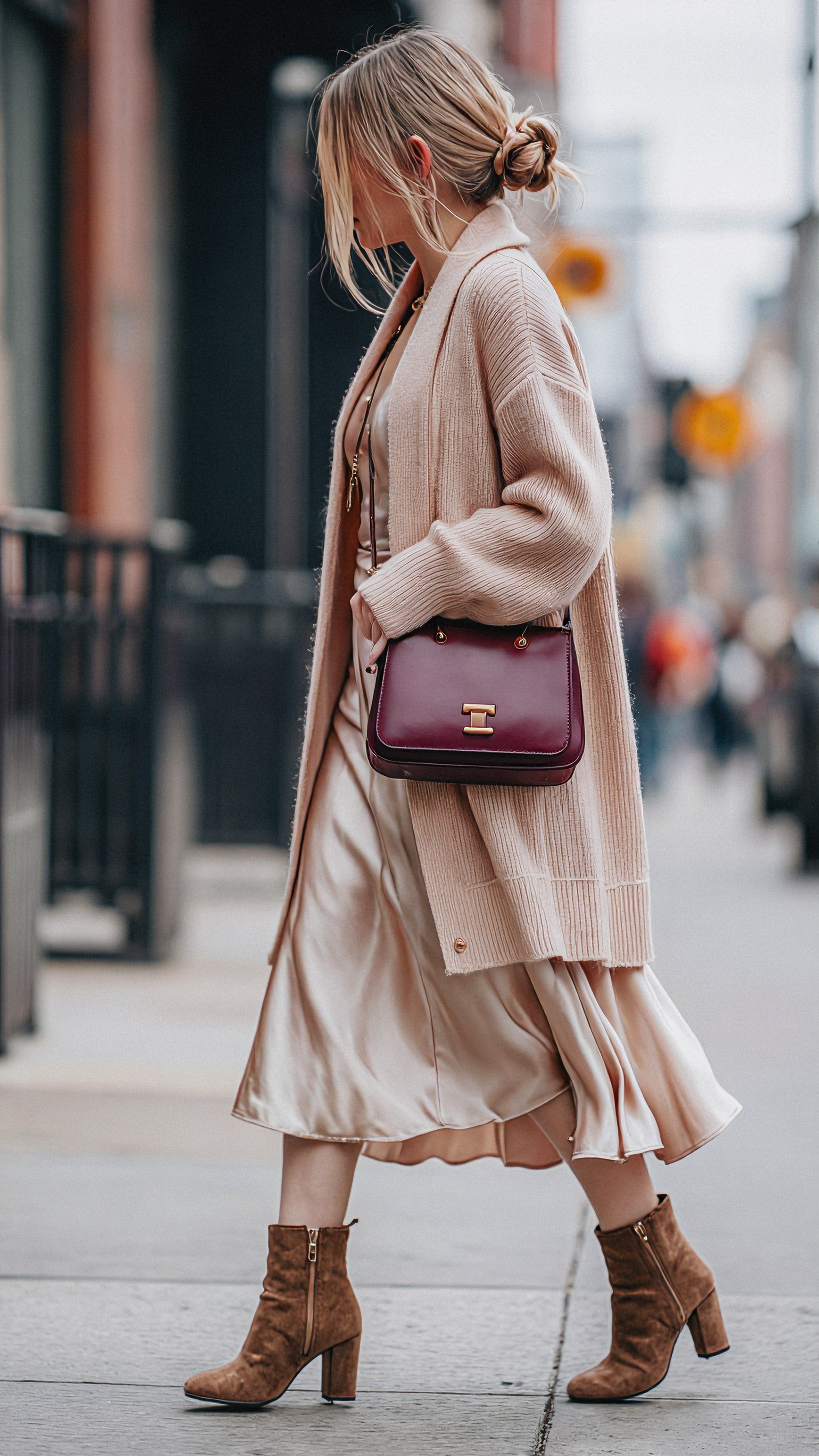
Inspect whether the image reads as between seasons at first glance. The cardigan should feel light, the boots should add autumn weight, and the dress should still carry a late-summer softness instead of becoming formal eveningwear.
Why “summer to fall outfits” prompts performed better than broad trend prompts
A repeated pattern in this test: prompts framed as summer to fall outfits gave more usable results than prompts framed as fall fashion trends. The latter often caused the model to summarize “fall” as leaves, coats, scarves, and darker palettes. The former encouraged practical styling transitions.
The best examples named a warm-weather base layer first, then one or two cooler-weather additions. That sequence reduced confusion.
To test this, I used a three-quarter editorial frame with visible texture transitions.
Topic: summer to fall outfit with dress-to-knit transition
Genre: Fashion Editorial
Camera: Nikon Z7 II
Lens: 50mm f/1.8
Lighting: warm window light with soft bounce
Location: loft studio with neutral plaster walls and wooden floor
Style: romantic magazine editorial
Final Prompt: three-quarter outfit editorial featuring a soft romantic summer to fall outfit, model seated on a wooden stool with full outfit still visible, ivory slip dress layered under a cropped oatmeal cardigan, chocolate leather loafers, thin cream socks, small vintage-inspired handbag, silk ribbon in hair, calm editorial pose, visible contrast between glossy satin dress and matte knit texture, neutral loft studio with soft plaster walls, warm window light, restrained styling and quiet luxury mood, realistic fabric folds, fashion-first composition, Nikon Z7 II rendering, 50mm f/1.8 shallow depth with garment detail preserved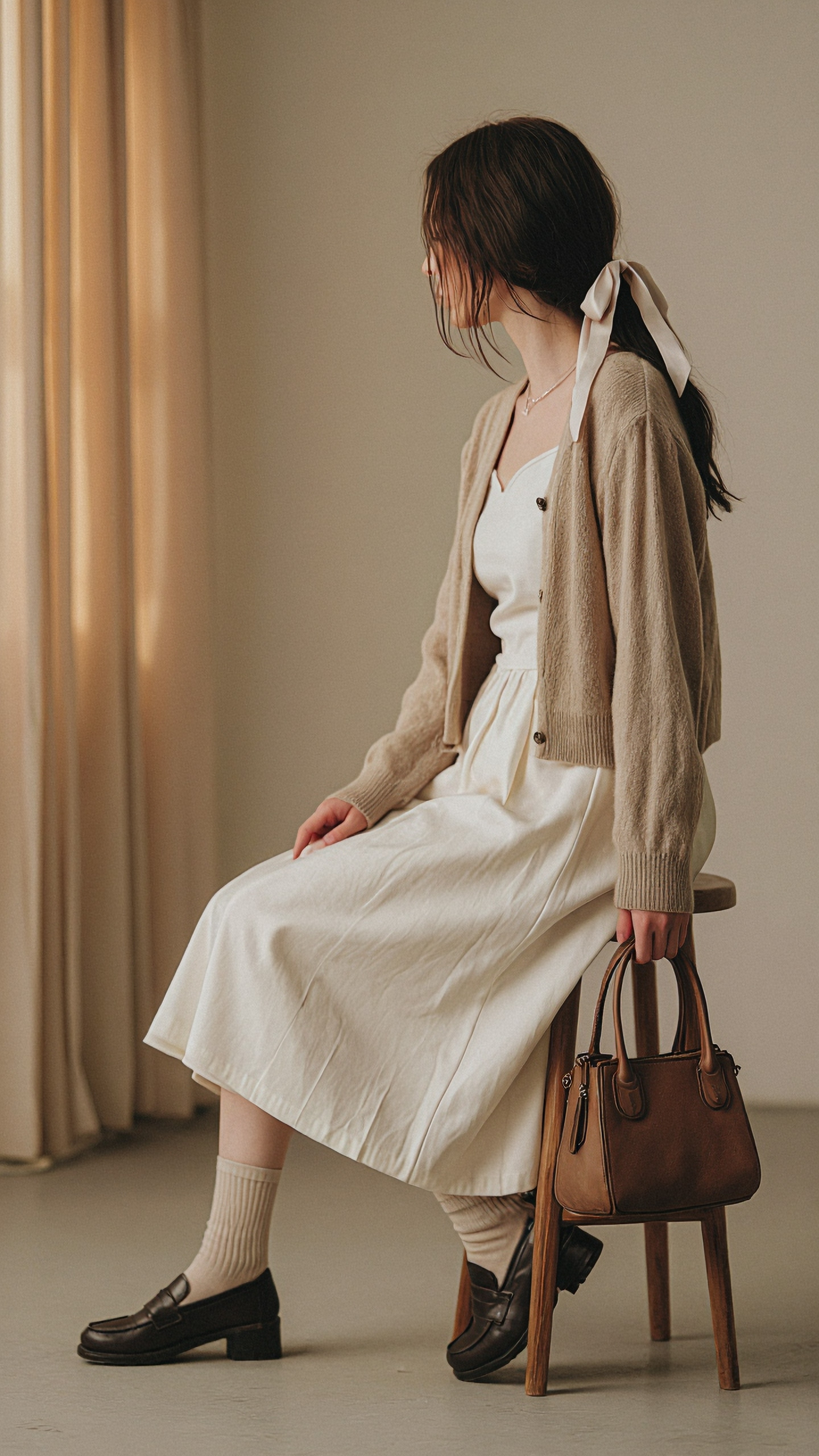
Check whether the cardigan lands at the waist cleanly and whether the loafers feel seasonally correct. In weaker outputs, the model may replace loafers with pumps or make the cardigan too bulky, which breaks the early-fall signal.
What was actually rising in visual terms
Instead of treating trend language as abstract keywords, I translated likely rising searches into visible outfit systems. The patterns that generated the clearest images also map well to what people usually mean when they search for what to wear between seasons.
1. Light trench over a soft dress
This read immediately as early fall. The trench adds structure without forcing cold-weather styling.
I tested a head-to-toe lookbook version because catalog framing is good for checking proportion and garment interaction.
Topic: early fall fashion with a light trench over a feminine midi dress
Genre: Head-to-Toe Lookbook
Camera: Sony A7R V
Lens: 40mm f/2.5
Lighting: softbox key light with gentle fill
Location: minimalist studio cyc in warm beige
Style: clean commercial fashion lookbook
Final Prompt: head-to-toe lookbook image showing an early fall fashion outfit with clear garment hierarchy, lightweight stone trench coat worn open over a dusty rose floral midi dress, slim brown belt, tan knee-high leather boots, compact structured handbag, delicate earrings, relaxed upright pose, full silhouette visible, romantic styling with practical city polish, clean beige studio background, soft even light for accurate fabric color, crisp trench drape, visible floral print, retail-ready composition, Sony A7R V clarity, 40mm documentary fashion framing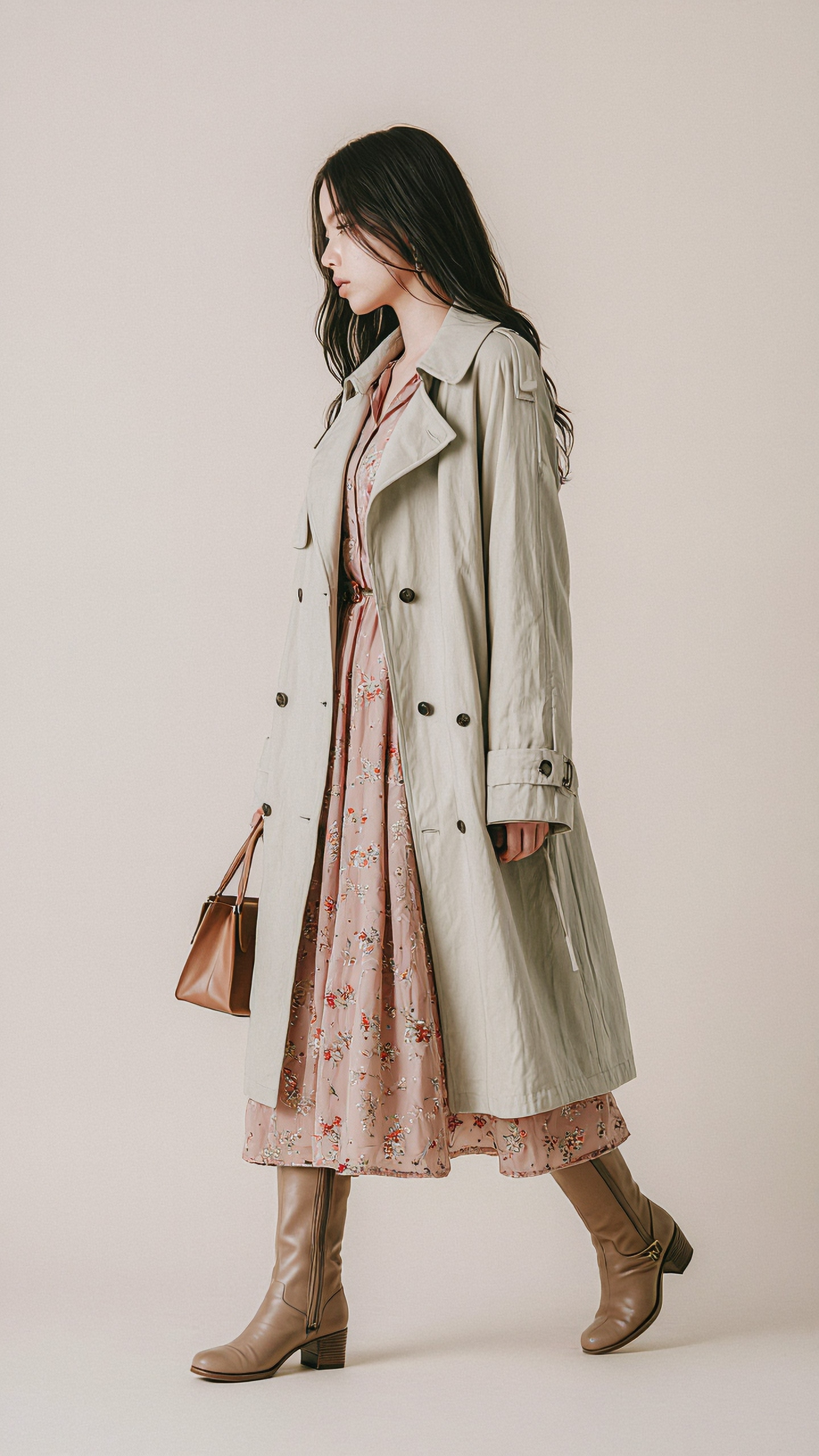
The key thing to inspect is coat weight. A good result keeps the trench fluid and light. If it looks padded or winter-heavy, the prompt needs stronger fabric language such as “lightweight cotton trench” or “unlined transitional coat.”
2. Denim plus blouse plus loafers
This was less dramatic but highly reliable. When a model struggles with dresses, denim-based styling often gives cleaner anatomy and stronger outfit readability.
Topic: transitional fall outfit ideas built around denim and romantic blouse styling
Genre: Street Style
Camera: Fujifilm GFX 50S II
Lens: 45mm f/2.8
Lighting: late afternoon natural light
Location: SoHo side street with storefront reflections
Style: polished urban romantic street style
Final Prompt: street-style full body outfit photo focused on transitional fall outfit ideas, high-waisted straight-leg medium wash denim, ivory puff-sleeve blouse in light cotton, camel cropped cardigan draped over shoulders, glossy oxblood loafers, small leather shoulder bag, gold watch, soft feminine styling with practical city ease, standing near storefront windows in SoHo, full silhouette and shoe line clearly visible, late afternoon natural light, refined neutral palette with one deep accent color, editorial realism, Fujifilm GFX medium-format detail, 45mm lens balance between subject and city context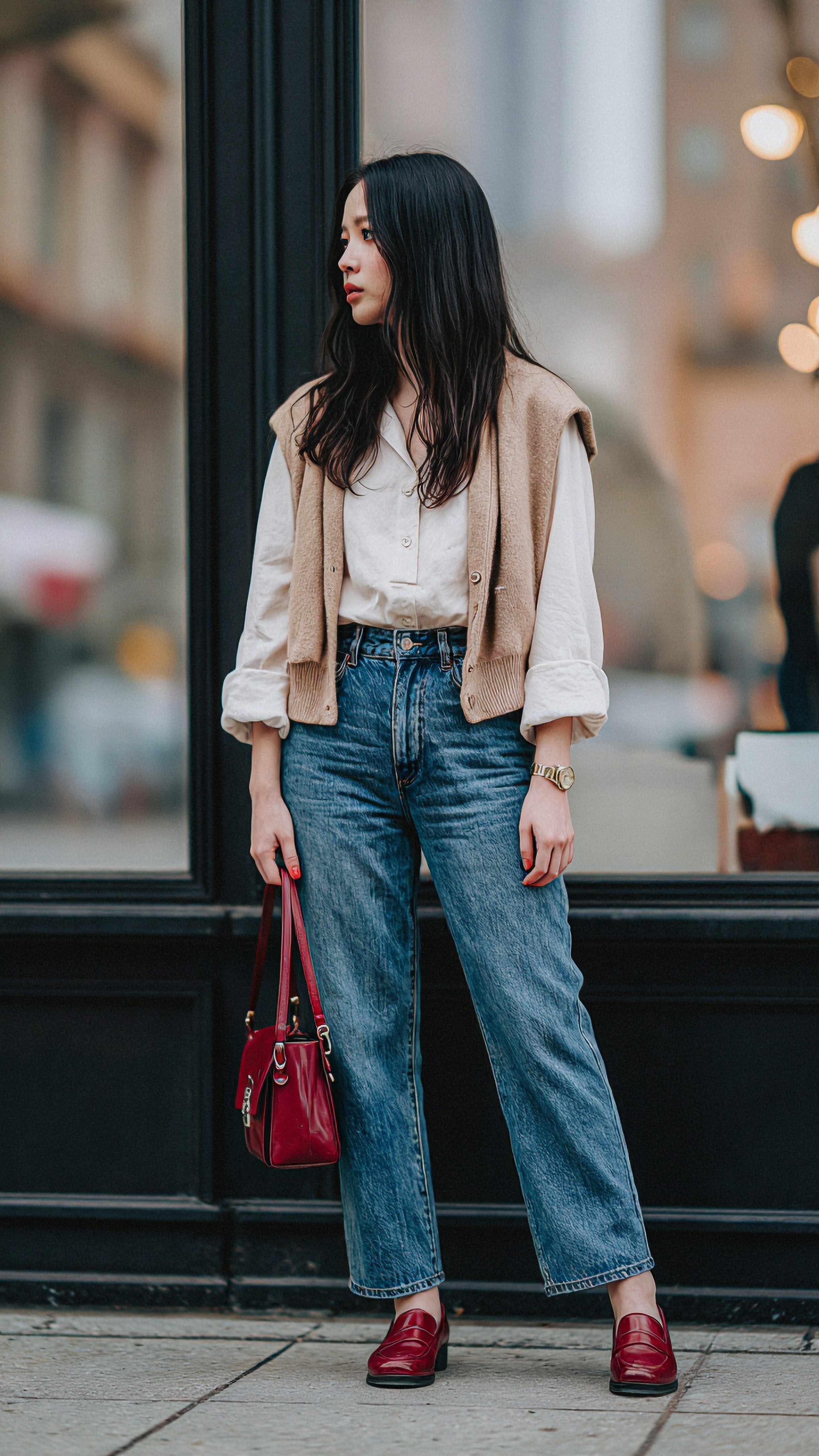
Look at the shoe shape and denim rise. Strong outputs keep the loafers substantial enough for fall while leaving the blouse airy enough to preserve that transitional feel.
Prompt-side observation: accessories help season-lock the image
One surprising result was how much bags and shoes controlled the season more than the main garments. A slip skirt can read August or October depending on whether it is paired with sandals, loafers, or suede boots.
That means accessory prompts are not optional details. They are seasonal anchors.
I ran a dedicated accessories close-up to test whether romantic early-fall styling could be expressed without relying on a full-body figure.
Topic: accessories defining a romantic transitional fall outfit
Genre: Luxury Campaign
Camera: Leica SL2
Lens: 85mm f/2
Lighting: soft directional studio light with warm reflector fill
Location: editorial studio set with textured stone plinth
Style: refined accessories campaign
Final Prompt: accessories close-up for a romantic transitional fall outfit, oxblood leather loafers beside a structured burgundy shoulder bag on a textured stone plinth, cream rib-knit socks, silk scarf with muted floral print, gold pendant chain, soft editorial arrangement that suggests early fall femininity, warm beige and wine color palette, crisp leather grain and knit texture, luxury campaign composition, Leica SL2 look, 85mm controlled detail shot, shallow depth with product clarity, elegant shadows and warm reflective highlights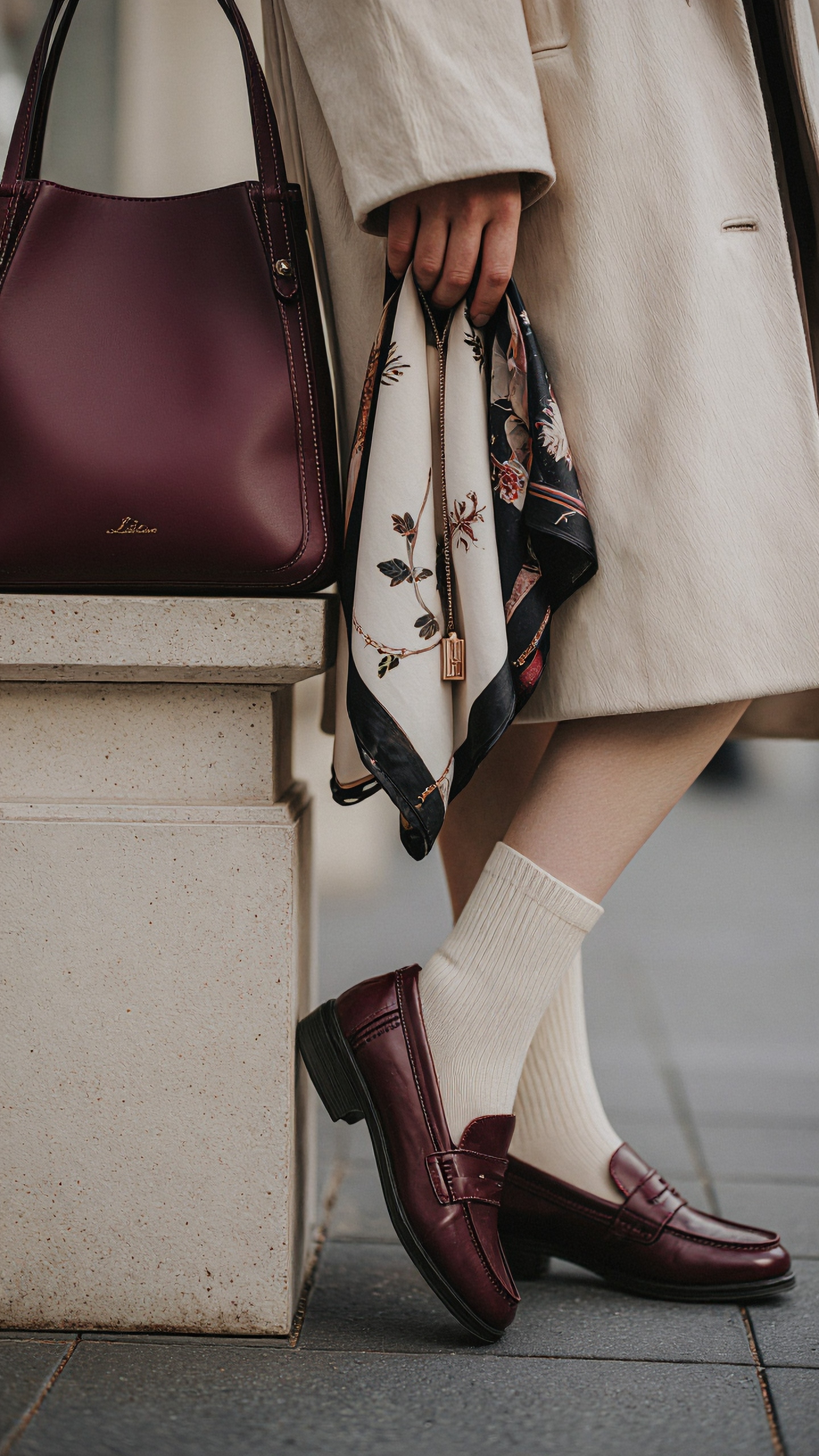
Inspect material separation here. If leather, knit, and silk all collapse into the same texture family, the model is not getting enough surface-direction language. Add “grain,” “matte knit,” “glossy polished leather,” or “lightweight printed silk.”
Where the outputs struggled
The weak point was consistency around temperature cues. Models frequently misread transitional styling in four ways:
Too much autumn too soon
When prompts included “fall fashion trends” without qualifiers, many outputs added thick scarves, dark plaid coats, dense knitwear, or obvious leaf-filled backdrops. That can look editorial, but it is not very useful if the query is really about light layers outfit ideas.
Bare legs with winter-weight outerwear
This mismatch appeared often: heavy coat on top, almost summer styling below. It creates a fashion image, but not a believable one.
To test this failure mode, I used a runway/backstage prompt where layered garments can easily become exaggerated.
Topic: runway interpretation of early fall layering that risks overstyling
Genre: Runway/Backstage Moment
Camera: Canon EOS R3
Lens: 24-70mm at 50mm f/2.8
Lighting: backstage tungsten mixed with runway spill light
Location: New York Fashion Week backstage corridor
Style: romantic runway realism
Final Prompt: runway backstage fashion moment showing an early fall romantic layered outfit, lightweight blush trench over a satin slip skirt and fine knit shell top, ankle boots, slim belt, small top-handle bag, model adjusting sleeve while moving through a backstage corridor, racks of garments softly blurred behind, realistic backstage energy, warm mixed lighting, visible garment textures and layer interaction, fashion-documentary framing, Canon EOS R3, 24-70mm at 50mm, not theatrical, wearable transitional styling rather than winter outerwear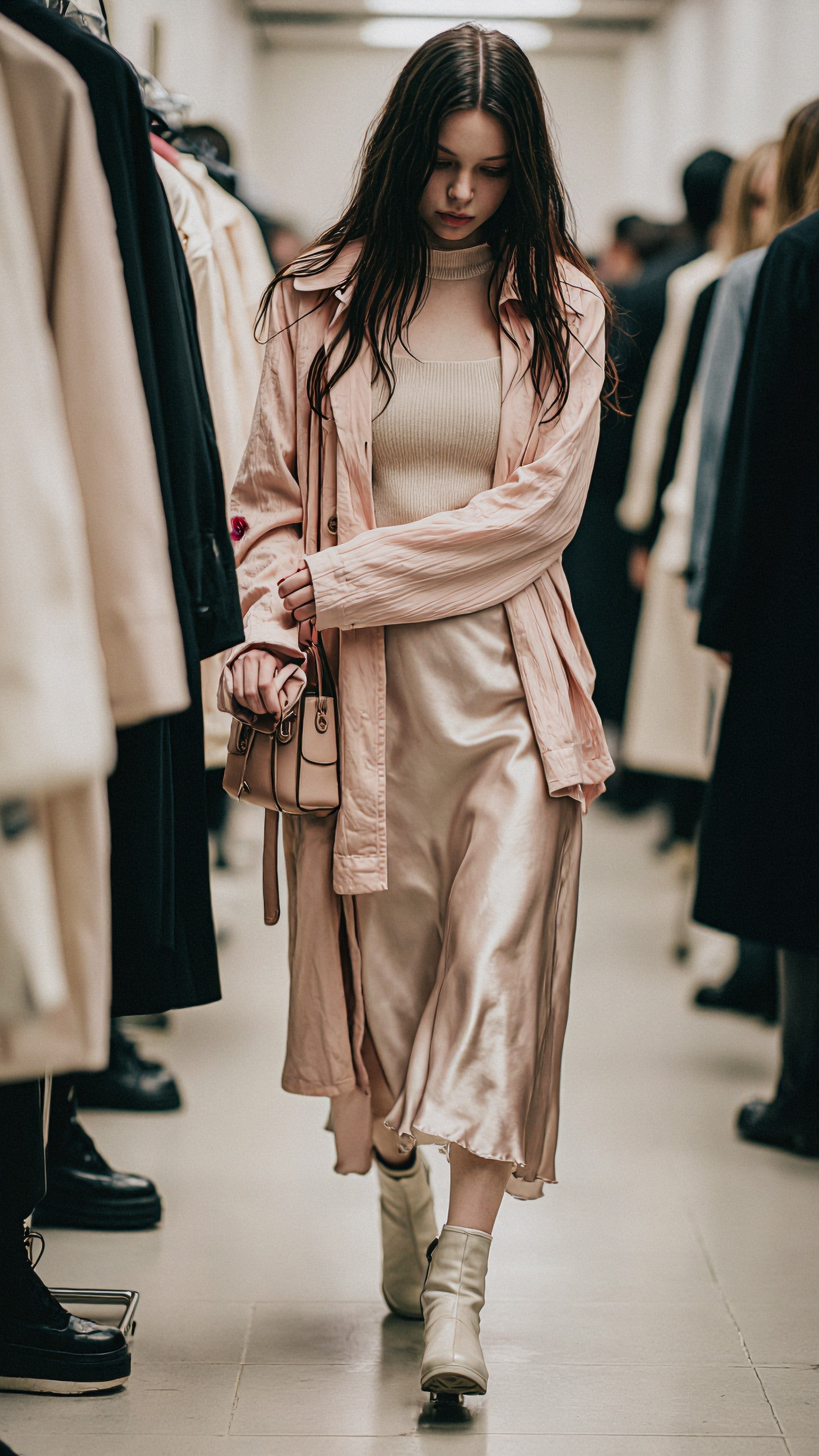
What to inspect is proportion drift. In weak generations, trenches become oversized coats and shells become turtlenecks. If that happens, reduce fashion-week drama words and increase practical garment descriptors.
Romantic mood sliding into costume
Because this article used a romantic direction, some prompts started producing overly ruffled dresses, bridal energy, or vintage fantasy styling. That happened most when the prompt used mood words without practical outfit structure.
Inconsistent footwear logic
Footwear was the biggest seasonal error source. Models often swapped loafers for heels or turned ankle boots into tall winter boots.
Recommended prompt changes based on the test
These changes improved output quality more than adding more trend adjectives.
Use an outfit formula, not a trend label
Instead of:
- “fall fashion trends for women”
Use:
- “satin midi dress, fine knit cardigan, suede ankle boots, structured shoulder bag, early fall city styling”
Specify fabric weight
Words like “lightweight,” “fine rib knit,” “unlined,” “soft cotton,” and “suede” gave better climate realism than general words like “cozy” or “warm.”
Control the shot for outfit visibility
If the search intent is outfit ideas, use full-body or head-to-toe framing first. Detail shots are useful later, but not as the primary idea generator.
I tested a catalog-grid prompt for readers who need multiple outfit reads in one frame.
Topic: catalog view of multiple transitional fall outfit ideas for quick comparison
Genre: Catalog Grid Page
Camera: Phase One XF IQ4
Lens: 55mm f/2.8
Lighting: even studio softbox setup
Location: e-commerce studio with off-white seamless backdrop
Style: premium retail catalog
Final Prompt: catalog grid page showing four coordinated romantic transitional fall outfit ideas, each look head-to-toe and clearly separated: 1) blush cardigan with satin midi dress and suede ankle boots, 2) lightweight trench with floral midi dress and knee-high boots, 3) ivory blouse with straight-leg denim and oxblood loafers, 4) fine knit top with slip skirt and cropped jacket, off-white studio background, clean retail presentation, consistent female styling proportions, visible bags and jewelry, soft warm palette, premium fashion catalog design language, crisp garment color accuracy, Phase One studio detail, 55mm lens perspective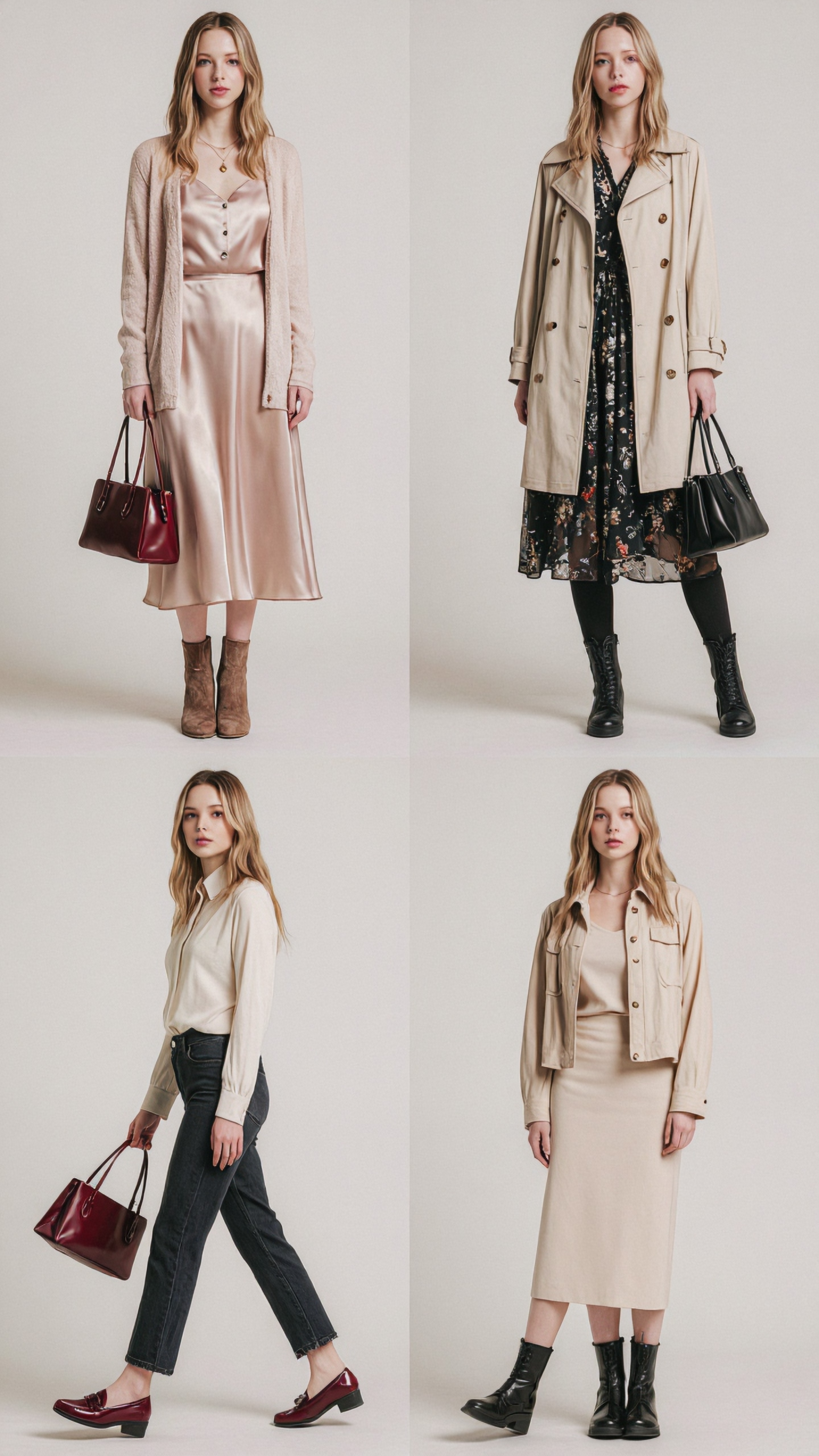
Check whether each look remains distinct. This setup is useful for ideation, but weaker models may blend garments across tiles or mutate shoe types between looks.
Add one environment cue, not five
A sidewalk, loft studio, storefront, or backstage corridor is enough. Overloading the prompt with leaves, cafés, taxis, and street crowds can distract from the styling system.
Use accessories to push the season gently
If an outfit still reads too summery, add:
- loafers
- suede boots
- structured leather bag
- thin socks
- lightweight trench
If it reads too wintry, remove:
- scarf
- heavy wool coat
- thick turtleneck
- dark layered tights unless intentional
Image test prompts for specific problem areas
One area I wanted to isolate was whether product-only imagery could communicate transitional fall outfit ideas just as clearly as model-based editorial. Flat lays worked well for garment planning, especially when a reader wants outfit-building guidance rather than campaign mood.
Topic: flat lay planning for a romantic early fall capsule outfit
Genre: Product Editorial
Camera: Hasselblad X2D 100C
Lens: 55mm f/2.5
Lighting: diffused overhead daylight
Location: linen-covered studio tabletop
Style: elevated editorial flat lay
Final Prompt: product flat lay of a romantic early fall fashion capsule arranged neatly on natural linen, blush rib-knit cardigan, ivory satin midi skirt, cream camisole, tan suede ankle boots, burgundy leather shoulder bag, gold hoop earrings, silk floral scarf, slim belt, soft warm palette, styling-first composition that shows how to build a summer to fall outfit, premium editorial retail feel, visible fabric contrast between satin knit suede and leather, Hasselblad X2D high-detail top-down capture, calm elegant composition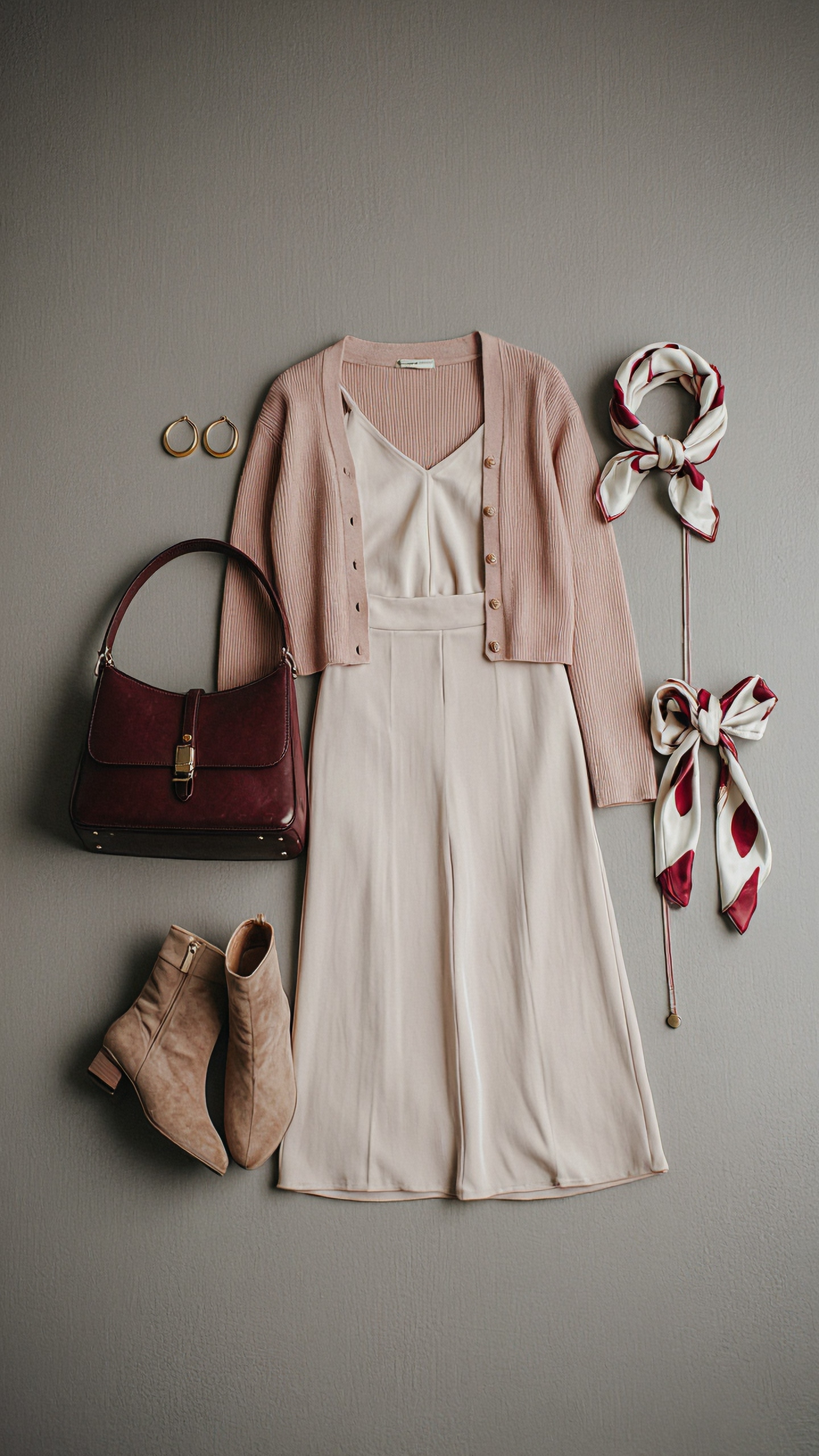
Inspect spacing and scale. Good flat lays preserve outfit hierarchy, while weak outputs make accessories oversized or collapse the garment edges into each other.
Retail context was also useful because storefront displays make trend direction obvious without depending on model anatomy.
Topic: storefront display showing rising early fall fashion direction
Genre: Visual Merchandising Editorial
Camera: Panasonic Lumix S1R
Lens: 24-70mm at 35mm f/4
Lighting: soft morning daylight through glass with interior spotlights
Location: upscale New York boutique window display
Style: romantic luxury retail display
Final Prompt: storefront display in an upscale New York boutique featuring romantic early fall fashion, mannequins styled in coordinated transitional outfits: lightweight trench over floral midi dress, cardigan over satin slip dress, blouse with straight-leg denim and loafers, warm cream rose camel and burgundy palette, visible leather bags and suede boots, elegant layered merchandising, clean glass reflections, premium urban retail atmosphere, balanced window composition, Panasonic Lumix S1R, 35mm environmental framing, fashion-focused visual storytelling
What to inspect is display logic. Each mannequin should show a different version of the same seasonal shift, not a random assortment of unrelated pieces.
Finally, I tested whether a mood-board collage could summarize US-facing fall search momentum in a form useful for prompt planning. This is best for art direction, not final image delivery.
Topic: mood-board collage for US transitional fall outfit trend direction
Genre: Mood-Board Collage
Camera: mixed editorial source aesthetic
Lens: mixed framing simulation
Lighting: mixed soft editorial light
Location: New York street style, studio lookbook, retail display references
Style: romantic trend forecasting board
Final Prompt: fashion mood-board collage summarizing transitional fall outfit ideas in the US, composed of street-style full body looks, trench-over-dress silhouettes, cardigan-and-slip combinations, denim with loafers, suede boot details, burgundy bags, floral textiles, soft beige rose camel palette, editorial tearsheet aesthetic, organized but organic layout, trend-planning board for early fall fashion, romantic modern styling emphasis, texture-rich and fashion-focused rather than portrait-focused
Inspect whether the collage preserves a coherent palette and silhouette language. If it turns chaotic, simplify to three core outfit formulas before generating final campaign-style images.
Practical checklist: how to get better early fall fashion outputs
Use this checklist when building or revising prompts for transitional fall outfit ideas.
- Start with a named shot type: street-style full body, head-to-toe lookbook, flat lay, storefront display
- Define the base layer first: slip dress, camisole, blouse, tank, midi skirt, denim
- Add one transitional layer: cardigan, trench, light blazer, cropped jacket
- Use one season-anchoring shoe: loafers, ankle boots, knee-high boots with lighter fabrics
- Specify at least two fabric cues: satin, rib knit, soft cotton, suede, polished leather
- Keep the palette in a realistic bridge zone: cream, camel, blush, burgundy, chocolate, muted floral
- Avoid heavy winter words unless that is the real goal
- Inspect hands, hemlines, and shoe shape before judging overall style quality
Who should use this approach
This workflow is best for:
- editors planning visual coverage around fall fashion trends
- prompt writers building outfit-led fashion scenes rather than beauty portraits
- e-commerce teams exploring early-season merchandising direction
- creators making lookbook, retail, or editorial concepts from search-led trend ideas
It is less useful if you want avant-garde runway experimentation. This setup is tuned for readability, layering logic, and season accuracy.
If you need more control over prompt structure before rendering, build variants in [PromptLab](/promptlab). If your chosen image is good but soft on textile detail, run it through the [Upscaler](/upscaler). For more workflow references, browse related tests in [Articles](/articles).
FAQ
What are the easiest transitional fall outfit ideas to generate well with AI?
Cardigan-over-dress, trench-over-midi, denim-with-blouse, and slip-skirt-with-knit-top combinations are the easiest. They have clear layer logic and strong silhouette cues.
How do I make an AI image look early fall instead of full autumn?
Use lightweight fabrics, one soft outer layer, and season-bridging shoes like loafers or suede ankle boots. Avoid scarves, thick wool, and deep winter palettes unless needed.
Why do prompts for fall fashion trends often look too heavy?
Many models associate “fall” with peak-autumn imagery. More specific phrases like summer to fall outfits or light layers outfit ideas usually produce better seasonal balance.
What shot type is best for testing outfit prompts?
Street-style full body or head-to-toe lookbook. Both make it easier to judge proportion, layering, and whether the outfit reads as wearable.
Are flat lays useful for transitional styling prompts?
Yes. They work especially well for capsule planning, accessory testing, and retail-friendly breakdowns where the garment system matters more than pose or facial consistency.
Conclusion
In this test, the strongest way to visualize transitional fall outfit ideas was to stop prompting for “trends” and start prompting for specific seasonal bridges: a summer-weight base, a light fall layer, and one accessory or shoe choice that shifts the outfit forward. That produced images that felt more useful, more searchable, and more believable for US between-season dressing.
Who should use this workflow: anyone making wearable early-fall fashion visuals, especially outfit-led editorials, retail concepts, and lookbook planning. Who should avoid it: anyone seeking theatrical runway abstraction over practical styling clarity. The setting and prompt detail that mattered most was not camera choice—it was explicit fabric-weight and footwear control. When those two pieces were right, the whole image usually followed.