US Fashion Trends for Women This Week: Search-Driven Outfit Ideas Tested in AI Image Prompts 한국어 요약
이 페이지는 ZView Space의 영어 원문을 한국어 검색 사용자도 이해할 수 있도록 정리한 SEO 요약입니다. 핵심은 단순한 얼굴 중심 이미지가 아니라 패션 에디토리얼, 룩북, 아웃핏, 프롬프트 테스트, 이미지 생성 워크플로우를 실제로 어떻게 구성할지입니다.
핵심 요약
- 원문 주제: US Fashion Trends for Women This Week: Search-Driven Outfit Ideas Tested in AI Image Prompts
- 목적: AI 이미지 생성에서 outfit, silhouette, fabric, pose, location, camera framing을 더 명확하게 설계합니다.
- 활용 범위: Z-Image Turbo, Krea2 Turbo, Qwen Image, Anima, SeedVR2 같은 이미지 생성 및 업스케일 워크플로우에 적용할 수 있습니다.
- SEO 관점: 제목, 설명, 이미지 alt, 프롬프트 예시가 실제 검색 의도와 맞아야 색인 가능성이 높아집니다.
한국어 사용자를 위한 체크포인트
1. 프롬프트가 얼굴 묘사에만 머물지 않고 전체 스타일과 의상 구성을 설명하는지 확인합니다. 2. 패션 이미지라면 상의, 하의, 아우터, 신발, 액세서리, 소재감, 촬영 장소를 분리해서 씁니다. 3. 생성 결과는 바로 게시하지 말고 디테일, 손, 의상 형태, 배경 일관성, 이미지 품질을 비교합니다. 4. 글 본문에는 실제 테스트 기준과 실패를 줄이는 방법이 들어가야 검색엔진에서 얇은 콘텐츠로 보일 가능성이 줄어듭니다.
원문 미리보기
If you are searching US fashion trends for women this week, the real problem is not finding trend words. It is turning trend phrases like quiet luxury outfits , denim outfit ideas , summer outfit ideas , and early fall fashion trends into images that actually
---
If you are searching US fashion trends for women this week, the real problem is not finding trend words. It is turning trend phrases like quiet luxury outfits, denim outfit ideas, summer outfit ideas, and early fall fashion trends into images that actually show wearable styling logic. In this test, I treated those search terms like a shot list and checked which prompt structure produced outfit images that felt current, readable, and worth saving.
Most generic fashion prompts fail in the same way: they give you a pretty model, but not a usable outfit. Hemlines disappear, layers merge, bags turn vague, and the image drifts into beauty portrait territory. The strongest results came from prompts built like a fashion editor's brief, with a named shot type, visible garment structure, and a scene that supports the trend rather than competing with it.
Quick answer
- This week's search-driven direction leans toward soft romantic styling mixed with practical US streetwear basics: slip dresses, light knits, relaxed denim, ballet flats, woven bags, and clean tailoring.
- For AI images, head-to-toe framing and clear outfit hierarchy matter more than adding extra descriptive adjectives.
- The most reliable workflow was: pick one trend, assign one shot type, lock the silhouette, then add fabric, accessories, and setting.
- Street-style and lookbook prompts produced the most useful outfit references; beauty-led editorial prompts were the easiest to derail.
- If you want saveable outfit ideas, inspect shoes, bag shape, waistline, and fabric separation before judging the whole image.
What was tested
In this test, I built prompts around search-driven fashion themes that are showing up repeatedly in US style queries:
- quiet luxury outfits
- denim outfit ideas
- summer outfit ideas
- early fall fashion trends
- fashion trends this week
I varied the shot plan on purpose: street style, lookbook, runway/backstage, flat lay, storefront display, garment detail, accessories, and mood-board collage. I also kept the mood romantic, because soft dresses, delicate textures, and warm light are exactly where many current women's trend searches overlap.
For prompt drafting, the most consistent structure came from treating each image as a production brief, similar to the workflows people build in [Prompt Lab](/promptlab). For comparison passes and variation review, a gallery-style process like [Gallery](/gallery) is useful because fashion failures are often easier to spot side by side.
Why AI image generation struggles with fashion trends this week
The issue is not only realism. It is styling coherence.
Trend-driven fashion images ask the model to do several things at once:
1. Show a recognizable silhouette. 2. Keep garments distinct from each other. 3. Render fabric texture correctly. 4. Preserve accessories without distortion. 5. Match the scene to the trend mood.
When prompts stay vague, the model often over-prioritizes face, hair, or cinematic atmosphere. That is how you get a nice image that tells you almost nothing about the outfit.
The weak point was strongest in prompts that used broad phrases like trendy outfit or summer fashion girl. Those usually returned one of three failures:
- cropped framing that cut off shoes
- generic beige clothing with no styling logic
- romantic mood without enough garment detail
The best fix was to prompt from shot type first, then outfit architecture second.
The workflow that produced the most reliable outfit images
This is the workflow that gave the strongest result across multiple trend directions.
1. Start with a named fashion shot type
Examples that worked well:
- street-style full body
- head-to-toe lookbook
- three-quarter outfit editorial
- catalog grid page
- product flat lay
- storefront display
This immediately tells the model how much of the outfit must be visible.
2. Lock the styling system
Instead of saying romantic outfit, specify:
- outerwear
- top or dress shape
- bottom silhouette
- shoes
- bag
- jewelry
- texture or fabric
3. Use a trend phrase only once, then describe the clothes
Search intent matters, but repeating the keyword does not improve the image. In this test, quiet luxury outfits worked better when translated into specific materials and cuts: fine knit cardigan, silk midi skirt, slim leather belt, almond-toe flats, top-handle bag.
4. Choose a location that supports the outfit
New York sidewalk, minimalist retail interior, backstage runway corridor, and brownstone stoop all performed better than fantasy or overly abstract locations.
5. Inspect the image like an outfit, not a portrait
Before saving an output, check:
- Are all layers visible?
- Do the shoes match the mood?
- Does the bag have a believable shape?
- Is the fabric readable?
- Does the silhouette feel current for the trend you asked for?
A fast comparison: which shot type is best for which fashion query?
| Search need | Best shot type | Why it worked | Main risk | |---|---|---|---| | US fashion trends for women | Street-style full body | Shows complete outfit logic in a believable setting | Background clutter can steal attention | | Summer outfit ideas | Head-to-toe lookbook | Clear garment separation and easy silhouette reading | Can feel too catalog-like if styling is weak | | Quiet luxury outfits | Three-quarter editorial | Good for texture, tailoring, and accessories | Shoes may be cropped | | Denim outfit ideas | Street style or flat lay | Easy to compare wash, cut, layering, and footwear | Denim texture can smear in low-detail outputs | | Fall fashion trends | Storefront display or runway/backstage | Good for layered styling and color direction | May feel less wearable without grounding |
Prompt example 1: street-style full body for US fashion trends this week
This test checks whether the model can hold a complete romantic-trend outfit in a real US street context without turning the image into a portrait.
Topic: US fashion trends for women this week, soft romantic street styling
Genre: Street Style
Camera: Canon EOS R5
Lens: 35mm f/2
Lighting: Golden hour with soft side light
Location: New York sidewalk near brownstone buildings, early evening
Style: Contemporary fashion week street style with romantic mood
Final Prompt: street-style full body fashion image of a woman wearing a soft romantic trend outfit inspired by current US fashion trends for women, lightweight blush cardigan over a cream slip midi dress, cropped light-wash denim jacket draped over shoulders, delicate gold jewelry, woven top-handle bag, ballet flats, subtle scarf tied at the bag handle, full outfit clearly visible from head to toe, relaxed walking pose on a New York sidewalk with brownstone backdrop, warm golden hour light, natural movement in fabric, editorial but wearable styling, 35mm documentary fashion framing, gentle feminine palette of cream blush faded blue and tan, detailed fabric texture, clean silhouette separation, fashion-first composition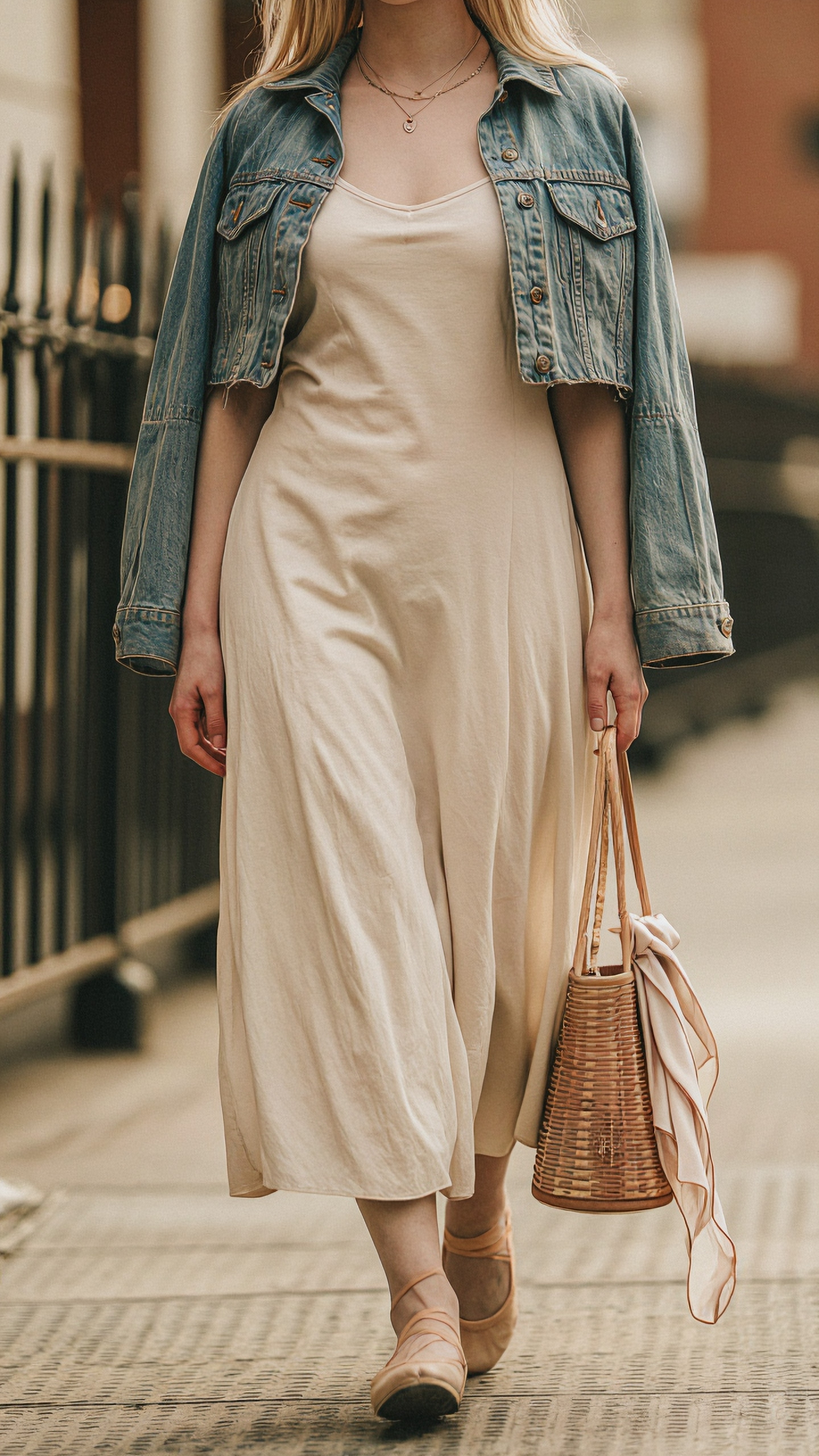
Inspect whether the cardigan, slip dress, denim layer, bag, and shoes all read as separate pieces. If the model collapses the jacket into the dress or hides the flats, the prompt needs stronger outfit hierarchy.
Prompt example 2: head-to-toe lookbook for summer outfit ideas
This test is useful for readers who want saveable summer outfit ideas rather than cinematic atmosphere. The goal is clarity over drama.
Topic: summer outfit ideas with romantic femininity and practical layering
Genre: Head-to-Toe Lookbook
Camera: Sony A7R V
Lens: 50mm f/4
Lighting: Bright window-balanced studio light
Location: clean off-white studio cyclorama
Style: Modern commercial lookbook with soft romantic styling
Final Prompt: head-to-toe lookbook image showing a complete women's summer outfit inspired by current US fashion trends, sleeveless white eyelet midi dress layered with a pale butter yellow fine-knit cardigan, tan leather belt, strappy flat sandals, woven market tote, delicate pearl earrings, full body centered pose with slight turn to show silhouette and garment drape, clean off-white studio background, bright balanced lighting, crisp catalog clarity, visible hemline and footwear, soft romantic mood, breathable summer fabrics, high detail in eyelet texture, polished commercial fashion presentation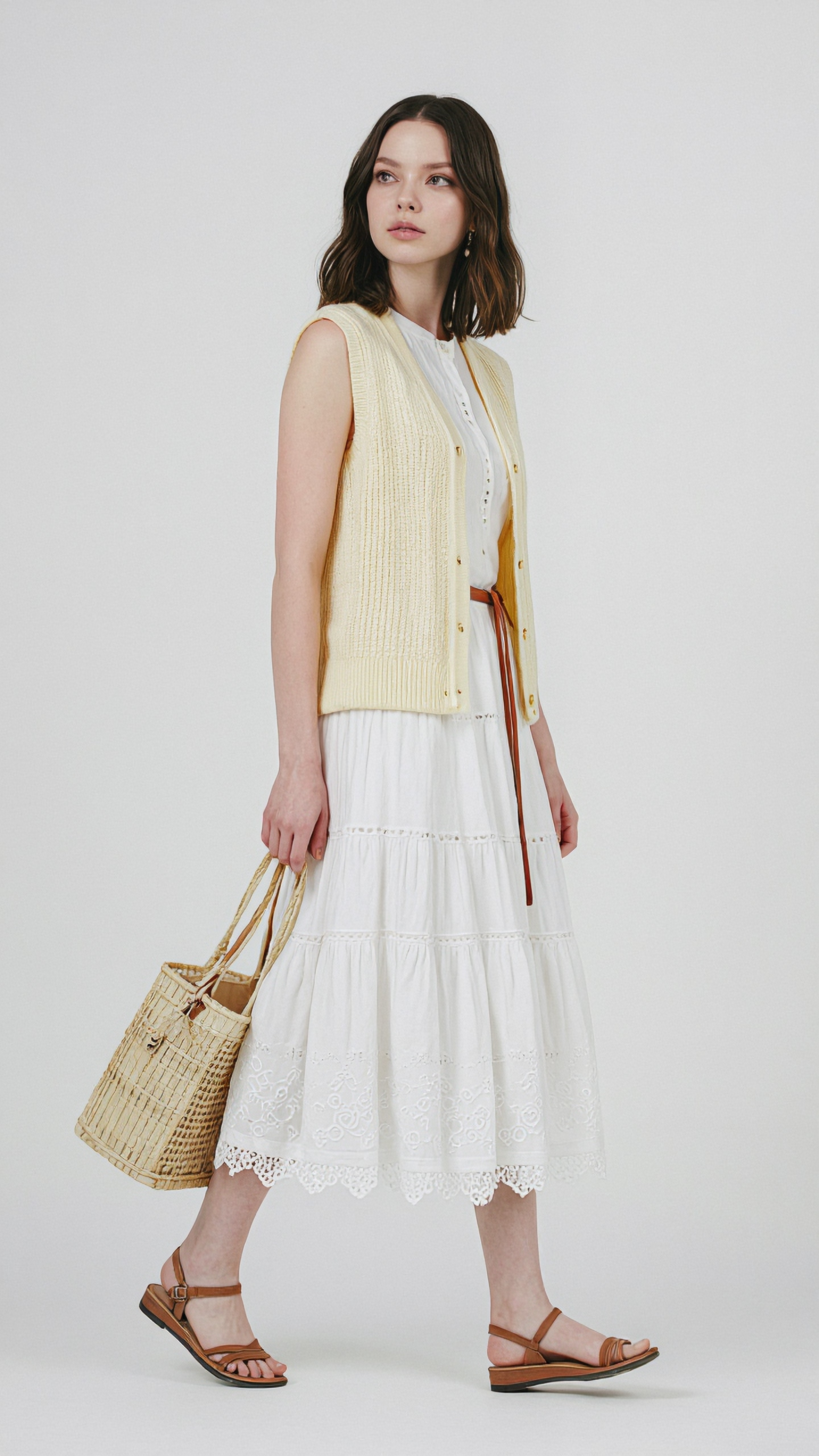
Check hem accuracy, sandal shape, and whether the belt sits naturally at the waist. In this setup, the model usually handles dresses well, but bag handles and sandal straps are common failure points.
Prompt example 3: three-quarter editorial for quiet luxury outfits
This one tests a softer version of quiet luxury outfits. The challenge is keeping the image minimal without making it bland.
Topic: quiet luxury outfits with romantic softness
Genre: Fashion Editorial
Camera: Nikon Z8
Lens: 40mm f/2.8
Lighting: Overcast diffusion through tall windows
Location: upscale minimalist apartment interior in Manhattan
Style: Elegant editorial realism with quiet luxury direction
Final Prompt: three-quarter outfit editorial image focused on a quiet luxury women's look inspired by US fashion trends for women, fine-gauge cashmere cardigan in warm ivory, silk champagne midi skirt, slim leather belt, almond-toe flats, structured top-handle bag, delicate chain necklace and small gold hoops, seated then rising from a minimalist Manhattan apartment chair, body framed from head to below calf with outfit structure still visible, soft overcast window light, romantic but restrained mood, neutral palette with warm cream stone and champagne tones, visible silk sheen and knit texture, understated expensive styling, editorial realism, composition centered on clothing proportions and accessories rather than face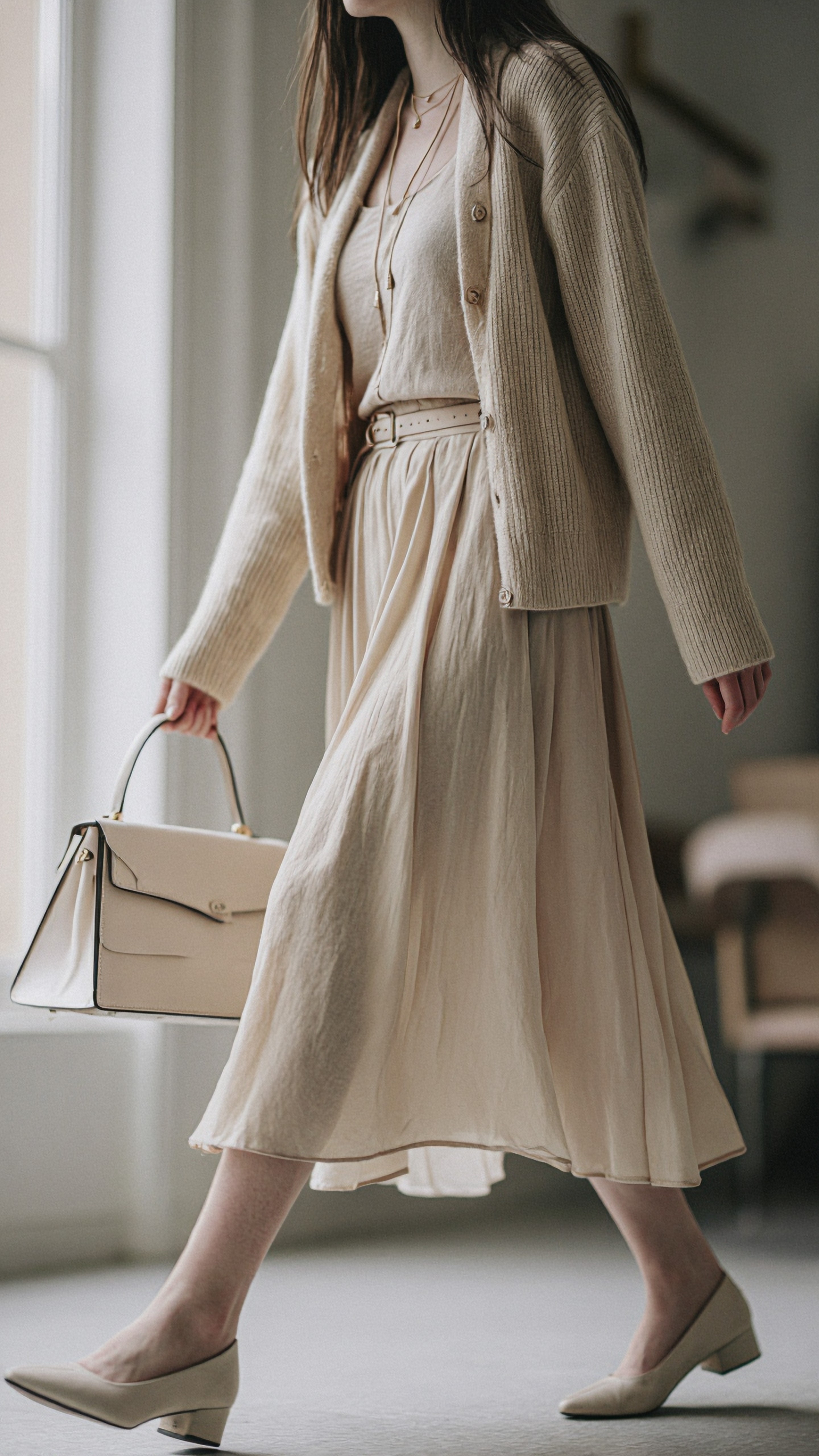
Inspect texture separation between cashmere and silk. If both surfaces read as the same smooth material, the quiet luxury signal gets lost.
Prompt example 4: denim outfit ideas in a real street setting
This test checks whether denim stays crisp and wearable when paired with softer romantic pieces. It is one of the better trend combinations for beginners because the pieces are easy to describe.
Topic: denim outfit ideas with romantic layering
Genre: Street Style
Camera: Fujifilm GFX100S
Lens: 45mm f/2.8
Lighting: Bright overcast daylight
Location: SoHo crosswalk with storefront reflections
Style: Premium street editorial with wearable styling
Final Prompt: street-style full body image of a denim outfit idea based on current US fashion trends for women, high-waisted straight-leg medium wash jeans, blush silk camisole, cream cropped cardigan, tan suede belt, soft pointed flats, compact shoulder bag, layered delicate necklaces, full outfit visible while standing at a SoHo crosswalk, relaxed confident posture, bright overcast light that preserves denim texture, romantic feminine mood balanced with practical city dressing, storefront reflections in background, editorial street composition, clear waistband fit, realistic drape and seam detail, soft neutral color palette with faded blue denim as anchor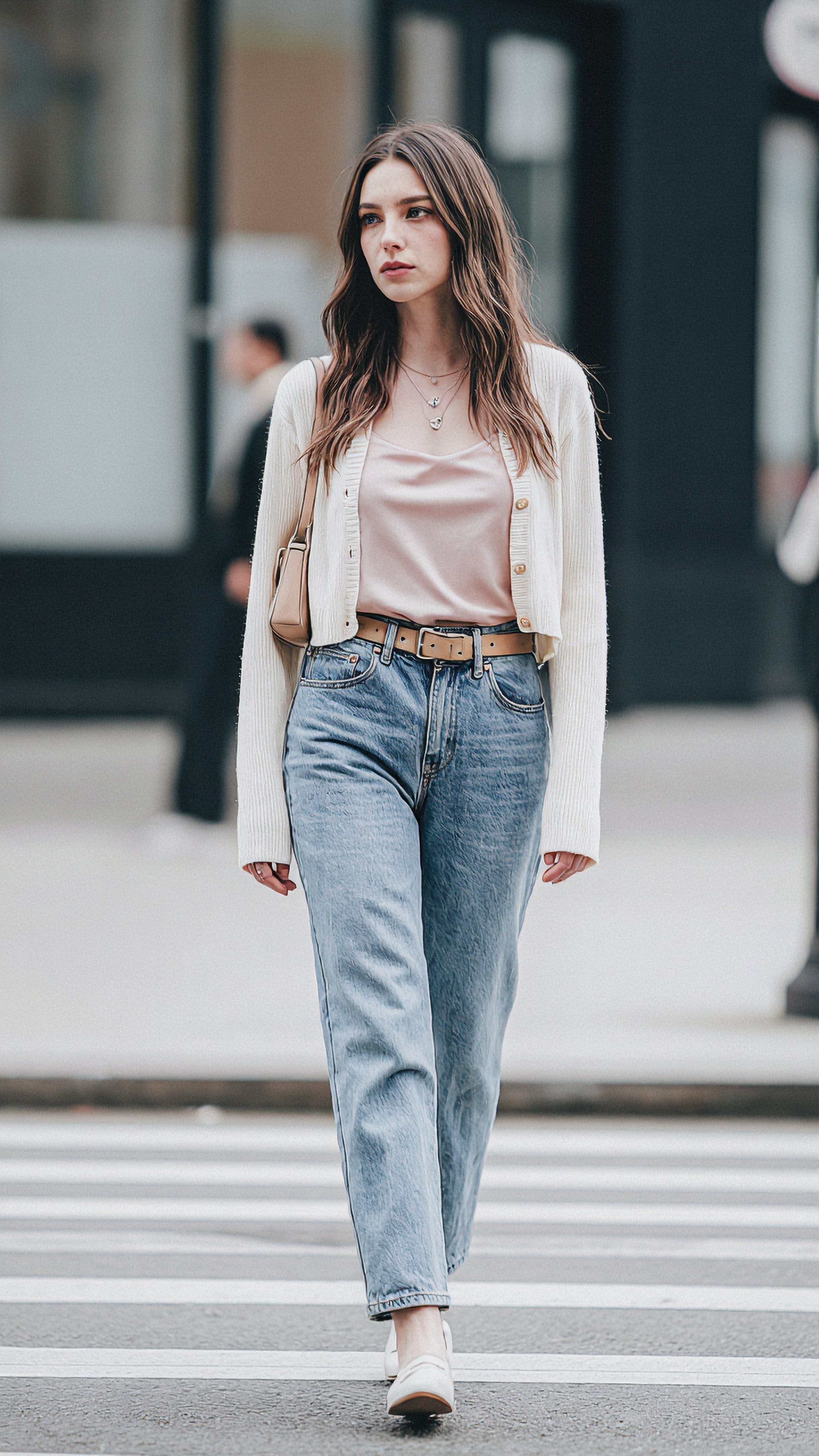
Look closely at waistband construction, jean length, and the transition from camisole to cardigan. Denim prompts often fail by creating muddy seams or an awkward rise.
Prompt example 5: runway/backstage moment for early fall fashion trends
This test is meant to capture early fall fashion trends without over-layering. Backstage settings worked well for trend mood, but only when the outfit remained readable.
Topic: early fall fashion trends for women with romantic tailoring
Genre: Runway Backstage Moment
Camera: Canon EOS R3
Lens: 24-70mm at 50mm f/3.2
Lighting: mixed backstage tungsten and soft fill
Location: New York Fashion Week backstage corridor
Style: Documentary runway realism with feminine tailoring
Final Prompt: runway backstage fashion image showing an early fall women's trend look, lightweight camel trench worn open over a dusty rose blouse with subtle ruffle collar, dark indigo midi denim skirt, knee-high leather boots, slim shoulder bag, soft gold earrings, full outfit visible in a backstage corridor before runway call, one hand adjusting trench lapel, romantic yet practical fall styling, mixed tungsten backstage light with gentle fill, busy but controlled fashion week environment, sharp garment edges, visible layering and boot height, feminine editorial realism, rich transitional palette of camel rose indigo and chestnut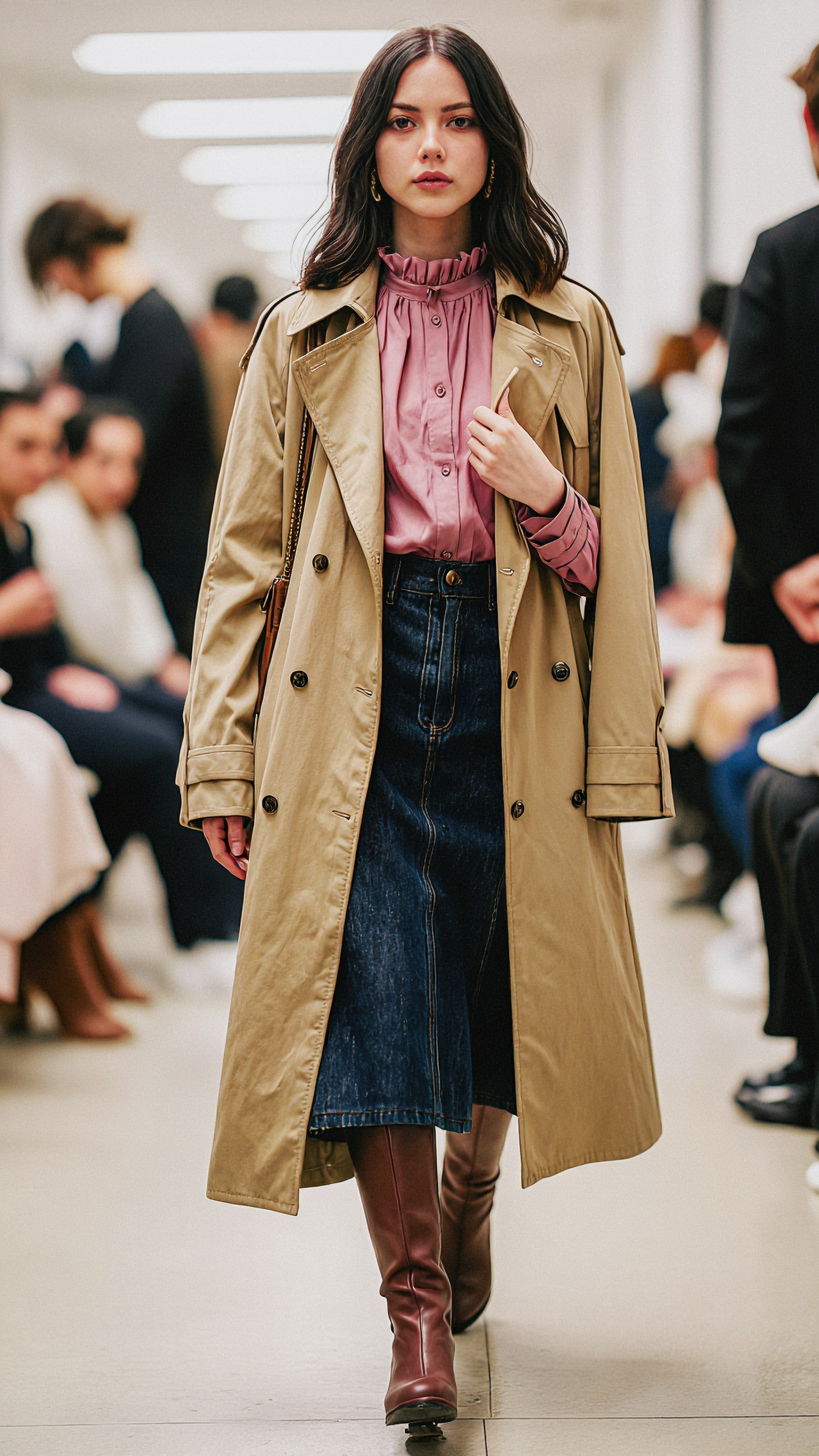
Inspect whether the trench stays open enough to reveal the blouse and skirt. This setup can become visually crowded, so the main risk is losing the outfit under backstage noise.
Prompt example 6: product flat lay for saveable shopping-style outfit planning
This test removes pose and anatomy risk and focuses only on outfit construction. It is one of the most reliable ways to generate outfit references for beginners.
Topic: romantic summer-to-fall outfit planning flat lay
Genre: Product Editorial
Camera: Sony A7 IV
Lens: 50mm f/5.6
Lighting: softbox overhead with gentle shadow control
Location: neutral linen backdrop on studio table
Style: Clean commercial fashion flat lay
Final Prompt: product flat lay of a complete women's outfit inspired by current US fashion trends for women, cream slip midi dress, pale pink cardigan, straight-leg medium wash denim jeans folded beside dress option, tan ballet flats, small woven handbag, gold hoop earrings, silk ribbon hair tie, slim leather belt, sunglasses, arranged neatly on a neutral linen backdrop, overhead composition, soft romantic palette, commercial styling clarity, visible fabric textures including knit silk denim and leather, balanced spacing, shopping editorial presentation, crisp edges, realistic accessory scale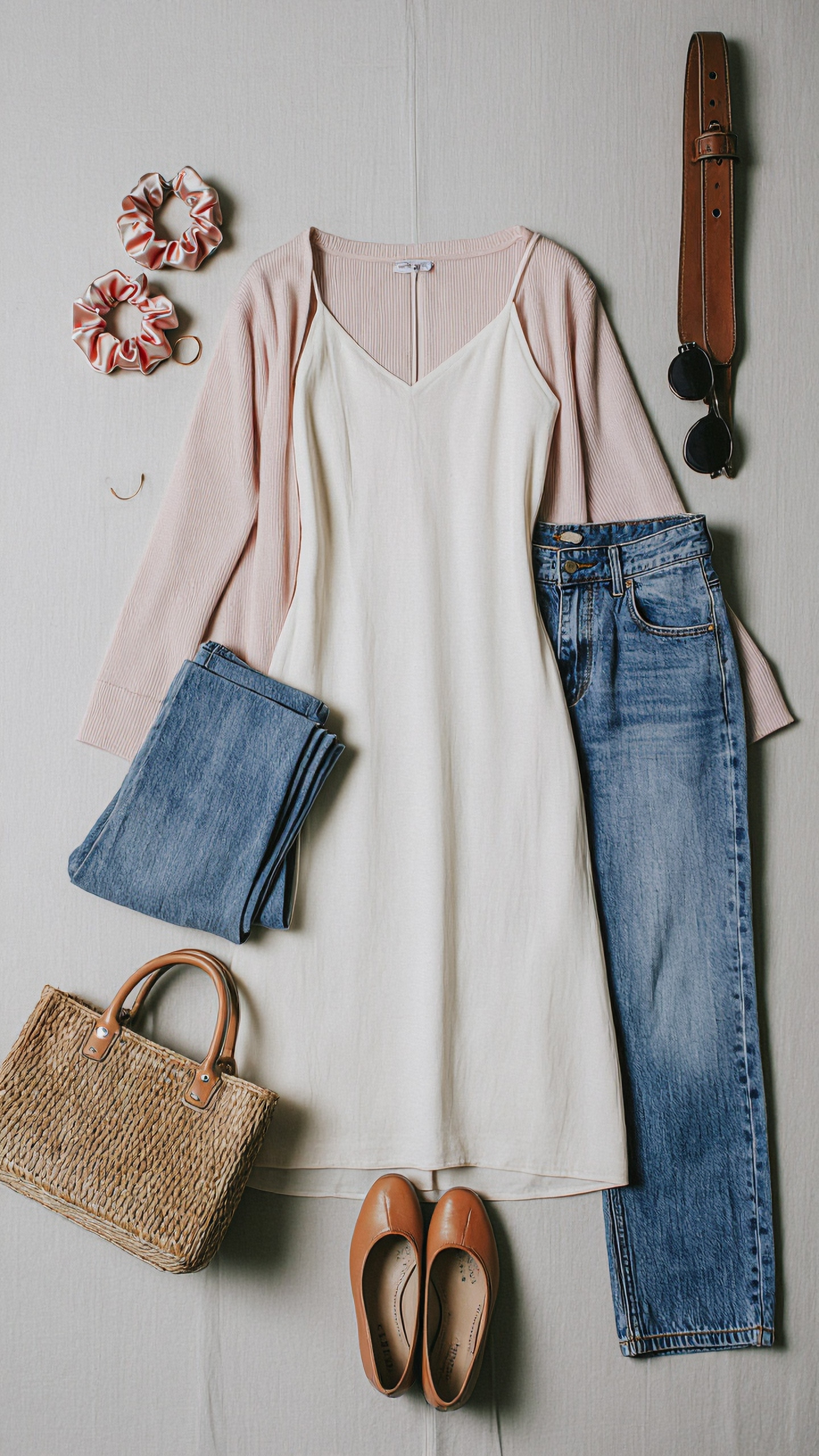
Inspect spacing, accessory scale, and textile realism. Flat lays are excellent for planning, but weak generations often distort shoe pairs or make jewelry oversized.
Prompt example 7: storefront display for fashion trends this week
This checks whether the model can communicate a trend through visual merchandising. It is useful when you want broader style direction rather than a single wearable look.
Topic: fashion trends this week shown through romantic retail styling
Genre: Storefront Display
Camera: Leica SL2-S
Lens: 35mm f/4
Lighting: early evening storefront illumination with soft interior spotlights
Location: upscale boutique window in SoHo
Style: Luxury retail visual merchandising
Final Prompt: storefront display showing women's fashion trends this week in the US, mannequins styled in romantic modern outfits with cream slip dress, blush cardigan, tailored beige blazer, light-wash denim, midi skirt, ballet flats, woven handbags, gold accessories, soft floral accents, full boutique window composition with layered styling and visible outfit combinations, early evening city reflections on glass, warm interior spotlighting, tasteful luxury merchandising, feminine soft palette, clear retail storytelling, editorial retail photography, emphasis on silhouette variety and outfit pairing ideas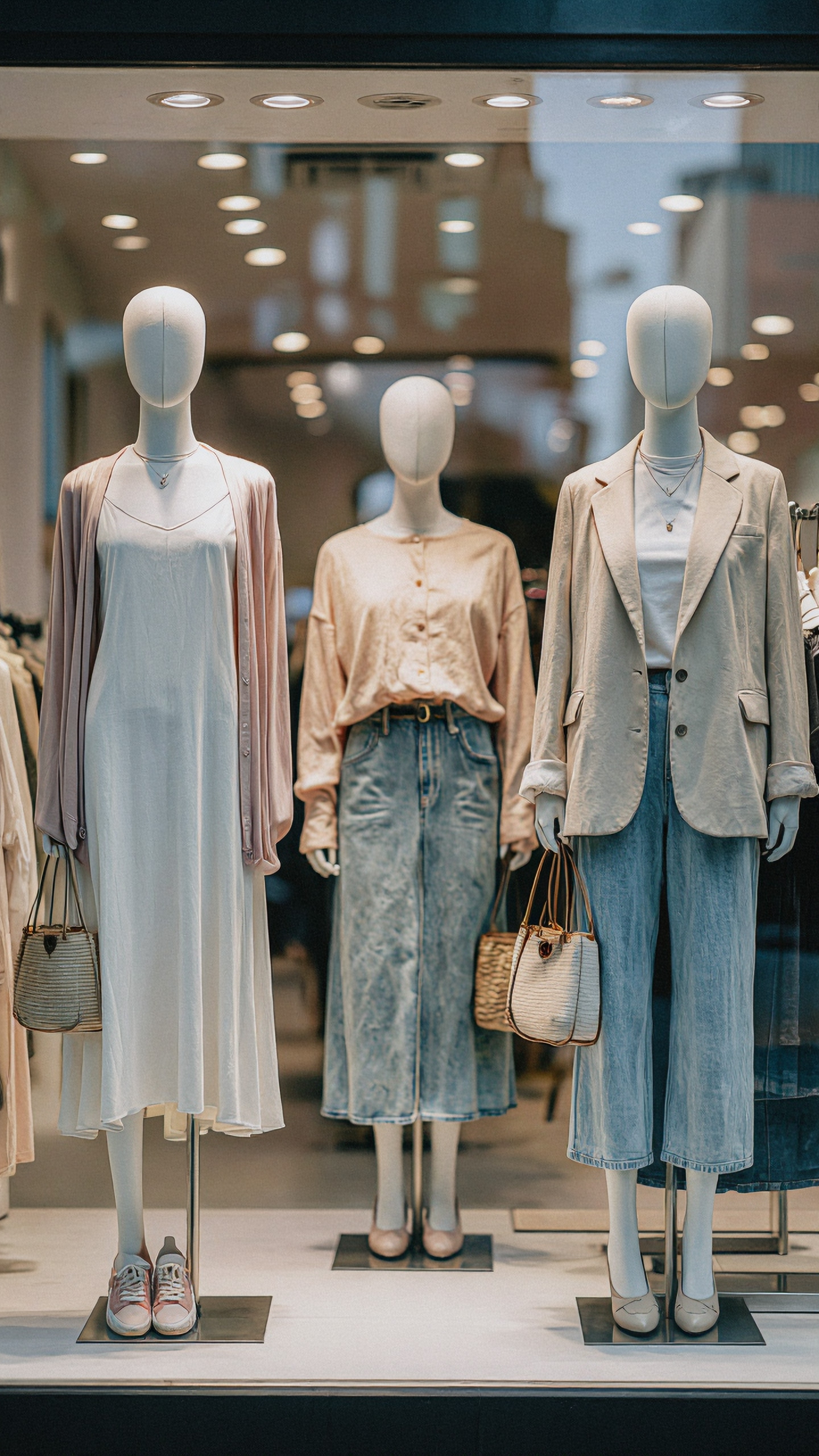
Look for whether the display reads as coordinated trend direction rather than random mannequin dressing. Reflections can be useful, but too much glare makes the outfit combinations hard to read.
Prompt example 8: accessories close-up for quiet luxury and romantic styling
This final test isolates accessories, because trend images often look convincing until the bag hardware, jewelry, or flats fall apart. It is a good support prompt when full-body images are almost working.
Topic: romantic quiet luxury accessories for women's outfit trends
Genre: Luxury Campaign
Camera: Hasselblad X2D 100C
Lens: 85mm f/3.2
Lighting: soft directional window light with bounce fill
Location: marble café table by a window in Manhattan
Style: Refined accessories editorial
Final Prompt: accessories close-up campaign image supporting current US fashion trends for women, structured cream mini top-handle bag with gold hardware, blush ballet flats, silk scarf, pearl earrings, fine gold bracelet, fashion magazine styling on a marble café table by a Manhattan window, soft romantic morning light, elegant shadows, luxurious but understated composition, feminine palette of cream blush gold and warm stone, crisp leather grain and silk texture, editorial realism, accessory-first storytelling with quiet luxury mood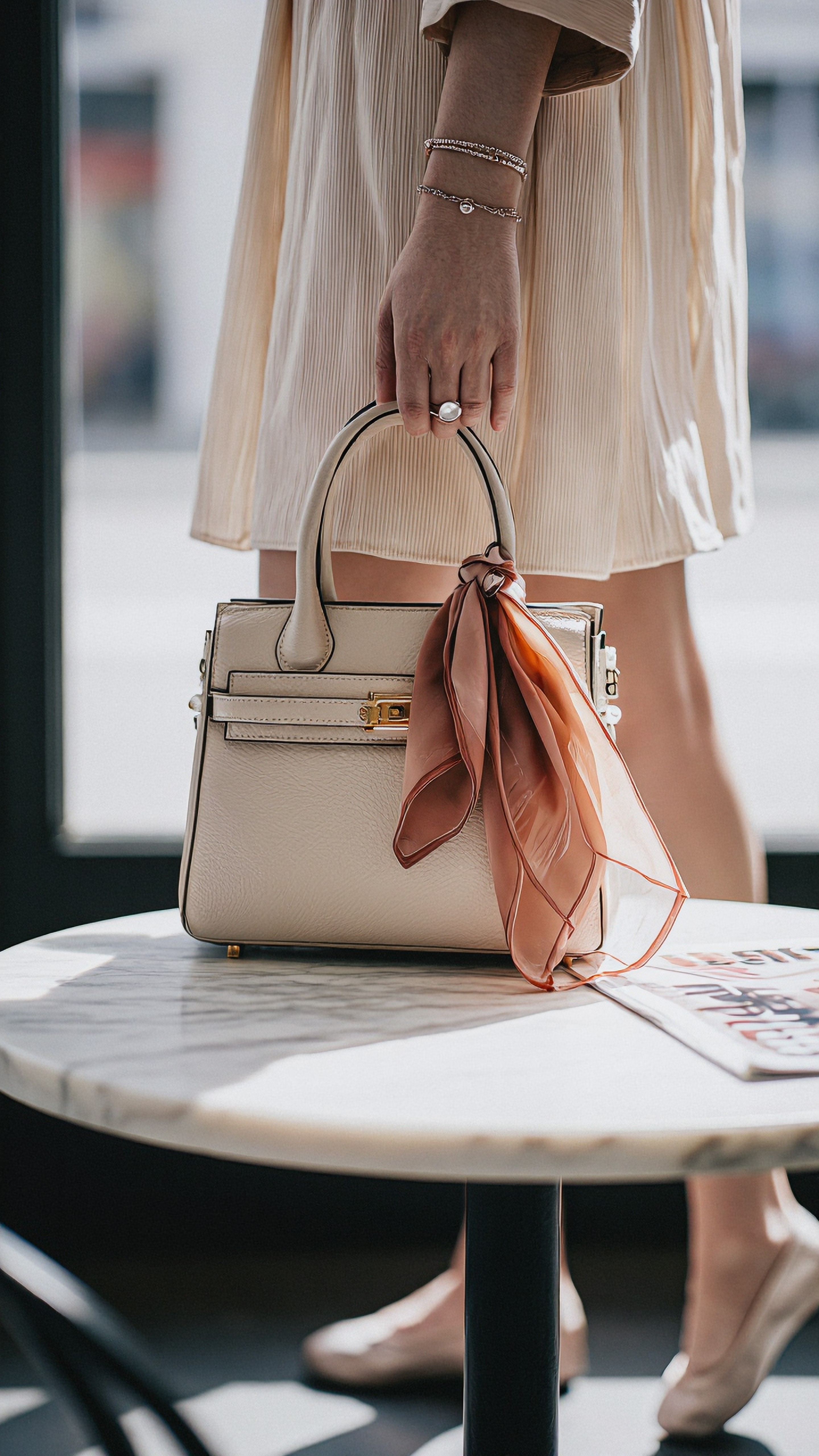
Inspect leather grain, hardware symmetry, and whether the ballet flats match in shape. Accessories are where low-quality generations often reveal themselves fastest.
What worked best across the test
Strengths
The strongest result came from street-style full body and head-to-toe lookbook prompts.
Why these worked:
- they force full outfit visibility
- they reduce face-first composition drift
- they keep shoes and bag in frame
- they make trend interpretation easier for beginners
Flat lays were the most dependable for planning outfit combinations. They are less emotional, but more useful when you want to compare color palettes, textures, and accessory pairings.
Backstage and storefront prompts were better for trend mood than for direct outfit copying. They help when you want direction, not exact shopping guidance.
If you are building or refining prompts in a repeatable way, [Create](/create) is the natural place to test one outfit concept in multiple shot types before choosing a final direction.
Common mistakes to avoid
1. Asking for "trendy" instead of describing garments
This was the most common source of generic outputs. Trend labels help with theme, but clothes create the image.
2. Using portrait framing for outfit-led topics
If the search is about summer outfit ideas or denim outfit ideas, portrait crops are usually the wrong call.
3. Forgetting footwear
A surprising number of images looked believable until the lower frame. If shoes matter to the silhouette, call them out clearly.
4. Over-stacking aesthetics
When prompts mixed quiet luxury, streetwear, coquette, boho, and runway glam together, results became muddy. Pick one lead direction and one supporting mood.
5. Letting the background become the subject
New York, SoHo, and fashion week settings help, but only if they support outfit readability. If the image starts feeling like travel photography, the styling loses clarity.
6. Ignoring fabric logic
Soft romantic fashion relies on texture contrast: silk against denim, knit against leather, eyelet against smooth accessories. Without this, every outfit looks flat.
Compact checklist before you save an output
- Is the shot type right for the search intent?
- Can you see the full silhouette?
- Are top, bottom, outerwear, shoes, and bag all readable?
- Does the palette match the trend direction?
- Are fabric textures distinct from each other?
- Do accessories look intentional rather than random?
- Is the setting supporting the outfit instead of distracting from it?
- Would someone actually be able to rebuild this look from the image?
If you need to rescue a nearly-good image, upscaling and detail recovery can help accessory and textile inspection. That is where a tool like [Upscaler](/upscaler) becomes useful after prompt testing, not before.
FAQ
What are the easiest US fashion trends for women to prompt well right now?
Quiet luxury outfits, denim outfit ideas, and simple summer outfit ideas are the easiest because they rely on clean silhouettes and familiar materials. Highly layered trend mashups are harder.
Which shot type is best for wearable outfit inspiration?
Head-to-toe lookbook and street-style full body performed best in this test. They make it easier to judge proportions, shoes, and layering.
Why do AI fashion images often hide the shoes?
Because many fashion prompts accidentally bias toward portrait composition. Adding a named shot type and stating full-body or head-to-toe visibility fixes this more often than adding more style adjectives.
Are runway prompts good for fall fashion trends?
Yes, but mainly for mood and color direction. If you want practical fall outfit references, convert the runway idea into a street-style or lookbook prompt afterward.
Should beginners use mood boards or full scene prompts first?
Start with full scene prompts if you want a finished image. Start with mood-board or flat-lay prompts if you are still deciding on palette, fabric, or accessory direction.
Final recommendation
If you are researching US fashion trends for women and want image prompts that produce useful outfit ideas, use a fashion-editor workflow, not a vibe-only prompt. Start with one search trend, choose one shot type, describe the complete outfit system, and keep the setting realistic.
Who should use this workflow: beginners who want saveable style references, prompt writers building fashion lookbooks, and anyone testing trend phrases against wearable outfits.
Who should avoid it: users who only want beauty portraits, abstract mood images, or fantasy styling with no concern for garment accuracy.
The setting detail that mattered most in this test was full outfit visibility in a believable fashion context. The prompt detail that mattered most was clear garment hierarchy. Once those two pieces were in place, the romantic mood, soft color palette, and current trend references started to hold together consistently.