US Fashion Trends This Week: 12 Outfit Directions Rising From Streetwear to Quiet Luxury 한국어 요약
이 페이지는 ZView Space의 영어 원문을 한국어 검색 사용자도 이해할 수 있도록 정리한 SEO 요약입니다. 핵심은 단순한 얼굴 중심 이미지가 아니라 패션 에디토리얼, 룩북, 아웃핏, 프롬프트 테스트, 이미지 생성 워크플로우를 실제로 어떻게 구성할지입니다.
핵심 요약
- 원문 주제: US Fashion Trends This Week: 12 Outfit Directions Rising From Streetwear to Quiet Luxury
- 목적: AI 이미지 생성에서 outfit, silhouette, fabric, pose, location, camera framing을 더 명확하게 설계합니다.
- 활용 범위: Z-Image Turbo, Krea2 Turbo, Qwen Image, Anima, SeedVR2 같은 이미지 생성 및 업스케일 워크플로우에 적용할 수 있습니다.
- SEO 관점: 제목, 설명, 이미지 alt, 프롬프트 예시가 실제 검색 의도와 맞아야 색인 가능성이 높아집니다.
한국어 사용자를 위한 체크포인트
1. 프롬프트가 얼굴 묘사에만 머물지 않고 전체 스타일과 의상 구성을 설명하는지 확인합니다. 2. 패션 이미지라면 상의, 하의, 아우터, 신발, 액세서리, 소재감, 촬영 장소를 분리해서 씁니다. 3. 생성 결과는 바로 게시하지 말고 디테일, 손, 의상 형태, 배경 일관성, 이미지 품질을 비교합니다. 4. 글 본문에는 실제 테스트 기준과 실패를 줄이는 방법이 들어가야 검색엔진에서 얇은 콘텐츠로 보일 가능성이 줄어듭니다.
원문 미리보기
This week’s US fashion trends this week test was built around a practical editorial problem: how do you turn fast moving style signals into image prompts that actually produce usable outfit visuals? Instead of writing a broad trend roundup, I generated fashion
---
This week’s US fashion trends this week test was built around a practical editorial problem: how do you turn fast-moving style signals into image prompts that actually produce usable outfit visuals? Instead of writing a broad trend roundup, I generated fashion scenes across street style, lookbook, retail, runway, accessories, and product-detail formats to see which outfit directions hold together in AI outputs and which ones collapse into vague "fashion person in nice clothes" imagery.
The result is a working report on 12 outfit directions currently reading clearly in US trend language, plus what happened when those trends were pushed through image models. Some directions were easy to render. Others, especially quiet luxury and layered American streetwear trends, needed more control over silhouette, fabric, and scene context before the images became publishable.
What to know first
- The strongest trend images came from prompts built around outfit systems, not single garments.
- Quiet luxury outfits failed when the prompt only used mood words like minimal, elevated, or chic without naming fabric, cut, bag, shoe, and color palette.
- American streetwear trends looked generic unless the location, layering, and proportion rules were explicit.
- Full-body framing mattered more than face detail for trend reporting; 35mm to 50mm setups produced the most readable styling.
- If you want trend visuals for publishing, test the same outfit direction in at least two shot types before deciding the prompt is stable.
Test setup
In this test, I used a trend-led prompt workflow focused on current US outfit language rather than runway-only references. I mapped 12 directions that are visibly circulating across fashion coverage, retail styling, and streetwear-inspired wardrobe planning:
1. Relaxed tailoring with sneakers 2. Quiet luxury monochrome separates 3. Elevated athleisure with structured outerwear 4. Denim-on-denim with cleaner proportions 5. Utility cargo styling with luxe accessories 6. Americana workwear remixed for city wear 7. Soft prep with loafers and knit layering 8. Sporty racing or moto accents in daily outfits 9. Minimal black-and-tan transitional dressing 10. White tank plus oversized trouser formula 11. Statement accessories over restrained clothing 12. Editorialized retail display trend boards for seasonal shopping intent
I treated this as an operator test, not a mood-board exercise. Every prompt was written to expose whether the model understood garment fit, hem length, bag scale, shoe type, and layered silhouette. For building and refining prompts, the most useful workflow remains iterative testing in [Prompt Lab](/promptlab), while comparative outputs are easier to review in a gallery format like [Gallery](/gallery). If the final image is strong but fabric edges are weak, [Upscaler](/upscaler) helps recover garment texture more reliably than trying to solve everything in the first generation.
Why trend-driven fashion images are harder than they look
Trend content creates a specific problem for image models: the difference between a current outfit and a generic fashion image is usually small, but visually important.
A model can often render "woman wearing blazer and trousers" without trouble. What it struggles with is the actual trend logic: is the trouser pooling or cropped? Is the blazer boxy or nipped? Are the sneakers retro runner, skate, or minimalist leather? Is the bag oversized suede, compact shoulder, or structured top handle? Those details decide whether the output reads as fashion trends today or as stock imagery.
The weak point in this setup was not beauty rendering. It was trend precision.
Quiet luxury was especially tricky. When I used abstract language like understated luxury, refined style, or elegant neutral wardrobe, the model often returned expensive-looking but trend-empty clothing. Streetwear had the opposite problem: the model pushed too hard into logos, exaggerated poses, or chaotic layering unless the prompt disciplined the silhouette.
The first pass: broad trend prompts produced broad fashion images
My first attempt used category-level phrases such as "US streetwear trend," "quiet luxury outfit," and "summer to fall fashion transition." The outputs were polished enough for social thumbnails but weak for article use.
Common failures in the first pass:
- shoes mismatched the outfit logic
- too much face priority, not enough garment visibility
- random jewelry and bag substitutions
- incomplete layering, especially under blazers and trench coats
- luxury prompts drifting into eveningwear
- streetwear prompts drifting into hypebeast caricature
- trend mixes that canceled each other out
The strongest lesson from round one: trend prompts need a shot plan. Once I named the shot type first, output quality improved fast.
The adjustment that improved results
The best change was simple: each prompt started with a fashion shot type and then spelled out the outfit architecture.
That means naming not just the vibe, but the clothing stack:
- outerwear
- top layer
- bottom silhouette
- shoe category
- bag shape
- accessories
- fabric texture
- location context
- body framing
This immediately made the trends more legible. A street-style full body shot behaves differently from a storefront display or garment detail macro. When the shot type and styling system matched, the model had fewer chances to improvise the wrong fashion language.
The 12 outfit directions that read clearly this week
1. Relaxed tailoring with retro sneakers
This was one of the easiest directions to render and one of the most useful for informational search intent. It matches people looking for summer outfit ideas that can move into early fall with small changes.
The strongest result used a boxy blazer, white rib tank, pleated full-length trouser, retro running sneaker, and slouchy leather tote. When I removed the tote or left the shoe vague, the image lost trend specificity.
To test whether the model could keep the full silhouette readable, I used a New York street-style setup with visible head-to-toe framing.
Topic: US fashion trends this week relaxed tailoring with retro sneakers
Genre: Street Style
Camera: Canon EOS R5
Lens: 35mm f/2
Lighting: Overcast diffusion
Location: SoHo sidewalk in New York with clean storefronts and light pedestrian motion
Style: American street style editorial
Final Prompt: street-style full body fashion shot of a trend-led US outfit this week, relaxed charcoal oversized blazer over a white ribbed tank, full-length cream pleated trousers with slight break at the hem, silver and navy retro running sneakers, slouchy dark leather tote, slim black belt, minimal gold hoops, complete outfit visible head to toe, natural walking pose, SoHo New York sidewalk, polished but realistic American streetwear trends, neutral palette with subtle contrast, fabric drape and trouser volume clearly visible, documentary editorial framing, high garment detail, clean background separation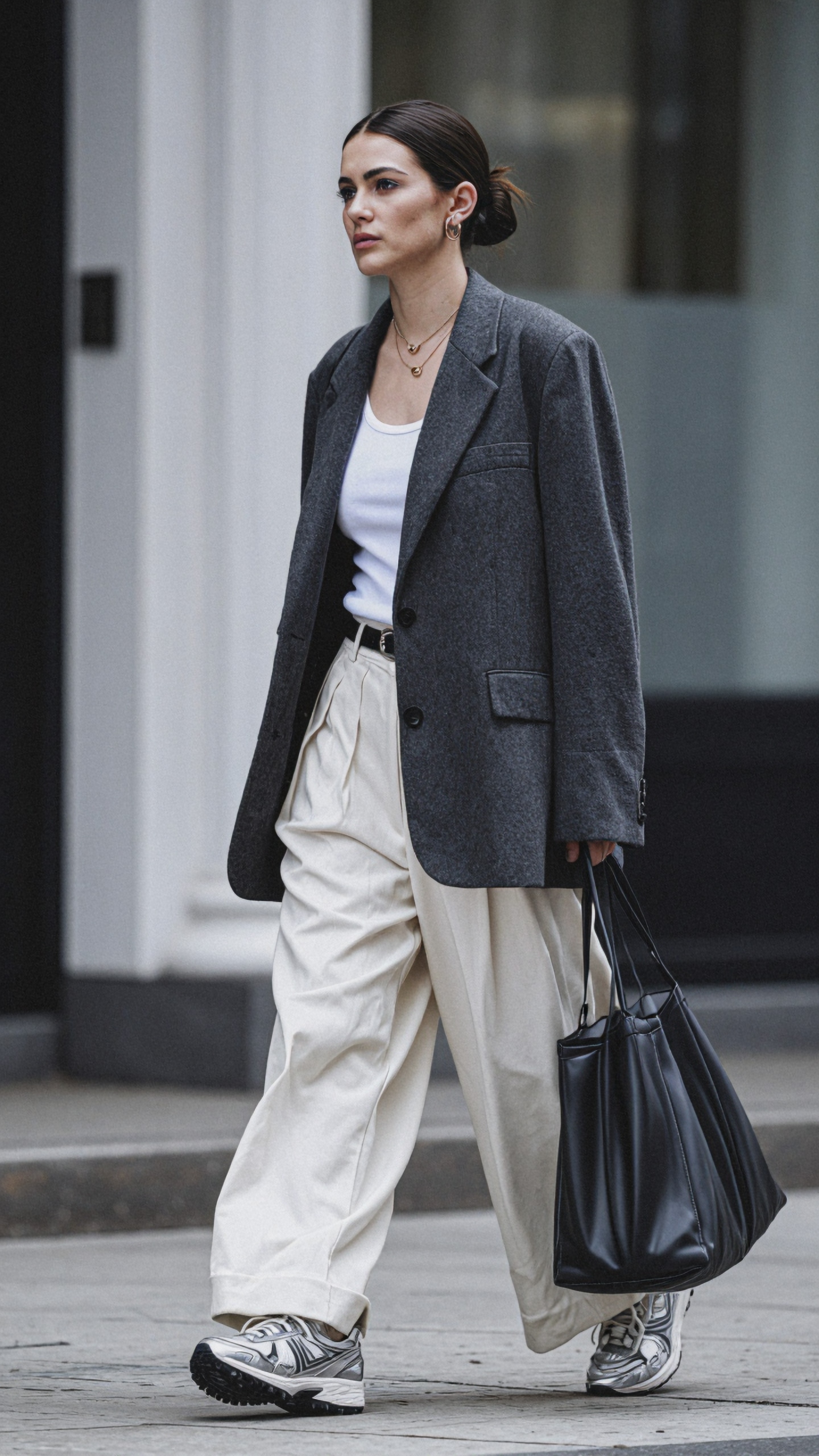
Inspect whether the trouser hem sits naturally over the sneaker and whether the blazer volume looks intentional rather than oversized by accident. The bag scale should support the styling, not dominate it.
2. Quiet luxury monochrome knit-and-trouser dressing
This was the most failure-prone trend because the visual language is quiet by design. If the model misses even one element, the outfit looks unfinished instead of refined.
The improvement came from specifying exact materials: fine-gauge knit, matte wool trouser, suede tote, soft leather loafer. Those material calls gave the image structure.
Topic: US fashion trends this week quiet luxury monochrome separates
Genre: Fashion Editorial
Camera: Sony A7R V
Lens: 50mm f/2
Lighting: Window light with soft bounce fill
Location: minimal Upper East Side apartment interior with stone table and warm oak flooring
Style: luxury fashion campaign
Final Prompt: three-quarter outfit editorial showing a quiet luxury outfit direction rising in US fashion trends this week, soft oatmeal fine-gauge knit top tucked into high-waisted cream wide-leg wool trousers, camel suede belt, dark espresso leather loafers, structured suede tote, delicate gold watch, monochrome neutral palette, controlled posture, full outfit logic visible from shoulder to shoes, understated affluent interior, refined textile texture, matte fabrics, minimal styling noise, elegant American quiet luxury outfits, magazine-level composition, premium but restrained atmosphere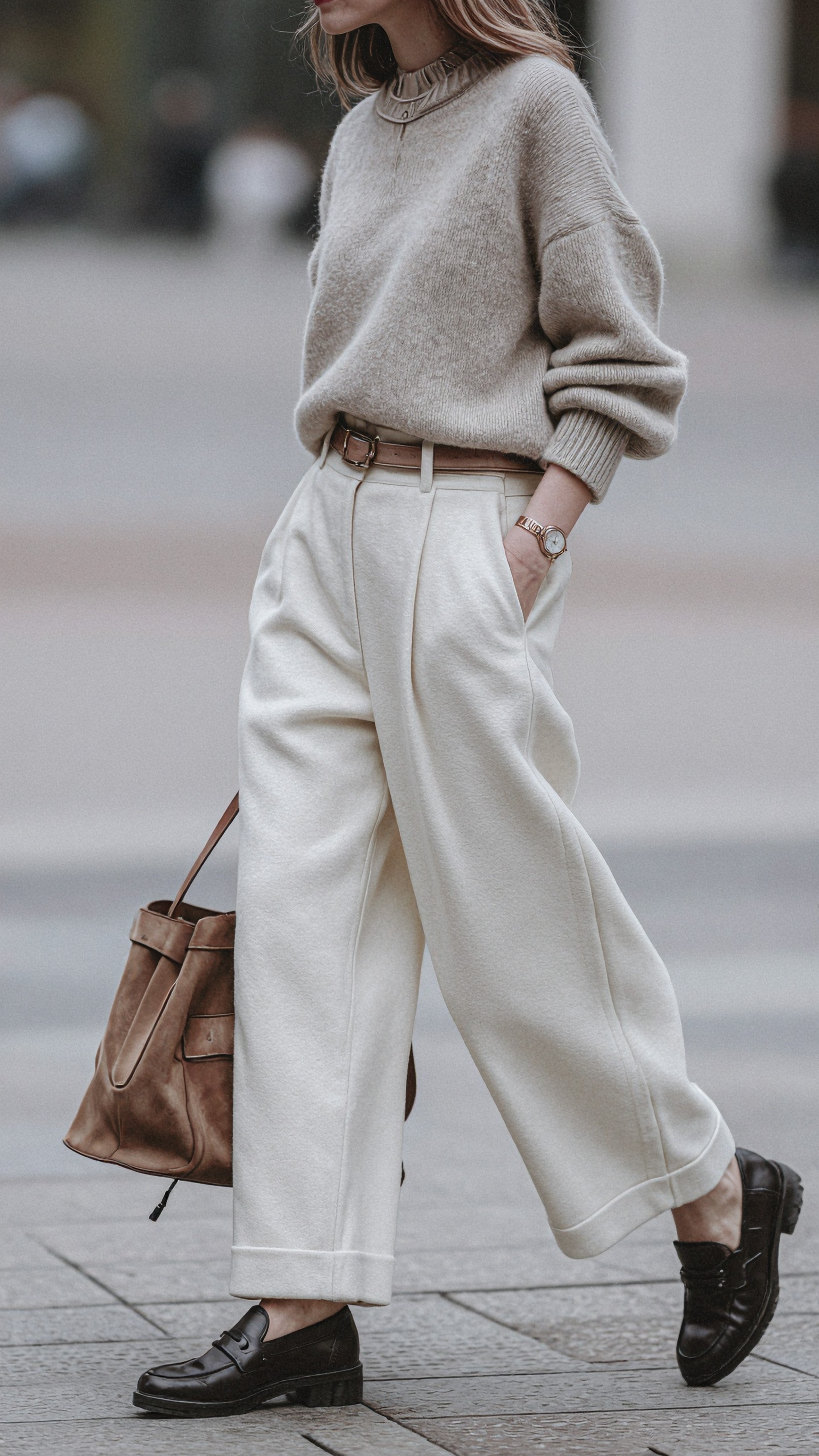
Check the knit texture first. On weaker outputs, the sweater turns shiny or synthetic, which breaks the quiet-luxury effect immediately. Also inspect whether the loafers remain practical day shoes rather than morphing into pumps.
3. Elevated athleisure with a structured coat
This trend is useful because it connects searchers interested in fashion trends today with actually wearable outfits. The challenge is keeping the activewear polished enough to feel current instead of gym-bound.
The first pass kept generating leggings-only looks. The fix was to define the outer layer and the footwear hierarchy.
Topic: US fashion trends this week elevated athleisure with structured outerwear
Genre: Lifestyle Fashion
Camera: Nikon Z8
Lens: 40mm f/2
Lighting: Soft winter daylight
Location: downtown Chicago plaza with stone architecture and clean morning light
Style: clean commercial look
Final Prompt: head-to-toe lookbook image of elevated athleisure in current US fashion trends, long tailored black wool coat over a fitted heather-gray zip mock-neck top, sleek black straight-leg track pants with subtle side stripe, white leather minimal sneakers, sculptural crossbody bag, dark sunglasses, hair pulled back, standing still in an urban Chicago plaza, complete silhouette visible, structured outerwear balancing sporty basics, polished city styling, crisp fabric contrast, practical luxury tone, contemporary American fashion trends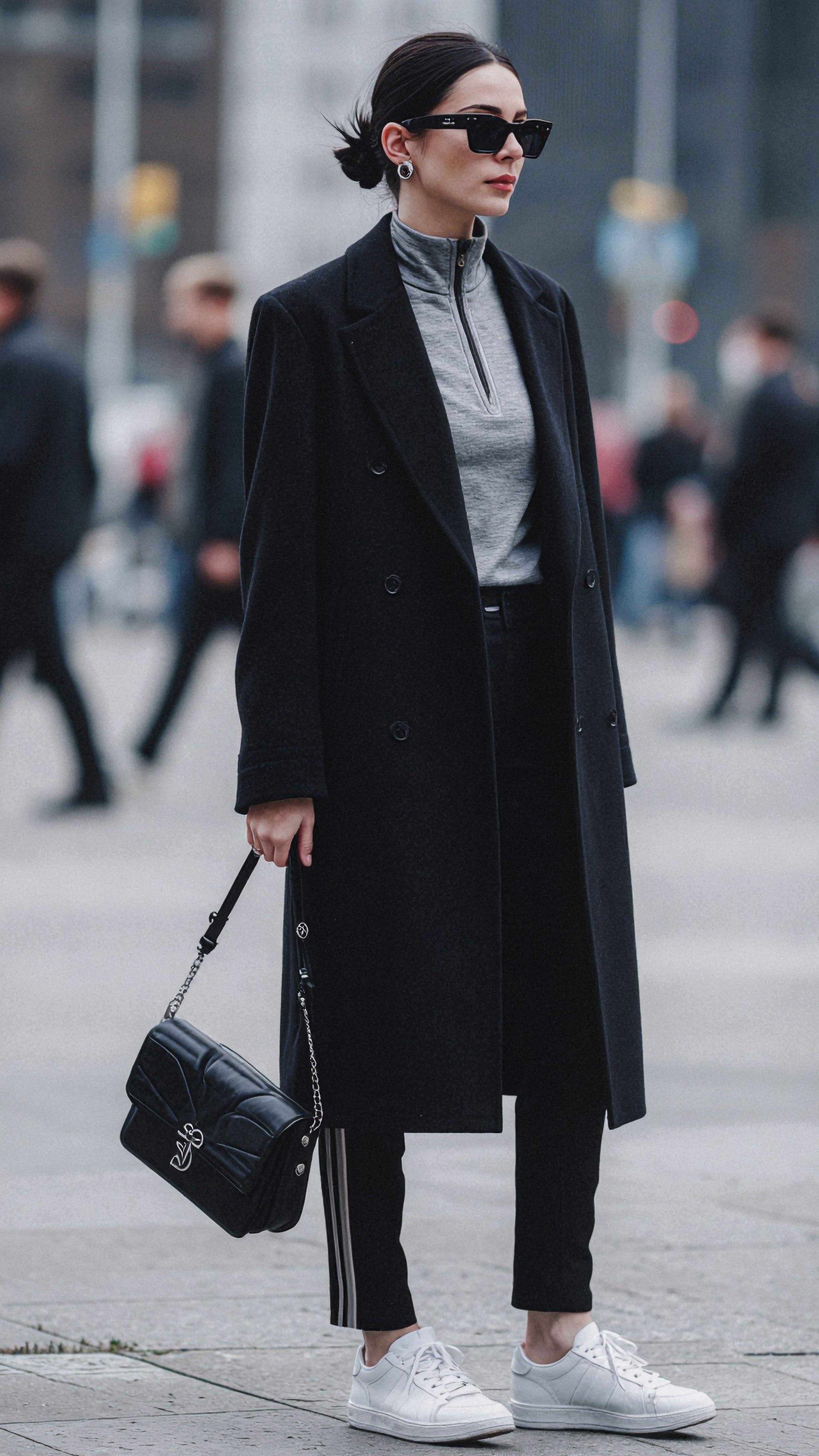
The key inspection point is the pant shape. If the model turns them into leggings or formal trousers, the trend direction is lost. This setup works when the coat feels tailored and the sport layer stays streamlined.
4. Clean denim-on-denim
This week’s denim direction read best when the washes were closely related but not identical. Too much contrast looked costume-like. Too little contrast looked like a jumpsuit by mistake.
I tested a lookbook-style shot to reduce urban background noise and see if the silhouette alone could carry the trend.
Topic: US fashion trends this week denim on denim with clean proportions
Genre: Lookbook
Camera: Fujifilm GFX100S
Lens: 45mm f/2.8
Lighting: Studio softbox key with gentle shadow
Location: seamless pale gray lookbook studio
Style: modern catalog editorial
Final Prompt: head-to-toe lookbook fashion image of current US denim trend, medium-wash oversized denim shirt worn open over a white fitted tank, darker indigo straight-leg jeans with clean high rise, brown leather belt, pointed low-heel ankle boots, compact shoulder bag, sleeves casually rolled, subtle jewelry, full body centered on pale gray studio backdrop, denim-on-denim styling with refined proportions, clear garment edges, visible seam detail, catalog-meets-editorial presentation, wearable American fashion trend report aesthetic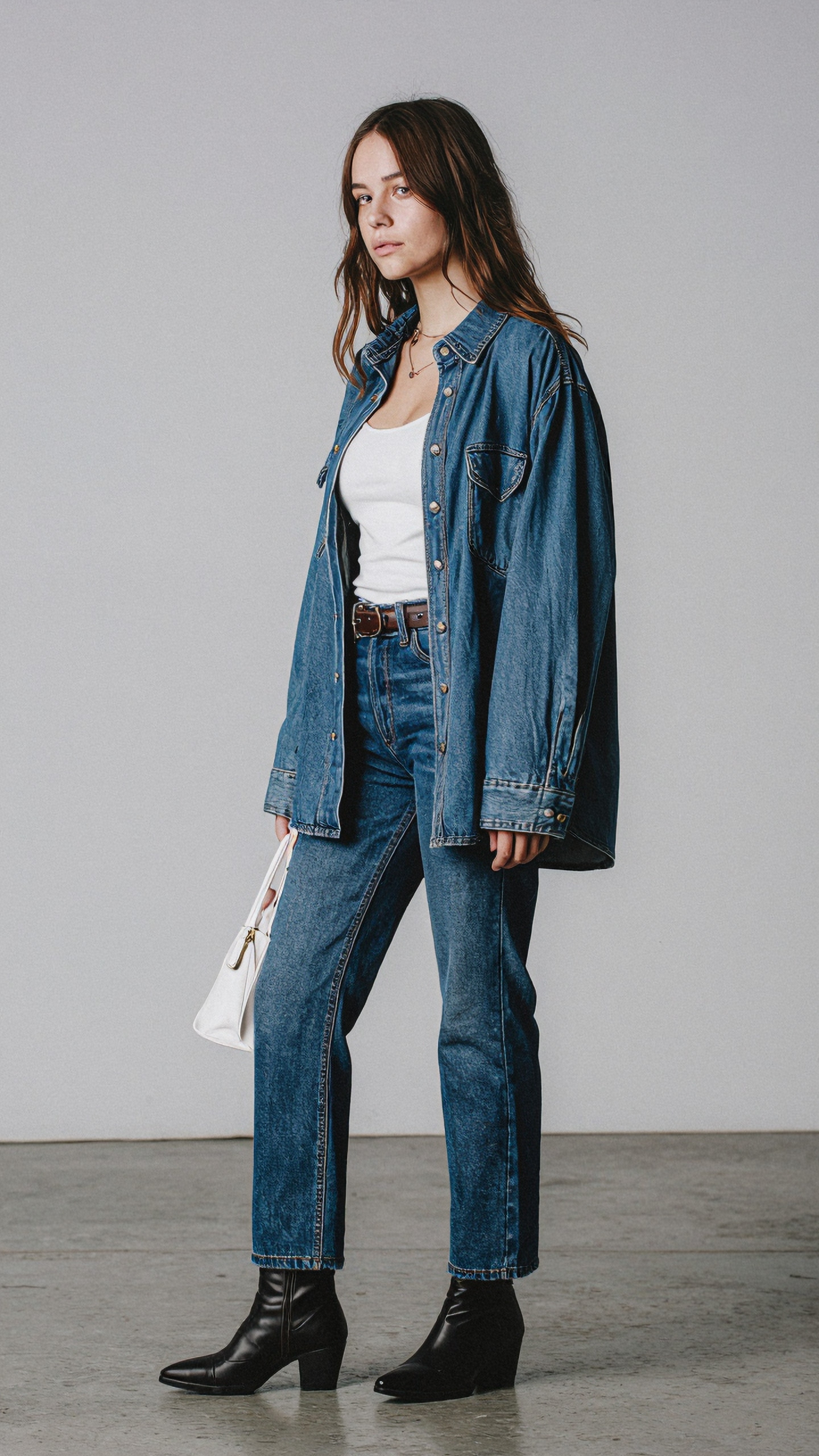
Inspect seam consistency and wash separation. The strongest result keeps the shirt and jeans related but distinct. Weak generations often merge top and bottom into one flat denim mass.
5. Utility cargos with a polished bag
This was one of the most commercially useful directions because it bridges American streetwear trends and more mainstream shopping intent. It also exposed whether the model can balance rugged clothing with cleaner accessories.
The weak point was cargo pocket placement. Many generations invented asymmetrical or unusable pockets.
Topic: US fashion trends this week utility cargo styling with luxury accessories
Genre: Street Style
Camera: Leica SL2
Lens: 35mm f/2.8
Lighting: Late afternoon natural light
Location: Los Angeles Arts District alley with muted concrete and industrial doors
Style: contemporary streetwear editorial
Final Prompt: street-style full body outfit image focused on a rising US fashion trend this week, olive wide-leg cargo pants with realistic utility pockets, white fitted tank, cropped black leather bomber, sleek heeled sandals, structured top-handle bag in deep burgundy, silver cuff bracelet, narrow sunglasses, full silhouette visible while standing against an industrial LA backdrop, clean streetwear-meets-polish styling, practical pocket detail, strong proportion contrast between loose trouser and fitted top, American streetwear trends rendered with restraint and fashion editor clarity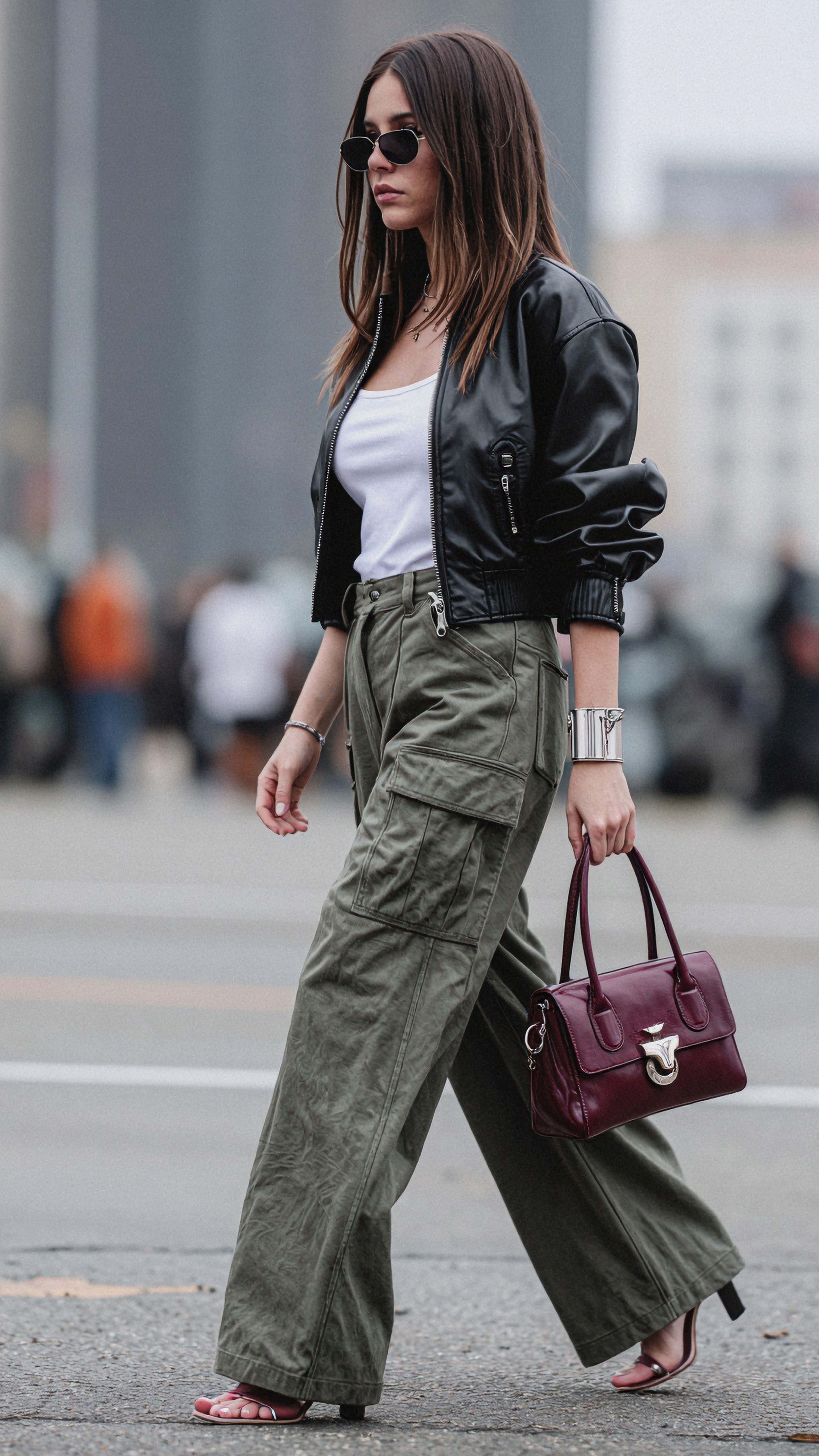
Before publishing, zoom into the cargo construction. If the pockets float, duplicate, or break the leg line, the image stops feeling credible.
Comparison table: which trend directions were easiest to render?
| Outfit direction | Output strength | Main failure risk | Best shot type | |---|---|---|---| | Relaxed tailoring + sneakers | High | wrong sneaker category | street-style full body | | Quiet luxury monochrome | Medium | vague fabrics, eveningwear drift | three-quarter editorial | | Elevated athleisure | Medium-high | leggings or officewear confusion | head-to-toe lookbook | | Denim on denim | High | merged washes | studio lookbook | | Utility cargos + polished bag | Medium | broken pocket logic | street-style full body | | Americana workwear | Medium-high | costume effect | sidewalk editorial | | Soft prep | High | too school-uniform | catalog grid page | | Moto accents | Medium | over-stylized leather | runway/backstage or street style | | Black-and-tan minimalism | High | flatness, no texture | apartment editorial | | Tank + oversized trouser | High | generic basics | editorial full body | | Statement accessories | Medium-high | accessories overwhelm look | accessories close-up + full body pair | | Retail trend board display | Medium | inconsistent merchandising | storefront display |
Where the model started to understand the trend language
6. Americana workwear, but cleaner and city-ready
This trend can go wrong fast. If the prompt leans too heritage, the model produces costume workwear. If it leans too fashion, the Americana reference disappears.
The strongest result came from using one workwear anchor only: chore jacket. Everything else stayed urban and clean.
Topic: US fashion trends this week Americana workwear remixed for city wear
Genre: Fashion Editorial
Camera: Canon EOS R3
Lens: 50mm f/2.2
Lighting: Early morning side light
Location: Brooklyn side street with brick facade and muted industrial signage
Style: documentary editorial realism
Final Prompt: street-style full body fashion editorial showing a current US Americana workwear outfit direction, sand canvas chore jacket over a white crewneck tee, dark straight-leg trousers cropped just above brown leather loafers, navy baseball cap, woven leather belt, roomy suede tote, full outfit visible while crossing a Brooklyn street, city-ready workwear influence without costume styling, clean lines, practical layering, neutral and navy palette, realistic canvas texture, understated American fashion trends today visual language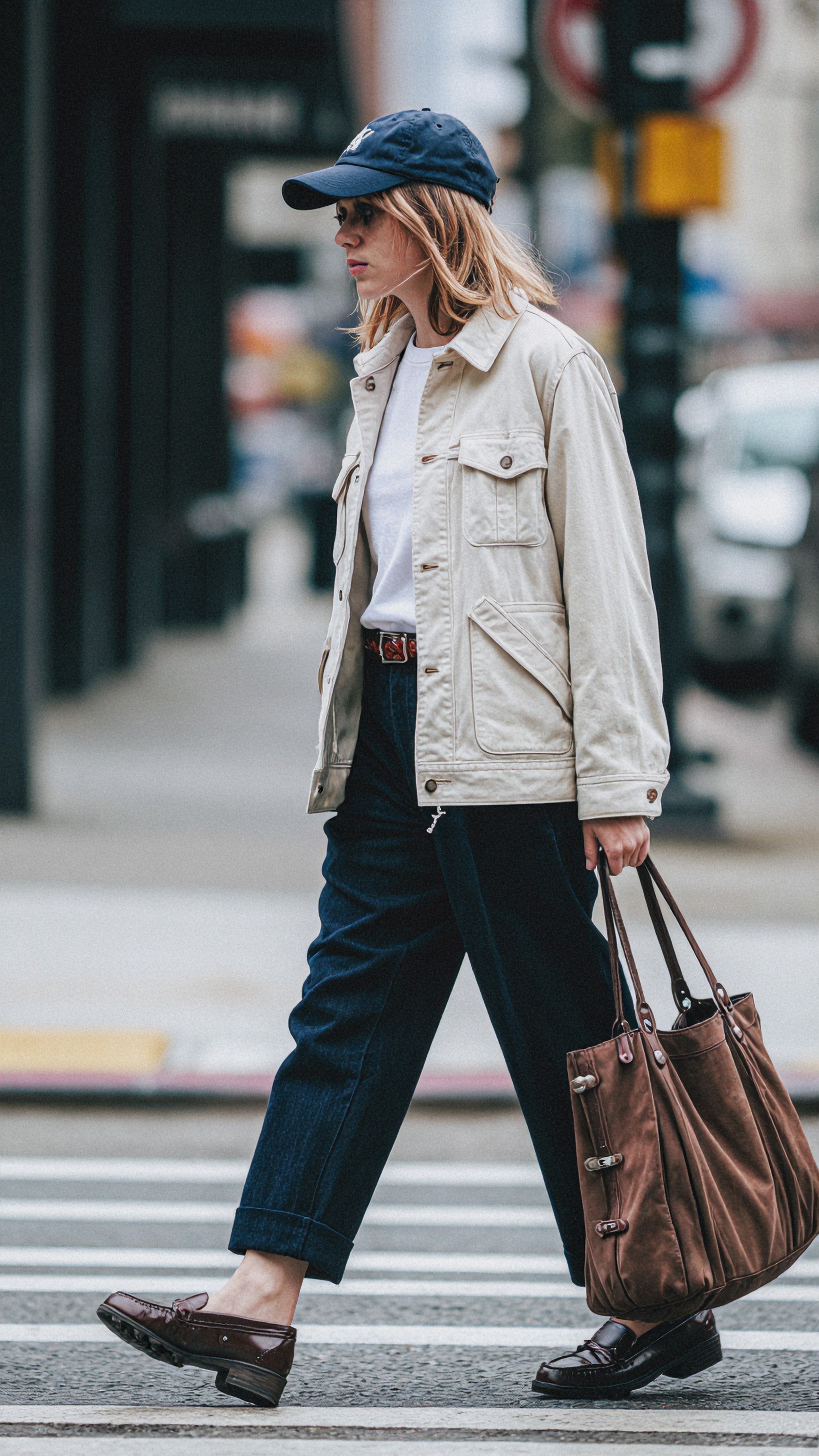
The image should feel urban first, heritage second. If boots get too rugged or denim gets too distressed, the look slips away from the current trend signal.
7. Soft prep with knit layers and loafers
This is one of the clearest fall fashion trends crossover looks because it transitions well from late summer into cooler weather. The challenge is avoiding a school-uniform impression.
What improved the output was using a catalog grid shot, not a single hero frame. The model became more consistent when asked to present the outfit as merchandising logic.
Topic: US fashion trends this week soft prep knit layering and loafers
Genre: Catalog Editorial
Camera: Hasselblad X2D 100C
Lens: 55mm f/2.5
Lighting: Bright diffused studio lighting
Location: clean off-white catalog studio with modular layout panels
Style: elevated retail lookbook
Final Prompt: catalog grid page displaying a soft prep outfit direction in current US fashion trends this week, navy fine-knit cardigan draped over shoulders, crisp pale blue button-down shirt, cream pleated midi skirt, burgundy penny loafers, white socks styled intentionally, structured satchel bag, slim belt, gold stud earrings, full outfit presented in a polished retail layout with one main full-body image and smaller detail panels, contemporary prep styling, wearable and refined, clean merchandising composition, sharp knit texture and accessory clarity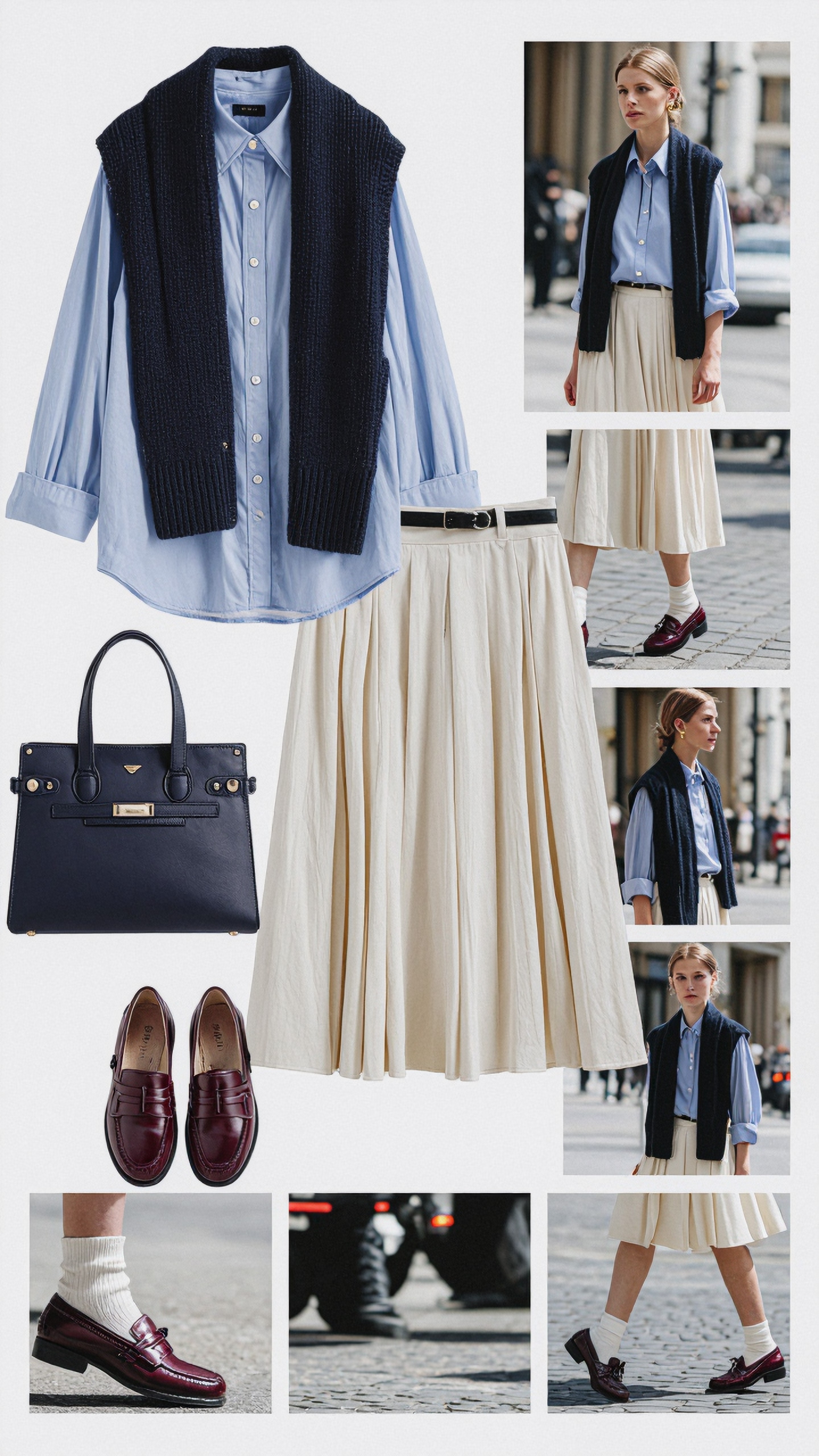
Check whether the socks and loafers look deliberate rather than accidental. This trend depends on proportion and neat styling; if the shirt tail or skirt pleats become messy, the prep signal weakens.
8. Moto or racing accents in otherwise simple outfits
This trend had a narrow success window. A little moto language looked current. Too much turned into costume leather or sports branding overload.
The most stable setup used a backstage/runway-adjacent frame rather than a city street. That gave the jacket room to read as a trend piece rather than a biker stereotype.
Topic: US fashion trends this week moto accent jacket over minimal basics
Genre: Runway Backstage Fashion
Camera: Sony FX3 cinematic capture
Lens: 24-70mm at 45mm f/3.2
Lighting: mixed backstage practicals with soft key fill
Location: New York fashion week backstage corridor with garment racks and concrete floor
Style: directional contemporary fashion
Final Prompt: runway backstage moment featuring a current US fashion trend this week, black and ivory moto-inspired jacket with subtle racing panel details worn over a white tank and black relaxed straight trousers, pointed black boots, compact shoulder bag, model adjusting sleeve near garment racks, full outfit visible in candid three-quarter-to-full-body framing, restrained fashion-week energy, trend-led but wearable styling, matte leather texture, monochrome palette, backstage realism, editorial fashion context without costume exaggeration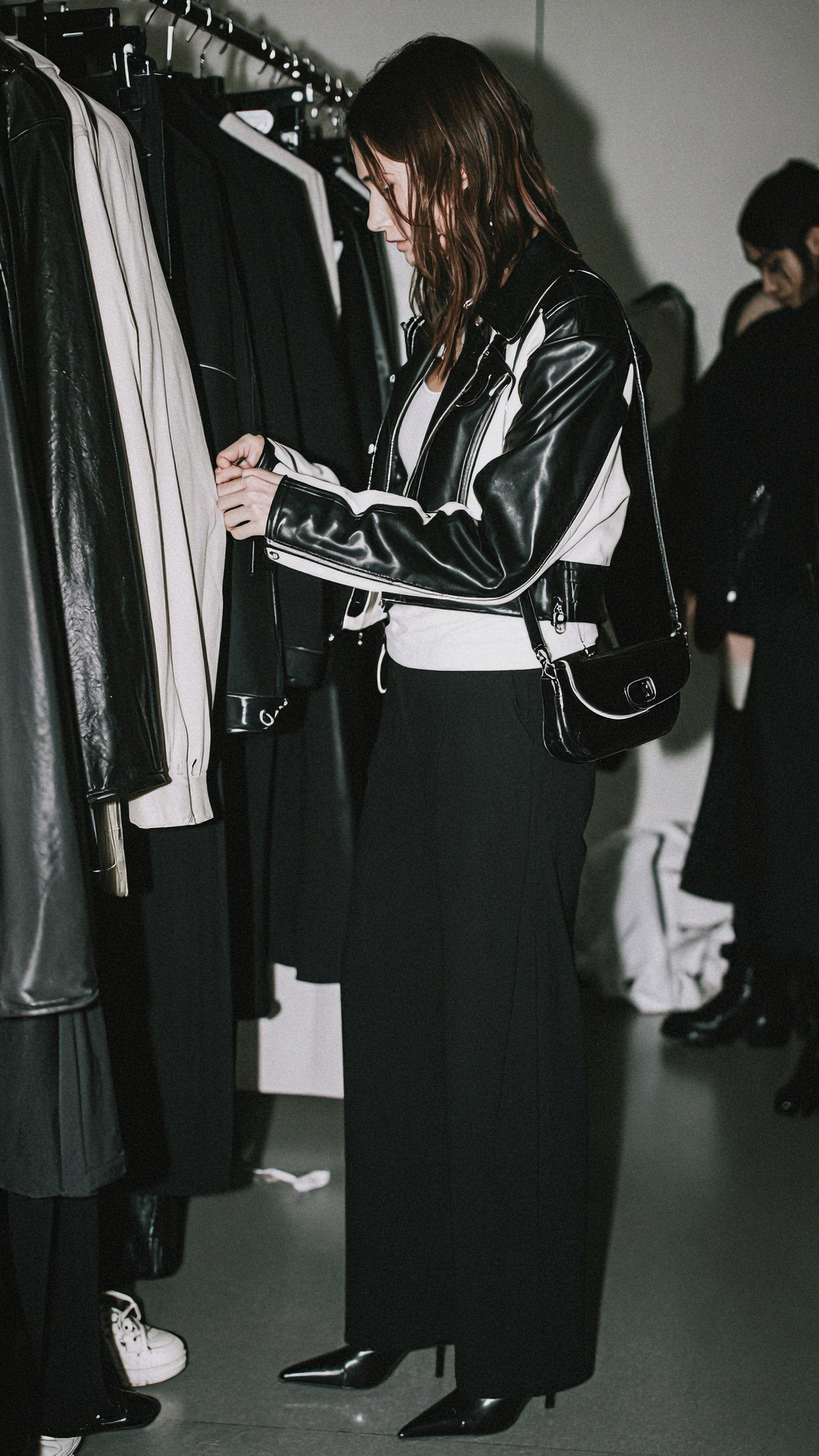
Inspect branding creep. If the model invents logos, numbers, or heavy racing graphics, the outfit loses the refined trend balance this direction needs.
Prompt examples for detail-level trend validation
At this point in the test, full outfits were reading better, but I still needed proof that the models understood why certain directions work. That means checking accessories, textile texture, and merchandising context separately.
9. Statement accessories over restrained clothing
This test isolates one current pattern in US fashion trends: simpler clothes carrying stronger bags, belts, jewelry, or eyewear. The outfit should stay quiet enough for the accessory to matter.
Topic: US fashion trends this week statement accessories over minimal outfit base
Genre: Accessories Editorial
Camera: Nikon D850
Lens: 85mm f/2
Lighting: directional studio key with soft reflector fill
Location: warm beige editorial studio set with stone pedestal
Style: luxury accessories campaign
Final Prompt: accessories close-up that still preserves outfit logic for a current US fashion trend, minimal black sleeveless knit top with tan high-waisted trousers, focus on an oversized sculptural gold cuff, dark tortoiseshell sunglasses, compact chocolate shoulder bag, sleek leather belt with brushed metal hardware, cropped composition from collarbone to mid-thigh plus hand-held bag detail, premium accessory styling, quiet clothing base, rich material contrast, polished editorial campaign aesthetic, visible leather grain and metal finish
Inspect hardware sharpness and whether the accessories belong to the same visual language. A common failure is one accessory going boho while the rest stay minimal.
10. Black-and-tan minimalism for summer-to-fall transition
This direction looked strong across models because the color contrast is simple, but it can become flat without fabric variation. I used an interior editorial to force texture into the image.
Topic: US fashion trends this week black and tan transitional minimalism
Genre: Fashion Editorial
Camera: Panasonic Lumix S1R
Lens: 50mm f/1.8
Lighting: soft afternoon window light
Location: minimalist downtown loft with plaster walls and walnut chair
Style: quiet modern editorial
Final Prompt: three-quarter outfit editorial highlighting a transitional black-and-tan outfit trend in the US this week, black sleeveless mock-neck knit, tan high-waisted wide-leg trousers, black leather thong sandals, slim structured black bag, thin gold chain necklace, seated side pose with full lower silhouette still visible, minimalist loft interior, emphasis on texture contrast between knit, wool-blend trouser, and smooth leather accessories, restrained modern styling, clean fashion trends today mood, subtle shadow depth and premium editorial finish
The important check here is separation. If the black top and bag merge into one dark shape, the outfit loses clarity on mobile screens.
11. White tank plus oversized trouser formula
This was one of the strongest performers in the whole test. It works because the formula is simple but still trend-specific when proportion, belt, shoe, and bag are controlled.
I used a straightforward editorial full-body setup because this look is often ruined by poor torso-to-leg proportion.
Topic: US fashion trends this week white tank and oversized trouser outfit formula
Genre: Fashion Editorial
Camera: Canon EOS R6 Mark II
Lens: 40mm f/2.8
Lighting: bright natural daylight with soft shadow
Location: West Village brownstone stoop and sidewalk
Style: effortless New York editorial
Final Prompt: street-style full body fashion image of a rising US outfit formula this week, white ribbed tank tucked into oversized stone-colored pleated trousers with long fluid drape, black leather belt, mesh ballet flats, soft hobo bag, layered delicate necklaces, loose blazer carried over one arm, complete silhouette visible while stepping down a West Village stoop, effortless but intentional styling, clean proportions, modern city ease, fabric movement and trouser volume emphasized, wearable summer-to-fall transition outfit, editorial realism
Inspect waist placement and trouser rise. If the rise drops too low or the tank becomes crop-top-short, the look shifts away from the current proportion trend.
12. Retail display and merchandising as trend proof
For informational fashion content, a storefront or display scene can clarify a trend faster than another model shot. It is also useful when the article covers summer outfit ideas and fall fashion trends in one piece.
This test checks whether the trend can be merchandised coherently: can the model present a believable display using the same styling rules?
Topic: US fashion trends this week storefront display from streetwear to quiet luxury
Genre: Retail Visual Merchandising
Camera: Sony A1
Lens: 24-70mm at 35mm f/4
Lighting: balanced storefront daylight with interior warm practicals
Location: upscale Manhattan boutique window and entry display
Style: high-end retail campaign
Final Prompt: storefront display showing the range of US fashion trends this week from American streetwear to quiet luxury, front mannequin in oversized blazer, white tank, wide-leg trousers and retro sneakers, second mannequin in monochrome camel knit and cream trouser quiet luxury outfit, shelving with suede bags, loafers, minimal jewelry, folded denim, clean signage, polished boutique interior visible beyond the glass, strong visual merchandising logic, neutral palette with one olive utility accent, realistic retail display composition, premium materials, trend-led seasonal shopping context
Check mannequin anatomy, shoe pairing, and shelf consistency. Retail prompts often fail by mixing too many unrelated products into one display.
What to inspect before publishing trend images
Use this checklist before you treat a generated image as evidence for US fashion trends this week rather than just decorative content.
Pre-publish checklist
- Is the full outfit visible enough to understand the silhouette?
- Do the shoes support the trend direction, or did the model improvise?
- Are the fabrics believable for the claimed style category?
- Does the bag shape match the outfit’s formality level?
- Is layering complete, especially under jackets and coats?
- Are pockets, seams, hems, and closures anatomically plausible?
- Does the location reinforce the outfit type?
- Is the image trend-specific, or could it fit any generic fashion article?
If the answer to the last question is yes, the prompt is not finished.
Strengths observed in this workflow
The biggest strength of this workflow is that it turns trend reporting into something testable. Instead of writing abstract commentary about what is rising, you can evaluate whether a styling direction survives contact with image generation.
In this test, the strongest result came from prompts that:
- named a clear shot type first
- used one trend anchor, not three
- specified garment categories and materials
- kept the setting relevant to the outfit’s social context
- prioritized full-body readability over portrait glamour
Another practical strength is reusability. Once a look works in one shot type, it is easy to adapt the same styling system into a [Create](/create) workflow for alternate crops or into [Tools](/tools) for further prompt iteration.
Limitations and failure risks
There are still cases where this workflow struggles.
Quiet luxury remains fragile because small texture mistakes ruin the image. Moto accents are easy to overcook. Utility looks still produce occasional pocket errors. And some retail display prompts become too symmetrical or too perfect, which reads synthetic in an article context.
Another limitation: trend articles move quickly. A technically good image can still feel late if the styling references last month’s silhouette. That means the prompt cannot just say "trendy." It needs the current proportion logic.
Transferable lessons for similar fashion topics
This approach transfers well to other style-driven topics on zview.space:
- regional style reporting
- seasonal lookbooks
- fashion campaign concept tests
- storefront display generation
- outfit formula explainers
- image-to-prompt reverse engineering for apparel scenes
The key lesson is to prompt the wardrobe as a system, not as isolated garments. If you are testing Korean street style, Paris editorial minimalism, or US transitional dressing, the same rule holds: scene, silhouette, layering, and accessories must agree.
FAQ
What are the easiest US fashion trends this week to generate accurately?
Relaxed tailoring with sneakers, white tank with oversized trousers, and clean denim-on-denim were the easiest to render because their silhouettes are clear and their garment categories are familiar to most image models.
Why do quiet luxury outfits often look generic in AI images?
Because the prompts are often too abstract. Quiet luxury needs exact fabric, cut, and accessory instructions. Without them, the model produces expensive-looking but trend-empty clothing.
How do you make American streetwear trends look current instead of exaggerated?
Use one streetwear signal at a time, define proportion clearly, and anchor the shot in a real location like New York or Los Angeles. Avoid stacking logos, oversized everything, and vague hype language.
Which shot type is best for fashion trends today articles?
Street-style full body and head-to-toe lookbook shots are usually the most useful because readers can understand the complete outfit quickly on mobile.
Should you use close-up portraits for outfit trend articles?
Only as support. For trend reporting, portraits should come after the full outfit image, not replace it.
Editorial conclusion
This workflow is best for editors, prompt operators, and content teams who need visual support for US fashion trends this week without drifting into generic fashion imagery. It is especially useful when the goal is to compare streetwear, quiet luxury outfits, and seasonal outfit formulas in a way readers can actually decode.
It is a poor fit for anyone who wants one-click trend visuals without iteration. The weak point is still precision: if the prompt does not control silhouette, footwear, and fabric, the model will improvise and the trend signal will blur.
If I were reducing this whole test to one rule, it would be this: start with the shot type, then lock the outfit architecture. That detail mattered more than camera brand, more than mood adjectives, and more than any single styling buzzword.