Vacation Outfit Ideas for Women: Poolside vs City Resort Looks Tested in AI Fashion Lookbooks 한국어 요약
이 페이지는 ZView Space의 영어 원문을 한국어 검색 사용자도 이해할 수 있도록 정리한 SEO 요약입니다. 핵심은 단순한 얼굴 중심 이미지가 아니라 패션 에디토리얼, 룩북, 아웃핏, 프롬프트 테스트, 이미지 생성 워크플로우를 실제로 어떻게 구성할지입니다.
핵심 요약
- 원문 주제: Vacation Outfit Ideas for Women: Poolside vs City Resort Looks Tested in AI Fashion Lookbooks
- 목적: AI 이미지 생성에서 outfit, silhouette, fabric, pose, location, camera framing을 더 명확하게 설계합니다.
- 활용 범위: Z-Image Turbo, Krea2 Turbo, Qwen Image, Anima, SeedVR2 같은 이미지 생성 및 업스케일 워크플로우에 적용할 수 있습니다.
- SEO 관점: 제목, 설명, 이미지 alt, 프롬프트 예시가 실제 검색 의도와 맞아야 색인 가능성이 높아집니다.
한국어 사용자를 위한 체크포인트
1. 프롬프트가 얼굴 묘사에만 머물지 않고 전체 스타일과 의상 구성을 설명하는지 확인합니다. 2. 패션 이미지라면 상의, 하의, 아우터, 신발, 액세서리, 소재감, 촬영 장소를 분리해서 씁니다. 3. 생성 결과는 바로 게시하지 말고 디테일, 손, 의상 형태, 배경 일관성, 이미지 품질을 비교합니다. 4. 글 본문에는 실제 테스트 기준과 실패를 줄이는 방법이 들어가야 검색엔진에서 얇은 콘텐츠로 보일 가능성이 줄어듭니다.
원문 미리보기
This test compares vacation outfit ideas for women across two image generation directions that often get mixed together in AI fashion lookbooks: poolside resort wear and city resort looks. Instead of treating "vacation" as one broad aesthetic, I generated both
---
This test compares vacation outfit ideas for women across two image-generation directions that often get mixed together in AI fashion lookbooks: poolside resort wear and city resort looks. Instead of treating "vacation" as one broad aesthetic, I generated both as separate styling systems and checked where models held outfit logic, where they blurred categories, and which prompt changes made the results publishable.
If your goal is comparison-driven planning rather than generic inspiration, the main takeaway is simple: poolside looks render best when the prompt is built around fabric behavior, swim layering, and light reflection, while city resort looks need stronger structure around silhouette, footwear, and bag styling or the model drifts back into beachwear.
What to know first
- Poolside prompts usually produce better atmosphere faster, but weaker outfit discipline.
- City resort prompts produce stronger fashion logic when shoes, bag, and day-to-night context are specified.
- The biggest failure in this test was category bleed: sarongs appearing in city scenes, or linen tailoring turning into robes by the pool.
- Full-body framing matters more than face detail for fashion comparison work.
- The strongest workflow was: generate outfit directions first, then refine with [Prompt Lab](/promptlab), then check texture and small accessories before publishing to [Gallery](/gallery).
Test setup
In this test, I generated a mini lookbook around one search intent: comparing vacation resort outfit directions for women.
What was tested:
- 2 outfit lanes: poolside resort vs city resort
- 4 prompt passes per lane
- Full-body and three-quarter fashion compositions
- Fabric rendering for linen, crochet, silk, poplin, raffia, and swimwear
- Accessory consistency: sandals, sunglasses, tote bags, jewelry, belts
- Scene control: beach club, resort terrace, coastal town street, luxury hotel district
I kept the mood constant: sunlit, breezy, elevated getaway with a tasteful sexy fashion tone. The goal was not nightlife glamour or beauty portrait output. It was usable, Pinterest-aligned fashion imagery with clear styling logic.
For article readers building their own sets, the same workflow can be run in [Create](/create), then cleaned up or iterated through [Tools](/tools) if one garment category keeps drifting.
Why AI struggles with poolside vs city resort styling
This case is harder than it looks because both lanes share many visual tokens: sun, sandals, straw bags, white fabrics, gold jewelry, sunglasses, and coastal backdrops.
In practice, image models often collapse these into one vague "summer luxury" result.
In this test, three repeated failure patterns showed up:
1. Location overpowered outfit purpose. If the prompt mentioned sea views or a terrace without outfit structure, the model defaulted to beachwear. 2. Sexy mood caused garment reduction. When sensuality was implied but tailoring was not specified, city looks lost their polish and became bikini-coverup hybrids. 3. Accessories were treated as decoration, not outfit anchors. Without explicit shoe and bag direction, the system filled gaps with generic sandals or omitted items entirely.
That means the comparison intent only works if each prompt tells the model not just the vibe, but the outfit system.
The first attempt: pretty images, weak comparison value
My first pass used broad language close to what many users type: "luxury resort," "summer vacation," "Pinterest aesthetic," and "old money summer outfit." The outputs were attractive, but not reliable enough for a true side-by-side comparison.
Poolside images looked good at thumbnail size: white cover-ups, bronzed light, turquoise water, relaxed poses. But several results had inconsistent hems, confused swimsuit cuts, and missing footwear.
City resort outputs had the opposite issue. They often looked cleaner overall, but too formal or too urban. Instead of vacation energy, some generations veered into business-casual travel editorials.
The weak point was that the prompts described mood better than wardrobe construction.
Early comparison: where the first pass failed
| Test area | Poolside first pass | City resort first pass | What it meant | |---|---|---|---| | Outfit clarity | Good mood, weak garment definition | Better structure, less vacation feeling | Mood alone is not enough | | Fabric detail | Sheer and crochet looked plausible | Linen often flattened into plain cotton | Texture needs explicit callouts | | Shoe consistency | Often cropped out or replaced | Usually visible but generic | Footwear must be stated | | Accessory logic | Good sunglasses, weak bag continuity | Better bags, weaker jewelry styling | Accessory hierarchy matters | | Scene-to-outfit fit | Strong | Mixed | City prompts need stronger leisure cues |
Adjustment that improved the output
The strongest improvement came from splitting each image brief into four non-negotiable parts:
- Shot type
- Outfit architecture
- Location behavior
- Material cues
Once I explicitly told the model whether the image was a head-to-toe lookbook, street-style full body, or three-quarter editorial, it stopped drifting into beauty-led crops.
Then I tightened wardrobe logic. Instead of saying "resort wear," I used combinations like:
- plunge one-piece swimsuit + sheer tied sarong + oversized linen shirt + leather slides + woven tote
- fitted rib tank + high-waist pleated shorts + slim leather belt + strappy heeled sandals + structured raffia bag
That shift made the outputs far more useful for anyone searching vacation outfit ideas for women with comparison intent.
Poolside resort looks: strongest when the fabric does the work
Poolside performed best when the prompt emphasized movement, transparency, and layered swim styling. The model was good at generating breezy fabrics and sunlit surfaces, but it needed help preserving body-conscious silhouettes without turning the image into generic swimwear content.
The strongest result in this lane used a head-to-toe lookbook format with visible sandals and bag placement.
This first prompt checks whether the model can hold a complete poolside outfit system, not just a swimsuit with vacation lighting.
Topic: Poolside vacation resort outfit ideas for women with layered swim styling
Genre: Fashion Editorial
Camera: Canon EOS R5
Lens: 50mm f/2
Lighting: Bright beach reflection with soft sun bounce
Location: Luxury pool deck at a Mediterranean seaside resort
Style: Elegant resort editorial
Final Prompt: head-to-toe lookbook fashion image of a woman styled in a sexy tasteful poolside vacation resort outfit, deep olive one-piece swimsuit with a low sculpted neckline, sheer ivory sarong tied at the hip, oversized white linen shirt worn open, flat tan leather slides, woven raffia tote, oversized tortoiseshell sunglasses, delicate gold hoop earrings, full-body framing with clear outfit visibility, confident relaxed pose beside a turquoise pool, sunlit breezy atmosphere, wet stone reflections, premium fabric texture, visible swimwear structure, editorial composition focused on styling system over face, elevated getaway mood, Canon EOS R5 realism, 50mm fashion lookbook framing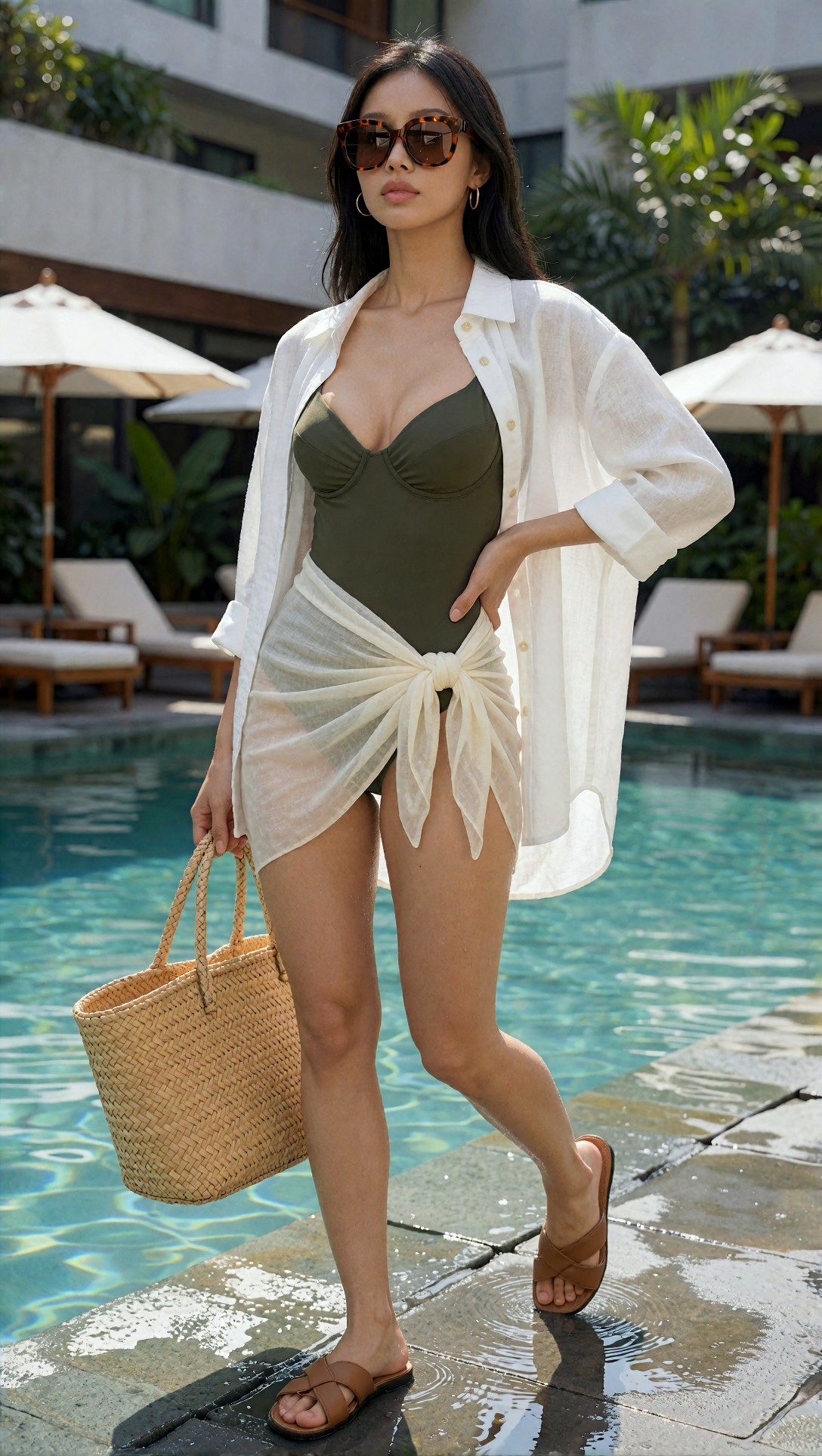
Inspect the hip tie, shirt hem, and sandal rendering first. In this test, those three details were the earliest signs of whether the model understood poolside styling or was faking it with a vacation backdrop.
The next variation tests whether a more glamorous beach-club setup preserves outfit logic or starts collapsing into beauty-ad content.
Topic: Sexy beach club poolside resort wear for women with crochet texture focus
Genre: Luxury Campaign
Camera: Sony A7R V
Lens: 35mm f/2.8
Lighting: Golden hour side light with pool reflections
Location: Beach club cabana overlooking the sea
Style: Luxury fashion campaign
Final Prompt: three-quarter outfit editorial of a woman in a refined sexy vacation resort outfit at an upscale beach club, black bandeau bikini top under a cream open-knit crochet maxi cover-up dress, high slit revealing clean swim silhouette, metallic flat sandals, shell-and-gold layered necklace, slim cuff bracelet, small woven clutch, tousled hair from ocean breeze, seated on a striped cabana lounge with one leg extended, warm golden side light, crisp textile detail, rich skin-to-fabric contrast, sea horizon in background, polished luxury campaign color grading, composition centered on crochet texture and full outfit readability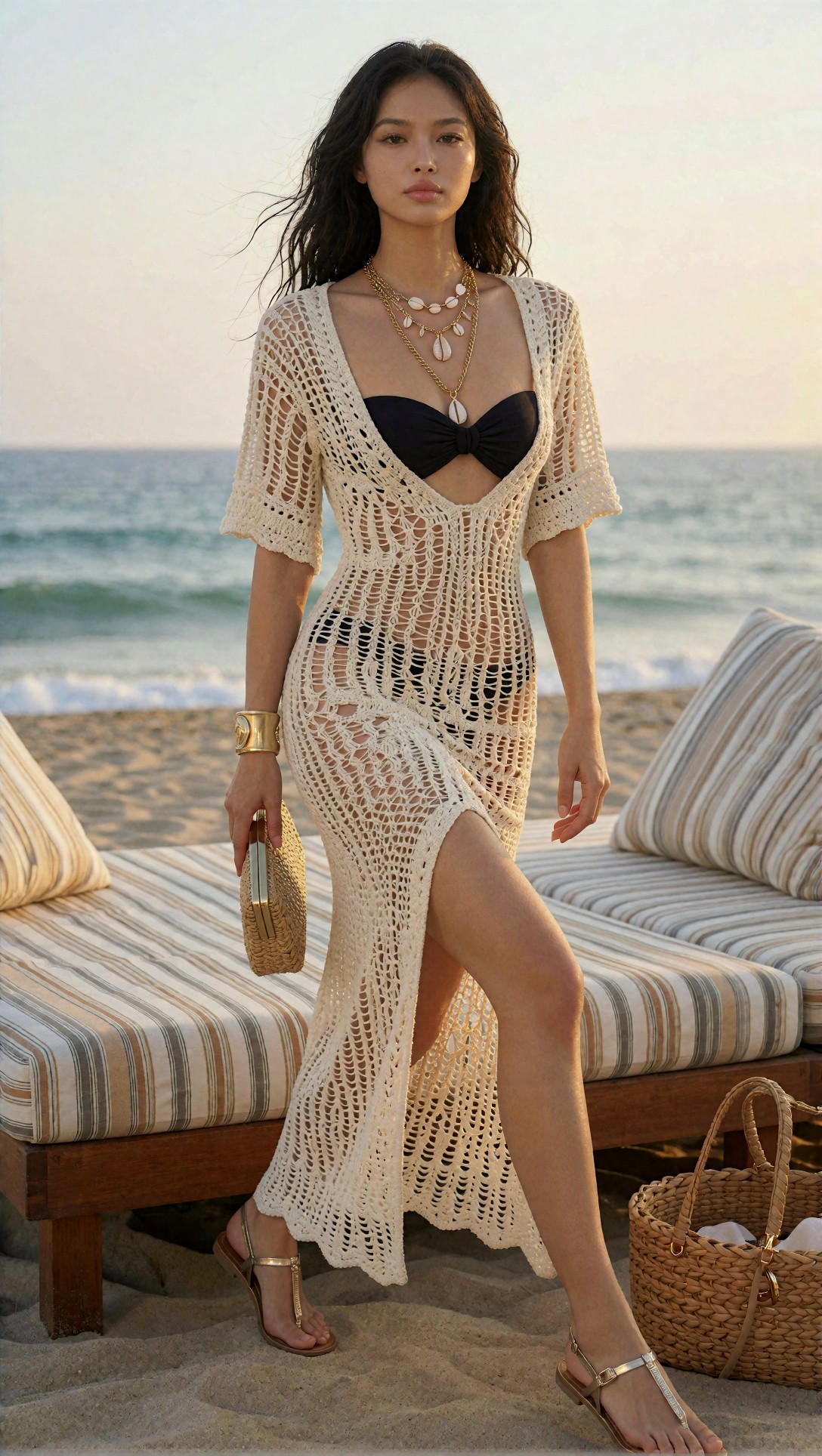
Check whether the slit, crochet pattern, and bikini-underlayer remain coherent. On weaker generations, the cover-up merged into one opaque dress and lost the poolside function.
What poolside got right
- Better atmospheric lighting on first generation
- More convincing sheer fabrics and movement
- Stronger vacation mood with less prompt length
- Better compatibility with Pinterest-style summer boards
What poolside kept getting wrong
- Footwear dropped out easily
- Bags could morph into beach towels or undefined objects
- Swimwear seams were inconsistent on asymmetrical cuts
- Long cover-ups often tangled around the legs unnaturally
City resort looks: better for wearable comparison, but harder to prompt cleanly
City resort imagery was more useful for readers comparing actual outfit categories: lunch look, hotel check-in look, evening terrace look, luxury shopping walk, or coastal old-money summer outfit direction.
But it only worked when the prompt clearly separated it from beachwear.
In this test, the best city resort images included one or more of these anchors:
- polished sandals or heeled mules
- a structured bag
- tailored shorts, poplin skirt, or linen trousers
- a hotel, plaza, or stone-street setting
- mention of daytime movement like walking, checking in, or terrace dining
This prompt was built to test whether a city resort image could feel breezy without becoming poolwear.
Topic: City resort vacation outfit ideas for women with polished daytime tailoring
Genre: Street Style
Camera: Nikon Z8
Lens: 40mm f/2
Lighting: Late afternoon sun with soft architectural bounce
Location: Coastal luxury hotel district with stone sidewalks and palms
Style: Clean commercial look
Final Prompt: street-style full body fashion image of a woman walking through a coastal luxury hotel district in a sexy tasteful city resort outfit, fitted white rib tank tucked into high-waist sand linen pleated shorts, slim tan leather belt, structured raffia top-handle bag, strappy heeled sandals, oversized black sunglasses, gold watch, layered delicate necklaces, confident walking pose with complete head-to-toe visibility, sunlit stone pavement, palms and boutique hotel facades behind her, airy elevated getaway mood, sharp garment fit, visible tailoring and leg line, commercial editorial realism, Nikon Z8 detail and balanced vacation sophistication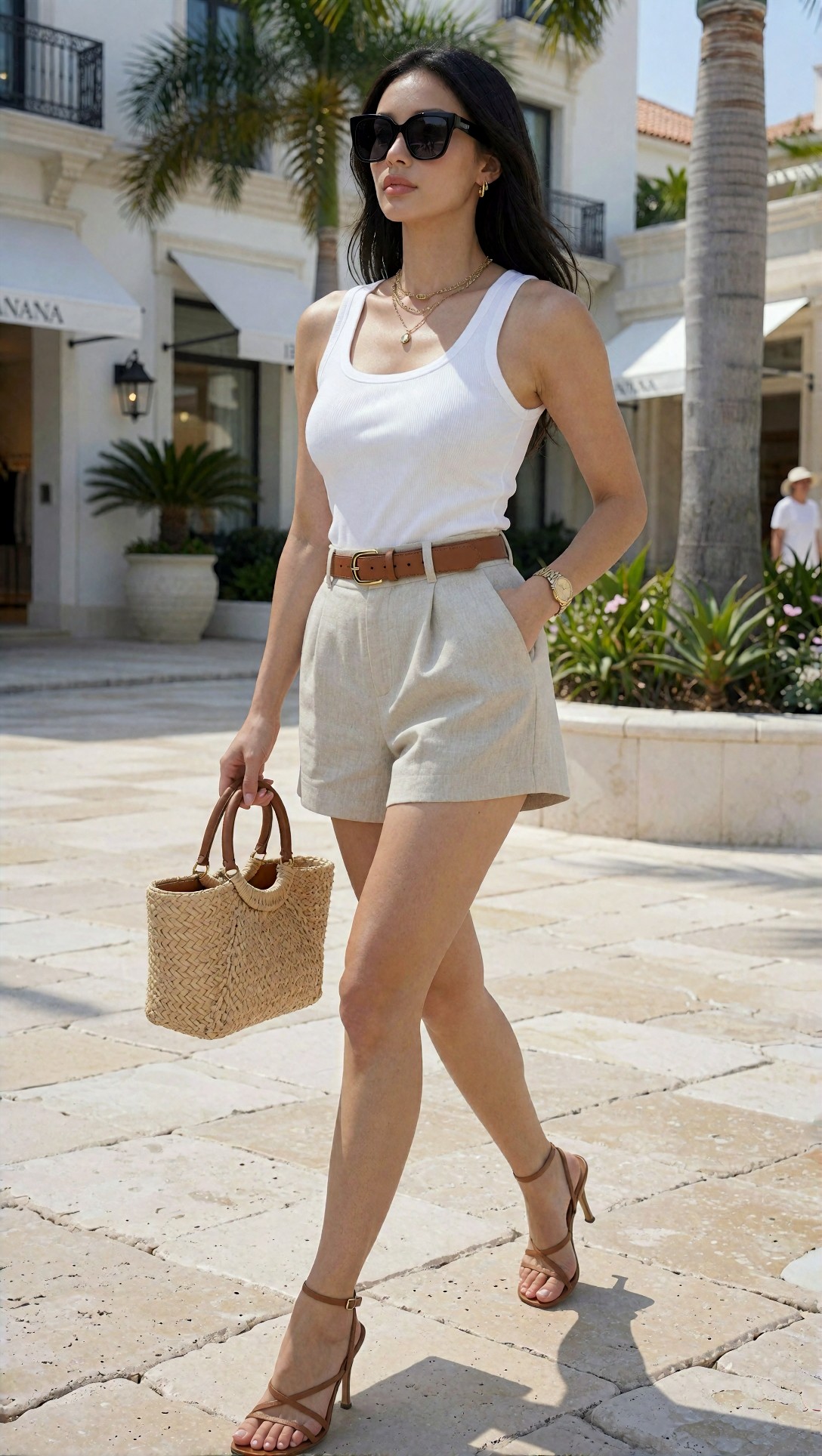
Inspect the waistline, short pleats, and shoe shape. If those are weak, the model usually starts borrowing beachwear signals in later iterations too.
The next prompt pushes toward an "Old money summer outfit" interpretation while keeping it vacation-specific instead of city-office formal.
Topic: Old money summer outfit for a city resort vacation lookbook
Genre: Fashion Editorial
Camera: Fujifilm GFX100 II
Lens: 45mm f/2.8
Lighting: Soft morning sun with shaded arcade diffusion
Location: Elegant resort town arcade with stone columns and boutique storefronts
Style: Quiet luxury editorial
Final Prompt: head-to-toe fashion lookbook image of a woman wearing an old money inspired city resort outfit, cream sleeveless knit top, ivory high-waist wide-leg linen trousers, brown leather sandals, silk scarf tied to a structured tan handbag, slim gold earrings, dark oversized sunglasses, body-conscious but refined silhouette, relaxed upright posture under a shaded arcade, visible drape and crease in premium linen, muted beige and cream palette, luxury travel editorial mood, complete outfit logic with shoes and bag fully visible, sophisticated summer resort styling rather than office wear, Fujifilm medium-format clarity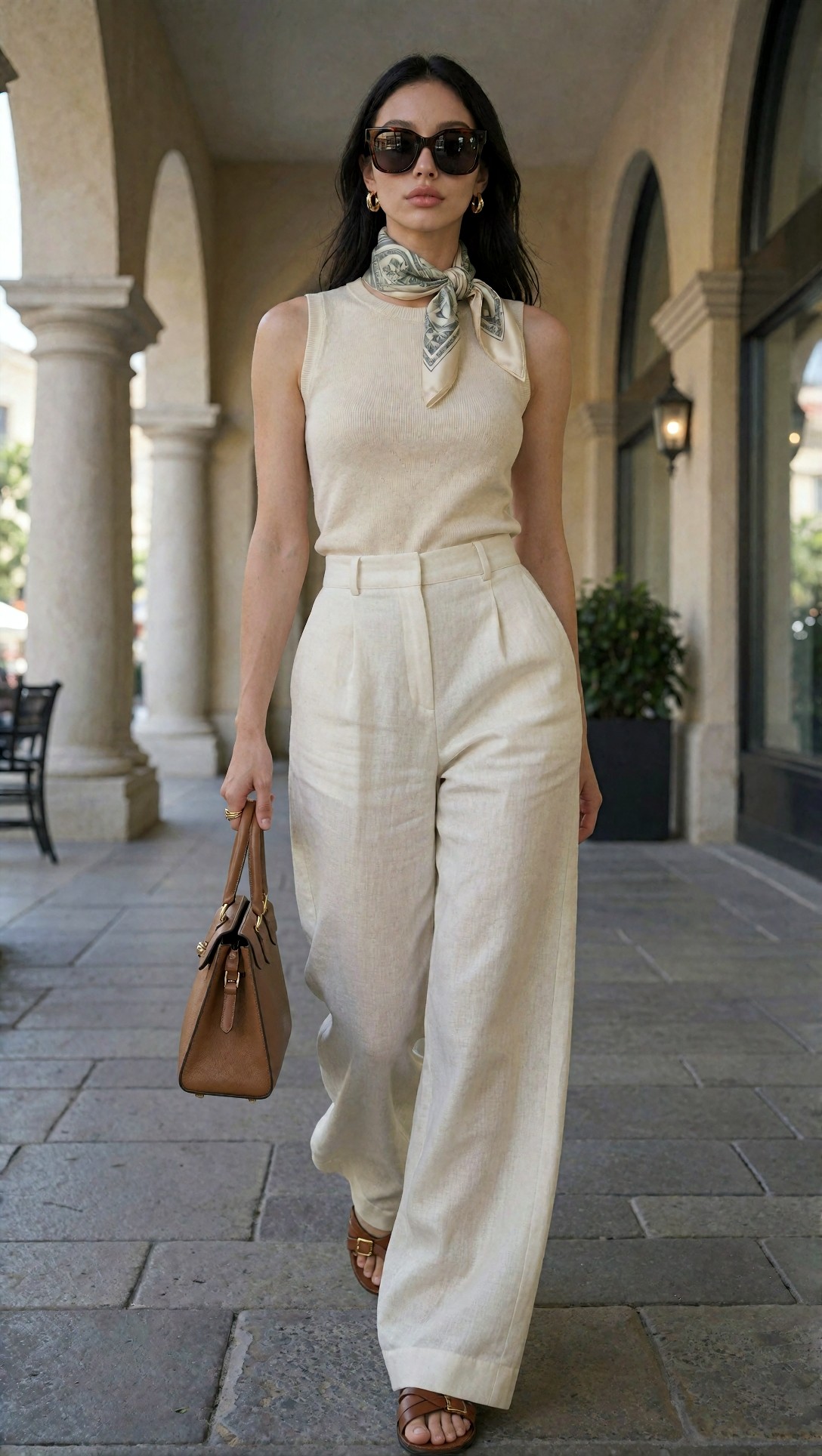
What to inspect here is whether the trousers still read as resort wear. In weaker outputs, they can turn heavy, corporate, or seasonally wrong. The scarf-on-bag detail is a useful check for accessory precision.
Where the comparison became useful
Once both lanes were stabilized, the difference became actionable.
Best use case for poolside resort wear
Choose poolside prompts when you want:
- swim-led outfit inspiration
- cabana, beach club, or pool deck content
- breathable sheer layers and sensual silhouettes
- Pinterest summer outfit aesthetic boards
Best use case for city resort wear
Choose city resort prompts when you want:
- wearable day looks beyond the pool
- lunch, shopping, hotel, or terrace styling
- stronger outfit comparison between tops, shorts, skirts, and trousers
- more editorial value for lookbook pages and collages
Prompt examples for transition looks between pool and city
The hardest category was the transition look: outfits that move from a resort daytime setting into a town or terrace environment. These can look especially good in AI, but they are also where category bleed is most common.
This prompt tests whether the model can keep a coordinated cover-up-and-sandal look that feels publishable beyond the pool.
Topic: Vacation outfit ideas for women transitioning from poolside to resort terrace lunch
Genre: Lifestyle Fashion
Camera: Leica SL2-S
Lens: 35mm f/2
Lighting: Midday sun softened by linen awnings
Location: Open-air resort terrace restaurant near the pool
Style: Elevated getaway editorial
Final Prompt: three-quarter outfit editorial showing a woman arriving for terrace lunch in a coordinated resort transition outfit, chocolate brown balconette swimsuit styled as a bodysuit under a high-waist white wrap skirt, cropped linen shirt loosely tied at the waist, flat leather sandals, woven shoulder bag, gold drop earrings, sleek sunglasses, confident poised stance beside linen-draped tables, sun filtered through awnings, refined sexy resort mood, clear separation between swim base layer and lunch-ready styling, crisp skirt wrap construction, rich fabric contrast, editorial travel realism with complete outfit logic visible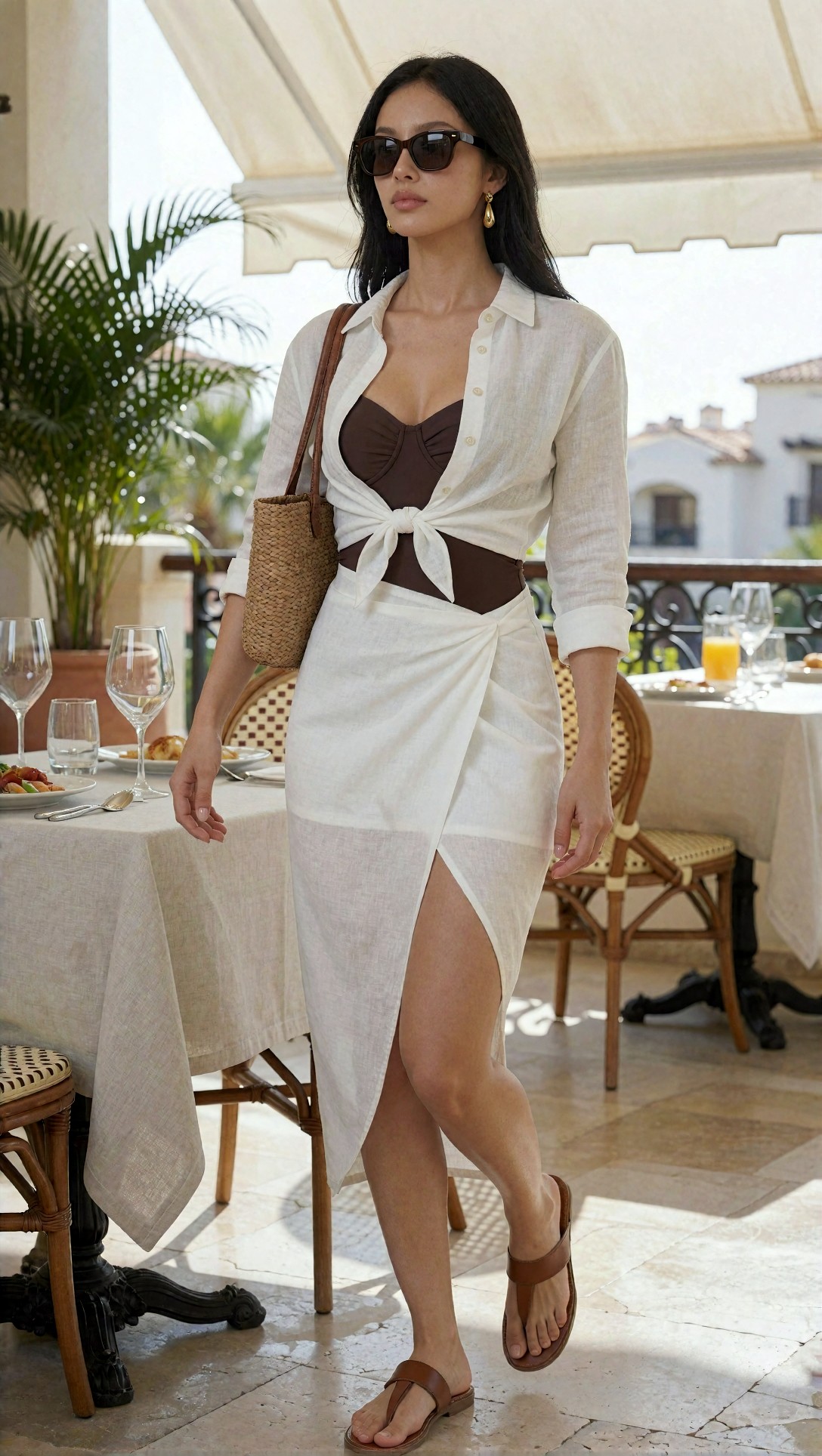
Inspect whether the swimsuit reads as intentional styling rather than underdressing. The wrap skirt and tied shirt should make the transition credible.
This next test checks a more urban coastal version with stronger evening polish.
Topic: City resort evening vacation outfit ideas for women with silky textures
Genre: Fashion Campaign
Camera: Panasonic Lumix S1R
Lens: 50mm f/1.8
Lighting: Sunset backlight with warm hotel facade reflections
Location: Rooftop bar of a coastal luxury hotel
Style: Modern luxury campaign
Final Prompt: full-body fashion campaign image of a woman at a coastal hotel rooftop bar wearing a sexy refined city resort evening outfit, champagne silk camisole, high-waist white tailored midi skirt with front slit, strappy gold heeled sandals, mini structured clutch, sculptural earrings, lightweight cream blazer draped over shoulders, sunset backlight catching silk sheen, relaxed yet confident pose near a stone balustrade, ocean and hotel lights softly behind, elevated vacation mood, visible outfit proportions, premium textile detail, high-end fashion campaign styling focused on silhouette and accessories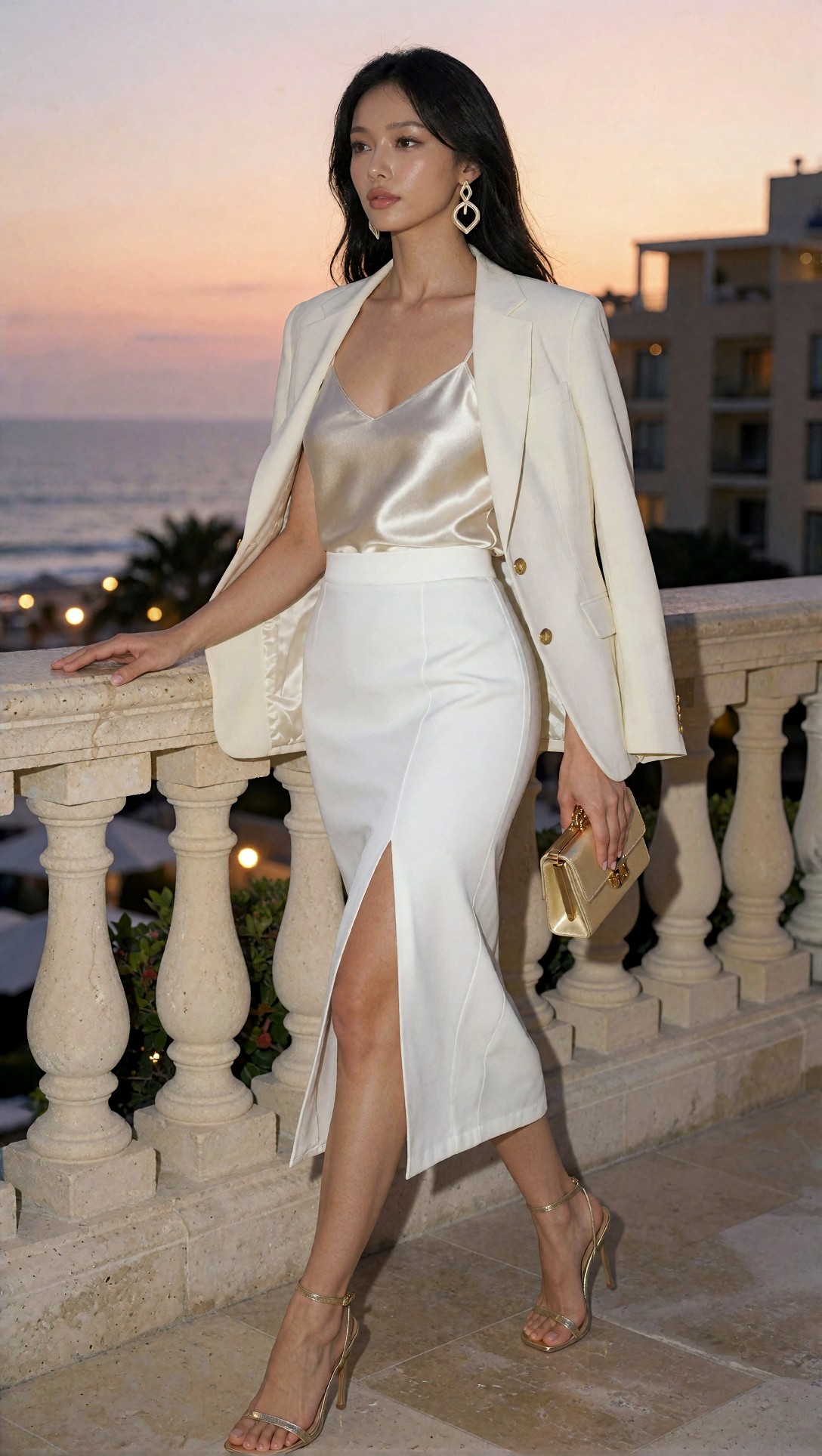
Check whether the blazer remains a draped styling piece rather than becoming worn incorrectly or fused into the top. Front slits and heeled sandals are also common distortion points.
Catalog and merchandising tests: useful for planning, less romantic visually
Editorial shots were strongest for mood, but catalog-style images were better for comparing multiple summer outfit ideas quickly.
This prompt was meant to test whether the model could render a clean comparison grid without turning every look into a duplicate.
Topic: Vacation outfit ideas for women presented as a resort wear catalog grid
Genre: Product Editorial
Camera: Phase One XF IQ4
Lens: 55mm f/2.8
Lighting: Studio softbox key with natural shadow falloff
Location: Minimal studio set with warm sand backdrop
Style: Clean commercial look
Final Prompt: catalog grid page featuring four complete women’s vacation resort outfits, each full-body and clearly separated: 1 poolside olive swimsuit with ivory sarong and linen shirt, 2 white rib tank with sand pleated shorts and raffia bag, 3 cream knit top with wide-leg linen trousers and scarfed handbag, 4 champagne camisole with white slit midi skirt and blazer, neutral luxury palette, every look shows shoes, bag, jewelry and silhouette clearly, clean merchandising layout, editorial retail presentation, sharp textile detail, minimal set design, comparison-friendly composition focused on styling differences rather than faces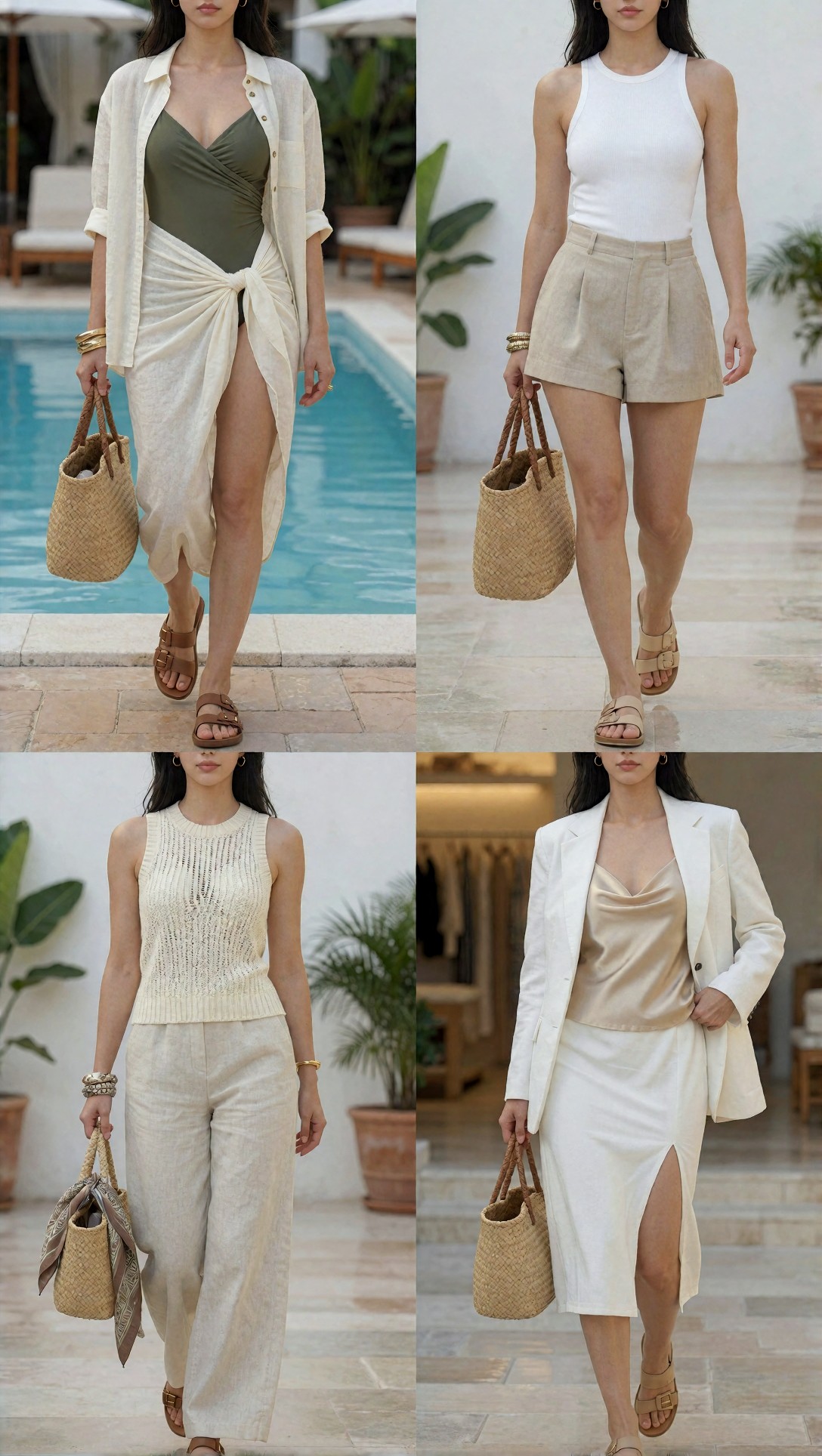
Inspect whether each outfit stays distinct. In this test, grid prompts sometimes caused one accessory or shoe style to repeat across all looks, reducing comparison value.
A flat lay can also reveal whether the outfit system works without a model carrying the image.
Topic: Resort wear vacation outfit flat lay with accessories for women
Genre: Product Editorial
Camera: Canon EOS 5D Mark IV
Lens: 24-70mm at 50mm f/4
Lighting: Soft overhead studio light
Location: Sand-toned tabletop with woven texture accents
Style: Luxury retail editorial
Final Prompt: product flat lay of a women’s vacation resort outfit arranged for editorial retail planning, white linen shirt, cream crochet cover-up, olive one-piece swimsuit, tan leather sandals, raffia tote, gold jewelry, oversized sunglasses, silk scarf, travel-size sunscreen and resort key card, carefully spaced composition with visible textures and tonal harmony, luxury summer merchandising feel, sharp garment edges, premium natural materials, clear outfit-building logic for a sunlit elevated getaway aesthetic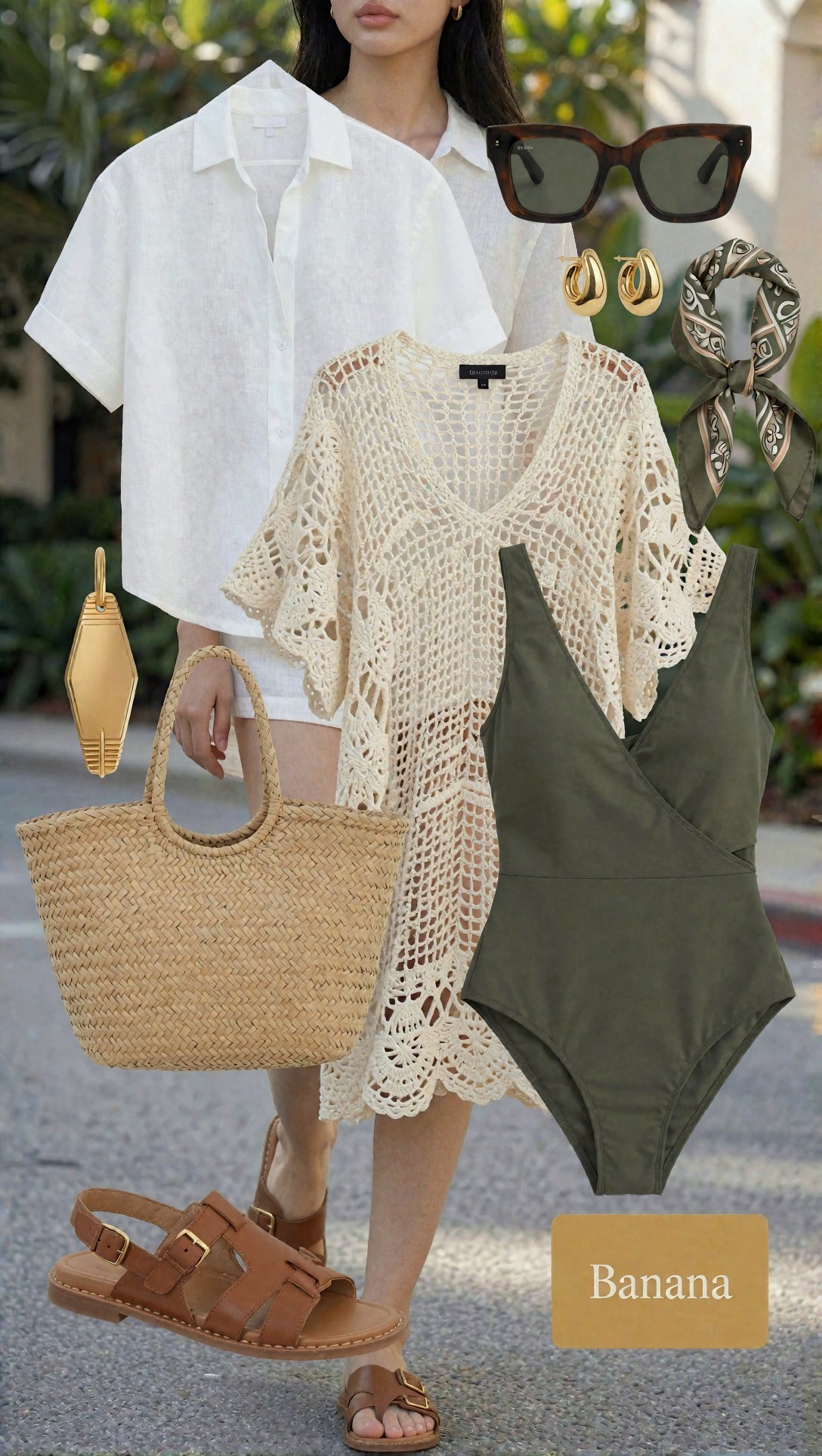
Inspect edge definition and material separation. Flat lays often expose whether linen, crochet, and raffia are genuinely distinct or just texture noise.
What to inspect before publishing the result
Before publishing an AI fashion lookbook image, I would not stop at overall vibe. In this test, several images looked good in small previews but failed once inspected at post size.
Quality checklist for vacation lookbooks
- Is the full silhouette visible? If not, the comparison loses value.
- Do shoes match the outfit category? Pool slides and city heels should not swap accidentally.
- Is the bag readable as a bag? Woven accessories are easy failure points.
- Do fabrics behave correctly? Linen should crease softly; crochet should stay open; silk should catch light differently than cotton.
- Does the location support the outfit purpose? Pool deck, terrace, arcade, rooftop, and hotel street should feel intentional.
- Are sexy elements fashion-led? Slits, low necklines, or fitted shapes should support styling, not erase garment realism.
- Do hands interfere with garment lines? A hand crossing a wrap tie or bag handle can create visual confusion.
If an image passes those checks but still feels uncertain, I would run it through [Upscaler](/upscaler) only after fixing prompt-level issues. Upscaling cannot fix category drift.
Limitations and failure risks
This workflow worked, but it has clear limits.
Where models still struggle
- Matching exact swimsuit construction under cover-ups
- Rendering delicate jewelry without deformation
- Keeping raffia bags structurally consistent
- Preserving natural leg anatomy in slit skirts and sarongs
- Maintaining repeatable face identity across a full lookbook series
Another risk is aesthetic flattening. If every prompt repeats "luxury," "breezy," and "sunlit" without changing garment logic, the images start looking interchangeable. That defeats the comparison intent behind vacation outfit ideas for women.
Transferable lesson for similar fashion topics
The main lesson from this test applies well beyond resort wear.
When a fashion topic contains two closely related aesthetics, do not prompt them as mood variations. Prompt them as systems of clothing behavior.
That means defining:
- what the outfit is for
- how the fabrics move
- what shoes are doing
- what the bag communicates
- which setting proves the outfit category
This approach transfers well to comparisons like beach dinner vs city dinner, coastal daywear vs yacht wear, or casual summer outfit ideas vs old-money summer outfit styling.
If you need more visual references before writing prompts, it helps to scan existing composition patterns in [Articles](/articles) and compare how different fashion scenes carry accessories, framing, and merchandising logic.
FAQ
What is the difference between poolside and city resort outfits in AI lookbooks?
Poolside outfits are swim-led and depend on cover-ups, sandals, and light fabric movement. City resort outfits are daywear-led and need clearer tailoring, shoes, and bag structure to avoid drifting into beachwear.
Which prompt style works best for vacation outfit ideas for women?
Full-body or head-to-toe fashion prompts work best. They make the styling system visible and reduce the chance of the model focusing only on face, hair, or background.
How do I get an old money summer outfit look without making it look too formal?
Use resort-specific context and breathable garments: sleeveless knits, linen trousers, leather sandals, raffia or structured summer bags, soft neutral palettes, and hotel or coastal town settings.
Are poolside prompts easier than city resort prompts?
Usually yes. Poolside prompts generate mood faster, but city resort prompts are more useful when you want practical comparison between complete outfits.
Should I use collages or single images for resort wear testing?
Use single images first to stabilize outfit logic, then use catalog grids or mood-board layouts once the garments, shoes, and accessories are consistent.
Editorial conclusion
For comparison-driven content, this workflow is best for creators, prompt builders, and merchandisers who need vacation outfit ideas for women sorted into distinct resort categories rather than one vague summer aesthetic.
Use it if you want clear side-by-side poolside vs city resort outputs, stronger Pinterest-style fashion boards, or cleaner AI lookbooks with visible styling logic.
Avoid it if your goal is exact product replication or face-consistent campaign casting across many frames. The models still wobble on fine accessory continuity and repeated garment construction.
If I had to keep one setting detail above all others, it would be this: state the shot type and complete outfit architecture before the mood language. That single change did more than any camera, lens, or lighting tweak to separate poolside resort wear from city resort looks.