Can ZImage Turbo make a woman's portrait that passes as a photograph? Partly. In the eight portraits I reviewed for this article, all generated on 2026-06-12 with the ZImage model, the face, eyes, expression and denim or knit clothing often read as photographic. The same images also show repeatable problems: skin that turns into a patterned or patchy surface, scribble-like marks on clothing, and strange pink or gold hair edges. The original version of this article claimed ZImage Turbo beats "other AI models". There is no generation record for any other model here, so that claim cannot be supported and this version does not make it. It describes what these specific images show and where they break.
What the prompts asked for, and what came back
Every prompt in this set has the same shape: an adult woman, a named light source, a setting, a lens length, and a few "realism" phrases such as natural skin texture or no plastic skin. All eight images are 1440x2560 portrait-orientation JPEGs. Each was generated from a single prompt, and I have no record of rerolls or of how many attempts were discarded, so treat them as samples rather than a success rate.
Close crops: where skin texture goes wrong first
The first image came from this prompt:
Realistic editorial portrait of an adult woman in her early 30s, natural skin texture with visible pores and slight under-eye shadows, subtle asymmetry in the face, relaxed closed-mouth expression, soft window light from the left, neutral beige background, 85mm portrait lens, shallow depth of field, true-to-life color grading, no retouching, no plastic skin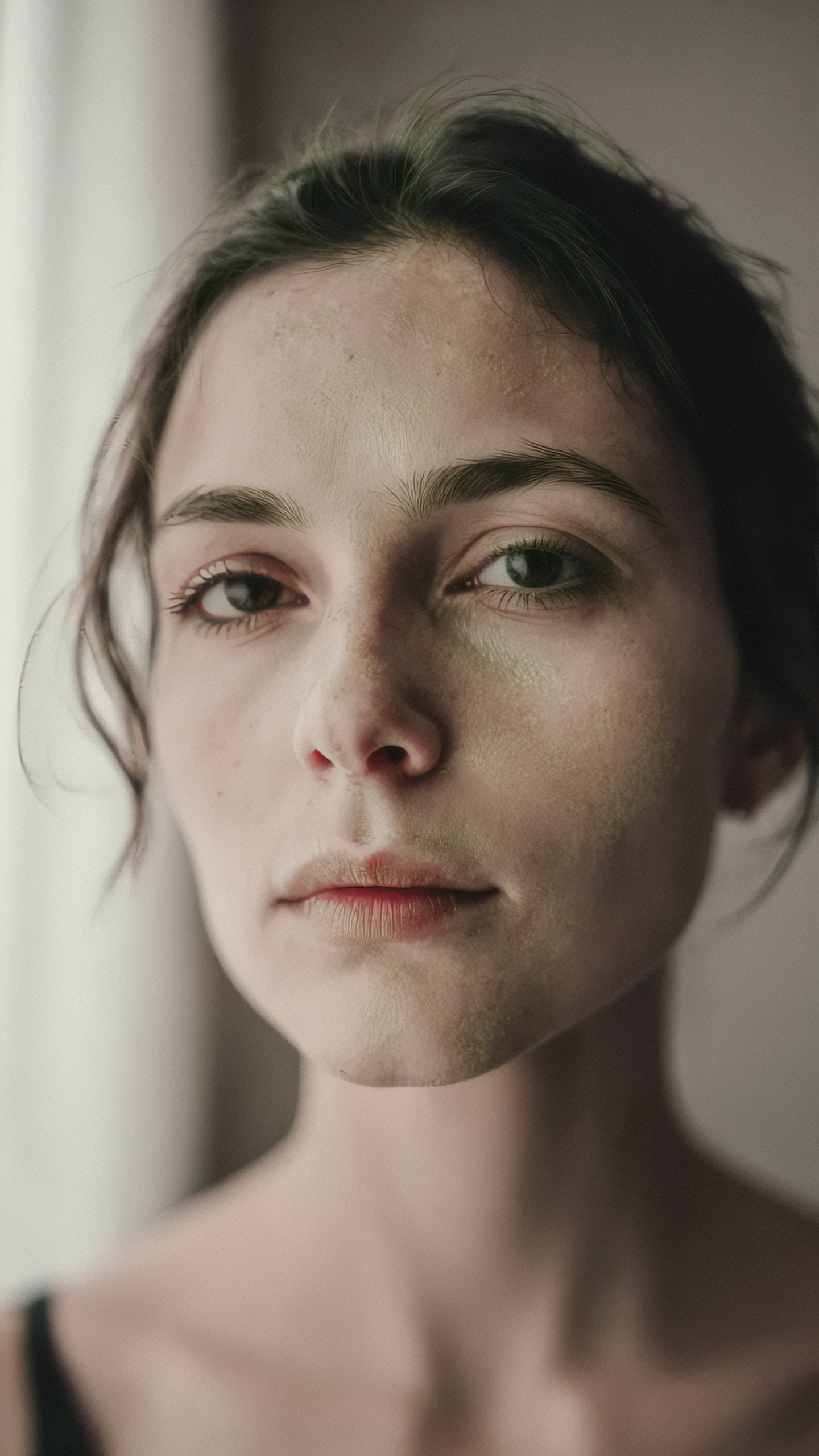
The closed-mouth expression, the loose hair strands and the soft blur behind her follow the prompt. The skin does not. Instead of pores, the right side of the face, the forehead and the chin carry olive-yellow patches with a fine scale-like pattern, and the jawline ends in an unusually hard edge. Asking for "visible pores" did not give pores here. It gave a texture pass that is uneven across the face. If you use this kind of prompt for a headshot, check the cheeks and chin at full size before anything else.
The second image pushes the same idea into a macro beauty close-up:
Close-up beauty portrait of an adult woman with medium-brown skin, realistic skin texture, natural highlights on cheekbones and forehead, minimal makeup, slightly glossy lips, soft diffused studio light, dark gray backdrop, detailed eyelashes, real pores, gentle expression, high-resolution photography, 100mm macro portrait lens, realistic color tones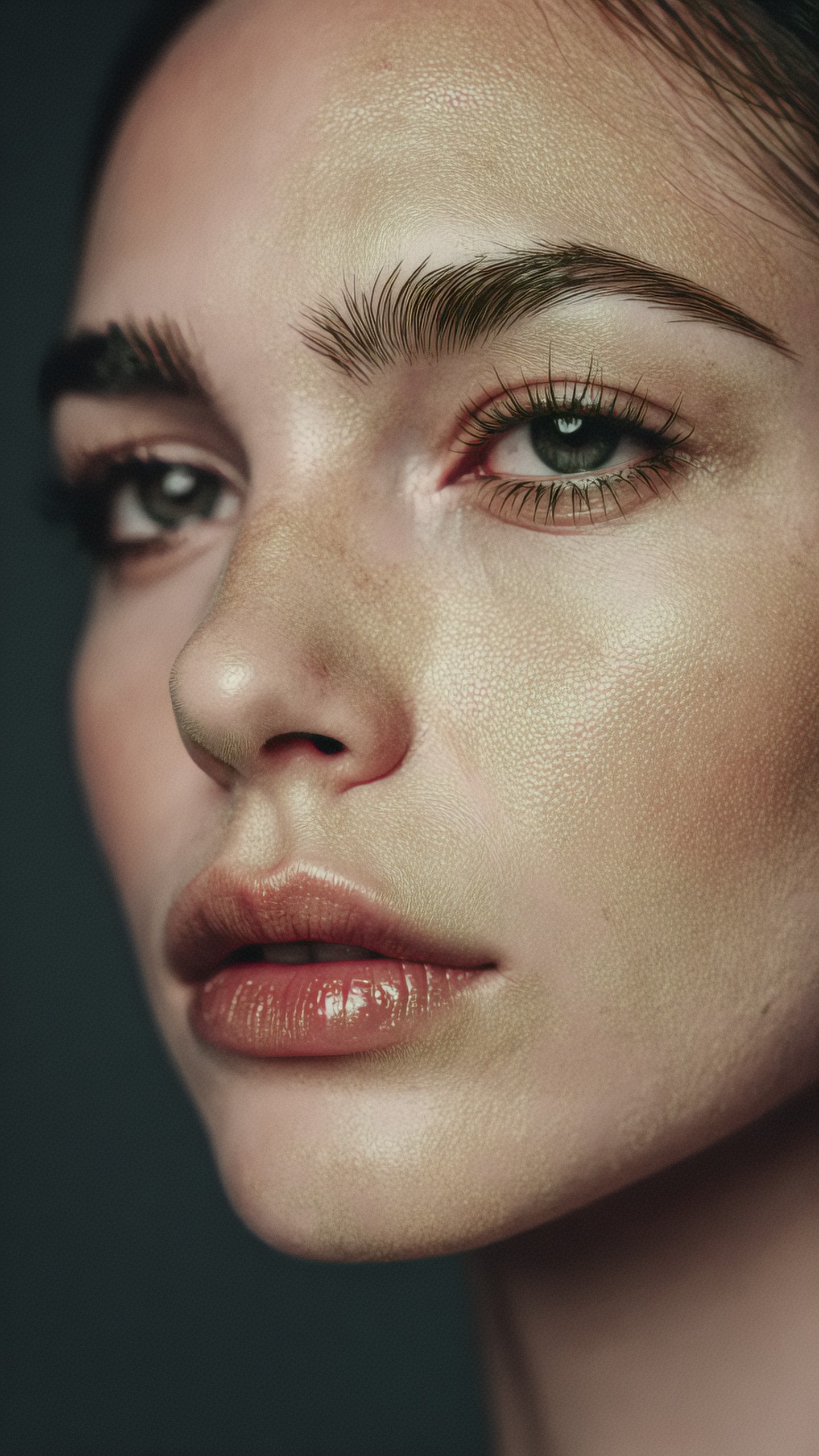
The eyes carry catchlights, the eyelashes are individually drawn, and the lips have believable wet highlights. The skin, however, is covered by an even, pebble-like grain that repeats across the forehead, cheek and nose. Real pores vary in size and direction. This reads more like a surface effect than like skin. Also note that the skin in this image is pale and warm-toned in the output, although the prompt asked for "medium-brown skin". I checked that visually: the prompt's skin tone was not followed.
Hair: the strongest result in the set, with a side effect
Realistic portrait of an adult woman with shoulder-length curly black hair, individual curls and natural frizz visible, a few flyaway strands catching backlight, olive-green jacket, urban street background at golden hour, soft rim light, confident but natural expression, 70mm lens, realistic photography, no overly smooth hair, no CGI look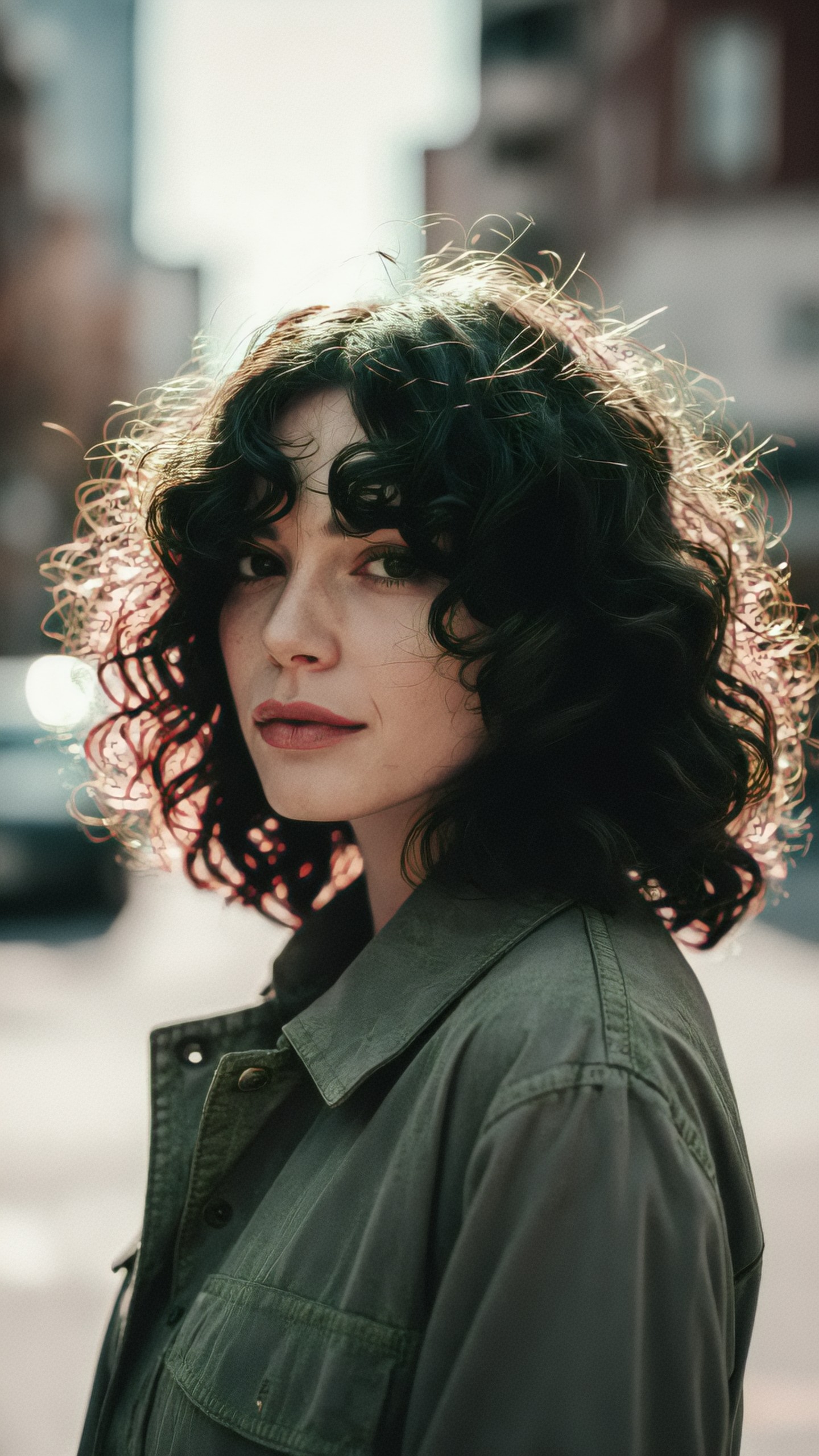
This is the most convincing image of the eight as a whole. The curls are separated, the backlight produces a bright rim, the jacket collar, stitching, buttons and pocket are coherent, and the background blur is plausible. The weak point is the outer halo of flyaway strands: look closely and many of them form scribble-like loops in pink and gold rather than individual hairs that follow a path. At phone size it looks like fine frizz. At full size it looks drawn. The prompt asked for exactly this effect, so it shows how a detail you request can be the detail that fails first.
Hands, knits and reflections
Candid lifestyle portrait of an adult woman sitting near a cafe window on a rainy afternoon, soft natural light, slight reflections in the glass, realistic skin texture, loose hair strands, casual sweater, warm coffee cup in hand, documentary photography style, muted colors, 50mm lens, natural expression, believable background blur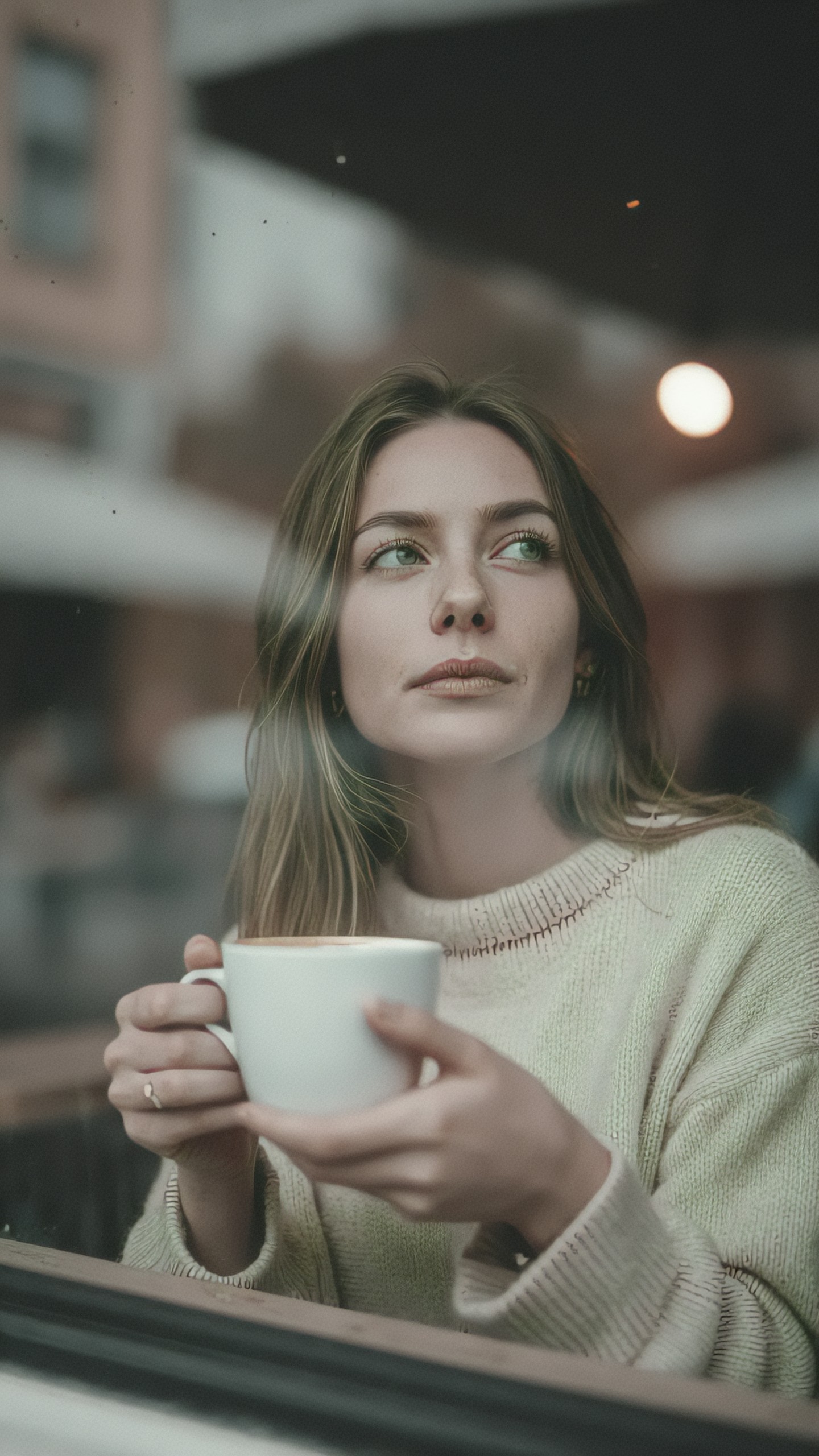
Both hands are visible and each has five readable fingers, including a ring on one hand, and they hold the cup in a believable way. The window reflection adds a hazy layer over her hair and the background has a round warm light, which matches the prompt. Two things still look off: her two eyes differ slightly in tone and brightness, and the ribbing at the sweater collar breaks into small glyph-like marks. Hands were a known risk in general, and in this single sample they held up. One sample cannot tell you how often that happens.
Older face, wardrobe and text-like noise
Natural portrait of an adult woman in her late 40s with a strong nose, soft jawline, faint smile lines, short silver-streaked hair, wearing a navy linen shirt, standing in a home office with bookshelves behind her, daylight from a side window, realistic documentary portrait, 85mm lens, honest expression, detailed but not over-sharpened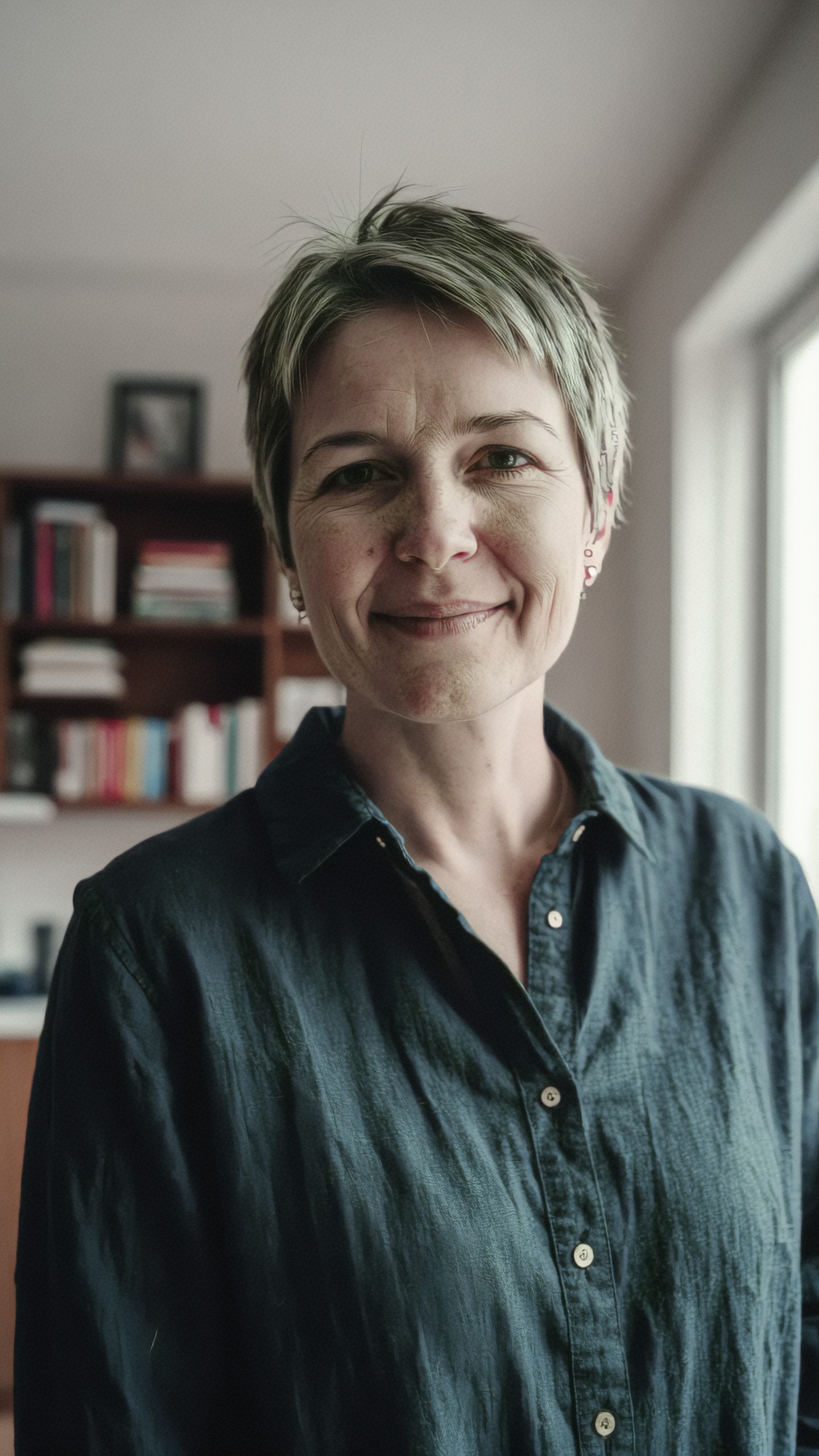
Here the brief translated best. The face has forehead and eye lines, freckles and an asymmetrical smile; the linen shirt has real-looking creases and working buttons; the bookshelf is blurred but recognizable. One flaw is at the right temple, where the hair and ear area picks up small pink marks. This image supports a narrower claim than the original article made: when the prompt describes a specific age and face, this model produced a face that does not look like a default beauty template. I did not compare it with any other model.
The fashion prompt tells a different story:
Realistic fashion portrait of an adult woman wearing an oversized cream wool coat and black turtleneck, standing on a quiet city sidewalk in winter, subtle breath in cold air, natural makeup, wind moving a few hair strands, soft overcast light, muted urban background, full-frame camera look, 85mm lens, editorial street style photography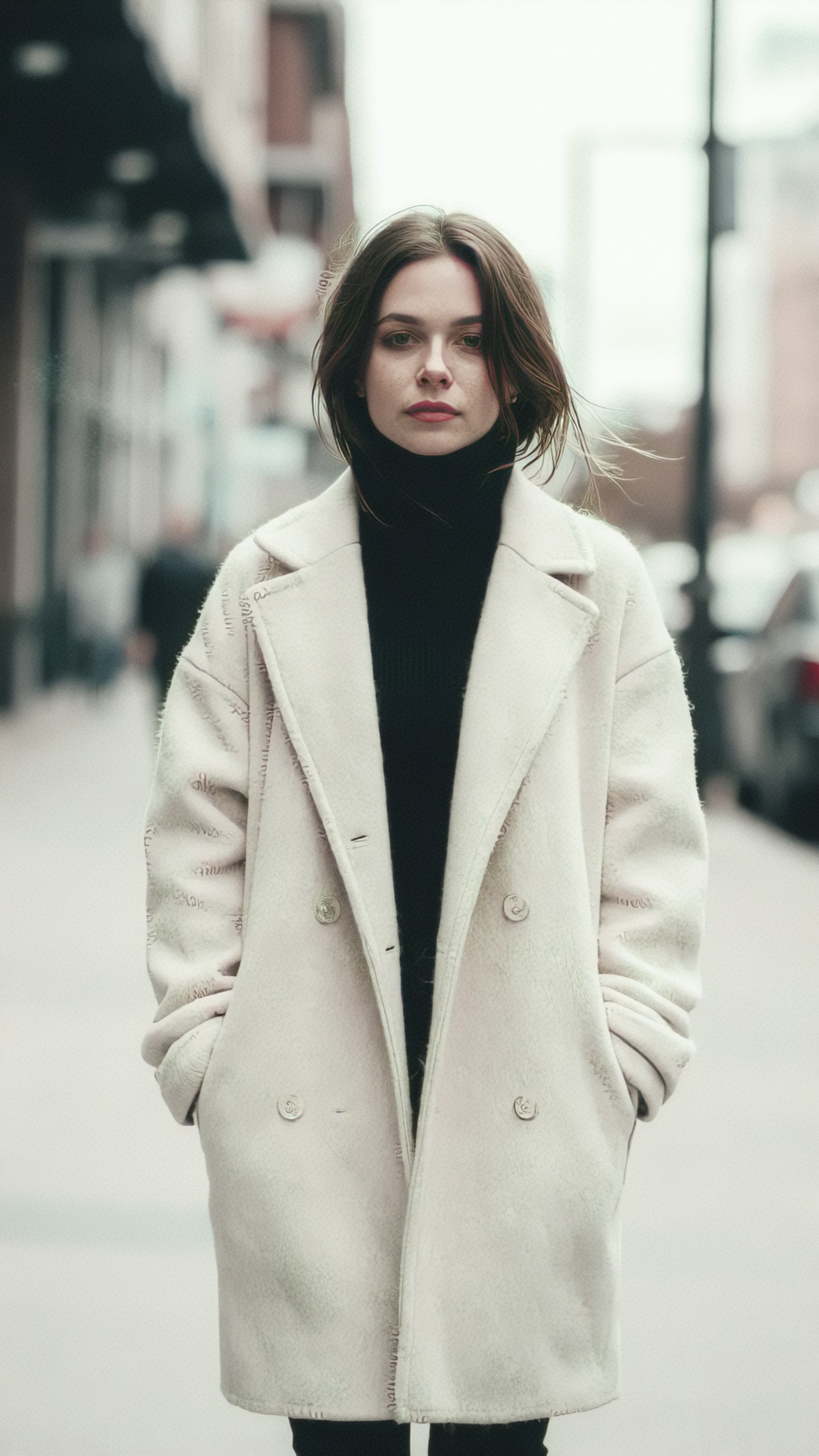
The silhouette is coherent: lapels, double-breasted buttons, pockets with hands, and the dark turtleneck against the pale coat. But the coat's surface is marked with faint script-like squiggles across the sleeves and front, and the buttons carry similar marks. The requested "breath in cold air" is not visible. Another white-shirt portrait from the same batch (not shown) had the same garbled marks on the fabric, and it showed a fuzzy green-tinted texture instead of the "realistic fabric folds" its prompt asked for. Plain pale fabrics appear to be where this model most often produces text-like noise in this set, though that is an observation from two images, not a measured rate.
What to do with these results
- Inspect at 100 percent. Skin patterns, hair halos and fabric marks only show up at full size.
- Do not rely on "visible pores" or "no plastic skin" to fix skin. In the first two images, such phrases did not produce natural pores.
- Expect pale, plain fabric to pick up scribbles. Patterned or heavily textured clothing such as denim and knit looked better in this set.
- If a face is good but the surface noise is not, a separate cleanup step may help; the [upscaler](/upscaler/en) is one place to try it, but check whether it sharpens the artifacts.
- Draft and revise briefs in the [prompt lab](/promptlab/en), or generate new variants in [Create](/create/en).
To compare models fairly you would need the same prompt, seed policy, resolution and number of attempts on each model. That has not been done here.
FAQ
Is ZImage Turbo better than other models at female portraits? This article cannot say. No images from another model were available for comparison.
Which prompt phrases helped most? Specific descriptions of age, hair and setting produced the most distinctive results in this set. Generic realism phrases did not reliably fix skin texture.
Can I use these outputs commercially without editing? Check each image at full size for the artifacts listed above first; several would be noticed in print or on a large screen.
> 이 글의 근거 / Basis for this article > Model: ZImage (per generation records). Images generated on 2026-06-12. I opened and inspected all eight images from the original article (1440x2560 each); six are shown here. No other model was tested or compared.