ZImage Turbo Workflow for Consistent K-Pop Idol Outfit Lookbooks 한국어 요약
이 페이지는 ZView Space의 영어 원문을 한국어 검색 사용자도 이해할 수 있도록 정리한 SEO 요약입니다. 핵심은 단순한 얼굴 중심 이미지가 아니라 패션 에디토리얼, 룩북, 아웃핏, 프롬프트 테스트, 이미지 생성 워크플로우를 실제로 어떻게 구성할지입니다.
핵심 요약
- 원문 주제: ZImage Turbo Workflow for Consistent K-Pop Idol Outfit Lookbooks
- 목적: AI 이미지 생성에서 outfit, silhouette, fabric, pose, location, camera framing을 더 명확하게 설계합니다.
- 활용 범위: Z-Image Turbo, Krea2 Turbo, Qwen Image, Anima, SeedVR2 같은 이미지 생성 및 업스케일 워크플로우에 적용할 수 있습니다.
- SEO 관점: 제목, 설명, 이미지 alt, 프롬프트 예시가 실제 검색 의도와 맞아야 색인 가능성이 높아집니다.
한국어 사용자를 위한 체크포인트
1. 프롬프트가 얼굴 묘사에만 머물지 않고 전체 스타일과 의상 구성을 설명하는지 확인합니다. 2. 패션 이미지라면 상의, 하의, 아우터, 신발, 액세서리, 소재감, 촬영 장소를 분리해서 씁니다. 3. 생성 결과는 바로 게시하지 말고 디테일, 손, 의상 형태, 배경 일관성, 이미지 품질을 비교합니다. 4. 글 본문에는 실제 테스트 기준과 실패를 줄이는 방법이 들어가야 검색엔진에서 얇은 콘텐츠로 보일 가능성이 줄어듭니다.
원문 미리보기
Creating a K pop idol lookbook with AI is less about one perfect prompt and more about building a repeatable visual system. ZImage Turbo works best when you lock the identity, styling logic, and shot progression first, then vary only the parts that should chan
---
Creating a K-pop idol lookbook with AI is less about one perfect prompt and more about building a repeatable visual system. ZImage Turbo works best when you lock the identity, styling logic, and shot progression first, then vary only the parts that should change: outfit, location, mood, and framing.
This workflow is designed for consistent idol-style fashion sets: teaser photos, wardrobe lineups, comeback concept decks, brand collab mockups, and social-first editorial carousels. The goal is a lookbook that feels like one creative direction instead of eight unrelated images.
Why consistency breaks in outfit lookbooks
Most lookbooks fall apart for three simple reasons:
- the face and age styling drift from image to image
- wardrobe details change even when the concept stays the same
- lighting and camera language shift too aggressively
For K-pop-inspired visuals, those problems are obvious immediately. Fans and art directors notice when a satin bomber becomes leather, when black hair turns ash brown, or when a clean beauty portrait suddenly looks like a gritty street snapshot.
A better ZImage Turbo workflow is to define fixed anchors and variable accents.
Fixed anchors
Keep these stable across the whole series:
- idol identity description
- hair color and hair length
- makeup style
- body proportions and age range
- overall fashion era or group concept
- image quality direction
Variable accents
Change these intentionally across frames:
- outfit silhouette
- fabric and accessories
- background set
- time of day
- pose and crop
- color story
Step 1: Build a master idol identity
Before writing outfit prompts, write one internal identity sheet for the subject. You do not need to publish it in the prompt every time exactly the same way, but the visual DNA should remain stable.
A useful identity base for this type of lookbook might include:
- Korean female idol, early 20s
- sharp but soft V-line face
- clear skin with natural texture
- straight dark espresso hair with subtle shine
- refined stage-ready makeup, soft eyeliner, gradient lip
- elegant posture, confident but not aggressive expression
This becomes the thread that keeps every outfit image connected.
Step 2: Decide the lookbook arc
A strong K-pop outfit set usually follows a progression rather than random styling. For example:
1. clean studio opener 2. school-luxury casual look 3. street style look 4. performance-inspired metallic outfit 5. romantic pastel concept 6. beauty close-up 7. night city fashion frame 8. final cover-style hero image
That arc gives ZImage Turbo a clear editorial rhythm.
Step 3: Use prompt templates that preserve visual DNA
The best way to keep consistency is to repeat the subject logic while changing only the necessary fashion and scene details. Below are production-ready prompts designed for a single cohesive idol lookbook.
Look 1: Clean studio opener
Start with a simple editorial portrait that establishes the idol’s face, proportions, and styling baseline. This becomes the reference tone for the rest of the set.
Topic: K-pop Idol Minimal Studio Lookbook Opener
Genre: Fashion Editorial
Camera: Canon EOS R5
Lens: 85mm f/1.8
Lighting: Studio butterfly light
Location: Seamless pale gray photography studio with a polished magazine test-shoot mood
Style: Korean magazine cover
Final Prompt: Korean K-pop idol in her early 20s wearing a tailored ivory cropped jacket, pleated mini skirt, sheer knee socks, and silver understated jewelry, standing in a poised three-quarter pose with calm confident expression, straight dark espresso hair with subtle shine, clean stage-ready makeup with soft eyeliner and gradient pink lip, photographed in a seamless pale gray studio with studio butterfly light and soft fill, Korean magazine cover art direction, Canon EOS R5 realism, 85mm f/1.8 shallow depth of field, balanced composition, premium fabric texture, natural skin detail, crisp styling lines, soft neutral color palette, polished editorial finish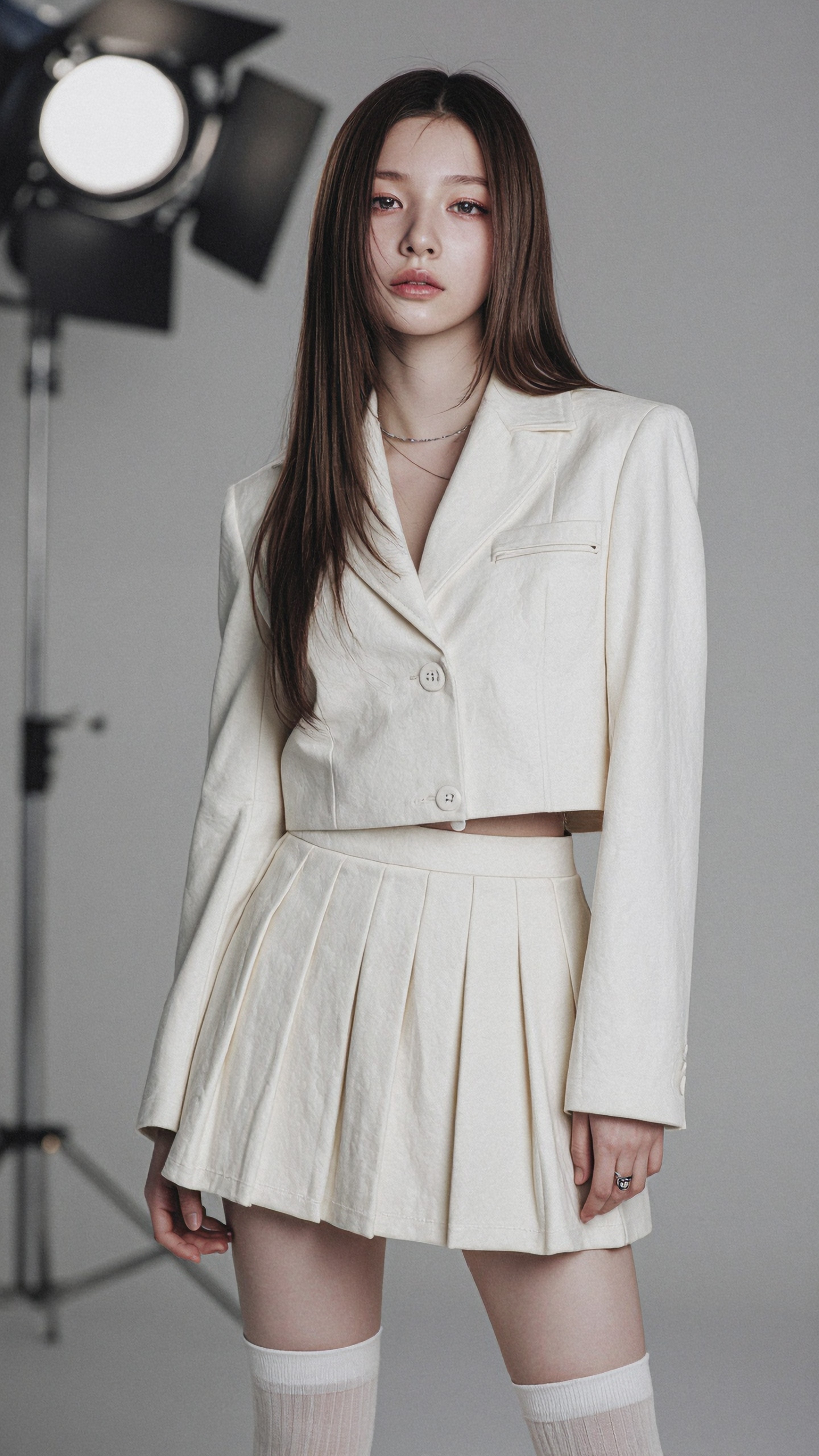
Look 2: Preppy luxury casual
This is useful for comeback teaser sets, fashion concept boards, or fan-made season package visuals. Keep the face and hair stable while shifting into a softer daytime wardrobe.
Topic: K-pop Idol Preppy Luxury Daywear
Genre: Lifestyle Portrait
Camera: Sony A7R V
Lens: 50mm f/1.4
Lighting: Overcast diffusion
Location: Upscale Seoul cafe terrace with cream stone walls, ivy accents, and quiet morning atmosphere
Style: Clean commercial look
Final Prompt: Korean K-pop idol with the same elegant dark espresso hair and refined makeup, wearing a navy cropped cardigan, white pleated tennis skirt, slim leather belt, ankle socks, and glossy loafers, seated casually at an upscale Seoul cafe terrace, one hand resting on a coffee cup, relaxed thoughtful expression, overcast diffused daylight for soft even skin tones, clean commercial lifestyle portrait styling, Sony A7R V image character, 50mm f/1.4 natural perspective, creamy beige and navy palette, realistic fabric folds, polished accessories, airy composition, subtle background blur, premium fashion catalog quality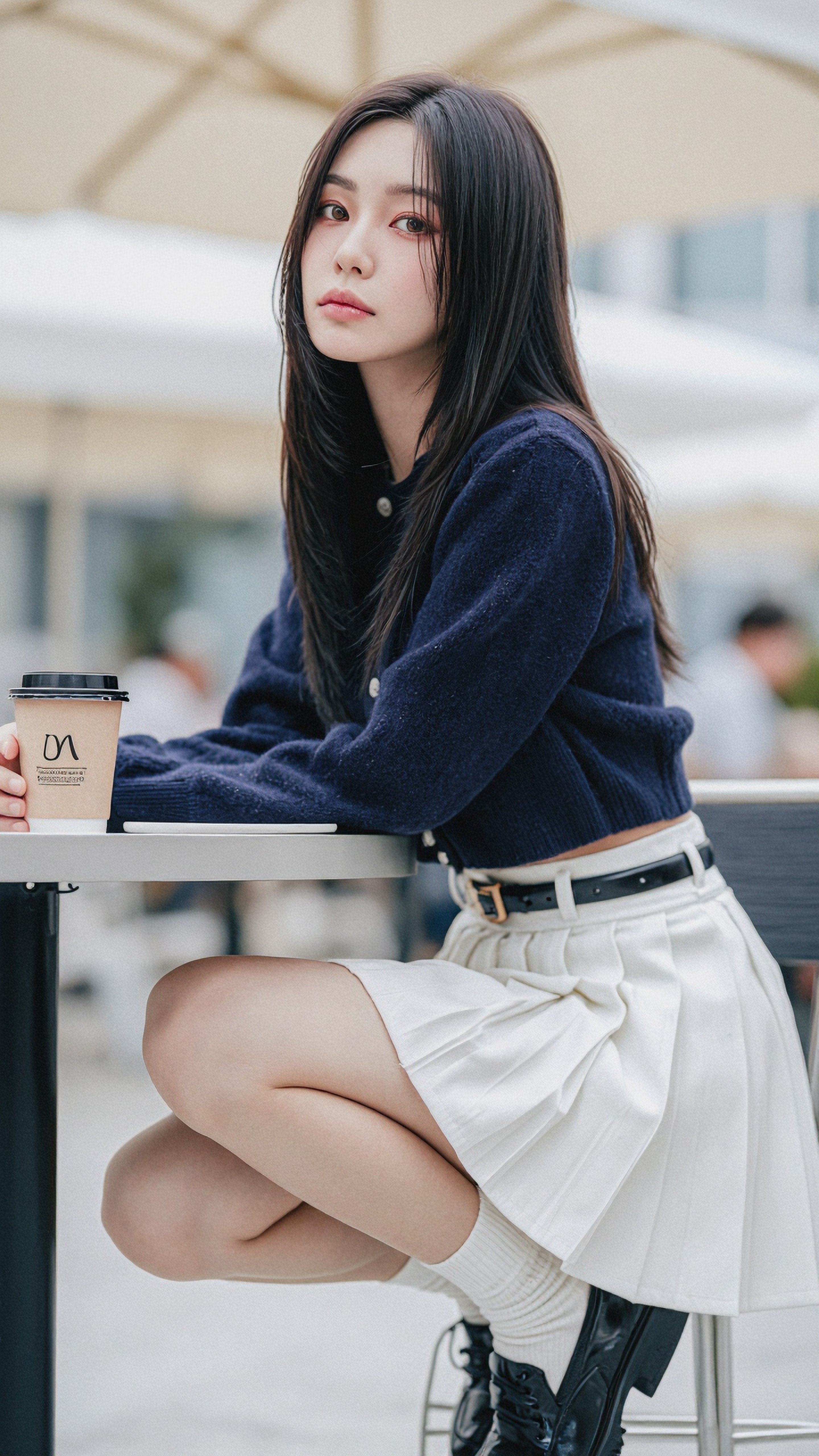
Step 4: Change silhouette, not identity
Once the subject is visually locked, ZImage Turbo can explore more dramatic outfit shifts without losing coherence. The easiest way is to change shape language: boxy, fitted, layered, sporty, romantic.
Look 3: Street style off-duty frame
This shot works well for social carousels, mock brand endorsements, and “airport fashion” style concepts.
Topic: K-pop Idol Street Style Off-Duty Fashion
Genre: Street Style
Camera: Fujifilm GFX 100S
Lens: 63mm f/2.8
Lighting: Softbox key light blended with cloudy ambient daylight
Location: Trendy Seoul side street with chrome storefront reflections, concrete pavement, and muted urban signage
Style: Cinematic realism
Final Prompt: Korean K-pop idol maintaining the same facial identity, dark straight hair, and polished beauty styling, wearing an oversized charcoal bomber jacket over a white fitted crop top, low-rise cargo trousers, chunky sneakers, silver ear cuffs, and a compact black shoulder bag, captured mid-step on a trendy Seoul side street, slightly turned shoulder pose with cool unreadable expression, softbox key balanced with cloudy daylight for a premium street editorial look, Fujifilm GFX 100S medium-format detail, 63mm f/2.8 clarity, urban chrome reflections, neutral gray and steel blue palette, sharp textile texture, layered styling depth, cinematic realism, authentic fashion week off-duty energy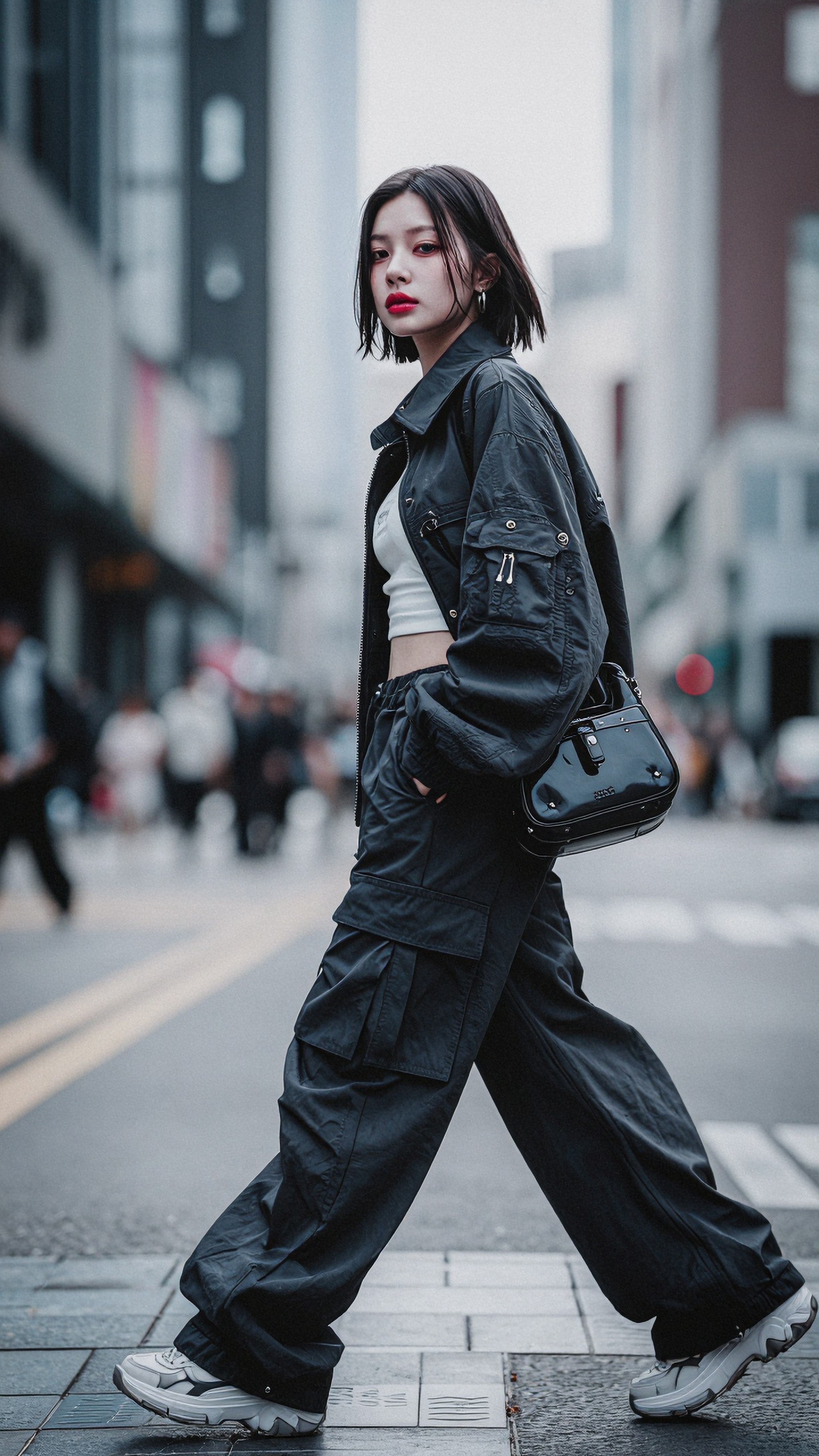
Look 4: Performance-inspired metallic concept
For stage visuals or album concept development, introduce stronger materials and lighting while preserving core beauty cues.
Topic: K-pop Idol Metallic Stagewear Concept
Genre: Fashion Editorial
Camera: Nikon Z8
Lens: 70-200mm at 135mm f/2
Lighting: Neon rim light with controlled studio key
Location: Dark mirrored soundstage with reflective floor and faint haze
Style: Luxury fashion campaign
Final Prompt: Korean K-pop idol with consistent dark espresso hair styled sleek and straight, wearing a silver metallic corset top, black micro-pleated skirt, crystal chain belt, fingerless gloves, and knee-high patent boots, posed powerfully on a dark mirrored soundstage with one leg extended and direct fierce gaze, neon blue and magenta rim light outlining the silhouette with a controlled studio key on the face, luxury fashion campaign treatment, Nikon Z8 precision, 135mm f/2 compression, reflective floor glow, dramatic haze, high-contrast editorial composition, premium metallic texture, sharp stage presence, cool jewel-toned palette, cinematic yet polished performance concept image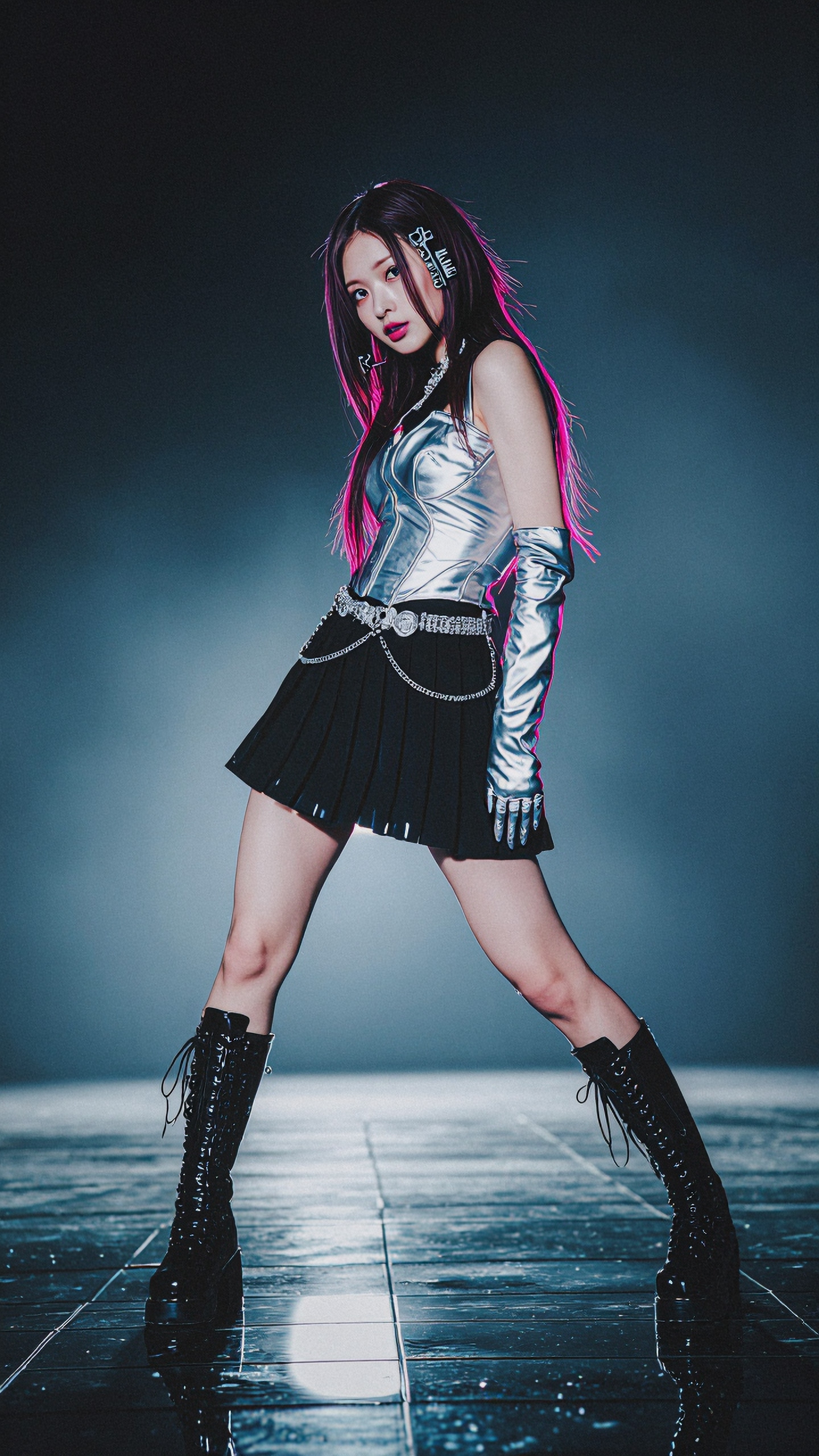
Step 5: Rotate between wide, mid, and close shots
A lookbook feels more believable when it includes shot variety. Do not make every image a waist-up portrait. Mix:
- full-body outfit documentation
- seated mid-shots
- close beauty crops
- motion-driven walking shots
- one cover-style hero composition
That variation helps the set feel like a real editorial sequence rather than repeated outputs.
Look 5: Soft pastel romantic concept
This kind of frame is ideal for spring releases, cosmetics tie-ins, or softer B-side visual concepts.
Topic: K-pop Idol Romantic Pastel Lookbook Scene
Genre: Beauty Campaign
Camera: Hasselblad X2D 100C
Lens: 90mm f/2.5
Lighting: Softbox key light with pastel bounce fill
Location: Dreamy greenhouse studio with sheer curtains, pale flowers, and diffused daylight haze
Style: High-end beauty advertising
Final Prompt: Korean K-pop idol with the same refined facial features and smooth dark straight hair, wearing a blush pink chiffon blouse with bow detail, cream high-waisted shorts, pearl earrings, and delicate ribbon heels, standing beside sheer curtains in a dreamy greenhouse studio, gentle hand-to-cheek pose, serene almost wistful expression, softbox key with pastel bounce fill for luminous skin, Hasselblad X2D 100C luxury detail, 90mm f/2.5 portrait depth, pale pink and cream color palette, translucent fabric texture, soft floral background, high-end beauty advertising mood, elegant feminine styling, polished makeup glow, refined magazine-quality finish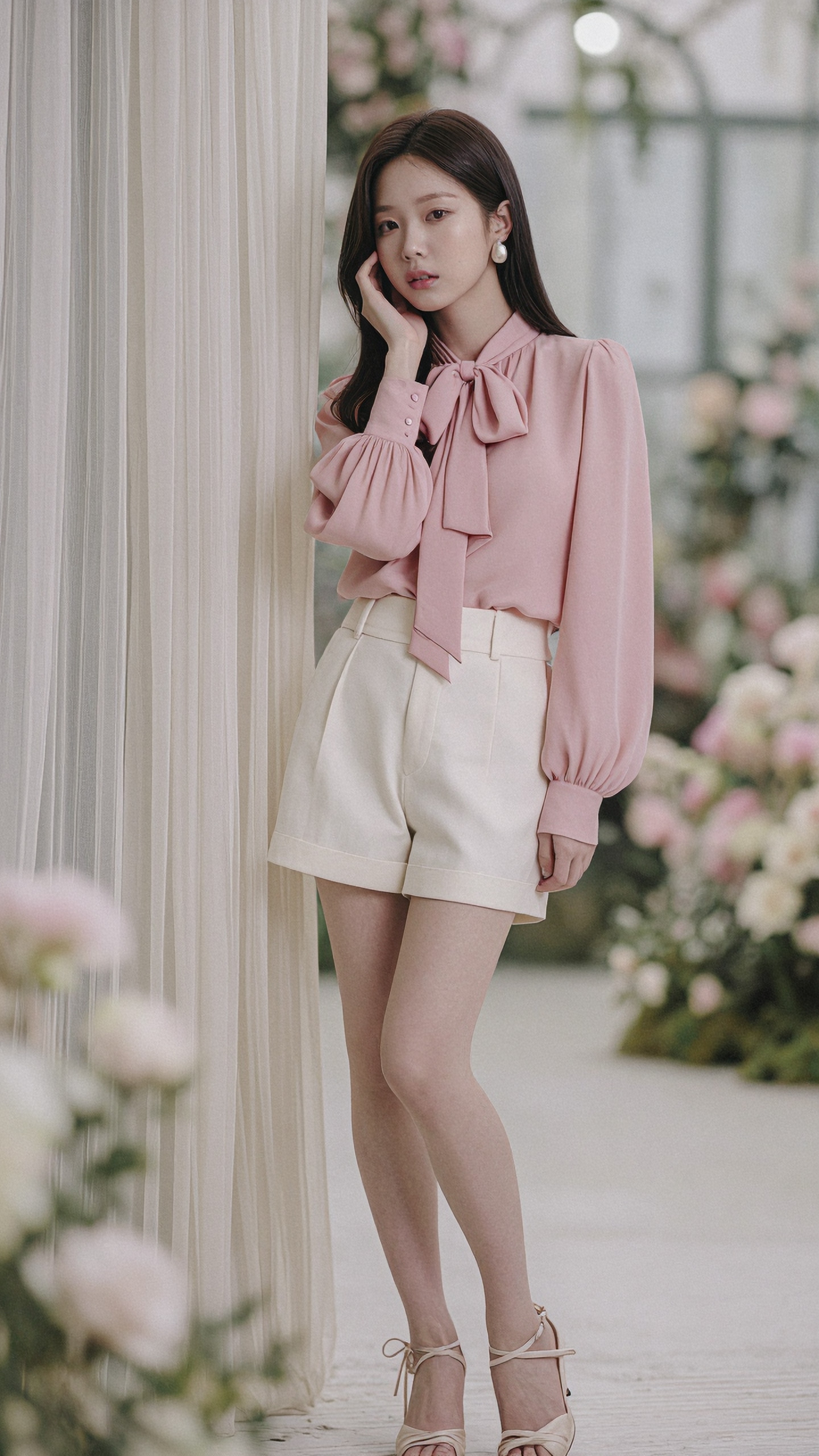
Look 6: Beauty close-up for makeup and accessories
A consistent outfit lookbook benefits from at least one beauty-focused crop. This helps reinforce identity while highlighting makeup, earrings, hair styling, and skin finish.
Topic: K-pop Idol Beauty Close-Up with Statement Accessories
Genre: Beauty Campaign
Camera: Phase One XF IQ4
Lens: 110mm f/2.8
Lighting: Large octabox key with silver reflector fill
Location: Minimal blush-toned beauty studio with glossy acrylic accents
Style: Korean magazine cover
Final Prompt: Close-up portrait of a Korean K-pop idol with the same dark espresso straight hair tucked behind one ear, radiant natural skin texture, soft shimmer eyelids, precise eyeliner, and gradient rose lip, wearing a sculptural silver ear cuff, crystal hair pin, and satin off-shoulder top visible at the frame edge, photographed in a blush-toned beauty studio with a large octabox key and silver reflector fill, direct elegant gaze, slight head tilt, Phase One XF IQ4 ultra-detailed look, 110mm f/2.8 compression, glossy acrylic highlights in the background, luxurious cosmetic campaign finish, clean composition, refined pink-silver palette, premium skin rendering, editorial cover polish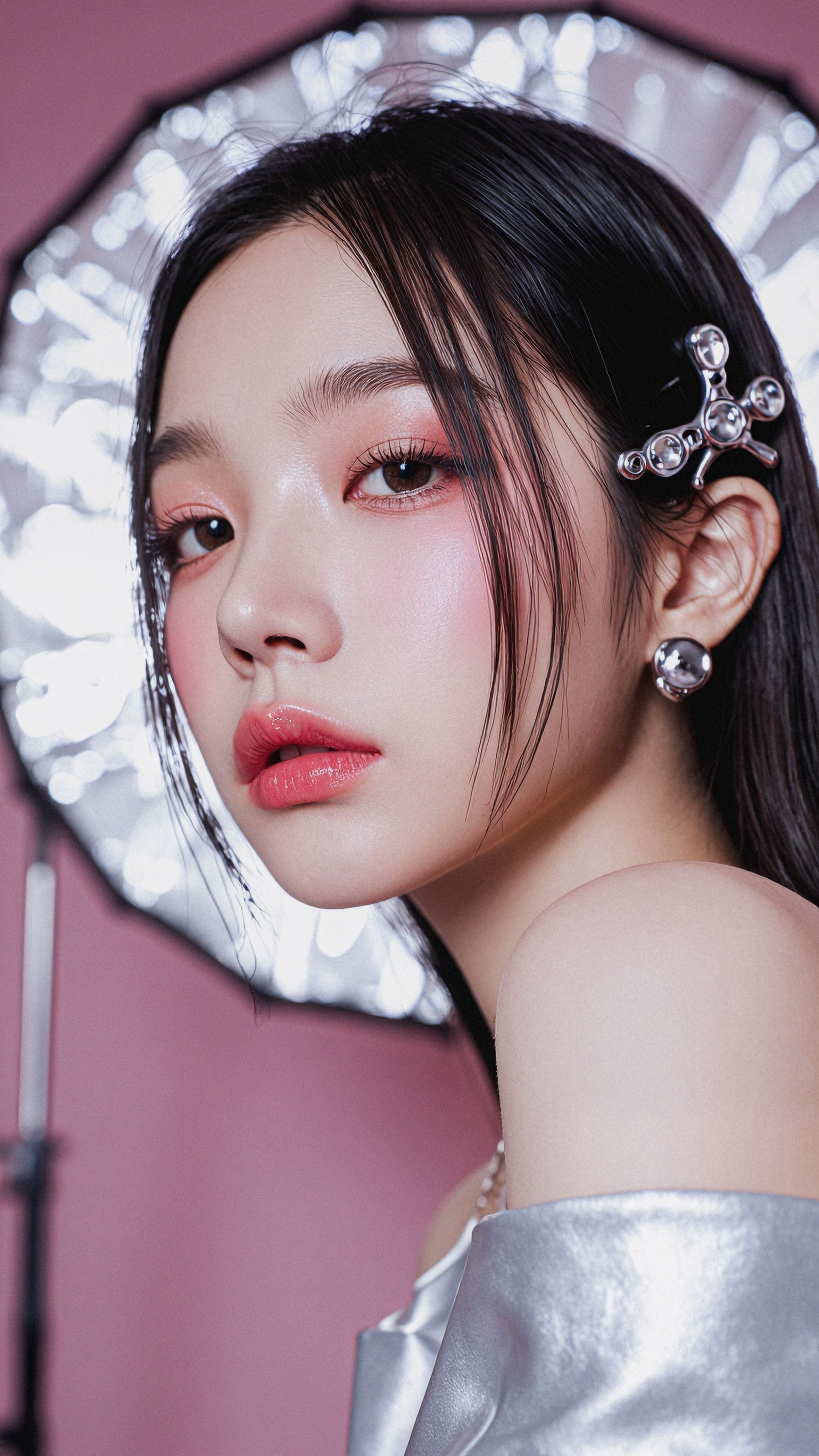
Step 6: Use locations that support the wardrobe story
Location should not fight the clothing. For consistent K-pop fashion visuals, think in concept families:
- studio minimalism for clean styling reads
- Seoul street corners for off-duty fashion
- hotel corridors for luxury comeback mood
- rooftop dusk for performance-adjacent glamour
- greenhouse or sunroom spaces for soft romantic themes
If the outfit is detailed, keep the background readable but not chaotic.
Look 7: Night city fashion scene
This is useful for teaser posters, concept trailers, and dramatic carousel endings before the final hero shot.
Topic: K-pop Idol Night City Luxury Streetwear
Genre: Cinematic Travel
Camera: Leica SL2-S
Lens: 35mm f/1.4
Lighting: Neon rim light with wet street reflections
Location: Seoul nightlife district alley with glowing signage, rain-slick pavement, and moody midnight atmosphere
Style: Cinematic realism
Final Prompt: Korean K-pop idol with consistent dark straight hair and refined makeup, wearing a black leather trench over a ruby satin mini dress, sheer tights, pointed ankle boots, and a slim jeweled choker, standing on a rain-slick Seoul nightlife alley with neon signage glowing behind her, confident still pose with subtle half-smile, neon rim light and wet pavement reflections shaping the silhouette, Leica SL2-S cinematic low-light character, 35mm f/1.4 environmental framing, deep reds, black lacquer, and electric blue highlights, atmospheric night haze, premium material detail, moody urban glamour, stylish but grounded realism, poster-worthy composition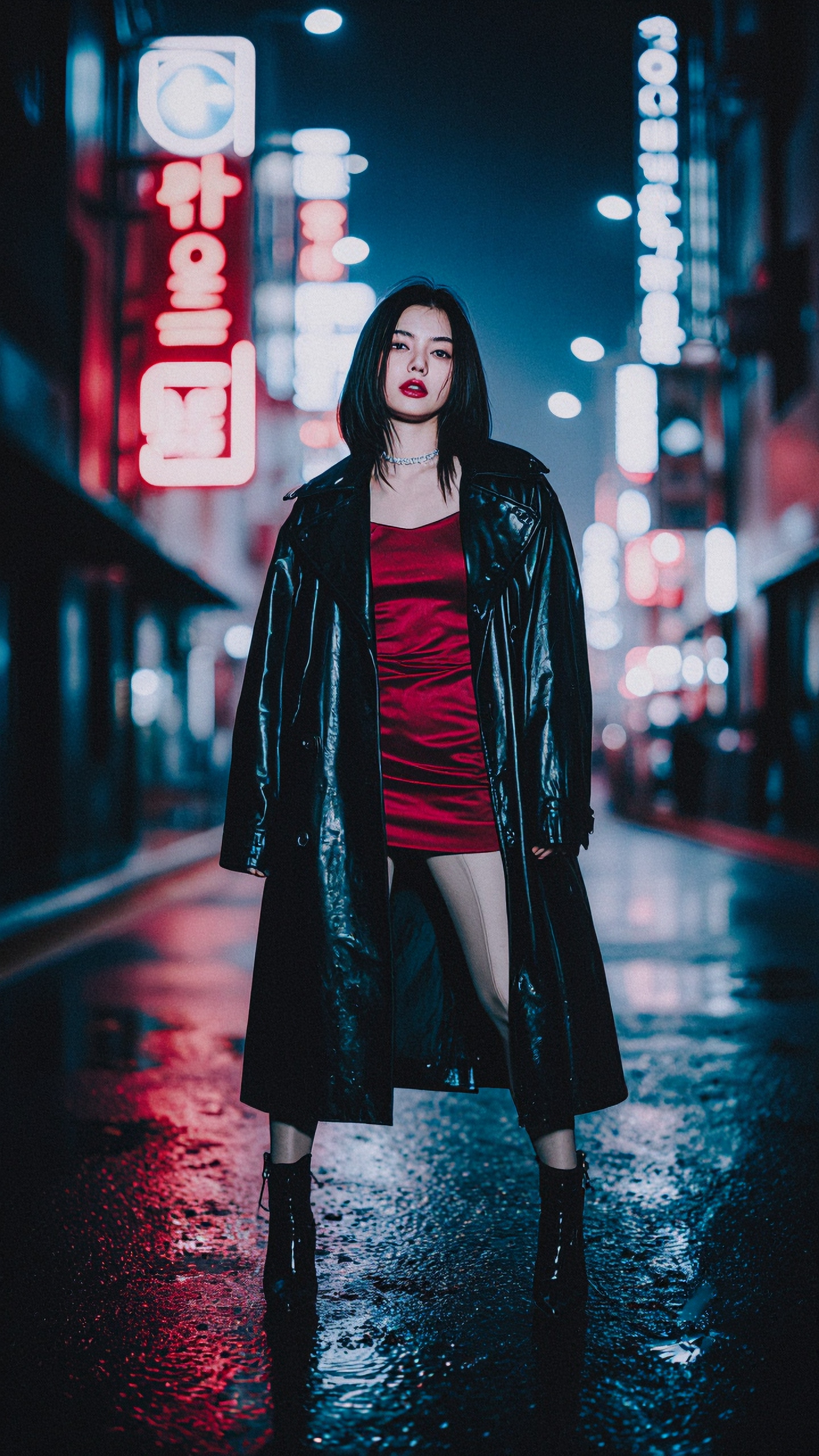
Look 8: Final hero cover image
End the series with the most complete statement shot. This should feel like the cover or lead visual that summarizes the full fashion concept.
Topic: K-pop Idol Hero Lookbook Cover Shot
Genre: Luxury Campaign
Camera: RED V-RAPTOR cinematic capture
Lens: 50mm Master Prime T1.3
Lighting: Sunset backlight with controlled bounce and edge light
Location: Modern rooftop overlooking Seoul skyline with warm dusk haze and sleek architectural lines
Style: Luxury fashion campaign
Final Prompt: Korean K-pop idol with the same signature dark espresso straight hair, luminous skin, and polished stage-inspired makeup, wearing a structured white and silver two-piece set with embellished cropped jacket, fitted mini skirt, crystal detailing, and elegant heeled boots, posed at a modern rooftop overlooking the Seoul skyline at dusk, one hand on hip and chin slightly lifted, confident final-cover expression, sunset backlight with controlled bounce and subtle edge light creating a premium glow, RED V-RAPTOR cinematic detail, 50mm Master Prime T1.3 look, warm peach dusk against cool city glass tones, sweeping skyline depth, luxury fashion campaign composition, crisp garment structure, cinematic atmosphere, premium editorial sharpness, heroic polished finale image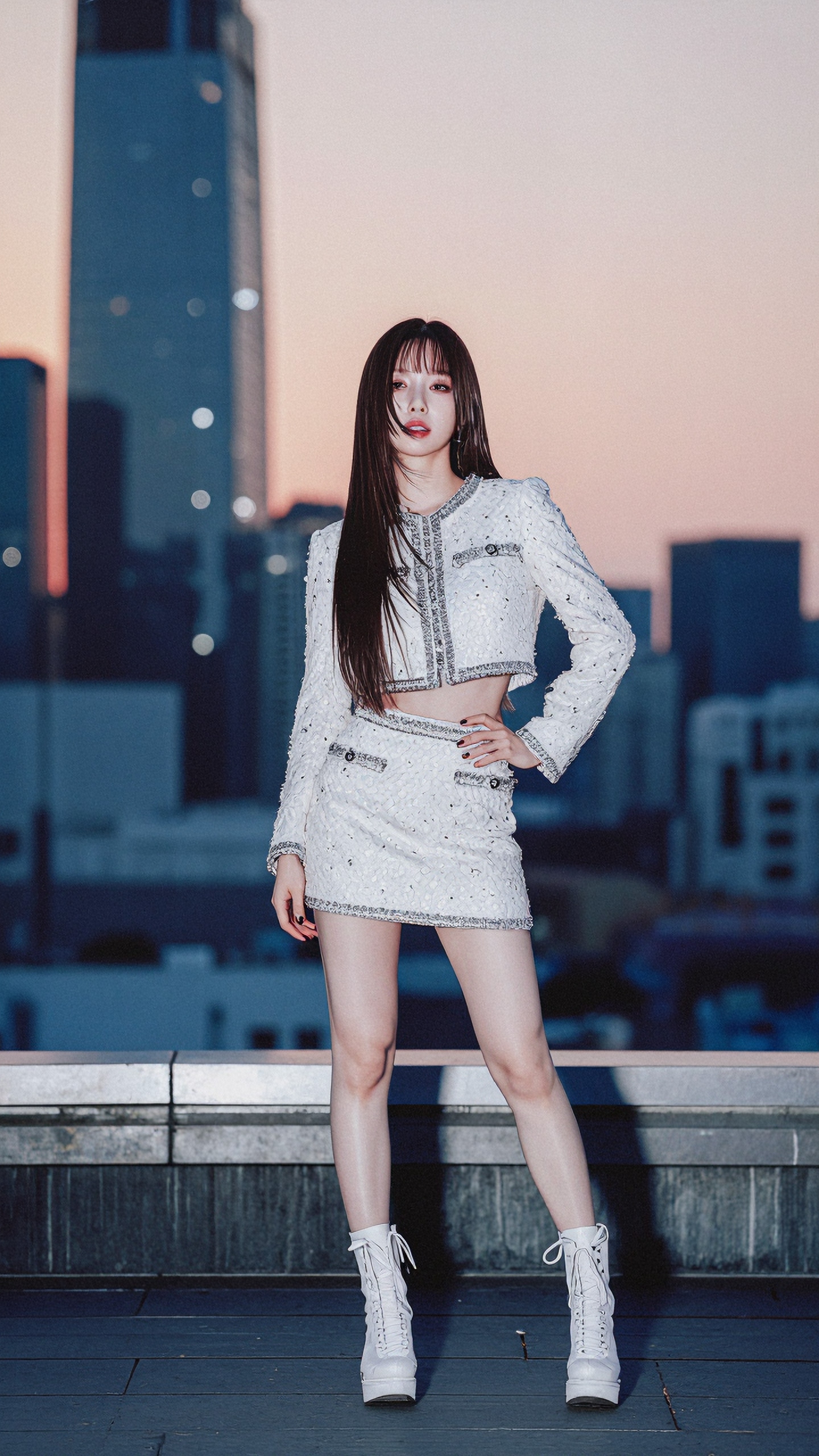
How to keep the whole set visually unified
Even with varied prompts, consistency comes from repeating a few exact ideas across all images:
- same identity words: dark espresso straight hair, refined makeup, elegant confident expression
- same finish: natural skin texture, premium fabric detail, polished editorial quality
- same fashion universe: Korean magazine, luxury campaign, clean commercial, cinematic realism
- same level of detail: do not let one prompt be sparse while another is overloaded
If ZImage Turbo starts drifting, shorten the experimental elements and strengthen the identity anchors.
Practical use cases for this workflow
This approach is useful beyond simple fan art or style tests.
Comeback concept development
Generate multiple outfit phases for a fictional or planned comeback: school-luxury, metallic stagewear, beauty teaser, rooftop hero shot. This helps visualize the progression before designing full campaign assets.
Idol brand endorsement mockups
Swap the wardrobe logic to match handbags, cosmetics, footwear, or jewelry while keeping the idol identity consistent. The result feels closer to a real endorsement pitch deck.
Social carousel lookbooks
Create eight coherent images for Instagram, Pinterest, or moodboard posts where each slide shows a new outfit but the same recognizable muse.
Styling previsualization
Fashion stylists and creative directors can test color stories, silhouette balance, and location choices before a real shoot.
A simple ZImage Turbo prompt method that scales
For every new look, keep this order:
1. subject identity 2. wardrobe details 3. pose and expression 4. lighting setup 5. location context 6. editorial style direction 7. camera and lens realism cues 8. quality and texture language
That order helps the model prioritize who the idol is before deciding where she is.
Final takeaway
A strong K-pop idol lookbook in ZImage Turbo is built like an editorial shoot plan. Define one stable idol identity, map the outfit sequence, vary silhouette and setting with intention, and keep lighting and camera language believable.
When the prompts are structured this way, consistency stops being luck. It becomes a workflow.
<!-- zview-hands-on-backfill -->
Practical Test Notes
What this article should verify
- Whether a repeatable test setup can keep the same idol identity recognizable across an 8-image lookbook while changing outfit, set, and framing.
- Whether prompt anchors such as hair color, makeup logic, age range, and styling era are strong enough to reduce drift between studio, street, and stage concepts.
- Whether the workflow preserves editorial cohesion, so the sequence reads like one concept deck rather than separate image generations.
- Whether detail-heavy fashion items like pleats, metallic fabrics, jewelry, and footwear remain clear when the mood and lighting change.
Result checks
For result checks, inspect the existing or future images as a sequence, not only one frame at a time:
- Face stability: same apparent identity, face shape, age impression, and beauty styling across all images.
- Hair consistency: dark espresso tone, straight shape, shine level, and length should not change randomly.
- Outfit control: intended garments may vary by prompt, but buttons, hems, pleats, belts, and accessories should look deliberate rather than regenerated inconsistently.
- Hand risk: check fingers around poses, coffee cups, bags, and gloves, especially in lifestyle and mid-step shots.
- Lighting control: butterfly studio light, overcast daylight, and neon rim light should create different moods without making skin tone or image realism collapse.
- Texture quality: metallic stagewear, knit cardigans, bomber fabrics, and patent boots should keep believable material separation.
- Background consistency: Seoul cafe, side street, studio, and mirrored stage should support the concept without clutter, warped signage, or distracting reflections.
- Style consistency: camera/lens changes should still feel like one branded lookbook, not four unrelated rendering styles.
Failure risks
The main failure risks are identity drift when prompts emphasize outfit changes too strongly, and style fragmentation when each scene uses very different lighting language. This approach can also fail when accessories become too numerous, because belts, ear cuffs, gloves, and layered garments often mutate between shots. Street scenes add extra risk for broken hands, warped storefront geometry, and unreadable background text. Stage prompts with haze and reflections may over-polish the image and reduce facial continuity.
Practical recommendation
Use this setup if you need a controlled K-pop fashion storyboard, teaser carousel, or concept mockup with one stable muse across multiple looks. Avoid it if you need exact catalog-level garment continuity or production-ready product detail on every frame. The most important detail is to lock the identity anchors first, then change only one or two visual variables per prompt so what to inspect stays manageable.